Tag Archives: David Marr

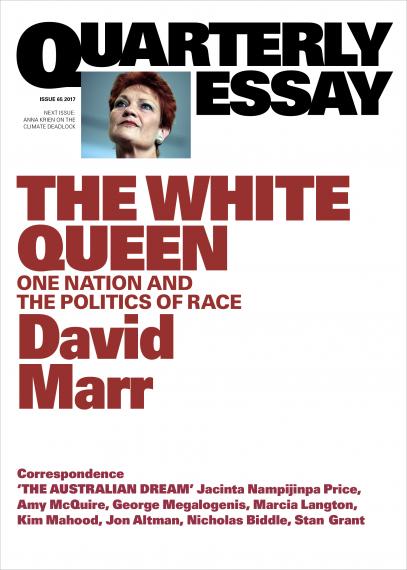
David Marr’s Killing for Country at my Book Groups

David Marr, Killing for Country: A Family Story (Black Ink 2023)

I’m a member of two book groups. This month, they both focused on Killing for Country.

Before the meetings: An ‘ancient uncle’ asked journalist David Marr to explore their family history. As Marr complied, he came upon a photograph of one of his ancestors in the fancy uniform of the Native Police, the infamous organisation in which white officers led Indigenous men in extrajudicial killing sprees in lands that are now known as northern New South Wales, Queensland and the Northern Territory. Marr realised that this was a significant project and set about writing the interwoven stories of his forebears and the Native Police.

I imagine most of the book’s readers will know the broad outline of genocidal massacre that was instrumental in taking possession of the land in these parts of Australia, as elsewhere. Most of us now know that the euphemistic language of ‘dispersal’ and ‘punitive expeditions’ covers terrible atrocities. For me, Ross Gibson’s 2002 book Seven Versions of An Australian Badlands was a turning point. Rachel Perkins’s monumental TV series, The Australian Wars (2022), did heroic work in dispelling any residual beliefs that Australia was settled peacefully, and the Native Police featured in the third, heartbreaking episode. Anyone wanting to cling to such beliefs is advised to stay away from Killing for Country.

Marr follows the thread of his own family’s story through the complex history. He doesn’t try to be comprehensive. He makes no mention, for instance, of the punitive expeditions led by Sub-Inspector Robert Johnstone in Mamu country, the part of Australia that I come from. And professional historians will no doubt find fault with his work – he is too concerned to push his agenda, perhaps, and not judicious enough in checking his sources for sensationalist or other motivations, the kind of criticisms made of Robert Hughes’s The Fatal Shore. It certainly won’t please the columnists of Quadrant or commentators on Sky News at Night. But, as Marcia Langston says on the front cover blurb:

If we want the truth, here it is told by David Marr.

Told by David Marr means told well. I attended one of the many public talks Marr has given about the book, and on that occasion I was struck by the heavily ironic way he spoke of the perpetrators and justifiers of colonial violence as profoundly respectable men. It felt wrong, somehow, to praise them, even in mirthless, defensive jest. The book does none of that. In writing it down, evidently, Marr had no need for such defences. But the reader, this one at least, needs to take frequent breaks.

This is a key part of White Australia’s foundation story: brutal mass killings, including breathtakingly callous first-person accounts, followed by pseudo-euphemistic newspaper accounts (‘with the usual results’ is one memorable phrase to indicate many deaths) or political justifications. When I was reading the book, I watched Prosecuting Evil, a TV documentary about Nazi murders of Jews, and some of the horrific footage was an exact match for scenes described in this book.

There were people at the time who named what was happening in terms we can recognise, and many of those voices are also present here.

This isn’t history that can be comfortably consigned to the distant past: Marr is writing about his own family, and about history that constantly chimes with the present, or perhaps has never gone away. ‘Let no one say the past is dead,’ Oodgeroo wrote. ‘The past is all about us and within.’

It’s my custom on this blog to have a close look at Page 76. Weirdly perhaps, that page, chosen arbitrarily because it’s my age, often shows a lot about a book.

In Killing for Country, page 76 is the beginning of Chapter 7, ‘The Creeks’, which deals with two massacres, at Waterloo Creek and Myall Creek, and their aftermaths – the first a whitewash, the second a major scandal and a court case spearheaded by Attorney General John Plunkett, one of the settler heroes of the book, leading to the execution of seven murderers, but also leading, as Marr points out, to secretiveness on the part of later murderers of Indigenous people.

This page is pretty much the full treatment of the Waterloo Creek massacre. The Native Police, the main subject of the book, have yet to be established, but this brief account of a massacre by white troopers is something of a template for much of what is to follow.

Governor Richard Bourke, having tried without success to limit the activities of the squatters in their treatment of convicts and the traditional owners of the land they claimed, resigned and sailed back to England . In December 1837. His successor George Gipps was to take office in February 1838. In the meantime:

Reports had reached Sydney of fresh depredations by the Kamilaroi.

It’s worth noting here that Marr take great care with names. While his sources, such as the quote from the Sydney Herald below, refer to ‘Blacks’, ‘tribes’, and so on, Marr himself always specifies which First Nations are being talked about, in this case the Kamileroi. This simple act has a powerful cumulative effect, as nation after nation comes into conflict with the military, with vigilante convicts, and with the Native Police.

The Herald was baying for blood.

THE POOR BLACKS- Letters have been received from the Northern parts of the Colony, which state, that the Blacks are murdering the shepherds and stockmen with impunity. These letters also inform us, that the same tribe of Blacks are destroying the cattle by hundreds.

‘Baying for blood’ may be the kind of thing that professional historians would steer clear of, but I like the way it spells out what the newspaper leaves unspoken (these people are murderers and mass destroyers of cattle, therefore …). Elsewhere, Marr quotes newspaper correspondence and other contemporary sources pointing out that the ‘murders’ and ‘destruction’ are perpetrated by people defending themselves against an invasion or avenging atrocities committed against them. Such arguments are roundly mocked by the mainstream as sentimental wailers ‘desirous of acquiring a reputation for humanity’ – the tone isn’t so different from some of our current media talking about virtue-signalling latte-sippers.

While waiting for the new Governor to arrive, the Colony had been left in the hands of Colonel Kenneth Snodgrass, a capricious veteran of the Napoleonic Wars, who gave Major James Nunn of the 80th Regiment a free hand to deal with trouble on the plains. ‘You are to act according to your own judgement,’ said Snodgrass, ‘and use your utmost exertion to suppress these outrages.’

The fabulously named Kenneth Snodgrass, deftly characterised and contextualised in seven words, makes no other appearance in this story, but his instructions foreshadow the vague instructions given to officers of the Native Police. Without fail, the politicians giving the orders retain deniability. Their intentions are clear, but they consistently refuse to give explicit instructions to kill. All the Native Police massacres were illegal, and directly counter to general policies emanating from distant Britain, but no one was ever held accountable for them. At Waterloo Creek, the troops and mounted police were white, and so even less likely to face legal consequences.

At Waterloo Creek on 26 January 1838, Nunn’s troops and Mounted Police drove a large number of Kamilaroi into a swamp and slaughtered at least fifty.

One of my difficulties with the book is that I often lose track of dates. For example, I kept waiting for the moment when the narrative would intersect Melissa Lucashenko’s novel Edenglassie, in which the Native Police play a role. But 1854, Edenglassie‘s year, comes and goes without being named. So the explicit dating of this incident stands out. Serendipitously, I’m writing this on 26 January, a public holiday when fewer people each year choose to celebrate Australia Day. I’m guessing that Marr was struck by the significance of the date and left it there as a grim easter egg. The Waterloo Creek massacre happened on the 50th anniversary of Arthur Phillip raising the Union Jack on Gadigal land. A hundred years later, William Cooper declared the date to be a day of mourning. Today there’s a struggle over whether it’s Australia Day or Invasion Day.

Afterwards, Nunn found a few bits and pieces in their camp which convinced him he had punished blacks involved in the murder of Cobb’s shepherds on the Gwydir, a crime for which hundreds had already been killed. Back at Cobb’s head station, Nunn boasted to the appalled squatter of ‘popping off with his holster pistols the Blacks whenever one appeared from behind a tree’.

Again, this foreshadows how things will go. Where killings had to be accounted for, the commanding office would find or fabricate some dubious evidence to justify it. When Gipps presented Nunn’s account of the massacre to his Legislative Council, according to Marr he knew it to be a whitewash, but nothing more seems to have been done about it. Nunn’s boast was reported years later, according to a note, by Lancelot Threlkeld, another of the book’s settler heroes. Again and again, we see private boasting recorded in memoirs or letter, as opposed to public justifications.

I kept thinking of the last line of Bob Dylan’s ‘The Lonesome Death of Hattie Carroll’: ‘Bury the rag deep in your face, for now’s the time for your tears.’

After the first group’s meeting, Friday night: For this group, we had ambitiously agreed to read and discuss two books, Killing for Country and Debra Dank’s We Come with this Place. I wrote about Debra Dank’s book a while ago, here.

There were five of us. Only two had read all of Killing for Country. Of the others one said she gave up after 10 or so pages because she wasn’t interested in the wool industry and early colonial politics, another read about the same and decided she needed to read something more relevant to her life plans, and the third is still reading it, though she’s suspicious of it because she’s also rereading solid works of history like Heather Goodall’s From Invasion to Embassy and Grace Karskens’s The Colony.

All the same, once the slackers had been duly reprimanded (not by me, I hasten to note), we had a terrific conversation. While acknowledging the huge amount of work that went into the book, and that it had opened her eyes to a history that just hasn’t been told, the other completer said she found it unsatisfactory: leaping from place to place with maps that didn’t always help, likewise leaping from character to character, lacking a solid analytical context. She and the history-reader saw as bugs the things that I was content to note as mildly inconvenient features that resulted from the basic decision to follow the careers of particular David-Marr-related individuals.

There was some discussion of David Marr’s decision not to include Indigenous voices. I think he gave a good account of that in his final chapter:

This is a white man’s view of this history. I’ve drawn on rich Indigenous resources to write the bloody tale of Mr Jones and the Uhrs, but I found it was not my place to give the Aboriginal view of this tangled history. I asked Lyndall Ryan, veteran of so many academic battles on the frontier, which Indigenous scholars I should read. Indigenous scholars, she said, research particular incidents in their country. ‘But they don’t work on the frontier wars. The topic is whitefella business.’ An Indigenous colleague I’ve known for years put it this way: ‘You mob wrote down the colonial records, the diaries and newspapers. You do the work. You tell that story. It’s your story.’

(Page 409)

Others still felt that there was a glaring absence in the book.

The non-readers were appropriately contrite and asked productive questions.

We had all read and loved We Come With This Place. The mood lifted as we discussed it. Smiles came back to our faces, and we found ourselves flipping through the book to quote bits.

After the second group’s meeting, Tuesday night: This is my much loved, long-running, all male group (I’m the only man in the other).

I had a runny nose on Saturday night and a positive RAT on Sunday morning, so was stuffed with antivirals on Tuesday and couldn’t be there for this discussion. In the WhatsApp chat ahead of time, one man said he couldn’t read the book: ‘It was too brutal and depressing.’ Another sent us a lnk to The Australia Institute’s webinar with David Marr. After the even the WhatsApp reports said there was at least an hour’s worth of animated discussion.

I guess I’ll watch the webinar when I’ve had a little lie-down.
End of Year List 4: Books

From the Emerging Artist, in her own words (links to the LibraryThing pages or, at her request, to my blog post when there is one):

Non fiction

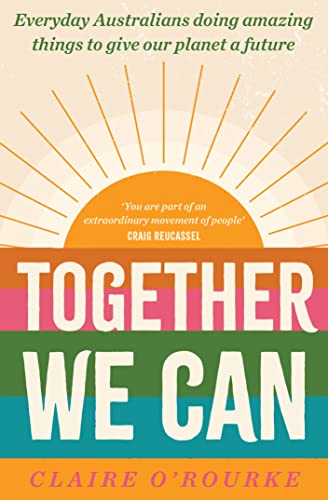
Claire O’Rourke, Together We Can (Allen & Unwin 2022)
I read this after hearing Claire talk on a Sydney Writers’ Festival panel on how to have hope in relation to climate change. It’s a good read, mixing specific examples of everyday Australians tackling what’s happening with broader theory on how to bring about change. It does fulfil its title, giving a real sense that “together we can”.

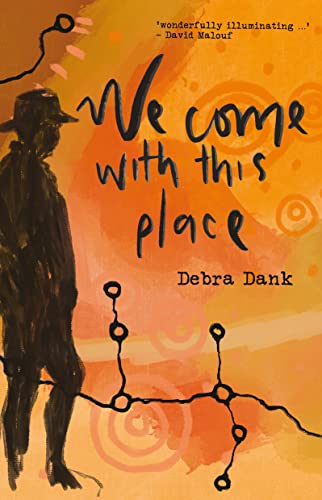
Debra Dank, We Come With This Place (Echo Publishing 2022)
We watched this book win four awards and heard Deborah Dank’s speech at NSW Premier’s Literary Awards 2023. We immediately went out to buy it. The writing is beautiful, a slow evocation of country and its connection to the author, while filled with story. I think it’s the must read of the year.

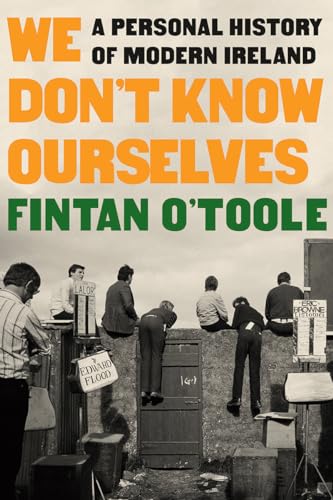
Fintan O’Toole, We Don’t Know Ourselves, a personal history of Ireland since 1958 (Head of Zeus 2021)
Hearing Fintan on the ABC’s Conversations, I immediately placed an order and waited patiently for four months for it to arrive. I’m glad I did. It’s written in short chapters in chronological order, but often picking up themes from chapter to chapter. It’s funny while documenting the appalling state of Ireland from 1958 through personal history, statistics and other sources. The incredible poverty (no running water in homes or sewage, no education for 80% of the population past primary school) made worse by the stranglehold of the Church and corruption in keeping poverty in place and the changes brought about by the impact of globalised capitalism all come alive in riveting storytelling.

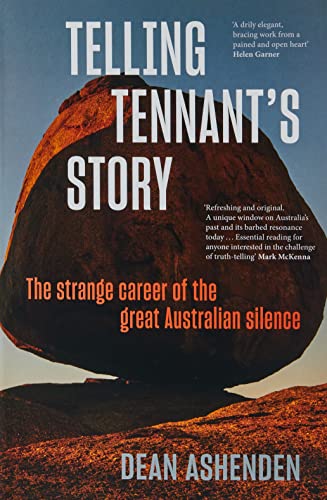
Dean Ashenden, Telling Tennant’s Story: The Strange Career of the Great Australian Silence (Scribe 2022)
A very readable history of post WWII Australian policies in relation to First Nations people where the impact of the policies on Aboriginal people in a specific area – Tennant Creek – are made clear. It tells how the policies of assimilation and later self determination came about and how far-reaching their effects have been. It would have been good for all those voting no to have been made to read this as a requirement for having a say.

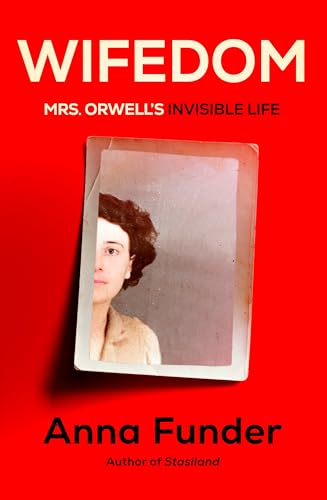
Anna Funder, Wifedom: Mrs Orwell’s Invisible Life (Penguin 2023)
So much has been written about this book already I don’t need to give a summary. I found it gripping. 

Fiction
I read 62 books this year, from quick comfort ‘junk’ reads to harder literary tomes. I take a photo of each book to prompt memory, and going through them all, it’s clear I have had an excellent selection to choose five favourites from. I’ve ended up deciding by level of enjoyment, not on some literary merit criteria.

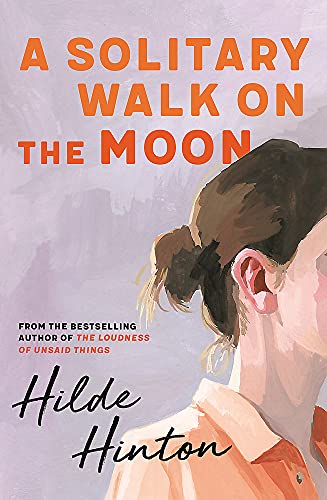
Hilde Hinton, A Solitary Walk on the Moon (Hachette AUstralia 2022)
A totally enjoyable read while disquieting in its simplicity. This is a second novel by an Australian author who seems to slipped under the radar. I found it in my local library. 

Annie Ernaux, The Years (Fitzcarraldo Editions 2018)
This was also an entrancing read, covering a similar time period to my own life. It conjures up the similarities and immense differences between growing up in middle class France and Australia.

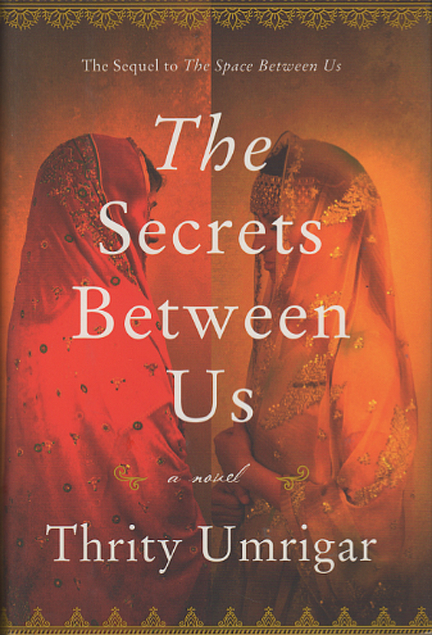
Thrity Umrigar, The Secrets Between Us (HarperCollins 2018)
Another library chance find. I loved the three strong old women protagonists, the exploration of caste and how this is/isn’t changing in modern India.

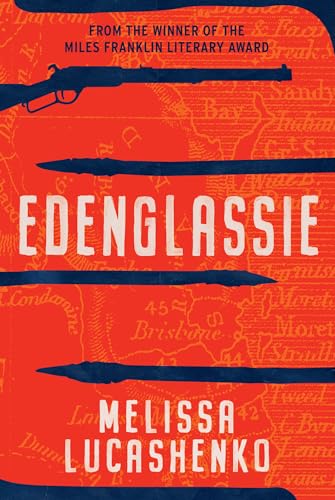
Melissa Lucashenko, Edenglassie (University of Queensland Press 2018)
This was gripping rather than straight out enjoyable, with a sense of what was to come on every page. I loved the imagined world of life at the point where the strangers are staying and growing in number, while keeping your own way of life intact.

Richard Russo, Somebody’s Fool (Allen & Unwin 2023)
Jonathan hasn’t yet been lured into the wonderful world that Richard Russo writes about, but I expect that to change soon. This is the latest in a series that includes Everybody’s Fool and Nobody’s Fool, all set in small town east coast USA. The books follow a number of interconnected characters over a few generations recording the process of change as late capitalism, racism and gender are played out in the town of Bath. He writes with affectionate humour about all of his characters. We see their frailties and appalling behaviour (between white and black, men and women, different generations) but in a number of cases we see how their connections with each other bring a shift in perspective. I love them. 


From me

I read 83 books (counting journals but not children’s books). I finished my slow read of Middlemarch and read St Augustine’s Confessions, a little each morning, but didn’t start another slow read in September because I was doing the Kelly Writers’ House course in Modern and Contemporary American Poetry (ModPo), which was great fun and probably taught me a lot.

I read:

  • 21 books of poetry
  • 26 novels
  • 4 comics
  • books in translation from Chinese (2), Spanish (3), French (2), Danish (1 or 3, depending on how you count), Russian (1) and Latin (1), and bilingual books containing Greek (1) and Maori (1)
  • counting editors and comics artists, 44 books by women, 39 by men
  • 12 books by First Nations writers, and
  • 15 books by other writers who don’t belong to the White global minority.

Biggest serendipity: Four books spoke powerfully to each other and to me in the wake of the referendum on the Voice: Debra Dank’s We Come with This Place, Melissa Lucashenko’s Edenglassie, Dean Ashenden’s Telling Tennant’s Story and David Marr’s Killing for Country (no blog post yet). Unlike Voice and Treaty, the third proposal from the Uluṟu Statement from the Heart – Truth – doesn’t have to wait for government action. These books, and so many others with them, are moving that project forward brilliantly and unsettlingly.

The most fun was probably two novels about poetry, which also spoke to each other: Chilean Poet by Alejandro Zambra and The Anthologist by Nicholson Baker.

Most interesting new discovery of someone who has been writing for decades: 2022 Nobel Prize laureate Annie Ernaux. I read Les années and Mémoire de fille, both of which mine her life story in ways that make most memoirs seem dull. Though I read them in translation, it seems right to name them in French.

Most imaginatively huge was Alexis Wright’s novel Praiseworthy, which incidentally is set in some of the same localities as Killing for Country.

Most memorable poetry: Sarah Holland-Batt’s Jaguar, with Ken Bolton’s Starting at Basheer’s (no blog post yet) a close second, the first for its precise, compassionate treatment of the poet’s father’s final illness, the latter because it filled me with joy about the everyday.


Happy New Year to all. May 2024 see the rejection of authoritarianism in elections and an end to mass killings everywhere. And may fossil fuels at last be left in the ground. Failing that, may we all keep our hearts open and our minds engaged.

Melissa Lucashenko’s Edenglassie, page 76

Melissa Lucashenko, Edenglassie (University of Queensland Press 2023)

If you’ve been paying attention, you know that Edenglassie, a portmanteau of Edinburgh and Glasgow, was briefly the name for part of what is now Brisbane, and this book is a historical fiction set there in the 1850s, when First Nations people outnumbered settlers along the Brisbane River, a time of armed resistance to colonisation, and a time of genocidal atrocities including those committed by the notorious Native Police.

My blogging practice of focusing on page 76 (my age) comes up with a passage that at first seems a long way from that subject. For a start it’s set in Brisbane in 2024, the bicentenary of John Oxley’s sail up the Brisbane River, and begins with a genial picture of a weekend market that could be in any western city:

Winona weaved a path through the many bodies at the market. The young and the elderly; the able-bodied and the infirm; the slender hipsters; the defiantly fat, the tattooed, the pierced, the dull suburban middle-class and the fabulously wealthy. All these met in the mecca of the inner south, held there in the tight Kurilpa loop of the river which, having embraced you, was mighty slow to let you go.

The market is complex and inclusive, or at least tolerant. ‘Kurilpa’ tells you, if you have a web browser handy, that the city is Brisbane: the Kurilpa precinct borders on South Bank, and what was once the Tank Street Bridge is now the Kurilpa Bridge. The way the narrator uses the word suggests that it is more than a simple place-name, hinting at an Indigenous perspective: the river has agency, embracing and slow to let go.

As the paragraph continues, a character moves through the scene:

Winona wasn’t much interested in the crowd; she’d been caught instead by a steady pulse, thrumming from afar. She followed the sound of the didgeridoo dragging her to the far edge of the park, eager to see if she knew the fella playing, and discover what other Blak mob were around. Hopefully, Winona thought, she’d find a little oasis of Goories there to replenish her spirit, weakened from the hours she’d spent lately in the soul-sucking hospital.

‘Blak’ and ‘Goorie’ make it clear where we are, though readers from outside Australia may need their pocket browser here too. ‘Blak’ is a self-description currently used by many urban First Nations people as a way of ‘taking on the colonisers’ language and flipping it on its head’ (the quote is from an article on artist Destiny Deacon, at this link). Winona is a young, politically aware Indigenous woman. The narrative cleaves mostly to her point of view, but it’s interesting to notice that here they part ways briefly: the narrator sees and enjoys the crowd, and virtually tells us in so many words that the ancient Kurilpa embraces that various crowd as well; Winona is committed to an ‘us and them’ perspective. The non-Indigenous crowd is like a desert to her.

I won’t quote the rest of the page. Suffice to say that when she finds the didgeridoo player, he’s a white hippy who claims to be Indigenous – a coloniser, a thieving dagai, as Winona sees it – and her violent outrage lasts for several richly comic pages.

Once I got past my initial sense that this page wasn’t from the interesting, historical narrative, I realised that many of the novel’s key themes are suggested in it.

Winona is the central character in the near future part of the novel, where the main narrative thread is her budding romance with Doctor Johnny, a man of questionable indigeneity (though less questionable than the didge player’s). Her grandmother, whom she has been visiting in hospital, is leveraging her claim to be Queensland’s oldest Aboriginal to secure a major role in Brisbane’s bicentenary celebrations – and an apartment. So there’s romcom tension, trickster play, and a generally comic tone. At the same time, the narrative is firmly embedded in an Indigenous perspective – or perspectives, really, as Grannie Eddie and her ancient friends see things differently from the militant Winona, and Johnny, a child of the stolen generations, brings yet another point of view. Winona’s rage at the hippy didge player is a contrast to her almost flirtatious hostility to Johnny. Her indifference to the complex everyday crowd plays off against Granny Eddie’s generously inclusive concept of Aboriginal sovereignty.

It’s especially interesting to note the way these paragraphs are linked to the historical story. Words that in 2024 feel like cultural reclamation or perhaps remnants of lost language – dagai, Kurilpa – are part of ordinary speech in 1854. Just as the hippy claims an Indigenous identity, a white man back then – Tom Petrie, grandson of a pre-eminent settler in Brisbane, and in the process of taking on a sheep property in his own right – claims the status of an initiated man: it’s not an exact parallel, as Tom’s claim, like that of the real-life Tom Petrie, has the approval of elders. But as he invites his ‘brothers’ to work for him a tremendous unease develops: certainly I spent a good deal of the book dreading that he would betray his close friends, his initiated ‘brothers’. It would be spoiling to tell you if he does.

Like the 21st century story, the historical narrative centres on a romance between two First Nations people with very different relationships to traditional culture. Mulanyin is a traditionally raised young man who is in Kurilpa as a guest of an established family. In the early parts of the book, he goes naked around town – he only starts wearing trousers to protect his fertility when he starts riding horses. Nita has been taken as a servant to the prestigious Petrie family, who are relatively decent in their relationships to the local people. Nita is a Christian, always modestly dressed, and attuned to her employers’ desires and expectations.

The river is a powerful presence in both stories. The apparent throwaway line about how ‘having embraced you, [it] was mighty slow to let you go’ rings a lot of bells. It’s crossed by bridges and features the bicentennial celebrations in 2025; it’s a source of food and site of dramatic events in 1854. It remains the same river.

As I write this, I’ve read about half of David Marr’s Killing for Country, an unsparing account of frontier violence in eastern Australia, focusing in part on the Native Police and quoting extensively from breathtakingly brutal contemporary settler writing. The Native Police are a threatening presence in Edenglassie, and there’s devastating genocidal violence, but it happens offstage. Even a scene where Mulanyin intervenes in the humiliation of another man is reported by a character rather than told to us directly by the narrator. Where David Marr conveys the horror of our history, Melissa Lucashenko does the herculean task of imagining what it was to live with a strong connection to country, tradition and community while the horrors were multiplying all around, and up close.

We discussed this book along with Debra Dank’s We Come With This Place at my Other Book Club – the one that used to be just for swapping books with minimal discussion. Not everyone was as moved by it as I was. Unfortunately, or fortunately, I can’t tell you how the unimpressed readers saw it because I’m so dazzled by its achievements.

Katharine Murphy’s end of certainty

Katharine Murphy, The End of Certainty: Resources, climate and Australia’s future (Quarterly Essay Nº 79, 2020) – and correspondence in Quarterly Essay 80

One of the chaps on the Book Group told us that he was a year behind Scott Morrison at school – I think it was Sydney Boys High. We all fell silent, expecting a revealing anecdote, but all he could come up with was a story about a football team to which both he and the current Prime Minister of Australia belonged being left to fend for themselves in the wilds of Bondi Junction, having illegally partaken of alcohol. The worst my friend could say about Scott Morrison was that he was there.

The derisory nickname Scotty from Marketing didn’t come from nowhere: almost everything we know about the Prime Minister has been generated by his personal publicity machine, including his self-bestowed nickname ScoMo and photos of him at prayer, building a cubby for his daughters or working from home in jacket, shorts and thongs. So even more than for other prominent politicians it was a good idea for Black Ink to commission a Quarterly Essay profile. And who better than Katharine Murphy, political editor of Guardian Australia and a member of the Canberra press gallery for more than 20 years?

Murphy does deliver. But intervening events meant that the account of Morrison’s personality and political modus operandi had to shrink to make room for a detailed narrative of the Covid-19 pandemic in Australia and federal and state governments’ responses to it. As a political journalist, Katharine understands in her bones that a week is a long time, and the essay feels as if it is catching the moment by the tail, getting an account down on paper (or screen) even as the moment becomes something else. It makes for fascinating reading, especially from the vantage of several months into the essay’s future, which is when I’ve read it. Even the correspondence in November’s QE 80 was out-of-date before it left the presses (as in a fair bit of conjecture about the findings of the inquiry into Victorian hotel quarantine – none of it, incidentally, proved way off course by the actual findings).

So, what does Murphy make of Morrison? She has more access than most of us, and he did grant her an interview even in the midst of the pandemic. She acknowledges that he’s a master of controlling the narrative, in particular the narrative that concerns himself (going on what she calls ‘yes mate’ outings on talkback radio rather than granting interviews), and so she has to dig hard for her own independent observations.

Sadly, my post-it-festooned copy of the essay has disappeared along with the backpack I was carrying it about in, so I can’t quote from the essay with any confidence. One of the telling anecdotes that I recall came from Nick Xenophon, who had worked with Morrison to get some piece of legislation through the parliament. Once the thing was done, Xenophon suggested that they meet to have a cup of coffee or similar social interaction. Morrison rejected the invitation, saying something like, ‘I’m purely transactional, mate.’ Murphy argues that since becoming prime minister he has been learning to be a little more relational – that his disastrous handling of the bushfire disasters a year ago may have been a learning experience for him. Tentatively, she holds out the possibility that the man who forced bushfire survivors to shake his hand may do better next time. He’s a manager, a fixer, rather than an ideologue, and that has been Australia’s good luck, as he was able to cooperate with his ideological enemies in responding to the pandemic. The question, back in August, and again in November when the correspondence was written, was how far could that pragmatic non-ideological approach work before everything snapped back to the old battle lines.

The correspondents in QE 80 include other journalists: David Marr and Philip Coorey basically applaud the essay as necessary and well done; David Kelly is much less optimistic about Morrison’s lack of ideology. There are scholars: Damien Freeman of the Australian Catholic University categorises Murphy as a progressive commentator and says she just doesn’t understand ‘the conservative approach to public life’. Social researcher Hugh Mackay engages elegantly rather than argumentatively, suggesting that Murphy’s passing references to her own sense of local community deepening in small ways during the pandemic might usefully have been given greater prominence, as his research indicates that this has been a more general phenomenon. Celeste Liddle, self-described as ‘an Arrente woman living in Melbourne’, ‘a union organiser, social commentator and activist’, is refreshingly blunt, and complex, in her discussion of the Victorian lockdown, and the relationship between Scott Morrison and Premier Dan Andrews.

In her Reply to Correspondents, Katharine Murphy says that it was her first Quarterly Essay, and she found it ‘desperately hard’, but, she says:

the times are important, and I reported honestly, and shared what I saw. I hope the record stands the test of time.

The essay is a reminder of the crucial role played by serious. responsible journalism. If you haven’t read it, I recommend that you do. If you found the backpack with my copy in it, feel free to read the essay before you bring it back to me.


The End of Certainty is the 22nd and last book I’ve read for the 2020 Australian Women Writers Challenge.

Erik Jensen’s Prosperity Gospel

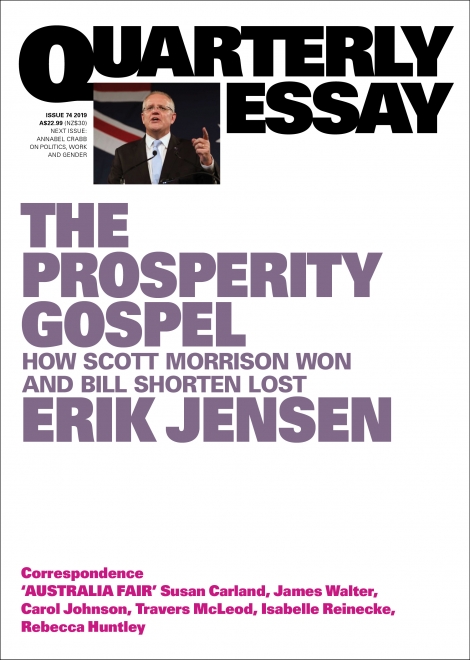
Erik Jensen, The Prosperity Gospel: How Scott Morrison Won and Bill Shorten Lost (Quarterly Essay 74), plus correspondence from QE 75

I approached this Quarterly Essay with reluctance. Did I really need another inside-baseball, after-the-event reading of the tea-leaves about the May federal election? That’s how I felt when the essay came out, and my already-faint enthusiasm has only waned since. But I did read it, three months after the event as has become my custom.

It’s mercifully short. It consists mainly of finely crafted snapshots, mainly of the party leaders in action, from both sides of the election campaign with occasional snippets of commentary, and no sustained argument as such. An essay for the distractible perhaps. Or one that met an impossible deadline, to be published within weeks of the events it deals with. That’s not to say it lacks insight (‘Bill Shorten’s gamble is that you can replace popularity with policy’). But it’s impressionistic rather than discursive, and narrative rather than analytical. It was written on the campaign trail. Bill Shorten gave a generous interview; Scott Morrison refused to be interviewed. There’s no doubt which of the two men emerges as the more likeable, but he is the one who is accorded the most devastating summing-up:

The great truth of Bill Shorten is that he doesn’t know himself. He hasn’t settled his character.

Morrison on the other hand, though his religious belief and his deep commitment to his family are noted, is described in the essay’s final words as ‘a hardman who says everything is simple and some of you will be okay’. Both those summations are beautifully concise, and they’re far from stupid, but neither is justified by the essay that precedes them.

It’s a strange essay, reading sometimes like diary notes from the campaign trail: along with the oft-seen moments like Morrison’s Easter observance, speeches are summarised, mostly without comment; we’re told what books people carry in their luggage; there’s a scattering of off-the-cuff witticisms from staffers; the behaviour of the wives of both candidates is described; sometimes unrelated passers-by are mentioned.

Much of the narrative simply sits on the page, without resonance or further implication that I could discern. An outstanding example is in the account of Morrison emerging from a Healthy Harold igloo (part of a program of health education for children):

Morrison rolls his shoulders when he stands. The tail of his tie not quite to his sternum. He has taken off his jacket: his paunch is oversatisfied and his nipples are erect

(page 48)

This reminded me of a piece by Mungo MacCallum in the Nation Review some time in the early 1970s. Describing Gough Whitlam emerging from a swimming pool, he commented that the honourable gentleman appeared to be very well endowed. That was funny in a transgressively adolescent way, and it chimed with the writer’s clear view that Gough was an attractive big man in other ways as well. Here, the point of mentioning the state of Morrison’s nipples, if there is one, seems to be to tell us that the writer was very close to the action and noticing details, however meaningless. The length of his tie doesn’t even have that, and what does the personification of Morrison’s paunch even mean?

In fact, as a guide to understanding what happened in the election, the essay is eclipsed by the 25 pages of correspondence about the previous Quarterly Essay, Rebecca Huntley’s Australia Fair (my blog post here), which offer a number of interesting and plausible hypotheses about how the progressive-leaning population described so convincingly by Huntley could have delivered the result when it acted as an electorate.

And now perhaps the existence of Jensen’s essay is justified by what turns out to be an excellent correspondence about it at the back of QE 75 (Annabel Crabb’s Men at Work, which I look forward to reading in three months’ time).

Shorten’s speech writer, James Newton, gives an unrepentant insider’s account of Shorten’s campaign, including his now-near-forgotten town hall meetings. Journalist David Marr and scholar Judith Brett offer their analyses. Barry Jones offers the perspective of a grand old man of the ALP. Elizabeth Flux tells us what she learned from being ’employed as a subeditor with a focus on Australian politics’ throughout the campaign, Kristina Keneally writes interestingly about the possible role of religious background. Patrick Mullins & Matthew Ricketson offer historians’ insights. Lawyer Russell Marks gestures towards ‘the deep structures operating through Australia’s political and electoral systems’.

These contributions mostly include evidence that they have read Jensen’s essay. Some of them actually grapple with it, as distinct from using it as a launching pad for their own commentary. Here are some quotes to balance my own underwhelmed response:

James Newton: ‘Instead of wasting words on pseudo-psephology, Erik Jensen gives us telling sketches of the two major-party leaders, their campaigns and the choices Australians faced and made.’

David Marr: ‘The drift of the press is to cut everything short. This guts argument. … The great pleasure of The Prosperity Gospel is to be immersed in the language of the campaign and reconsider the state of politics in this country knowing that what was dismissed as blather in those weeks worked so well on election day.’

Elizabeth Flux: ‘The Prosperity Gospel helped me understand why I found the election result so difficult to come to grips with. It wasn’t that “my team” didn’t win. Or that I liked Shorten more. It’s because it wasn’t a case of one side’s policies winning over the other’s. People were happy to vote for no policies at all, because we’d rather have a strong man selling nothing than a quiet one trying to make changes which he truly believed were for the better.’

Kristina Keneally actually engages critically with the essay, finding it unsatisfying in three areas: ‘First, while Jensen introduces the distinctly different religious foundations for each leader’s policy and political approach, he does not wrestle with what it means that Australia voted for one over the other. … Second, Jensen’s profiles of Morrison and Shorten are incomplete, or at least unbalanced. … Third, he could have explored the role religious affiliation and identity played in the election.’

Patrick Mullins & Matthew Ricketson wonder on paper if people will still go to this essay for insight in the future, say in the lead-up to the 2019 election. They argue (unconvincingly in my opinion) that they should.

Russell Marks laments that while the essay’s subtitle promises an explanation for the election result, ‘Jensen never really expands beyond what is mostly a literary answer.’ He goes on to speak, not quite disparagingly, of political journalists making ‘literary attempts to match leaders’ characters to the nation’s and to find in the intersections why publics endorse one leader and not another’, and then speaks quite disparagingly of ‘armchair psychoanalysis’, though he doesn’t accuse Jensen directly of that.

Tellingly, Jensen’s ‘Response to Correspondents’ ignores them all and makes some observations on what has happened in the months since the election.

Benjamin Law’s Moral Panic 101

Benjamin Law, Moral Panic 101: Equality, acceptance and the Safe Schools scandal (Quarterly Essay 67, 2017)

qe67.jpgIn conversation with David Marr about this Quarterly Essay at the Seymour Centre in Sydney recently, Benjamin Law produced a wad of A4 paper at least 4 centimetres thick printed on both sides. It was a print-out of articles published in the Australian covering, or at least mentioning, the Safe Schools program over a single year, roughly one every two days. The stories, he says in this essay, ‘were at best inadequate or misleading, at worst simply false’.

The essay summarises the Australian‘s campaign and its effects. It attempts to correct the record about the nature of Safe Schools, which was not a vile, child-corrupting Gay Marxist propaganda program, but a well-thought out, minimalist initiative to help schools counter bullying of lesbian, gay, bisexual, transgender, intersex and queer children, launched by the Abbott government in 2014, having been committed to by the Gillard government in its last weeks. The essay lays out much-needed information about where the medical profession and the law in Australian stand in relation to young people who identify as transgender, about queer theory, about the significance of same-sex marriage in combatting the systemic oppression of LGBTIQ people. Perhaps most tellingly, it reports on conversations with some of the young people whose wellbeing Safe Schools sought to protect (and still seeks, though not in all states and without federal funding) – something not done by any of the Australian‘s 200 or more articles.

Moral Panic 101 could be a sequel to Robert Manne’s Quarterly Essay 43, Bad News: Murdoch’s Australian and the Shaping of the Nation (2011), which provided an epigraph for one of its sections:

In these campaigns, [the Australian‘s] assigned journalists appear to begin with their editorially determined conclusion and then seek out evidence to support it.

Here, extracted from Law’s essay, is a dishonour roll of journalists who, either as right-wing culture warriors or as uncritical relayers of the RWCWs’ ‘facts’, contributed to the News Corp’s campaign:

  • Miranda Devine, ‘the Daily Telegraph‘s resident prophet of doom’
  • Rita Panahi, ‘Herald Sun columnist and Twitter firebrand’
  • Natasha Bita, ‘a Walkley Award–winning journalist who has worked across News Corp’s mastheads since the 1990s’
  • the Herald Sun‘s Susie O’Brien
  • The Australian‘s Rebecca Urban, who wrote thirty-one stories and 17 thousand words about Roz Ward and Safe Schools in one year, ‘all of which were critical’
  • Andrew Burrell, who co-wrote at least one of Rebecca Urban’s articles.

No one was surprised when News Corp went after Benjamin Law the week this essay was published. Given that he’s such a sweet presence they had to search, but they found an ugly tweet, misinterpreted it to make it infinitely uglier, and banged on about it for days, to the extent that Lyle Shelton could give him as an example of the ugliness of the Yes campaign (few reasonable people would see the goodlooking, charming, witty and intelligent Mr Law as in any way ugly). The most astonishing moment in the Marr–Law conversation at the Seymour Centre was that both men revealed that they still subscribe to the Australian.

It’s easy to become fascinated by the illogic, hypocrisy and dishonesty of some commentators, journalists and public figures (I don’t follow @realdonaldtrump on Twitter but I regularly go looking to see what he’s tweeted). What Law has done in this essay, in carefully documenting, analysing and refuting the misrepresentations, goes well beyond that fascination, and has earned our gratitude.

We can also be grateful for his discussion of transgender issues, based mainly on interviews with young transgender people and with Dr Elizabeth Riley, who has worked with gender-variant young people for about a decade. Contrary to what some parts of the press might imply, for example, medical experts in Australia will not prescribe irreversible hormone treatment before puberty. And no Australian minor can commence irreversible hormone treatment without a determination from the Family Court that ‘the child had sufficient intellectual sophistication to understand what was involved, and all the possible consequences’.

Few things can trigger emotional responses more than the accusation of harm to children, especially harm that involves sex. It’s an extraordinary achievement of this essay that, while it leaves you in no doubt where it stands, it remains judicious, calm, reasonable and open to complexity. It doesn’t feel like the last word on the subject, but it’s a good one.
—–
A final note. Like  most current or retired editors or proofreaders, I tend to be distracted by my own pedantry. If I hadn’t been a fan of Benjamin Law and editor Chris Feik before, I would have been when I read this sentence, talking about queer theory, which says ‘discomfort’ where far too many people would have ‘discomfit’, thereby depriving us of the other useful, but now dying meaning of ‘discomfit’:

After all, one of its central tenets is that it’s supposed to discomfort people by upending how we perceive norms, and by interrogating the social scaffolding around gender and sexuality we take for granted.

SWF 2017 Thursday

It was T-shirt weather for my first day of this year’s Sydney Writers’ Festival at Walsh Bay. The crowds and queues were big enough to create a buzz without  inducing panic. Having collected my tickets for the next five days I started out with a free event in the early afternoon:

1.30 And the Award Goes to…

This is a regular event showcasing winners of the NSW Premier’s Literary Awards. Not all of them, of course: this year’s it was Heather Rose, who won the Christina Stead prize for her novel The Museum of Modern Love, and James Roy and Noël Zihabamwe, who won the Ethel Turner Prize for their A Thousand Hills. Suzanne Leal, the Senior Judge of the Awards, chaired.

Heather Rose spoke of the advantages of obscurity: The Museum is her seventh novel, all the others having been published to little acclaim. Add that she lives in Tasmania, and she has been able to write as she wants, without having to meet someone else’s marketing or other agenda. She said she wrote this novel as a love letter to women in art, who do marvellous work and then are sidelined by art historians. Marina Abramovich, whose performance piece The Artist Is Present is central to the book, became famous when the novel was well under way, and her new celebrity meant significant changes in the book: if I heard properly, at that stage the character in the novel had to be Marina herself rather than a fictional Marina-like character.

James Roy had a different take on obscurity. He opened with something he would have liked to say at the awards ceremony but realised it would have been graceless: even though he has been well supported and has won substantial prizes, he knew on Sunday night that if he won the award on Monday night, he would still have to turn up for his job in retail on Tuesday morning. (Suzanne Leal interjected that she had recently interviewed some women who had collaborated on a writing project because they wanted to earn a lot of money – cue disbelieving laughter.)

Noël Zihabamwe’s own story is similar to that of the book’s hero – both lost their families in the Rwandan massacre of 1994. So for him the writing was an intense experience. He told us that one effect of having the book published was to feel that he was acknowledged: ‘I’m not nothing. I’m something.’ He read from the book, and the conversation addressed the big question, how to write about such a monstrous event and keep some sense of hope.

All four people on the stage were warm, open, smart. James Roy did a nice favour to those of us who couldn’t be at the awards ceremony. He quoted a number of times from Joanna Murray-Smith’s address. An image that resonated with him and, he thought, with every writer, is that every work begins as a tiny burning wick, which if you persevere expands until it lights up all the corners of the room. I think it’s fair to say that the Sydney Dance 2 was lit up by these four luminaries.

I sat next to a young man who arrived clutching a copy of Leah Purcell’s The Drover’s Wife (which won Book of the Year). I asked if he’d seen the play at Belvoir Street. No, but he had seen the archive video – evidently you can contact the Belvoir and arrange a time to see the archive version of any of their productions. How good is that bit of incidental learning?

3 pm: Poetry and Performance
Poetry has moved up the status chain at the Sydney Writers’ Festival. This event didn’t happen in the tiny sun-drenched mezzanine room at the end of the wharf that we have been accustomed to, but in the main theatre across the road with more than ten times the capacity. And it wasn’t free.

But maybe of course it’s not poetry as such that’s moved up. Maybe today’s crowd was drawn by clickbait titles like Keats is Dead so Fuck me From Behind,  or fusses about menstrual images on Instagram, or the prestige of poet laureateship, or other forms of cool, rather than the art of purifying the language. Whatever, this was a terrific event. In order of appearance:

  • Miles Merrill, who has done more than anyone to foster spoke word in Australia, emceed, opening proceedings with some of his trademark mouth noises, which he told us was a work called ‘Some poems can’t be written down’
  • Carol Ann Duffy, proving that a UK poet laureate can be fun, read from a lectern at the side of the stage  from her collection The World’s Wife. The witty, acerbic narratives of ‘Mrs Tiresias’ and ‘Mrs Aesop’ were perfect for the occasion. ‘Mrs Tiresias’, a monologue by the wife of Tiresias, a man who was turned into a woman for seven years, lightly challenges some modern pieties about gender fluidity.
  • Hera Lindsay Bird (who wrote the aforementioned clickbait) walked to centre stage and read a number of poems, including one that revolved around her dislike for the character Monica in the TV sitcom Friends. So pop culture reference, frequent use of the work ‘fuck’, and a preoccupation with relationships: not my cup of tea.
  • Canadian Ivan Coyote started out by saying, ‘I’m not a poet, I’m a story teller,’ and read us a number of ‘Doritos’, which would certainly pass for poems. Most of them dealt with other people’s struggle with Coyote’s challenge to seeing people in terms of  gender binaries. I loved the moment when a small child, told by his mother to stop bothering (her) Coyote, looked long and steady ito COyote’s eyes and said,  ‘I don’t think he’s a lady. I think he’s a man, but with pretty eyes.’
  • Ali Cobby Eckermann took things to a different place: she began with an acknowledgement of country, reminded us that this is the 20th anniversary of the Bringing Them Home report, and said that more Aboriginal children have been removed from their parents in recent years than ever before in Australian history. Having grabbed our attention, she then held it with poems from a number of her books, including the marvellous Inside My Mother.
  • Rupi Kaur (who has been the subject of a big fuss on Instagram) read some poems and then performed a couple of spoken word pieces. I think I would have preferred to hear her (and Hera Lindsay Bird) at a spoken word event, where audience response is so much part of things. No clicking of foot-stamping or voting here, so lines like  ‘I want to apologise to all the women I have called pretty before I’ve called them intelligent or brave’ end up sounding a little glibly correct-line.

Even if people came for the sexy controversy, they got poetry, and a fabulous variety of it.

Then I got to sit in the sun and read, occasionally chatting to passing strangers (including one man who had been to school with Tom Keneally), and back to the big theatre a bit later for:

6.30 pm The Politics of Fear
David Marr and John Safran chatted with the Wheeler Centre’s Sophie Black about Pauline Hanson’s followers and Australia’s extreme right. Sophie introduced them by saying they would join the dots between those two groups, but not a lot of dot-joining happened, or really was needed.

David Marr spoke to his recent Quarterly Essay The White Queen, and John Safran to his Depends What You Mean By Extremist: Going Rogue with Australian Deplorables. Both were interesting and insightful, and at times surprising. It was an excellent conversation, an I left it wondering if there isn’t something futile about too much close reading of the far right, with the end message that even though these people are a small minority they wield a lot of power because of the way our electoral system works. As David Marr said towards the end, the vast majority of Australians – including most Hanson followers – think same-sex marriage and euthanasia should be legalised and penalty rates should stay in place, but governments simply won’t or can’t follow the clear will of the people. It took one of the questioners at the end to ask what is to be done, and the answer wasn’t particularly satisfying.

So we went home glad we’d been but a little disgruhntled through the final run-throughs of a number of Vivid installations (opening the next night).

David Marr’s White Queen

David Marr, The White Queen: One Nation and the politics of race (Quarterly Essay 64, 2017)

Pretty much ever since Pauline Hanson appeared on the political scene, there have been protests that the mainstream media pays too much attention to her. These tweets from March are recent examples:

tweet.jpg

I sympathise with the sentiments, but the ‘no-platform’ cry is surely wrong-headed. True,  it’s painful to see precious media minutes taken up with, for example, crackpot comments on the Great Barrier Reef, but it’s the electoral system that has given Pauline Hanson a platform, and for the media to ignore her now would be derelict. Just recently, though, it’s hard not to feel we’re getting too much of a not-so-good thing: the ABC’s 4 Corners aired ‘Please Explain‘on 3 April; Richard Cooke’s ‘Alt-Wrong‘ is in the current issue of The Monthly; the summer issue of Overland gave us ‘No Pasarán!’ by Vashti Kenway (who as a teenager in 1996 threw eggs ‘with wild joy’ at Hansonites); and now here’s David Marr’s Quarterly Essay.

9781925435498.jpgThe essay obliquely acknowledges this dilemma. Marr writes, ‘Most Australians reject everything that Hanson stands for,’ but nevertheless ‘politics has been orbiting around One Nation since the day she returned to Canberra’.
The essay gives a history of Ms Hanson’s political career since her stint on the Ipswich city council in the mid 1990s. It chronicles her turbulent relationship with the mainstream political right, including John Howard’s refusal to condemn her infamous ‘swamped by Asians’ maiden speech and his later opportunistic adoption of her policies (the section outlining Howard and Hanson’s trajectories is titled ‘Made for Each Other’). It reminds us of her brief sojourn in gaol and her release on a technicality (what she meant to do was illegal, but she hadn’t actually managed to do it). It takes us through her series of Svengalian advisers. It traces her progress, if that’s the word, from having ‘a folksy distaste for the blacks of Ipswich’ to being ‘an ideologue of race’ with ‘a conspiratorial mindset’.

Anyone who follows Australian politics will already know most of this, but it’s good to have it laid out plainly and without weaselly ‘balance’. There’s also joy to be had in the section ‘A Note on the Language’, which – as Raymond Williams’s Keywords did on a broader scale 40 years ago – examines the loaded meanings of words that have become prominent in the language of reactionary politics. Marr’s analysis isn’t as penetrating as Williams’s or that of the Keywords Project that continues his work, but it includes a number of gems, such as the entry on Free speech, which begins;

Free speech
Not about everything. Mainly Race. But it’s not free speech for pinging racists for being racists. That’s censorship or, indeed, persecution.

Pinging racism, as it happens, is at the heart of the essay. Where Marr’s previous QEs – on Kevin Rudd, Tony Abbott, George Pell, Bill Shorten – have been mainly character studies, this one is less interested in personality than in politics. It aims, as Marr says in a note on his sources, to put ‘a floor of fact under speculation about Hanson and her political appeal’. The fifteen-page section ‘Pauline’s People’ leans on the latest Australian Electoral Study numbers, drawing into the discussion ‘several professional pollsters who have conducted focus groups among resurgent One Nation voters’. One Nation voters in 2016:

  • were almost entirely Australian-born (98 percent, with the Nationals coming closest at 91 percent)
  • mostly described themselves as working class (66 percent, with the nationals again coming second at 46 percent, and Labor at 45 percent)
  • compared to the general public, included half the proportion of university-educated people and twice that of people with trade qualifications
  • thought things were ‘a little’ or ‘a lot’ worse for them than a year ago (68 percent, with Labor running second at 38 percent)
  • believed politicians ‘usually look after themselves’ (a huge 85%, with the Greens a poor second at 51 percent)
  • considered immigration ‘extremely important’ when deciding how to vote (82 percent), thought immigration should be cut ‘a lot’ (83 percent), believed migrants increase crime (79 percent) and take our jobs (67 percent)
  • the kicker, ‘agree’ or ‘strongly agree’ with turnbacks of boats containing desperate people seeking asylum (a whopping 90 percent).

And 88 percent of them want the death penalty to be reintroduced.

‘Hanson’s people,’ writes Marr, ‘are not implacable conservatives.’ From marriage equality to euthanasia, they’re open to the small-l liberal agendas. They are generally in work and middling prosperous, though they’re ‘oddly gloomy abut their prospects’. They are overwhelmingly pissed off with government, against immigration and all for law and order. Of these, the hottest topic is immigration.

And as for racism:

Hanson’s people know she is talking race. They talk about it themselves in focus groups. Her candour on race is fundamental to their respect for her. They fear being branded racists if they complain about burqas and mosques and schools forbidding Christmas. She is not afraid. … ‘We’re not racist,’ they say. ‘We support Asians. We like them. We think they’ve done a lot here.’ But they don’t like Muslims. They don’t talk bombs and terrorist attacks in focus groups, though perhaps the threat of violence is somewhere in their minds. They talk a bit about lost jobs and a lot about people not fitting in. Not even trying to fit in. …

I’ve come to think it’s not much use asking if Australia is a racist country. It’s too broadbrush. The better question is: what role does race play in the politics of the country. This is not the politics of class or the politics of money, but the politics of difference.  … The politics of race reassures white Australians unsure of their place in the heap that they’re on the only heap that matters.

Yet, as he says elsewhere, ‘neither Coalition nor Labor leader will bluntly call Hanson on race … the tactical impulse of the major parties is to flinch from naming her for what she is.’ As one of the most significant politicians of our times might say: Sad!


Added later: I forgot to say that one of the best things in this Quarterly Essay is the correspondence about the previous issue, Stan Grant’s Australian Dream. There are robust contributions from Aboriginal people – Alice Springs activist Jacinta Nampijinpa Price, Monthly contributor Amy McQuire, and the venerable Marcia Langton. George Megalogenis has intelligent things to say about Grant’s comparison of some Aboriginal experience with that of migrants. Kim Mahood brings her particular whitefella insights to bear. And Stan Grant uses his right of reply with robustness, civility and nuance.

David Marr’s Faction Man

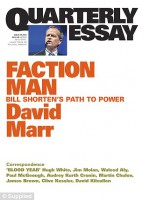
David Marr, Faction Man: Bill Shorten’s Path to Power (Quarterly Essay 59)

qe59

Some trivia to start with: Timothy Conigreve, whose memoir Holding the Man has been made into a deeply affecting film, attended the same secondary school as Bill Shorten: the Jesuits’ Xavier College in Melbourne. Congreve performed in a school production of Romeo and Juliet in the late 1970s; Shorten staffed the box office for a Romeo and Juliet in the mid 1980s.

David Marr’s Quarterly Essay doesn’t mention Tim Conigreve or Romeo and Juliet, but it paints a portrait of a man who, having functioned brilliantly behind the scenes, now stands centre stage. It also reminds us that Tony Abbott is another Jesuit old boy, and invokes the Jesuit ideal of ‘a man for others’ of Shorten, a phrase that is at the heart of a brilliant piece on Abbott by Katherine Murphy. A Jesuit education can clearly lead to very different outcomes.

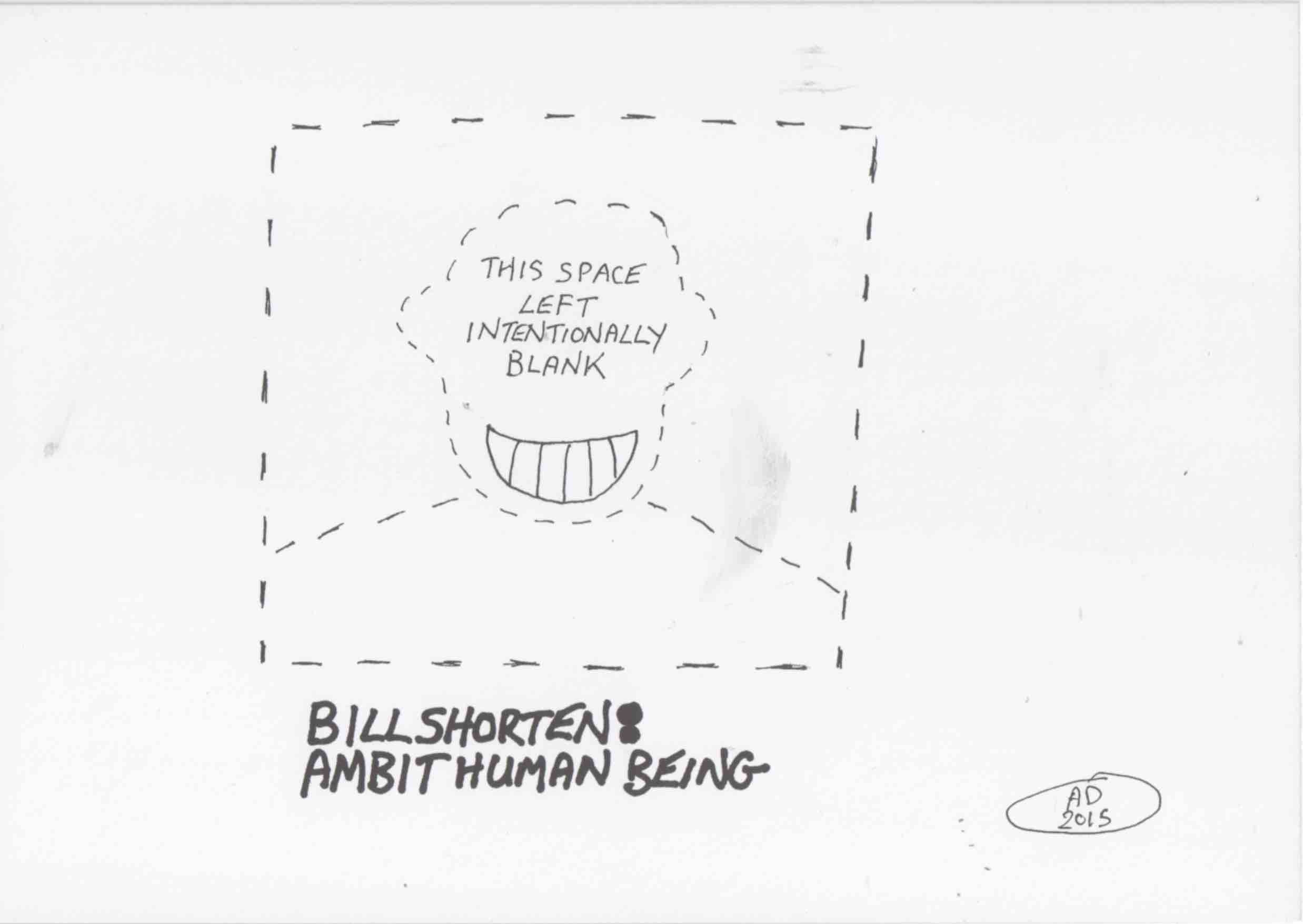
Marr asks about Bill Shorten the same question he has asked about Kevin Rudd, George Pell and Tony Abbott in previous essays: who is he? The question has a particular flavour in Shorten’s case because, as Marr says, he is ‘a man from nowhere’: ‘Where Tony Abbott is disliked quite viscerally now that he is known, Shorten is suspect because he isn’t.’ One of Andrew Denton’s cartoons in the fabulous Going Down Swinging Longbox (which I’ll blog about soon, and which I assume it’s OK to quote here), makes a similar point:

adbs

To treat politics as if it is all about personalities is to debase the public discourse. But it really does help to know something about the people who are vying for the top political job, about where they come from and – now that politicians are so intent on telling voters in marginal seats what they want to hear – what we can figure out about their agendas.

Marr’s essay gives the background – one of twins, the son of a university lecturer mother and a sailor turned small businessman father, Shorten educated in Catholic schools, including Xavier, joined the ALP while at school and threw himself into student politics at university. The story gets interesting – and incredibly intricate – when young Bill becomes an organiser for the AWU and enters what Marr calls ‘the dark world of Victorian politics’. Shorten quickly mastered the politics of the ALP right, proved to be a brilliant recruiter who, as he took on leadership, reanimated the ‘shot duck’ union.

The history is interspersed with vignettes that are closer to the present moment: Shorten’s successful management of potentially rancorous differences at the ALP National Conference this year; Shaun Micallef’s skewering of his sub-Keating wit, his ‘zingers’; his time in the witness box in Tony Abbott’s politically motivated Royal Commission; a list of his nicknames, from Lot’s Wife‘s Bill ‘Career Move’ Shorten in 1987 to Tony Abbott’s Barnacle Bill in 2014.

The picture that emerges is a man who has a phenomenal talent for union politics. Bill Shorten has been a master of the deal – all the hard work, sweet talk and hard-man tactics, betrayal and compromise happen behind the scenes. His role in the manoeuvring to replace Kevin Rudd as Prime Minister with Julia Gillard and then to replace Julia Gillard with Kevin Rudd was in that same mode, though more visible and not a good look (Marr doesn’t mention it, but the captions of newspaper photographs of him at that time called him, paradoxically, a ‘faceless man’.) Now that he is seeking to become Prime Minister, he is in new territory: this competition has to happen in the open – out of the box office and onto the stage, perhaps. When the essay was written, Tony Abbott was his opponent. With the infinitely more personable Malcolm Turnbull in the other corner, Shorten’s challenge remains much the same. This essay helps us to see who he is and the world that he comes from: he needs to find a way to show himself in a way that the electorate will take to him.

Speaking at Gleebooks last night, David Marr said this was the hardest writing assignment of his life, because ‘the terrain is so unspectacular’. Maybe, but there will be a federal election in the next 15 months, and Bill Shorten’s conservative Labor style and substance will be part of some interesting times.

—–

Up the back there are 40 pages of correspondence about the previous Quarterly Essay – that is to say, some discussion of IS, Iraq and Syria that doesn’t bristle with terms like ‘death cult’, ‘baddies and baddies’ or even ‘evil’, but is all about military strategy. I’m a pacifist, but I love the way these people can argue their cases.

Linda Jaivin’s Found in Translation

Linda Jaivin, Found in Translation: In praise of a plural world (Quarterly Essay N° 52)

QE52Every now and then the Quarterly Essay series leaves aside the world of party politics and the headlines. The last time it did that was in N°41, David Malouf’s The Happy Life. In this one, Linda Jaivin, professional translator from Chinese to English, entertains, informs and advocates on a number of fronts, all to do with her profession, which is also clearly a major passion.

I’ve been interested to the point of fascination in reading about translation ever since Brother Gerard, my high school Latin teacher, explained that when he said my unseen exercise was a very good attempt he was offering high praise, because all one could ever do was attempt to translate, the thing itself being impossible. And I remember how thrilling it was in first year university when our lecturer spent a good ten minutes exploring the nuances of a single word (it was ‘serratum’) in a passage of Virgil. This essay feeds that fascination beautifully, with a wealth of personal anecdotes and snippets from the public record that range from hilarious to frankly chilling. It also has an urgent, cogent point to make about the importance of learning languages other than English as a significant and necessary counter to domination of politically weaker cultures by the stronger.

Having recently re-read Vikram Seth’s The Golden Gate and been sent back by it to a translation of Pushkin’s Eugene Onegin, and of course inspired to my own dabbling with the Onegin stanza, I loved reading about a chain of creations and translations involving the Seth novel:

Stirred by Seth’s brilliant homage, the Israeli writer Maya Arad read Pushkin in the original Russian and then wrote her own verse novel in Hebrew in 2003, translated into English by Adriana Jacobs as Another Place, Another City. … David Bellos marvels at how ‘the very diluted version of the Onegin stanza in Adriana Jacob’s translation of Maya Arad’s imitation of Vikram Seth’s imitation of Charles Johnson’s verse translation of Pushkin resurrects something of the lightness and joy of Onegin’s youth.’ Babel can never be recovered; it never existed. Yet translation allows the construction of great towers, in which each brick may be laid by someone speaking a different language but sharing a common vision.

And up the back is an excellent selection of correspondence on QE51, David Marr’s The Prince, which dealt with Cardinal George Pell’s response to clerical child abuse. I particularly appreciated the responses from four Catholics: Geraldine Doogue, Michael Cooney, Frank Bongiorno and Paul Collins.

awwbadge_2013This is another title in my Australian Women Writers Challenge for 2013.