Tag Archives: Ken Bolton

Ken Bolton’s Metropole

Ken Bolton, Metropole: New Poems (Puncher & Wattmann 2024 )
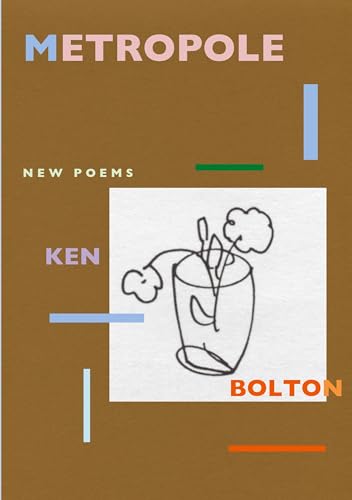
I’m more than a bit in love with Ken Bolton’s poetry, but I was at a loss what to write about Metropole without in effect repeating what I’d said about his three previous books that I’ve read (you can see those blog posts here, here and here).

Then I saw a headline on the Overland website: ‘The trouble Ken Bolton’s poems make for me, specifically, at the moment’ by Linda Marie Walker. Ah, I thought, someone who hates his poetry! Maybe they’ll point out ingrained misogyny or other cancellable qualities. Someone I can get into an argument with!

No such luck. The article is a very funny account of how Linda Marie Walker has enjoyed three of Bolton’s poems – where the word ‘enjoyed’ has complex meanings. All three poems she discusses appear in Metropole. Her ‘trouble’ with Bolton is partly summed up in this sentence:

These poems are, for me only, perhaps, enormous art museums with small and hopeful labels beside the works, just tempting enough to turn me into a rabbit sitting beside a trap at the mouth of the burrow/hole.

It’s not only you, Linda Marie.

So, rather than someone to fight with, I found someone who can describe the pleasures of these poems infinitely more satisfyingly than I can.

So I’ll stick with page 78*, which is the 12th of 14 pages of the poem ‘A Misty Day in Late July, 2020’, and has its own small and hopeful labels. It’s a Covid poem – specifically, according to one of Bolton’s delightful endnotes, Covid ‘as experienced by Adelaide: a “phoney war” situation as the city at the time remained relatively disease-free’.
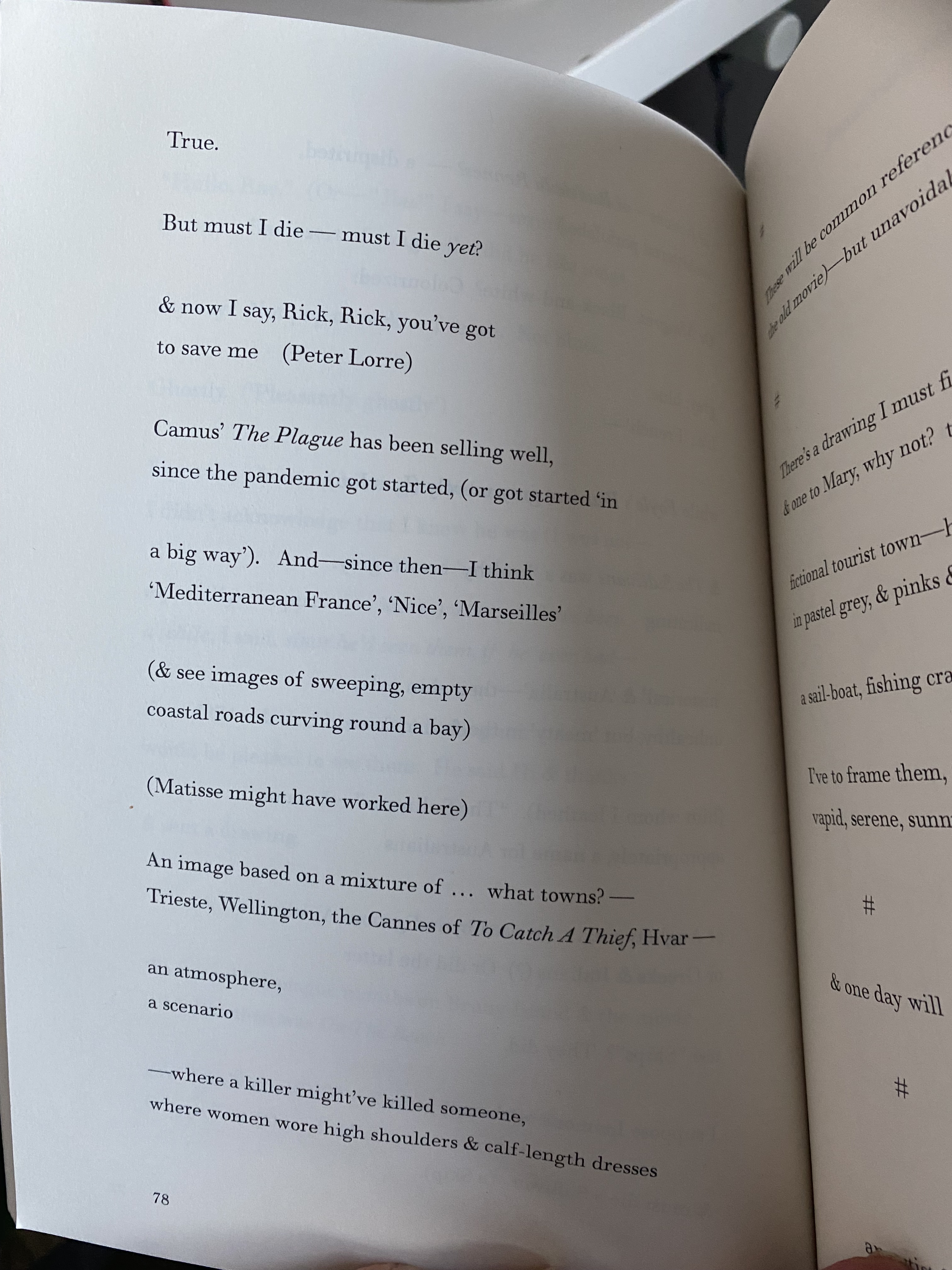
The first lines of this page will seem melodramatic when presented without what has gone before:

True.

But must I die – must I die yet?

You could read the preceding pages as designed to blunt the force of that question. They have circled the subject of the Covid pandemic – describing family activities and a richly metaphorical fog on Bruny Island, quoting an ‘unflappable’ writer in the London Review of Books, remembering friends who have died long ago, and referring to movies and TV shows of tangential relevance. Somehow the poem arrives at the 1970s WWII TV series The Sullivans, and Bolton/the speaker remembers that ‘the Sullivans’

_____________________ _______________ became
appropriately, a name for Australians

or Anglo types ... as used by Indigenous Aussies ...
or Greeks & Italians

He supposes he is ‘one of them’ and says he ‘must die a Sullivan’. Almost by accident, it seems, he has explicitly acknowledged the prospect of his own death – and the stark threat from Covid is momentarily present.

True.

But must I die – must I die yet?

The rest of the page is a lovely example of the way Bolton’s poetry fizzes with allusion. (I’m reminded of a favourite line from Martin Johnston: ‘Even my compassion reeks of libraries.’) First, in recoiling from the thought that Covid might kill him, expresses the recoil by quoting from an old movie:

& now I say, Rick, Rick, you’ve got
to save me (Peter Lorre)

That’s from Casablanca, which has been mentioned earlier in the poem because of the fog. I went down that little rabbit hole to watch the scene on YouTube. The actual line is, ‘You must help me, Rick. (Then, as he is being dragged away) Rick! Rick!’ This is not an academic exercise where the quote needs to be exact – the line is quoted as it sits in the poet’s memory.

It turns out that the quote is a bridge back to safe ground. Mention one classic story, and the mind can go to another, and at the comfortable remove provided by sales figures. He also finds reassurance by putting ‘in a big way’ in minimising quote marks:

Camus' The Plague has been selling well, 
since the pandemic got started, (or got started 'in

a big way').

And then he’s away, play on associations with the foggy scene outside.

a big way'). And – since then – I think
'Mediterranean France', 'Nice', 'Marseilles'

(& see images of sweeping, empty
coastal roads curving round a bay)

(Matisse might have worked here)

An image based on a mixture of ... what towns? –
Trieste, Wellington, the Cannes of To Catch a Thief, Hvar –

Bolton is well-travelled. I haven’t been to Trieste, hadn’t heard of Hvar, and have to do a bit of mental calisthenics to see what Wellington and the Cannes of To Catch a Thief have in common – I guess it’s the coastal roads and steep hillsides. A reader could get hung up on not knowing the town referred to, or wondering about Matisse landscapes (and I did just google “Matisse landscapes”). The effect, though, is to find distraction / refuge / escape (?) – the poem’s speaker has travelled in his mind to faraway places, to works of art.

In the last lines on the page, he progresses in his escapist reverie from an image, to an atmosphere, to a scenario. In the final couplet, death again shoulders its way into the picture, to be turned away from in a whiplash switch to images from the old movies:

– where a killer might've killed someone, 
where women wore high shoulders & calf-length dresses

When I read the poem for the first time, I confess I just went with the flow, enjoying the back and forth of image and allusion, picturing Audrey Hepburn and Cary Grant in their convertible on the Corniche. Only reading it now with hands on the keyboard, I can go some way to articulating what’s happening. The final lines of this poem, two pages further on, make new sense to me:

The West has invented
some great glass-bead games

& I have been a sucker for all of them

Hermann Hesse’s The Glass Bead Game is another classic work I haven’t read. According to Wikipedia, the game ‘is essentially an abstract synthesis of all arts and sciences’ which ‘proceeds by players making deep connections between seemingly unrelated topics’. Not a bad description of what happens in Bolton’s poetry in general, and this one in particular. But Bolton doesn’t present himself as a polymath champion of the game. Polymath he may be, but that just makes him a sucker.

This is poetry that cries out for a collaborative reading. Or maybe it’s me that’s crying out – not ‘you’ve got / to save me’ but ‘come and enjoy this with me!’


I wrote this blog post in Gadigal Wangal country, as the days are starting to get longer, and the banksia are in flower. I acknowledge Elders past, present and emerging for their millennial long, and continuing custodianship of this land.


My blogging practice, especially with books of poetry, is to focus on the page that coincides with my age, currently 78.
Ken Bolton’s Whistled Bit of Bop

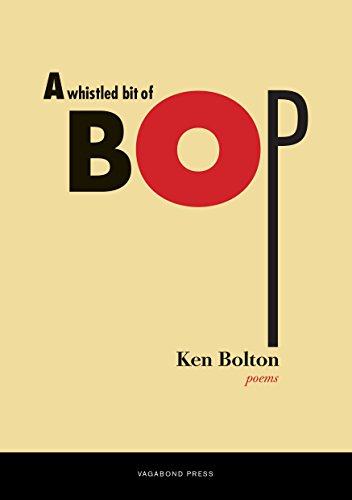
Ken Bolton, A Whistled Bit of Bop (Vagabond Press )

I recently heard a British podcaster describe Louis MacNeice as ‘a highbrow ordinary bloke.’ The implied combination of approachability and erudition struck me as a spot-on description of Ken Bolton in these poems.

As the book’s biographical note tells us, Bolton is a prolific art critic and journal editor as well as a poet. As if to emphasise his intimidating high-browness, the back cover blurb speaks of poetic abstraction and lists members of a ‘pantheon’ who appear in the poems: a timid reader who wasn’t sure who Ashbery or Berrigan are (note the use of second names only – the highbrow equivalent of Cruise and Nicholson), or had never heard of F T Prince or Peter Schjeldahl, might quail.

It’s true that the poems fairly bristle with erudite references. But when one turns to the endnotes for help, here’s part of what they say the second poem in the book, ‘Europe’:

As with many of these poems there are references to art – to Winckelmann, Mengs, Jacques-Louis David – but as the joke is that they are so little thought of now it would be perverse to explain them here.

I stopped worrying about my ignorance, and started getting the joke.

In these poems, an ordinary bloke hangs out in cafes people-watching, or stays up late writing to his adult son on the other side of the planet, broods about friends alive and dead, meditates on art and poetry, and (so it generally feels) somehow lets the flow of his mind find its way onto the page. It’s a lively, questioning, self-conscious and sometimes self-mocking mind. You really don’t need to know who Winkelmann is to have fun reading ‘Europe’. Probably it’s more fun for better educated readers, but that’s not a reason to be intimidated.

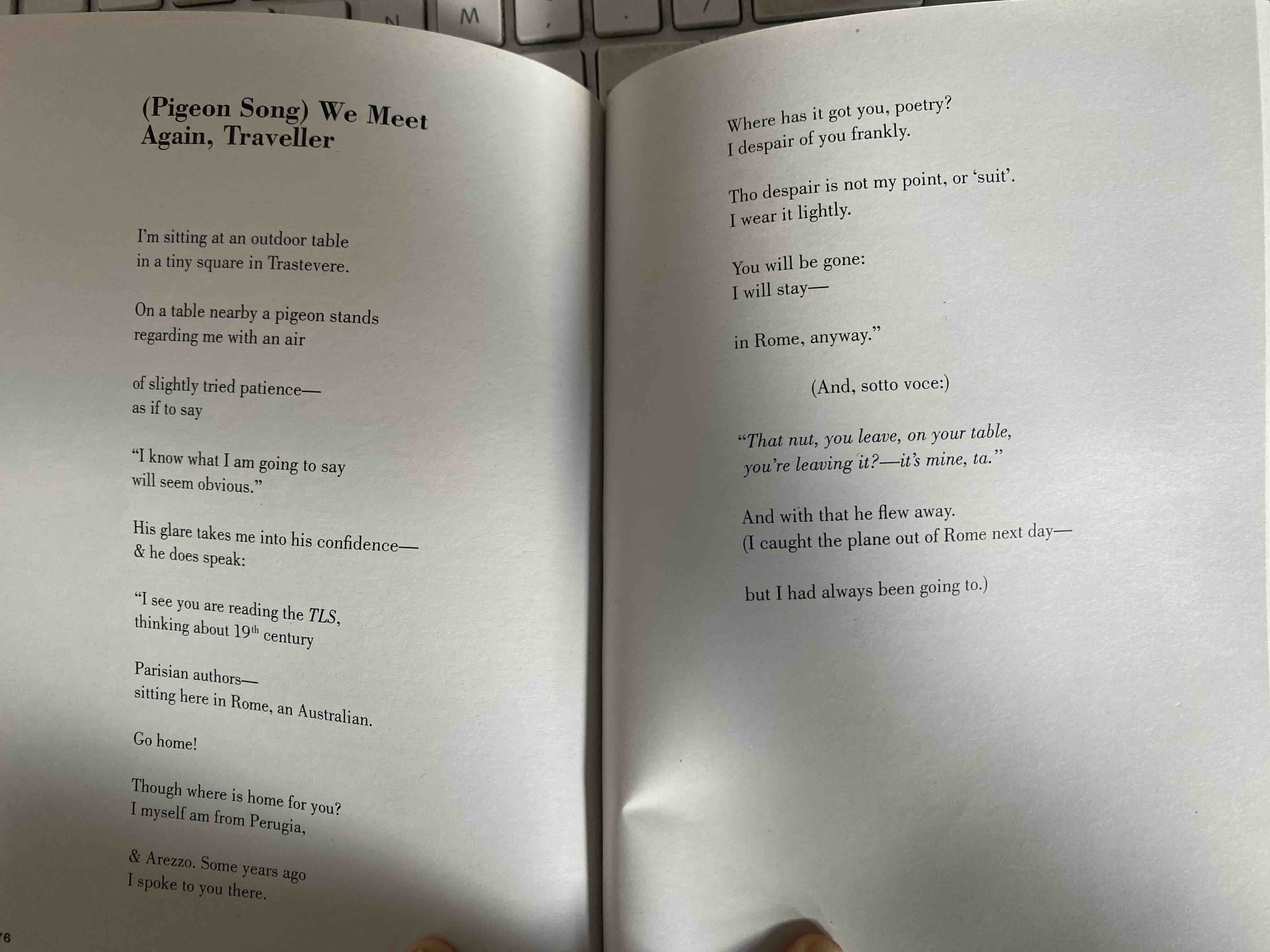
I loved the whole book, but I’ll keep to page 77*. It’s the right-hand side of the spread containing ‘(Pigeon Song) We Meet Again, Traveller’ which, by sheer good blogging fortune, is the shortest poem in the book. Click to enlarge this image:

Not strictly part of the poem, there’s an endnote:

Pigeon Song: a white pigeon with reddish brown flecks on it & around one eye. Strangely the bird had no accent, & spoke in English.

It’s a quietly comic poem in which an Italian pigeon questions an Australian poet about his life choices, after which both pigeon and poet do what they would have done if the conversation hadn’t happened. I hope I won’t make it any less enjoyable by doing a little ‘slow-reading’. With a lovely light touch, it airs some serious issues.

First the title. Its complexity is explained by yet another endnote: the words in brackets, ‘Pigeon Poem’, were a working title, and ‘We Meet Again, Traveller’ is the title finally settled on. Showing his working in this and other ways is one of the things I love about Bolton’s poetry: he lets the reader in on his process. Apart from the title, there’s not a lot of that in ‘We Meet Again, Traveller’. The comic endnote makes up for that absence a little: it implies that the fantasy is based in a real-life moment, and suggests that Bolton may have considered having the pigeon speaking in Italian or with an accent, but – happily – rejected both options.

The action of the poem takes place, typically, in an intellectual ambience. Bolton is sitting at a cafe table in Trastevere, a cool part of Rome that’s home to four or five academic institutions, where sitting at a table reading a literary journal wouldn’t stand out. (As even middlebrow ordinary blokes know, the TLS is the Times Literary Supplement.)

But there’s nothing rarefied or highbrow about the pigeon. Who among us, sitting alone at an outdoor table, hasn’t felt judged by a beady-eyed pigeon (or ibis if you live in Sydney)? This particular judgmental pigeon voices something of the complex unease of being a settler Australian poet, deeply meshed in European culture with an unresolved relationship to the actual land where one lives:

I see you are reading the TLS,
thinking about 19th Century

Parisian authors –
sitting here in Rome, an Australian.

Go home!

London, Paris, Rome, Australia, past and present: it’s complex. I’m reminded irresistibly of a music hall ditty I loved as a child (and which, as a complete irrelevance, I once heard the late Dorothy Hewett sing):

Why does a red cow give white milk
when it always eats green grass?
That's the burning question.
Let's have your suggestion.
You don't know, I don't know, don't you feel an ass?
Why does a red cow give white milk
when it always eats green grass?

The pigeon then asks a key question with characteristic Boltonian (Boltonic?) lightness of touch.:

Though where is home for you?

If you are so immersed in European culture, is your home in a physical location or in a less tangible ‘place’? As in the music hall song, the burning question goes unanswered.

The pigeon knows where its home is, though it too has travelled. Then:

and Arezzo. Some years ago
I spoke to you there.

This may be referring to an earlier Bolton pigeon-poem that I haven’t read, or to a time when he visited Perugia in real life, perhaps to study at the Università per Stranieri. (Decades before Duolingo, Perugia was often mentioned among Australians of a certain age and education as a place to go to learn Italian.) The content of that earlier conversation, whether the subject of an earlier poem or not, was evidently the Bolton’s poetic aspirations:

Where has it got you, poetry?
I despair of you, frankly

But then, having dipped by pigeon-proxy into the well of settler-anxiety, self-doubt and possible despair, the poem returns to lightness. (I’ll just note in passing that I don’t understand the word ‘suit’, or why it’s in inverted commas – any help welcomed in the comments.) The pigeon, dropping its role as cultural challenger, asks the question that’s actually on any judgemental-looking pigeon’s mind. And both pigeon and poet fly away, as they were both going to anyway.

The poem consists of eighteen stanzas, most of them couplets. I can’t say much more than that about the form, except it’s good to notice the use of rhyme in the last third of the poem: stay, away, sotto voce, away, day. Reading those lines aloud, the rhyme creates a sense of relief that the awkward conversation is over: things flow easily. The pigeon’s sotto voce couplet about the nut and the final line both depart from the rhyming flow, suggesting that bird and poet both now exit the staged conversation.


I wrote this blog post in Gadigal Wangal country, where it is my great joy to live, as a settler Australian who tries to remain aware of unceded Indigenous sovereignty. I acknowledge Elders past, present and emerging for their continuing custodianship of this land.


My blogging practice, especially with books of poetry, is to focus on the page that coincides with my age, currently 77.

Ken Bolton Starting at Basheer’s

Ken Bolton, Starting at Basheer’s (Vagabond Press 2018)

I’ve come late to Ken Bolton’s work. He has been a presence on the Australian literary scene for half a century. His Wikipedia entry lists 20 books under the heading ‘Poetry: Collections and Chapbooks’, beginning with Four Poems in 1977, with a print run of just 300 copies. He has published more than one small magazine, operated a small press and written art criticism as well as poetry.

Before Starting at Basheer’s, I’d read only one book by him, London Journal London Poem (2015). That book consists mainly of one long poem in which the poet and his partner Cath (writer Cath Keneally IRL) visit their son Gabe and his partner Stace in London. When Gabe appears in Starting at Basheer’s, he is in London while the poet is mostly at home in Adelaide, working, people-watching in cafes, or staying up late at night. The poems have what looks like an easy spontaneity, so they are something like what New York School poet Frank O’Hara describes as ‘I do this I do that’ poems. (This isn’t just me showing off what I learned in the ModPo course I did last year. O’Hara crops up a number of times in this book; if you’re interested you can read a little about him and ‘I do this I do that’ here and here.)

On first reading, I just loved this book. It felt as if I was invited to share relaxed moments with someone who just happens to have a lot in common with me demographically. We’re both middle-class white Australian men in long-term relationships with women, with sons we admire and love. We were born two years apart, and may even have been at Sydney University at the same time. Friends are occasionally mentioned by first name only, and sometimes I know who they are (‘Pam’, for example, is the poet Pam Brown, ‘Laurie’ is Laurie Duggan, and ‘John’ is probably the late John Forbes). Further readings left me feeling less of an insider, but enjoying the poetry no less. Bolton knows a lot about poetry and art and movies, and wears his knowledge so lightly that you don’t notice that you’re learning things or being challenged until you hang around a bit. It’s his erudition that has stood out more on subsequent readings.

It’s always handy when a poet give us a phrase describing what they’re up to. Bolton does that a couple of time in this book. ‘Up Late (August Mute)’ on page 103 has these lines:

_________But I am
'up-at-night',
again

___ ... proving I'm here, alive
taking stock of things
registering the moment:

me, the hum from the
fluoro light, the mess

– relative – I keep
this room in

‘POEM (“I reach”)’ ends:

And I write a poem today myself:
not very good, of that I'm sure –
but it marks the moment.

These poems are generally about registering or marking the moment, including whatever is going through his mind and the incidentals of his surroundings. There’s often a spontaneous, unrevised feel (the poem may not be ‘very good’), but I can promise you it’s not easy to get that casual feel and still be readable, let alone as enjoyable as these poems are.

Sticking to my practice of writing about page 76, here it is (click to make large and legible):

Read out of context, the page amounts to an almost self-contained piece of chat about an old movie. In context, it’s a lot more interesting than that.

It’s part of a long poem (131 lines), ‘Dear Gabe,’ (the comma is part of the title), one of two poems framed as letters to Gabe in London. The poem has the informal feel of a tossed-off letter: the syntax and spelling can be loose, and even the line breaks feel relaxed. It’s written the day after a phone conversation, and Bolton, or the speaker of the poem, visualises where Gabe was calling from, using his recent photo of Gabe and his partner Stacey. He paints a picture of the family home where he was during the call, and then:

It would be good to have you back home –
or to be over there with you is the
alternative.

Which leads to the possibility of meeting up in Rome for a couple of weeks. Turn over to page 76, and the mention of that possibility has sent the poem/letter ricocheting in a different direction. It’s not exactly a digression, because the whole thing is a post-phone-call rumination with no main thesis or agenda or narrative thread (‘I think this I think that’, if you like):

Two Weeks in Another Town was a not very good novel 
& a bad & unintentionally funny
film: an American in Europe, up against all its
shocking amorality, venality & corruption:
Kirk Douglas playing a guy brought in to
save a falling director, get the movie back in production,
on budget, & quickly in the can.

You don’t need to have read Two Weeks in Another Town (Irwin Shaw 1960) or seen Vincente Minelli’s 1962 movie to understand and enjoy these lines, but as a dedicated blogger, I rented the movie from a streaming service. (I’m not dedicated enough to read the novel, sorry!).

That plot summary is as good as you’re likely to find.

on budget, & quickly in the can. Italy. You can 
imagine. Well, you can't. I can.

Of course, the reason for the plot summary is that the letter-writer doesn’t expect his son to have seen the movie, and in these lines he realises that he is speaking across the generations. He may also be realising that he has been to Italy and Gabe hasn’t.

imagine. Well, you can't. I can. The world is 
spared, today, much exposure to Kirk
at full throttle. It was possibly an attempt
to make something like La Dolce Vita, but
understandable-for-Americans, & with a 'clear
moral point of view' – as they used to say,
the duller critics.

That’s funny and spot-on. ‘Kirk / at full throttle’ made me particularly glad I’d seen the movie: near the end, Kirk Douglas’s character, eyes bulging, drives a car at breakneck speed through the Italian countryside scaring the living daylights out of the woman in the passenger seat, all somehow establishing that he’s not crazy. Ken is right to assume that Gabe and I (and probably you) don’t need to have the reference to Fellini’s La Dolce Vita spelled out for us. I don’t know if I’ve actually seen that whole movie, made two years before Two Weeks, but Fellini’s general use of carnivalesque images contrasts marvellously with the weird, frozen faces of the ‘decadent’ Romans in the final scenes of the Kirk Douglas movie.

the duller critics. America has slipped a bit 
in the innocence ratings. But Italy ... Berlusconi
might have stepped right out of Kirk Douglas's
nightmare.

Well, yes. There’s no date on this poem, but if it was written after Trump’s (first?) election, ‘slipped a bit’ is a delicious understatement. The Berlusconi reference could have been made anywhere over a stretch of decades. The date really is immaterial: the same observations could have been made any time in the last 20 (even 40?) years.

Back to the proposal to meet up:

___________ That said, Shall we go?

(It may be that we won't. The duller critics
are back! One of the dullest now runs things
in the Australia Council – so, no money for me
in the foreseeable future. No travel. No Italy.)

A bit of literary gossip that would surely delight those in the know, but sadly no names. I went so far as to look up recent heads of the Australia Council (which became Creative Australia last year), but I have no way of telling who the dullest of critics is/was. A footnote identifying him or her might have gratified a lust for scandal, but wouldn’t have made a difference to the poetry, which is after all what I’m reading for. (Relaxed though their style may be, these poems don’t hesitate to pick a fight. There are other similarly non-specific snippets of gossip – notably the mention of legal issues with Les Murray’s estate in ‘In Two Parts, a Letter’, the other letter to Gabe which also, incidentally, includes insightful chat about a film, in that case Les enfants du paradis.)

Then the poem turns again:

There is no news: I mean, you're up-to-date –
nothing to tell of news from here.

It’s a letter, you’re supposed to give some news. But this is a letter following so soon after a phone call, so nothing new to say. All the same, the writer is called on to say something about himself:

nothing to tell of news from here. It seems so ridiculous 
to be my age, that, tho I feel okay, one can't
help thinking about it. I would certainly like
to see you more

It’s as if the whole poem has been circling around something, and now hits it with the word ‘it’, only to recoil immediately. The speaker, with no matter-of-fact news to give, almost accidentally mentions a persistent preoccupation. I love the elegant way the verse communicates that though he ‘can’t help thinking about it’, he has trouble talking about it. He prefaces the reference by describing it as ridiculous, he says he feels okay (clearly intended to be the opposite of ‘it’), he uses the pronoun ‘I’ everywhere else, but here uses ‘one’. Nor can he explicitly say what ‘it’ is.

(Lest you think an explanation is to come on page 77 – nah! Those lines spell out how much he’d love to see his son, and the poem ends with a description of the circumstances in which he’s writing – alone late at night, with jazz playing – and what he imagines is happening at Gabe’s end:

And school kids soon will start walking up Jermyn Street
& young mums will appear & you will play guitar a bit,
& then get to work

Note the absence of a full stop. This correspondence will continue.)

So what is ‘it’ that can barely be mentioned and must not be named? There’s no mystery really. All that has gone before – the cross-generational movie talk, the reference to duller critics of the past who are back again, the changing status of the USA, and earlier reflections on the way the family house has changed over the years, all this has been quietly and persistently marking the passage of time. It would probably be going too far to say that ‘it’ equals death. But I do read it as referring to mortality. He’s not saying, ‘I’ll be dead soon, so I’d like to see you.’ In fact, he’s carefully not saying that: ‘I feel okay … I would certainly like to see you more.’ He quickly moves back to the question of catching up with each other, but the glimpse into the abyss, however brief and hedged about, remains, and the poem has done its work.

These lines from another poem – ‘Poem (“this notebook’s”)’ (page 118) – are relevant:

something serious
or something that 'becomes serious' –
that old trick. Is there
a name for that sudden
pounce or 'descent'
into gravity?

Maybe what I’ve just been describing is exactly such a sudden pounce or descent, and a release or ascent that is just as sudden.

The book is full of such unspectacular, but deeply human moments.

End of Year List 4: Books

From the Emerging Artist, in her own words (links to the LibraryThing pages or, at her request, to my blog post when there is one):

Non fiction

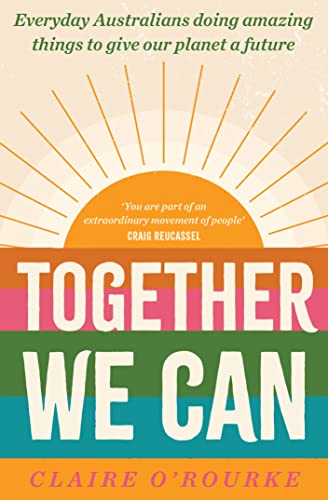
Claire O’Rourke, Together We Can (Allen & Unwin 2022)
I read this after hearing Claire talk on a Sydney Writers’ Festival panel on how to have hope in relation to climate change. It’s a good read, mixing specific examples of everyday Australians tackling what’s happening with broader theory on how to bring about change. It does fulfil its title, giving a real sense that “together we can”.

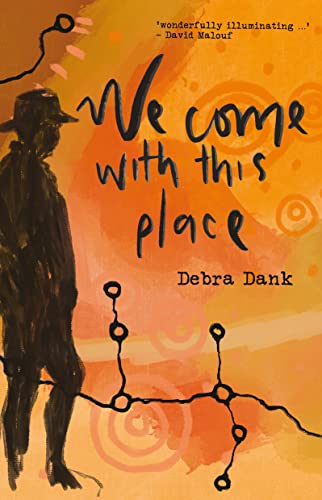
Debra Dank, We Come With This Place (Echo Publishing 2022)
We watched this book win four awards and heard Deborah Dank’s speech at NSW Premier’s Literary Awards 2023. We immediately went out to buy it. The writing is beautiful, a slow evocation of country and its connection to the author, while filled with story. I think it’s the must read of the year.

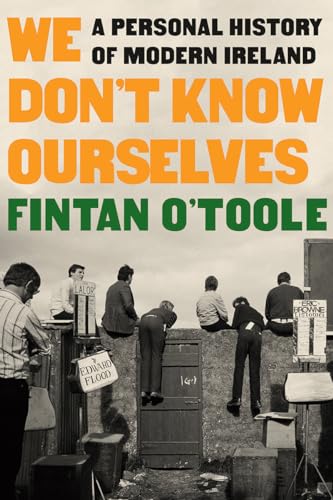
Fintan O’Toole, We Don’t Know Ourselves, a personal history of Ireland since 1958 (Head of Zeus 2021)
Hearing Fintan on the ABC’s Conversations, I immediately placed an order and waited patiently for four months for it to arrive. I’m glad I did. It’s written in short chapters in chronological order, but often picking up themes from chapter to chapter. It’s funny while documenting the appalling state of Ireland from 1958 through personal history, statistics and other sources. The incredible poverty (no running water in homes or sewage, no education for 80% of the population past primary school) made worse by the stranglehold of the Church and corruption in keeping poverty in place and the changes brought about by the impact of globalised capitalism all come alive in riveting storytelling.

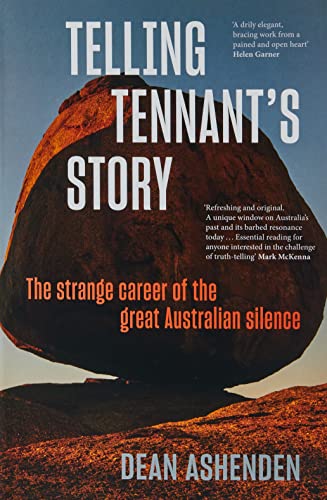
Dean Ashenden, Telling Tennant’s Story: The Strange Career of the Great Australian Silence (Scribe 2022)
A very readable history of post WWII Australian policies in relation to First Nations people where the impact of the policies on Aboriginal people in a specific area – Tennant Creek – are made clear. It tells how the policies of assimilation and later self determination came about and how far-reaching their effects have been. It would have been good for all those voting no to have been made to read this as a requirement for having a say.

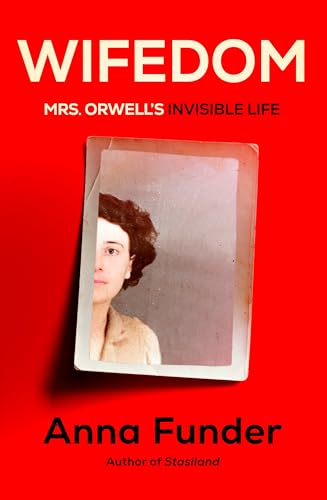
Anna Funder, Wifedom: Mrs Orwell’s Invisible Life (Penguin 2023)
So much has been written about this book already I don’t need to give a summary. I found it gripping. 

Fiction
I read 62 books this year, from quick comfort ‘junk’ reads to harder literary tomes. I take a photo of each book to prompt memory, and going through them all, it’s clear I have had an excellent selection to choose five favourites from. I’ve ended up deciding by level of enjoyment, not on some literary merit criteria.

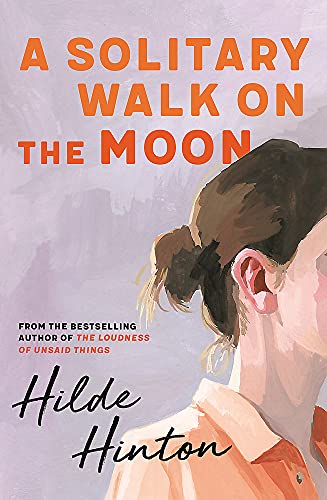
Hilde Hinton, A Solitary Walk on the Moon (Hachette AUstralia 2022)
A totally enjoyable read while disquieting in its simplicity. This is a second novel by an Australian author who seems to slipped under the radar. I found it in my local library. 

Annie Ernaux, The Years (Fitzcarraldo Editions 2018)
This was also an entrancing read, covering a similar time period to my own life. It conjures up the similarities and immense differences between growing up in middle class France and Australia.

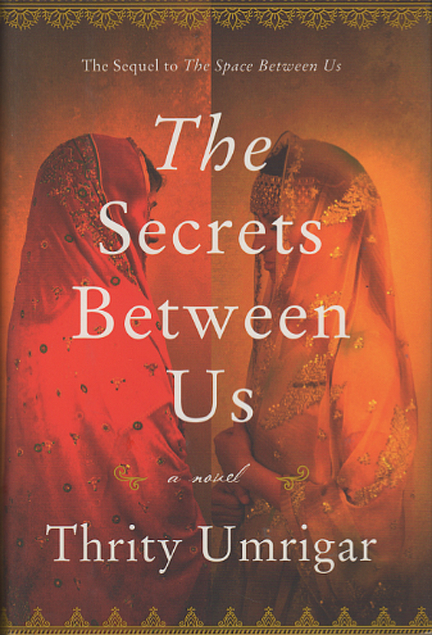
Thrity Umrigar, The Secrets Between Us (HarperCollins 2018)
Another library chance find. I loved the three strong old women protagonists, the exploration of caste and how this is/isn’t changing in modern India.

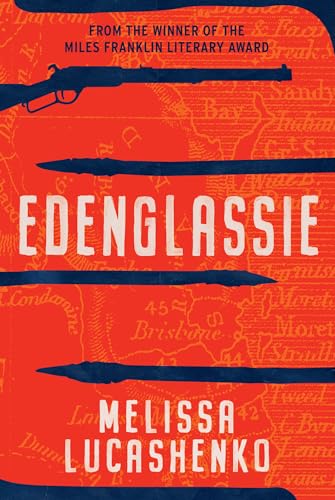
Melissa Lucashenko, Edenglassie (University of Queensland Press 2018)
This was gripping rather than straight out enjoyable, with a sense of what was to come on every page. I loved the imagined world of life at the point where the strangers are staying and growing in number, while keeping your own way of life intact.

Richard Russo, Somebody’s Fool (Allen & Unwin 2023)
Jonathan hasn’t yet been lured into the wonderful world that Richard Russo writes about, but I expect that to change soon. This is the latest in a series that includes Everybody’s Fool and Nobody’s Fool, all set in small town east coast USA. The books follow a number of interconnected characters over a few generations recording the process of change as late capitalism, racism and gender are played out in the town of Bath. He writes with affectionate humour about all of his characters. We see their frailties and appalling behaviour (between white and black, men and women, different generations) but in a number of cases we see how their connections with each other bring a shift in perspective. I love them. 


From me

I read 83 books (counting journals but not children’s books). I finished my slow read of Middlemarch and read St Augustine’s Confessions, a little each morning, but didn’t start another slow read in September because I was doing the Kelly Writers’ House course in Modern and Contemporary American Poetry (ModPo), which was great fun and probably taught me a lot.

I read:

  • 21 books of poetry
  • 26 novels
  • 4 comics
  • books in translation from Chinese (2), Spanish (3), French (2), Danish (1 or 3, depending on how you count), Russian (1) and Latin (1), and bilingual books containing Greek (1) and Maori (1)
  • counting editors and comics artists, 44 books by women, 39 by men
  • 12 books by First Nations writers, and
  • 15 books by other writers who don’t belong to the White global minority.

Biggest serendipity: Four books spoke powerfully to each other and to me in the wake of the referendum on the Voice: Debra Dank’s We Come with This Place, Melissa Lucashenko’s Edenglassie, Dean Ashenden’s Telling Tennant’s Story and David Marr’s Killing for Country (no blog post yet). Unlike Voice and Treaty, the third proposal from the Uluṟu Statement from the Heart – Truth – doesn’t have to wait for government action. These books, and so many others with them, are moving that project forward brilliantly and unsettlingly.

The most fun was probably two novels about poetry, which also spoke to each other: Chilean Poet by Alejandro Zambra and The Anthologist by Nicholson Baker.

Most interesting new discovery of someone who has been writing for decades: 2022 Nobel Prize laureate Annie Ernaux. I read Les années and Mémoire de fille, both of which mine her life story in ways that make most memoirs seem dull. Though I read them in translation, it seems right to name them in French.

Most imaginatively huge was Alexis Wright’s novel Praiseworthy, which incidentally is set in some of the same localities as Killing for Country.

Most memorable poetry: Sarah Holland-Batt’s Jaguar, with Ken Bolton’s Starting at Basheer’s (no blog post yet) a close second, the first for its precise, compassionate treatment of the poet’s father’s final illness, the latter because it filled me with joy about the everyday.


Happy New Year to all. May 2024 see the rejection of authoritarianism in elections and an end to mass killings everywhere. And may fossil fuels at last be left in the ground. Failing that, may we all keep our hearts open and our minds engaged.

Journal Blitz 10

‘Blitz’ is a misnomer. My progress through my backlog of subscribed journals has been at anything but lightning speed. One of the journals has gone into a troubling hiatus, which has had the silver lining of reducing my pile of obligation, but I’ve filled the gap with a couple of one-off purchases, so the pile continues to grow at least as fast as I can read. The reading itself, of course, is largely a pleasure.


Jacinta Le Plastrier (editor), Australian Poetry Journal Volume 10, Number 2: tribute, observations (2021)

For this issue of APJ, Jacinta Le Plastrier commissioned 29 poets and poetry-connected people to choose a poem by another poet and write a response to it and to the collection it appeared in. It’s a terrific idea. Much as I love Francis Webb’s description of a poem as ‘a meeting place of silences’, I’m delighted by this project’s invitation to read poems in the company of other thoughtful and engaged readers.

The resulting collection of poems and ‘commentaries’ lives up to the hope. Jan Colville’s poem ‘Emily Dickinson’s Herbarium’, for example, was chosen and commented on by Kristen Lang, whose book Earth Dwellers I loved. The poem is a response to a collection of herbs made by Emily Dickinson when she was a girl. It begins:

words slip off the page 
paste_ more than a century old 
_____ barely there_  cracked with age
_ and still
_____ here is the light through the forest
_____ her young hands 
_____ choosing stems, bare feet 
_____________________ in the dirt

Kristen Lang’s commentary sheds light and warmth even from her first words:

It is difficult to force a gap between the name ‘Emily Dickinson’ and the word ‘poet’. [This poem] not only prises the two apart but embeds there the warmth of an absorbed and absorbing child. There’s a contagious tenderness in this poem …

After a few more words that (for me) open the poem right up, she describes the book it came in – Journey (Walleah Press 2019). I immediately put Jan Colville and that book on my To Be Read list.

The rest of the poems vary richly in form, tone and content. There are poems by award winners and by people you’ve never heard of; poems by people whose work I love and have blogged about and people whose work is thrillingly new to me.

The commentaries are just as varied – including close, but not too close, readings like Kristen Lang’s; intensely personal prose poems; scholarly abstraction; and general advocacy for particular kinds of poetry.

There’s a translation from Bahasa Indonesia: ‘Termination Letter’ by Norman Erikson Pasaribu, translated by Tiffany Tsao, whose commentary on translation as creative collaboration is fascinating.

There’s a bilingual poem, ‘BIGGER THAN SCHOOL STUFF’ by Arrente poet Declan Furber Gillick, accompanied by the poet’s note on the incomplete poem as ‘a glimpse into the process of language revival’, and then a commentary from Jeanine Leane, who edited the anthology in which it appeared, Guwayu – For All Times (Magabala Books 2020).

As a lively, challenging and enjoyable introduction to the thriving, multifaceted contemporary Australian poetry scene, this would be hard to beat.

And then there are items that aren’t part of the main project, including an essay on poetry and science by Alicia Sometimes, tributes to Melbourne poet Ania Walwicz who died in 2020, and a blurb on Poetry Sydney, an independent literary organisation founded in 2019.


Evelyn Araluen and Jonathan Dunk (editors), Overland 240: Activism (Spring 2020), with links to the articles at overland.org.au

Here’s Adrian Burragubba on the alliance between Indigenous activists and non-Indigenous environmental activists in the context of the Stop Adani campaign:

Wangan Jagalingou’s case overlaps with the fact that large numbers of Australians oppose the Adani mine, and want it stopped.

The positive is that many people also support First Nations rights, and are joining forces with us. They know that by standing with us they can help protect the Galilee Basin, the natural springs, the Carmichael River. We welcome them. The negative is that support for our rights is not extended unconditionally and may therefore evaporate when the common goal is no longer an issue …

This is dangerous ground.

We call upon people to stand with us, but it’ll be our walk, our path, and it’ll be under our circumstances. 

That’s from his essay ‘When I speak I speak for the land‘ in this issue of Overland. It’s one of a stunning line-up of First Nations voices from the Activism @ the Margins Conference held in February 2020 at RMIT in Melbourne. Others range from Warlpiri story-teller Wanta Jampijinpa (‘Say sorry to the land‘) and longtime activist Puralina Meenamatta Jim Everett (‘An open letter to the next generation‘), to historian Victoria Grieve-Williams (‘Oodgeroo: Breaking the iron cycle of settler colonialism‘) and Sir Hilary Beckles, Vice-Chancellor of the University of the West Indies, whose ‘An Epistemic museum for modernity‘ calls for the thinkers and writers who legitimised white supremacy and slavery to be ‘identified, tracked down and held to account’. Taken together, the articles amount to an impressionistic history of Australian Indigenous activism from the 1960s Referendum campaign and the Gurindji walk off from Wave Hill to Blak Lives Matter and Indigenous hip-hop.

As always this Overland has rich selections of short fiction and poetry, edited by Claire Corbett and Toby Fitch respectively.

The poetry section includes stellar poets Omar Sakr, Samuel Wagan Watson, Ouyang Yu and Pam Brown. Jessica L Wilkinson has a beautiful historical poem, ‘Loïe Fuller entertains M. and Mme Curie at Boulevard Kellerman‘, and Zenobia Frost’s prose poem ‘sandwiches‘ is a powerful narrative of the loss of a parent.

Of the four sort fiction pieces, ‘Here comes the flood‘ by Perth writer Belinda Hermawan stands out for me. It’s a complex impressionistic tale of growing up with anti-Asian racism in Australia.


Vern Field (editor) Island 158 (2019)

As with the only other issue of Island that I’ve read, this issue is lavishly presented, with glorious full-page colour illustrations throughout. In fact, there’s hardly a page that doesn’t have some kind of image or colour effect behind the type, which is not always an advantage when a reader with deteriorating rods and cones is reading in artificial light.

This issue has a focus on the climate emergency, which is definitely a Good Thing, though maybe because I’ve been reading and brooding an awful lot about that subject I found more joy in the non-themed parts of the journal’s mix of creative nonfiction, essays, poetry, short fiction, excerpts from novels, and visual art.

Carmel Bird’s ‘Dr Power’s Prescription for the Fabrication of a Tasmanian Imagination’ is a nice piece of promotion for a work in progress, in which she discusses Colin Johnson’s largely forgotten historical novel Dr Wooreddy’s Prescription for Enduring the End of the World and its importance in the history of Australian, particularly Tasmanian, literature.

Angela Rockel’s ‘Rogue Intensities’ is an excerpt from a forthcoming work that gives us three months out of five years of ‘sensations and thoughts arising from a life in place’. Its combination of personal observation and scientific information about the flora and fauna of her place is full of charm, though I don’t know how I’d go with a whole book.

Dominic Amerena’s story ‘Just Maybe’ has just two full stops. The first comes at the end of a four-page sentence that loops back and forward in time telling a slightly creepy story of seduction from the seducer’s point of view. Then there are two words and the story is over. It’s like watching a juggler on a high wire: will he lose control and have innumerable clauses come clattering to earth?

I read Ken Bolton’s long poem ‘Letter to John Forbes’ with undiluted pleasure. Writing 20 years after Forbes’s death, Bolton identifies himself as a fan, and as a fellow poet. In semi-formal seven-line stanzas and a disarmingly informal tone, he brings the departed Forbes up to date on developments among their community of poets and in the world in general – our recent run of prime ministers, the careers of Forbes’s poetic friends and enemies, speculating on how Forbes would have responded. You probably need to know a bit about all that history to enjoy the poem, but it’s full of life and wit. Here’s a taste:

__________________________________ Our foreign ministers
___you'd have cherished – Downer & his air of stammer, of blithering,
Julie Bishop's show-pony, best-girl competence
 _ _(the earrings & tailored clothes), Bob Carr – how he rose 
___ to the occasion – & Rudd, after years of talking down to us, 
was about to, patiently, talk down to the United Nations. Look at me, Ma! 
They must've objected, or seen it coming.

Ken Bolton’s London Journal London Poem

Ken Bolton, London Journal: London Poem (Vagabond  Press 2015)

ljlp.jpg

There are just two poems in this book. In the first, ‘London Postcard – A Quiet Morning at the Wapping Project’, which is 24 lines long, the speaker describes the image of a woman on a postcard advertising what may be a film, and ruminates:

'The fictive life of the tourist'? Or would
I feel this way about this image
anywhere?

The italics seem to signify that the phrase is a quote, but quote or not, it’s a nice way of naming a habit of mind common among tourists – a tendency to make up stories about things you see while passing through, or to see patterns in them. A couple of lines later the speaker rephrases that idea:

I attend to her in the idle moment.

The second poem, ‘London Journal’, begins with a reference to the first poem:

I have an intuition, that maybe that
particular poem – very short –
could serve to hang this – or anyway ‘a’ –
longer poem from. And this is by way
of being that long poem.

I’ll rush in where a proper critic might fear to tread, and say that this longer poem (more than 200 five-line stanzas) enacts touristic fictivity (if that’s a word): it attends to many details in a time that, however busy, could be described as an extended idle moment, a time spent being a tourist.

The speaker and his partner Cath are visiting her son Gabe and Gabe’s partner Stacey in London, with excursions to Berlin and Barcelona. Tourist destinations  – the Brandenburg Gate, for example, or the Miro Museum – are mentioned, but so are tiny particularities of the travelling life: an odd show on television (Pointless as it happens); the book you’re reading; a quest for a strange place someone has told you about, and the anticlimax when you finally find it (a ‘fanatics’ ping-pong club’ in East Berlin); street signs and advertisements that are unsettlingly unfamiliar; evidence of poverty and the problematic status of immigrants; restaurants and bars; encounters with locals; information about the work life of one’s host (in this case, Gabe); lots of people-watching; pieces of a giant puzzle that are fun to play with but are unlikely ever to form a unified image. There are poetry readings, and an occasional moment when Bolton’s colonial status is made clear to him – maybe. The travellers go to museums and art galleries. It doesn’t take a lot of websearching to find out that Bolton is an art historian, but one doesn’t feel obliged to understand all his ruminations on the art he sees – enough for me at least to enjoy the way his experience as tourist connects with his abiding interests.

There’s a scattering of photographs, some of them blurry, as if to emphasise that this is a journal. And a scattering  of lines refer to the process of writing the poem, wondering if it will come together – yes, it’s also a poem.

Scanning for something to quote to give you a taste, I keep coming back to this at Canary Wharf:

of power and judgement. Shopping, food, all take place
underground: no one seen outside. At lunchtime
vast crowds are disgorged below, moving at speed

to their destinations – all very much suited (men and women),
largely under 35, dressed in black for the most part: very
Brave New World, and much whiter than the general population
(only 45% of London identify as white anglosaxon).
We go with Gabe to a Jamie's Italian. Good food.

Very noisy. In the toilets I come across a middle-aged,
middle-management type, seemingly doing an Al Jolson
'Mammy' impersonation, to the hand-dryer – down on one knee,
both hands smacking his chest, then flung out – Drying
his shirt front, he tells me. I think for a moment

of joining him – 'Mammy, how I loves ya, how I loves ya!'
etcetera. I nod encouragement.

In an excellent review in Cordite Poetry Review, Cameron Lowe suggests that ‘London Journal’ is a parody of a travel poem. He may be right, but ‘parody’ suggests a kind of formal imitation and/or mockery. There’s plenty of self consciousness about form and plenty of humour – like the photograph described as ‘Stacey with the author’, which appears to include only a solitary young woman, until you see half an arm almost lost in the page’s gutter. But I had no sense of a ‘proper’ travel poem that this was referring to. It’s just good fun, and interesting, in its own right.

In his elegant speech at the launch of Puncher & Wattman’s Contemporary Australian Poetry, David Malouf observed that while the poetry scene in Australia is extraordinarily vibrant in terms of the amount and quality of poetry being published, at the same time what he calls common readers have been turning away from poetry as if it is a foreign land, possibly because poetry has been turning away from them.

I think of myself as a common reader. And I want to say to other common readers: you can pick up this book without fear of being snubbed or made to feel somehow lacking. Cameron Lowe put it very well:

The poems here – as in Bolton’s other work – appear to imply that the process of writing poetry is an everyday activity (even while on holiday).

Recent journals (1) – Heat 21

Ivor Indyk (ed), Heat 21: Without a paddle (Giramondo December 2009)

Some of the reasons why you should subscribe to Heat, or at least read it:

1. Worthiness. Your money and attention help to sustain cosmopolitan Australian literary culture.

2. Self-protection. Extracts from works in progress allow you to prejudge the finished work. I’ve decided to avoid a significant number of award winning books on the basis of such advance warnings, and I’m likely to steer clear of one or two foreshadowed in this issue. The poetry provides a similar warning function: poetry is so much a matter of taste, and journals like Heat can play the crucial role of taster. And there are the critical pieces: on the strength of Kate Lilley’s detailed exposition of Susan Howe’s The Midnight, I won’t go looking for it any time soon (far too rich and recondite for my thin blood); Peter Craven’s critical review has put me right off Brian Matthews’s biography of Manning Clark. But it hasn’t enamoured me of Peter Craven: he’s bracingly forthright in his judgements, and even when he’s completely wrong-headed he provokes interesting conversations, but he comes across as too full of himself and too pugnacious for me to actively seek him out.

3. Titillation. Then there are the poems and extracts from works in progress that have the opposite effect. Poems from, among others, Pam Brown, Ken Bolton, Chris Price make me want more.

4. Education. In this issue, Josiane Behmoiras embeds an introduction to the work of Paul Virilio, a cutting edge French thinker, in an account of her recent trip to France (complete with implied travel advisories on the stench of urine by the Seine and problems with Australian Visa cards on the Metro); where her discussion of his work descends from glorious abstraction, it seems to be arrive at important conclusions about how we should live, very close to those of Bill McKibben’s much less abstruse Deep Economy.

The four-colour section in the middle introduces us to the  painter Jon Campbell, and offers us a hand in understanding why we should be interested in his work.

5. Base pleasure. Maybe this is only for people who are or have ever been editors, but Heat can be counted on for regular hits of the sour pleasure of Other People’s Gaffes. The best one in this issue occurs in a poem: ‘a woman rides a / pink vesper that you could / park anywhere’. I’m reasonably sure the poet had a chic little Vespa scooter in mind rather than an evening star blazing to the kerb in the sky.

6. More substantial pleasure. This is of course the real reason for reading Heat at all.

Here, Jena Woodhouse interviews Michael Hofmann, poet and translator, and though her introductory paragraphs use rude words like polytropic, once we get to Hofmann himself the prose becomes a joy to read.

Luke Carman’s three prose pieces gathered under the title ‘The Easy Interactions of an Elegant Young Man’ have a wonderful, disturbingly comic cumulative effect. Part way through the second I realised I saw him read similar work at the Sydney Writer’s Festival earlier this year, and described his reading as rapidfire and surreal. It works that way on the page as well.

And then there’s James Ley’s ‘A Degree of Insanity’, a straightforward, intelligent essay on Samuel Johnson that is splendid in itself, not least because it quotes generously from Johnson’s sonorous prose. Its appearance in this journal gives added pleasure, as it seems to send ricochets out, pinging off the rest of the content. Peter Craven, for example, drops a couple of Johnson’s famous quips into his argument for no apparent reason other than to establish his own gravitas. The notion, from Johnson’s Rasselas, that ‘all power of fancy over reason is a degree of insanity’ bounces prettily off the mild derangement of Luke Carman’s pieces and some of the poetry. The excitement surrounding literary journals in eighteenth century London sparks reflections about the role of their descendants in our time, Heat among them.

Next:  Overland issue 197.