I don’t know what these figures mean. The Mick Herron book is almost not a book.
Here’s WordPress’s list of my all-time top ten posts. This list stays pretty stable. The long-time place-holders don’t need to get many views to stay, and only one of them was in this year’s top ten:
The post at the top of the list is there because someone lifted an image from it and put it up on Pinterest.
That’s it. Thanks to everyone who has contributed to those statistics. Some of you I know IRL, some I’ve met through email etc, some in the comments section, some I know only as anonymous clickers. I’m happy that you’ve visited the blog. Come again.
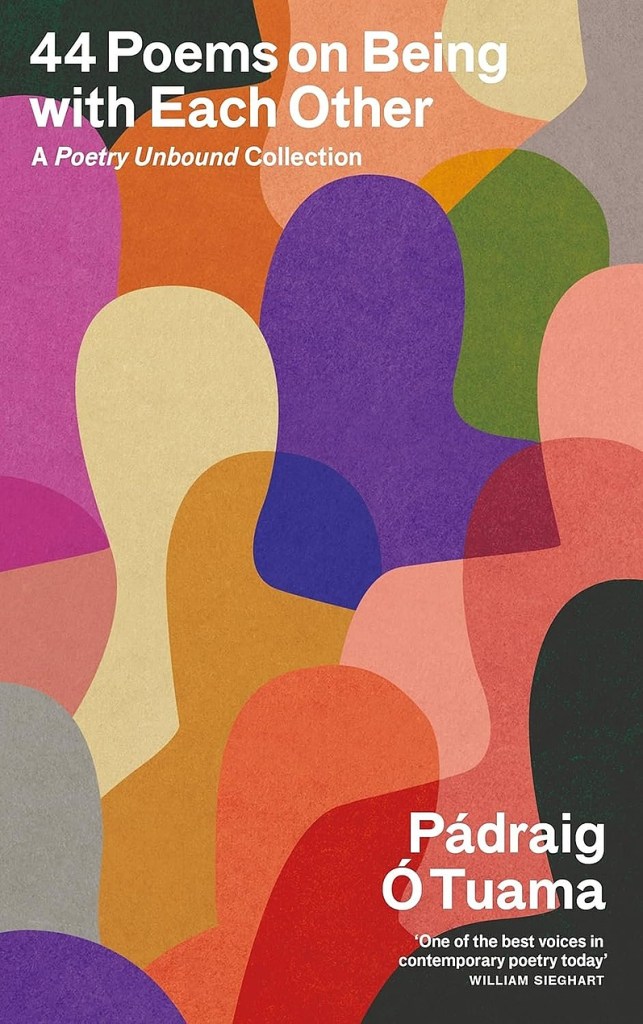
Books are risky gifts. I’m very glad the friend who gave me this one took the plunge.
It’s a collection of 44 poems, with commentary. I stumbled across an online review that said something like, ‘The poems are excellent, but I could have done without the commentary. It would probably be helpful for people who are learning how to read poetry.’
With all due respect, that person needs to have another look. It’s true, all 44 poems in this anthology are excellent, but the commentary isn’t there to help the ignorant (though it might do that): Pádraig Ó Tuama is a warm, charming, reader companion. Rather than assuming his readers are incompetent, needing to be instructed in the art of reading, he tells us how he reads poems himself – bringing to them his own history, knowledge and concerns, and by implication inviting his readers to do likewise. In a time when so much writing about poetry comes from the more esoteric corners of academia, his is fresh, conversational, smart, humble and completely engaging.
The anthology is an offshoot of the podcast, Poetry Unbound, and follows its format. First there’s a single page, printed white on black, in which Ó Tuama sets up a context with a personal anecdote or a reflection on life or literature. Then there’s the poem, followed by several pages of discussion. Ó Tuama finishes each podcast with a second reading of the poem, which readers of the book are of course free to do. I love the podcast, and I love the book.
Ó Tuama isn’t out to create a canon of ‘best’ poems. He may have what Trumpians would call an undeclared DEI agenda. Most of his poets are from non-mainstream groups of one kind or another: LGBTQI+, Native Americans, African heritage and other People of Colour, people with disabilities. A couple of poems are translated from other languages. But it’s far from being an exercise in box-ticking inclusiveness. There’s a clue in the book’s title – these poems are gathered from a wonderfully diverse range of poets, and together they create a sense of what it is to be together on this planet.
If I were to stick to my practice of writing about page 78*, I’d now look at the discussion of the shortest poem in the book, written by its most mainstream poet – ‘The Uses of Sorrow’ by Mary Oliver. But instead, I want to go to pages 310 to 315. The poem is ‘The Change Room’ by Andy Jackson. It’s the book’s only Australian poem, but my reason for focusing on it is that I already know it well, and have discussed it in this blog. Here’s a link where you can read the poem and, if you want, my discussion of it. (For those who don’t click: the poem consists of seven three-line stanzas and a two-liner. The poem’s speaker has three encounters at a swimming pool: a young child asks about his physical shape, a woman admires his tattoos, and a man chats with him in the shower after his swim.)
Ó Tuama’s introductory page, just 11 lines, tells us how the poem is personal to him. ‘Where do you carry shame in your body?’ he begins. And he ends:
The story of my body’s relationship to my own body – and the bodies of others – is a poem that’s asking for my attention.
You wouldn’t know from this that ‘The Change Room’ deals with disability or marked physical difference. Ó Tuama approaches it, as he does all the poems, from the standpoint of a shared humanity – a ‘being together’.
After rereading his discussion just now, I had another look at my blog post (here’s the link again), and I like the conversation we’re having.
We both discuss the rich ambiguity of the title of the book the poem comes from, Human Looking. Ó Tuama adds a reference to the tagline of Andy Jackson’s website, which includes the phrase ‘a body shaped like a question mark’, and relates that to the children’s questions in the poem. He pays close attention to the language:
In ‘The Change Room’ we read of nostrils, skin, tattoos, gaits, swimming, floating, showering, nakedness, proximity, speaking: all parts, functions and experiences of the body, all vehicles for body language, all ways in which the body is in conversation with itself and others.
Both of us puzzled over the poem’s last line, ‘Speaking, our bodies become solid.’ On rereading my blog post I quite like what I wrote about it, even if my reference to the Latin Mass may be a bit idiosyncratic. Here’s what Ó Tuama writes, to give you a taste of his prose:
‘Bodies’ here are held in a plural pronoun ‘our’. Why have they become solid? Were they not before? Were they fluid, or see-through, or gaseous? Perhaps solid is meant as the antonym for unreliable. The final stanza is composed only of two lines, in comparison with the seven tercets that preceded it. The missing third line of the last invites, perhaps, buoyancy, nature, exchange, consideration among all the bodies in, and reading a poem about, ‘The change room’. The poem asserts a shameless body-knowledge it establishes for itself.
I love the way he draws our attention to the precision of the language, and then the way, like Andy Jackson’s missing last line, he opens out to possibilities, rather than closing down on a particular reading.
I recommend this book, for yourself or as a gift to someone who likes a bit of poetry – for the poems, and for the companionship of the editor.
I wrote this blog post on land of Gadigal and Wangal of the Eora Nation, under an almost cloudless sky and feeling the chill from a mildly bitter wind. I acknowledge the Elders past and present of this country, never ceded.
* My blogging practice is focus arbitrarily on the page of a book that coincides with my age, currently page 78.
In case you’ve had just about enough of my end of year lists, be reassured: This is the last one, and I don’t expect you to read it – it’s mainly so I’ll have a record.
Here are the posts that attracted most clicks on my blog in 2024:
Ocean Vuong’s book was at the top of the list for most of the year, and then news of the movie of Small Thiings Like These sent a lot of clicks to that post. Shirley Hazzard’s The Transit of Venus dominated the list for years, but has now dropped off altogether. Mary Oliver, Ellen van Neerven and Robert Alter are the stayers.
One more bit of nerdiness. Here’s WordPress’s list of my all-time top ten posts. Apart from changing positions, the main change from last year is that Philip Larkin got bumped by Claire Keegan:
That’s it. Thanks to everyone who has contributed to those statistics. Some of you I know IRL, some I’ve met through email etc, some only in the comments section, some I know only as anonymous clickers. I’m happy that you’ve visited the blog. Come again.
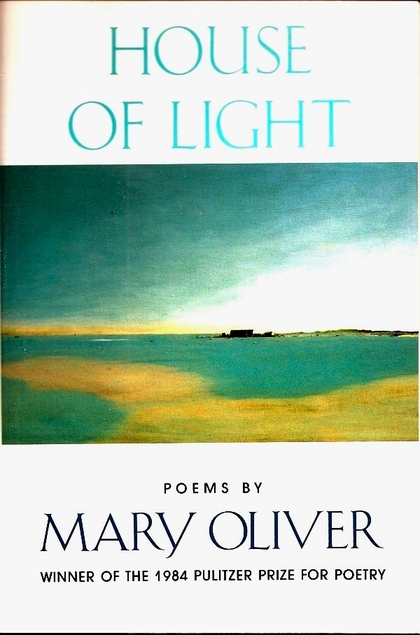
When Covid-19 was just a cloud on the northern horizon, I borrowed this book from a street library. Poems by Mary Oliver, I thought, are just the thing for the times ahead: she consistently holds out to her reader reminders of what it means to be alive and human on this planet.
Within days most street libraries had closed down.
So, what was this book that I may have risked lives to acquire?
For a start there’s a lot of death in it. Mary Oliver seems to have spent a lot of time outdoors, watching plants, birds and animals, though ‘watching’ might be too mild a word: the poems bear witness to a deep attention, contemplation, absorption.
The first poem in the collection, ‘Some Questions You Might Ask’, is a kind of manifesto: ‘Is the soul solid, like iron?’ it asks; then, ‘Who has it, and who doesn’t?’ and after considering the moose, the swan, the black bear and other animals, the poem ends:
What about the blue iris?
What about all the little stones, sitting alone in the moonlight?
What about the roses, and lemons, and their shining leaves?
What about the grass?
These lines dance on the edge of naffness. But they manage not to fall: they convey a strong sense of the speaker seeing these things, at least in her mind’s eye, with great clarity, and her pseudo-theological question, ‘Do animals have souls?’ comes to read as code for a joyful embrace of what she sees. That embrace is there in all these poems. Sometimes it has to be fought for, as in ‘Singapore’, which begins with the image of a woman washing something in a toilet bowl at an airport:
Yes, a person wants to stand in a happy place, in a poem.
But first we must watch her as she stares down at her labour
You can read that whole poem at this link to see for yourself where she goes from there. I think she pulls it off. (At this link, you’ll find a vehemently opposite view.)
You could think of Mary Oliver as a 20th century (and almost two decades into the 21st) devotional poet. That opening poem about souls certainly reminds me of primary classroom lessons from the nuns, and, for instance, ‘That Summer Day’ opens with a question straight out of the catechism I studied in primary school: ‘Who made the world?’ But there’s a difference. The poem doesn’t answer the question. It leaves it as an expression of awe, leaving hints of a creator God there in a take-it-or-leave-it way. The central lines of this poem are:
I don't know exactly what a prayer is.
But I do know how to pay attention, how to fall down
into the grass, how to kneel down in the grass
The poem is reaching for a way to express feelings that used to be attached to religious piety, but to free them from religious connotations. I think of Richard Dawkins writing about wonder without resiling even slightly from his militant atheism. Mary Oliver is similarly reclaiming wonder, though the line, ‘I don’t know exactly what a prayer is,’ carefully formulated to allow that she may know about ‘prayer’ as opposed to ‘a prayer’, indicates that she’s not oppositional, just going a different way. That poem ends:
Tell me, what is it you plan to do
with your wild and  precious life?
It’s an exhortation, not to be virtuous (the first poem of hers I read begins ‘You do not have to be good’), but to notice what it is to be alive.
I want to talk about death, though. Not just because of Covid-19, which I think of as a curtain-raiser for the hugely destructive climate-change crisis, but because it’s an insistent theme of these poems. The nature that they so closely and lovingly observe involves ruthless killing, but the death of the speaker, or death in general, is often evoked. Here is ‘The Terns’ (click on the image to enlarge, or read the poem at this link):
In the first 18 lines, the speaker is doing her usual thing, noticing the life in the wetlands near her home. The lines are filled with a birdwatcher’s delight. Then the lines
This is a poem
about death
come as a surprising twist. At first they seem to reach back and highlight the ‘little silver fish’, whose violent death has gone almost unnoticed. But that’s not where the poem goes:
about the heart blanching
in its folds of shadows because it knows
someday it will be
the fish and the wave
and no longer itself
I don’t think she’s offering the image of the terns vanishing under the water and then coming back as an almost mediaeval allegory for death and resurrection, though you might read it that way. As I see it, with these lines, the speaker’s mood intrudes into the poem. She’s not happy, and death is on her mind. It’s her heart that she imagines blanching, and she’s the one who knows she’ll be re-absorbed into the natural world, that her consciousness will cease to be.
But then:
this is a poem about loving
the world and everything in it
We might have expected ‘This is a poem about living’, but this small surprise carries the weight of the poem. It’s not offering a vision of life after death; the terns’ diving and rising don’t symbolise death and resurrection after all. The notion of being re-absorbed into the natural world can have in it a deep joy – it’s like that Sweet Honey in the Rock song, ‘Breaths‘ (If you don’t know it, click on the link). Re-absorption isn’t about being eaten by worms in the grave, or scattered as ashes, or even planted under a tree. In death, what remains of us will continue to be part of this dynamic universe.
To love ‘the world and everything in it’, including oneself, is a completely appropriate response to such thoughts. It’s a long way from, ‘Yea, though I walk through the valley of the shadow of death, no evil will I fear.’ I just read on Wikipedia that Mary Oliver dealt with a lot of abuse in her childhood. I think that’s what saves her poems from being glibly Life Affirming. There’s always a sense, as in this poem, that the affirmation is not so much made as won in the face of mostly unnamed contrary forces.
The first thing Mary Oliver said to me, it must have been in the mid 1990s, was this:
You do not have to be good.
That’s the opening of ‘Wild Geese’, from her book Dream Work (1985). Having completely grabbed my attention, she went on:
You do not have to walk on your knees
For a hundred miles through the desert, repenting.
You only have to let the soft animal of your body
love what it loves.
They are words I wish every Irish-style Catholic of my generation, and possibly of all generations, could have heard in their childhood. There’s even more to the poem. You can watch her read the whole thing on YouTube.
When I heard last Friday that she had died, aged 83, I made a little pilgrimage to Gleebooks and bought Twelve Moons, one of four books by her on the shelves, of which one (Blue Horses) I already own, another (Devotions) was too huge for the moment, and the third (Dog Songs) probably too tummy-scratching.
Twelve Moons was Mary Oliver’s fourth book of poetry, first published half a decade before she won the Pulitzer (and before ‘Wild Geese’ was published). It’s a terrific book. Reading it now, I’m interested in how it fits with theNew York Times headline of 22 January, ‘Mary Oliver, 83, Prize-Winning Poet of the Natural World, Is Dead.’ In what way, I found myself asking, was she a poet of the natural world? (I don’t disagree with the description. After the lines quoted above, ‘Wild Geese’ goes on to talk about flocks of wild geese with their harsh cries.)
There’s a lot of the ‘natural world’ in this book: twelve very different moon poems; deer, horses, sharks; rain, snow, sunshine; crows, owls, bears and trees; mussels, snakes, turtles and stones. But they’re not generally ‘nature poems’ in any easy, Fotherington-Thomas way (‘Hullo clouds, hullo sky!’). At times, they seem to emerge from sustained, quiet observation of the living environment; at others, from a sharp moment of empathy (as in ‘The Black Snake’, where the speaker picks up a dead snake from the road and puts it back in the bushes). And though I’d say Mary Oliver is a life-affirming poet, there’s a lot of death: as an osteopath once said to me, ‘The body naturally seeks equilibrium, which is part of the healing process, but of course there’s also equilibrium in death.’ There’s that, and also the notion of life as precious but brief.
As is my custom, let me look fairly closely at a single poem. ‘Last Days’, on page 51, is not necessarily my favourite in the book, but it’s short enough to show you in a single jpeg, it does interesting things with ‘the natural world’, and – happily, given my love of the form – it’s a sonnet. Here it is:
This is more enigmatic than most of Mary Oliver’s poems. In fact, it’s a teaser poem – not naming its subject until its last word, but describing its effects as if they originate elsewhere, and also throwing in a good dose of misdirection.
The misdirection begins with the title, an apparent reference to the End Times, when life as we know it finishes in the twinkling of an eye. The first words, echoing W B Yeats’s ‘The Second Coming‘ – ‘Things fall apart, the centre cannot hold’ – lead us further down that path. Perhaps one expects a poem about environmental disaster.
But the tone is too jaunty for that: ‘things are starting to / spin, snap, fly off’ doesn’t exactly feel like doomsday! The enjambments in those first lines, snapping phrases in two, capture the feel of all that disruption, but in an almost comical way, and it’s hard to see ‘the blue sleeve of the long / afternoon’ as a place of dread.
Then comes the sound. By the time the oh and ooh whistle from the grass’s mouth, the puzzle is only nominally still in place: wind is clearly involved. So when things ‘turn soft / boil back into substance and hue’, we know what is going on. Serendipitously, as I type this the gum trees and jacaranda outside my windows are boiling away, so what the eye sees is mainly colour and movement, no detail, just ‘substance and hue’.
Broadening out from ‘things’, the poem now speaks of ‘everything’: as in the Sleeping Beauty story, everything shakes off the enchantment that has made it inanimate.
Everything whispers, ‘I too love oblivion why not it is full / of second chances’. Where the early enjambments mimic the snapping-off effects of the wind, here the lack of punctuation evokes the way everything is in motion. Then the final exhilarated cry of ‘Now!’ Who hasn’t stood in a strong wind and felt that exhilaration? And the wind is named at last as the great sayer of ‘Now!’.
So the poem isn’t about the end of the world after all. It’s just the wind, and not necessarily even a dangerous wind.
But what to make of that whisper, ‘I too love oblivion why not it is full / of second chances’? The poem rushed us past it, even though on my first reading it was the word ‘oblivion’ that snagged my attention. What does it mean here? Why ‘too’ – who else loves oblivion?
In most contexts I would take ‘oblivion’ to mean something like death, or at least the death of the mind – so a word that chimes nicely with the End Times expectations generated by the title. But the immediate context suggests a completely different meaning: ‘oblivion’ is the state of forgetting, of having one’s attention fully in the present moment, the Now.
And why ‘too’? One possibility that suggests itself is that it’s the poem’s speaker who loves oblivion; that she isn’t just recording what she sees, though nor simply projecting her mental state onto it, but in describing the weather she is also describing the effect it has on her emotional state. And so back to the poem’s title. It’s not Last Days as in End Times, so much as the end of something, no longer stuck, enchanted, brooding over the past, but shaken into the present moment, where there is a possibility of new beginnings.
Please excuse me for hammering away at this small poem, but it’s helped me to articulate how I understand Mary Oliver to be a ‘poet of the natural world’: she’s not a meticulous describer of natural phenomena, but she writes out of her relationship to them. It’s a two-way relationship.
The poet Mary Oliver died yesterday, aged 83. I’ve only blogged about one of her books, here, and didn’t say much about it. But every time I’ve read one of her poems – in a book lying around in a conference centre or picked from a friend’s bookshelf – she’s struck a nerve. Someone on Twitter begged the world not to straightwash her, so I’ll mention that she wrote sweet poems to her same-gender lovers.
I hope her estate will be OK with me sharing this, which was published i 2006, when she was the age I am now.
When Death Comes
When death comes
like the hungry bear in autumn;
when death comes and takes all the bright coins from his purse

to buy me, and snaps the purse shut;
when death comes
like the measle-pox

when death comes
like an iceberg between the shoulder blades,

I want to step through the door full of curiosity, wondering:
what is it going to be like, that cottage of darkness?

And therefore I look upon everything
as a brotherhood and a sisterhood,
and I look upon time as no more than an idea,
and I consider eternity as another possibility,

and I think of each life as a flower, as common
as a field daisy, and as singular,

and each name a comfortable music in the mouth,
tending, as all music does, toward silence,

and each body a lion of courage, and something
precious to the earth.

When it's over, I want to say all my life
I was a bride married to amazement.
I was the bridegroom, taking the world into my arms.

When it's over, I don't want to wonder
if I have made of my life something particular, and real.

I don't want to find myself sighing and frightened,
or full of argument.

I don't want to end up simply having visited this world.
In his justly-praised eulogy for Gough Whitlam, Noel Pearson repeatedly used the phrase ‘this old man’ as a term of high honour. Like Diana Athill, Dorothy Hewett, Jennifer Maiden and any number of others, Mary Oliver makes me wish passionately that we could say ‘this old woman’ and have it similarly understood to indicate esteem.
This is old-woman poetry. Oliver isn’t out to prove anything. In ‘I don’t want to be demure or respectable’, she says:
I’m not trying to be wise, that would be foolish.
I’m just chattering.
She’s not even out to offer obvious value for money. For $28 you get 78 pages and almost every second page is blank. But every word feels just right. The poems are personal and deeply felt, but nothing personal in a way that would be embarrassing to read on a poster on a bus. Most of them feel as if they have been around forever, or at least should have been. The recurring mode is celebration – of a new love, of connection to living things, of rhyme, of yoga lessons, of life and even of sickness and death, though in their cases it’s more a mature reconciliation than actual celebration. She stops short of being religious, as in ‘Angels’:
I don’t care how many angels can
dance on the head of a pin. It’s
enough to know that for some people
they exist, and that they dance.
Moving on to my own November task, I was struck by the poem ‘The Mangroves’, in which the speaker, who is living ‘in a warm place’ realised she has trouble loving mangroves the way she loves the black oaks and the pines of her cooler home. It’s not Oliver’s doing that oaks and pines are ‘normal’ to mainstream English literature and mangroves are exotic, but the idea of normal is inevitably there, so:
Sonnet No 2: In response to Mary Oliver’s ‘The Mangroves’
It’s fall, November, New York City.
Leaves fall, just like they do in song,
in movies, poems and all those pretty
paintings from Art History. Long
we’ve read bare ruined choirs
follow on bright autumn’s fires.
I’m coming over all Mackellar,
a not-your-field-and-coppice feller.
My heart belongs to smooth angophora,
to leaves that glisten all year round,
to roots four feet above the ground
and messy pneumatophora.
All trees are lovely when you look –
less so those growing by the book.





 Me fail? I fly!