Tag Archives: Paul Murray

2024 End of year list 5: Blog traffic

In case you’ve had just about enough of my end of year lists, be reassured: This is the last one, and I don’t expect you to read it – it’s mainly so I’ll have a record.

Here are the posts that attracted most clicks on my blog in 2024:

  1. Claire Keegan’s Small Things Like These (October 2023, 1618 clicks)
  2. The Book Club and Paul Murray’s Bee Sting (April 2024, 775 clicks)
  3. Ocean Vuong’s Time is a Mother (March 2023, 744 clicks)
  4. Ellen van Neerven’s Throat (July 2020, 625 clicks)
  5. Mary Oliver’s Twelve Moons (January 2019, 597 clicks)
  6. Anne Enright, The Wren, the Wren, the book club, page 77 (March 2024, 533 clicks)
  7. Trent Dalton’s Boy Swallows Universe (July 2019, 412 clicks)
  8. Robert Alter’s Psalms (September 2020, 365 clicks)
  9. Jenny Erpenbeck’s Kairos and the Book Club (April 2024, 364 clicks)
  10. Rebecca Huntley’s Italian Girl (April 2022, 357 clicks)

Ocean Vuong’s book was at the top of the list for most of the year, and then news of the movie of Small Thiings Like These sent a lot of clicks to that post. Shirley Hazzard’s The Transit of Venus dominated the list for years, but has now dropped off altogether. Mary Oliver, Ellen van Neerven and Robert Alter are the stayers.

One more bit of nerdiness. Here’s WordPress’s list of my all-time top ten posts. Apart from changing positions, the main change from last year is that Philip Larkin got bumped by Claire Keegan:

  1. Travelling with the Art Student (November 2014, 3558 hits)
  2. The Book Group and Shirley Hazzard’s Transit of Venus (June 2018, 2721 hits)
  3. (Re-)reading Kevin Gilbert’s poetry (April 2012, 2430 hits)
  4. Mary Oliver’s Twelve Moons (April 2020, 1841 hits)
  5. Bran Nue Dae (January 2010, 1805 hits)
  6. Mary Oliver’s House of Light (April 2020, 1784 hits)
  7. Claire Keegan’s Small Things Like These (October 2023, 1676 hits)
  8. The book group’s Harp in the South (February 2011, 1431 hits)
  9. Jasper Jones at the Book Group (May 2010, 1352 hits)
  10. Contemporary Asian Australian Poets (June 2013, 1236 hits)

That’s it. Thanks to everyone who has contributed to those statistics. Some of you I know IRL, some I’ve met through email etc, some only in the comments section, some I know only as anonymous clickers. I’m happy that you’ve visited the blog. Come again.

Spell the Month in Books – September

Spell the Month in Books is a linkup hosted on Reviews From the Stacks. We’re invited to find a book title, on a given theme, that starts with each letter in the month’s name, make a list, and share the link. It’s a nice way to look back over one’s reading.

This month, the theme is Back to School. Reviews from the Stacks is a Northern Hemisphere blog, where the theme is seasonally appropriate – but it’s full of possibilities for us in the planetary south as well. Here I go. Links on the book titles are to my blog posts.

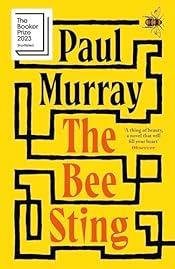
The Bee Sting by Paul Murray (Hamish Hamilton 2023). Two of this book’s characters, a generation apart, have their lives transformed when they leave their home in rural Ireland to go to university in Dublin.

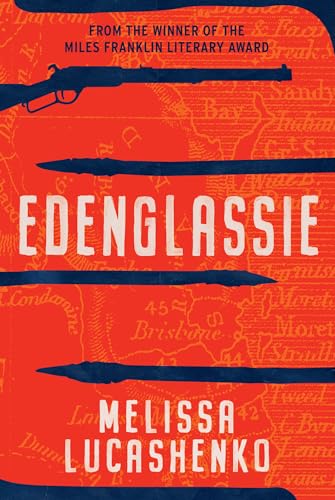
Edenglassie by Melissa Lucashenko (University of Queensland Press 2023). It may be stretching it a bit, but this novel, along with a lot of First Nations writing, amounts to an invitation to unlearn some Australian history, to go back to school and develop a different, richer understanding of our past. In this case, it’s the early history of what is now south-east Queensland. Sue at Whispering Gums has an excellent review.

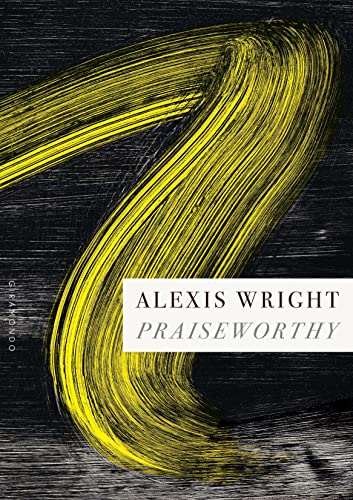
Praiseworthy by Alexis Wright (Giramondo 2023) is another example of First Nations writing that amounts to an invitation to go back and learn different ways of looking at the world. At its heart there’s a mad scheme to cope with climate change by using the donkeys that roam wild in the Northern Territory. There are clouds of butterflies and a boy who lives in a whale’s skeleton. You see the world differently once you’ve read it.

Small Things Like These by Claire Keegan (Faber & Faber 2021) actually centres on a school. It’s hardly more than a short story, in which an Irishman faces a huge moral challenge when he discovers that terrible things are being done in the convent school just outside his village.

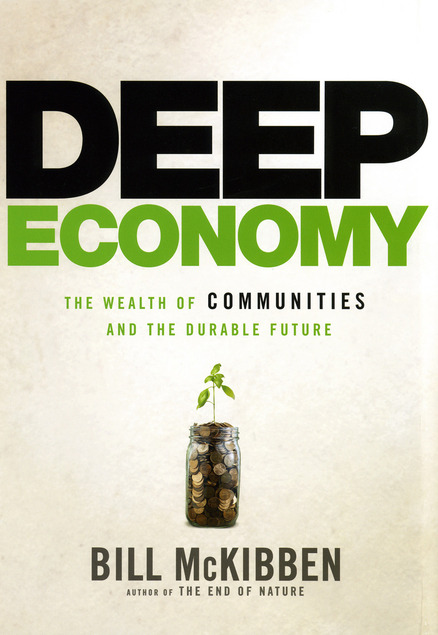
Deep Economy: The wealth of communities and the durable future by Bill McKibben (Henry Holt 2007). For me at least, this book was a tremendous learning experience about economics and the environmental crisis. In my 2007 blog post I described it as ‘a substantial, reasoned, systematic move towards an alternative way of thinking about these things’.

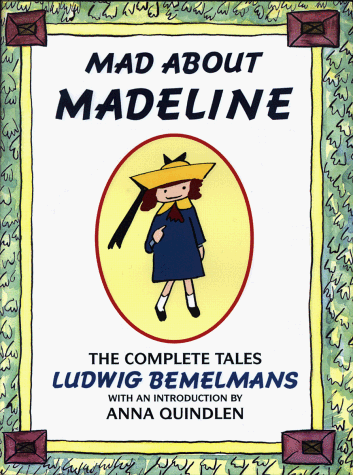
Madeline (Ludwig Betelmans 1939). How good it was, recently, to go back to this book, which I must have first read when I was at school, or perhaps when nieces and nephews were. ‘In an old house in Paris that was covered in vines …’

Blue Mars (Kim Stanley Robinson, 1996) Kim Stanley Robinson’s Mars trilogy is a terrific yarn. It’s also an education in the scientific, engineering, social and political challenges that would face an attempt to settle on Mars. I first encountered the word katabatic, among many others, in these books.

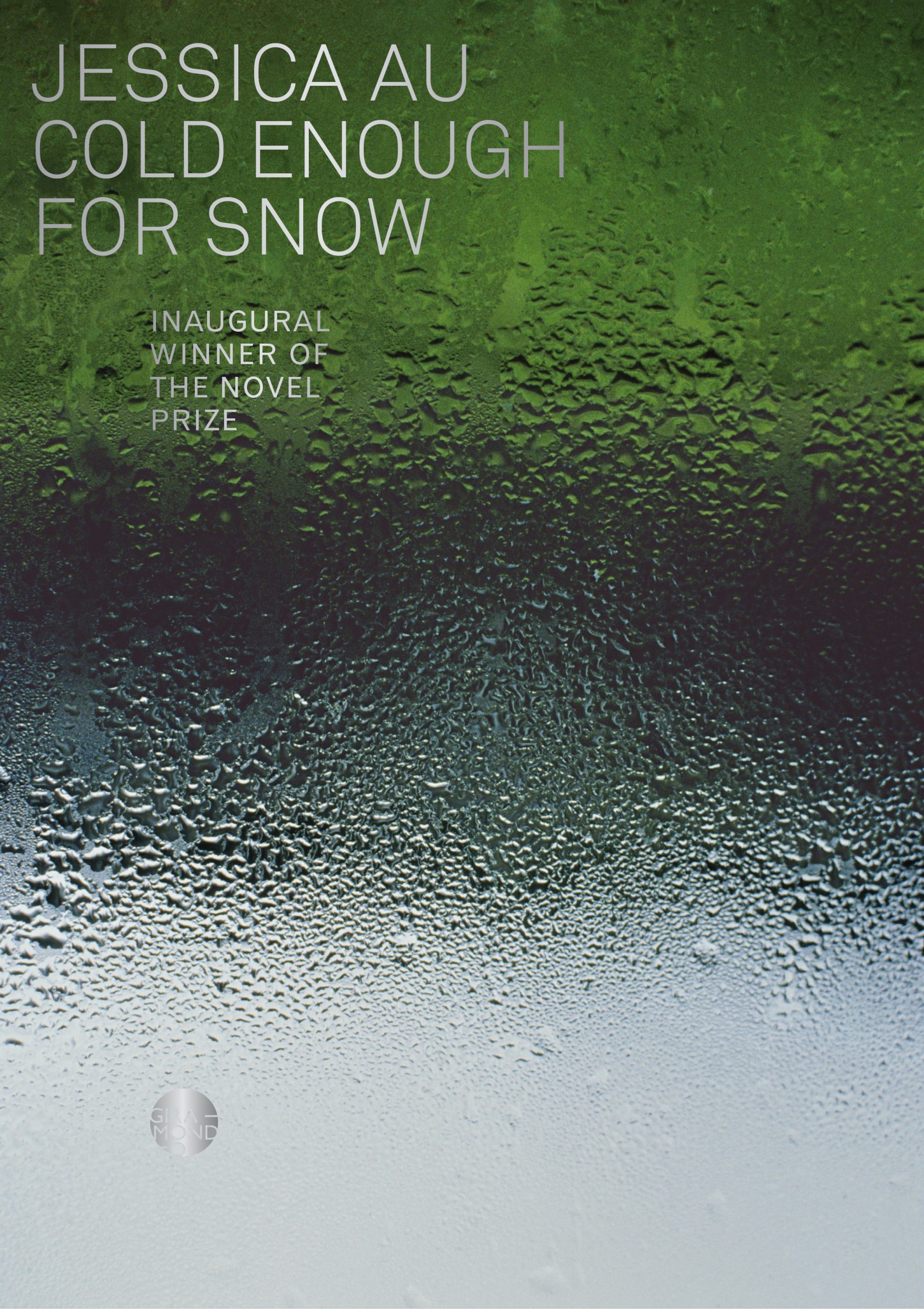
Cold Enough for Snow by Jessica Au (Giramondo 2022). The section in this slim book where the narrator goes to university and encounters a whole new world struck a chord with me, even more so than the similar experience described in The Bee Sting, because this one happens in Australia.

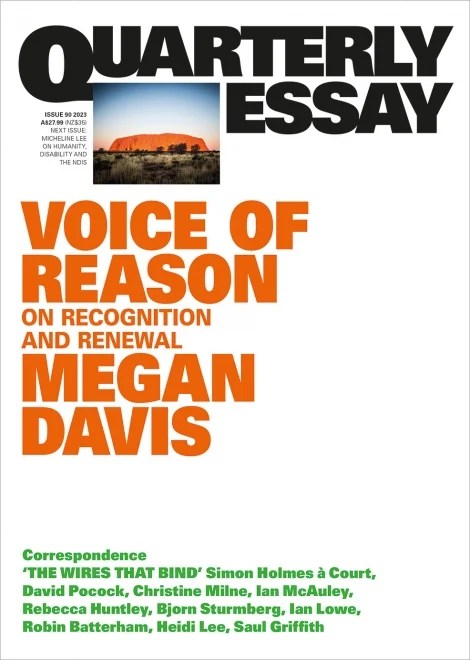
Voice of Reason: On Recognition and Renewal by Megan Davis (Quarterly Essay 90, 2023) is another piece of First Nations education, in this case about the recent referendum on an Indigenous Voice to Parliament. Especially in the face of the No campaign’s ultimately successful slogan, ‘If you don’t know, vote no,’ the schooling provided by this essay was salutary and continues to be.

The Book Club and Paul Murray’s Bee Sting

Paul Murray, The Bee Sting (Hamish Hamilton 2023)

Before the meeting: Grandparenting during school holidays has left me with very little time to write about The Bee Sting before the Book Club meets, so this may be sketchy.

I loved it. It’s a beautifully written Irish novel, a family saga in which each chapter focuses on a family member in rotation, with a couple of other characters taking a chapter each. A teenage girl, Cass, can’t wait to leave her tiny village behind and go to University in Dublin with her unreliable best friend. Her younger brother, PJ, is in a world of trouble at school. Their father, Dickie, is in much worse trouble as his Volkwagen dealership, inherited from his tough-man father, is falling on hard times, and – as we discover – that’s the least of his worries. Their mother, Imelda, formerly a stunning beauty, is bitterly discontented. There’s adultery, blackmail, teenage alcoholism, survivalist adventures in the woods, small-town scandal-mongering, a malign version of the Terence Stamp character in Pasolini’s Teorema, and a final chapter that feels like a version of the opening of Act Two of Sondheim’s Into the Woods

A friend of mine who worked as an assistant director on TV says he usually has to read a novel twice: the first time he is in professional mode, taking note of the locations; only on the second reading can he attend to characters and plot. I’m pretty sure he would love his first read of The Bee Sting. The locations are brilliantly realised: a shed in the woods that is in turn a place for young people to hang out, a site of sexual danger, a survivalist project, a place for a secret stash, and the focus of the book’s final movement; the prestigious but grungy ‘Rooms’ at Trinity College; the elegant, dilapidated family home; the contrasting house where Imelda grew up; some new project homes that have been left unfinished when the Celtic Tiger failed.

What kept me in thrall, though, was the way characters’ back stories unfold like petals on a surprising flower, involving among other things the tragic death of Dickie’s elder brother (a local sports hero who had been engaged to Imelda and who was, we believe, the apple of his father’s eye), a car accident that injured Dickie in his days at Trinity College, and the titular bee sting that meant Imelda’s face remained hidden under her veil at her wedding.

The story of the bee sting turns out to be just that: a story. And the same goes for almost every story from the family’s past.

Rather than saying any more about the book in general, I want to focus on one moment. It involves a minor character named Willie. As a young man at Trinity he embodies the brilliantly witty, ironic, flamboyant element of university life that intimidates and entrances young Dickie fresh from small-town life. When Dickie leaves university after his brother’s death, Willie disappears from the book, only to turn up much later to give a talk that Cass attends almost by accident. The talk goes for roughly five pages, and is a brilliant example of a scene that does many things at once: it brings us up to date with WIllie’s life, showing him to us in a new light; it gives his perspective on a key incident that until now we have only seen from Dickie’s point of view; it moves Cass along decisively on her trajectory; it brings to the fore the book’s preoccupation with climate change and – possibly – allows the author to put an argument that’s dear to his heart. At least, it spoke to me as if from his heart:

Here’s a little from toward the end the speech:

Togetherness is crucial, if we’re to tackle something as total as climate change. Banging your own little drum, demanding everyone look at your mask, be it a consumer status symbol or one of sexuality or race or religious belief or whatever else, that will do no good. Division will do no good. You may gain some attention for your particular subgroup, there may even be minor accommodations made. But you are moving the deckchairs on a sinking ship, diversity deckchairs. Global apocalypse is not interested in your identity politics or who you pray to or what side of the border you live on. Cis, trans, black, white, scientist, artist, basketball player, priest – every stripe of person, every colour and creed, we are all going to be hit by this hammer. And that is another fact that unites us. We are all alive together in this sliver of time in which the human race decides whether or not it will come to an end.

I just love that. The fact that a few pages later a young character characterises the speech as loathsome fascist rhetoric only deepens my awe for Paul Murray’s story-telling.

After the Meeting: The Bee Sting shared our agenda with Jenny Erpenbeck’s Kairos (link is to my blog post). We generally liked this book much more than the other, though more than one thought it was a good yarn but not much more than that. The Emerging Artist and I definitely liked the book more than everyone else.

One person singled out Willie’s speech, though for a very different reason from me. She saw it as symptomatic of the way the book is contrived, its world kept deliberately narrow. Why bring that character back in? she asked. I don’t see that as a problem – it’s not even up there with Dickensian coincidences – Ireland has a small population, and the same people will keep on turning up.

We tended to agree that there were longueurs and improbabilities when Dickie, PJ and another man go on their survivalist project.

Spoilerphobia stops me from airing one genuinely puzzling thing that occurred to me during the discussion. But two, and only two, of the characters have names that seem to mock aspects of their story – not so much them, as perhaps one of the Club members thought, as the act of creating their story.

When someone said that the book would make an interesting TV series, there was general assent.

SWF: My Day 4

Saturday at the Sydney Writers’ Festival the weather held, brilliantly.

My first session was at 11 o’clock: Paul Muldoon: On Seamus Heaney. Advertised as Muldoon discussing Heaney’s poetry, this turned out to be Muldoon reading Heaney. Did I mention earlier that David Malouf described Paul Muldoon’s reading as ‘at the right speed’? It’s such a spot-on observation: he makes every word count, the way Mandela did in his oratory. He read ‘Follower‘, ‘Digging‘, ‘Tollund Man‘, ‘Keeping Going‘, and stopped for questions. A woman in the front row – it may have been Kate Tempest – asked him to read more poems. He read ‘When all the others were away at Mass‘. It was an absolute treat.

Meanwhile, the Emerging Artist went to see First Dog On The Moon Live, which she said was wonderful: from the symptoms of windfarm pathology (all taken from real if somewhat delusional sources) to the grief caused by the death of a pet dog, the Dog is as captivating in person as his cartoons are compulsory reading.

We both went to see Kate Tempest: The Bricks that Built the Houses after lunch. Wow! Michael Williams, her interlocutor, set the ball rolling by reading the first couple of paragraphs of the novel that this session was named for. As he said, he’s not a bad reader. Then he asked Kate to read the same bit. She stood up with the closed book in her hands and gave us the first several pages as a passionate spoken word performance. It was a whole other thing!

For the whole hour, she was not just passionate about her world and about the world, but constantly self-questioning, challenging herself not to fall back on setpieces when talking about her work. Responding to one question she rhapsodised about the joys of freeform rapping; to another who asked what William Blake said to her she quoted half a dozen bits from (I think ) ‘The Proverbs of Hell’. As the session drew to a close and Michael Williams made the standard announcement that her books were on sale at Gleebooks, she interjected, ‘Nothing you can buy will make you whole,’ then explained that she would have to be snappy with any signing because she wanted to get to the session on the Stolen Generations with Ali Cobby Eckermann in half an hour.

We had some quiet time, then queued for The Big Read at half past 4. This lovely event has been downgraded from the main Sydney Theatre stage to the cavernous space known to the Festival as The Loft, with just enough room on the  tiny stage for MC Annette Shun Wah and the five writers. All the same, it was  a great pleasure to be read to by

  • Carmen Aguirre (Chile and Canada), from her memoir Mexican Hooker #1: And My Other Roles Since the Revolution
  • Paul Murray (Ireland), from his novel The Mark and the Void
  • Petina Gappah (Zimbabwe), from her novel The Book of Memory, a reading that included some very sweet singing
  • Marlon James (Jamaica), from A Brief History of Seven Killings and
  • William Boyd (England and France), from Sweet Caress.

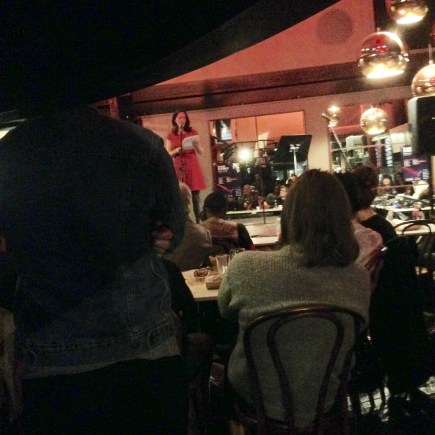
I dashed straight from there to Avant Gaga, to be read to again, this time by poets in the Sydney Dance Lounge. One end of the space was occupied by people eating their dinner, and not doing so in monastic silence. Our crowded end was full of people straining to listen. There weren’t enough chairs for the audience – some sat on the floor, some on the spiral stairs in the middle of the room, one (me) sat on a low table under the stairs and managed to draw blood by bumping into the sprinkler there. Avant Gaga is a monthly event in the back courtyard of Sappho’s bookshop in Glebe, which it goes without saying is a lot more comfortable (unless it’s raining).

I can’t say it was an unadulterated pleasure to be read to in those circumstances, but there was a lot of pleasure. Our MC was Toby Fitch. He kicked things off with a seemingly endless list of entities and activities, real and then increasingly fanciful, that might be represented by the initials SWF. ‘Sesquipedalian’ featured and so did ‘fellatio’. Then, in order, a.j. carruthers, Amanda Stewart, Astrid Lorange, Elena Gomez, joanne burns, Kate Fagan, Kent MacCarter, Lionel Fogarty, Pam Brown and Peter Minter read. Toby Fitch asked our indulgence an read a poem called something like ‘A hundred fully-formed words’, in honour of his infant daughter. Here’s what Astrid Lorange looked like from my vantage point:

avant gaga.jpg

While I was there, the EA went to My Family and Other Obstacles in which Richard Glover hosted three much younger people talk about books about growing up with seriously dysfunctional parents. One of my siblings once said that our birth family was dysfunctional, and I’ve no doubt that my sons at various times would say the same of theirs. After hearing the stories from this session, I’m confident that its participants would be entitled to sneer.

And though the festival continues today, that was it for me. I didn’t mention arriving one day to pass a senior poet wheeling a baby in a stroller, or pretty much looking up from the book I was reading to see someone whose name had been mentioned just a page earlier, or hearing a well respected political essayist exclaiming a common obscenity, or discovering that the Children’s Book Council had scheduled a conference to coincide with the Festival, or the pleasure of having my name spelled correctly on three hot chocolate lids in as many days, or the books I bought. But I don’t have to blog everything.