Tag Archives: Ruth Park

2024 End of year list 5: Blog traffic

In case you’ve had just about enough of my end of year lists, be reassured: This is the last one, and I don’t expect you to read it – it’s mainly so I’ll have a record.

Here are the posts that attracted most clicks on my blog in 2024:

  1. Claire Keegan’s Small Things Like These (October 2023, 1618 clicks)
  2. The Book Club and Paul Murray’s Bee Sting (April 2024, 775 clicks)
  3. Ocean Vuong’s Time is a Mother (March 2023, 744 clicks)
  4. Ellen van Neerven’s Throat (July 2020, 625 clicks)
  5. Mary Oliver’s Twelve Moons (January 2019, 597 clicks)
  6. Anne Enright, The Wren, the Wren, the book club, page 77 (March 2024, 533 clicks)
  7. Trent Dalton’s Boy Swallows Universe (July 2019, 412 clicks)
  8. Robert Alter’s Psalms (September 2020, 365 clicks)
  9. Jenny Erpenbeck’s Kairos and the Book Club (April 2024, 364 clicks)
  10. Rebecca Huntley’s Italian Girl (April 2022, 357 clicks)

Ocean Vuong’s book was at the top of the list for most of the year, and then news of the movie of Small Thiings Like These sent a lot of clicks to that post. Shirley Hazzard’s The Transit of Venus dominated the list for years, but has now dropped off altogether. Mary Oliver, Ellen van Neerven and Robert Alter are the stayers.

One more bit of nerdiness. Here’s WordPress’s list of my all-time top ten posts. Apart from changing positions, the main change from last year is that Philip Larkin got bumped by Claire Keegan:

  1. Travelling with the Art Student (November 2014, 3558 hits)
  2. The Book Group and Shirley Hazzard’s Transit of Venus (June 2018, 2721 hits)
  3. (Re-)reading Kevin Gilbert’s poetry (April 2012, 2430 hits)
  4. Mary Oliver’s Twelve Moons (April 2020, 1841 hits)
  5. Bran Nue Dae (January 2010, 1805 hits)
  6. Mary Oliver’s House of Light (April 2020, 1784 hits)
  7. Claire Keegan’s Small Things Like These (October 2023, 1676 hits)
  8. The book group’s Harp in the South (February 2011, 1431 hits)
  9. Jasper Jones at the Book Group (May 2010, 1352 hits)
  10. Contemporary Asian Australian Poets (June 2013, 1236 hits)

That’s it. Thanks to everyone who has contributed to those statistics. Some of you I know IRL, some I’ve met through email etc, some only in the comments section, some I know only as anonymous clickers. I’m happy that you’ve visited the blog. Come again.
End of year list 5: Blog traffic

Thanks to kind help from Sue at Whispering Gums, I can now find out which of my blog posts have received most hits in the last year. It’s hard to know what these figures mean. Maybe a lot of people visited the post for a second or so, long enough to realise that there was nothing useful there about the subject of their interest. Maybe the post is on a school reading list somewhere, and has been semi-plagiarised by hundreds of students over the year. Maybe this is an indication of which of my posts is most brilliant. Maybe none of those. Anyhow here’s the list for 2023:

  1. The Book Group and Shirley Hazzard’s Transit of Venus (June 2018)
  2. Mary Oliver’s Twelve Moons (January 2019)
  3. Ocean Vuong’s Time is a Mother (March 2023)
  4. Mary Oliver’s House of Light (April 2020)
  5. Ellen van Neerven’s Throat (July 2020)
  6. Ellen van Neerven’s Comfort Food (also July 2020)
  7. The Book Group on David Mitchell’s Utopia Avenue (February 2021)
  8. Robert Alter’s Psalms (September 2020)
  9. Ruby Reads 29: Gift (December 2021, about The March of the Ants, by Ursula Dubosarsky and Tohby Riddle)
  10. Abdulrazak Gurnah’s Afterlives at the Book Group (April 2020)

It looks as if my posts on poetry generate most traffic, though the one on The Transit of Venus, mysteriously to me, is way out ahead of the rest. The book group makes three appearances, which is probably an indication that we choose books that have a lot of social capital. I suspect the post on Robert Alter’s translation of the psalms is visited so often because it includes an embedded video of Boney M singing ‘Rivers of Babylon’.

Having learned how to find these statistics, I’ll try your patience a little by giving you the all-time top 10 posts:

  1. Travelling with the Art Student (November 2014)
  2. The Book Group and Shirley Hazzard’s Transit of Venus (June 2018)
  3. (Re-)reading Kevin Gilbert’s poetry (April 2012)
  4. Bran Nue Dae (January 2010)
  5. Mary Oliver’s House of Light (April 2020)
  6. The book group’s Harp in the South (February 2011)
  7. Jasper Jones at the Book Group (May 2010)
  8. Mary Oliver’s Twelve Moons (January 2019)
  9. Contemporary Asian Australian Poets (June 2013)
  10. Philip Larkin, The Whitsun Weddings (April 2010)

Someone lifted a close-up photo of a painting by Brian Rutenberg from ‘Travelling with the Art Student’ and put it up on Pinterest, and hordes of people came looking for more – sadly it was the only photo in the post. Shirley Hazzard has otherwise been consistently in the lead, and Book Group books and poetry have pulled in the crowds. I think my post on Kevin Gilbert’s poetry was on a school reading list somewhere for a time – it gives a brief account of what can go wrong when a well-meaning whitefella edits a First Nations book.

I don’t know what to make of the absence of any posts I’ve written since 2020.

That’s it for my 2023 round-ups. Thank you all for swelling my statistics, for your likes and comments, and your silent, lurking presences.

The book group’s Harp in the South

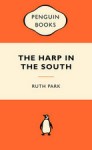
Ruth Park, The Harp in the South (1948, Penguin 2009)

Our Book Group’s last title was Delia Falconer’s Sydney, which quotes liberally from Ruth Park’s writing about this city from the middle of last century. One guy was keen to have Park’s Companion Guide to Sydney as our next title, but the general feeling was that we didn’t want another book about Sydney (Jan Morris’s Sydney was rejected for the same reason). The Harp in the South – a novel set here – was proposed as a compromise, and rejected on the night, but when the next day the papers were full of news that Ruth Park had died we ditched our first choice.

Before the meeting: I loved this book. I believe it was written with the passionate aim of calling attention to the lives of the poor in Sydney’s inner suburbs. That documentary impulse means that 60+ years later it’s full of fascinating historical detail: the shape of Australian coins in the 1940s, the way garbage was collected in Surry Hills (dumped from household rubbish bins onto a big sheet of hessian laid out in the street), how the poor celebrated New Year’s Eve (with a bonfire built from the neighbourhood’s rubbish), ways of thinking about sexual morality, sexual politics, Aboriginality, cultural diversity (yes, in the 1940s that we’re always being told were totally monocultural). I don’t mean to imply that my interest was purely anthropological-historical: the woman who was to give the world the Muddleheaded Wombat knew how to create solid human characters and spin a gripping yarn. In the late 1940s the book caused upset by insisting that its slum-dwelling characters be taken seriously, and that unpalatable facts of life such as abortion be acknowledged. The subject matter is no longer shocking, but some of the characters’ resigned acceptance of, say, a touch of domestic violence or callous racism can still wring a reader’s withers.

We follow the lives of the Darcy family: overweight Mumma who holds everything together, Hughie who has given up on life and seasons his stoicism with alcohol, teenage Roie and her younger sister Dolour. Roie’s two romantic relationships – one disastrous, the other redemptive – constitute the backbone of the plot. Her febrile panic as she finds true love is wonderfully realised. The young Ruth Park was well up to the challenge of writing about sex without what has come to be known as explicit language. There’s a brilliant example in the account of Roie’s wedding night. Roie is frightened. She eventually gets into bed and Charlie, her new husband, comes out of the shower, drying his tousled hair:

He looked down at her.
‘Are you scared of seeing me with my clothes off?’
‘A little bit.’
He dropped the rest of his garments on the floor. He was slender and shapely and tawny-skinned. His neck rose out of his shoulders like a short pillar of bronze; his dark head was beautifully set on it. He looked at her without any selfconsciousness, without any shyness or embarrassment in his golden eyes.
‘I’m just like other men.’

That seems bland enough, but then, if you’re me, you realise that Roie has seen Charlie’s head and neck a thousand times, she’s just been swimming with him so she knows what his body looks like. You realise we’re meant to see through the chaste language here and understand that Roie is actually looking at a different short pillar with a dark head on it, and finding what she sees to be beautiful.

At that moment, I fell in love with Ruth Park.

After the meeting: Sadly, a sudden intense flu-ish infection meant I didn’t go to the meeting last night. The official report, just to hand, said: ‘Mostly approved of Harp in the South, as much for its historical flavour as for its literary qualities. Then a deep discussion about whether men are afraid of other men.’ So I didn’t get to see whether my reading of that wedding-night passage would be dismissed as peremptorily as my finding a coded reference to Aboriginal massacre in The Tree of Man.