Monthly Archives: Sep 2010

Wasted launch at Gleebooks

Tonight we went to hear Bob Ellis launch Ross Honeywill’s Wasted, the true story of Jim McNeil, violent criminal and brilliant playwright. There wasn’t a huge crowd – after all it’s nearly 30 years since Jim McNeil died,and his four plays haven’t had a production on a main stage for a long time. But it was a great launch, and looks like a very interesting book
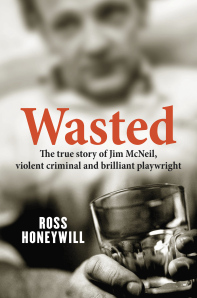
1wastedJim McNeil (1935–1982), according to the Gleebooks web site, quit school at thirteen. Despite his love of reading and philosophy, as a teenager he lived among thugs and thieves. (When we showed him a draft biographical note for one of his Currency Press books in the 1970s, he crossed out the word ‘criminal’ referring to his early milieu and replaced it with ‘knockabout’.)  In 1967,  shot a policeman during an armed robbery. He was convicted and began a seventeen-year prison sentence. In Parramatta maximum-security prison he joined a debating group known as the Resurgents. Though he’d never seen the inside of a  theatre he wrote one-act plays for the group to perform: The Chocolate Frog and The Old Familiar Juice. These plays were given productions at the Nimrod Theatre in Sydney, were a big success, and were published by The Currency Press (the first book I ever copy-edited). He wrote another, full-length play, How Does Your Garden Grow, and part of a fourth, Jack, while still in prison, and then was released ten years early thanks at least in part to lobbying by members of Sydney’s theatre scene. As Ellis said tonight, people were imagining him as being like other badly behaved writers like Brendan Behan, but he was something else altogether. Once he was released he never wrote anything decent again, and his life was a slow descent into violence, alcohol-related illness, and eventually death.

I hesitate to say I knew Jim, but I did visit him in Goulburn Gaol with my then boss, Managing Editor of Currency Press Katharine Brisbane, and he came to  our office more than once after his release. I remember one memorable lunch when he and Peter Kenna, author of A Hard God, told anecdote after anecdote in fierce competition, to our great entertainment. I wasn’t there when, in response to some imagined insult, he broke a bottle on the edge of the kitchen table and threatened to use it on Philip Parsons, Katharine’s husband – but I heard the story from the horse’s mouth the next day. Katharine said she laughed and said, ‘Oh Jim, put it down,’ and he did.

Katharine was there tonight. So were a number of others who knew Jim, including David Marr, who gave him a roof on his release from prison. Ellis also shared a flat with him for some time. Bob Ellis read a piece that sounded as if he had written it soon after McNeil’s death, conveying his charm, his brilliant use of language (‘Dustbin of the Yard here. How are ya, Bobby?’), the ever hovering possibility of violence, and his chaotic alcoholism. Then he read from Wasted, and there was no doubt we were talking about the same man. I’d rate it just about the most moving launch I’ve ever been to. It didn’t turn away from Jim’s truly ugly qualities (Honeywill said that the thing that most surprised him in researching the book was how very violent Jim had been – a far cry from the charming ratbag one would wish him to have been). But there were people who loved him, and still hold a tender place for him. A number of people from the audience told anecdotes, both about his charm and his dangerousness. His story was one of redemption through discovering the life of the mind in prison, then returning to the damned space, almost by an act of will. It made me think – and someone may have said this – that the damage inflicted by the prison system runs very deep: he had lost the ability to make the kind of quotidian decisions necessary to a decent life. Ellis did say that imprisonment has been an experiment in dealing with criminal behaviour, and it has failed.

The School Magazine on RN’s Hindsight

I received a text message yesterday afternoon: ‘You’re famous!’

Yes, the Hindsight program on The School Magazine went to air and my voice has now been heard by the vast multitudes who listen to the ABC on a Sunday afternoon, and the rest of the world can hear it on Thursday 16th at 1 o’clock in the afternoon. You can download it or listen to it here. My earlier post said it was scheduled for next Sunday – it was moved forward.

Lorena Allam, the producer, did a marvellous job. I expected her to use a couple of seconds of my semi-coherent ramblings, but it turns out there’s an awful lot of me in it, and she made me sound reasonably intelligent. Of course there are a dozen omissions, but since the program focussed on the period from 1950 to about 1980, it would have been a big ask to give Duncan Ball, Tohby Riddle or Joanne Horniman more than a passing mention, or to squeeze in a mention of Geoffrey McSkimming, Margrete Lamond, Kim Gamble, Di Bates, Judy Ridge, to mention only people who have worked for the magazine, let alone the writers who were first published there. And Oh, the poets!

But have a listen. There’s some lovely stuff there. I particularly like the way much is made, correctly, of Patricia Wrightson and Lilith Norman as formidable figures, and then Cassandra Golds, remembering herself as an opinionated 11 year old, says she had no time for them at all.

Added later: Joanne Horniman has written a blog post giving the long version of a major incident in the magazine’s history that was mentioned briefly in the program. It’s at http://www.secretscribbled.blogspot.com.

And later again: Another grace note from Joanne Horniman here.

The Swamp Thing

Alan Moore, Steve R. Bissette and John Totleben, Saga of the Swamp Thing (Vertigo 2009)

I’m not a horror aficionado, but my younger son knew I enjoyed and admired other Alan Moore comics. He gave me From Hell for my birthday, and this for Father’s Day.

Having read it, I’m still not a horror fan. Demons and monsters aren’t my bag unless they’re funny like Bartimaeus, theological like Milton’s Satan, or … actually, there are quite a lot of exceptions. Still, I respond too literally to things like children becoming autistic as a result of major trauma and then institutionalised and preyed on by stray demons, and when a plot hinges on some plants speeding up their production of oxygen at night, I want to give a lecture on the difference between plant respiration and photosynthesis. Maybe pedantry protects me from the horrors of the unconscious mind.

Still, Alan Moore is a story-telling genius. In 1982, he – and illustrators Bissette and Totleben – took over the Swamp Thing comic series created ten years earlier by Len Wein and Bernie Wrightson. They collaborated on something like 45 issues – this book collects the first eight of them, of which the very first busies itself tying up loose ends from the previous 19 issues, and the second redefines the nature of the eponymous monster. So we are plunged in medias res, but know we won’t be given the detail of what went before. We can tell something is being rebuilt, not quite from the ground up, and forward impetus is well established.

This book interested me as early work by the creator of Watchmen which, like Neil Gaiman’s  Sandman, won my engagement by sheer brilliance. I don’t feel compelled to read on here, though anyone with a love of horror would certainly be hooked.

Quarterly Essay 39: China powers on

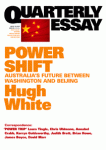
Hugh White, Quarterly Essay 39: Power Shift: Australia’s Future between Washington and Beijing (Black Inc Sept 2010)

As with every Quarterly Essay, I turned first to the back of this issue for correspondence on the previous one. Timing was unusually poignant in this case: QE38, David Marr’s Power Trip, came out just days before its subject Kevin Rudd was ousted from power; the responses to it here were mostly written when the election campaign of Julia (‘the ouster’) Gillard was foundering, and I read them just after hearing that she will be leading a minority government. There are no fireworks in the correspondence: a couple of journalists add corroborating anecdotes about Rudd’s leadership style (David Marr describes these as symptomatic of ‘a new, and welcome, spirit of indiscretion’; I read them as a bit of a pile-on). Kerryn Goldsworthy deftly despatches whole swathes of attack on the essay and dispenses a little relevant information about literary forms while she’s at it. James Boyce corrects and enriches David Marr’s understanding of Dietrich Bonhoeffer and his probable significance for Rudd. In responding, David Marr replies almost entirely to criticisms that were made elsewhere: perhaps it would have been polite to give those critics the right of pre-reply here (he quotes Sylvia Lawson and Allison Broinowski and gives them a one-word reply: rubbish).

From David Marr’s Power Trip to Hugh White’s Power Shift. Appropriate as the title would have been for an essay on the recent election, we have to wait for QE40 for George Megalogenis to give us that (Power Brakes?). This one is about something other than personalities and politics as horse race:

Our leaders, and by extension the rest of us, are assuming that Asia will be transformed economically over the next few decades, but remain unchanged strategically and politically. It is an appealing assumption because the past forty years have been among the best times in Australia’s history, and it has been easy to believe that American power would continue indefinitely to keep Asia peaceful and Australia safe. That has been a cardinal mistake.

Perhaps the assumption is also appealing because its obvious knee-jerk alternative is a revival of Yellow Peril rhetoric. Tomorrow When the War Began (John Marsden’s series of YA novels and now a film based on the first book) demonstrates, incidentally, that the complacency Hugh White sets out to prick hasn’t been absolute, but it does give strength to his arm in seeking to get people to think about Australia’s relationship to China rather than explore violent fantasies, however earnestly packaged.

While Kerryn Goldsworthy says, quite correctly, on page 85 that an essay can be ‘an expedition into the unverifiable: memories; theories; hitherto unexplored veins of subject matter or uninhabited point of view’, this one proceeds with the logical clarity (though not the  soul-destroying aridity) of a PowerPoint demonstration. ‘Since 1788,’ he says, stating the obvious but unsettling truth, ‘Australia has always enjoyed a very close and trusting relationship with the world’s strongest power, and we just take that for granted.’ Well, not for much longer – and we need to think about this. The main history of our times, he proposes, may not be in the place that’s getting the most attention:

The day-to-day management of the [US–China] relationship gets a lot of detailed attention, but presidents and other senior figures avoid substantial analysis of America’s long-term intentions towards China. One reason is 9/11. For almost a decade, America’s political leaders have convinced themselves that a small group of fugitives on the run in Pakistan poses a bigger challenge to America’s place in the world than the transformation of the world’s most populous country. Future historians will find that hard to explain.

To be fair to White’s argument, he goes on immediately after this to acknowledge that Barack Obama signalled that the blinkers were coming off after his visit to China in November last year. All the same, Muriel Rukeyser take a bow.

It’s a very interesting essay, which I recommend as an antidote for the personality-preoccupied, narrative-driven writing that accounts for most political commentary in our newspapers these days.

Cheap at a fraction of the price

Having got as much of my work done today as I could manage I listened to a Guardian podcast, which mentioned that Seamus Heaney has a new book out, and it’s topping  the best seller lists in the UK. I went browsing to see if it’s available in Australia. One bookshop says it will be here 14 September, but they all agree you can’t buy it in Australia yet. Mostly prices are around the $30 mark. The Co-op Bookshop offered this spectacular anti-bargain:

Not only free delivery, but also a members’ discount $54.55. Who could resist?

Narkiness and trouble

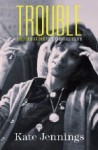
Kate Jennings, Trouble: Evolution of a radical: selected writings 1970–2010 (Black Inc 2010)

I was looking forward to this book. Kate Jennings and I have a lot in common. We both hail from rural Australia, had diffident but dependable fathers, were skinny when young (she still is), did Arts at Sydney University in the 1960s. We both hate alcohol culture. We’ve both had people with Alzheimer’s in our lives. We were never part of the same set, but had friends in common. We met at least once, when one of those friends had us both to dinner, possibly with ill-conceived match-making intent. (I have only the vaguest memories of that meal, not much more than being pleasantly surprised to find that the formidable Kate was a country girl.) As I’ve mentioned before, I was there for her famous speech to a Vietnam Moratorium crowd on Sydney Uni’s front lawn in 1970, I also vividly recall her tremulous presence at Balmain Poetry Readings in the 70s. Both the front lawn speech and the poem I remember most clearly, ‘Couples‘ (‘couples make me guilty of loneliness, insecurity, or worse still, lack of ambition’), are included in this volume.

Apart from one essay, perhaps in The New Yorker, I didn’t read anything more of Kate’s writing until her 2002 novel about Alzheimer’s and Wall Street, Moral Hazard, her 2008 book about her dogs, Stanley and Sophie, and her recent essays in The Monthly, all of which I enjoyed. Trouble, a selection in lieu of memoir, looked like an opportunity to fill the gaps: how did the rage-filled, nervy radical feminist of the 70s become the consummately urbane, confident New Yorker?

If you’re looking for a review, stop reading now, because I gave up just after the halfway point. Jennings describes herself as prickly and graciously acknowledges that Chris Feik of The Monthly and Quarterly Essay ‘gently moderates [her] frequent immoderation’. But it wasn’t lack of moderation or prickliness that got me down. I diagnose at least a mild case of expat syndrome: I’ve grown older and regret my youthful foolishness, you’ve grown older and have mended your immoral ways, expats have grown older and think they were once foolish and immoral because of the immutable culture of their native land. The essays and interstitial pieces pour scorn on Australian feminists (so trapped in ‘theory’ and waffle), on Australian drunks (so representative of all Australians and so unregenerate), on Australian poets (so caught up in ‘infinitely ridiculous poetry wars’, and while she’s on the subject, one side of those wars is historically ignorant and engages in ‘appallingly damaging’ games of Chinese whispers) and, with no obvious sense of the irony, on the Australian proclivity to pour scorn (her word is derision).

She complains that an essay making sweeping statements about what’s wrong with Australian feminism was ignored (‘Clever tactic to silence criticism’), but since the essay names no names, quotes no quotes, and seems to be broadly ignorant of Australian socialist feminism, the Women’s Electoral Lobby, Women Behind Bars and lord knows how much else, I suspect the silence was embarrassed rather than clever.  She complains that her poem about Martin Johnston led to disapprobation being heaped on her, and that unnamed persons (a weaselly passive voice implies that it was the entire corpus of Australian poets) referred to her as the ‘execrable Jennings’, but an angry response shouldn’t have surprised her given that the poem virtually accuses unnamed people of taking ghoulish delight in Martin’s slow suicide by alcohol,  and if anyone used the phrase ‘execrable Jennings’ in public they managed to keep it hidden from Google. A former lover once threatened to sue her for a portrayal of him which she claims was a caricature that no ordinary readers would give a fig about identifying with any actual person. The story in question, included in this book, seemed to me a nasty piece of work that might as well have conte à clef as a subtitle: you don’t have to be a member of any in crowd to recognise Helen Garner (incidentally one of the people who don’t exist in Jennings’s version of Australian feminism). Poor Kate, always being misunderstood.

I could multiply examples of annoying moments:

The chief characteristic of Australian feminism is a proud  combativeness, best illustrated by the refrain of a song popular in the first days of the movement: ‘I’m a shameless hussy and I don’t give a damn.’

It may be nitpicking, but the song, as I remember it and confirmed by 30 seconds of research, goes like this:

We're shameless hussies and we don't give a damn
We're loud, we're raucous and we're fighting for our rights
for our sex
and for fun
and we'll win.

Proud combativeness? I would have thought the tone was more like rowdy optimism. And KJ’s slip from plural to singular is surely indicative of something.

By the time I reached page 174 I realised the book wasn’t fun any more. On that page Jennings says a friend ‘complained that he had to keep backtracking to figure out what was going on’ in a detective novel she  is enthusiastic about, and I caught myself reading that as a sneer at her friend’s philistinism. Almost certainly it was nothing of the sort, but my cumulative annoyance had reached a level where I was reading with half my mind on the lookout for the next annoying thing. I even started cavilling at an occasional turn of phrase, and that had to be me not Kate, because she writes beautiful, concise prose. This book and I needed some space from each other. I may go back to it, but for now I’m going to read Alan Moore’s Saga of the Swamp Thing. Sorry.

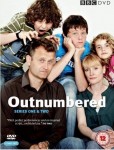
Outnumbered vs Modern Family

In Monday’s Guide (liftout for the Sydney Morning Herald), Jim Schembri’s preview of award winning US family sitcom Modern Family began ‘Really, is there anything funnier on TV at the moment?’

‘Yes,’ we replied in my house, ‘resoundingly yes!’

Not that we don’t enjoy Modern Family, or appreciate the way it’s rejuvenated the US sitcom. But has Jim Schembri seen Outnumbered, which screens over in the corner on ABC 2 just after whatever deep-pocketed advertiser brings us  Modern Family on Ten? Perhaps not, as the Guide doesn’t even give it a synopsis – just ‘8.00 Outnumbered. (PG)’

Outnumbered is an English show about a family consisting of two parents and their three young children, plus occasionally the husband’s mother. There’s no diversity of culture or sexual identity, It’s a straight up the middle of the road nuclear family. What makes it shine is that the three young actors – aged 7, 9 and 13 or thereabouts – aren’t working form a memorised script. They’re told what’s going to happen in a scene and then let loose in front of the camera. The adult actors, who are working from a script, then have to deal with whatever lollybombs are thrown their way. And the young are brilliant improvisers, especially the two younger children, playing the characters Ben and Karen. (The older boy is more on his dignity, so doesn’t have quite the same scope.)

You probably need to see it, but favourite moments include an argument between Ben and Karen about who would win in a battle between a fairy and a boy armed with an increasingly alarming arsenal; a bizarre riff on what might be concealed in a big black beard, or Karen’s chat with her mother while she is having nits combed out of her hair: ‘Can I keep a nit as a pet?’ ‘No. Why would you want that?’ ‘I’d talk to it.’ ‘But nits can’t talk.’ ‘Yes they can. They talk nit language.’ ‘Well, you can’t have a nit for a pet.’ ‘Then can I have a giraffe?’ ‘A giraffe is too big.’ ‘What about a lion then?’ ‘Lions are too dangerous.’ ‘Could I have a nit town in my hair?’  and so on.

My single favourite exchange occurred after Karen had wrought havoc by authoritarian rulings at her father’s doubles tennis game after an unwary player suggested she might be the umpire as a way of keeping her entertained. Chatting with her mother that evening she says she wishes girls could grow beards because then they could be ferryboat captains. The mother says she can be one of those without a beard. ‘An ayatollah then,’ says Karen. ‘You’d make a good ayatollah,’ says the mother wearily. Score one for the adult team, or just possibly for the writers. In Modern Family it’s always the writers.

Pam Brown in the 70s: notes from a naïve reader

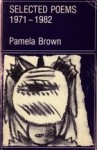
Pamela Brown, Selected Poems 1971–1982 (Women’s Redress Press, Wild & Woolley 1984)

Just call me angel of the morning angel
Just brush my teeth before you leave me baby

That’s a mondegreen, and if it doesn’t make you smile you don’t know the song ‘Angel of the Morning’. Retitled  ‘Radiopoem 1968’ and given a page to itself in a poetry book (as, for example, page 67 in this book), it’s still a mondegreen and still funny, but it has now become a poem, and so invites a different kind of attention. You might read it as a satiric jibe at pop romance, an oblique reflection on the nature of intimacy, an implied confession that the poet worries about her morning breath, a surrealist squib, but we read it differently here than if we had stumbled across it in, say, a ‘Kids say the darnedest things’ column in the Reader’s Digest.

In a lot of Pam Brown’s work, the poetry is in the selection, and there’s a mystery at work. Mondegreen as poem is one example. There are plenty of others. Take, one of many possibilities from the early parts of this book, this untitled poem:

HEY SHIT,
SHE SAID TO
NOBODY,
GRAVE DIGGERS
ARE CONCEPTUAL
ARTISTS.

Or ‘The Leaps’ on the next page:

MYOPIC POSSUMS
MYOPIC POSSUMS
MYOPIC POSSUMS
Coked off my stoop

A snatch of absurd conversation, some stoned nonsense … transformed into poetry pretty much by being excised from their original context and put on these pages. Not so much cut-up as cut and paste. Don’t misunderstand me, I’m not saying they’re terrible poems. On the contrary. For some of them, though, it feels as if you had to be there. That is, to really understand a lot of the earlier poems you probably have to have been around, when Pam Brown was performing in cabaret, making movies, hanging out with a particular creative crowd. (I wasn’t.) Kate Jennings’s introduction tells us that this volume is, ‘a fever chart, an ecg of the times when the new feminism demolished the geography in our heads, blew up the bridges of retreat, and mined the way forward.’ If so, the instrument recording the chart is no mechanical transcriber. The poetry is in the selection, in choosing which fragments of  those times to record, which will retain their fragrance when replanted.

By the end of the decade, possibly because there’s less coke on the stoop, things are much more intelligible. There are some intensely personal pieces about / growing out of / feeding into relationships, but there are still those oddly banal moments, there for no obvious reason, but catching something, some whiff of the times, like the end of ‘Drought’:

so i drank
oomineral water
ooootried two
ooooooredhead
oooooooomatch tricks
solved them both

There’s much more to these poems than this, of course, but it’s a feature of PB’s work that has persisted over the decades. There’s an excellent conversation between her and John Kinsella in Jacket 22, where she talks very interestingly about her practice. This book is out of print (well, what do you expect, it’s poetry and published 26 years ago?), but her 2003 book Dear Deliria includes a handful of the same poems.

China Miéville at Kinokuniya

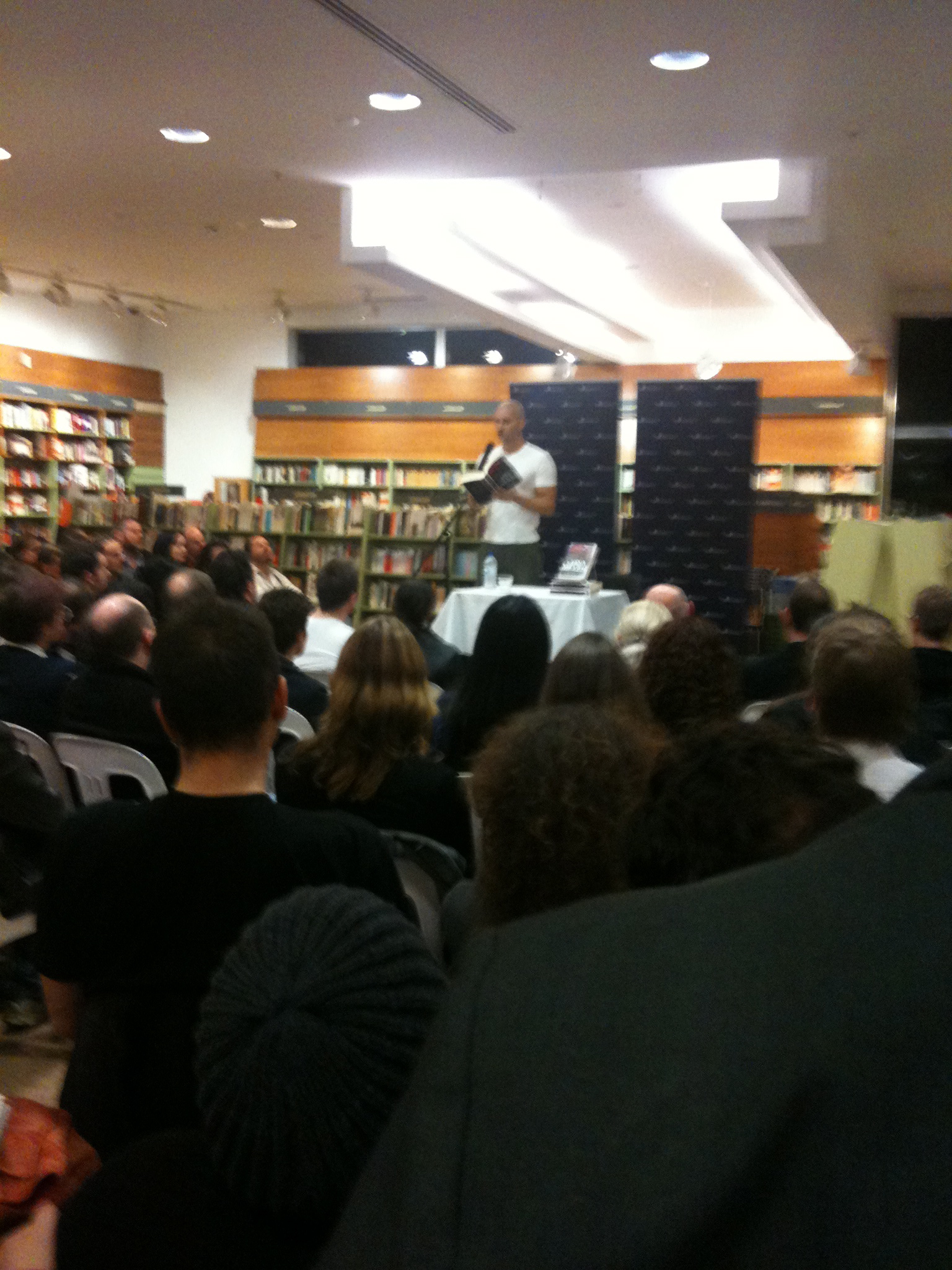
There are wordy conflagrations in Melbourne around about now that are sending occasional sparks up Sydney way. The Melbourne Writers Festival is letting Val McDermid do an evening at Gleebooks, and last night China Miéville, in Australia for AussieCon 4, made an appearance at Kinokuniya. There was a bit of a Neil Gaiman rockstar feel to the event, with a pec hugging white T shirt in place of Neil’s trademark black jacket.

The Miévillians

After a brief introduction, China M stood on the tiny stage by himself for an hour, reading and fielding questions.

He read a chapter from his latest book, Kraken, pretty much a self-contained short story that was very funny, though more to be savoured than guffawed at. I loved the term retro eschatonaut: if you can figure out what it means you’ve got the bulk of the story.

An earlier plan to have a fishbowl Q&A session having been ditched, CM chaired the question time deftly. You could tell we weren’t at a Writers Festival because all the questioners had clearly read at least some of his books, and he didn’t have to do any obvious mental gymnastics to come up with interesting answers to dim questions. I noted down a couple of gems.

On atheism: After stopping the questioner in mid-sentence to prevent spoilers, he said, ‘I don’t think you choose whether you believe or not,’ and talked about CS Lewis’s account of his own conversion to Christianity: he had convinced himself that he had to believe, and knelt and prayed, the most dejected and reluctant convert in all England. ‘I like the idea of an atheistic character who resents his lack of belief.’

On film adaptations: Any book involving a secondary world invites the collaboration of readers. A film destroys all the readers’ mental worlds – and the author’s – and replaces them with the director’s.

Advice to young writers: Start from an assumption that nothing you write will be worth publishing. Then falsify that assumption.

On writing a book set in an already established universe: Every book you write in someone else’s world is one less you can write in a world you make up yourself. He won’t ever be writing a Star Trek or Star Wars tie-in, but if he gets a phone call asking him to do a Doctor Who script, he’ll drop everything. (That last was delivered with a pinch of salt.) He wondered aloud what would happen if a publisher approached a distinguished author, J M Coetzee for example, asked them to write a Star Trek novel, and kept putting more money on the table until they said yes. (‘Star Wars by Coetzee?’ I muttered to the man standing next to me. ‘Better than Lucas,’ he muttered back. Someone should write it.) It would be a win-win: the Nobel laureate expands his readership, the publishing house cashes in on the controversy, the literati get to read some science fiction and/or enjoy their outrage, etc.

The role of politics in his work: He’s a socialist, and if his fiction introduces people to political ideas he’s thrilled, but a 500 page fantasy novel is a hugely inefficient vehicle for propaganda. ‘If you’re a Red, the Paris Commune is a very inspiring story. If you’re not a Red, it’s still a very exciting story.’ The revolutionary politics is there in his books because it gives their worlds texture, makes them more realistic.

I left, a happy camper,  as the audience was transmogrifying into a huge queue for the book signing. My Book Group is currently reading The City and the City (the book of his that he would most like to see made into a movie), so I’ll be posting about China Miéville again in a couple of weeks.