Monthly Archives: Jan 2026

Alison Bechdel’s Spent

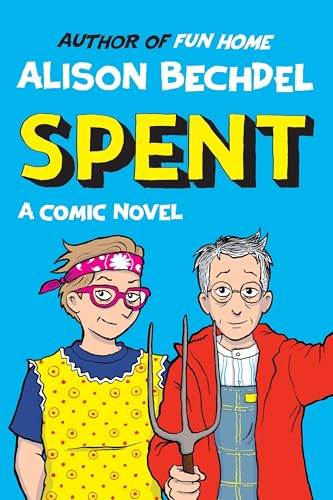
Alison Bechdel, Spent: A Comic Novel (Jonathan Cape 2025)

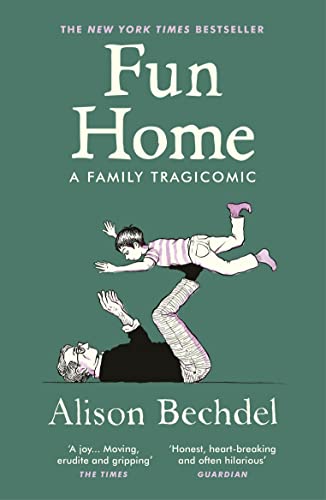
This is the fourth ‘graphic novel’ by Alison Bechdel. I use quote marks because they aren’t all novels. The first, Fun Home (2006), the only other one I’ve read, includes fictional elements, but is actually a memoir about her relationship with her father. I believe her second and third, Are You My Mother? (2012) and The Secret to Superhuman Strength (2021) are also predominantly memoirs. 

Even though this book describes itself as ‘a comic novel’, it too feels as if it’s taken from Bechdel’s actual life. The main character, ‘Alison Bechdel’, is a cartoonist whose graphic memoir about her father (here called Death and Taxidermy), became a best seller. The project she is currently working on has striking similarities to book we are reading. In the acknowledgements, the author thanks her ‘stellar agent, Heloise C. Bland Sydelle Kramer’ – the struck-through name belongs to the book’s fictional agent. And so on.

We’re not meant to read the book as describing the actual lives and loves of Bechdel and her ‘annoying, tenderhearted, and utterly luminous friends’. I don’t know if Bechdel has a goat farm IRL, or if her empty-nest neighbours are experimenting with polyamory (‘Indeed, they give “sandwich generation” a whole new meaning’). But the concerns and preoccupations of the characters are definitely taken from life.

This is a book about the members of a haven for leftist LGBTQI+ people in the era of Trump, MAGA, the climate emergency and rampant late-stage capitalism. They write letters, organise, lobby, have ‘Black Lives Matter’ placards on their lawns, argue about gender politics, suffer at the way television adaptation mangles and betrays Alison’s first book. And they are funny.

An early caption (page 14) sums up the mood: ‘How she rues the decades she spent fretting that the country was on the verge of fascism. Now it really is, and she’s worn out.’

Hence one meaning for the book’s title: spent, worn out, depleted. The title also refers to the way Alison and friends are incorporated into consumerism – the ‘S’ in ‘spent’ could have been a dollar sign, as in fictional Alison’s project, $um. The characters are constantly receiving packages from Amazon, and Alison agonises over whether to accept an offer from Megalopub (aka the Murdoch empire?) for her work in progress.

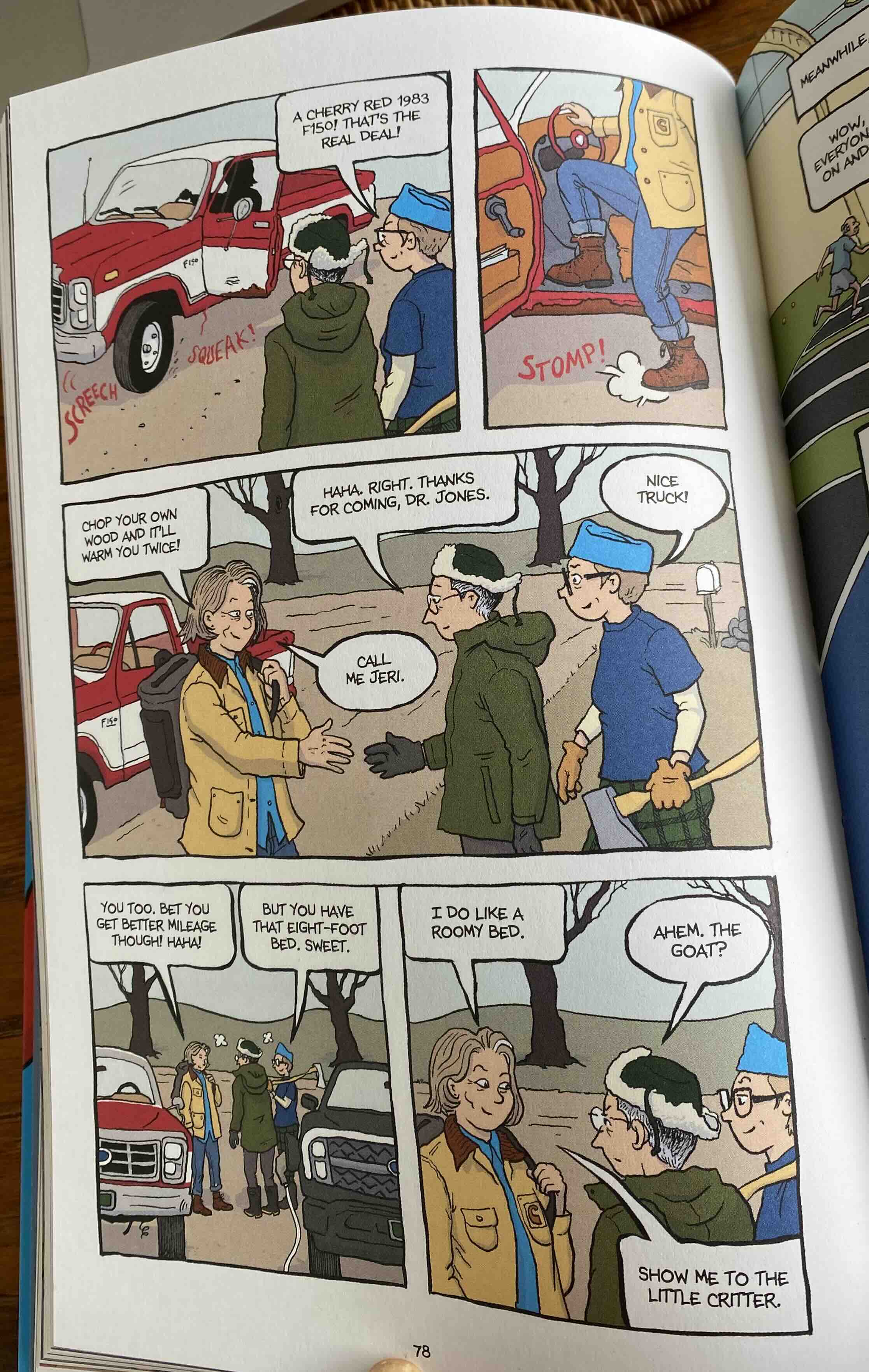
Page 78* gives you an idea of the art, and the general playfulness. A couple of pages earlier Alison and Holly have been startled out of their sauna by a goat thumping about on its roof – and have stood naked in the snow, rude bits discreetly hidden. A couple of pages later their neighbours are playing at the local pickleball palace and have a zing moment when hands touch that is the beginning of the polyamory thread. Page 78 is a quiet page: no nakedness, and just a couple of flirty double entendres.

Holly, in the blue cap, has been chopping wood while Alison films her for Holly’s Instagram account, which is about to go viral. ‘It’s the new vet,’ says Alison. ‘Whoa! What a beauty!’ says Holly. We turn the page and see that Holly is looking at the vet’s truck, not the vet herself.

But the original ambiguity continues. The flirty stuff between Holly and the vet will persist, making Alison a little nervous.

I notice two things about the page.

First, same-sex attraction is the norm in the world of this book, no big deal. One character is a trans man, but no one even mentions it – somewhere along the line he is shirtless and discreet scars from top surgery are revealed. The one cis-het man in the friendship group has fantasies of being a Lesbian. Even the women of the younger generation who identify as asexual are asexual with other women. Heterosexuality is, um, rampant among the miniature goats, which leads to some good-humoured comedy.

Second, there’s a tiny detail in the bottom left frame. No verbal cues given (unless that’s what the vet means about mileage), the car on the right is being charged. Of course, you think, these right-on environmentalist vegans would have an EV. It’s one of the pleasures of the book that such tiny moments abound. A random flick through the pages gives someone commenting at the communal non-Jewish shabbat, ‘I don’t think I’ve ever seen a man light the candles before.’ Or there’s the young gender-non-conforming character Badger wearing a T-shirt that proclaims, ‘Neurodivergent AF’. Monitor screens and floating strips of text regularly bring news from Mar-a-Lago and the disasters of the wider world.

Of my recent reading, the book this most chimes with is Susan Hampton’s memoir, Anything Can Happen. They are both excellent books. This one doesn’t have the Sydney Gay and Lesbian Mardi Gras, but it’s funnier.


I wrote this blog post on the land of Gadigal and Wangal, where the wind is cool and rain is pending. I acknowledge their Elders past and present and welcome any First Nations readers of the blog.


That’s my age. When blogging about a book, I focus on page 78 to see what it shows about the book as a whole.

Huang Fan’s Flower Ash

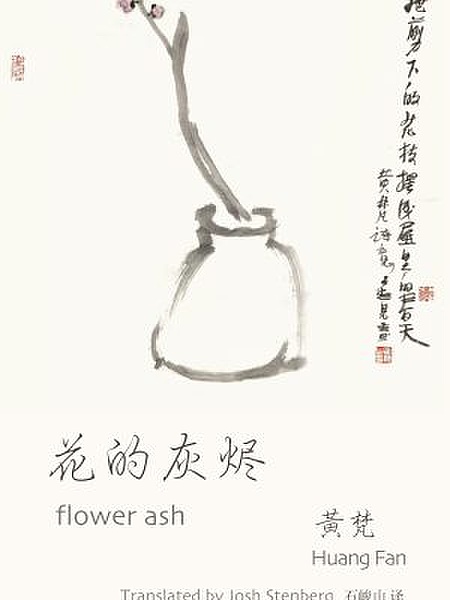
Huang Fan, Flower Ash (translated by Josh Stenberg, Flying Island Books 2024)

Huang Fan is a Nanjing-based poet and novelist who has received many awards and prizes in his homeland, and has been described as the Chinese mainland poet of most interest to Taiwanese readers. His work has been widely translated, including into English. Flower Ash is a wonderfully accessible introduction to his work.

The Flying Islands website (at this link) quotes US novelist Phillip Lopate::

In these powerful, exquisite poems, Huang Fan, a major Chinese poet, takes stock of his life from the vantage point of middle age, finding deep connections with nature, but also rueful solitude, memories of lostness, and a lingering sense of missed opportunities. These translations beautifully capture a threnody of wonder and sadness which is the poet’s singular achievement.

It’s a bilingual book. On each spread, Josh Stenberg’s English version is on the left and Huang Fan’s original Chinese on the right. Perhaps partly because of this, I was always aware, as I read, that the real poem, over there on the right, was inaccessible to me. (A bilingual reader would of course have a very different experience.)

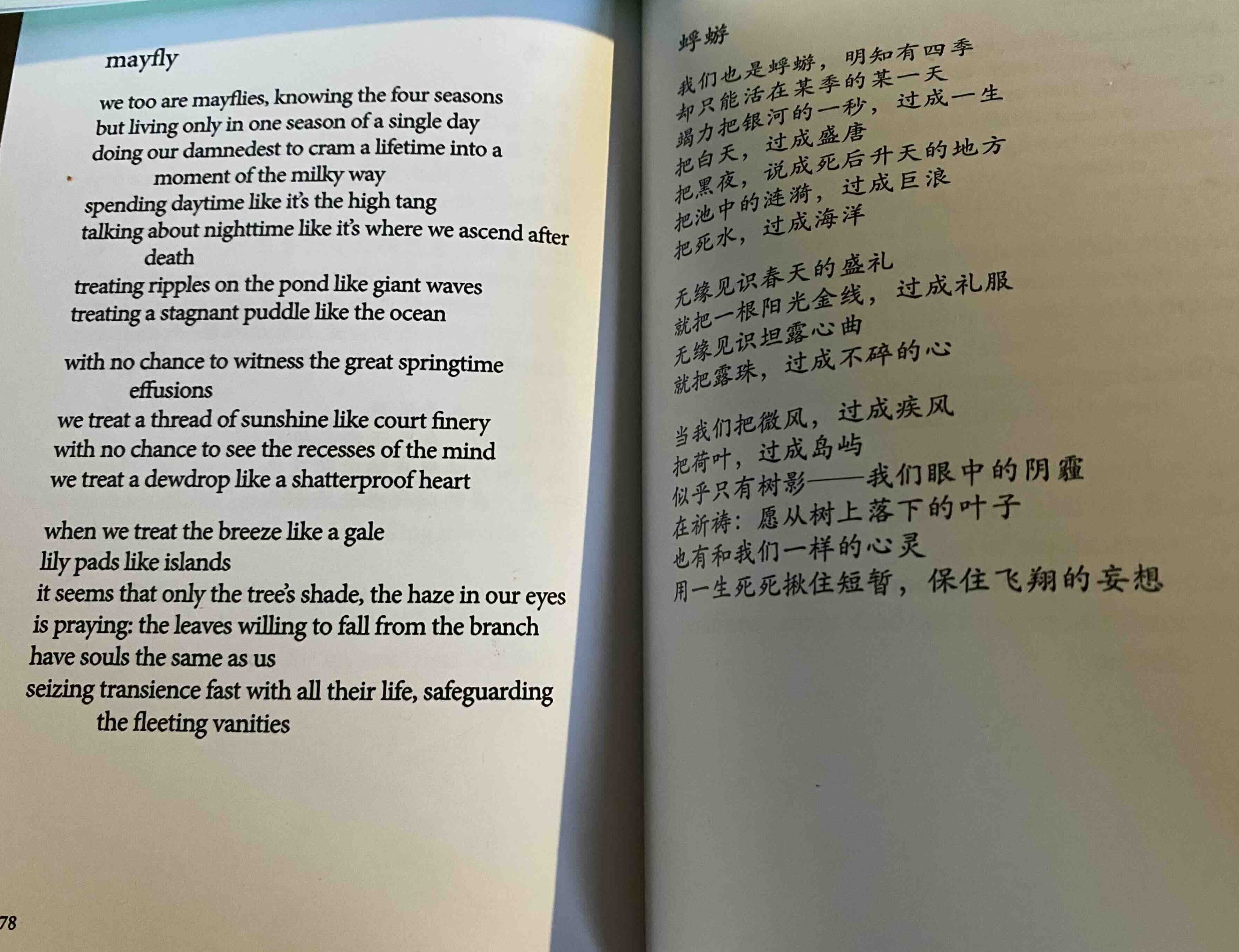
The poem ‘Mayfly’ on pages 78* and 79 is a good example:

Don’t you just wish you could read those beautiful lines of characters on the right-hand page?

The English, by contrast, feels unadorned. The first two lines lay out the poem’s central idea:

we too are mayflies, knowing the four seasons 
but living only in one season of a single day

Mayflies live for a single day. From some perspectives, our lives are similarly short.

The following lines present different images to represent the same idea: a lifetime is ‘a moment of the milky way’, the High Tang period (the eighth century CE, a golden age of Chinese poetry) is just a day, what we see as an ocean is just a stagnant puddle. And so on. It’s hard to see that anything much is happening that isn’t already there in the first lines.

I think the problem is translation. Not that Josh Stenberg’s translation is inadequate, on the contrary. But translation itself is problematic. I suspect the music of the original, and the visual play that’s happening in the ideograms, are simply untranslatable, and what we get is like a musical score, or a choreographer’s notes.

But even given all that, the poem takes an interesting turn:

with no chance to see the recesses of the mind 
we treat a dewdrop like a shatterproof heart

The imagery is no longer straightforward illustration of a straightforward idea. These lines open out to something deeper, less easily paraphrased. It’s no longer the perspective of deep time or deep space that is being evoked but the depths of the mind and the complexities of human emotion. If it mistaken to think of the dewdrop as a shatterproof heart, is there an implied heartbreak, an unfathomable sorrow – even ‘a threnody of wonder and sadness’?

After briefly returning to a catalogue of oppositions – breeze/gale, lily pads/islands – the poem lands on this:

it seems that only the trees shade, the haze in our eyes 
is praying: the leaves willing to fall from the branch
have souls the same as us
seizing transience fast with all their life, safeguarding
------- the fleeting vanities

This doesn’t yield coherence easily. I confess I got some help – I went to Google translate, and found this:

It seems that there is only the shadow of the tree - the haze in our eyes 
is praying: may the leaves falling from the trees
have the same heart as us
Use your life to hold on to the short-lived and keep
------- the delusion of flying

Again, the Chinese text is a closed book to me, but to my ignorant eye, and to my astonishment, the robot makes better sense than the award-winning human translator. Instead of ‘only the trees shade’, which makes no easy sense, the mechanical translation has ‘there is only the shadow of the tree’ – that is, we don’t see the real world, but something like the shadows in Plato’s cave. Instead of the leaves ‘willing to fall’, it is the speaker who wills –’may the leaves falling’: it’s not a description but a prayer (which follows on from ‘praying’ at the start of the line). And in the last line it’s no longer the leaves ‘seizing transience’, but the reader being urged to do so. What we experience may be ‘fleeting vanities’ (much more resonant than ‘delusions of flying’, even though the latter fits the idea of falling leaves better), but it’s what we have, and we (‘you’ in the robot’s translation, ‘the leaves’ in the human’s) need to seize it fast / hold onto it.

I didn’t set out to do this, but I seem to have taken a single poem and demonstrated that reading poems in translation is fraught.

I did enjoy the book, and am glad that Flying Islands regularly include Chinese–English bilingual books.


I wrote this blog post on the land of Gadigal and Wangal. I acknowledge Elders past and present of those clans, and welcome any First Nations readers.

My blogging practice is to focus on the page that coincides with my age, currently 78.

Summer crime audiobooks

Jørn Lier Horst, The Traitor (translated by Anne Bruce, narrated by Steve John Shepherd, Penguin Audio 2024)
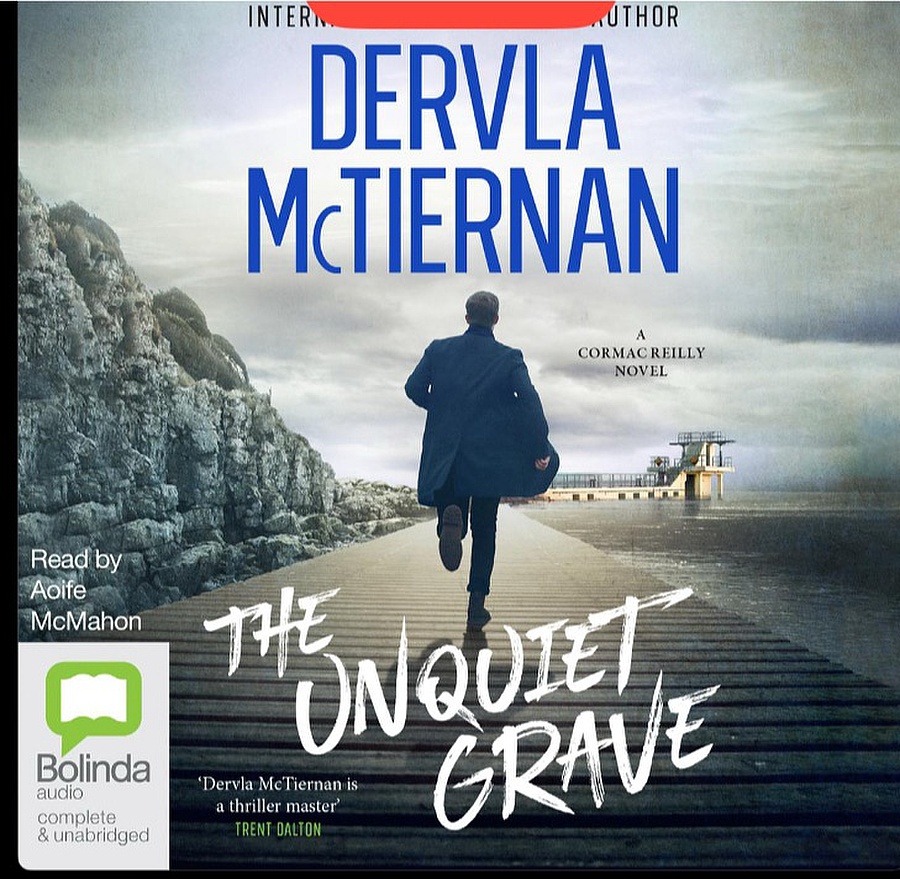
Dervla McTiernan, The Unquiet Grave (narrated by Aoife McMahon, HarperAudio 2025)

In the last couple of weeks the Emerging Artist and I have driven from Sydney to the Great Ocean Road and back. Part of the way back our rear vision mirror was filled with great clouds of smoke that made the sun look like a little pink button, and on just one night we arrived in a motel that was without power for a couple of hours because of the extreme heat. But in our journeying we managed to listen to two audiobooks.

The Traitor is part of the Wisting series – the thirteenth instalment or so. Wisting is a scandi detective whom I’ve seen a bit of on television. It’s not one of my favourite shows, but a novel promised a story to keep us alert when driving and awake when passengering. Sadly, in the event I found my thoughts wandering when I was driving and i fell asleep when I was passenger. It may have been Steve John Shepherd’s matter-of-fact narration or Anne Bruce’s translation, but the relentless attention to detail made it almost impossible for me with my clearly feeble power to concentrate to keep track. If anything, listening to this audiobook confirmed me in my long-ago decision not to read any more crime novels.

But then on the way home we listened to The Unquiet Grave, and my resolve weakened. It’s the fourth in Dervla McTiernan’s Cormac Reilly series, wonderfully complex with at least four cases on the go at once, plus complex relationships among the detectives.

The main murder plot runs through a series of suspects, and I’m not complaining that the final revelation is a bit of a frost. There are a number of subplots – in particular one that involves major cybercrime in which the main criminal gets his come-uppance in a most satisfactory manner

Aoife McMahon’s narration wonderful. She really does do the police in different voices.

[Full disclosure: I am one of two proofreaders acknowledged at the end of the The Unquiet Grave for ‘going the extra mile’. I wouldn’t have mentioned it as we proofreaders usually go unnamed and it feels like bad form to claim an involvement. It’s nice to be acknowledged!]


I listened to these stories as I travelled through a number of lands, including Wiradjuri, Wadawurrung and Yuim. I wrote the blog post on the land of Gadigal and Wangal of the Eora Nation. I acknowledge Elders past and present of all those peoples, and welcome any First Nations readers.
2025 End of Year List 4: Books

The Emerging Artist now keeps a record of the books she reads so she can easily whip up a list for the blog at this time of year. First her data:

  • 62 novels,  9 non fiction, 3 art books 
  • 29 novels by women
  • 20 novels by non English speakers
  • 2 First Nations authors

Best novels
I’ve tried not just to mention books reviewed by Jonathan. That meant excluding two favourites: Time of the Child by Niall Williams and The Granddaughter by Bernhard Schlink. My best five are:

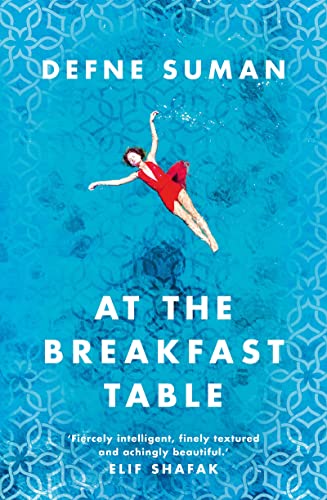
At the Breakfast Table by Defne Suman. Set in Istanbul, it weaves the story of four generations of a family, focused around one weekend, but giving glimpses into the recent history and politics of Turkiye through the lives of each character. The role of women, class and art are in the process. It was one of my random picks from the library, and I now have another of hers on order. 

Glorious Exploits by Ferdia Lennon. What a terrific read, full of humour, violence, Irish sensibilities set in ancient Syracuse. The love of Euripides’ plays drives our two main characters to stage a production performed by prisoners. We saw Ferdia at the Sydney Writers’ Festival where he was equally entertaining. 

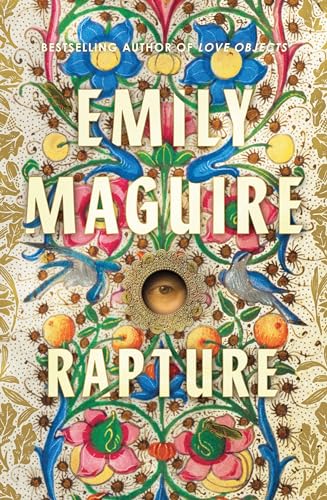
Rapture by Emily Maguire. I had put off reading this but eventually, somewhat reluctantly, picked it up. It was gripping, conjuring up mediaeval Europe and a woman struggling to have independence from the constraints imposed at the time.

Brotherless Night by V. V. Ganeshanathan. Another random pick from the library, this is set in Sri Lanka as the civil war builds over a few decades. Its main character, a young female medical student, tries to sidestep the conflict as her brothers are increasingly caught up in it. A powerful read.

33 Place Brugmann by Alice Austen. During the Second World War, an apartment block in Belgium holds the range of residents that reflect the broader society – those enthusiastic about Nazism and willing to inform, those willing to put their lives in danger to hide Jews and those who become the target of hatred. 

Best non fiction
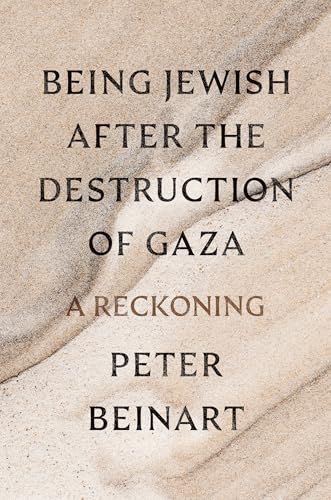
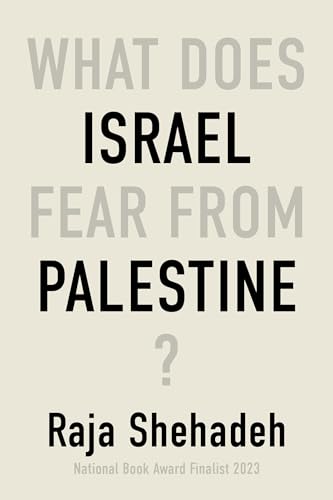
What does Israel Fear from Palestine by Raja Shehadeh and Being Jewish after the Destruction of Gaza: A Reckoning by Peter Beinart are two excellent books about the current genocide.

From me

I can never pick a favourite or best book. Some highlights of 2024 were:

A comic: Fun Home by Alison Bechdel, an LGBTQI autobiographical work that has become a classic. A friend was shocked that I hadn’t read it already (she didn’t care that I haven’t read Pride and Prejudice).

A novel: Time of the Child by Niall Williams, one of three novels so far set in the small fictional Irish town of Faha. Its picture of the role of Catholicism in the life of the village struck a deep chord for me as a child of a Catholic family in North Queensland.

Another novel: First Name, Second Name by Steve MinOn features a Jiāngshī (a kind of Chinese vampire). This struck a personal note for me as the Jiāngshī’s journey ends at the Taoist Temple in Innisfail – and a childhood friend of mine told me that the MinOns lived down the street from him when he was a child.

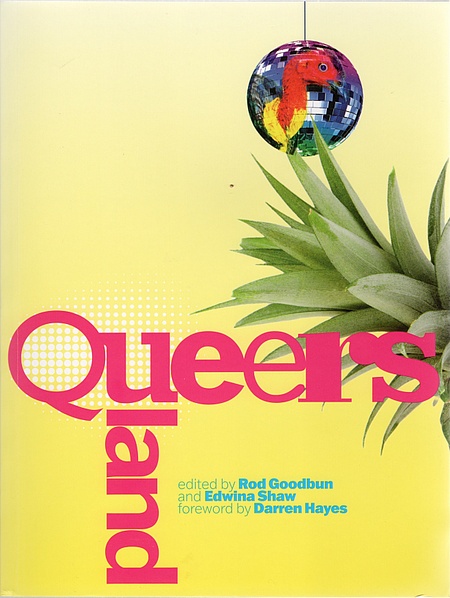
A collection of essays: Queersland is full of stories about being LGBTQI+ in the state of Queensland, especially in the Jo Bjelke-Petersen era, co-edited by Rod Goodbun and my niece Edwina Shaw. I love it because it is so necessary and for obvious nepotistic reasons.

Poetry: Rather than sngle out an individual book I’ll mention the Flying Islands Poets series edited by Kit Kelen. I read 12 books in the series this year, and my life is much richer for it.

I should mention Virginia Woolf. I was inspired by a podcast about the centenary of the publication of Mrs Dalloway to plunge into that book. I’m very glad I did, though plunge is probably exactly the wrong word for my three-pages-a-day approach.

To get all nerdy, I read:

  • 77 books altogether (counting journals and a couple of books in manuscript, but only some children’s books)
  • 32 works of fiction
  • 19 books of poetry
  • 5 comics
  • 11 books in translation – 4 from French (including Camus’ L’étranger, which I read in French), 2 from German, and 1 each from Chinese, Icelandic, Korean and Hungarian
  • 9 books for the Book Group, whose members are all men
  • 11 books for the Book Club, where I’m the only man
  • counting editors and comics artists, 39 books by women and 41 by men
  • 3 books by First Nations writers, and
  • 14 books by other writers who don’t belong to the White global minority.

And the TBR shelf is just as crowded as it was 12 months ago.

Happy New Year to all. May 2026 turn out to be unexpectedly joyful. May we all keep our hearts open and our minds engaged, and may we all talk to peope we disagree with.


I wrote this blog post on Wadawurrung land, overlooking the Painkalac River. I acknowledge their Elders past and present and welcome any First Nations readers of the blog.

2025 End of year list 5: Blog traffic

This is the last end of 2025 list, and I don’t expect you to read it – it’s mainly so I’ll have a record.

Here are the posts that attracted most clicks on my blog in 2025:

  1. Niall Williams’s Time of the Child (February 2025, 861 hits)
  2. Ellen van Neerven’s Throat (July 2020, 847 hits)
  3. There Are Rivers in the Sky, Elif Shafak and the Book Club (October 2024, 734 hits))
  4. Ocean Vuong’s Time is a Mother (March 2023, 591 hits)
  5. Yael van der Wouden’s Safekeep at the Book Club (January 2025, 576 hits)
  6. Andrew O’Hagan on Caledonian Road with the book club (July 2024, 525 hits)
  7. Robert Alter’s Psalms (September 2020, 491 clicks)
  8. Mick Herron’s Standing by the Wall (October 2023, 489 hits)
  9. The Book Group & Richard Flanagan’s Question 7, page 77 (May 2024, 422 hits)
  10. The Book Club and Paul Murray’s Bee Sting (April 2024, 400 hits)

I don’t know what these figures mean. The Mick Herron book is almost not a book.

Here’s WordPress’s list of my all-time top ten posts. This list stays pretty stable. The long-time place-holders don’t need to get many views to stay, and only one of them was in this year’s top ten:

  1. Travelling with the Art Student (November 2014, 3567 hits)
  2. The Book Group and Shirley Hazzard’s Transit of Venus (June 2018, 3010 hits)
  3. (Re-)reading Kevin Gilbert’s poetry (April 2012, 2499 hits)
  4. Mary Oliver’s Twelve Moons (April 2020, 2193 hits)
  5. Ellen van Neerven’s Throat (July 2020, 2074 hits)
  6. Mary Oliver’s House of Light (April 2020, 1909 hits)
  7. Claire Keegan’s Small Things Like These (October 2023, 1880 hits)
  8. Bran Nue Dae (January 2010, 1856 hits)
  9. Ocean Vuong’s Time is a Mother (March 2023, 1672 hits)
  10. The book group’s Harp in the South (February 2011, 1447 hits)

The post at the top of the list is there because someone lifted an image from it and put it up on Pinterest.

That’s it. Thanks to everyone who has contributed to those statistics. Some of you I know IRL, some I’ve met through email etc, some in the comments section, some I know only as anonymous clickers. I’m happy that you’ve visited the blog. Come again.

2025 End of Year List 3: TV series

The Emerging Artist and I watch far too much television. A lot of it is very good. To make a list of ‘best’ we had to struggle to extract specific shows from the blur. I’m not sure we agreed completely so here is my list compiled in consultation though not always complete agreement with the Emerging Artist. There are 23 titles in fairly shaky categories.

Reminiscence

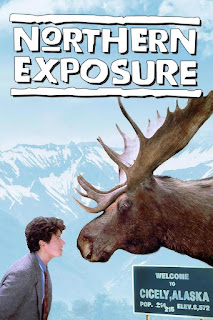
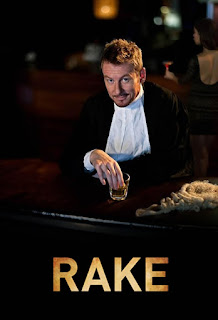
Judge John Deed (G F Newman 2002–2007) was a new discovery for us which we loved mainly for Martin Shaw’s wonderful screen presence as a nonconformist judge. We binged on Northern Exposure (Joshua Brand and John Falsey 1990–1995), which held up surprisingly well. And our comfort binge was Rake, Season 1–5 (Peter Duncan, Richard Roxburgh and Charles Waterstreet 2010–2018), which probably couldn’t be made now but is fabulous.

Police

Soooo much crime. So many crime series are really about watching the face of the main detective as she (these days it’s very often a woman) does her detecting. From a huge field, we’ve selected these:

  • Blue Lights, season 3 (Declan Lawn & Adam Patterson) continues to follow the lives of a group of recruits to the Belfast Gardaí. Among other faces there’s that of Katherine Devlin
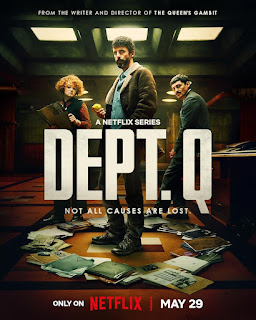
  • Dept. Q (from novels of Jusii Adler-Olsen 2025) transposes a Nordic crime series to Scotland. The face belongs to a bearded Matthew Goode.
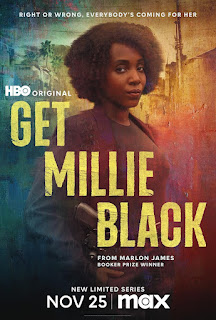
  • Get Millie Black (Marlon James 2024), created by Jamaican novelist Marlon James, writes back to shows like Death in Paradise . The face is Tamara Lawrance’s.
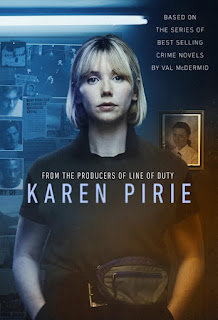
  • Karen Pirie, series 1 & 2 (Emer Kenny 2022, 2025) is another Scottish procedural. The face is Lauren Lyle’s.
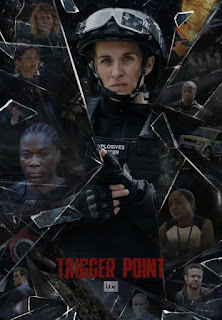
  • Trigger Point, Series 3 (Daniel Brierly 2025) is a bomb disposal unit in London, with Vicky McClure as the main face

Comedy

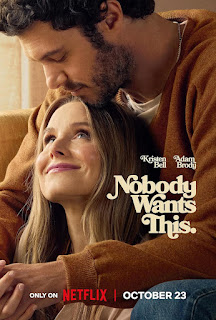
  • Nobody Wants This, season 2 (Erin Foster 2025), a romcom in which a Christian heritage woman and a rabbi negotiate their relationship.
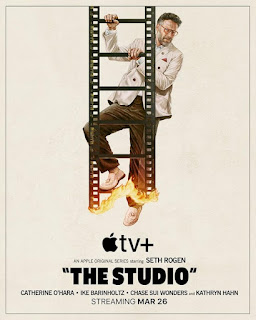
  • The Studio (Seth Rogan 2025): inside Hollywood
  • Iris (Doria Tillier 2024): a comedy of manners featuring socially awkward truth-teller
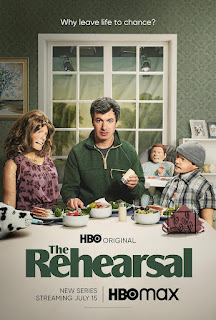
  • The Rehearsal, season 1 & 2 (Nathan Fielder 2025): sometimes unsettling show about a man who helps people rehearse for stressful events in their lives
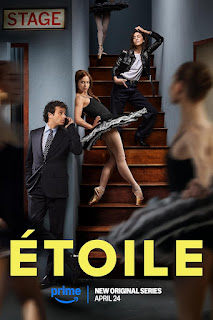
  • Étoile (Daniel Palladino & Amy Sherman-Palladino 2025): French and a New York ballet companies swap key talents
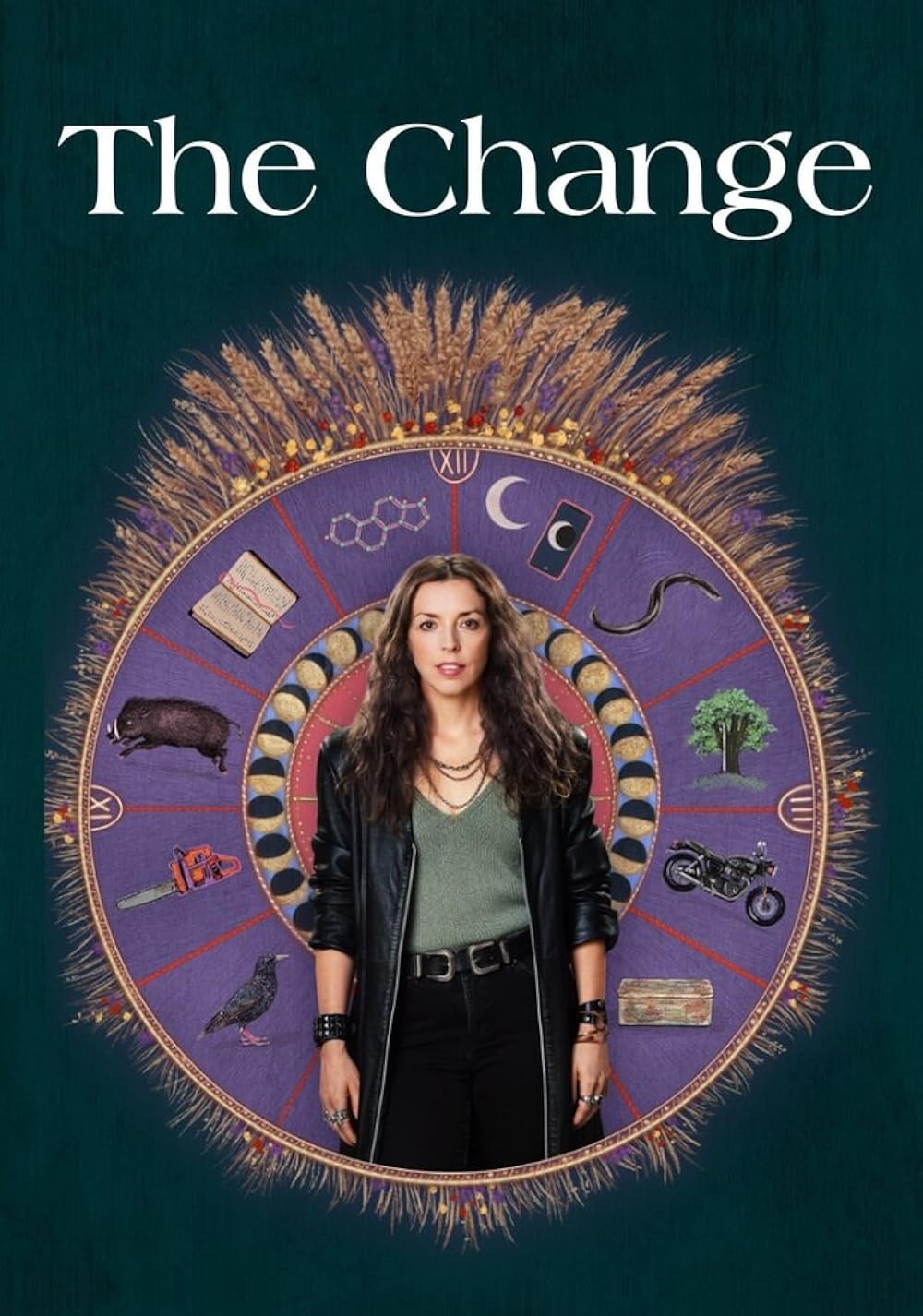
  • The Change, season 2 (Bridget Christie 2025): A post-menopausal woman sets out on a journey of self discovery in the English woods where she gets entangled with a deeply weird community

Drama

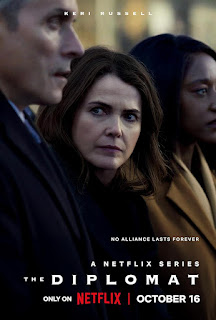
  • The Diplomat, season 3 (Debora Cahn 2025): what looks increasingly like fantasy in the age of Trump, a woman with bad hair (Keri Russell) is a brilliant diplomat
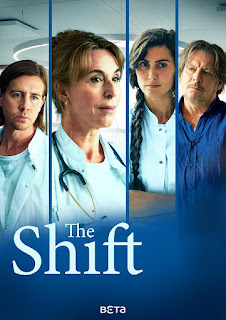
  • The Shift / Dag & Nat, Season 2 (Lone Scherfig 2024): a Danish obstetrics unit under pressure day and night
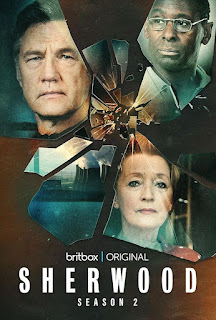
  • Sherwood, season 2 (James Graham 2024): a community where the wounds from the miners’ strike under Thatcher still sting
  • The Hack (Jack Thorne 2025): David Tennant with bad hair as an investigative journalist versus the Murdoch empire
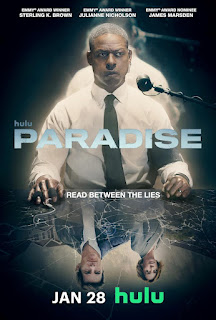
  • Paradise (Dan Fogelman 2025): this starts out as a murder mystery and develops into a dystopian fantasy
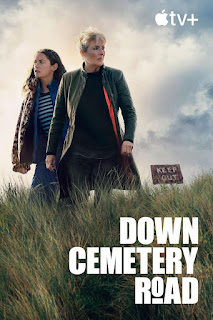
  • Down Cemetery Road (Morwenna Banks 2025): Emma Thompson, also with bad hair!

Documentary series

We didn’t watch many documentary series this year, but the five-episode Mr. Scorsese, directed by Rebecca Miller was excellent. Lots of clips and wonderful interviews with family, friends, actors and other directors.

My nominations for Year’s Best

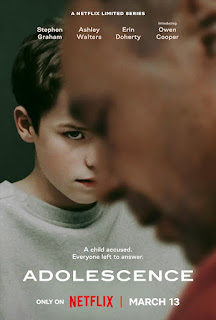
  • Adolescence (Jack Thorne and Stephen Graham 2025). Brilliant brilliant brilliant!
  • Slow Horses Season 5 (Will Smith and others, from books by Mick Herron 2025): Five seasons in, this is still funny and gripping and leaves me wanting more. You come away thinking you could smell Gary Oldman.

Thank you for reading this far. Please add your own favourites in the comments.

2025 End of Year list 2: Theatre

I went to the theatre seventeen times this year, counting a National Theatre Live screening. Mostly I was accompanied by the Emerging Artist, but as luck woUld have it she was home with a painful post-surgery foot for the play that gets the Jonathan Shaw Award for the year:

The True History of the Life and Death of King Lear and his Three Daughters at the Belvoir Street Theatre, directed by Eamon Flack, with Colin Friels in the title role. From the beginning this Lear was in crisis. Colin Friels somehow communicated that he was dividing up the kingdom, not on some weird whim, but because he had a sense of impending cognitive and physical incapacity. That he (the actor, not the character) collapsed on another evening, leading to the cancellation of that performance, is perhaps an indication that he was drawing on his own felt experience.

Of the shows we saw together, we agreed on this list of The Best, in alphabetical order:

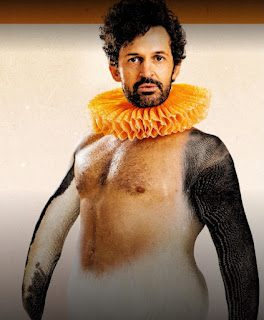
Classic Penguins, in which Garry Starr (not his real name), wearing webbed feet, a ruffed collar and not even that much for some parts of the show, took us on a tour of Penguin Classic paperbacks, performing mostly silly skits based on their titles. For Around the World in 80 Days, for instance, he spun around while the audience counted to eighty. I laughed a lot, I cried, I did as I was told and helped the naked Garry crowd surf.

Jacky by Declan Furber Gillick, directed by Mark Wilson and starring the wonderful Guy Simon, was a Melbourne production transported to Belvoir Street as part of the Sydney Festival.

The Visitors by Jane Harrison, which we saw as part of the Clancestry Festival of first Nations arts in Brisbane/Meganjin. Representatives of the local clans meet on the headlands of what is now Sydney Harbour and debate how to respond to the fleet of ships that is coming through the heads.

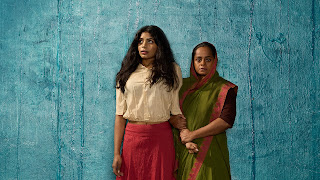
The Wrong Gods written and co-directed by S Shakthidharan (his co-director was Hannah Goodwin). Everything about this was superb – the set the music, the dancing, the writing, the acting. Wonderful theatre , and a serious look at the devastating encroachment of capitalism on Indian village life.

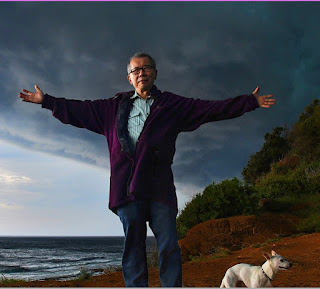
William Yang: Milestone, in which one of Australia’s living treasures marks his eightieth birthday with a slide show and his undimmed gift for storytelling. We saw it as part of the Sydney Festival.

Next, television!


I  saw most of these shows on Gadigal land. I wrote this blog post on the  Wurundjeri Woi-wurrung land. I acknowledge their Elders past and present, and welcome any First Nations readers.
2025 end of year list. Part 1: Movies

As the New Year dawns, the Emerging Artist and I are drawing up our Best of 2025 lists. Movies first.
We saw about 65 movies, including streaming and TV. Here are the ones we both put at the top of our viewing year.

The image captions are linked to either an IMDB page or a review by my favourite movie critic, Mark Kermode.

Five documentaries, one from the Antenna Documentary Film Festival, three from the Sydney Film Festival, and one from Apple TV+. They come from Russia, Kenya, Afghanistan and the USA, and deal with a poet with terminal cancer, a filmmaker who donates a kidney, domestic life when the Taliban take over, the restoration of a municipal library, and a small heroic act in Putin’s Russia.

We had trouble whittling our list of features down to size, so here are our top ten (three of which we saw at the SFF) in alphabetical order of titles:

Not a lot of laughs in that lot. Sorry!