Category Archives: Page 7x/47/7

Sophie Finlay’s Terrarium

Sophie Finlay, The Terrarium (Flying Island Books 2024)
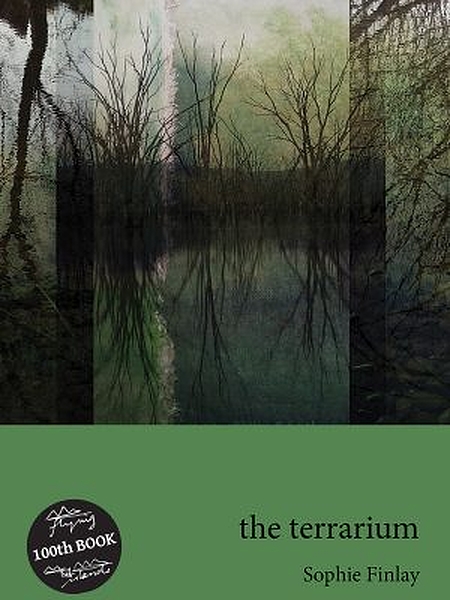
Sophie Finlay won the Flyng Islands Manuscript Prize for Emerging Poets 2022. A visual artist as well as a poet, she designed the book, and both the cover image and the photographs and delicate drawings scattered throughout are hers. It’s a beautiful, pocket-sized object.

The poems cohere around a main theme, summed up nicely in the final words of Darwin’s On the Origin of Species, which serve as a kind of epigraph:

whilst this planet has gone cycling on according to the fixed law of gravity, from so simple a beginning endless forms most beautiful and most wonderful have been, and are being, evolved.

As I understand it, the central idea of the book is to imagine the earth as a gigantic terrarium, in which one can observe the wonders of living things, often with scientific labels attached (poem titles include ‘Zooxanthellae’, ‘Morphologies of Ice’, ‘Glossopteris’ and ‘Noctilucent’), reaching back to the very beginnings of life, but including accidental personal matters such as a fear of snakes and a trip to Antarctica.

Interspersed among the other poems are six ‘extinction’ poems. Each of the first five of these comes with an indication of date: from the End-Ordovician extinction 455-430 mya (million years ago) to the Cretaceous-Paleogene (K-Pg) extinction 65 mya. The fifth, which is also the book’s final poem, refers to the Anthropocene extinction, no date necessary. These numbered poems aren’t section headings: in the midst of much else, they sound an ominous background drumbeat. Individual poems pay attention to detail but, just like in the real world, there’s a deep current that cannot be ignored.

‘Frayed network’ on Page 77* is a moment when the ominousness is mostly at bay, there is no scientific nomenclature, and attention is on the present moment in the natural world.
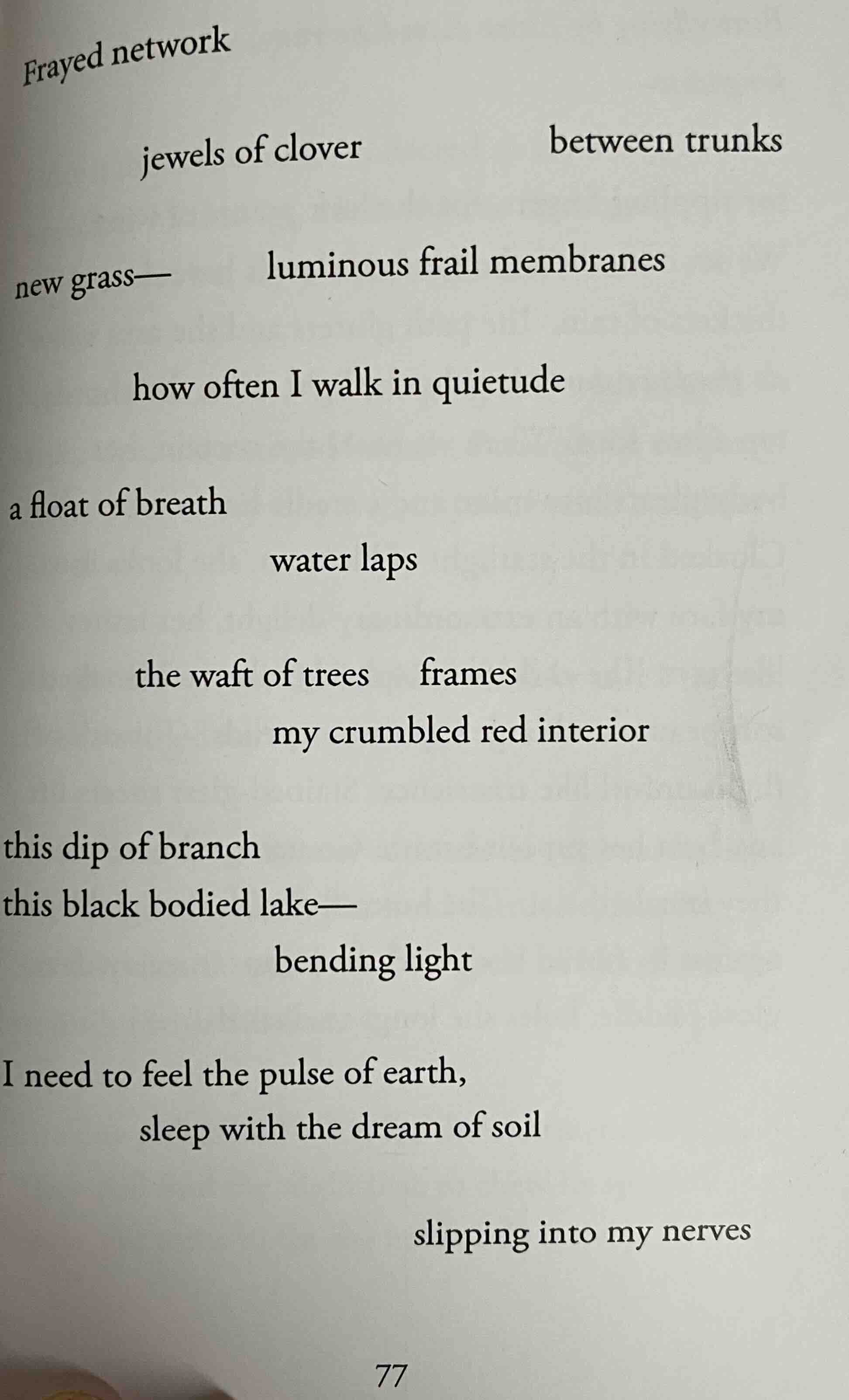
This poem might be a nice entry point for readers who are intimidated or bewildered by contemporary poetry. It’s definitely one that could have prompted the question a friend of mine asked at a Sydney Writers’ Festival session, ‘Why have modern poets given up rhyme and metre?’. The words are spread out all over the page, I imagine my friend complaining, the punctuation is mostly no help, and where are the verbs?

But slow down, spend a little time, and I think even my indignant friend might find pleasure here.

The poem takes its readers on a walk among trees beside a lake. Line by line, the speaker notes details from the environment: the jewel-like clover, the luminous frail membranes (what a lovely phrase!) of new grass, the sounds of lapping water and the feel of a breeze. There’s a hint that this is a new beginning: at the end of a drought, perhaps or in the aftermath of a bushfire. When else would you think of grass as frail? These details are just there, each its own thing, with no attempt to tie them into a pattern or narrative with a formal rhyme scheme or metre, or sentence structure, or even an orderly presentation on the page. There’s a lot of white space, a visual equivalent of silence.

It’s a mindful kind of walking, just noticing, not trying to make meaning or extract usefulness.

Then, interspersed among the images there are three sentences, each of them about the speaker:

How often I walk in quietude

At the third line, the poem’s speaker and her situation is made explicit. ‘Quietude’ is a formal word for a state of tranquility, suggesting quietness and solitude.

The second formal sentence occurs at lines six and seven. Its subject isn’t clear. Something, probably the totality of all the things that have been noticed – the clover, tree-trunks, new grass, breeze, sound of water lapping and trees –

___________------_____ frames
____________ my crumbled red interior

This is the only ‘difficult’ line in the poem, and also (no pun intended) its heart, in two senses. First, straightforwardly, it’s roughly the middle line of the poem. Second, more interestingly, it moves momentarily from the external environment to the inner life. The red interior suggests the colour of blood and internal organs, perhaps especially the heart. But ‘crumbled’? It does suggest some kind of diseased state, though I don’t know of one that would merit that adjective – some kind of clotting, perhaps, but that would be stretching it. I’m happy to let the word remain suggestive rather than carrying a definite meaning. A heart that isn’t so much broken, perhaps, as dried out and eroded by sorrow.

The next lines take us back to details of the environment: a lake seen through the branches of a tree, or perhaps a branch dipping into the lake, and a nod towards the many lighting effects that a lake can produce: reflection, diffraction, blackness and lightness at the same time.

In the final three lines, the third subject–verb–object sentence, the poem’s speaker is front and centre:

I need to feel the pulse of earth
_______ sleep with the dream of soil

___________------_______ slipping into my nerves

She is reaching for a connection with the land, to have it come alive in her dreams, to heal her crumbling elements. She needs to be, literally, grounded, with a hint, perhaps, in the word ‘dream’, of Indigenous concepts.

Which brings me to the title. There are two possible frayed networks here. Nerves are spoken of as frayed, and as networks. There is also the intricate ecological network of bush beside a lake, and to describe that network as frayed may be to pick up the hint of recent disaster in the frail membranes of grass. More generally, in our times it’s pretty well impossible to think of the natural environment without the effects of climate change coming to mind: all ecological systems are currently under stress. Yet, the poem affirms, the nervous system of a human can the ecological system of the bush can connect – need to connect.


I wrote this blog post in Gadigal Wangal country, where seasonal flowering is happening earlier with each passing year. I acknowledge Elders past, present and emerging for their continuing custodianship of this land, over which their sovereignty has never been ceded.


My blogging practice, especially with books of poetry, is to focus on the page that coincides with my age, currently 77.
Colleen Z Burke’s Cloud Hands

Colleen Z Burke, Cloud Hands (Feakle Press 2024)

Cloud Hands is Colleen Z Burke’s thirteenth book of poetry.

As in those of its forerunners that I’ve read, its typical poem is a short, impressionistic snapshot of landscape, or especially skyscape, mostly in the inner-west Sydney suburb of Newtown. As snapshots, these poems are mostly embedded in a specific moment, a specific circumstance, so we often get a sense of the life of the person taking the shot, and of the broader context.

There are also memories of a working-class childhood. ‘Each Way’, about gambling as part of the family’s way of life, begins, ‘Minor crime was woven / into our lives just like / the salty tang of the sea.’ (I can relate: my own family of origin wasn’t working class, but my farmer father, like Colleen Burke’s, was a patron of illegal SP bookies.)

There are a three poems (‘Illusion’, ‘A nefarious enterprise’ and ‘A magnet’) recalling youthful romance. Colleen’s partner was Declan Affley, the folksinger who accompanies Mick Jagger’s terrible rendition of ‘A Wild Colonial Boy’ in Tony Richardson’s 1970 movie Ned Kelly. Though it is many decades since he left us, he is still a vibrant presence in these poems.

There are people-watching poems, incidents from inner-suburban life, comments on the news, snippets of science and social history. Covid and the bushfires of 2019–2020 loom large. Climate change and environmental degradation threaten to sour the joys of the natural environment.

This is a collection that bears witness to a persistent practice of paying attention – to the world, to history, to life.

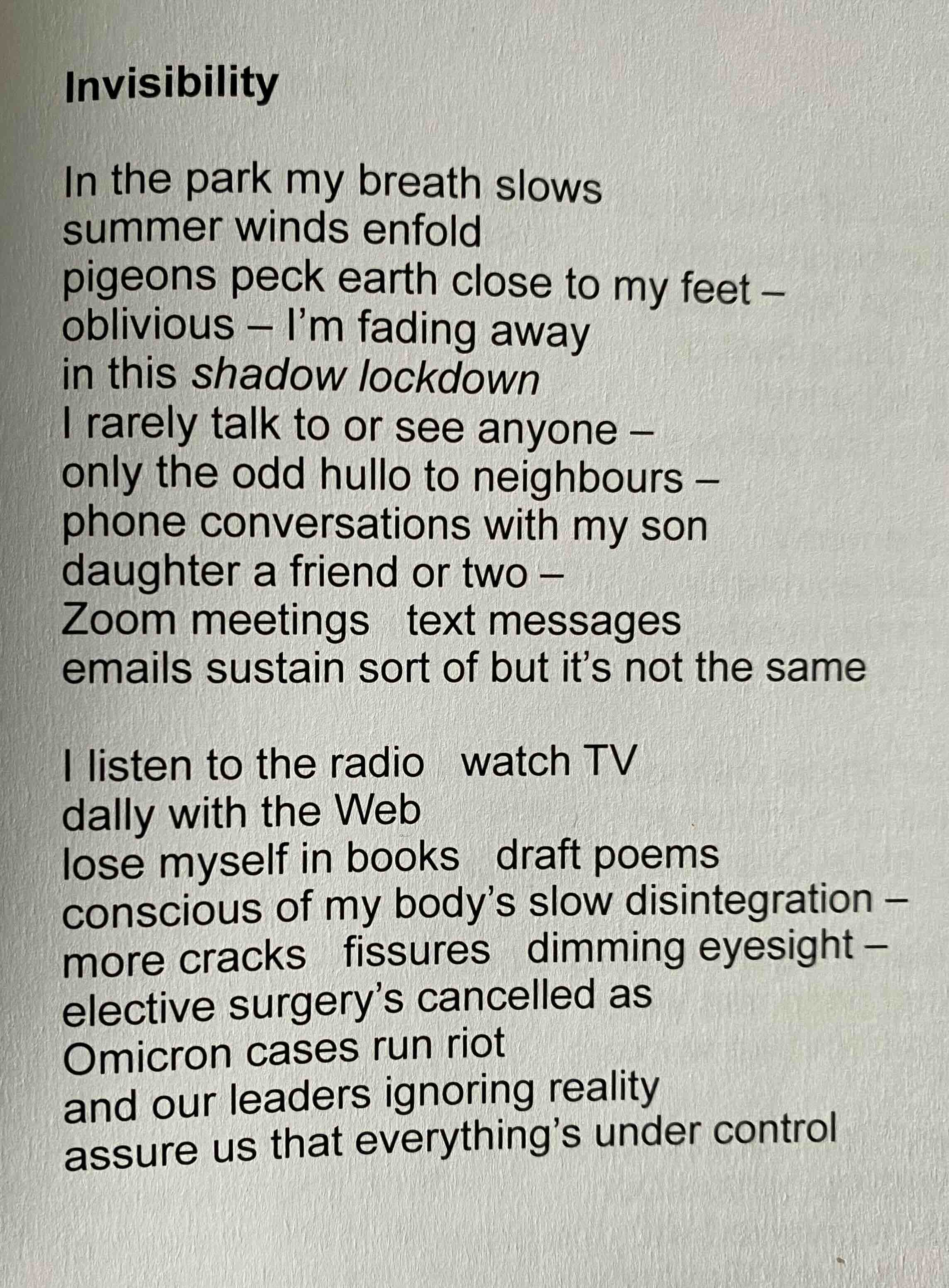
Page 77* is ‘Invisibility’:

Yes, page 77 of the last book I read had a pigeon poem too. But here the pigeons are oblivious rather than chatty, and the despair in the poem is not worn lightly.

This poem is a great example of the value of slow reading. At first quick reading, it’s a straightforward cry of the heart from the dark days of January 2022, when the Omicron variant of Covid was on the rampage in Sydney. In case you need reminding, there were no official restrictions on movement at that time, but Australia had moved from having a remarkably low level of serious illness and death from Covid to having among the highest. The assistance to individuals and businesses from the Federal government had largely dried up, and the Prime Minister of the time was trumpeting a business-as-usual message. Here’s a link to Mike Secombe on that nightmare in The Saturday Paper.

So this poem is, perhaps, an unremarkable record of how one woman suffered in that time: she has minimal contact with other people, she fills her time with solitary activities, and her age-related health issues go unattended to. Like most of us, she finds fault with the Morrison government’s handling of the situation.

That’s all there. But, interestingly, after I started writing this blog post I had a number of conversations that kept sending me back to the poem. One person spoke about a gobsmacking experience using the (I think) Apple Vision Pro goggles – it was as if he was in the room with a musician, could almost touch her. Someone else is reading Naomi Klein’s Doppleganger, and described her account of people involved in the riots of 6 January losing track of the difference between the gaming world and the actual world where there are consequences. Burke’s ‘sort of but it’s not the same’ stops feeling like a banal statement of the obvious and takes on a profound resonance. The poem expresses one woman’s feelings in a specified circumstance, but it sends ripples out well beyond it.

The other thing I noticed as I sat with the poem, or had it sit with me, is the part played by the pigeons. The poem begins, like many of Burke’s poems, with a moment of relaxation in the park – the breeze, pigeons, the earth, her breath slowing down. Then, with the word ‘oblivious’, it turns to the poet’s inner turmoil. The pigeons might have provided a calming anchor, their obliviousness an invitation to pay attention to the present moment. But it was not to be. Skip to the final lines, and the notion of obliviousness returns to round out the poem with ‘our leaders / ignoring reality’. The poem’s speaker is invisible to the pigeons who are engrossed in pecking the earth. She is also invisible to the political leaders who deny that the coronavirus is out of control. The tension between the pigeons’ focus on reality and the political leaders’ wilful ignoring of it is what holds the poem most satisfyingly together.

You can read my blog posts on some of Colleen Z Burke’s previous books here, here, here and here, and on her memoir The Waves Turn here.


I wrote this blog post in Gadigal Wangal country, where I believe Colleen Z Burke also lives. I acknowledge Elders past, present and emerging for their continuing custodianship of this land, over which their sovereignty has never been ceded.


My blogging practice, especially with books of poetry, is to focus on the page that coincides with my age, currently 77.
Ken Bolton’s Whistled Bit of Bop

Ken Bolton, A Whistled Bit of Bop (Vagabond Press )

I recently heard a British podcaster describe Louis MacNeice as ‘a highbrow ordinary bloke.’ The implied combination of approachability and erudition struck me as a spot-on description of Ken Bolton in these poems.

As the book’s biographical note tells us, Bolton is a prolific art critic and journal editor as well as a poet. As if to emphasise his intimidating high-browness, the back cover blurb speaks of poetic abstraction and lists members of a ‘pantheon’ who appear in the poems: a timid reader who wasn’t sure who Ashbery or Berrigan are (note the use of second names only – the highbrow equivalent of Cruise and Nicholson), or had never heard of F T Prince or Peter Schjeldahl, might quail.

It’s true that the poems fairly bristle with erudite references. But when one turns to the endnotes for help, here’s part of what they say the second poem in the book, ‘Europe’:

As with many of these poems there are references to art – to Winckelmann, Mengs, Jacques-Louis David – but as the joke is that they are so little thought of now it would be perverse to explain them here.

I stopped worrying about my ignorance, and started getting the joke.

In these poems, an ordinary bloke hangs out in cafes people-watching, or stays up late writing to his adult son on the other side of the planet, broods about friends alive and dead, meditates on art and poetry, and (so it generally feels) somehow lets the flow of his mind find its way onto the page. It’s a lively, questioning, self-conscious and sometimes self-mocking mind. You really don’t need to know who Winkelmann is to have fun reading ‘Europe’. Probably it’s more fun for better educated readers, but that’s not a reason to be intimidated.

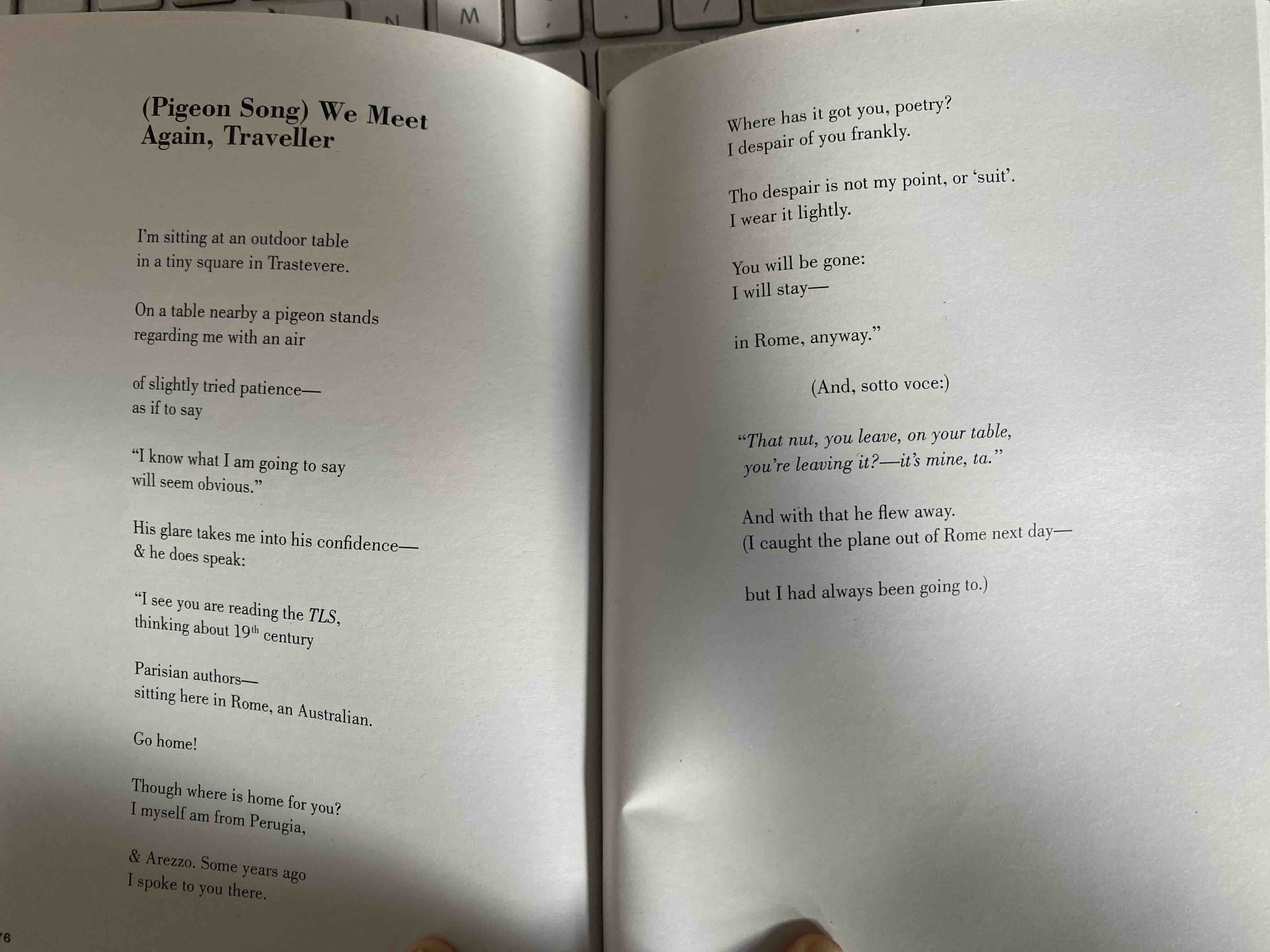
I loved the whole book, but I’ll keep to page 77*. It’s the right-hand side of the spread containing ‘(Pigeon Song) We Meet Again, Traveller’ which, by sheer good blogging fortune, is the shortest poem in the book. Click to enlarge this image:

Not strictly part of the poem, there’s an endnote:

Pigeon Song: a white pigeon with reddish brown flecks on it & around one eye. Strangely the bird had no accent, & spoke in English.

It’s a quietly comic poem in which an Italian pigeon questions an Australian poet about his life choices, after which both pigeon and poet do what they would have done if the conversation hadn’t happened. I hope I won’t make it any less enjoyable by doing a little ‘slow-reading’. With a lovely light touch, it airs some serious issues.

First the title. Its complexity is explained by yet another endnote: the words in brackets, ‘Pigeon Poem’, were a working title, and ‘We Meet Again, Traveller’ is the title finally settled on. Showing his working in this and other ways is one of the things I love about Bolton’s poetry: he lets the reader in on his process. Apart from the title, there’s not a lot of that in ‘We Meet Again, Traveller’. The comic endnote makes up for that absence a little: it implies that the fantasy is based in a real-life moment, and suggests that Bolton may have considered having the pigeon speaking in Italian or with an accent, but – happily – rejected both options.

The action of the poem takes place, typically, in an intellectual ambience. Bolton is sitting at a cafe table in Trastevere, a cool part of Rome that’s home to four or five academic institutions, where sitting at a table reading a literary journal wouldn’t stand out. (As even middlebrow ordinary blokes know, the TLS is the Times Literary Supplement.)

But there’s nothing rarefied or highbrow about the pigeon. Who among us, sitting alone at an outdoor table, hasn’t felt judged by a beady-eyed pigeon (or ibis if you live in Sydney)? This particular judgmental pigeon voices something of the complex unease of being a settler Australian poet, deeply meshed in European culture with an unresolved relationship to the actual land where one lives:

I see you are reading the TLS,
thinking about 19th Century

Parisian authors –
sitting here in Rome, an Australian.

Go home!

London, Paris, Rome, Australia, past and present: it’s complex. I’m reminded irresistibly of a music hall ditty I loved as a child (and which, as a complete irrelevance, I once heard the late Dorothy Hewett sing):

Why does a red cow give white milk
when it always eats green grass?
That's the burning question.
Let's have your suggestion.
You don't know, I don't know, don't you feel an ass?
Why does a red cow give white milk
when it always eats green grass?

The pigeon then asks a key question with characteristic Boltonian (Boltonic?) lightness of touch.:

Though where is home for you?

If you are so immersed in European culture, is your home in a physical location or in a less tangible ‘place’? As in the music hall song, the burning question goes unanswered.

The pigeon knows where its home is, though it too has travelled. Then:

and Arezzo. Some years ago
I spoke to you there.

This may be referring to an earlier Bolton pigeon-poem that I haven’t read, or to a time when he visited Perugia in real life, perhaps to study at the Università per Stranieri. (Decades before Duolingo, Perugia was often mentioned among Australians of a certain age and education as a place to go to learn Italian.) The content of that earlier conversation, whether the subject of an earlier poem or not, was evidently the Bolton’s poetic aspirations:

Where has it got you, poetry?
I despair of you, frankly

But then, having dipped by pigeon-proxy into the well of settler-anxiety, self-doubt and possible despair, the poem returns to lightness. (I’ll just note in passing that I don’t understand the word ‘suit’, or why it’s in inverted commas – any help welcomed in the comments.) The pigeon, dropping its role as cultural challenger, asks the question that’s actually on any judgemental-looking pigeon’s mind. And both pigeon and poet fly away, as they were both going to anyway.

The poem consists of eighteen stanzas, most of them couplets. I can’t say much more than that about the form, except it’s good to notice the use of rhyme in the last third of the poem: stay, away, sotto voce, away, day. Reading those lines aloud, the rhyme creates a sense of relief that the awkward conversation is over: things flow easily. The pigeon’s sotto voce couplet about the nut and the final line both depart from the rhyming flow, suggesting that bird and poet both now exit the staged conversation.


I wrote this blog post in Gadigal Wangal country, where it is my great joy to live, as a settler Australian who tries to remain aware of unceded Indigenous sovereignty. I acknowledge Elders past, present and emerging for their continuing custodianship of this land.


My blogging practice, especially with books of poetry, is to focus on the page that coincides with my age, currently 77.
The Book Club at James McBride’s Heaven and Earth Grocery Store

James McBride, The Heaven and Earth Grocery Store (Weidenfeld & Nicolson 2023)

Before the meeting: Though this is the first book by James McBride that I have read, he has featured in this blog before, as the author of The Good Lord Bird, one of the Emerging Artist’s best five books of 2014 (link here). That book won the USA’s National Book Award. According to his Wikipedia entry, The Color of Water, a 1995 book about McBride’s African American and Jewish family history and his relationship with his white mother, is widely regarded as an American classic.

The Heaven and Earth Grocery Store is his sixth novel, set in 1925, mainly in Chicken Hill, a ‘ramshackle neighbourhood’ of the Pennsylvania city of Pottstown (Pottstown exists in real life; Chicken Hill not so much as far as I can tell). The store of the title is run by Chona, a Jewish woman, whose husband Moshe runs a neighbourhood theatre. As most of the Jews leave Chicken Hill for more salubrious neighbourhoods, Chona and Moshe remain and, swimming against the tide of their times, continue to serve and welcome the presence of their African American neighbours (always ‘Negroes’ in this book). At the heart of the book is a celebration of friendship and alliance between Jews and Blacks, plus a significant Italian or two.

The book runs to 381 pages, so page 77* occurs at about the one-fifth point. If a conventionally structured Heaven and Earth Grocery Store film were to be made, I imagine that the events on this page would come much earlier, at the 10 percent mark, when the Inciting Incident is due. The set-up has been established: a death has been foreshadowed; we’ve met Moshe and Shona and the main African American couple, Addie and Nate, who work in the shop and the theatre respectively; we’ve seen the theatre and the grocery store in action; we know the story of Chona’s chronic illness and disability; we’ve met the book’s villain, Doc Roberts, who comes from ‘good white Presbyterian stock’ and marches every year with the Ku Klux Klan. It’s time for the first turning point.

Nate has told Moshe about his ten-year-old nephew, Dodo, who recently started working in the theatre. He was made deaf by an accident, and his mother has died.

Nate’s brow furrowed and his old hands moved up and down the broom handle slowly. He said softly, ‘Me and my wife’s got him.’

Moshe looked down at the floor a moment, embarrassed. It rarely occurred to him that he and Nate shared one commonality. Neither of their wives could bear children. They had worked in the theater all day side by side for twelve years but rarely discussed their wives or matters of home.

Their relationship is already changed by this conversation. The distance imposed by their histories is being bridged. The rest of the conversation introduces the book’s main external action.

‘Well, I think that’s fine,’ Moshe said. ‘You can run things as you like.’

Nate’s brow furrowed. ‘A man from the state come to the house last week. Says he’s gonna carry Dodo off to a special school over in Spring City. Dodo don’t wanna go to no special school. He’s all right here with us.’

Moshe’s heart quickened. He felt a request coming, but Nate continued. ‘The man says he’s coming back to fetch him next week. I’m wondering if you might let me slip Dodo into the theater here tonight, just for a few days till the man goes away. The boy’s quiet. Can’t hear nothing. Won’t be scared or make no noise. He can work good, clean up and so forth.’

‘For how long?

‘Just a couple of days till the man’s gone.’

Knowing where this passage occurs in the book, you would almost certainly guess – correctly – that those few days will expand, and the small favour will balloon into something that changes all their lives. As it turns out, when Moshe tells Chona the situation, she insists that they take Dodo into their own home, and he becomes a much loved member of their family until, in spite of their careful strategies to keep him hidden from the authorities, he is taken from them to a ‘special school’, which is in fact a prison-like institution for people deemed insane. Doc Roberts is key to that removal.

The second half of the book is given over to plans to free Dodo. Relationships between Jews, Blacks and poor Whites flourish. Nate’s back story emerges from the shadows and the man who we first meet as the genial, ageing employee shows a dark side that leads to the book’s one shocking moment – shocking because the reader, or at least this one, cheers on a terrible act of violence.

Doc Roberts and his ilk are embodiments of callous, racist, antisemitic hypocrisy and not much else. There’s a subplot to do with water supply to the synagogue that had me wondering why it was there at all until at the very end it joins the main plot to lead to the death mentioned on the first page. (Not really a spoiler.)

The meeting: We discussed this book along with Elif Shafak’s There Are Rivers in the Sky. We seem to be developing a tradition in the Book Club of having a dedicated nay-sayer at each meeting. This month’s nay-sayer said she had had read this one first, and felt it was built from hackneyed tropes with nothing fresh to offer. Then she read There Are Rivers in the Sky, and revised her view upwards. Our non-finisher had the reverse view – based on a small taste of each book, this one was much less gripping.

Such faint praise aside, we had an animated discussion. One person’s bug turned out to be another’s feature. For example, Chona’s neighbour Bernice was once her best friend but they have been estranged for decades, yet when she asks for help in concealing Dodo from the authorities, Bernice is willing to put herself on the line. One person saw this as inconsistency in the character; another saw it as reflecting the nature of the community – solidarity trumping personal animosity.

There’s a sequence in which two young disabled men – one deaf and the other with severe cerebral palsy – work out a way to communicate. ‘Unbelievable!’ someone said. ‘But brilliant!’ someone else replied. It turned out they both meant pretty much the same thing.


Our Book Club meets on the land of Gadigal and Bidjigal, looking out over the ocean. I wrote this blog post further inland in Gadigal Wangal country, where I am priivileged to live. I acknowledge Elders past and present for their continuing custodianship of this land.


My usual blogging practice is to focus on the page that coincides with my age, currently 77. Sometimes, as here, it’s a crucial page.
There Are Rivers in the Sky, Elif Shafak and the Book Club

Elif Shafak, There Are Rivers in the Sky (Penguin 2024)

Before the meeting: I’m glad I read this novel. I am much better informed now on the history of the Yazidi people, and about the unearthing of the Epic of Gilgamesh in the mid 19th century.

After a short opening chapter featuring the tyrant Ashurbanipal in ancient Nineveh, the narrative follows three distinct threads, which remain separate until the final, very short chapter.

There’s Arthur, full name Arthur King of the Sewers and Slums, a fanciful version of the amazing George Smith who decoded the cuneiform script of ancient Mesopotamia, translated the Epic of Gilgamesh and travelled to Nineveh in the mid 19th century. There’s Narin, nine years old at the start, living in south-east Turkey in 2014, child of a shrinking and beleaguered Yazidi family. And there’s Zaleekhah, a 30-something hydrologist in the throes of a break-up in 2018, who we first see renting a houseboat on the Thames.

A number of motifs occur in each of the stories, so that they resonate with each other even there is no evident narrative connection: images of lamassus, the protective spirits of ancient Nineveh who have bearded human heads and lions’ bodies; pieces of lapis lazuli; cuneiform script, on clay tablets or in tattoos; references to The Epic of Gilgamesh; and above all water. The book begins:

Later, when the storm has passed, everyone will talk about the destruction it left behind, though no one, not even the king himself, will remember that it al began with a single raindrop.

That raindrop has no causal impact on events, but the identical drop, having lain dormant in the water table, floated in the ocean, wafted about in clouds, turns up again at crucial moments of each narrative, as a snowflake or ocean spray or another raindrop. That conceit, and the way the narrative frequently pauses for mini-lectures – on hidden rivers, the industrial revolution, Yazidi culture, Napoleonic archaeology, etc etc – meant I spent a lot of time being irritated. The fourth wall is forever being broken, either by a mention of water (at least four times there are sweating necks, or a character introduces herself by saying her name is short for an Irish word for water) or by what reads like a piece of undigested research.

Page 77*, it turns out, has some fine examples. Zahleekha has just stepped into her houseboat for the first time. First there’s the water, with heavy-handed metaphorical significance. She drinks a mug of water ‘in one draught’, and:

It tastes earthy and slightly metallic, with an aftertaste of iron. The flavour has less to do with its intrinsic qualities than with its biophysical environment, the set of conditions that brought it about. Water hardens in adverse circumstances, not unlike the human heart.

Then comes the lecture, preceded by a moment of backstory:

Out of nowhere a memory surfaces – the words Uncle Malek uttered the day she had graduated from university with honours. I’m so proud of you, habibti. I want you to be very successful. Remember, people like us cannot afford to fail.

‘People like us’ … immigrants, exiles, refugees, newcomers, outsiders … Too many words for a shared, recognisable sentiment that, no matter how often described, remains largely undefined.

Children of uprooted parents are born into the memory tribe. Both their present and their future are forever shaped by their ancestral past, regardless of whether they have any knowledge of it. If they flourish and prosper, their achievements will be attributed to a whole community; and, in the same way, their failures will be chalked up to something bigger and older than themselves, be it family, religion or ethnicity.

Then, after a little more along the same lines, Zahleekhah sits down and after a moment starts to cry. But rather than allow the reader space for empathy, the narrator sweeps in with her insistence on water as ubiquitous and rich with symbolic meanings:

A tear falls on the back of her hand. Lacrimal fluid, composed of intricate patterns of crystallised salt invisible to the eye. This drop, water from her own body, containing a trace of her DNA, was a snowflake once upon a time or a wisp of steam, perhaps here or many kilometres away, repeatedly mutating from liquid to solid to vapour and back again, yet retaining its molecular essence. It remained hidden under the fossil-filled earth for tens if not thousands of years, climbed up to the skies and returned to earth in mist, fog, monsoon or hailstorm, perpetually displaced and re-located. Water is the consummate immigrant, trapped in transit, never able to settle.

Again, I’m glad I read this book. But I was annoyed a lot of the time while reading it.

After the meeting: We read There Are Rivers in the Sky along with The Heaven and Earth Grocery Store by James McBride. There were five of us, well-fed by the time we got to the books. We began with confessions: only one person hadn’t read either book, and she had read ‘about 35%’ of this one. She spoke eloquently about what she liked in what she had read – mainly the evocation of polluted, foul-smelling mid-19th century London – which makes me think it’s probably a good idea to have someone in any group who hasn’t finished the book.

Of those who had read to the end, we had a range of responses. One enjoyed it, only peripherally put off by the telling-not-showing and heavy-handed deployment of the leitmotifs. Onehad been enthusiastic abut the book because she hoped it would have interesting things to say about Gilgamesh and appreciated much about it, but was disappointed and disliked being lectured at. And the other just found the book tedious, would rather have read a non-fiction treatment of the history and persecution of the Yazidi, couldn’t feel any of the characters as more than made-up figures to allow the plot to move. And there was me (see above).

We all agreed that the most interesting thing in the book was the character of Arthur. Born in abject poverty, his photographic memory and a series of Dickensian coincidences (one of them featuring Charles Dickens) led him to interesting places, and fixation on a book about Nineveh as a way of dealing with the pain of brutal beating led to a grand obsession that gave The Epic of Gilgamesh to the modern world. I now want to find out more about the real-world George Smith, but I’m very happy to have Arthur in my mental world as distinct from him.


I wrote this blog post in Gadigal Wangal country, in a place where wetlands have been drained, but the river is recovering health, is home to a marvellous variety of birds, and is a great place for catch and release fishing (one day the fish may be edible again). I acknowledge Elders past, present and emerging for their continuing custodianship of this land.


My blogging practice is to focus on the page that coincides with my age, currently 77.
Joëlle Gergis’ Highway to Hell

Joëlle Gergis, Highway to Hell: Climate Change and Australia’s Future (Quarterly Essay 94, 2024) – plus correspondence in Quarterly Essay 95

I’ve worn a Peter Dutton mask with devil horns in street theatre outside Anthony Albanese’s office. I’ve asked awkward questions at the AGMs of fossil fuel companies, scripted by Market Forces. I’ve participated with gusto in Move Beyond Coal‘s campaign targeting banks that provide financial backing to new coal mines. I joined the People’s Blockade of the coal port of Newcastle last November and plan to join again this year. Do I need to read ONE MORE BOOK on climate change?

Well, yes, I do. I had pushed out of my mind the terrible events of Summer 2021–2022. I even wrote about Judith Beveridge’s poem ‘Choirwood’ as if it offered some kind of hope after those fires (at this link). After reading Joëlle Gergis’s essay, the poem is still brilliant, but it feels like so much whistling in the dark.

Joëlle Gergis is one of the 234 lead authors of the most recent IPCC Report. She is a climate scientist who, she tells us in this essay, has become so frustrated at the way the reality of climate change is downplayed or ignored by those in power that she quit her job as an academic scientist to become a public advocate. I’d say she has become a Cassandra warning of the dangers, except that Cassandra was doomed to be ignored, a fate I hope will not befall Joëlle, for all our sakes.

After noting the relief of seeing the end of the denialist Morrison Government (remember ‘Labor’s war on the weekend’, and ‘Don’t be afraid, this is carbon’?), the essay tackles the current situation – better, but a long way from hopeful. Here’s a key paragraph, on page 7:

The scientific reality is that, regardless of political spin used to justify the continued exploitation of fossil fuel reserves, the laws of physics will keep warming the planet until we stop pumping carbon into the atmosphere and begin cleaning up the mess. The situation is too far gone for renewable energy alone to save us. Pinning our hopes on carbon capture technology to justify the continued burning of fossil fuels is a disastrous gamble the world can’t afford to take. So, as this fateful moment approaches, we need to take an honest look at the government’s climate policy and realistically assess the situation we are in. Are the climate wars really over, or has a new era of greenwashing just begun?

As she goes on to say what the laws of physics are up to and to outline a range of future scenarios, she begs us: ‘Please, don’t look away. Thee isn’t a moment to waste.’

I won’t try to summarise the science, but if you’re looking for a solid, accessible presentation, I doubt if you’ll find a better one anywhere. It’s a gruelling read, from which my main takeaway is that I need to grieve for the corals of the Great Barrier Reef that thrilled me as a child, for the thousands of cattle and millions of wild animals that have died and are yet inevitably to die as the planet heats up, for the vast tracts of forest, including rainforest, that have already been devastated. I need to grieve and I need to treasure what remains – and be prepared to fight for it.

After a blistering account of carbon offsets and carbon capture and sequestration (CCS) in a chapter headed ‘Chasing Unicorns’, she asserts that we know what needs to be done, but such is the power of the fossil fuel lobby that Australian governments won’t do it. True, there has been significant movement in State governments, and outside of government. But it’s pretty grim, when the main message to the reader about what can be done is to stress the importance of voting in the next federal election.

Almost any paragraph from this essay is worth quoting and pondering. On page 47*, there’s this:

To its credit, the Albanese government has tried to support Australia’s emergence as a renewable energy superpower. [She lists an impressive number of initiatives taken since the ALP’s election win in May 2022.] While these are all steps in the right direction, the challenge is not to undo all of this good work by allowing the interests of the fossil fuel industry to co-opt the process and weaken real progress towards reducing global emissions.

Rather than ‘net zero’, the goal must be to achieve ‘real zero’, which can only happen once we stop burning fossil fuels. In fact, the science tells us that around 60 per cent of oil and gas reserves and 90 per cent of coal must remain unextracted if warming is to be limited to 1.5°C. There is no way around having to eventually face this scientific reality.

But instead of facing facts, in December 2023, the federal government caved in to lobbying from the oil and gas company Santos.


The correspondents in Quarterly Essay 95 mostly agree with and amplify the arguments of the essay. There’s an excellent piece by David Pocock, who is probably the parliamentarian that Gergis meets with early in the essay. He describes his shock as a senator now for a little over two years to see how ‘policy is consistently shaped by political considerations ahead of evidence and research’. Often he says, politicians ‘are not looking for genuine, long-term solutions, but for the next opportunity to back their opponents into a corner’.

A stand-out exception to the generally supportive tone is a grim piece by Clive Hamilton. He’s not the only correspondent to describe Joëlle Gergis as operating on an ‘information deficit’ model: if only people, including those in power, had correct information they would do the right thing. Scientists have been trained to look for solid, verifiable facts and to base their actions on what they find. But it’s a mistake to assume that that’s how people in general function. Hamilton dismisses the essay’s hope as wishful thinking, argues that nothing Australian governments do can have much impact on climate change, and generally sees the outlook as bleak:

After two decades of research into the psychological, social and political complexities of persuading people to recognise and act on the science of climate change, it’s wearying when another scientist comes along convinced that it’s only a problem of someone with authority communicating the facts. I’d be more energised if Gergis, as an IPCC lead author, had written an essay arguing that it’s time for a campaign of industrial sabotage.

I would love to know how Joëlle Gergis responds to Clive Hamilton. Sadly, no response from her is included in QE 95. Maybe in Nº 96? Or maybe she’s already out there like the main character in the movie Woman at War.


I wrote this blog post in Gadigal Wangal country, where it is my great joy to live. I acknowledge Elders past and present for their continuing custodianship of this land.


My usual blogging practice is to focus on the page that coincides with my age, currently 77. But as this Quarterly Essay runs to just 72 pages including notes, I’m looking at page 47, the year of my birth minus 1900.  
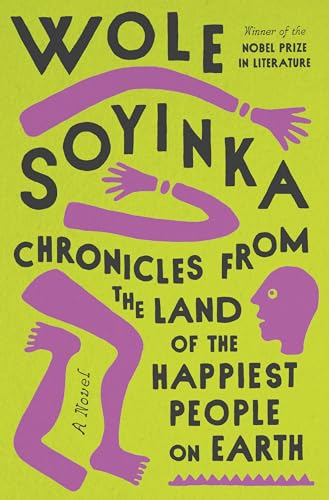
Wole Soyinka’s Chronicles from the Land of the Happiest People on Earth and the Book Group

Wole Soyinka, Chronicles from the Land of the Happiest People on Earth (©2020, Penguin Random House 2021)

Before the meeting: This is a strange book. It’s a satire set in contemporary Nigeria. With Boko Haram atrocities in the immediate background, the country is rife with corruption. I’m pretty sure that if I knew more about Nigeria’s history and its current politics the book would reveal more of itself to me as a devastating, possibly despairing denunciation of Soyinka’s homeland. As it was, I enjoyed it pretty much as a child would enjoy Gulliver’s Travels – as a fantastical tale. I’m sorry to say, though, that I enjoyed it a lot less than I enjoyed the story of Lilliput as a child.

Almost half the book is taken up with setting the scene in magisterial, ironic tones. There’s a charlatan religious leader, a deeply venal and media-savvy Prime Minister, an awful lot of sarcastic hoptedoodle about national festivals and awards. It takes a long time for a central narrative thread to become clear. (Arguably, the over-all shape isn’t revealed until the last page, so what follows is possibly a spoiler of the first magnitude.) Four young Nigerian men form a strong bond when at university in Europe, agreeing that they will each contribute in a major way to their homeland. They become respectively a doctor, an engineer, a financial wizard and a public relations genius. In the book’s present time, one has gone missing, one runs foul of the government and becomes inexplicably catatonic, one has been nominated to a prestigious position in the UN, and the fourth, who I think of as the book’s central character, is a surgeon whose work patching up the survivors of Boko Haram attacks has earned him one of the country’s top honours.

The rubber hits the road at last when the surgeon discovers a monstrous commercial-culinary trade in human body parts, and the narrative finally develops a forward momentum as he and his engineer friend pit themselves against the shadowy figures behind the trade.

But just as that narrative seems to be getting somewhere, the book swerves off into interminable machinations to do with a bombing, and questions of transporting a body between Austria and Nigeria. The main story is finally resolved in an ultra-perfunctory way, with a lot of loose threads left hanging. There’s a ‘surprise’ revelation on the last page that is about as surprising as having hot water come out of a tap marked H.

The story is told with tremendous gusto, but for much of it the writer seems to care less about telling it than with having angry, satirical fun. I found myself thinking of Edward Said’s posthumously published essay, On Late Style, which we read in the Book Group a while ago (link here). He wrote of the artists who create in the late style:

The one thing that is difficult to find in their work is embarrassment, even though they are egregiously self-confident and supreme technicians. It is as if having achieved age, they want none of its supposed serenity or maturity, or any of its amiability or official ingratiation. Yet in none of them is mortality denied or evaded, but keeps coming back as the theme of death which undermines and strangely elevates their uses of language and the aesthetic.

This book is supremely unembarrassed by its own excesses and absurdities. It certainly doesn’t aspire to serenity or seek attempt to ingratiate itself with authorities, or with readers. And it is full of mortality.

At page 77*, we’re still being given the general set-up. It’s part of the engineer’s back-story, explaining how he ‘succumbed’ and agreed to work for the government:

It did not take too long to discover – with some chagrin, he would reveal to his ‘twin’, the surgeon Kighare Menka – that there was a strong work ethic in control, indeed a pervasive hands-on ethic, near identical to both theirs, with unintended literalism, just a slight slant – a prime ministerial finger in every pie!

His friendship with the surgeon Kighare Menka is the heart of the book. Here it’s invoked so that we know both men share a perspective on the Prime Minister’s corruption, and that they share an enjoyment of the ponderous wordplay that pervades the book.

The next paragraph is a good example of the narrative style. Bisoye is the engineer’s wife:

Only the twenty-million-dollar question remained: How long would he last? Thus came the pact with Bisoye – first three months, I’ll stick it out, no matter what. Agreed? After that, a choice of his single-malt whisky, always a different brand, for every month survived, plus a night out followed by a bed in, no holds barred. The nation never knew how much it owed to the blissful athleticism of the couple, and Duyole did come close to earning a full case of Islay malt, Collector’s Reserve – just one bottle short of a full case. In the display cabinet he conspicuously left a gap in the row of twelve, a silent accusation of Bisoye’s ungenerous spirit. Was it his fault he completed the task so far ahead of time?

This mock-pompous style characterises most of the narrative. A man of integrity decides to do research for a corrupt government, and to report honestly on what he finds. But he’s a man with a sense of humour and a zest for life. Like him, the narrative refuses to be drawn into hand-wringing over the corruption. It barely gets to the specifics of that corruption – saving its fire for the (hopefully) imaginary trade in human flesh. It is happy to assume the reader doesn’t need details of the realistic stuff and gives us instead the ‘blissful athleticism’ of our heroes, the opposition.

While that paragraph may fill out the engineer’s character a little, one can’t help but feel that it’s just there because the author was having a good time. Not that there’s anything wrong with that. On the contrary. But I’m not surprised to learn from the WhatsApp conversation before the meeting that most people failed to persevere to the moment when the story proper gets started.

After the meeting: There were eight of us, and we met in a pub in Balmain. Two of us had read the whole book. All but one of the others had no intention of finishing, most having given up after a hundred pages or so.

Interestingly, the person who had read about a third was the book’s keenest supporter. I don’t take notes, and I have a terrible memory, but he said something like, ‘I was irritated, intrigued, amused, horrified, perplexed, enlightened, admiring. I kept seeing parallels with news from the US in the bizarre corruption, and the dominance of bogus religion. The back story of the religious charlatan fascinated me, and I want to know what becomes of him.’

I think he was on the cusp of the moment when the character who fascinated him pretty much drops out of the story, to make a functional comeback very late in the piece. He had barely even met the surgeon Kighare. But it was excellent to be reminded that up to a certain point you think you’re reading a book where a number of strands are kind of coming together.

Someone had read that Wole Soyinka wrote the book during Covid lockdowns in two stretches of 32 days. Maybe that was just a first draft.

Someone said that they kept wondering if they’d missed something, as for instance when a character last seen entering a meeting turns up a couple of chapters later in a catatonic state, but the writing was so elliptical that they couldn’t be bothered to go back to check if there was some explanation. (No one could remember if we are ever told what happened to him. I suspect the author made a mental note to go back and flesh it out, and then forgot about it.) I think that means it’s a book that asks a lot of the reader at the sentence level, without generally offering much in return.

Someone said it might have been better in the original Nigerian. I think his point remains valid even though the book was written in Nigeria’s official language, which is English. Nigerian writer Ben Okri wrote a review for the Guardian, which I’ve found since our meeting (link here). Given how negative we all were about the book, it’s only fair that I quote from that review (though I must not that ben Okri gets a number of key plot points wrong in this review):

There are many things to remark upon in this Vesuvius of a novel, not least its brutal excoriation of a nation in moral free fall. The wonder is how Soyinka managed to formulate a tale that can carry the weight of all that chaos. With asides that are polemics, facilitated with a style that is over-ripe, its flaws are plentiful, its storytelling wayward, but the incandescence of its achievement makes these quibbles inconsequential.

Our conversation turned to other, happier things: the recent local council elections and the pleasure a couple of us had had in helping a young person vote for the first time; parenthood after 40 years; the relationship of the Bauhaus to the Arts and Crafts movement; another book group where they don’t set a date until everyone has read the book (shudders all round!); a spectacular alcoholic episode from the life of Mary McKillop (now a saint); the unmarked site of Hitler’s bunker; Rugby League (the Roosters, and the Jets at Henson Park); some swapping of notes about streaming shows. The food was excellent, though the emerging Artist could teach the pub a thing or two about caponata.


I wrote this blog post on the land of Gadigal and Wangal. I acknowledge Elders of those Nations past, present and emerging for their continuing custodianship of this beautiful land.


My blogging practice is to focus on the page that coincides with my age, currently 77.
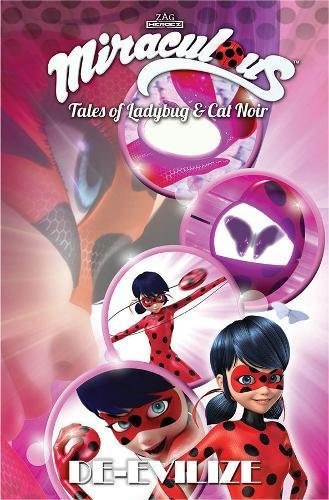
Miraculous: a book

Miraculous: Tales of Ladybug and Cat Noir: De-Evilize (Volume 7?)

I was in Kinokuniya, the place I usually go for comics, and I thought it might be nice to seek out the book version of Miraculous, a TV show my six-year-old granddaughter enjoys.

What can I say? In short, if you’re interested in reading a Miraculous comic, I recommend that you look at the fine print above the bar code on the back cover and hope for a line that includes the text, ‘Volume 1 TPB’. I didn’t know to do that.

I’m not a librarian, but I do generally look on the title page of a book for its official title, and on the imprint page for publication details. This book has neither. By reading the fine print – some of it very fine – and consulting Duck Duck Go, I found out that:

  • Miraculous: Tales of Ladybug and Cat Noir is a series title
  • This volume, De-evilize, collects numbers 19 to 21 of the comic series, and is the seventh such collection
  • The three comics were published in 2017
  • I imagine that each comic issue represents one episode in the TV show. The episodes, named for the featured super-villains, were ‘Kung Food’, ‘Gamer’ and ‘Reflektra’
  • The show appears to have originated in France, though Korea was the first country to screen it
  • There is no indication on the book that this is a translation from a French text, although the action takes place in Paris, and street signs are in French
  • •Nowhere does the book mention its country of origin. It was printed in Canada but, as far as I could tell from Duck Duck Go, the publisher Action Lab Entertainment is a US company
  • Naming the author/s of this book is a complex matter: the series creator is Thomas Astruc; comics adaptation is by Nicole D’Andria; each of the three ‘chapters’ is written by a different pair of writers.

Starting in Book 7, you’re thrown into the middle of bewildering adventures in which two French teenagers (Marinette and Adrien) become superheroes (Ladybug and Cat Noir) through the agency of tiny supernatural creatures. There are magic gadgets called Miraculouses. There’s a bad guy named Hawk Moth who has little pet moths called akumas which he uses to turn disgruntled people into supervillains. Ladybug and Cat Noir do battle with the supervillains, eventually extract the akumas and restore order. The de-akumatised supervillains return to being the friends or benign relatives of Marinette and Adrien. There’s pleasantly complex teenage romantic tension, and familiar high school politics.

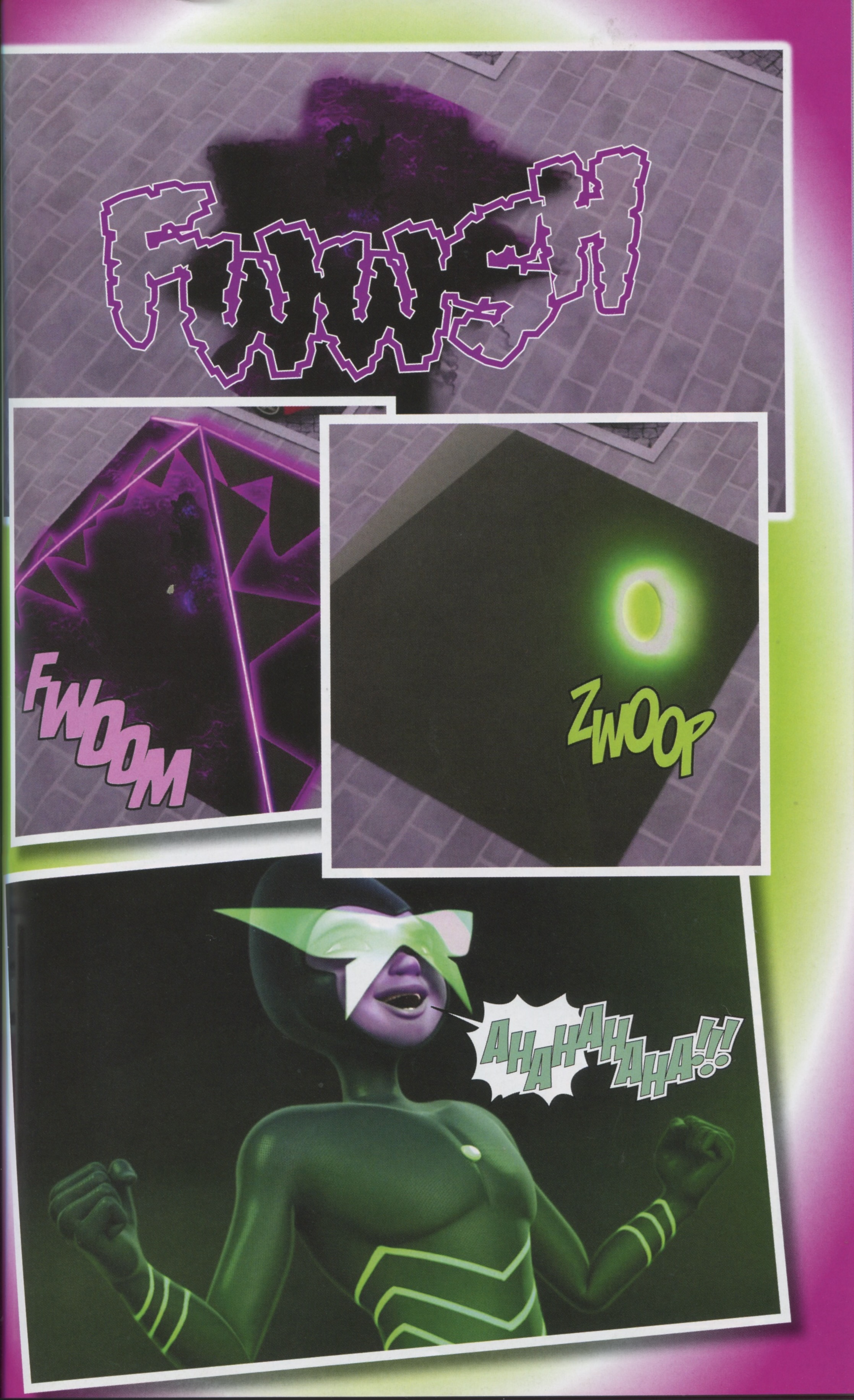
In this volume it’s pretty much exact the same story three times, so by the end of the second story I had got the general gist, even though, especially in the fight scenes, I couldn’t tell from the images what was actually going on. And I didn’t much like the computer-generated images. I ought to give you a little taste Here’s page 77*, in which the gentle boy Max is transformed into supervillain Gamer:

I haven’t read this book with either grandchild, but I’ve had fun dropping the catch cries ‘Spots on!’, ‘Claws out!’, ‘Lucky charm!’ and ‘Cataclysm!’ into the conversation.


I wrote this blog post in Gadigal Wangal country, where it is my great joy to live, where the days are getting warmer and the winds are strong. I acknowledge Elders past, present and emerging for their continuing custodianship of this land.


My blogging practice is to focus on the page that coincides with my age, currently 77.
Judith Beveridge’s Tintinnabulum

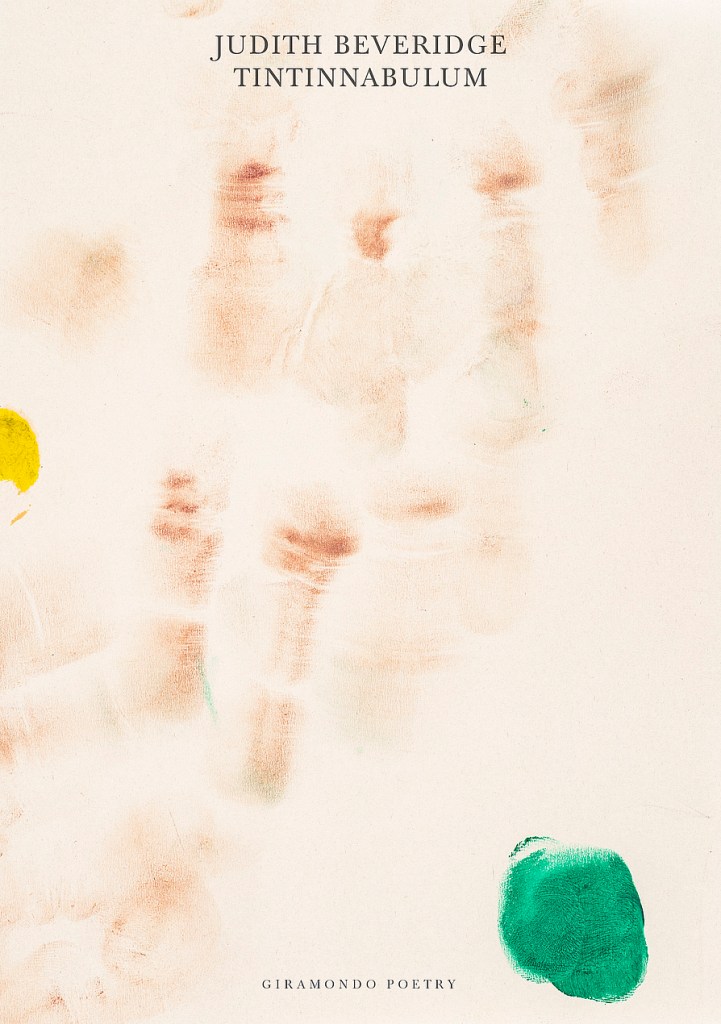
Judith Beveridge, Tintinnabulum (Giramondo Poetry 2024)

As a rule on this blog I focus on the page of a book that corresponds to my age. There’s a lot I could write about Tintinnabulum (it’s a very rich collection from one of Australia’s brilliant poets), but let’s see what happens if I skip any general discussion and go straight to page 77.

Page 77 is the second page of the poem ‘Choirwood’, the last poem in the book, which gives its name to the book’s final section. Earlier sections have dealt with the animal and human world, including a fair amount of death, danger and cruelty. So when the fourth section arrives with ten poems celebrating the natural world, it feels like the final stage of a broad conversation. Celebration has the last word:

I wouldn’t be unhappy if you stopped reading this right now, clicked on the image, and let the poem go to work on you. The speaker goes for a walk in the bush near her house one early morning and pays attention to what she sees and hears, inviting us to join her in rich, descriptive language, and then taking us further into contemplating the unseen, unheard wonders of the universe. There’s a play of metaphors to do with religion, commerce and art. It’s a gorgeous celebration of the natural world, expanding from the back yard to the cosmos.

It’s a thing about poetry that what the reader brings is an important part of how a poem works. So rather than discuss the poem line by line. I’ll tell you what I bring to it – and also some places it takes me to.

First a snippet of personal history. In early 1965, after finishing high school, I was training to be a member of a Catholic religious order. I was a postulate, the step before becoming a novice. We would rise hideously early each morning summer and winter, wash in cold water (as the wood-fired boiler wasn’t lit yet), and gather in the chapel for prayers, meditation, Mass and more prayers. All that before an eight o’clock breakfast. I was terrible at meditation – it was too easy to nod off – but loved the communal prayers, especially the call-and-response reading of psalms. I loved the bloodthirsty psalms and the whingey ones, but most of all I loved the exuberant songs of praise. This poem brings to mind a specific psalm-related memory.

There were terrible bushfires that year, and as a community of 50 or so able-bodied young men we became volunteer fire fighters. I had my turns at going out, but on this occasion I was not one of the 20 or so who had been away all night lugging their backpack sprays. Those of us who had stayed behind were in the chapel as usual when we heard the truck loaded with wearily noisy, charcoal-stained novices roaring home up the hill outside. We didn’t pause, but surely we put a little extra gusto into the resounding verses of Psalm 148. I don’t have the actual, almost singable English version we used, but here is a bit from the Jerusalem Bible:

Let earth praise Yahweh: sea-monsters and all the deeps,
_____fire and hail, snow and mist, gales that obey his decree,
mountains and hills, orchards and forests
_____wild animals and farm animals, snakes and birds,
all kings on earth and nations, princes, all rulers of the world,
_____young men and girls, old people, and children too!

No lie, we were chanting about fire praising God when that truck drove past the chapel windows.

Since that moment, any poetic celebration of nature – and ‘Choirwood’ is one – carries for me the whiff of bushfire smoke and the paradoxical joy, even exhilaration, of being young and helping to fight the fire.

It’s not odd that I should think of the psalms: the poem itself is not explicitly religious, but it has plenty of religious references – the title, the St Andrew’s Cross spider as a martyred apostle, a mandala. It’s even possible that the poet had Psalm 148 in mind. Thinking of bushfire, on the other hand, is pure idiosyncrasy …

… except …

… there’s this in the book’s acknowledgements:

The poem ‘Choirwood’ was commissioned by Judith Nangala Crispin in 2022 for the Judith Wright Regeneration Road Trip.

I looked up the Regeneration Road Trip (it has a webpage here, a facebook page here, and the album of its poetry reading for sale at this link). Organised by a group of artists who lived between Canberra and the Far South Coast of New South Wales, it took place over 10 days in September–October 2022. According to the website, that In the wake of the terrible destruction caused by bushfires the previous year, the organisers:

came together to try to find a way to help voice the emerging tidal wave of feeling and give back to the communities which are hurting. Rather than focusing on what was lost, the project began to unearth and celebrate the deep connection between the people and the landscapes, animals and plants of this special region. 

So if you know its origin story, ‘Choirwood’ itself carries a whiff of smoke.

Without the origin story, there is no word in the poem of all that destruction. There has been enough of that earlier in the book, perhaps – there’s no need to name the thing being negated, the ‘what was lost’. But a closer look reveals a hint. A note tells us something that a better-read reader might have spotted off their own bat:

The phrase ‘madrigal field’ is from Denise Levertov’s poem ‘Clouds’.

That refers to the lines where the poem’s perspective widens out:

____________________________I give thanks 
too for the forces and interactions running
beneath it all, the flowing, spinning, changing
dynamics, the 'madrigal field' choiring everything
into existence.

(By the way, notice how all those ‘ing’ words create a sound equivalent to the constant motion being described.) Especially when read in connection with the poems final lines, the ‘madrigal field’ is a wonderfully resonant phrase that suggests the mediaeval notion of the music of the spheres, and so invokes a sense of the awe-inspiring, beautifully ordered universe. But the knowledge that it is taken from ‘Clouds’ by US poet Denise Levertov (which you can read at this link) suggests a more nuanced reading. In that poem, the speaker is faced with the recent death of a loved one (or perhaps only a chilling intimation of their death). She forces to her mind a ‘vision of a sky’, that at first appears as a grey mist, but when looked at intently reveals ‘radiant traces’ of green. Only then ‘a field sprang into sight’:

a field of freshest deep spiring grass   
starred with dandelions,
green and gold
gold and green alternating in closewoven
chords, madrigal field.

Perhaps, the poem goes on, death’s chill is ‘a grey to be watched keenly’.

I can’t say I understand Denise Levertov’s poem, but her ‘madrigal field’ is a synesthesian (synesthetic?) vision of a grassy field, quite different from Judith Beveridge’s cosmic concept. Comin from ‘Clouds’, however, it keeps its emotional connotation: the field is what you see when you turn away from death / the premonition of death / destruction, and look ‘keenly’. ‘Choirwood’ is full of keen looking and listening. This, it suggests ever so subtly, can be an important part of coping with catastrophe.

I am grateful to the Giramondo Publishing Company for my copy of Tintinnabulum.


I wrote this blog post in Gadigal Wangal country, where it is my great joy to live. I acknowledge Elders past, present and emerging for their continuing custodianship of this land.

Abdulrazak Gurnah’s Paradise and the Book Club

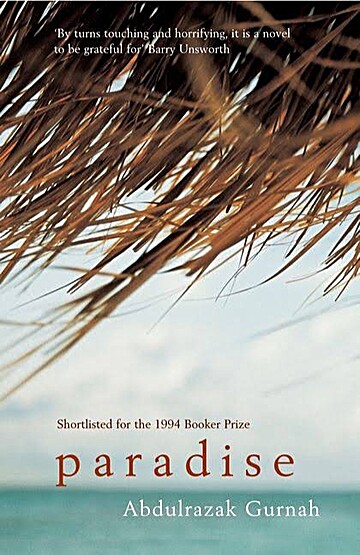
Abdulrazak Gurnah, Paradise (©1994, Bloomsbury 2004)

Abdulrazak Gurnah, winner of the Nobel Prize in Literature in 2021, was a wonderfully urbane guest at this year’s Sydney Writers’ Festival. In the session I attended he spoke mainly about his 2021 novel, Afterlives, but talked a lot about that book’s relationship with the much earlier Paradise. (Added much later: you can listen to the podcast of the conversation at this link.)

We read Afterlives a while ago in my all-male Book Group, and had a wonderful discussion of it. Now my predominantly female Book Club is tackling the earlier novel.

Before the meeting: Paradise is a long way from languishing in the shadow of Afterlives. Its action unfolds in the same part of East Africa, beginning a couple of decades earlier, in the years leading up to the First World War.

The book begins with a boy named Yusuf looking forward to receiving a customary gift of money from Uncle Aziz when Aziz’s brief visit comes to an end. There is no gift, and instead the boy is taken away with the uncle. Then he realises that he is not going back to his family and soon learns that he has been given to Aziz, who is not actually his uncle, as surety against his father’s debts. He has become little more than a slave in the merchant’s household.

The story unfold from there. There’s adventure, involving an arduous, perilous expedition into the unknown. There’s romance, where intimate moments, perhaps even a kiss, may be snatched in dark corners of a walled garden. There’s a gallery of rich, exuberant characters – Khalil, an older boy in a similar state of bondage to Yusuf; an older woman, infatuated by Yusuf’s beauty, who harasses him to the amusement of onlookers; an ancient gardener who long ago refused his freedom when actual slavery was abolished; a formidable, scarred man who organises Aziz’s trade expeditions and has a reputation as a sexual predator on young men; Aziz himself, a formidable commercial operator who remains calm in the most extreme situations.

Meanwhile, European powers are colonising East Africa. They are mostly peripheral, offscreen characters who threaten to destroy the whole world experienced by the main characters. German soldiers appear twice, once at roughly the midpoint and then again at the very end. Both times they function as a deus ex machina: the first time their unexpected arrival saves Aziz and his expedition, including Yusuf, from a vengeful tribal chief, but the incident leaves a nasty sense of something unresolved; the second time they provide the book’s final moment, which left me staring into space for a long time.

The book was only transated into Swahili – the official language along with English of Gurnah’s home nation Tanzania (known as Zanzibar back then) – after he was awarded the Nobel Prize.

After the meeting: At this meeting we discussed Annie Ernaux’s Une femme / A Woman’s Story along with Paradise, an odd pairing which meant we had two quite separate discussions.

All but one of us enjoyed this book a lot, and the dissenting voice meant we had an interesting conversation. The main character, she said, is completely passive: things just happen to him, one after another, and especially on the gruelling trade expedition that takes up a good slab of the book the bad things are repetitive. The book only becomes interesting once Yusuf is back in town and a powerful woman, in a complex way, is lusting after him. Though others were able to point out that Yusuf was constantly taking initiatives – a surreptitious excursion to town just for fun, offering unauthorised help to the ancient gardener, etc – I was struck by the similarity of this observation to what someone in my other Book Group said about the main character in Afterlives: because of the constraints on the characters, they don’t have the space to attend to their inner lives. When I tried to articulate this thought, someone said something beautifully concise and wise about the way trauma can alienate a young person from their own experience. Sadly I didn’t write it down, but to my mind it captured beautifully the way Yusuf does indeed move from one thing to the next, having no real say about the direction of his life, and no ability to form coherent thoughts about it.

I realised in the course of the discussion that the story is full of references to Joseph / Yusuf in the Hebrew Bible and the Quran, in particular the episode of Potiphar’s wife / Zuleikha. I just read a version of the Quran story on Wikipedia, and the parallels are even closer than I thought. It makes me wonder what other references may be hovering around this eminently readable tale. Joseph Conrad’s Heart of Darkness comes to mind. (Gurnah’s Gravel Heart includes a retelling of Shakespeare’s Measure for Measure, set in modern East Africa.)

We discussed the final paragraph, which I’d love to expand on here but, unlike some surprise revelations (see my blog post on Wole Soyinka’s Chronicles from the Land of the Happiest People on Earth, coming in a month or so), it really is a surprise.

Being of a certain age, we said goodnight a little after 10 o’clock.


I wrote this blog post in Gadigal Wangal country, where it is my great joy to live. In particular right now the days are getting warmer, the sun is rising earlier and setting later, and whenever I walk out my door I see tiny lizards scurrying for cover. I acknowledge Elders past, present and emerging for their continuing custodianship of this land.