Category Archives: Books

The Book Group in Second Place with Rachel Cusk

Rachel Cusk, Second Place (Faber & Faber 2021)

Before the meeting: I borrowed a copy of the book from my local library and just had time to read it and return it before heading out of town over the New Year. So I scanned a random page, intending to focus my pre-meeting blogging on that page.

Then the Book Chooser sent around a WhatsApp asking how we’d all feel about changing to Transit, an earlier book that ‘gives a better sense of how Rachel Cusk has transformed the novel form’. After some discussion, it was agreed that each of us could read either or both of the books, and we’d let the discussion play out as it would. I decided to stick with just Second Place.

‘Second Place’ is the name given by the narrator to a kind of guest dwelling on her property on the edge of a darkly beautiful marshland. As she spells out for the benefit of slow readers, it also refers to the status of women under patriarchy – and there you have the subject of the book. When she was young, the narrator – known as M – fell under the spell of landscapes by L, a celebrated painter, and she now believes he is perfectly suited to capture the beauty of her marshland. She writes to invite him to stay as her guest in the Second Place. After some pretty rude back and forth, he accepts the invitation, turns up with an unexpected female friend, and continues as he has begun, the guest from hell. Somewhere along the line, we realise that M, without quite admitting it to herself, hopes that his paintings of her marsh will reveal something of her to herself. This develops into wanting him to paint a portrait of her, which he eventually does, devastatingly.

The story, we are told in an end note, was inspired by Lorenzo in Taos, Mabel Dodge Luhan’s 1932 memoir of the time D. H. Lawrence came to stay with her in Taos, New Mexico. I haven’t read that book, but it feels as if the note explains a lot: maybe this book is not so much a novel in its own right, as a response to – a retelling of, a meditation on – that other book. In the early parts of Second Place, M tells her story to someone called Jeffers. We are given no information about Jeffers at all, but Lorenzo in Taos was addressed to the US poet Robinson Jeffers. It seems that this device is a straight lift from the source material, a little Easter egg for the scholarly reader (or for someone like me who google-skims reviews).

By and large, the book left me cold. The characters don’t feel fully imagined. What I take to be the thematic concern about art and artists could be boiled down to the familiar warning: ‘Never meet your heroes. They’re sure to disappoint.’ M does a lot of introspecting, and the dialogue generally feels stilted. If something is being said about sexism, it’s that some men are cruel, and some women are vulnerable. Not exactly a revelation, and not exactly leading anywhere interesting.

On the random page I scanned (page 74), M and L run into each other walking by the marsh very early one morning. She asks him, pretty much out of the blue, if he will paint her portrait:

He looked at me with a faintly quizzical expression.

‘But I can’t really see you,’ he said.

‘Why not?’ l asked, and I believe it was the utterance that lay at the furthest bottom of my soul, the thing I had always been asking and still wanted to ask, because I had never yet received an answer.

That line about the utterance at the furthest bottom of her soul reads just as awkwardly in context as it does here. All too often the characters are going about their business and then there’s a little introspective interjection, sometimes addressed to the mysterious Jeffers, to explain the significance of what we’ve just read. The reader can’t ‘see’ the narrator either. When she talks about the furthest bottom of her soul it’s hard to take her seriously, but maybe that’s the point. Maybe she’s a needy person who has no idea about art but wants to be immortalised, a risible figure; or maybe we’re meant to take seriously her introspective misery and the way she turns to art as a way of feeling seen and perhaps understanding herself. I didn’t know at this point of the story, and I still didn’t know, or much care, by the end.

Back to page 74: She doesn’t get an answer from L, because Brett, L’s young female friend, turns up and interrupts them:

She was holding a bundle in her hands, which turned out to be all the linen from the bed in the second place, and she tried to offer it to me as I stood there in my nightdress on the wet grass.

‘Would you believe it,’ she said, ‘but I can’t sleep against this fabric. It irritates my skin – I woke up this morning with a face like a broken mirror! Do you have anything softer?’

She stepped closer, across the line that generally separates one person from another, when they’re not intimately acquainted. Her skin looked perfectly fine even at close quarters, glowing with youth and health. She wrinkled her little nose and peered at my face.

‘Do you have this fabric on your bed too? It looks like it might be having the same effect on you!’

L ignored this basic piece of effrontery, and stood with his arms folded looking at the view

Unlike all the other characters, the obnoxious Brett is realised with almost cinematic clarity, bringing a welcome element of waspish comedy to the narrative. But this slightly surreal interruption doesn’t so much move the story forward as expand, a little baldly, on the novel’s thematic concerns. Unlike L, Brett thinks she can see M. M wants to be seen, but not like this, close up: this is effrontery. As it turns out, the exchange foreshadows the climactic moment when the narrator stumbles upon L and Brett, probably high on something, collaborating on a viciously unkind representation of her.

Though my Leavisite lecturers in Eng Lit in the 1970s did this sort of thing with relish, it’s unfair to judge a book by one randomly selected page. But the thing is I don’t remember much else about the book. Harsh? Yes. Sentence by sentence I enjoyed reading it, and I expected my view to soften as a result of the Group’s discussion.

After the meeting: Thanks to Omicron, we were back on zoom. There were eight of us, and unlike when we meet in person, the discussion was fairly disciplined – generally only one person spoke at any given time, and we didn’t spend a lot of time on other subjects.

All but one of us had read Second Place. One had read In Transit. Only one (I think) had read both. It sounds as if In Transit was a much better experience, as we were treated to a number of readings from it, whereas no one was to be persuaded to read more than an odd phrase from Second Place.

One chap took vehemently against M. In his reading, she was a wealthy woman who decided it would be fun to have a famous artist as a scalp – so that she could boast of having had him stay, and have a painting of her place and perhaps of herself on her wall. This chap knows a number of famous people and has witnessed first-hand the effect of ‘fans’ intruding on their privacy, so his sympathy lay with the obnoxious L.

Another had read a review in the Guardian that, he said, read the book as somehow referring to Rachel Cusk having sold a house for millions of pounds and left England in protest over Brexit. Neither he nor the rest of us were clear how the book and the life were related, but it fitted the generally perplexed mood.

Another had read a little Rachel Cusk a couple of years ago and couldn’t bring himself go back to it for this meeting. He couldn’t remember anything of the books except a general sense of turgidness. The word ‘turgidness’ struck a chord with many of us.

A number of people said they appreciated the perceptive writing about art and life, life and death, men and women. An overlapping number said they were irritated or bored by tedious writing about the same subjects. Some read it as a strong feminist text. One man read quotes that, the antithesis of feminism, described the cruelty of men and the suffering of women as inherent, part of the essential nature of things. Which brought us to the question of whether we are to take M seriously or see her as a dire warning.

Those who had read In Transit spoke of Cusk’s splendid skewering of social cruelty. They were delighted by the way she dispensed with a narrative arc and with the depiction of rounded characters. I couldn’t understand what they said she did instead – I’ll have to read the book to find out. Perhaps the things I found exasperating about Second Place are a feature rather than a bug, but I still can’t see it.

In the one noteworthy straying from the subject, one chap who has recently moved into a new home, which he is in the final stages of renovating, gave us a quick guided tour. It’s a house we met in when it was newly bought a couple of major lockdowns ago, and it was a joy to behold the transformation he had wrought.
The Iliad: Progress report 2

Homer, The Iliad (translated by Robert Fagles, ©1990, Penguin 1998), Book 3 line 190 to end Book 6

I’ve been reading a couple of pages of The Iliad each morning for a couple of months now – with a break over the New Year when I was away from home. The slow read is a terrific way to encounter this book for the first time, not just because it allows me to mull things over rather than ploughing ahead for the story, but also because I get to notice the way The Iliad crops up in other parts of my day.

For example, in George Clooney’s movie The Tender Bar, which we watched on a streaming service this week, The Iliad is the first book the protagonist is required to read at college, as the foundational text of western literature; the professor insists that they read, and buy, his own translation.. On Twitter, someone commented on a photo of a tennis player in the Australian Open, ‘I still think he looks like something out of The Iliad.’ (I love that ‘still’.)

Rather than give an account of the fighting and blustering and wounding of gods that has gone on in these last weeks (yes, I did say wounding: Aphrodite gets a cut on the hand and Ares is badly wounded by a spear – who knew?), I’m just going to blog about a tiny moment towards the end of Book 6.

Hector, the great Trojan hero, has been sent back from the battlefield to pass on instructions to the women of influence to appeal to Athena for help. While he’s in the city, he drops in on Paris and Helen, whose liaison is the cause of the whole horror. He chides Paris for staying away from the battle (after being removed by Aphrodite from the middle on a one-on-one combat with Ajax), and he refuses Helen’s seductive invitation to sit with her. Then he seeks out his wife Andromache, whom he finds on the battlements watching the fighting below:

She joined him now, and following in her steps
a servant holding the boy against her breast,
in the first flush of life, only a baby,
Hector's son, the darling of his eyes
and radiant as a star ...
Hector would always call the boy Scamandrius,
townsmen called him Astyanax, Lord of the City,
since Hector was the lone defence of Troy.
The great man of war breaking into a broad smile,
his gaze fixed on his son, in silence.
   (Book 6, lines 471–480)

A baby! I’m no expert, but I can’t think of any other babies in epic poetry. And this isn’t just any baby, but one who brings a broad smile to the face of a great warrior in a moment’s respite from hideous bloodshed.

Before Hector returns to the battle, Andromache pleads with him not to make her a widow and leave the baby an orphan. He replies that he won’t be killed unless it’s his fate and no one can escape their fate, but the one thing that weighs him down is the thought of her being taken into slavery. Then:

In the same breath, shining Hector reached down
for his son – but the boy recoiled,
cringing against his nurse's full breast,
screaming out at the sight of his own father,
terrified by the flashing bronze, the horsehair crest,
the great ridge of the helmet nodding, bristling terror –
so it struck his eyes.

Hector and Andromache both laugh, Hector takes the baby in his arms, and we realise that this is a story about human beings who are very like us. I’m pretty sure I’ve read similar stories about soldiers returning from the wars of the 20th century. For all its strangeness (the nurse, the bronze and horsehair, the unspoken cultural stuff about the firstborn son), this moment is astonishingly alive. Knowing as we do that Hector is to be killed (not a spoiler – I imagine that the first listeners of The Iliad knew how the story was going to turn out), we’re all the more moved by it.

It’s worse than that. I did a bit of a dive, and found that, though there are a number of stories about the baby, the main one says the Greeks threw him from the city walls so that he couldn’t rise up to fulfil the promise of his nickname and lead the Trojans in a war of revenge. And Hector’s speech about Andromache being enslaved by the Greeks was just spelling out what the first audiences knew was actually going to happen. The sweet domestic moment is a tiny, hopeful eddy against the dark tide of fate.

Then Hector, ‘slow to turn from the spot’, heads back to the war, to be joined by the insufferable Paris, who is described in this way:

glittering in his armour like the sun astride the skies,
exultant, laughing aloud.

This is amazing story-telling.

Magdalena Ball’s Density of Compact Bone

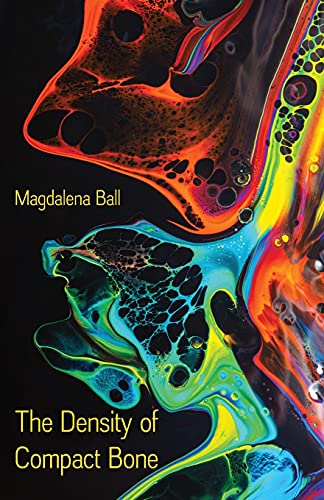
Magdalena Ball, The Density of Compact Bone (Ginninderra Press 2021)

Magdalena Ball was raised in New York city and now lives on Awabakal land in New South Wales. She runs the formidable review website Compulsive Reader and, if the poems in this book can be relied on, she rolls in the dirt when no one’s looking. She brings tremendous erudition to bear on intensely personal, bodily experience. She finds resilience in Jewish family history, and looks unflinchingly at the climate emergency. Her poems cast their net wide in the cosmos and bring tiny, meaningful things to light. There are riddles that, as far as I can tell, have no answers; there are love songs, laments, cries of pain, excursions into quantum physics and meditations on the nature of time. That is to say, this book is quite a ride.
It’s in four sections, each with a dominant mode or theme. The first, ‘The Age of Waste’, addresses the climate emergency, with poems about endlings (animals that are the last of their species) and ‘the Sixth Mass Extinction’. It’s waste as in ‘laying waste’, devastation. The prose poem, ‘Earth Scars’, for example, includes this:

Is it easier if it's random? If there was nothing we could have
done? I could be there, first in the queue, taking the hit for our
planet

The second section, ‘The Stronger the Entanglement the More Warped Space Is’, lives up to the complexity of that heading, with poems that don’t disappoint expectations roused by titles like ‘Time Is Not’, ‘Tomorrow’s Box Is Quantum’ and ‘Fermat in Wonderland’. That last one begins ‘I have no time / for rabbit holes’, which is delightfully ironic given the number of potential rabbit holes to be found in this section: I went googling (actually duck-duck-going) Cooper pairs and phase transition, for example, and struggled to remember what I’ve gleaned about Schrödinger’s box, wormholes and the properties of quarks.

The third section’s title, ‘Chronon’, seems to promise more of the same: according to Wikipedia, a chronon is ‘a proposed quantum of time, that is, a discrete and indivisible “unit” of time as part of a hypothesis that proposes that time is not continuous’. Happily (or not, depending on how much you enjoy being tantalised by advanced physics and philosophy), though this section deals with time and memory, it does so in a much more accessible, personal and emotionally engaging manner. The intimidatingly titled ‘Noumena Phenomena’ for example, addresses someone, possibly a close relative, who is living with dementia:

You smile
at everyone every day
the Buddha you never were
dispensing joy in coconut confetti
as we move in closer
circling round the gravity
of the hearth you continue
to keep
in your head.

The fourth section – ‘The River will Wash Us All Down’ – continues the personal note, with some wonderful poems dealing with love and complex relationships, and also returns to the global concerns of the first section. The context thickens and darkens with the cataclysmic bushfires of the 2019–2020 summer and the Covid pandemic.

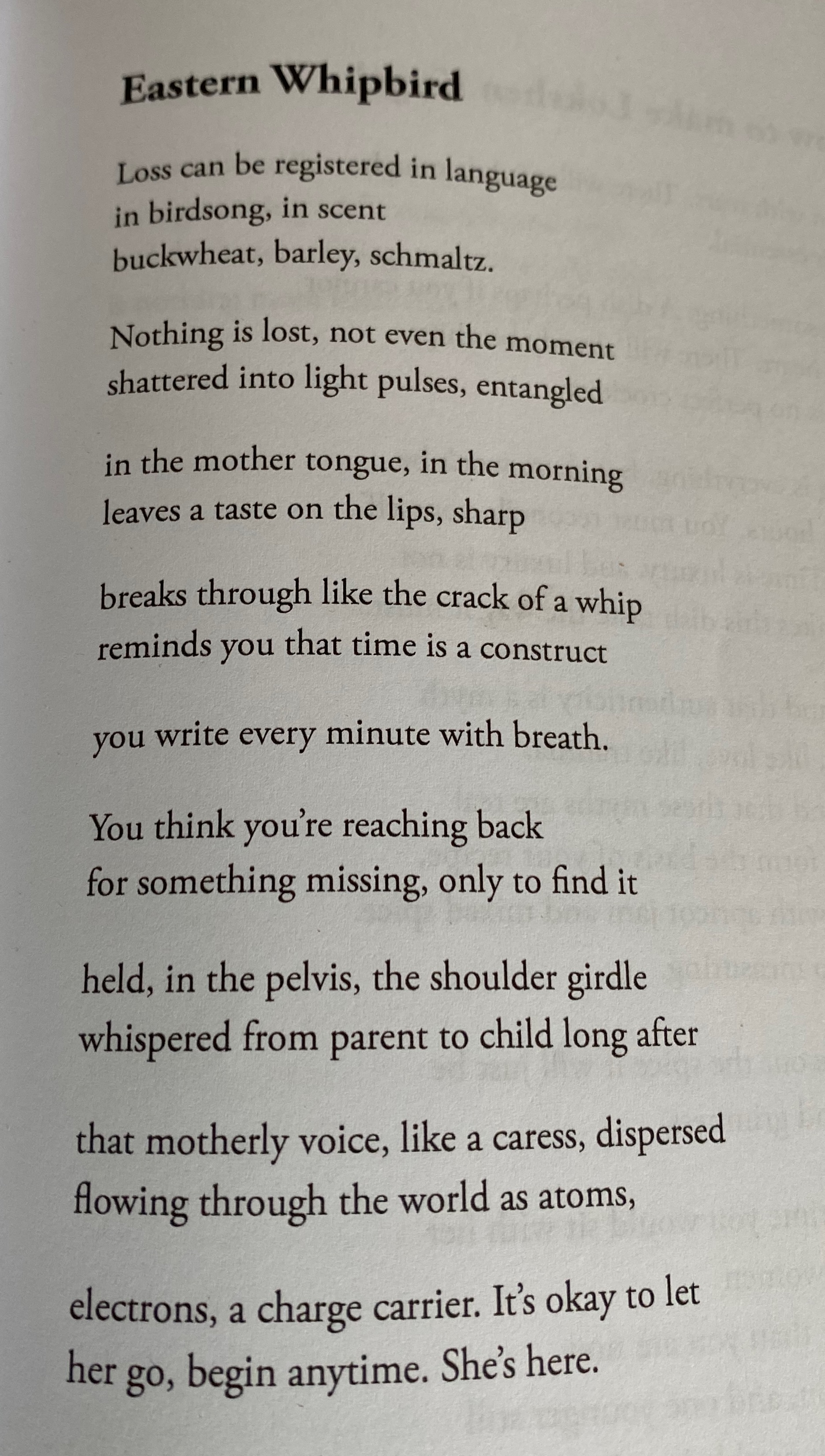
Many of these poems grapple with the notion of time. ‘Time Is Not’, for example, has the lines, ‘Change is real / but time is not.’ ‘How to Make Lokshen Kugel says: ‘Understand that authenticity is a myth / like time, like love, like trauma. / Understand that these myths are real / and must form the basis of your recipe’. ‘Eastern Whipbird’, the first poem in the ‘Chronon’ section, is probably richer when read in the context of those other poems, but read in isolation it’s still very rich:

(Page 51)

The title might lead you to expect a description of a bird. If so, prepare to be disappointed. The whipbird is there, but never mentioned explicitly. The first three lines announce the subject:

Loss can be registered in language
in birdsong, in scent
buckwheat, barley, schmaltz.

It’s as if the first line responds to the question, ‘How do we register loss?’ It’s fairly abstract. ‘Birdsong’ in the second line suggests that the actual prompt for the poem may not have been the abstract question but a surge of emotion triggered by a birdcall (the whipbird of the title, perhaps). It could just as easily have been a ‘scent’ that did the triggering. Then the third line (line breaks are important here) narrows the focus. Birdsong and scent could remind anyone of anything, but these three things are connected with cooking, in particular, in the case of ‘schmaltz’, with Ashkenazi Jewish cuisine.

Nothing is lost, not even the moment
shattered into light pulses, entangled

in the mother tongue, in the morning
leaves a taste on the lips, sharp

breaks through like the crack of a whip 
reminds you that time is a construct

These three couplets seem at first to contradict the first trio, denying that loss is real. But they don’t so much contradict the opening statement as reframe it. Rather than register the loss, we become aware of the persistence of that which is lost. People who have migrated and been obliged to take on a new language often report that hearing their mother tongue spoken brings back the emotions of their childhood: the lost moments are entangled in the language, become as present as a taste on the lips. Notice the subtle way that first cooking is evoked and then the word ‘mother’ turns up. we are being prepared for something. Coming back to the immediate prompt, something, we’re not told what, is made present by the call of a whipbird. This leads to the assertion that ‘time is a construct’. The poem has the task of clarifying that assertion.

you write every minute with breath.

This carries a particular kind of weight as the poem’s only stand-alone line. It justifies that weight as a six-word explanation of the idea that time is a construct. We don’t just experience time passively, but our breath, metaphor for human spirit, creates it like a poem.

You think you're reaching back
for something missing, only to find it

held, in the pelvis, the shoulder girdle  

These lines return to the opening paradox: we register loss in a number of ways, but nothing is lost. A personal pronoun appears for the first time: not ‘I’ or ‘We’ but ‘You’. The reader is being challenged to test the poem against his (in my case) own experience. It’s true that when it comes to memory of something lost, I think I’m reaching back. It’s also true that when I remember, say, how my mother put her face up to be kissed by one of us kids, something registers (that word again) in my body. I wouldn’t say it’s in the pelvis or the shoulder girdle, but it could have been. I get the point.

whispered from parent to child long after

that motherly voice, like a caress, dispersed
flowing through the world as atoms,
electrons, a charge carrier. 

Now the kind of loss we’re talking about is in clear focus. The thing that ‘you’ (definitely the poet now) find somewhere in your body is a mother’s whisper. Here Magdalena Ball’s scientific bent comes beautifully into play. It’s not that the actual mother or her actual voice still exist on some spiritual, other-worldly plane. She and the air that carried her voice have been dispersed into their constituent atoms – and again a paradox: the notion that we are immersed in a flow of atoms and electrons that may once have been part of our loved ones’ body and breath carries a charge, a charge that we invent. (I think of the Sweet Honey in the Rock song, ‘Breaths‘: ‘Those who have died … are in the rustling trees … in the groaning woods … in the crying grass … in the moaning rocks.’)

_________________________It's okay to let
her go, begin anytime. She's here.

I was completely unprepared for the emotional punch of this. There’s so much intellectual complexity and then this simple, profound statement. It may be eccentric of me, but I think of the moment in the movie Truly Madly Deeply when the Juliet Stephenson character finally lets the ghost of her husband go. Begin anytime – we don’t have to be passive around time, wait for time the great healer to help us overcome our grief. In some important sense time is our creation. And there’s another paradox, or a restatement of the same one: in the act of letting go, we understand that memory exists in our bodies. ‘She’s here.’


I am grateful to the author and Ginninderra Press for my complimentary copy..

Kim Stanley Robinson’s 2312

Kim Stanley Robinson, 2312 (Orbit 2012)

I picked this fabulous book up from our local street library, and it was a perfect fit for my personal tradition of reading a big SF novel over the end-of-year break.

According to Wikipedia, Kim Stanley Robinson is best known for his Mars trilogy. I read the Red Mars (1992) and Green Mars (1993) decades ago. Though I loved them, was totally absorbed in their world, and felt that I was learning a lot about the practicalities of space travel, the realistic possibilities for terraforming Mars, and the opportunities for new political beginnings provided by leaving the Earth, I somehow didn’t get around to Blue Mars (1996). Now I don’t know if I ever will, because 2312 takes up the story some centuries later.

This novel begins on the surface of Mercury, where the domed city of Terminator moves on rails, staying always in darkness, because the direct heat from the sun would devastate the city and kill any living thing. There are ‘walkers’, who stay outside the city and by walking briskly remain just ahead of the dawn, though they will often turn back to watch the first flames of the sun spread across the eastern horizon, and (most of them, most of the time) tear themselves away from the spectacle before destroying their retinas or worse – much worse.

And so it goes. Mars is long-established. Earth, the sad planet, still recognised as humanity’s home, is as strife-torn and irrational as ever. Venus and some of Saturn’s moons have been settled, and any number of asteroids have been hollowed out to make space ships, known as terraria. Every settlement and every asteroid has its own distinctive qualities and challenges, and the passage of time has meant humans have begun to diverge: there are smalls, and rounds, and talls. Most spacers live for more than a century, and most have had some form of gender modification surgery – because it has been discovered that gender fluidity (not the term they use) increases the human lifespan significantly.

At every moment it feels as if Kim Stanley Robinson has lived in the world of the novel. It’s an amazing feat of imagination. We see how the light falls on the surface of Mercury, we feel the heat on Io, we struggle with the effect of Earth’s gravity after living so lightly on Mercury. We look about with wonder at the stars as we float, marooned in space.

There’s a lot of hard SF. Between the mostly short chapters of story there are numbered sections labelled ‘Extract’, which comprise fragments from texts explaining the science or history behind events: instructions on how to terraform an asteroid, the science of longevity, ‘human enhancement’, and so on.

There’s a romance, about which I’ll say only that it’s unexpected but (to me at least) completely convincing. There’s a mystery, involving quantum computers (‘qubes’), organised crime and political skulduggery. There are loose threads, whose effect isn’t so much to make us want a sequel as to reassure us that this world will continue after the book ends. There are music, and microscopic alien life forms, and huge explosions.

This future world has cultural tendrils reaching back to our time and beyond. Andy Goldsworthy and Marina Abramović have become lower-case names for art forms. Emily Dickinson is quoted at a climactic moment; Beethoven animates more than one key scene; Philip Glass recurs. There are lovely snippets, like this:

After a while she said, ‘Mozart’s pet starling once revised a phrase he wrote. The bird sang it after he played it on the piano, but changed all the sharps to flats. Mozart described it happening in the margin of the score. “That was beautiful!” he wrote. When the bird died, he sang at its funeral, and read a poem to it. And his next composition, which the publisher called A Musical Joke, had a starling style.’

(Page 158)

There are moments that remind us that Kim Stanley Robinson is an environmental activist:

Obviously most in the bar felt they were only helpless observers of a giant drama going on above their heads, a drama that was eventually going to suck them down into its maelstrom, no matter what they said or wanted. Better therefore to drink and talk and sing and dance until they were stupid with exhaustion and ready for a stagger through the early-morning streets

(Page 387)

There’s an account of life on Earth, as seen by the Mercurial protagonist, Swan Er Hong, on a visit:

The dead hand of the past, so huge, so heavy. The air seemed a syrup she had to struggle through. Out in the terraria one lived free, like an animal – one could be an animal, make one’s own life one way or another. Live as naked as you wanted. On the God-damned Earth the accumulated traditions and laws and habits made something that was worse than any body bra; it was one’s mind that was held in place, tied in straitjackets, obliged to be like all the others in their ridiculous boxed habits. Here they were, on the only planetary surface on which you could walk freely, naked to the wind and the sun, and when they had a choice, they sat in boxes and stared at littler boxes, just as if they had no choice – as if they were in a space station – as if the bad old days of the caged centuries had never gone away. They didn’t even look up at the stars at night. Walking among them, she saw that it was so. Indeed if they had been people who were interested in the stars they would not have still been here. There overhead stood Orion at his angle, ‘the most beautiful object any of us will ever know in the world, spread out on the sky like a true god, in whom it would only be necessary to believe a little.’ But no one looked.
(Page 387)

As far as I know, there is no sequel to 2312. But New York 2140 (2017) and Red Moon (2018) look as if they belong on the same universe. Perhaps the former gives the history behind 2312‘s images of Manhattan as a city of canals as a result of sea-level rises. Maybe it can be my big SF book next December.

Vaughan and Harris Ex Machina

Brian K Vaughan and Tony Harris (creators), Tom Feister (inks), JD Mettler (colors) and Jared K Fletcher (letters), Ex Machina, Book One (Vertigo 2013) – originally published in 11 single magazines in 2004 and 2005

Having decided – several times – not to read any more superhero comics, here I am again. But this one is written by Brian K Vaughan, who was to go on to write the wonderful comic series Y: The Last Man, Paper Girls, and Saga (currently on hiatus).

What if the world’s first real superhero had been jetting around New York City on 11 September 2001, and had managed to intercept the second plane, saving thousands of lives? What if he realised that superhero vigilantism was of limited effectiveness and decided that he could probably do more good by running for Mayor of New York City? And what if he won the election as an independent candidate?

Ex Machina begins when civil engineer Mitchell Hundred, having decided to end his brief career as superhero The Great Machine, has indeed been elected New York’s mayor, bound by promises not to discuss publicly the origins of his superpowers (biggest of which is the ability to communicate with machines) an not to use those powers to do things best left to the police.

It goes without saying that things don’t go smoothly. Hundred inherits the New York mayoral burden of being blamed for everything. (Seth Meyers made hay with this tradition in his first Closer Look after Eric Adams became Mayor earlier this month.) He also has to deal with the burning issues of the early 2010s: terrorism, of course, but also same sex marriage, racism and the ongoing culture wars. And it wouldn’t be a superhero comic, even a retired one, without an overall arc involving mysterious possibly-alien graffiti and hideous serial killings … to be continued.

I don’t know that I’d recommend the book to serious lovers of fine literature, but I enjoyed it, and look forward to the subsequent five volumes. If nothing else, I enjoy Brian K Vaughan’s regular info-gems. For just one example, when his chief of staff points out that by officiating at a same-sex marriage he has alienated a huge segment of the population, he answers: ‘When Johnson signed the Civil Rights Act, he turned to one of his aides and said, “I believe we’ve just lost the south forever.”‘ This isn’t the Marvel universe.

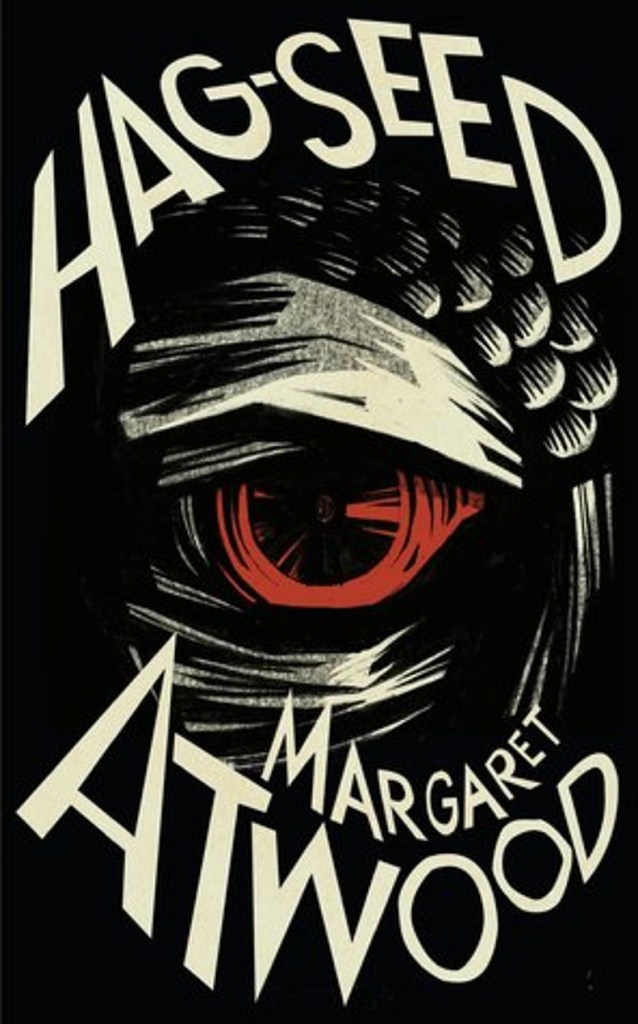
Margaret Atwood’s Hag-Seed

Margaret Atwood, Hag-Seed: The Tempest Retold (Hogarth Shakespeare 2016)

2016 was the 400th anniversary of Shakespeare’s death, which led to a flurry of novels retelling his plays. Apart from the seven titles in the Hogarth Shakespeare series, of which Hag-Seed is one, there were at least Ian McEwan’s Nutshell (a take in Hamlet read by my Book Group on a date I couldn’t attend) and Abdulrazak Gurnah’s Gravel Heart (which includes a deft retelling of Measure for Measure, and which I read recently).

Hag-Seed relocates the story of The Tempest to contemporary Canada. Felix Phillips is sacked as Artistic Director of a Shakespeare festival in the small town of Makeshiweg. He goes into solitary exile with the ghost of his young daughter, hoping, Prospero-like, to take revenge on the men who usurped his position. His hope comes to fruition through a production of The Tempest that he directs as part of a literacy program in a men’s prison. He plays the deposed and vengeful Prospero himself.

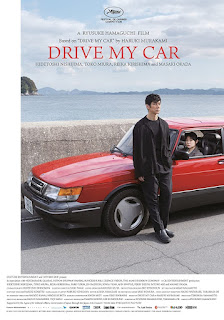
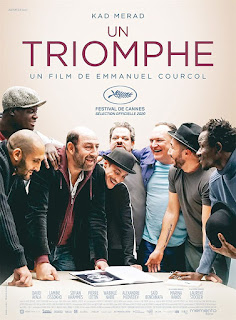
I’m a sucker for stories that revolve around theatrical productions of classic texts. Theres’s the Canadian TV series Slings and Arrows (2003–2006), and Kenneth Branagh’s In the Bleak Midwinter (1995). Two of my favourite films seen this last year were Ryûsuke Hamaguchi’s Drive My Car (2021), which features Uncle Vanya, and Emmanuel Courcol’s Un triomphe (2020), which features En attendant Godot, each of them illuminating its respective play as well as gaining heft from it. If the theatrical production happens in a prison or similar institution, my suckerness intensifies: Un triomphe is in that catergory; I still remember the joy of seeing Peter Brook’s movie of Marat/Sade in the late 1960s, and the different joy of a high-school production of Louis Nowra’s Cosí directed by and starring the late Jesse Cox. In real life, my first copy-editing task at The Currency Press was to mark up two short plays, The Chocolate Frog and The Old Familiar Juice, written by prisoner Jim McNeil and staged by the Resurgents Debating Society in Parramatta gaol, a group not completely unlike Margaret Atwood’s Fletcher Correctional Players.
This may be the first novel I’ve read that both retells a classic and has the Let’s-Put-on-a-Show story-line. Mansfield Park is as close as I’ve got. (I haven’t read Thomas Keneally’s Playmaker – maybe I should.)

So it was inevitable that I’d love this book.

The story of Felix’s revenge is cheerfully improbable fun, involving hi-tech jiggery-pokery, hallucinogen-spiked grapes and a convenient confession, but the real interest of the book is in the production of The Tempest. For someone with my superficial knowledge this is a joyous introduction to the complexities of the play and its potential for interpretation.

For just one example, none of the the prisoners in Felix’s ‘class’ is going to risk playing Ariel. Caliban, fine – everyone signs up for him. But everyone knows they’ll never survive being seen as a fairy on TV by the whole prison population (the prison won’t allow the play to have a live audience). Felix does a brilliant job unpacking the nature of the role, to the extent that more than half the group now want to play Ariel as a possible alien, super-powered force of nature – it works at the level of story, but it also offers fascinating insights into the play.

The role of Miranda doesn’t allow for such persuasion. There’s nothing for it but to cast a real woman – and the presence of a young woman who is a dancer and a champion in martial arts is the source of some good clean anti-sexist fun.

In a couple of chapters towards the end, the members of the class present their ideas of what happens to their characters after the play ends. At this stage it occurred to me that this book would be an excellent teaching aid for a high school class studying The Tempest. The prisoners are doing just the kind of exercise that such a class might be assigned. And you know what? That thought didn’t dim my enjoyment one bit.

End of year lists 2021

The Emerging Artist and I have put our heads together for our traditional end-of-year list-making.

Best Movies:

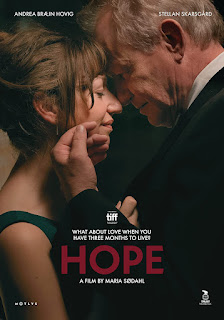
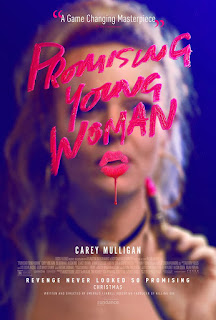
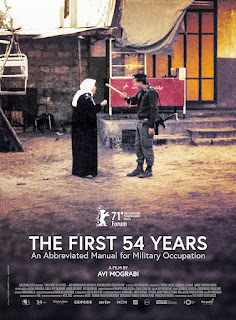
We got to the pictures surprisingly often this year, and we watched a lot of movies at home. We saw roughly 50. We managed, painfully, to whittle the list down to four that we agreed on. Three of the four we saw at the Sydney Film Festival. They are, in no particular order:

We each chose one more to make five each. I’ll leave you to guess who added which:

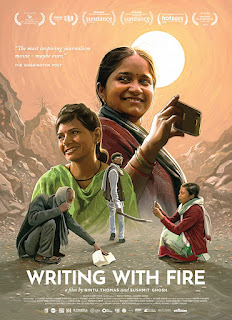
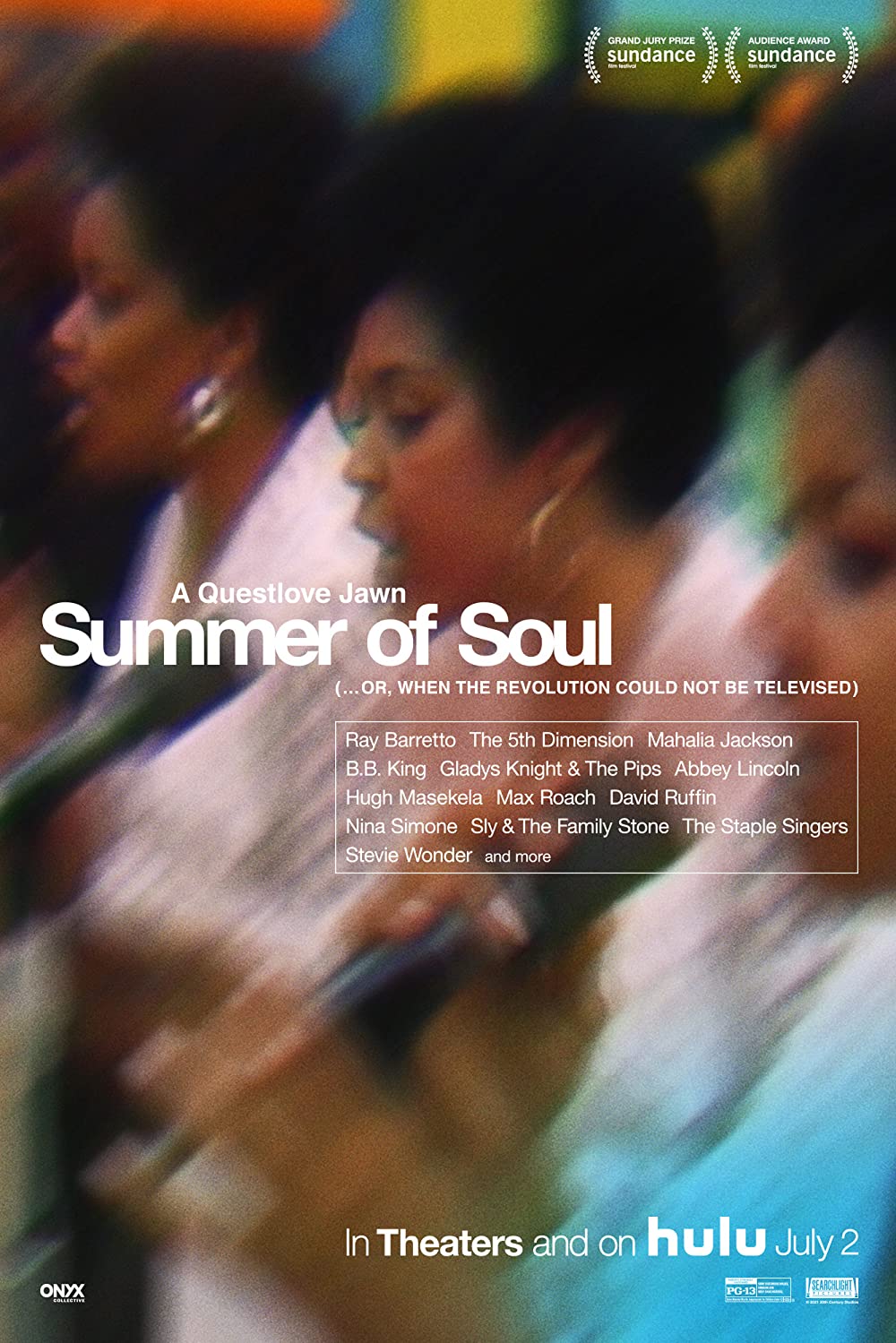
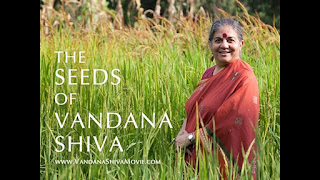
And then we picked four documentaries, all from the Sydney Film Festival except the absolutely brilliant Summer of Soul:


Theatre:

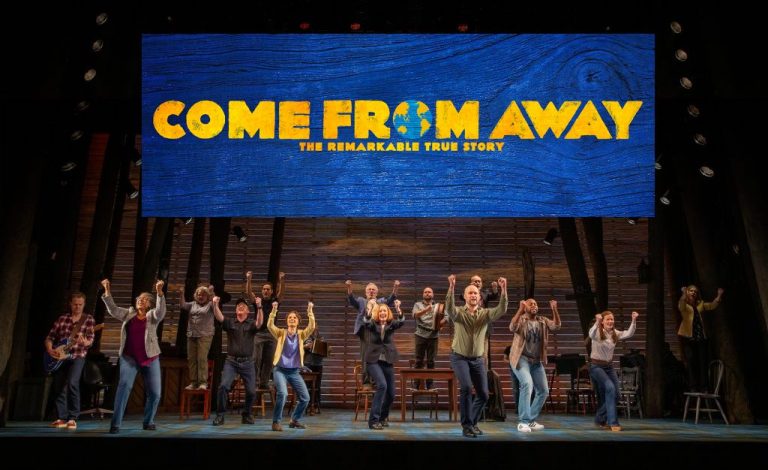
We subscribed to Belvoir Street and Griffin, but Covid–19 meant we didn’t actually see much. We agreed, however, that our top theatre experience lay elsewhere, in commercial musical theatre:


Books:

The Emerging Artist read 35 books in hard copy and roughly 10 on her device. She read 25 books by women and 20 by men. She has given me a list of her five best books in non-fiction and fiction categories (art books were important but not for listing). Here they are then:

Fiction

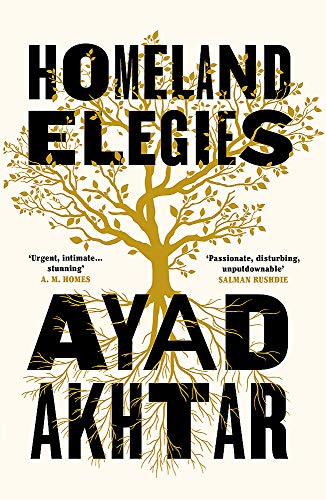
Ayad Akhtar, Homeland Elegies (Headline 2020)

This is my outstanding book of the year: funny, serious, filled with ideas. It’s a biting commentary on where the USA is now, written while Trump was still president, but it’s still relevant. It’s a novel that reads uncannily like a memoir. (Link to Jonathan’s blog post)

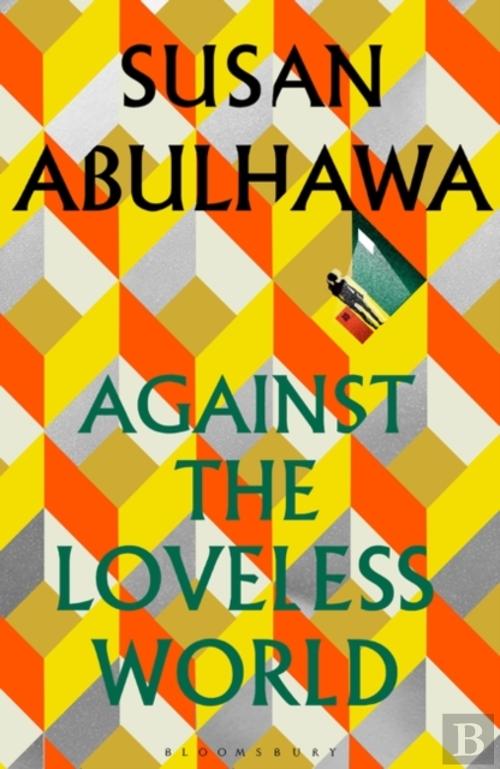
Susan Abulhawa, Against the Loveless World (Bloomsbury 2020)

Completely engrossing story of the Palestinian diaspora in the Middle East and life in an Israeli prison.

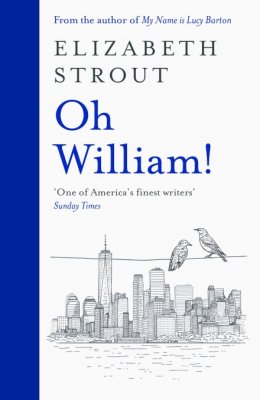
Elizabeth Strout, Oh William! (Random House 2021)

What can you say about Elizabeth Strout? She’s such a delight to read. Beautifully written, this follows on from Lucy Barton.

Jonathan Franzen, Crossroads (HarperCollins 2021)

I’m not always a Franzen fan, but I loved the way this captures a period in one family’s life that echoes across US cultural life in the 70s

Richard Russo, Nobody’s Fool (Allen & Unwin 2017)

I’ve become a fan if Richard Russo. Nobody’s Fool needs to be read in conjunction with Everybody’s Fool. Like Elizabeth Strout and Jonathan Franzen, this examines small town life, where people do bad things but are recognisably human – no big villains.

Non-Fiction

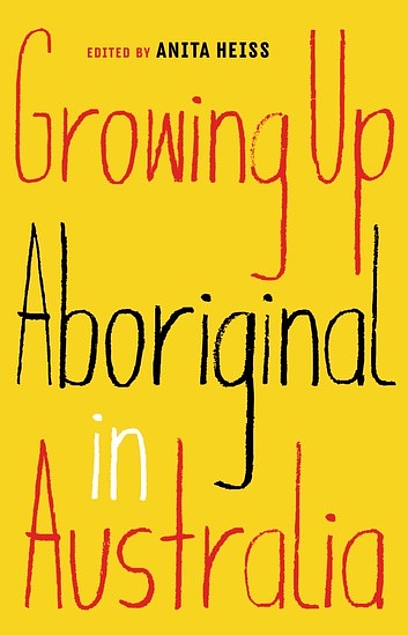
Mark McKenna, Return to Uluru (Black Inc 2021)

A beautifully written, meandering history of a particular moment. (Link to Jonathan’s blog post)

Grace Karskens, People of the River (Allen & Unwin 2020))

This should be read in conjunction with Grace Karsken’s The Colony. Both are large volumes of brilliantly-written history. The river of the title is the Hawkesbury–Nepean / Dyarubbin, and the book covers the geology, flora and fauna, and human history, both before and since settlement.

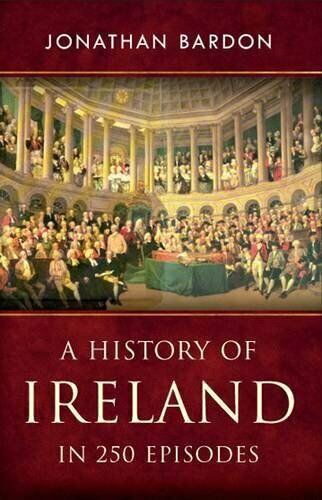
Jonathan Bardo, A History of Ireland in 250 Episodes (Gill Books 2009)

It’s hard to find a general history of Ireland in bookshops and libraries in Sydney. This is a great introduction, originally created as 250 five-minute radio programs broadcast over a year in Ireland. Ireland’s history is much bloodier than I knew from when it was first inhabited, and the English are not the only source of the violence.

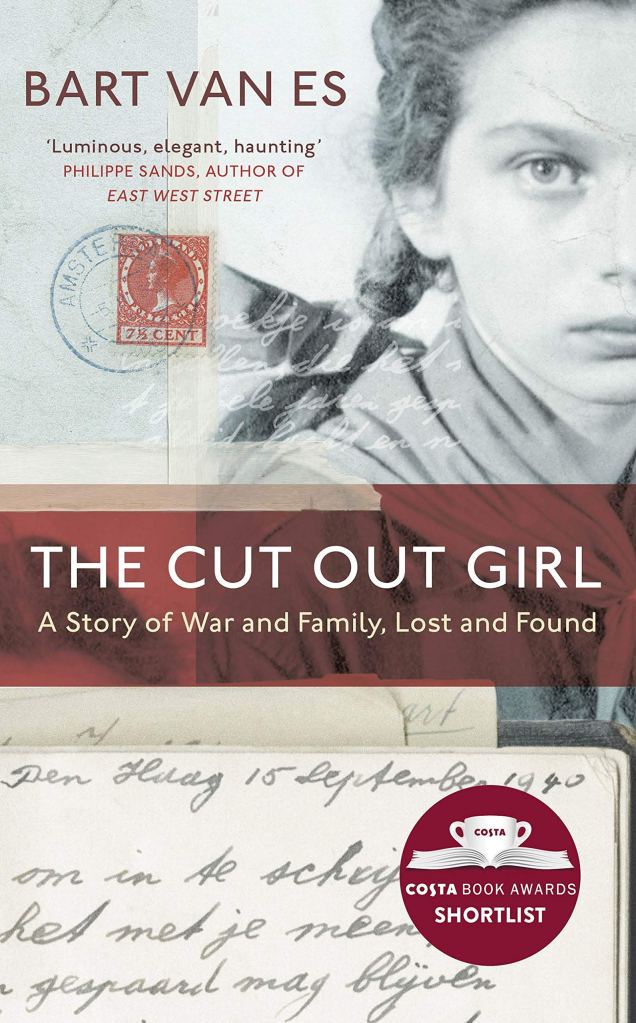
Bart Van Es, The Cut Out Girl (Penguin 2018)

Prompted by an interview with the author in a Conversations podcast, I borrowed this from the library. It’s a memoir about family secrets and silences that tracks the missing links in a Jewish woman’s childhood hiding from the Nazi regime.

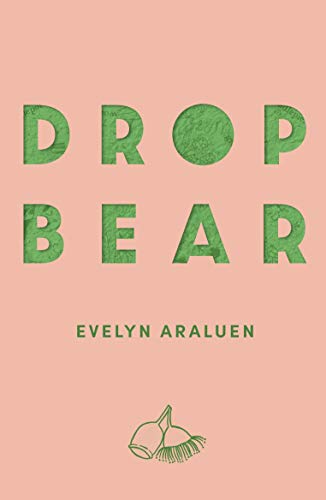
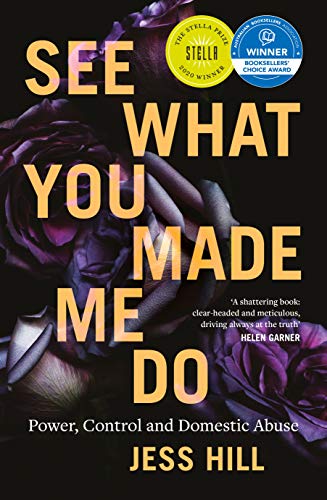
As for me, I read 77 books (counting journals but not every children’s book). I can’t pick bests. Most successful scratching of a longstanding itch was Wordsworth’s The Prelude. Most fun was Bernadine Evaristo’s Mr Loverman. Most mind-altering was Andy Jackson’s Human Looking. Most reader-friendly Nobel laureate was Abdulrazak Gurnah’s Gravel Heart. Most likely to produce lasting behavioural change was Joe Keohane’s The Power of Strangers. Most magical revisit was Ursula K LeGuin’s Catwings. The one that made me wish I was writing my own memoirs was Brendan Ryan’s Walk Like a Cow. The one that made me think my memoir would get it all wrong was Evelyn Araluen’s Dropbear.


Happy New Year, everyone. Please add your own treasured movies, plays or books from 2021 in the comments.

#aww2021 Challenge Completed

This is my round-up post for the Australian Women Writers Challenge 2021, my eighth year of participation, and the final year of the challenge’s existence.

The challenge was established in 2012 to raise awareness of Australian women’s writing. I signed up for 2014, and I’ve recorded a total of 165 books read since then as part of the challenge. This year, I read 15 books by Australian women writers, well over my goal of ten. Here they are, with links to my blog posts:

6 books for children and young people

4 books of poetry

3 essays

1 historical novel

1 collection of essays edited by a woman

1 art book

The list doesn’t include journals or anthologies.

On a related topic, I’ve done a quick gender check on books I read this year. Counting comics, but not journals, anthologies or most picture books, I read:

  • 27 by women
  • 34 by men

I read 1 book in translation (from Homeric Greek), and 2 in their original French. I read two books by First Nations writers, and 10 by People of the Global Majority (a term I’m using at the recommendation of friends who prefer it to ‘People of Colour’). These stats make me realise that apart from anything else the journals I read are a great source of diverse voices.

I’ll do a separate post where the Emerging Artist and I pick our favourite books and movies of the year.

Ruby Reads 29: Gift

It’s the time of year when Ruby comes into possession of many new books, first for her birthday, and then for Christmas. This is one I gave her, and which she took time to enjoy in the midst of things. (I love it.)


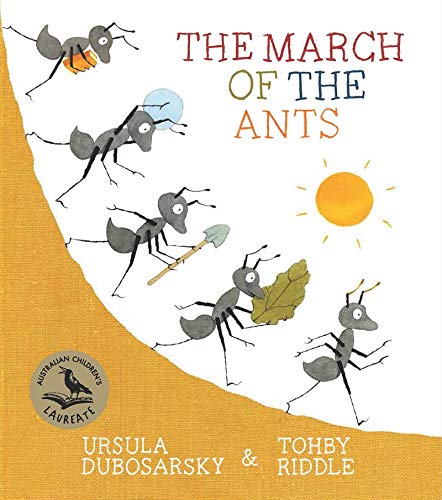
Ursula Dubosarsky and Tohby Riddle, The March of the Ants (Book Trail 2021)

Full disclosure: Ursula Dubosarsky and Tohby Riddle are friends of mine.

They’re also both geniuses, who have collaborated on a number of books for children. This gorgeous picture book is the latest. The text was read by Ursula at her launch as Australian Children’s Laureate in February 2020. Neither she nor Tohby could have known that its message about the importance of story had a prophetic relevance for the two years that lay ahead.

A group of ants set out on an excursion. Every one of them carries something important for the enterprise. When one little ant shows up with just a book, there is much mockery. But the little ant persists. Later when all the others are tired from their exertions and the food and drink have run out, the little ant reads to the others, and they are revived by the story.

Tohby’s images are masterly, full of odd details without being at all crowded.

Here’s a video of a laurel-crowned Ursula reading the book, from the Australian Children’s Laureate Foundation webpage


The March of the Ants is the 15th and final book I’ve read for the Australian Women Writers Challenge 2021.

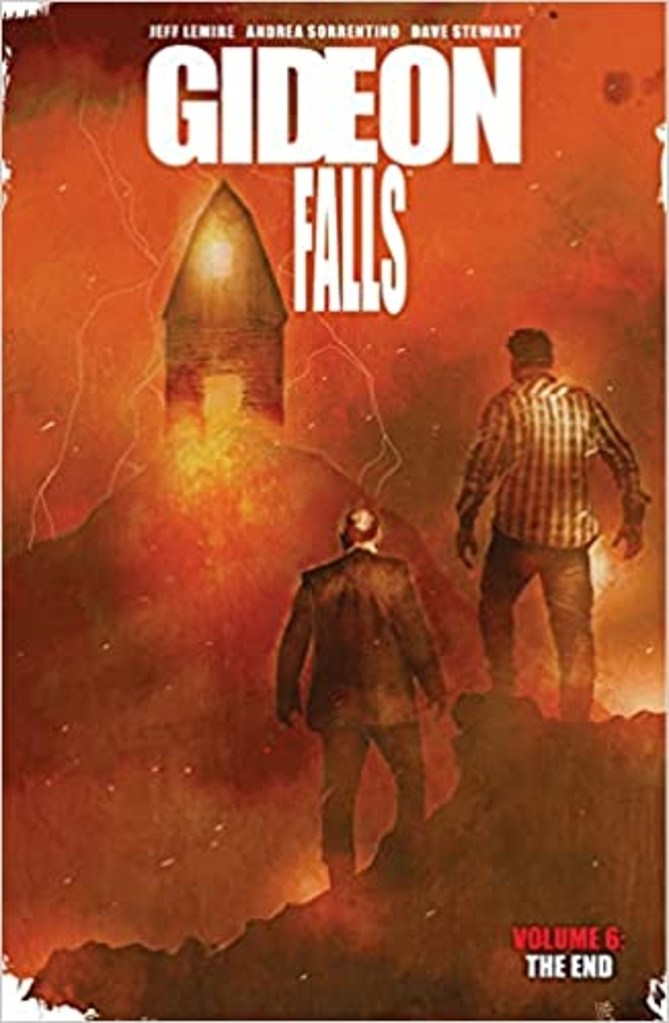
Lemire Endings: Gideon Falls 6 and Ascender4

Among my welcome gifts of comics this Christmas are the final instalments of two series that have been going for a couple of years. Though they share a principal author, they evoked vastly different responses in me: I was just relieved that one of them was over at last, and the final pages of the other had me welling up.


Jeff Lemire (writer), Andrea Sorrentino (artist) and Dave Stewart (colorist), Gideon Falls, Volume 6: The End (Image Comics 2021, originally published as issue 27 of the comic)

This has been a brilliant piece of complex story telling, matched by superbly challenging art work. There’s a kind of zombie apocalypse with hideous grins, happening in at least three time periods but all in the same place. There’s endless confusion about which people and institutions are on the side of good, and which in thrall to evil. There’s a weird blend of scientism and the occult, and an abundance of surgical masks that belies the story’s pre-Covid-19 beginnings (and don’t make any obvious sense without the Covid–19 reference).

Horror is a genre whose appeal is lost on me. That, and the sense on page after page that I had to work hard just to figure out what was going on, means I was pretty cool about the series, and this final instalment didn’t warm me up. The occasional page is upside down, for a start, and to my eye at least the characters never take on clear individual qualities. Interestingly, among the included extras is the script of the original comic: reading it would be an ideal way of sorting out who everyone was, and what was happening on the pages where the images were indecipherable to me. I was tempted, but in the end I decided I’d rather live with being too stupid to follow the story than expend any more effort on it.


Jeff Lemire & Dustin Nguyen (storytellers), Steve Wands (lettering and design), Will Dennis (editor), and Tyler Jennes (assistant editor), Ascender Volume Four: Star Seed (Image Comics 2021, from issues 15–18 of the comic)

This volume brings an end to six years of space opera – the six-part Descender. and the the four-part Ascender. This also has been a brilliantly complex story-telling, whose visual complexity sometimes tipped over into incomprehensibility. Here too several distinct stories have occupied the same space in a vertigo-inducing manner.

But at the heart of this saga are two small children under threat, one of whom is a robot, so the reader has an emotional grounding. We know who to barrrack for when they flex their great powers (the robot), and who to fear for when the forces of empire and magic and machinery are out to destroy them (the flesh and blood girl).

Dustin Nguyen’s watercolour paintings, which I didn’t care for at all at first, turn out to serve the story beautifully. The scenes of violence are just as chaotic as anyone could wish. The bad guys, rather than being softened by the pastel colours, take on a kind of deliquescent vileness. And the children stay softly vulnerable throughout.

Among tying off of narrative threads, there’s a twist in the final moments that got to me. It takes real genius to set up a narrative tension that the reader is barely aware of, to let it simmer for years (years in the telling, and decades in the story itself), to lay careful last-minute groundwork for a resolution that the reader (this one anyway) sees as pure decoration, and then spring the resolution in just a single frame. I hope that’s abstract enough to leave the story unspoiled should you choose to read it.

Given my own widely divergent responses to these two series, I hesitate to recommend either of them without qualification. But if I was running a comic shop and you walked in off the street asking for recommendations, Jeff Lemire’s name would spring to my lips.