Category Archives: Books

Christa Wolf’s One Day a Year 2001–2011

Christa Wolf, One Day a Year 2001–2011 (2013, translation by Katy Derbyshire, Seagull Books, 2017)
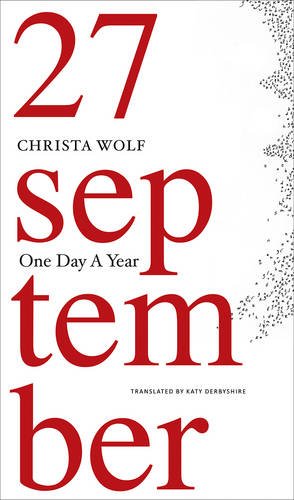
In 1960 the Moscow newspaper Izvestia invited a number of writers, including East German Christa Wolf, to describe one day in their lives, 27 September that year, as precisely as possible. Christa Wolf accepted the invitation and found the project so interesting that she did the same for that date every year for the rest of her life.

She didn’t necessarily intend this writing for publication, but at the turn of the century she decided to compile the 41 pieces into a book, saying in her preface (reprinted at the start of this book):

I see it as a kind of professional obligation to publish them. Our most recent history seems to be at risk of being reduced, even now, to easily manageable formulae. Perhaps messages like these can play a part in keeping opinions on what has happened in flux, re-examining prejudices, dismantling hardened views, recognising our own experiences and gaining more trust in them, allowing unfamiliar circumstances a little closer to ourselves.

That book is a compendium of detailed accounts of a single day for each year, coming very close to the primary classroom concept of a ‘recount’ as opposed to a shaped ‘narrative’, beginning in East Berlin before the Berlin Wall was built, ending long after the unification of Germany, and traversing on the way the massive social and political changes of the 1960s to 90s, as well as huge changes in Wolf’s personal life.

The book I’ve just read is not so much a sequel as an addendum. The German original, titled Ein Tag im Jahr im neuen Jahrhundert (literally One Day a Year in the New Century) was published in 2013, nearly two years after Wolf’s death in December 2011. The changes it charts are not as momentous, at least not on the world stage – at the personal level these pages are overwhelmingly aware of the approach of death – but nor is it as dauntingly huge.

I found the book fascinating. Each day is full of detail: the dream from which Wolf wakens, a list of newspaper headlines, the meals her husband prepares, crime shows on television, her current reading, her current writing project, gossip, calls on her to appear in the media, invitations to gallery openings (most of which go straight to the bin), news from her family (one of her daughters has a birthday on 28 September, so family always looms large), reflections on the big events of the day (German elections seem to happen in September), correspondence. It’s not that all these things are presented as of equal value: Wolf knows that her reflections on, say, the terrorist attacks in New York and Washington DC, will be more interesting to her possible readers (including her future self) than what she had for lunch. But there’s a wonderful sense of the broad sweep of history enmeshed in the minutiae of life as each entry ‘interrogates the bejesus’ out of its day (the phrase is from Phillipa McGuinness’s The Year that Everything Changed, which did for the year 2001 what Wolf does for her days – the link is to my blog post).

I imagine that every reader will find her or his own personal points of connection. Here are some of mine.

On 9/11, the perspective of a former East Berliner stands as something of a challenge these days to those who urge the primacy of ‘western civilisation’:

Why did it seem to me – precisely sixteen days ago it was – as though those two towers were crashing directly into the empty centre of our civilisation, the alleged target of the attack? Everyone appeared to know what our civilisation is. […] So it’s Greek philosophy, the monotheistic religions, the Enlightenment’s belief in reason … And what if they had all lost their effectualness in the Occident under the ‘terror of the economy’ and lived on only as a chimera inside us? And have not more and more people sensed that this civilisation of ours is hollowed out and empty?

(page 11)

(Incidentally, that ‘the Occident’ makes me wish I could read German so I’d know if it was Wolf or the translator Katy Derbyshire who decided to use it rather than the more usual ‘the West’. Given the general ease of the English elsewhere, I’m assuming it was Wolf: she tends to use ‘the West’ to mean West Germany, and Katy Derbyshire has honoured her usage.)

In the period covered by this book, Wolf completed the only other book by her that I’ve read: City of Angels or, The Overcoat of Dr Freud. That book deals in part with a moment in 1985 when it was revealed that she had been an informant for the Stasi – something she had completely forgotten. There are some interesting footnotes to that book – she mentions in passing the difficulty of writing it, of dealing with editorial changes and then, in 2010, readers’ responses. This passage makes me resolve to tell writers when their work means something to me:

Then a quite long, intense letter from a woman from Berlin, prompted by City of Angels, which she calls a ‘captivating and liberating’ text. My books, she writes, have accompanied her for more than half her life (people often tell me that now). She goes on to thank me for staying ‘in this part of the country’ […] I could cite more of this letter, which is typical of a large number of letters I’ve received since City of Angels. More from the East – but not only from there – more women than men, more older than very young people. Testaments of personal concern, which push aside my doubts over whether I ought to have published the book in this form.

(page 145)

The book is probably an example of ‘late style’, as discussed in Edward Said’s On Late Style, a book that failed to impress me much when I read it last year, but which seems to be relevant to almost everything I’ve read since. Like Said’s book, this one was published posthumously. Unlike his, it’s explicit about the writer’s physical condition. This moment from 2007 strikes a chord with me, though the pain in my joints is a trivial shadow of hers:

From the living room window I see a young blonde woman walking past, in a white jacket and black trousers; I watch enviously as she walks without effort, as if that were the most natural thing in the world.

I console myself – when I was her age I could do that too.

(page 110)

The final entry – just two pages of notes she managed to scribble two months before she died – is an extraordinary testimony to her dedication to the life of the mind, and to this task in particular: among the notations about the struggle to find a position for sleeping that won’t be in pain, her medication, difficulties with eating and going to the toilet, she mentions her reading:

I read a few pages of [Estela Canto’s] relationship to Borges, which Ellen sent me. Didn’t know B. was infertile – for mental reasons, not least due to his domineering mother.

(p 149)

In the middle of it all, there’s always something new to learn.

I don’t suppose this book is everyone’s cup of tea, but it makes me glad to belong to species that has included such an individual.
Joyce Carol Oates’ Hazards of Time Travel

Joyce Carol Oates, Hazards of Time Travel (4th Estate 2018)

Maybe I’m being harsh, but this strikes me as an example of a literary novelist deciding to write science fiction in the spirit of someone slumming it. It’s a dystopian novel in which the world building is fairly slapdash and awfully familiar even to someone like me who doesn’t read a lot  of dystopian fiction. It has a number of twists that don’t really turn. The timing, especially in the final pages where there is a faux happy ending (or is it?), just doesn’t work.

Having said that, I think there is a serious argument that J F Skinner’s psychological theories are useful in understanding the creeping totalitarianism of our times: a young woman who asks questions (not too many questions, but questions at all) in the repressive future is exiled to a rural university in the US in the 1950s where Skinner’s theories are seen as cutting edge, and … oh I don’t care.

I haven’t read anything else by Joyce Carol Oates, so I may be missing something. Edward Said’s On Late Style warned that contemporaries dismissed the work of any number of great artists as they moved into the apparent carelessness of their late style. Perhaps that’s what is happening here. I’m open to argument

Eileen Chong’s Uncommon Feast

Eileen Chong, The Uncommon Feast: Essays, Poems and Recipes (Recent Work Press 2018)

In 2017, Eileen Chong’s third book of poetry, Painting Red Orchids, was shortlisted for the Australian Prime Minister’s Literary Awards. At the awards ceremony, a senior poet told her that many of her poems were like recipes, and if she collected them into a book she might have some success with it. She writes about this comment, and her reaction to it, in the first essay of The Uncommon Feast. ‘I am speechless,’ she says. ‘I feel put in my place, and ashamed.’

Happily, the shame didn’t last. The Uncommon Feast is a beautiful, generous, delightful response to that comment. It contains poems that are like recipes, as well as actual recipes. And it is much richer and more rewarding to culinary and non-culinary readers alike than anything her fellow poet presumably had in mind.

As Judith Beveridge says in her Introduction, the poems are at the heart of the book, but the prose essays and recipes, and the line drawings by Chong’s husband Colin Cassidy, are what transform it from a slim vol of poetry to a feast of a book. ‘The Common Table’, a short essay first published in Meanjin, which includes the account of the awards evening, also gives us the wonderful (food-related) moment when Chong’s mother understood that she was a writer; and ‘Eating and Telling: A Personal Food History’, is a quick autobiography told in terms of food – the school canteens (Singapore’s version so much more interesting than North Queensland’s), family meals, dining with partners, the bliss of cooking and eating with her husband. If we needed instructions on how to read Chong’s food poems, they are there:

Food, for me, is representative of family, culture, nourishment and love. I’ve learned how to cook from my grandmother, my mother, my friends’ mothers, and my partners over the years. The dishes I prepare are a palimpsest of experiences and cultures, new and old.

I’m surrounded by people who say they don’t get poetry – they feel intimidated by it, or see it as lost up its own wazoo. If any one book could convert them to poetry lovers, this would be it. There are many wonderful moments. For example, ‘Chinese Ginseng’ is a very fine poem in which the poet’s mother offers ginseng as a traditional cure for what the daughter knows to be irremediable. It ends:

--------------------------------------There is no point
in telling my mother what she doesn't want to hear:
------polycystic ovaries,
endometriosis, infertility. Instead, I just listen – I can
------almost taste

her soup, sweet dates and wolfberries, smoky angelica
------and lilybulb,
but above all, the unmistakeable bitter-sweetness of
------Chinese ginseng.

Such a great moment! Ginseng may not be a cure for the physical ailment, but it becomes a sacrament of the mother’s love. Facing the poem is Colin Cassidy’s drawing of a ginseng root, inscribed with the words ‘panacea, tonic, necessity’ Then you turn the page to a recipe for Chinese Ginseng Chicken Soup, and you’re invited to join the moment with your own soup-making, soup drinking body.

The book is full of segues, and juxtapositions like that. I laughed out loud a number of times for sheer joy.

The Uncommon Feast is the third book I’ve read for the 2019 Australian Women Writers Challenge.

Mary Oliver’s Twelve Moons

Mary Oliver, Twelve Moons (Back Bay Books 1979)

The first thing Mary Oliver said to me, it must have been in the mid 1990s, was this:

You do not have to be good.

That’s the opening of ‘Wild Geese’, from her book Dream Work (1985). Having completely grabbed my attention, she went on:

You do not have to walk on your knees
For a hundred miles through the desert, repenting.
You only have to let the soft animal of your body
love what it loves.

They are words I wish every Irish-style Catholic of my generation, and possibly of all generations, could have heard in their childhood. There’s even more to the poem. You can watch her read the whole thing on YouTube.

When I heard last Friday that she had died, aged 83, I made a little pilgrimage to Gleebooks and bought Twelve Moons, one of four books by her on the shelves, of which one (Blue Horses) I already own, another (Devotions) was too huge for the moment, and the third (Dog Songs) probably too tummy-scratching.

Twelve Moons was Mary Oliver’s fourth book of poetry, first published half a decade before she won the Pulitzer (and before ‘Wild Geese’ was published). It’s a terrific book. Reading it now, I’m interested in how it fits with the New York Times headline of 22 January, ‘Mary Oliver, 83, Prize-Winning Poet of the Natural World, Is Dead.’ In what way, I found myself asking, was she a poet of the natural world? (I don’t disagree with the description. After the lines quoted above, ‘Wild Geese’ goes on to talk about flocks of wild geese with their harsh cries.)

There’s a lot of the ‘natural world’ in this book: twelve very different moon poems; deer, horses, sharks; rain, snow, sunshine; crows, owls, bears and trees; mussels, snakes, turtles and stones. But they’re not generally ‘nature poems’ in any easy, Fotherington-Thomas way (‘Hullo clouds, hullo sky!’). At times, they seem to emerge from sustained, quiet observation of the living environment; at others, from a sharp moment of empathy (as in ‘The Black Snake’, where the speaker picks up a dead snake from the road and puts it back in the bushes). And though I’d say Mary Oliver is a life-affirming poet, there’s a lot of death: as an osteopath once said to me, ‘The body naturally seeks equilibrium, which is part of the healing process, but of course there’s also equilibrium in death.’ There’s that, and also the notion of life as precious but brief.

As is my custom, let me look fairly closely at a single poem. ‘Last Days’, on page 51, is not necessarily my favourite in the book, but it’s short enough to show you in a single jpeg, it does interesting things with ‘the natural world’, and – happily, given my love of the form – it’s a sonnet. Here it is:

Things are    changing; things are starting to     spin, snap, fly off into    afternoon. Oh and ooh   come whistling out of the perished mouth   of the grass, as things   turn soft, boil back   into substance and hue. As everything,   forgetting its own enchantment, whispers:   I too love oblivion why not it is full   of second chances. Now,   hiss the bright curls of the leaves. Now!   booms the muscle of the wind.

This is more enigmatic than most of Mary Oliver’s poems. In fact, it’s a teaser poem – not naming its subject until its last word, but describing its effects as if they originate elsewhere, and also throwing in a good dose of misdirection.

The misdirection begins with the title, an apparent reference to the End Times, when life as we know it finishes in the twinkling of an eye. The first words, echoing W B Yeats’s ‘The Second Coming‘ – ‘Things fall apart, the centre cannot hold’ – lead us further down that path. Perhaps one expects a poem about environmental disaster.

But the tone is too jaunty for that: ‘things are starting to / spin, snap, fly off’ doesn’t exactly feel like doomsday! The enjambments in those first lines, snapping phrases in two, capture the feel of all that disruption, but in an almost comical way, and it’s hard to see ‘the blue sleeve of the long / afternoon’ as a place of dread.

Then comes the sound. By the time the oh and ooh whistle from the grass’s mouth, the puzzle is only nominally still in place: wind is clearly involved. So when things ‘turn soft / boil back into substance and hue’, we know what is going on. Serendipitously, as I type this the gum trees and jacaranda outside my windows are boiling away, so what the eye sees is mainly colour and movement, no detail, just ‘substance and hue’.

Broadening out from ‘things’, the poem now speaks of ‘everything’: as in the Sleeping Beauty story, everything shakes off the enchantment that has made it inanimate.

Everything whispers, ‘I too love oblivion why not it is full / of second chances’. Where the early enjambments mimic the snapping-off effects of the wind, here the lack of punctuation evokes the way everything is in motion. Then the final exhilarated cry of ‘Now!’ Who hasn’t stood in a strong wind and felt that exhilaration? And the wind is named at last as the great sayer of ‘Now!’.

So the poem isn’t about the end of the world after all. It’s just the wind, and not necessarily even a dangerous wind.
But what to make of that whisper, ‘I too love oblivion why not it is full / of second chances’? The poem rushed us past it, even though on my first reading it was the word ‘oblivion’ that snagged my attention. What does it mean here? Why ‘too’ – who else loves oblivion?

In most contexts I would take ‘oblivion’ to mean something like death, or at least the death of the mind – so a word that chimes nicely with the End Times expectations generated by the title. But the immediate context suggests a completely different meaning: ‘oblivion’ is the state of forgetting, of having one’s attention fully in the present moment, the Now.

And why ‘too’? One possibility that suggests itself is that it’s the poem’s speaker who loves oblivion; that she isn’t just recording what she sees, though nor simply projecting her mental state onto it, but in describing the weather she is also describing the effect it has on her emotional state. And so back to the poem’s title. It’s not Last Days as in End Times, so much as the end of something, no longer stuck, enchanted, brooding over the past, but shaken into the present moment, where there is a possibility of new beginnings.

Please excuse me for hammering away at this small poem, but it’s helped me to articulate how I understand Mary Oliver to be a ‘poet of the natural world’: she’s not a meticulous describer of natural phenomena, but she writes out of her relationship to them. It’s a two-way relationship.

Jason Lutes’s Berlin

Jason Lutes, Berlin: City of Stones. Book One (Drawn & Quarterly 2001)
Jason Lutes, Berlin: City of Smoke. Book Two (Drawn & Quarterly 2008)
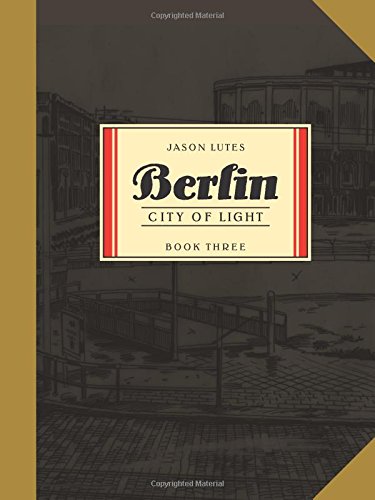
Jason Lutes, Berlin: City of Light. Book Three (Drawn & Quarterly 2018)

This work of fiction, whose story covers the half dozen years in Berlin leading up to Hitler’s coming to power, was originally created as a series of 22 comics published over more than two decades. I read it in a single day, when I was too sick to do much else.

The first issue was published in April 1996 and the last in 2018. Those years saw 9/11, the invasion of Afghanistan, the War in Iraq and the rise of IS; Donald Trump became President of the United States, and Jason Lutes became a father (his acknowledgements in Book Three describe two people with his surname as ‘the best reasons possible to miss deadlines’). No doubt the course of the narrative departed hugely from the original plan, but there’s an awe-inspiring visual consistency – neat ink drawings in regular panels, with meticulous hatching and loving attention to architectural detail.

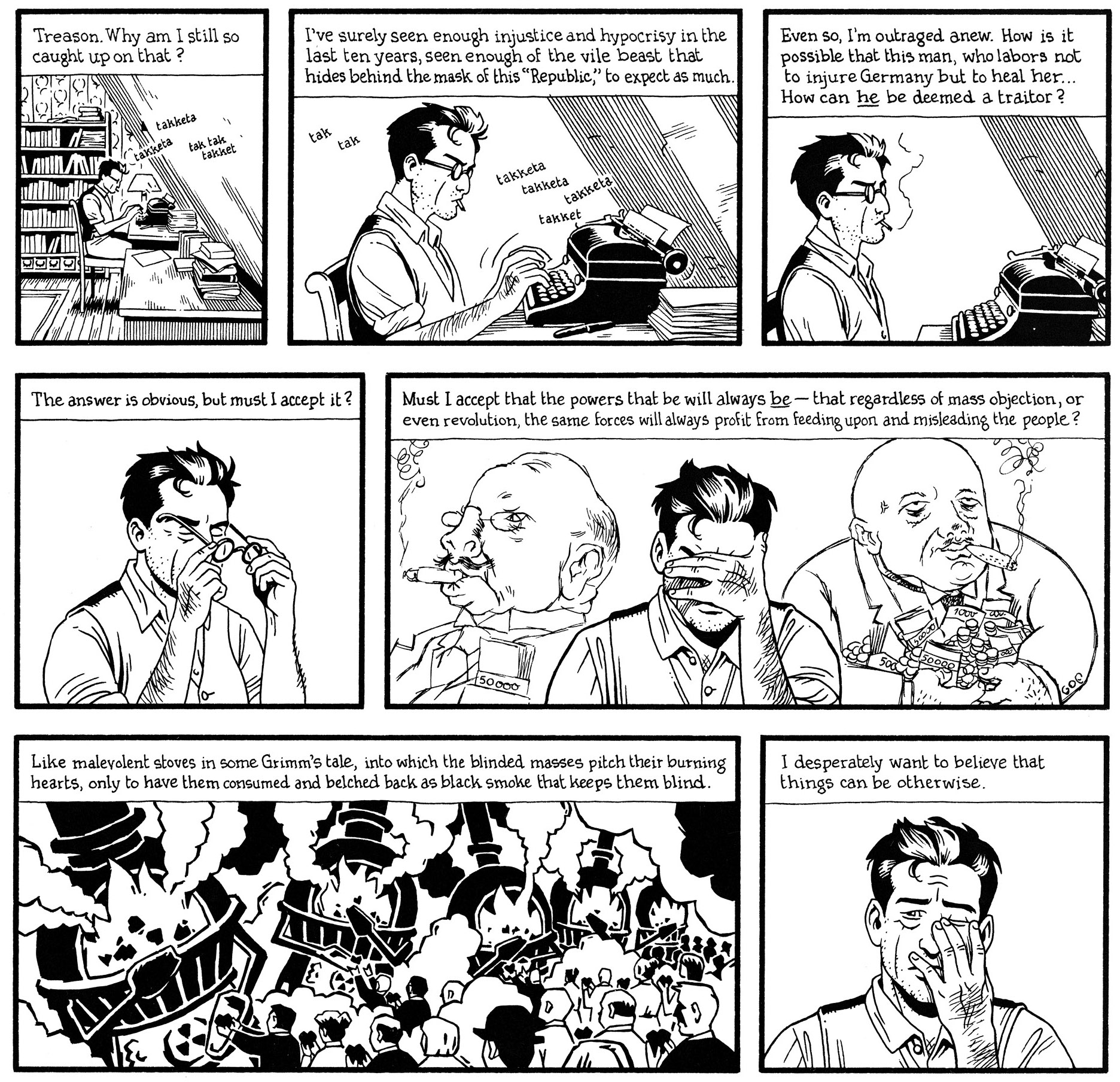
At the beginning of the first book Marthe Müller, an art student, meets journalist Kurt Severing on a train travelling to Berlin in September 1928. They go their separate ways at first, she to the rigours of art school (in which the reader attends a lesson in perspective, which incidentally directs our attention to the quality of much of the book’s art) and the joys of bohemia, he to his politically engaged journalism. But theirs becomes the central relationship of the story, soon featuring lots of tactfully drawn sex. The second main narrative thread involves a working-class family that splits along political lines – the father and son join the Nazis while the mother, Gudrun, is drawn to the Communists along with her two daughters. These stories play out against the backdrop of serious political tensions, with flashbacks to the founding of the Weimar Republic after World War One. The final pages of this book feature the massacre of May Day marchers in 1929, where Gudrun is among the many killed.

City of Smoke picks up the story a month later. Marthe is drawn into the famous Weimar decadence, with an Eyes Wide Shut style orgy, lots of drugs and a relationship with a gender-fluid fellow student Anna. Kurt becomes increasingly despondent at the evident futility of his journalism, as his editor is charged with treason for a significant piece of investigative journalism (a page at the end of Book Three notes that this arrest and imprisonment are historical facts).

Kurt Severing at work

Meanwhile, Gudrun’s daughter Silvia lives by her wits, hating the Nazis but blaming the Communists for her mother’s death. She becomes involved with a Jewish scrounger and lives for a time with a comfortable Jewish family. A third major plot line involves an African-American jazz group, and the relationship one of them forms with a cabaret performer (who also happens to be a life model at the art school in City of Stones). Again, these personal dramas play out as part of the sweep of history, as anti-Semitic violence increases, and the Nazis become a greater force. Book Two ends with the jazzmen flying out of Germany just before the September 1930 election, which increased the Reichstag seats held by Nazis from 12 to 107.

City of Light dispenses with the methodical noting of dates that has been a hallmark of the books so far. It also has slightly larger frames, slightly larger lettering, perhaps a result of Jason Lutes’ ageing eyes, and certainly a kindness to mine.

Like the first two books, this one opens with passengers on a train bound for Berlin. In Book One it was Marthe, in Book Two the jazz group. In Book Three it’s Hitler himself, not even a name previously, but now a fully-fledged character. The book ends with his becoming Chancellor in 1933 – followed by four spreads showing panoramas of the city over the decades since then, including the only use of colour in all three books, for the decorations on the Wall after it fell in 1989, and a photograph of the modern city.

All the characters we have been following reach some kind of resolution. The Jewish family escapes. A policeman with scruples quits his job and leaves Berlin. Marthe returns to her parents in Köln (though in her final frames she considers turning back). Silvia and Kurt, each in their own way, decide to stay and fight. But the city itself, as those final spreads show, is in for a long and tortured time.

I was given Book Three as a Christmas gift, and decided to buy the first two and read them first. I’m glad I did, because much of the power of the third book depends on what we know of the characters’ struggles in the earlier books.

I don’t think I’ll ever understand those pages that consist of a series of almost identical panels showing, for example, a man playing a clarinet, but I expect that’s because of my relative visual illiteracy. This is a terrific historical novel, and a monumental piece of visual story-telling, a brilliantly accessible introduction to important history, and – what Lutes couldn’t have known when he started the project – a sober warning for our times, that catastrophes approach one step at a time.

Phillipa McGuinness’s Year Everything Changed

Phillipa McGuinness, The Year Everything Changed: 2001 (2018)

Phillipa McGuinness reminds us in her preface to The Year Everything Changed that in 1988, the bicentenary of James Cook’s visit to Australia’s east coast, a number of substantial books called ‘slice histories’ were published: each of them dealt with a single year, a slice of Australian life taken every 50 years starting with 1788. ‘You take a single year,’ McGuinness writes, ‘and interrogate the bejesus out of it.’ This book interrogates the bejesus out of 2001.

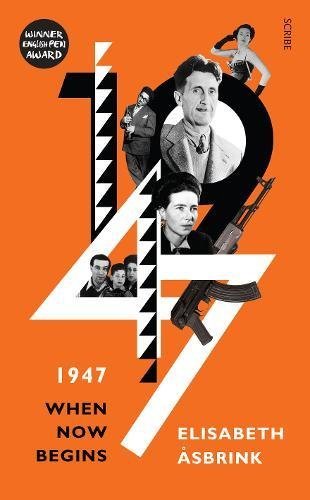
The Australian Bicentenary project isn’t the only precursor. Elisabeth Åsbrink’s 1947: When Now Begins, which I read last year in Fiona Graham’s translation, is a brilliant example. Pip McGuinness’s book is also brilliant, but in a very different register: more intimate for one thing, given that one of the key events of her year is intensely personal, and the events she describes, and has researched prodigiously, are part of her living memory, whereas Elisabeth Åsbrink wasn’t yet born in her chosen year.

The book’s structure looks straightforward: a chapter for each month. But actually, at least at first, each chapter takes an event from its month and uses it as a springboard to a general theme. So:

  •  January has great fun with the fizzer celebration of the Centenary of Federation, and its more sombre in its account of the inauguration of George W Bush and dick Cheney. Both events allow for quick sketches of the Story So Far.
  • February saw the death of Don Bradman and the divorce of Nicole Kidman. There’s a delicious exploration of the differences between the historical Bradman and the way his image was used to represent something about Australia – the icon Bradman. And there’s a list of heroes and icons that were big that year, most of whom are now forgotten.
  • In March the iPod came into existence, and OMG how all that has changed!
  • April saw the first edition of Black Inc’s Quarterly Essay, Robert Manne’s The Stolen Generations and the Right, and the chapter ranges over the policies and debates around human rights. In Australia that means the treatment of Aboriginal people and asylum seekers. Elsewhere in the world, same-sex marriage, euthanasia and the death penalty were in the news. Later in the year, the US would officially sanction torture, kidnapping and indefinite detention.
  • In May, George Pell became Archbishop of Sydney. The chapter deals mainly with the connection between religion and politics, clerical child abuse in Australia and, inevitably, Islam and violence (including violence against Muslims) everywhere.
  • June is the money chapter. ‘Were it not for Tampa and 9/11, in Australia we might remember the year as one of corporate catastrophe.’ One.Tel, insurance company HIH and Ansett all collapsed. Elsewhere Bill Clinton cleared the legislative way for the Global Financial Crisis, and Enron, the seventh largest corporation in the US, went bust. I was reminded that I went to the US that year when the exchange rate was down to just over 48 US cents to our dollar. 
  • July was the Australian census, and McGuinness and her family went to live in Singapore. The chapter deals with Australia’s changing demographics, the expat experience, and the twentieth anniversary of AIDS, in 2001 the number one cause of death by infectious disease in the developing world.

I had approached the book expecting a Before and After narrative, with turning points of Tampa, 9/11, and the devastating event in McGuinness’s personal life flagged in the Preface. By the end of July, I was engrossed enough to be no longer reading it that way. Then comes the opening of the August chapter:

We’ve come to the part of 2001 where so much happens that were it a novel, its author would be criticised for over-plotting. Cut out one terrorist attack, one election, one war, one maritime crisis, please, pleads her overwhelmed editor. There are so many villains, where are your heroes? And why don’t you consider a happier ending? But, I counter, facts lined up on my side, all this happened. It’s part of the story. I too wish I could rewrite events, tweak history, even – especially – my own. But I can’t so, cue the high-drama chart-stoppers of 2001. We know the words to the chorus, but let’s pay more attention to the verses.

(Page 173)

And so it goes: the August–November chapters pretty much draw our attention to the verses of songs we kind of know: in August it’s the Tampa, in September 9/11, in October the invasion of Afghanistan, and in November elections – especially those that were won by John Howard and George W Bush.

These chapters are fine examples of narrative history, telling the story in terms of what people knew, suspected or feared at the time and illuminating it with later knowledge only as needed. Although they tell stories that have been told many times, it’s a very personal telling, with odd facts and interesting angles, and oddly refreshing to be reminded of what it looked like back then – before Trump, Iraq, Manus Island and Nauru, but well on the way to all of them.

December is a harrowing account of giving birth to a baby who has died in utero. It might seem that such a chapter belongs in a different book. But in a way it’s what brings this whole book together. Big picture events can make the lives of individual people seem trivial, but that’s an illusion created by distance. All of who lived through those times had big things happen in our personal lives, some connected to the big events (like the casualties of war and terrorism or sacked employees of Ansett, whose voices we hear in their chapters), others not so much, but equally weighty. And anyway, the whole book feels personal – which is no mean achievement given the enormous amount of research that went into it. I don’t know Phillipa McGuinness, but as I’ve been writing this blog post, I’ve had to struggle every time I’ve written a version of her name: I want to call her Pip, which is how she refers to herself in one wry aside, not because I have trouble with the spelling of her personal name, but because by the time I reached the list of friends on page 326 I felt as if I belonged there.

The Year Everything Changed is the second book I’ve read for the 2019 Australian Women Writers Challenge. It was a loan from the Book(-swap) Club.

Alexis Wright’s Tracker

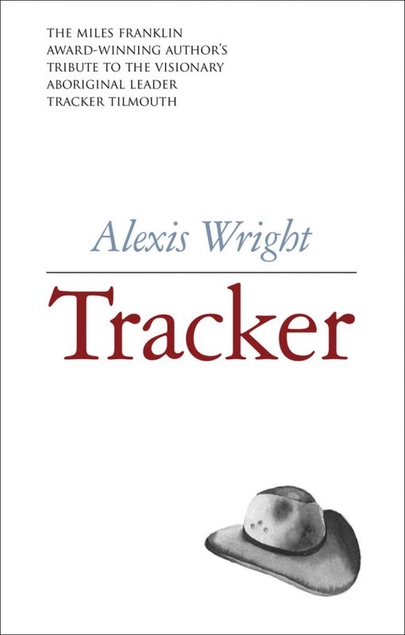
Alexis Wright, Tracker: Stories of Tracker Tilmouth (Giramondo 2017)

This is a book of yarns. I’ll start this blog post with one of them.

In the mid 1990s at the Gulf of Carpentaria, Murrandoo Yanner was involved in negotiations with Ian Williams, the general manager of a major mining company. Recently introduced Native Title legislation required that the mining company negotiate with traditional owners about plans for a zinc mine. One of the issues under discussion was the proposed mine’s proximity to sacred sites in the Lawn Hills–Boodjamulla National Park. The Queensland Premier, Wayne Goss, had given assurances about the National Park, but word was that he had reneged. Just before Yanner’s scheduled meeting with Williams, Tracker Tilmouth suggested a strategy for using the meeting, where there would be no government representative, to influence the government. Here’s Yanner’s account of what happened:

So we go through hours of negotiations and I hear [Tracker] suddenly cough, bloody when I least expected it – it was in something interesting that I wanted to listen to, so I go, Ian, by the way, what happened with Lawn Hills National Park? Do you know if Goss has gazetted it yet? There was a big silence, and things were going so well and Williams did not want to tell me, and then he said, Actually he made a decision not to. And Tracker, I was still trying to get him to play bad cop but he had me play it, and when Williams tells me that I jump up and I bang the table. Tracker made me do all this, and bang the table. He had said: Make it bloody genuine or they won’t believe you. They have seen a lot of blokes put acts on. So I bang the table and say, Fucking ridiculous, you can’t trust you bastards. I told you, Tracker, you can’t trust these bastards. I go outside and Tracker told me the next part later. I jump in my car and do big figure eights and spinning gravel, and off I go swearing. Ian Williams shits himself and the mob too because everything was going so great, and he says, Oh! Well! Shit what are we going to do? Tracker says, This is what you do. State parliament was sitting that day and he says, Ring Gossy now, get him out of parliament for a second. Boom, boom, boom.

And bugger me, there is a historical fact. If you go to the transcript or Hansard or whatever of the state parliament, you’ll see it was gazetted that afternoon, late afternoon, that day. That very day Goss got pulled out of parliament, got spoken to on the phone from Burketown by Ian Williams, and went straight back into parliament and gazetted it after publicly saying he wouldn’t. And I was blown away, not just the fact that it was done, but the fact that they really do run the state government at times, and that his mad trick worked.

(Pages 207–208)

If that doesn’t grab your attention, then you’d probably be impervious to the charms of this book.

Tracker Tilmouth was a member of the Stolen Generations of Aboriginal children. The picture that emerges from this book is of a big thinker, a man of entrepreneurial spirit, committed to the project of establishing economic independence to the Aboriginal peoples of central and northern. He was a significant figure in the history of the Central Land Council, and enormously influential beyond there. He came close to standing for the Australian Senate as a member of the ALP, and had friendly and mutually respectful relationships with Bob Katter. His sense of humour was legendary, and not always diplomatic (when he met Jenny Macklin for the first time shortly after she had failed to end the Intervention in the Northern Territory, he called her ‘Genocide Jenny’), but he was a frequent presence in Parliament House in Canberra, and regularly visited the United Nations in New York. He could rub people up the wrong way, and the book doesn’t completely dispel the charges of misogyny, but the overwhelming impression created here is that he was a great Australian.

The book includes a photo of the front page of Murdoch’s NT News for 13 March 2015: a photo of the man himself with the huge headline ‘TERRITORY FAREWELLS ‘TRACKER” and nothing else except a line across the bottom about football.

Alexis Wright has done a brilliant job of capturing dozens of voices (all chosen by Tracker himself) and organising them: Tracker’s own voice, the voices of his brothers, of Aboriginal people who worked with him or benefited from his wisdom, of whitefellas who fell under his sway, of politicians, pastoralists, mine managers. There are some glaring absences – people whose names occur often, but whose stories would probably take a very different hue. I’ll mention only Tony Abbott, but not all these absences are whitefellas.

Having learned to be suspicious of hagiographies, I asked a friend who had lived in the Northern Territory for decades what he thought of the book. He hadn’t read it, but he said, ‘I know some whitefellas who worked with him, and they worshipped him.’

The result is not a biography: the first chapter gives wonderful accounts of his childhood on Croker Island Mission, where his ‘house mother’ Lois Bartram read Alan Paton’s Cry the Beloved Country to the children, but, though his wife Kathy is mentioned often, she remains hardly more than a name – there is no account of how they met or of their wedding. What we do get is a compelling mosaic portrait.

Alexis Wright’s own voice is heard only in her Introduction, that is if you leave aside the couple of instances where one of her questions makes it onto the page. Some people have found the introduction hard going; at least one person I know gave up on the book part way through it. I think the reason is that Wright struggles to justify her decision not to write a conventional biography, and to somehow summarise something that the book itself demonstrates cannot be easily summarised.

The book’s longest section (more than 150 pages), ‘The Vision Splendid’, is dominated by the voice of Tracker himself spelling out his analysis of the situation of Aboriginal peoples, arguing about priorities, lamenting the lack of unity among Aboriginal leadership (while being harsh about other Aboriginal leaders), mapping out future directions. I imagine it would repay careful rereading, but it assumes so much prior knowledge (and my ignorance was only partly countered by Alexis Wright’s occasional footnotes) and spins off in so many directions – like the rest of the book, it captures the feel of the spoken word, of a mind that is thinking, revising, repeating, contradicting itself as it goes – that it is hard to follow.

But that’s not even a complaint. I became increasingly aware of my own whiteness as I read this extraordinarily generous, multifaceted book – at times hilarious, at times tragic, at times profound. As a whitefella, my response is overwhelmingly to be grateful.

Added later: I recommend Kathy Gollan’s review at Newtown Review of Books, which gives a much fuller sense of the book than my blog post, and uses quotation brilliantly.

Tracker is the first book I’ve read for the 2019 Australian Women Writers Challenge. I am very grateful to Giramondo for my complimentary copy.

Richard F Thomas, Why Dylan Matters

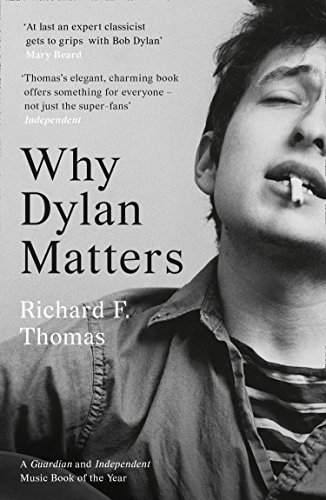
Richard F Thomas, Why Dylan Matters (Dey Street 2017)

I’ve been a Dylan fan for five decades. I remember playing John Wesley Harding on repeat in the late 60s, and sitting hunched over a tiny radio in the dead of night hearing a bootleg ‘This Wheel’s on Fire’ for the first time. I wrote a piece for my college magazine about ‘Dear Landlord’. Occasionally these days when I’m need of a pick-me-up, I’ll play ‘Like a Rolling Stone’ or ‘It Ain’t Me Babe’ on full volume. ‘Mississippi’ speaks directly to my heart. I even love Dylan’s recent versions of ‘Autumn Leaves’, ‘I Was a Fool to Love You’, ‘Some Enchanted Evening’ and all. But a couple of hours spent with Dylanologist/garbologist A J Weberman‘s ridiculously obsessive analyses of Dylan’s lyrics in my early 20s cured me of any pressing desire to read about his work, or to do any kind of close reading of his lyrics. I was all too happy to accept Dylan’s own implication in his memoir Chronicles: Volume One that he was often more interested in rhyme than meaning.

It was the title of this book that grabbed me. It’s all well and good to be a fan, but does Dylan matter, and if so, why?

Sadly, though Why Dylan Matters taught me a lot about Dylan’s life and his songs, it just doesn’t answer its own question. It would have been more accurate to use Mary Beard’s cover blurb quote as a title: ‘At last an expert classicist gets to grips with Bob Dylan’. But I guess that’s just not catchy.

Richard F Thomas is a bona fide classicist. He is a professor at Yale, and has written extensively about Virgil, Horace, Tacitus and Ovid. He is also a self-described Dylanologist (though not, thankfully, a garbologist), who attends three or more Dylan concerts annually and teaches a semester course on Dylan to first year students every four years.

He takes us through Dylan’s early exposure to classical literature – he was a member of the Latin Club at the Hibbing High School, and played a Roman soldier in a school theatrical production, and probably went to Hollywood movies set in Ancient Rome. Then he walks us through Dylan’s career, arguing that intertextuality is a significant feature of his works, arguing strenuously (and, given that Dylan started out as a folk singer, unnecessarily) that his stealing of phrases from other sources is not plagiarism, but adds richness and depth to his songs.

Leaving aside Dylan’s use of motifs and turns of phrase from the folk tradition (as Thomas largely does), it’s interesting to learn that he is a serial ‘stealer’ from literary sources: Rimbaud, US Confederate poet Henry Timrod, and – bringing Thomas’s two fields of study together – Ovid (the Tristia), Virgil (from whom whole sentences appear), and finally, in Tempest, Homer. My understanding of the personas he takes on, especially in the last four albums that he wrote, has been greatly enriched. Thomas talks about these personas as ‘transfigurations’.

Sadly, I often found the book’s combination of fannish speculation and scholarly attention to detail irritating. The playlists at his concerts and what I have previously taken to be stoned utterances in interviews are scrutinised for what they reveal of deep artistic intentions. At times there’s an almost stalkerish enthusiasm. The album Tempest is never mentioned without being described as a masterpiece, and we are told several times that Dylan’s wife Sara was a former Playboy Bunny.

I’m glad I persevered to the end, because the final chapter, dealing with the Nobel Prize, gives a lovely account of Patti Smith’s performance of ‘Hard Rain’, of the way that song has transcended the circumstances of its composition to remain powerfully of the present moment, and of Dylan’s acceptance speech.

But I’ve renewed my resolve to avoid books about Dylan, and just let the songs to their work on me.

John Purcell’s Girl on the Page

John Purcell, The Girl on the Page (Fourth Estate 2018)

This is a quick, fun read about the current parlous state of fiction publishing – set in London, written by an Australian whose biographical note says that, like one of the book’s characters, he has written a successful series of novels ‘under a pseudonym’.

Helen Owen and Malcolm Taylor, a near-octogenarian couple who have dedicated their lives to writing literary novels, are facing a crisis brought on by Helen’s writing what everyone knows will be a best seller and receiving an advance that enables them to move from their cramped flat in Brixton to a comfortable house in a nice suburb. A raunchy young woman editor who is an expert in what sells is sent in to ensure that the rewrites will be delivered. Imagine Amy Schumer from Train Wreck wandering into the world of Glenn Close in The Wife, only with English accents.

One of the joys of the book is the counterpoint between the ideals of the elderly writers and the kind of book they inhabit. One of Malcolm’s many pronouncements:

There’s uphill reading and downhill reading. As you can imagine, uphill reading requires more effort. Downhill, less so. Readers will do both in their reading lives. Most will tend to favour downhill reading. It’s thrilling to race headlong through a book. Uphill reading is more taxing and requires a certain amount of humility. We need to accept that we won’t always enjoy or even understand all we read. It can be a hard slog at times. The ego takes a battering. But the rewards are great.

(Page 281)

I wouldn’t say The Girl on the Page is a headlong race, but it’s a long way from being an uphill slog. Admirably, it refrains from quoting even a single phrase from either Helen’s or Malcolm’s Man Booker and/or Nobel worthy works, though I was convinced that these people could have written such books. The sex scenes are robustly phallocentric without going into embarrassing detail. I laughed a lot, and enjoyed the cleverly crafted illusion that the story was just one or two removes from actual publishing-world gossip. Not that I can – or would want to – imagine any of the editors or ghost writers I know engaging in noisy public sex in a suburban street after midnight.

In short, a good holiday read and – for me – a palate cleanser after Alexis Wright’s Tracker, a monumental work that makes big demands and offers great rewards, about which I’ll blog soon.

End of year lists

The Emerging Artist and I are in Victoria for the New Year, but we’re squeezing in (or should that be squeezing out?) our end-of-year lists.

Best Movies:

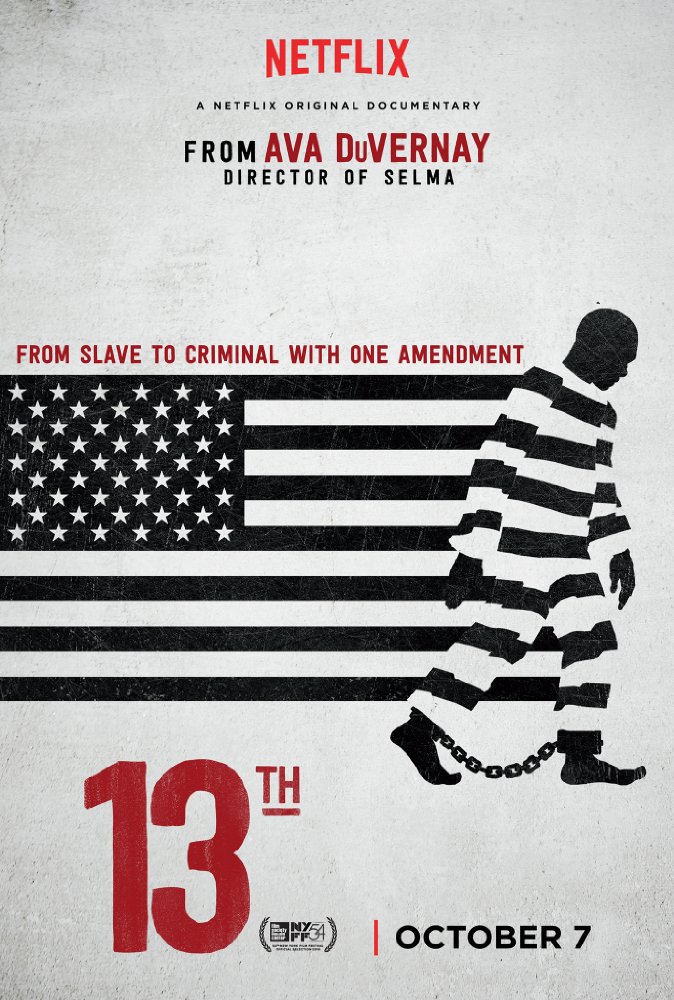
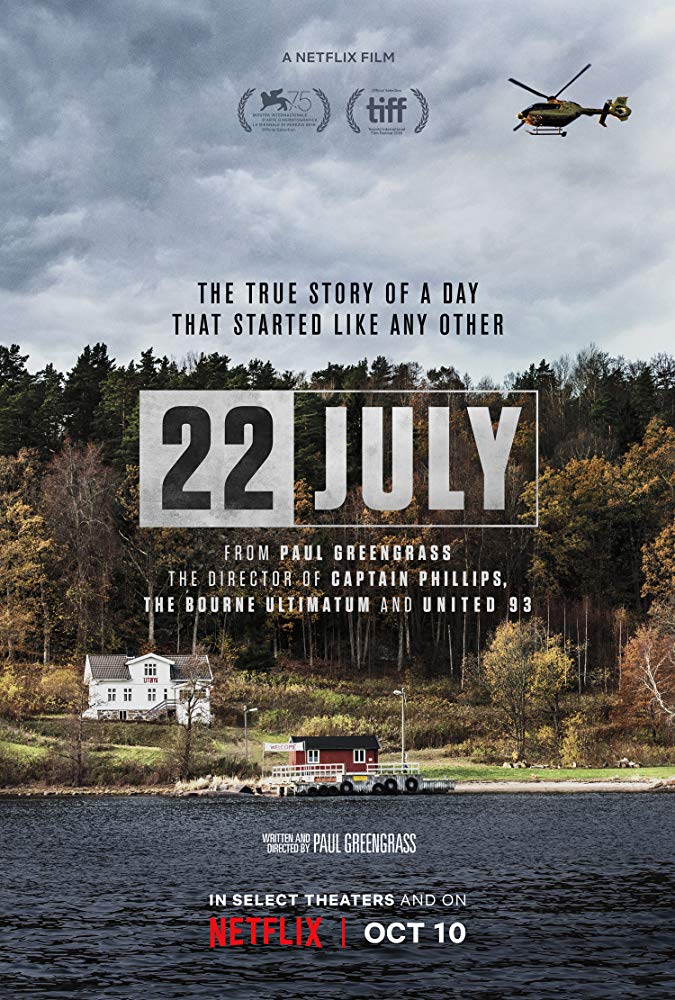
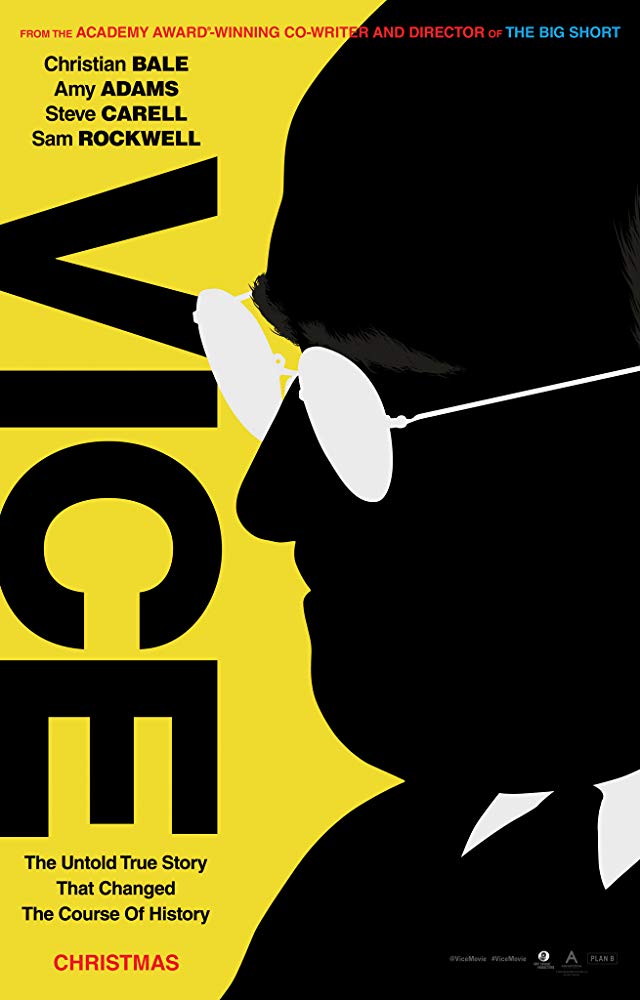
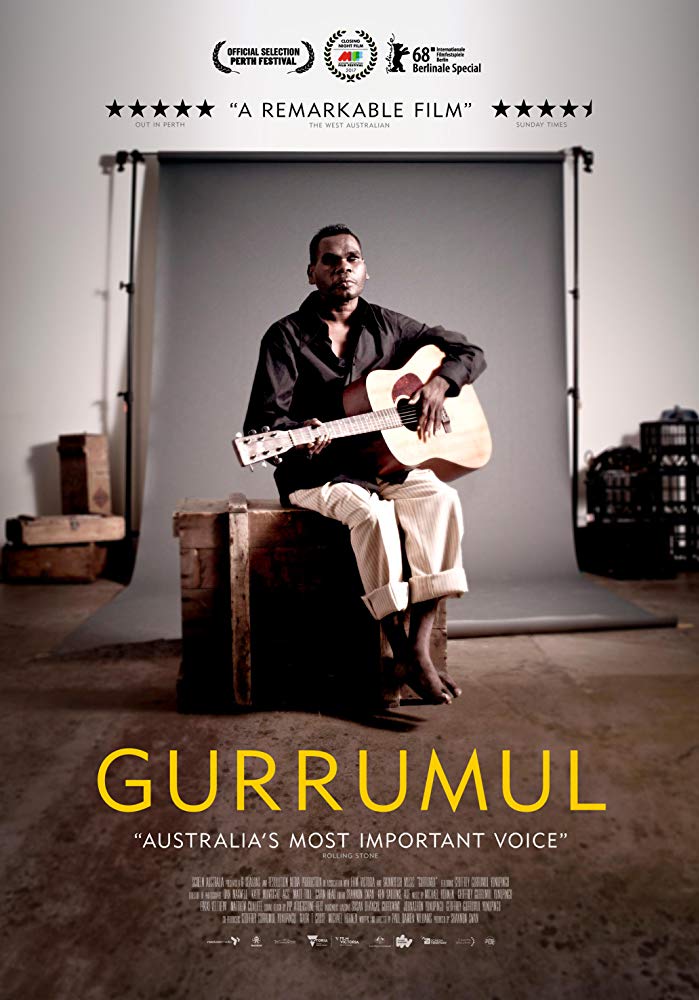
We allowed ourselves to pick five each. The Emerging Artist went first, and then I chose five that weren’t on her list. The last one I picked was Juliet, Naked – and it got in on the grounds that there was no comedy on the combined list. There probably should have been more.

Theatre:

It’s hard to single out best theatre for this year. Belvoir Street had a good year, beginning with My Name is Jimi and ending with The Dance of Death, with treasures in between. And we spent six weeks in London, where we managed to go to some excellent theatre. We get to name one each from London and Sydney for the year. We both chose Matthew Lopez’ The Inheritance Part 2 at the Old Vic in London (we were exhausted on the evening we’d booked for Part 1, but Part 2 was stunning as a stand-alone event). It’s about Gay men in the age of AIDS. We booked because Vanessa Redgrave was in it, but though she was terrific she was by no means the main attraction.

Back home, the EA chose debbie tucker green’s one-hander, random, directed by Leticia Cáceres, with a bravura performance by Zahra Newman. I chose Calamity Jane, directed by Richard Carroll, which was great fun – Virginia Gay’s raucous, swaggering gaucheness made Doris Day’s Jane look like a maiden aunt.

Books:

Rather than a list of our Best Books, I’ve decided to follow a meme that originated at the vlog memento mori and came to me by way of Lisa at ANZ LitLovers LitBlog.

1) What’s the longest book I read this year and the book that took me the longest to finish?

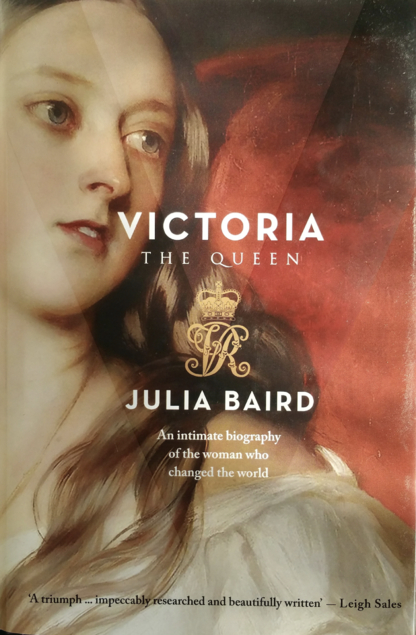
Emerging Artist: Victoria: The Queen by Julia Baird (Random House 2016) was both. It was a Christmas present, whose size meant it was awkward to read in bed, so I was reluctant to take it on, and then the detail, though fascinating, needed breaks to digest. It turned out to be an excellent complement to the British TV series, which we watched soon after I finished reading the book, and a welcome gift after all.

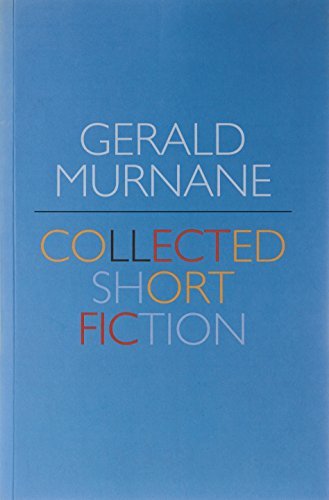
Me: The longest book was probably Gerald Murnane’s Collected Short Fiction (Giramondo 2018).

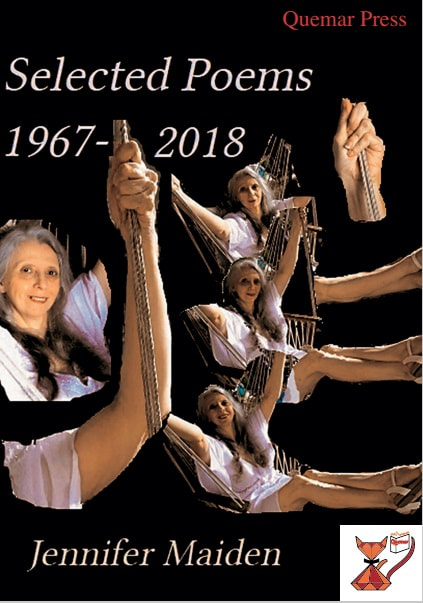
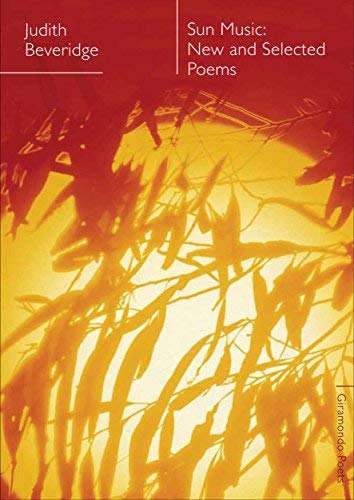
The one that took longest was either Jennifer Maiden’s Selected Poems 1967–2018 (Quemar Press 2018) or Judith Beveridge’s Sun Music: New and Selected Poems (Giramondo 2018): they both include decades of work by fine poets, and I enjoyed them both immensely.

2) What book did I read in 2018 that was outside of my comfort zone?

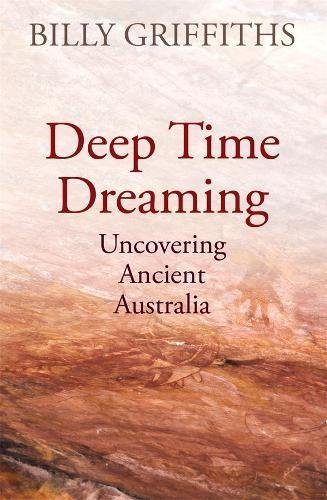
EA: Deep Time Dreaming by Billy Griffiths (Black Inc 2018) is a fascinating book about palaeontology and archaeology in Australia in relation to actual Aboriginal people, but there’s a lot of technical scientific writing that is not my favourite recreational fare.

Me: Gerald Murnane’s Collected Short Fiction again. I had gleaned something of his characteristic style some time ago and completely failed to grasp how wonderful it is. I wouldn’t have opened the book if it hadn’t been picked for the Book Group. Reading it was a joy-filled revelation.

3) How many books did I re-read in 2018?

EA: None.

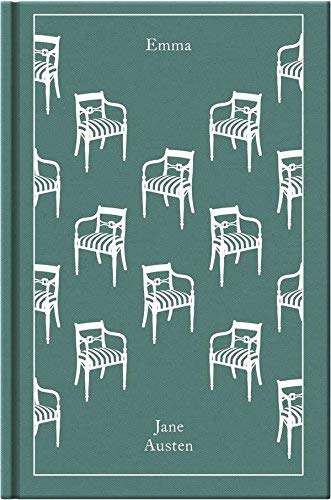
Me: Just one, Jane Austen’s Emma. I loved it all over again.

5) What book did I read for the first time in 2018 that I look forward to re-reading in the future?

EA: Change the question to, ‘What writer did I read in 2018 that I look forward to re-reading?’ My answer is Geoff Dyer. I first read him years ago, and rediscovered him this year when I found The Colour of Memory on our bookshelves. I’ve just bought Out of Sheer Rage, his book about himself and D H Lawrence.

Me: There are so many, but I’ll pick David Malouf’s An Open Book (UQP 2018). I will dip into so many of the books of poetry I read this year, but I think this is the one I’m most likely to reread in its entirety. That and Jennifer Maiden’s Appalachian Fall (Quemar 2017) 

6) What’s my favourite short story or novella that I read in 2018?

EA avoids short stories and didn’t read any novellas.

Me: Given that Gerald Murnane is in a class of his own, I’ll name Suneeta Peres da Costa, Saudade (Giramondo 2018), which is a coming of age story set in the context of the Angolan war of liberation. (I was astonished to hear Ms Peres da Costa say at a reading that she has never been to Angola, as the place comes alive in this short book.)

7) Mass appeal: which book would I recommend to a wide variety of readers?

EA: Free Food for Millionaires (Head of Zeus 2018) by Min Jin Lee, author of Pachinko: it’s hard to think who wouldn’t love it.

Me: I know many people these days think of poetry as an esoteric art to be avoided by everyone except poets and cryptographers. All the same, I recommend Eileen Chong’s Rainforest (Pitt Street Poetry 2018) to anyone interested in being alive and human.

8) Specialised appeal: which book did I like but would be hesitant to recommend to just anyone?

EA: I loved Elisabeth Åsbrink, 1947: When Now Begins, translated into English by Fiona Graham (2016, translation 2017). If you are interested in history, then the way this interweaves so many themes as they manifested in 1947 will fascinate you and illuminate our times.

Me: I’m rarely confident that books I’ve enjoyed will appeal to ‘just anyone’, so I’ve got lots to choose from, but bypassing all the titles I’ve mentioned so far, I nominate China Miéville, The Scar (Del Rey Books 2002), which, to quote my blog post about it, ‘includes, not necessarily in order of importance, vampir (sic) bureaucrats, cactus people, probability mining (I won’t try to explain), fabulously bloody sea battles, a sweetly tragic love story (not of the romantic variety), a vast crack in the universe, and a charming account of the process of learning to read.’

And that’s it for 2018. Have a great New Year, reader!