Category Archives: Books

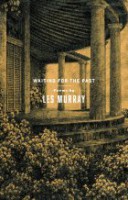
Les Murray’s Waiting for the Past

Les Murray, Waiting for the Past (Black Inc, 2015)
1waiting_for_the_past

A new book by Les Murray is an event, and Waiting for the Past is as rich a mixture of pontification, playfulness, contrariness, enigma, earthiness,  erudition and verbal and visual delights as you could expect. The range of occasions that provide starting points for poems is huge: a flood, a moment on a ferry, children’s complaint about their father, two dogs jumping onto a tractor tray, the death of an octopus, the canonisation of Mary McKillop, his own rustic table manners. The poems themselves range from tiny squibs, through narrative, to combative meditations. Many, perhaps most, are concerned with the relationship between the past and the present – the remembered past, the historical past, and the deep, geological past. The book’s paradoxical title may refer to Murray’s championing of the rural past, but it also hints that almost anything in the present stirs up something from the past: if you let your mind rest you can just wait for the past to make itself felt.

I’m shy about blogging on Murray, partly because of the sheer brilliance of other people’s writing about him, of which ‘Widespeak’, Lisa Gorton’s review of Waiting for the Past in the Sydney Review of Books is a recent example. That essay has very interesting things to say about Murray’s use of sound and his relationship to other poets, but it’s especially brilliant in reading the poetry in the context of Anglo-Saxon riddle poems:

Until [a] riddle is solved, it could mean anything – everything. Only after it is solved does meaning settle into being in the words…
Murray’s descriptions have a riddle ancestry: they effect an estrangement that is perceptual. That is why, for all the force of the poet’s personality and reputation, Murray’s best poems are distinguished by the fact that reading them feels solitary: an encounter not with a personality but with language itself: its work of discovering the world through its patterns of sound. …
Most of Murray’s descriptions could start with that phrase from the riddle: ‘a weird thing I saw’.

There’s much more. If you’re interested in Murray’s poetry, you should read it all.

One thing about riddles that Lisa Gorton doesn’t say is that they are frustrating if you can’t solve them, and give great joy when you do. If you solve them after being frustrated, the joy is all the greater. I could give lots of small  examples from this book of such frustration and pleasure. Just one: ‘Grooming with Nail Scissors’ ends with a reference to toenail clippings as ‘grey beetle bix’. I puzzled over that last word. Google and a couple of dictionaries were no help. I decided it must be obscure Celtic lingo, and was about to move on when (I know, I’m slow!) I thought of Weet-Bix, and the words resolved into an image of little grey biscuits just the right size for a beetle’s breakfast. It’s a trivial example, maybe, but Lisa Gorton is right: the pleasure I got from it was all about me and the language.

‘Inspecting the Rivermouth’ gave me similar pleasure. In it, the poet describes a road trip to the mouth of the Murray River. There are several lines describing a reviivified scene on Hindmarsh Island:

the barrages de richesse,
film culture, horseradish farms,
steamboats kneading heron-blue
lake, the river full again.

It’s a straightforward evocation of a thriving place. Then I realised that the scene was covered by the general phrase ‘the Murray mouth’. That would have no resonance in another poet’s work, but here I take delight in recognising a hidden punning reference to the man Murray’s own return from his much-publicised chronic depression, so that his mouth is ‘full again’. George Herbert comes to mind: ‘I once more smell the dew and rain / And relish versing.’

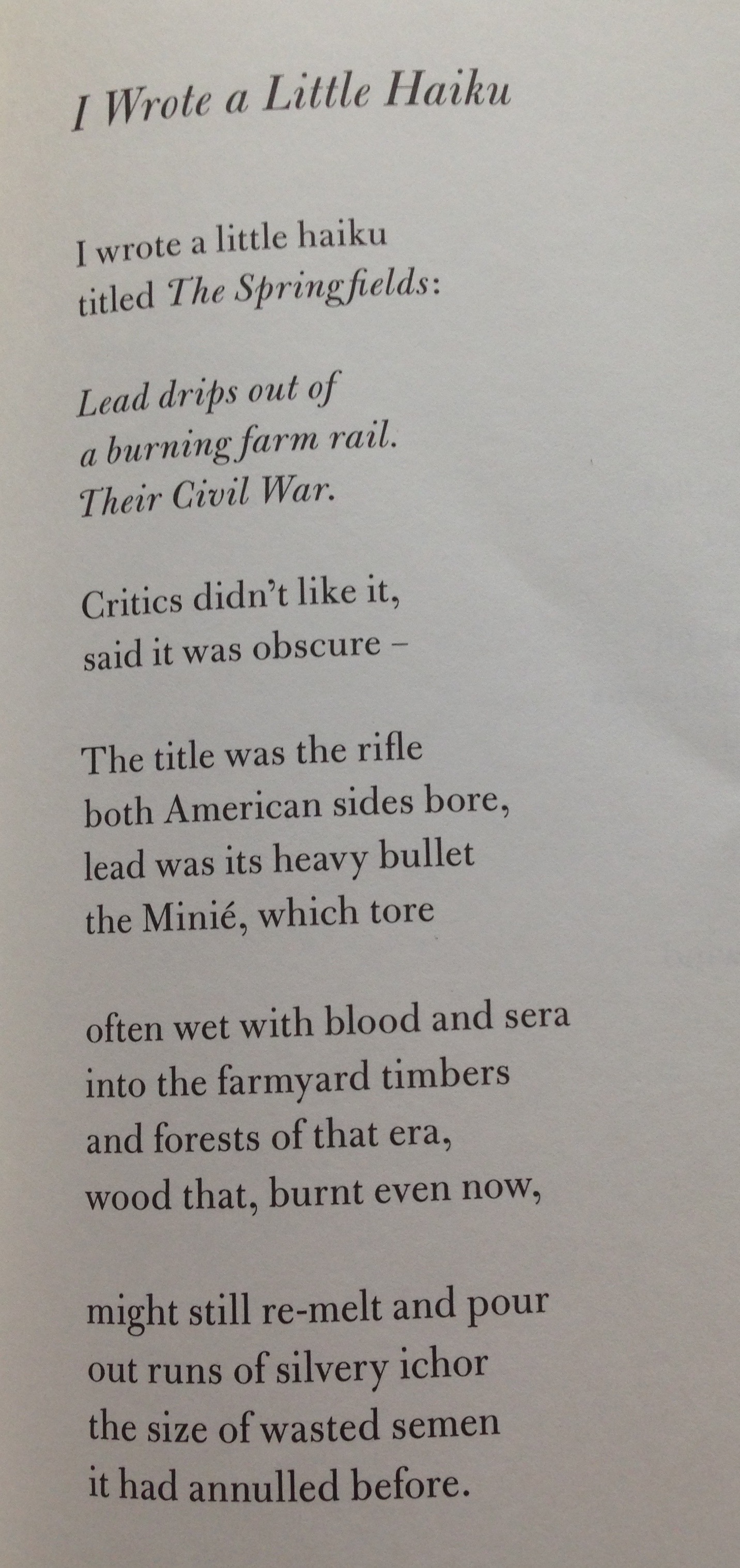
I Wrote a Little Haiku‘ breaks the rules of comedy and explains a riddle.
IMG_1263

The little haiku ‘The Springfields’ appeared in Taller when Prone (2010), and at least one reviewer found it infuriating, saying it served ‘as a reminder that the urge to baffle, like the urge to shock, is usually best resisted’, so the present poem is responding to something real. In it Murray doesn’t merely explicate the earlier poem. He puts his mind to it in the way he puts his mind to any other subject when making poetry. The defensiveness of ‘Critics didn’t like it’ falls away, the riddling dimension of the ‘haiku’ is unravelled. If a reader in 2010 had googled ‘Springfield, Civil War’ they would have had a fair chance of solving the riddle. I wonder, though, how many would have got the richly poignant image of this poem’s last lines, which remind us to stay open to the possibility of deeper connotations in the riddles.

This whole line of thought makes me much less reluctant to spend time nutting out Murray’s frequent obscurities. I’m more open, too, to poems that seem to enact a kind of belligerent anti-modernism. I would love someone to walk me through ‘Persistence of the Reformation’, which begins with a description of  watered landscape, briefly laments the passing of old farming ways, then somehow finds itself giving a cryptic brief history of post-Reformation imperialism and sectarianism, before (I think) celebrating a non-denominational rural ethos:

belief may say Ask Mum
and unpreached help
has long been the message

Les Murray is appearing at the Sydney Writers’ Festival on a panel with David Malouf and Ben Okri. Can one room contain all three? I’ll tell you in a couple of days.
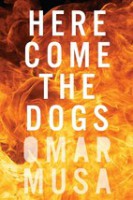
Omar Musa’s Here Come the Dogs and the Book Group

Omar Musa, Here Come the Dogs (Hamish Hamilton 2014)

1hcdAt the last meeting: Someone said he wanted us to choose a book that would blow our minds. By the usual apparently random process, we picked Here Come the Dogs. Would it provide the desired explosion?

Before this meeting: The novel follows the lives of three men in their 20s who live in the Town, which is a bus ride away from the City – as Queanbeyan is from Canberra. Solomon and Jimmy are half brothers. Solomon is Samoan, a former basketball player whose career and university scholarship were cut short by injury. Jimmy, whose ‘eyes cut left to right, / paranoid and grim’ – well, his father was a bit of a fabulist, and no one knowns the truth of his ethnicity.Macedonian-born Aleks, their friend and neighbour since childhood, has connections with organised crime. The friends live in hip-hop culture, tagging and rapping, tending their tattoos, ingesting a range of mood-altering substances, fighting when need or impulse calls for it.

A character describes Solomon as bilingual because he can talk to university students in their own language (‘I guess I have to check my privilege. My bad.’). By that token, Omar Musa is multilingual. The novel’s back-and-forth movement from verse to prose is only part of the rich variation in the language: street argot, delicate descriptive prose, fine dramatic scenes, an occasional voice from the mainstream – all are there without any apparent strain. I’ll leave it to someone else to comment on the accuracy of hip-hop language and references – of the hundreds of names dropped I recognised maybe three. But Musa evokes the milieu with tremendous energy. Likewise the tagging/bombing references: it’s something of a miracle that, without any obvious signposting, an outsider like me is rarely left wondering what they mean.

The first chapter, which is laid out as verse, introduces the three main characters. They’re on a night out, as ‘the only ethnics at the dog races’ and then wandering, partying, getting into fights, and one of them into a sexual encounter. It’s smoke-filled, drug-inflected, and definitely not to be read aloud in a vicarage, but it works beautifully as a sequence of poems. The form allows moments like this, a one line poem and its title:

Wish we had a white person with us
Ten empty cabs have passed us by

In the morning-after prose that begins the second chapter, there’s an abrupt change of tone as we find Aleks meticulously cleaning his kitchen and getting his little daughter ready for school. The book keeps on springing similar surprises: just as you expect one thing, it gives you another. An act of criminal violence is performed with genuine compassion; a relationship that looks set to be central to the plot ends with some blunt name-calling; what looks like a major catastrophe turns out to be just another incident in a character’s near-chaotic life; a prison sequence is convincingly real while standing prison-story conventions on their heads; moral choices faced by the characters are deeply complex.

I loved the book. It has a lot in common with fiction that’s been coming from Western Sydney lately, evoking the knockabout world of marginalised people who struggle to live with integrity. And like that other fiction, it burns with passion for that world.

The meeting: It was a big turn-up for lasagna and cheesecake. Everyone had read the book, an almost unprecedented occurrence, and though some were keener than others, we had all enjoyed it. Some found it hard to get past the swagger of the opening chapter. Some found the ending unsatisfactory – partly because there is no real climax, and partly because of a manufactured feel to what climax there is. (I didn’t see either of these as problems.)

One chap said that as novels are mostly read by middle class people, it’s possible to read a lot of this one as intended to challenge middle-class readers. The C-bomb that’s the fourth word of the first chapter is a message in code: You’re not in polite politically-correct land any more. On the other hand, while agreeing that the lives of these characters was very different from our mostly comfortable, educated and secure lives, I think we mostly felt that as readers we weren’t observing them as examples, but finding a lot to identify with.

This led to an interesting discussion about young men and violence – we compared stories of teenage years in suburban London, small-town New South Wales, suburban Sydney. The book’s arson episode drew out arson-related memories. In one episode a character drives his car with his eyes shut, guided only by a voice that may be on his phone or perhaps is just in his head: is it magical realism, or was the young man just very lucky? Someone confessed to once driving with his eyes shut when young, just to see what it would be like to be blind. Like the character, he opened his eyes not far from disaster.

And of course, the conversation ranged: James Turrell in Canberra, Marina Abramovic’s coming visit to Sydney, the merits of the GP that a number of us go to, things we learn from our children, travel tales, movies, theatre …

Thanks, Omar.

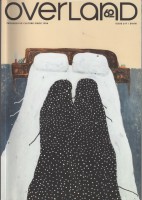
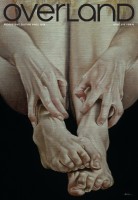
Overland 218

Jacinda Woodhead (editor), Overland 218 (Autumn 2015)

overland218

The editor has gone, long live the editor. With this edition of Overland, Jacinda Woodhead, who has been deputy editor for a while, takes over the main job. Most of the old editorial and design staff remain, and there has been no radical transformation.

For example, like the previous edition, this one includes the results of two writing prizes. These are the Nakata Brophy Short Fiction and Poetry Prize for Young Indigenous Writers, and the Judith Wright Poetry Prize:

  • The judges praise the winner of the former, Backa Bourke by Marika Duczynski, for its ‘energetic prose that knows when to withdraw’. What looks like a rough and ready outback yarn about floods and death and young men on motorbikes takes a surprising turn right at the end, in prose so withdrawn that the surprise hangs on a single word. To be parochial for a moment, I was chuffed to see that the writer, in this overwhelmingly Melburnian journal, lives in Sydney.
  • Peter Minter’s judge’s report on the Judith Wright Prize pays elegant tribute to Judith Wright herself in reflecting on form in poetry as ‘a moral or ethical problem, a political gesture’. Interestingly enough, the first prize winner, Hyper-reactive by Melody Paloma, has a similar linguistic vigour to ‘Backa Bourke’.

This issue is also like its predecessors in including writing about writing (including an essay on literary envy/jealousy that takes its title from the Clive James poem that begins, ‘The book of my enemy has been remaindered / And I am pleased’), and an interesting mix of short stories, this time two realist pieces and two that nudge into the surreal.

The issue differs, perhaps accidentally, in having an identified theme. Jacinda Woodhead’s editorial says it ‘gives voice to women’s unfiltered experiences of this world, and other subjects on which there’s been far too much silence’. To mix metaphors, it delivers that voice in spades, though it by no means a predominantly female voice.

Alison Croggon’s column begins ‘The first time I was raped,’ builds to a passionate cry that her children ‘have to live in this world where, all the time, men hurt women, dismiss women, marginalise women, silence women, kill women’, and ends with a quietly lethal account of a ‘pleasant and intelligent man’ communicating by his manner that a protest at women being ignored was ‘a footling political point about feminism’. It’s two tough pages and Croggon has an equally fine piece online about the writing of it.

Hackers, Gamers and Cyborgs by Brendan Keogh discusses the phenomenon of Gamergate, in which a number of woman video game developers have been attacked vehemently. I’ve been aware of Gamergate as one of those online places where outrage and reciprocal vilification flourishes. This essay instructively situates it in ‘the broader patriarchal structures in which video game culture emerged’. Even though the word sexism doesn’t appear, it’s reassuring that the concept of patriarchy is still alive and doing good work.

Justin Clemens, who is a poet among other accomplishments, writes about the US Senate Select Committee on Intelligence’s report into the CIA’s detention and interrogation program. The essay, Torturing folk, explores the implications for civil society of the current practice of and debate about torture. Paradoxically, he argues that even to debate the appropriateness of torture is in effect to close down freedom of speech.

Russell Marks  puts his head above the parapet in More than taboo, arguing the case against demonising paedophiles. Specifically, government funding has been channelled primarily into identifying and punishing offenders; funding has been withdrawn from programs that provide support to survivors, including programs such as SafeCare in Perth and Cedar Cottage in New South Wales that also offered treatment to offenders, with demonstrated success in preventing recurrence.

There’s more: Fiona Wright on grieving communally on facebook; Stephen Wright on different children; Michael Bogle on The Atomic Age, an exhibition about nuclear weapons shown in Brisbane, Melbourne and Sydney in 1947 and 1948 (which sent me back to Robin Gerster’s wider-ranging ‘Exile on Uranium Street: The Australian Nuclear Blues’, in Southerly No 1 2104).

Overland is clearly still in good hands.

Overland 217

Jeff Sparrow (editor), Overland 217 (Summer 2014)

Overland217

This is Jeff Sparrow’s last Overland after seven years as editor. It’s a solid farewell performance at the end of an impressive tour, with the usual heady mix of politics, literary chat, fiction and poetry.

This issue has a lot of short fiction – the winners of two short story competitions (the Overland Victoria University Short Story Prize and the Story Wine Prize) plus the runners-up of one of them (here and here), and the final piece in the Fancy Cuts series. All four prize-related stories are worth reading, especially Madelaine Lucas’s ‘Dog Story’, winner of the VU prize. In the Fancy Cuts, Ali Alizadeh’s takes on the brief of writing a story that somehow revisits one from a past Overland. He follows the same contours as his original, 1961’s ‘Taffy Was a Pacifist’ by James Aldridge, (which you can read here): an outsider immigrant child who is bullied exacts revenge with the help of an outsider adult, and in a brief coda becomes an admirable adult. Alizadeh’s title, Samira Was a Terrorist, signals the ways his work departs from the original. A girl rather than a boy, Samira exacts revenge that is much less socially acceptable than Taffy’s. The original’s moral ambiguity is deeply buried beneath a celebration of masculine virtues and skills, to surface only in the final paragraph, if at all; Alizadeh puts moral ambiguity front and centre in his much more violent, challenging and interesting tale.

Bias Australian? by John McLaren chimes nicely with Fancy Cuts’ juxtaposition of old and new Overlands. A writer for the magazine since 1956, McLaren traces the development of its cultural nationalism from its beginnings in 1954, including the evolution away from the realist fiction endorsed (required?) by Communist Party policy.

Of the non-fiction prose pieces, there are two stand-outs. The first, Happiness™ by Christopher Scanlon, explores the ways the apparently benign ‘positive psychology’ movement is being used in call centres and elsewhere in service roles, and the often deeply harmful effects it can have on employees. Not all of it is new – Scanlon quotes Arlie Russell Hochschild’s revelatory study of flight attendants, The Managed Heart: The commercialisation of human feeling (1983):

[T]he smiles are part of her work, a part that requires her to co–ordinate self and feeling so that the work seems to be effortless … part of the job is to disguise fatigue and irritation, for otherwise the labour would show in an unseemly way, and the product – passenger contentment – would be damaged.

The other stand-out is A Tale of Two Settler Colonies by Michael Brull, which compares Australia and Israel as settler colonies, and poses a substantial counter to the common (anti-Semitic?) tendency to single Israel out as somehow worse than other similar nation-states, including our own.

There are a couple of beautifully contrapuntal pieces on the writer’s life: The authentic writer self by Khalid Warsame (‘There is the fear that people will look at my name or my face and say, “Oh, right, another African writer who writes about Africa. How inspiring and nice.”‘) and Go, little book by Kirsten Tranter (‘Before The Legacy was even published it attracted attention because of my literary family background (my mother is a literary agent and my father is a poet). “If you were to put money on anyone getting published it would be Kirsten Tranter,” said one memorable notice, with the unspoken “no matter what she wrote” impossible to ignore.’).

Of the juicy ten-page poetry section, I’d single out three poems: Skater by Tim Thorne

Somewhere on a minor island something worthy
of literal tragedy plays out. Meanwhile
the circus tents are planted firmly, even though
the clowns could never be trusted

Save Behana Gorge by Phillip Hall, which felt like my childhood before I saw that it was indeed set in north Queensland:

_________________Sometimes,
though, when I spend time in the gorge, all I hear is the zeroing-
in of Mozzies, all I see is the spray of the torrent
as I wait for curlew to call their drawn-out wailing
weeer-eearr.

and The PM and Me by Mark O’Flynn, which I read as an account of the poet’s encounter with an Aboriginal man in Sydney:

He tells me when he worked for the fish market
they paid him in crabs, which is why he went back
and robbed them. Never earned an honest dollar
in his life, he declares with misplaced pride
in the rite of passage of these years.

Unlabelled, green-tinted pages feature the ever-reliable columnists, especially Alison Croggon being intelligently reassuring about writer’s block, and Giovanni Tiso striking terror into our hearts about the end of the internet.

No 218, which is already published and sitting beside my bed, has Jacinda Woodhead in the chair.

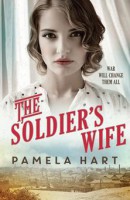
Pamela Hart’s Soldier’s Wife

Pamela Hart, The Soldier’s Wife (Hachette Australia 2015)

9780733633737

Romance novels really aren’t my thing, but Pamela Hart, as Pamela Freeman, has written a number of magnificent books in other genres, so I stepped out of my comfort zone to read her first venture into the world of historical romance. Also, it’s the centenary of the landing at Gallipoli, and in our house the schmaltzy, revisionist jingoism in the media has made it close to impossible to attend to the occasion. James Kent’s movie of Vera Brittain’s Testament of Youth was a big crack in that frozen wall. The Soldier’s Wife promised another.

The book  delivers on both fronts: as a story of the WWI home front, and as a all stops out romance.

Ruby has had a blissful honeymoon week with her tall handsome husband Jimmy, and then one last day in town before he is shipped off to Gallipoli, where they know he is going into harm’s way. (If I was being true to the period and to the book, I’d call her Mrs Hawkins, but after all I’ve been though with her, she’s Ruby to me.) Hailing from Burke, Ruby lodges with the friend of a friend in Annandale, a Sydney suburb, and gets a job as bookkeeper in a timber yard – the boss of the yard has a son who is an officer in the same battalion as Jimmy, which accounts for his willingness to take on a woman.

And it goes from there: Ruby lives in constant terror that the next telegram to be delivered will bring news of Jimmy’s death; she negotiates the perils of the all male workplace, where she fends off sexual predation and high-toned disapproval; having so briefly enjoyed married life and then left, she is strongly drawn to the handsome, muscular foreman of the yard; bit by bit she takes on more responsibility in the workplace and her relationship with her landlady becomes more solid.

I was surprised by some of the plot twists, and though in retrospect they were completely logical I don’t want to spoil them for you. I’ll just say that we are not spared the harrowing experience of learning of a loved one’s injury and death in battle; and the changing balance in power relationships between men and women that was brought about by the war is made painfully real, along with the ghastly difficulty in communication between those who went off to the unreal nightmare world of war and those who stayed behind in the all too real struggles at home.

The main characters are all Catholic – attending St Brendan’s in Annandale, where I have been myself more than once – and the moral world of the book is that of early 20th century Australian Irish Catholicism. I love this, because so much historical fiction shies away from such religious dimension, yet it is so important to an understanding of the times. It also adds a particular kind of intensity to Ruby’s temptations with the foreman – and I don’t think it’s a spoiler to say that I desperately wanted her to yield to temptation, and that the matter stayed unresolved until almost the last page.

The Soldier’s Wife is being promoted as an ideal Mother’s Day gift. I think my mother would have liked it, though she might have been unsettled by some of the discreetly worded but nevertheless explicit sexual references. I doubt if my father would have read it, but he would have enjoyed it too. It’s a good yarn. You care about the characters. And there’s the blessed relief of being able to think about Gallipoli through the experience of life-sized, complex people without the background noise of rascally patriotism.

aww-badge-2015

The Soldier’s Wife is the ninth book I’ve read for the 2015 Australian Women Writers Challenge.

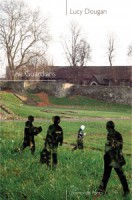
Lucy Dougan’s Guardians

Lucy Dougan, The Guardians (Giramondo Poets 2015)

1DouganWhen I started blogging about my reading more than 10 years ago, I had a vague idea at the back of my mind that I would do it as an amateur. I could be subjective, ill-informed, cantankerous, idiosyncratic, sometimes enthusiastic, occasionally splenetic, but never claiming any kind of authority.
In that spirit, let me say I found The Guardians  almost completely uninteresting. I approached poem after poem with hope, and time after time was disappointed. I thought I’d find one poem I really liked and just blog about that, but no such poem arrived. I re-read the book, thinking perhaps it had been a matter of poor timing. Same thing.

In the current Sydney Review of Books Ivor Indyk editorialises about ‘difficult’ poetry. He attributes the perception of difficulty to a failure to recognise that poetry needs a ‘different method of reading’ from prose:

You should feel easy with the prospect of reading a poem many times, in the process of weighing its implications, in contrast to the largely single and forward-directed reading you give to a novel.

Paradoxically, I find The Guardians difficult because a ‘single and forward-directed reading’ of many of the poems seems to be more than enough, while others read to me as disparate jottings on a theme.

Maybe the problem is that the poems are so pared down, so restrained, that I lack the imagination to feel their substance or emotional impulse. Understatement taken to the point of inaudibility. A series of poems narrates an experience of breast cancer (‘The Guardians’, ‘Right Through Me’, ‘The Deer’, ‘Driving to the First’, ‘Eve’, ‘Here’, and ‘The Hammock’), a big subject if ever there was one, but they hardly touch the sides.

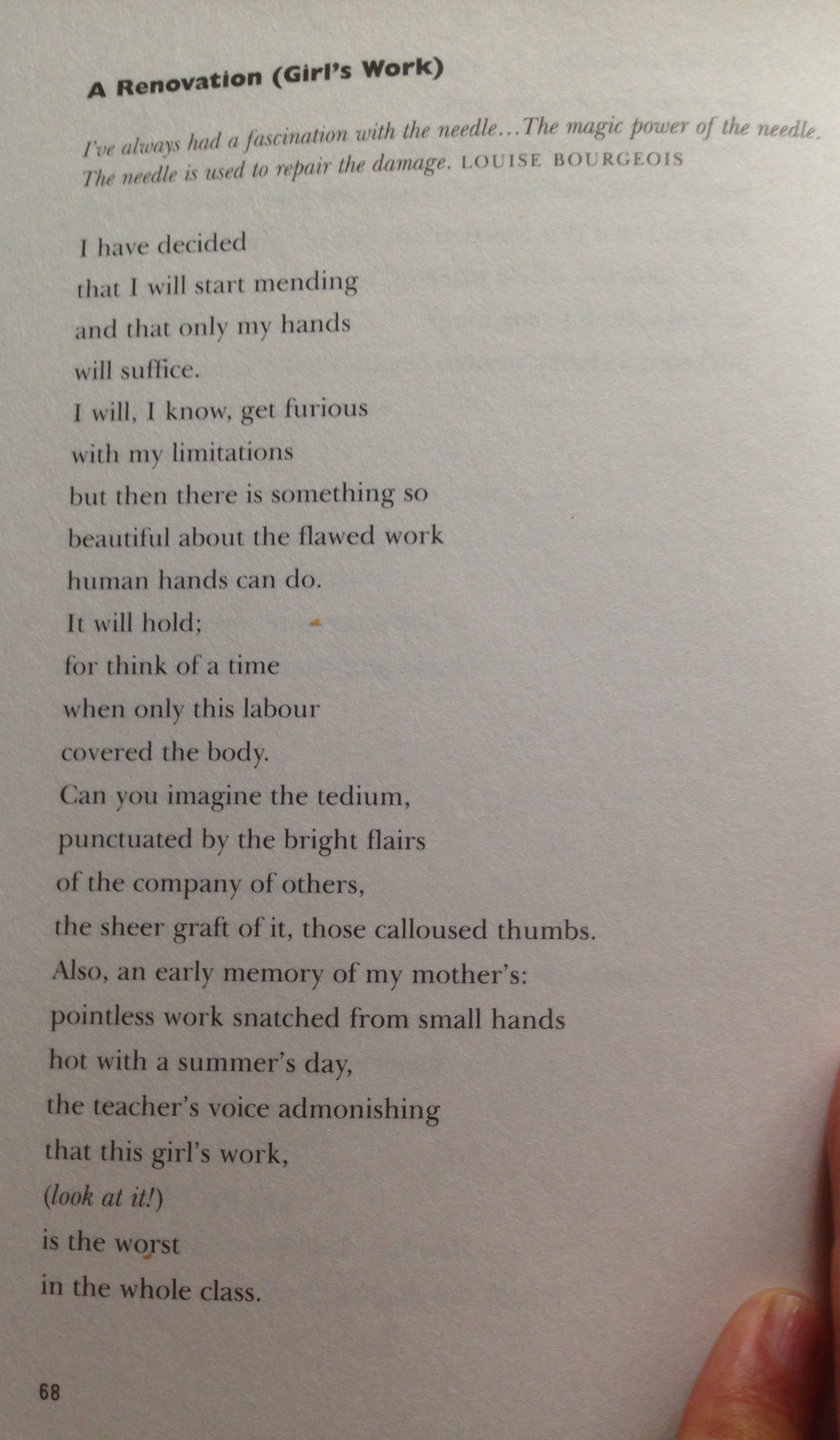
I did read one poem to the Art Student, who professes to hate poetry, and she loved it. The poem was ‘A Renovation (Girl’s Work)’:

renovation

It would be tedious for me to say what I dislike about it. Enough to say that the Art Student, perhaps of an age with Lucy Dougan’s mother, resonated with the final section, was touched by the praise of imperfection, and loved the lines:

for think of a time
when only this labour
covered the body.

I can’t quarrel with her about any of it.

If I have one comment on the book that’s verifiably about the poetry rather than me as its reader, it’s to do with the sense of place. A recurring theme is place as containing personal and ancestral history. Yet, place is so abstract in these poems that – apart from those poems where places, all but one of them European, are named –it’s not clear even what continent we are on. The first poem, ‘A Mask’, with its mention of ‘dimpled louvres’ and ‘a room beneath the house’, suggests Australian architecture, but then gives us a child’s imagining of rooms beneath rooms beneath rooms, each with an ancestral identity – that is to say, a child’s imagining that her family has been in this land from time immemorial. Fair enough that a child might imagine that, but neither this poem nor any of the others about revisiting childhood locations and memories acknowledges the key element of non-Indigenous Australian experience: that our forebears come from elsewhere. (I’m assuming here that these childhood memory poems do refer to Australian places – mostly on the basis of what little I know of the poet’s biography, but also from the mention of wallabies in one poem.)

Maybe that’s what was nagging at me as I tried and failed to relate. On a third reading, I was no longer just unengaged, but positively dismayed, by the lines in ‘A Bourne’ in which the speaker, visiting Chudalup (the one non-European place to be named), feels a patch of rock, ‘warm to its core’:

A whole unschooled knowledge of place streamed in
and the liquid vision of boatmen,
was mine in constellations.
Just in this moment the way the planet turned
moved through the axis of my bones

I’m writing this the day after going to a demo in Sydney about the closure of remote Aboriginal communities in Western Australia. With the speakers’ eloquent assertion of Aboriginal connection to the land fresh in my mind, this poem’s claim to ‘knowledge of place’, even if ‘unschooled’, and even though based in an experience once can sympathise with, reads as a Eurocentric denial of Indigenous knowledge and history.

I received a complimentary copy of The Guardians from Giramondo Publishing.

aww-badge-2015This is the eighth book I’ve read for the 2015 Australian Women Writers Challenge.

Richard Powers’ Orfeo

Richard Powers, Orfeo (Atlantic Books 2014)

1782391622

Margaret Atwood, no less, is quoted on the cover of this book as saying, ‘If Powers were an American writer of the nineteenth century he’d probably be the Herman Melville of Moby-Dick. His picture is that big.’ That’s probably taken out of context, and it’s a wee bit over the top, but, you know, only a wee bit. If Melville had been writing about the music scene rather than the whaling industry, he might have written this book. The digressions are just about as long as the ones in Moby-Dick, and for my money at least as interesting; the quest at the centre of the story is as doomed and self-destructive; the frame of reference as global.

Peter Els, a 70 year old composer who has had very little popular or critical success, calls 911 when his dog dies. The police who come to his door have their security-threat detectors set off when they see that he is a DIY biochemist, and soon he is on the run with the full might of Homeland Security behind him. The story of his flight, which becomes a kind of Thelma-and-Louise flavoured 12-steps amends-making pilgrimage, is told in counterpoint with his back story. Folded into one story is the world of Homeland Security vigilance about real and imagined terrorist threats, media panics and the surveillance state; and into the other the history of 20th century US cutting-edge music in its broader world political context.

It’s a gauge of how well Powers writes that just as Els’s flight is reaching a critical moment, he stops off to give a lecture in an old people’s residence, and everything stops while we are told the story of the composition and first performance of Olivier Messiaen’s Quartet for the End of Time – and it’s so interesting that 17 pages later, when we return to the main narrative (‘That was the story Els told his eleventh-hour pupils … ) we do so as if waking up from a vivid, satisfying dream. There are other, shorter digressions, in which Els listens to a piece of music, and we are taken through it moment by moment: this is a book to be read, not just with Google on hand to chase up interesting references, but with access to a music library to listen along with Els to Mahler, George Rochberg, John Cage, Harry Partch, and on and on. And yet it has the pace and suspense of a thriller.

I scored (no pun) Orfeo at my book-swappng club. Since I’d had Powers’ Galatea 2.2 on my TBR pile for some years, I decided to read it first. If the creative and life crises depicted in the earlier book when author and character, both called Richard Powers and in their mid 30s, were based in reality, it seems that they passed. Six novels and 19 years later, I don’t know that Orfeo is any more cheerful than Galatea 2.2 but if Galatea 2.2 contemplated the abyss, then Orfeo is gloriously, operatically, romantically over the cliff.

NSW Premier’s Literary Awards Shortlist announced

A bit late for anyone who wants to read the whole short list before the winners are announced next month, but the (very long) short list for the NSW Premier’s Literary Awards has been announced. You can see the full list with judges’ comments on a pdf press release from the State Library.

Here’s most of it – all except the translator – with links to my blog posts on the few I’ve read, all of which have me nodding my head in agreement with the judges. (Maybe it will take grandchildren to bring me back up to date on children’s lit.)

Christina Stead Prize for Fiction
Only the Animals, Ceridwen Dovey (Penguin Australia)
In Certain Circles, Elizabeth Harrower (Text Publishing)
Golden Boys, Sonya Hartnett (Penguin Australia)
The Snow Kimono, Mark Henshaw (Text Publishing)
The Golden Age, Joan London (Random House Australia)
A Million Windows, Gerald Murnane (Giramondo Publishing)

UTS Glenda Adams Award for New Writing
The Tribe, Michael Mohammed Ahmad (Giramondo Publishing)
Foreign Soil, Maxine Beneba Clarke (Hachette Australia)
The Strays, Emily Bitto (Affirm Press)
An Elegant Young Man, Luke Carman (Giramondo Publishing)
Here Come the Dogs, Omar Musa (Penguin Australia)
Heat and Light, Ellen van Neerven (University of Queensland Press)

Douglas Stewart Prize for Non‐fiction
The Europeans in Australia, Alan Atkinson (NewSouth)
Citizen Emperor: Napoleon in Power 1799‐1815, Philip Dwyer (Bloomsbury)
This House of Grief, Helen Garner (Text Publishing)
The Reef: A Passionate History, Iain McCalman (Penguin Books Australia)
In My Mother’s Hands, Biff Ward (Allen & Unwin)
The Bush, Don Watson (Penguin Books Australia)

Kenneth Slessor Prize for Poetry
A Vicious Example, Michael Aiken (Grand Parade)
Devadetta’s Poems, Judith Beveridge (Giramondo)
Kin, Anne Elvey (Five Islands Press)
Wild, Libby Hart (Pitt Street Poetry)
Unbelievers, or The Moor, John Mateer (Giramondo)
Earth Hour, David Malouf (University of Queensland Press)

Patricia Wrightson Prize for Children’s Literature
The First Voyage, Allan Baillie (Puffin Books)
Rivertime, Trace Balla (Allen & Unwin)
Figgy in the World, Tamsin Janu (Omnibus/Scholastic Australia)
The Duck and the Darklings, Glenda Millard & Stephen Michael King (Allen & Unwin)
Crossing, Catherine Norton (Omnibus/Scholastic Australia)
The Adventures of Sir Roderick the Not‐Very Brave, James O’Loghlin (Pan Macmillan Australia)

Ethel Turner Prize for Young Adult’s Literature
Book of Days, K.A. Barker (Pan Macmillan Australian)
The Road to Gundagai, Jackie French (HarperCollins Publishers)
Are You Seeing Me? Darren Groth (Random House Australia)
Razorhurst, Justine Larbalestier (Allen & Unwin)
The Cracks in the Kingdom, Jaclyn Moriarty (Pan Macmillan Australia)
Cracked, Clare Strahan (Allen & Unwin)

Betty Roland Prize for Scriptwriting
The Code Episode 1, Shelley Birse (Playmaker Media)
Upper Middle Bogan Season 1, Episode 8: The Nationals, Robyn Butler and Wayne Hope (Gristmill)
The Babadook, Jennifer Kent (Causeway)
Fell, Natasha Pincus Story by Kasimir Burgess and Natasha Pincus. (Felix Media)
Please Like Me Season 2, Episode 7: Scroggin, Josh Thomas
Once My Mother, Sophia Turkiewicz (Change Focus Media)

Nick Enright Prize for Playwriting
Brothers Wreck, Jada Alberts (Currency Press)
The Sublime, Brendan Cowell (Melbourne Theatre Company)
Jasper Jones, Kate Mulvany (adapted from a novel by Craig Silvey) (Barking Gecko Theatre Company)
The Trouble with Harry, Lachlan Philpott (TheatreofplucK Belfast/MKA New Writing Theatre)
Kryptonite, Sue Smith (The Sydney Theatre Company)
Black Diggers, Tom Wright (Queensland Theatre Company)

Community Relations Commission for Multicultural NSW
Jump for Jordan, Donna Abela (Griffin Theatre Company)
Black and Proud: The story of an AFL photo, Matthew Klugman and Gary Osmond (NewSouth Publishing)
Refugees, Jane McAdam and Fiona Chong (UNSW Press)
I, Migrant: A Comedian’s Journey from Karachi to the Outback, Sami Shah (Allen & Unwin)
The Tainted Trial of Farah Jama, Julie Szego (Wild Dingo Press)
Once My Mother, Sophia Turkiewicz (Change Focus Media)

Congratulations and good luck to all of them, and may the judges’ eyes and brains enjoy a rest.

Omar Musa’s Parang

Omar Musa, Parang (©2013, Penguin 2014)

1parang

Omar Musa is a bit of a phenomenon: rapper, poetry slam champ  (see below), TEDxSydney talker, he has produced a number of CDs and featured in a number of YouTube videos. Parang, first published by Blast! Publishing, an entity so small I couldn’t find it on the www, includes some poems that here make the transition from the stage to the page, and others that are definitely starting life as page poems.

The range of subject matter is wide. Asylum seekers, violence against women, alienated suburban life, the possibility of humanity’s disappearance, street lie, all rendered with exuberant rhetorical flourish of a public performance. In ‘My Generation’, there’s even a homage to Allen Ginsberg:

My generation
was populated by boozehounds and pillheads
crude clowns and bedspreads
stained with the neon dreams of cocaine fiends.
I mean,
the diamond-flooded visions of sex kittens
who sweat bullets, glitter and Chanel.

The most interesting poems are in the first section, ‘Parang’. Mostly shorter and more contained, perhaps more carefully shaped, these engage with Musa’s Malaysian heritage. Where Seamus Heaney famously compared his pen to a gun and a spade, and chose the tool over the weapon, Omar Musa takes the parang, the distinctive Malay machete, which can be either, as an emblem of what he is attempting in his poetry:

Parang,
______guardian angel of gangsters and pirates,
______headhunters and thieves.
Parang,
______patron saint of mob rule and blood bath,
______of the man who runs amok through the village.
Parang,
______guiding spirit of the housebuilder, the tool carver,
______the opener of paths.

In ‘The Parang and the Keris’, he contrasts the parang to the keris, the wavy-bladed, highly wrought dagger of heroic tales:

This parang is not heaven forged,
______blade five-waved,
smelted from meteoric iron, divine.

But it is mine.

The poetry has the spirit of humble making that this image claims for it: a hard poem about his father, a celebration of his grandmother, a piece on the inevitable disappointment and also joy of discovering the real place behind family stories of heritage (‘A Homeland’). The poetry also has the edge of danger implied in the parang image, particularly in ‘FELDA’ and ‘sunyi’, both of which demonstrate that Musa’s rage for social justice and environmental is not limited to a western context.

Musa is an electrifying performer. You can see him here in top form with a fabulous audience at Bankstown Poetry Slam. It’s nine minutes or so, and well worth the time. In case you need some of the noise explained, at slam poetry the audience is encouraged to express enthusiasm by clicking fingers and stamping feet.

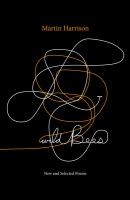
Martin Harrison’s Wild Bees

Martin Harrison, Wild Bees (UWAP 2008)

1wild_beesWhen 11 year old Luke Shambrook had been missing for four days over the Easter weekend, Acting Sergeant Brad Pascoe spotted him from his helicopter. ‘Out of the corner of my eye,’ he said, ‘I just caught a little flash of something. It wasn’t much but it was enough to make me get the guys to turn the aircraft around and go back and have a look.’

It’s not so obviously a matter of life and death, but compare that to the silvereye in Martin Harrison’s ‘A Word’:

caught on the edge of vision,
forgotten in a glance
where nothing is anchored

The pages of this book are full of attention to tiny things and brief moments that are nevertheless enough to make the poet get us to turn around and go back and have a look. Something happens ‘out there, in dwindling light, / upon the edge, half-seen, a mere detail’ (from ‘Red Marine’). Something ‘catches my eye, half catches it, (tricking it, blinding it)’ (from ‘Winter Solstice’). In ‘Lizards’:

_____________ This
moment, they’re not here,
or are merely playing
at being silhouettes, quite still.

In ‘Tasmanian Tiger’:

ungraspable fineness of dark she-oak needles, ungraspable, I think, because so fine,
a thing merely visual, only meant in passing
to an observer perplexed by see-through shadowiness

Examples multiply.

The poetry does many different things with these ephemera and minutiae, usually at some length. Sometimes it’s like reading a gloriously fleshed-out haiku: ‘Watching Pelicans, Mallacoota’ spends the first 24 lines on a she-oak needle, and the remaining 19 on the pelicans of the title. More often, the poems are like essays, not always easy to follow, as the poet articulates thoughts or feelings that are as easy to miss as the objects or living things that give rise to them. One thing you don’t get is easy generalisations.

I saw Martin Harrison read a number of times. He was a witty, warm, impressive figure. He died in September 2014.  The November issue of Cordite Poetry Review published a piece by Adam Aitken, which included an interview, in which Harrison says, among many other interesting things:

I am trying to write poetry that lives in the same world as watching TV, listening to radio and watching movies. … I’m interested in the kind of detail that the camera can provide that the writer can be intimate with. If you take a room or a scene or a person there is something about the way those images cover the object, and something about the lingering attention you can give to what’s produced there. It defines a contemporary sensibility. I like that kind of attentiveness.

Wild Bees was published by the University of Western Australia Press.  I received a review copy from Giramondo Press.