Category Archives: Books

The Farewell: Part Two

Concluding my versification of Tony Abbott’s farewell address. Click here for the first instalment, and here for  video of the speech on the Guardian’s site.

The Farewell (Part Two)
Video 3:11–3:36
‘I’m proud of what we’ve done against the odds.
stayed focussed right until the white-ants’ coup,
though we’ve been men, and women too, not gods
walking the earth, not perfect. Very few
can meet all expectations. [We poor sods
of course have trampled on a life or two,
protected child abusers, bent the knee
to Murdoch – yes, we’re only human, see?
]

Video 3:37–4:28
‘Politics has changed since I’ve been in it.
Commentary’s hijacked by the trolls.
Soon we’ll have a new PM each minute,
and each one sacked by colleagues spooked by polls.
It must affect our country. I’m agin it.
Don’t help self-serving traitors reach their goals,
O Media, stop conniving with dishonour:
don’t be the knife that’s plunged into a goner.’

‘[For me the press has been more like a bludgeon
– there’s Bolt, Jones, Hadley, Sheridan, Devine
and Photoshopped front pages, all high dudgeon
my office leaks, no treachery of mine
but acts of war. A pintle to my gudgeon,
the press that serves my higher ends is fine.
But steady now, I mustn’t lose my head.
Stick to the script and leaves such things unsaid.]

Video 4:30–5:32
‘I must thank many. First my family
[spot who’s missing from this paragraph],
my Margie for her grace and dignity,
my party, the armed forces, and my staff,
devoted to our country – Oh malignity
with which their chief was savaged. That’s no laugh.
I thank my country [’Tis of thee I sing]:
for being asked to lead is no small thing.

Video 5:32–6:12
‘My maiden speech, I quoted Holy Writ,
the text for the first sermon in this land:
“What shall I render to the Lord … ?” I quit
the top job, knowing I can proudly stand
and say I’ve rendered all. [If modesty permit,
I’d say my all was really rather grand,
and could have been much more with loyal ranks.
]
I love this country still. God bless it. Thanks.’

Video 6:12–6:15
No weepie script, and read like hard De Niro:
a man for others, no tears on display.
With furrowed brow, a classic Western hero
he turns and does a John Wayne walk away.

Go little poem, I hope worth more than zero,
to mark the very end of one man’s sway.
I’ve added frills to feed my rhyming habit,
but most of what you see is true to Abbott.

Tony goes

the searchers

The Farewell: a versification

On Tuesday 15 September, Tony Abbott gave his final statement to the press as Prime Minister of Australia. Video here. Having rendered Alan Jones and Scott Ludlam into verse, I feel obliged to give Mr Abbott a go. Here’s Part One of what I expect to be two parts:

The farewell
Kings and queens must die before the toast
‘Long live the King or Queen!’ is raised by folk,
but prime (and lesser) ministers can coast
from office still alive – and far from broke.
A vote is not a dagger. At the most
a mobile phone lurks in the plotter’s cloak,
and though the headlines say blood’s on the floor,
in Canberra that’s mostly metaphor.

Video 0:00–0:05
So Monday night last week, when overthrown
by secret ballot in the party room,
our ex-PM, his face as grim as stone,
went to a drunken party, not a tomb,
took fourteen hours to face a microphone.
12.30, puffy eyed beneath the boom,
he started with a frail attempt at cheer:
‘Quite-a-crowd today. Thank you for being here.’

No more ad libs. The rest came from the script
that someone had prepared while we were sleeping
and doing all the morning things he’d skipped,
or so it seemed: there may have been some weeping.
It wasn’t life-or-death, but if he slipped
he’d set a ruthless Twitter chorus cheeping.
This was a chance to dignify his exit,
to bare his statesman muscle and to flex it.

Video 0:05–0:45
‘For many here this is no easy day.
Such things are never easy for our country.
I pledge to make it easy as I may:
not wreck, snipe, undermine [my style’s effrontery
and swagger]. Leaking’s never been my way.
It’s only for our country’s good I’m hungry,
and our government’s success [not my successor’s
whom I won’t name, still less my predecessors’].

Video 0:45–1:16
‘I’ve said the top job’s no end in itself.
It’s all about the people whom you serve.
From Uluru to Continental Shelf,
this country’s wonder, more than I deserve,
I’ve seen. I want to thank [a humble elf]
the voters for this honour. [Oh the nerve
of those who took it from me!] This day’s tough,
but: join the game, play by its rules, they’re rough.

Video 1:16–1:54
‘I’ve held true to what I have believed.’
His head bobs there, a curtsey of the mind.
‘I’m proud of what in two years we’ve achieved:
more folk in jobs, and three free trade deals signed,
huge roadworks under way, and we’ve relieved
mine owners of bad Labor taxes, shined
a spotlight on bad Labor’s Union mates.’
A chopper drowns out half of all he states.

Video 1:54–2:20
‘… terror threats … deployed … the other side …
to bring our loved ones home … the boats have stopped …
compassion … refugees … [I may have lied
or bent the facts a little
] … budget mopped …
billions … without principle the tide
of opposition … [Heaven knows I’ve copped
unprincipled  hysteria for Pell,
and ‘Nope, nope, nope’, and kids in Nauru’s hell.
]

Video 2:20–3:00
‘Of course, there’s much I had still wished to do:
To move things on for Noel’s and other mobs –
bring recognition, school, work, safety too.
My photo-op weeks broke new ground, no probs.
Ice and domestic violence wait in queue.
The wider world presents us with big jobs:
Wars far away are well within our range.
[But notice I don’t mention climate change.]

To be continued …

If you want to read some real poetry on the subject of our recent change of Prime Minister, I recommend the editorial of yesterday’s Saturday Paper. It begins, ‘It is no exaggeration to say Tony Abbott is the worst prime minister Australia has had,’ and builds from there.

Thomas Pynchon’s Bleeding Edge

Thomas Pynchon, Bleeding Edge (Penguin 2013)

0143125753I came to Bleeding Edge prepared to be baffled and intimidated, as I had been by Thomas Pynchon’s Gravity’s Rainbow and The Crying of Lot 49 more than three decades ago. W S Gilbert pretty much nailed my response to those books: ‘If this young man expresses himself in terms too deep for me, / Why, what a very singularly deep young man / this deep young man must be!’

Well, neither Thomas Pynchon nor I are young any more, and if there’s any bafflement in Bleeding Edge, it’s less of the intimidating too-deep-for-me variety than the mildly irritating I’ve-never-heard-of-yet-another-US–brand-name/alcoholic-beverage / pop-culture-figure kind, with quite a bit of Who-was-that-character-again? thrown in.

It’s a New York novel whose action begins in spring 2001 and ends soon after Christmas that year. That is to say, it’s set in the aftermath of the dot-com bubble burst and includes the destruction of the World Trade Center in September 2001. The main character, Maxine Tarnow, a wisecracking fraud investigator, Jewish mother of two, is drawn into a network of elaborate intrigues involving denizens of the Deep Web, Silicon Alley mavens, characters who may or may not be part of the Russian Mafia, a super-secret CIA-type agents who may have foreknowledge of the events of 11 September, ruthless neo-liberal working for (or against?) the government funnelling money to the Middle East, to help either terrorists or anti-terrorists, and more. There are murders, gritty-comedic sex scenes, and a lot of New York.

The writing is tough-guy witty. The marshalling of period detail – often in list form – is awesome. The invented period details (such as a running list of improbable movies, including a version of Don Giovanni featuring the Marx Brothers) offer bursts of delight. It doesn’t matter that it’s all a little familiar, that I felt I could stop reading at any point without more than a twinge of regret. Think of a Stephanie Plum adventure in a Neal Stephenson universe, with product placement by post–Pattern Recognition William Gibson, an occasional touch of magic realism to save inventing plausible plot devices, and one or two science-fictional gestures that don’t lead to anything much. Come to think of it, I’m not sure that any of the plot amounts to anything much. One person dies, or does he? A plot is revealed, but exactly what was it? There’s clear filmed evidence of another plot, but again (spoiler alert) we never find out what the evidence means. Revenge is taken on the main villain, but does he even notice?

Maybe I should add Seinfeld to the list of people who make this book feel familiar: for all its vast piling up of incident, its huge cast of characters, and its frequent insights into the times we live in, it wouldn’t be completely inaccurate to describe it as a novel where nothing happens. Not that there’s anything wrong with that.

Overland 219

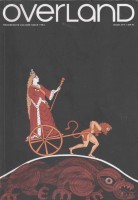
Jacinda Woodhead (editor) & Giovanni Tiso (guest editor), Overland 219 (Winter 2015)

O219

This is a special Aotearoa / New Zealand issue of Overland. It isn’t so much about that country as by writers from there, in the belief, as Giovanni Tiso, regular columnist and guest editor of Nº 219, writes, ‘that this difference, this shift in perspective, can be a value in itself’.

This probably isn’t the kind of shift Tiso had in mind, but John Clarke is here, in an unfamiliar persona. With none of the satirical deadpan of his Clarke and Dawe TV spots, he gives us The things she did, a biography of his remarkable mother Neva Yvonne Morrison Clarke McKenna, who died this year. Everyone should be able to write about their mother with such deep respect and pleasure.

A number of this issue’s articles address familiar themes with a fresh twist:

  • Settled peacefully by Morgan Godfery discusses issues our two settler nations have in common. I had thought Prime Minister Tony Abbott’s recent remark that before 1788 Australia was ‘unsettled or, um, scarcely-settled’ was an unfortunate misspeak. But Godfery quotes his own Prime Minister John Key, ‘New Zealand was one of the very few countries in the world that were settled peacefully,’ and Stephen Harper’s announcement that Canada has ‘no history of colonialism’.  One is a journalisic gotcha; two is a coincidence; three is a sign of what James Baldwin, quoted by Godfery, called the ‘habits of thought [that] reinforce and sustain the habits of power’.
  • Faisal Al-Asaad’s In a rage almost all the time discusses recent events in Ferguson and elsewhere in the USA in the context of globalisation and the politics of occupation, drawing out the correspondences between Palestinian resistance and US anti-racist activism.
  • Catriona MacLennan’s The ethics of defence tackles a subject that has been much discussed: the ordeal that defence lawyers often inflict on women who allege rape, while the accused has the right not to take the stand. Her list of commonly held false beliefs about rape (she calls them myths) is not novel, but it clearly bears repeating, since she quotes a number of cases where they emerge – still – from the mouths of judges and lawyers:

    1. false rape complaints are common, frequently being made by lying and vindictive women as a means of punishing or getting back at men
    2. women’s behaviour or clothing are a justification for rape as men are ‘led on’ by skimpy female clothing and are unable to control their sexual urges
    3. women who consent to sex at night wake up the next morning regretting it and make false rape complaints to cover their regrets
    4. real rape is perpetuated by strangers in dark alleys; sexual assaults on wives or girlfriends are not really rape – if a woman has consented once to sex with a man, she has consented in perpetuity
    5. women make up false complaints of rape against famous men to try and extort money
    6. women who are out alone or without men at night are foolish and it is understandable if they are raped
    7. women who are drunk or have used drugs are to blame if they are sexually violated
    8. where sexual conduct occurs at teenage parties after drinking, it is simply experimentation and a prank and not really rape
    9. if the survivor has no obvious traumatic physical injuries she has not been raped.

    She argues that the ethics of defence lawyers need to be re-examined, and goes a step further:

    We should … consider moving to an inquisitorial rather than an adversarial legal system. The inquisitorial system aims to get to the truth of a matter through extensive investigation and examination of all evidence. By contrast, the adversarial system is a competition between the prosecution and the defence to make the most compelling argument.

    I have a lawyer friend who tells anyone who will listen that a prosecutor’s duty is to discover the truth of a criminal matter, that his adversarial relationship with the defence is secondary to that duty. The notion that the adversarial approach is paramount is, he argues, true of the US system, and we think it holds here because we watch so much US television. I sent him the url for this article. His emailed response, which I take to refer to the argument for inquisitorial system, was brief: ‘Just rubbish. What more can I say?’ Perhaps the New Zealand system is closer to the US one than ours. Catriona MacLennan is as much a barrister as my friend. Maybe they should have a cup of tea some time.

  • Evidently the question of free speech is as significant across the Tasman as it is here. It’s nice to have it discussed in At a price by Max Rashbrooke with reference to Milton, Mills and eminent legal philosophers rather than to Andrew Bolt, Alan Jones and the Institute of Public Affairs. Nice too to read Loose lips, in which NZ investigative journalist Nicky Hager reveals trade secrets on how to find and protect whistle-blowing sources.
  • ‘Pass the ta’e please’ by Scott Hamilton is a fascinating account of kava and politics in Tonga, from traditional ritual use among high-ranking men to current use by rebel artists (ta’e, the Tongan word for excrement, is their word for kava). By no means the main point of the article, but one that provided an odd shift in perspective for me, is that Futa Helu, ‘Tonga’s most important modern intellectual’, was part of the Sydney Push as a young man: who would have thought that that circle of dedicated drinkers and talkers I knew in my youth had contributed such a force to Tongan culture and politics?

There are poems, too, and short stories (one of which does that irritating thing of revealing only at the end that it is an excerpt from a novel in progress), and a small but creditable Australian presence, including regular columnists Stephen Wright and Alison Croggon: the former’s On backyard cricket is a splendidly deranged rant about successive Federal governments’ treatment of child refugees (‘Australia appears to have become a nation governed by people who proudly engage in legalised child abuse, torture and neglect’); the latter’s On the intellectual life of a nation offers some acerbic home thoughts from an enviable writers residency abroad (‘The problem is not with the quality of work that is made here. Au contraire! Australia has the oldest living culture on the planet, and the contemporary work Australians produce is as worthy of notice as anything that emerges from other centres. It’s more in its mediation, in what art is assumed to be in the wider culture.’).

Books read to small visitors

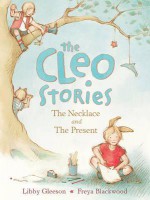
Libby Gleeson and Freya Blackwood, The Cleo Stories: The Necklace and The present (Allen & Unwin 2014)
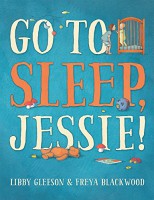
Libby Gleeson and Freya Blackwood. Go to Sleep, Jessie! (Little Hare 2014)
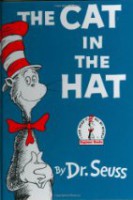
Doctor Seuss, The Cat in the Hat (©1957; Random House)
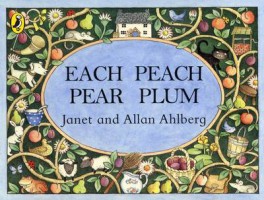
Janet & Allan Ahlberg, Each Peach Pear Plum (©1978, Puffin)
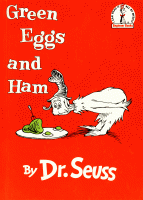
Doctor Seuss, Green Eggs and Ham (©1960; Random House)

We have just had two small people visiting for a week (along with their mother, my niece). Although the little girls were mostly busy making things and being generally fascinating company, they did like being read to, which meant that we had a chance to discover some new books for very young reader–listeners, and to revisit some old ones.

1gsjLibby Gleeson and Freya Blackwood won two of the Children’s Book Council of Australia Awards this year (Freya won a third, but for older readers), and we were guided by the CBCA in our purchase of new books. Their books are warm, affectionate celebrations of the intelligence of their girl protagonists. In Go to Sleep, Jessie! the heroine shares a bedroom with a baby who refuses to go to sleep and instead keeps her awake by crying loudly. The parents’ well-meaning attempts to solve the problem are unsuccessful, and she solves it beautifully herself.

1tcsCleo is a bit older, and her problems are of a different order. ‘Everyone’ at a friend’s party has a necklace, but her parents say she can’t have one until her birthday, which is a very long time away.  In a second story she has to decide on a birthday present for her mother. The problems are real, and the solutions clever.

Both books harbour understated challenges to the parents who will read them aloud many times: what do you think about consumerism, envy, tattoos or ‘controlled crying’, among other things?

039480001XAfter dinner one night the two little girls put on a ‘show’ that consisted mainly of vigorous physical movement and silly faces, but included audience participation in which we adults had to take our socks off and wave them about, and later take turns reading from The Cat in the Hat. The book was apparently chosen at random, but it was wonderful to see the concentration grow on the young listeners’ faces as the story progressed. (Two thirty-somethings ostentatiously took to their smart phones during the reading. Humankind cannot bear very much reality.)

1eppp

An ‘I spy’ book whose images turn out to tell a story. Hearing my niece read it to her daughters in a way that beautifully captured its music, I remembered again that the joy of reading excellent children’s books aloud is as much for the adults as for the young ones. And that’s true of books like this, that depend on the art for their full meaning.

Dr_Seuss_Green_Eggs_and_HamAnother Dr Seuss book. This one was referred to a couple of times as our almost-two-year-old was being resolutely negative (‘Would you like it in a box? Would you like it with your socks?’). Theodor ‘Dr Seuss’ Geisel makes it look easy, but to create books that beginning readers can manage that are also fun for the fiftieth – or should that be five hundredth? – time is the work of a genius.

There were other books – including a Snugglepot and Cuddlepie adaptation that leaves mercifully nameless both the revising writer and the simplifying artist. I tried to insinuate Where the Wild Things Are into the mix, but the little one, clearly recognising the book, rejected it as too scary.

aww-badge-2015Go to Sleep, Jessie! and The Cleo Stories,  are the thirteenth and fourteenth books I’ve read for the 2015 Australian Women Writers Challenge. I know they’re very slender, but it should count for something that I’ve read both of them at least four times in the last week.

Kurt Vonnegut’s Slaughterhouse-Five and the Book Group

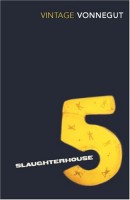
Kurt Vonnegut, Slaughterhouse-five (1969, Vintage 2000)

1sh5bookBefore the meeting: I was reading while walking the dog outside the local supermarket when a young woman with fashionable piercings and skin art called to me, ‘That’s a good book!’

So it still has currency.

Do I need to tell you that Slaughterhouse-five presents itself, in its first and last chapters, as Vonnegut’s attempt to wrangle into story form his experience as a prisoner of war who survived the bombing of Dresden in 1945? His way of rising to the challenge is to tell a tale of Billy Pilgrim, a chaplain’s assistant in the war, who was also in Dresden at that time. I say also because once or twice the authorial voice intrudes to tell us that he was there, that the person who did or said something was ‘the author of this book’.

Billy Pilgrim comes unstuck in time, which adds an element of quirk while providing an excuse for the narrative to jump all over the place (evidently excuses were needed back in the 60s), and has some vaguely science-fictional adventures, which aren’t fleshed out to any interesting degree, but allow the novel to present a point of view where none of the terrible events it describes really matter, because according to the little green Tralfamadorians who abduct Billy, every moment in time coexists with every other moment, so there’s no point getting upset about any particular moment.

The main event of the book, as announced in the first chapter, is the bombing of Dresden. We read the whole book with growing dread, waiting for it to happen. A lot of that dread depends on our knowing that it’s not an invented atrocity, and a number of historical sources are quoted to chilling effect. We are told that the fire bombing of Dresden is the biggest massacre ever perpetrated in a single day – bigger than Hiroshima, bigger even than the firebombing of Tokyo.

The power of the story doesn’t stand or fall by that claim, but alarm bells went off for me when the authority Vonnegut quotes is David Irving, the most famous of all Holocaust deniers. A quick look on the internet reveals that Irving’s claim, as repeated by Vonnegut, that 135 000 people were killed in Dresden on one night is almost certainly wildly exaggerated. The actual figure is more like 40 000. I’m a bit shocked that Vintage Books didn’t include a note in the 2000 edition that Vonnegut’s source is notoriously unreliable.

The young woman who called out to me may also have done a quick internet search, but if she didn’t she and all the others who are rediscovering this excellent book will be misled.

Still, it’s the book that gave us ‘So it goes’. This phrase occurs after every mention of a death, whether of parasites in a delousing shower or of the citizens of Hiroshima in an extensive self-exculpatory quote from Harry Truman. After a while this feels annoyingly mechanical, but again a little while and it’s tolling like a funeral bell. Evidently some people read the book as endorsing the Tralfamadorian view that there’s no point getting upset about terrible things. In my reading the unremitting ‘So it goes’ reminds us that every life needs to be mourned.

After the meeting: There were six of us, and we met over an excellent meal in Nithik’s Kitchen, an Indian restaurant in Rozelle. Half of us were revisiting the book; all of us enjoyed it; one numbered it among the best books we’d read in the group.

We differed about whether Billy’s travelling back and forth in time was really happening or whether he was escaping into fantasy. I thought that was crystal clear: Billy is actually unstuck in time. I don’t think the narrative is all that worried about the mechanics of his unstuckness, but within the story it’s real. Since the ‘author’ is part of the story, I’m happy to accept that the time travel is his escape hatch, that is, a way of writing about Dresden without being overwhelmed. But in Billy’s world, it’s real.Clearly other readings are available.

The question arose of how much the US–Vietnam War is a presence. Billy’s son becomes a Green Beret, and though he hardly appears as a character his heroic–patriotic version of war stands in stark contrast to the version signalled in the book’s subtitle, ‘The Children’s Crusade’, and embodied in Billy’s story. Those of us who read it back then certainly embraced it as part of the anti-war movement and would have been shocked to hear that some people read it as advocating a quietist, fatalistic attitude to the horrors of war. For those who were had just read it for the first time, Vietnam was perhaps not so strong a presence, but nor was it irrelevant to their reading.

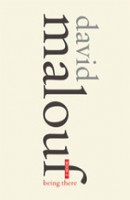
David Malouf’s Being There

David Malouf, Being There (Knopf 2014)

1bt

David Malouf could write about the phone book in a way that held his readers rapt. He is a master of what Steven Pinker calls the classic style: his readers are invited into conversation with him as he shows us something about the world. He is a brilliant, warm, generous conversationalist; the ‘something’ in this book is the world of art.

Being There is the third collection of Malouf’s writing published by Knopf in 2014 to mark his 80th birthday. Almost half of it is devoted to essays (including reviews, lectures, one-off newspaper columns and catalogue essays) on other people’s creations. Part II consists of the librettos of two operas, Voss and Mer de Glace. Part III is a playscript, a ‘free version’ of  Euripides’ Hippolytus.

A strong theme in the first part is the importance of our physical presence to the appreciation and enjoyment of art. Malouf articulates this theme most clearly in the 1989 essay that lends its title to the collection. Referring to orchestral music, he writes that after being ‘in love with the perfection of a great performance on record’ we have come back to ‘gloomy old concert halls’, to

share as fellow citizens an experience that is only available in the big city, as unique a product of our civilisation as the skyscraper or the cantilever bridge. An orchestra, in the person of its conductor and each of its ninety to 120 players, performing one of the great works of our heritage, making music, but in an environment that has not been bled of all those elements of noise out of which organised sound arose – the street noises we have just stepped away from, voices in the foyer, the whispers and shuffling before the conductor is quite ready, the slight disturbance of the air that is created by 2000 men and women breathing, even the occasional cough; that substratum of undifferentiated sound against which made music has to assert itself, and against which we bring ourselves to attention. Somehow, to experience the fulness of what music offers we have to be there. Presence is everything.

I love that. My most enjoyable night ever at the opera (not that I’ve been to the opera all that often) is a far cry the one Malouf describes, but I think he would have enjoyed it. It wasn’t in ‘the big city’, but in the Innisfail Shire Hall on a sweltering tropical night in the 1970s. All the windows of the hall were open, so the street noises, though distant, weren’t left behind; and the air in the hall was more than slightly disturbed by hundreds of fans wielded by audience members, who weren’t above an occasional comment. I don’t think anyone considered the performance to be perfection. The costumes looked as if they’d been scrounged from the combined storage rooms of every choral society in north Queensland, and the cast had a similar catch-as-catch-can feel. But from the Grand March from Aida that began proceedings to the final moments of the main event, Bizet’s Carmen, it was exhilarating. It was impossible not to be aware of the physicality of the event – David Malouf’s word ‘presence’ is right on the button.

The sixteen essays of Part I give accounts of Malouf’s presence at, among other places, a ‘happening’ in London in 1965, Barrie Kosky’s much-derided 1995 production of Nabucco (which he defends brilliantly), the Sydney Opera House (‘a single building … providing a city almost overnight with what it lacked, a defining centre’). He responds to the work of architect Glen Murcutt, photographer Bill Henson (long before Kevin Rudd pronounced his work ‘absolutely revolting’), painter William Robinson, and others. He is always interesting.

I haven’t seen Voss or Mer de Glace, and unsurprisingly found the librettos pretty inscrutable. I say ‘unsurprisingly’, because essays in the first part of the book have prepared the ground. Part of Malouf’s point about the importance of presence is the idea that a play, an opera or a piece of music is more than its script or libretto. In ‘Opera’ (1988), he writes:

That what is sung in opera shares with speech the use of words ought not to confuse us into believing that what the music expresses is what is in the words. The music has a drama and a purpose of its own. What it gives voice to, beyond mere social exchange or the expression of highly charged particular emotions – devotion, doubt, desire, jealousy, pity, anger, resolution, triumph, grief – is the spirit in action.

The Hippolytus, commissioned by the Bell Shakespeare Company and first performed in 2002, is a wonderful read, and for my money is a standing reproach to the domesticated versions of the Greeks that have been appearing on Sydney stages in the last few years. I’m sorry to have missed the production – maybe I can live in hope of a revival.

I met David Malouf in the street recently, and he referred to himself as ‘very old’. May we all age so gracefully, and so creatively.

Mark Doty’s Still Life with Oysters and Lemon

Mark Doty, Still Life with Oysters and Lemon: On Objects and Intimacy (Beacon Press 2002)

0807066095My copy of this book doesn’t have the subtitle it evidently carries in other editions: On Objects and Intimacy. If the subtitle had been there I might have been better prepared for what the book is. What it’s not is a dissertation on the painting it is named after (whose title has been changed to Still Life with a Glass and Oysters and which can be seen at New York’s Metropolitan Museum, or online here).

The book starts with the painting, or at least with the writer’s having fallen in love with it, and it does discuss it and other still lifes from the period, but it roams far and wide, through memoir about objects and how they – or their memories and representations – can come to embody emotional truths, to lyrical reflections on love, mortality, bereavement and poetry. It ranges through cute childhood memories of bears and boiled lollies, a fortieth birthday in Amsterdam involving visits to the Rijksmuseum, a Gay bathhouse, and a fine Thai restaurant, and wonderful writing about the consolations of art.

I came away from the book liking Mark Doty a lot, and with a sense that my heart had been rendered that much more open to the world.

To give you a taste of the writing, here is a passage that crops up as a digression in a story about a chipped blue and white platter that Doty bought at a sale table when out walking his dog, at a time when his partner was gravely ill:

The most beautiful still lifes are never pristine, and herein lies one of their secrets. The lemon has been half-peeled, the wine tasted, the bread broken; the oysters have been shucked, part of this great wheel of cheese cut away; the sealed chamber of the pie, held aloft on its raised silver stand, has been opened. Someone has left this knife resting on the edge of the plate, its handle jutting toward us; someone plans, in a moment, to pick it up again. These objects are in use, in dialogue, a part of, implicated. They refuse perfection, or rather they assert that this is perfection, this state of being consumed, used up, enjoyed, existing in time.
But there’s the paradox – they are depicted in a moment of being seen, contemplated between the experience of tasting, smelling, devouring; but this depiction places them outside of time, or almost outside of it, in a long, slow process of decay, which is the process of oxidation, of slow chemical transformation … Whatever time may have done to the original fruits, their depiction is now safe from the quick corrosions of local time and subject to the larger, slower, depredations of history.
And thus something of the imperfect, the quickly passing, the morning meal with its immediate pleasures has been imported into the realm of perfection, into the long, impersonal light of centuries.

PS: In the little blog that appears over in the right hand column of this one, I expressed frivolous misgivings as I was starting this book:

It’s a slender volume, published by a Unitarian publishing house. Is it a mattress to catch a falling Protestant and so of little interest to those who had a Catholic childhood?

Will commented:

No, not at all. It’s a lovely book of reflections on the real world as we see it. Painting and memory, seeing and interpreting. I hope you enjoy it.

It’s worth mentioning that Will is a librarian, and so may have a slightly more precise meaning in mind for the word ‘real’ than most of us do (see realia). He was right.

Asia Literary Review 26 & 27

Martin Alexander (Editor), Asia Literary Review 26, [Northern] Winter 2014
———————————————————- 27, [Northern] Spring 2015

ALR26

How cool is it that there’s a quarterly journal dedicated to literature from Asia that’s either written in English or translated into it? Such a gift to those of us who don’t speak or read any Asian languages!

After a two year hiatus, Asia Literary Review revived in November last year with Issue 26, under new ownership and with a greater focus on its digital platform. Martin Alexander is still editor.

Issue 26 is a feast. Of the many interesting things, let me mention some of the non-fiction:

  • Sister Philomena’s Veil by Kavita Jindal, a memoir of schooldays in a convent in India, which has a similar subcontinental girls-own adventure flavour to Swapna Dutta’s Juneli stories, but takes an altogether darker turn
  • The Secret Happy Life of Uncle Renfeng by Fan Dai, an extraordinary account of a life, which would be satisfying if it was an exemplary tale, and is all the more so when one realises at the end that it’s the story of the writer’s actual uncle
  • Eid in Oghi by Nighat Gandhi, in which the author, described in her bio as ‘a writer, mother, Sufi wanderer and mental health counsellor’, visits a village in dangerously tribal region of Pakistan and comes to know, like and admire the women who are her hosts, so that we too come to like and admire them.

There’s also plenty of fiction and poetry. I particularly enjoyed two dystopian stories, Michael Vatikiotis’ A Case of Penetration and Dipika Mukherjee’s Conjuror of Divinity, though the latter may well be too realistic a tale of the rich and ruthless to be really a dystopia. I also enjoyed Eliza Vitri Handayani’s From Now On Everything Will Be Different, an Indonesian romantic comedy gone wrong.

Among the many poems I was struck by Yong Shu Hoong’s prose poems Tanglin Halt and After the Fire; Kathleen Hellen’s Salmon Said Surrender, which captures a moment when history pushes into the present moment. Justin Hill’s translations of six poems introduced me to T’ang poet Yu Xuanji. I was prompted to go looking for other translations of this, from ‘On a winter’s night I wrote this poem for Wen Ting Yun‘:

Shit happens.
I think now I've found fulfilment.
Success follows failure follows what?
There's a third way forward.

I found one by Leonard Ng, here, which translates the same lines as:

Thoughts scattered and released, at last I found fulfilment:
through the emptiness of rise and fall, I saw True Mind.

And I learned again that to really understand a poem in translation you need to read at least one other translation. ‘Thoughts scattered and released’ is almost certainly more literal, but ‘Shit happens’ brings the shrugging of meaning home more sharply. And what if it’s a vulgarity? Yu Xuanji was after all a courtesan.

alr27

Issue 27 is, if anything even richer. It has its share of dystopian fiction, this time – perversely – a Singapore buried deep in ice in ‘And Now There Came Both Mist and Snow by Clara Chow, and of strong non-fiction, including:

  • The Sinking City‘ by Bill Tarrant, about Jakarta, which is literally sinking, and a disaster waiting to happen
  • ‘The West Sea Battle’ by Jang Jin-sung, translated by Shirley Lee, an account of his debriefing North Korean sailors after a skirmish, trying to persuade them to tell what actually happened rather than the politically desired version
  • Challenging Convention – The Kung Fu Nuns’ by Namgay Zam, about a striking (pun intended) feminist initiative in Nepal and Bhutan.

The fiction includes a number of stories that feel only slightly removed from reportage: Beijing Hospital by Jeremy Tiang, an account of an expat hospital experience; ‘Comfort Woman Eleanor’ by James Tam, an altogether uglier crosscultural encounter that’s particularly telling at the time of Prime Minister Abe’s too-litle-too-late apology for Japan’s wartime atrocities; Phillip Y Kim’s ‘Run’, a family encounter in the midst of the recent Hong Kong demonstrations.

Again, there’s plenty of poetry, including the marvellous, long, elegiac ‘Peng Chau’ by living Chinese poet Zheng Danyi, translated by Luo Hui. According to Wikipedia Peng Chau is a small island near Hong Kong less than one square kilometre in area, ‘known for its small island lifestyle’. Really, I didn’t need to consult Wikipedia, when the poem includes this:

Post office and doctor's office, one each, police station
and fire station, one each

One laundry shop, called 'Laundry Shop'
One bakery, called 'Bakery'
One library, called 'Library'

Tin Hau Temple, one and only
Mother Dragon Temple, one

Daoist, Buddhist, Catholic Protestant –
one each in peaceful co-existence.

There’s much more, in that poem, and in the journal.

I am grateful to the editors for my complimentary digital subscription, beginning with Issue 26.

Are rules really like bread, meant to be broken?

At the end of my last post, after whingeing about things that slipped past the copy editor, I said I was reaching for ‘a collection of essays by the impeccable David Malouf’ as an antidote. I’ll write about the collection – Being There – in good time, but right now I want to share a lovely bit of rule-smashing from ‘Questions on the Way to an Exhibition’ on page 77. The subject is what happens when we encounter a work of art, whether it’s a piece of sculpture, a poem, a play or novel, a music or dance performance:

Our spirit soars. We are enlightened, made lighter. The old distinction between body and spirit is resolved in us, and at the same time, in losing ourselves so completely in what is outside us, we feel the resolving of a second distinction – between subject and object, I and the world.

That I couldn’t be me, no matter what the syntactical rule says. The I has to be a subject or the whole sentence loses its meaning. The terrible thought struck me that maybe a similar thing is happening when people say ‘between you and I’: the sense is that the person speaking is a subject, not an object. And then comes the dread possibility that I will never again be able to correct, or even secretly curl my lip at, someone who says ‘between you and I’.