Sonnet No 5: Regulations

One thing about visiting New York is the interesting conversations you have with very brief acquaintances. Today’s exercise in rhyme started out from one of them, and got distracted by the BIG signs in places that serve alcohol advising, among other things, that pregnant women should not drink alcohol, and ubiquitous illustrated instructions in the Heimlich manoeuvre. (After I’d done the first draft I realised that a wall poster in a Pain Quotidien showing how to eat a tartine was possibly meant as a parody of the mandatory Heimlich poster: I’m not alone in seeing a gleam of absurdity, even while recognising that lives may be saved by the posters.)

Sonnet No 5: Regulations
When young he drove a horse and carriage
in Central Park. They were good times,
long before the current barrage
of regulation. Now it’s a crime
to take a horse out into traffic.
Though he don’t claim they were seraphic
no one would have done that then
– the horse would suffer! They were men
who didn’t need to the law to tell ’em
right from wrong. Now everywhere
signs say Must Not, Should, No, Beware.
From Bowling Green to outer Pelham
each cafe, subway, park and lawn
will soon instruct us how to yawn.

Brooklyn Yawp, November poem No 4

Last night – 10 November here – I took the Subway to Brooklyn for an event that had caught my eye in Time Out New York: the Brooklyn Poets Yawp. (For the benefit of those who know even less about poetry than I do, Walt Whitman referred to his poetry as his ‘barbaric yawp’.)

The first hour of the Yawp is a poetry workshop led by Jason Koo, poet and poetry teacher who must be doing it for love because he only charges $5 at the door and various categories aren’t asked to pay at all. The second hour is an open mic.

Typically I piked on the open mic, but I stayed for the whole thing and had a great time.

In the workshop Jason invited us to try our hands at seduction poems. We read poems by Marvell, Donne and two modern ports, listened to a number of versions of ‘My Funny Valentine’ and scribbled for 15 minutes. Even though what I wrote wasn’t a sonnet, and believe it or not my November sonnets generally take a lot longer than 15 minutes to write, I was quite pleased with my seduction poem and now will inflict it on you.

But first, I ought to acknowledge how much I enjoyed the open mic hour, not least for the family feeling among the 30 or so people there and Jason’s smooth, genial, kind but not too kind MCing. Not necessarily the best poem but the most daring was a verbatim reading of the text of a Viagra ad currently showing on New York TV.

No 4: Seduction Poem
When did it happen,
this line on your face,
This deep straight line down your cheek?
Did it just appear one day when we weren’t watching?
Is it a line from some future poem?
An elegy?
Let me trace it with a finger
and my lips.
So much has happened when we weren’t watching,
so many messages from after all.
Lips now thinner, hair turned grey,
and where did the thin me go?

What will have happened next?

But should we care?
How does it happen that each time we touch
it’s all new?

Sonnet No 3: Slam night at the Nuyorican Poets Cafe

Running well behind schedule on the sonnets. Sorry, will do better. Meanwhile, I’m not making this up:

Sonnet No 3: Slam Night at the Nuyorican Poets Cafe
We’re in line with a White IT consultant
who boasts two Matisse cut-out tattoos.
Someone’s shot dead in a car – the resultant
crime scene tape, marks the zone for clues.
In the street cops with Glocks are scoping a murder.
In the line a featured spoken-worder
waits. A Black poet says it’s droll
cops are called when words get out of control
in minority mouths. But speak not lightly
of poets and law. Inside the cafe
with wit and charm and rage they say
unsayable things, and say them nightly.
This may be where a new world starts
as words like bullets pierce our hearts.

Mary Oliver’s Blue Horses and my No 2 scribble

Mary Oliver, Blue Horses (Penguin 2014)

In his justly-praised eulogy for Gough Whitlam, Noel Pearson repeatedly used the phrase ‘this old man’ as a term of high honour. Like Diana Athill, Dorothy Hewett, Jennifer Maiden and any number of others, Mary Oliver makes me wish passionately that we could say ‘this old woman’ and have it similarly understood to indicate esteem.

This is old-woman poetry. Oliver isn’t out to prove anything. In ‘I don’t want to be demure or respectable’, she says:

I’m not trying to be wise, that would be foolish.
I’m just chattering.

She’s not even out to offer obvious value for money. For $28 you get 78 pages and almost every second page is blank. But every word feels just right. The poems are personal and deeply felt, but nothing personal in a way that would be embarrassing to read on a poster on a bus. Most of them feel as if they have been around forever, or at least should have been. The recurring mode is celebration – of a new love, of connection to living things, of rhyme, of yoga lessons, of life and even of sickness and death, though in their cases it’s more a mature reconciliation than actual celebration. She stops short of being religious, as in ‘Angels’:

I don’t care how many angels can
dance on the head of a pin. It’s
enough to know that for some people
they exist, and that they dance.

Moving on to my own November task, I was struck by the poem ‘The Mangroves’, in which the speaker, who is living ‘in a warm place’ realised she has trouble loving mangroves the way she loves the black oaks and the pines of her cooler home. It’s not Oliver’s doing that oaks and pines are ‘normal’ to mainstream English literature and mangroves are exotic, but the idea of normal is inevitably there, so:

Sonnet No 2: In response to Mary Oliver’s ‘The Mangroves’
It’s fall, November, New York City.
Leaves fall, just like they do in song,
in movies, poems and all those pretty
paintings from Art History. Long
we’ve read bare ruined choirs
follow on bright autumn’s fires.
I’m coming over all Mackellar,
a not-your-field-and-coppice feller.
My heart belongs to smooth angophora,
to leaves that glisten all year round,
to roots four feet above the ground
and messy pneumatophora.
All trees are lovely when you look –
less so those growing by the book.

Travelling with the Art Student

OK, so we’ve been away from home for just over a week, and I don’t think I’ve ever seen so much art in so short a time. Such is life when shared with an Art Student. Here’s a partial list of the artists we’ve seen so far, in Los Angeles and New York, with many more to come.

Continue reading

More of Swapna Dutta’s Juneli, plus my Sonnet No 1

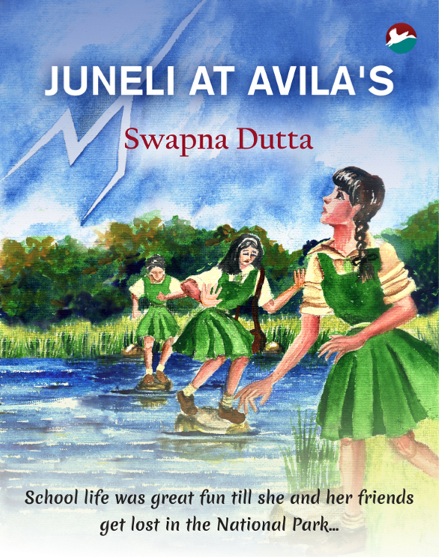
Swapna Dutta, Juneli at Avila’s (©1992, CinnamonTeal Publishing 2014)
——, An Exciting Term (©1992, CinnamonTeal Publishing 2014)

1ja 1et Swapna Dutta’s serial about a girl named Juneli who goes to boarding school was first published in the English-language Indian children’s magazineChildren’s World between 1978 and 1985. The serial proved very popular with young readers, and in the early 1990s HarperCollins published three Juneli books. This year the stories have found another lease of life as CinnamonTeal brings them out in three ebooks. All three books include the illustrations that Swapna’s daughter Sawan, then still a teenager, drew for the HarperCollins books, and the cover images are also Sawan’s (which were not used as covers of the print edition).

When I wrote a blog post about the first book, Juneli’s First Term, I hope I communicated how charmed I was by Juneli’s benign experience of boarding school. That benign quality continues in these books. There are scrapes and japes, mysteries and adventures in a setting that owes equal amounts to the pre–Harry Potter boarding school genre and Swapna’s own childhood experience at an English-speaking boarding school run for Indian girls by Carmelite nuns. Juneli now knows the ropes and has earned the respect and affection of most of her classmates, and the not-quite-enmity of a couple of snobbish malcontents. A kitchen mishap from the first book is a continuing source of embarrassment and comedy, and now we hold our breath each time there is a cooking exercise.

If you have a taste for boarding-schools stories or if you’re looking for a gift for a young person with such a taste, and want to add a little Indian flavour to your/their reading, I recommend these three little books.You can buy them from http://www.dogearsetc.com/. They are very reasonably priced by Australian standards. (I received complimentary copies, and Swapna is a friend.)

Moving right along: for the last few years I have set myself the task of writing 14 sonnets for the blog in November. Here goes with Sonnet No 1 for 2014, inspired by the Juneli books, along with Sugata Mistra’s wonderful TED talks maintaining that schools are an obsolete tool of empire, and Matilda the Musical which I’ve just seen on Broadway with its monstrous Miss Trunchbull, who couldn’t be more different from Juneli’s kind Mother Benedicta.

Sonnet No 1
Knead memories to make art. Punch, pull
fold, punch again, let stand, then bake.
So Dahl’s tormentor became Trunchbull,
real nuns did Swapna’s teachers make.
Both real schools served empire’s agenda.
Both fictions, one harsh, one most tender,
resist. Matilda, Juneli,
are naughty as they need to be.
In school, by monster or sweet mother
we’re taught to play our ordained parts,
ignore the whispers of our hearts,
but if we reach for one another,
each one giving what she has,
that may be good enough for jazz.

Amira Hass’s Drinking the Sea at Gaza

Amira Hass, Drinking the Sea at Gaza (1996, English translation @Metropolitan Books 1999; Owl Books 2000)

0805057404Amira Hass is a rarity: a Jewish Israeli journalist who lives full-time among Palestinians. She went to live in Gaza in 1993 and moved to Ramallah on the West Bank in 1997. She writes for the Israeli daily newspaper Haaretz. Drinking the Sea at Gaza is rooted in her daily witnessing and sharing of the lives of Palestinians in the Gaza Strip. It deals with the period from the Oslo Accords (1993–1995) and the establishment of the Palestinian Authority, followed by the general elections for the Palestinian Legislative Council (1996), with flashbacks to 1948, 1967 and the first Intifada (1987–1991), and an occasional footnote on changes between the Hebrew and English publications.

An awful lot has happened in the Gaza Strip since Hass wrote this book, including the second Intifada (2000–2006), the withdrawal of the Israeli army and dismantling of Israeli Settlements (2005), the election of Hamas (2006), the blockade (2007–) and armed conflict involving rockets, air attacks, land invasions, targeted assassinations, demolition of homes, and constantly violated ceasefires. So the books political narratives are historical rather than current news, the statistics on the economy are way out of date, and the living conditions of the people have almost certainly changed, and not for the better.

But the strength of the book lies in its intimacy. However formidable it is as journalism – marshalling statistics, providing context, arguing a position, constructing lucid narratives – it absolutely shines as a multifaceted portrait of people who have endured and resisted dispossession, armed occupation, economic oppression, neglect, wilful misunderstanding and betrayal. Hass has been described as an Israeli-bashing journalist, but on the strength of this book that’s rubbish. What she does is attempt to communicate an understanding of Palestinian points of view: suicide bombings are nightmarish, but the extraordinary hardship caused to ordinary people when the Gaza Strip is ‘hermetically sealed’ in response is monstrous. She writes about her friends.

Gazans include three main groupings, each with its own perspectives: refugees, people who were already living there before the great influx of refugees in 1948, and Palestinians who returned from exile after the Oslo Accords in the mid 1990s. Hass’s sympathies lie firmly with the refugees. There is also, of course, great political diversity: Fatah, preparing to govern and then backing Yasir Arafat (with reservations: Hass is not a fan); Hamas, at the time of this book gaining strength as the main Islamist party; the secular left, small but insightful. Older men who have spent time in Israeli prisons have a greater understanding of and sometimes sympathy for Israelis than the young, some of whom know them only as stereotypical oppressors (a little boy who followed some Israeli soldiers around tells an adult questioner he is trying to see their tails). Women are largely absent for public life: Hass, a Jew, mostly deals with men as a journalist, and her chapter on women is made up largely of pieces written by Gazan women contacts.

An unexpected quality of the book is its humour – Hass herself has a sardonic edge, and she has a good ear for the illuminating jokes of her Gazan friends.

The chapter ‘It is written in the holy Quran’ is a wonderful antidote to the notion that Islam is a dangerous monolithic hive mind. In a discussion of Muslim diversity is a neat example of religion-based humour. Hass was getting into a lift with a male acquaintance when another man, known to them both, joined them as the door was closing, and said, ‘I’m Satan.’ When Hass showed her lack of understanding, they explained that a verse in the Quran says that when a man and a woman are alone together Satan is between them.

Another chapter begins with a teasing exchange between drivers in a traffic snarl. The men, both from the same refugee camp, mock each other on the basis of generations-old jokes between the villages their parents were driven from in 1948. And so we are introduced to a very bitter–very sweet culture of remembrance. The yearning for lost country is not just a political motivator. It also sustains people who have been trapped in refugee camps for half a century.

Even when dealing with the torture of political prisoners in Israeli prisons, there are unexpected flashes of laughter. This, from a man named Abu Majed, is probably my favourite moment in the book:

One of his interrogators was rather overweight. As the man was jumping on him and squeezing his testicles, trying to get him to squeal on his comrades, Abu Majed managed to gasp, ‘They must be paying you double for your fat ass.’ Incredibly, the interrogator bent over with laughter and left the room.

Hass describes that as an unexpected moment of contact. That’s not a bad description of the book itself. In the context of so much that is written about the intractability of the Israeli–Palestinian entanglement, here is someone attempting to build a bridge of understanding. She writes:

If more Israelis with good intentions would actually come to Gaza and talk to people directly, I am convinced that they would have a better understanding of [attitudes described in the Israeli press as] ‘fundamentalism’ and a better grasp of the true face of the Oslo Accords. But Israelis are not allowed into Gaza unless they come to meet with Palestinian Authority leaders as part of an official delegation.

We can be very glad that at least one Israeli has managed ‘talk to people directly’, and has given us a chance to do so by proxy through this book.

Leith Morton’s translations of Masayo Koike, Shuntarō Tanikawa & Rin Ishigaki

Leith Morton (selector and translator), Poems of Masayo Koike, Shuntarō Tanikawa & Rin Ishigaki (Vagabond Press 2013)

Vagabond_Asia_Pacific_Series_Japan1

Indonesian writer and translator Maggie Tiojakin said recently on the ABC’s Books and Arts Daily that in translating Kipling’s Just So Stories she had to negotiate between wanting people to understand Kipling’s playful language or just enjoy the sound of it. Having opted for understanding, she worried that she had ruined Kipling’s work.

People enjoyed her Elephant’s Child anyhow, so all was well, but a similar dilemma faces any translator where the sound and look of the words matters. This includes most poetry, particularly when translated into European languages from languages like Chinese and Japanese that are written in characters: a simple word-by-word transition just doesn’t do it. The difficulty – and the joy of the challenge – are charmingly illustrated by the web page Matsuo Bashô: Frog Haiku (Thirty-one Translations and One Commentary); likewise by Robert Okaji’s annotated translations from Chinese (thanks for the tip, Will).

Inevitably then, in a book like this one, presenting three Japanese poets in translation, there’s a sense that one is reading the poems at one remove: they really are at one remove. The translator, Leith Morton, discusses some of the challenges in his preface, at one point expressing the hope that ‘the many textual pleasures … available to [a] Japanese audience can be gestured towards in translation’. He succeeds admirably, but it’s still frustrating to read gestures towards other people’s pleasures. But then when I came back to the book a couple of weeks after my first reading, its pleasures had miraculously become much more immediate.

The first of these three poets, Masayo Koike, is the youngest and possibly the most accessible to readers who, like me, have slender acquaintance with Japanese literary forms. There are wonderful haiku-like moments, like this in ‘The Ashtray and the Girl’:

The end of summer
In the middle of the road
Lying on its back a Brown Baker cicada

A number of her poems are remarkable for their ease with bodily functions: ‘A Short Poem about Daybreak’ begins:

America, in a toilet in Santa Fe
Daybreak
I was urinating softly for a long long time
In the whole world
I felt as if there was only this sound and myself

In ‘Bathhouse’ the speaker looks at other women’s bodies, ‘Naked backs, hips and backsides / Private parts / … The many hollows of the female body / Water gathering there / Dripping down’ ; ‘Penis from Heaven’ (a title that must put Leith Morton in line for some kind of award!) recalls an intimate, sexual moment from a film with no hint of prurience or transgression.

The second poet, Shuntarō Tanikawa, is, according to Leith Morton’s preface, generally acknowledged to be the most famous poet in Japan today. Urination features in his section of the book as well, most notably in ‘Peeing’, which I read as a cheerful anti-war poem. There are a number of fine poems about poetry and writing. Possibly because I read the book while my mother-in-law was dying, his poem that most struck me was ‘My Father’s Death’. This is in a number of parts, the first of which might almost have been called ‘The Day Father Died’ in homage to Frank O’Hara’s ‘The Day Lady Died’ – it is preoccupied with minutiae, except for the stark description of the dead body:

his mouth with the false teeth removed was open and his face had turned into a Noh mask of an old man, he was already dead. His face was cold but his hands and feet were still warm.

If you get a chance read this whole poem – it moves on to concentrated meditation, to the speech Tanukawa gave at his father’s funeral, to a beautifully captured moment of memory and realisation a month later.

Rin Ishigaki (1920–2004) doesn’t have any piddling, but she does have a bathhouse poem, ‘At the Bathhouse’. Perhaps as she was of an earlier generation than Koike, she takes the bodies of the women for granted and takes as her starting point the one yen pieces that women receive as change when they enter the bath – a humble coins that

Soak to their fill in hot water
And are splashed with soap.

The heart of this poem, and possibly of Ishigaki’s section of the book, is in the later lines:

What a blessing to be of no value
In monetary terms.

That is to say, many of the poems are about humility – about poverty, deprivation and economic oppression, but also about humility, and a kind of surprised appreciation of small unvalued things. The point where I fell in thrall to Ishigaki was in the poem ‘Sadness’. Here’s the whole poem (note – I’m 67):

I am 65.
Recently I fell over and broke my right wrist.
They told me at the hospital that
After it heals it will not be the same as it was before.
I rubbed my arm crying.
'Mother
Father
I'm sorry'
Both of them
Died some time ago and are no longer here
This body I received from them.Even now I am still a child.
Not an old woman.

This is the third book I’ve read in Vagabond Press’s admirable Asia-Pacific Writing series. The others (which I blogged about here and here) were translated from Chinese.

Grand Master C L Moore’s Jirel of Joiry

C L Moore, Jirel of Joiry (©1934, 1935, 1936, 1939; Ace Fantasy Books 1982)

joj

This book reminded me of something the late poet Martin Johnston said about H P Lovecraft: ‘The writing is terrible but it gives you great nightmares.’ In this tremendously inventive fantasy the main character, the fierce but beautiful warrior lady Jirel, takes five separate journeys into four different demonic worlds. Think Dante’s Hell without the theology, the politics or the poetic vision, but plenty of gusto, gore and unspeakable horrors.

Jirel of Joiry has been on my list of recommended science fiction/fantasy books for a long time, probably because its protagonist was among the first women to star in heroic fantasy genre fiction. I began reading it now for reactive reasons: I was irritated by a recent egregious bit of click-bait that dumped on adults who find some YA and children’s literature and by extension fantasy seriously interesting (no argued rebuttal needed beyond invoking Sturgeon’s Law); and a ham-fisted, over-analysed fantasy episode in a mainstream novel made me yearn for some unabashed genre writing.

Weird_Tales_October_1934

The book’s five related short stories were first published in the 1930s. The first, ‘The Black God’s Kiss’, inspired the cover illustration of the issue of Weird Tales in which it appeared (see left). You don’t get much more unabashed than that.

The Weird Tales cover actually owes more to its assumed readers’ tastes than to the story itself: in the scene it purports to illustrate, Jirel is clad in armour and holding an unsheathed sword, and the black god, encountered in a black building on a dark, dark night, is described as follows (on page 29):

The image was of some substance of nameless black, unlike the material which composed the building, for even in the dark she could see it clearly. It was a semi-human figure, crouching forward with outthrust head, sexless and strange. Its one central eye was closed as if in rapture, and its mouth was pursed for a kiss. And though it was but an image and without even the semblance of life, she felt unmistakably the presence of something alive in the temple, something so alien and innominate that instinctively she drew away.

This goes easier on the emotive adjectives and adverbs than most of the writing, but it’s fairly representative.  I particularly like the way, having used nameless a little too often in recent pages, the writer reaches for an alternative and finds innominate, for this is a book in which there are many things that the narrator tells us are beyond the power of words to name or describe. Do I need to tell you that within an overwrought page Jirel is compelled by mysterious global forces to kiss those pursed lips, with chilling consequences?

The stories are all fast moving, violent and dazzlingly inventive, easy to mock when paraphrased, but told with a gleeful lack of irony. The sexual politics are fascinating: Jirel is a formidable warrior who is violently ambivalent about the idea of being dominated by a male, whether human or demonic, and who has deeply antagonistic relationships with the only other significant female characters. But even more fascinating is the play of black and white. Jirel herself is identified as red, because of her hair; the attractive/deadly male figures are all at the darker end of the swarthy-to-black spectrum; and an emphatic white is reserved for lost, spectral figures such as the blind, galloping horses in the cover illustration of my edition of the book, or the fabulously evil characters such as the witch in the fourth story, ‘The Dark Land’:

It was a woman – or could it be? White as leprosy against the blackness of the trees, with a whiteness that no shadows touched, so that she seemed like some creature out of another world reflecting in dazzling pallor upon the background of the dark, she paced slowly forward. She was thin – deathly thin, and wrapped in a white robe like a winding sheet …

But it was her face that caught Jirel’s eyes and sent a chill of terror down her back. It was the face of Death itself, a skull across which the white, white flesh was tightly drawn. And yet it was not without a certain stark beauty of its own, the beauty of bone so finely formed that even in its death’s-head nakedness it was lovely.

And it goes on – the word ‘white’ occurs four more times in the next paragraph, which also mentions the absence of colour and shadows, twice each.

It was impossible not to think of Toni Morrison’s 1992 essay Playing in the Dark: Whiteness and the Literary Imagination. Morrison describes a mythologised blackness ‘pulled from fields of desire and need’, and ‘the silence of an impenetrable inarticulate whiteness’ that occurs again and again in fiction by white US authors. I don’t know if she has a taste for genre or may even have read Jirel of Joiry, but I hope she would enjoy the way it allows images and motifs from white US’s Africanist imagination to thrum with innominate energy.

Ruth Ozeki’s Tale for the Time Being with the Book Group

Ruth Ozeki, A Tale for the Time Being (Penguin 2013)

9781922079183

Before the meeting: I doubt if I would have persisted with this book if not for the Book Group. I can pinpoint the moment on page 97 when I would have given up:

The past is weird. I mean, does it really exist? It feels like it exists, but where is it? And if it did exist but doesn’t now, then where did it go?

At what possible level could this be interesting? Yes, it’s from the diary of Nao, a 14 year old girl, but this, a couple of pages later, is from Ruth, a mature woman:

What is the half-life of information? Does its rate of decay correlate with the medium that conveys it? Pixels need power. Paper is unstable in fire and flood. Letters carved in stone are more durable, although not so easily distributed, but inertia can be a good thing.

It’s not just the banality of such writing, it’s the ominous sense that the author is out to Communicate Something. And there’s a lot of it in this novel.

However, I did persevere, and I’m glad I did.

There are two interlinked stories. In the first, Nao, a Japanese teenager who spent most of her childhood in California but returned to Japan because her father lost his job when the dot com bubble burst. She is bullied at school with increasing viciousness, drops out and makes some unfortunate life choices, but finds strength and comfort with her great grandmother who is a very old Zen Buddhist nun. Her father has sunk into a deep depression and tried to kill himself a number of times. Nao likewise intends to kill herself once she finishes her project of writing her great grandmother’s life story. Bit by bit, she learns the story of her great uncle, a poet and dreamer who was conscripted to be a kamikaze pilot.

In the second story, Ruth (a novelist who shares a first name and many biographical details with the author) lives with her partner Oliver (same name as the author’s partner) on an island on the west coast of Canada (where the author lives). She finds a parcel containing, it turns out, Nao’s diary – the one that is intended to become the great grandmother’s life story – and a diary and some letters written by Nao’s great uncle.

So there you have a set-up for lots of cool intertextuality. We watch Ruth reading and responding while we are reading and responding. What is ‘now’ for Nao (they are pronounced the same), is past for Ruth. Ruth finds out things from the letters that the Nao of the diary doesn’t know, and desperately wants to intervene, convinced that this information would pull Nao and perhaps her father out of their downward trajectories.

Oliver and his friends occasionally lecture Ruth about scientific matters connected to climate change. Nao’s great grandmother lectures on zen themes, including a neat set of instructions on how do do zazen (zen mediation). Ruth ruminates a lot on time (in a garrulous way that feels very un-zen to me, but what would I know, Ruth Ozecki is a zen priest and it’s a long time since I read Allan Watts). There’s a crow that is in some way spiritually significant. At one stage an event disrupts the space-time continuum – which would have been fine in a fantasy novel, or as a Paul-Austerish bit of postmodern play, but the characters keep on trying to make sense of it in a way that seems to be claiming great spiritual significance for it, and ends up underlining its arbitrariness.

What the novel does brilliantly is cast a net over the idea of a Japanese identity that can include such great contradictions: militarism, suicide cults, zen wisdom, cosplay, origami, brutality and a deep honouring of persons. The sections about the young men conscripted to be kamikaze pilots is gruelling and convincing. The descriptions of schoolgirl bullying, which I would have been inclined to dismiss as whipped up for effect, gain plausibility from their juxtaposition with the earlier generation’s bullying.

There are other pleasures, such as the irresistible image of Oliver hiding in a refrigerator delivery crate in the cellar to avoid visitors who let themselves in and wait in the kitchen for someone to come home (it’s that kind of island). But on the whole this a literary novel that makes me wonder why I would ever bother to read another literary novel. No doubt I’ll come back to ‘mainstream’ fiction in good time, but the next book I read will have to be either honest non-fiction or honest fantasy.

The meeting: There were seven of us. We ate pizza. There was lots to talk about lots of subjects. We told travellers’ tales – from Florence, Manila, Shanghai, the York Peninsula and Gerroa. One chap had had a gruesome experience with warts on his index finger. Another had finally emerged from a winter of child-borne infections. Three of us had had deaths in the family since our last meeting. One of us had received an award or two in his professional life.

Three of us had finished the book. No one else disliked it as much as I did. One guy described how he kept seeing it as a different kind of novel as he progressed, and accepted the discontinuities cheerfully. He had laughed out loud when the fantasy element appeared, appreciating its – my word – impertinence. I got some glimmering of how the book could be enjoyed by many people. Sadly, I think I managed to convey eloquently how it might be disliked by at least one. Some of us found the title to be an uncomfortable mouthful, and we  all agreed that the cover design is terrible.