Francis vs the Neocons

Just in case you haven’t seen it already, here are some fabulous bits from the new pope’s recent exhortation Evangelii Gaudium (full text here):

. . .  some people continue to defend trickle-down theories which assume  that economic growth, encouraged by a free market, will inevitably succeed in bringing about greater justice and inclusiveness in the world. This opinion, which has never been confirmed by the facts, expresses a crude and naïve trust in the goodness of those wielding economic power and in the sacralised workings of the prevailing economic system. Meanwhile, the excluded are still waiting. To sustain a lifestyle which excludes others, or to sustain enthusiasm for that selfish ideal, a globalization of indifference has developed. Almost without being aware of it, we end up being incapable of feeling compassion at the outcry of the poor, weeping for other people’s pain, and feeling a need to help them, as though all this were someone else’s responsibility and not our own. The culture of prosperity deadens us; we are thrilled if the market offers us something new to purchase. In the meantime all those lives stunted for lack of opportunity seem a mere spectacle; they fail to move us.

No to the new idolatry of money

One cause of this situation is found in our relationship with money,  since we calmly accept its dominion over ourselves and our societies. The current financial crisis can make us overlook the fact that it originated in a profound human crisis: the denial of the primacy of the human person! We have created new idols. The worship of the ancient golden calf (cf. Exodus 32:1-35) has returned in a new and ruthless guise in the idolatry of money and the dictatorship of an impersonal economy lacking a truly human purpose. The worldwide crisis affecting finance and the economy lays bare their imbalances and, above all, their lack of real concern for human beings; man is reduced to one of his needs alone: consumption.

While the earnings of a minority are growing exponentially, so too is  the gap separating the majority from the prosperity enjoyed by those happy few. This imbalance is the result of ideologies which defend the absolute autonomy of the marketplace and financial speculation. Consequently, they reject the right of states, charged with vigilance for the common  good, to exercise any form of control. A new tyranny is thus born, invisible and often virtual, which unilaterally and relentlessly imposes its own laws and rules. Debt and the accumulation of interest also make it difficult for countries to realize the potential of their  own economies and keep citizens from enjoying their real purchasing power. To all this we can add widespread corruption and self-serving  tax evasion, which have taken on worldwide dimensions. The thirst for power and possessions knows no limits. In this system, which tends to devour everything which stands in the way of increased profits, whatever is fragile, like the environment, is defenceless before the interests of a deified market, which become  the only rule.

No to a financial system which rules rather than serves.

Does this man worship the same God as our Prime Minister who with each passing day reveals that he has steeled his heart against yet another sector of humanity, and the environment, ‘defenceless before the interests of a deified market’.
Will Coles

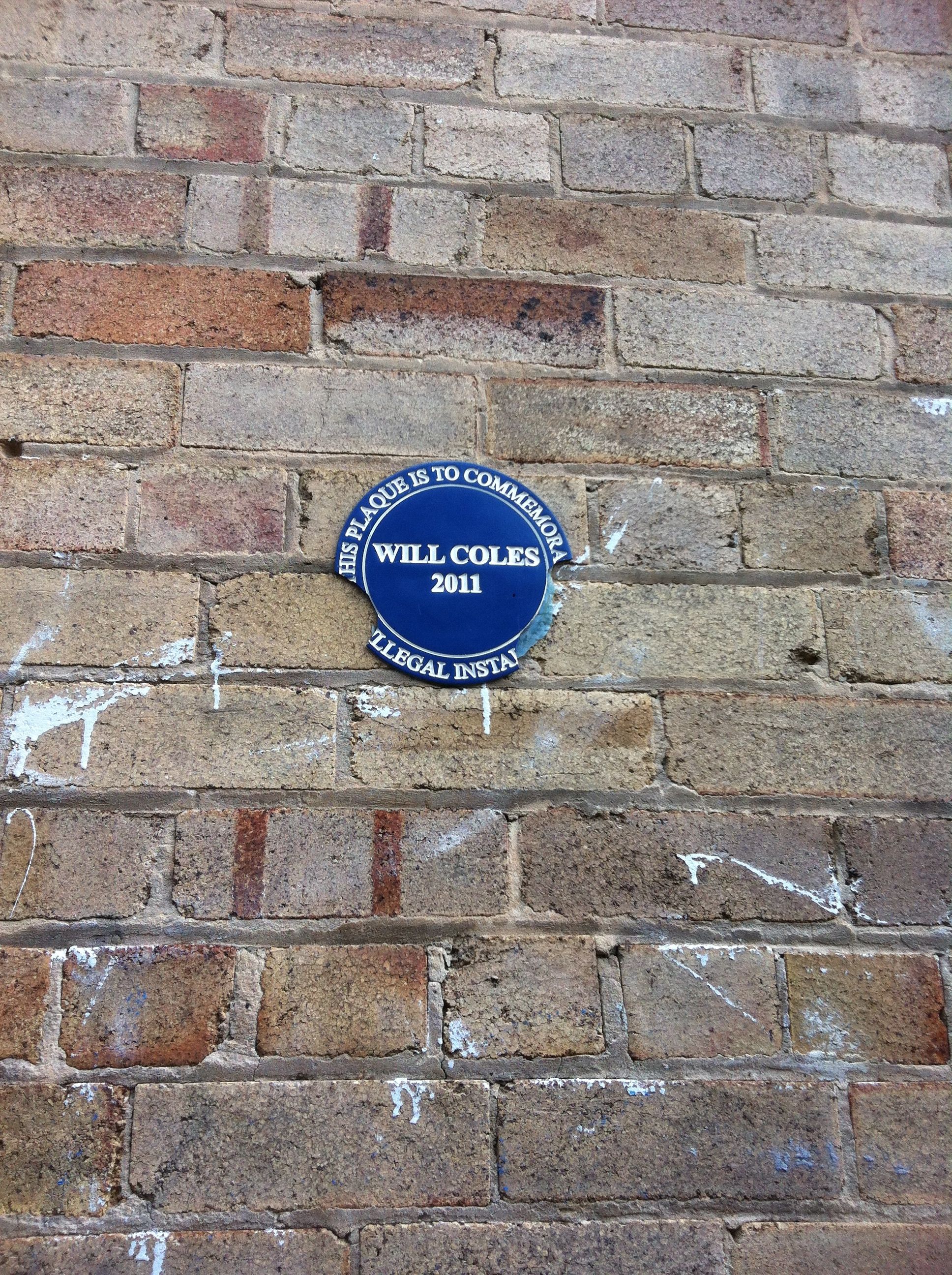
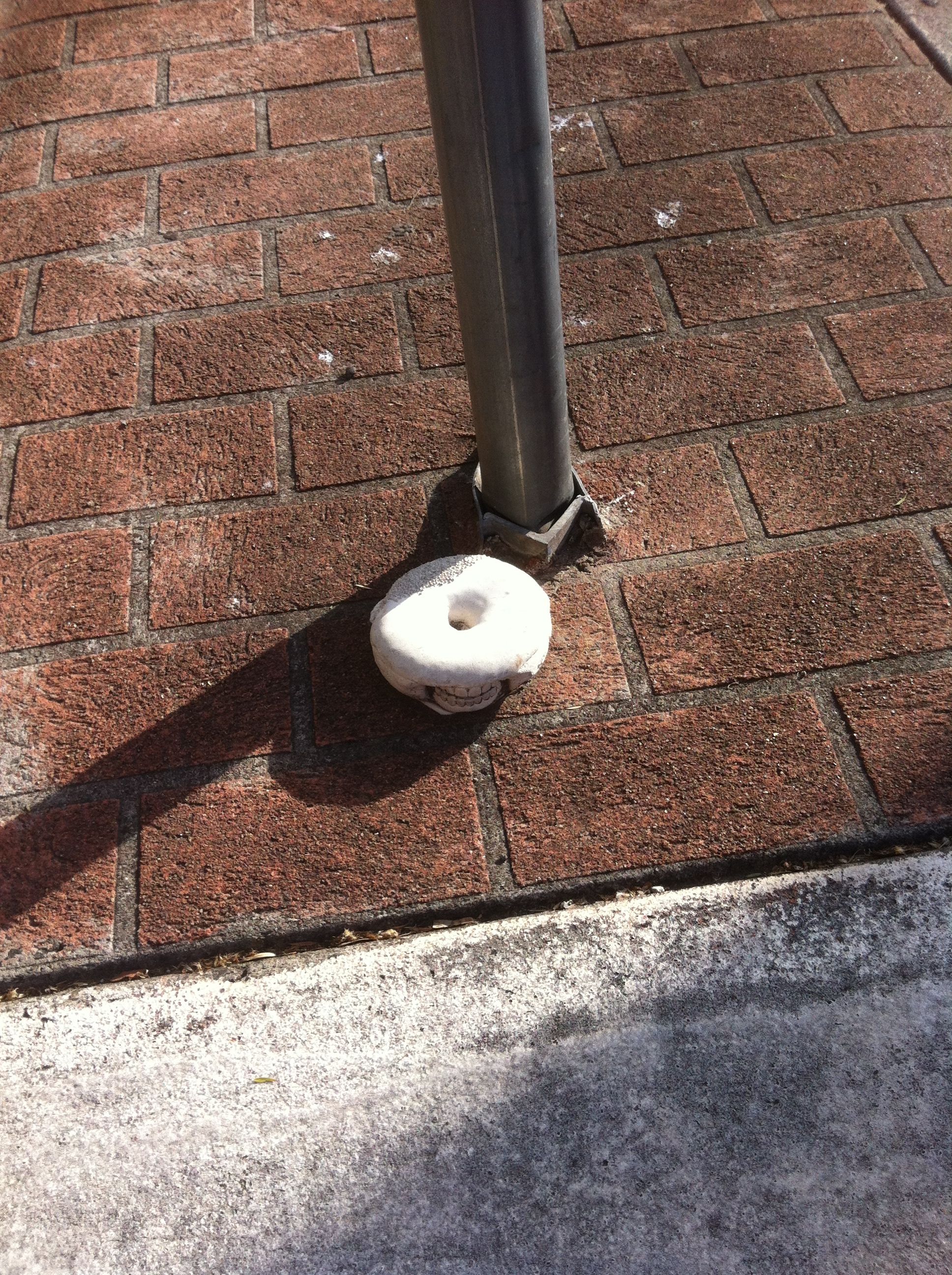
Will Coles’s works are probably seen and enjoyed by more people on a daily basis than those of any other sculptor. It’s not that crowds line up to see them, although he has been exhibited in galleries, but you might happen to look down while waiting for traffic lights or standing at a bus stop, and there will be a donut baring its teeth at you, or a squashed softdrink can inscribed with the word ‘Eternity’ in Arthur Stace script, or a mobile phone labelled ‘Hate’.

If you’re not familiar with his work, have a look at Mr Will on Flickr, and/or visit his web site. What I’ve been noticing is the way his work has been defaced – in Marrickville, Enmore, Newtown and as far afield as Surry Hills. In the video interview from Virtual Press Office below, he talks about this as part of the game, but sometimes it creates interesting new effects. The main damage to his work seems to come from would-be collectors and other street artists (or would-be artists). Could this be saying something more general about art in this society?

IMG_0819

Street Plaque near the Brett Whiteley Studio in Surry Hills. An image of the intact work is here.

IMG_0823

An undefaced Sweet Tooth in the back streets of Marrickville.

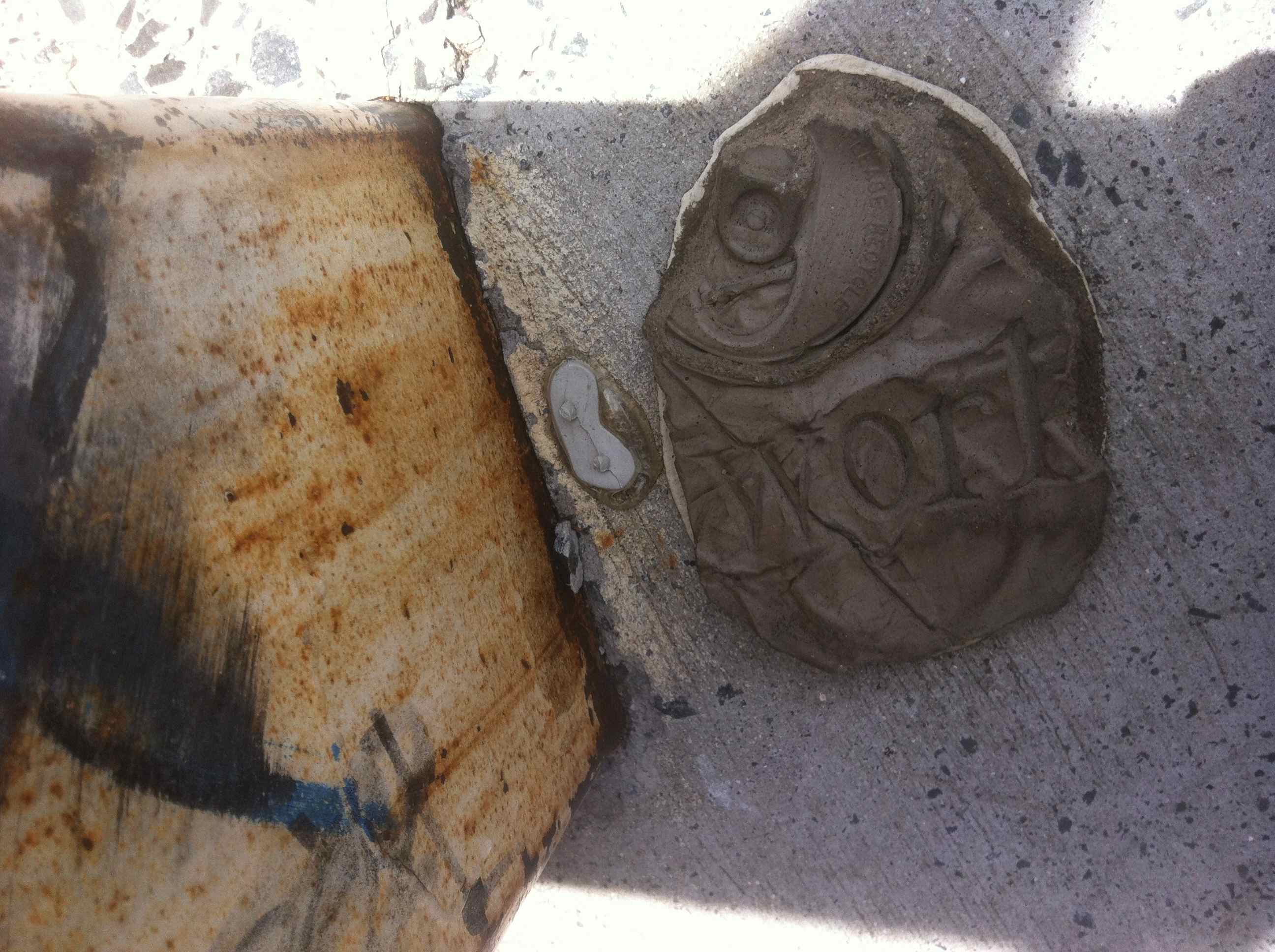
IMG_0846 - Version 2

Man-Made at a bus stop in Enmore Road. A would-be collector was defeated by the glue and left us with a relic. There’s a photo of an unmutilated piece here.

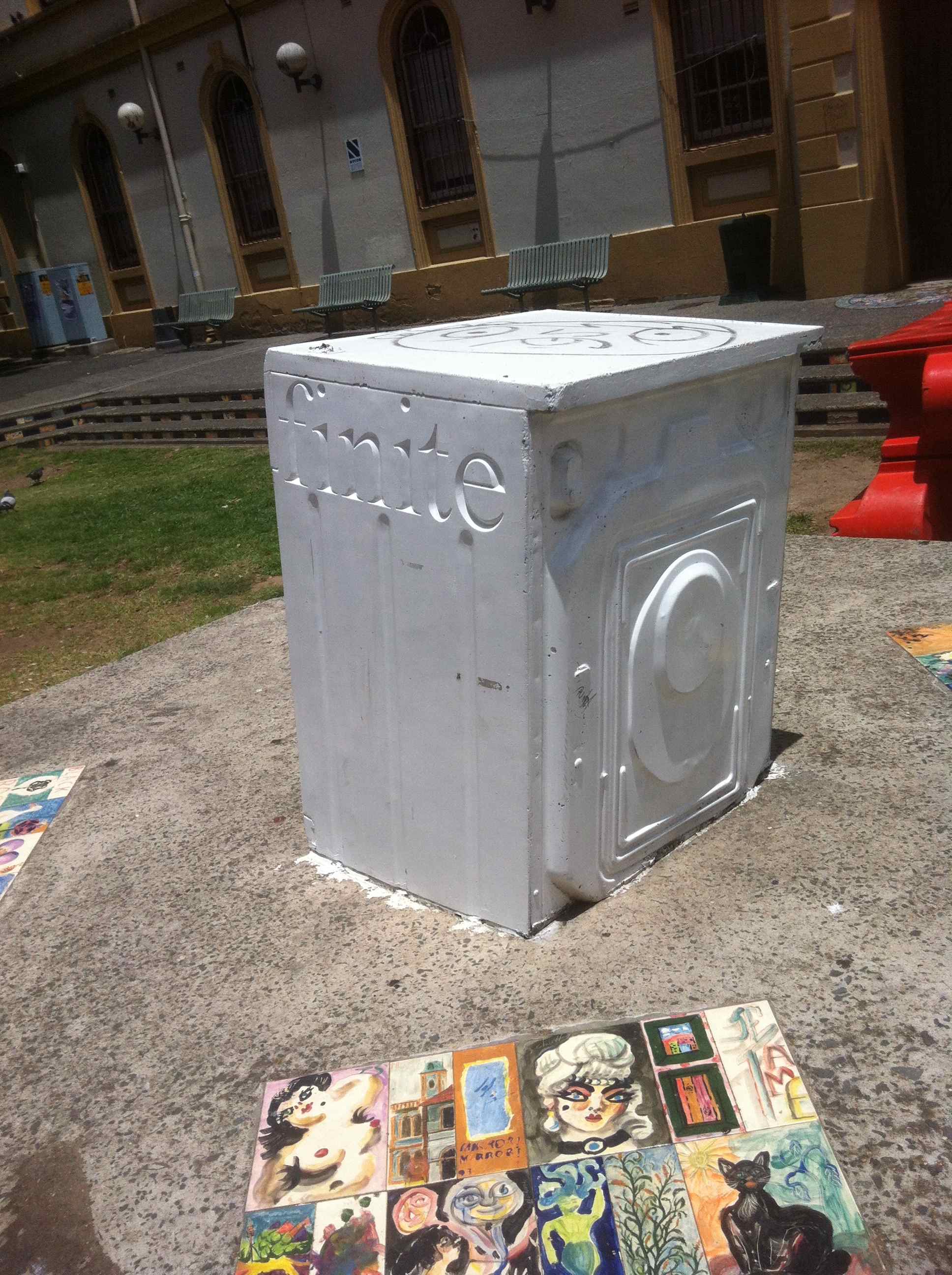
Finite1

Finite, outside the Newtown police station. From this angle it looks pretty much untouched, except of course for the tags on its top.

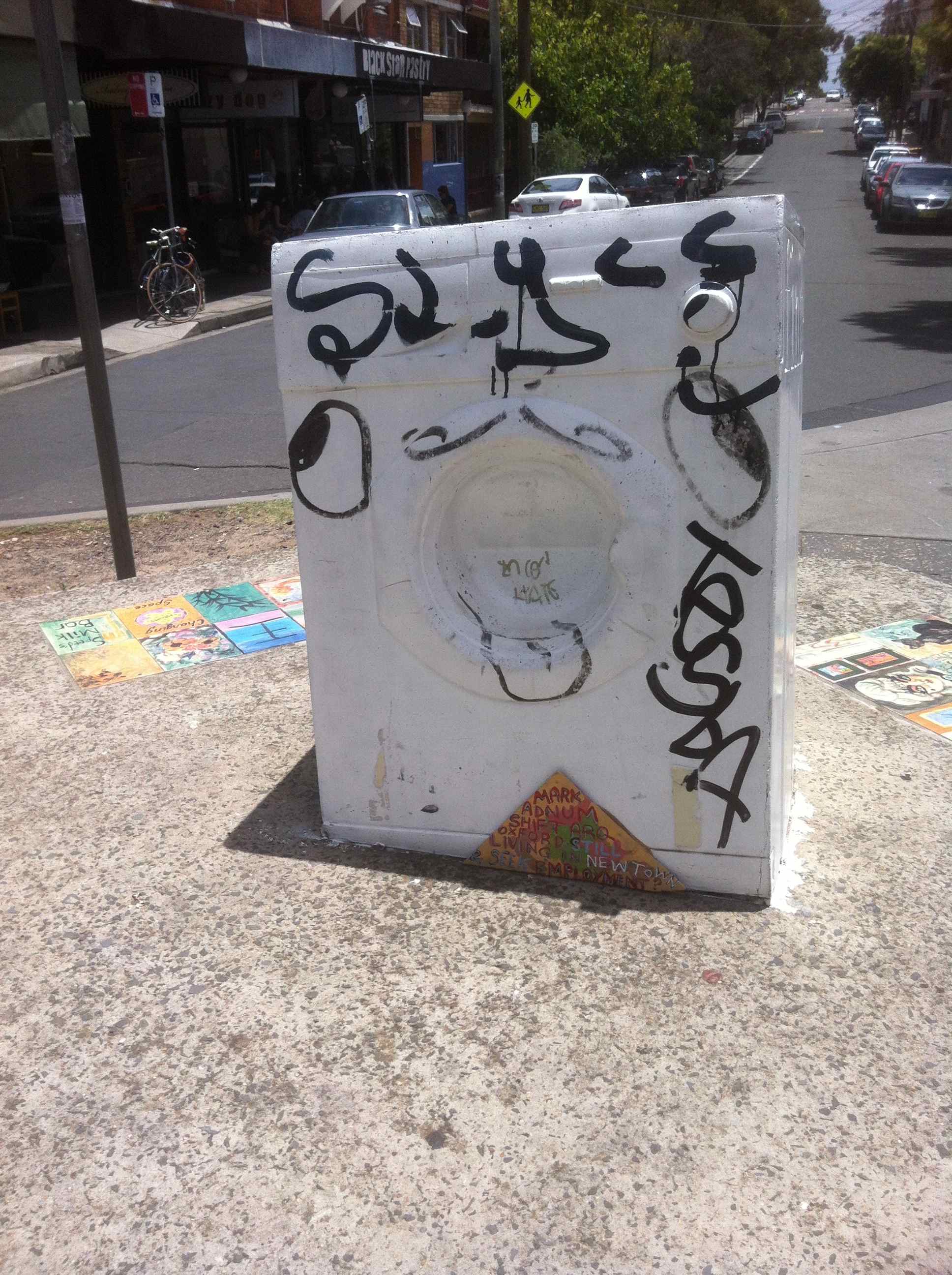
Finite2

But here it is from the other side. Not just the graffitists, but another street artist with a distinctive lettering style have used the sculpture as their canvas. Not so bad really: it just changes the image from white-goods consumerism to tacky laundromat.

Work

Someone tried to acquire this Work, also near the Newtown police station, but the glue defeated them.

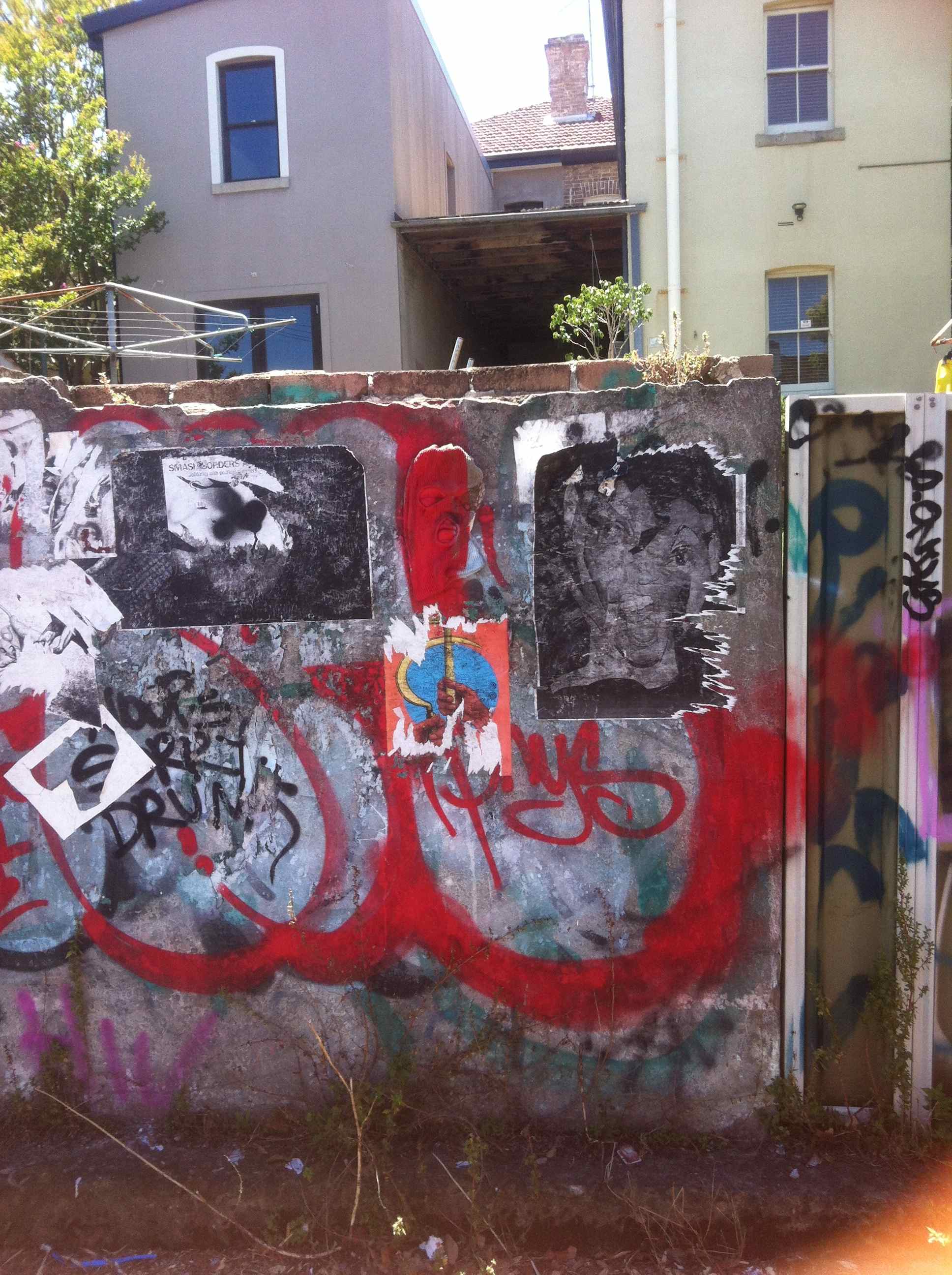
laissez faire in situ

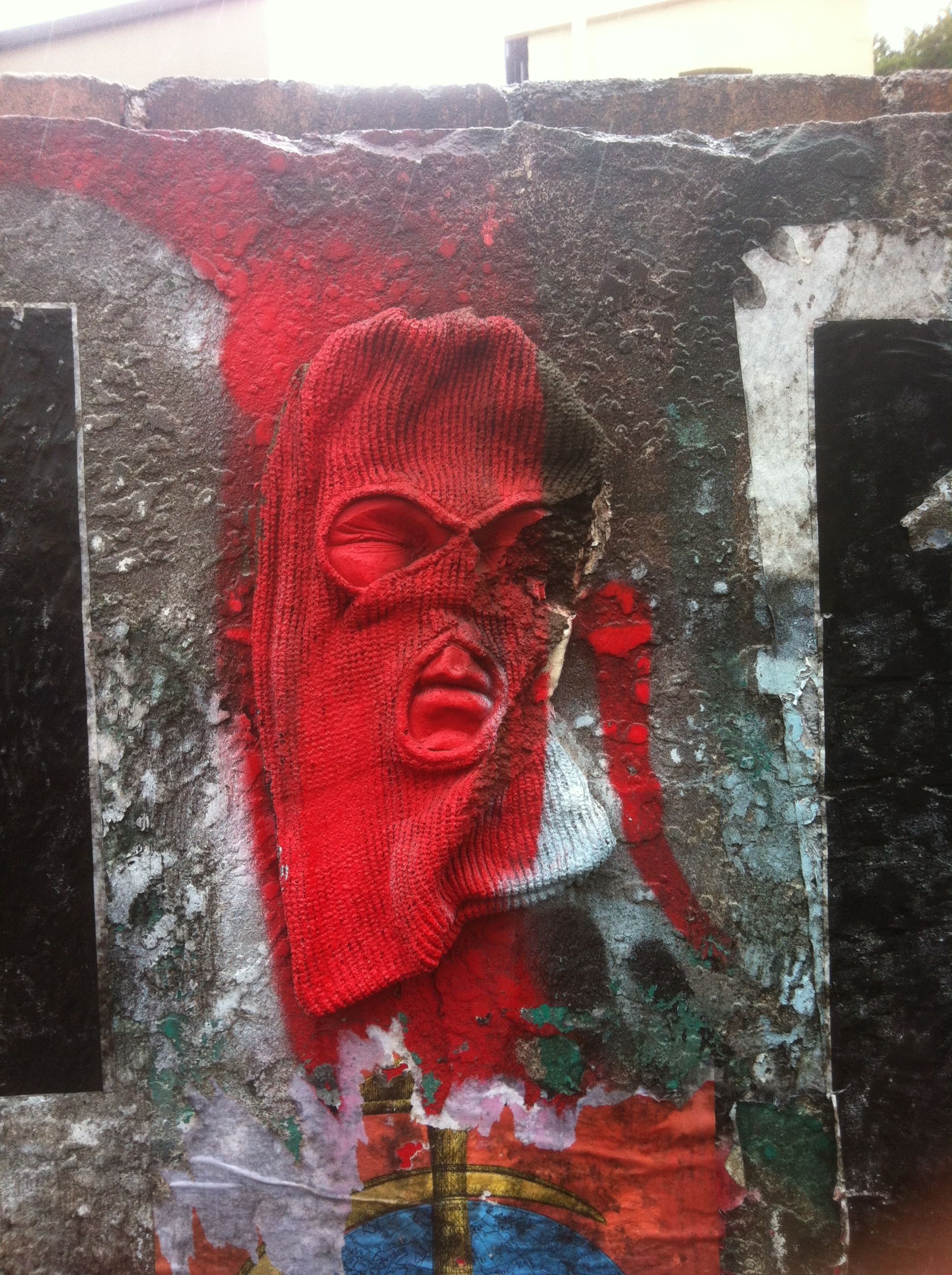
Here’s a patch of wall just off Enmore Road that’s been liberally covered with posters and graffiti. Hidden beneath the layers is a Will Coles sculpture.

IMG_0835

Voilà! The piece is entitled Laissez Faire, but its comment on larcenous capitalism is a bit lost when it has been chipped at and buried in red paint.

IMG_0849
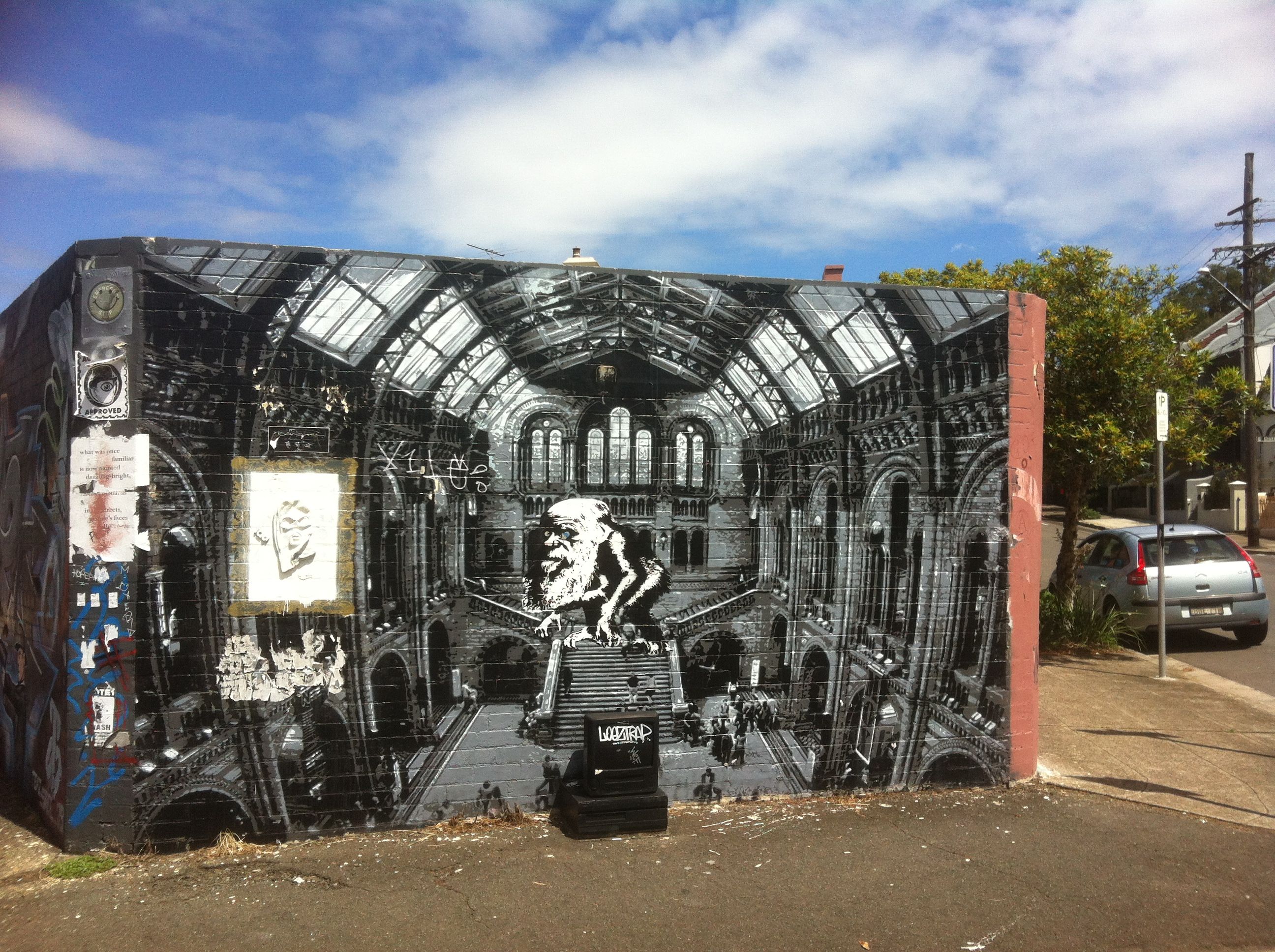
The spectacular mural on the corner of Phillip and Gladstone Streets, Enmore. The owner of the wall welcomes street artists, asking them only to avoid the entrance to his place of business. These artists have impressively given due deference to the Will Coles work that was there before them.
IMG_0848

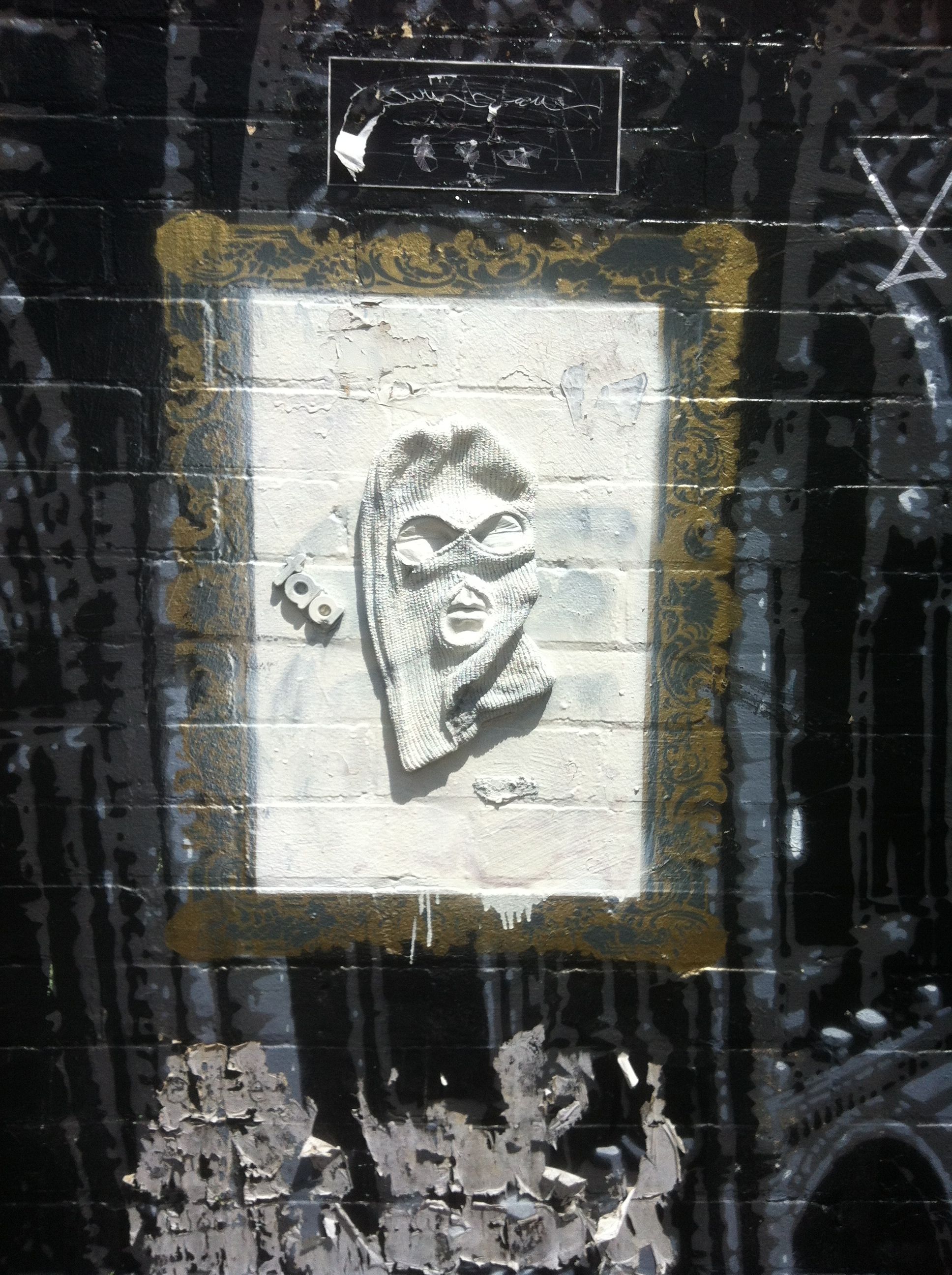
A detail from the mural showing Laissez Faire, and also the damaged smaller Coles work, Tag, to its left.

Here’s the video from Virtual Press Office:

Jennifer Maiden: A Rare Object

Jennifer Maiden, The Violence of Waiting (Vagabond Press Rare Objects Series No 95, 2013)

1vwAs Vagabond Press’s beautifully crafted Rare Objects series of chapbooks approaches its hundredth and final title, Jennifer Maiden makes her debut at Nº 95. There are just six poems in the book, mostly in modes established in Maiden’s recent books:

  • Nº 15 of the George Jeffreys series, which finds George and Clare Collins in a purgatorial Western Suburbs Poker Machine Palace
  • Nº 10 of the Hillary Clinton and Eleanor Roosevelt dialogues – this time with a little Lady Diana thrown in
  • A Lady Diana–Mother Teresa dialogue – this may be the second time they’ve appeared together in a Jennifer Maiden poem, the first time being shortly after they both died
  • a ‘Uses of’ diary poem, about cosiness and Sylvia Plath among other things
  • A Kevin Rudd–Dietrich Bonhoeffer dialogue
  • ‘Maps in the Mind’, a lyric that invokes successive Australian governments’ treatment of asylum seekers a little in the manner of ‘My Heart Has an Embassy’, which referred to Julian Assange

As I was starting this blog post, my Feedly reader presented me with ‘The poetic spirit of Rare Objects’, an excellent review by Jessica L Wilkinson of the four Rare Objects launched in Melbourne last weekend. Having read that review, which originated on the Overland site, I find it hard to think of anything else I want to say, so I recommend that you click on the link. For those who don’t click, here’s her final sentence, which captures the mood of the book beautifully:

This collection is quietly yet resolutely political, and leaves us considering our own strengths and vulnerabilities, and who we may imagine clinging to for guidance through tough decisions.

awwbadge_2013I nearly forgot and perhaps I should have as it’s such a small book, but this is another title in my Australian Women Writers Challenge for 2013.

Sonnet 14: November ends

For a while there it looked as if I wasn’t going to make my sonnet quota this year, but here’s the last one, just ahead of deadline. I was tossing up whether to write about my increasing deafness, or Yoko Ono’s exhibition at the MCA, or the way Eleanor Caron’s Booker prize-winning novel The Luminaries is getting so little promotion in the end-of-year lists in newspapers and bookshop reading guides. I settled for this:

Sonnet 14: November ends
I shopped, I read, I went to movies,
played with children, watched TV,
rode a train with weary juvies,
helped add a show to P’s CV,
stood in rain for climate action,
faced computer death distraction,
ruminated on the news,
tried to formulate some views:
all grist for my November rhyming
fourteen lines in Pushkin’s ways,
fourteen times in thirty days.
An hour to spare – precision timing –
I’ve got them done. Perhaps next year
the form of Petrarch, or Shakespeare.

Colleen Z Burke’s Splicing Air (and Sonnet 13)

Colleen Z Burke, Splicing Air (Feakle Press, 2013)

1sa

More than 20 years ago in a pub in Glebe I heard Colleen Burke (I don’t think the Z had yet become part of her working title) read poems from which I still remember lines that move me, from what she presented as straightforward records of conversations with her children.

Many of the poems in Splicing Air capture moments with her grandchildren, and the conversations still smuggle killer lines into the poetry. Many others, in what I think of as her signature style, are short, impressionistic pieces about landscape or, especially, skyscape in and over Newtown and surrounds, or bushland. There are a number of pieces observing the social life of Newtown, past and present, and a handful of longer pieces. And some snapshots from New Zealand

Four of the longer pieces draw on the history of discovery and settlement of New South Wales: an narrative-essay on James and Elizabeth Cook, journal entries by the surgeon and an officer from the First Fleet, a biographical sketch of the early Australian poet Frank Macnamara. They lack obvious poetic embellishment, but in each of them the effect is unsettling and revelatory. There are straightforward accounts of the lives of two nineteenth-century women – ‘The publican’s daughter’ being the poet’s great grandmother, and ‘The fossil hunter – Mary Anning’ (which accounts for roughly a fifth of the book) an extraordinary Dorset woman who might easily have been lost to history because of her class and gender.

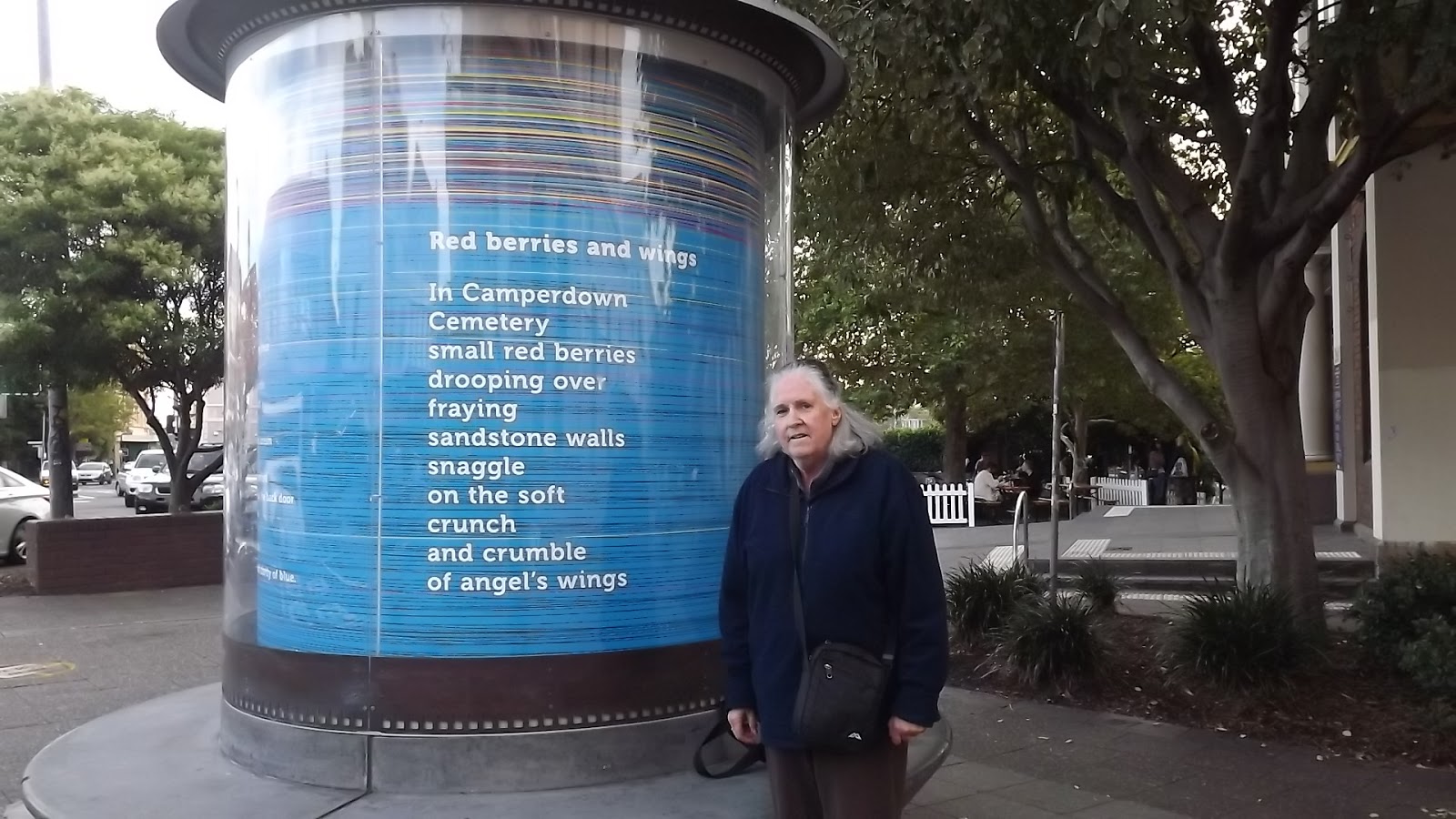
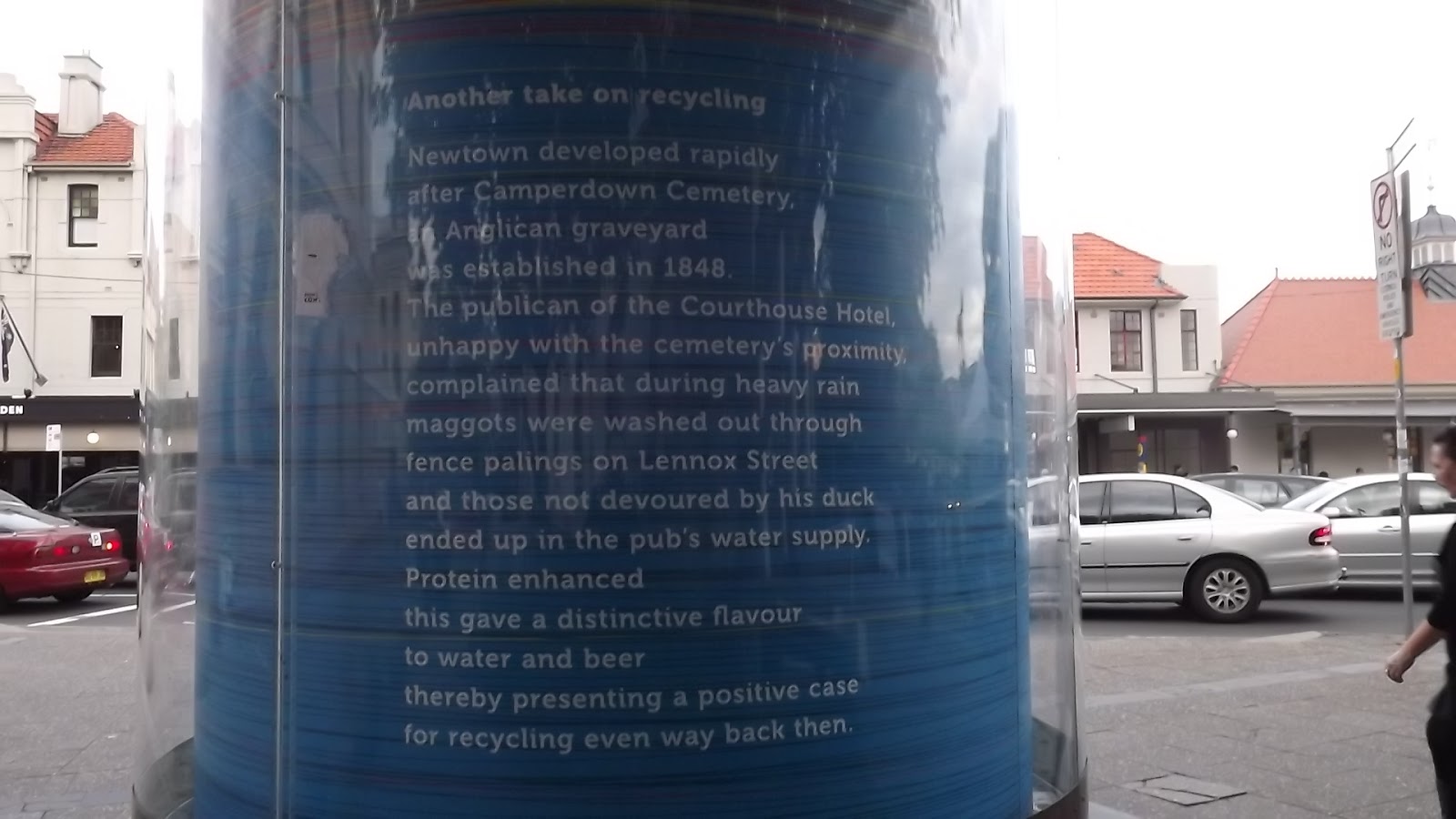
The sense of place is strong here as in all Colleen Z Burke’s work: I think of her as the poet of Newtown. Earlier books have included a number of pieces set in Camperdown Cemetery, and this book has two beauties set there too: ‘Kangaroo grasslands and my 20 month old grandson’ and the wicked ‘Another take on recycling’.

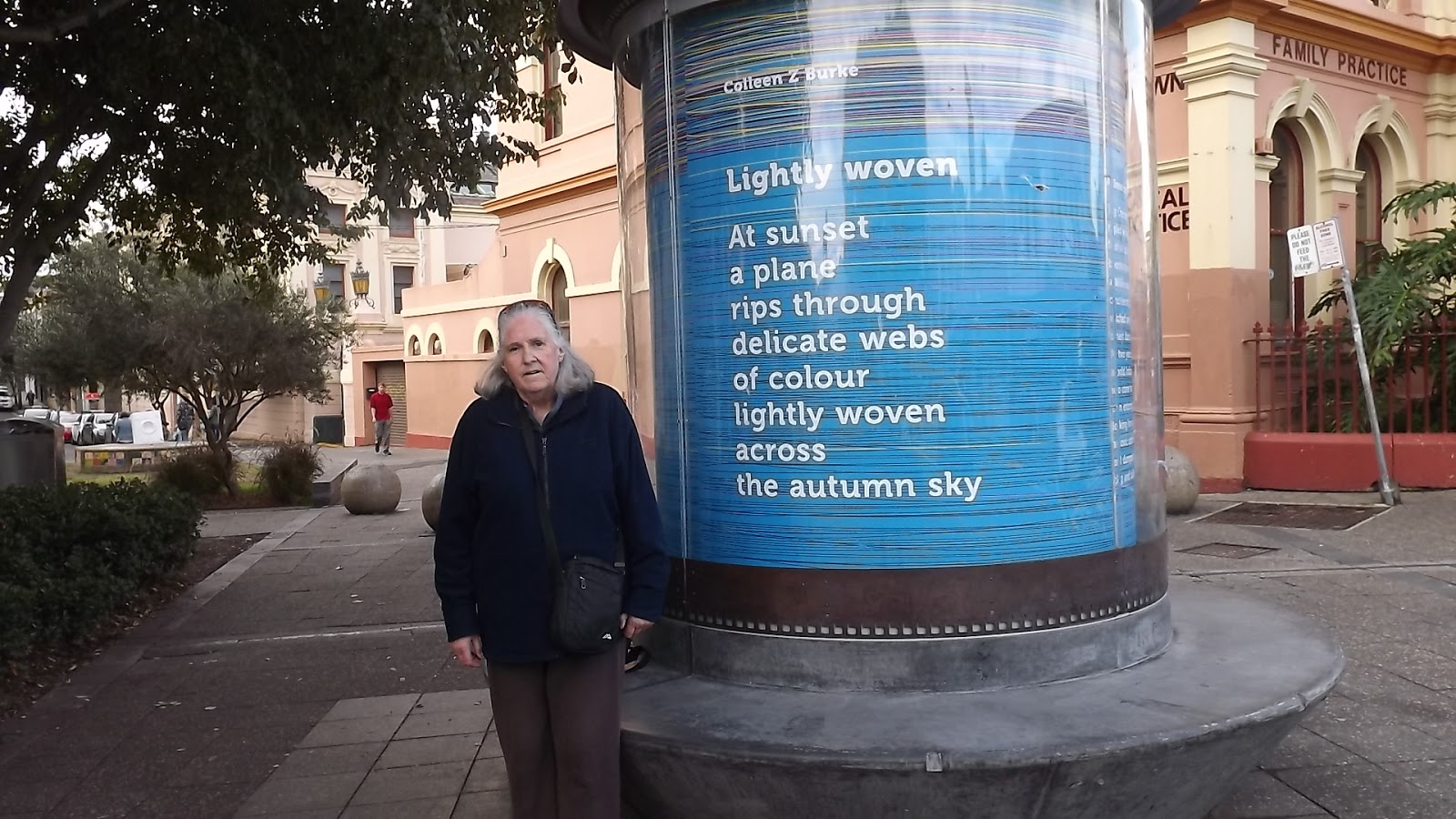
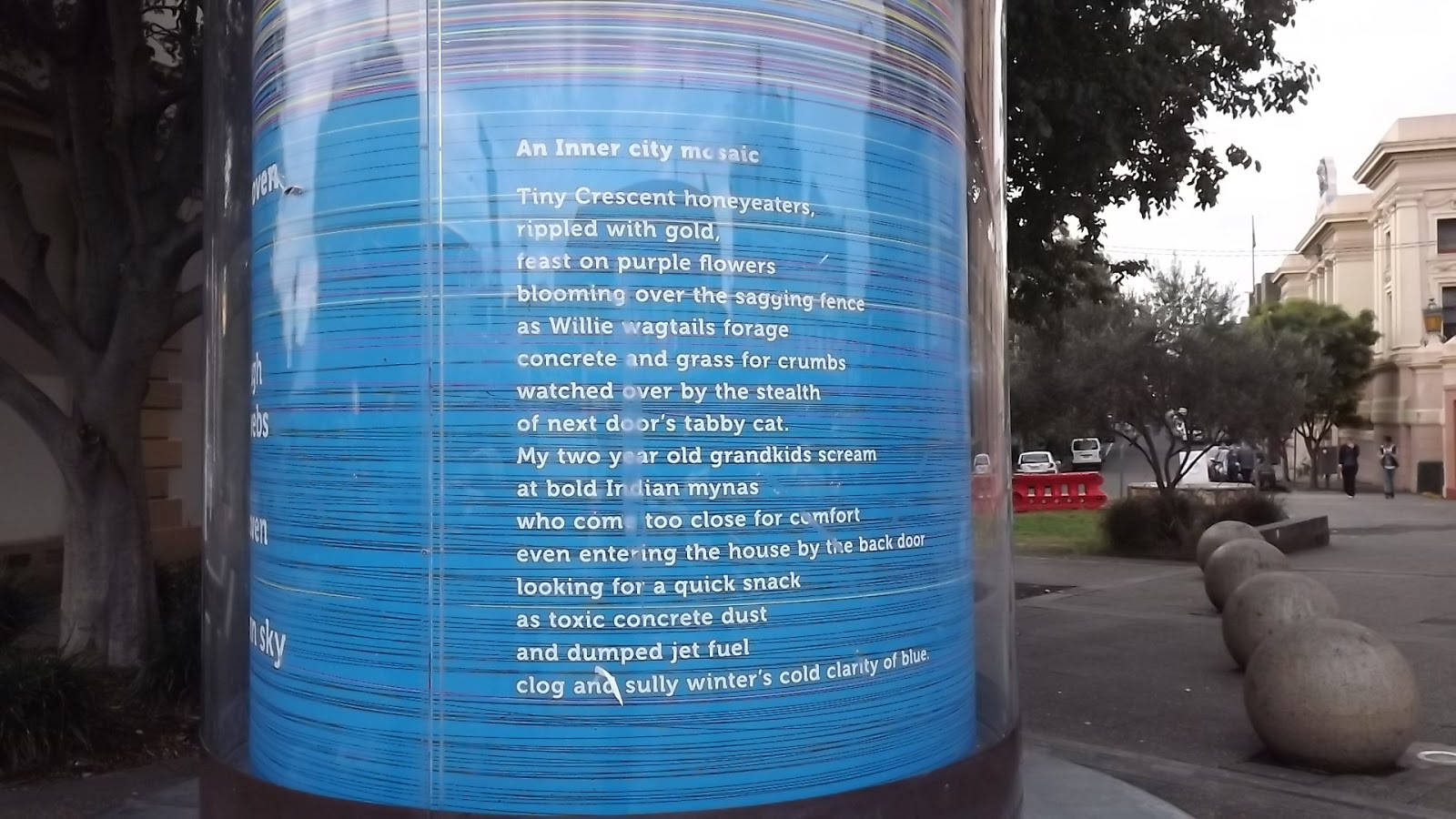
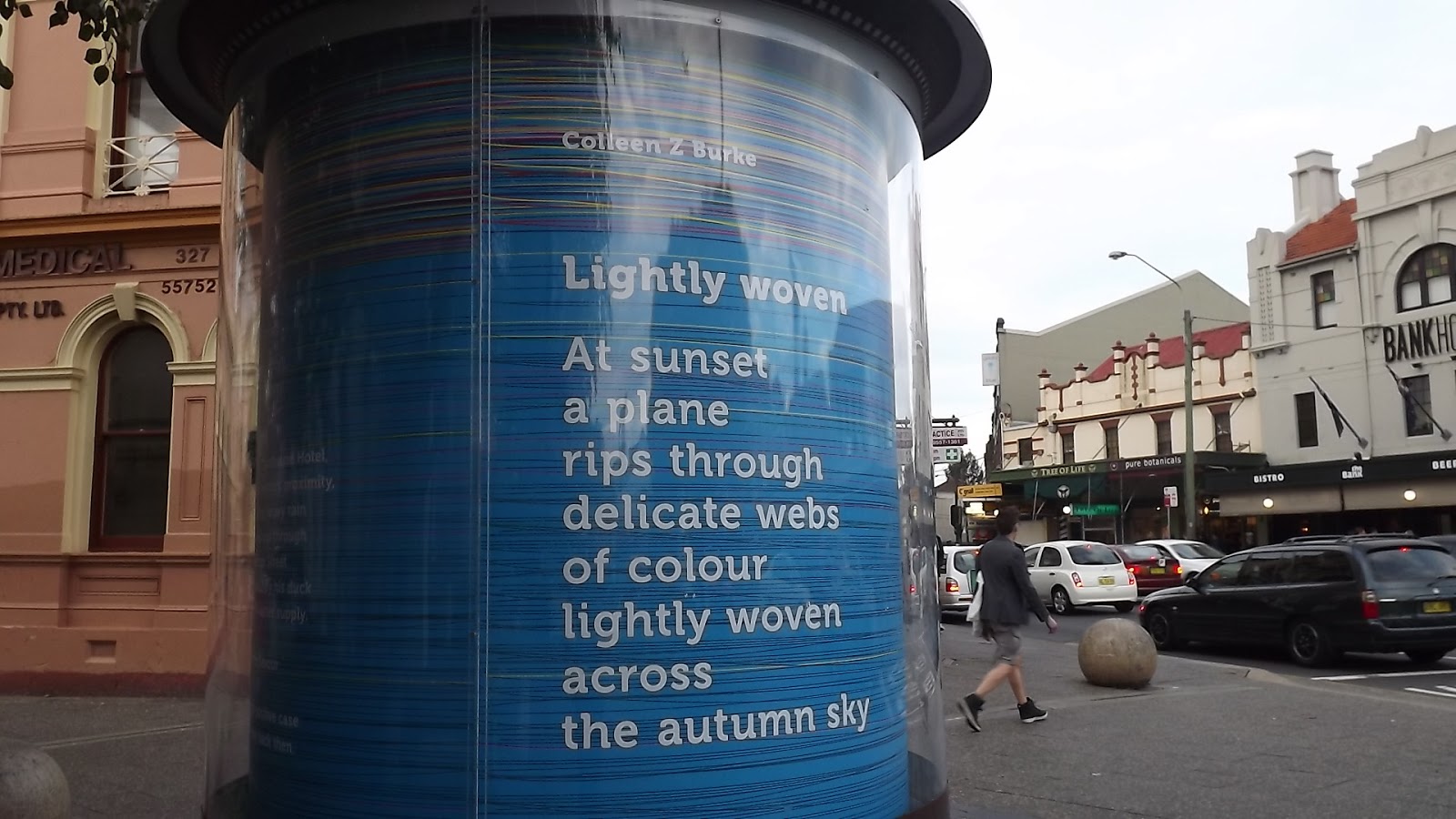
It’s November, so a sonnet is obligatory. This one draws on the last couple of times I laid eyes on the poet, and occasions when her work has featured large in the urban landscape, as illuminated posters that were part of the Sydney Festival some years ago, and more recently on the Newtown Art Seat. (there are six different links there, all to this site)

Sonnet 13: Colleen Z Burke
She reads to us beside a Whiteley –
her landscapes quiet, his lewd and loud.
I’ve seen her sunset words shine nightly,
tall amid a milling crowd.
Her tiny poems tread light, illumine;
the details of decay are human’
as she bids a friend farewell.
Human too what she can tell
of autumn air and Maralinga,
clouds, trees, coprolites, cats, birds,
muskets, trinkets, children’s words.
This poetry’s a pointing finger,
self-effacing, yet with grace
it helps to root us in this place.

Full disclosure: I published one or two of these poems in The School Magazine in my past life, and may have rejected one or two others A significant event in my mother-in-law’s pre-dementia life was a creative writing class taught by Colleen Burke.

awwbadge_2013

I think this is the 11th book I’ve read as part of the Australian Women Writers Challenge 2013.

Sonnet 12: Australia, 27 November 2013

As we headed for bed, home form a social evening, I wailed that I had to get a sonnet written but the well was dry. The Art Student, never one to let someone just moan, told me to get in touch with my inner rage about recent news headlines. So I came up with this in fairly short order:

Sonnet 12: Australia, 27 November 2013
When they were in opposition
they said no, no, no, no. No
one expects the Inquisition,
Spanish or otherwise, and so
we didn’t dream that once empowered
they’d really drag us back to Howard
and beyond, ditch Gonski, try
to bluff and bully SBY,
sack scientists, be kind to rorters,
snub climate talks, give boats to thugs,
tweet racist tweets, treat us like mugs.
As trusting lambs are led to slaughters
we chose them. They appal, amaze
the world in barely eighty days.

Sonnet 11: How I got a new tool

If I remember correctly the French for ‘crash’ in the context of computers is naufrager, which is also the word used when a ship wrecks.

Sonnet 11: How I got a new toy tool
Some virtual reef sank my computer
as it steamed on through the night.
Its kernel panic wasn’t cute or
pretty, nor its owner’s fright.
But I’d backed up, so very little
work was lost – two jots, one tittle.
I took it to a man in red,
who said the audio card was dead.
A woman in red T-shirt, Uppy,
charming smile, discreet tattoos,
helped dissipate my first-world blues.
Though I’m too old to be a yuppy
my heart leapt up when I did hold
a shiny new Mac, bought and sold.

The computer that died has featured in this blog at least once before. It survived four years after the disaster that befell it shortly before this photo was taken, and was already of a certain age then, so I guess it’s had a good innings.

Sonnet 10: Suburban travelling companions

Perhaps a snippet of narrative, which is after all what this form of sonnet was invented for:

Sonnet 10: Suburban travelling companions
Corinda, Sherwood, Graceville, Chelmer:
Tattooed boys with half shaved heads
and desperado airs that tell more
than they know use seats as beds.
One sleeps. ‘I hope he bought three tickets,’
tuts a greybeard, ‘makes me sick.’ It’s
soon Taringa, then Toowong.
Two boys share buds. A chinkling song
confirms the greybeard’s irriration.
Unplugged, they chat about the dole
and meetings to observe parole.
The sleeper wakes for Central Station,
which comes like dawn to end his night.
There tattoos, beard, and I alight.

Sonnet 9: South Bank

Enough with trying to squeeze a thought into 14 lines of roughly 8 syllables each. Today, an impressionistic moment:

Sonnet 9: South Bank
Thursday morning in the city
at the Ice-Cream-Brand-Name Beach
and Other-Brand-Name Fountains, pretty
children with one adult each –
mothers, aunts, great aunts, grandmothers
a dad or two – and sundry others
deploy the sunny Brisbane day
to better ends than making hay.
A squad of teenage girls come jogging,
uniformed, with in-ear buds.
A skateboard ollies, grinds and scuds.
I sit and eavesdrop, rhyming, blogging:
‘Mummy, sunscreen!’ ‘Splash me!’ ‘What?’
‘Oh my god, how can you not?’

Sonnet 8: A prayer

I’m away from my computer and trying to catch up on my sonnet quota on the iPad far from home. The first eight lines of this got published prematurely some time yesterday. Here’s the whole thing, and the other six lines took less than 24 hours.

Sonnet 8: Prayer of a child of capitalism
Dear Absent Lord, Our Nobodaddy,
Dear Particle, or Gland, or Gene,
Who speak through prophet, saint and maddy
and have done since the Pleistocene,
accept my humble genuflection
in awe of natural selection.
Give us this day our daily bread
and roses, birdsong, sky’s vast spread.
Forgive – But I’ve no heart to ask it.
We’ve made a quarry of the Earth
and of its peoples. What’s it worth
when hell-bound in a plastic basket
to say we’re sorry? Don’t respond.
We’ve work to do. No magic wand.