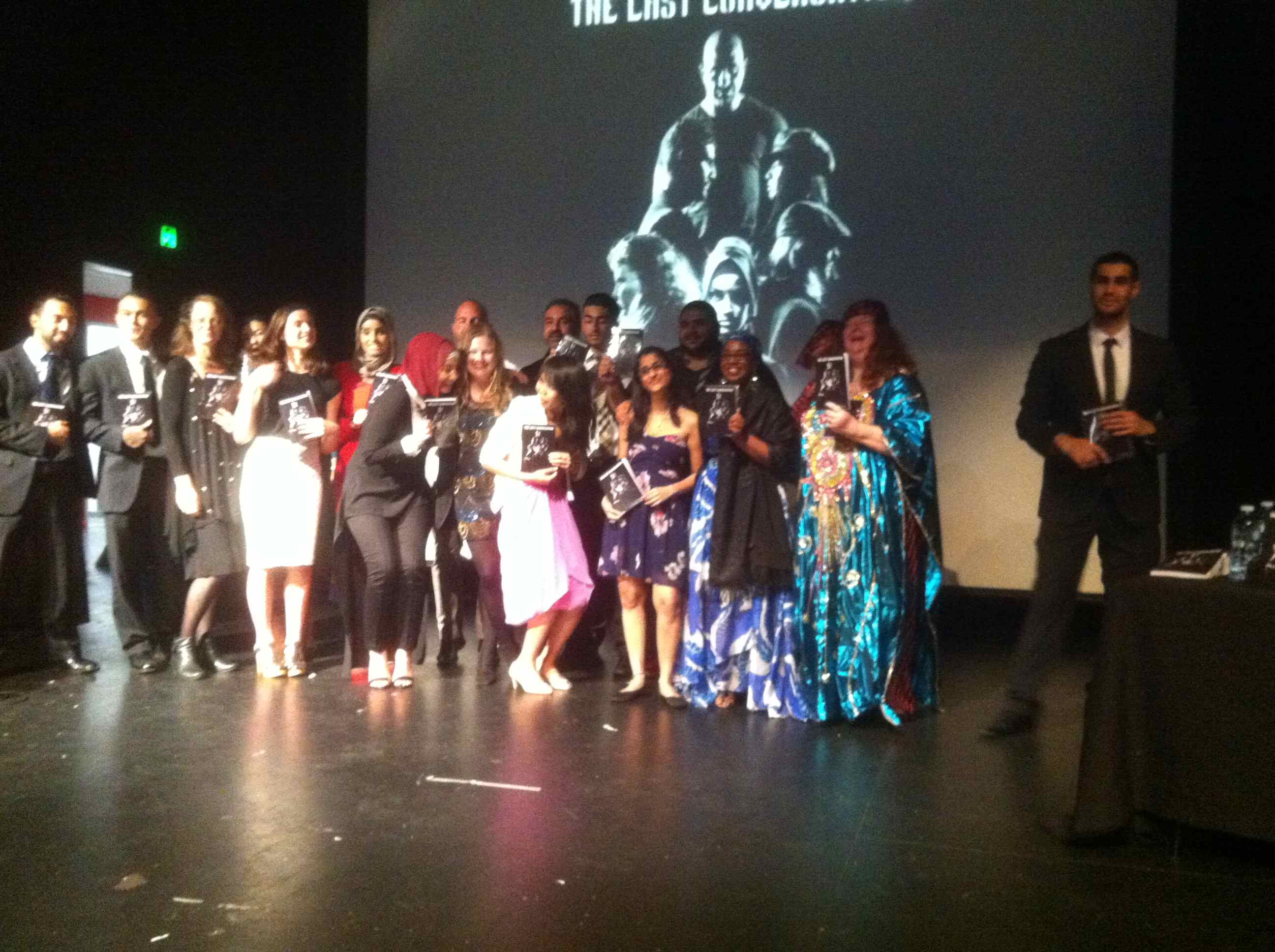
Rabbit 10, Jordie Albiston 13

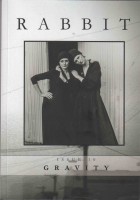
Jessica L Wilkinson, editor, Rabbit No 10: Gravity (2013)
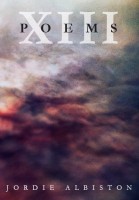
Jordie Albiston, XIII Poems (Rabbit Poets Series 2013)

I bought these two slim volumes at their Sydney launch a couple of weeks ago.
rabbit10 Rabbit is a beautifully produced ‘journal of non-fiction poetry’ based in Melbourne, with a great feel for deign and a sense of humour. This issue, for which Felicity Plunkett was guest poetry editor, includes not only poetry from Melbourne and beyond, well beyond Australia in fact (I was a little disconcerted when sagebrush and coyotes turned up in the first poem), but also a generous selection of evocative photographs of 1970s Melbourne by poet Ian McBryde, a scholarly essay on Dante, an interview, and a number of reviews.

I’m not clear what the non-fiction tag means apart from excluding fiction narratives. I hope we’re not being encouraged to take lines about heartbreak or suicidal intentions as transparently representing the writers’ condition. But the question didn’t exercise my mind too much … I enjoyed the poetry: so much that was excellent, but the ones that struck me most were ‘The Gravity of Bones’ and ‘Crunchy No Bruises’ by Anna Jacobson, which read as if they’re from a series about visiting a nursing home.

Nicholas Walton-Healey’s interview with Kerry Loughrey is excellent. Kerry Loughrey has been performing her work around Melbourne for more than two decades, but had her first poetry collection published just over a year ago. She has interesting things to say about the relationship between performance poetry and page poetry, and about poetry in general – like this, which begins with an updating of Pope’s ‘What oft was Thought, but ne’er so well Exprest’:

I’ve always thought that the poet was supposed to say what’s on the tips of other people’s tongues. That’s our job. So people have this sense of relief when they read or hear it and go ‘ahhh, that’s what I meant.’ …

I’m compelled to say things … I feel it at the back of my throat. And I think everyone does when they’re like ‘I really want to say this.’ Or a bloke talking to his missus who’s much more articulate and so he’s going ‘I wish I could just say this thing but she’s going to take it the wrong way.’ I guess I have to consider being taken the wrong way as well.
xiii Jordie Albiston’s previous books have been unified works rather than gatherings of disparate poems. So, she told us at the launch, when Jessica Wilkinson invited her to be the first in the new Rabbit Poets Series, she saw a prospect of new life for some of her ‘orphan poems’.

The orphans gathered here are not impoverished waifs begging for alms. On the contrary, they are rich in many ways, and speak from a place of deep belonging. They are, however, extraordinarily diverse.

There are a number of what I think of as public poems. ‘Gallipoli’, which opens the book, is a long narrative poem commissioned as inspiration for a piece of music commemorating the centenary of the landing at Anzac Cove. Three long poems – ‘Six Black Saturday Squares’, ‘Lamentations’ and ‘A Kinglake Quartet’ – respond to Victoria’s terrible 2009 bush fires. And ‘A White Woman’s Guide to Indigenous Art’,another commissioned piece, is a response to a painting by Carol Maanyatja Golding that broadens out to the endlessly interesting question

At the other extreme, there are intensely private poems: three love sonnets – ‘The Sea’s Pleasure’, ‘Three Degrees’ and ‘Duplex’ – and ‘Golden’, a poem celebrating the poet’s body on her 50th birthday.

The poems are also wonderfully varied formally. Some of them rhyme, and Albiston’s way with rhyme, both at line ends and internally, is truly wondrous. So is her extraordinary way of playing poetic form off against speech rhythms. Take the first eight lines of ‘Three Degrees’, for example:

Three degrees against your skin, and the heart
begins to freeze. The inclement night creeps
right in, shoves blood aside with its starting
gun, and you become antarctic. Yes, steeped

in snow from tip to toe, the land outside your
carapace says little, remembers less: no choice
but that of missing him, missing him, warmth
a continent ago. You try to invoke his voice.

For me, the most striking piece is ‘Lamentations’. It speaks in the language of the King James Bible, including the odd word in italics and a smattering of ‘Behold!’s.

Alas! we are the people that have seen the fire, on this day of days, on this seventh day of the second month of the year.
Alas! it has led us, and brought us to darkness, and delivered us not into light.
Against us has it turned: it has turned with the wind, against us all the day.

It could have been an embarrassing pastiche in lesser hands, but it’s actually extraordinarily powerful.

awwbadge_2014XIII Poems is the first book I’ve read as part of the 2014 Australian Women Writers Challenge. Yes, I’ve signed up again.

William Nagle’s Odd Angry Shot

William Nagle, The Odd Angry Shot (Angus & Robertson 1975, 1979)

20131230-200308.jpg Before I looked up IMDB, I would have said The Odd Angry Shot (1979), directed by Tom Jeffries and featuring a number of well-known comic actors, was the only feature film dealing with Australia’s involvement in the US–Vietnam War. I was wrong, but it’s certainly the only such film that most people remember, whether they’ve seen it or not (I haven’t). This is the book it was based on. The cover of the film tie-in edition that I’ve just read features a group of military men laughing intensely, and the words: ‘Cry a little, laugh a lot / Aussies being Aussies in The Odd Angry Shot.’ That is, you’re invited to expect something like Leslie Thomas’s Virgin Soldiers: larrikin japes among young men living together, with a seasoning of casual sexism, racism and homophobia, and an occasional reminder that there’s a war going on somewhere nearby.

Well, up to a point, Lord Copper. There are indeed plenty of larrikin japes: our group of SAS soldiers make a wanking machine for the padre who has annoyed them, and the padre surprises them by being a good sport; they bet on a battle to the death between their pet spider and the pet scorpion of nearby US soldiers, and lose the bet gracelessly; they vie for the favours of a woman they assume to be a bar girl but who turns out to be a school teacher and definitely not available. The barracks banter is lively and rings true, and there’s more than enough humour about bodily functions to fill the genre’s requirements.

But readers who expect The Virgin Soldiers with an Australian accent or a celebration of the larrikin Anzac spirit will be disappointed. The book takes the genre and busts it open. The homophobia may stay casual, but the sexism reaches peaks of visceral misogyny, the racism leads to more than one act of hideous brutality against non-combatants, and the combat episodes are graphically, horrifically rendered. The humour is the manifestation of a group ethos that the young men see , correctly, as a kind of stoicism, but at least to this reader communicates a ruthless ban on any show of emotion apart from rage, and almost any conversation apart from chiyacking.

The book is about the group. It’s not The Red Badge of Courage or Regeneration, where we are invited to imagine the effects of soldiering on an individual mind. These young men resent the people back home who demonstrate against the war. They occasionally recognise that the Viet Cong and North Vietnamese soldiers they are fighting are as much pawns in the broader politics as they are themselves, but they don’t have the luxury of questioning those politics. If they can’t make a joke they down a can or four of beer. There’s a telling moment towards the end, when one of the young men asks, ‘Do you suppose we’re doing any good by being here?’ His mate answers:

Not much … because when we get home we’ll be an embarrassment to our wonderful nation. The only bastards who’ll want to know about us are the silly buggers in this man’s army. Let’s face it, we’ve got no one else.

The question is asked, but can’t be answered. The best the mate can do is respond to a different question: ‘Will people appreciate what we’ve done here?’ The narrator does finally break free of the enforced lack of reflection a couple of pages from the end:

We are stuck here, refusing to admit defeat, an army of frustrated pawns, tired, wet and sold out. Yet we still believe in our task; still, after all this, we are bound together all over the world, friend and enemy alike, the soldier, the green-clad, second-class citizen of the earth …

We will arrive at any dictated hour to join in our pastime – to hunt and dispose of each other in the ultimate test of the mind, the reward of which is life for another day, another week. You have angered us, all of us, your praetorians from the red tabs downwards are angry.

… We, the survivors, will come home, will move amongst you, will wait, will be revenged.

That is so unlike any other writing in the book it might have been inserted by a canny editor if it weren’t for its awkwardness. I read it as the author struggling against the code of silence he has shown us in the rest of the book.

The Odd Angry Shot shared the 1975 Australian National Book Council Award for Australian literature. Although it remains steadfastly on the side of its soldier characters, it doesn’t sit easily with the current rhetoric about heroes and veneration of those who sacrificed all, as in this, which I saw in Balmain as I was finishing the book. I suspect William Nagle would have sided with the pigeons against the notice poster.

[In case you can’t read the notice, it says: ‘This is a war / memorial / to honour our fallen / diggers / not a lunch seat / or a child’s playground / Please treat it / with the respect it / deserves / Lest we forget’]

Lest We Forget

2013 in review (lazily)

Many good things happened in my life this year. Possibly the biggest was that Ngurrumbang, the short film whose screenplay I co-wrote with my elder son, was screened at three festivals in Australia and one in Europe, with Flickerfest still to come. But here are three relatively lazy looks at the year that’s just finishing.

One: The first sentence (or sometimes the first two sentences) of the first blog post for each month:

January: Whatever the ghost of Rembrandt might think about the state of Dutch art in the early 21st century the arrival of Florentijn Hofman’s magnum opus in Darling Harbour today was a hit, even after the seeming endless and mostly lame concert and tumbling act that preceded it.

February: I heard Paul Ham speak about this book [Hiroshima Nagasaki] at Gleebooks early last year.

March: Geoff Lemon, co-editor, was surely tempting fate and the critics when, as soon as the 32nd issue of Going Down Swinging was complete, he nicknamed the impending Nº 33 the Jesus Issue.

April: I recently heard a distinguished novelist claim that she grew up believing New South Wales was mostly settled peacefully and that damage to the original inhabitants was largely unintended, caused by infectious diseases and the like.

May: The launch of this book [Pam Brown’s Home by Dark] last weekend was a convivial affair in an Erskineville pub.

June: Sydney has Vivid. Wellington has Lux.

July: I was extremely lucky in the timing of my university studies. I started at Sydney Uni in 1967 when, because of an overhaul of the New South Wales school system, only a very small cohort had graduated from high school the year before.

August: After Karl Ove Knausgaard’s mountains of mundane detail, we wanted our next book to be one that spins a great yarn.

September: It’s about two and a half years since we moved home. About a year ago, the grass tree (Xanthorrhoea) that had stood outside our kitchen window in the old house was ailing in its new location – most of its fronds were brown or browning.

October: This book [Contemporary Asian Australian Poets edited by Adam Aitken, Kim Cheng Boey & Michelle Cahill] seems to be part of a current efflorescence of attention to Asian Australian writing, and of Australian attention to Asian writing.

November: It’s November, and once again, while all over the world people with stamina take on NaNoWriMo, I’m setting myself the modest goal of 14 sonnets in the month – LoSoRhyMo (Local Sonnet Rhyming Month).

December: As Vagabond Press’s beautifully crafted Rare Objects series of chapbooks approaches its hundredth and final title, Jennifer Maiden makes her debut at Nº 95.

Two: Top Ten Movies (in no particular order)

Me The Art Student
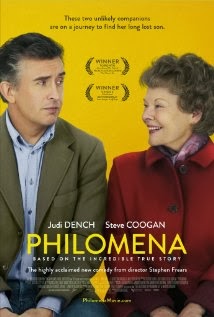
Philomena (Stephen Frears) 1p
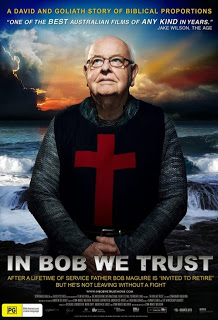
In Bob We Trust (Lynn-Maree Milburn)
130_ibwt
Blue Jasmine (Woody Allen)
140_bj
Stories We Tell (Sarah Polley)
140_swt
The Rocket (Kim Mordaunt)
1r
A Gun in Each Hand (Cesc Gay)
1geh
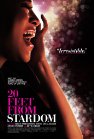
Twenty Feet from Stardom (Morgan Neville)
140_20f
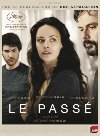
The Past (Asghar Farhadi)
136_past
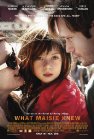
What Maisie Knew (Scott McGehee and David Siegel)140_wmk
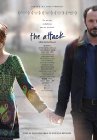
The Attack (Ziad Doueiri)
140_a
No (Pablo Larrain)
140_no
Barbara (Christian Petzold)1barbara A Late Quartet (Yaron Zilberman)
140_p

Three: Notes on the year’s reading

Rather than single out some books as the best, let’s see how I went in reading diversely.

I’ve listed 63 books in my ‘Reading and Watching’ column. I didn’t finish at least five of them and quite a few were journals, not books at all. It looks as if I read 53 books as such.

  • 31 were by men, 22 by women
  • 6 were translations – two from Norwegian, one each from Bengali, Russian, German and Catalan
  • 32 were Australian
  • 24 were poetry books, including substantial anthologies as well as tiny chapbooks
  • 7 were Book Group books
  • not necessarily the best, but 3 books that enriched my sense of what Australia is were Heather Goodall’s Invasion to Embassy, Noel Beddoe’s The Yalda Crossing and Contemporary Asian Australian Poets, the anthology edited by Adam Aitken, Kim Cheng Boey & Michelle Cahill
  • the Art Student’s pick from her year’s reading were Michael Chabon’s Telegraph Avenue, Eleanor Caton’s The Luminaries and her crime fiction discovery, Martin Walker’s Bruno xx series.

That’s it. Happy New Year, all!

Lesley Lebkowicz’s Petrov Poems

Lesley Lebkowicz, The Petrov Poems (2013)

1pp

I was seven years old in 1954, and have dim memories of what Wikipedia bills as the Petrov Affair. Vladimir Petrov, third secretary of the Russian Embassy in Canberra, defected, and some days later his wife Evdokia followed suit, generating a dramatic front page photograph showing two burly Russians manhandling a distraught woman across the tarmac of Sydney aerodrome – tellingly, the woman has lost one of her shoes.

It’s not clear that the Petrovs had anything substantial to reveal about Russian espionage, but their defection was a boon to the Menzies government’s anti-Communist machinations and has fired the national imagination, or sections of it, for decades.

The affair was the subject of Ralph Peterson’s 1959 play The Third Secretary, which was part of The Currency Press’s first Playtexts Series in 1971, in the august company of Dorothy Hewett’s The Chapel Perilous and Louis Esson’s The Time is Not Yet Ripe. Robert Manne’s exhaustive account, The Petrov Affair, was published in 1980, and again in a revised edition in 2004. The Petrovs feature offstage in Ursula Dubosarsky’s magnificent 2006 children’s book The Red Shoe. So far I was keeping up. Then Noelle Janaczewska’s Mrs Petrov’s Shoe won a Queensland Premier’s Literary Award in 2006 (back in the days when the Queensland government gave money to the arts), and Andrew Croome’s Document Z got a gong in the NSW equivalent in 2010. How many books could one minor incident sustain?

I tried to read Andrew Croome’s book. It’s probably very good. But I couldn’t get past the first line of the first page, so strong was my reluctance to read one more word about the Petrovs. They may be our only spy scandal, I thought, but they’re just not that interesting. Yet when someone at our book club (the one where we swap books, not the one where we discuss them) offered Lesley Lebkowicz’ book of poems, I surprised myself by taking it home.

I don’t think any book could have completely dispelled my pre-emptive ennui, but this book came pretty close. It’s pretty much a verse novel, keeping a fairly tight focus on the two main characters, known mostly by their pet names Volodya and Dusya. It begins as they arrive in Sydney, seen from Dusya’s point of view:

Volodya is solid – more than a husband – an ally.
She touches his arm, feels its warmth, the play
of slack flesh over bone. Softness had long fled
his mind. He had seen hundreds shovelled
into their graves, thousands destroyed like ants
swept away by hot water.

The narrative takes us through the process of disaffection to their defections, their interrogations and then their dislocated new life. It ends, after Volodya’s death, with Dusya living with her sister Tamara in suburban Melbourne:

Dusya and her sister walk along the flat paths of Bentleigh

like any two women from Europe.
They're on their way to drink coffee in the suburb's first café.
They talk about whether to buy veal
for dinner and watch The Bill on TV. Whatever

Tamara says makes Dusya happy – it's hearing
her voice. Occasionally Dusya mentions Volodya

and Tamara looks at her
but says nothing. His name falls out of their lives.

So it’s as much the story of a relationship that plays out in extraordinary circumstances, a migrant story with high stakes and the glare of publicity. The part of the story that struck home most forcefully for me is in the last two sections, ‘The Petrovs at Palm Beach’ and ‘The Petrovs in Melbourne’, where they continue with their lives after the drama, neither celebrated nor left alone. From ‘Sentences’:

'I am Petrov,' he tells a fellow in Manly,
expecting some sign.
'Congratulations,' the man says and walks off.

His photograph regards him every day from The Herald.
What he's done must mean something –

From ‘They know we are Petrovs’:

The whole street knows they are Petrovs –
too many photos, too much publicity.
One journalist never leaves them alone.
He lurks in his car outside their house.

A kind neighbour builds a gate in their fence
so when the journalist comes, they slip out
through his garden.
In Russia it would have been different –

no one would have known who they were.

The verse is always clear and sharp as this. A lot of it is in unrhymed sonnets, but there’s much variety in form. If you haven’t read much about the Petrov Affair, and OK even if you have, this is a good story well told. If you want to read more about it, I recommend the excellent review by Sue at Whispering Gums.

awwbadge_2013

This is the last title in my Australian Women Writers Challenge for 2013. I seem to have read 15, and it’s been fun. I’ve signed up for the 2014 challenge.

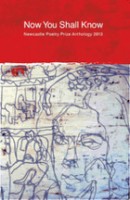
Now You Shall Know the Newcastle Poetry Prize Anthology

Dennis Haskell and Jean Kent (editors), Now You Shall Know: Newcastle Poetry Prize Anthology 2013 (Hunter Writers Centre, October 2013)

1nysk The Newcastle Poetry Prize is described on its website as ‘the richest and most prestigious stand-alone poetry competition’ in Australia. It has existed for more than three decades under one name or another, and for some years now the Hunter Writers Centre has published an anthology comprising the winner and a selection of other entries. This year’s anthology, named for Jennifer Compton’s winning poem, contains 27 poems and runs to 140 pages, so it’s distinguished from other annual anthologies by including mainly longer poems.

The book is a feast, and even though it owes its existence to a poetry competition it’s a beautiful demonstration of the silliness of pitting poems and poets against each other so that one must emerge as The Best. Not that I challenge the judges’ decisions: all the prize winners and commended poems deserve to win. But so do almost all the others.

Among many pleasures, there’s a strong element of place in the collection. Jennifer Compton’s ‘Now You Shall Know’ kicks things off with a brilliant evocation of the non-place of a passenger plane in mid-flight. Of the two other prize winners, Karina Quinn’s ‘Always Going Home (a domestic cycle)’ has a section named ‘A nowhere place’, which refers to a very specific not-quite-room in the family home, and among other things the poem is about the power exerted on the speaker by the place that is home; and Mark Tredinnick is in full Blue-Mountains-bardic flight in ‘Two or Three Days with Claude Debussy in Late October’. In Kathryn Lomer’s ‘Vapour Trails over Sassafras’ the speaker visits the Tasmanian landscape of her childhood. The dialogue in Ron Pretty’s ‘Picnicking on the Safety Ramp’ creates a gloriously recognisable rural masculinity; Christopher Kelen’s ‘The Shed’ is a location where a similar masculinity finds solitude; the title of Rachael Mead’s ‘Lake Eyre Cycle’ doesn’t mislead.

Two pieces resonated strongly for me as a north Queenslander.  B R Dionysius’ ‘Unicorns Cross Here’  is a sonnet sequence that tours the north, beginning with the giant statue of James Cook in Cairns and visiting the Daintree and the Atherton Tableland. Here are the opening lines of the third sonnet, describing the environment of my childhood:

Through the silk thin mist, sugarcane fields stand as Roman armies
At the end of empire. Forlorn, thirsty, they occupy the flat ground,
Blades held stiff as they form up, row upon green row in perfect
Drilled unison. A thousand years of domesticating iron has tamed
the wilderness. Axes bite deeper than words, saw teeth whisper in
Death’s white noise. On the hills behind them, the rainforest seethes
In undisciplined chaos; disordered ranks thrown back in confusion.

Where Dionysius is a visitor to cane country, the speaker in Victoria McGrath’s ‘Cane Smoking’  comes from there:

I was cradled deep within the blackened root of something
rank and rich in déjà vu, and my curves and crannies,
like so many cinerary urns, claimed without question
the confetti-ash that drifted inevitably to earth.

Carmel Macdonald Grahame’s ‘Wishful Thinking’ isn’t particularly a place poem, unless you count a certain kind of Catholic childhood as a place. From its first lines

You grew up learning not to say
things you were told you should not think

you know exactly where you are. The poem does what I would have thought impossible – it deals with child sexual abuse and keeps its head, even managing moments of playful wit:

it was never the cat that got your tongue,
it was the catechism.

There’s much more, as they say in the ads. Andy Jackson’s ‘Marfan Lives’, Ian Crittenden’s ‘The Red Soil Elegies’, … Really, it’s a wonderful collection.

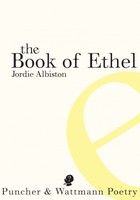
Jordie Albiston’s Book of Ethel

Jordie Albiston, The Book of Ethel (Puncher & Wattmann Poetry 2013)

1boI bought my secondhand copy of this small miracle of a book in Sappho’s, lovingly inscribed by the author to a couple of evidently ungrateful friends. Well, Jordie, it’s my copy now and I’m definitely keeping it.

The Ethel of the title was the poet’s great-grandmother. Born in Cornwall in the 1870s, she emigrated to Australia as a child, married a minister, raised six children, and died in the 1940s. That broad outline of her life emerges from these poems, though the story is not told in a straightforward narrative. This isn’t a verse novel. It’s a series of 60 short poems, each capturing a moment of the life, with little if any narrative flow from one to the next. A note up the back tells us who Ethel was, and leaves us to surmise that Albiston has drawn on archival sources – letters and diaries, perhaps, and a small book mentioned in passing, Parsonage Peeps. Google confirms that the book really existed, published in the 1930s, and I’d be astonished to learn that other writings by Ethel aren’t used, sometimes verbatim.

This found material is integrated into extraordinarily lively poetry, all in Ethel’s voice and held in a tight form. I didn’t pay a lot of attention to the form to start with. I just went along for the ride with Ethel, aware that the text isn’t generally structured according to ordinary prose conventions, and is peppered with eccentric exclamation marks, italics and spaces. I don’t mean that the poems are obscure or annoyingly mannered; on the contrary, while the precise meaning of a phrase may not always be obvious, the sense of a living, complex mind in action is strong and very attractive. But perhaps inevitably somewhere along the line I paused to figure out what’s going on.

Anyhow, here’s the first poem (the word in bold here is in italics in the original – I can’t make WordPress give me non-italics in a quote):

so Life!__we meet once more__you
& I__in concert__concord
happy agreement to do
until done__my act__your stage
make__lie in it__this! my bit-
part__play__World__with me aboard
a Speck!__then__gigantic

It’s a great opening that sets the reader’s mind racing in a number of directions at once. Who is speaking? What is the theatrical imagery doing? Is there an echo of ‘You’ve made your bed, now lie in it’ in line 5, and if so what does it mean? And how about that fabulous change of perspective in the last line?

But what is going on in the poem’s form? Are the line breaks arbitrary? Are those rhymes incidental? Is the punctuation just eccentric, or hip in some poetic way that’s obscure to unsavvy readers? Such questions multiply, and intensify, as you get further into the book.

(A word of warning: sensible readers of this blog might want to skip the next bit as it’s all poetry-geeky without being all that poetry-educated. It may be that the form here is quite common, not invented by Jordie Albiston as I imagine.)

It turns out that every poem in the book uses the same stanza form as the one quoted above, though the number of stanzas varies – most poems have just one, but there’s one with four and a number with two or three. Each stanza has 7 lines, of which the first and third lines rhyme, and the second and sixth – if you allow ‘rhyme’ to include such pairings as kindly/Queenie or Lizzie/tiny. More significantly, though, each line has 7 syllables, with none of the regular patterning based on emphasis that is usual in English verse. It’s what Wikipedia calls syllabic verse. There may be other rules – certainly there’s always a lot of internal rhyme, alliteration and so on. But the point is that every word in the book is held in a tight, mathematically dictated structure.

The form, the structuring principle, doesn’t give any indication of how the poem is to be spoken – yet from that opening exclamation this is verse that cries out to be heard as well as seen. So the whole book is animated by a tension between Ethel who is speaking to us and the tight restrictions of the form in which she is allowed to speak. It may be stretching it a bit, but it feels to me as an enactment of the way Ethel could flourish as a human being within the extraordinary limitations placed on her by the society of her time.

The result is just wonderful, and I am in total awe of Jordie Albiston’s ability to pull it off.

(End of nerdy bit.)

If you’re interested in reading a response to the book from someone much less ignorant than I am, I recommend the review by A J Carruthers in Rabbit No 10.

awwbadge_2013This is another title in my Australian Women Writers Challenge for 2013.

Our movie at Flickerfest

Flickerfest, the festival of short films that is one of Sydney’s cultural institutions, is on again at the Bondi Pavilion in the middle of next month. I confess to having appreciated it from afar until now, but this year I plan to be there. My elder son, Alex Ryan, sometimes known in these pages as the Filmmaker, has not one but two films screening.

FlickerClips, a program of music videos screening at 4.30 on Saturday 18 January, includes his video of the Cairos’ ‘Obsession‘. Given that the competition includes Nash Edgerton’s clip for Dylan’s ‘Duquesne Whistle’ we’re pretty chuffed.

The festival includes seven programs of Australian shorts. Ngurrumbang which Alex directed from a script written by him and me, is screening in Best of Australian 7 at 4.30 on Saturday 18 January.

You can buy tickets at the links.

Two Launches (with pic added later)

I’ve been sick with a cold since last Monday, and going stir crazy. Perhaps unwisely, I’ve struggled out of the house two nights this week to go to book launches.

rabbit10The first, on Monday night, 1XIII-Poemswas a double launch at Gleebooks – of the tenth issue of Rabbit, a Melbourne-based ‘quarterly journal of non-fiction poetry’, and XIII Poems by Jordie Albiston, the first in a series of booklets to be published by the journal. Both books are beautiful to look at and to hold, and I’m looking forward to reading the copies I bought on the night. Among other tempting morsels, the Rabbit offers poems by Julie Chevalier, Jordie Albiston, B R Dionysus, Lachlan Brown (to name the poets whose work I know), photographs, an essay, an interview and reviews, including one by A J Carruthers of two books I’ve loved, Jordie Albiston’s Book of Ethel (blog post coming soon) and Pam Brown’s Home by Dark (blog post here). And I’m fast becoming a Jordie Albiston fan, so I’m looking forward to reading what she calls orphan poems.

There were 17 people in the upstairs room at Gleebooks for the launch, of whom 8 spoke or read, all interestingly, and one or two others were part of the team who had flown up from Melbourne for the occasion. Jessica Wilkinson, Rabbit‘s founding Editor-in-Chief, graciously described it as an intimate affair, and urged us to take some grapes or cheese home in our pockets since the modest catering was clearly far in excess to requirements.

Whatever the cause for the poor turn-out, the launch was convivial, with plenty of humour about poets becoming members of the Warren, etc, and much joy in language used with precision and passion. I was glad I’d struggled up from my sickbed to put a bum on a seat and at least half a mind into the room.

As a segue, I’ll mention that at least one of the speakers mentioned their students, and one poet explained that she wasn’t reading her poem from the Rabbit because it was too much a ‘page poem’.

1lcThe next night’s launch was a completely different affair. The Last Conversation is an anthology of poems that have been read at the Bankstown Poetry Slam – that is, a collection of spoken word pieces attempting the transition to page poems under the guidance of slam co-founder and anthology editor Ahmad Al Rady.

The monthly Bankstown Poetry Slam has grown in the year of its existence into the biggest slam in Australia. I’ve never managed to get there, and if last night’s event is any indication of the nature of the experience, I’m missing out on something excellent. Ahmad Al Rady and his co-founder Sara Mansour were fabulous MCs – charming, witty, self deprecating and lavish in their appreciation of others. As many as 10 poets performed: a militant hymn to Gandhi and Mandela (timely, though obviously the poem was first performed when Mandela was still alive); cries from the heart from young men against violence against women; a disturbing piece about cutting into flesh after which the poet reassured us that she was not a serial killer or self-harmer but a surgeon; a passionate piece about the detention of asylum seekers; two sisters mining the rich field of sibling rivalry and sibling support.

The theatre at Bankstown Arts Centre was full to capacity,mainly with young people dressed in their best, as if for graduation. The audience whooped, cheered and (during the readings) clicked. It was a huge, enthusiastic celebration not just of the slam and each other, it seemed to me, but of what can happen when language is unleashed. At the start of the evening, Sara Mansour described how the Bankstown slam had started. It was laziness. She and Ahmad were tired of driving all the way into the city for poetry slams. Bankstown needs its own slam, they thought, and hunted around until Tim Carroll, the generous and welcoming CEO of BYDS (Bankstown Youth Development Services) gave them a home. At the end of their first year, she said, she realises they were wrong on two fronts: running a slam in Bankstown was a lot more work than driving into the city once a month; and Bankstown didn’t need a poetry slam – poetry needed Bankstown.

(By way of full disclosure: I played a small consultative role in the editing of the anthology.)

Added later: This snap I took with my phone at the end of the evening shows something of the mood. These are the poets who read plus some others who are in the book.

last conversation

Gitta Sereny’s German Trauma

Gitta Sereny, The German Trauma (Allen Lane 2000)

1gtGitta Sereny (1921–2012) was one of the great non-fiction writers of the 20th century. Holocaust denier David Irving described her as a shrivelled Nazi hunter, but though she may well have worn the insult as a badge of honour it wasn’t accurate. She said of herself: ‘I am interested above all in how individual human beings succumb to, or resist, evil.’ In Albert Speer: His Battle with Truth (1995), and Cries Unheard: The Story of Mary Bell (1998) she digs with empathy and rigour into the minds of one of Hitler’s closest henchmen and a child murderer respectively, and sheds light on very dark places.

This book, retitled optimistically for the US market as The Healing Wound, was her last. It’s a collection of essays and newspaper pieces spanning 30 years, revised and with new interstitial pieces so that something of a coherent narrative emerges, beginning with the Austrian-born Sereny’s childhood and adolescent experience of Nazism (she accidentally attended a Nuremberg rally as an 11 year old schoolgirl and was enraptured; at 15 she shouted at an SS officer who was humiliating some Jews in Vienna soon after the Anschluss), and tracing her engagement with the meaning and legacies of that time up to the turn of the century.

It’s not pretty. She takes us with her just after World War Two on the extraordinarily distressing task of tracking down East European children stolen from their parents years before, and abetting their being torn from home for a second time – she was in the employ of the UNRRA, the United Nations Relief and Rehabilitation Administration, where she might have rubbed shoulders with Edith Campbell Berry if the latter hadn’t been a figment of Frank Moorhouse’s imagination. We encounter Franz Stangl, who was commandant of the Treblinka extermination camp (I haven’t read Sereny’s 1974 book, Into That Darkness, which expanded the Daily Telegraph article included here, though I may one day have the stomach for it) and Albert Speer (in an essay that doesn’t add a lot to her magnificent book, but is well worth reading). We are introduced to children of Nazis who find strength in each other to face the horrors perpetrated by their parents. We follow Sereny’s dealings with a number of odd individuals who are dedicated collectors of Nazi documents and memorabilia. We gain some understanding of the US’s dubious dealings over decades with the question of justice for Nazi criminals. We meet an elderly woman who was one of Hitler’s secretaries, to whom he was always kind and thoughtful.

And through it all Gitta Sereny’s gaze doesn’t flinch. The book is saved from being a catalogue of horrors by the pervasive sense that she is driven by a need to understand. Perhaps the most impressive moment in the book is her response to David Irving’s book claiming that Hitler knew nothing of the ‘final solution’: rather than dismissing it out of hand as incompatible with her own understanding, she was intrigued, and began her fact-checking exercise, which was to turn into a devastatibg debunking, almost hoping Irving was right.

I learned a lot from this book. The Jewish Holocaust was a towering piece of evil, a calculated attempt to kill a whole people that succeeded in killing a full third of them – something way beyond genocide. But the Nazi murderousness wasn’t restricted to Jews. They killed something like 15 million people – homosexual men and women, political opponents, Romany people, eastern Europeans, people with disabilities – not as war crimes but as murders committed under the shadow of war, some with industrial efficiency in the extermination camps, some a bullet in the back of one head at a time, some with hideous callousness and mind-boggling disrespect for the dead. The US’s ‘denazification’ barely scratched the surface, leaving the German courts to prosecute Nazi crimes for at least 30 more years. While most Germans tried to forget and move on with their lives, Sereny says, a small elite made up of writers, artists and lawyers pursued the incredibly difficult task of coming to terms with what was generally known as ‘the recent past’ until well into the 1980s. Next time I hear an Australian shock jock or rabid columnist condemning ‘inner city elites’ or a combatant in our renewing history wars use. Dismissive phrase such as ‘black armband history’, I’ll remember Sereny and gird my loins for battle.

Linda Jaivin’s Found in Translation

Linda Jaivin, Found in Translation: In praise of a plural world (Quarterly Essay N° 52)

QE52Every now and then the Quarterly Essay series leaves aside the world of party politics and the headlines. The last time it did that was in N°41, David Malouf’s The Happy Life. In this one, Linda Jaivin, professional translator from Chinese to English, entertains, informs and advocates on a number of fronts, all to do with her profession, which is also clearly a major passion.

I’ve been interested to the point of fascination in reading about translation ever since Brother Gerard, my high school Latin teacher, explained that when he said my unseen exercise was a very good attempt he was offering high praise, because all one could ever do was attempt to translate, the thing itself being impossible. And I remember how thrilling it was in first year university when our lecturer spent a good ten minutes exploring the nuances of a single word (it was ‘serratum’) in a passage of Virgil. This essay feeds that fascination beautifully, with a wealth of personal anecdotes and snippets from the public record that range from hilarious to frankly chilling. It also has an urgent, cogent point to make about the importance of learning languages other than English as a significant and necessary counter to domination of politically weaker cultures by the stronger.

Having recently re-read Vikram Seth’s The Golden Gate and been sent back by it to a translation of Pushkin’s Eugene Onegin, and of course inspired to my own dabbling with the Onegin stanza, I loved reading about a chain of creations and translations involving the Seth novel:

Stirred by Seth’s brilliant homage, the Israeli writer Maya Arad read Pushkin in the original Russian and then wrote her own verse novel in Hebrew in 2003, translated into English by Adriana Jacobs as Another Place, Another City. … David Bellos marvels at how ‘the very diluted version of the Onegin stanza in Adriana Jacob’s translation of Maya Arad’s imitation of Vikram Seth’s imitation of Charles Johnson’s verse translation of Pushkin resurrects something of the lightness and joy of Onegin’s youth.’ Babel can never be recovered; it never existed. Yet translation allows the construction of great towers, in which each brick may be laid by someone speaking a different language but sharing a common vision.

And up the back is an excellent selection of correspondence on QE51, David Marr’s The Prince, which dealt with Cardinal George Pell’s response to clerical child abuse. I particularly appreciated the responses from four Catholics: Geraldine Doogue, Michael Cooney, Frank Bongiorno and Paul Collins.

awwbadge_2013This is another title in my Australian Women Writers Challenge for 2013.