Australian Women Writers’ Challenge

awwbadge_2013For the last couple of years I’ve been keeping track of the gender statistics of my reading, and (surprise! surprise!) have realised I read many more books by men than by women. I’ve just discovered the Australian Women Writers’ Challenge and signed up for the Miles level of the challenge, which means I undertake to read six books by Australian women and review four of them (though as I normally review every book I read, defining ‘review’ very loosely, that’s not a big deal). The challenge webpage suggests that I tell you the six books I plan to read, but I’m going to leave it vague. The first one will probably be Favel Parrett’s Past the Shallows, but who knows what might happen before I pick it up.

Asia Literary Review 25

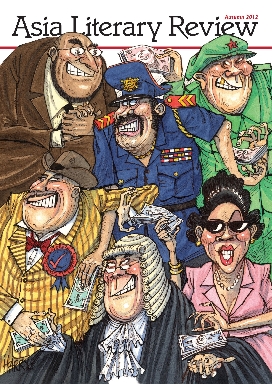
Martin Alexander (editor) Asia Literary Review 25, [Northern] Autumn 2012

Chinese artist and filmmaker Zhang Bingjiang has an ongoing project entitled Hall of Fame: a series of portraits of officials convicted of corruption, each painted in the colours of the 100-yuan note. No mainland gallery has agreed to exhibit the paintings, of which there are so far more than 1600. Journalist Audra Ang explores the story behind food contamination scandals in China. He Jiahong, a crime novelist (whose ‘Hanging Devils’ is reviewed elsewhere in the issue) and former high-up official in a Chinese anti-corruption agency, outlines a basic, probably over-optimistic proposal for curbing corruption in the People’s Republic.

This issue of Asia Literary Review is dedicated to crime and corruption, and as those three articles indicate, it comes at the subject from many angles.

The Philippines get a double guernsey: Luis H. Francia reports on Give Up Tomorrow, a film by Marty Syjuco and Michael Collins about a blatant miscarriage of justice in which seven young men were found guilty of rape and murder in a case whose every aspect was shaky, including the identity of the victim. Carla Camille L. Mendoza reminds us with lyrical sarcasm of the spectacularly corrupt times of Imelda Marcos and her husband ‘Ferdie’.

Jang Jin-sung, a defector from North Korea, paints a grim picture of endemic corruption in his country resulting from a failed economy in an authoritarian state. Veteran journalist Farrukh Saleem describes systemic corruption in Pakistan. Mumbai resident Dilip D’Souza does the same for India, but undermines any easy self-righteous indignation by relating the large-scale political corruption to the almost universal disregard for the law by ordinary Mumbai residents: on his daily five-kilometre drive to his son’s school, ‘Nobody, and I mean nobody, stops for a red light.’

Still in India, Shashi Warrier, a thriller writer, interviews a rural worker whose brother is probably a member of a violent Maoist group. These groups are evidently a bigger threat to Indian security than the Pakistani-backed Kashmiri secessionists, and it’s clear that endemic government corruption is as effective a breeding ground for Maoists in India as it is for lethal fly-by-night food operations in China.

There’s fiction too, of which three stories stand out for me. Prosper Anyalechi’s ‘I’m Praising Him Right Now‘, translated (from Japanese? Igbo) by Dreux Richard, is a wonderfully animated story of Nigerian immigrants living by their wits on the edges of the law in Tokyo. John Burdett’s ‘A Day in the Life of Curly Jones, Lawyer‘ brings a similar relish to Western expat lawyers wheeling and dealing with dubious legality in Hong Kong. Tew Bunnag’s Eyes of Karma, which begins with a monk meditating in a Thai monastery, turns out to be non-comic version of Sister Act.

I do have a complaint: a number of the fiction pieces are excerpts from longer works, but there’s no warning of this except the end of each one. I’m a primitive reader – I read for the story. So after being left hanging once, I checked each story and skipped the ones that said they were extracts. I made an exception for the extract from Ali Baba: The Forty Thieves Reloaded by Poulomi Mukherjee and Amit Tayal, a comic book which may be worth seeking out in its entirety.

And there’s poetry. I’m not sure what to do with poems written by people with Western names lamenting how hard life is in a North Korean prison camp (without evidence, who’s to know if it’s US propaganda or someone speaking of what he knows?), or those that are hard to distinguish from touristic observations. And my familiar sense of being an outsider looking in when reading poetry is given a little boost by opaque cultural difference in a number of the poems here. I did, however, enjoy encountering all of them. I particularly liked Sivakami Velliangiri’s ‘Silent Cooking and Noisy Munching‘, which describes ‘old women with gagged mouths / cooking for the gods, in silence’, and discovers in their discipline and grace a metaphor for her art, and Changming Yuan’s ‘A Concise History of China in English‘, a witty piece made from little more than a list of Chinese words that have had vogues in the West over the centuries.

In short, a good read.

Marrickville’s phantom mattress poet(s)

Old mattresses are notoriously hard to recycle – the charities won’t take them because it’s illegal to resell them, and who wants to inherit someone else’s lumpy, stained discarded bedding? Recently a number of these items have been turning up on Marrickville kerbs, bearing inscriptions. Here’s one that I’ve had the presence of mind to preserve for posterity, or at least for the internet. Appropriately enough, it’s leaning against the Shepherd Street fence of Marrickville Public School:

Mattress1

In case you can’t see the image, the words on the mattress are:

1 owner
54 cycles
6 lovers
and a baby boy

As I was taking the photo, a young man stopped and said, ‘There’s only one possible response: If you were single I’d take you home with me.’

Overland 209

Jeff Sparrow (editor), Overland 209, Summer 2012

overland209There’s an interesting self-referential moment in this issue of Overland when Rjurik Davidson takes issue with the mainstream notion that writers engage ‘in an ongoing discourse among equals that takes place in the public sphere’, a notion that ‘presumes a single culture, a realm of enlightened discussion and the free play of ideas’. He argues for

a conception of the radical writer belonging to a counter-public (or more accurately, counter-hegemonic) sphere, a sphere that includes its own publications and institutions, its own periodicals and clubs and networks of power. It’s a quite different notion of the writer, one that recognises that polite liberal discourse excludes certain things from being said and that, within the public sphere, comments that strike at the heart of things and books that ask fundamental questions tend to sound shrill or unhinged.

Overland, as a periodical belonging to such a counter-hegemonic sphere, does have its unhinged-sounding moments: in this issue, ‘The pessimism of time: The paradoxes facing the Left‘ by Nina Power, calls on ‘the Left’ to abolish time, or at least to create ‘a life in which nobody seeks to make time measurable at all, for all time’. (Given that ‘Frank O’Hara’s Animals‘ by Tara Cartland, a short story further on in this issue, is a fantasy about a girl who really can make time stop, I haven’t entirely given up hope that Power’s argument is a poker-faced satire, or that its inclusion is an editorial prank, designed to make readers appreciate the sensibleness of the rest of the issue.)

Elsewhere there’s plenty of anti-hegemonic goodness that doesn’t come close to shrillness and stays on its hinges. In a characteristically elegant column, Alison Croggon skewers the commodification of writers and writing implied in the idea that a writer must be a ‘brand’. David Carlin gives a warts and all account of life in a successful anti-hegemonic theatre institution, Adelaide’s Red Shed Company. Everett True’s essay on Pussy Riot contextualises and actively embraces their music and their politics, both of which tend to be seen as shrill and unhinged in the mainstream media. Isabelle Skaburskis and Elizabeth O’Shea rely on their experience as activists to go beyond the familiar media narratives on human trafficking (sorry, no link) and the indefinite detention of asylum seekers respectively. Sophie Cunningham challenges the received version of what happened in Darwin after Cyclone Tracy, having found evidence of, among other things, including looting by NSW police (again, no link: they can’t give us everything for free). Don’t expect to see any of those articles reprinted in the mainstream media.

Among such riches, the stand-out piece for me is Lisa Farrance’s article, ‘Living the life within: The benefits of sport‘. It’s fairly common when people are bewailing the lack of funding to the arts that an arts–sport dichotomy is invoked. You know the line: more Australians visit an art gallery or take part in another cultural event on any given weekend than attend a sporting match, yet sports receive disproportionately more help from the public purse. So it’s refreshing to read an article in a literary journal that celebrates sport as a means to ‘find ourselves whole again’, to challenge sexism and the alienation we experience under capitalism, to enact progressive politics: not just exercise to keep fit, but sport to become whole. And not only that, but Ms Farrance’s exemplars of sports with radical potential are two that are easily dismissed with a shudder in ‘polite liberal discourse’: boxing and roller derby.

There’s a fiction section comprising the three winners of the inaugural Overland Victoria University Short Story Prize for New and Emerging Writers: ‘Killing Floor‘ by John Turner, ‘The day the world stayed the same‘ by Melissa Fagan and ‘Frank O’Hara’s Animals‘ by Tara Cartland. All three stories make me look forward to their authors’ continuing emergence.

And tucked away up the back on tinted paper, as if in a kind of quarantine, ten pages of poems. The little I’ve read of Michael Farrell’s work until now I’ve found shiny but inaccessible – something for hardcore poetry readers. His poem here, ‘Making Love (to a man)‘, makes me reconsider: it’s funny and sexy and warm and friendly. The same is true – with less of the ‘sexy’ – of Fiona Wright’s ‘Obit‘, whose 24 lines, like a conversation at a wake, evoke a sense of loss through cool, anecdotal reminiscence.

I know the Overland subscriberthon is over, so if you subscribe now you won’t win any prizes (like the block of chocolate and free sub I won in November), but you would get your money’s worth.

Enter the Duck

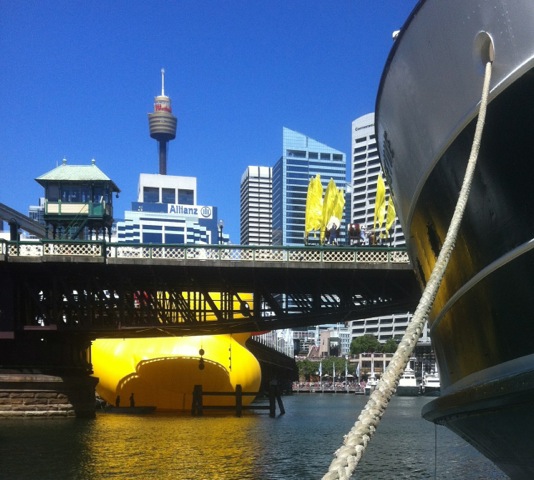
Whatever the ghost of Rembrandt might think about the state of Dutch art in the early 21st century the arrival of Florentijn Hofman’s magnum opus in Darling Harbour today was a hit, even after the seeming endless and mostly lame concert and tumbling act that preceded it. The figures beneath the yellow banners up on the Pyrmont Bridge are taiko drummers. They were splendid.

ducky

And so the 2013 Festival of Sydney begins. No first night celebration in which the city becomes a giant concert venue, but a giant rubber ducky isn’t too poor a substitute.

Enter the Duck

Whatever the ghost of Rembrandt might think about the state of Dutch art in the early 21st century the arrival of Florentijn Hofman’s magnum opus in Darling Harbour today was a hit, even after the seeming endless and mostly lame concert and tumbling act that preceded it. The figures beneath the yellow banners up on the Pyrmont Bridge are taiko drummers. They were splendid.

ducky

And so the 2013 Festival of Sydney begins. No first night celebration in which the city becomes a giant concert venue, but a giant rubber ducky isn’t too poor a substitute.

Blowing my own trumpet …

… or really my own tin whistle.

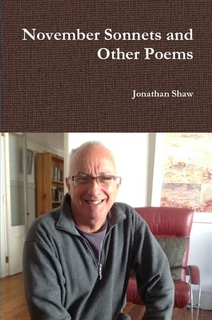
november_sonnetsIn December, I played around on lulu.com to publish a very slim book of verse from this blog. I’ve postponed mentioning it because I gave copies to a number of people as glorified Christmas cards or end-of-year gifts, and didn’t want them rushing to buy when there was already a book on its way to them in the mail.

But now, here it is, available direct from lulu.com. It’s also listed at Amazon (though don’t be misled, the hardcover edition advertised there is a different book by a different, long-dead, unrelated Shaw). You can see inside the book at both those links.

Not only that, it’s been reviewed in extraordinarily generous terms by my friend, blogger, and sometime commenter on these pages, Will Owen.

From Jennifer Maiden’s backlist

Jennifer Maiden, Tactics (UQP 1974)
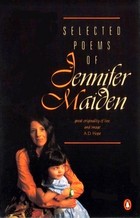
Selected Poems of Jennifer Maiden (Penguin 1990)
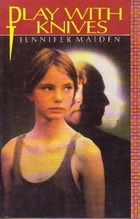
Jennifer Maiden, Play with Knives (Allen & Unwin 1990)

Friends of mine who met and married in their 40s discovered during their courtship that twenty years earlier they had moved in the same circles, shared similar enthusiasms, gone to the same demonstrations, once even posed in the same group photo, but never actually met. They speculate that if they had met back then, they might never have fallen in love, might not even have liked each other.

It can be like that with readers and writers. I may have heard Jennifer Maiden read in the early 1970s, and almost certainly read some of her poems in magazines and anthologies, but I didn’t engage with her poetry until her 1999 collection, Mines, and – as dedicated readers of this blog will have noticed – I now can’t get enough of her new work. In the last little while I’ve journeyed back in time to read three of her early books: her first poetry collection, a selection she got together after eight books, and a novel. I’ve enjoyed all three (though ‘enjoyed’ may not be quite the right word for some of the more gruesome bits), but I’m not sure I would have embraced the work of that 20- and 30-something writer when I was a 20- and 30-something reader.

IMG_0682It’s clear from Maiden’s first book, Tactics, why she was included in significant 70s anthologies like Kate Jennings’s Mother I’m Rooted (1975) and John Tranter’s The New Australian Poetry (1979), in which she was one of only two women. This early poetry is more compressed and elliptical, and in that way much more difficult, than more recent work, but it’s recognisably the same mind: grappling with issues of violence, holding a public event or abstract concept up against an intensely private perception or intimate moment, refusing easy answers. From the perspective of 2012, it’s interesting to read in the cover blurb, ‘She is interested in the Labor party, and married,’ two subjects that don’t get an obvious look-in in the poetry in 1974, but are addressed head-on by the more relaxed older woman in poem after poem (that is, if the notion of being married can be taken to include being a mother).

Reading the book at about the same time as Nigel Robert’s In Casablanca for the Waters, which hails from the same era, led to some interesting juxtapositions. Take Roberts’s ‘As Brian Bell said‘ and Maiden’s ‘Isolde and the Censor’. Both poems are about works of art that assert female sexuality, the former using what these days would be called explicit language about a Modigliano nude (the link saves me from risking my PG rating, though I should advise you there’s a typo – it should be ‘crap’ not ‘crab’), the latter describing a censor, ‘complacent Arbiter’, obliviously applauding a Wagnerian soprano who ‘carols the meltwater of her “heart”‘. Both poems, I realised, were written in the context of a struggle against repressive censorship: Maiden’s narrative celebrates euphemism as an evasive tactic, Roberts’s refusal of euphemism is a direct challenge to the censorious. I don’t think I would have understood the political seriousness of either poem if I hadn’t read them more or less together.

1spjmThe 1990 Selected Poems includes ‘The Problem of Evil’, alluded to in ‘Sphinx on Legs’ in this year’s Liquid Nitrogen. It’s a narrative but, possibly typically of its time, is not at pains to make itself understood. (I thought of Dr Jim Tulip’s saying that a certain poet’s work was like the pre–Vatican II Catholic Mass, where the priest kept his back to the audience and mumbled the ritual inaudibly in a foreign language.) It’s still worth reading even if, like me, you decide not to make the mental effort required to disentangle it. As the book progresses through the six books published between Tactics and 1990, there’s a lovely sense of the poetic voice relaxing, becoming more open.

There’s a lot to enjoy. One thing that struck me was the continuing exploration of evil, which reaches something of a climax in The Trust, a long poem in which a story-teller addresses a character in a story she is making up, a story that involves violent death and a suggestion of necrophilia (and incidentally makes it clear that the valuing of euphemism in ‘Isolde and the Censor’ doesn’t imply a rejection of blunt language). It’s not so much violence and evil that is being explored, as our fascination with it. Certainly there’s a lot in these poems that enriches my reading of more recent work: in them, violence is not only something out there, in other people, but something to be worried at in one’s own heart as well. Take these lines from ‘The Mother-in-Law of the Marquis de Sade’ (from Birthstones, 1978):

To sit people on gas-stove jets,
to plug them into light-sockets,
to prod with sparklers, stand
them barefoot in buckets of dry ice:
_____I remember I devised
all these things in the bored
South Africa of childhood,
________the shrill
Brazil that still entrances
the clean children next door

The Soweto uprising was recent when the poem was written, and Brazil was a brutal military dictatorship. The invocation of these regimes in the context of children’s cruel imagining could be read as trivialising them, but I think the poem works the other way, against the trivialising of childhood: the big public violence that fills the news and the private unspoken and unacted violent imagining are part of the same phenomenon. ‘Tiananmen Square’, one of the seven previously uncollected poems at the end of the book, prefigures the way recent poems respond sharply and personally to what Martin Duwell calls ‘media-experienced public events’: it begins, ‘I’m forty now.’ Two of these seven poems, ‘Aptly’ and ‘Chakola’, mark the debut appearance of a major character in the Maiden oeuvre, identified in the latter poem as ‘my three year daughter’.

1pkI wanted to read Play with Knives because its two main characters, George Jeffreys and Clare Collins, have reappeared many times in the last three books. Jennifer Maiden said in her recent fabulous interview with Magdalena Ball on Blog Talk Radio that it’s part of the conceit of the George Jeffreys poems that the reader knows these characters from previously, but it doesn’t really matter if she/he actually does know them. All the same, when I saw the book listed on the internet for a reasonable price I decided to buy and read.

If you avoid stories where terrible things are done to women, then stay away from this one. It’s a pretend genre piece involving a serial killer in Western Sydney, which reaches a truly nasty and unexpected climax. I say ‘pretend genre piece’ because the serial killer scenario is secondary to the story of a gossipy, slightly sleazy group of public servants and professionals involved in the release and return to civilian life of teenager Clare Forster/Collins who had killed and mutilated her three younger siblings when she was nine years old. At the heart of this story is Clare’s relationship with the narrator, probation officer George Jeffreys.

As I read the conversations between these characters, first as George is determining whether he will recommend Clare’s release, and then as he is her mentor while on parole, I was reminded of Gitta Sereny’s Cries Unheard, in which Sereny tries to get inside the mind of child murderer Mary Bell, through long and exhausting conversations with her as an adult. The Sereny book was published nine years after this one, so it’s not a source, and the books have very different angles on the subject of child murderers: Sereny asks how a child could have come to commit such an act; Maiden is interested in what life is like for the perpetrator afterwards – and what it means to be fascinated by such a person.

The broad outline of the George–Clare back-story is given in a note in Friendly Fire, and it’s true that even that much information might not be necessary for an understanding of the poems. But it’s clear to me that, having read the book with all its ethical creepiness, outright horror and high romance, I can read the poems better. It’s not as necessary as Shakespeare is to Eliot’s The Wasteland, but it helps.

Nigel Roberts in Casablanca for the Waters

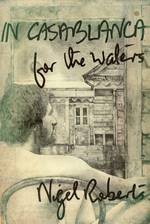
Nigel Roberts, In Casablanca for the Waters (Wild and Woolley 1977)

2015498179I’ve been vaguely on the look-out for this book for decades. Nigel Roberts was a regular reader at the Balmain Poetry Readings of the late 1960s and early 1970s, and something of a mover and shaker in the volatile poetry scene of those days. He was canonised as one of the generation of 68 in John Tranter’s New Australian Poetry; he turns up in Robert Adamson’s Inside Out as ‘a robust individual with a generous mind, passionate in his belief that poetry should reach more people at a street level’; he helped found a number of poetry magazines with names like Free Poetry; and he worked as an art teacher in the Department of Education, including at the school of one of my sons. He has stayed in my mind because of one half-remembered poem. I was very happy recently to find the book, and the poem, on the shelves of Berkelouw’s secondhand and antiquarian bookshop.

The poem is ‘Flavour of the Month’, in which the male speaker inveighs against flavoured vaginal douches in a romantic, anti-corporate celebration of the female body. It struck a chord with me 40 years ago: in spite of its ‘sexually explicit language’ it reminded me – perhaps by way of Blake’s proverb, ‘The nakedness of woman is the glory of God’ – of Gerard Manly Hopkins’s ‘God’s Grandeur‘: ‘all is seared with trade … nor can foot feel, being shod.’ Rereading ‘Flavour of the Month’ now, I still like it, but it does feel dated: what was fashionably transgressive 40 years now just seems crude.

As it happens, much of this collection is dated. There’s quite a lot of writing about sex, particularly oral sex, that may have been liberatory once but is now deadeningly familiar. There’s some smirking about marijuana, some right-on sentiments about the US-Vietnam War, quite a lot of ephemeral poetry-wars rhetoric and gossip, unaltered phrases from Bob Dylan’s songs, and satiric barbs whose targets have died or moved on. The introductory note, by no less a star than US poet Robert Duncan, reads now as a puerile collection of penis jokes – not a preface but ‘A Prepucal Face’.

The datedness is probably an inevitable by-product of the poems’ strengths – their spontaneity, their aim to ‘reach more people … at street level’. And perhaps it’s a matter of point of view. The poems offer a fascinating glimpse of an epoch that involved group houses, an odd explicitness about sex and sexism, marijuana as a symbol of subversion, and knockabout creativity.

A handful of poems stand out. For me at least there’s still ‘Flavour of the Month’. ‘The Quote from Auden’ is almost a parody of Dylan’s ‘The Gates of Eden’. With ‘In the Family Album’, the poetry comes into its own. I haven’t mentioned the use of illustrations. The photographs that punctuate the poems are mostly comic or ‘satirical’ in effect, as in the advertisement for Raspberry Douche that accompanies ‘Flavour of the Month’. Those incorporated into ‘In the Family Album’ are of a different order: they show the poet’s grandfather as a young man in a boater, at 75 at an Anzac Day March, waiting with Kitchener for a devastating Dervish attack in the Boer War, and their presence enriches the poem’s quiet contemplation of the relationship between the poet and that grandfather – so that when it ends with an anti-US-Vietnam-war chant and an anti-war slogan, the smart-aleckery and bravado that is characteristic of most of the book is just not there.

End of year lists 2012

As if it isn’t enough to be shopping and wrapping and cooking and unwrapping and eating and searching for lost dogs and blocking our ears to keep out the piped carols, it’s the season for drawing up Best-Of lists.

The Art Student’s best five movies (with links to the movies’ IMDb pages):

A Separation (Asghar Farhadi 2011): ‘Definitely the best movie this year. We got to see how complex it all is for secular Muslims in Iran.’

Lore (Cate Shortland 2012): ‘Up there with A Separation. You don’t believe you can watch yet another film about Jews and Nazis, yet here it was, original and fresh. I hope it wins an Oscar. I liked Somersault too.’

The Skin I Live In (Pedro Almodóvar 2011): ‘Creepy,’ she said, ‘but good.’

This Must Be the Place (Paolo Sorrentino 2011): ‘I loved the great humour, the art, the spectacular musical event.”

The Sessions (Ben Lewin 2012): ‘I liked having nudity and sex without it being voyeuristic.’

My best five movies, chosen fairly arbitrarily (with arbitrary reason given) from a short list of 19 that included all five of the Art Student’s picks:

Liberal Arts (Josh Radnor 2012) features a main character who walks around the city reading. I identified. It also reminded me of the pleasures of Eric Rohmer movies.

Sing Me the Songs that Say I Love You: A Concert for Kate McGarrigle (Lian Lunson 2012) pips The Sapphires (Wayne Blair 2012) at the post for my musical of the year. It’s a concert movie that invites us into extraordinary intimacy with a brilliantly musical family. Martha Wainwright sings ‘First Born’, which her mother wrote for her brother, and which we played a lot when our firstborn son was being ‘the first to crawl’.

Le Havre (Aki Kaurismäki 2011) made me feel irrationally pleased with myself or recognizing the oddly deadpan directorial style from Drifting Clouds, which I saw and loved decades ago.

The Artist (Michel Hazanavicius 2011) was a moderately enjoyable film until the final moment, which resolved a plot point I had been half-awarely worrying over, and vastly expanded the movie’s meaning.

Weekend (Andrew Haigh 2011): In spite of the phenomenal consumption of alcohol and other drugs, which would normally be enough to put me right off, I loved the unsentimental, unprurient portrayal of two characters who are completely taken with each other, including sexually.

The worst movie: We both picked Sophie Lellouche’s bland, self-indulgent Paris–Manhattan. But don’t take this as a solid judgement on the film as it might have miraculously picked up after the first hour, which is all we could bear. If we had to name a movie we stayed the course for, the Art Student would pick Skyfall, which she just plain hated, and I might have to pick Bernie, because Jack Black’s creepiness and the creepiness of the subject matter were from different universes.

The Art Student’s best books (she wouldn’t be limited to five), listed here in no particular order, with links to my blog entries or the book’s LibraryThing page:

1bmMartin Gayford, A Bigger Message: Conversations with David Hockney (2011): ‘Full of surprises and delights, about the way an artist sees the world.’
090787181XIrfan Orga, Portrait of a Turkish Family (©1950, Eland & Galeri Kayseri 2004): ‘Compellingly tells of the transition from a feudal society to modernity as a result of war. Also wonderful was the insider child’s view of life under the veil.’

20120704-175516.jpgHilary Mantel, Bring Up the Bodies (2012): ‘I’m glad it won the Booker. I’m completely hooked on the story, and looking forward to the third book, although having fallen in love with Cromwell I’m not looking forward to his death.’
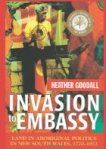
1920898581Heather Goodall, From Invasion to Embassy (1996): ‘A must-read for all Australians, especially those who think the dispossession of Aboriginal people all happened in the distant past.’

1ccStephen Gilchrist, editor, Crossing Cultures: The Owen and Wagner Collection of Contemporary Aboriginal Australian Art at the Hood Museum of Art (2012): ‘I’m only half way through this but it’s a great, accessible introduction to the complexity of Australian Indigenous art.’

Edwina Shaw, Thrill Seekers (2012): ‘I read this in one sitting. I couldn’t put it down even though a lot was uncomfortable.’

0007149530Richard Holmes, The Age of Wonder (2008): ‘Fascinating portraits of scientists in the late 18th century, when science and romanticism were closely joined. Particularly good on Banks and the Herschels.’

0670033804Sebastian Barry, The Long Way Home (2005) and On Canaan’s Side (2011): ‘Two completely absorbing novels. The first is probably the best novel of the First World War I’ve read, and the second extends the story to Irish immigration to the USA, and the past catching up with you, written convincingly in the voice of an 80 year old woman.’

My best books, which I’ve kept down to just five by declaring the AS’s list off limits:

20120224-180529Fàbio Moon & Gabriel Bà, Daytripper (2011): A gem of a comic book by twin brothers from Brazil, this is a string of connected short stories that celebrates a human life as a miracle of survival.

Amitav Ghosh, Sea of Poppies (2008): A story of colonial India that manages to be a gripping romance at the same time as blasting any romantic nostalgia for the Raj to oblivion.
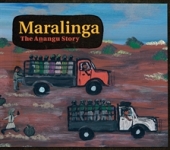
Yalata and Oak Valley Communities with Christobel Mattingley, Maralinga, the Anangu Story (2009): it was a toss-up between this and Tohby Riddle’s miraculous Unforgotten for my picture book of the year. This is a different kind of miracle from Tohby’s – it opens a space for a multitude of voices to speak about the lethal indifference to Indigenous Australians on the part of he British atomic test at Maralinga, and about the resilience of the Anangu people.

Ross Gibson, Seven Versions of an Australian Badland (2002): I choose this over Gibson’s brilliant 26 Views of the Starburst World, which was published this year, because the earlier book made me understand something of the colonisation of my North Queensland home that I had read about previously but managed not to grasp.

Jennifer Maiden, Liquid Nitrogen (2012): I read quite a bit of poetry this year. Possibly the major revelation was Byron’s Don Juan, but I haven’t finished reading that, and I might have chosen Liquid Nitrogen anyway, as I feel that Jennifer Maiden’s stories, meditations and dialogues help me to live in the modern world.

A note on the gender balance front: I would have thought my reading was fairly every spread between male and female writers, but numbers don’t cater to wishful thinking. According to my blog statistics, I read 34 books by men and 22 by women.