Colm Tóibín’s Mary’s Testament

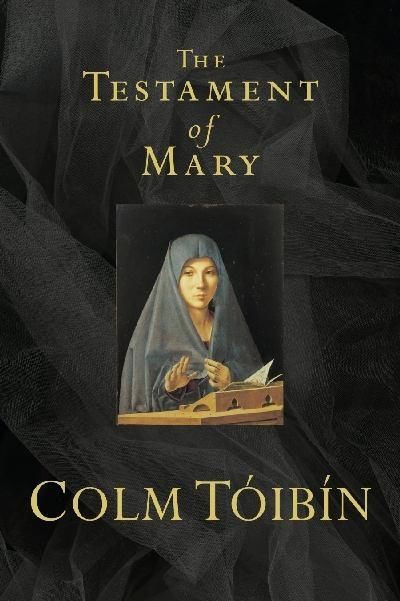
Colm Tóibín, The Testament of Mary (Picador 2012)

1tm Last Christmas I read The Book of Rachael, Leslie Cannold’s debut novel about an imagined sister of Jesus. This year veteran novelist Colm Tóibín speaks in the voice of Jesus’ mother.

The Book of Rachael wasn’t completely satisfying as a novel, but it painted a convincing picture of what it may have been like to be poor or outcast or female in Jesus’ times, and entered convincingly into a world view where tales of miracles could be true without being true as we understand the word.

The Testament of Mary has different fish to fry – my trouble is I can’t tell what those fish are. There are passages that are pretty well straight retellings of incidents from the Gospel of John: the raising of Lazarus and the ecce homo. Other familiar scenes – the crucifixion, the miracle at Cana – are recast in ways that in effect claim that the Gospel is lying. For most of the book I felt I was reading notes towards a novel, something that would be fleshed out once a bit more research could be done, and a few crucial decisions made: is Mary’s son a charlatan followed by desperate misfits, and if so how does that fit with his bringing a corpse back to life? why are the Romans and ‘the Elders’ intent on killing him and all his followers, and in that context why does the head Roman try to save him? why have Mary flee the scene of the crucifixion before the actual death – might there be a less crude way of saying that the Gospel of John isn’t historically accurate?

I suspect that the heart of the piece is in something Mary says to the unnamed man who explains to her that Jesus died to save the world: ‘when you say that he redeemed the world, I will say that it was not worth it. It was not worth it.’ I read this as an emphatic repudiation of a 1950s Irish Catholic world view, and I go, like, ‘Whatever!’

It’s not a novel. It’s not an informed engagement with the gospels – it seems to assume, for example, that John’s gospel claimed to be a historical rather than a theological document. It’s not effective as polemic, because the thing it opposes is presented as arbitrary and fanatical. I don’t know what it is. Maybe Colm Toíbín felt that it was important to show his colours in the current struggle between fundamentalism and science, etc. OK, it does that – but I’m surprised the commissioning editor didn’t return the manuscript with a note: ‘Needs more work.’

Tranter’s Choice

John Tranter (editor), The Best Australian Poems 2012 (Black Inc 2012)

bp2112My note on this book in the little blog where I keep a note of my reading provoked an anonymous comment full of rage and despair. (I’m linking to it, because it seems a pity that such passion should go almost unheard.) It may be that the commenter didn’t actually have this book in mind, since the poem s/he singled out for particular spleen is actually in last year’s Best Australian Poems, but it’s probably inevitable that any anthology claiming to be the best of something will annoy someone, especially if they’ve got a dog in the fight themselves.

Although I’d secretly love someone to decide that my November Sonnets were works of genius, I didn’t actually  have a dog in this fight. So I wasn’t annoyed. I can’t say that I was swept away either. I’d read and enjoyed about half a dozen of the poems, and was delighted to see them included. And there are fine poems by many writers whose work I know, and by many I don’t. John Tranter’s own contribution, at the conclusion of his introduction, is a kind of cento – an assemblage of lines and images from the chosen poems, but with Tranteresque impersonality they don’t form a coherent whole but are ‘chosen more or less at random’.

Some previously unpublished poems were submitted directly to this anthology. But most appeared previously in a wide range of publications, including books, literary journals and newspapers. Both Quadrant and Overland get a guernsey, likewise both Fairfax and Murdoch – a touch of poetry making the whole world kin? But why, I ask querulously, is there nothing from the paper I subscribe to, the Sydney Morning Herald? And I answer even more querulously because poems turn up in the Sydney Morning Herald only slightly more often than teeth in hens. SMH, Susan Wyndham, literary editor of the SMH.

Added a couple of hours later: I know this post isn’t a review. As it happens, Ali Alizadeh’s excellent discussion of the book went up on the Cordite Poetry Review site not long after I posted my little piece. I recommend it.

Crossing Cultures with Owen and Wagner

Stephen Gilchrist (editor), Crossing Cultures: The Owen and Wagner Collection of Contemporary Aboriginal Australian Art at the Hood Museum of Art (Hood Museum of Art, Dartmouth College 2012)

Until now I’ve assumed that exhibition catalogues were basically illustrated lists, of little or no interest to anyone who hasn’t been to the event they relate to. The Crossing Cultures catalogue has made me think again. My rethink was given a serendipitous boost by Mary Beard‘s contribution to TLS Books of the Year lists. She wrote:

Let me put in a plea (not for the first time) that we don’t forget the great contribution of exhibition catalogues, which often goes far beyond a simple record of the show concerned.

Like the esoteric-sounding catalogue she had in mind, Crossing Cultures ‘includes some wonderful essays and entries’. The bulk of the book is devoted to ten substantial essays, while the illustrated list – the ‘exhibition checklist’ – takes up less than a quarter of its pages. Since very few of my readers are likely to visit the exhibition (it’s in New Hampshire) or see the catalogue, I’ll give you a quick guided tour. The Art Student’s words when she first flipped through the book echo my own response and serve very well as a TLDR: At last, something that might help me understand some basics about Aboriginal art.

Will Owen kicks things off with an account of how he and Harvey Wagner created the collection of Aboriginal Art which they are now donating to the Hood Museum at Dartmouth College, and which constitutes the exhibition. People often bemoan the influence of collectors as a key part of the commodification of art and the art scene under capitalism. Will’s essay gives a different perspective. It describes how the urge to collect grew from being captivated by the art, and led him and Harvey to build relationships with dealers and artists, and to a deep engagement with ‘the complex social and cultural elements that informed [the art’s] creation’. Will’s blog demonstrates the intelligence, erudition, and passion he has brought to that engagement. (Will and I met online when I blogged about an exhibition of work from Aurukun, at which he and Harvey bought a sculpture over the internet. I think of him as a friend – and our copy of this catalogue is a generous gift.)

Then comes a trio of general articles:

Howard Morphy’s ‘Aboriginal Australian Art in America’ explores the role that US exhibitions and collectors have played in the process by which the non-Aboriginal art world has come to recognise ‘the value and aesthetic power’ of Aboriginal art, beginning with an image from the New York Times in 1941 that juxtaposed a bark painting from western Arnhem Land with paintings by Dali and Miro: decades before anyone would have thought of doing it in Australia, a US exhibition was suggesting an equivalence between Aboriginal and non-Aboriginal art. An observation that’s relevant to this exhibition:

The building of collections of Aboriginal art with a historical depth has … happened outside art museums, through the activities of private collectors and ethnographic museums.

In ‘In the Eye of the Storm: Issues Facing Contemporary Indigenous Art in Australia’s Remote Communities’ Brian Kennedy, former director of the NGA, summarises the social and political environment of Aboriginal art in recent decades – he doesn’t name John Howard or Mal Brough, but their dark presences are very much there. The general principle:

Each and every non-Indigenous person who hangs a work of Aboriginal or Torres Strait Islander art on the wall of his or her home or office thereby publicises Indigenous culture and sooner or later should contemplate the circumstances in which these works are made.

‘Painting the Law: Understanding the Law Stories in Aboriginal Art’ is an overview by N Bruce Duthu of the notion of the Dreaming and the importance of country in Aboriginal cultures. Duthu, a Professor of Native American Studies, quotes tellingly from a number of Aboriginal people, including this exchange between Aboriginal legal scholar Christine Black and David Mowaljarlai, senior law man from the Ngarinyin people of the Kimberley:

‘What about the areas where there are no Aboriginal people surviving, or at least living traditionally there any longer?’

‘You’re wrong there thinking like that. The land remained, you can’t get away from that. It acts for the people and their imprint is still there. If the land sinks into the ocean, the symbols will still be there. Only if the whole continent is blown to pieces and nothing is left of it, then it will be finished.’

Each of the remaining six essays focuses more narrowly

In ‘Daguerreotypes, Stereotypes, and Prototypes: Reframing Indigeneity’ Stephen Gilchrist, curator of the exhibition and editor of the catalogue, discusses photography. Six contemporary photographers are represented in the exhibition: Christian Thompson, Darren Siwes, Destiny Deacon, Bindi Cole, Ricky Maynard and Michael Riley. The essay takes us from a time when photography was a means for colonisers and anthropologists to define Indigeneity to the present when Aboriginal photographers

manage to push through the burdensome expectations of making racially explicit work and instead speak up against the persistent climate of ideological repression.

As the title suggests, Françoise Dussart’s ‘Mediating Art: Painters of Acrylics at Yuendumu (1983–2011)’ focuses on the work of Warlpiri artists in the Central Desert, particularly Yuendemu. After reprising the history of the beginnings of acrylic dot paintings at nearby Papunya, she draws of decades of conversations with Warlpiri artists, she explores the relationship between the acrylic art and the Dreaming stories it reflects, and pushes at the edge of how non-Indigenous people can read and understand the art:

Rooted in colonial and evolutionist views of exchange 
with indigenous peoples, practices of collecting have relied 
and continue to rely too often on sampling, on finding the
 ‘iconic’, on serial individualizing (concentrating on the career of a single artist), and on ‘preserving’. It may be time 
to instead embrace the truly panoramic representation of 
paintings from a specific time and place. Understanding 
the practices of indexicality articulated by Aboriginal painters will likewise force collectors and museums to think beyond sampling practices and the kinds of power relations
 that such practices generally structure.

Jennifer Deger’s ‘Art + Emergence’ focuses on northeast Arnhem Land. Her concern is to take her readers past looking at Yolngu barks and canvases as ‘elaborate messages in need of decoding’, to find ways to ‘sensually encounter’ the works – which means more than just finding them pretty. At the same time she writes very interestingly about the issue of who has the right to tell the stories that are contained in some paintings.

Sally Butler, Senior Lecturer in Art History at the University of Queensland, ranges from Cape York to Brisbane in ‘The “Presence” of Queensland Indigenous Art’. Queensland is huge, and the range surveyed in this essay is huge – from traditional Aurukun sculpture to the text-based protest art of Gordon Bennett and the extraordinary variety of Vernon Ah Kee’s work. Sally Butler, like most other contributors, quote artists of more traditional work in ways that indicate political / diplomatic intentions. An old man from Aurukun declared about Kugu Law Poles, ‘ I know your laws: now you can know mine.’

Among other things, Henry F Skerritt’s ‘Strange Relatives: Negotiating the Borderlines in East Kimberley Painting’ tells the story of Rover Thomas, and places his art in the context of Keith Windschuttle’s reactionary revisionism, which prompts me to reflect that if you were looking for a beautifully illustrated introduction to Aboriginal culture, history and politics, including the impact of dispossession, massacre and colonisation generally, as well as the integrity, courage and sheer brilliance of the ongoing struggles of Aboriginal people, you could do a lot worse than this book.

In the final essay, ‘Rethinking Western Desert Abstraction’, anthropologist and curator John Carty argues that in the process of claiming Aboriginal art as fine art rather than ethnographic artefact, ‘we have somehow neglected the basic disciplines of formal and art historical analysis’. Western Desert artists have moved on in their use of traditional forms, becoming increasingly abstracted, but art criticism has not kept pace – he traces the process in the works of ‘the incomparable Emily Kam Kngwarray’:

Her artistic trajectory resonated with the broader history of Western abstraction in ‘impossible’ ways, and yet it also expressed what some have come to interpret a a kind of Indigenous modernism. But the effusive proclamations of Kngwarray’s ‘genius’ have tended to obscure the fact that her dissolution of the structural and iconographic aspects of the aesthetic system was part of a broader creative process in much desert art of recent decades. Kngwarray has become the iconic embodiment of that process, yet singular as she was, her work encompassed developments in the abstractions of desert painting that both preceded and followed her own individual career.

He then gets down to cases, and has a fascinating discussion of concentricity, of dots and their relationship to meaning.

So, it’s not Contemporary Aboriginal Art for Dummies by any means. Each of the contributors speaks from deep knowledge, and many Aboriginal voices are quoted. But, speaking as a dummy, I find it hard to imagine how a single book could do a better job of informing me on the subject. Plus, of course, the images are plentiful, and brilliant.

Jennifer Maiden’s Liquid Nitrogen

Jennifer Maiden, Liquid Nitrogen (Giramondo 2012)

In ‘The Year of the Ox’, the long poem that opens this collection, Jennifer Maiden identifies herself as an ox (her daughter, who has been appearing in her poems for at least 20 years, is a tiger):

==================I plough my furrow
heavily and fruitfully and my seldom rage
is that of the earth like an earthquake, sudden
and efficiently gutting. She is full of lovely
litheness and protection. Next year I
will still plough slowly, heavily.

She invites us to see her poems as ploughed fields, produced by steady work, but work performed with power, deliberation and passion, no hint of Vachel Lindsay’s ‘ox-like, limp and leaden-eyed‘. I wonder if it’s deliberate, though, that the poem doesn’t mention that oxen are ruminants – because while Jennifer Maiden’s poetry goes in for emeralds and sapphires and turquoise rather than lead, she certainly ruminates: in the ‘diary poems’ (there are three in this book – the term is ironical, taken from an essay by Martin Duwell [actually a review by Andrew Sant – see Katharine Margot Toohey’s comment]), and in the imaginary dialogues which often begin with one of the participants waking up (which I think of as being like the relevant synapses of the poet’s brain turning on).

A main preoccupation of these ruminations is political power. Many of Jennifer Maiden’s books have taken their titles from the jargon of warfare – Tactics (1974), The Occupying Forces (1975), The Border Loss (1979), Acoustic Shadow (1993), Mines (1999), Friendly Fire (2005). Liquid Nitrogen isn’t obviously in this tradition. The substance liquid nitrogen first appears here (in ‘George Jeffreys 11: George Jeffreys Woke Up in Langley’) as a cooling agent used to keep the CIA computers from overheating – not a weapon of war as such, but part of the machinery of repressive state power. It does turn up again in later poems and its metaphoric meaning transforms – ‘Liquid / nitrogen does not shred, it facilitates, / should not be exclusive to Satan, to Langley, is / too good’ (‘Diary Poem: The Uses of Liquid Nitrogen’). Like liquid nitrogen, Maiden’s poems provide an environment in which data can be preserved and experiments can be conducted.

So Hillary Clinton and Eleanor Roosevelt have challenging but affectionate conversations (two poems in this book); former parole officer George Jeffreys and former child murderer Clare Collins, characters from Maiden’s 1990 novel Play with Knives, continue their fictional adventures in trouble spots all over the world (four poems). Julia Gillard (in three poems) is scrutinised by the newly awakened Aneurin Bevan, for whom the actual Julia Gillard has expressed admiration. There’s also Kevin Rudd with Dietrich Bonhoeffer (one and a half poems) and Bob Carr with US Senator Robert Byrd (one poem). These poems may involve ox-like ploughing and rumination, they may be thought-experiments conducted in metaphorical liquid nitrogen. Unlike working oxen, though, they are often playful; and unlike liquid nitrogen they are suffused with warmth, and sometimes heat. I could quote lots, but here’s Dietrich Bonhoeffer on Kevin Rudd (in ‘Deep River’):

=========== He thought that he had never
actually seen anyone purse their lips as much
as Rudd did, even Germans, but the jokes
Rudd made were flirtily Teutonic, his slang
as strangely stylised as an Eden from a culture
he knew had never been, as if to say,
==========''Okay:
so we're all self-constructed out of trauma.
==========Standing here,
I defy you to file me away.'

I love the way this moves from deft observation of mannerisms to much-mocked peculiarities of speech to a completely unexpected flash of compassionate insight. That’s characteristic of these poems – ‘Diary Poem: The Uses of Powerlessness’ which rails angrily against Julia Gillard, begins with a cheerfully resigned address to the ‘Good Spirit of the Universe’ which has given Gillard as a subject, and develops as a meditation on the nature of a certain kind of political power, and in the end the scathing criticism has not been dulled, but it has been infused by a sense of Gillard as dreadfully deprived.

The book isn’t just a collection of disparate poems. Themes are developed from one poem to another. The development of the liquid nitrogen image is just one example. Relationships between the characters in the dialogue poems unfold in an almost novelistic way. In one poem, the poet writes of a weird little dog she and her daughter have seen on the TV news that she had considered giving it to George Jeffreys, then 25 pages later George and Clare adopt it in Cairo.

I should mention that Giramondo sent me a free copy, presumably because I’m a declared Jennifer Maiden fan. I’m grateful for the gift.

Acquisitions

Three artworks have come into our household recently, all three of them beautiful and all three worth telling the circumstances of their arrival.

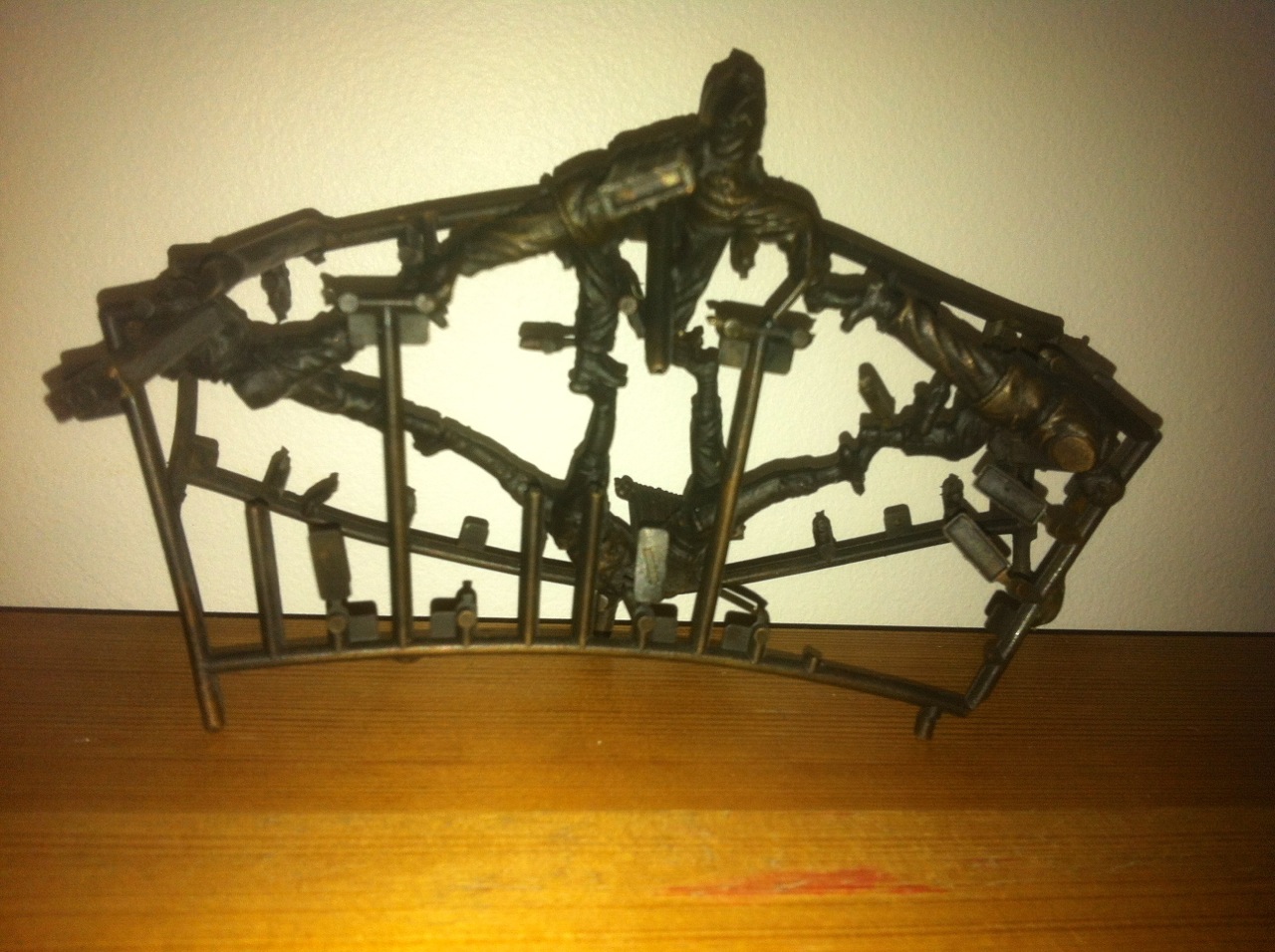
The first, a couple of weeks ago, is an intricate little sculpture by Sam Valenz, a bronze version of one of those plastic frames that toy solders come in, with the soldiers in various stages of removal from the frame, and various stages of mutilation. Here’s front and back:

IMG_0680 IMG_0681

This was a gift from the artist to the Art Student – he was her sculpture teacher, and the gift was to acknowledge the work she has done organising in a number of ways to defend and extend The Gallery School at Meadowbank TAFE.

Then, yesterday was the AGM of FAIM (Fine Arts Meadowbank, Inc.) which the Art Student got up and running over the last 12 months to promote art in the Ryde Municipality and in so doing raise the profile and the survival chances of The Gallery School. She resigned as president, and then was completely bowled over when Rew Hanks, her printing teacher and a printer of international renown (click for a review of his most recent exhibition), presented her with an artist’s proof of his ‘The Hunter and Collector’, a huge image of Joseph Banks, for which all the teachers had chipped in for the frame:

Rew_Hanks_The_Hunter_and_Collector_1342506472

Well, she has been running herself ragged, but this was an amazingly generous gift.

Then today, a more conventional acquisition. We went to the Damien Minton Gallery this afternoon where there is an exhibition of Aboriginal art to commemorate the 20th anniversary of Paul Keating’s Redfern Speech. Gail Mabo, daughter of Eddie Mabo, spoke , and recited part of the speech:

We took the traditional lands and smashed the traditional way of life.
We brought the diseases. The alcohol.
We committed the murders.
We took the children from their mothers.
We practised discrimination and exclusion.
It was our ignorance and our prejudice.

As the Damien Minton Gallery is just down the street from Redfern Park, where the speech was made, there was a tremendous sense of place and occasion. But before the speeches – which also included a marvellous ‘Welcome to No Country’ by artist Adam Hill, who sang a welcome in four different languages, four very different singing styles – the Art Student had already fallen in love with and bought one of the works in the exhibition, Beyula Napanangka’s ‘Kalinykalinypa Tjukurrpa‘. That link is to an image on Damien Minton’s webite, but it doesn’t capture the subtlety of the actual image, and nor does this from the Art Student’s phone, but you get some idea:

IMG_0499

We bought this painting, partly to honour the occasion, partly because we’re both reading Crossing Cultures, the catalogue of an exhibition in the USA of Indigenous Australian art, the gift of Harvey Wagner and Will Owen to the Hood Museum in Dartmouth, New Hampshire – of which I will blog, at least briefly, soon. As we were driving to Redfern this afternoon we were talking about how one of the essays brought home to both of us something of what it means to say that Aboriginal culture has a special connection to country: our minds were well and truly prepared to be enthralled by that Napanangka’s painting.

Two kinds of fame

I’ve been helping the Art Student upload some video taken at ArtRage, a recent gathering of ‘prominent’ artists to express concern over the NSW government’s attack on art education in TAFE. Although some press representatives were there, and others had said they would be, the mainstream media ignored the event. So much for the media power of prominent visual artists in New South Wales.

All of that gives added poignancy to this YouTube clip showing an encounter between rapper Jay-Z and a ‘sweet little old lady’, via the Rachel Maddow blog (the shorter clip may have been removed from YouTube, so I’m linking to the whole short documentary, Where I’m From; the bit I mean starts at about the 16:50 mark and goes for just a minute or so):

The little old lady is artist Ellen Grossman, evidently well-known on the art scene. It wouldn’t be too hard to imagine a similar encounter between one of ArtRage’s participants, say Elisabeth Cummings, and, um, Guy Sebastian.

The New York encounter has a further resonance with current events in New South Wales. Ellen Grossman did her undergraduate studies at Cooper Union in New York City, where there is currently a fight going on over the imposition of student fees. The video at that last link is fun, if you’ve got a 4 minutes and 50 seconds to spare.

NSWPLA and NSWPHA Dinner

I didn’t expect to attend a NSW Premier’s Literary Awards Dinner this year. For a while back there it looked as if the awards might go the way of the Queensland equivalent, but the Liberal Party-approved panel’s unpublished report must have come down in favour of continuation, because here they were again last night, six months late, run by the State Library rather than the Arts NSW, charging $200 [but see Judith Ridge’s comment] for a book to be considered, and sharing the evening with the History Awards, but alive and kicking. And pretty special for me, because I got to go as my niece’s date, my niece being Edwina Shaw, whose novel Thrill Seekers was shortlisted for the UTS Glenda Adams Award for New Writing.

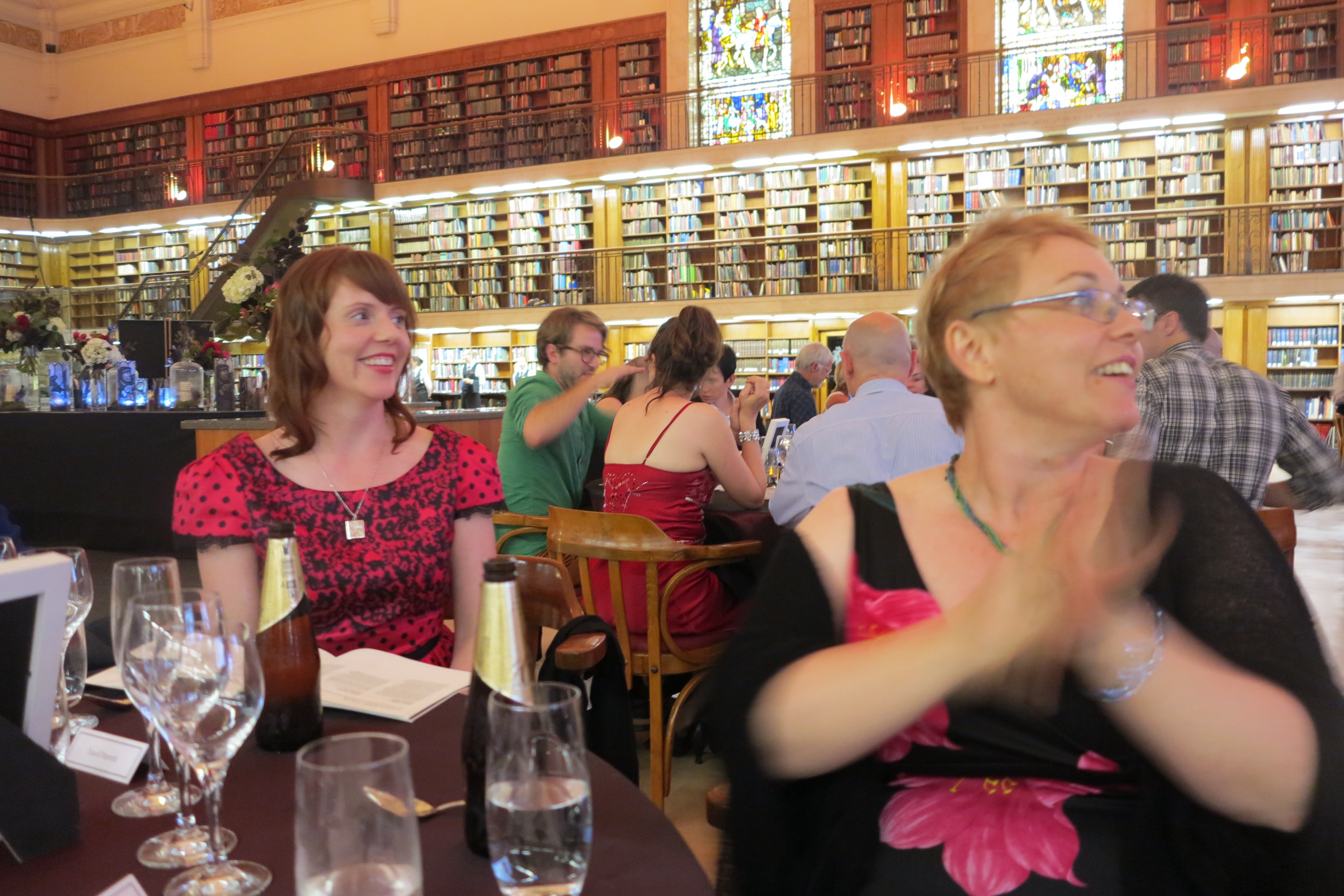
The dinner was held in the magnificent reading room of the Mitchell Library. Not everyone approved of the venue – I was in the Research Library in the morning when a woman complained very loudly that she had driven the four hours from Ulladulla only to find the Mitchell’s doors were closed for the day so it could be converted into a banquet hall. She must have been placated somehow because she stopped yelling, but there were other problems. None of the shortlisted books were on sale – Gleebooks had a table at this event for years [but see Judith Ridge’s comment], as the Library has its own shop, which wasn’t about to stay open late just for us. And library acoustics aren’t designed for such carryings-on: the reverberation in the vast, high-ceilinged room made a lot of what was said at the mike unintelligible at the back of the room. But those are quibbles. It’s a great room with happy memories for a good proportion of the guests.

Aunty Norma Ingram welcomed us to country, inviting us all to become custodians of the land.

Peter Berner was the MC. He did OK, but organisers please note: the MC of an event like this needs to be literate enough to pronounce Christina Stead’s surname correctly.

The Premier didn’t show up. Perhaps he was put off by the chance of unpleasantness in response to his current attack on arts education. The awards were presented by a trio of Ministers, one of whom read out a message from the Premier saying, among other things, that art in all its forms is essential to our society’s wellbeing. But this was a night for celebrating the bits that aren’t under threat, not for rudely calling on people to put their money where their mouths are.

The Special Award, sometimes known as the kiss of death because of the fate met by many of its recipients soon after the award, went to Clive James – whose elegant acceptance speech read to us by Stephen Romei necessarily referred to his possibly imminent death. He spoke of his affection for New South Wales, of his young sense that Kogarah was the Paris of South Sydney, and his regret that he is very unlikely ever to visit here again. He also said some modest things about what he hoped he had contributed.

After a starter of oyster, scampi tail and ocean trout, the history awards:

NSW Community and Regional History Award: Deborah Beck, Set in Stone: A History of the Cellblock Theatre
The writer told us that the book started life as a Master’s thesis, and paid brief homage to the hundreds of women who were incarcerated in early colonial times in the Cellblock Theatre, now part of the National Art School.

Multimedia History Prize: Catherine Freyne and Phillip Ulman,  Tit for Tat: The Story of Sandra Willson
This was an ABC Radio National Hindsight program about a woman who killed her abusive husband and received  lot of media – and wall art – attention some decades back. Phillip Ulman stood silently beside Catherine Freyne, who urged those of us who enjoyed programs like Hindsight to write objecting to the recent cuts.

Young People’s History Prize: Stephanie Owen Reeder, Amazing Grace: An Adventure at Sea
This book won against much publicised Ahn Do on being a refugee (The Little Refugee) and much revered Nadia Wheatley on more than a hundred Indigenous childhoods (Playground). It not only tells the story of young Grace Bussell’s heroic rescue of shipwreck survivors but, according to the evening’s program, it introduces young readers to the ‘basic precepts of historical scholarship’. It also looks like fun.

General History Prize: Tim Bonyhady, Good Living Street: The Fortunes of My Viennese Family
A member my book group rhapsodised about this book recently, comparing it favourably to The Hare with Amber Eyes. It’s a family history, and in accepting the award Bonyhady told us it had been a big week for his family because the lives of his two young relatives with disabilities would be greatly improved by the National Disability Insurance Scheme introduced by the Gillard government.

Australian History Prize: Russell McGregor, Indifferent Inclusion: Aboriginal People and the Australian Nation
This looks like another one for the To Be Read pile. Russell McGregor acknowledged Henry Reynolds and Tim Rowse as mentors.

After a break for the entrée, a creation in watermelon, bocconcini and tapenade, it was on to the literary awards:

The Community Relations Commission Award: Tim Bonyhady was called to the podium again for Good Living Street, but he’d given his speech, and just thanked everyone, looking slightly stunned.

The newly named Nick Enright Prize for Drama was shared between Vanessa Bates for Porn.Cake. and Joanna Murray-Smith for The Gift. Perhaps this made up to some extent for the prize not having been given two years ago.
Joanna Murray-Smith said she learned her sense of structure from the Henry Lawson stories her father read to her at bedtime. As her father was Stephen Murray-Smith, founding editor of Overland, she thereby managed to accept the government’s money while politely distancing herself from its politics. She lamented that her play hadn’t been seen in Sydney and struck an odd note by suggesting that the Mitchell Library and a similarly impressive building in Melbourne may have been the beginning of the Sydney–Melbourne rivalry: I wonder if any Sydney writers accepting awards in Melbourne feel similarly compelled to compete. Vanessa Bates couldn’t be here, so her husband accepted her award, with his smart phone videoing everything, perhaps sending it all to her live.

The also newly named Betty Roland Prize for Scriptwriting (and I pause to applaud this conservative government for honouring an old Communist in this way): Peter Duncan, Rake (Episode 1): R v Murray
Peter Duncan gets my Speech of the Night Award. He began by telling the junior minister who gave him the award that he was disappointed not to be receiving it from Barry O’Farrell himself, because he had wanted to congratulate Barry on the way his haircut had improved since winning the election. At that point we all became aware that Peter Duncan’s haircut bears a strong resemblance to the Premier’s as it once was. He then moved on to congratulate the Premier for instituting a careful reassessment of the Literary Awards and deciding to persevere with them. He expressed his deep appreciation of this support for the arts. (No one shouted anything about TAFE art education from the floor. See note above about this being an evening to celebrate the bits that aren’t under threat.)

The Patricia Wrightson Prize for Children’s Literature: Kate Constable, Crow Country (Allen & Unwin)
I hadn’t read anything on this shortlist, I’m embarrassed to confess. It looks like a good book, a time-slip exploration of Australian history.

The Ethel Turner Prize for Young People’s Literature: Penni Russon, Only Ever Always (Allen & Unwin)
Again, I hadn’t read any of the shortlist. But Bill Condon and Ursula Dubosarsky were on it, so this must be pretty good! Penni Russon’s brief speech referred to the famous esprit de corps of Young Adult writers: ‘You guys are my people.’

There was break for the main course to be served, and for about half the audience go wander and schmooze. I had the duck, the two vegetarians on our table were served a very fancy looking construction, only a little late. Then onward ever onward.

The Kenneth Slessor Prize for Poetry: Gig Ryan, New and Selected Poems
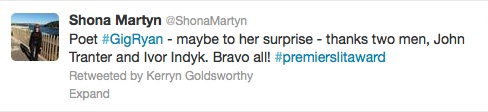
Again, I hadn’t read any of the shortlisted books, but wasn’t surprised that Gig Ryan won, as this is something of a retrospective collection. She speaks rapidly and her speech was completely unintelligible from where I was  sitting (like some of her poetry). However, someone tweeted a comment that got laughs from the front of the room:
tweet

The Douglas Stewart Prize for Non-fiction: Mark McKenna, An Eye for Eternity: The Life of Manning Clark
Another lefty takes the government’s money, and a good thing too.

The UTS Glenda Adams Award for New Writing: Rohan Wilson, The Roving Party (Allen & Unwin)
I know nothing about this book. Rohan Wilson is in Japan just now. His agent told us that when she asked him for an acceptance speech ‘just in case’, he emailed back, ‘No way I’ll win – look at the calibre of the others.’ The three writers on my table who were in competition with him seemed to think it was a fine that it had won:
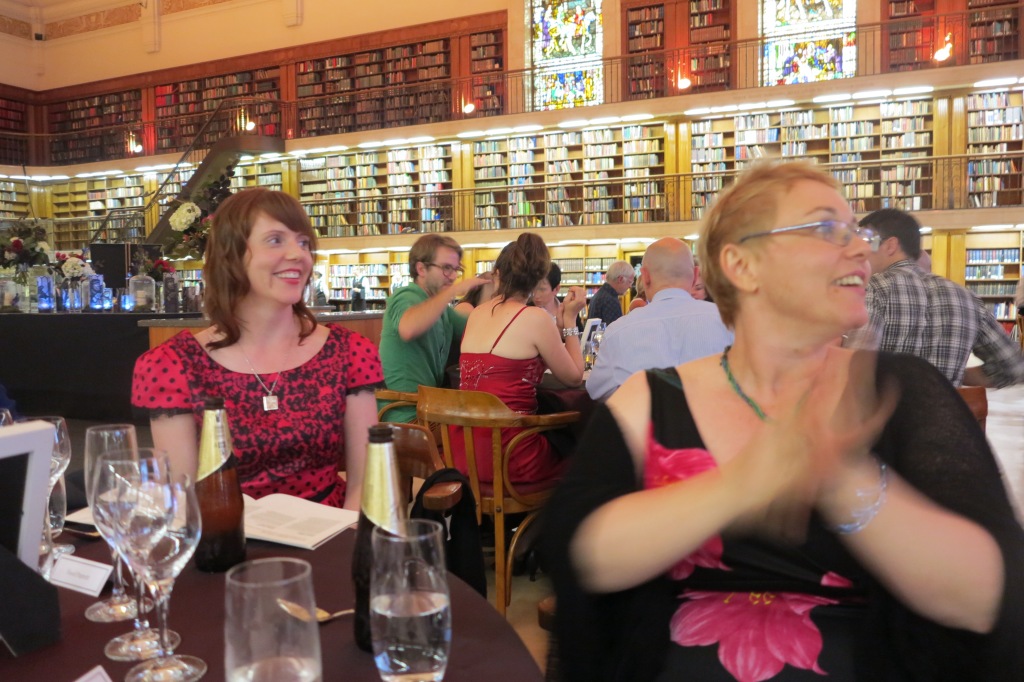
Favel Parrett and Edwina Shaw respond to not winning the UTS Glenda Adams Award for New Writing

Favel Parrett and Edwina Shaw respond to not winning the UTS Glenda Adams Award for New Writing

The Christina Stead Prize for Fiction was almost an anti-climax. It went to Kim Scott for That Deadman Dance. We had a small bet going on my table, and I won hundred of cents. Kim Scott’s agent accepted on his behalf.

There was dessert, layered chocolate and coffee cake, then:

The People’s Choice Award, for which voting finished the night before, went to Gail Jones for Five Bells. She was astonished, genuinely I think, and touched that her book about Sydney as an outsider should be acknowledged like this. I haven’t read the book yet, but I’m also a bit astonished, because what I have read of her prose is not an easy read.

Book of the Year: Kim Scott, That Deadman Dance. No surprise there!

No surprise, either, that the award to Clive James overshadowed all the others in the newspaper reports.

I believe that the judging panel for next years literary awards has had its first meeting. The dinner will move back to the Monday of the week of the Writers’ Festival, where it belongs.

Added later: Edwina has blogged about the evening.

Sonnet #14: So many books

The best-of-2012 lists are starting to appear. The New York Times has published their 100 Notable Books. I’ve read only two of them, a novel and a memoir. So, for my 14th and last sonnet of the month:

Sonnet 14: So many books
So many books, so little life
still left. Some say they wake at three
and lose themselves in mental strife.
Not I. The darkest hours are free
from interruptions: time to read
a knotty verse, a learned screed,
a chapter that will make me weep.
Alas, I soon go back to sleep.
Too little life, too many pages:
War and Peace, The Iliad,
A la recherche, Upanishad.
I’ll have to suffer grief’s five stages:
though I clock fifty books a year
I still may never read Jane Eyre.

Sonnet #13: Daughter and mother cross the street

This happened outside my house today:

Sonnet 13: Daughter and mother cross the street
They stop the traffic. Big and small,
they stroll across the street with strollers,
no hand-holding, none of all
that worried care, those grinding molars.
Mother and her three year old
who pushes teddy, coolly bold,
sucking on her chup-a-chup,
mooch out and hold the traffic up,
though truth to tell it’s just one truck.
The driver waved them from the kerb
and watched with patience quite superb
a dreaming duckling and her duck
meander out. Ah, that’s the charm
to keep our young ones safe from harm.

I couldn’t fit everything into the 14 lines. I walked out of my door to see the woman and the little girl wandering across the road, with at least three metres between them – the little girl taking her own sweet time and completely out of reach in case a car came unexpectedly around a corner. I was amazed at the mother’s nonchalance. She mouthed ‘thank you’ to the truck driver. I took that as an opening , and when I caught up with her I said something like, ‘That was pretty amazing to watch.’ She explained that he had stopped for them even though there’s no pedestrian crossing.

The little girl pulled the lolly out of her mouth and waved at me with it. I said to her, ‘That would distract you from the road, wouldn’t it?’ Her mother explained that she had got the lolly from Woolworths where, in spite of her repeated complaints, they leave the sweets on a low shelf near the check-out: ‘I said, “I’m not paying for that. I don’t want it, but you’ve deliberately left it where my daughter can pick it up.” So we got it for free!’

We should all have had such mothers, to let us cross the street without fuss, to fight the wiles of capitalism, and to allow us an occasional sweet victory.

Robert Creeley 1950–1965 (and Sonnet #12)

Robert Creeley, Poems 1950–1965 (Marion Boyars 1967)

First things first: If you’re a student looking for help with an essay or if you love Robert Creeley’s poetry and are looking for a like-minded spirit, stop, turn back, you are going the wrong way. I don’t pretend to have anything sensible to say. This is largely a blog post about my ignorance.

Robert Creeley is held in very high esteem by them that know about these things. I think he might be a poet’s poet. A quick google produces a number of learned and instructive articles, in which I learned much, including that this UK publication seems to be Creeley’s first US trade book, For Love, plus an extra five years worth of poems. Creeley makes a commanding appearance in Ron Mann’s 1982 movie Poetry in Motion. Robert Adamson lectured about him recently, and evidently he was a major influence on a generation of Australian poets. I know all this, because as I made my way through this book I felt at a loss, and was casting around for guidance. Sadly, asking for guidance on how to read a poet is like asking to have a joke explained. I could kind of see what people were saying but I was like the person who sort of understands the explanation but still doesn’t laugh at the joke.

I found a lot of mentions of Charles Olson (another gap in my general education), and when I looked Olson up on Wikipedia I found:

Olson called for a poetic meter [Wikipedia uses US spelling] based on the poet’s breathing and an open construction based on sound and the linking of perceptions rather than syntax and logic.

Ah, I was doing it wrong. I had to stop needing conventional syntax and use my ears more. In an excellent article in the London Review of Books, Stephen Burt says:

Creeley’s quiet poems demand that we read them slowly, even when they appear brief and simple. Taken too fast, or too many at a time, his poems … can sound cramped, monotonous and repetitive. Read at leisure, the best poems are subtle, musically gifted, memorably terse.

I had been finding the poems cramped, monotonous and repetitive, so clearly I was doing it wrong, again. I slowed right down, and read just a couple of poems at a time. That’s not to say I slavishly submitted my faculties to Burt. He describes ‘The Crisis’ as horrifying, and quotes its opening lines:

Let me say (in anger) that since the day we were married
we have never had a towel
where anyone could find it,
the fact.

Now this was one of the few poems that had actually spoken to me at the time I read Burt’s article, and I wasn’t horrified. Maybe it was possible to write those lines without self-mockery in the 1950s, but I read them as obviously ironic, an oblique apology from the poet for losing his temper.

Then there’s a Paris Review interview published in 1968, just a couple of years after this book:

INTERVIEWER: How long does the writing of a poem take for you?
CREELEY: For me, it’s literally the time it takes to type or otherwise write it – because I do work in this fashion of simply sitting down and writing, usually without any process of revision. So that if it goes – or, rather, comes – in an opening way, it continues until it closes, and that’s usually when I stop. […] I’ll come into the room and sit and begin working simply because I feel like it. I’ll start writing and fooling around, like they say, and something will start to cohere; I’ll begin following it as it occurs. It may lead to its own conclusion, complete its own entity.[…] Of course, I have no idea how much time it takes to write a poem in the sense of how much time it takes to accumulate the possibilities of which the poem is the articulation.

Another way I’d been doing it wrong! No wonder I was floundering. I tend to read poems as if they’re carefully wrought, deeply considered utterances, but according to the man himself his are something quite different, something much more risky and of the moment. I took this with a grain of salt, but I did take it.

I can’t say I’d come to love Creeley’s poetry in general by the end of the book. But it kept me reading to the end. Round about 1960, either he or I had a turning point, and I was enjoying a lot. Look at ‘Love Comes Quietly’:

Love comes quietly,
finally, drops
about me, on me,
in the old ways.

What did I know
thinking myself
able to go
alone all the way.

With this poem, I no longer felt that I was reading this collection because it was good for me. Creeley here seems to have a moment’s respite from the intense, punishing self-consciousness that characterises the poetry generally. But if something was different in the poetry, something had changed in me too. Suddenly I could hear the music: ‘quietly’ ‘finally’ ‘about me’ ‘on me’ / ‘know’ ‘go’ ‘alone’ / ‘old ways’ ‘alone all the way’. Such short lines and so much happening in the sound of them – as well as in the sense. Any number of other poems were singing to me from then on.

A handful of longer poems towards the end of the collection are just marvellous: ‘The World’, about a lover’s grief; ‘The Women’, an amazing attempt to articulate feelings about sex and the object of sexual desire; ‘Anger’, about anger;  ‘Something’, which starts – unpromisingly you might think – with a lover’s embarrassment at having a pee in his presence.

My warning at the start of this blog entry still stands, and I especially don’t get what’s going on in some of the poems with very short lines. But I’m glad to have made this poet’s acquaintance.

And now, because it’s November, a sonnet of sorts. This is not a parody of Creeley – in my wildest dreams I couldn’t bring off  his way with rhyme, so I’ve stuck to my usual rhyme scheme. But there are some quotations, and because his lines are characteristically very short, I’ve cut mine down:

Sonnet 12: Evening
I speak, I
think I think
it asks my-
self to drink.
Position is where you
put it. I care too
little, I smoke
no joke,
therefore I am not
in attitude perplexing
a man so vexing
to flex or rot.
Woman so addressed
is easily depressed.