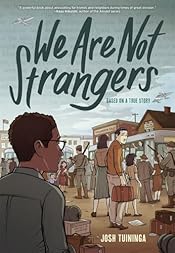
Josh Tuininga’s We Are Not Strangers

Josh Tuininga, We Are Not Strangers (Abrams Comicarts 2023)
In December 1941, about 127,000 Japanese Americans lived in the continental USA. After the attack on Pearl Harbor and the declaration of war on Japan, about 120,000 of them, of whom about two-thirds were U.S. citizens,  were forcibly relocated and incarcerated in concentration camps.

This is not a secret history. In The Karate Kid, the young boy comes across references to the deaths of Mr Miyagi’s wife and child in a camp. Star Trek actor George Takei famously spent a number of years in one of the camps as a child, as told in the documentary To Be Takei (2014) and in They Called Us Enemy, a comic he co-wrote that was published in 2019. David Guterson’s novel Snow Falling on Cedars (1994) and the Scott Hicks film made from it refer to the incarcerations. (There are more examples on Wikipedia – I’ve just mentioned the ones that ring a bell for me.) Various presidents have expressed regret over the episode.

Josh Tuiininga’s comic comes at the subject as it played out in Seattle, from the point of view of Sephardic Jews. It begins in December 1987, with the funeral of Marco, the narrator’s grandfather. The funeral proceeds according to Sephardic tradition, but a lot of people turn up that the narrator has never seen before. Curious, he asks them how they knew his grandfather so well, and the story emerges.

During World War Two, as the Sephardic Jews of Seattle were watching the horrific events unfolding in Germany, they were suddenly confronted by a terrible injustice closer to home, as Japanese friends and neighbours were rounded up, their businesses forcibly closed, and their lives disrupted.

Page 77* marks a turning point. Marco and his family have just heard a radio announcement that ‘the Japanese population in America are potentially dangerous’ and are to be relocated or suffer criminal penalties:

In the first image on this spread, the woman walking away with a dismissive gesture is Marco’s mother, who has successfully escaped Germany and been smuggled into the USA by way of Canada. Her gesture signifies contempt for the edict, which she has just said is like what happened to Jews under the Nazis (not a view the comic necessarily endorses, but it shows the basis for solidarity between Jews and Japanese).

The left-hand page appears to portray Marco and his family as helpless bystanders. Evidently the Japanese American Citizens League recommended compliance for pretty much the reasons that Marco gives here: to resist would be to undermine the war effort. But the wordless right-hand page suggests something else. It is followed by two more wordless pages, a full page drawing of Marco at his desk beneath a clock showing one-thirty, and then a single drawing of a lit window in a dark suburban scape. We don’t now what these images mean precisely, but they remain as a question as the rest of the story unfolds: there’s a Passover sermon at the Synagogue; one of the Japanese children has her white friends turn against her; the Central District of Seattle is filled with remnants of Japanese presence; there are glimpses of life in the camps, and on their closure signs of persistent anti-Japanese sentiment are everywhere.

But it turns out that what Marco was doing in his study that night was working out how he could safeguard his friends’ homes and businesses. When they return home, he gives them envelopes full of rent money, deeds and all that is needed to help restore their lives. And he has done it for as many families as he could manage. Only at his funeral do his own family find out what he has done.

‘Why did he keep it a secret?’ the narrator asks, and over a series of images that show Marco with family and his Japanese fishing friend in 1945, 1953, 1968, 1979 and then (his empty chair at the family table) 1987, the captions read:

Maybe he thought he would get into trouble.
Perhaps he wished he could have done more.
Or, maybe …
… he just wanted to forget all about it …
… and spend his time on more important things.

That last line is a caption between two images, one of Marco as an old man at a family meal, the other (echoing images from early in the book) of him and his Japanese friend fishing together and laughing.

It’s a powerful story, elegantly told in a palettte of mainly warm browns and pale blues. Though a note at the beginning assures us that this is a work of fiction, it also says the story is based on ‘the oral histories of many’.

It’s pure coincidence that I have read this so soon after Yael van der Wouden’s novel The Safekeep. That novel hinges on the loss of property and livelihood by Jews in the Netherlands under the Nazis – so that those who did return from camps found their houses occupied and their personal items now used by strangers. That almost certainly happened to many Japanese-Americans, but this story demonstrates how it could have been different, and that in at least some cases it was different.


It would have been impossible for me to read this book without thinking of North Queensland. My grandfather was a police magistrate. The family story is that because he had learned Italian he was brought back from his posting in Brisbane to supervise the internment of Italians during World War Two. That internment was on a smaller scale – 5000 men were taken from their families to internment camps in New South Wales and South Australia, and at least twice as many were put to work in remote areas building roads and rail, and working in mines. Many were naturalised Australian citizens.For the most part, only the adult men were taken away: the results were devastating for Italian farmers, and families were disrupted.

The ABC ran a story in 2020 marking the 75th anniversary of the end of the War (link here). The excellent Babinda museum tells one man’s story – a man who, characteristically, downplays the difficulties he faced. The official archival records of the internments have been made public for some decades now, but as far as I have been able to tell the many stories – from Innisfail, Ingham, Garradunga, Daradgee, Boogan – have yet to be told.


I wrote this blog post on land of Gadigal and Wangal of the Eora Nation, peoples whose own stories of mistreatment in times of war have yet to be fully told. I acknowledge the Elders past and present who have cared for this land for millennia.

Yael van der Wouden’s Safekeep at the book club

Yael van der Wouden, The Safekeep (Viking 2024)

Before the meeting: As I mentioned in my post about Lai Wen’s Tiananmen Square, this book has a general strategy in common with a number of other books I’ve read recently – a personal relationship as way of drawing the reader into a big public event.

In this case the personal relationship is sexual. At times I felt like averting my eyes, as if I was intruding on intensely intimate moments.

The book is told from the point of view of a woman who lives alone in the house she has kind-of inherited from her parents in postwar Netherlands. Her brother actually owns of the house but lets her live in it. The story kicks off when he pressures her to allow his girlfriend to stay with her while he goes away for work. The two women are very prickly with each other at first: the owner is prim and obsessive about neatness, and her begrudged guest is an apparently easygoing woman of the world. Bit by bit we realise that the narrator is constantly aware of the other woman’s bodily presence, and eventually the dam breaks and there are many pages of enthusiastic sex.

There are hints along the way that something else is going on. In the book’s very first paragraph, for instance, the uptight host finds a ceramic shard buried in the cottage garden. She recognises a piece from her mother’s precious dinner set, but has no memory of any of those plates ever having been broken. This is the first of a number of hints that there is something about the house that has never been acknowledged. More telling perhaps are childhood memories of strangers knocking at the door and her mother ignoring them.

I guess I knew from the beginning roughty where things were going, and even during the scenes of passion I kept waiting for the other shoe to drop. It does drop, most satisfactorily.

I loved this book.

After the meeting: I wasn’t alone in loving it.

This book group, the majority of whose members are Lesbian, has long had a rule that no Lesbian books were allowed unless the Lesbianism was incidental to the plot. Well, this book smashed that rule to bits, but it did it with such grace and integrity and good writing that not even the Chief Rulemaker minded.

Though we all loved the book, we spent some time discussing the ending. Was it too neat, too quickly achieved, too much out of character? It’s hard to blog about endings but I don’t think I’m giving too much away if I say that two possibilities were raised in defence: first, it’s like the endings to Shakespeare’s comedies – you’re not meant to think this could really have happened but it’s satisfying to imagine it as a kind of justice; second, the apparent change of personality involved could be accounted for by the transformative power of the passionate sexual experience – certainly it was transformative, and maybe even more so than obvious. If you’ve read the book, you’ll have opinions of your own.


The Book Club met on Gadigal land, and I wrote the blog post on land of Gadigal and Wangal of the Eora Nation, land that has never been ceded. I acknowledge the Elders past and present who have cared for this land for millennia.
Lai Wen’s Tiananmen Square at the book club

Lai Wen, Tiananmen Square (Swift Press 2024)

Before the meeting: On page 411 of this novel, the narrator-protagonist, a student at Beijing University, posts an application for an exchange program at a Canadian university. She goes to one of the bars on campus, and then:

The enormity of what I had done began to sink in.

A few pages later, sensations flash across her mind ‘like lightening’, and a few pages further on there is a lake, where a turquoise glow

expanded outward as far as the eye could see, and beyond, the tawny ridges of ochre mountains were flushed at their foothills with dark streaks of wild grass and moss.

The fact that I am brought up short by such moments (enormity is something big and horrible, not something like a major life decision; lightning is what flashes; if the water goes as far as the eye can see, how can you describe what can be seen beyond it?) may say more about me than about the book, but I’m pretty sure if I’d been gripped by the narrative I wouldn’t have noticed them.

If the pseudonymous author is who she says she is, this is an autobiographically inflected story of a young woman caught up in the student uprising in China in 1989. As such, it commands respect.

By coincidence, it shares something of a strategy with three other books I have read recently, telling a story with a tight focus on relationships and then widening out into a huge public event or issue. Kairos by Jenny Erpenbeck is a tales of a toxic relationship between an older man and a young woman that culminates in the fall of the Berlin Wall. The Song of Achilles by Madeline Miller is an adolescent boy-boy love story that becomes a retelling of The Iliad. The Safekeep by Yael van der Wouden (blog post coming soon) is a steamy Lesbian romance that turns out to be about what happens to property confiscated from Jews in the Netherlands under Nazi occupation.

In this book, the personal story lacks a clear or interesting focus. The death of a beloved grandmother, an embittered mother, a pallid teenage sex life (though the first unsatisfactory moment of sexual intimacy is vividly realised), and quirky university encounters all compete for attention. And the otherwise powerful Tiananmen Square narrative is undermined by giving the final moment to a twist that’s silly, and not in a good way.

I am glad I’ve read the book. It’s an important story. It’s just that at the sentence level, which is where I mostly live in books, it trudges.

After the meeting: We discussed this book along with The Safekeep. It was the Book Club’s celebratory end-of-year meeting with exchange of gifts in a restaurant, so discussion of the books was perhaps less extensive than usual.

All but one of us had read the whole book, and given that our meeting had been postponed twice because of illnesses, it was clear that it was lack of interest rather than lack of time that had led to the one non-completion. Generally, the completers all agreed that it was too long – it would have been a better book without a lot of the earlier family stories. Not everyone was convinced by the implied eye-witness status of the author – that claim is undermined by what looks like an arbitrary and ahistorical invention at the very end (and who knows, but we might yet be proved wrong in judging the final moment that way).

The book’s strongest advocate felt (if I remember correctly) that the complex mundaneness of the family story and the story of teenage emotional entanglements was the book’s strength: it took the events of Tiananmen Square in 1989 away from the abstract an showed them irrupting onto the lives of otherwise ordinary people. While others agreed that that’s how the book works, they (we!) felt that the narrator was peripheral to those big events, so her account of them doesn’t add substantially to what we already know from other sources.

We enjoyed The Safekeep a lot more.

2024 End of year list 5: Blog traffic

In case you’ve had just about enough of my end of year lists, be reassured: This is the last one, and I don’t expect you to read it – it’s mainly so I’ll have a record.

Here are the posts that attracted most clicks on my blog in 2024:

  1. Claire Keegan’s Small Things Like These (October 2023, 1618 clicks)
  2. The Book Club and Paul Murray’s Bee Sting (April 2024, 775 clicks)
  3. Ocean Vuong’s Time is a Mother (March 2023, 744 clicks)
  4. Ellen van Neerven’s Throat (July 2020, 625 clicks)
  5. Mary Oliver’s Twelve Moons (January 2019, 597 clicks)
  6. Anne Enright, The Wren, the Wren, the book club, page 77 (March 2024, 533 clicks)
  7. Trent Dalton’s Boy Swallows Universe (July 2019, 412 clicks)
  8. Robert Alter’s Psalms (September 2020, 365 clicks)
  9. Jenny Erpenbeck’s Kairos and the Book Club (April 2024, 364 clicks)
  10. Rebecca Huntley’s Italian Girl (April 2022, 357 clicks)

Ocean Vuong’s book was at the top of the list for most of the year, and then news of the movie of Small Thiings Like These sent a lot of clicks to that post. Shirley Hazzard’s The Transit of Venus dominated the list for years, but has now dropped off altogether. Mary Oliver, Ellen van Neerven and Robert Alter are the stayers.

One more bit of nerdiness. Here’s WordPress’s list of my all-time top ten posts. Apart from changing positions, the main change from last year is that Philip Larkin got bumped by Claire Keegan:

  1. Travelling with the Art Student (November 2014, 3558 hits)
  2. The Book Group and Shirley Hazzard’s Transit of Venus (June 2018, 2721 hits)
  3. (Re-)reading Kevin Gilbert’s poetry (April 2012, 2430 hits)
  4. Mary Oliver’s Twelve Moons (April 2020, 1841 hits)
  5. Bran Nue Dae (January 2010, 1805 hits)
  6. Mary Oliver’s House of Light (April 2020, 1784 hits)
  7. Claire Keegan’s Small Things Like These (October 2023, 1676 hits)
  8. The book group’s Harp in the South (February 2011, 1431 hits)
  9. Jasper Jones at the Book Group (May 2010, 1352 hits)
  10. Contemporary Asian Australian Poets (June 2013, 1236 hits)

That’s it. Thanks to everyone who has contributed to those statistics. Some of you I know IRL, some I’ve met through email etc, some only in the comments section, some I know only as anonymous clickers. I’m happy that you’ve visited the blog. Come again.

2024 End of Year List 4: Books

The Emerging Artist now keeps a record of the books she reads so she can easily whip up a list for me at this time of year. Here are her favourite reads from 2024 in her own words (links to LibraryThing pages or, at her request, to my blog post when there is one):

Fiction

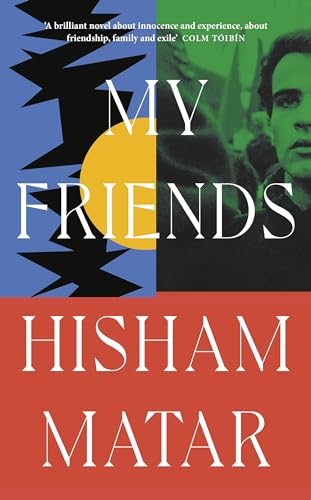
Hisham Matar, My Friends (Viking 2024)
I enjoyed Hisham Matar’s previous books, though I wasn’t enthusiastic about them as they often felt repetitive, and more like unreliable memoir than fiction. My Friends continues to draw on his life, but it feels more like a story that examines what it is to be an exile in a time of radical upheaval.

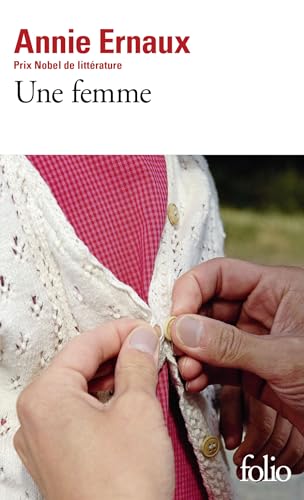
Annie Ernaux, A Woman’s Story (translated by Tanya Leslie 1991, Fitzcarraldo Editions 2024)
I read Annie Ernaux’s The Years before I got to this very slim volume, so I came to it with high expectations. I wasn’t disappointed. In such concise prose Ernaux describes the details of one woman’s life, and iin doing so conjures up a broader world.

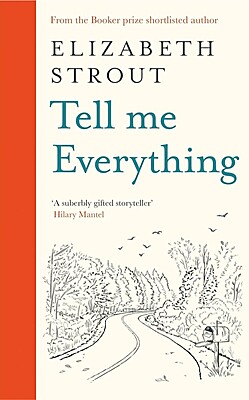
Elizabeth Strout, Tell Me Everything (Viking 2024)
This continues the stories of a number of Elizabeth Strout’s characters, bringing them together as they deal with death, ageing, love and lust. She writes with wit and kindness.

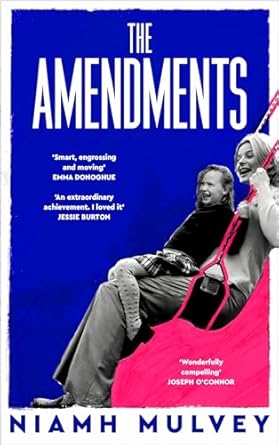
Niamh Mulvey, The Amendments (Picador 2024)
A new Irish writer for me. I hope she writes a lot more. This is a generational feminist tale about a family of women, dealing with the way issues of reproductive rights governed women’s lives before Ireland shifted from Catholic dominance – a shift made because of women demanding change.

Donal Ryan, Heart, Be at Peace (Doubleday 2024)
I had read two previous Donal Ryan novels, both of which I loved. In this one he continues to create the sense of Irish village community and disunity in the context of the Celtic Tiger and its collapse. Told from multiple perspectives, it builds a picture of complex relationships.

Non fiction

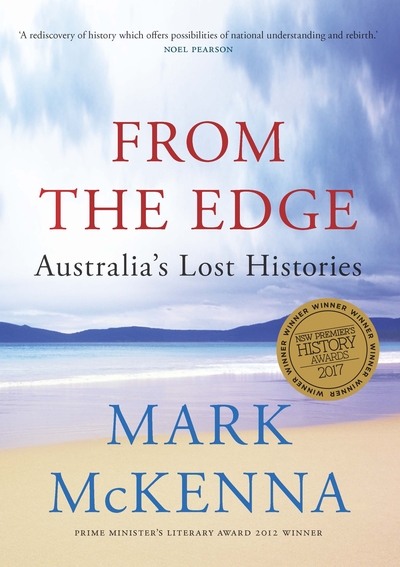
Mark McKenna, From the Edge: Australia’s Lost Histories (Melbourne University Publishing 2016)
Published in 2016, this is still a wonderful way to learn about First Nations and settler interactions. McKenna writes compelling history. These relatively short pieces include the pearl industry in Western Australia, the Barrup Peninsula petroglyphs and mining, early failed attempts to establish a colony in northern Australia, and the brutality of the Palmerston goldfields in north Queensland. They are written with a focus on First Nations agency, and they attempt to understand how colonisation played out in each specific time and place.

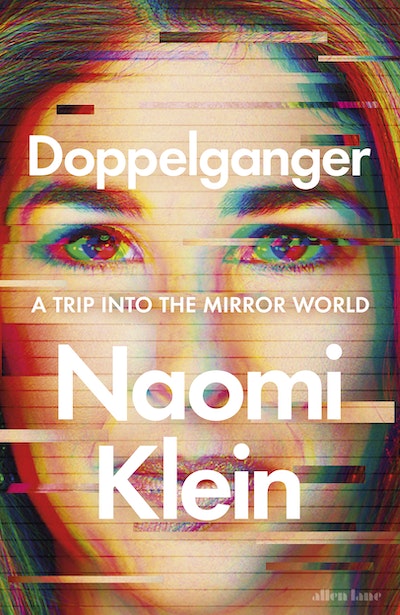
Naomi Klein, Doppelganger: A Trip into the Mirror World (Penguin 2023)
I’m still reading this, having put it down during the US elections as much of what Naomi Klein describes was playing out in the headlines. It’s a fascinating enquiry into the nature of truth, and the way fakery has become entrenched in political discourse.

From me

I can never pick a favourite or best book. My favourite is always the one I’m reading right now, unless the one I’m reading is the book I hate most in the world. Some highlights of 2024 were:

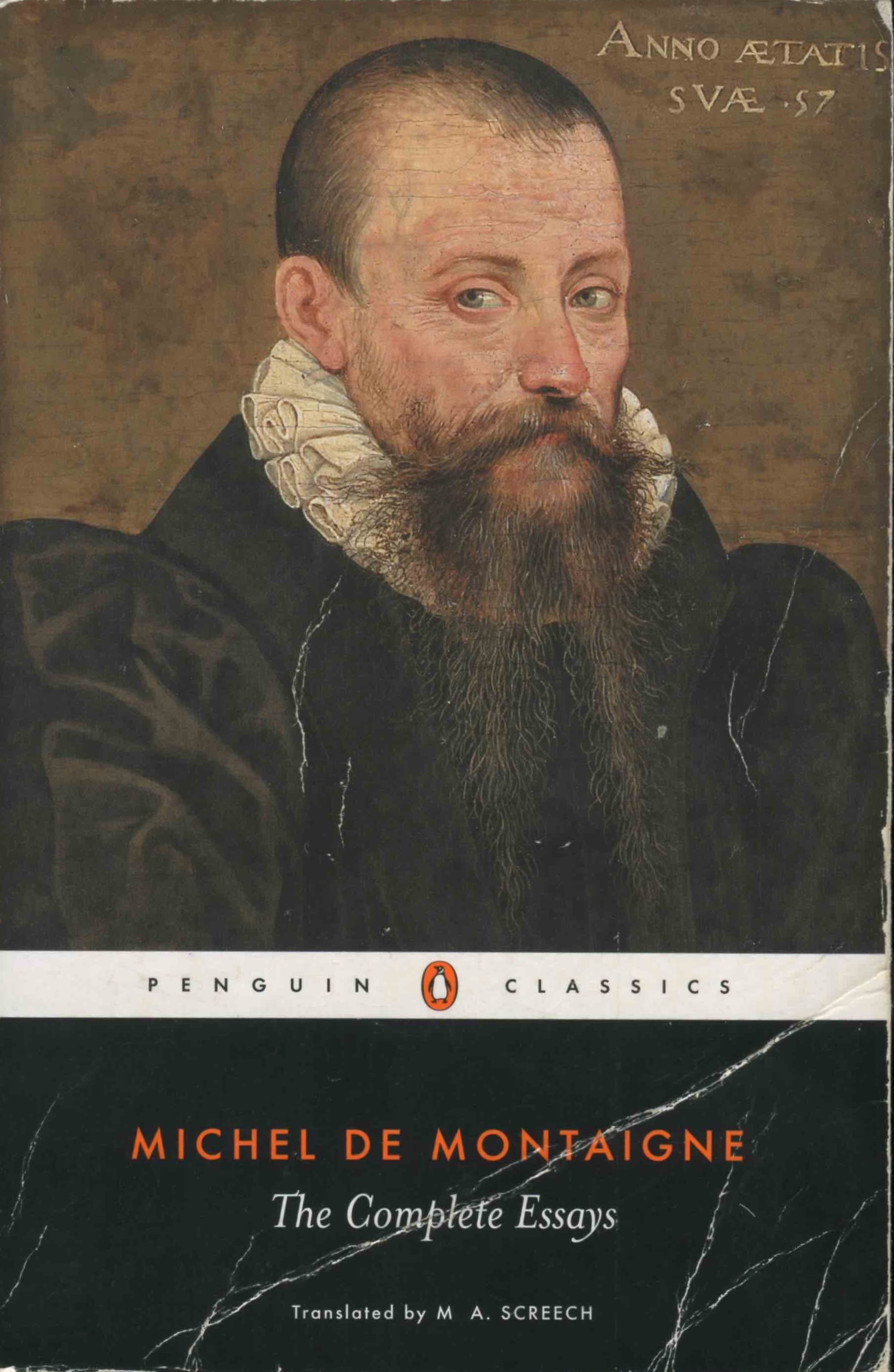
  • Montaigne’s Essays: I have read four or five pages most mornings since the beginning of March, and will have finished the book in a couple of weeks. He has been a great person to start the day with (apart from the Emerging Artist, of course)
  • Blue Mars, the final book in Kim Stanley Robinson’s Mars trilogy has finally made it from my TBR shelf, and it was a most satisfactory experience
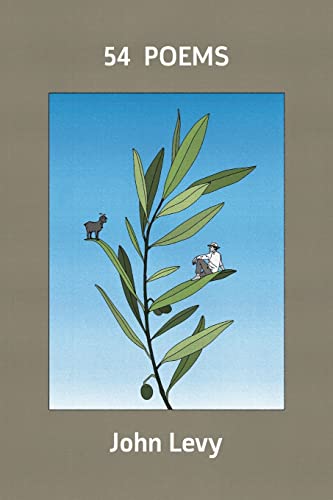
  • the poetry of John Levy, who showed up in my comments to share his enthusiasm for Ken Bolton’s poetry, and offered to send me a copy of his own book. I’m so glad I accepted the offer
  • I read more of Annie Ernaux: if ever I write a memoir, I hope I can manage to be at least slightly Ernauxian

To get all nerdy, I read:

  • roughly 83 books altogether (counting journals but only some children’s books)
  • 34 novels
  • 21 books of poetry
  • 5 comics
  • 6 books in translation – 3 from French (counting Montaigne’s Essays), 1 each from German, Japanese and Chinese
  • 7 books for the Book Group, whose members are all men
  • 12 books for the Book Club, where I’m the only man (two of them to be reviewed after tomorrow night’s meeting)
  • counting editors and comics artists, 45 books by women, 46 by men
  • 3 books by First Nations writers, and
  • 11 books by other writers who don’t belong to the White global minority.

And the TBR shelf is just as crowded as it was 12 months ago.


Happy New Year to all. May 2025 turn out to be a lot less dire than it’s looking at the moment, and (to repeat my wish from last year) may fossil fuels at last be left in the ground. May we all keep our hearts open, our minds engaged, and may we all talk to strangers.

2024 End of Year list 3: Theatre

I went to the theatre just nine times this year, and it wasn’t hard to choose the three I enjoyed most. Leaving aside the splendid Flying Fruit Fly Circus, I pass over in silence what children’s theatre I saw, and I won’t name the play that turned out to have been written by a HSC student who had watched a lot of Derry Girls.

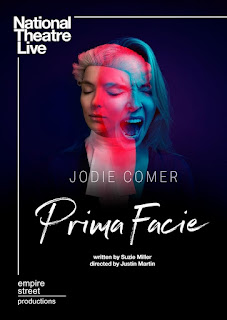
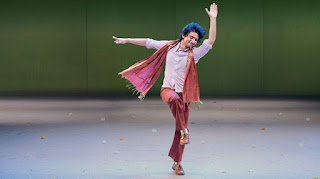
So here they are: Jodie Comer in the National Theatre Live production of a play that had its premiere years ago at Sydney’s minute Stables Theatre; a new production of an epic play about Sri Lanka, just as alive and engrossing in the Carriageworks as it was in the Sydney Town Hall; and a stunning one-woman piece in which Vaishnavi Suryaprakash tells a story in Bharatanatyam dance.

  • Prima Facie (Suzie Miller 2019, seen in the National Theatre Live production)
  • Counting and Cracking (S. Shakthidharan and Eamon Flack 2019, seen in Belvoir’s production at the Carriageworks)
  • Nayika a Dancing Girl (Nithis Nagarajan and Liv Satchell 2023, at Belvoir Street Theatre)

Next: books!

2024 End of Year List 2: TV series

The Emerging Artist and I watch far too much television. Fortunately, a lot of it is very good. We’ve learned the art of temporarily subscribing to a streaming service to watch a particular show, but we haven’t quite learned not to be seduced into staying subscribed.

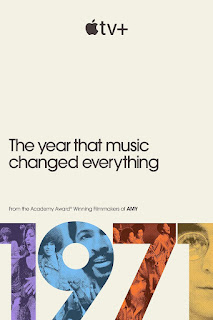
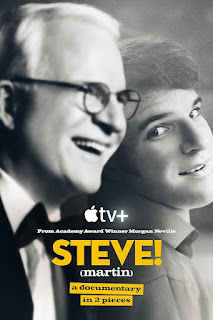
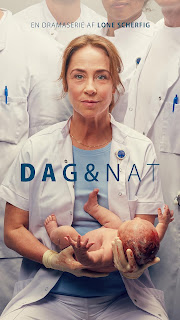
We whittled our list down to twenty (20!) shows. Here they are, broken into more or less arbitrary categories:

Documentary series

Crime

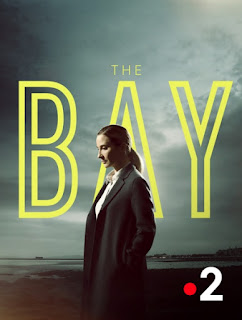
  • The Bay, Seasons 1 and 2 (Daragh Carville & Richard Clark 2019, 2021, on BritBox)
  • Bad Monkey (Bill Lawrence 2024, from a Karl Hiaasen novel, on Apple TV+:)
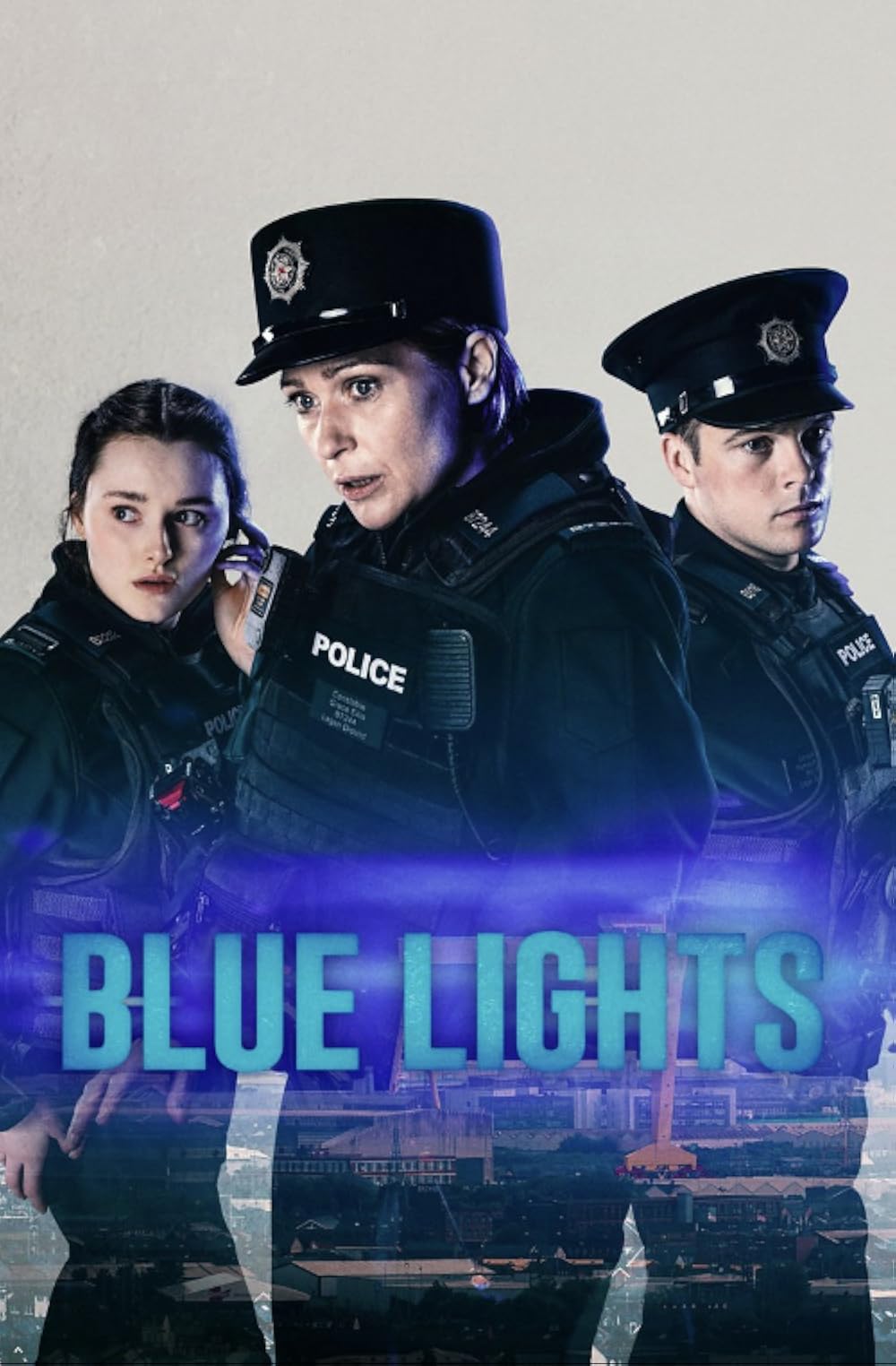
  • Blue Lights, Season 2 (Declan Lawn & Adam Patterson 2023, on SBS On Demand)

Having babies

Other comedy

Drama

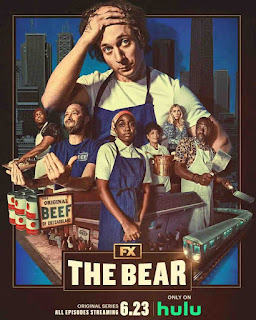
  • The Bear, Seasons 1–3 (Cannah Bos & Paul Thureen 2022–2024, on Disney+)
  • Bad Sisters, Season 2 (Brett Baer, Dave Finkel & Sharon Horgan 2024, on Apple TV+)
  • Plum (Brendan Cowell 2024, on ABC iView)
  • Boy Swallows Universe (adapted for TV by John Collee 2024, on Netflix)
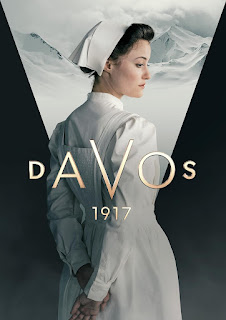
  • Davos 1917 (Thomas Hess, Adrian Illien & Michael Sauter 2020, on SBS On Demand)

Next, a much shorter list: Theatre

2024 End of Year List 1: Movies

The Emerging Artist and I are drawing up our Best of 2023 lists. Spreading the lists over two or three posts seemed to work well last year, so here goes again

Movies

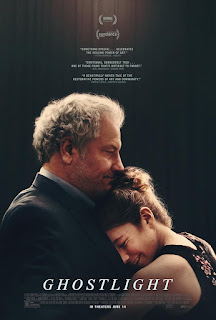
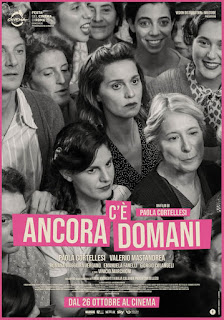
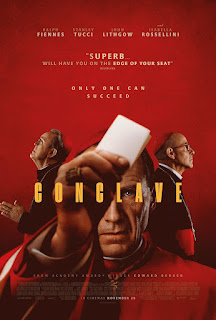
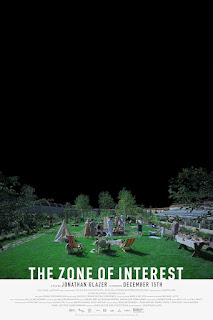
We saw about 60 movies, including streaming and TV. Here are the ones we both put at the top of our viewing year, excluding old movies we’ve rewatched.

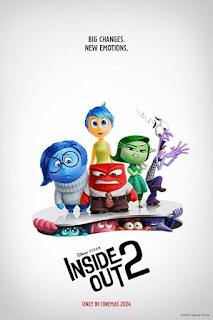
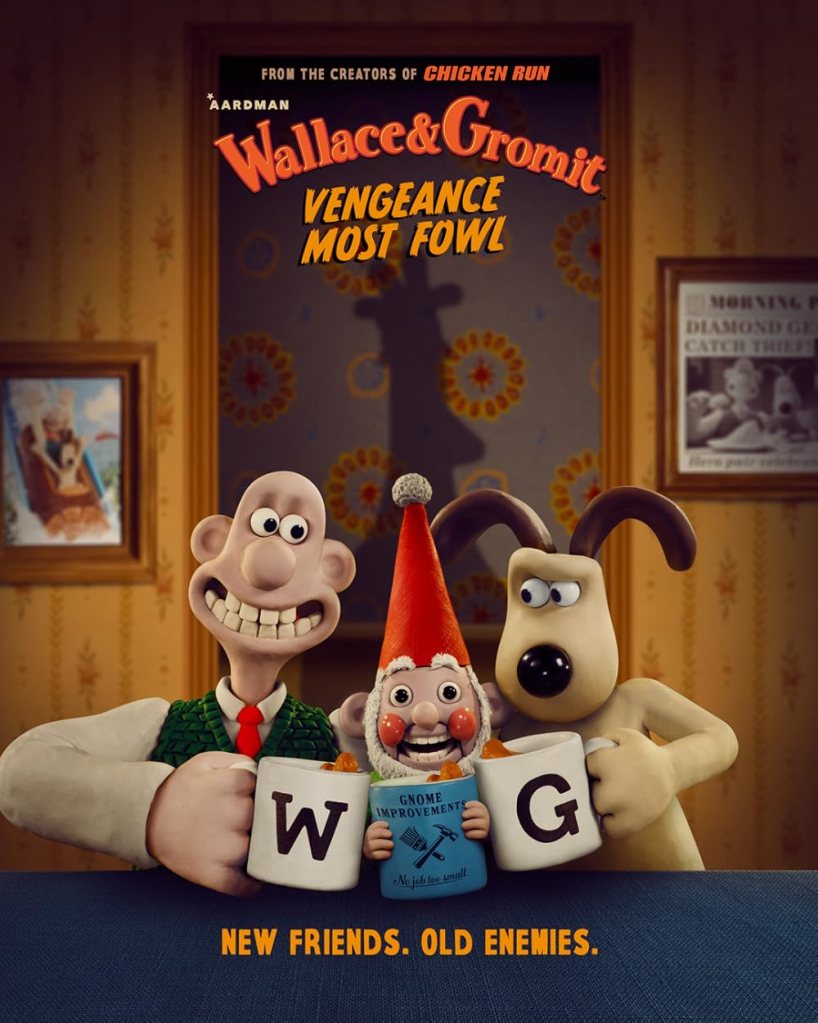
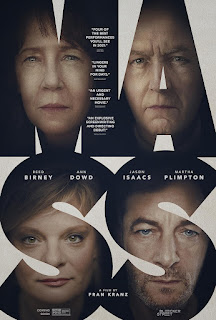
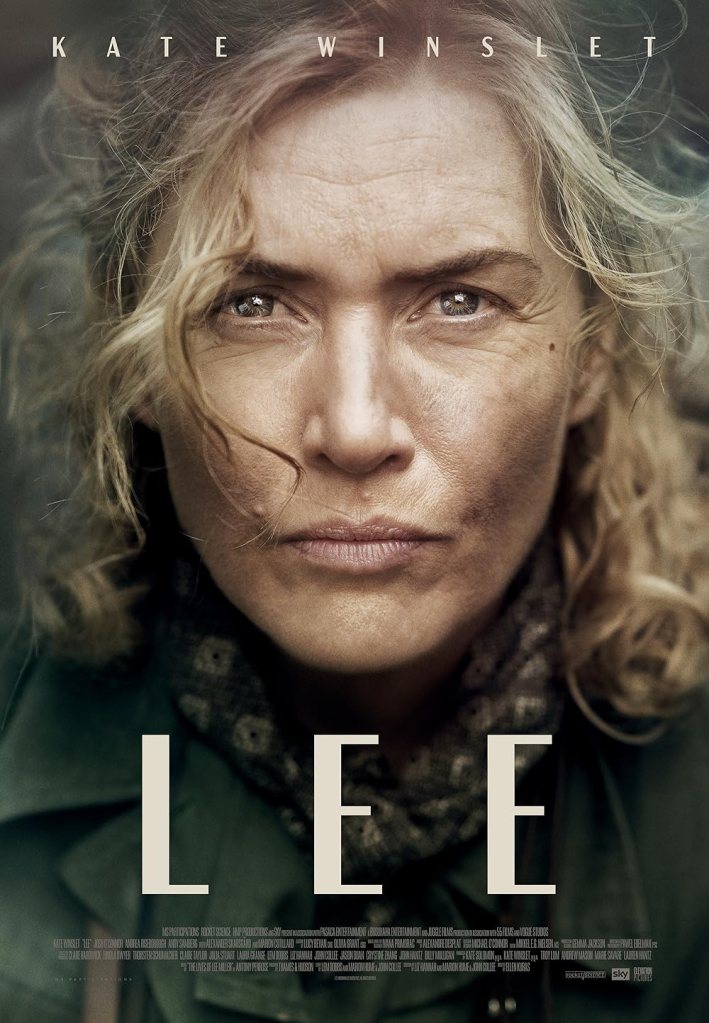
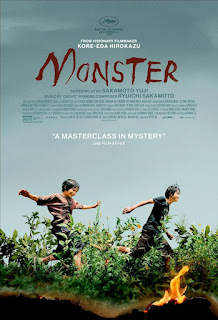
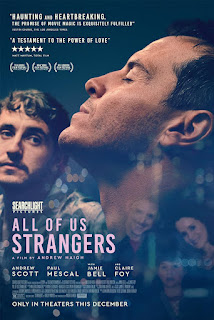
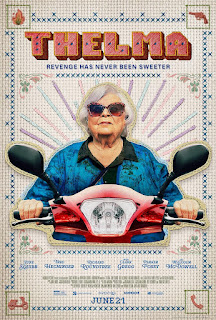
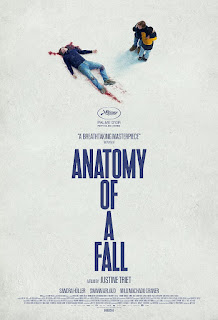
The image captions are linked to either an IMDB page or a review by my favourite movie critic, Mark Kermode.

Three documentaries, all seen at the Sydney Film Festival. One had audience members variously in tears and yelling at each other, another sent us on a pilgrimage to the Bundeena art trail, and the third shed wonderful light on the workings of a rock band:

Two children’s movies, or at least movies seen in the company of small children:

Five features that we agreed on:

And then, three films that I loved that I saw by muyself:

So then fairness required that The EA got to name three more as well. She chose these:

And we didn’t even get to mention The Teacher Who Promised teh Sea or The Seed of the Sacred Fig or … we saw so many wonderful movies in 2024.

We did see a couple of stinkers, but it would serve no purpose to name the one we both chose unhesitatingly. We saw it at the Sydney Film Festival and it will never have a general release.

Coming soon, our favourite TV series of the year.

Rodney Hall’s Vortex

Rodney Hall, Vortex (Picador 2024)

I haven’t read anything by Rodney Hall since the early 70s, and then it was just one book of poetry and one novella. Since then he has had thirteen more novels published, as well as ten more poetry collections, a collection of short fictions, two biographies – and non-fiction, an opera libretto and radio plays (not an exhaustive list), not to mention that he has won any number of prestigious prizes and accolades.

So it may be because I’m coming late to his writing that Vortex had me feeling off kilter pretty much from start to finish. On any page there’s something to enjoy, appreciate, puzzle over or be wowed by. But I don’t think I ever had a sense of the book as a whole.

There’s Brisbane in 1954: the Queen’s visit, a spectacular water-weed infestation, an exhibition of Tollund Man in the museum, a cyclone, the aftermath of the US army’s stay there in World War Two, the beginnings of ASIO domestic spying. Vladimir Petrov makes a cameo appearance. Entertaining endnotes underline the historicity of some of these features and events, even while asserting that the book is fiction.

And there’s 1954 beyond Brisbane: the Mau Mau in Kenya, the Royal Charter for North Borneo, the battle of Dien Bien Phu in Vietnam, and a boatload of refugees.

There’s Compton Gillespie, a young, bookish working-class teenager who befriends Beckmann, a German man, formerly a member of the Hitler Youth, possibly homosexual, who dances with women for money. Any sexual tension in the novel is between these characters.

There’s Paloma, a Spanish countess who presides over a table of European migrants and refugees at the Colony Club, where the conversation is witty, urbane, and mildly satirical of the host culture.

Paloma’s husband, a crude member of the public service with aspirations to gentility, is involved in cloak and dagger intrigue with the Americans while playing some kind of role in making sure the Queen’s visit goes well.

Vassily Bogdanovich Hmelnitsky, ‘thirty years a homeless vagrant’, wanders the streets of Brisbane.

There are flash-forwards. John Howard’s ‘We will decide’ speech, or near enough, turns up in the dialogue. Scott Morrison is a mysterious presence in someone’s dream.

These narrative strands intersect: the boy takes a photo of the countess; the vagrant takes shelter in the Colony Club during a downpour; the queen speaks to the boy’s mother on her hospital visit. And there’s a fairly improbable tying up of at least some threads at the end. But it’s hard for the mind to find purchase.

And maybe that’s the point. Apart from the first, each chapter and subsection of a chapter begins in mid-sentence without a capital letter: ‘or how to kill so much time?’ (Chapter 2); ‘and because none of Professor Antal Bródy’s three doctorates is recognized by the University of Queensland’ (Chapter 3); ‘because the night is warm and splendid with stars’ (Chapter 6); and so on. Similarly, they all (including the final one) end mid-sentence and without a full stop. There’s a constant sense that we aren’t getting the full story: we are seeing and hearing only moments from a great, complex, uncontainable whole.

The received version of 1950s Australia is that it was boring, monocultural, conformist. This book challenges that view. Its sympathetic characters are all in one way or another non-conformist and questioning, and its Brisbane is part of the great movement of people around the globe that began after World War Two and continues until now. I think that’s the vortex of the title. Here’s a paragraph from page 230:

from an observation balloon the vast seething mass of displaced persons is caught and processed by still photographs. From a thousand feet up an aerial platform provides intelligence pinpointing any breakouts in the movement of the desperate massed figures below. Unseen analysts make their scrupulous adjustments

This paragraph is typically complex.

First, it wrenches our attention from its immediate context, in which Beckmann is being challenged about his relationship with Compton, to the general question of refugees. There’s a suggestion that the same thing happens at different scales: Beckmann’s roommate questions him, the unseen analysts do their work. This movement from Brisbane to international scenes happens regularly in the novel.

Second, it draws attention to the time-specific nature of the book: in 2024, readers are used to surveillance – in 1954, this paragraph insists, it was already a thing, but it was much more primitive, depending on still photographs rather than video streams, and observation balloons rather than satellites or even spy planes.

Third – and this is how I first read it – it suggests something about the book itself. Its true subject is ‘the vast seething mass of displaced persons’, but it captures and processes it, not by still photographs, but by word sketches, anecdotes, scraps of dialogue, fractures narrative arcs. It does it, not from a distance of a thousand feet, but in close-up, paying attention to the details of people’s lives.

I can see that, and respect it, but in the reading I was mostly unengaged.

Journal Catch-up 27: Overland Nº254

Evelyn Araluen and Jonathan Dunk (editors), Overland Nº 254 (Summer 2023)
(Only the editorial is online at the time of writing – so I haven’t included links, sorry!)

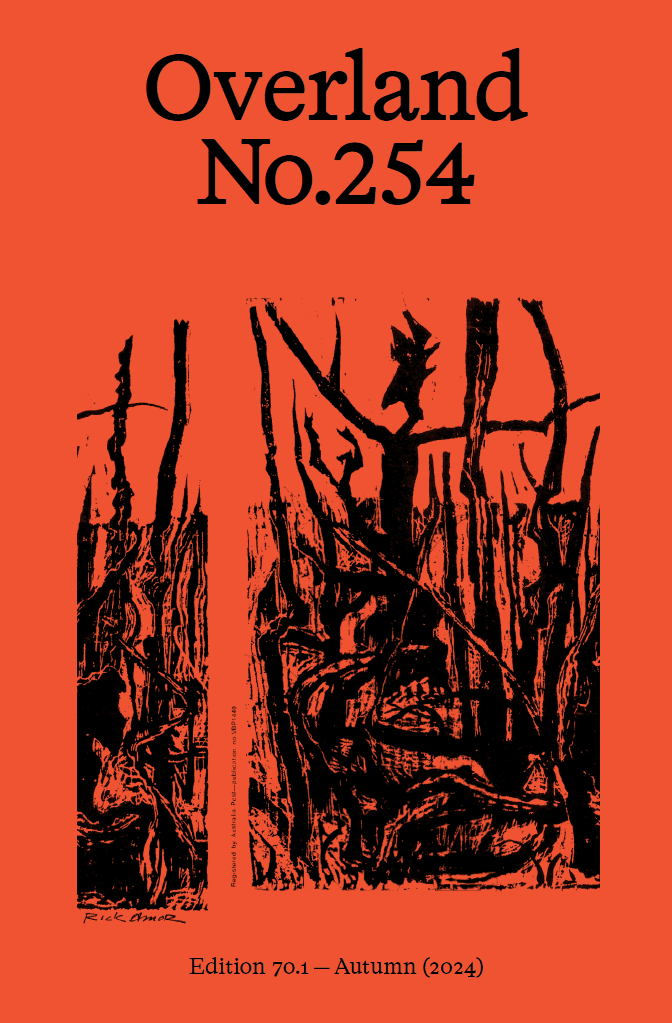
The first thing you notice about this issue of Overland is its design – an austere black and red cover and monochrome throughout, a smaller format, and surely the paper stock is cheaper than we’ve become used to. Could this be a sign of a funding crisis?

Of course there may be a funding crisis – this is an Australian literary journal after all. But there’s a definite retro aesthetic to the new look. Editors Evelyn Araluen and Jonathan Dunk call it an ‘archivally informed design’, and explain that it’s the first of four issues to mark Overland‘s seventieth year of publication. The internal illustrations are all from the archives, and include stunning ink drawings by Noel Counihan from the 1970s and Rick Amor from the late 80s and early 90s. Fabulously, page 128 features a Bruce Petty cartoon from 1976.

The nostalgia stops with the look. The words are all 2024.

I recommend the whole issue, but want to single out two articles that make me sorry so little of this content has made it to Overland‘s website. They are ‘“A State of Waste”: Myall Creek, the Sydney Herald and the Foundations of Australian Capitalism’ by Jeff Sparrow, and the anonymous essay, ‘Writing after … October 7’.

I’ve recently read how the 16th century Papal ‘Doctrine of Discovery’ (Wikipedia entry here) was explicitly invoked to justify dispossession and genocide of Indigenous people in the Americas and elsewhere well into the 19th century. Jeff Sparrow’s magisterial essay offers a very different account of how similar acts were justified in Australia. It’s a clear and cogent history of how the closing of the commons in 18th century Britain led to a new understanding of ‘ownership’ of land, which was applied ruthlessly by the settlers in Australia. The content may not be startlingly new, but Sparrow’s copious quotation from the Sydney Herald in the first part of the 19th century is, for me at least, revelatory. It’s not that the way First Nations people related to the land was strange to the settlers. It was all too familiar:
Like the British commoners, Indigenous people clearly did ‘make use’ of the land. They lived in a use-value society, tending their country to encourage the animals and plants they required. The Herald, however, understood ‘productivity’ in capitalist terms, with use values significant only insofar as they generated profit. (Page 67)

The essay spells out the way this thinking leads shockingly, but logically to the minds of the Sydney Herald editors, to justification of massacres.

What can I say? If you get a chance, read this essay.

The author of the other stand-out essay is a person of Arab background, writing in the context of conversations with Arab and Palestinian friends who work in academic or cultural contexts. They describe how they have always held in their mind the history of Palestine as ‘a bustling site of plurality and coexistence’. The establishment of the state of Israel in the nakba put an end to that condition but it has remained as a vision of possibility.

Jews worldwide were shaken by the visceral hatred shown for them in the Hamas attacks on 7 October last year. Palestinians and Arabs have been no less shaken by the hatred and disregard for them that subsequent events have demonstrated. The multi-religious and plural world of pre-1948 is now unthinkable. ‘We had not realised until this carnage started,’ the author writes, ‘how dehumanised Palestinians and Arabs are in the eyes of most Israelis.

There’s more. Back here, well-intended and well-informed colleagues have been carefully ‘balanced’ when discussing the situation of Palestinians in Israel, in large part because of not wanting to be seen as antisemitic. The author and friends have believed that if a point came when Israel unleashed its full fury on Palestinians their colleagues would take a stand. But it has happened, and many have not changed their stance:

It is not hyperbole to say we are grieving as we watch our kin annihilated on an hourly basis … We feel neglected, betrayed and discarded. We have always stood in solidarity with the causes these colleagues are most passionate about because those causes are ours too. Why isn’t Palestine their cause? (Page 49)

There’s another fine Palestine-related essay – providing devastating perspective on the brouhaha over three actors wearing a keffiyah at a preview of The Seagull in Sydney last year. But it’s the anonymous writer’s cry from the heart that strikes home.

There’s poetry – including the winners of the 2023 Judith Wright Poetry Prize and an excerpt from Nam Le’s 36 Ways of Writing a Vietnamese Poem.

There are short stories, of which my favourite is ‘Who Rattles the Night’ by Annie Zhang, a comic ghost story that won the Neilma Sidney Fiction Prize.


I finished writing this blog post in the land of the Bidjigal and Gadigal clans of the Eora nation, overlooking the ocean and surrounded by birdsong. I gratefully acknowledge the Elders past and present who have cared for this beautiful country for millennia.