Stand Up Virgin Soldiers and LoSoRhyMo 10

Leslie Thomas, Stand Up Virgin Soldiers (1975, Arrow Books 2005)

This is the third novel in Leslie Thomas’s Virgin Soldiers trilogy – drawing on his National Service experience as a non-combatant stationed in Singapore in the 1950s. The original Virgin Soldiers, published in 1966 (here’s my blog post) and made into a film three years later, was pretty much a novel equivalent of much verse produced by soldiers in the trenches – it had the smell of reality about it, but didn’t press too seriously at the experience of being soldier. The emphasis was on the young soldiers’ camaraderie and relatively innocent sexual adventures. The casual sexism, racism and homophobia, though not necessarily endorsed, went largely unchallenged, and there was just enough war stuff to remind the reader of the underlying reality. Times had changed by 1975 when this book was published: the US–Vietnam War was dragging to an end, on television M*A*S*H was in its third and fourth seasons, and feminist voices were being heard. In Australia, Eric Bogle’s ‘And The Band Played Waltzing Matilda’ had been around for four years, though John Schumann and Redgum’s ‘God help me / I was only nineteen’ was still 10 years away. The book, while still mainly featuring jolly japes among the non-combatants, takes a darker turn than its predecessors: we see glimpses of what lies behind the Chinese prostitute’s cheerful façade; a character who shares many qualities with The Hurt Locker‘s protagonist is seen as anything but a hero; the muted homophobic humour is repudiated in a climactic scene, and so on.

The Arrow paperback I read was published in 2005. Perhaps a clue to the book’s longevity lies in the marginal notes in my copy, which was once held by the Oxfordshire Library Service in England. When a character reflects on the awkwardness of the rifles issued to British soldiers, the annotator writes, in pencil so light as to be barely legible, ‘Must have the Nº 4. Nº 5 much better (shorter)’. Later, in a combat scene, the same hand writes, ‘Ah, a Nº 5.’ It seems that at least one reader was led to the book by the nostalgic pleasures offered by its non-soapboxing rootedness in experience.

The Art Student asked, over-casually, ‘How come you’re reading something called Stand Up Virgin Soldiers?’ There were any number of possible answers, all of them true, but what kept me reading was also a kind of nostalgia. When I was the age of the book’s main characters I was in training in a Catholic religious order: we had crosscut saws where they had rifles, and prayed to the Virgin Mary where they vied for the favours of nurses and/or prostitutes, but there are whole pages here that could be describing interactions among us novices. The way the authority figures are caricatured reminds me vividly of the merciless way our wags would impersonate the Brother Master and especially the Brother Bursar.  The narrator even refers at least once to ‘the monastic life of the barrack room’.  I could elaborate, but it’s LoSoRhyMo, so here goes:

Sonnet 10: They were only nineteen
God help all nineteen year old men
in dorms and barracks and the cells
of gaols and monasteries, and then
help all the rest whose heavens or hells
have called or driven them to places
where they have just each other’s faces –
no sister, grannie, auntie, mother,
no uncle, father, just each other.
The quartermaster’s store has rats,
they sing to keep their spirits high
and laugh because they don’t dare cry.
Rats as big as pussy cats.
Their eyes are dim they cannot see
with luck they’ll soon be sixty-three.

Just in case I’m talking a secret language here, I might quote the chorus of ‘The Quartermaster’s Store’, sung on many a bus trip:

My eyes are dim I cannot see
I did not bring my specs with me
I did no-ot bring, my-y specs … with … me.
LoSoRhyMo 9: On walking out of a play

The Art Student, my companion in discourtesy in walking out of the Wharf Theatre on Wednesday night, said this would be a good subject for a sonnet:

Sonnet 9: This is just to say
We walked out of your play last night
from front row seats. We’d hung in there
for five whole scenes. The script was tight,
each actor sound, the set though spare
was spot on, and the vocal coach
had nailed the accents – no reproach
on that score. All these things were fine
but almost from the opening line
I couldn’t, couldn’t feel a thing.
I’d pay to watch two monkeys fart
if done with two boards and a heart.
Last night had timing, lines that sing
and sting. It’s heart that wasn’t there.
Sometimes a pause is just dead air.

Marilynne Robinson’s Home at the Book Group

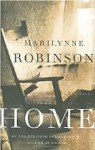
Marilynne Robinson, Home (Farrar, Straus & Giroux 2008)

This will be quick as my blogging time this month is mostly taken up with writing what poet and commenter John Malone has called, at least by implication, unremarkable sonnets.

In Marilynne Robinson’s novel, Jack, the black sheep of a midwestern Presbyterian pastor’s family comes home for a couple of months, rebuilds some kind of relationship with his youngest sister, now 38 and home to lick her wounds after being exploited by a cad, and fails to reconcile with his ageing father. Perhaps unexpectedly, it was a great success at the book group. Most of us loved it, and those who didn’t were still interested. Over excellent quiches and salad, followed by ice creams on sticks that our host had bought for his grandchildren, we had some of the most animated discussion we’ve had since I joined the group. Several of us are planning to read or reread the companion novel Gilead.

I was just a little smug to be able to report that I’d picked up early on the clues that Jack’s great, lost love might be Black. My recent reading of W E B Du Bois’ Souls of Black Folk meant that I got the hint when Glory asked Jack what he was reading :

‘W.E.B. DuBois,’ he said. ‘Have you heard of him?’
‘Well, yes. I’ve heard of him. I thought he was a Communist.’
He laughed. ‘Isn’t everybody? I mean, if you believe the newspapers?’ He said, ‘Now I suppose you’ll think I’m up here reading propaganda.’

LoSoRhyMo 8: Sydney suburbs – a sonnet

Inspired by Carol Ruff’s ‘Love in cLOVElly’:

Sonnet 8: What’s in a suburb name?
Clovelly has love, Chippendale’s hip.
In Normanhurst you’ll find a man.
A gal in Wingala can’t give you the slip.
Botany’s always good for a tan
on Erskineville skin. In Killara get ill
and then get iller on Miller’s Point hill.
Oh, rest in Forest Lodge, my friend.
In Asquith quit when near the end.
We each hold a suburb dear to the heart –
perhaps it’s for Kensington you want to sing,
feel awe in Dawe’s Point or wear Kuringgai’s ring,
you’re marked by Haymarket or hard for Leichhardt.
Wherever I am on air, sea or land,
I’m connected by Ann&ale’s ampersand.

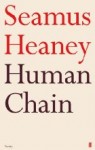
LoSoRhyMo 7: After reading Seamus Heaney’s Human Chain

Seamus Heaney, Human Chain (Faber & Faber 2010)

Blogging about Human Chain as part of my LoSoRhyMo sonneteering is lighting a penny candle to a star, and not just because none of its poems are sonnets. I  don’t have any pretensions to writing even a pastiche of Seamus Heaney. But a quota is a quota, so I’ll just say the book is something to immerse oneself in, and get on with it. I hope this makes some kind of sense.


Sonnet 7: Northern Ireland / Far North Queensland
Ask me to translate Seamus Heaney
(Derry, seggins, Upper Broagh),
I’ll try lantana, Mirriwinni,
Waugh’s Pocket – my dad’s puzzling laugh
when someone spelled that ‘whore’ – but stet
Church Latin, soil and honest sweat,
Virgil, cards: Bill Markwell, joker,
feared dona f’rentes Greeks at poker.
Wraiths of our fathers thirsting still,
voiceless now Kramastos, Markwell.
Like torches shining down a dark well
may poems give them drink until
they come back to the light of day,
beloved, but not all the way.

LoSo RhyMo 6: My mother enforces modesty

When I put up my fifth sonnet yesterday I was averaging one every three days. I’m going to have to get cracking if I’m to reach my goal of 14 in the month. I’ve been mulling over scenes from my childhood. Here’s one:

Sonnet 6: My Catholic mother enforces modesty
Our mum, mock-shocked, would cry, ‘Ooooh Venus!’
if any child by running nude
allowed a glimpse of bum or penis
(we called them ‘bom’ and ‘tail’ – less rude).
Though this was fine for either sister,
I whinged that I’d grow up a Mister,
so ‘Venus’ seemed a little wrong.
Deferring to my little dong
she’d call ‘Adonis!’ should I streak.
How glad I am (Oh yes, I glad am!)
She didn’t cry out ‘Eve!’ and ‘Adam!’,
invoke the sex-as-sin mystique.
We covered up – it was our duty –
not sinful shame, but ancient beauty.

LoSoRhyMo 5: On reading Home

Marilynne Robinson, Home (Farrar, Straus & Giroux 2008)

I’m intending to write a little more about this book, probably in prose, after the Group meets to discuss it later in the week. But for now, it’s grist to the relentlessly demanding LoSoRhyMo mill. So far my sonneteering attempts have been in jaunty tetrameters. The cadences of Marilynne Robinson’s prose urge the more reflective pentameter.  First, a quote from the book.  This one come close to stating a central theme:

There is a saying that to understand is to forgive, but that is an error, so Papa use to say. You must forgive in order to understand. Until you forgive, you defend yourself against the possibility of understanding.

There are plenty of pearls of wisdom like this, that are even more profound in context than out. Papa spends most of the book struggling to live up to the wisdom attributed to him here. It’s a wonderful book, though perhaps not as luminous as MR’s previous novel, Gilead. But here goes with my sonnet (and I’m afraid this one isn’t so much verse as something less than prose that’s tortured into rhyme):

Sonnet 4: On reading Marilynne Robinson’s Home
At book’s page one, the youngest Boughton, Glory,
betrayed in love, tears ever in her eyes,
returns to father’s home, rejoins his story
where God is love and love won’t compromise.
Soon brother Jack arrives, to hymns of praise
(praise God, for Jack himself’s no saint, but rather
an anti–Seymour Glass, the clan’s disgrace
much loved, lamented, prayed for by his father).
So father, son and Glory join a dance
of careful kindness, trust that’s tentative.
When stern theology allows a chance
the ailing father struggles to forgive
until Jack’s tragic truth is clear to see:
‘Cry if you want to, chum,’ he says. ‘Feel free.’

LoSoRhyMo 4: Sculpture by the Sea

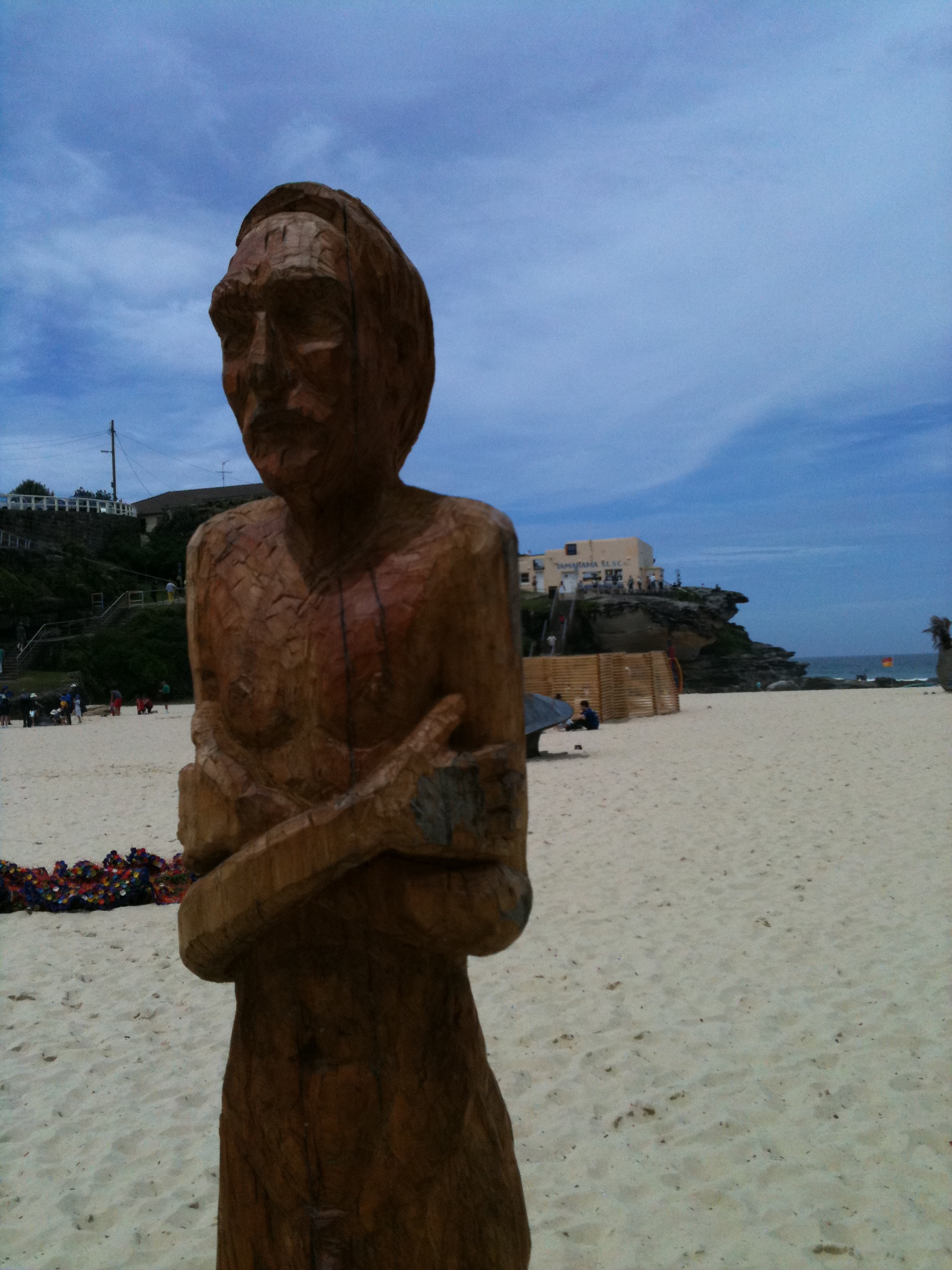
Sculpture by the Sea deserves more than 14 lines but it’s LoSoRhyMo (Local Sonnet Rhyming Month) in this house so an ekphrastic sonnet is all you’re going to get from me. You could pop over to Richard Tulloch on the Road for some lovely images, wittily presented (where I’ve just seen a comment expecting a sonnet from me – no pressure of course).

Sonnet 4: Sculpture by the Sea
We walk among these waking dreams
from Bondi’s cliffs to Tamarama –
dreams hewn from wood, stone, bronze, from streams
of plastic, garbage given glamour.
Weird weed things weep; a stringybark
man meets an old horse on some dark
grief-stricken shore; a corrugated
iron pair look up with bated
iron breath; a steel key
rolls turf back like a sardine can;
smooth abstract beauty from Japan.
These dream things teach our eyes and we
look round: two shags pose grace to grace,
the shelf below’s awash with lace.

If you’re interested, the handful of sculptures singled out for mention are:

  • Jennifer Orchard’s ‘Weeping Weeds’, a gathering of her ceramic Plantpeople and Plantanimals
  • Stephen King’s “Hello Mate” which got my vote for the People’s Choice Award, pics snapped by the Art Student below
  • Hannah Kidd’s ‘The Sky Is Falling’
  • Mimi Dennett’s ‘The Irresistible Force
  • Any number of Japanese sculptures, but perhaps especially Keizo Ushio’s ‘Oushei Zokei  2010 Circle’ and Toshio Iezumi’s ‘M.100901’, also snapped by the Art Student, below.

Sculpture by the Sea  finishes this weekend. Do go!

LoSoRhyMo 3: Flugtag

There’s more to life, even in Sydney, than house prices.

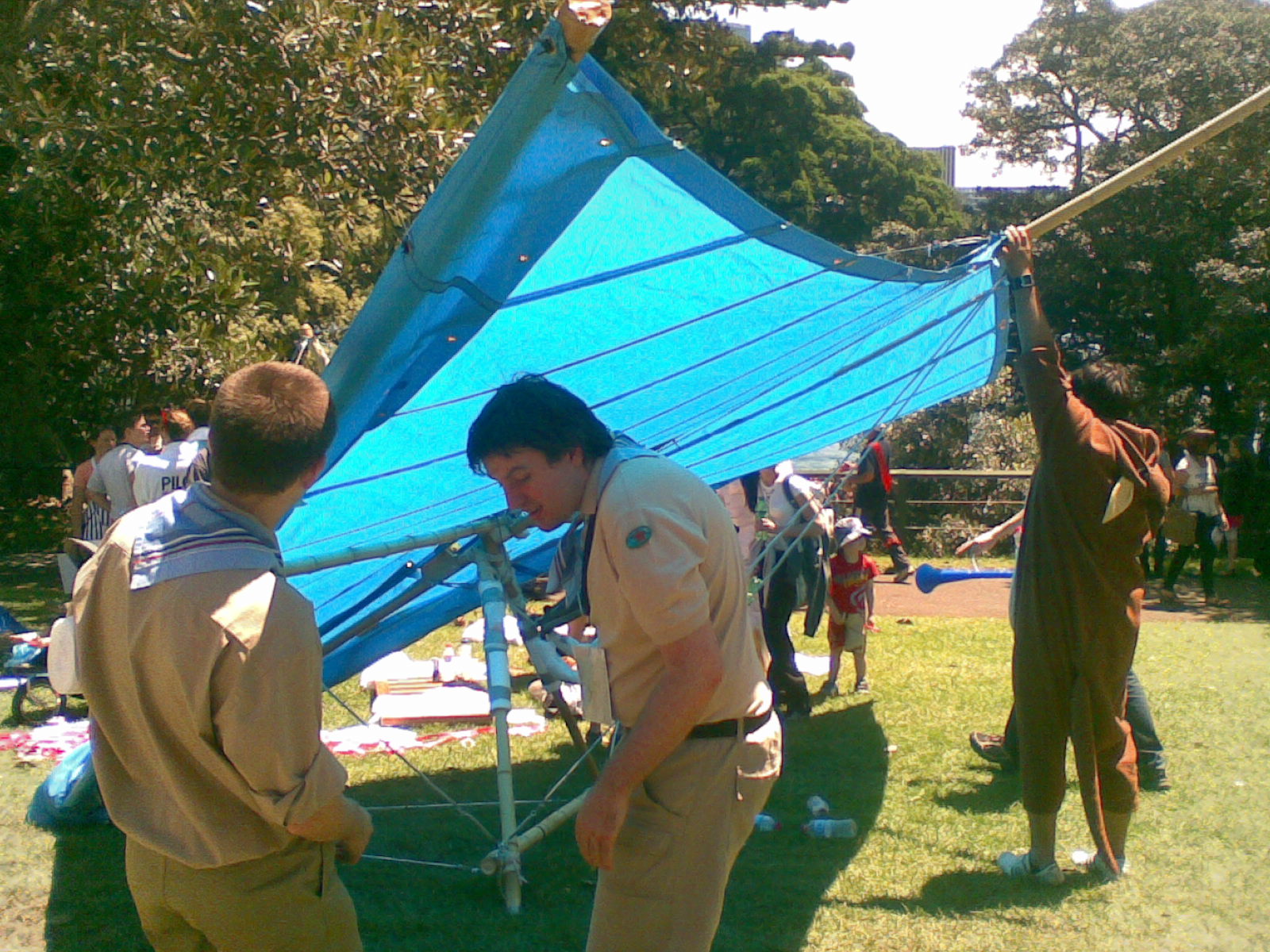
Some honey bees in the Flugtag competitors queue.

Sonnet 3: Flugtag
Flightday: young people spread their wings
where Ms Macquarie sat of yore.
Buzz Lightyear, bees and Monkey kings,
James Cook (with convicts) try to soar
in would-be gliders they’ve designed –
fantasies to blow your mind –
Hills Hoist, muffin, wedding cake,
but most plunge straight down to the lake.*
We joined the crowd outside the fence,
groupies for The Tent That Flew
(its crew: three scouts, one kangaroo,
one son of mine). And though the gents
who judged them scored them pretty low
they were the best in all the show.

The Tent (in glider configuration) in the queue. At the mike the pilot explained that they had come the night before to earn their Sleeping with Mrs M badges, and decided to compete in Flugtag almost by accident. Theirs was the wittiest talk to the mike we heard and they flew the third furthest.

* Well, it would have been the lake if we’d been at the Minneapolis Flugtag, say. Here it was actually the Harbour. But what rhymes with ‘harbour’?

LoSoRhyMo 2

Oh oh! If I’m to make my modest target of 14 sonnets in November I should be managing almost one every two days. I’m already falling behind and it’s only the 6th. And it can only get worse from here, for reasons hinted at in Nº 2:

Sonnet 2: Looking to buy
Flexible, unique and charming,
spacious, stylish, redesigned,
with northern sun, and traffic calming,
details of the classic kind,
potential for downsizers’ retreat
in much sought after treelined street,
we seek it here, we seek it there,
our new home could be anywhere,
in Earlwood, Petersham, St Peters,
Marrickville or Hurlstone Park,
(Burwood’s too far off the mark).
At each new door the agents greet us.
We turn up, armed  with cheques, not knives,
Buying, not fighting, for our lives