Kathryn Mannix With the End in Mind

Kathryn Mannix, With the End in Mind: Dying, Death, and Wisdom in an Age of Denial (William Collins 2017)

Kathryn Mannix is a British doctor specialising in palliative care. She brings to this book 40 years’ experience of tending to people who are in the process of dying. Death, she says in her introduction, has become increasingly taboo. The vast improvements in healthcare in the last hundred years

radically changed people’s experiences of illness and offered hope of cure, or at least postponement of dying, that was previously impossible. This triggered a behavioural change that saw the sickest people being rushed into hospital for treatment instead of waiting at home to die.

While these changes have been of immense benefit to countless people, they have changed our sense of what is normal when it comes to dying:

Instead of dying in a dear and familiar room with people we love around us, we now die in ambulances and emergency rooms and intensive care units, our loved ones separated from us by machinery of life preservation.

(Page 2)

It’s time, she says, to talk about dying, and she gets the conversation rolling by telling 30 death stories.

I approached the book with a sense of dread: did I really want to read story after story of people dying? The dread was misplaced. The exemplary nature of the stories is always there, and names etc have been changed to protect people’s privacy in the manner of clinical case studies, but these are compelling stories of recognisably real people facing extreme challenges. There are moments of horror, and moments of enormous relief – more of the latter than of the former, as palliative medicine exists for the sole purpose of relieving suffering ( mental and spiritual pain as much as physical). If I have to die, and if it’s from some other cause than a piano falling from the sky or the long leaching away of dementia, I want Kathryn Mannix or a similar death-midwife to be there to help manage the process.

Early chapters introduce the idea of a recognisable dying pattern. Contrary to the image often presented by movies and so on, panic and terrible pain aren’t part of that pattern. In a number of the book’s stories, a doctor or nurse describes this pattern to someone who is nearing death, or to those at their literal or figurative bedside (‘Look, see what’s happening now,’ they say, quietly). The first description comes when Mannix is in training. A hospital patient with a terminal illness is terrified of dying, and with the patient’s assent, Mannix’s leader describes to her what dying is like. His description takes several pages. Here it is, omitting the specifics of the scene, such as Mannix’s initially shocked reactions and the patient’s increasing relief:

‘What we expect to happen from now on is that you will just be progressively more tired, and you will need longer sleeps, and spend less time awake …
‘As time goes by, we find that people begin to spend more time sleeping, and some of that time they are even more deeply asleep, they slip into a coma. I mean that they are unconscious …
‘So if people are too deeply unconscious to take their medications for part of the day, we will find a different way to give those drugs, to make sure they remain in comfort ….
‘We see people spending more time asleep, and less time awake. Sometimes when they appear to be only asleep, they are actually unconscious, yet when they wake up they tell us they had a good sleep. It seems we don’t notice that we become unconscious. And so, at the very end of life, a person is simply unconscious all of the time. And then their breathing starts to change. Sometimes deep and slow, sometimes shallow and faster, and then, very gently, the breathing slows down, and very gently stops. No sudden rush of pain at the end. No feeling of fading away. No panic. Just very, very peaceful …
‘The important thing to notice is that its not the same as falling asleep. In fact, if you are well enough to feel you need a nap, then you are well enough to wake up again afterwards. Becoming unconscious doesn’t feel like falling asleep. You won’t even notice it happening.’

(Pages 19–20)

That is the guts of the book: both the common pattern and the usefulness of talking explicitly about it. Mannix isn’t prescriptive or doctrinaire. People face their own imminent death and that of loved ones in ways that are particular to each person. There are stories of people who simply don’t want to acknowledge that they are dying, and there are deaths that don’t follow such a peaceful course. One of the most moving stories is the one about Sally, who remains relentlessly optimistic even when it’s evident to everyone around her that she’s dying. The dilemma of the palliative care specialist is captured in a moment when Mannix has tactfully attempted to point out that the dying process has begun, but Sally insists on talking cheerfully about beating her cancer:

This was exactly the same coping style Sally had used of old: downplay the negatives, emphasise the tiniest positives, pretend it will all be fine, make plans for the future. She seemed unaware of her true situation, but a single glance at Andy [her husband] told me that he was fully alert both to the devastation that was unfolding, and to his wife’s inability to contemplate it.

What will happen if I say ‘Hospice’? I wondered. Will she find an excuse? Will she be shocked? Will she dismiss me? Will all her denial come crashing down around her? How on earth do I play this?

(Page 75)

The suspense is genuinely huge. I won’t spoil it except to say that the resolution manages to be respectful, kind and smart – and as in many of these cases it’s arrived at by the grieving family as much as by the professionals.

This is the kind of book that prompts autobiographical reflection, especially if you happen to be older than 70. I’ll spare you my thoughts about my own mortality, but there’s a terrific little section on talking about death to children, that prompted me to try to remember how I was introduced to it. Mannix says that at around the age of seven children understand that death happens to everyone, and a little later that it will even happen to them. I’m pretty sure I knew about death well before I was seven: my father would cut off the heads of chickens with the axe for special occasions, and we routinely sold cattle to the butcher. When one of us little ones cried too long or too loudl, my mother would say, cheerfully, ‘You sound like Paddy the bull. I’ll sell you to the butcher.’ There’s more: by the age of seven (Grade 3 in convent school), I wasn’t particularly worried about death, because I’d known for some years about heaven and hell, and terror of hell made death seem pretty much like a non-event. No doubt that early experience influences my emotional response to the subject of death in ways I’m not aware of, but I do know that I am hugely relieved that, for me as a thinking feeling being, death is the end of life and not a transition to anything.

It’s also a book that makes one wonder about cultural differences. It sure looks as if the NHS ensures that dying people are much better cared for in Britain than in Australia. And it’s hard to imagine this book written in a US context. What on earth would USians do in place of all those cups of tea-and-sympathy? Given what we’re told about healthcare in the US, an equivalent book written there would feature only the affluent, leaving a great silence about the uninsured who are doomed to die without access to Dr Mannix’s palliative care specialist teams?

Michael Galvin’s Ben Book

Michael Galvin, The Ben Book: A Father’s Memoir (Ginninderra Press 2020)

Michael Galvin is a self-described ageing baby boomer, a former academic whose son Benjamin, born in 1984, lived with the disease known as Duchenne muscular dystrophy, from which he died when he was 22 years old.

The Ben Book tells their story. A brief introduction says the book was written in the first years after Ben’s death, and some of it was clearly written when grief was raw, but it took more than ten years ‘to be able to face up to its publication’. It is an intensely personal memoir about a relationship, about being a carer as well as a father and a friend, even a best friend. According to the introduction, the book is published with at least two types of reader in mind, those who are ‘involved in the muscular dystrophy community’ and those who have no involvement with the world of disability. I belong in the latter group, so have no comment on the book’s possible reception in the former, except to say I hope people new to that group will find validation and some kind of reassurance in its pages.

For me as an outsider to the world of disability, the book is full of revelations. It doesn’t dwell on the physiology of Ben’s condition, but gives a strikingly dynamic portrait of Ben himself and how he dealt with the progressive weakening and breakdown of his muscles – from a physically active boy, to a teenager who needed a wheelchair to get around but still played wheelchair sports, to a young man who could do almost nothing physical without assistance. There are gruellingly detailed descriptions of the kinds of intimate assistance he needed, exhilarating moments of joy, encounters with able-ism ranging from the irritating to the devastating, and a tactfully vague account of the toll taken on the parents’ marriage and on Ben’s younger, non-disabled sister. At its heart is a loving portrait of a resilient, thoughtful young person, who was discovering new things about the world until the end. The book must have been unbelievably difficult to write. It’s a heroic book about a heroic young man and the heroic family he was born into.

To give you a sense of the writing, I’ll talk about page 75. Ben was 22 years old. He and Michael had been going to a counsellor for some ‘mutually beneficial anger management’. On this day Michael had been ‘overwhelmed with all the sadness [he] felt about Ben’s condition’. He wept and spoke from his heart about how much he loved him and how devastated he would be to lose him. Michael the narrator describes his words as ‘dramatic, self-centred statements’. That’s evidently not how Ben heard them – Galvin tells us that he replied calmly, over and over, ‘I know, Dad.’ When they left the counsellor’s office a significant milestone had been passed – there was to be no more avoiding the imminence of Ben’s death:

We walked aimlessly for an hour or so in the Parklands, saying little, grateful to be alive, and to be together (I speak for myself; I think I speak for him too). I think we noticed every bird that chirruped, on that particular afternoon.

A toilet stop was needed, and there’s a glancing reference to the probability that the toilet is a gay beat – nothing is made of this except the mild comedy of the ‘strange and confusing sight’ that a stranger would have encountered. Then the narrative rests a while on what happened in the counselling session, beginning with a quote from Cormac McCarthy’s All the Pretty Horses:

Because the question for me was always whether that shape we see in our lives was there from the beginning or whether these random events are only called a pattern after the fact.

Galvin often reaches out to literature as a sustaining reference point. As well as this and other quotes from Cormac McCarthy, there are Les Murray’s ‘A Perfectly Ordinary Rainbow’, Victor Frankel’s From Death Camp to Existentialism, Pat Barker’s Regeneration trilogy, Ingmar Bergman’s The Seventh Seal, Joan Didion, Isabel Allende, and more. There is a brief section about the importance of religion, particularly the religion of one’s childhood, but it’s secular literature that’s woven into the texture of the telling to provide perspective and emotional resource. I read this particular quote as a caveat, warning the reader that Galvin may be an unreliable narrator. (Someone once said, and as an Eng Lit academic Galvin knows, all memoir is unreliable.)

Referring to the counselling session, in one of the few moments where he writes about his life before parenthood, Galvin writes:

Ben reacted better than I did when the same things happened to me when I was young. I was a callow fifteen-year-old, about to go to boarding school. For fifteen years, I had been very close to my granddad, a stern man, an unemotional man. The night before I was to leave, I was with him when he burst into tears, and told me how lonely he was going to be when I went away. Until that moment, I don’t think I had given his feelings a moment’s thought. Now I was that old man … When his turn came, Ben showed more empathy and guts than I ever did.

The book is subtitled A father’s memoir. It’s as much Michael’s story as it is Ben’s. This small passage, possibly more than any other, shows us the depth of the father’s admiration for the son, rooted in a sense of his own limitations. It’s a strength of the book that it refrains from generalisiing about courage and disability. Ben isn’t brave and empathetic because of his disability, but he has risen to its challenges with courage and empathy. (I’m reminded that when I briefly had Bell’s palsy some decades ago, the only two people who responded to it with unembarrassed empathy were a small boy who had endured much surgeries because of how his body was at birth, and an older woman with post-polio syndrome.)

On a personal note: I met Michael Galvin when he arrived at that boarding school as a fifteen year old. I was the year ahead of him, a significant difference at that time of life, but we were friends until we both graduated in English at Sydney University. We lost touch soon after that, for nearly 50 years, and only recently renewed contact by email. When he told me about his son and this book, I immediately ordered a copy from Ginninderra Press. I don’t recognise the man in the photo on the cover, and reading the memoir was an uncanny experience: I knew they were the words of a man I knew when we were both young, but they were in the unrecognisable voice of someone who has been through the mill. I’ll give him the last word here:

Writing this account has been driven as much by need as desire. The desperation of a man, getting close to retirement himself, struggling to survive emotionally, his nerves as worn out as old shock absorbers, wanting to make sense of the biggest things in his life … I somehow cling to the crazy idea that, if I can keep Ben alive in words, I might keep him alive, or at least not dead, in other ways.

Well, it turns out that was the second last word. I get the actual last word: The book does keep Ben alive in words, and as a result he lives ‘in other ways’, in the minds of readers, including me.

Aly and Stephens, Uncivil Wars

Waleed Aly & Scott Stephens, Uncivil Wars: How Contempt is Corroding Democracy (Quarterly Essay 87, 2022)
– plus correspondence in Quarterly Essay 88

Waleed Aly and Scott Stephens are co-hosts of the ABC radio show and podcast The Minefield, on which they set out to negotiate the moral and ethical dilemmas of modern life. Their unscripted chats don’t shy away from big words like ‘epistemic’ or ‘teleological’ and refer frequently to philosophers ancient and modern, with occasional insights from the Islamic tradition. There’s usually a guest who has expertise in the topic of the week. There’s banter, an occasional malapropism, and usually – the main source of pleasure for me as a listener – a sense that no one knows quite where the conversation will go. One of the recurring motifs is the importance of thoughtful, deliberative communication, of which the show is a fine example.

Of necessity, in this Quarterly Essay Aly and Stephens speak with one voice – no mutual demurs, no pricking of pomposities, no license to meander. It’s not as much fun as the podcast but, especially when read along with the correspondence in QE88, it’s a stimulating and challenging essay.

The essay begins with a description of much current public conversation:

It is now entirely common for each of the opposing sides of a vociferous debate to consider themselves shamed and silenced, unable to speak without being branded in some malevolent way.

(Page 1)

Their diagnosis is that people on all sides of hot-button topics see the others as acting in bad faith, as tools of oppression, or perhaps as deluded fools – and the debate descends into mutual contempt. It’s not the readiness to be outraged or the short fuse to anger, but contempt that puts an end to any useful dialogue.

The essay then falls into four sections. First, some moral philosophy, which proposes some definitions of contempt and describes recent defences of it as a moral virtue. Second, some history: contempt as the air we breathe as fostered when the great US press barons of the 19th century realised that their profits would grow if their newspapers stirred up emotions, of which contempt was a real winner. Capitalist commodification of emotion reached an extreme with social media, particularly with Twitter’s retweet button and Facebook’s like button, both of which make it possible to broadcast an opinion to the world without any mental effort. Third: how this plays out in politics. The essay distinguishes between ‘thin’ democracy – in which people get to vote and that’s pretty much it – and ‘thick’ democracy, ‘which imagines society as a more dynamic organism where people can have their preferences and interests changed by interactions with others’. This is familiar ground to The Minefield‘s listeners. The final section, titled ‘Democracy as Marriage’, is a call for us to be more attentive to each other, including those with whom we disagree, and perhaps especially those with whom we disagree passionately.

As well as drawing on a wonderfully broad range of cultural touchstones – from Godard’s movie Contempt to George Floyd’s brother Philonise, with Simone Weil and James Baldwin featuring prominently – the essay draws heavily on recent events in the USA, because of its global cultural dominance and because it has gone further down the contempt road and so shows what can happen.

This Quarterly Essay featured in a special edition of the podcast, which originated as a session at the 2022 Festival of Dangerous Ideas in Sydney. You can listen to it here.

I can’t have a closer look at page 75* as there are only 64 pages to the essay. On page 47 (chosen because I was born in 1947 – is that arbitrary enough for you?) the essay is engaging with the argument in favour of ‘upward’ contempt as a way of doing politics. Quoting US philosopher Amy Chua, it argues that ‘to aggregate and compare … the average earning capacity of white and non-white families’ and similar statistics may be useful but it overlooks differences among white people, particularly class:

Many working-class whites clearly felt alienated from the culture and institutions that surrounded them. Few people with any mainstream cultural or political power seemed to take that alienation seriously. It’s easy to imagine that working-class whites felt themselves to be objects of contempt. And in an environment where such emotion can be commodified and turned into profit, someone like Donald Trump was always liable to come along.

The politics of contempt is what enabled the rise of Donald Trump and Trumpism. This leads into the beginning of the most interesting section of the essay, four pages in which James Baldwin is invoked. His body of work, the essay asserts, ‘stands as a monument to the refusal of contempt. It is shot through with sensitivity to its danger and warnings of its self-sabotage.’

So that’s page 47.

Leaping ahead to the correspondence in QE 88: it kicks off with a long essay by African-Australian Nyadol Nyuon, which argues with lawyerly precision that Aly and Stephens have missed the main point by apparently assuming an unreal symmetry between social groups struggling against oppression and those who are enforcing it (those are my terms: she is much more specific than that). In particular, she challenges their reading of James Baldwin. It’s a powerful piece of writing, and anyone who reads the original essay ought to read it. And not only it but the seven other thoughtful and not entirely supportive correspondents. And Aly and Stephens’s final reply.

Taken together, this is an inspiring example of serious conversation about real things. People misconstrue each other, but its generally in good faith. There’s an occasional sarcastic gibe, perhaps some defensiveness (if Nyadol Nyuon went after me I’d be a lot more defensive than thee authors, who hold their ground but remain genuinely respectful), some interesting anecdotes that are tangential to the topic, maybe a little self-promotion. But it’s a conversation, rich, thoughtful and mutually attentive.


* Currently when blogging about books I take a closer look, arbitrarily, at page 75 – moving on to page 76 at my next birthday if the idea works well enough.

José Saramago’s Tale of the Unknown Island

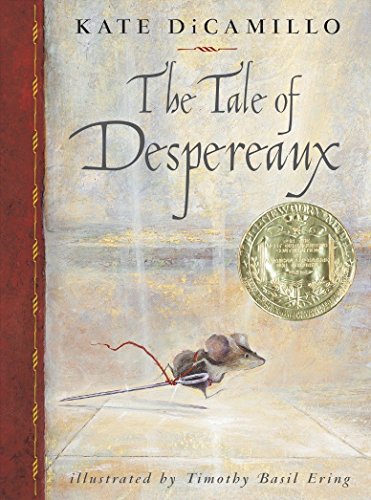
José Saramago, The Tale of the Unknown Island (translated by Margaret Jull Costa, illustrated by Peter Sís 1999)

This is one of those tiny, beautifully designed books that sit at the front of bookshelves offering themselves as last-minute birthday gifts. At least, that’s how I think it came to be sitting on my to-be-read bookshelf for years, possibly decades. I don’t remember who gave it to me, but I’m glad they did.

José Saramago published this very short, parable-like story in 1997 in Portuguese with the title O conto da ilha desconhecida. This version, translated into crystal clear fairy-tale English by Margaret Jill Costa and illustrated by the brilliant children’s illustrator Peter Sís, followed two years later.

In 2017 the story was adapted for the stage by Ellen McDougall and Clare Slater and performed at the Gate theatre in London with the title The Unknown Island (the Guardian‘s enthusiastic review here).

It’s not a children’s book, but it builds on conventions of children’s literature. A man appears at a gate of the king’s castle and asks for a boat. He refuses to be sent away, and the story goes from there. He wants the boat in order to set sail to find the unknown island. Everyone, from the king to the cleaning lady, tells him that there are no more unknown islands, but he persists, first in his request and then, when (not a spoiler really) the king gives him a boat, in persuading other people to help on the quest.

It’s a parable about creativity, or perhaps about scientific enquiry. Certainly it resonates against the kinds of things that reactionary politicians say regularly about university research grants (as in this example from almost exactly a year ago). But it twists and turns, slipping out from under such neat encapsulations. Naive readers like me will be surprised and delighted by how it turns out.

The book was perfect for reading in the sauna, and I read it there in two sessions, both of them with quite a lot of chat eating into potential reading time. Sadly the glue holding my beautiful little book together couldn’t withstand the heat, so now I need to handle it with great care.

For a closer look, I can’t take a snapshot of page 75*, because there are only 51 pages. Assuming that page 75 is usually about a fifth of the way through a novel, I’ll focus instead on pages 10 and 11. Here they are, heat damage and all, at the beginning of the king’s encounter with the man who wants a boat:

Peter Sís’s compass sits in the middle of the left hand page, silently endorsing the man who wants a boat. All his illustrations have a similar simplicity of line, and make similar luxurious use of white space, though some of them, like the cover image above, have a weird, surrealist quality.

This is early in the book. The king has condescended to meet the man at the door for petitions, a door he rarely visits in person, and his discomfort manifests as awkwardness in the only chair available, which belongs to the cleaning woman (who is to feature prominently in the rest of the story).

Characteristically, the narrative isn’t broken up with a paragraph for each speaker, and sometimes the transition from one speaker to another doesn’t even merit a full stop. Commas will do, suggesting that we don’t need to pause over the king’s questions, because the man will answer them easily – whether he is indeed ‘one of those utter madmen’ or not. (He’s not. But though his insistence that unknown islands still exist is impeccably logical, he’s not what any conservative arts fund would consider a sound prospect either.) So on the one hand there’s a fine, childlike simplicity to the narrative, but on the other there’s an unsettling edge to its presentation. That unsettling quality becomes more marked as the story progresses.

José Saramago received Nobel Prize for Literature in 1998. The press release accompanying the announcement described him as a writer ‘who with parables sustained by imagination, compassion and irony continually enables us once again to apprehend an elusory reality’. This little book with its hugely resonant tale is my excellent introduction to his riting.


* Currently when blogging about books I take a closer look, arbitrarily, at page 75 – moving on to page 76 at my next birthday if the idea works well enough.

Middlemarch: Progress report 2

George Eliot, Middlemarch: A study of provincial life (George Eliot, 1871–1872; Könemann 1997), chapter 15 to most of chapter 28

Reading five pages of Middlemarch each morning, which I’ve now been doing it for two months, is a joy.

When reading Niall Williams’s This Is Happiness, I kept feeling a Middlemarchian tone: the narrators in both books tell of events that happened in a remote village in living memory but feel as if they are from a different era. Williams’s narrator has a name and a story of his own. We are left to imagine who George Eliot’s narrator might be, though there’s definitely a person there, who is full of opinions, occasionally mentions conversations with her friend, and – if we assume she is a mature woman as Eliot was known to be when the book appeared – has bitter experience of male domination. Both narrators identify themselves as sophisticated and modern, she in metropolitan England, and he in the USA.

This month the intrigues continue among the older and younger generations, the former to do with control of the town’s institutions and the latter to do with affairs of the heart. Dorothea is married to Casaubon but troublingly finds his young cousin Will Ladislaw a more interesting companion in Rome. Rosamond is closing in on Lydgate as a prospective husband. And Fred, the profligate young man, discovers that his failure to keep promises not only harms his reputation but also harms other people.

This morning, the Rosamond–Lydgate story is approaching a defining moment. They have been thrown together when Lydgate comes to attend Rosamond’s brother Fred who has been struck down by typhus. Actually, not quite thrown together: Rosamond has declined to take the recommended course of leaving their house until the danger of infection was past, ostensibly so that she can help her mother tend to Fred, but really so she can see more of Lydgate. After some vividly evoked moments when they become embarrassed at meeting each other’s eyes, they settle into openness and ease with each other. He begins to play at flirting with her, seeing no harm in such a little pleasure. She – admitting it to no one – has visions of marrying him and escaping the suffocating backwater of Middlemarch. After much intricate tracking of the mental processes of each of them, and a scene where Lydgate sees off a chinless young man who he doesn’t even realise is a rival for Rosamond’s affections, today’s read finished with this terrific paragraph, which sums up the state of play, foreshadows the outcome, and ends with a gloriously deflating image:

To Rosamond it seemed as if she and Lydgate were as good as engaged. That they were some time to be engaged had long been an idea in her mind, and ideas, we know, tend to a more solid kind of existence, the necessary materials being at hand. It is true, Lydgate had the counter-idea of remaining unengaged; but this was a mere negative, a shadow cast by other resolves which themselves were capable of shrinking. Circumstance was almost sure to be on the side of Rosamond’s idea, which had a shaping activity and looked through watchful blue eyes, whereas Lydgate’s lay blind and unconcerned as a jelly-fish which gets melted without knowing it.

(pages 312–313)

This is Happiness, Niall Williams and the Book Group

Niall Williams, This Is Happiness (Bloomsbury 2019)

Before the meeting: When we discussed Niall Williams’s History of the Rain in October, a number of people had also read his next book, This Is Happiness. December’s chooser, impressed by their enthusiasm, decided we should all read it.

The book’s first sentence, ‘It had stopped raining’, which sits on a page by itself, is pretty much identical with the final sentence of the earlier book, and the tiny, backward village of Faha in West Ireland is again the setting, but the bulk of the narrative takes place in an earlier period, and there is no obvious reference to the characters or events of History of the Rain. It’s the story of the coming of electricity to the village; a coming of age story of young Noe, who has taken leave of the seminary and is telling the story as an old man in the USA; and a big romantic story of love lost and found by Christy, an older man who befriend Noe.

Page 75* must be one of the book’s few pages that doesn’t mention the absence of rain. It happens in the thick of one of the book’s comic set pieces. It’s not the set piece when the lights go down and the cinema comes alive with amorous grapplings, or the one where Noe goes to the communion rail at Sunday Mass in order to get a good look at the woman Christy left at the altar, or the spectacular one where he is knocked unconscious by a falling electricity pole. On page 75 Noe and Christy are on the first of a number of epic pub crawls.

These pub crawls are as much about music as about alcohol, music performed by men who are shy and nondescript until they start playing, and then are brilliant conduits of a great folk tradition. On this first adventure, when the evening is well under way, Christy startles Noe and everyone else in Craven’s pub by starting to sing:

Not only was Christy singing, he was singing with screwed-up eyes and fists by his side a ballad about love. He was singing it full-throated and full-hearted and before he had reached the second verse it was clear even to Roo the dog that a passionate truth was present in that place. It wasn’t only that this didn’t happen in Craven’s, it was that there was something raw in it, something deeply felt, that was, even to those who had descended blinking into the umbrae and penumbrae of numberless bottles of stout, immediately apparent and made those who first looked now look away.

(page 73)

Christy has come to Faha as a worker in the great electricity project. This episode is our first inkling of his profoundly romantic reason for signing up for the work. Not so obviously, it prepares us for the major role music is to play in Noe’s story. Page 75 itself is a beautiful piece of misdirection. After Christy has sung, Noe writes:

I did the only thing I could do. I went to the counter and got two bottles of stout.

Those bottles are followed by another two, and then another. Greavy the guard arrives and declares that it’s Closing Time (as Noe says, this is one more way in which Faha lags behind the times), but the two of them are incapable of moving. Alcohol-based humour usually leaves me cold, but Niall Williams’s version made me laugh out loud. I suppose the whole book could be read as an extended Irish joke: the villagers have an almost superstitious awe of the one telephone in town, and the coming of electricity has almost cosmic significance for them. If you read the whole book like that, the stereotypical Irish drunkenness in this passage is representative (including the sly invocation of Waiting for Godot):

Getting up proved aspirational. There was the idea of it, quite clear. Unmistakably clear now. There were hands placed on knees for push-off. There was a Right now. There was another when that failed to produce action. A Right so following. And still nothing. Between thought and verb a vacancy, not intended, but not grievous, just gently perplexed, and in that perplex the realisation that Craven’s was not in fact such a bad place at all, was downright comfortable in fact, in fact there were few places on this earth as agreeable. True? Too true. A person could stay here, could stay right here and be quite happy now, quite, for a very long time. What’s your rush? There’s no rush. All the problems of the world could be settled right here.
Right.
Will we go so?

I don’t want to minimise the book’s humour. Far from it. But there’s a seriousness to it that page 75 gives no clue of. Christy’s romance is genuinely touching. The villagers’ resistance to the coming of electricity is more than comic: and these villagers are described as custodians of their land, defending an ancient culture under siege by capitalism – without being at all heavy handed, the narrative reminds us that the Irish were the first people to be colonised by the English. The dramatic decline in the Catholic Church’s power since the 1950s is deftly evoked both in Noe’s commentary and in his own story: his turning away from his priestly vocation is a tiny reflection of the ending of Church-domination in Ireland at large.

After the meeting: There were seven of us. Covid–19 and other coronaviruses kept some away, while one or two had better things to do – and one sent video of spectacular drone art over Sydney Harbour.

This was our end-of-year meeting so we had other business besides the book, but it generated quite a bit of discussion. The discussion was unusual in that quite a few of us read out favourite passages. Indeed, two of the absentees sent lists of quotes – it’s that kind of book. One interesting insight was that the narrative as we receive it is created by an old man looking back on a key moment in his youth, making a story out of it, and casting a benevolent glow over the community in which that moment happened.

Other business, besides of course the plentiful food including a splendid pavlova, included a Kris–Kringle book exchange with the usual mixture of cautious delight and polite almost-hidden dismay, and a poetry reading. We were each supposed to bring a poem, and most did, even one of the absentees.

Poems were a nonsense poem by CJ Dennis (‘Triantiwontigongolope’), a poem about climate change (that was me – Kit Kelen’s ‘Parable’), a Thomas Hardy (‘Heredity’), a Robert Frost (‘A Time to Talk’), a poem from Claudia Rankine’s Just Us (‘sound and fury’), and two poems of Australian patriotism that couldn’t have been more different (Sara Mansour’s ‘My Australia‘ – link to her performing it on YouTube – and a poem whose name and creator I don’t remember celebrating the lump in the throat brought on by, for example, Anzac Day). This little reading, including by two people who said they felt awkward reading poetry aloud, left us reeling.

And that was a wrap for the Book Group for 2022.

* Currently when blogging about books I take a closer look, arbitrarily, at page 75 – moving on to page 76 at my next birthday if the idea works well enough.

November verse 14: Graduation

Here’s the last of this year’s November verses, uploaded 80 minutes before the midnight deadline:

November verse 14: Graduation
Today is preschool graduation, 
milestone for the almost-fives.
Oh, after long anticipation
3 pm at last arrives 
and soon the graduands are singing
(also jostling, waving, grinning).
One by one they shake the hand 
of Teacher looking mighty grand
and take from her a bag of goodies:
artwork they themselves have made, 
certificate (they've made the grade),
and popcorn. Then, unleash the foodies:
trays of watermelon, grapes and cake,
and cake, and cupcakes, and more cake.

November verse 13: Hearing aids

Today I parted with a lot of money. The least I can do is write a rhyme about the reason.

November verse 13: Today I got my hearing aids

They said that I was hard of hearing.
More like soft, the edges dull,
the high notes mostly disappearing,
sibilants all rendered null.
But soft or hard, that’s just pedantic:
friends were cross, sometimes frantic,
tired of shouting to be heard,
repeating every second word.
Today I got two electronic
gizmos, one in either ear,
enabling me at last to hear
what yesterday was ultrasonic.
People have stopped mumbling words
and all my streets are filled with birds.

November verse 12: On a dead goldfish

Not as morbid as you might think:

November verse 12: On a dead goldfish
For Euan
Today we found our last fish floating
lifeless, limp, no longer gold,
a death so tiny, not worth noting.
True though, They shall grow not old.
Flight path fuel dump? Change of season?
Too much sun? Who knows the reason?
This is not Menindee Lakes
where millions died and my heart quakes.
Today I felt a tiny tremor,
rumble from a distant storm,
an inkling that some day the worm
will try my bones, from skull to femur.
May mine be one tiny death,
leave undisturbed the wide world's breath.

Kit Kelen’s Bung Mazes

Kit Kelen, Rompitaj Labirintoj / Bung Mazes (Australian Esperanto Association 2022)

It was my great pleasure to launch the English part of this bilingual book today. The Esperanto part was launched by Jonathan Cooper from the Australian Esperanto Associaton, in an afternoon that also featured Kit Kelen’s’s exhibition of palimpsest works on paper with the same title, plus music, at the Shop gallery in Glebe, all MCd by Richard James Allen. There was music, and a conversation between Kit and Magdalena Ball. Here’s a version of my launch speech.

Rompitaj Labirintoj / Bung Mazes is not the first bilingual poetry book Kit Kelen has been involved in, not even the first bilingual book of his own poetry. But it marks his debut as translator of his own work, both from English into Esperanto and in the other direction as well.

Mostly, unless you’re appropriately bilingual, you can ignore the language that’s not your own when you read a bilingual book. This one isn’t like that. The Esperanto isn’t an added extra. To read the book thoughtfully is to engage with Esperanto, maybe learn a word or two, discover some of its history, and glean some understanding of its underlying philosophy.

It’s easy to see why Esperanto is a good fit for Kit’s poetry. Esperanto, as I understand it, is all about opening channels of communication where none might otherwise have existed. Kit’s work shows a deep commitment to being open to other cultures, other languages, and to other minds. for example, when he asked me to give this talk, he didn’t say, ‘I hope you like the book,’ but ‘I’m interested to hear what you think of it.’

The English versions of many of poems in this book predate Kit’s interest in Esperanto. They cover a wide range of subjects, from the plight of refugees and the climate emergency, to simple celebrations of the natural world and poems about poetry itself. But there’s no great discontinuity between them and the poems dealing explicitly with Esperanto.

One example of these older poems is ‘here’s the story to save the world’, which includes these lines:

what is it keeps us alive?
keep talking
I want to know how the story ends
keep talking
I’ll listen

You can draw a straight line from that to ‘Hitching my wagon to a green star’, a statement of allegiance to Esperanto, which has the lines, ‘we come here for a conversation / while we wait for states to wither away’.

There are poems about learning the language. ‘thank you poem for Trevor Steele’ is explicit:

these lines here are just to say –

thanks for the grammar
I know it must be very annoying –

all the stupid mistakes I make

but how can there be so many accusatives?

Or there’s this from ‘being a humble beginner’:

often I slip
sometimes I slip off the tongue together

This is the poem that most makes me wish I could read Esperanto. What’s the Esperanto equivalent of the mistake ‘slip off the tongue together’? ‘tute glitas de mia lango’ doesn’t tell me anything. It makes me wonder how many references there are that Esperantists get but just sail past me.

Beyond this interest in learning the language, the book engages with its underlying philosophy.  ‘being a humble beginner’ again:

but I’m here for the conversation
I believe that is an art
like leaving the world better than found –
another impossible thing

L L Zamenhof, the language’s creator, is quoted in one of the book’s two epigraphs:

Rompu, rompu la murojn inter la popoloj!

Translation hardly seems necessary, but Google translates it as:

Break, break the walls between the peoples!

‘Bialystok dreaming’ tells how Zamenhof first thought of inventing a neutral second language in Russia in the late 19th century. ‘Suprasegmentals’ makes fun of Chomsky’s declaration that Esperanto is not a language. ‘samideanoj!’ spells out the vision with characteristic Kelenian paradox. It begins:

today we are building a dead language
syllable by syllable, from scratch

it is a tiny country
all between
and never was at all

Esperanto, to paraphrase, has no currency except the people who speak it. Incidentally, this poem stands out for two reasons: the title, meaning ‘like-minded people’ isn’t translated, and the first one-word line  – ‘kamaradoj’ – doesn’t appear in the English. The book is aware of its dual readership.

The poems about Esperanto don’t pull back from its utopian aspirations. In fact they endorse them, but there’s a feeling of astonishment, perhaps even with an edge of amusement, at the vastness of those aspirations. The poems are completely serious, but not self-important.

The two poems that for me are the guts of the book, are ‘shelter’ and ‘bung mazes’. The book has been described as ‘an abstract treatment of the situation of asylum seekers’. The poems celebrating our common humanity, and Esperanto as a way to sharing it, the poems about openness to the natural world and the value of conversation, create a version of the world in which the current treatment of asylum seekers is a cruel absurdity. In ‘shelter’ and ‘bung mazes’, the point is made explicitly.

The title poem ‘Bung Mazes’, begins with a line from the public debate about asylum seekers, ‘everyone knows there is no queue’, and goes on in fifteen short poems to create a kind of maze of its own. I found it the most difficult poem in the book. Sentences don’t finish, images rub up against each other, it’s hard – even maybe impossible – to grasp how some lines hang together. For example:

where you see desert’s edge
a labyrinth in canvas shook

lent to, how it blows off
who’s after you? can it be imagined?

their weapons and the names they call
crime of a clock, dreamt that too

There’s the image of a refugee camp, and a general anxiety is evoked, but it’s hard to pin down a clear meaning. If there is a meaning there, it’s just beyond my grasp (whose weapons? what clock committed what crime? who dreamt what?)

Generally if a poem grabs me, but I don’t understand why, I’ll sit with it, and let it brew in my mind. Sometimes a meaning becomes apparent in the brewing process. In this case, it’s not a meaning, but the effect created by the poem’s elusiveness. In effect the poem, made up largely of unparsable moments like this, gives me a faint inkling of the emotional impact of being lost in the dangerous maze of asylum seeking.

 ‘Shelter’ includes lines that cry out to be quoted:

now they are changing all the world’s weather
island here, river there, tents blow away
tanks shift borders out of the way

big bird flies where it will, drops its droppings

fire now flood now famine war
we were forced to flee

then where to shelter?
in the cave in my head?
but you’ll never get in
there’s never been a queue

there’s a maze
of rules and rights
of yours, not mine
and my turn
never comes

and later:

for the sixty million wandering
this world is a maze gone bung

Sixty million is the UNHCR’s 2015 estimate of the number of people displaced worldwide by wars, conflict, and persecution.

So this is a book about intensely serious subjects.

My mind goes to something Kit wrote almost 10 years ago. Speaking of the problematic nature of writing in the pastoral mode as a settler Australian, he said: ‘The challenge is to have fun while you problematise (otherwise please don’t write a poem).’

This book is fun. Even at its most serious, it avoids ponderousness. It delights in paradox, puns and syntactical playfulness. It always treats the English language – I can’t speak of the Esperanto – as an endlessly enjoyable and challenging playground (‘bung mazes’ is an example; it rejects the obvious English for Rompitaj Labirintoj, that is to say, Broken Labyrinths, in favour of something much less respectful). The poems are full of music, as I hope the bits I’ve read demonstrate.

In this context, fun can be many things. Take the short poem ‘parable’ for example. I loved it at first reading because I felt it brought a much needed lightness of touch to the climate emergency, a step back from the details of rising temperatures, collapsing ice sheets, greenwashing by corporations and governments, and so on. I read it as a kind of wistful fantasy. Then, while I was preparing for this talk, I read it to a friend who’s a climate activist, and it made us both cry – I think because it manages to strike a note of forgiveness along with terrible grief. Here it is. I don’t expect it to make you or me cry today, but just listen to it:

parable

we came from the ice
and out of the trees
and wanted the whole world warmer

we lit fires
and at timber
we were the axe
we were the flame

as if winter were our own forever

we only wanted the whole world warmer

o fearful the dark
but we brought the firelight

the others we’ve eaten by now

we burnt till all of the forest was gone

we came to the clock
that’s where we are now

hard to hear anything
everyone’s in charge
we all follow orders

it’s hard to see how this will pan out
but I predict, in time to come
at the Court of All Spirits
our defence will simply be

we came from the dark
we came from the ice
we wanted the whole world warmer

[It didn’t make me cry when I read it out, and I don’t think anyone else shed a tear either.]

Anyhow:

It’s my honour and privilege to commend this book to you. Buy a copy, and, as the poem ‘keep this book’ says with only a hint of over-selling:

walk with it
sleep with it
read it out loud
quote it at will

I declare Rompitaj Labirintoj / Bung Mazes, the English half, launched.

And here’s a pic of me talking, with Kit’s art in the background and Kit wearing a hat in the corner

Photo by Penny Ryan