Sarah Day’s Towards Light

Sarah Day, Towards Light and other poems (Puncher & Wattman 2018)
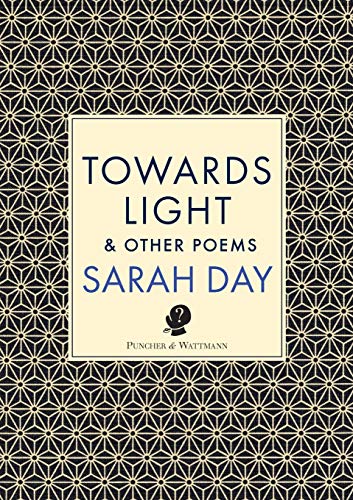
There are probably a hundred reasons why so few non-poets (I am one!) read poetry. One of them is the general belief that poetry is difficult, and that contemporary poetry is more difficult than most. And if you have stumbled across a poetry reading at a literary festival where someone stands up front to cool applause and reads, for example, the proofing marks on a business document galley, you may well decide that contemporary poetry is not only difficult but pointless.

If you’ve been avoiding poetry for reasons like this, and yet have a niggling worry that you might be missing something, then maybe you could try reading Sarah Day. The poems in this book are eminently accessible, and they attend to things worth attending to.

Many of the poems read as the equivalent of a visual artist’s pencil drawings of beautiful things and places – a Lisbon tiled wall depicting St Anthony preaching to the fishes, the tomb of Eleanor of Aquitane, many moments in Tasmanian landscape, an amateur-built rocking horse, a caravan park campground, a ‘fugitive budgie / in a democracy, or an empathy / of sparrows’, a cow looking out from a concrete stall in Galicia. In poem after poem, there is a sense of close, acute, patient attention. There are some narrative poems, especially dealing with childhood memories, though ‘Overcoat’ makes a rich narrative from an elderly couple observed leaving a cafe. The book ends with a powerful sequence, ‘The Grammar of Undoing’, about the poet’s mother’s Parkinson’s disease and dementia.

I usually pick a single poem to talk about in some detail when I blog about poetry books, and I generally go for one that fits on a single page. The poem in this book that keeps demanding my attention is a little longer than that. It’s ‘Lens’:
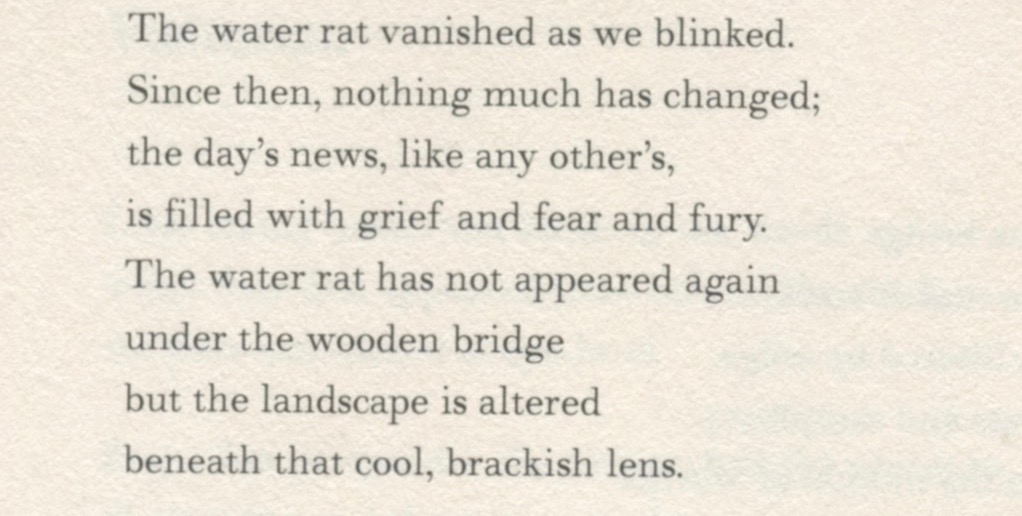
We were on the bridge
gazing into the marsh creek
whose waters, filtered by sedge
and ribbon grass and samphire,
threw light on the motion of worms
and the whims of small clams.
Somewhere in the landscape,
a harrier circled, a crane stooped,
each intent on its own business.
A short eel hovered in the current,
swallows dipped under the bridge
and back. Then from upstream
a bow-wave, pushed by a long gaze
that seemed to take us in:
two humans on a bridge.
Liquid, it looped, fur swaying
through figures of eight
ruddered by a long tail with
a white tip like a ring-tailed possum.
It snatched up a crab in small front paws
and with one motion was a creature
of the land whose supple, lean length
bent into a pot-hook
like a bandicoot but its feet
were half wading bird, half rodent.
The cracking of carapace and legs
revealed strong teeth. A comb
or two with the thin clawed toes
and the slate fur stood up softly
in air, mottled with auburn.
The water rat vanished as we blinked.
Since then, nothing much has changed;
the day's news, like any other's,
is filled with grief and fear and fury.
The water rat has not appeared again
under the wooden bridge
but the landscape is altered
beneath that cool, brackish lens.

See what I mean about close, acute, patient attention? The poet’s gaze, perhaps. The scene is created so deftly in the opening lines – and the words used to convey the transparency of the creek (‘the waters … threw light on the movement of worms’) introduce the book’s pervasive motif of light as something almost magical. Certainly there’s restrained wonder at being able to see such detail on the creekbed. Three kinds of bird, an eel: I don’t know about you, but by the time we reach ‘Then from upstream / a bow-wave’ I’m pretty well identified as one of the ‘We’ who are standing together in companionable silence on the bridge pausing, I imagine, in the middle of a bush walk.

It wasn’t until I started writing this that I noticed the repetition of gazing: ‘We’ are gazing into the creek, and the bow-wave is pushed by a ‘long gaze’. The landscape looks back, and for a moment the poem too turns back on the viewer. I don’t think it’s fanciful to say that at this moment, the poet (and her companion) become as much part of the scene as the harrier or the swallows: worms, clams, birds, eel, and ‘two humans on a bridge’.

Having made its entrance, the poem’s hero occupies the next fifteen lines of wonderfully engrossed description. Engrossed, but not all romantic-lyrical: the animal is like a bandicoot or a ring-tailed possum, and even more prosaically a pothook. Like the harrier and the crane it’s intent on its own business, which is cracking open and devouring a crab, doing a bit of grooming and then clearing out. Only when it has vanished can it be named, because up until then it was all colour and movement – and long gaze.

The last seven lines echo two much-quoted lines about poetry: William Carlos Williams’s famous one-liner lines, ‘It is difficult / to get the news from poems / yet men die miserably every day / for lack / of what is found there,’ and W H Auden’s ‘poetry makes nothing happen’. The water rat held the poet’s attention for a moment. That’s all. The actual news – of looming environmental catastrophe, perhaps – is no less horrible. But … but what?

I find the last two lines enigmatic. We’re back with the transparency of the creek, now a ‘cool, brackish lens’ – the notion of the water throwing light has condensed into the single word that gives the poem its title. Is it that this moment with the creek and the water-rat has provided a way of looking at the broader landscape, the domain of ‘the news’? The landscape is altered, perhaps, in the sense that the speaker has been reminded that there are other ways of looking at the world than through the lens of ‘the news’, as in newspapers and social media. (I speak as someone who stopped looking at Twitter, hopefully for good, 10 days ago.) Once you’ve seen a water rat, really seen it, can you keep on being obsessed with the doings of Fraser Anning or Donald Trump, or the self-nicknaming Prime Minister of Australia? Maybe there’s also a faint echo here of another famous line, this one from Rilke’s ‘Archaic Torso of Apollo‘: ‘You must change your life.’

Towards Light is the twelfth book I’ve read for the 2019 Australian Women Writers Challenge.

Brown and Leos-Urbel on Anti-Semitism

Cherie R Brown & Amy Leos-Urbel, Anti-Semitism: Why Is It Everyone’s Concern? ( 2018)

I wasn’t intending blog about this little book. Its publisher is identified only as the US-based project Jews and Allies: United to End Anti-Semitism, and it has something of an in-house feel: that is, it reads as if it’s intended for readers who are already engaged with the project or are considering engaging with it, a kind of summary of its theoretical base.

Then I listened to ‘Why does anti-semitism cut across the political spectrum?‘, an episode of Waleed Aly and Scott Stephens’s thinkfest podcast The Minefield, and realised that the pamphlet talks with remarkable clarity about things that felt like unresolved paradoxes in the podcast.

The Minefield‘s guest was Deborah Lipstadt, the woman who took on Holocaust-denier David Irving in real life and was the main character in the Mick Jackson–David Hare movie Denial. Deborah laid out longstanding distinguishing features of anti-semitism – of the stereotyping of Jews: it has to do with money (the myth that all Jews are rich), power (the belief that somehow Jews wield enormous behind-the-scenes power), intelligence (as in wiliness). Unlike most other oppressed groups, Jews don’t escape being targeted by achieving social status and wealth: anti-semitism is generally imagined by the perpetrators as ‘punching up’.

This booklet offers an interesting insight into this phenomenon, by describing anti-semitism as cyclical in nature. Here’s the description of how the cycle has worked historically:

Living as a minority without a homeland for nearly two thousand years, the Jewish people had to rely on the good will of rulers in each country where they settled. In exchange for a promise of protection for the Jewish community, a few Jews would serve as money lenders, tax collectors or other pubic officials. The majority of Jews who settled in each country remained as impoverished as the general population. Jews were also prohibited from owning land and barred from joining craft guilds, which would have allowed them to integrate with their non-Jewish neighbours.

When the people of the area were ready to resist the oppressive conditions of their lives, they were encouraged to direct their hatred and resentment at the Jewish community – rather than at their actual oppressors, the ruling classes. […] After the violence subsided, the surviving remnants of the Jewish community would be ‘apologised to’ officially in the original country or welcomed in new places of exile as martyrs. They would be given some assistance to rebuild their communities, and once again a few Jews would be encouraged to assume the same roles in relation to the rulers. […] In exchange, the whole Jewish community would be given temporary protection, and the cycle of toleration followed by attack would begin again.

(pp 3–4)

In the part of the cycle when Jews look safe and some are in position of apparent power, explicit anti-semitism bubbles away in the margins, or is limited to dog-whistling. And so it’s often invisible or denied – and Jews get to be seen, sometimes even by themselves, as over-sensitive, paranoid, etc. And some are in fact set up to be the visible agents of oppression. (I’d just written that sentence when I turned on the television to see Josh Frydenberg uttering half-truths in his federal budget speech.)

This scapegoating mechanism is used by both right- and left-wingers. The booklet answers the question in its title by arguing, with evidence, that anti-semitism is regularly used to divide progressive movements.

There’s a lot more in the book. I got my copy through a chain of personal contacts. The imprint page gives an address for more information, and I assume copies for sale, as ircc@rc.org.

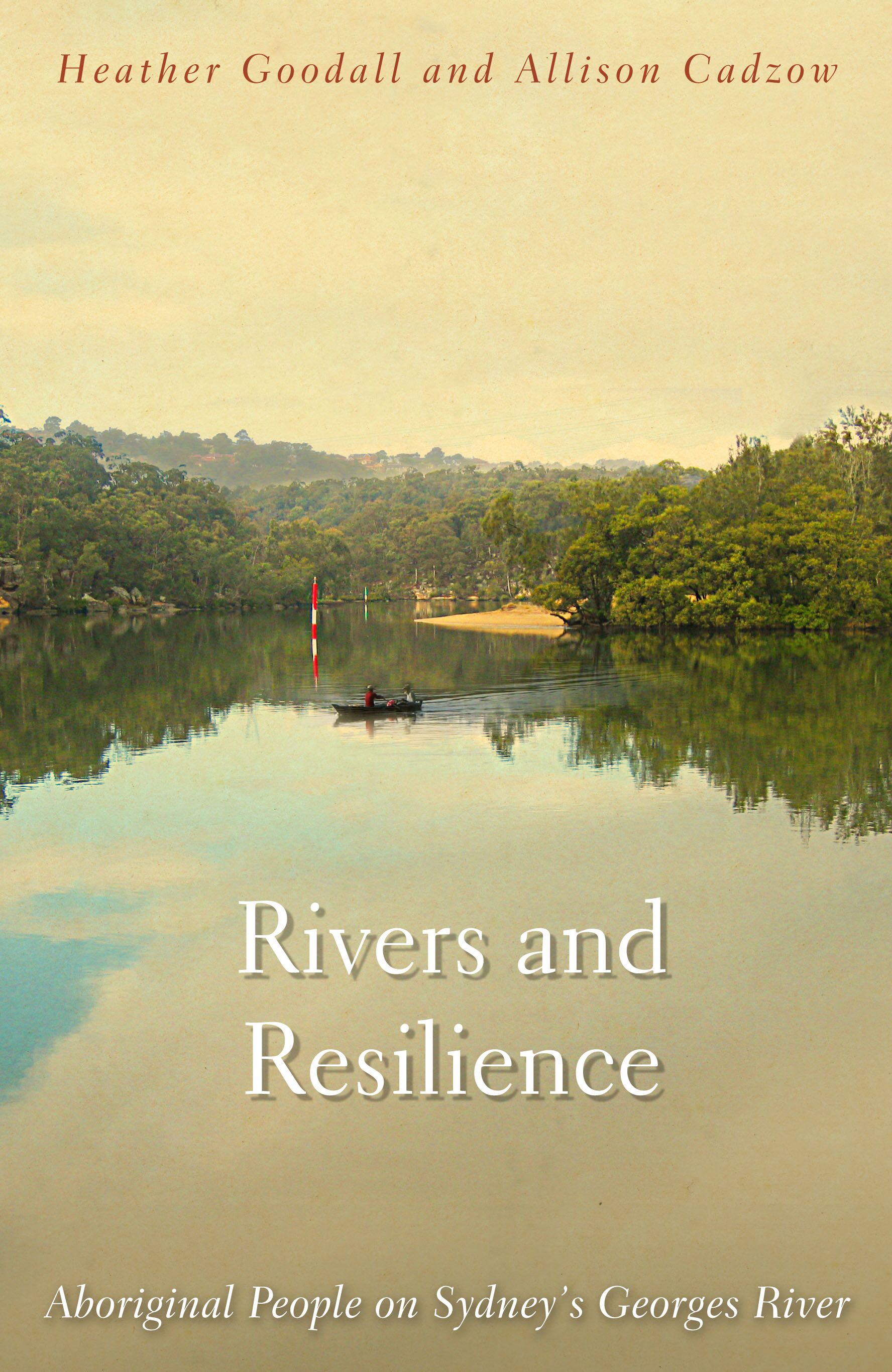
The Book Group, Goodall and Cadzow, Rivers and Resilience

Heather Goodall and Allison Cadzow, Rivers and Resilience: Aboriginal People and Sydney’s Georges River (New South Books 2009)

Before the Meeting: I was the Designated Book Chooser this month, and seized the opportunity to read and discuss this book – Heather Goodall’s From Invasion to Embassy (1996) does a brilliant job of un-erasing the long and continuing history of Aboriginal dispossession and struggle for land in New South Wales, and a friend recommended this more localised history. I came to it with high expectations.

I wasn’t disappointed.

Nine of the book’s eleven chapters are filled with stories of Aboriginal people living, working, fighting, building families, organising – being resilient – on or in connection to the Georges River. These stories draw on early settler accounts (in the case of the Bediagal warrior Pemulwuy and the less famous, but charismatic Dharawal man Kogi), petitions to government (beginning with Kogi’s grandson Jonathon Goggey in 1857, and appearing regularly from then on), reports of governmental inquiries (beginning with the colony’s ‘Select Committee on the condition of the Aborigines’ in 1845, where a man named Mahroot told how a number of Aboriginal men and women made livings from fishing on the river, in what the authors call ‘effective cultural negotiation’), the diaries and newspaper articles of white people (including those guided, and fed, on fishing and hunting expeditions by Dharawal-speaking Biddy Giles in the 1860s; and, as transport improved, tourists), the records of the Aborigines Protection Board and other government agencies, and, as the twentieth century progresses, newsreel footage, records of the Housing Commission, Land Rights claims and interviews with Aboriginal people with living connections to the river.

It’s necessarily a piecemeal story, and I can’t tell whether anyone from outside Sydney, let alone outside Australia, would find it interesting. But as a non-Indigenous Sydneysider who has crossed the Georges River many times and walked along the upper reaches of Salt Pan Creek, a tributary that features significantly, my internal map of the world was being radically redrawn as I read.

The opening chapter places the stories in the context of some major ideas about ‘land, indigeneity and change, about environment and about cities’. To give you some idea of this fifteen-page section:

  • The authors reject the idea that ‘Aboriginal “traditional” cultures were unchanging and static, consisting of a closed and fully formed parcel of knowledge and stories which could be handed down intact across generations for thousands of years – and which therefore could not cope with changes’. Even on the Georges River, which flows through heavily industrialised parts of Sydney, they argue, Aboriginal cultural process have been maintained.

  • They argue that the cultural practices that establish strong links to a place need not be effective only for people with a traditional affiliation to that place.

  • Since 1788 and even earlier, mobility has been ‘as much a defining characteristic of Aboriginal cultures as affiliations with meaningful bounded places’. The river has served as an ‘important corridor of mobility’.

  • Discussions of conservation emphasise native local species, treasuring them as national emblems, and paradoxically often ignoring ‘the role of Aboriginal people in the cultural and material work of actively managing, cultivating and changing the native species on the river and its banks’. The declaration of the Georges River National Park, contested among non-Aboriginal people, is even more complex for Aboriginal people.

It would do an injustice to the book to reduce it to a single argument, but there’s a thread of argument running through it: the established way of thinking about sacred sites and Aboriginal people’s connection to land is inadequate. People from many language groups and many parts of Australia have been part of the Aboriginal communities along the Georges River. They have been allocated land, have bought land as individuals and as collectives, and been moved off it repeatedly, sometimes with promises of the right of return, promises that were invariably broken. Because for a long time the land along the river was inaccessible or useless to the colonisers, they were able to make homes and livings there. Whether or not it passes the official criteria for a Native Title claim, it’s indisputably Aboriginal land. The book ends with a quote from the Tharawal Land Council:

Each Aboriginal site has its place; every Aboriginal place has its story in the life of an Aboriginal family. Country is alive with stories.

After the meeting: We had audiovisual aids. Alec Morgan and Rose Hesp’s Australia in Colour is currently screening on SBS, and the second episode includes a colourised version of a 1933 newsreel clip that opens the book, featuring Joe Anderson (‘King Burraga’) standing in the bush near Salt Pan Creek and declaiming in a strangely plummy accent:

Before the white man set foot in Australia, my ancestors had kings in their own right, and I, Aboriginal King Burraga, am a direct descendant of the royal line … There is plenty fish in the river for us all, and land to grow all we want … The black man owned Australia, and now he demands more than charity. He wants the right to live!

(You can see the whole episode here. Joe appears at 17:35.)

We opened the evening with that clip. And a group member who is a heritage conservationist who had gone walking in the Georges River National Park on the weekend shared some beautiful photos, including one of a plaque marking the site of Joe Anderson’s family’s home.

We had an animated conversation, though there was less laughter than usual. It’s a heavy subject, and the mildest-mannered of the group said he was quivering with rage at some parts. There was some discussion of what it meant that two white women had written the book: some felt that the authors were very careful not to overstep because of their outsider status – not something I was aware of.

Most of us had got hold of a copy from a library, but one chap get a print-on-demand copy from the publisher – with just a two-week wait.

Rivers and resilience is the eleventh book I’ve read for the 2019 Australian Women Writers Challenge.
The Bankstown Poetry Slam (mainly reposted)

I’ve been embarrassed in the last week to realise that my blog has continued on its way as if nothing out of the ordinary has happened. Hundreds of thousands of young people around the world went on strike to call on governments to take climate change seriously. George Pell was found guilty of child sex abuse and sentenced to a prison term longer than the lawyers expected. Fifty people were murdered while at prayer in Christchurch mosques. And I’ve blogged about books for small children.

It’s not because I’m not aware of the world. It’s more like I’m struck mute. So many eloquent people have spoken on all three subjects.

Maybe it’s timely for me to repost something that I wrote about the Bankstown Poetry Slam all of five years ago. Since I wrote the post (the full post, from 6 October 2014, is here), the BPS has been attacked by a once and probably future politician as a breeding ground of anti-white hate speech. I don’t want to be rude, but that attacker is illiterate. My experience is limited, but I can think of no better place to get a sense of how vibrant and benign a culturally diverse society can be, and especially one where Muslims are a strong presence.

Here’s the post:

The Bankstown Poetry Slam, which happens on the last Tuesday of every month, is one of the most exciting events on Sydney’s cultural calendar.

Last month nearly 400 people gathered in the Bankstown Arts Centre to hear more than 20 poets with varying degrees of virtuosity perform their own work – to hear, applaud and at least pretend to judge them as they at least pretended to compete with each other. There was also cake, strawberries and watermelon, all for a gold coin donation at the door.

My own experience of spoken word and poetry slams is extremely limited, but Wikipedia and YouTube inform me that many features of the BPS are standard to slam culture. There are procedural elements such as a loosely enforced time limit (two minutes this time because there were so many poets), judges chosen at random from the audience, a ‘sacrificial poet’ to kick things off without being part of the competition. And the range of subject matter is described well in Wikipedia’s entry on spoken word:

The spoken word and its most popular offshoot, slam poetry, evolved into the present-day soap-box for people, especially younger ones, to express their views, emotions, life experiences or information to audiences. The views of spoken-word artists encompass frank commentary on religion, politics, sex and gender, often taboo subjects in society.

Likewise the preponderance of non-white performers and the notion that spoken word and slam performance styles are generally influenced by hip hop.

Yes, poet after poet declaimed passionately, like prophets calling us to reject consumerism, psalmists crying out from the midst of suffering or yearning, orators decrying oppression in many forms. One man’s poem was short enough to allow him time for a brief introduction; he said he was honoured to follow those who came before and to precede those who came after, because ‘we are giving you our hearts’. He was right: there was plenty of witty wordplay, social observation, and even some elegant story telling, but again and again a shy young person would approach the microphone and be transformed into an eloquent, spellbinding exposed heart.

[Added later: Click here for a YouTube of Yasmine Lewis, who won the slam]

The air was thick with generosity. When anyone dried up and had to search for their next line – in memory or on a scrap of paper – the crowd applauded. When a judge gave anyone less than 9 out of a possible 10, she was booed. There was no party line: one person urged us to turn to God, another described religion as a stain on humanity, a woman in a hijab was followed by a man advocating for marriage equality, and all were equally met with finger-clicks (the convention for expressing approval of a good line) and cheers. The emcees, co-founders of the event Ahmad Al Rady and Sara Mansour, were unfailingly appreciative and kept the mood buoyant.

The slam happens under the auspices of Bankstown Youth Development Service, whose Director, Tim Carroll, was dragooned into speaking. Since this slam started nearly two years ago, he reminded us, there has been some terrible stuff in the media about Islam and Muslims. What a different picture was created by this event, he said, in which the Muslim presence was so pronounced. And what a shame some of those columnists weren’t there to see it.

Ruby Reads (6)

This instalment of posts about books I’ve read as Ruby’s grandfather consists of two kinds of books: two that have been read to the audience of 0–2 year olds at Leichhardt Library Rhyme Time, and three that she requests on repeat.

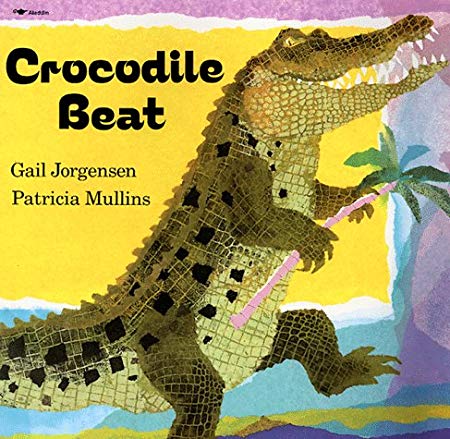
Gail Jorgensen & Patricia Mullens, Crocodile Beat (Simon & Schuster 1989)

This starts with a scary image of a crocodile who is waiting for his prey to come to the waterhole. Then, page after page, a procession of animals arrives, making at least this reader very uneasy: it’s set up as a macabre variation on Who Sank the Boat?, something like ‘who will the crocodile eat?’

Happily, no spoiler really, everyone ends up alive, though it’s thanks to an extremely improbable intervention, and only for today. Tomorrow the crocodile may well get lucky. It was, however, beautifully read to us with lots of animal noises to match the colour and movement of the book itself.

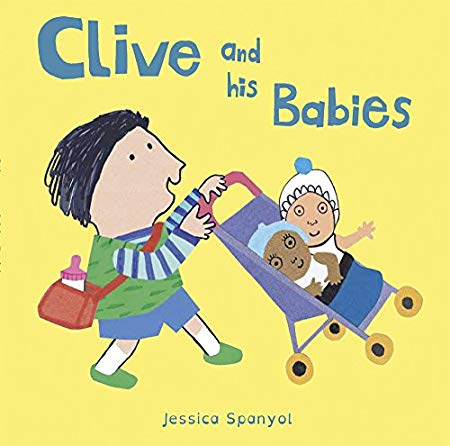
Jessica Spanyol, Clive and His Babies (Child’s Play International 2016)

Clive is a little white boy who plays with dolls, one of whom is brown. He also plays with a number of other children, some of them also brown. This was read to us at the library. Its message of diversity and flexibility about gender roles, explicitly named on the back cover, is overwhelmingly front and centre and there’s no story to speak of, but who am I to complain? I joined in with gusto all the nursery-rhyme singing and gesturing, motivated at least in part by the desire as the only man there to set a model of gender-role flexibility.

Ingela P Arrhenius, Where’s Mr Duck (Nosy Crow 2019)

No author is named for the text in this lift-the-flap, and there’s no reason why one should be. The reader is simply asked to lift a flap on each spread to see if Mr Duck (not Mr Drake) is under it. Eventually, after finding Mrs Worm, Mr Frog and so on, we do find the duck. End of story.

What makes the book stand out is that the flaps are made of felt, which resists the deliberate or accidental depredations of little hands. The images by Ingela P Arrhenius, described on the publisher’s website as a ‘Swedish homewares designer’, are attractive in an impersonal, Ikea-ish way. The book is definitely designed for 15-month-old people.

Peppa Pig: Creepy Cobwebs (Ladybird 2014)

I’ve never seen an episode of Peppa Pig, and as far as I know neither has Ruby. On the strength of this little board book, we’re not missing much. It’s nominally about creepy things, but includes – among other non-creepy things – an image of Peppa Pig and family riding in a space ship. There’s no narrative line, and I find the images crude and uninteresting. Ruby, however, took the book from me after a couple of readings and proceeded to turn the pages while giving voice to what might have been a Martian rendition of the text. A big success for the unnamed author.

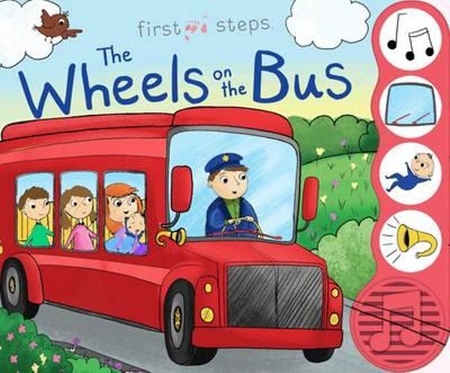
Kimberley Barnes (illustrator), The Wheels on the Bus (Hinkler Books, First Steps 2017)

Not so much a book as merchandise to accompany a song, this is one of several musical ‘novelty books’ we read/play. One of the buttons on the right plays the tune, the other three play the sounds of windscreen wipers, a baby crying and a car horn respectively. (I do wonder if Verna Hills, who Wikipedia says wrote the song, receives any royalties.)

I am reading on my non-grandfathering days. Some posts about that coming soon.

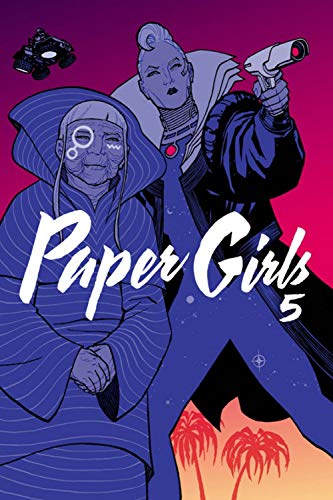
Brian K Vaughan’s Paper Girls Book 5

Brian K Vaughan (writer), Cliff Chiang (artist), Matt Wilson (colorist) and Jared K Fletcher (letterer), Paper Girls, Volume 5 (Image 2018)

So many books to read and, assuming I don’t live to much past 100, so little life left. Yet here I am writing about another instalment-compilation of a comic about a gang of young teenage girls taking on cosmic time-travelling forces. I plead in mitigation that this blog is a record of every book I read, however embarrassing or daunting the book. And this one has jumped to the front of the reading queue because it came as a birthday gift with invisible strings attached: the giver expects to be able to read it himself, soon!

The girls are in the future, dealing with time-travel paradoxes, particularly the ones generated by Tiffany having met her older self in Volume 4. The nature of their enemies is becoming clearer, and with it our hope that they will survive. There’s a terrible death, some incipient, awkward romance, and in the last pages a big twist that ensures that the story will continue for quite some time yet.

I didn’t warm to the artwork at all at first. In particular, the colouring seemed kind of drab. But I’ve not just acclimatised, but come to respect and even love the stylish near monochrome of much of the book.

Ruby Reads (5)

First a disclaimer: Some of the books I list in these posts about Ruby’s books are obviously completely age-inappropriate. Those books don’t necessarily get read to her, at least not more than once, but I include them because I’ve encountered them in Ruby’s context and they are splendid in their own right, or for some other reason. A case in point is today’s first book.

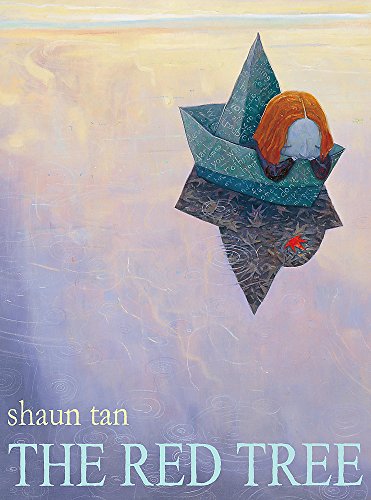
Shaun Tan, The Red Tree (Lothian Books 2000)

A stunningly beautiful, surreal picture book that’s not for pre-schoolers, probably not for anyone younger than about 15, and definitely not for 15-month-olds. It begins with dead leaves floating in a grey environment and continues with an extraordinary evocation of depression, loneliness and an overwhelming sense of meaninglessness – all with glorious (if that’s the word) full-page images evoking that mood. The red tree of the title doesn’t turn up until the final spread, but when it does, it’s a brilliant game-changer. Shaun Tan is a genius, and I’m glad he and his books have cheered up since 2000.

Lucy Cousins, Maisy’s Traffic Jam (Walker Books 2007)

Maisie the Mouse came into being when my sons were already teenagers. I was vaguely aware of her as a phenomenon, having seen people in giant Maisie suits at children’s book fairs in the 90s, but this is my first actual Maisie book – one of more than 27 million in print according to Lucy Cousins’s Wikipedia page, Wikipedia doesn’t list it in her bibliography. It’s a concertina book, which we picked up in a street library, and unfolded in Ruby’s local park, to the delight of a random passing two year old – and Ruby. Lots of flaps to lift, and who doesn’t love a metre-long fold-out?

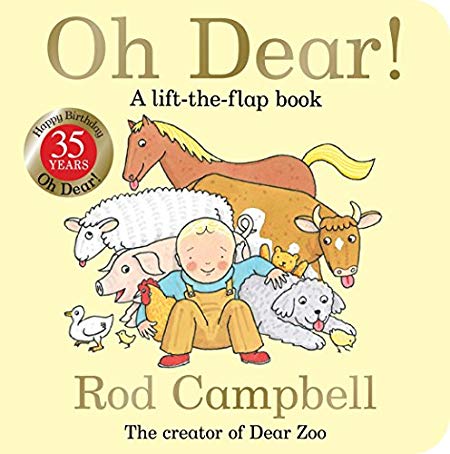
Rod Campbell, Oh Dear! (1983)

A classic lift-the-flap book. Only one of its flaps has been torn out so far. but that’s more a sign of Ruby’s restraint than of any quality of the book. The little boy has to find eggs, and goes through a gamut of farm animals until he remembers, and goes to the chicken coop where, splendidly, after the chook has been revealed, there further flap must be lifted to find two eggs.

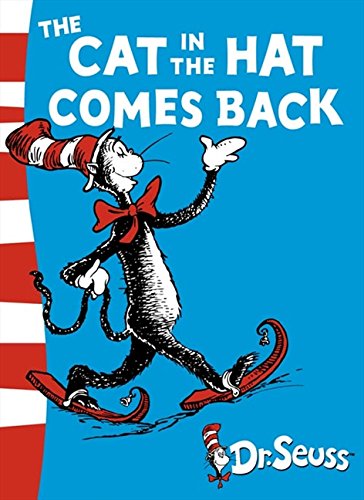
Doctor Seuss, The Cat in the Hat Comes Back (1957)

I guess everyone knows that Dr Seuss (Theodore Seuss Geisel to his friends) invented the Cat in the Hat in response to a challenge to create an illustrated text that would help children learn to read. Serious literacy aid or not, the character has been pretty popular in our family, including when read to someone with advanced dementia. The Cat in the Hat Comes Back doesn’t have quite the level of terror and insouciance about breaking rules that the original has, but it’ll do. The original hasn’t turned up at Ruby’s place yet.

Sally Morgan and Kathy Arbon, Can You Dance? (Pan Macmillan Australia 2018)

A board book produced by the Indigenous Literacy Fund, its reason for being is even more worthy than The Cat in the Hat‘s, but it wears its worthiness even more lightly. The reader is asked if they can dance in imitation of a series of native Australian animals. While a lap read is quite pleasant, the book cries out to be read to a group of small people who can flap their wings like the angry magpie, stamp their feet like the wombat and so on, until the last page is pretty much a wild rumpus.

Can You Dance? is the tenth book I’ve read for the 2019 Australian Women Writers Challenge.
Ruby Reads (4)

At this rate I’ll be doing a weekly post about books Ruby and I enjoy – or at least experience – together for quite some time to come. Here goes this a selection of this week’s discoveries and rediscoveries.

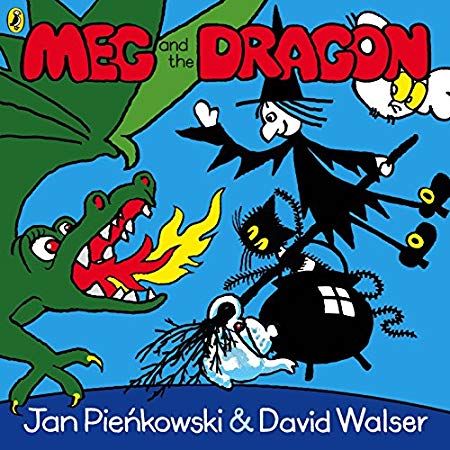
Jan Pienkowski & David Walser, Meg and the Dragon (Puffin 2015)

A library book, this is part of the series that began with Meg and Mog all that time ago. Mog the cat is still on the scene; she’s just been nudged from the title. Meg the witch, whom I first met close to 40 years ago, still hasn’t got her spells completely under control, but everything turns out all right in the end. It’s a Halloween story. For anyone who thinks of the writer of a picture book as the main creator and the artist as an illustrator, the Meg and Mog series is a challenge, as artist Jan Pienkowski has been the constant. The first so many books were written, beautifully, by Helen Nicholl. David Walser seems to have been supplying words since about 2014. I doubt if the target audience notice the difference. I certainly have no complaints.

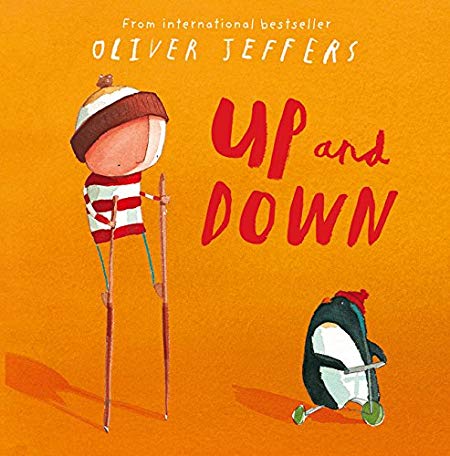
Oliver Jeffers, Up and Down (HarperCollins 2011)

This is a sweet book (borrowed from the library), but seen vicariously through the eyes of a 14-month-old reader it’s car too complex: it’s about a boy and a penguin, inseparable friends who have a falling out and are reunited in the end, raising questions on the way about why penguins can’t fly and should they want to, and how does one support a friend who has ambitions one knows will be destructive in the end.

Pamela Allen, Who Sank the Boat (1982)

Isn’t it brilliant how books survive the decades. We loved this in the early 80s. I still love it. One by one, five animals get into a boat which eventually sinks. The repeated question is ‘Who Sank the Boat?’ I guess you could see it as teaching a lesson about buoyancy, but I think of it more as gently mocking the idea of such a lesson. Ruby asked for it four tomes in a row yesterday.

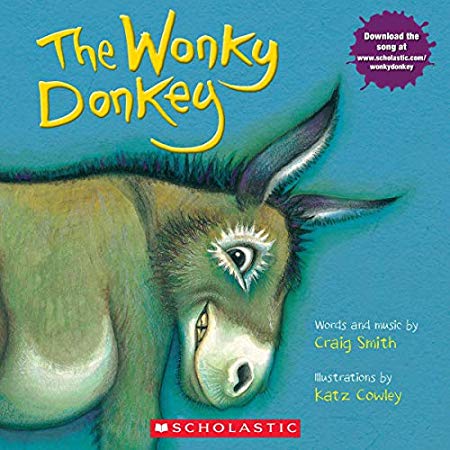
Craig Smith & Katz Cowley, The Wonky Donkey (2009)

This was read to us by the splendidly showy Lisa at Leichhardt Library Rhyme Time. Evidently it started life as a song, and the wordplay is certainly brilliant. I don’t care for the somewhat grotesque illustrations when seen through my grandparenting lenses, and was relieved to discover that they are not the work of Australian artist Craig Smith. This is a different Craig Smith, possibly a New Zealander, and he did the words.

To be continued.

Who Sank the Boat? is the ninth book I’ve read for the 2019 Australian Women Writers Challenge.

Frederick Macdonald’s Caruse of the Kanowna

The Caruse of the Kanowna: Frederick Macdonald’s 1914 Diary, Edited by Colin Macdonald (published by Colin Graham Macdonald 2005)

I read this for a family history project.

In August 1914 when my maternal grandfather was 32 years old, he was the officer in charge of 500 young men bound for New Guinea on board the liner Kanowna, possibly the first troops to leave Australia for service in World War One. This is not something that was ever spoken of in my childhood; it came to light through my sister’s research.

Frederick Macdonald, 19 at the time, was one of the 500. This little book, produced by Frederick’s son Colin, is built around his diary entries from 1 August to 21 September 1914, which tell the story of the ill-fated expedition: ill-fated because woefully undertrained and woefully short of food, water, clothing and other necessities. The Kanowna was eventually sent back to Townsville without seeing any action, thanks to what some would see as a providential refusal to work by the non-military firemen on board. (A couple of days after they moored in Townsville they heard that other, better equipped and trained troops had taken German establishments at Herbetsöhe, Rabaul and Simsonhafe.)

The diary entries, which account for just six of the book’s 56 pages, mention my grandfather by name only once, when he addresses a parade in Townsville the day young Frederick receives his discharge, but the diary is fascinating regardless of any special connection a reader may have to it. For example, the entry for Wednesday 2 September, mail having been received a little after ten o’clock the night before:

The parades this morning have been called off to allow the men to read their mail and to write and answer same. The dinner today was the worst we have yet had. The tea has been cancelled at dinner time owing to shortage of water. The haricot beans were not well cooked, the sago was nearly raw and the bread [was] stodgy and sour. Several men from D company paraded with their meal to the OC and the result was a rousing on for the cook.

The supporting material – an introduction that provides context, many photographs, an excerpt from The Official History of Australia in the War of 1914–18, selections from the Naval archives – is beautifully done. My ancestor is mentioned again, though for the sake of family pride, I wish he hadn’t been. Evidently, according to one Colonel William Holmes, he ‘had very little military training or experience, and, in addition, lack[ed] personality and self-reliance’. Oh dear!

I got hold of a copy of The Caruse of the Kanowna on interlibrary loan from the Australian War Memorial. I’ve since discovered that it’s available for apparently legitimate download from this site.

Jeff Lemire and others’ Black Hammer

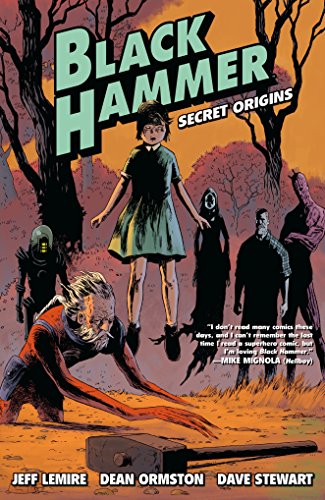
Jeff Lemire (writer), Dean Ormston (pencils), Dave Stewart (colorist) and Todd Klein (letterer), Black Hammer Volume 1: Secret Origins (Dark Horse Books 2017)
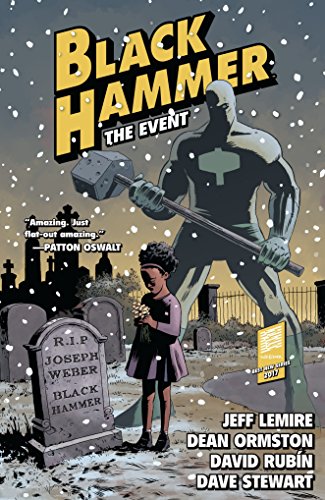
———————, plus Dean Rubin (artist, colorist and letterer for 22 pages) Black Hammer Volume 2: The Event (Dark Horse Books 2017)

Having enjoyed Jeff Lemire’s Descender (my blog posts here, here and here), I was happy that my Christmas gift from my Comic Supplier included the first two books in a new series by him. It’s shaping up to be quite a story.

The first volume sets up a superheroes-in-retirement scenario. There are six of them, in order of appearance: Abraham Slam, strong man, who is more or less content with his life in exile as a farmer; Golden Gail, a 54 year old woman trapped in the body of her child superhero identity; Barbalien, a Martian master of disguise who struggles with unfulfilled desire; Colonel Weird, who spends a lot of time in the para-zone, where past, present and future are jumbled up together, and whose mind appears to be pretty jumbled as a result; Talky-Walky, a robot who does all the household chores and keeps building probes to try to find a way to escape; and Madame Dragonfly, a dark witch figure with dragonfly wings who keeps herself apart from the others and is generally disliked by them.

The nature of their exile isn’t clear. All we really know is that they are confined to a limited space including their farm and the small town nearby, and that they’ve been there for 10 years. We learn snippets of their past lives fighting crime and saving the occasional cat from a tree, beating supervillains, and joining forces to combat the greatest of all supervillains, the daringly named Anti-God. We also learn that there was a seventh superhero, a leader of sorts, called Black Hammer. The first volume – which collects numbers 1 to 6 of the comic series – ends with the arrival at the farm of a young reporter named Lucy, Black Hammer’s daughter.

In the second volume, things develop in a most satisfactory manner. We get more detail of all the back stories, and of the struggle against Anti-God (he had destroyed a whole other world before attacking their former home, Spiral City, and many other superheroes died at his hands). Our understanding of the nature of their exile grows less fuzzy as Lucy snoops around (and incidentally one of her discoveries echoes a climactic moment in Joyce Carol Oates’s Hazards of Time Travel, confirming my sense that what JCO treated as a major unexpected twist can be an unremarkable plot point in genre fiction). Romantic and other relationships with the townsfolk develop, none with outright happy results. One member of the band commits a shocking act of violence against another.

The final moment of this volume echoes the end of the first. Lucy once again dominates the moment, and it may well be that the story is about to head off in a completely new direction.

One last comment. The art by Dean Ormston, colouring by Dave Stewart, and lettering by the legendary Todd Klein (who must be legendary because I’ve heard of him) are wonderful, and then there is a 22 page section in a completely different, gaudy and ebullient style, by Dave Rubín. This section is ‘The Ballad of Talky-Walky’, and though I probably wouldn’t have persevered with a whole book in that style, here it brilliantly enacts the bizarre circumstances in which Colonel Weird and Talky-Walky became close friends and allies.

I’m patiently awaiting Volume 3.