Tag Archives: Australian Women Writers Challenge

Gail Jones’s Guide to Berlin

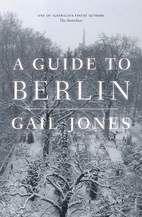
Gail Jones, A Guide to Berlin (Random House 2015)

berlin.jpgAfter ten or so pages of A Guide to Berlin I was weighing my options. Did I really want to read another 240 pages about a small group of Nabokov enthusiasts in Berlin who meet to tell each other stories from their lives? Especially when those pages promised to include overcooked writing like this:

Shivering, cold, suffering pathetically in a minor key of frozen hands and feet, she aimed her phone through the watery light at the disappointing building across the street, and a man appeared, standing silently beside her.

The main thing that kept me reading was the desire to have one more shortlisted book under my belt before the NSW Premier’s Awards are announced in a week or so. Plus: some fabulous literature has been built around the conceit of a group of travellers telling each other stories to pass the time; I would love to revisit Berlin; the first page foreshadows a death and therefore, perhaps, interesting developments; and I hoped that the self-conscious literariness of the narrating voice might turn out to be a function of character rather than the author’s natural (I use the word loosely) style.

I did read on. The group of six people tell their stories, and are much more moved by them than I was. Berlin is present mainly in the naming of streets, landmarks and train lines. The main character, Cass, visits the Pergamon and the aquarium, and the tale-tellers do tell each other their favourite spots. Death happens at about the three-quarter mark, but it feels like a plot device, or at best a pretext for more introspection. And the self-conscious literariness keeps up all the way, with some beautifully quotable paragraphs but an over-riding sense that the writing is more interested in itself than anything else.

I’ve never read any Nabokov. Given that the characters frequently quote him to each other, maybe a reader familiar with his work would in effect be reading a different, infinitely more enjoyable book than I read. I hope many people love this book. I’m not one of them.
—–
That much was written when I had about 50 pages to go. I was hoping I’d have to ditch my draft and start all over again, this time singing the novel’s brilliance. After all, a lot can happen in 50 pages. Alas, the concluding pages are pretty much taken up by the narrator’s fairly callow reflections on the limitations of story, and the characters’ callous, self-preoccupied responses to some terrible deaths. Maybe the novel is subtly and elegantly holding both these things up for scrutiny, but if so the subtlety passed right by me. I was left with a feeling of deep disgust. Sorry!

AWW2016A Guide to Berlin is the fourth book I’ve read as part of the 2016 Australian Women Writers Challenge.

Pam Brown’s Missing Up

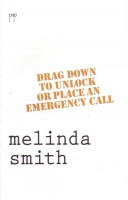
Pam Brown, Missing Up (Vagabond Press 2016)

Francis Webb once said that a poem was a meeting place of silences, or words to that effect. I don’t know if Webb would have taken to Pam Brown’s work (or vice versa), but the poems in Missing Up reminded me of his observation. It’s not that she writes things that ‘oft were thought but ne’er so well expressed’ (to invoke another unlikely poet), but I find in her poetry a kind of mental activity, the kind that generally precedes speech or even coherent thought, that is distractible, non-linear, associative, interspersed with snatches of other people’s words. I don’t know about you, but that’s the kind of activity that fills a lot of my silences. Pam Brown wrangles it into words.

Rather than try to say more about the book as a whole, let me have a go at a single poem. Here’s ‘Flat white’, which is far from being typical of the longer, non-linear, obliquely and sometimes grimly personal poems in this book, but which I’ve chosen partly because it’s the shortest in the book, and because I wanted to figure out what its title pun is doing:

Flat white
how to hold a genre
__who likes
______
genres
& how to
___handle filth___und drang
or
_(ring the bells here)
______
devise
__
a few innocent new myths
to resacralize
______the apostasy
of the bourgeoisie
_________________
the who?
they’re the ones
____
with unhappy consciousness
who are seeking
_
a brains & sex harmony motor
to spruce up
___
the non-lived
__________
flat white life
in
__
natural surroundings

First off, you can’t read this poem as you would a passage of prose, and that’s not just because of the line breaks. Like Pam Brown’s poetry in general, it asks for a different kind of attention: not requiring that it yield its meaning at a glance, but settling in, tolerating ambiguity and ok that some meanings and references may take a while to become clear, may even remain permanently inaccessible. I think I’m right in saying that if you feel like an outsider as you read this poem for the first time, then that’s not a bug but a feature: we’re not being addressed, lectured at or wooed; we’re eavesdropping – eavesdropping by invitation, if that’s a thing.

**** The next few paragraphs show me struggling to explicate the poem. I had fun and learned from the process, but you may find it a bit boring. ****

In the absence of conventional punctuation, some parsing is called for. Here’s how I read it – your mileage may vary.

The poem is in two parts, of 12 and 10 lines respectively. The first part ruminates on a project. ‘How to’ doesn’t introduce a set of instructions, but poses a question or challenge: how is one ‘to hold a genre & … handle filth … or … invent a few innocent new myths’. The reason for wanting to do these things is ‘to resacralize [sic the US spelling] the apostasy of the bourgeoisie’. The second part then offers a definition of the ‘bourgeoisie’, and in doing so indicates why the activities contemplated in the first half are called for.

So far, so straightforward. To complicate things, it’s as if a second voice heckles the first: when Voice A mentions genres, Voice B mutters in the reader’s ear, ‘Who likes genres?’; when Voice A mentions filth, Voice B adds a sarcastic, or perhaps clarifying, ‘und drang’; Voice B is surely mocking when she says, ‘Ring the bells!’; and then her question ‘The who?’ is the poem’s turning point. And I guess you could read the rest of the poem as integrating the two voices – the one who names the project and the one who derides it.

But grasping the structure doesn’t make the poem transparent. ‘How to hold a genre’ for a start: Harvard University’s Poetry Classroom lists 35 genres, from allegory to verse epistle – what does it mean to hold one of them? It’s probably not ‘hold’ as in ‘hold the mayo’ (though on first reading one may stay open to that possibility), but as in ‘grasp’. I provisionally take the phrase to mean to write a poem that follows clear conventions. As Brown’s work rarely fits into any established genre, perhaps here the poem’s speaker is wondering how she would go about doing this thing that she has no actual desire to do (hence Voice B’s interjection), or maybe she’s contemplating establishing a genre of her own, of holding her own poetry to some established form (in which case Voice B is questioning the worth of the project).

Then ‘hold a genre’ is paraphrased as ‘handle filth’: the meaning of ‘filth’ isn’t clear, and the interjected ‘und drang’ is funny, but hard to pin to a meaning. (I know I miss a lot of Brown’s poetic references, but I do know that Sturm und Drang was a highly charged German artistic movement, in which Beethoven was a major figure.) The line expresses emotional recoil from the idea of working in genres – the speaker likens it to handling poo. A quick internet search refined my understanding of Sturm und Drang: it translates literally as storm and yearning, which gives the joke an interesting twist: yes, to attempt that kind of poetry may be like handling filth, but that doesn’t stop the poet from yearning for it to achieve some higher end. (Alternatively, ‘handle filth’ may not be meant to paraphrase ‘hold a genre’ at all, but add to it, so the challenge is to hold to conventions while handling messy (filthy) and emotionally charged realities. Both readings can work, possibly at the same time.)

In the next lines the project becomes more ambitious. Voice B’s sarcastic injunction to ring bells and the deprecating irony of ‘few’ and ‘innocent’ (can myths ever be innocent) modify but don’t erase the ambition of ‘to devise … myths’. And ‘to resacralize / the apostasy / of the bourgeoisie’ sounds like a big deal. I’m inclined to take this phrase seriously, either as an aspiration or as a sorrowful recognition that something is needed, even though impossible. ‘The apostasy of the bourgeoisie’ is probably a reference that I don’t recognise – Google didn’t help me with it. The bourgeoisie have lost their sense of the sacred, perhaps of meaning, or not so much lost it as turned away from it: their sustaining myths are either dead or toxic/desacralised. It’s worth noticing, though, that the speaker isn’t contemplating reviving those myths, but devising new ones, not to reverse the apostasy of the bourgeoisie, but to (re)sacralise it. Whatever that means.

But bourgeoisie is such a nineteenth-century, Marxy term. Fair enough that the voice from the peanut gallery challenges it: ‘the who?’

The remaining nine lines answer the question in a single, only slightly obscure sentence: ‘they’re the ones / with unhappy consciousness / who are seeking / a brains & sex harmony motor / to spruce up / the non-lived / flat white life in natural surroundings.’

There is probably someone on the planet who doesn’t know that a flat white is a kind of coffee (cappuccino senza schiuma is how you order an approximation in Rome), that the cool people drink in some parts of the world. The phrase ‘the non-lived / flat white life’ is what drew me to the poem in the first place. Barry Oakley described marijuana as the new sacrament of rebellious middle class youth in the 1970s. This poem suggests that the flat white is currently the desacralised sacrament of certain alienated or spiritually lost middle class people. (When one of my sons was a teenager, he quipped that when God was giving out senses of humour, a certain adult thought he meant coffee and asked for a flat white. There’s a similar play of ideas here.) These are not the bourgeois who were shocked by Baudelaire; these are, more or less, Pam Brown’s people. (I don’t drink coffee, but the poem is pointing at me.) There’s discord between what they are seeking – ‘a brains & sex harmony motor’ – and what this poem has been contemplating – ‘to resacralize / the apostasy’. They want a mechanical solution; the poem is groping towards something more demanding. Their ‘surroundings’ are ‘natural’ only ironically, like Patrick White’s carefully natural gum trees in Barrenugli. No room for poetry to play a central role there: the poem ventures to consider the possibility, but recognises that the odds are against it.

The poem does all this while managing to feel tossed off (the technical term for which I believe is sprezzatura).

**** End of potentially boring explication *****

The Vagabond Press website has a very nice blurb on this book which describes the poems as ‘offbeat, fragmentary yet often discursive’, and includes this:

For Pam writing poetry is a habit, a disorganised ritual. Her poetic inventories begin in everyday bricolage. Real things interrupt the poems the same way thoughts and phrases do. You know – the fridge over there, the bus stop, surf music on a radio, a raisin squashed against a floor tile – always backgrounding a connection to the ‘social’ as the poems make political and personal associative links.

AWW2016Missing Up is the third book I’ve read as part of the 2016 Australian Women Writers Challenge.

Margo Lanagan’s Sea Hearts

Margo Lanagan, Sea Hearts (Allen & Unwin 2012)

seahearts.jpgSome years ago I was waiting at traffic lights in Sydney’s Haymarket when I recognised Margo Lanagan walking across the street in front of me. Her slightly abstracted air could have been a sign that she was planning that night’s dinner, but I like to believe she was busily conjuring up the seal-women of Rollrock Island, imagining one standing naked and unspeakably desirable in the main street of Potshead Village, or another hurling herself desperately into the ocean, or perhaps the witch Misskaella Prout hardening her heart against the fully-human men and women who have scorned her, or someone in ‘the grunt and urge and song and flight and slump of seal-being’.

Lanagan’s previous book, Tender Morsels, was a sometimes harrowing retelling of the Grimms’ ‘Rose Red and Snow White’. In Sea Hearts she takes on selkie lore in which seals become human and take human lovers/spouses, generally with tragic results – pretty much a mirror image of Matthew Arnold’s ‘Forsaken Merman’, in which a human woman has temporarily become a mermaid.

The story unfolds in seven chapters, each told from a different point of view – man, woman and child. A long early chapter belongs to the young Misskaella Prout, who is teased because she is different. We learn along with her that she is a throwback to a time when the men of her island married women who had been magically transformed from seals. Her difference is not only in appearance, but in powers to harness magic, and having at first resisted she eventualy reaches a point where, in grief and bitter resentment, she uses her power to transform a seal into a woman with long dark hair and slender limbs, far more beautiful than the redheaded, work-worn human women of the island. The men are enchanted, and soon the island community is transformed. To the next generation of children, mothers – ‘mams’ – who ‘came from the sea’ are the norm.

But all is not well. Though their transformation includes falling compliantly in love with their human males, and though they are universally loving mothers, the seal-women never cease grieving for their lost life in the sea (none of the chapters speaks from a seal-mam’s point of view – we never see inside their heads, but we see their deep sorrow). Unless they have access to the skins they shed when first transformed they can never return to their original form, and the men make sure those skins are locked securely away.

So far, Lanagan has played very straight with the lore. Her prose is clear and fluent. Every development, every aspect of the world is revealed through action. The characters are all sympathetic: we understand the desire of the men, the rage of the human women, the compliance and the grief of the seal-women, the mixture of genuine love and underlying coercion in the families of the island, even Misskaella’s dark resolve. There are plenty of twists, but also a fairy-tale sense that these things happen as they must and consequences will follow as they are meant to. It’s a tightly-constructed, engrossing, vivid, sometimes funny, sometimes poignant retelling, with a feminist sensibility – there’s no doubt that patriarchy is alive and well on Rollrock Island, but no need to get strident about it, and in spite of it all men are not the enemy.

It’s in the long chapter told from the point of view of Daniel Mallett, son of a seal-woman, that the book shakes things up. Suddenly the children – the sons, I should say, because the daughters are a whole other, heartbreaking story – become key players. There’s a marvellous moment when Daniel, who has long been accustomed to dealing with his mother when the miseries are upon her by offering in an artificially bright voice to rub her feet or get her a cup of tea, finally understands the situation and realises that he can help, and speaks to her ‘not lightly or cheeringly’ – and everything changes.

The northern-hemisphere title of the book is The Brides of Rollrock Island. The Mams of Rollrock Island would have been better.

AWW2016.jpgSea Hearts is the second book I’ve read this year as part of the Australian Women Writers 2016 Challenge. It’s already March and only two books! I’d better get cracking.

Laura Tingle’s Political Amnesia

Laura Tingle, Political Amnesia: How we forgot how to govern (Quarterly Essay Nº 60, Black Ink 2015)

qe60.jpgAs always with the Quarterly Essay I turned to the back section of this issue for the correspondence on the previous one. The responses to David Marr’s profile of Bill Shorten aren’t argumentative – they mostly praise, summarise, amplify and contextualise. My favourite paragraph is from Michael Bachelard:

The dilemma is that, though fascinating to insiders, the grindings of Labor’s factional machine – at once impenetrable, distasteful and apparently crucial – are to outside observers dull to the point of stupor. But without understanding and accounting for the networks of influence and patronage that bind the union bosses, the branches (more accurately, the branch-stackers), the ethnic warlords and the parliamentarians, there is no explaining the Labor Party and how it identifies and promotes talent.

Marr’s ‘Response to Correspondence’ doesn’t actually respond, but reflects on the timing of the essay’s publication. Its portrait of Bill Shorten as the man who might beat Tony Abbott for the Prime Ministership lost a lot of topicality when Malcolm Turnbull did the job on the eve of publication – but, Marr says, ‘Anything can happen between now and the uncertain date at which Australia will go to an election.’

Political Amnesia asks us to turn aside for a moment from politics as soap opera or contest of personalities, and look instead for structural changes underlying our current political malaise. She argues, convincingly, that there is a growing loss of institutional memory in Australian public life. ‘Without memory,’ she argues

there is no context or continuity for the making of new decisions. We have little choice but to take these decisions at face value, as the inevitable outcome of current circumstance. The perils of this are manifest. Decisions are taken not as informed by knowledge of what has worked, or not worked, in the past, or even by a conscious analysis of what might have changed since the issue was last considered. … Rational debate about the pros and cons of an issue becomes too hard for both advocates and audience. We slip into the habit of conducting our debates in the present tense.

Or worse, three word slogans. The rot has been a long time coming, she argues, and has had complex causes, including the advent of the 24-hour news cycle, where the media beast must always be fed something new (am I the only one who finds it unnerving that even on the ABC news bulletins often tell us about announcements that will be made the next day?), the politicisation of the public service (beginning in a big way when John w Howard sacked department heads he considered politically unacceptable), the blurring of the roles of political advisers and policy advisers (perhaps beginning as early as the Whitlam government, but reaching the heights with Peta Credlin’s role in the Abbott government). She sums up the extent of the problem:

[The] institutions which have made Australia’s political system so vibrant and successful have been changing profoundly over the past few decades. These changes include the rise of unstable executive government (because it has lost the capacity to build institutional memory) at the cost of the parliament (which has also lost its memory as it struggles for relevance); the decline in the influence of the public sector (as a result of a range of forces which have robbed it of much of its institutional memory); the relative rise of the national security establishment (which retains its influence and its memory); and the transformation of the media into a channel for present-tense information, rather than a reliable repository of the historical record. In the background there has also been a nibbling away at our civil rights, as relentless incremental change has left many of us unaware how far the law has moved in the last couple of decades.

The essay has a refreshing focus on systems and structures rather than personality. It ends on a tentative note of hope, and some general suggestions for how the erosion of memory could be slowed or even reversed. Though she can’t be much more than 50, it’s clear that Laura Tingle is one of the precious vessels of memory, a journalist auntie. Much of what she describes if familiar to anyone who has worked in the public service, or really to anyone who has been paying attention. We can hope that this essay contributes towards a change for the better.

AWW2016.jpgPolitical Amnesia is the first of hopefully ten books by Australian women that I will read this year as part of the Australian Women Writers 2016 Challenge.

If not for the challenge, I might not have noticed an element of the essay that would have been unlikely to been there if the essay had been written by a man. The essay pretty much begins with a quote from the ancient Roman historian Tacitus, which describes the Roman people as seduced by Augustus Caesar into preferring ‘the safety of the present to the dangerous past’. That could easily have been done by a man, but Tingle frames the quote in a story about helping her daughter study for an Ancient History exam: so the quote slips into the reader’s mind as something that anyone’s teenage child might know, with none of the elitist baggage that quotes from the ancients – and by extension arguments about institutional memory – might otherwise carry.

My AWW Year

This is my mandatory round-up post about the Australian Women Writers’ Challenge 2015. I think I undertook to read 10 books by Australian women writers. I read 21. It was not an ordeal.

• I read poetry, such poetry:

I read two stunning memoirs:

In My Mother’s Hands, Biff Ward

Reckoning, Magda Szubanski, as an audiobook read brilliantly by the author

• I read biography and recent history

Barbara Baynton: Between Two Worlds, Penne Hackforth-Jones

The Streets of Papunya, Vivien Johnson

• I read novels:

The Golden Age, Joan London

When the Night Comes, Favel Parrett

The Strays, Emily Bitto

The Soldier’s Wife, Pamela Hart

The Life of Houses, Lisa Gorton

Chasing Shadows, Leila Yusaf Chang

• I read a brilliant essay:

Quarterly Essay: Dear Life, Karen Hitchcock

• I read short works, including a book of short stories, components of Going Down Swinging‘s Long Box, and children’s books:

Go to Sleep Jessie, Libby Gleeson and Freya Blackwood

The Cleo Stories: The Necklace and the Present, Libby Gleeson and Freya Blackwood

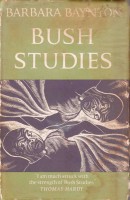
Bush Studies, Barbara Baynton

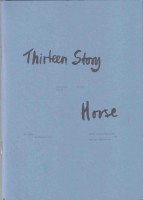
Thirteen Story Horse, Bridget Lutherburrow

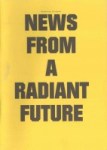
News from a Radiant Future, Katherine Kruimink

Protein, Libbie Chellew

Its not as if I read these books just because they were written by women, but I doubt if I would have read them all if not for the challenge. My life is definitely richer for it.

I intend to sign up for the 2016 challenge. Of course.

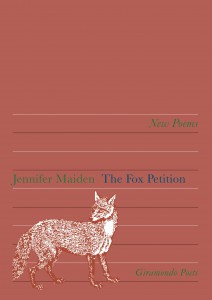
Jennifer Maiden’s Fox Petition

Jennifer Maiden, The Fox Petition (Giramondo 2015)

The-Fox-Petition Like all Jennifer Maiden’s books for several years now The Fox Petition has a huge cast of historical and fictional characters, as well as some living politicians and a couple of non-human entities.

Most of these appear in Maiden’s dialogue poems. Julie Bishop makes her debut, and so do father and son act Keith and Rupert Murdoch. Making return appearances are Kevin Rudd and Dietrich Bonhoeffer, who seem to be forever on an aeroplane; Tony Abbott and Queen Victoria, whose relationship is becoming even more tense; George Jeffreys and Clare Collins continuing their adventures, this time in the Greek financial crisis and with refugees from Syria; Hillary Clinton and Eleanor Roosevelt, still flirtatious and remonstrative in pretty equal measure.

I think the Hon. Carina Monckton, created by the inhabitants of the Carina Galaxy, has appeared in an earlier book, but I’m positive that the Harvard School of Business has not been seen before his chat here with Julie Bishop.

Then there are the Diary Poems, so called because they seem to ramble like diary jottings, though those appearances are hugely misleading. Many other characters get a guernsey in them, including Tanya Plibersek, Gillian Triggs, Penny Wong, Joan Baez, Labor politician Melissa Parke (Maiden’s ‘favourite politician / now’) and eighteenth century Whig Charles Fox (her ‘favourite politician / of all time’).

Heavily populated though the book is, it has an extraordinary coherence. The title refers to a recent protest against measures in New South Wales making it illegal to keep a ‘newly acquired fox’, even if neutered and vaccinated, and also to Charles Fox’s defence of habeas corpus during the Napoleonic Wars. What links the two, apart from the word play (of which there is a lot) is Maiden’s passionate dislike of the single-minded self-righteousness she has previously called ‘ethical security’, which here is represented literally and metaphorically by Biosecurity: the goal of being safe from germs, feral animals, refugees, and moral complexity of any kind.

As my regular readers know, I’m a fan. I love the voice of these poems. A Maiden poem characterically feels as accessible and even as interactive as a chat with a friend about the TV news, making you laugh and perhaps confirming your prejudices.Then extraordinary lines emerge, such as:

it is vital to be Australian, which
seems to mean rat poison and a flag.

Something else has been going on behind the chat. It is, after all, poetry made from the stuff of the nightly news, that pushes the reader to think and feel in new places. Did I also mention that it’s fun?

aww-badge-2015 The Fox Petition is the twenty-first and last book I read for the 2015 Australian Women Writers Challenge.

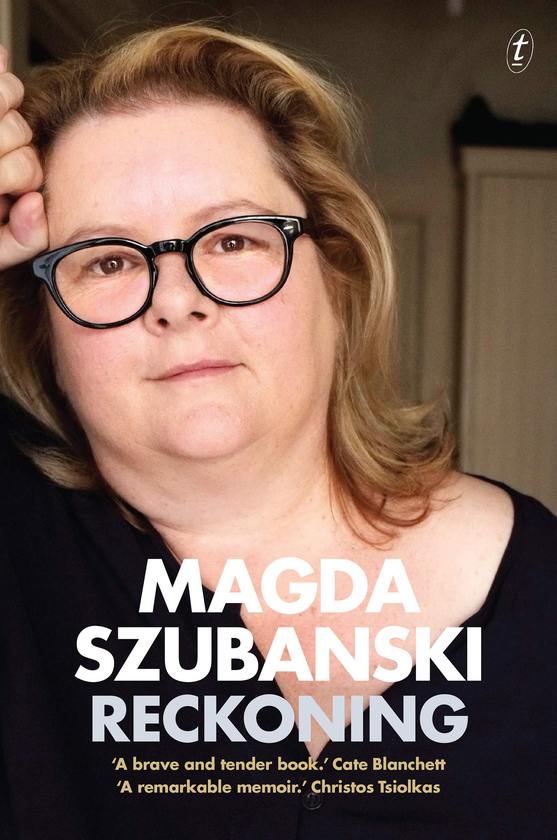
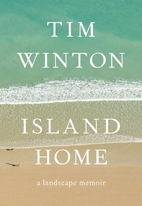
Magda Szubanski’s Reckoning & Tim Winton’s Island Home

Magda Szubanski, Reckoning: A Memoir (Text 2015; Bolinda audiobook read by Magda Szubanski)
Tim Winton, Island Home: A Landscape Memoir (Hamish Hamilton 2015; Bolinda audiobook read by David Tredinnick)

9781925240436.jpg We listened to Reckoning on a car trip fromSydney to Brisbane and then part of the way back. It’s hard to imagine a book better suited to such a trip.

Magda Szubanski, a superb comedian as the fat, unloved but ever optimistic Karen in Kath and Kim, and the bustling farmer’s wife in Babe, here comes out as a complex, thoughtful person with quite a lot to say and the ability to say it well. I particularly admire her way with similes. As you’d expect of a celebrity memoir, it gives us the background story on a number of her well-known and much-loved parts, as well as her more obscure commercial and critical failures. Unsurprisingly, it goes into her family history, but though there are elements of celebrity-misery-memoir in the story that emerges of a depressed mother and a rigid, disciplinarian father, the narrative transcends that category to become something much more interesting.

There are many strands. Possibly the most interesting is Magda’s quest to understand her father. She tells us at the start that he was a teenaged assassin, an ally to Jews who put his own life at risk, and a member of the Polish resistance during World War Two. A key element of her own life story is her gradual uncovering of the details and significance of that, and of its implications for how he related to his own children. There’s also her struggle with weight, and the agonising story of her coming to terms with her sexuality, of coming out to her family, and then to the world is a revelation. (That is to say, I vaguely remember that when she came out my response was something like, ‘That’s interesting – Oh look, something shiny!’ For her, it was a major decision: she had to face the possibility that her career and any number of important relationships would go down the drain, and she also had to face head-on the internalised version of the vicious oppression that comes at Lesbians and Gay men.)

Magda Szubanski reads this audio book, and I recommend this as a way of receiving it. Perhaps it would be funnier read on the page: there’s plenty of wit, but Szubanskidoesn’t play for laughs. She does, however, do the voices: her father’s Polish accent (‘Ach, Maggie’), mother’s soft Scottish burr, her own childhood pipe, and any number of show-biz types (her impression of Mark Trevorrow is uncanny).
—-

islandhome.jpgWhen we’d finished Magda’s book, we moved on to Tim Winton’s Island Home. Sadly, we lasted only about 40 minutes into it, and even that was a struggle. The book itself is interesting. Winton writes about the meaning of the land in Australian sensibilities: we have more geography than culture here, he says; the long Aboriginal custodianship of the land has had a very different impact from the ubiquitous naming and taming of Europe, and the last two centuries have not erased that.

The book is interesting, and I hope to read it some time. But my companion and I found David Tredinnick’s reading intolerable. He did that thing of not trusting the words to do the work, but injecting emotion and significant intonations. The effect was to constantly draw attention to the words rather than to what they were trying to say. You could tell that Winton was struggling to articulate something, but it was being read to us as pronouncements of wisdom from on high. I see from Bolinda’s site that David Tredinnick is a frequent reader for them. I hope this performance isn’t typical.

Added later:
aww-badge-2015Reckoning is the twentieth book I’ve read for the 2015 Australian Women Writers Challenge.

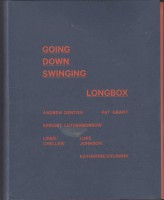
Going Down Swinging Longbox

Geoff Lemon, Katie Pase, Rhys Tate & Simon Cox (editors), Going Down Swinging Longbox (2015)

gdslbxFaced with the recurring heartache of literary-magazine editors, of having to reject excellent material because it exceeds the magazine’s word count, the Going Down Swinging crew had the bright idea of publishing a boxed set of such rejects. And here it is, a collection of five slim books (for a range of values of the word ‘book’) enclosed in a paper box. It’s a beautiful artefact – like Maurice Sendak’s Nutshell Library, but for grown-ups. The separate pieces are:

gdslb5Bridget Lutherborrow, Thirteen Story Horse (illustrated by Harley Manifold)
Thirteen short stories set in a block of flats, each story bearing the number of its characters’ flat. There’s a talking horse who makes furniture out of egg cartons, a girl called Henrietta who has a mysterious supply of eggs (and useful egg cartons), a woman who irritates her neighbours by calling her husband’s full name when they’re having noisy sex, another woman who grows big hairy man hands when she drinks too much, someone who talks almost entirely in cliches, and so on. The stories are full of apartment living’s tangential connections and mysterious glimpses into other lives, with added weirdness and the horse providing a through line. Lovely ink wash drawings add a lyrical dimension.

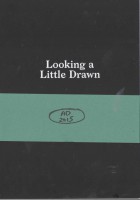
 alt=Andrew Denton (with a little help from Megan Herbert and David Squires), Looking a Little Drawn
Who’d have thought Andrew Denton had a whole other career in him? Yet here he is, with 30 original cartoons, each printed on a separate card, all but three executed with the skill level of a bright five year old. The resulting combination of sharp wit and primitive technique is totally disarming. The three exceptions, which are executed by Megan Herbert and David Squires (to help him, Denton says in an author’s note, ‘realise some ideas that neither the left nor right side of my brain knew how to draw’), wouldn’t be out of place in, say, the New Yorker. For example, a giant, radiant, bearded figure in a white robe sits on a throne in a supermarket with a tiny human on his lap; an onlooker says to a companion, ‘See? He really is real.’ How good it would be if The Monthly and/or the Saturday Paper started publishing such single-frame cartoons just for fun. Not that Denton totally avoids topicality: I ventured to reproduce one in my blog post on David Marr’s quarterly essay on Bill Shorten.

Version 2Luke Johnson, Ringbark

Ringbark is an excerpt from Luke Johnson’s unpublished novel On Dead Highways. It’s an elegant 74-page book with a gorgeous cover drawing by Caroline Hunter, but I can’t tell you more than that because I have a policy of  not reading excerpts from novels in newspapers or magazines. I’ll wait for the whole thing.

Version 2Pat Grant, Toormina Video

A graphic novella–memoir in which Pat Grant tells the story of his alcoholic father. It’s pretty sordid, but it’s complex, and in the end respectful and full of love. The novella was first published on the internet two years ago, and you can still see that version at Pat Grant’s web site. Here, the 44 pages of the story are printed on 11 sheets of paper, each of which unfolds to reveal a single drawing and text on the other side, filling in details, responding to comments on the internet, meditating on art, addiction, family and other maters raised: the equivalent of DVD extras. I found it deeply satisfying, and I imagine that anyone who had a non-violent alcoholic parent would find it even more so.

Version 2Version 2Katherine Kruimink, News from a Radiant Future
Libbie Chellew, Protein
(both illustrated by Anthony Calvert)

Two dystopian novellas back to back. In Protein a city (country? world?) is under threat from a mysterious epidemic that shares some features of the zombie apocalypse. From a series of vignettes, we piece together a picture of what’s happening. Many questions are left unanswered, and the panic of the situation gets under the reader’s skin. At least it did mine. And then, the end, and we’re left with it.  Katherine Kruimink’s story is likewise a patchwork – memos from a noticeboard, dialogue, what may be a diary entry by someone who is in 21st century terms illiterate. We are in the middle of things again – a small community of human survivors live in a compound, survivors of an invasion by Them (who are left undescribed apart from passing mentions of tentacles and technological superiority). Is it safe to leave the compound as the younger generation believe? Will the heroic sacrifice of two of the older generation come to anything? Will the group survive to another generation? All is left unresolved, brilliantly.

The package was produced with the help of crowd funding. My copy arrived as a fabulous surprise long after I’d made my donation. But you don’t have to have been a member of the funding crowd to own a copy. You can buy it online.

aww-badge-2015Added later: Though they are part of a bigger bundle, Thirteen Story Horse and the Protein/News from a Radiant Future pair are the seventeenth and eighteenth books I’ve read for the 2015 Australian Women Writers Challenge.

Penne Hackforth Jones’s Barbara Baynton and Barbara Baynton’s Bush Studies

Barbara Baynton, Bush Studies (1902, Angus & Robertson 1965, online at Project Gutenberg)
Penne Hackforth Jones, Barbara Baynton: Between two worlds (Penguin 1989)

1bs

She waited motionless, with her baby pressed tightly to her, though she knew that in another few minutes this man with the cruel eyes, lascivious mouth and gleaming knife would enter.
(The Chosen Vessel)

The man with the cruel eyes is a swagman, one of those who toted their meagre belongings in a rolled blanket (sometimes known as a Matilda) around the Australian outback in the late 19th century looking for work or handouts. In this story he successfully breaks into the woman’s hut and kills her as she flees into the night; it’s not spelled out, but he probably rapes her as well.

Along with small selectors and itinerant workers, swagmen were celebrated in the literature of the 1890s (and sentimentalised since) as good-humoured or eccentric survivors in harsh physical and economic conditions, where solidarity was a pre-eminent virtue. Think of Henry Lawson’s stories: ‘The Union Buries its Dead’, ‘The Bush Undertaker’, ‘Macquarie’s Mate’, and even ‘The Loaded Dog’. It’s hardly surprising that when A G Stephens published the Barbara Baynton story now known as ‘The Chosen Vessel’ in The Bulletin in the 1890s, he diverted attention from the murdering rapist’s identity as a swagman by naming the story ‘The Tramp’.

The six stories in Bush Studies provide an extraordinarily powerful counterpoint to the legend of the 90s: its men are vicious rather than eccentric, there’s precious little solidarity, and no one survives intact. Baynton’s women suffer appallingly, often at the hands of the men, and the men are generally twisted wretchedly out of shape – the rapist-murderer swaggie of ‘The Chosen Vessel’, the casually violent, drunken lascivious (sorry, I couldn’t think of a better word) station hands in ‘Billy Skywonkie’, the craven, lazy, opportunistic Squeaker in ‘Squeaker’s Mate’. That’s not to mention the bystanders.

I doubt if anyone could read those three stories and have the 90s legend remain intact in their minds. Of the other three stories, two share that same gothic sensibility, but don’t feature men doing women down: in ‘The Dreamer’ a woman struggles through the night in a terrifying storm – there is no malevolent human presence; ‘Scrammy ’And’ has a similar situation to ‘The Chosen Vessel’, but this time it’s an old man in the house under siege and the attacker’s motive is more economic. The remaining story, ‘Bush Church’, is a comedy of sorts, in which a minister of religion visits a small outback community and encounters remarkably energetic ignorance and amorality.

I bought my copy of Bush Studies in 1970 – Angus & Robertson had rescued it from oblivion in a 1965 edition, which included a biographical note by Baynton’s grandson H B Gullett. As a postgrad Austlit student, I wasn’t much interested in the biography – the stories had to stand by themselves, we told each other. Recently, when I read on facebook that Barbara Baynton had become an activist against women’s suffrage, my interest was piqued. How could someone who so graphically described women’s suffering actively oppose giving them the vote? When I came across Penne Hackforth-Jones’s biography, I seized it.

1bbFrom the first page Penne Hackforth-Jones’s biography differs markedly from H B Gullett’s 1965 biographical note. Barbara’s parents came out from England in 1858 (Gullett) or 1840 (Hackforth-Jones), and were either Robert and Penelope Ewart (Gullett) or John Lawrence and his wife Elizabeth Ewart (Hackforth-Jones). Both versions agree that her mother had an adulterous liaison, though they differ on who, when, where and the upshot. In both, young Barbara had a difficult childhood, one of a large family in rural New South Wales near Murrurundi. In both she had a disastrous first marriage, which Hackforth-Jones persuasively surmises provided the core material for her stories. In both, the marriage ended when her husband took off with Barbara’s younger cousin who had come to help with their three children.

From that point on there’s less confusion.  Moving to Sydney, she got a job as housekeeper to the wealthy Dr Baynton, who married her and took her children on. The new social status agreed with her. She wrote her old life out of her system. On Baynton’s death she became independently wealthy, travelled with her daughter to England to try to have her stories published, and on being successful became something of a literary phenomenon. (Hackforth Jones quotes many accolades as well as some snooty putdowns, and Thomas Hardy tells us on the 1965 dust jacket that he was ‘much struck with the strength of Bush Studies‘.) She wrote a novel, Human Toll, which no one seems to think is worth chasing up, but apart from some journalism in aid of worthy causes, she did no more writing.

Wealthy and with an entree into English and Australian society, she became a bit of a grande dame. She knew Nelly Melba and Billy Hughes, her daughter Penelope was painted by Tom Roberts. In her 60s she was briefly married to an English Lord who had converted to Islam and was offered the throne of Albania. To Barbara’s disappointment he declined, and she had to be content with being Lady Headley rather than Queen Barbara. Both Gullett and Hackforth-Jones tell family anecdotes of her eccentricities with some relish.

An answer to my question suggests itself, that is, an answer beyond her own proclaimed belief that women are too irrational to have a say in politics: Bush Studies’ powerful evocation of the mistreatment of women in outback Australia wasn’t a call to arms so much as a cry of anguish. Once she was out of there, and had confronted the horror of it in writing, she wanted to stay as far from it as possible. Who can blame her?

Penne Hackforth-Jones, who died too soon in 2013, is remembered as a television actor, but she was also a journalist and, just as relevant to this book, she was Barbara Baynton’s great great grandmotherdaughter. The book reads easily, and if at times one feels that the author is doing an actorly exercise in creating a back story from fragments of information, then at least it’s honestly done. It’s a lively version of Barbara Baynton’s life rather than a definitive biography.

aww-badge-2015These are the fifteenth and sixteenth books I’ve read for the 2015 Australian Women Writers Challenge.

Books read to small visitors

Libby Gleeson and Freya Blackwood, The Cleo Stories: The Necklace and The present (Allen & Unwin 2014)
Libby Gleeson and Freya Blackwood. Go to Sleep, Jessie! (Little Hare 2014)
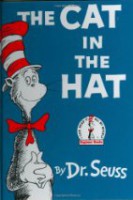
Doctor Seuss, The Cat in the Hat (©1957; Random House)
Janet & Allan Ahlberg, Each Peach Pear Plum (©1978, Puffin)
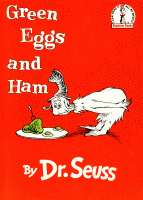
Doctor Seuss, Green Eggs and Ham (©1960; Random House)

We have just had two small people visiting for a week (along with their mother, my niece). Although the little girls were mostly busy making things and being generally fascinating company, they did like being read to, which meant that we had a chance to discover some new books for very young reader–listeners, and to revisit some old ones.

1gsjLibby Gleeson and Freya Blackwood won two of the Children’s Book Council of Australia Awards this year (Freya won a third, but for older readers), and we were guided by the CBCA in our purchase of new books. Their books are warm, affectionate celebrations of the intelligence of their girl protagonists. In Go to Sleep, Jessie! the heroine shares a bedroom with a baby who refuses to go to sleep and instead keeps her awake by crying loudly. The parents’ well-meaning attempts to solve the problem are unsuccessful, and she solves it beautifully herself.
1tcsCleo is a bit older, and her problems are of a different order. ‘Everyone’ at a friend’s party has a necklace, but her parents say she can’t have one until her birthday, which is a very long time away.  In a second story she has to decide on a birthday present for her mother. The problems are real, and the solutions clever.

Both books harbour understated challenges to the parents who will read them aloud many times: what do you think about consumerism, envy, tattoos or ‘controlled crying’, among other things?

039480001XAfter dinner one night the two little girls put on a ‘show’ that consisted mainly of vigorous physical movement and silly faces, but included audience participation in which we adults had to take our socks off and wave them about, and later take turns reading from The Cat in the Hat. The book was apparently chosen at random, but it was wonderful to see the concentration grow on the young listeners’ faces as the story progressed. (Two thirty-somethings ostentatiously took to their smart phones during the reading. Humankind cannot bear very much reality.)

1eppp

An ‘I spy’ book whose images turn out to tell a story. Hearing my niece read it to her daughters in a way that beautifully captured its music, I remembered again that the joy of reading excellent children’s books aloud is as much for the adults as for the young ones. And that’s true of books like this, that depend on the art for their full meaning.

Dr_Seuss_Green_Eggs_and_HamAnother Dr Seuss book. This one was referred to a couple of times as our almost-two-year-old was being resolutely negative (‘Would you like it in a box? Would you like it with your socks?’). Theodor ‘Dr Seuss’ Geisel makes it look easy, but to create books that beginning readers can manage that are also fun for the fiftieth – or should that be five hundredth? – time is the work of a genius.

There were other books – including a Snugglepot and Cuddlepie adaptation that leaves mercifully nameless both the revising writer and the simplifying artist. I tried to insinuate Where the Wild Things Are into the mix, but the little one, clearly recognising the book, rejected it as too scary.

aww-badge-2015Go to Sleep, Jessie! and The Cleo Stories,  are the thirteenth and fourteenth books I’ve read for the 2015 Australian Women Writers Challenge. I know they’re very slender, but it should count for something that I’ve read both of them at least four times in the last week.