
[This was originally posted in my now defunct blog Family Life, on 14 January 2009. I’m retrieving it today because it includes some comments on Christos Tsiolkas’ The Slap, which recently came in at number 37 in Radio National’s Top 100 Books of the 21st Century.]
Kate Grenville, The Lieutenant (Text Publishing 2008)
Christos Tsiolkas, The Slap (Allen & Unwin 2008)
These were Penny’s and my presents from the Book Club Secret Santa/Kris Kringle in December. They’re both novels we’d been planning to read, both much praised in the press.
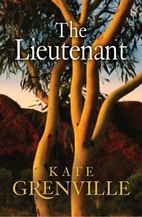
The Lieutenant was mine, and I was delighted to receive it. My interest had been piqued by hearing Kate Grenville talk charmingly – and passionately – about it at Gleebooks and then again on the Book Show. I think, though, that when I came to read it, I suffered from having heard too much, and the story remained for too long something I was being told about rather than something that was happening for me as I read. I was disorientated by the policy of renaming historical characters. I suppose the reason for this was to avoid being taken to task by grumpy old historians. You know, if someone were to say, ‘But the evidence is clear that Arthur Phillip was not an authoritarian, culturally blinkered careerist,’ the novelist could reply, ‘But this is a fictional first Governor of New South Wales called Gilbert, not the historical Phillip at all.’ The trouble is, given that the pithy core of the book is an actual document, which Kate Grenville has been careful to tell us provides every word of the conversation between her lieutenant hero and the young Aboriginal woman who befriends him, the novel is clearly meant to be an imagining of the actual early colony, and such arguments would be so much blown smoke.
The result is a kind of roman à clef effect: is Silk actually Watkin Tench? which of the Aboriginal men is Bennelong? etc. Now that I’m dropping in bits of French, I might as well say that there’s also something of the roman à thèse about the book, in the sense that one feels that the characters are there not so much for their own sake as for what they can show us about the meeting of cultures in Port Jackson in 1788. When I wrote in this blog about Kate Grenville’s previous book, I used the word ‘bodiless’. There’s something un-fleshed about this one too. All the same, it’s about one of the most interesting subjects I can imagine: the meeting of two mutually uncomprehending cultures in the form of two people establishing a delicate intimacy, against the odds and ephemeral. That it is tightly based on Lieutenant Dawes’s actual notebook on the Gadigal language gives it enormous moral force. By the end I was weeping.
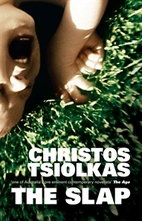
As I mentioned earlier, The Slap accounted for exactly half of the books in the Secret Santa/Kris Kringle. Clearly, sight unseen, we’d all decided it was worth a read. It would be hard to imagine a greater contrast to The Lieutenant. While we are told that Kate Grenville’s hero has an active sex life, it happens discreetly offstage. The Slap treats us in great detail to any number of sexual encounters, or perhaps I should say events, since ‘encounter’ implies a meeting of some kind. (Actually the sex in this book reminded me my childhood curiosity about characters in books going to the toilet. It’s as if this book decides it’s going to show the sexual things that are usually glossed over, but the result is mostly unconvincing.)
I read the first third or so aloud to Penny on three longish car trips. At a certain point she refused to have me read any more, not just because of the sex and the tediously undifferentiated obscenity of much of the dialogue, but because she just didn’t want to go where the plot was signalling its intention of taking us. I read on, mostly out of a sense of duty, and it turned out the signals were misleading. I can’t say it was a pleasant read, but in the end it was an impressive one.
In case anyone reading this doesn’t know, the story deals with an interwoven group of family and friends in suburban Melbourne. A man slaps a child at a barbecue: the man is Greek, the child’s parents are ‘Skip’ and embedded in victim identities. Though the back cover blurb says that the book is about ‘the slap and its consequences’, I read it more as using the slap as a device that provided a slender unifying narrative thread to the novel’s eight parts, each of which is told from the point of view of a different person who was at the fateful barbecue. A young girl gets plastered with her friends at an end-of-school party; an old man confronts his own mortality at the funeral of an old friend; several marriages are revealed as built on compromise – variously generous, self-sacrificing, resentful. There are lies about sex, half-truthful confessions of infidelity, a shocking betrayal of trust. For me, perhaps the finest thing is the tender–tough revelation of what drives the neurotic and vicious mother of the child who is slapped, so that we move from loathing and despising her to recognising her tragedy. The writing is pretty rough at times, and I think that people who say it’s wonderful to have a book with such a compelling plot for a change haven’t read much children’s or young adult writing.
I’m not rushing out to find all Christos’ other books, but my sense of what it is to be alive, human and suburban Australian has been expanded.


 You can’t tell from the image on the left, but Overland 216 has a very flash cover – a stylised map of a port city with dots on the water, some of them spot varnished: reading this on public transport creates no worries at all. On close inspection it turns out that we’re looking at a partly submerged Melbourne – artist



 Me fail? I fly!
