Tag Archives: First Nations

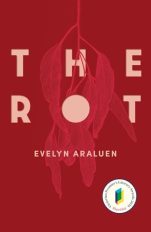
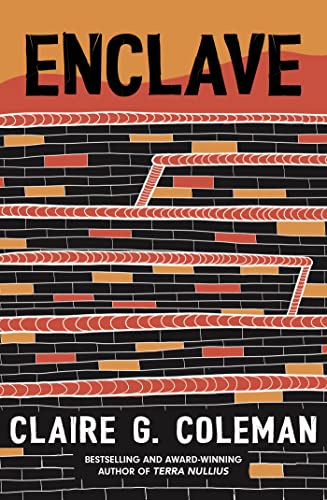
Claire G. Coleman’s Enclave

Claire G. Coleman, Enclave (Hachette Australia 2023)

This is the first book I’ve read by Noongar writer Claire G. Coleman. Her first novel, Terra Nullius, won prestigious prizes and her poetry and essays appear regularly in journals I read. (If you want to plough through my earlier posts to see what I’ve managed to say about those earlier encounters, here’s a link.) So I was happy when I got hold of a copy of Enclave, her third novel. I enjoy science fiction, so the fact that it’s a dystopian genre novel was an extra cause for joyful anticipation.

The book delivered on both fronts – filling the spot in my heart reserved for intelligent speculative fiction, and expanding my acquaintance with Claire G. Coleman’s writing. If you want to read a proper review, I recommend Magdalena Ball at Compulsive Reader (here’s a link), Maggie Nolan on The Conversation (link), Bill Holloway at The Australian Legend (link)or all three.I’ll stick to my resolve of focusing on page 78*. As often happens, this arbitrarily chosen page reveals a lot about the book, and hints at a lot more.

We are at about the one-quarter point of the narrative. Christine is the protagonist, a young white woman from an affluent family living in the walled city of Safetytown. Her father has bought her a new apartment as a reward for her success at university, and on this page her parents are taking her to ‘the homemaker centre’ to buy furniture, along with her younger brother, Brandon.

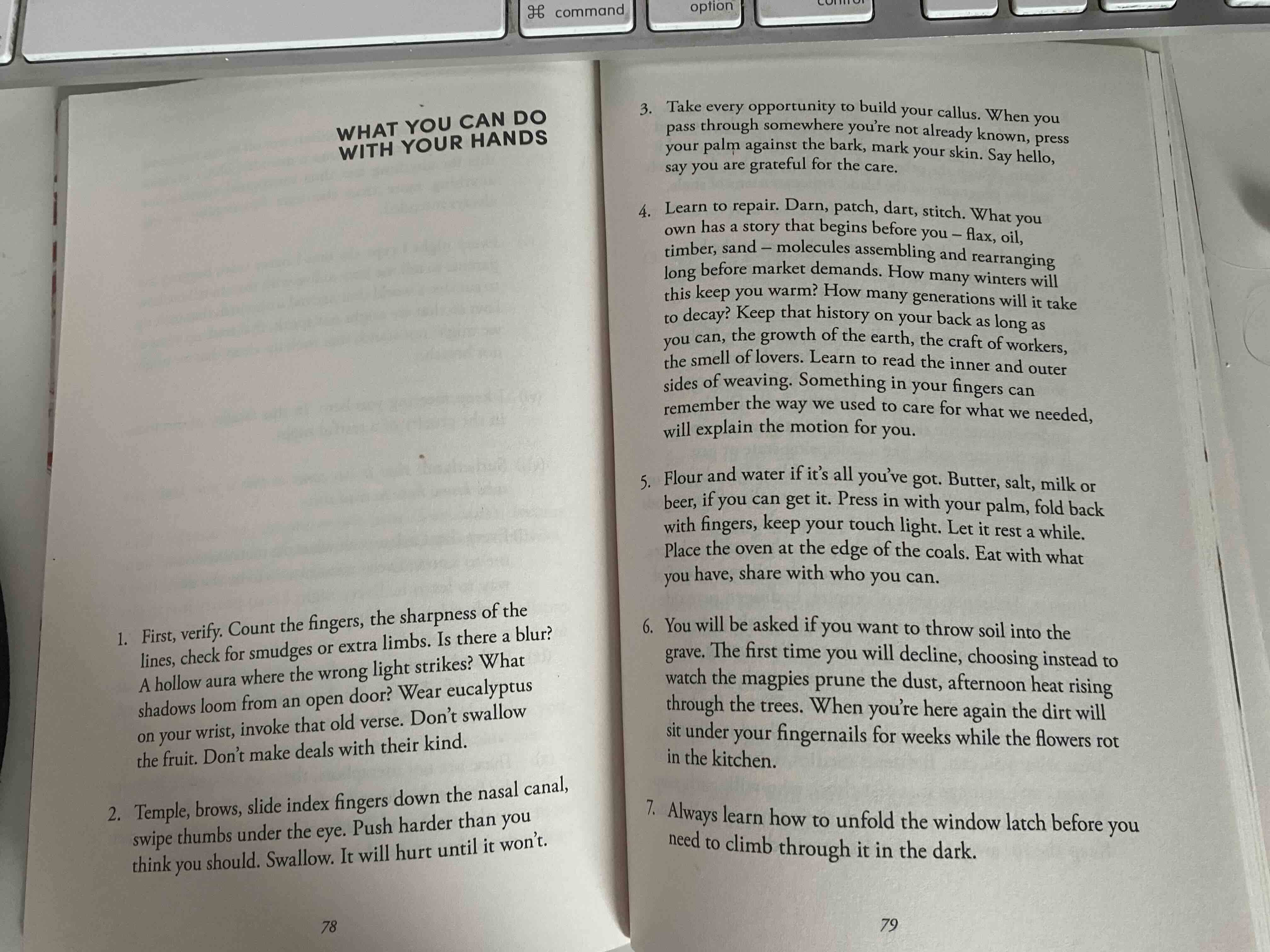
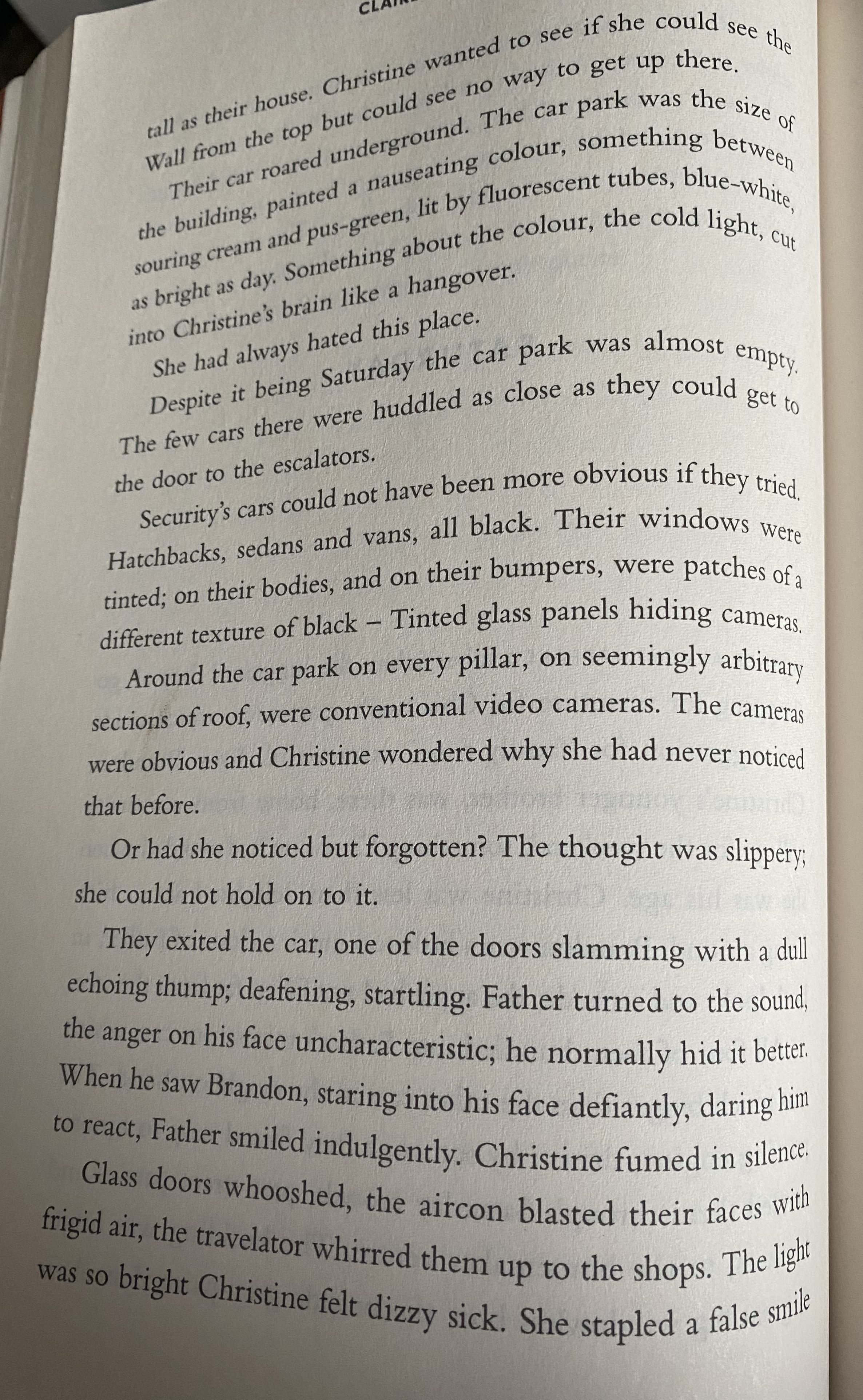
The building was huge. A great big windowless box, the outside grey-painted steel, as tall as their house. Christine wanted to see if she could see the Wall from the top but could see no way to get up there.
Their car roared underground. The car park was the size of the building, painted a nauseating colour, something between souring cream and pus-green, lit by fluorescent tubes, blue-white, as bright as day. Something about the colour, the cold light, cut into Christine’s brain like a hangover.
She had always hated this place.

The citizens of Safetytown are constantly being told how fortunate they are, how safe. Yet the adjectives here tell a different story: ‘windowless’, ‘grey-painted’, ‘nauseating’, souring’, ‘pus-green’. Even more significant is the ever-present Wall. It’s a powerful image, inevitably reminding us of Trump, Berlin and Israel–Palestine. Christine has always been told that beyond it is nothing but predatory violence, misery and chaos. In the otherwise sharply visual elements of this page, it is present to Christine as an object of curiosity even though it’s out of sight. She is beginning to suspect that she has been lied to: she is clear that she has always hated the homemaker centre, but a deeper discontent is brewing.

The next paragraph goes further into the reasons for her discontent:

Security’s cars could not have been more obvious if they tried. Hatchbacks, sedans and vans, all black. Their windows were tinted; on their bodies, and on their bumpers, were patches of a different texture of black – tinted glass panels hiding cameras.
Around the car park on every pillar, on seemingly arbitrary sections of roof, were conventional video cameras. The cameras were obvious and Christine wondered why she had never noticed that before.
Or had she noticed but forgotten? The thought was slippery; she could not hold on to it.

This first part of the novel is about Christine’s awakening. Here she’s noticing things she has never noticed before, in particular the ominously ubiquitous surveillance and enforcement. Not on this page, but part of the same process, she has noticed that one of the anonymous brown ‘servants’ is extraordinarily beautiful. These uniformed servants, all people of colour, are bussed in each day from beyond the wall and then out again in the evening. They ensure that the citizens don’t have to lift a finger to tend to the necessities of life. No one asks how they live on the other side, and in the early chapters they might as well be invisible, but like the women in the movie Conclave they are very present to the reader. Christine’s attraction to the woman servant is so outside the realm of what is considered possible that, like her ‘slippery’ thought about the cameras, it only fitfully enters her consciousness.

They exited the car, one of the doors slamming with a dull echoing thump; deafening, startling. Father turned to the sound, the anger on his face uncharacteristic; he normally hid it better. When he saw Brandon, staring into his face defiantly, daring him to react, Father smiled indulgently. Christine fumed in silence.

So much of what is to unfold is hinted at here. The benevolent father bestowing a brand new flat and furnishings on his daughter is suddenly enraged: not that he’s usually calm, but that he normally hides his rage. When he sees that it’s his son who has made the noise, he is pacified. It will come as no surprise, a few pages later, when the rage is unleashed against his daughter, while the son remains firmly in favour.

So Safetytown is authoritarian, sexist and – we know from earlier and will soon learn – intensely racist and homophobic. Christine is noticing at least some of it, and fuming.

The overall shape of the narrative is strongly implied on this page. Christine will incur her father’s wrath. Somehow she will find herself on the other side of the wall. Will she finally discover she has been lied to all her life? (Anyone who’s read any dystopian fiction would be astonished if the answer to that was no.) Will she escape or be exiled to the other side of the Wall? (See previous parenthesis.) Will she find a better world out there? (Likewise, you’d be pretty astonished at a no answer.) Will she find happiness with the beautiful brown servant woman, and will that woman have a name? (See previous parenthesis.) Will she play a role in bring Safetytown down? (One would certainly hope so, but that would mean she’d have to make giant strides out of her complacent self-absorption.) Perhaps most importantly for the success of the novel: are there any surprises? (No spoiler alert, but yes.) Does it get preposterous? (Yes – in many ways, but mainly in a delightful sequence that could only have been imagined by someone who lives in Naarm/Melbourne and loves it with a passion.)

Bill Holloway at The Australian Legend enjoyed this book less than Claire G. Coleman’s two previous novels, Terra Nullius (Hachette Australia 2017) and The Old Lie (Hachette Australia 2019). I take that as encouragement to go looking for them.


I wrote this blog post on land of Gadigal and Wangal of the Eora Nation. I acknowledge the Elders past and present of this country, never ceded.


It’s my current age.

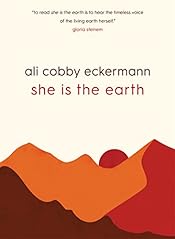
Ali Cobby Eckermann, She Is the Earth

Ali Cobby Eckermann, She Is the Earth: a verse novel (Magabala Books 2023)

Ali Cobby Eckermann is a Yankunytjatjara woman. Her mother and grandmother were taken from their families when very young as part of the government policy. She herself was also taken. Raised by a loving German-heritage family, she found her way back to her First Nations family as an adult, after years of searching.

I first met her poetry in Black Inc’s Best Australian Poems 2009, edited by the late Bob Adamson. In his introduction, Adamson said of her wonderful dramatic monologue ‘Intervention Pay Back’ that it made ‘a new shift in what a poem might say or be’. You can read it in the Cordite Review at this link. Two poems by her, also dramatic monologues, were included in the special Australian issue of the Chicago-based Poetry journal in May 2016. They can be read on the Poetry Foundation website: ‘Black Deaths in Custody’ here and ‘Thunder Raining Poison’ (on the effects of the Maralinga atomic tests on traditional APY lands ) here.

I haven’t read her memoir, Too Afraid to Cry (Ilura Press 2013), or her first verse novel, His Father’s Eyes (OUP 2011). But I can tell you that her second verse novel, Ruby Moonlight (Magabala Books 2012), which deals with the aftermath of massacre, is brilliant (my blog post here). Of her verse I have read the chapbook Kami (Vagabond Books 2010) and Inside My Mother (Giramondo 2015, my blog post here), which are both filled with the intensities of re-uniting with her Yankunytjatjara kin and culture, and the loss of her birth mother soon after finding her.

All of this work has enormous power, and has garnered many awards in Australia and elsewhere.

She Is the Earth, which arrived eight years after her previous book, is a different kind of writing.

It’s described on the title page as a verse novel. There are no characters apart from an unnamed narrator, and no clear events apart from her meandering through an Australian landscape. Any movement is internal. But the book is meant to be read as a single text rather than a collection of short, untitled poems.

At first, I thought it was an imagined story of pre-birth existence, in which the narrator moves towards being born, taking on substance in the world. But that didn’t seem to work and in the end, I gave up on trying to find a narrative, and just went with the flow.

The flow is far from terrible, and the language is never less than gripping, but I don’t know what to say about the book as a whole. I can refer you to better minds than mine.

Here is part of what the judges had to say when the book won the Indigenous Writers’ Prize at the 2024 NSW Premier’s Literary Awards (go to this link for their full comments):

Ali Cobby Eckermann writes in a poetics of self-emergence in which the spectral is made solid through an eloquent economy of language and lifeforms. Each word of this verse novel is deeply considered and rich with meaning, forming as a whole a narrative which is sometimes gentle and sometimes sharp, both beautiful and terrible, and always profound in its exploration of healing, hope and the earth. Each word reads as a gift to the reader.

I recommend Aidan Coleman’s review in The Conversation (at this link). He discusses the book as an example of minimalism, and says interesting things about its recurring images, and even about the developing narrative:

The speaker in these poems is both child and mother, pupil and teacher. References to children and motherhood abound. Initial images of disconnection, anxiety and trauma give way, in later sections, to wholeness and calm.

But the journey is not linear: hope is present from the earliest sections and trauma haunts the closing pages. Healing is presented as an ongoing process that is projected beyond the poem.

[Added later in response to Kim’s comment: Kim on reading Matters had a very different, and more attuned response than mine. You can read her blog post at this link.

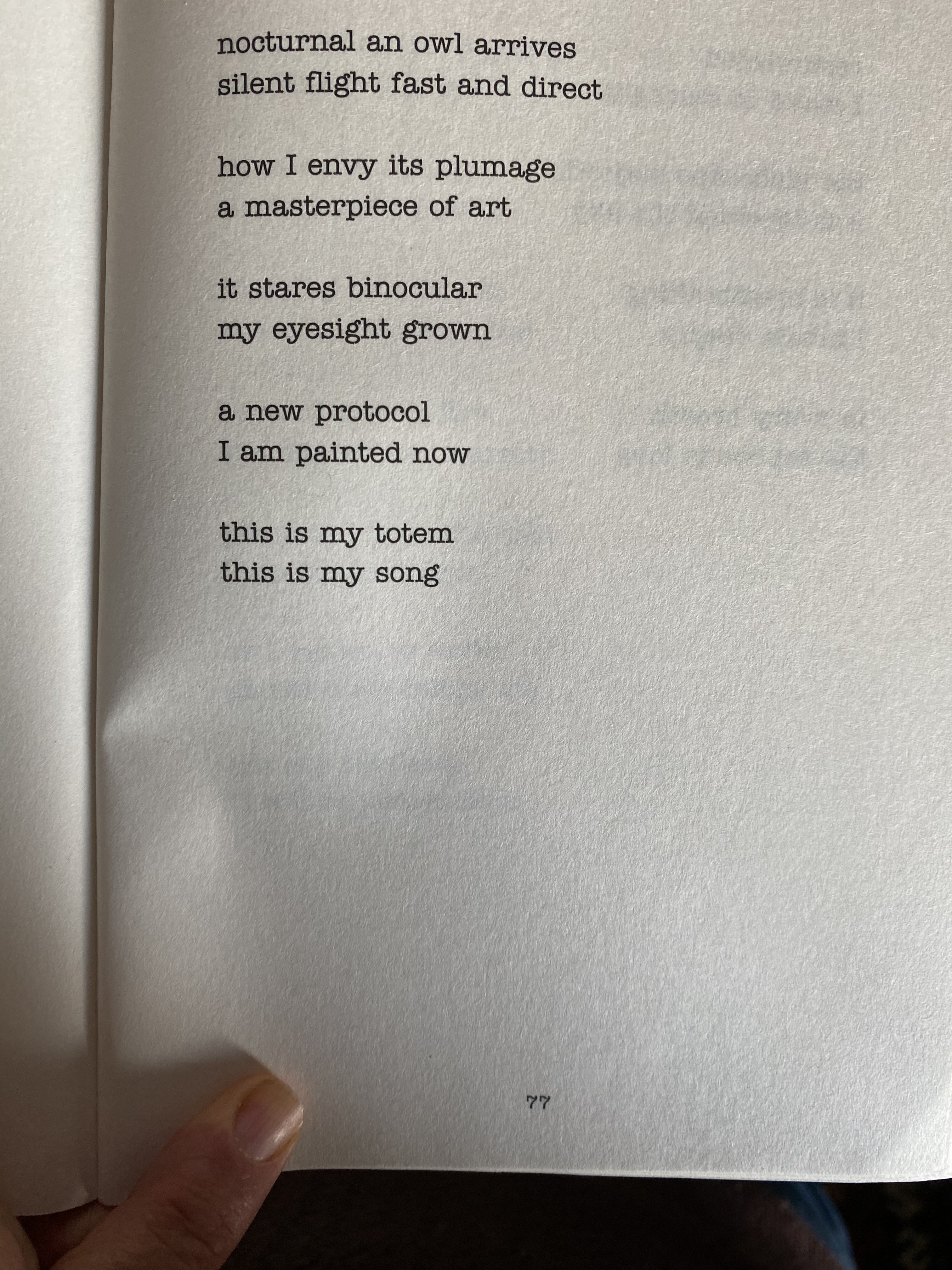
Page 77* occurs toward the end – there are 90 pages in the book. Piggybacking on Aidan Coleman’s reading, I can see it as a moment of consolidation, of identity firming up in the landscape:

The pleasure of these lines doesn’t depend on their function in the broader narrative. The owl arrives; the narrator admires it; their eyes meet, and there is a moment of identification with the bird; the ‘masterpiece of art’ of the bird’s plumage somehow transfers so that the narrator is painted. The final couplet pulls all that together.

In the wider scheme, that last couplet resolves more than the preceding eight lines. Up to now, the narrator has been full of yearning and unease. Here she seems to find peace:

this is my totem 
this is my song

‘Totem’ takes the hint of identification in the comparison of eyes a step further. There’s something about finding a place of belonging, of deep affinity, of being at home in the world. Once that’s found, there’s the possibility of singing, of having one’s own song.

The first word on the next page is ‘resurrected’, and a couple of pages further on my favourite lines in the book:

I am a solo candle
inside a chandelier

this is the wisdom
I need to succeed.

I still can’t say I understand what’s going on at any given moment in this book. But maybe that’s OK.


I wrote this blog post in Gadigal Wangal country, where it is my great joy to live. I acknowledge Elders past, present and emerging for their continuing custodianship of this land.


* My blogging practice, especially with books of poetry, is to focus on the page that coincides with my age, currently 77.

Romaine Moreton, Post Me to the Prime Minister, page 77

Romaine Moreton, Post Me to the Prime Minister (jukurrpa books, 2004)

Romaine Moreton is Goenpul Yagera of Minjerribah (aka Stradbroke Island) and Bundjulung of northern New South Wales. She is a poet, spoken word performer, philosopher and filmmaker. A brief showreel from the transmedia work One Billion Beats (2016), which she co-wrote and co-directed with Alanna Valentine, gives a powerful glimpse of her stage and screen presence, as well as her incisive writing (link here). Also on Vimeo is a profound lecture she gave about that work (link here), which discusses the colonial gaze and dissects colonial cinematic representations of Indigenous people.

Post Me to the Prime Minister, a collection of poems published in 2004, 12 years before that formidable work, also deals with issues faced by First Nations people. As I was reading it, I kept wishing I could see Romaine Moreton perform them. I’ve just been told that she opened for Sweet Honey in the Rock at the Sydney Opera House on one of their visits to Australia, which makes complete sense. The short film she made with Erica Glynn, A Walk with Words: The Poetry of Romaine Moreton (2024), ends with her performing the book’s final poem, ‘I will surprise you by my will’ (you can rent or purchase the whole film at this link). The poem is in the film’s trailer:

we are here and we are many,
and we shall surprise you by our will,
we wll rise from this place where you expect
to keep us down,
and we shall surprise you by our will.

There are so many riches in this collection, but I’ll stick to my arbitrary practice of singling out page 77. It’s the second page of a long poem, ‘Once upon a patriarchy’. Here’s a pic of pages 76 and 77:

The book’s title comes from the poem’s opening lines:

truth be known,
you would very much prefer it
if I were male

oh yes you would wrap me in glad tidings
and post me to the prime minister and say
how proud we are

___ our son

Things have moved a long way since the moment in the 1972 movie Ningla A-Na when Indigenous women argued vehemently that sexism was a white women’s issue, that Indigenous women needed to support Indigenous men and not challenge their sexist behaviour. More than 30 years later, this poem’s speaker doesn’t have to be defensive about the ‘colonial gaze’; it’s not written with a non-Indigenous reader foremost in mind. The strength of First Nations communities no longer depends on papering over the cracks of lateral oppression.

It’s not easy to tell who ‘you’ is in this poem. At first it may be the speaker’s parents, or perhaps a part of the First Nations population that has a parent-like relationship to her. But it shifts, and by the start of page 77 it is a First Nations man, ‘our son‘, who is being addressed. He’s a man who wishes ‘to walk as the colonial / hallowed one’. I don’t think it’s too fanciful to see him as similar to the would-be assimilationist Tomahawk in Alexis Wright’s great novel Praiseworthy (2023), or perhaps as a member of Chelsea Watego’s ’emerging tribe’ of self-appointed leaders (see the essay ‘ambiguously Indigenous’ in Another Day in the Colony, also published in 2023).

for while you vie 
for the passenger seat
the cattle truck is loaded for market
you have left me golden hallowed son

dragging
in
the never-never

This is beautifully complicated. There’s sibling rivalry – ‘golden hallowed son’ is a variant on ‘golden-haired boy’, the favoured sibling, favoured partly because he’s male. But it’s not just that. He has decided to be part of the action, be up front in the cattle truck, join in the extractive farming of the land. He’s not in the driver’s seat, not in charge of his own destiny, but has attached himself to the power. To reinforce the farm metaphor, the poem brings in the Australian colonial ‘classic’, Mrs Aeneas (Jeannie) Gunn’s We of the Never Never (1908). I haven’t read that book, but I’m pretty sure its account of Mangarayi and Yungman who were displaced by the Elsey cattle station, and worked on it, fits the tone of these lines – a place to be left dragging.

The next lines continue to reproach, and to remind the ‘son’ of the loyalty shown by Black women. (See the scene in Ningla A-Na mentioned above.)

and while I never ever forget you 
you gladly allow me – the black female
to rot

like the wife of Lot
though I have never
turned
I captured you to my breast 
always remembered
what is best

for my people
for my people

Whatever else is going on with the ‘son’ his maleness is key, as is the speaker’s femaleness. The reference to Lot’s wife (who looked back at the destruction of Sodom and Gomorrah in Genesis 19 and was turned into a pillar of salt as punishment) broadens the picture: women have always been punished. In this case, though, there’s not even the pretext of he having done something wrong.

If you weren’t noticing the music of the poem previously, you can’t help but hear it here. These lines, with the rhyming of ‘rot’ and ‘Lot’, introduce a new rhythm that builds, with the rhyme of ‘breast’ and rest’, to the lovely repetition of ‘for my people’. When performing some of her poems, Romaine Moreton moves from spoken word to song. These lines cry out for that treatment.

One of my favourite words in poetry is ‘but’. And here it comes:

but you
golden hallowed blackened son
more despised there is none

The ‘son’ is not just ‘golden hallowed’, but ‘golden hallowed blackened’: sitting in the passenger’s seat doesn’t make him immune from racism. ‘Blackened’ is an interesting word here: it signifies First Nations identity, but also colonial attitudes. He may think of himself as the golden son, but his Black identity will be imposed on him and he will be seen accordingly through a colonial lens: ‘none more despised’. That’s something that the man on the receiving end of racism would readily agree to. And then the killer lines:

except one

which is me

That’s not the end of the poem, it does move on interestingly, but it’s all I’m looking at here.

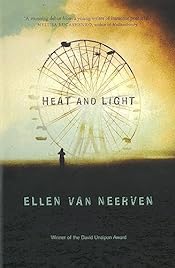
Ellen van Neerven’s Heat and Light, page 76

Ellen van Neerven, Heat and Light (UQP 2015)

This book of short stories gives no external indication that it’s a work of Blak queer fiction. The back cover and introductory pages describe the contents accurately enough – traditional story telling with ‘a unique contemporary twist’, characters ‘caught between a desire for freedom and a sense of belonging’ – but make no reference to First Nations, unless you count mention of the NSW Premier’s Literary Awards – Indigenous Writing, and the David Unaipon Award, and a discreet badge that reads ‘Black Australian Writing’. Queerness gets even less acknowledgement: apart from a quote from the ABR that the stories ‘evoke mystery and sensuality in equal measure’, there’s no mention of sexuality at all.

So let me tell you: this is a book in which there’s a lot of sex. In most of the stories, queerness and Blakness are taken for granted.

Having got that off my chest, I can tell you that this collection of stories by Mununjali Yugambeh writer Ellen van Neerven is terrific. It’s in three parts: ‘Heat’, five stories that amount to a compellingly compressed family saga; ‘Water’, a single longer story that is the big surprise of the collection; and ‘Light’, ten tales of complex intimate relationships. Most, perhaps all, the main characters are First Nations and most of the action takes place in either Queensland or Western Australia. (One character refers to my home as ‘slimehole Sydney’.)

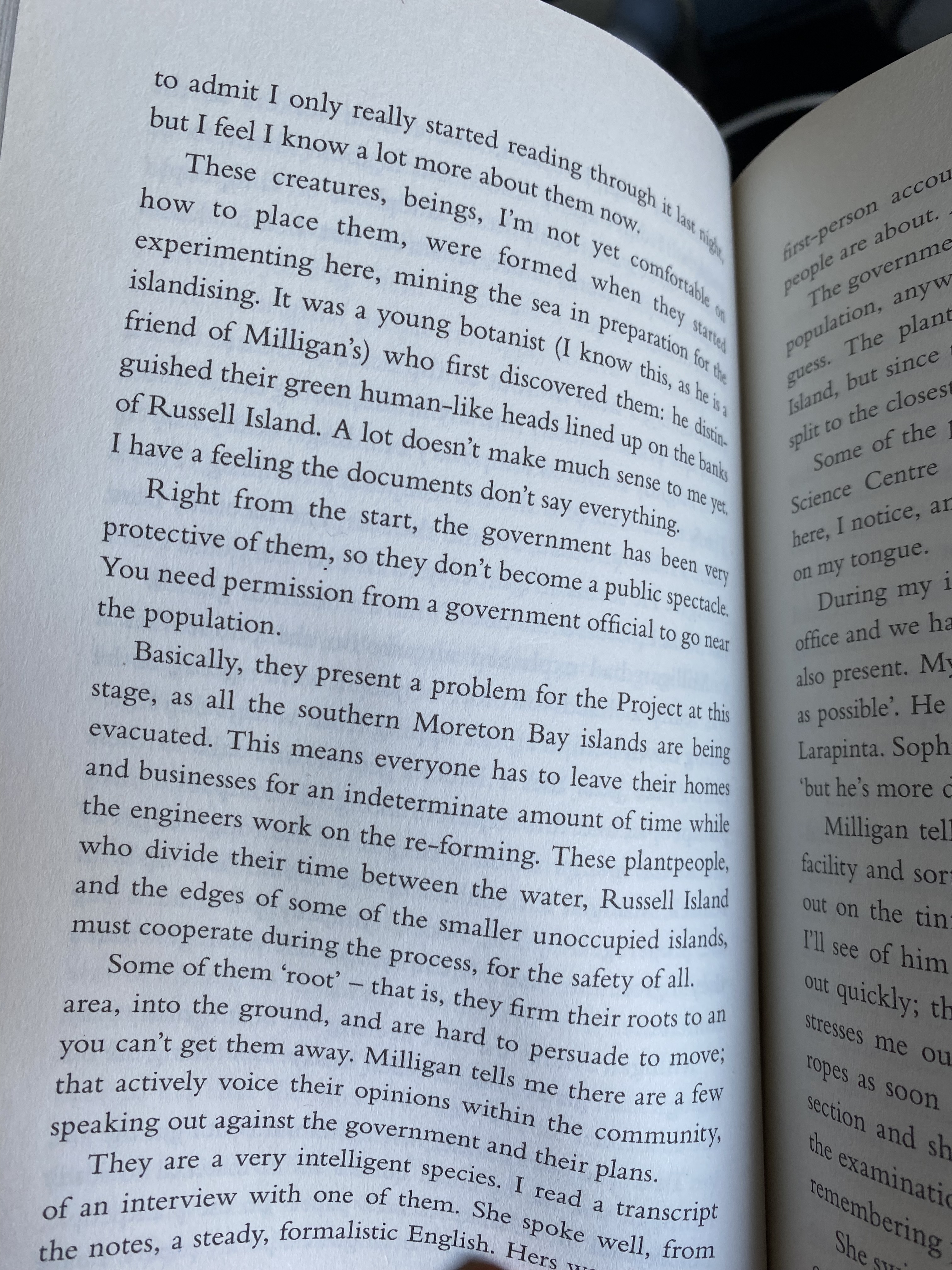
Page 76 (still my age) comes part way through ‘Water’. The story is set in a future Australia, where ‘Aboriginal spirituality’ is a dominant religion, and President Tanya Sparkle is implementing some dire policies regarding First Nations people while presenting a veneer of respect – creating chaos in the public transport system by changing all route destinations to not-always-accurate Indigenous names and, at the heart of this story, re-forming offshore islands to create a ‘super island’ where Aboriginal people can apply to live, a kind of apartheid dressed up as innovative native title.

The reader has barely settled in to this brave new Australia, when further weirdness is revealed. The narrator has been employed as ‘Cultural Liaison Officer’ for the first re-formation project, in the islands of Moreton Bay. Her job places the story well into the realm of the fantastic: she is to liaise with non-human beings who have recently appeared on the islands, the ‘plantpeople’. Page 76 introduces them:

These creatures, beings, I’m not yet comfortable on how to place them, were formed when they started experimenting here, mining the sea in preparation for the islandising. It was a young botanist … who first discovered them: he distinguished their green human-like heads lined up on the banks of Russell Island …

Right from the start, the government has been very protective of them, so they don’t become a public spectacle. You need permission from a government official to go near the population.

Basically, they present a problem for the Project at this stage, as all the southern Moreton Bay islands are being evacuated. This means everyone has to leave their homes and businesses for an indeterminate amount of time while the engineers work on the re-forming. These plantpeople, who divide their time between the water, Russell Island and the edges of some of the smaller unoccupied islands, must cooperate during the process, for the safety of all.

Some of them ‘root’ – that is, they firm their roots to an area, into the ground, and are hard to persuade to move; you can’t get them away. Milligan tells me there are a few that actively voice their opinions within the community, speaking out against the government and their plans.

They are a very intelligent species. I read a transcript of an interview with one of them. She spoke well, from the notes, a steady, formalistic English. Hers was the only first-person account and insight I have into what these people are about. A plant’s mind.

So in the middle of a collection of more or less social-realist stories about queer Blak life in Australia, there’s a weird – and very funny – piece of fantasy science fiction.

It’s a complex set-up. The Cultural Liaison Officer’s job is to persuade the plantpeople to cooperate, to allow themselves to be displaced. At first she is successful – she gets on well with these non-human creatures and comes to believe, as her white employers don’t, that they are fully sentient. As her sympathy for their plight deepens, she comes to suspect a darker purpose behind her ‘liaison’ work. She forms a forbidden bond with Larapinta, a female of the species, and that bond … well, I already said there’s a lot of sex in this book. But then there are further twists as the origins of the plantpeople are revealed and the parallels with the original dispossession of First Nations peoples on this continent come into sharp focus.

Ellen van Neerven is better known as a poet than as a fiction-writer. Their two books Comfort Food and Throat (links are to my blog posts) are wonderful. I found Heat and Light in a street library. I’m not parting with it.

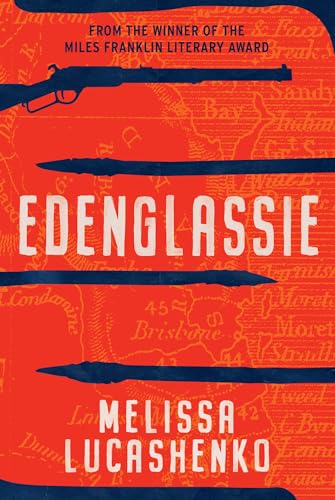
Melissa Lucashenko’s Edenglassie, page 76

Melissa Lucashenko, Edenglassie (University of Queensland Press 2023)

If you’ve been paying attention, you know that Edenglassie, a portmanteau of Edinburgh and Glasgow, was briefly the name for part of what is now Brisbane, and this book is a historical fiction set there in the 1850s, when First Nations people outnumbered settlers along the Brisbane River, a time of armed resistance to colonisation, and a time of genocidal atrocities including those committed by the notorious Native Police.

My blogging practice of focusing on page 76 (my age) comes up with a passage that at first seems a long way from that subject. For a start it’s set in Brisbane in 2024, the bicentenary of John Oxley’s sail up the Brisbane River, and begins with a genial picture of a weekend market that could be in any western city:

Winona weaved a path through the many bodies at the market. The young and the elderly; the able-bodied and the infirm; the slender hipsters; the defiantly fat, the tattooed, the pierced, the dull suburban middle-class and the fabulously wealthy. All these met in the mecca of the inner south, held there in the tight Kurilpa loop of the river which, having embraced you, was mighty slow to let you go.

The market is complex and inclusive, or at least tolerant. ‘Kurilpa’ tells you, if you have a web browser handy, that the city is Brisbane: the Kurilpa precinct borders on South Bank, and what was once the Tank Street Bridge is now the Kurilpa Bridge. The way the narrator uses the word suggests that it is more than a simple place-name, hinting at an Indigenous perspective: the river has agency, embracing and slow to let go.

As the paragraph continues, a character moves through the scene:

Winona wasn’t much interested in the crowd; she’d been caught instead by a steady pulse, thrumming from afar. She followed the sound of the didgeridoo dragging her to the far edge of the park, eager to see if she knew the fella playing, and discover what other Blak mob were around. Hopefully, Winona thought, she’d find a little oasis of Goories there to replenish her spirit, weakened from the hours she’d spent lately in the soul-sucking hospital.

‘Blak’ and ‘Goorie’ make it clear where we are, though readers from outside Australia may need their pocket browser here too. ‘Blak’ is a self-description currently used by many urban First Nations people as a way of ‘taking on the colonisers’ language and flipping it on its head’ (the quote is from an article on artist Destiny Deacon, at this link). Winona is a young, politically aware Indigenous woman. The narrative cleaves mostly to her point of view, but it’s interesting to notice that here they part ways briefly: the narrator sees and enjoys the crowd, and virtually tells us in so many words that the ancient Kurilpa embraces that various crowd as well; Winona is committed to an ‘us and them’ perspective. The non-Indigenous crowd is like a desert to her.

I won’t quote the rest of the page. Suffice to say that when she finds the didgeridoo player, he’s a white hippy who claims to be Indigenous – a coloniser, a thieving dagai, as Winona sees it – and her violent outrage lasts for several richly comic pages.

Once I got past my initial sense that this page wasn’t from the interesting, historical narrative, I realised that many of the novel’s key themes are suggested in it.

Winona is the central character in the near future part of the novel, where the main narrative thread is her budding romance with Doctor Johnny, a man of questionable indigeneity (though less questionable than the didge player’s). Her grandmother, whom she has been visiting in hospital, is leveraging her claim to be Queensland’s oldest Aboriginal to secure a major role in Brisbane’s bicentenary celebrations – and an apartment. So there’s romcom tension, trickster play, and a generally comic tone. At the same time, the narrative is firmly embedded in an Indigenous perspective – or perspectives, really, as Grannie Eddie and her ancient friends see things differently from the militant Winona, and Johnny, a child of the stolen generations, brings yet another point of view. Winona’s rage at the hippy didge player is a contrast to her almost flirtatious hostility to Johnny. Her indifference to the complex everyday crowd plays off against Granny Eddie’s generously inclusive concept of Aboriginal sovereignty.

It’s especially interesting to note the way these paragraphs are linked to the historical story. Words that in 2024 feel like cultural reclamation or perhaps remnants of lost language – dagai, Kurilpa – are part of ordinary speech in 1854. Just as the hippy claims an Indigenous identity, a white man back then – Tom Petrie, grandson of a pre-eminent settler in Brisbane, and in the process of taking on a sheep property in his own right – claims the status of an initiated man: it’s not an exact parallel, as Tom’s claim, like that of the real-life Tom Petrie, has the approval of elders. But as he invites his ‘brothers’ to work for him a tremendous unease develops: certainly I spent a good deal of the book dreading that he would betray his close friends, his initiated ‘brothers’. It would be spoiling to tell you if he does.

Like the 21st century story, the historical narrative centres on a romance between two First Nations people with very different relationships to traditional culture. Mulanyin is a traditionally raised young man who is in Kurilpa as a guest of an established family. In the early parts of the book, he goes naked around town – he only starts wearing trousers to protect his fertility when he starts riding horses. Nita has been taken as a servant to the prestigious Petrie family, who are relatively decent in their relationships to the local people. Nita is a Christian, always modestly dressed, and attuned to her employers’ desires and expectations.

The river is a powerful presence in both stories. The apparent throwaway line about how ‘having embraced you, [it] was mighty slow to let you go’ rings a lot of bells. It’s crossed by bridges and features the bicentennial celebrations in 2025; it’s a source of food and site of dramatic events in 1854. It remains the same river.

As I write this, I’ve read about half of David Marr’s Killing for Country, an unsparing account of frontier violence in eastern Australia, focusing in part on the Native Police and quoting extensively from breathtakingly brutal contemporary settler writing. The Native Police are a threatening presence in Edenglassie, and there’s devastating genocidal violence, but it happens offstage. Even a scene where Mulanyin intervenes in the humiliation of another man is reported by a character rather than told to us directly by the narrator. Where David Marr conveys the horror of our history, Melissa Lucashenko does the herculean task of imagining what it was to live with a strong connection to country, tradition and community while the horrors were multiplying all around, and up close.

We discussed this book along with Debra Dank’s We Come With This Place at my Other Book Club – the one that used to be just for swapping books with minimal discussion. Not everyone was as moved by it as I was. Unfortunately, or fortunately, I can’t tell you how the unimpressed readers saw it because I’m so dazzled by its achievements.

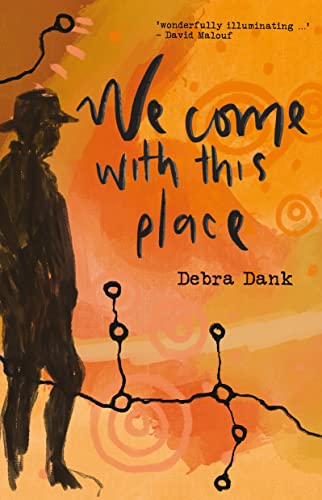
Debra Dank’s We Come With This Place at the book group

Debra Dank, We Come with This Place (Echo Publishing 2022)

Before the meeting: We Come With This Place won an amazing four prizes at the NSW Premier’s Literary Awards this year, including Book of the Year: you can read the judges’ comments here and here. They include this:

This sensational memoir is an unheralded reflection on what it is to be First Nations in Australia, and on the very deepest meanings of family and belonging.

In one of her modest acceptance speeches at the awards ceremony, Debra Dank mentioned that the book started out as part of her PhD study. In the Preface, she elaborates:

I wanted to show how story works in my community and how it has contributed to our living with country for so long. It seemed to me imperative to talk about those voices, both human and non-human, who guided Gudanji for centuries before anyone else stepped onto this land.

(page viii)

The weeks after the referendum on the Voice failed seemed a perfect time to read this book. The Uluṟu Statement from the Heart’s call for Voice, Truth, Treaty has been rejected at the political level: it’s a relief to listen to the voices of First Nations writers like Debra Dank, and participate in this form of truth-telling.

It’s a terrific book: an intimate portrait of family life, placed in the context of ancestral stories, a deep sense of connection to Country, and resilience in the face of the horrors of colonialism. The family lived ‘under the Act’ in Queensland, and managed ingeniously to hide little Debra when the Welfare came looking for light-skinned children; her father worked on a number of rural properties, where sometimes he was treated with great respect, other times not so much. She helps her father work on a windmill. There is a tactfully written scene where she stands up against family violence, and magical moments with her grandfather, and with her children and grandchildren. I love the pages where Dank’s white surfie husband (he’s saltwater, she’s dust) struggles to learn how to read the bush, to see the things that are glaringly obvious to his Aboriginal children.

Dank identifies as belonging to dry country, and she makes brilliant use of images of dust. On the very first page, ‘vague images try to speak to [her] through dust motes rising from the thick pale pages’ of a 400-year-old edition of a book by Aristotle, and a few pages later, she tells us that the stories of her people – the Gudanji kujiga – ‘grow from the fine dirt that plays around your feet and makes the dust that rolls over the the vast Gudanji and Wakaja country’. As a child she is fascinated by the way a drop of blood from a foot caught on barbed wire blends into the soil. Dust rises from the heels of a family group in the not so distant past running in terror from armed men on horseback. It memorably obliterates the Country-scarring road in the passage I versified the other day (here).

I don’t want to give the impression that the book is written in high metaphorical mode. Here’s a little passage from page 76 (for those who came in late, I like to have a closer look at that page because it’s my age). The family are driving from one place of employment to another, and appropriately enough the page starts with dust:

The wind brought dust in with it, but it was the Dry and the road wasn’t too bad. The caravan happily kicked up dust into frothing red feathers that followed us for a bit, then settled back onto the road. Long stalks of tall yellow grass formed a guard of honour as we traveled across the plains. We played games of spot the turkey and several times tried desperately to convince Dad to stop for the goannas that would run across the road and then lie still and flat in the shelter of the yellow grass and amber shadows, but we needed to get there so he didn’t stop. Besides, Mum said she refused to turn up at the new station with a dead gonna in the car.

You see what I mean: if you’re not alert to the dust motif, those frothing red feathers that follow and settle are a nice piece of decoration; if you’ve picked up on it, they’re a reassuring presence of Country. And this tiny moment embodies the way the family manages to live successfully in two worlds: goannas would be great, but not when you’re about to meet a new white boss.

After the meeting: It was our end-of-year meeting, so as well as discussing the book, we exchanged gifts – of books chosen from our bookshelves. I gave Diana Athill’s wonderful memoir, Somewhere Towards the End, and scored J M Coetzee’s 1986 novel, Foe. We also, in a three-year tradition, each brought a poem to read to the group: poems represented included Seamus Heaney, Oodgeroo Noonuccal writing as Kath Walker, Adrian Wiggins, J Drew Lanham, Rosda Hayes, and Sean Hughes.

There were seven of us. Two hadn’t read the book – it’s a busy time of year. One was ‘at about 55 percent’ on his device. One said he had read seven other books since so had difficulty recalling it with any clarity. We were in a pub rather than our usual domestic setting. None of that stopped the conversation from delving into the book, ranging widely and then finding its way back to the page. Those of us who had read it celebrated the way it presented the history from inside an First Nations point of view: even Kim Scott’s brilliant novel That Deadman Dance didn’t get to the inside story as completely as this; and it has a calm assurance that, say, Julie Janson’s Benevolence lacks, for all its other strengths (the second of these comparison came up in conversation in the car ride home).

One Covid-ed absentee emailed in some cogent comments – noting that there seemed to be a number of voices, and that the passages dealing with the author’s personal experience worked better than the narration of ancient stories. He loved, and others agreed, the bits of bushcraft such as reading shadows and catching fish with your hands in the desert, the cultural landscape connections.

I went on a bit about dust.

There was a lot of reflection on personal experiences the book reminded people of. There was also, as usual, much excellent conversation about unrelated matters, including Anna Funder’s Wifedom; the recent blockade in Newcastle and a similar one nearly 20 years ago which provoked a very different response from the police and the press; philosophy and poetry groups in a small town; behind the scenes stories from a fascinating film project; travellers’ tales.

And that’s a wrap for the Book Group for 2023.

Alexis Wright’s Praiseworthy

This post continues my experiment of taking page 76 – because it happens to be my age – and writing whatever comes to mind. For a book as vast and challenging as Praiseworthy the approach would be inadequate for a thorough review of the book but it’s appropriate for a modest blog post.

Alexis Wright, Praiseworthy (Giramondo 2023)

Page 76 of Praiseworthy is almost exactly a tenth of the way into the book. If this was a movie, it would be the moment for the first turning point, the ‘opportunity’. And maybe it is.

Tommyhawk has just been introduced. He is a pudgy eight year old, the youngest member of the family at the centre of the story. His father, Cause Man Steel (also known as Planet and Widespread), has a vision of ensuring that Aboriginal communities and culture thrive in the climate catastrophe by creating a global transportation conglomerate using feral donkeys (the book gets pretty surreal). His mother, Dance (called ‘moth-er’ for the first time on this page), has a mystical connection with moths and butterflies, and is often surrounded by millions of them. His older brother, Aboriginal Sovereignty, is to take on a weird allegorical significance as the tale unfolds.

Depending on your point of view, Tommyhawk is the book’s villain or its tragic hero. The real villains are the colonisers, who are described on the very first page as ‘land-thief criminals’ and referred to frequently as ‘the national Australian government for Aboriginal people’, but who are almost completely offstage. (All but two ‘onstage’ characters are Aboriginal.) Assimilation is the great moral evil in this book. Other characters, including the albino Major Mayor of the community of Praiseworthy, have assimilationist goals, but for Tommyhawk, as we begin to understand on page 76, it’s personal.

Tommyhawk has done well at school and has been given a bunch of electronic devices, which he uses to listen to mainstream media, and becomes entranced by the version of Aboriginal people he hears, especially a much repeated assertion that Aboriginal men are paedophiles.

On this page:

Tommyhawk became convinced that these good white righteous people were speaking to him in particular, and not to other Aboriginal children, because he was special, and this made him most at risk. He believed they were speaking directly to him, and what they were saying ran through his mind in sleepless nights this way and that while he tossed and turned in the heat until he became wholeheartedly convinced that he had not been placed on this Earth to be stuck with dangerous people. Even!

Even like his parents. They were a danger to him. That Cause Man Steel person could kill him. And Dance, the moth-er, she only noticed him, took pity when she had mistaken him for a butterfly, or as a cocooned baby being cared for by butterflies flying among the reeds, pandanus fronds, mangrove leaves, drifting in from the sea, like the story of Moses. Hatred was not a word strong enough for how he felt about his parents.

The radio voices are Tommyhawk’s equivalent of Macbeth’s witches. Where Macbeth is tempted to kill the king, Tommyhawk is called away from his Aboriginal family and culture. He decides, soon after this page, that he wants to be adopted by the Minister for Aboriginal Affairs (whom he sees as an apparition in the sky) and be taken to live in the palace of Parliament House in Canberra. It’s absurd, comic and tragic all at once. I won’t spoil it by saying if he succeeds.

I can imagine a Reader’s Digest Condensed version of Praiseworthy that was about a third as long. Such a version would capture the whole plot and and lose almost everything that makes the book interesting. The same can be said of this page. If you read it simply for what moves the story forward, what follows the paragraphs I just quoted adds almost nothing.

But you don’t read this book just for the story. Alexis Wright appeared at the recent Sydney Writers’ Festival in conversation with Ivor Indyk, her publisher. For me, the most revelatory moment of the session was when she talked about the relationship between her writing and music. While writing, she listens mostly to classical Indian music and yidaki. Both those musics have a kind of pulse to them, and she tries to create something similar in her prose. It’s the pulse of country, she said: ‘We say that we’re of one heartbeat with the country.’

The second half of page 76 is far from the most ecstatic passage in Praiseworthy. It doesn’t defy punctuation conventions or twist language in a way that so discombobulates people like me who can’t lay their internal proofreader aside (see my blog posts on Carpentaria and The Swan Book), but it’s a good example of the way Alexis Wright’s prose circles around itself in long, looping sentences, repeating motifs (‘the Australian government for Aboriginal people’), using words that aren’t technically accurate but create the right effect (‘smithereens’), tossing in an awkward cliché (‘plain as day’), making an acute observation (‘passionately, or indifferently’), all in a seemingly unstoppable flow. It’s prose that needs to be heard.

Try reading this aloud, exclamations and all. What I hope you’ll hear is the rhythm of the prose, its weirdness, and – now that Wright has given me the word – its pulse.

So! Very well then! Tommyhawk’s endless deciphering of the barrage of voices on the radio went on through the night and continued as relentlessly as the haze-loving mosquitoes buzzing around him, but neither the activity of squashing blood-bloated mosquitoes to smithereens, or growing his monstrous brain from listening to what was being said on the radio passionately, or indifferently, about the Aboriginal world, was without success. All was gained, and while Tommyhawk had initially wondered why these people were talking the way they did about Aboriginal people like himself, he finally broke the code. He knew the plan as plain as day, that his national Australian government for Aboriginal people was actually speaking directly to him through the voices of random bigots on talkback radio, or in the news, or whatever running commentary he was listening to where anyone was having a good go, giving it all about what they thought of Aboriginal people. This was how he always found the message that the government was trying to get to him. Mostly it was about how the government was trying to tell him, You must escape your black parents

Added on 16 June: Mykaela Saunders has a brilliant long review of Praiseworthy, ‘Think of the Children!’, in the Sydney Review of Books, which you can read at this link.

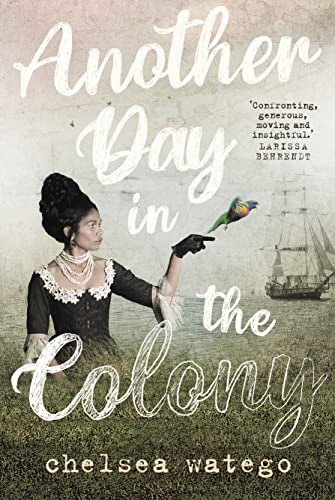
Another Day in the Colony with Chelsea Watego

Chelsea Watego, Another Day in the Colony (University of Queensland Press 2021)

Not every book is as explicit as this one about its intended readership. The Introduction gives fair notice:

This is not a book for colonisers, or those aspiring to share the same status as them. This is a book that is written specifically for Blackfullas, and when I say Blackfullas I mean of the capital B kind.
When I speak of the uppercase Blacks, I speak of those who simultaneously recognise and refuse the racialised location we’ve been prescribed, as well as those who have been haunted by it.

(Page 9)

‘Colonisers’ is the term Chelsea Watego prefers over, say, ‘non-Indigenous people’ or ‘settlers’ because, she argues, those terms gloss over the continuing violence of colonisation. As a reader of Anglo-Celtic heritage, I’m glad to report that the Introduction continues:

Of course, the colonisers may find something of use here.

In 2020, the first year of Covid-19 and the year of a re-energised global Black Lives Matter movement, as well as the 250th anniversary of Cook’s arrival in Australia, Chelsea Watego took leave from work, including her Twitter account and the Wild Black Women radio show. In the Introduction, she tells us that her ‘body was tired and, in this moment, appeared to insist that [she] tell a story’. The stories that she told make up this book:

  1. ‘don’t feed the natives’ – among other things, a personal account of growing up and taking on a career in Indigenous health, which Watego has come to understands as aiming ‘to strategise a Black living which presumes a Black future, of a forevermore kind … that is set on our terms, on our land’
  2. ‘animals, cannibals and criminals’ – about which more later
  3. ‘the unpublishable story’ – an article, discussed in the previous essay, that was rejected by the journal that had commissioned it
  4. ‘on racial violence, victims and victors’ – an argument for the importance of naming racism, accepting that it is embedded in the institutions of the colony, rather than talking of culture and diversity, and relying on the courts to put things right
  5. ‘ambiguously Indigenous’ – a critique of the ’emerging tribe’ of people who discover Aboriginal heritage and identity after growing up white, and assume positions of authority in Indigenous affairs. She describes this grouping as a modern equivalent of the nineteenth century Native Police
  6. ‘fuck hope’ – an argument against a version of hope that minimises current mistreatment and suffering by focusing on an imagined time when things will be better
  7. ‘a final word … on joy’ – which could be an extended paraphrase of Alice Walker’s revelation at the end of Possessing the Secret of Joy, ‘The secret of joy is resistance.’

That list can only give a faint idea of the confronting riches of the book. I’d be lying if I said I didn’t get defensive at times, identifying with the writers, editors and reviewers Watego finds wanting, or that as a man I didn’t feel a guilty relief when she focused on white women as key culprits, or that at times I didn’t respond with something like, ‘Steady on now, that’s a bit intemperate.’ Et cetera. I’m pretty sure any non-Indigenous/coloniser reader will have similar responses, which might be some consolation to the people whose names are named. We’re in this together.

The second essay, ”animals, cannibals and criminals’, lays out the way Australian fictional and non-fictional (‘faction’) writing has depicted Aboriginal people as either belonging in the past with quaint customs and stories, or as problems to be solved by white managerialism. These representations aren’t safely in the past.

The essay discusses Sarah Maddison’s book The Colonial Fantasy (‘which it could be argued is one of the more sympathetic works to the plight of Indigenous people in our time’), and Randolph Stow’s To the Islands (or at least Stow’s preface to the 2002 revised edition, which deterred her from reading much further).

The Black story must be a site for which the coloniser can express sympathy, and not in a solidarity kind of way, but a condescending sorrow for our supposed plight. Our stories should not be repositories for which faux coloniser sympathy may find a home, yet too often they are.

(Page 67)

The essay moves on to stories of how Watego’s own writing has run foul of gatekeepers. She entered academia with the aim of correcting the prevailing account of First Nations people by presenting a solid evidence base. She found it wasn’t a matter of evidence, but of a deeply embedded attitude in the minds of the colonisers.

Editors have asked her to include on-the-other-hand paragraphs that undercut the thrust of her writing; have quibbled with her use of language like ‘white’ to describe a racial category; articles have either gone unpublished or are still awaiting publication years after being accepted.

The chapter ends with the story of an article she wrote for a special edition of the Australian Feminist Law Journal, but which didn’t make it into the journal. As with all such stories, the reader is left wondering what version of events the unnamed meddlers and censors would tell. We don’t get that, but we get something even better: the following chapter, ‘the unpublishable story’, gives us the article to read and judge for ourselves.

There can be little doubt that the article would make painful reading for Cathy McLennan, whose memoir Saltwater (link is to my blogpost) is unsparingly criticised, but it’s not the first time the book has been given the treatment (see ‘Crocodile Tears‘ by Russell Marks in Overland Summer 2019), and it’s hard not to see the force of Watego’s argument that the editors who spiked the story were mistaken to override the judgment of the two First Nations editors of the special issue as well as two anonymous peer-reviewers.

Back to the story of the article being spiked:

After much back and forth, the managing editor and editor-in-chief advised that this work was not publishable in any form because it apparently posed a threat of defamation because the white woman author of the book I was critiquing wouldn’t like my review … Her real concern was that there was an imputation that the author of the book was racist.

(Page 76)

This sounds like arse-covering to me, and I expect academics of all kinds run into it all the time. The book being criticised was, after all, written by a lawyer.

Watego’s next sentence is the killer:

Now I didn’t say the author was racist, but I did have about 180 footnotes, three-quarters of which were direct quotes from the text that cited animalistic references to the Aboriginal characters.

On first reading, I took this to be a bit of smart-aleckery: ‘I didn’t say she was a racist, I just gave 180 examples of her racism.’ But it’s more interesting than that. However emphatic she is about the harmful nature the book, she really isn’t imputing malice to the writer. Her argument is that we colonisers are so imbued with the notion of our own superiority – so enmeshed in a racist and colonising system of thought and practice – that no matter how good our intentions or sincere our anti-racist attitudes, we fuck up.

And this is at the heart of the storytelling war, and the dangers confronting the sovereign storyteller in the colony. We simply are not permitted to speak freely and truthfully about the violence we are subject to.

The book as a whole is a living contradiction of that last sentence. Thank you Chelsea Watego and University of Queensland Press for this abrasive, uncompromising, sometimes hilarious piece of free and truthful telling.

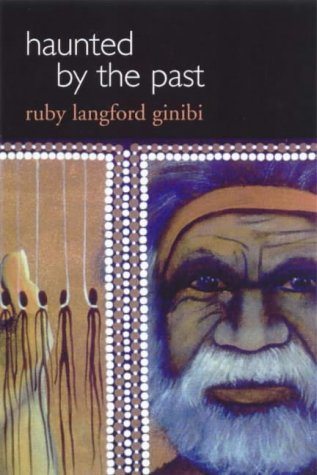
Ruby Langford Ginibi’s Haunted by the Past

Ruby Langford Ginibi, Haunted by the Past (Allen & Unwin 1999)

Ruby Langford Ginibi (1934–2011) was a Bundjalung woman who among many other things wrote five autobiographical books. The first, which lifted its title from a song made popular by Kenny Rogers, became a bestseller when it appeared in 1988. Tara June Winch has written about it:

What Langford Ginibi produced in penning Don’t Take Your Love to Town was a broad-scoping segment missing from the body of Aboriginal literature, published in 1988 amid the fanfare and patriotic celebrations of Australia’s bicentenary. Decades later it retains its relevance and importance, still sounding a clarion call to the future for understanding and a breaking of the cycle of social and racial disadvantage for Aboriginal Australians, at long last.

Tara June Winch, ‘On “Don’t Take Your Love to Town” by Ruby Langford Ginibi‘, Griffith Review 80, May 2023.

Haunted by the Past, published a decade and three books after Don’t Take Your Love to Town, continues and amplifies that call to the future. In a writing style that feels unstudied and conversational, it tells the story of Nobby, one of Langford Ginibi’s nine children. This is a mother’s story of seeing her son sent to boys’ homes as a child and then incarcerated more than once as an adult for something he didn’t do; the terror that he would die in custody as so many Indigenous Australians have done; the joy, hers and his, of taking him to his traditional country on his release after eight years in prison; his development as a painter (his artwork is on the cover of this first edition); and in the final pages, his marriage with the prospect of a stable future. Even if you suspect that motherly bias influences the account of Nobby’s ‘crimes’ and punishment, the picture of legal system’s treatment of young Aboriginal men is damning.

It’s a deceptively simple book, just seeming to tell it as it was, one thing after another. There are straightforward quotes from court documents, including psychiatric assessments of Nobby’s suicidal state of mind at one point. Nobby gets to speak for himself in sections written for the book at his mother’s behest. There are detailed accounts of organising prison visits, and hiring cars, and visiting relatives. There are Mum jokes, as when the band strikes up ‘Ruby, Don’t Take Your Love to Town’ at a wedding, and her family start singing it to her:

I called out to them, ‘If I didn’t take my love to town, you mob wouldn’t be here!’

(Page 178)

But the cumulative effect is far from simple. From the opening words – ‘Where does Nobby’s story begin? With his birth in 1955? Or further back …’ – Langford Ginibi is clear that she is telling her son’s story in the context of the long story of colonisation. Without using terms like intergenerational trauma, her story-telling challenges versions of Aboriginal experiences that ignore this country’s continuing history of racist and genocidal policies. She shows us the human, everyday faces of people who might other tend to be reduced to statistics in the mainstream media. Everything seems intensely ordinary, but long history is there at every moment. It’s a history of resilience and achievement as well as oppression.We are told a number of times about the Aboriginal cricketer who bowled Don Bradman for a duck. You get a strong sense of the warmth of family life – the extended family of people who haven’t seen each other for years as well as the immediate family. The opening pages that tell of her family’s background and, especially, her time in a bush camp with an uncle, are filled with rich experience of community, culture and the natural world.

The darker context becomes explicit in Chapter 6. Chapter 5 has given us pictures of Nobby’s despairing state when he was sentenced to jail again, including one suicide attempt. Chapter 6 begins:

While Nobby was doing this long stretch in jail, the Royal Commission into Black Deaths in Custody was going on. Even before the official inquiry I was always worried about Nobby when he was in jail. I received a letter from him that stated: ‘Mum, if I ever go back to jail again, they’ll bring me out feet first because bein locked up like an animal and bein told by screws, do this do that, it’s nearly drivin me mad! I can’t take it anymore.’ The pressure was so bad. And Nobby was very depressed from time to time. It really got me down. I was always worried that he would have survived the police, the wardens and the other inmates, but then take his own life.

(Page 75)

Characteristically, Langford Ginibi doesn’t linger over her fears. Nor does she milk the situation for suspense:

But he has survived.

And then, the perspective widens:

Not everyone has been so lucky.

The next 15 pages tell the stories of eight Aboriginal men who died in custody or, in one case, were killed by police during a raid on the man’s home. This book is the story of a survivor, but we can never forget the ones who didn’t survive. On the very last page, when Nobby’s story seems to have reached a happy landing, the ghosts of those men appear:

They were callin out to Nobby, sayin, ‘On ya brother. You survived the brutal jails. We didn’t make it. Long life and much happiness to you and your lady. Go in peace, and live for all of us!’

(Page 179)

I picked this book down from my TBR shelf after reading Gregory Day’s Words Are Eagles. The opening essay of that book invokes an Indigenous perspective that written words are dangerous because they can be divorced from particular places and from direct interpersonal communication. It does this without quoting from Indigenous people. In the spirit of counterpoint as recommended by Edward Said in Culture and Imperialism, I needed to read something by a First Nations writer, and this book was right there. It doesn’t address Day’s point directly, but it does achieve the thing he advocates. Reading it feels like sitting down for a long chat, a yarn, with a remarkably assured, relaxed matriarch. When you put it down, you see the world differently.

Ruby Langford Ginibi received the Special Award at the NSW Premier’s Literary Awards in 2005, where I had the good fortune to be sitting on the table with her at the awards ceremony. Her other books are:

  • Ruby, Don’t Take Your Love to Town (Penguin Australia 1988)
  • Real Deadly (Angus & Robertson 1992)
  • My Bundjalung People (UQP 1994)
  • All My Mob (UQP 2007)

Archie Roach’s Tell Me Why

Archie Roach, Tell Me Why: The story of my life and my music (Simon & Schuster 2019)

This book is exactly what you’d expect of a memoir by Archie Roach, whose song ‘Took the Children Away’ became a kind of anthem for the Stolen Generations. It’s a warm, generous account of a life well lived, as a member of the Stolen Generations who went in search of his lost family, and having found them struggled with addiction to alcohol, won the love of a remarkable woman, and became an internationally celebrated singer-songwriter and respected Aboriginal elder and activist.

The telling doesn’t minimise the systemic racism he has faced or the destruction it has brought on him and the people around him, culminating in the deaths of many loved ones, especially the great love of his life, Ruby Hunter. The book’s title points to bewildered rage at the cruelty of colonialism and racism.

But the book focuses on the goodness, kindness and resilience of Aboriginal people, as well as the kindness that Archie Roach has encountered from others all through his life – from his much-loved foster parents and an occasional exceptional police officer, all the way through to singer-songwriter Paul Kelly and British actor Pete Postlethwaite.

There’s not a lot of laugh-out-loud humour, but the book is far from unrelentingly grim. To give you a small taste, here’s a passage that comes when Archie has gone to Melbourne to spend time with his family, leaving Ruby pregnant in Adelaide, and has stayed longer than he intended, hitting the grog. Horse is his oldest brother:

‘Tell me about this little woman of yours,’ Horse said, surprising me.
I told him about her – she wasn’t tall but had flowing dark hair, and big cheeks that matched the deepest brown eyes you’d ever seen. I told Horse she was the most beautiful girl.
‘Is that her behind you?’ he asked.
I turned. It was. She had her hands on her hips. It wasn’t good. If looks could kill, I’d be a dead man.

{Page 145)

Each chapter of the book begins with the lyrics of a song, and we are told the origin stories of some songs. This is wonderful for someone like me who has a limited knowledge of Archie Roach’s music, and I was glad to discover that there’s a companion album with the same title, with eighteen songs from the whole range of his extraordinary career. It’s now on my phone.