Tag Archives: Helen Garner

Helen Garner’s Season at the Book Group

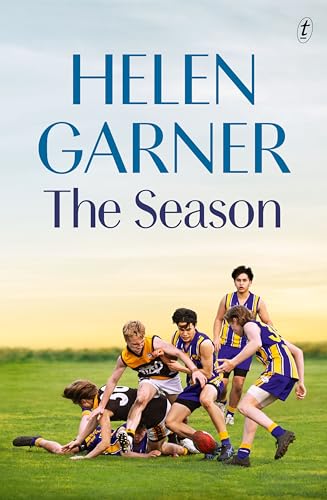
Helen Garner, The Season (Text Publishing 2024)

Before the Book Group Meeting:

While she was writing The Season, Helen Garner described it to friends as ‘a nana’s book about footy’. Her youngest grandson Amby was fifteen, on the cusp of manhood. Being witness to his football games and training sessions was, among other things, a way of enriching and maybe holding onto that precious relationship.

I came to the book with a lot of baggage. For a start I didn’t have a benign experience of fifteen-year-old boys when I was one. My boarding school’s focus on football made skinny, physically inept, nerdy Jonathan something of an outcast, and fifteen year old boys, however sweet they may look to a nana’s eyes, can be brutal to the designated outcasts. (Full disclosure: because the school also prized academic achievement, which I was quite good at, I wasn’t the worst abused.)

What’s more, Aussie Rules is pretty much a closed book to me. I don’t know a mark from a behind, let alone a torp, and nana Helen, who says she knows very little about the sport, is sufficiently steeped in AFL culture to feel no need to explain such terms. My whole family watched my big brother play League on Saturdays, my father yelling at the ref in cheerfully confected outrage. And the footballs I myself played at school, badly, were League, Union and soccer. We referred to AFL, then Victorian Rules, as aerial pingpong.

So, even though I’m a member of the vast Helen Garner fan club, I would happily have skipped The Season.

But what the Book Group wants …

I can’t say it completely won me over, but it’s beautifully written. While Garner’s intense desire to know her grandson – ‘what’s in his head, what drives him’ – is the heart of the book, it broadens out to look at aspects of masculinity, and aspects of being an old woman, and aspects of the role of football in Melbourne social life, in an engagingly impressionistic way. I doubt if any other book uses words like ‘sweet’, ‘delicate’, ‘graceful’ or ‘beautiful’ about men young and old with as much frequency. In the opening pages, she writes about becoming an engaged grandmother to two boys:

Never having raised a son, I now began to learn about boys and men from a fresh angle, to see their delicacy, their fragility, what they’re obliged to do to themselves in order to live in this world, the codes of behaviour they’ve had to develop in order to discipline and sublimate their drive to violence

In a recent Big Ideas podcast, Tim Etchells from the British theatre group Forced Entertainment talked about learning by finding rather than by searching. He could have had this book in mind. Garner depicts herself as going to training sessions and games and seeing what happens – no agenda, no conclusions, just acute, self-aware, finely articulated observation. Maybe this is why she kept her first husband’s family name: she garners.
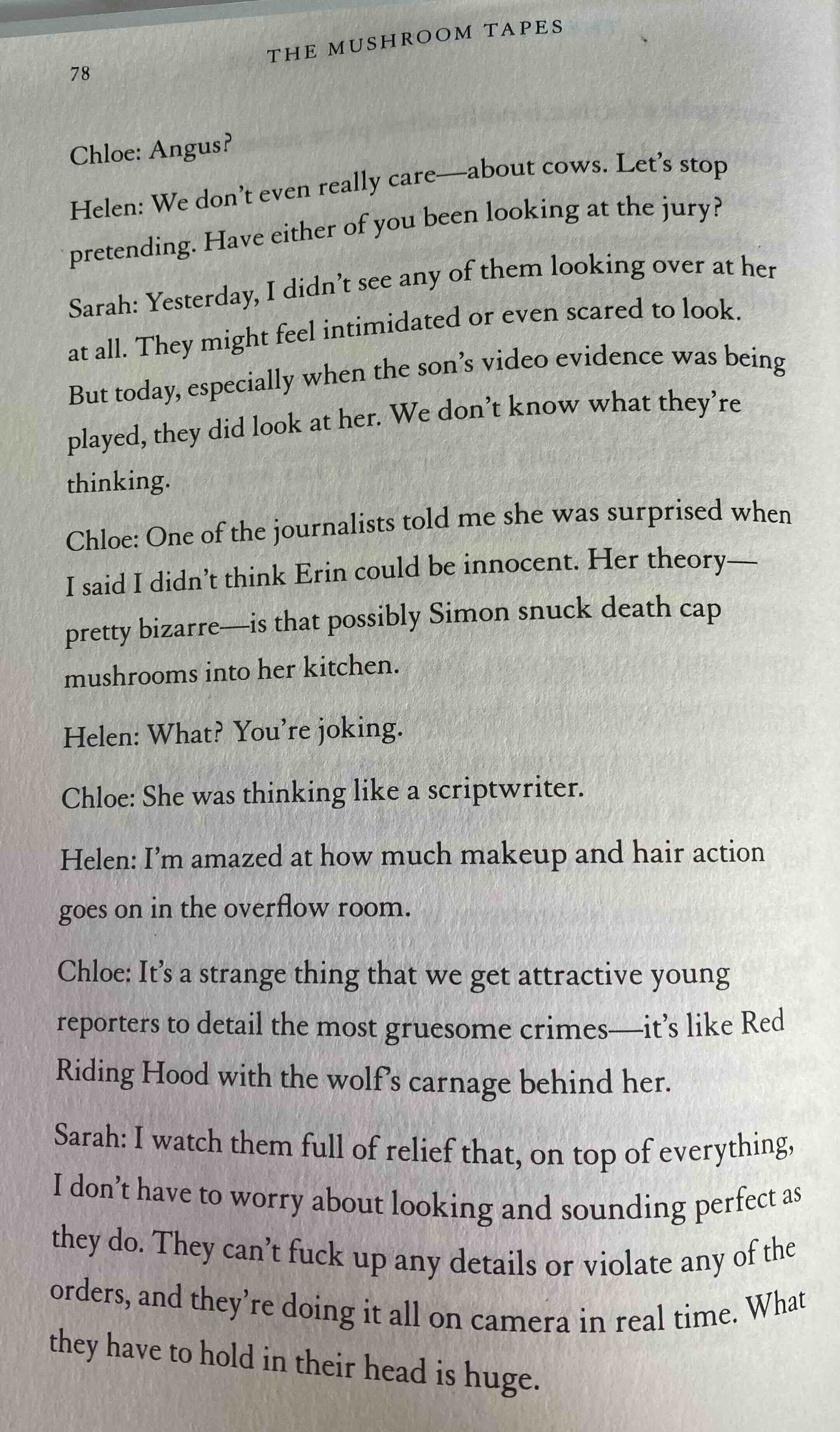
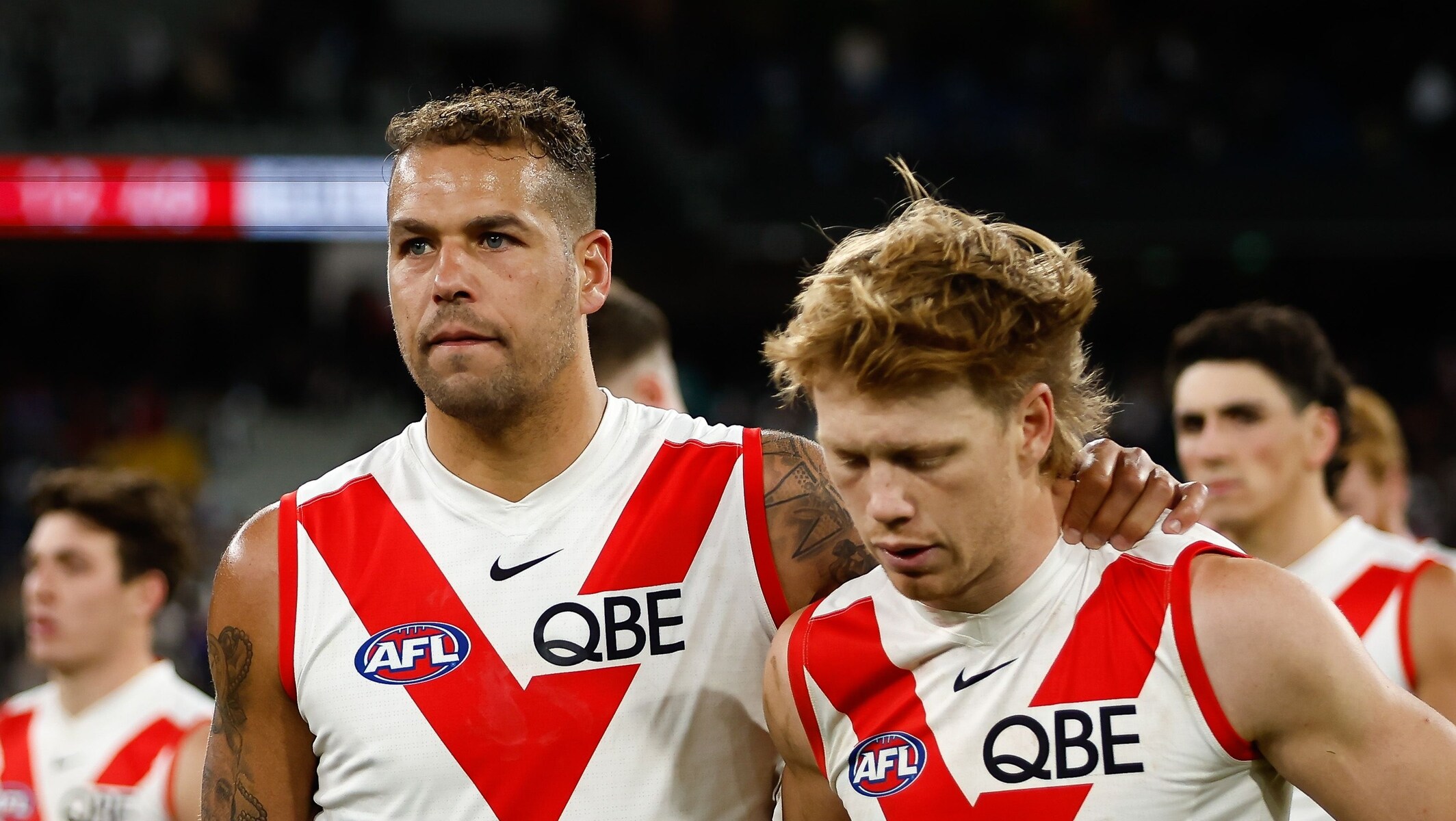
The book moves through footy season from February to August. On page 78*, it’s May, and Garner has had Covid. Watching a lot of football on TV, she has surmised that Virgil and Homer would recognise the ‘hulking airborne men’ she sees in those games. After two weeks ‘reading, dozing, reading again, forgetting everything I’ve read’, she opens a newspaper to the sports pages, where she sees a photo of Buddy Franklin, a Sydney Swans player she describes as ‘a hero of the game, a dancing god of the game in his last season’, whom a Collingwood crowd has booed:

Franklin is thirty-six, battle-hardened. His face, in this photo, is calm, composed; but it is also as soft as a boy’s. It’s a wounded face, with that wiped look of someone who’s copped a ringing slap across the cheek: all his expression lines are gone. In my fortnight of isolation I must have lost a couple of skins: I shock myself by bursting into tears.

I found the photo at this link, or maybe it’s this one. To look at them and read Garner’s description of them is to recognise what a fine writer she is. Even when putting herself front and centre, bursting into tears, she communicates elegantly about the observed world.
The next sentence is a rare moment in this book when Garner allows an explicit moral judgement into the text. Elsewhere, when she narrates the attitudes of Amby and other men to physical injury – they almost seem to relish it – she maintains a kind of awed incomprehension. Even here, she doesn’t voice her own opinion, but goes into journalist mode for a moment and quotes someone else.

The Guardian doesn’t hold back: ‘It’s about the internalised hatred that men – who are the dominant force in shaping and sustaining AFL culture – have for themselves and each other. The Great Southern and Ponsford Stands merely provide a haven for the boozed up, brittle and broken to project their own self-hatred and insecurities on to others.’

I don’t read this as Garner using ‘the Guardian‘ as a mouthpiece for her own opinion. It’s as if some judgement is needed once the booing has been mentioned, but to make a moral judgement would be to disrupt her role as witness seeking understanding. All the same, she does let the harsh judgement stand, more endorsed than rejected, and returns to her primary focus.

Thursday, on the way to training.
‘I still haven’t heard about the game I missed.’
‘Okay. Because of the pain all down my leg I told Archie I wouldn’t be able to go hard, so he kept me on full-back and full-forward. It was horrible. I was so cold. I only touched the ball twice. I was on this huuuuuge guy.’
‘But you kicked a goal, didn’t you?’
‘Yes, but I didn’t get any of my anger out. And the goal wasn’t very … nice.
‘You mean it wasn’t sort of heroic?’
‘No.’
‘But nevertheless it was a goal?’
He shrugs and runs off.

The book is full of these wonderful nanna–grandson chats. Throughout, there’s a tension between Helen the invisible old woman who comes to training sessions or chats with other parents during matches, and Hel the grandmother who is almost a confidante. He puts his big arm around her, rebuffs her attempts to fuss over his injuries, lets her tease him about his mullet, is oblivious to her shock when she realises her grandson has turned into a six-foot man, ‘his surfer’s legs covered in golden hair’.

OK, so maybe those front-row forwards who threw their weight around back when I was 15 were also just boys, far from their mums and dads and nanas, and only smaller, vulnerable boys to get their anger out on. The book has enough AFL in it to have made me want to give up on it a number of times, but I stayed to have my perspective shifted by Helen Garner, a meticulous, wide-eyed, sometimes self-mocking, always loving witness.


After the meeting: This is an all male book group. We kicked off our discussion of the book with a round of ‘position statements’ vis à vis sport in general and AFL in particular. From my point of view this round and the conversation that grew from it was at least as interesting as the book.

I was pretty much the only one who both loathed sport at school and was ignorant about AFL. There was only one total AFL tragic – all but two of us grew up with different codes. For most of us, team sport had played an overwhelmingly positive role. One had played second row forward in the same scrum as a future prime minister. Another is directly related to ‘Rugby League royalty’. One, who came to Sydney from a country town as a young man to go to university, found refuge in the football team, and felt it pretty much saved his life. For another, from an non–English speaking background, the different codes signified different relationships to mainstream Australia – and as a young person he had avoided soccer, which his father loved, so as not to be seen as an outsider. There was much more.

When we came to the book, it’s probably fair to say we all enjoyed it, but there were lots of reservations. ‘She doesn’t get football,’ one man said a number of times. Someone explained to me (and by implication to Helen) that the full-on bodily contact of football isn’t violence. Mostly it doesn’t hurt unless, paradoxically, you don’t fully commit, and any injury is incidental. There was general scepticism about the book’s underlying assumption that men have an ‘underlying drive to violence’ which team sports exist to address – there was quite a bit of chat about women’s sport, some but not all of it on this point. We all, especially the grandfathers among us, admired and envied the relationship between ‘Hel’ and Amby – the relative openness of communication, his physical ease, her tact.

Someone said the book read like a diary – proposing no particular thesis and coming to no conclusion. Only one of us had read Helen Garner’s diaries (Yellow Notebook, One Day I’ll Remember This and How to End a Story), and said they were wonderful. Alas, he confessed at the end of the meeting that he’d only read 10 pages of The Season, so he couldn’t compare it with the more substantial work.

This post may be too much about me and too little about the book, but I came away from the discussion feeling that just as writing the book gave Helen Garner gained some access to arcane rituals and tenets of sporty masculinity, so did I in our conversation, from a different outsider perspective. Long live the Book Group.


The Book Group met on Gadigal land and I wrote this blog post on land of Gadigal and Wangal of the Eora Nation, where we’re fast approaching the shortest day of the year. I acknowledge the Elders past and present of this country, never ceded and welcome any First Nations readers of this blog. The sport of AFL, like much that is distinctive in Australian settler culture, owes much to First Nations influence: some historians believe that it owed a lot to marn grook, a game played by First Nations people.


My blogging practice is focus arbitrarily on the page of a book that coincides with my age, currently page 78.

SWF 2023: My fifth day

12–1 pm: Crime and Justice

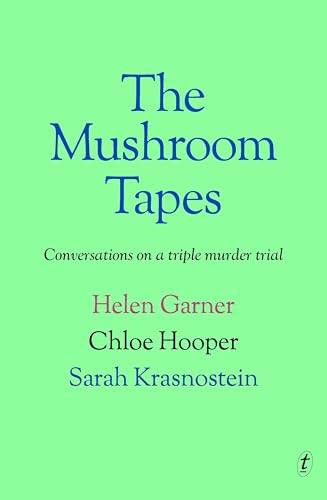
This session demonstrated the strengths of a two-person panel. It was progressing quite nicely, as Sarah Krasnostein (my blog post about her Quarterly Essay Not Waving, Drowning here) introduced the talent, Helen Garner (my relevant blog post here) and Hedley Thomas (creator of the podcast Teacher’s Pet), and asked about their writing process.

When Helen Garner is embarking on a long project, she buys a spiral bound A4 notebook and keeps a kind of diary of everything related to the project: not transcripts of interviews, but odd details, what she did, and thought, and felt. When it came time to marshal the material she had accumulated for Joe Cinque’s Consolations she was at a loss where to start, looked to the notebooks for inspiration and discovered that they contained the skeleton of the book.

Hedley Thomas was in the middle of answering a similar procedural question, when Garner was visibly excited by something he said. With a quick look at Sarah Krasnostein, half asking permission and half apologising, she interrupted to take the conversation off in a whole new direction: the way footballers tend to have a degree of immunity from police investigation because of their almost hallowed status in Australian society. From then on we were treated to a lively conversation between two people who had deep appreciation for each other’s work and were swapping stories and genuine compliments.

Sarah Krasnosteiin made a couple of attempts to restore order, but I think she could tell things were going swimmingly. This session is sure to appear on the SWF podcast during the year.


5–6 pm Alexis Wright: Praiseworthy

Alexis Wright’s third massive novel, Praiseworthy, was published just a couple of months ago. Ivor Indyk, director of Giramondo Publishing, stepped in at short notice to discuss it with her, replacing Sisonke Msimang, who had been called home to Western Australia unexpectedly. So, in this session, an author discussed her novel with her publisher and editor – that is to say, with a reader who had some influence on how the book turned out.

I was one of the few people in the room to have read the book. I was keen to lap up any guidance from either Ivor or Alexis on how to make sense of the experience. I’m glad to report that I got plenty.

For a start, it was reassuring that Alexis mentioned some of the more bizarre plot developments with a wicked smile, and the audience laughed quite a lot as the two of them named odd characters and moments. Ivor said towards the end of the conversation that the comedy of her work was often overshadowed by its epic qualities. For me, the issue was more how seriously to take the epic qualities when, as summarised by their author in this conversation, they had such absurd qualities.

Asked about the original idea for the book, Alexis Wright said she didn’t remember – she’d have to look up her notebooks. Perhaps it had to do asking what Aboriginal people are to in the new era of global warming and climate change. She started writing it when she was working on her multivocal biography of Tracker Tilmouth in 2017 (my blog post here), and the visionary at the heart of the novel ‘Cause Man Steel, Widespread or Planet, whatever you want to call him’) is in part based on Tracker. Widespread’s plan for a global transport conglomerate using Australia’s five million feral donkeys, though, is all hers: it’s absurd to the point of surrealism, but there’s something true in the way it leads to a cycle of vision and disappointment.

The book is in part a celebration of Aboriginal people’s will to survive, manifested in many ways, tainted by 240 years of living in the coloniser’s world. The enemy in this book is the project of assimilation.

Perhaps most interesting to me was the exchange about music. Referring to the Ice Queens – grotesque, larger-than-life women who appear toward the end of the book – Ivor wondered about the influence of opera. Alexis agreed that she loved opera, but seemed nonplussed at Ivor’s suggestion that these characters are operatic. The music she listens to most while writing is classical Indian music and yidaki (didgeridoo). She tries to capture the tone and rhythm of that music – the pulse, the heartbeat: ‘We say that we’re of one heartbeat with the country.’

‘You hear what you’re writing,’ Wright said. ‘Then it gets recorded and you want it to be the voice you heard, but it can’t be that voice.’

There was a lot more. Ivor touched on the way Wright defies conventions, at times inventing words that look like mistakes, but which are anything but.

I’ll be attempting my own blog post about Praiseworthy in the next couple of days. Wish me luck!


We made a quick dash to a smaller venue for 6–7 pm State of the Art

Kate Evans of ABC’s The Bookshelf presided over another panel. This time it was Eleanor Catton, Richard Flanagan, Tracey Lien and Colson Whitehead invited to discuss the state of the novel and the future of fiction.

I haven’t read anything books by any of these authors, apart from one novel that I hated, which I’m told is completely unrepresentative of their work. I enjoyed the ebb and flow of conversation, but didn’t have anything to ground myself in.

Kate Evans asked if ChatGPT and other AI content producers spelled the end of novelists. Tracey Lien, the youngest on the panel and the only one without a string of awards to her name (and not at all intimidated by that, she said smiling bravely), said she used ChatGPT as a research assistant, but it couldn’t do the writing. On the one hand, it doesn’t have a brain, but produces word after word by complex algorithms, and the act of reading is a back-and-forth between minds. On the other hand, ChatGPT lies.

Richard Flanagan, whose scowl occasionally gave to an appreciative grimace at another panellist’s point well made, said he didn’t care about AI. He’d just keep writing.

The subject of decent recompense for the work of writing, and of all creative work generally, provoked more interest. Digital publishing changes the landscape significantly. They all agreed they weren’t in it for the money, but money would be nice. Eleanor Catton said that working as a scriptwriter was hugely more remunerative. Responding to a question at the end about how to become a writer and also earn a living, Flanagan said he had decided to be a writer when he was very young and in order to achieve it he lived in poverty for years. There was no other way. Colson Whitehead said something similar: after a significant number of successful novels he was at least temporarily able to live on his earnings as a writer. He implied that this is precarious.

Whitehead, Flanagan and Catton spoke interestingly about not repeating themselves, each new novel being a whole new challenge.


SWF 2020, 11th and final post

I’ve been blogging about the online 2020 Sydney Writers’ Festival (I almost forgot the apostrophe) most of the year. The Festival is still going on, and its website is listing events to mid-January next year. I’ll keep listening, but I won’t blog any more. Here are links to the Festival podcasts currently on my phone, in case you’d like to check them out.

Drawn from Life: Alice Oseman in Conversation 21 October: YA phenomenon and graphic novelist Alice Oseman chats with media phenomenon Jes Layton.

Secrets and Lies: Donor-Conceived Rights 21 October: Dani Shapiro, USA-based author talks to Australian author Bri Lee about issues raised in her memoir, Inheritance, including those related to children conceived by sperm donation.

Griffith Review 68: Getting On 28 October: Tony Birch, Andrew Stafford and Jane R. Goodall talk with Griffith Review editor, Ashley Hay, about getting older.

Trent Dalton: All Our Shimmering Skies 4 November: Trent Dalton in conversation with Annabel Crabb bout his second novel

Guardian Australia Book Club with Helen Garner 6 November: No elaboration needed from me. The interviewer is Michael Williams, now artistic director of the SWF.

Behrouz Boochani and Tara June Winch in Conversation 11 November: Again, no elaboration needed from me about either of the participants. I will mention that Tara June Winch acquitted herself admirably in Hard Quiz recently.

Tony Birch: The White Girl 18 November: Tony Birch is here again to talk with Evelyn Araluen about his novel The White Girl.

Julia Phillips: Disappearing Earth 3 December: The author of the excellent Disappearing Earth talks to Tam Zimet, until recently associate director of the SWF.

It’s nice to finish with one of the rare books that I’ve read that also features in this year’s Festival

Maryam Azam’s Hijab Files

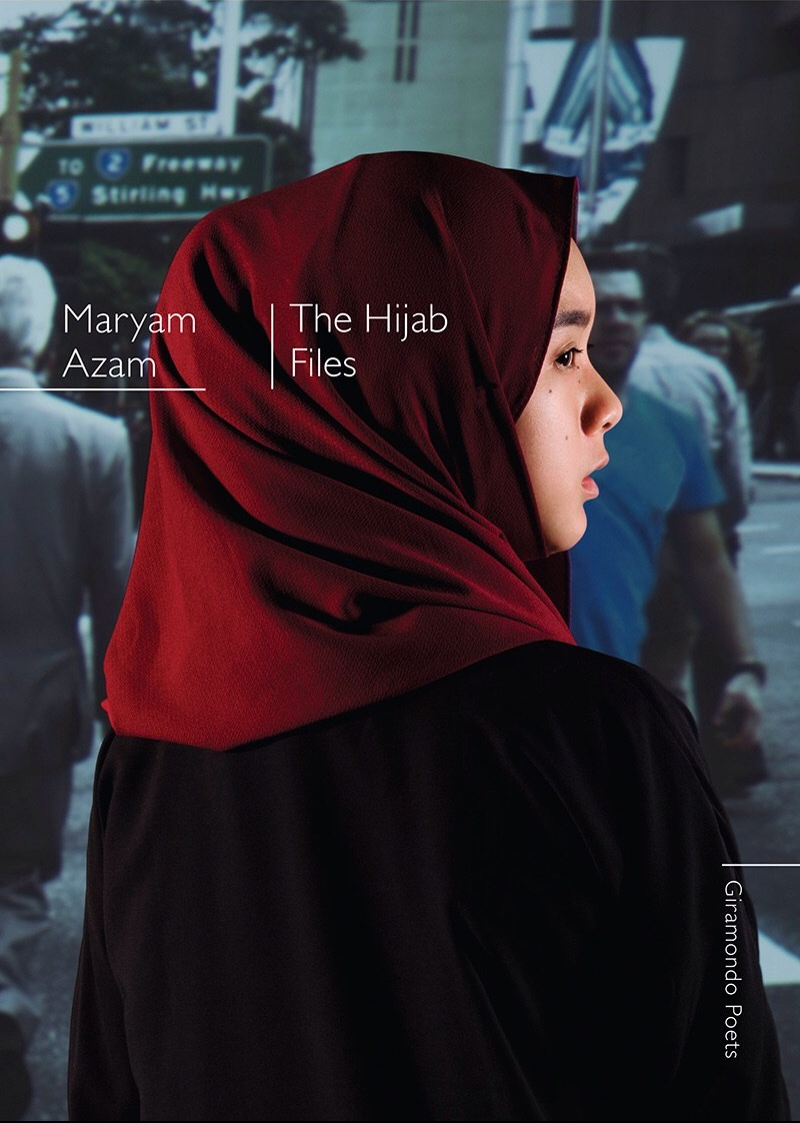
Maryam Azam, The Hijab Files (Giramondo 2018)

img_2516.jpg

In ‘Hotel Golf’ in the current issue of The Monthly, Erik Jensen writes that Helen Garner doubts if many people who attend church actually believe – she thinks that’s a myth maintained by non-religious people.

As a non-believer, I understand how Garner herself can participate in religious services without subscribing to the underpinning beliefs, but surely it’s just a failure of imagination to project that lack of belief onto the other participants. To put that another way, Helen Garner doesn’t seem to have met ‘many people’ like my Catholic  mother, or me in my teenage years, or – to get to the point – Maryam Azam, the author of The Hijab Files.

The 29 poems in this small book aren’t religious poems, but they are infused with a religious understanding of the world. Many of them focus on the hijab, and it’s hugely refreshing to hear a clear, nuanced, non-Orientalist voice on the subject, sometimes cheerfully practical (‘A Brief Guide to Hijab Fashion’, ‘Places I’ve Prayed’), sometimes satirical from an unexpected viewpoint (‘Modestique’), sometimes touching on friendly or hostile reactions from non-Muslims (‘The Hobbling Bogan’, ‘Praying at School’), sometimes addressing difficulties with other Muslims (‘Fashion Police’).

To single out one poem, here’s ‘Fajr Inertia’ (the Arabic fajr is explained in the epigraph):

Come to prayer! Come to success! Prayer is better than sleep!
FROM THE FAJR ADHAN (DAWN CALL TO PRAYER)

I lie in the knowledge of my failure
the way I lie through my chance at success,
hip sunk into the mattress
blanket over my chin
staring at a yellow flower clock
with a missing plastic cover
that reads six minutes past seven;
twenty-five minutes too late.
The broken gas canister of sleep
slowly clears from my head.
I hide under the covers from
the light invading my room
but I can't hide the fact
I'll have to live today outside
of Allah's protection.

You don’t have to be a devout Muslim to understand this: the emotion isn’t a million miles from how I feel when I missed my pre-breakfast visit to the swimming pool, and realise I’ll have to live the day without that half hour of self-care. Who hasn’t woken up befuddled by a ‘broken gas canister of sleep’? With a gorgeous lack of portentousness, the poem places Allah’s protection in the middle of this commonplace experience.

Helen Garner’s scepticism about other people’s religious belief is probably typical of non-believers in these secular times. The Hijab Files speak back quietly but definitely to challenge that scepticism.

If you’re interested in getting more of a sense of this poet, you could have a look at a short, 5-question interview with her on Liminal magazine, here.

The Hijab Files is the seventh book I’ve read for the 2018 Australian Women Writers Challenge. I am grateful to Giramondo for my review copy.

AWW 2016 challenge completed

AWW2016

This is my mandatory round-up post about the Australian Women Writers’ Challenge 2016. I undertook to read 10 books by Australian women writers. I read 14, which ranged from revelatory and richly entertaining to definitely meant for readers who aren’t me. Here they are. I’ve tried to be clever with the lay-out. My apologies if it shows up on your screen as a jumble.

Poetry:

x

Novels:

Short Fiction:

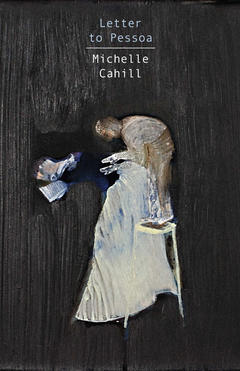
lp
Michelle Cahill
Letter to Pessoa

x

x

x

x

x

x

Memoirs:

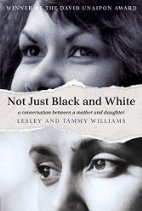
njb&w
Lesley and Tammy Williams
Not Just Black and White

x

x

x

x

x

x

A comic (that’s a graphic novel to those who think ‘comics’ means superheroes or Disney):

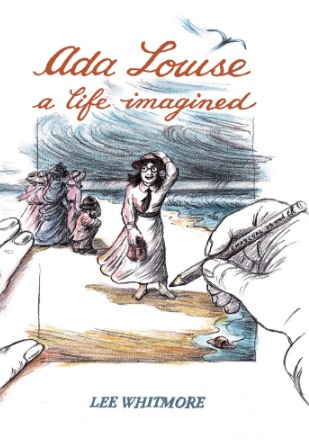
alli
Lee Whitmore
Ada Louise


x

x

x

x

x

Essays:

I’m signing up for the 2017 challenge.

My general gender stats: This year I read 39 books by men and 31 by women.This includes at least five (the Y: The Last Man series) that were jointly written by a man and a woman.

Helen Garner’s Everywhere I Look and November Verse 3

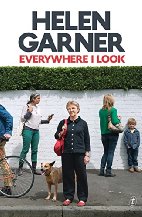
Helen Garner, Everywhere I Look (Text 2016)

1925355365.jpgI’ve recently been surprised to hear a number of people refer to Helen Garner as ‘one of our great writers’. My surprise doesn’t come from disagreement. It’s just that hers isn’t writing that invites one to bow down in the presence of greatness. She’s less a Great Dane (or Grande Dame) making magisterial pronouncements than a terrier who keeps on at her subject until it yields some truth, her truth. She passes judgement often enough, and definitely enough, but not dogmatically, and not looking for a stoush either, but ready in case one comes along. A striking feature of Sotiris Dounoukos’ movie of Joe Cinque’s Consolation is the absence of the book’s persistent questioning – so when the end titles announce that, against the strongly implied judgement of the previous 90 minutes, one of the real-world characters was exonerated by a real-world jury, one tends to simply distrust the movie. When the book calls that verdict into question, you can disagree, but you can’t honestly dismiss it out of hand: the judgement has been honestly, and I would say humbly, worked for. (Perhaps its relevant that some of the harshest critics of Garner’s The First Stone refused to read it, or so I’ve been told.)

One of the pieces in this collection is titled ‘While Not Writing a Book’. That could have been a working title for the collection as a whole. It and a couple of others, including ‘Before Whatever Else Happens’, are presented as excerpts from the writer’s diaries/notebooks: overheard snippets, chance encounters, family moments, brief reflections. Another writer might have called them flash fictions or prose poems. Other pieces are more sustained: the product of a week locked away with CDs of Russell Crowe movies; reviews; sketches from the courts; wonderful pieces on her friendships with Jacob Rosenberg, Tim Winton and Elizabeth Jolly; glimpses of family life with grandchildren and, once, a dog; a revisit to her relationship with her mother; reflections on the ukulele, the ballet, suburban life; and more, enough to keep her readers interested between This House of Grief and whatever big thing may happen next.

Everywhere she looks and listens, from conversations about farting with small children to a teenager who has bashed her newborn baby to death, Garner finds stuff for her mind to grapple with, and she knows how to communicate the grappling with grace and vigour.

And now, because it’s November, a versification of one of the diary entries (see page 85 for the original):

Verse 3: At a conference
Supreme Court Judge and Helen Garner
chatted over tea and dip.
‘My home,’ the judge said to the yarner,
‘was once the scene of Monkey Grip,
your novel, and we’re renovating.’
‘My novel, and some devastating
and elating life. But how
do those old rooms look to you now.’
He listed them: ‘… and one so dinky
my daughter’s desk was there before.
It’s soon a bathroom, nothing more.’
‘The one with wooden shutters?’ Inky
flash from hippie days divine:
‘That tiny room was [humbly] mine.’

AWW2016Everywhere I Look is the twelfth book I’ve read as part of the 2016 Australian Women Writers Challenge.

NSW Premier’s Literary Awards Shortlist announced

A bit late for anyone who wants to read the whole short list before the winners are announced next month, but the (very long) short list for the NSW Premier’s Literary Awards has been announced. You can see the full list with judges’ comments on a pdf press release from the State Library.

Here’s most of it – all except the translator – with links to my blog posts on the few I’ve read, all of which have me nodding my head in agreement with the judges. (Maybe it will take grandchildren to bring me back up to date on children’s lit.)

Christina Stead Prize for Fiction
Only the Animals, Ceridwen Dovey (Penguin Australia)
In Certain Circles, Elizabeth Harrower (Text Publishing)
Golden Boys, Sonya Hartnett (Penguin Australia)
The Snow Kimono, Mark Henshaw (Text Publishing)
The Golden Age, Joan London (Random House Australia)
A Million Windows, Gerald Murnane (Giramondo Publishing)

UTS Glenda Adams Award for New Writing
The Tribe, Michael Mohammed Ahmad (Giramondo Publishing)
Foreign Soil, Maxine Beneba Clarke (Hachette Australia)
The Strays, Emily Bitto (Affirm Press)
An Elegant Young Man, Luke Carman (Giramondo Publishing)
Here Come the Dogs, Omar Musa (Penguin Australia)
Heat and Light, Ellen van Neerven (University of Queensland Press)

Douglas Stewart Prize for Non‐fiction
The Europeans in Australia, Alan Atkinson (NewSouth)
Citizen Emperor: Napoleon in Power 1799‐1815, Philip Dwyer (Bloomsbury)
This House of Grief, Helen Garner (Text Publishing)
The Reef: A Passionate History, Iain McCalman (Penguin Books Australia)
In My Mother’s Hands, Biff Ward (Allen & Unwin)
The Bush, Don Watson (Penguin Books Australia)

Kenneth Slessor Prize for Poetry
A Vicious Example, Michael Aiken (Grand Parade)
Devadetta’s Poems, Judith Beveridge (Giramondo)
Kin, Anne Elvey (Five Islands Press)
Wild, Libby Hart (Pitt Street Poetry)
Unbelievers, or The Moor, John Mateer (Giramondo)
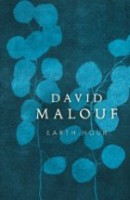
Earth Hour, David Malouf (University of Queensland Press)

Patricia Wrightson Prize for Children’s Literature
The First Voyage, Allan Baillie (Puffin Books)
Rivertime, Trace Balla (Allen & Unwin)
Figgy in the World, Tamsin Janu (Omnibus/Scholastic Australia)
The Duck and the Darklings, Glenda Millard & Stephen Michael King (Allen & Unwin)
Crossing, Catherine Norton (Omnibus/Scholastic Australia)
The Adventures of Sir Roderick the Not‐Very Brave, James O’Loghlin (Pan Macmillan Australia)

Ethel Turner Prize for Young Adult’s Literature
Book of Days, K.A. Barker (Pan Macmillan Australian)
The Road to Gundagai, Jackie French (HarperCollins Publishers)
Are You Seeing Me? Darren Groth (Random House Australia)
Razorhurst, Justine Larbalestier (Allen & Unwin)
The Cracks in the Kingdom, Jaclyn Moriarty (Pan Macmillan Australia)
Cracked, Clare Strahan (Allen & Unwin)

Betty Roland Prize for Scriptwriting
The Code Episode 1, Shelley Birse (Playmaker Media)
Upper Middle Bogan Season 1, Episode 8: The Nationals, Robyn Butler and Wayne Hope (Gristmill)
The Babadook, Jennifer Kent (Causeway)
Fell, Natasha Pincus Story by Kasimir Burgess and Natasha Pincus. (Felix Media)
Please Like Me Season 2, Episode 7: Scroggin, Josh Thomas
Once My Mother, Sophia Turkiewicz (Change Focus Media)

Nick Enright Prize for Playwriting
Brothers Wreck, Jada Alberts (Currency Press)
The Sublime, Brendan Cowell (Melbourne Theatre Company)
Jasper Jones, Kate Mulvany (adapted from a novel by Craig Silvey) (Barking Gecko Theatre Company)
The Trouble with Harry, Lachlan Philpott (TheatreofplucK Belfast/MKA New Writing Theatre)
Kryptonite, Sue Smith (The Sydney Theatre Company)
Black Diggers, Tom Wright (Queensland Theatre Company)

Community Relations Commission for Multicultural NSW
Jump for Jordan, Donna Abela (Griffin Theatre Company)
Black and Proud: The story of an AFL photo, Matthew Klugman and Gary Osmond (NewSouth Publishing)
Refugees, Jane McAdam and Fiona Chong (UNSW Press)
I, Migrant: A Comedian’s Journey from Karachi to the Outback, Sami Shah (Allen & Unwin)
The Tainted Trial of Farah Jama, Julie Szego (Wild Dingo Press)
Once My Mother, Sophia Turkiewicz (Change Focus Media)

Congratulations and good luck to all of them, and may the judges’ eyes and brains enjoy a rest.

Best of 2014 in 3 lists

List 1. Movies (with links to the movies’ IMDb pages):

The Art Student and I gave each of the 50+ movies we saw in 2014 a score out of 5. There was a respectable number of 4s and 4.5s. Here are the seven with a combined score of 9.5 or more, in no particular order:

17_d

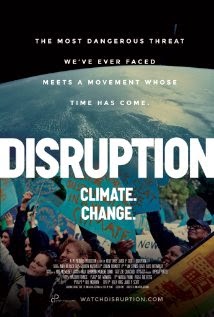
Disruption (Kelly Nyks & Jared P. Scott): we broke our tacit rule about not including movies we saw on the small screen for this one. It’s a brilliant presentation of the situation we face, made in preparation for the Climate Mobilisation in August, but still powerful and useful.

17_bh

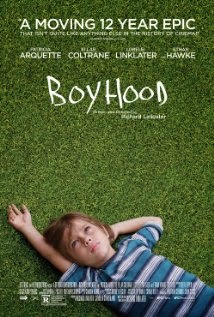
Boyhood (Richard Linklater). This does miraculous things with filming in real time. The actors actually age as the characters do. Towards the end, someone says, ‘I thought there’d be more,’ and we feel her pain.

17_L

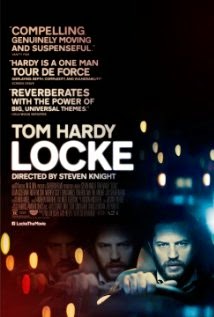
Locke (Steven Knight). Another film that does wonders with real time. One man drives in a car through the night, and is spellbinding. The spell is greatly helped by the beauty of Tom Hardy’s voice.

14_CC

Charlie’s Country, Rolf De Heer’s brilliant collaboration with David Gulpilil is just superb. That it to some extent reflects Gulpilil’s own story gives it a depth of feeling.

12y

12 Years a Slave (Steve McQueen). Nothing much needs to be said, except that this is a wonderful movie.

17_c4

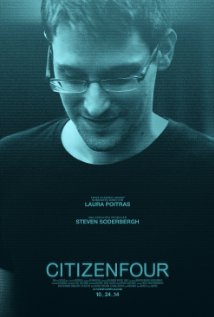
We saw Citizen Four (Laura Poitras) as part of the DOC NYC film festival. It’s a stunning documentary that plays out like a thriller, complete with grim comic relief, about Edward Snowden’s revelations of government surveillance.

tgs

Nick Broomfield’s Tales of the Grim Sleeper, which we also saw as part of DOC NYC, makes a mockery of most fiction movies about serial killers, and peels back the cover from race relations in the US.

Our worst movie
This prize has to go to the only film we walked out of: Woody Allen’s shouty, silly, predictable and unfunny Magic in the Moonlight. (To be quite honest, the Art Student predicted the reveal; I just didn’t care.)

List 2. Books

The Art Student’s best five (with comments taken from my notes of a chat about them):

144477963X

Siri Hustvedt, The Blazing World: The Art Student particularly loved how convincingly this novel describes the artworks created by its protagonist. [We heard Siri Hustvedt read from The Blazing World to about 30 people in Brooklyn last month. She read beautifully and answered questions generously. Memorably, she told us she had found Kierkegaard to be great fun since she first read him as a teenager.]

1400066026

Alan Furst, The Spies of Warsaw: a novel of espionage in eastern Europe in the 1930s. Strong on atmosphere and suspense, it manages to tell its story without contriving a catastrophe.

Helen Garner, This House of Grief: The Story of a Murder Trial (Text 2014)

Helen Garner, This House of Grief: Everyone who likes this book seems to give different reasons. The Art Student liked its tight, almost domestic focus on its characters.

1594486344

James McBride, The Good Lord Bird: a novel about John Brown, the anti-slavery activist, from an African-American point of view.

0316322407

Malala Yousafzai, I am Malala: a fabulous, fabulous book that combines a History 101 of the Peshawar Valley with an account of two extraordinary people, Malala and her father.

I’m not going to list a best five books, but here are six that delighted, challenged and enlightened me, or did that thing of putting into words things I dimly felt or perceived. The images link to my blog entries.

A note on gender and diversity: The Art Student announced proudly that she had read more books by women than by men (as she usually does). I read 25 by women and 32 by men. Up against recent Viva statistics on literary journals on reviews by women or about women writers, I’m doing pretty well. I’ve read 6 books in translation, from Chinese, Japanese, Bengali and Hebrew.

List 3. Best ‘Me Fail I Fly!’–related headline:

5ip

Onward to 2015!

Helen Garner’s House of Grief and my Sonnet 6

Helen Garner, This House of Grief: The Story of a Murder Trial (Text 2014)

1922079200 This is the third of Helen Garner’s courtroom books, and it’s a much tougher read than I remember the others being. Maybe that’s because this one involves a man who drove into a dam in a car that also contained his three young sons, and swam free himself. In four court hearings he is committed and tried for murder, appeals successfully against the guilty verdict, and is tried again. The aim of the legal process is to determine his guilt or otherwise. The book would be as relentlessly painful no matter what the jury finally decided.

The book is beautifully written. It’s subtle, sharp and unremitting. It conveys brilliantly the theatre of the court. It’s brave too: Helen Garner doesn’t back off from offering her own readings, her own judgments, of the many courtroom participants – witnesses, lawyers, judges, journalists, family members of the accused and of the dead children, her own young companion Louise, a bumptious school student drop-in, and at the centre of it all the man himself. I found it gruelling, and ultimately very satisfying, even while it pins a huge question mark on the tail of the whole legal system: so much raking through people’s lives and relationships, so many people put through the horrendous ordeal of cross-examination (much worse here, it seems, than in standard TV fare) – surely there must be a better way than this single-minded quest to find where to apportion blame?

It’s probably central to Garner’s power as narrator and her persuasiveness as interpreter that she dramatises her own emotional responses, so that we’re always aware that this is one person’s perspective and that it’s a perspective with flesh on its bones. She constantly reminds us that the court is dealing with profoundly human events – in this case the violent death of three children. I love the following, for example:

Was there a form of madness called court fatigue? It would have mortified me to tell Louise about the crazy magical thinking that filled my waking mind and, at night, my dreams: if only Farquharson could be found not guilty, then the boys would not be dead. Cindy would drive home from the court and find them playing kick-to-kick in the yard, or sprawled in their socks on the couch, absorbed in the cartoon channel. Bailey would run to her with his arms out. They would call for something to eat. She would open the fridge and cheerfully start rattling the pots and pans. I could not wait to get home, to haul my grandsons away from their Lego and their light sabres, to squeeze them in my arms until they squirmed. Young boys! How can such wild, vital creatures die?How can this hilarious sweetness be snuffed out forever?

Moving on to my obligatory November rhyming:

Sonnet No 5: Magical thinking?
What magic could bestow on juries
the power to undo a crime?
Guilt still would be pursued by Furies,
innocence shine forth in time,
but history, by twelve’s decision,
would undergo benign revision –
the dead would live, the maimed be whole,
and peace suffuse the tortured soul.
Real courts, alas, aren’t made for healing.
Wounds heal elsewhere, if at all.
What magic thinking has us call
to public scrutiny dark feeling –
grief, hate, regret, long festered strife?
No verdict can restore a life.

This House of Grief is the eighth book I’ve read as part of the 2014 Australian Women Writers Challenge.

Added 18 June 2015: Helen Garner appeared at the 2015 Sydney Writers’ Festival. Her riveting talk about her inspirations for This House of Grief was recorded and is available as a podcast.

The Children’s Bach

Helen Garner, The Children’s Bach (©1984, Penguin Australia 1999)

Having read Thea Astley’s A Kindness Cup because it was on Kerryn Goldsworthy’s What’s What List and been sharply impressed, I decided to follow it up with this, which is also on that list. I am in awe of Helen Garner’s non-fiction, a category which for my present purposes includes the novel The Spare Room, but I’ve read very little of her fiction. Monkey Grip, her first novel, read to me like an elegantly processed diary: it was interesting and impressive, but didn’t entice me to read more. So reading The Children’s Bach involved reversing an earlier virtual decision.

I’m not sure my life is much richer for the reversal. Admittedly life was offering some stiff competition for my attention as I read it, what with the wedding, settlement day on our new house and the imminence of Christmas, but the book failed to enthrall me. About two fifths of the way through I was having trouble keeping track of who was related to whom, so I drew a diagram and was astonished to realise there are only ten characters, of whom three are children, yet I had trouble telling them apart. Dexter is the man who shouts a lot, cheerfully. Vicki is the young woman who has come over from Perth to live with her sister and then moved in with Dexter and his family. Which of the more or less indistinguishable women is Dexter’s partner? Who is Poppy again? When they talk about the little guy with the tatts are they referring to the same man who tells his daughter a bedtime story about the Paradise Cafe? Surely the man who is taking Athena out walking isn’t the same man who came into her house the other night and had sex up against the fridge with young Vicki, with whom she is kind of in loco parentis? Luckily, I drew my little chart of relationships and got it all clear before the main events of the book, which involve extra-marital sex (though I’m not sure any of the characters is married, strictly speaking).

I probably missed a lot. For example, I wasn’t sure if the first of two main sex scenes was actually a sex scene until the dying fall of the last sentence, just before one of the characters said something about having to make some phone calls. But even for as undiscerning a reader as I was, the book delivers a moral jolt. Each of the four characters involved in the sex scenes has a completely different take on what the action means: assumptions are challenged, values questioned, tensions left unresolved. There’s no tragedy, no high romantic drama, no ultimate judgement – just people making their way with each other. And beyond that, I think, a documentary impulse in the writing: it aims to tell us about the lives of a certain group of people – perhaps the ‘friends’ the book is dedicated to –