Tag Archives: Niall Williams

Niall Williams’s Time of the Child and the book group

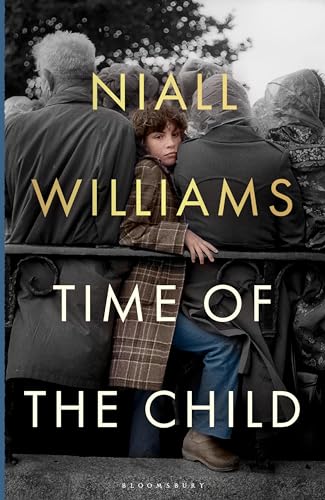
Niall Williams, Time of the Child (Bloomsbury 2024)

Before the meeting: As I was reading the first couple of chapters of this book, I had ringing in my ears something that a Book Group member had said about a different book, perhaps one of Niall Williams’s earlier novels, A History of the Rain or This Is Happiness: ‘It’s a beautifully written Irish novel, but I’m not sure the world needs yet another beautifully written Irish novel.’

The first chapters, in fact almost the first half of the book, are brilliant descriptions of life in 1962 in the fictional West Ireland village of Faha, the village we know from those previous books. The rain is still incessant and the village still slowly sinking into the river. The heart broken in This Is Happiness is still broken. Life is still dominated by the Catholic Church. Gossip is still the lifeblood of the community. Most houses now have electricity.

The first chapter begins with a wonderful setpiece, a parish Mass where the beloved parish priest stalls mid-sermon in the first major sign of dementia. Things are seen from the point of view of Jack Troy, the village’s general practitioner whose face and manner give away nothing of his inner feelings as his role in the community means he must always be available, including to people who will never ask for a doctor’s attention on their own behalf. After Sunday Mass he is regularly approached by people who indicate with a nod and a wink that his services are needed at such and such a house.

The second chapter revolves around another magnificent setpiece: the Christmas fair in which farmers bring their cattle to town to sell, and hawkers and traders come from elsewhere. Here, twelve-year-old Jude Quinlan, son of a drunkard farmer, carries the narrative burden.

Through both of these chapters, we are teased by hints that something big is going to happen. It’s as if the narrator is saying to his readers, ‘Yes yes, I know you’re here for a story, but first let me tell you about the place it happened in and the people who live there.’ At the end of the second chapter, more than a third of the way into the narrative, there’s this:

But it was here, at the back wall of the church in the village of Faha, on the night of the Christmas Fair 1962, that Jude Quinlan found the child.

Ah! The titular child has arrived! Then the third chapter continues to tease us. It takes us back a couple of days in the life of Ronnie Troy, Jack’s long-suffering dutiful daughter. After 16 pages in which we come to know and (speaking at least for myself) love her, she responds to a late-night knock on the door and at last the story begins.

Given that it happens so late in the book, I’m reluctant to say much more about it, except that though my Group member may be right that the world doesn’t need another book like this, I certainly do. Maybe it’s because I spent my 1950s childhood as part of the Irish diaspora in north Queensland, and I respond with little gasps of recognition to little throwaway lines about the Sacred Heart, the ‘Hail Holy Queen’, the smiling pope, or to the way the priest says Mass with his back to the church while the congregation’s more or less devout members goes about their own business. That is to say, maybe there’s a hefty dose of nostalgia in my response to the book. But if so, that nostalgia serves a serious purpose.

This is a time and place when the Church dominated Irish society. It was the time of the Magdalen laundries, covered-up clerical sexual abuse of children, pitiless laws against abortion and condemnation of most forms of birth control. None of this is foregrounded in the book, but oppressive Church–State authority looms large, mostly unspoken, over the second half of the book. On the one hand, a handful of people sinking to their knees to say the Rosary can be an exhilarating manifestation of something fine beyond words (though Niall Williams finds the words); on the other a priest with a form letter mouths deadly phrases like ‘For his own good’ and ‘Preserving his dignity’.

Just as much as, say, Sebastian Barry’s Old God’s Time or Claire Keegan’s Small Things Like These, this book is about decent humanity – individuals and communities – resisting the monolithic, repressive authority of Church and State. Like them, it revels in musical language. More than them it’s funny. I did cry, twice, but I laughed a lot.

Page 77* includes a micro example of the resistance. In the absence of a fairground, Faha’s monthly fair is a chaotic mess, and the church gates, ‘with their splayed look of welcome in the centre of the village’, are a main centre of trade. The curate, Father Coffey, representing the Church’s authority, asks the farmers not to stand their cattle there:

As it happened, the curate’s appeal fell on deaf ears, but he took some satisfaction when he was able to negotiate a treaty whereby Mick Lynch promised a rope corridor to let the daily Mass-goers through. As a goodwill gesture, Lynch said, the farmers would take their dung with them when they left, which Father Coffey reported back to the Canon, unaware it was a joke until the older priest put the hand across his laugh to stop his teeth flying.

With such jokes, in which the older priest colludes, the people of Faha keep the authority of the Church in its place.

Most of page 77 is taken up wth one of Niall Williams’s bravura character sketches:

Mick Lynch had the walk of a man who owned his own bull. Short and broad, he carried a blackthorn, wore a frieze coat and low hat with red feather in the band. That hat never came off his head outside of church. He wore it at the counter in Ryan’s, in the spartan confines of his iron bed, and when he went to wring the necks of geese. From victories in cards or trade, Lynch took a deal of pleasure. With a contrary nature, his cheeks were where the most of his hair grew, furred sideburns made key-shaped by the shaving of his chin which gave him a jailor’s look. Lynch had the reputation of being what Faha called a right cool man, a designation that pre-dated refrigeration, meant he could not be hurried or ruffled, and once, when asked by a dealer, ‘What are you looking for in a horse, boss?’ had delivered the incontestable answer, ‘Leg in each corner.’ He had not married. For women he hadn’t the handbook, he said, and children nothing but hosts to headlice and worms.

Remember, nothing has really happened in this book so far. That is, we’re a quarter of the way into it but we haven’t yet had what the movies call the inciting incident. But the narrator refuses to be hurried. There is too much to enjoy at any moment in the life of Faha, so though this is Mick Lynch’s only appearance, we’re going to take a moment, just for the fun of it, to savour him. I especially like that ‘outside of church’: whatever else he may be or do, it wouldn’t occur to Mick Lynch to defy the custom of men going bare-headed in church.


After the meeting: Unusually, this book was the subject of quite a lot of WhatsApp discussion before the meeting, mainly from people who couldn’t make it on the night. A number of us had wept, prompting one to ask whether we were ‘silly old men getting emotional about a baby and family relationships’. He who had made the remark about beautifully written Irish novels confounded my expectations by loving tis one, and wrote a thoughtful email on the theme of ‘the soul’. Another sounded a mildly dissenting note, having read only 80 percent and found it slow going; he reacted against the religion’s hold on people, and used the word ‘silly’ about a main character’s attempt to take charge of the situation (all of which are completely reasonable responses). Yet another quoted a number of favourite passages, and said he loved the way Catholicism co-existed with pishogues, which he noted was an excellent new word to him (as it is to me – definition at this link if you’re interested).

On the night there were just five of us. Among other things, we ate baked potatoes. Almost as soon as we arrived, those of us with Catholic backgrounds – a slim majority – were reminiscing about, of all things, our Confirmations. Not directly on topic, but certainly book-adjacent. We had an animated discussion. More than one said that the book took its own sweet time to get to the point – one said he almost stopped reading, but others (me included) thought it was a feature rather than a bug. Someone quoted a passage to the effect that Irish story-telling never goes in a straight line.

Someone said, on WhatsApp and then again on the night, that the book was an Irish Catholic equivalent to Marilynne Robinson’s Home. I don’t quite see that, though it’s an interesting thought. I had a go at articulating some of what I see the book as saying about Catholicism in Ireland then and now – which I won’t go into here because it would be spoilerish.

Interestingly, no one thought to say out loud that this is a Christmas story, even a kind of second-coming story. And, though someone had looked up Niall Williams on the internet, no one wondered aloud if he became a grandfather somewhere on the way to writing this book.

As for the rest of the conversation, I can’t do better than quote (with permission) from one chap’s report on WhatsApp. Conversation ranged, he wrote:

from John Cage and the Necks to motor bike accidents, playing golf, Parkinson’s disease and then the realities of being Bilbo Baggins.


I wrote this blog post on land of the Gadigal and Wangal clans of the Eora Nation. I was born in MaMu country, though as a small child I was confused about whether I lived there or in ‘Erin’s green valleys’. I acknowledge the Elders past and present of both countries, never ceded.


My blogging practice is focus arbitrarily on the page of a book that coincides with my age, currently page 77.

Middlemarch: Progress report 2

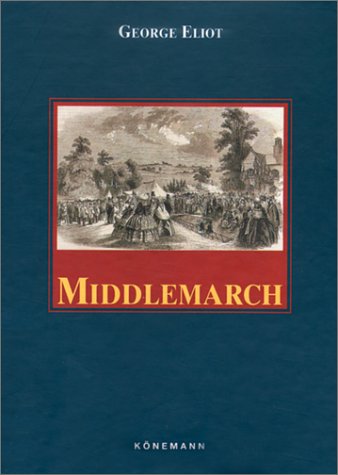
George Eliot, Middlemarch: A study of provincial life (George Eliot, 1871–1872; Könemann 1997), chapter 15 to most of chapter 28

Reading five pages of Middlemarch each morning, which I’ve now been doing it for two months, is a joy.

When reading Niall Williams’s This Is Happiness, I kept feeling a Middlemarchian tone: the narrators in both books tell of events that happened in a remote village in living memory but feel as if they are from a different era. Williams’s narrator has a name and a story of his own. We are left to imagine who George Eliot’s narrator might be, though there’s definitely a person there, who is full of opinions, occasionally mentions conversations with her friend, and – if we assume she is a mature woman as Eliot was known to be when the book appeared – has bitter experience of male domination. Both narrators identify themselves as sophisticated and modern, she in metropolitan England, and he in the USA.

This month the intrigues continue among the older and younger generations, the former to do with control of the town’s institutions and the latter to do with affairs of the heart. Dorothea is married to Casaubon but troublingly finds his young cousin Will Ladislaw a more interesting companion in Rome. Rosamond is closing in on Lydgate as a prospective husband. And Fred, the profligate young man, discovers that his failure to keep promises not only harms his reputation but also harms other people.

This morning, the Rosamond–Lydgate story is approaching a defining moment. They have been thrown together when Lydgate comes to attend Rosamond’s brother Fred who has been struck down by typhus. Actually, not quite thrown together: Rosamond has declined to take the recommended course of leaving their house until the danger of infection was past, ostensibly so that she can help her mother tend to Fred, but really so she can see more of Lydgate. After some vividly evoked moments when they become embarrassed at meeting each other’s eyes, they settle into openness and ease with each other. He begins to play at flirting with her, seeing no harm in such a little pleasure. She – admitting it to no one – has visions of marrying him and escaping the suffocating backwater of Middlemarch. After much intricate tracking of the mental processes of each of them, and a scene where Lydgate sees off a chinless young man who he doesn’t even realise is a rival for Rosamond’s affections, today’s read finished with this terrific paragraph, which sums up the state of play, foreshadows the outcome, and ends with a gloriously deflating image:

To Rosamond it seemed as if she and Lydgate were as good as engaged. That they were some time to be engaged had long been an idea in her mind, and ideas, we know, tend to a more solid kind of existence, the necessary materials being at hand. It is true, Lydgate had the counter-idea of remaining unengaged; but this was a mere negative, a shadow cast by other resolves which themselves were capable of shrinking. Circumstance was almost sure to be on the side of Rosamond’s idea, which had a shaping activity and looked through watchful blue eyes, whereas Lydgate’s lay blind and unconcerned as a jelly-fish which gets melted without knowing it.

(pages 312–313)

This is Happiness, Niall Williams and the Book Group

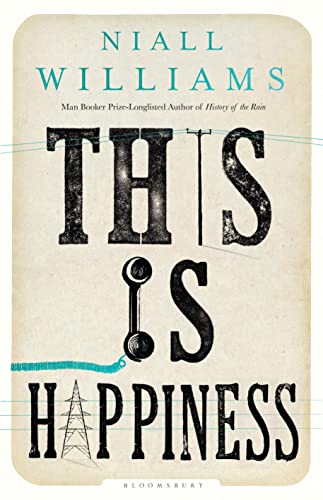
Niall Williams, This Is Happiness (Bloomsbury 2019)

Before the meeting: When we discussed Niall Williams’s History of the Rain in October, a number of people had also read his next book, This Is Happiness. December’s chooser, impressed by their enthusiasm, decided we should all read it.

The book’s first sentence, ‘It had stopped raining’, which sits on a page by itself, is pretty much identical with the final sentence of the earlier book, and the tiny, backward village of Faha in West Ireland is again the setting, but the bulk of the narrative takes place in an earlier period, and there is no obvious reference to the characters or events of History of the Rain. It’s the story of the coming of electricity to the village; a coming of age story of young Noe, who has taken leave of the seminary and is telling the story as an old man in the USA; and a big romantic story of love lost and found by Christy, an older man who befriend Noe.

Page 75* must be one of the book’s few pages that doesn’t mention the absence of rain. It happens in the thick of one of the book’s comic set pieces. It’s not the set piece when the lights go down and the cinema comes alive with amorous grapplings, or the one where Noe goes to the communion rail at Sunday Mass in order to get a good look at the woman Christy left at the altar, or the spectacular one where he is knocked unconscious by a falling electricity pole. On page 75 Noe and Christy are on the first of a number of epic pub crawls.

These pub crawls are as much about music as about alcohol, music performed by men who are shy and nondescript until they start playing, and then are brilliant conduits of a great folk tradition. On this first adventure, when the evening is well under way, Christy startles Noe and everyone else in Craven’s pub by starting to sing:

Not only was Christy singing, he was singing with screwed-up eyes and fists by his side a ballad about love. He was singing it full-throated and full-hearted and before he had reached the second verse it was clear even to Roo the dog that a passionate truth was present in that place. It wasn’t only that this didn’t happen in Craven’s, it was that there was something raw in it, something deeply felt, that was, even to those who had descended blinking into the umbrae and penumbrae of numberless bottles of stout, immediately apparent and made those who first looked now look away.

(page 73)

Christy has come to Faha as a worker in the great electricity project. This episode is our first inkling of his profoundly romantic reason for signing up for the work. Not so obviously, it prepares us for the major role music is to play in Noe’s story. Page 75 itself is a beautiful piece of misdirection. After Christy has sung, Noe writes:

I did the only thing I could do. I went to the counter and got two bottles of stout.

Those bottles are followed by another two, and then another. Greavy the guard arrives and declares that it’s Closing Time (as Noe says, this is one more way in which Faha lags behind the times), but the two of them are incapable of moving. Alcohol-based humour usually leaves me cold, but Niall Williams’s version made me laugh out loud. I suppose the whole book could be read as an extended Irish joke: the villagers have an almost superstitious awe of the one telephone in town, and the coming of electricity has almost cosmic significance for them. If you read the whole book like that, the stereotypical Irish drunkenness in this passage is representative (including the sly invocation of Waiting for Godot):

Getting up proved aspirational. There was the idea of it, quite clear. Unmistakably clear now. There were hands placed on knees for push-off. There was a Right now. There was another when that failed to produce action. A Right so following. And still nothing. Between thought and verb a vacancy, not intended, but not grievous, just gently perplexed, and in that perplex the realisation that Craven’s was not in fact such a bad place at all, was downright comfortable in fact, in fact there were few places on this earth as agreeable. True? Too true. A person could stay here, could stay right here and be quite happy now, quite, for a very long time. What’s your rush? There’s no rush. All the problems of the world could be settled right here.
Right.
Will we go so?

I don’t want to minimise the book’s humour. Far from it. But there’s a seriousness to it that page 75 gives no clue of. Christy’s romance is genuinely touching. The villagers’ resistance to the coming of electricity is more than comic: and these villagers are described as custodians of their land, defending an ancient culture under siege by capitalism – without being at all heavy handed, the narrative reminds us that the Irish were the first people to be colonised by the English. The dramatic decline in the Catholic Church’s power since the 1950s is deftly evoked both in Noe’s commentary and in his own story: his turning away from his priestly vocation is a tiny reflection of the ending of Church-domination in Ireland at large.

After the meeting: There were seven of us. Covid–19 and other coronaviruses kept some away, while one or two had better things to do – and one sent video of spectacular drone art over Sydney Harbour.

This was our end-of-year meeting so we had other business besides the book, but it generated quite a bit of discussion. The discussion was unusual in that quite a few of us read out favourite passages. Indeed, two of the absentees sent lists of quotes – it’s that kind of book. One interesting insight was that the narrative as we receive it is created by an old man looking back on a key moment in his youth, making a story out of it, and casting a benevolent glow over the community in which that moment happened.

Other business, besides of course the plentiful food including a splendid pavlova, included a Kris–Kringle book exchange with the usual mixture of cautious delight and polite almost-hidden dismay, and a poetry reading. We were each supposed to bring a poem, and most did, even one of the absentees.

Poems were a nonsense poem by CJ Dennis (‘Triantiwontigongolope’), a poem about climate change (that was me – Kit Kelen’s ‘Parable’), a Thomas Hardy (‘Heredity’), a Robert Frost (‘A Time to Talk’), a poem from Claudia Rankine’s Just Us (‘sound and fury’), and two poems of Australian patriotism that couldn’t have been more different (Sara Mansour’s ‘My Australia‘ – link to her performing it on YouTube – and a poem whose name and creator I don’t remember celebrating the lump in the throat brought on by, for example, Anzac Day). This little reading, including by two people who said they felt awkward reading poetry aloud, left us reeling.

And that was a wrap for the Book Group for 2022.

* Currently when blogging about books I take a closer look, arbitrarily, at page 75 – moving on to page 76 at my next birthday if the idea works well enough.

Niall Williams’s History of the Rain and the Book Group

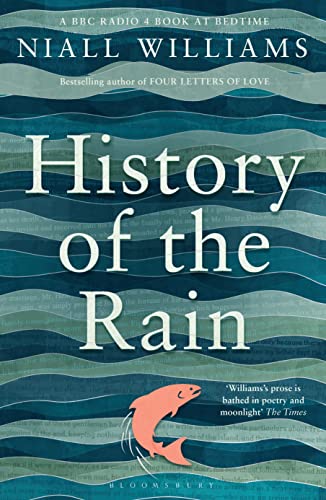
Niall Williams, History of the Rain (Bloomsbury 2014)

Before the meeting: I fell in love with this book at the first paragraph:

The longer my father lived in this world the more he knew there was another to come. It was not that he thought this world beyond saving, although in darkness I suppose there was some of that, but rather that he imagined there must be a finer one where God corrected His mistakes and men and women lived in the second draft of Creation and did not know despair.

That’s nineteen-year-old Ruth Swain, whose mother is a MacCarroll, writing from her sickbed in a book-filled room at the top of a house in the tiny Irish village of Faha, where it has been raining for centuries.

Ruth has inherited her father’s vast library and her head is filled with the books she has read while sick, especially the novels of Dickens. As she tells us the story of her family – her grandparents Irish and English, her mother Mary, her father Virgil and her twin brother Aeneas whom everyone calls Aeny – her prose bristles with references to those books, usually taking the intertextuality to a comic extreme by naming the book’s publisher, date of publication, and its number on her father’s shelves. Her style, as she is told by a schoolteacher who visits her, is ‘a bit Extreme’:

I am that anachronism, a book-reader, and from this my writing has developed Eccentric Superabundance of Style, Alarming Borrowings, Erratic Fluctuations, and I Must lose my tendency to Capitalisation.

Her narrative is indeed eccentric, alarming, erratic, and overflowing with Irish charm. I totally believed in her – so much so that when I reached the Acknowledgements at the end of the story and read Niall Williams speaking in his own voice it was like coming down to earth with a thud.

Ruth’s father is a poet. We don’t get to read a single line written by him, but – in striking contrast to the poet mother in Edwina Preston’s Bad Art Mother (my blog post here) – we have total confidence in his creative process. Here’s a little of the description of the moment when he first begins to create poems, when he is ‘brimming’ after the birth of his children:

There were no words at first. At first there was a kind of beat and hum that was in his blood or in the river and he discovered how somewhere in his inner ear, a pulsing of its own, a kind of pre-language that at first he wasn’t even aware he was sounding. It was release. It was where the brimming spilled, in sound. To say he hummed is not right. Because you’ll suppose a tune or tunefulness and there was none, just a dull droning inside him.

(Page 262)

As well as a multitude of writers, Ruth’s head is filled with the people of Faha, their malapropisms, their idiosyncrasies, their all-knowingness. Possibly because I spent my childhood in the Irish-Catholic diaspora of North Queensland, I didn’t recoil from what you might see as sentimentality in their portrayal, but was delighted by their comic energy. Take this, for example, from the moment when the newborn twins are being baptised in river water in the kitchen of their home:

Everyone closed in around us, everyone wanted to see. It was as if our story was already being told and was moving the hearts of Faha, making people think These two will need help, for right then there was an opening of shirt buttons, a rummaging in handbags, in wallets and coat pockets, a general flurry of rooting about, and then, as the river water was being scooped from the bucket, into our swaddling on the kitchen floor came assorted Miraculous Medals, rosary beads, Memorial cards, brown and blue and green scapulars of various antiquity (and body odour), two Padre Pios, two Pope John Pauls, one Little Flower, Saint Thérèse of Lisieux, Patron-of-the-Missions card, several (because we had been Lost & Found) Saint Anthonys, one Saint Teresa of Ávila, Patron of Headache Sufferers, and from the handbag of Margaret Crowe a sort of crouched-down Lionel Messi-looking Saint Francis of Assisi, all of them well-worn and used and in our first moments in this world falling around Aeney and I now like holy human rain.

(Page 269)

The only reference in that list I had to google is Lionel Messi. All the rest is vintage irish-Catholic. I was so enchanted I barely noticed that horrible ‘Aeney and I’ at the end.

I laughed out loud. I inflicted passages on my long-suffering partner. I cried, though not at the sad bits, which were the only place where the book’s hold on me slackened a little. No, it was when Ruth relents for a moment and lets her awkward and consistently rebuffed suitor wash her hair.

After the meeting: Our host gave us an excellent Irish stew and roast potatoes, which were supplemented by a salad, pastizzi from Newtown and various cheeses, chocolates and ice creams brought by the rest of us.

Not everyone had finished the book; one was still waiting for it to arrive at his local bookshop. Not everyone loved it as much as I did. But we had an animate discussion of the what-about-that-bit variety, and I wasn’t the only one who had been prompted to read sections aloud, as much for the reader’s pleasure as for the listener’s. We all had the impression that the listeners, in this case, enjoyed the experience.

I wasn’t the only one to have wept at the hair-washing incident.