Tag Archives: Novel

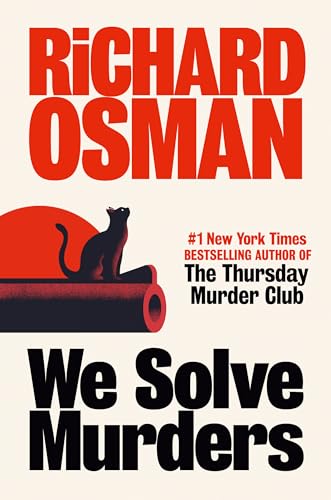
We Solve Murders with Richard Osman and the Book Group

Richard Osman, We Solve Murders (Viking 2024)

Before the meeting: As a boy I read a lot of British crime fiction. When I was 13, I put a brown paper cover on the conveniently-sized novel I had to read for school (Booran by M. J. Unwin – trigger warning for 1950s colonialist attitudes), then transferred the cover to book after book by Agatha Christie and Ngaio Marsh over the course of the year. My parents were impressed that I appeared to read Booran so many times. For my father’s birthday in April, I gave him a pile of ten pre-read paperbacks, and for Christmas another twenty. It didn’t occur to me that my pretence might be transparent.

This means that on the cusp of teenagehood I read enough ‘cosy mysteries’ to last a lifetime. I can still enjoy the odd Agatha Christie on TV or at the movies, but I have no desire to reread the books. Not even The Murder of Roger Ackroyd.

Reading We Solve Murders felt like an enforced return to that territory. It’s a cosy mystery mixed with a comedy action thriller, written with amiable wit in elegant prose, with a plot that features many exotic locales, influencers being murdered and a villain who uses generative AI to disguise their identity. (Incidentally, it’s a bold move in a genre novel written in the style of a friendly English gentleman to have the villain’s chapters preceded by a Chat GPT prompt to render text ‘in the style of a friendly English gentleman’. I can’t be the only one to think Richard Osman is having a little joke at his own expense.)

This is explicitly intended to be the first book in a series, like Osman’s first series The Thursday Murder Club, and we can probably expect a TV movie, hopefully less mediocre than the recent TMC movie. There are moments where I would laugh if I saw them on screen. Just one example, from page 244. Amy, the hard-boiled heroine is talking to Nelson, who may be about to kill her:

‘It’s just you don’t seem like an assassin?’ says Amy. ‘And I know a lot of assassins.’
‘I am not an assassin,’ says Nelson, his tone very reasonable. ‘I’m just, you know, a regular criminal and politician.’

Boom tish!

The story rattles along at a good pace. The characters are an amusingly diverse bunch of types. There are twists and turns and plenty of travel. It is what it is and it’s terrific at it. I was entertained, but it took many more hours than a movie would.

After the meeting: It was a small group, not for lack of interest in the book but because of family birthdays, travel commitments, viruses – and our current policy of sticking to our designated dates no matter what. Not for us the practice of that group who don’t decide on a date until everyone has read the book. Still, the four of us enjoyed each other’s company until well after my watch announced it was my bedtime. Among many things, including the colourful career of one us, we did talk about the book.

One chap put it nicely: Richard Osman works in popular entertainment, having devised and presented a number of successful game shows. He knows what works with audiences and has brought that knowledge to the new (to him) field of novel writing. I’m pretty sure someone said that there’s a big overlap between his target readership and people who go on cruises. (We had an interesting digression into the sociology of cruise ships.)

When it was observed that when Australian comics try to replicate those British game shows they don’t always come up with a winner, we realised that their Englishness is at the heart of their charm. And that is also true of this book. Our one English-born and bred group member spoke eloquently on this point. There’s a character who can be relied on to give details of which roads he takes to get from one village to another: this, our group member assured us, has the ring of authenticity. The book is firmly rooted in a particular place – a village in the New Forest. Another chap who lived for some time in an English village testified that, just as in the book, in a two-pub village most pub-goers were loyal to one establishment and wouldn’t dream of visiting the other. What I read as cosiness is also a celebration of something distinctively English. And they did say ‘English’, not ‘British’.

Someone asked, ‘Did you laugh?’ No one said yes. On the page, the book is often funny but not laugh-out-loud. We shared stories of books that did make us laugh out loud – a Georgette Heyer regency romance and the The Traveller’s Tool by Sir Les Patterson were mentioned. (There was another interesting digression about Barrie Humphries.) But we had a sense that a movie, or preferably a TV series, might be on the way.

One of the non-attendees summed it up well in a WhatsApp post: ‘No thinking, just chorkling. The goodies win / the baddies get their come-uppence. Very English.’


The Book Group met, and I wrote this blog post, on the land of Gadigal and Wangal of the Eora Nation as the days are growing suddenly warmer. I acknowledge Elders past and present, and welcome any First Nations readers.

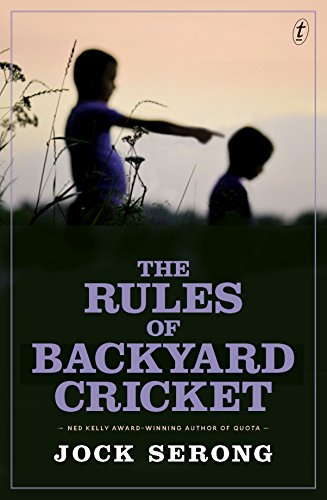
Jock Serong’s Rules of Backyard Cricket

Jock Serong, The Rules of Backyard Cricket (Text 2017)

I was given The Rules of Backyard Cricket as a gift some years ago. Friends had told me it was excellent, but I knew nothing about it. The cover illustration, which shows two small boys in silhouette, one of them pretending to shoot the other in the back of the head, suggested that it might be less benign than the ‘Cricket’ episode of Bluey.

The opening chapters have a lot in common with that episode. Two brothers in the suburbs spend endless hours playing cricket with makeshift equipment and their own idiosyncratic rules. Like Bluey‘s Rusty they become excellent and go on to bat for Australia.

But that’s where the similarity ends: the brothers, Darren and Wally Keefe, are locked in vicious mutual combat even while their brotherly bond is strong, which puts the book in a long tradition of stories about quarrelling brothers: think Cain and Abel, Jacob and Esau, Romulus and Remus, William and Harry. As they come to prominence in the cricketing world, Darren, the younger brother, attracts headlines for his off-pitch misbehaviour with drugs and chaotic relationships, and a terrible hand injury excludes him from cricketing heights. Wally becomes captain of the Australian team and can be depended on to present the ideal face of professional sport, though his personal life suffers under the strain. They typecast themselves: ‘Wally as responsible, grave: a leader. [Darren] a force of nature: a talented freak with no mooring.’ (Page 73)

In the background is the world of organised crime, match-fixing and corruption – embodied in Craig, their friend from teenage years who now lives a shadowy criminal life. Also in the background is their single mother, whose unfailing belief in both of them has been crucial to their success, and their long-suffering women partners, where I choose the word ‘suffering’ deliberately.

At the start of the novel, Darren is locked in the boot of a car, on the way to an unknown destination where, he assumes, he is about to be killed. He’s not sure who is going to kill him or why, and as he tries to work his way free he thinks back over his life, and in so doing narrates the book. Each chapter begins with a brief report on what’s happening in that boot, a device that both reassures readers that the story is something other than a biography of two fictional sportsmen, and challenges us to spot the moment when Darren falls foul of someone murderous.

I’m not a cricket fan, but I can follow a conversation about it (unlike the AFL in Helen Garner’s The Season). I loved the descriptions of cricket matches here – the fast bowling, the sledging, the many technicalities. Some readers will need to skim those bits. I’m with them in not getting most of the references to famous cricketers, but it didn’t worry me.

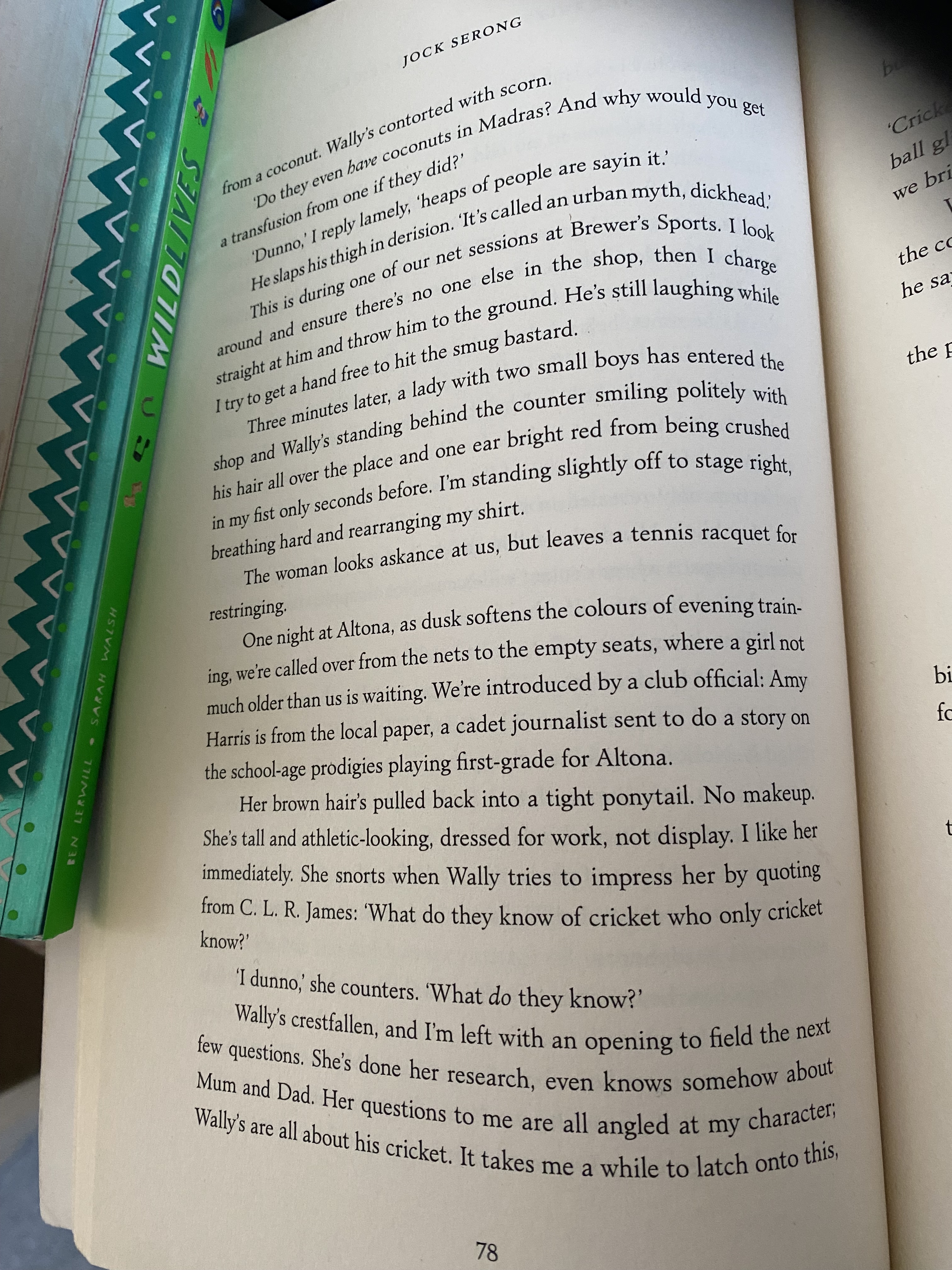
On page 78*, about a quarter into the book, the teenaged brothers have recently moved out of home. Wally is being recognised as a cricketer of ‘phenomenal self discipline’ but, according to Darren, when they play in the back yard he’s still ‘vengeful, savage and petulant’. They are in a sports-gear shop where Wally has a job, and where Darren visits to play with the cricket gear.

Two things happen on this page, one to do with the boys’ relationship and the other introducing a character who will play a crucial role. First, Wally sneers at Darren for believing an improbable story about a Test cricketer being given a transfusion ‘from a coconut’:

I look around and ensure there’s no one else in the shop, then I charge straight at him and throw him to the ground. He’s still laughing while I try to get a hand free to hit the smug bastard.
Three minutes later, a lady with two small boys has entered the shop and Wally’s standing behind the counter smiling politely with his hair all over the place and one ear bright red from being crushed in my fist only seconds before. I’m standing slightly off to stage right, breathing hard and rearranging my shirt.
The woman looks askance at us, but leaves a tennis racquet for restringing.

There’s comedy in the way the brothers fight compulsively like much younger children. But there’s something unnerving about the way Wally laughs and recovers quickly to present a polite face to the world. By referencing stage directions – ‘slightly off to stage right’ – Darren invites us to visualise the scene: one brother stands centre stage as far as the world is concerned, while the other is a dishevelled and disreputable support actor. This is the story as seen by the latter, and the scene is emblematic of their relationship.

Then:

One night at Altona, as dusk softens the colours of evening training, were called over from the nets to the empty seats, where a girl not much older than us is waiting. We’re introduced by a club official: Amy Harris is from the local paper, a cadet journalist sent to do a story on the school-age prodigies playing first-grade for Altona.
Her brown hair’s pulled back into a tight ponytail. No makeup.
She’s tall and athletic-looking, dressed for work, not display. I like her immediately. She snorts when Wally tries to impress her by quoting from C. L. R. James: ‘What do they know of cricket who only cricket know?’
‘I dunno,’ she counters. ‘What do they know?’
Wally’s crestfallen, and I’m left with an opening to field the next few questions. She’s done her research, even knows somehow about Mum and Dad. Her questions to me are all angled at my character; Wally’s are all about his cricket. It takes me a while to latch onto this, but like an idiot I play extravagantly into her hands.

Darren’s extravagance gives Amy her headline when he says that he and Wally bring people what they want from cricket now, drama and action: ‘Bradman is dead.’ It’s one of Darren’s rare victories in their lifelong rivalry – and like all his victories it’s a bit on the nose.

If you don’t know who Bradman was, you’d be pretty lost in this book. But you don’t necessarily have to know about C. L. R. James. In fact, it feels as if Jock Serong is speaking directly here, as it seems unlikely that Darren would have read the work of Trinidadian Marxist intellectual C. L. R. James, even if he had heard James’s riff on Kipling’s, ‘What do they know of England who only England know?’ Whether Amy knows where the quote comes from doesn’t matter. She sees it for what it is, a bit of misjudged pretension on Wally’s part. She’s out for a juicy headline. She’ll continue to be out for juicy stories for the rest of the book.

Like the fighting between the brothers, the headlines get darker as time goes by. So yes, the book is about cricket – backyard, community, state, international test and one-day varieties. It’s also about the corrupting effects of capitalism on sport, about masculinity toxic and otherwise, about the damaging effects of celebrity, about the role of the media. And it moves at a ripping pace.


I wrote the blog post on the land of Gadigal and Wangal of the Eora Nation where the days may be be growing warmer and lorikeets are starting to make their presence known. I acknowledge Elders past and present, and welcome any First Nations readers.


My blogging practice is to focus on the page that coincides with my age, currently 78.
Debra Oswald’s 100 Years of Betty and the Book Club

Debra Oswald, One Hundred Years of Betty (Allen & Unwin 2025)

Long before the meeting: If not for the Book Club, I would have put this book aside at page 14. Betty is the seventh child in a desperately poor family in South London. Her Catholic mother dies soon after giving birth to a tenth live child. As Betty and her Protestant father emerge from church they pass the two priests who have said the funeral Mass, one ‘in a creamy chasuble with scarlet embellishments, the other sporting a gold-embroidered number’. Betty’s father delivers a tirade:

Tell my daughter Betty the truth on this day we’re burying her poor Catholic mother. Tell her that it’s all a lie and that you two – with your fancy clothes and your Latin gibberish and your snouts in the trough – you know it’s a lie. Your religion is a pack of fairy stories to bamboozle poor people and keep us in line. Tell her.

I don’t mind a bit of anti-Catholic vitriol. In my devout childhood I was intrigued by mockery of the saints in a Walter Scott novel, and as a 17-year old trainee religious I was thrilled by Dostoevsky’s Grand Inquisitor. BUT this just gets too much wrong. Two priests saying Mass for a poor person’s funeral? Not likely! Even one priest standing at the door of the church still wearing his vestments? Also not likely! And even a quick google would have told the author (or certainly her editors) that priests wore black chasubles at funerals – never cream or (gasp!) scarlet.

But what the Book Club wants …


Before the meeting: I did persevere. It’s not a terrible book, and there were no other moments that felt so wrong.

Betty works in a factory, emigrates to Australia, falls in love and makes two lasting friendships on the ship, marries a rich man who becomes abusive then kills himself leaving her destitute. She has two children each of whom is problematic, protests against the Vietnam War, joins Women’s Liberation, spends some time living in Mexico where she loves swimming in cenotes, comes back to Australia for her daughter’s wedding, works in television where she eventually becomes a writer, has her heart broken a number of times, helps out in an AIDS ward, has a severe depressive episode, develops breast cancer, finds happiness when reunited with her first love, sees friends die. Oh, and there’s a daughter she gave out for adoption before leaving England. As she moves through the phases of her life her name changes: Betty, Beth, Elizabeth, Lizzie, Liz, and finally back to Betty. Sometimes I cared and was engaged, sometimes not so much. I did laugh a number of times.

I never got a feel for the narrative voice – the voice of 100-year-old Betty. There are self-conscious moments when Betty warns us (mostly disingenuously) that things won’t turn out as they do in novels, or expects us to be surprised at her earthiness, but these don’t create the sense of an actual person telling the story.

The penny dropped for me in Chapter 16, when a friend urges 63-year-old Betty to pitch a long-held idea for a show to a TV channel. Betty realises she no longer has ‘the stamina to deal with the machinery of TV drama, the muscle spasms of hope and dejection, the delicate calculations of conciliation and obstinacy required of you’. That night in bed, her husband suggests that she could put the idea into novel form, and Betty’s career as a novelist is launched.

Ah! I thought. One Hundred Years of Betty is really the treatment for a TV show. When it makes it to the screen, which is very likely, I’ll be happy to watch it.

I’m sorry to be so negative. I may have come to the book with inappropriate expectations. Maybe I was wanting the story of an individual life told in the context of world events in the manner of Annie Ernaux’s The Years, Alan Hollinghead’s Our Evenings, or Ian McEwan’s The Lesson. Maybe I expected a fictionalised treatment of Debra Oswald’s mother’s generation, something probing and compassionate. This isn’t one of those books, and nor does it need to be.

After the meeting: Unusually, we met in a pub. As always with the Book Club, we had two books on our agenda. The other one, Susan Hampton’s Anything Can Happen, took up most of the discussion.

One of the other Catholics said she registered the problems with the post-funeral scene that so irritated me, but it hadn’t disturbed her. One of the non-Catholics said the scene felt very Anglican to her rather than Catholic.

A couple of people felt there was a box-ticking element: the songs, devices, events more or listed as a way of marking the different eras. Others felt that was a feature rather than a bug. Betty’s life touches on major events of her times, is sometimes significantly changed by them, without their ever becoming her central passionate concerns.

Someone described the book as an excellent summer beach read, engaging enough to keep you entertained without making big demands. She said it a lot better than that, and I think we all agreed.


The Book Club met, and I wrote this blog post, on land of Gadigal and Wangal of the Eora nation. I acknowledge their Elders past present and emerging, and gratefully acknowledge their care for this land for millennia. I welcome any First Nations readers of this blog.

China Miéville’s Un Lun Dun

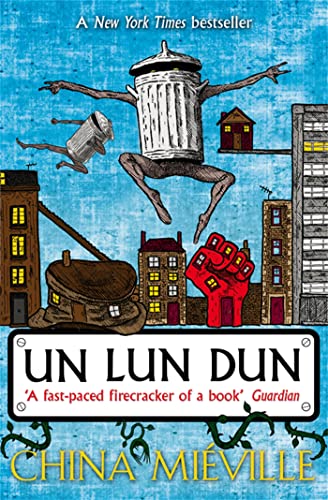
China Miéville, Un Lun Dun (Macmillan 2007)

I was quite a few pages into Un Lun Dun before I realised it’s a children’s book. It’s wonderfully fast-paced. It’s witty, endlessly inventive, full of surprising plot twists, respectful of young readers and welcoming to old ones. I had a great time from start to finish. I’d say China Miéville did too, and so would any 10 or 11 year old with the stamina for a 521 page novel and a taste for the scary fantastic.

UnLondon – like Parisn’t, No York and other abcities – exists alongside its real-world equivalent. It’s mostly constructed from garbage and discarded objects that have crossed over. Broken umbrellas are particularly significant. The citizens of UnLondon are a motley lot, not all of them completely human. They are threatened by the Smog, a sentient noxious cloud that feeds on smoke and pollutants, can break up into smoglets and possess the living and the dead. Aided by its greedy or power-hungry humanish accomplices, it plans to take over UnLondon and, later, the world. There are smombies, binjas, stink-junkies, a doughnut-shaped sun and any number of weird creatures and buildings, many of them not only described but lovingly illustrated in ink drawings by the author.

Into this situation wander young Zanna and her friend Deeba. Zanna is hailed as the Shwazzy, which we learn is a phonetic representation of the French choisie. A prophetic book foretells she will defeat the Smog. But, mercifully for the enjoyability of the novel, the book is thoroughly unreliable (much to its own regret, because of course the book can talk).

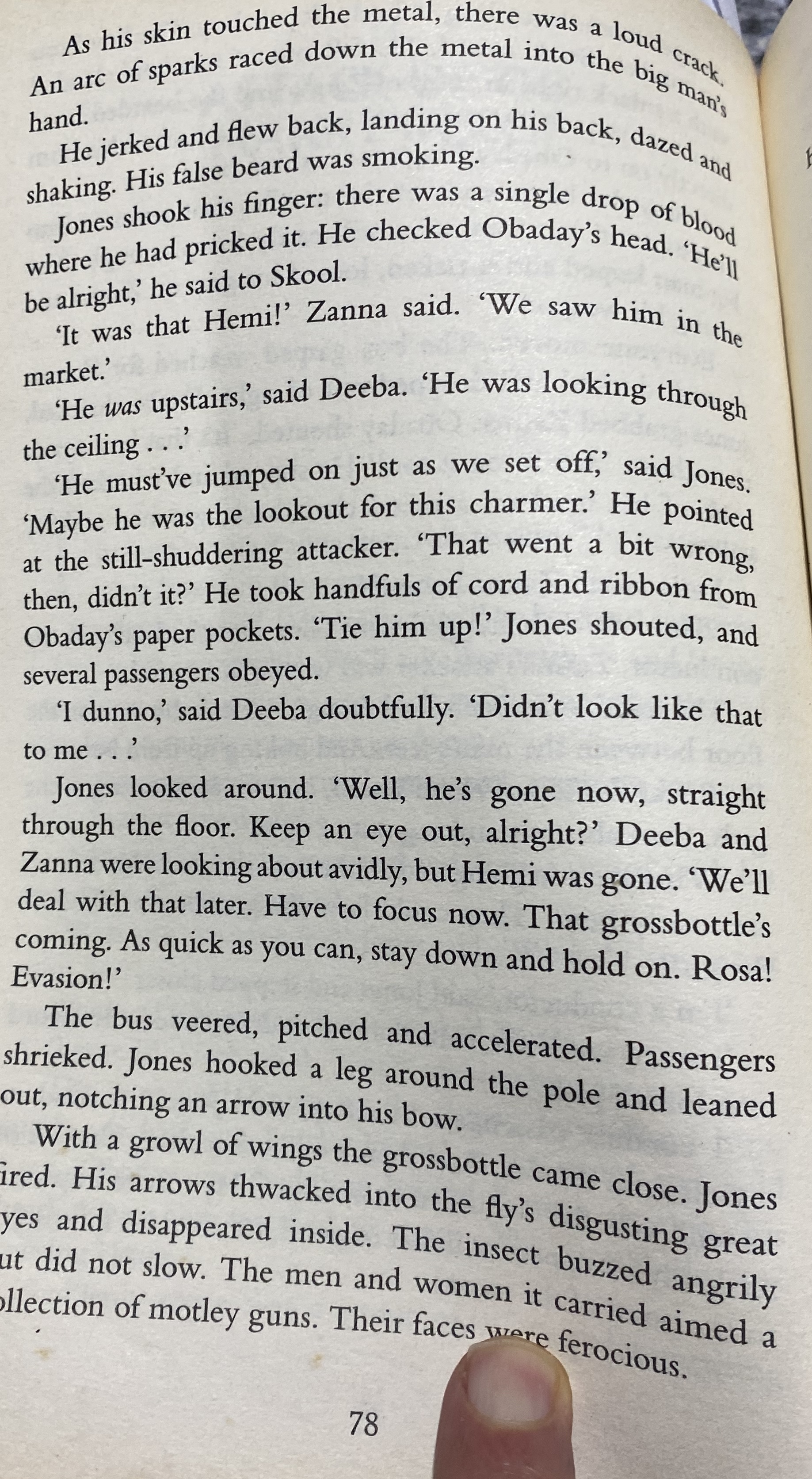
At page 78* things are just warming up, but even on this one page a gallery of characters is on display and there’s plenty of colour and movement.

Let me take you through it.

As his skin touched the metal, there was a loud crack. An arc of sparks raced down the metal into the big man’s hand.
He jerked and flew back, landing on his back, dazed and shaking. His false beard was smoking.

The skin belongs to Jones, an UnLondon bus conductor. Naturally, he also conducts electricity, and here he sends an elecric shock into the sword wielded by a big, bearded man who is attempting to abduct Zanna.

Jones shook his finger: there was a single drop of blood where he had pricked it. He checked Obaday’s head. ‘He’ll be alright,’ he said to Skool.

Jones has injured his finger by touching the tip of the bearded man’s sword. Along with Jones and a milk carton called Curdle, Obaday and Skool are Zanna and Deeba’s companions. Obaday, who wears clothes made of paper and has pins instead of hair, has been knocked unconscious on page 77. The silent Skool, Obaday’s friend and constant companion, is invisible inside a deep-sea diver’s suit. (The meaning of Skool’s name is to be revealed in the final battle scene.)

‘It was that Hemi!’ Zanna said. ‘We saw him in the market.’
‘He was upstairs,’ said Deeba. ‘He was looking through the ceiling . . .’
‘He must’ve jumped on just as we set off,’ said Jones. ‘Maybe he was the lookout for this charmer.’ He pointed at the still-shuddering attacker. ‘That went a bit wrong, then, didn’t it?’ He took handfuls of cord and ribbon from Obaday’s paper pockets. ‘Tie him up!’ Jones shouted, and several passengers obeyed.
‘I dunno,’ said Deeba doubtfully. ‘Didn’t look like that to me . . .’
Jones looked around. ‘Well, he’s gone now, straight through the floor. Keep an eye out, alright?’ Deeba and Zanna were looking about avidly, but Hemi was gone.

Hemi is a boy who approached our heroines when they first arrived in UnLondon. He seemed friendly, but they were warned that he was a ghost boy who wanted to steal their bodies. This, is turns out much later, was only partly true. But they fled from him and now they realise that he has followed them onto the flying bus, and has somehow passed down through the ceiling of the lower deck and then out through the floor. Hemi is an ambiguious figure at this stage of the story – as Deeba’s doubts about Jones’s narrative remind us.

But Hemi and the man with the sword must now wait because the bus is being attacked by a grossbottle, a giant fly, with a platform on its back carrying a gang of heavily armed airwaymen and airwaywomen.

‘We’ll deal with that later. Have to focus now. That grossbottle’s coming. As quick as you can, stay down and hold on. Rosa! Evasion!’

Rosa is the bus driver.

The bus veered, pitched and accelerated. Passengers shrieked. Jones hooked a leg around the pole and leaned out, notching an arrow into his bow.
With a growl of wings the grossbottle came close. Jones fired. His arrows thwacked into the fly’s disgusting great eyes and disappeared inside. The insect buzzed angrily but did not slow. The men and women it carried aimed a collection of motley guns. Their faces were ferocious.

And so it goes.

There is an army of unbrellas, an infestation of Black Widows in Webminster Cathedral, a shadowy organisation called the Concern that sees the Smog’s attack as a commercial opportunity, a diabolical link between the Smog and the UK government. Things are rarely what they seem. Expectations are always met but rarely in the way you expect.

What’s not to like?


I wrote this blog post on Wulgurukaba land, the luxuriant island of Yunbenun, and have finished it with the tropical sun warming my back. I acknowledge the Elders past and present, and welcome any First Nations readers.


My blogging practice is to focus on the page that coincides with my age, currently 78.
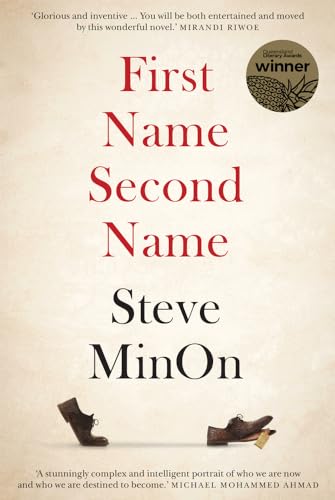
Steve MinOn’s First Name Second Name

Steve MinOn, First Name Second Name (University of Queensland Press 2025)

A friend told me about this book: ‘A man dies in Brisbane leaving a note that he wants his body to be taken to Innisfail to be buried. When his relatives ignore the note, his dead body rises from the grave and walks there.’

As I may have mentioned once or twice on this blog, I come from Innisfail, Ma:Mu land. Point me in the direction of a book or work of art that features it – a note from a Chinese shopkeepera poem by David Malouf, a social realist novel by Jean Devanny, a memoir by Rebecca Huntley, a TV series by Anthony LaPaglia – and I’ll come running. So I borrowed First Name Second Name from the library.

My friend’s description of the book omitted a couple of key points. The man who dies, Stephen Bolin, is mixed race Chinese, and the note that he leaves asks not just that his body be taken to Innisfail, but that it be strapped to two bamboo poles and then carried there by his sisters, one at either end of the poles. The other key thing my friend didn’t mention is that interspersed with the story of the reanimated corpse’s journey is the history of his family, beginning with his great grandfather Tam Bo Lin on the North Queensland goldfields.

The book progresses in alternate chapters.

The family history chapters progress by leaps and bounds. Tam Bo Lin marries an Irish woman who decides that his personal name, ‘Bo Lin’, will become their family name, ‘Bolin’ (‘First name second name,’ she says, pointing to the marriage papers). After many years he is kicked out of the marital home when his wife discovers that he has been sending money to a wife back in China, married before he came to Australia. His descendants live through Federation, the World Wars, the Depression, the Bjelke-Petersen era and the coming of Pauline Hanson, mostly marry non-Chinese partners, and over the generations they become less and less comfortable in their Chinese heritage. Stephen, who is to become the walking corpse, is a Gay man who hates what he sees as the fetishing of Asian bodies – of his body seen as Asian.

The corpse’s chapters, each titled ‘Jiāngshī’, are told from the corpse’s point of view. He has an irresistible drive to continue walking north, even as his body is decaying, and bits fall off, or are nipped off by a dog or eaten away by worms and insects. Every now and then he is compelled to leap on a living person and suck their life force from them. A couple of chapters in, I googled “Jiāngshī”, and found an ancient Chinese tradition of ‘hopping vampires’ that has inspired a genre of modern books and movies in Hong Kong and elsewhere. I haven’t read or seen any of those works, but I doubt if any of them depict the Jiāngshī as unwilling, agonising characters like Stephen, who takes absolutely no joy from his condition and only dimly understands it.

As the family history approaches the present and Stephen’s corpse nears Innisfail, a question arises: what does it all mean?

Of course, as zombie filmmaker George Romero said, ‘Sometimes a zombie is just a zombie,’ or he may have said, ‘A zombie is always just a zombie.’ (If you can find the actual quote please tell me in the comments.) Sure, a jiāngshī is also just a jiāngshī. It’s hard enough being compelled to walk a thousand miles while dead without having to mean something. All the same, as I read on, a number of metaphorical possibilities hung over the narrative. As a Gay man who had cut ties with his family to live first in Sydney then in London, Stephen as a corpse is compelled to do what his living self needed to do at some deep, unacknowledged level, and reconcile himself with his family, in this case symbolised by the place of his birth. Maybe, stretching it, as a settler Australian he has been deeply influenced by First People’s sense of the importance of Country. Maybe, stretching it in another direction, anyone who comes from Innisfail in particular can’t resist its call, living or dead. Or – and this metaphor is spelled out in the final chapter – having wanted so much to pass as white, he now must return to the Innisfail joss house and be reclaimed by his Chineseness. (Incidentally, the joss house, lovingly described in the relevant chapter as the somewhat neglected building I remember from my 1950s childhood, has been restored in real life and has a notice out the front asking that we not call it a joss house but ‘the Innisfail Temple’. It has a website.)

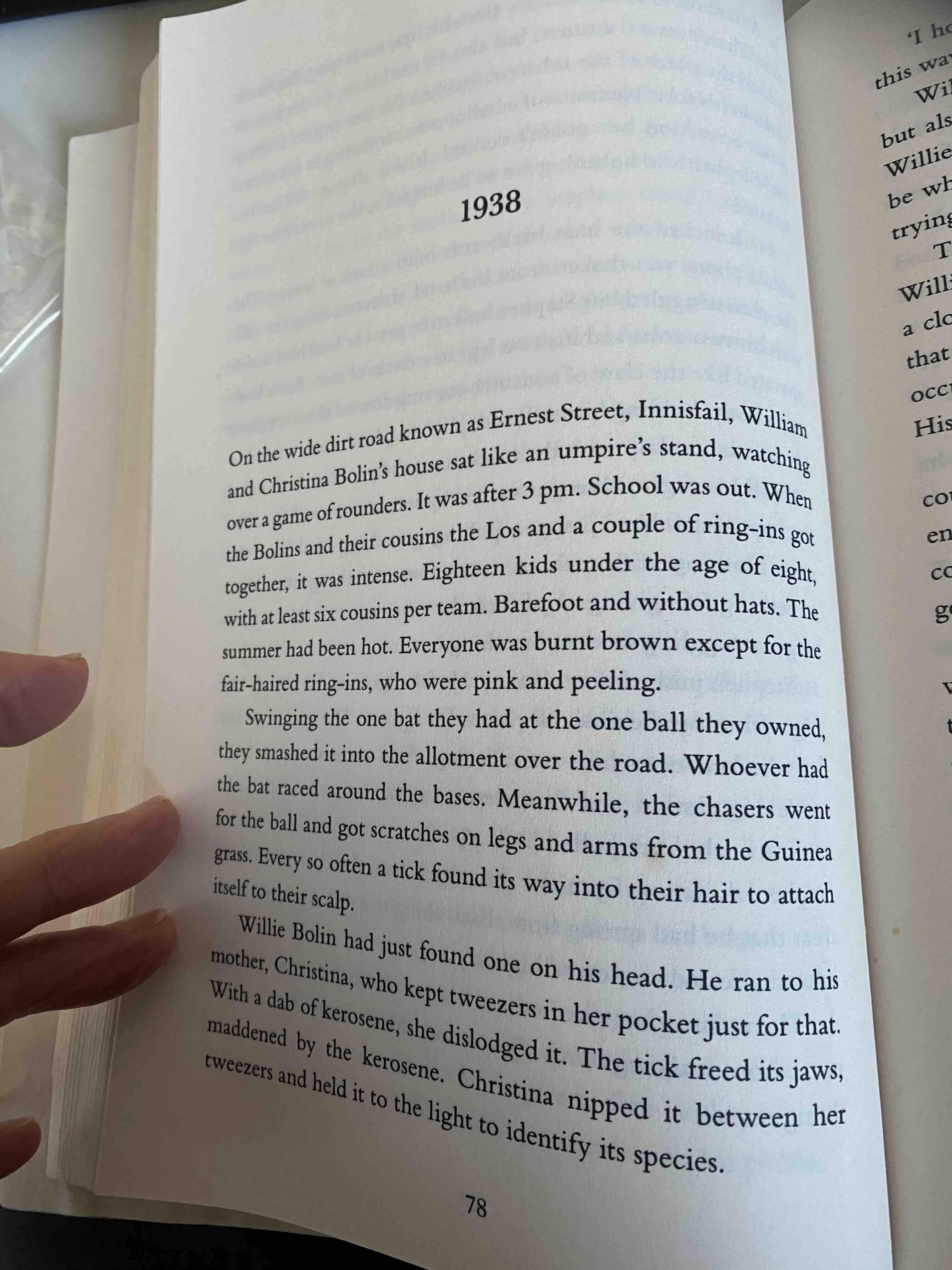
If you picked up a copy in a bookshop and turned to page 78*, you would have no idea you were looking at a zombie-adjacent genre novel. William in this extract is Tam Bo Lin’s son, Stephen’s grandfather. Christina, née Lo, is perhaps the only other Chinese heritage person a Bolin has married.

The chapter begins like all the family history chapters, with the year, and like all the chapters evokes the period and the place with a deft touch:

1938

On the wide dirt road known as Ernest Street, Innisfail, William and Christina Bolin’s house sat like an umpire’s stand, watching over a game of rounders. It was after 3 pm. School was out. When the Bolins and their cousins the Los and a couple of ring-ins got together, it was intense. Eighteen kids under the age of eight, with at least six cousins per team. Barefoot and without hats. The summer had been hot. Everyone was burnt brown except for the fair-haired ring-ins, who were pink and peeling.
Swinging the one bat they had at the one ball they owned, they smashed it into the allotment over the road. Whoever had the bat raced around the bases. Meanwhile, the chasers went for the ball and got scratches on legs and arms from the Guinea grass. Every so often a tick found its way into their hair to attach itself to their scalp.
Willie Bolin had just found one on his head. He ran to his mother, Christina, who kept tweezers in her pocket just for that.
With a dab of kerosene, she dislodged it. The tick freed its jaws, maddened by the kerosene. Christina nipped it between her tweezers and held it to the light to identify its species.

You don’t need to come from Innisfail to enjoy this, but it helps. Ernest Street is still a wide road now, part of the main north-south highway. Guinea grass is an invasive weed in North Queensland, which we used to call blady grass – I have stories about those scratches. Rounders, a poor relation of baseball, was played by the young at least as much as cricket. I would have thought ticks in the hair were less likely than on other parts of the body in those circumstances, but ticks were still an issue, if not on Ernest Street, in the 1950s.

Willy, seen here running to his mother, will fall in love with a white woman and marry her in spite of her abusive father’s racist opposition. He becomes manager of a department store in Proserpine further south, a domineering father deeply disappointed in his effeminate son Stephen.

The page gives you a sense of the quiet, assured story of the family. Add gruesome undead action and who could resist?


I was born and spent my first 13 years on beautiful Ma:Mu country. I wrote this blog post on land of Gadigal and Wangal of the Eora Nation,. I acknowledge the Elders past and present of both countries, never ceded.


My blogging practice is to focus on the page that coincides with my age, currently 78.
Emily Maguire’s Rapture

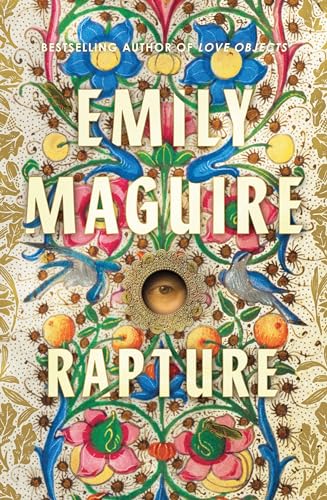
Emily Maguire, Rapture (Allen & Unwin 2024)

Rapture is a historical fiction set in the 9th century of the current era. An English former priest living in Germany teaches his motherless daughter to read and encourages her to think for herself. After his death, with the connivance of Randulf, a worldly a young monk who fancies her, she dresses in men’s clothing and joins the Benedictine order.

If you’ve heard almost anything about this book, you already know where the story leads. It must have received the least spoiler-careful reception of any novel. Ever.

Though I may be being over careful, you won’t get the Big Spoiler from me. I’ll just say that as one who was raised in pre–Vatican Two Catholicism, I found the subject irresistible, and the telling wonderful.

You can read excellent reviews by Heather Nielson in the Australian Book Review (link here, spoiler already in the url), Ann Skea in the Newtown Review of Books (link here), and in the blogosphere, intelligent as always, at Reading Matters, ANZ LitLovers, Theresa Smith Writes and This Reading Life. I’m keeping to my resolve and sticking with page 78*.

As it happens, possibly because of shortsightedness, it took me three attempts to land on page 78.

First I looked at page 76, where Randulf and Agnes get their story straight: Randulf has discovered a beggar-boy who was proficient in Latin and theology and will propose that he be accepted to train as a monk in his abbey. If accepted, Randulf says, there will be no trouble with the story. Among monks, he says, ‘It is not done to exchange histories or probe for intimacies.’

Realising I had the wrong page I turned, inadvertently, to page 80, where Agnes hears Randulf pissing and ‘hot panic grips her’ – but he reassures her that the monks wash rarely, sleep fully clothed, and have latrines where privacy ensures they never glimpse even an ankle of another: ‘Your modesty would not be better preserved were you empress of the realm.’

Page 78, when I finally got there, wasn’t less pointed.

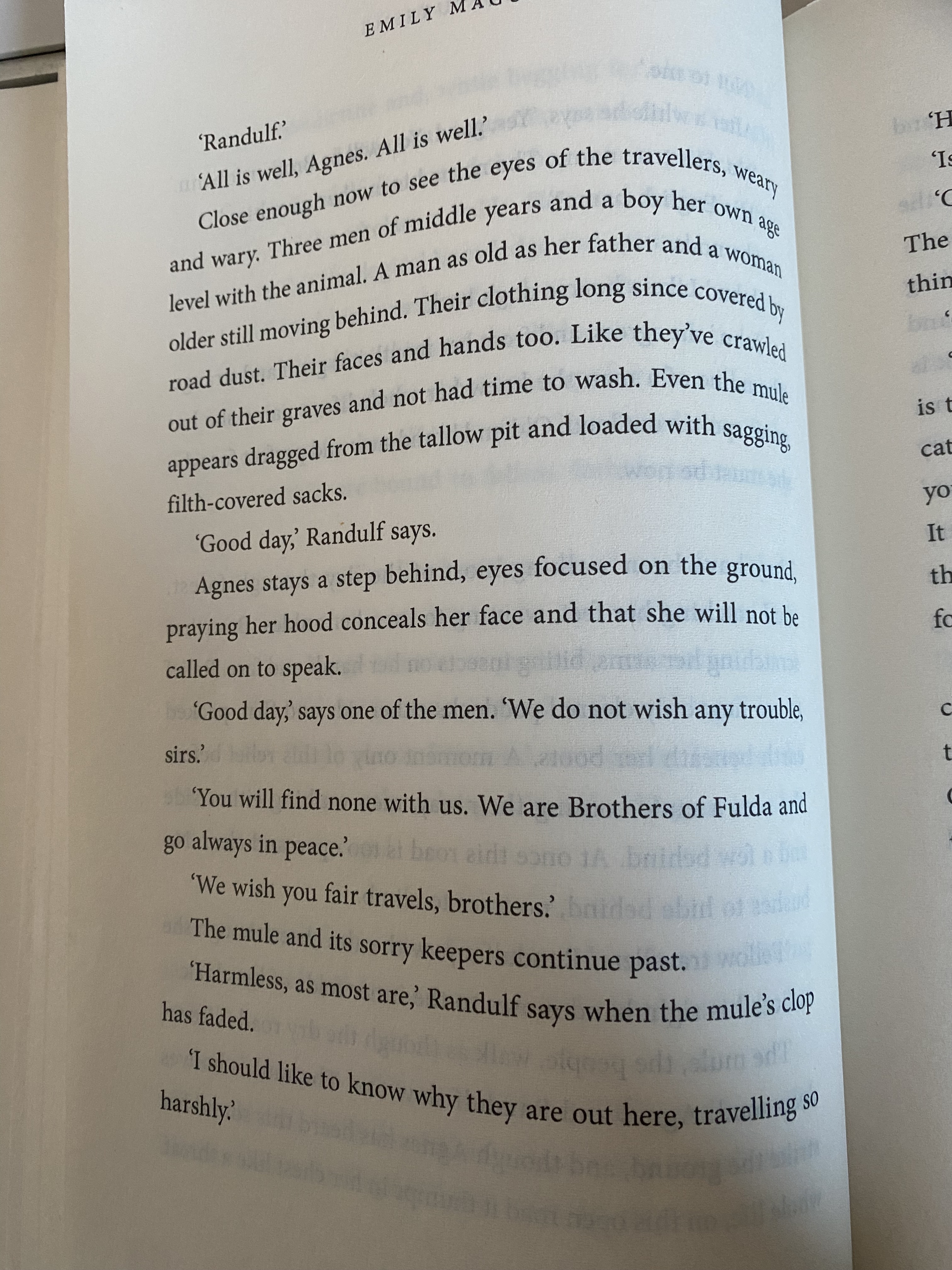
Agnes, disguised as a boy but not yet a monk, is travelling with Randulf to the Princely Abbey of Fulda (a real place, you can see a photo of the building, now a cathedral, at this link). They see some people with a mule coming their way on the open road. ‘Fellow travellers,’ Randulf says cheerfully, but his hand moves towards his concealed dagger. Agnes is terrified:

It’s an unexceptional encounter, a non-event. But it speaks to character and to the texture of the world Emily Maguire has created, and it foreshadows later events.

‘Randulf.’
‘All is well, Agnes. All is well.’

The relationship between these two characters is one of the joys of the book. Agnes is still a teenager. Randulf is older, but still a young man. He has won her trust and confidence by his genuine appreciation of her as a thinking person when he came to visit her father. They have had one sexual encounter – not exactly rape, but not a good experience for her, and in her piety and her abhorrence of childbirth she has made it clear that it is never to happen again. (Spoiler: it does, only better!) These two lines of dialogue evoke their current relationship: she looks to him for protection; as a man of he world he can reassure her.

Close enough now to see the eyes of the travellers, weary and wary. Three men of middle years and a boy her own age level with the animal. A man as old as her father and a woman older still moving behind. Their clothing long since covered by road dust. Their faces and hands too. Like they’ve crawled out of their graves and not had time to wash. Even the mule appears dragged from the tallow pit and loaded with sagging, filth-covered sacks.

There’s a Candide element to Agnes’ story. She has had a protected life, and is about to enter a differently protected life in the monastery. This is her first glimpse of the hardship endured by people who do not enjoy the protection of the Church or a prince. On the next page Randulf explains that it is not lack of godliness that makes life hard for people from further north, but economics – the further from big churches people live the greater their poverty, as they share less in the wealth accumulated by the Church.

‘Good day,’ Randulf says.
Agnes stays a step behind, eyes focused on the ground, praying her hood conceals her face and that she will not be called on to speak.
‘Good day,’ says one of the men. ‘We do not wish any trouble, sirs.’
‘You will find none with us. We are Brothers of Fulda and go always in peace.’
‘We wish you fair travels, brothers.’

This is wonderful use of dialogue to evoke the dangers of that world. We also see that at this stage Agnes is not confident in her disguise. With the passage of time, though she identifies completely as female (this is not a novel about gender fluidity) she becomes more confident that her disguise will work (until, not a spoiler, it doesn’t!).

‘Harmless, as most are,’ Randulf says when the mule’s clop has faded.

This is an adept piece of foreshadowing. The pair are to go on another journey years later when Agnes is fully Brother John. Again Randulf will be protective, but plague and war have made the environment infinitely more dangerous and hostile. The horror-movie quality to some of the description on page 78 – ‘crawled out of their graves’ and ‘dragged from the tallow pit’ – prepares the reader at a subliminal level for a pivotal moment on that later journey where Randulf and Agnes are horrified by a spectacle that is described only in a couple of disjointed phrases many pages later, but which the reader pretty much has to imagine.

That’s just one page: sadly it doesn’t contain any of the steamy sex, or the equally enthralling theological argumentation. It conveys only a little of the constant dread that hangs over Agnes/John, which for me is the most powerful element of the book. She is doomed, but not before some magnificent achievements and for me the way she meets her doom is both devastating and narratively satisfying.


I wrote this blog post on land of Gadigal and Wangal of the Eora Nation, where a kookaburra flew right in front of me as I was walking this morning. I acknowledge the Elders past and present of this beautiful country, never ceded.


My blogging practice is to focus on the page that coincides with my age, currently 78.
We Do Not Part with Han Kang at the Book Club

Han Kang, We Do Not Part (2021, translated e. yaewon & Paige Aniyah Morris, Hamish Hamilton 2025)

Before the Book Club meeting: Han Kang was awarded the 2024 Nobel Prize in Literature, so her most recent book to be translated into English seemed a good choice for the Book Club.

The book falls into at least three parts. (Spoilers ahead.)

Part One: The narrator, who is experiencing suicidal depression, receives an urgent request from a friend, Inseon, to come to her in hospital. When she arrives, she finds Inseon has done a terrible injury to her hand and is receiving frequent, excruciatingly painful treatment, graphic descriptions of which are interspersed with a history of their friendship and their artistic collaborations. Inseon asks the narrator to go to her house on the remote island of P– and feed her pet bird, who will otherwise die.

Pat Two: The narrator makes the arduous journey to Inseon’s house, the final stage of it on foot through a blizzard. When she arrives, the bird is dead. Though she herself has barely survived her ordeal, she immediately buries the bird out in the snow.

Part Three: While the ghost of the bird casts flittering shadows around the walls, Inseon turns up, with an uninjured hand. Evidently she is some kind of supernatural projection of the living person still back there in the hospital, though the narrator suspects at one stage that both she and Inseon are actually dead. Anyhow, Inseon guides the narrator through a number of documents that record a terrible massacre committed during the Korean War, apparently with US connivance, and the decades-long attempt by surviving relatives to have the massacre acknowledged.

At the level of narrative, I didn’t understand the book. When the exhausted narrator goes back out into the snow to bury the bird without even putting on warm clothes, I nearly stopped reading, and from then on my disbelief remained unsuspended. But as the story of the massacres emerged from the piles of documents, I was glad to be learning about a part of history I’d been completely ignorant of. On the other hand, given that the information is embedded in an unabashedly unrealistic narrative, I’m left not knowing how much of the massacre story is itself fiction. In effect, then, the book is a signpost pointing its readers to the need for further research.

WIkipedia has a minimalist entry about the Sancheong–Hamyang massacre of 7 February 1951, in which 705 civilians were killed, 85% of them women, children and elderly people. The files concerning the massacre, Wikipedia confirms, were not found until February 2006. That is the emotional heart of this novel: I have no idea how the story of the injury, the blizzard and the dead bird fit together with it.


The meeting:

I wasn’t the only one perplexed by this book. We were pretty well unanimous that we wouldn’t recommend it to friends, even though there is some beautiful writing in it. We were divided on the question of whether we would want to read anything else by Han Kang,

The narrator’s ordeal in the blizzard, we all agreed, is compelling.

One valiant soul found rich metaphor in the account of Inseon’s injury and treatment: her severed fingers represent the divided state of Korea and the painful injection every three minutes suggests that the process of reunion will involve sustained, painful work. My literal-mindedness at first rebelled at such a reading, but maybe it’s there for readers with a Korean cultural background, who I expect are also better equipped for the ghost-not-ghost parts of the narrative.

I wasn’t the only one who had done some research into the history that is the subject of the book’s final movement. Whereas I had looked up a single Wikipedia entry, S– had read a number of articles on the Korean War – but, she said, she ended up more confused than when she started

We discussed this book along with Ferdia Lennon’s Glorious Exploits. Both books build fictions around historical events, but no one felt compelled by Glorious Exploits to study up on the Peloponnesian War.


The Book Club met on Gadigal land. I wrote the blog post on Wangal and Gadigal land where just now the sun is shining from a cloudless sky and the wind has died down. I gratefully acknowledge the Elders past and present who have cared for this beautiful country for millennia.

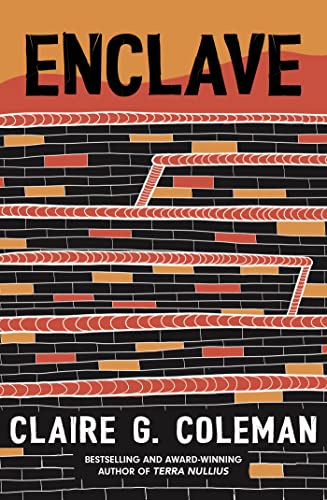
Claire G. Coleman’s Enclave

Claire G. Coleman, Enclave (Hachette Australia 2023)

This is the first book I’ve read by Noongar writer Claire G. Coleman. Her first novel, Terra Nullius, won prestigious prizes and her poetry and essays appear regularly in journals I read. (If you want to plough through my earlier posts to see what I’ve managed to say about those earlier encounters, here’s a link.) So I was happy when I got hold of a copy of Enclave, her third novel. I enjoy science fiction, so the fact that it’s a dystopian genre novel was an extra cause for joyful anticipation.

The book delivered on both fronts – filling the spot in my heart reserved for intelligent speculative fiction, and expanding my acquaintance with Claire G. Coleman’s writing. If you want to read a proper review, I recommend Magdalena Ball at Compulsive Reader (here’s a link), Maggie Nolan on The Conversation (link), Bill Holloway at The Australian Legend (link)or all three.I’ll stick to my resolve of focusing on page 78*. As often happens, this arbitrarily chosen page reveals a lot about the book, and hints at a lot more.

We are at about the one-quarter point of the narrative. Christine is the protagonist, a young white woman from an affluent family living in the walled city of Safetytown. Her father has bought her a new apartment as a reward for her success at university, and on this page her parents are taking her to ‘the homemaker centre’ to buy furniture, along with her younger brother, Brandon.

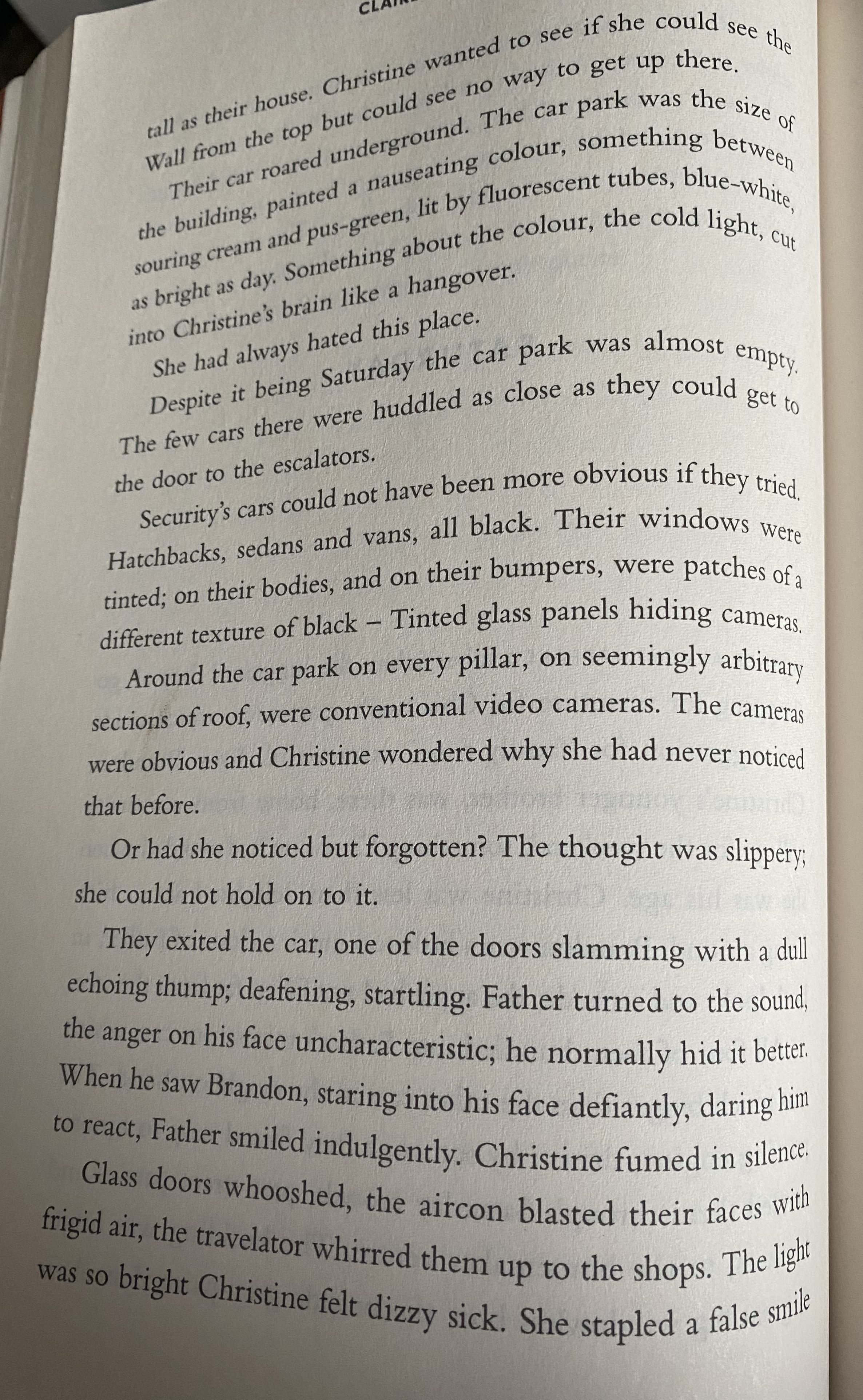
The building was huge. A great big windowless box, the outside grey-painted steel, as tall as their house. Christine wanted to see if she could see the Wall from the top but could see no way to get up there.
Their car roared underground. The car park was the size of the building, painted a nauseating colour, something between souring cream and pus-green, lit by fluorescent tubes, blue-white, as bright as day. Something about the colour, the cold light, cut into Christine’s brain like a hangover.
She had always hated this place.

The citizens of Safetytown are constantly being told how fortunate they are, how safe. Yet the adjectives here tell a different story: ‘windowless’, ‘grey-painted’, ‘nauseating’, souring’, ‘pus-green’. Even more significant is the ever-present Wall. It’s a powerful image, inevitably reminding us of Trump, Berlin and Israel–Palestine. Christine has always been told that beyond it is nothing but predatory violence, misery and chaos. In the otherwise sharply visual elements of this page, it is present to Christine as an object of curiosity even though it’s out of sight. She is beginning to suspect that she has been lied to: she is clear that she has always hated the homemaker centre, but a deeper discontent is brewing.

The next paragraph goes further into the reasons for her discontent:

Security’s cars could not have been more obvious if they tried. Hatchbacks, sedans and vans, all black. Their windows were tinted; on their bodies, and on their bumpers, were patches of a different texture of black – tinted glass panels hiding cameras.
Around the car park on every pillar, on seemingly arbitrary sections of roof, were conventional video cameras. The cameras were obvious and Christine wondered why she had never noticed that before.
Or had she noticed but forgotten? The thought was slippery; she could not hold on to it.

This first part of the novel is about Christine’s awakening. Here she’s noticing things she has never noticed before, in particular the ominously ubiquitous surveillance and enforcement. Not on this page, but part of the same process, she has noticed that one of the anonymous brown ‘servants’ is extraordinarily beautiful. These uniformed servants, all people of colour, are bussed in each day from beyond the wall and then out again in the evening. They ensure that the citizens don’t have to lift a finger to tend to the necessities of life. No one asks how they live on the other side, and in the early chapters they might as well be invisible, but like the women in the movie Conclave they are very present to the reader. Christine’s attraction to the woman servant is so outside the realm of what is considered possible that, like her ‘slippery’ thought about the cameras, it only fitfully enters her consciousness.

They exited the car, one of the doors slamming with a dull echoing thump; deafening, startling. Father turned to the sound, the anger on his face uncharacteristic; he normally hid it better. When he saw Brandon, staring into his face defiantly, daring him to react, Father smiled indulgently. Christine fumed in silence.

So much of what is to unfold is hinted at here. The benevolent father bestowing a brand new flat and furnishings on his daughter is suddenly enraged: not that he’s usually calm, but that he normally hides his rage. When he sees that it’s his son who has made the noise, he is pacified. It will come as no surprise, a few pages later, when the rage is unleashed against his daughter, while the son remains firmly in favour.

So Safetytown is authoritarian, sexist and – we know from earlier and will soon learn – intensely racist and homophobic. Christine is noticing at least some of it, and fuming.

The overall shape of the narrative is strongly implied on this page. Christine will incur her father’s wrath. Somehow she will find herself on the other side of the wall. Will she finally discover she has been lied to all her life? (Anyone who’s read any dystopian fiction would be astonished if the answer to that was no.) Will she escape or be exiled to the other side of the Wall? (See previous parenthesis.) Will she find a better world out there? (Likewise, you’d be pretty astonished at a no answer.) Will she find happiness with the beautiful brown servant woman, and will that woman have a name? (See previous parenthesis.) Will she play a role in bring Safetytown down? (One would certainly hope so, but that would mean she’d have to make giant strides out of her complacent self-absorption.) Perhaps most importantly for the success of the novel: are there any surprises? (No spoiler alert, but yes.) Does it get preposterous? (Yes – in many ways, but mainly in a delightful sequence that could only have been imagined by someone who lives in Naarm/Melbourne and loves it with a passion.)

Bill Holloway at The Australian Legend enjoyed this book less than Claire G. Coleman’s two previous novels, Terra Nullius (Hachette Australia 2017) and The Old Lie (Hachette Australia 2019). I take that as encouragement to go looking for them.


I wrote this blog post on land of Gadigal and Wangal of the Eora Nation. I acknowledge the Elders past and present of this country, never ceded.


It’s my current age.

The Granddaughter by Bernhard Schlink

Bernhard Schlink, The Granddaughter (©2021, translation by Charlotte Collins, Weidenfeld & Nicholson 2024)

When I decided a couple of years ago to focus on just one page of a book when blogging about it, I intended it to be a way of cutting down on the time I spend on the blog, while still managing to have fun and hopefully say something interesting. It hasn’t always worked out that way. Too often, I’ve gone on at length about a book and then tacked on a discussion of page 76, 77, 78, 47 or, occasionally, 7.

I’m turning over a new leaf, starting with The Granddaughter.

If, like me, you’d read a couple of books by Bernhard Schlink – in my case The Reader (read before blogging), Guilt About the Past and The Weekendyou might pick this up in a bookshop expecting a novel in powerfully simple prose about Germany coming to terms with its past. You’d be right. If you knew nothing, and turned for a taste of the writing to an arbitrary page, say page 78, you’d find some writing that pulls you in, possibly enough to make you buy the book:

Two young women friends are spending time in a dacha in a forest in East Germany. One of them, the narrator, is pregnant. The other, who want to be a nurse, will assist at the birth. The narrator, who I can tell you is named Birgit, dreams of escaping to the West, with or without a man named Kaspar. At the same time, she is having a blissful time, finding happiness in the moment. This is clearly a period of respite:

I listened to the rain on the roof, the initial drops, the furious pelting of a rainstorm, the soft rustle of steady rain, the last drops falling from the branches above the dacha. Sometimes Paula and I just slipped on dresses and walked through the warm rain till the wet dresses stuck to us and we laughed as we helped each other take them off again and jumped off the jetty into the water.

I learnt to love the forest. My mother never took her daughters to the forest. When we went on trips into the forest with the Young Pioneers and the FDJ, there were instructions to be followed and assignments to be completed, and we did everything busily and noisily. The forest around the lagoon was quiet.

The FDJ (Freie Deutsche Jugend/Free German Youth) was the official youth wing of the German Democratic Republic and the Socialist Unity Party of Germany.

Returning to this page having read the whole book, I’m in awe at its place in the whole. Most of the book is told from Klaus’s perspective, but this is in the middle of 60 pages in Birgit’s voice, a document written by her decades after the time in the forest and found by her husband – Klaus – after her death. He learns for the first time of her pregnancy, and gains some understanding of the long term emotional toll of her escape to the West to be with him. It’s not a spoiler to say that Brigid ends up filled with alcoholic despair – that’s how the book starts. And here, on page 78, in spare, unsentimental prose, in what seems like just a pause in the narrative, Schlink gives us a glimpse of the deep attachment to place that was to be ruptured by her move, as important perhaps as the haunting presence of the baby she decided to leave.

After reading the manuscript Klaus, now a bookseller, decides to go in search of the daughter. She turns out, after a troubled childhood and adolescence, to have joined a right-wing, Holocaust-denying, white-supremacist völkisch community. The main relationship in the book is between Klaus, good liberal Westerner, and Birgit’s granddaughter, who has taken on her parents’ ideology with the absolutism of childhood. Birgit’s tiny moment on page 78 of learning to love the forest, which transcends the political demands of her society, finds a kind of correlative in her granddaughter’s love of music, which Klaus seeks to foster. It’s also echoed in a perverse way in the völkisch elevation of ‘blood and soil’.

Bernhard Schlink is a lawyer and a retired academic. In each of his novels that I have read, individuals try to find their way with integrity in complex moral and political terrain. Complicity in the Holocaust in The Reader, left-wing guerrilla activity / terrorism in The Weekend. And here, unresolved issues from German ‘unification’ and the rise of neo-Nazi sentiment and activity. Like his hero Klaus with his granddaughter, Schlink refrains from lecturing, and approaches the people with whom he disagrees with respect, struggling to understand. Birgit’s joy in the warm rain and the silent forest ad quietly and eloquently to that struggle.


I wrote this blog post on land of Gadigal and Wangal of the Eora Nation. I acknowledge the Elders past and present of this beautiful country, never ceded. I also acknowledge the Elders past and present of the Ma:Mu nation, custodians of the land where I spent my first 13 years.


Richard Russo’s Everybody’s Fool at the Book Club

Richard Russo, Everybody’s Fool (Allen & Unwin 2017)

Before the meeting: This is the second book in Richard Russo’s trilogy set in the dead-end town of North Bath in rural New York: it was preceded by Nobody’s Fool (1993) and followed by Somebody’s Fool (2023). I read it as a stand-alone. At about page 80 I went to Wikipedia for a synopsis of Nobody’s Fool, and really I needn’t have. (I also watched a trailer for Robert Benton’s 1994 movie, which was probably a mistake, as the image of Paul Newman as the character Sully was seriously different from the one I’d built up for myself, even allowing for the fact that Sully has aged 20 years since the first book.)

All the same, even for those who haven’t read about the characters’ earlier lives, it’s clear that they are living in various aftermaths. It begins with a burial and returns to the cemetery again and again. One man has been given a year to live, another is stuck in grief for his wife who died in the act of leaving him, a third has been released from jail and proclaims unconvincingly that he has turned over a new leaf. One couple remain affectionate though their affair is long since over, another deal with a long history of mental illness. Friendships endure in spite of mutual irritation, enmities are maintained in spite of deep-seated fellow-feeling. It’s complex, sometimes laugh-out-loud funny, sometimes wretchedly painful, abounding in situational ironies. There are two violent deaths that we don’t witness, and one shockingly violent scene that we do. There are two villains, three if you count the out-of-town dealer in snakes and drugs. There’s a disgustingly incontinent dog. A couple of characters from the first book make cameo appearances, for no obvious reason apart from letting longterm readers know what they’re up to.

Class is ever-present. Most of the book’s characters know they have been excluded from the good things of life. They’re rough with each other, but there’s also kindness and integrity and a strong sense of belonging. At one point Sully, who has the strongest claim to be the main character, reflects that he has made sure ‘that his destination at the end of the day was a barstool among men who had chosen to be faithful to what they took to be their own natures, when instead they might have been faithful to their families or to convention or even to their own early promise’ (page 448). It’s an attitude that elsewhere might be called quiet despair, but here it includes an assertion of connection.

I enjoyed it a lot. It deals with serious themes, but it’s a lot of fun in all sorts of ways.

On page 78*, nobody is being nice to anyone, but nobody’s going anywhere. The scene is Harriet’s diner, one of the three eating and drinking establishments in the town. The characters are Ruth, owner of Harriet’s; her daughter Janey who has just come in complaining about a scene in her bathroom; Carl, a failing developer whose post-prostate-surgery incontinence (which everyone knows about) is responsibe for the bathroom scene; Roy, Janey’s violent ex-husband, fresh out of jail and claiming to have turned over a new leaf, who has just left; and Sully, one-time lover of Ruth, who now hangs around every day to be generally helpful and has just picked a fight with Roy. Ruth is speaking to Janey:

‘Sorry about the bathroom,’ she said, ‘but Carl had an accident.’ She emphasised the name ever so slightly. Remember? she seemed to be saying. What I told you about Carl?
‘Oh, right.’ Janey shrugged. ‘I guess that makes it okay.’
‘That was my thought,’ Ruth said. ‘I’m glad you agree.’
Janey rolled her eyes to show that she most certainly did not agree but wasn’t going to go to the mat over it, either. ‘Was that my idiot ex-husband’s voice I heard earlier?’ Ruth apparently took this to be a rhetorical question, because she didn’t bother answering. ‘He’s taking that restraining order real serious.’
… ‘He hasn’t caused any trouble so far, or even tried to,’ Ruth said, glancing at Sully. ‘Unlike some people.’
‘That’s the thing about Roy,’ Janey said, putting her now-empty mug into a plastic busing tub. ‘He won’t, until he does. But when he does, it’ll be my jaw that gets broke, like always.’
‘He breaks your jaw because you’re always mouthing off.’
‘No, he breaks it because he enjoys breaking it.’
‘Like you enjoy mouthing off,’ Ruth said as Janey brushed past her.
‘Well, jeez,’ Janey mused, pausing in the doorway to her apartment. ‘Let’s think a minute. Where the fuck do I get that from?’

I could probably have picked any page in the book and found similarly alive dialogue, and a similar complexity of relationships. Notice that Sully doesn’t say a word. Ruth’s glance in his direction comes from a woman you don’t want to cross. Likewise, we know that Janey is right about her ‘idiot ex-husband’, but Ruth isn’t gong to back down meekly. It’s no spoiler to say that Ruth’s attributing Roy’s violence to Janey’s mouthiness is rich with narrative irony: what she says in the heat of mother-daughter irritation is a standard blame-shifting rationale used by perpetrators of family violence. That irony goes deep in the light of events yet to come, but my lips are sealed.

After the meeting: We read this along with Christine Dwyer Hicks’s The Narrow Land (yesterday’s blog post here).

They’re very different books, and though I tried in my post on The Narrow Land to note things they had in common, no one else was much interested in such attempts. I’d say that a couple of us enjoyed this book much more than the other, but others not so much. One got to about 20 percent (this is how Kindle readers talk) and then went no further, another read about four percent. The first, probably being polite to those of us who enjoyed it, said that while she could see that the writing was very good, she had no desire to spend any more time in the depressing world of the novel.

Two of us talked about the human warmth and humour. I fond myself laughing helplessly as I recounted one of the more macabre episodes. Others remained stony-faced. The other person who found the book funny said it was like Carl Hiaasen’s work (‘Without alligators,’ I agreed). She also made a cogent argument for the book’s acknowledgement of class in a way that isn’t common in novels from the USA. Similarly civil but unconvinced response.

When I said I could imagine a movie adaptation directed by the Cohen brothers that seemed to bridge the chasm a little.

As I’m about to hit ‘Publish’, I realise that nowhere in my ‘Before the meeting’ section did I mention the wonderful comedic energy of the writing: the book opens with a bravura description of the North Bar cemetery; the town doesn’t have alligators, but it is terrorised by a king cobra; there are terrible smells; a building collapses like something out of a Buster Keaton movie. All of this seems to have passed most of the other club members by. Maybe you have to have to temporarily suspend solemn empathy as well as disbelief.


The Book Club on the land of the Bidjigal and Gadigal clans of the Eora nation, overlooking the ocean. I wrote the blog post on Wangal and Gadigal land as rain poured down. I gratefully acknowledge the Elders past and present who have cared for this beautiful country for millennia.


My blogging practice is focus arbitrarily on the page of a book that coincides with my age, currently 78.