Tag Archives: Novel

LoSoRhyMo #6: Michael Cunningham’s By Nightfall

Michael Cunningham, By Nightfall (Farrar, Straus and Giroux 2010)

The Book Club (the one where we swap books and keep discussion of them to a minimum) has introduced me to many writers and kinds of writing that I wouldn’t have sought out otherwise. Thanks to it I’ve read excellent books I might have prejudged as boring (an engrossing biography of a World Bank CEO comes to mind). But there have also been books the lender thought were brilliant that stank in my nostrils. By page 34, I was thinking By Nightfall might be about to join Philip Roth’s The Humbling as one of my stinkers (though nowhere near as pungent as that). Two characters’ visit to the Metropolitan Museum on page 34 came close to tipping the balance:

… Peter and Bette walk together through the Great Hall at the Met, grand somnolent portal into the civilized world. Why deny its satisfactions – its elephantine poise, its capacity to excite the very molecules of its own air with a sense of reverent occasion and queenly glamour and the centuries-long looting of five continents. The Hall receives with a vast patience. It’s the mother who’ll never die, and right up front are her votaries, the women of the central kiosk, elderly for the most part, kind-looking, waiting to offer information from under the enormous floral arrangement (cherry blossoms, just now) that festoons the air over their heads with petal and leaf.

This is by no means uncharacteristic of the prose – the pages are littered with such unmurdered darlings. But Cunningham wrote the novel The Hours, the basis for the excellent film of the same name, so I read on. A couple of bedtime reads and a long walk with the dog took me to page 167. I still wasn’t engrossed, but I was planning to read the remaining 71 pages (yes, I was counting pages) to see what Michael Cunningham would make of the (to me) unpromising narrative. Then I was chatting to someone and outlined the story so far – see Sonnet 6 below – and realised I just didn’t care. I read somewhere recently that one of the rules of writing a novel is, ‘Cool stuff now, cooler stuff later,’ that is, ‘Don’t save all your cool stuff to the end – you know it’s coming, but the reader doesn’t.’ There’s probably lots of cool, subtly nuanced stuff towards the end of this book. And maybe what I’ve read is cool to a certain sensibility.

Sonnet 6: The story up to the point where I stopped reading
Our Peter’s life is fairly flat.
He loves his wife, they do sex well
enough, they’re faithful, and that’s that.
Their daughter doesn’t even yell.
His gallery in NYC
is testing his integrity.
The Hirst shark (symbolising death)
is at the Met. But soon a breath
of something new arrives: the younger
brother of his wife, who’s hot,
and often naked, stirs erot-
ic yens in Pete. This new-found hunger
leads to reams of introspection
and one psychoanalysed erection.

I peeked ahead after I wrote that.

[SPOILER ALERT]

Peter does kiss Mizzy, his brother in law, which seems to lead to a lot more introspection and a little conversation. My guess, based on a skim of the last pages, is that it all turns out satisfyingly inconclusive in the end.

LoSoRhyMo #5: Leslie Cannold’s Book of Rachael

Leslie Cannold, The Book of Rachael (Text 2011)

At the Sydney Writers’ Festival earlier this year I embarrassed myself and Leslie Cannold, author of this book about an imagined sister to Jesus, by singing her a snatch of Dory Previn:

Did he have a sister, a little baby sister,
Did Jesus have a sister?
Was she there at his death?

I was expecting to find in the novel the kind of revisionist pleasure provided by ‘Did Jesus Have a Baby Sister‘ (the link takes you to the song on YouTube). But it turns out to be quite a different beast: it doesn’t so much ring changes on the biblical story as set out to imagine what life would have been for a spirited young woman in the time of Jesus, using the biblical story as a kind of baseline. There is some revisionism, of course: the virgin birth is explained – almost incidentally – by the familiar Roman soldier story; as a young man, Joshua/Jesus comes home late at night smelling of alcohol and women; and there’s an excellent account of the raising of Lazarus. But the aim isn’t to debunk or mock.

It’s years since I read any theology, apart from Tissa Balasuriya’s Mary and Human Liberation. Leslie Cannold’s approach to the biblical narrative goes quite a bit beyond Balasuriya’s ‘hermeneutics of suspicion’, and she certainly doesn’t take up his vision of Mary (here called Miriame) as a revolutionary figure. I doubt if many scholars would take seriously the book’s version of how Joshua came to go on his preaching mission (he was looking for a woman who was pregnant to him, who had been consequently sold into prostitution by her father). It’s clear from this and other examples that this is not an attempt at historical excavation. Such pernicketiness aside, I don’t think I’ve ever read an account of the Jesus story that brings home more clearly what it meant to be poor or outcast or female in those times. That was the main pleasure of the book for me, rather than an engagement with the characters, who never quite came completely to life, despite even the scattering of cheerful sex scenes. Still, the pleasure was considerable.

But it’s November, and a sonnet is compulsory, even though it may create even more embarrassment all round than an off-key rendition of Dory Previn:

Sonnet 5: Where were the women?
These days I think of the Last Supper
and wonder where the women were
when Jesus foretold in that upper
room his foes would soon bestir
themselves and take his life. Who cooked
and shared that meal, were overlooked
by gospels and two thousand years
of art and preaching? More than spears
such silence pierces the hearts
of half the world. Oh they were there,
not just their sinful, perfumed hair
or veils, or wombs and other parts.
They've always held up half the sky.
Their absence is a stupid lie.

The book group, The Life and Malcolm Knox

Malcolm Knox, The Life (Allen & Unwin 2011)

Before the Book Group met: I knew The Life was about a surfer, based to some extent on a real person (as spelled out in an interesting article by Nick Carroll here). I knew that it also drew on Malcolm Knox’s own fairly recent experience as a surfer. Now, unless you count the pleasant and instructive experience of copy-editing a book of essays on surfing and surf culture a couple of years ago, the closest I’ve been to riding a surfboard is to have broken a wrist the first time I rode downhill on a skateboard. Oh, and Peter Drouyn was two years behind me at boarding school, and I once had a friend who said things were gnarly. So no matter how many people recommended The Life, I would have given it a miss, as I have Tim Winton’s Breath, if it wasn’t for the Book Group. And so but yeah I have yet another reason to be grateful to the group.

I’m writing this a day after finishing the book [and about a month before the twice postponed meeting], and the voice of Dennis Keith – DK, the narrator and main character, who occasionally starts a sentence with a string of conjunctions a bit like the last sentence in my first paragraph – is still echoing in my head. He’s a wonderful character, overweight, approaching 50, living with his mother, socially incompetent and suffering from some kind of mental chaos. But once he was the world champion surfer, a genius on the waves. A double tale unfolds – the story of events leading up to his mental implosion 30 years earlier, and what transpires after the arrival of a young woman he calls his BFO – short for Bi Fricken Ographer. There’s a central love story and a violent death, but the main power of the book for me is in the world created in its language, and though I gather there’s some controversy about the way DK is recognisable in the surfing community as a version of a still-living surfing legend, for outsiders like me there’s a feel of authenticity that probably has something to do with not having moved too far from actual history.

After the group: We met last night. Malcolm Knox is a friend of one of our members, and came to the meeting as a special guest.  As a result, we stayed pretty much on topic all night, even though two of us, who arrived late, had been to the annual opening to the public of the Egyptian Room of the Petersham Masonic Hall, which would usually have been a major distraction from the book of the night.

One of the guys has been a keen surfer all his life, and knows an awful lot about the parts of the real world that the novel relates to. Others have done some surfing. To most of us the surfing world was pretty much a closed book. We’d all enjoyed the book, and I think it’s true to say that we all loved the chance to talk about it with the author. He was completely useless when asked to clarify the ending – he’s written a version where the end was clear, but it didn’t work because DK could never have got things that clear in his head, so he had to rewrite it to its present opacity. Sadly, this means that he doesn’t know who dunnit any more than any careful reader. Apart from that, he seemed happy to be quizzed about the process of writing, and rewriting, about the thinking behind a number of key decisions, about anything at all really, and we were pretty happy to do the quizzing.

Even though I count a number of brilliant writers among my friends, I’m still a boy from North Queensland who didn’t meet a Published Writer until I was 20 years old (the poet R D Murphy, aka Brother Elgar FMS), and I was very impressed by Malcolm’s generosity in joining us like this. He said he feels a sense of responsibility – if people are prepared to read his books the least he can do is sit down and have a meal with them, and anyhow he’d rather talk to eight people who have actually read it than 300 who’ve come to his talk at a festival because they couldn’t get into the one they really wanted. I hope he enjoyed the evening as much as I did.

The Humbling of Philip Roth

Philip Roth, The Humbling (Jonathan Cape 2009)

I love Philip Roth’s prose, the way it seems to just flow directly from somewhere inside him, like lava or blood, yet always with extraordinary control of nuance. I haven’t read enough of his novels to know if The Humbling is representative of what he’s writing these days, but I do hope it’s not. I also hope the book isn’t a fictionalised representation of his current state of mind. Simon Axler, the hero, is a great stage actor who has suddenly lost his ability to act, and the agony of his loss is conveyed with such poignancy that it’s hard not to think Roth has been there, or has at least fantasised such a loss for himself.

What does a great artist do in such a situation? Well, first he doesn’t kill himself, then he commits himself into a psych hospital, then he’s discharged and after a while either kills himself or doesn’t (he does make a clear choice, I’m trying not to be too spoilerish). And that’s the whole story. Except for the second act where he falls in love with a much younger woman and has lots of increasingly exotic sex with her.

I believed in the despair. I accepted the falling in love. The specifics of the sex felt like an older man working hard to imagine how the young folk these days do stuff, what with all that queer theory and non-binary approach to gender they’re always going on about. Or maybe I was just embarrassed.

The Nobel Prize for Literature is to be announced in a couple of days and Philip Roth’s name is being mentioned again. If he gets up it won’t be on account of this book, but maybe it will cheer him up.

Edwina Shaw’s Thrill Seekers

Edwina Shaw, Thrill Seekers (Ransom 2011)

This is a Cutting Edge title – part of a ‘gritty’ Young Adult series from Ransom Publishing UK. A gang of Brisbane children progress from mucking around in Oxley Creek to more risky adolescent thrills. In what might seem a standard children’s or YA literature trope, the father of the main characters dies in the first chapter, and their mother is pretty much lost in grief and alcohol. In what follows the young people go more and more out of control. There’s an awful lot of flagon wine (‘goon’) and marijuana, a range of other drugs, quite a bit of violence, some awful sex and a lot of wretchedness. The most vulnerable character goes horrifyingly, dangerously mad*. At the end there is a glimmer of hope.

That might make it sound like one of those ‘problem’ books for young readers that periodically stirs up the moral panic merchants. And maybe it is, but it’s a book with a lot of integrity. It treats its difficult subject matter without romanticising it, and without moralising. It resonated strongly with elements of three excellent books I’ve read recently: the dangerous play of Watch Out for Me, the heartbreak of After Romulus, the drugs and risk taking of The Life (blog entry to come when the Book Group meets), and the madness/psychosis/mental illness of all three.

Really, though, I can’t even pretend to write a sensible review, because the author is my eldest niece. It’s not that I worry I’ll seem nepotistic, and it’s absolutely not a matter of being tactful – as in, ‘I’m sure the target audience will love it.’ I can say up front that it’s a terrific book. But you know, even though Edwina is a mature woman, mother of two, teacher of yoga, blogger, disciplined writer, wise and warm lender of support to other writers including myself, she is still inseparable in my mind from the person whose exultant joy at being able to crawl I had the privilege of sharing more than forty years ago, and even though I know this book is fiction my avuncular heart recoils from following that cheerful little girl into these dark places.

Versions of some of the chapters have been published as short stories. You can read some of them online here and here. That last one didn’t make it into the book, and confirms my sense that, if anything, the world of the book has grown less harsh on its transition from book for general readership to a YA title.
——
* I’m deliberately saying ‘mad’ rather than ‘mentally ill’ or whatever . Raimond Gaita writes with characteristic acuteness about this kind of language in After Romulus (pages 71 to 74). Referring to the lines from King Lear, ‘Oh, let me not be mad, not mad, sweet heaven! Keep me in temper; I would not be mad!’ his discussion ends:

Lear’s cry is not heartrending because he suffers ‘social stigma’. And it would not move us as it does had he said, ‘Oh, let me not fall into bipolar disorder.’

Edwina’s story of Douggie includes the social stigma, but it also takes us into, using Gaita’s words again, ‘the unique terror that the word madness conveys’.

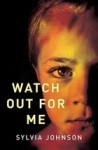
Sylvia Johnson’s Watch Out for Me

Sylvia Johnson, Watch Out for Me (Allen & Unwin 2011)

Sylvia Johnson has made occasional pseudonymous appearances in the comments section of this blog. A couple of weeks ago she wrote asking if I’d like to read her novel, which she was expecting from the publisher any day. Never one to knock back a freebie or an invitation to be in the in crowd, I said I’d be delighted. The book arrived on my doorstep an hour before I was due to go to the airport for a long flight, so it joined Raimond Gaita’s After Romulus, incongruously I thought, in my carry-on bag.

I guess Watch Out for Me is a genre book – a psychological thriller. The Woods children – Hannah, Richard and their little sister Lizzie – spend a couple of weeks each summer in the 1960s at Bradley’s Head on Sydney Harbour, playing in the park, exploring the disused lighthouse and racketing around the abandoned tunnels with other summer visitors. One year, the Year Everything Changes, their family takes in their cousin Toby, about the same age as Lizzie, who has been traumatised by the erratic behaviour of his mother (shades of After Romulus!) and is timid, careful and eventually traumatised all over again by the teasing games of the young mob. That world of free-range childhood with its exhilarations and terrors is wonderfully evoked, including a tense moment of dawning eroticism in the pitch black of the tunnels. Then something terrible happens in the park, and the children’s dramas are caught up in a bigger, nastier drama.

The summer of 1967 is told from a number of points of view, some of them recalling events four decades later, when the US President is visiting Sydney amid a high security alert. Two other narratives unfold in this other time – in one Lizzie is besieged by an anti-Western mob in a North African town, in the other Hannah and Toby are meet again in Sydney for the first time since that  pivotal summer, and it gradually becomes apparent that something creepy and dangerous is going on around them – something even worse than the brutishness of the US security forces and the strident commentary of the radio shock-jock (who, incidentally, played a disgusting role in the 1967 story). These stories, which turn out to have other links besides the ancient history, unfold to properly scary, operatic climaxes.

And there’s a fourth story, told entirely through clippings from the British press: the story of Jean Charles de Menezes, the Brazilian man who was shot by police in the aftermath of the London Underground bombings in 2005. These clippings add a kick to the book: the Woodses’ story is fiction, and you might read it just for the thrill, but de Menezes’ was killed in the real world, and its presence makes the Woodses’ story seem more pressing. In After Romulus Raimond Gaita says he is convinced that people are moved by his father’s story because they trust that he ‘tried to tell it truthfully and that it is truthful’. I think the press clippings have a similar effect here: they act as a kind of pledge from the author that in her imagined story she is trying to tell something truthfully, that the account she gives us of the world is truthful.

I’m not suggesting an equivalence between this book and anything by Raimond Gaita, but my two plane books did speak to each other seriously, and I think Watch Out for Me succeeds in being persuasively, chillingly truthful.

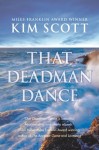
The Book Group and That Deadman Dance

Kim Scott, That Deadman Dance (Picador 2010)

Having enjoyed the movie Red Dog in spite of its near erasure of Aboriginal people from the Pilbara, I was glad to turn to the Book Group’s pick of the month for a bit of counterpoint. Sadly, I turned to it too late to finish it before the group met over soup, bread and cheese on 17 August. So here we are, reversing the usual order of my Book Group posts: first the meeting and then the book.

The meeting:
We had a good turn-up, and more than half had read the whole book. All but one of us were big fans, and the dissenter – who was about a third of the way through – was prepared to keep an open mind. I’d read only 110 pages or so myself, but at that point was finding it exhilarating. Discussion was animated, emphatic, mostly good humoured.  I won’t try to summarise beyond saying that there was a shared sense that the novel made us see the British settlement of Western Australia with fresh eyes. Also the whaling industry, but I hadn’t read to that point, so tried not to listen. I had read the short chapter where a convict who has been speared by Noongars in payback for wrongs done by someone else – though smarting with the injustice, he understands that it’s necessary for the whites to accept the payback without further retaliation if there is to be peace in the small settlement. In terms of the plot, he feels like a powder keg waiting to explode, but I love Kim Scott’s open hearted portrayal of him as a complex individual (as opposed, say, to the equivalent lower-class ‘bad whites’ of Kate Grenville’s The Secret River). No one would engage with me on this line of discussion because they didn’t want to give the plot away – true gentlemen every one.

The subject of Red Dog was raised, and those who’d seen it were even less impressed than I was, regarding the praise lavished on it by Margaret, David and Julie as symptomatic of misguided and misleading advocacy for the local product. We had brief but sharp differences of opinion about The Slap (Christos Tsiolkas) and The Riders (Tim Winton), and some disparagement of The Unknown Terrorist (Richard Flanagan) and the literal minded TV adaptation of Cloud Street (Winton again).

I came away looking forward to the rest of the book.

After the meeting:
I took nearly two more weeks to finish, but that’s no reflection on the book. (See previous post for partial explanation of my reduced reading time.) While I was reading it I  heard on a podcast of the Book Show that Melbourne University currently doesn’t offer a course in Australian literature – one enterprising student has organised monthly lectures by poets and others who are willing to talk for free (apparently without input of any kind from the academic staff!). One justification for this state of affairs is that students in general think Aus Lit is boring, conservative and ‘white’, so the course wouldn’t be popular enough to justify itself. I guess this is what happens when the profit motive holds sway in education. But, stepping down from my media-generated-outrage soapbox, I’d have to concede that That Deadman Dance does make some other much-praised Aust fic look fairly timid and vanilla. It tackles the same general area as Inga Clendinnen’s Dancing with Strangers: the first, hopeful contact between Aboriginal Australians and white invaders and the seeds of the subsequent tragic genocidal history. Where  Clendinnen wrote history, excavating the journals of early settlers in Sydney to reconstruct a hypothetical account from the point of view of the Indigenous Australians, Kim Scott tells what his narrator calls a ‘simple story of Bobby and his few friends’ about the settlement in south west Western Australia, confidently taking us into the minds of black and white, young and old, male and female. I’d be surprised if he hadn’t read the Clendinnen book, but it’s very much its own work: joyful, funny, superhumanly broad in its sympathies, challenging, vivid and in the end heartbreaking.

The central story tells of Wabalanginy/Bobby, a  Noongar man born after the arrival of  whites, who finds friendship among the new arrivals, studies them, at times acts as an intermediary, is virtually adopted into a white family but remains firmly connected with his Noongar community. He’s a brilliant character – admired as a clever mimic by the whites and held in awe for his artistry in song and dance by the Noongars. His engagement with both cultures is enacted beautifully: a number of times we’re taken inside his way of perceiving and responding to the world in wonderfully lyrical writing.

At one stage, the desecration of a grave is described as ‘deliberate and careless all at once’, a phrase that resonates like a gong through the last, darkening chapters, when the logic of capitalism and colonialism asserts itself, and we gradually lose any sense of the inner lives of the settlers as they become more completely incomprehensible to Bobby and appear to forget the almost reasonable relationships of the recent past: deliberate and careless, intentional and oblivious.

Maybe one day even the hallowed halls of Melbourne University will encourage its students to read this, and other books that will help them wrap their imaginations around the history they inherit.

By Swapna Dutta

My friend Swapna Dutta is a writer, translator and editor, mainly of children’s literature, who lives in Bangalore, in southern India. The School Magazine published some of her stories when I was editor, and she and I have kept in touch over the intervening years. Swapna mentioned in a recent email that she had translated a children’s book, The Arakiel Diamond, from Bengali into English, and asked if I’d like a copy. Of course I was interested, and a couple of days later it arrived in my letter box, with three other books. It’s been a treat and an education to read all four.


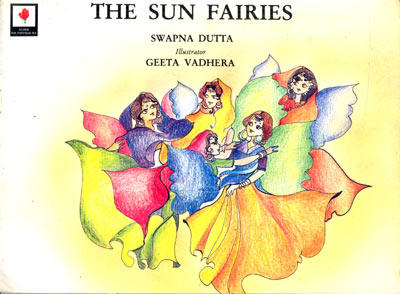
Swapna Dutta and Geeta Vadhera, The Sun Fairies (National Book Trust, India 1994, 2001)

The Sun Fairies is a tiny picture book that plays around with science and fantasy. That is to say, it’s a fanciful account of the origin of clouds – some fairies who live in the sun build castles in the sky so it won’t be so bare and empty – that ends up being a decorative but accurate account of how the water cycle works: the cloud castles are made from water, air and dust, and when they get too heavy they fall to the earth as water. The fairies have discovered ‘a never-ending game’. The illustrations, by Geeta Vadhera, are fabulous. I see from the Internet that Ms Vadhera has gone on to international renown. This may be her only children’s book.


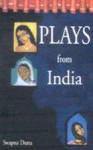
Swapna Dutta, Plays from India, illustrated by Baraan Ijlal (Rupa & Co 2003)

In some ways each of the other books is a work of translation. In Plays from India three episodes from Indian history are shaped into dramas suitable for performance by school students. In my ignorance I don’t know whether the stories would be familiar to most Indian students, so I can’t tell whether the history or the theatre is the main point. I was interested in both.


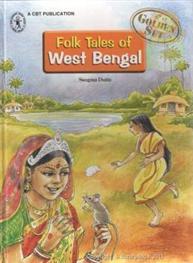
Swapna Dutta, Folk Tales of West Bengal , illustrated by Neeta Gangopadhya (Children’s Book Trust 2009)

Folk Tales of West Bengal retells sixteen tales. Swapna has an article at papertigers from which I learned that what the Grimms were for Germany, and Moe & Asbjørnsen for Norway, the imposingly named Dakshinaranjan Mitra-Mazumdar was for what is now Bangladesh and West Bengal. At least some of the tales here were collected by him in the first decades of last century. Unsurprisingly to anyone who has entered the woods of Re-enchantment, there’s a lot in these stories that’s familiar to a reader brought up on European-origin fairy stories: kings and princesses, talking animals, metamorphoses, riddles, lost and found children, supernatural beings who reward the humble and punish the greedy. There’s also a lot that’s different: the heroine of the first story, for instance, is not a seventh child but a seventh wife. This blending of familiar and unfamiliar makes for a delightful read.


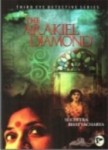
Sucitrā Bhaṭṭācārya, The Arakiel Diamond, translated by Swapna Dutta and illustrated by Agantuk (Ponytale Books 2011)

The Arakiel Diamond is the only book in my swag that is not Swapna’s original work. It’s a detective story for young readers, one of a series featuring a Bengali housewife and her niece. A wealthy man dies. His most precious possession, the eponymous diamond, has gone missing, and almost everyone in his household – and there are many – has had motive and opportunity to steal it. The plot has exactly the twists you’d expect, but the detectives’ relationship and the details of their domestic life are well captured, and I learned a lot about the Armenian community in Calcutta, in a way that reminds me of grown-up detective writers (Sarah Paretsky comes to mind) who take us to a new subculture in each novel.


The four books had me reflecting on multiculturalism in children’s literature. We make fun of the way US children’s publishers, apparently believing that their intended readers would shrink from anything not immediately recognisable as of the US, re-edit books from elsewhere in the English-speaking world to remove unsightly exotica. They don’t just want a world where British characters spend dollars and cents, or Australians walk on a pavement, weird as such a world might be. I remember hearing of a New Zealand novel whose publisher suggested the book’s Maori issues might be more accessible to US children if the setting was changed to California – that author held firm and the book still found readers, even got made into a movie.

I wish now to acknowledge that I’m a bit of a kettle to the US publishers’ pot. Though I enjoyed the slight cultural disorientation I felt as I read these books, I caught myself thinking young readers would be put off by it. To make the books accessible to Australian 11-year olds, the unexamined internal argument went, you’d have to do something about lakh and crorelunghi, salwar shameez and rakhi, not to mention the nitty-gritties of the game of chess or a casual use of thrice in conversation. On reflection, I think that argument profoundly misunderstands how young people read. The only thing that universally distinguishes young from adult readers is that the young ones are younger. One result of this is that they know they don’t know everything about the world, and mostly when they read there are words they don’t recognise but have to guess from the context. (I loved and understood pulverise and invulnerable in Superman comics long before I could define them.) So you might not know what a lunghi is, but the context tells you it’s an article of clothing, and there’s even an illustration to help. Likewise, lakh and crore are obviously big numbers, and that’s all you need to know. As I remember back to my own childhood reading, I think such things would have added spice to the book: if I was young now, I might even have fun googling them. As for nitty-gritties and thrice, I do think we can trust young readers to recognise when a word or a turn of phrase belongs to a different place. (Both my sons say zed in spite of seeing quite a lot of Sesame Street when young.)

The book group go to Bleak House

Charles Dickens, Bleak House (1852, Project Gutenberg version, prepared by Donald Lainsman with revision and corrections by Thomas Berger and Joseph E Loewenstein)

Unless you count comics or movie and TV adaptations, just about anything by Dickens is likely to win me a game of Humiliation (rules at the link). When someone suggested him for our next Book Group title I was happy, and even happier when we settled on Bleak House: Neil Gaiman has been going on about it on his blog recently, and my friend Cassandra Golds says it is a huge presence in two of her recent novels.

Before the meeting:
This is the first book I’ve read on iPhone and iPad, and it was a good experience. The iPad is more satisfyingly book sized, but I was surprised at how much I enjoyed the sense of continual progress that comes with the iPhone. One of the book’s 8041 screens had to be ‘turned’ every couple of seconds – so many words, but in such tiny portions!

I was probably out of harmony with the spirit of the book, not so much because of the electronic devices as because I read it in just a few weeks. It was originally published as a serial over 20 months: if you read one of its 67 chapters a week you would have kept pace. I doubt if anyone much reads at such a leisurely pace any more, and we’re probably the poorer for it. Anyhow, it’s a truly wonderful book which I recommend for when you’re in the mood for sustained, leisurely reading.

I’m confident I have nothing at all original to say about the book itself, so I’ll presume on a little of your time by ruminating on translation issues. Every now and then someone writes an article saying that each generation needs its own translation of [insert name of classic work here]. The idea is that we need to have ancient Latin or Renaissance Spanish served up in contemporary language. By this logic, Italian or Spanish readers need a fresh translation of Dickens every 50 years or so. If so, doesn’t it follow that we need an updating in English just as regularly? After all, the language has changed in the last 150 years, and early 21st century English speakers have a very different, and more diverse, take on the world than their mid-19th century equivalents. Where Dickens could assume that literate English speakers shared a vast set of references – the Hebrew and Christian Bibles, Shakespeare and classical mythology come to mind, and there’s plenty of each in Bleak House – we can no longer do that. Just for the heck of it, I thought I’d see how a hypothetical translator might tackle the opening:

London. Michaelmas term lately over, and the Lord Chancellor sitting in Lincoln’s Inn Hall. Implacable November weather. As much mud in the streets as if the waters had but newly retired from the face of the earth, and it would not be wonderful to meet a Megalosaurus, forty feet long or so, waddling like an elephantine lizard up Holborn Hill.

I thought ‘translating’ this would be a straightforward bit of fun, but by the second word I was in trouble. When I was at university we had three terms, Lent, Trinity and Michaelmas, but surely Dickens isn’t talking about university here? Did the English courts have terms? (Do they still?) What is Lincoln’s Inn Hall, and who is the Lord Chancellor again? And so on. None of this worried me at all when I read the book, but a translator might feel obliged to do something like:

London. The year coming to an end, and the nation’s most eminent judge, the Lord Chancellor, hearing cases in Lincoln’s Inn Hall. Implacable November weather. As much mud in the streets as if the Flood had just withdrawn from the face of the earth, and it would not be surprising to meet a Megalosaurus, forty feet long or so, waddling up Holborn Hill.

There, now that’s more accessible, isn’t it? (No need to gloss the Megalosaurus for 21st century readers, I thought, but the edgy play on biblical and palaeontological versions of prehistory does need clarifying.) It’s not quite Dickens, but then what translation is? Interestingly enough, even being facetious I couldn’t bear to touch what comes next:

Smoke lowering down from chimney-pots, making a soft black drizzle, with flakes of soot in it as big as full-grown snowflakes – gone into mourning, one might imagine, for the death of the sun. Dogs, undistinguishable in mire. Horses, scarcely better; splashed to their very blinkers. Foot passengers, jostling one another’s umbrellas in a general infection of ill temper, and losing their foot-hold at street-corners, where tens of thousands of other foot passengers have been slipping and sliding since the day broke (if this day ever broke), adding new deposits to the crust upon crust of mud, sticking at those points tenaciously to the pavement, and accumulating at compound interest.

In short, I found the novel irresistible, especially for the way it wallows in language. And Cassandra is right – it’s full of echoes of Clair de Lune and The Museum of Mary Child.

After the meeting:
It’s winter in Sydney, and half of us were away, either home sick or visiting warmer climes. Of the five who showed, three had read the whole book, one was a hundred or so pages from the end, and the last confessed up front that he’d picked up a copy in a bookshop, and then thought, ‘Nah!’, though it turned out he had read it 20 or so years ago.

It was a good book to discuss. We talked about Mr Guppy’s withdrawal of his proposal, the death of Little Jo, the use of catchphrases (‘Discipline must be maintained!’), the pleasure of reading bits aloud. Someone knew that the appalling Mrs Jellyby was based on Caroline Chisolm, and the execrable Skimpole on an actual person. We wondered about the politics, the anti-Jewish nastiness (‘Smallweed is a Jew’), the depiction of industrialisation. Someone had thought about this book in comparison to the other Great Works we’ve read, Anna Karenina and The Tree of Man, and found it suffered from the comparison. I don’t know what I think of that. I know I enjoyed it at least as much as the Tolstoy and quite a lot more than the White, but I suppose enjoyment isn’t everything.

I haven’t been deliberately secretive about this blog and its reports on the group, but nor have I deliberately drawn people’s attention to it. If anyone from the group does drop in, welcome! Please add a comment.

Eva Hornung’s Dog Boy

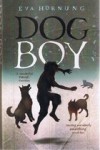
Eva Hornung, Dog Boy (Text 2010)

Our species has long been fascinated by stories of human children raised by wild animals , as the Wikipedia page on feral children attests. I don’t have to strain my memory muscle too hard to come up with (in order of my encountering them) Mowgli, Romulus and Remus, Truffaut’s L’enfant sauvage, and the ‘wolf girls’ Amala and Kamala (about whom we published a story in the School Magazine, not realising the whole story was made up to raise funds for an Indian orphanage). Dog Boy tells one of those stories, and evokes that fascination brilliantly.

On page 15 Eva Hornung gets explicit about the challenge she has taken on:

And so it was, trotting with three dogs through ordinary lanes, past ordinary tenements, past ordinary lives, a lone boy crossed a border that is, usually, impassable – not even imaginable.

The stories of feral children I’ve encountered (add to the list above the Werner Herzog movie about Kaspar Hauser, and Louis Nowra’s first play, Inner Voices, and wasn’t there a Peter Handke play as well?) focus on what happens when the child returns to human society, and chronicle the process of learning, or failing to learn, how to be human. I don’t think I’m giving anything away to say that  this book pretty much ends where those stories start. I was given it as a Christmas present with a card suggesting it might help me get in touch with my animal nature. Certainly it was a wonderful book to read while walking a couple of dogs: Eva Hornung may have done extensive research on the ethology of feral dog clans, but it’s very obvious that she has also had intensive personal experience with dogs. There’s a lot I could say about the way the book explores what it is to be human, our relationship with other species, especially dogs,  parenthood, love, post-Soviet Russia (the story unfolds mostly in the devastated outer suburbs of Moscow) and so on. But its power is in the way it takes us into the smelling, scratching, snarling world of doghood, as experienced by a small boy who comes to think of himself as a dog but never completely loses his sense of difference.

It’s tremendously moving. There are some major shifts in the narrative, all of which I resisted crankily at first and each of which led me to unexpected places. If my heart has segments, then the book moved systematically through a number of them, and pulled hard at each in turn. Even when, quite a way in, the narrative leaves the dogs’ perspective for a time and actually names some of the story’s precedents, including some listed in my first paragraph, in a kind of metatextual play, the spell isn’t broken. Tightened, if anything.

If, as I do, you ‘accidentally’ skip to the end and read the last sentence, you may think you know how the story ends. Don’t read the second last sentence.

Now, back to packing up the house, carefully not stepping on the dog who is clearly very disturbed by the growing chaos.