Tag Archives: Novel

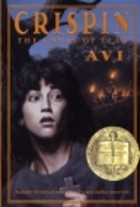
Crispin: The Cross of Lead

Avi, Crispin: the Cross of Lead (Scholastic 2002)

Moving house is supposed to be one of the most stressful things you can do. It certainly claims a lot of attention, and I thought perhaps a mediaeval adventure for young readers would be an appropriately diverting read. Crispin: The Cross of Lead turned out to be just the ticket – it’s straightforward but intelligent, with enough authenticating detail, political savvy and period vocabulary (I’m familiar with terce, sext and none, can guess what a glaive is, and had to look up mazer) to be interesting.

The 13 year old hero – ‘Asta’s son’ – doesn’t even know his own name at the start of the book. He and his mother have been outcasts in their small village, and now that his mother has died he is almost completely alone in the world. Things get rapidly worse. For reasons he doesn’t understand his life is threatened, and he flees the village that is all he has ever known. He is taken under the wing of a traveling juggler who turns out, of course, to be more than he seems, and we get an age-appropriate taste of the kind of 14th century European politics that informed Umberto Eco’s Name of the Rose. There’s a twist involving the young hero’s identity that you might be able to guess even from that wispy outline, and would be unsurprising to most of the 10 to 12 year old target readership (a phrase that always reminds me of a Tohby Riddle cartoon where a cheerful adult is taking aim at the head of a small child with a book that’s about to become a projectile). The final scenes are awfully implausible, in way that suggests a tight deadline was being met, but that wasn’t enough to take away from my enjoyment of the book as a whole.

If you don’t know Avi’s work (evidently that’s not a pen name, but the name he was given by his sister when he was small it’s the only one he uses now in his early seventies), I’d recommend starting with The True Confessions of Charlotte Doyle, in which another 13 year old has equally implausible but wonderfully swashbuckling adventures on the high seas in the early 19th century.

Thea Astley’s Kindness Cup

Thea Astley, A Kindness Cup (©1974, Nelson 1977)

I mooched this because it’s on Kerryn Goldsworthy’s What’s What list, her personal selection of Australian works ‘that, for whatever reason, and almost independently of their writers, are simply scarily, eerily good, that move and startle and resonate and go on resonating, in a way that defies analysis’. It’s a great list, including movies, short poems, a long poem, a biography, short stories, novels … and I’m willing to be guided.

I feel warmly towards Thea Astley because she contributed indirectly to a lovely moment in my family. In the 1970s I heard her tell of a conversation with Patrick White. ‘Thea,’ she wheezed in what we young ones understood to be an impersonation of the Great Man, ‘if you’re going to write about a shit, you have to make him a monumental shit.’ I don’t know what possessed me, but some months later in north Queensland I relayed that line to my parents, in whose presence the word ‘shit’ generally created at best a shocked silence – maybe I thought the highbrow context would excuse the crudity. This time, it provoked my father to a rare moment of reminiscence and the only time I can remember him ‘swearing’ in my mother’s company: ‘When I was at school, the football coach would tell us the day before a big match, “Tonight I want you to have a big shit, and when I say big I mean twice around the pan with a curl on top,”‘ and he cackled like a naughty schoolboy. He was in his sixties, as I am now.

So I was warmly disposed to this book. The warmth soon evaporated: it’s not a book that asks for affection. Yet, oddly enough, an erasure of my first paragraphs is suggestively relevant:

… her personal selection of … Patrick White … I don’t know what possessed … north Queensland … a shocked silence … provoked … reminiscence … ‘swearing’ … in his sixties

That is to say, Patrick White’s magisterial presence is tangible from the opening sentence (‘This world is the unreality, he thinks between smiles and frowns over the letter’); the novel is set in north Queensland, and the main characters are sexagenarians raging, or keeping silent, about horrible events from 2o years earlier.

In the book’s present time, early in the twentieth century, people are returning to a small NQ town for a ‘Back to the Taws’ celebration. One of the returning townsfolk, Dorahy, was the teacher in the one-classroom school in days past when a number of Aboriginal people were murdered – or ‘dispersed’, to use the weasel word of the time. Dorahy was outraged back then, both by the massacre itself, which he had tried to stop, and by the magistrate’s finding that there was insufficient evidence to hold anyone to account. The men responsible for the massacre are now leading citizens gladhanding their way to an election of some sort, and Dorahy is determined to shatter the complacent silence about the past.

The massacre, which occurs at the book’s midpoint, is shockingly real, not with Tarantinesque buckets of blood but with a horrible frozen moment of realisation. The book’s real interest, however, is in how such an event is to be remembered. In a way, it prefigures the History Wars of the John Howard years, though Thea Astley’s imagination wasn’t up to inventing a Keith Windschuttle who would survey the evidence and then deny the history, or a slogan as pernicious as Howard’s ‘relaxed and comfortable’. When the voices that try to recall the history are silenced here, it is with ruthless brutality.

As an honourable attempt to face up squarely to white Australia’s black history, this makes an interesting comparison to Kate Grenville’s The Secret River. Both books have good whites and bad whites; in both, the bad whites are less well educated, though in Astley’s they are pillars of society where Grenville’s are a ruffianly lot; in both, the good whites who aren’t victimised along with the massacred Aborigines either collude or are ineffectual. Strangely, in Astley’s book, although we are shown the massacre very clearly, all the fuss twenty years later is about the hideous treatment of the one white who actually raised a finger to protect the threatened Aborigines. Perhaps this is a matter of being true to the times – perhaps a hundred or so years ago even people of conscience felt the torture of one white man to be a greater outrage than the massacre of eight Aboriginal men and women. Perhaps it was just not possible to look a genocidal incident full in the face in a novel.1 Or perhaps the chilling effect of the book’s last line is no accident. (Stop reading now if you hate spoilers.) The three men who have sought to reveal the truth from twenty years before are lying outside the town hall, battered, perhaps dead or dying, while ‘Auld Lang Syne’ is being sung inside ‘in nostalgic untruth’, as a deliberate turning of a blind eye to the ugly history:

Full-throatedly, the audience joins in the singing and roars chorus after chorus.
___It has almost forgotten the victims already.

In the immediate moment, ‘the victims’ are the three men. The way I read the phrase, though, it’s a brilliant piece of authorial restraint: the reader is left to ponder the phrase’s wider, deeper reach, with a sickening sense that the narrative voice, too, has ‘almost’ forgotten. It’s the opposite of being lectured at.
—-
1Interestingly enough, Alex Miller’s Landscape of Farewell takes the dislocation a step further, dealing with a massacre by North Queensland Aborigines.

Vikram Seth’s The Golden Gate

Vikram Seth, The Golden Gate (1986, Vintage International 1991)

A virus had me sick in bed,
Too thick of head to watch TV.
I’d try to read but lose the thread.
Oh bored bored bored, Oh woe was me!
A friend* said, ‘Read The Golden Gate.’
‘Five thou, five hundred fifty-eight
Lines in iambic tetrameter –
No way! That’s not one for the amateur
And drowsy reader.’oooo ‘Have a go!
Just take one sonnet at a time.
They zip along and even rhyme.’
I read, coughed, slept, read, slept, went slow.
My friend was wise, the book’s a joy,
Seven years before A Suitable Boy.

The year is roughly 1980,
AIDS a whisper, Soviet bloc’s
Intact. A yuppie seeks a mate, he
Finds love through a PO box.
San Francisco, sexy, witty,
Like Maupin’s first Tales of the City.
John loves Liz and Phil loves Ed,
Though Ed loves Jesus more than bed.
Jan (sculptor) holds a torch for John.
An anti-nuclear demonstration
Includes a powerful oration.
The pleasure here was so full on
I’d like to read, though there’s no hurry,
Fredy Neptune by Les Murray.
——
* The ‘friend’ was Jo Walton, a writer and avid reader of, and blogger about, fantasy whom I’ve never met. She enthused persuasively about the The Golden Gate earlier this year on the tor.com blog. A copy turned up on BookMooch almost instantaneously.

The Book Group and The City and the City

China Miéville, The City and the City (Macmillan 2009)

Before the Book Group meets:
We decided to read some science fiction. Rather than opting for someone’s idea of a classic (Asimov, Heinlein, early Gibson or Stephenson) we decided to pick something current. I’d loved China Miéville’s Perdido Street Station and heard interesting things about The City and the City – among other things it had been nominated for a Hugo [and now has tied with Paolo Bacigalupi’s The Windup Girl for Best Novel]. I suggested we take it on, and the suggestion carried the day.

So I was suffering a mild case suggester’s anxiety when I started reading. What response would the book get from Groupers who’ve read even less science fiction than I have? Would the meticulous world-building strike them as so much tedious scenery-painting? Would they see the elegant police procedural plot as something from a by-the-numbers TV show, the characters as two-dimensional, the tantalising central conceit the equivalent of a one-joke comedy? I’m pleased to report that after a while I stopped caring and was absorbed in the book’s world and its story.

The City and the City is hard to write about because it really is an extended exploration of a single conceit. I would infinitely prefer to have had it revealed  to me by the narrative itself, and don’t want to have a hand in spoiling it for anyone else. In a Book Show interview, Miéville went as far as saying that the story is set in two cities that share an unusual relationship to each other, which is true but doesn’t give anything away. Not until the end of the first chapter is there any hint that the world, or at least the cities, of the book are in some sense science fictional/fantastic. I would love to know how a reader who wasn’t forewarned would understand that first jarring moment, and how long it would take to grasp the full situation. Of course, in one sense, the full situation isn’t clear until the very last pages: as in Kafka and Raymond Chandler, to whom Miéville acknowledges indebtedness, the narrative at one level concerns itself with solving a single crime, but it also unfolds the deeper political realities of the world of the novel.

Pushing the spoiler envelope just a little, I had an insight into the book when out walking recently with the Art-Student. As we approached a small group boys riding their scooters in the street, one of the boys momentarily lost control and wheeled directly into our path. He pulled up short and called over his shoulder to his friends, ‘I’ll try that again.’ He had carefully avoided hitting us, but otherwise acted as if we dog-walking old people weren’t even there. He had ‘unseen’ us. Then I remembered noticing on my last visit to Cairns that though there were plenty of Aboriginal people in the streets, the non-Aboriginal people generally behaved as if they weren’t there, and vice versa – another case of mutual unseeing. The City and the City takes this common phenomenon to impossible extremes, and much of the joy of the book lies in how consistently and thoroughly he has imagined it. Miéville succeeds to the extent that every now and then a reference to the world as we know it – to Coke, or Madonna, or a Google search – brings one up short: oh, this is all happening in the world as I know it! The climactic point of the story consists of four people walking briskly down a street in close physical proximity – and it’s totally thrilling, not just because one of them is carrying a gun. That’s all I’m saying.

After the meeting:
It was a small meeting, but all of us had enjoyed the book. The group meeting had been postponed for six weeks or so, so quite a bit of time had passed since most of us had read the book. And even though in the intervening weeks one had reread it and another had read Perdido Street Station, our memories weren’t generally fresh enough to generate much detailed discussion. I needn’t have worried about the appeal of the world building: everyone enjoyed it. And my curiosity about how the setup was revealed to the unspoiled reader was gratified: the consensus seemed to be that the odd word (‘crosshatched’) created a sense of unease, enough to alert rather than alarm, and there was pleasure as more of the workings of the cities was revealed, until one felt (several times over), ‘Ah, now I get it!’

The Tree of Man revisited with the Book Group

Patrick White, The Tree of Man (1955, Vintage 1994)

Before the group meeting:
My mother’s letters in the 1970s would occasionally report on her reading. She once transcribed a paragraph from Salman Rushdie’s Midnight’s Children because it seemed to describe the noses of our family. The other day when I read the first page of the Drought chapter of The Tree of Man, I wondered if she’d thought, as I do, that this description of Stan Parker evokes aspects of my father (allowing for the fact that Dad grew sugarcane rather than running a dairy, and was never ‘broad’):

He was respected. He was inseparable from the district, he had become a place name. His herd was small, but of good quality for the herd of a man in a small way, neither rich nor ambitious, but reliable, the cans would always reach the butter factory to the minute, without fail. He went to church too, singing the straight psalms and rounder hymns, in praise of that God which obviously did exist. Stan Parker had been told for so long that he believed, of course he did believe. He sang that praise doggedly, in a voice you would have expected of him, approaching the music honestly, without embellishing it. Standing in the pew, singing. the back of his neck was by this time quite wrinkled, and the sinews were too obvious in the flesh. But he was a broad and upright man.

I’ll never know if she made that kind of connection, but she mentioned the book in passing in a comment on Cancer Ward:

It seems queer but I think Patrick White writes much like [Solzhenitsyn], so simply. I’ve read only one of his, The Tree of Man, & really enjoyed it.

Not bad, eh? She made no claim to literary sophistication, but she picked White’s affinity with the Russians. And she found his prose simple!

The prose is simple, but it’s not easy. It’s also impossible to read fast, lacking what A D Hope believed a novelist needs: ‘a plain style, a clear easy stride, a good open texture of language to carry him [sic] to the end of his path’. But it’s certainly not ‘pretentious and illiterate verbal sludge’, as Hope famously described it. It does constantly pull you up and make you look at a particular word or image – or, if you don’t stop, leave you with an uneasy feeling that you’ve missed something. The point of view frequently moves around within a single short sentence, or rather within a grouping of words between consecutive full stops, since White is a great user of what are sometimes known in the editing trade as frags. Even the very first sentence, innocuous enough at first glance (‘A cart drove between the two big stringybarks and stopped’), has the reader slightly wrong-footed with its abrupt rhythm, its lack of a human, or even animal, subject, its slightly skewed use of articles (‘the cart drove between two big stringybarks’ would be more natural, but of course it would mean something quite different).

The book’s peculiarities, and its arrogance, intimidated me in first year university in 1967. But not this time. True, I came close to genuflecting at the first four chapters, which tell of the primal encounter of ‘the man’, ‘the woman’ and the bush. I wondered if I would be able to keep up with the intensity of the prose for the whole 480 pages. But once the narrative emerged into something resembling a social world, I was less enthralled. In fact I became increasingly irritated. I just don’t believe in the nastiness of most of the characters. I can’t stand the snobbishness of the narrative voice. The drunken Irish shenanigans (read domestic violence, despair, wretched poverty and, towards the end, dubious religion) of the O’Dowds fail to amuse me. The pretentions of the nouveaux riches Armstrongs are awkwardly unconvincing, as is almost everything about the younger Parkers. The book seems to assume that some people, inarticulate or otherwise, have an honest capacity for rich inner lives, while others (most?) don’t, and must settle at best for synthetic souls with occasional exalted glimpses. For all the towering strengths of the book – and they certainly aren’t limited to the first chapters – I became increasingly obsessed with calculating what fraction of the pages I had yet to read.

Perhaps the most striking disappointment is the vast, gaping silence about Aboriginal Australians. When Stan’s cart stops between the stringybarks in that first sentence, it’s definitely in terra nullius. ‘Blacks’ are mentioned twice, once when young Ray refers to their arcane knowledge of how to survive in the desert, and again in the closing pages when the missionary mentions sex with black women as a sign of his youthful depravity. The phrase ‘dream time’ occurs twice. The first time, Stan and Amy have come to an ‘uneasy dream-time’. Since that probably signifies that neither of them was fully awake in relation to the other, the Aboriginal reference may be coincidental, but in the second, near the beginning of the fourth and final part, Stan looks back on his first days at the farm as ‘the dream time’. Here the phrase does refer to a time of creation, of beginnings, and it must disturbingly invoke for any Australian reader now, and surely for some in the 1950s, this continent’s history of genocide, dispossession and cultural appropriation. Invoke without acknowledging. The Irish are despised. The working class barely exist. Aboriginal people have been erased and over-written.

Then, here’s Stan, further down the first page of the Drought chapter:

There were certain corners of his property that he could not bring himself to visit, almost as if he would have discovered something he did not wish to see. […] Once he had been looking at a crop of remarkably fine sorghum that was almost ready to bring in, when he remembered that same stretch of land after he had cleared it as a young man, and on it the white chips lying that his axe had carved out of the trees, and some trees and young saplings still standing and glistening there, waiting for the axe. So that he forgot his present crop and went away disturbed, and thinking.

In a book that makes much of ‘things that are too terrible and wonderful to speak of’ is it too much to imagine that in this moment the thing Stan does not wish to see is the silenced Aboriginal history? That the dispossession on which Stan’s settlement of the land is built is almost forcing its way into the narrative? Surely it’s not just my idiosyncrasy that those white chips of wood remind me of the bones in the red earth of a massacre site in a William Yang photograph?

There may well be hundreds of learned articles about this disturbed silence, but that’s my two bob’s worth.

After the group meeting:
Tonight we met in a pub in Paddington, rather than in someone’s home. All but one of us turned up, and almost half had read all or most of he book. We had an animated discussion. Only one of us really loved the book. One, who may not have read it, considered it to be dated imperialism. The two of us who read the Vintage edition agreed that the cover was absurdly inappropriate (a horse? northern hemisphere trees?) No one shared my unease about the absence of Aboriginal characters: the consensus seemed to be that the original inhabitants of the Parkers’ land had been dispossessed long before Stan and Amy arrived, and that my reading of the white chips passage was drawing a long bow. As someone said, what’s the point of a bow that’s not long? And I still think that the general silence enacts a kind of genocide.

Whatever, unlike Anna Karenina, The Tree of Man couldn’t hold its own against the need to discuss Other Things – the sins of the ALP and the worse sins of the Coalition, our various adventures in work and education, travel and the weather. As always it was a fun evening.

Every Secret Thing

Marie Munkara, Every Secret Thing (UQP 2009)

I read this immediately after The Tree of Man. I’ll wait to post about the latter until we’ve discussed it at the Book Group  – enough for now to tell you that it was Edward Said’s notion of counterpoint that prompted me to follow White’s novel with one by an Aboriginal writer.

The books have more in common that you might expect – mainly a contempt for Irish Catholics and selected white middle-class people of whatever religio-ethnic background – but where White’s contempt is accompanied by patrician amusement, attacking from on high, Maria Munkara’s, behind its veneer of cheerfully knockabout calumny, is fuelled by powerful sorrow and rage at the damage done by missionaries.

In fact, scrap the word ‘cheerful’ in that last paragraph. The opening chapters have the form of rough humour as they introduce the people of ‘the Mission’  – the ‘mission mob’ of priest, brothers and nuns and the ‘bush mob’ whom they are out to convert. But from the beginning we are told of endemic sexual abuse and corruption, and  the humour comes with such heavy sarcasm that it’s hard to find it actually funny. For example, when some boys are disobeying the nuns while their parents are standing by, the nuns have an inkling that they may be encountering deliberate resistance rather than incidental lack of cooperation, ‘but they all knew that the bush mob were God-fearing people with a deep and abiding respect for the mission and its papally sanctioned quest to strip them of every vestige of their culture so they would never be defiant now, would they?’ The whites of the Mission are mostly presented in unforgiving caricature – closed-minded, arrogantly confident of their own superiority, sexually predatory (the men) or quietly lustful (the women). The Aboriginal characters aren’t treated much more kindly. They’re rough, pragmatic, disorganised, venal, and only slightly more fleshed out than the non-Aboriginal – but there’s no doubt where the book’s sympathies lie.

The book progresses mainly in a series of skits: the children ask the visiting Bishop curly questions about Christian teachings, the old man of the bush mob helps an anthropologist fill his notebooks with misinformation, a couple of French Hippies arrive in a shipwreck, a cyclone virtually destroys the Mission when the mission mob disregard the warnings of the bush mob, and so on. It takes a while for the narrative gears to mesh, and when they do it’s not so much that the sarcastic caricaturing lets up as that a deeper current asserts itself, and we begin to understand that we are reading about an appalling spiritual tragedy. The moments where the narrative voice tells it straight are incredibly powerful, as at the point when the bush mob have been ‘dying in droves’ from a flu that has only mildly inconvenienced the missionaries, and are persuaded to convert en masse not only to Christianity but also to Western materialism, mainly in the form of cast off clothes. The narrator comes out into the open:

The almighty God that most of the bush mob now believed in was nothing more than the grim reaper of human souls with the mission mob as his helpers and the cast-offs the sad compensation for the relinquishment of their own beliefs. And even though the tenth commandment mentioned that you shouldn’t covet your neighbour’s house or wife or donkey or anything else, the church must have decided that coveting someone’s soul was an entirely different matter. And even though the eighth commandment stated quite clearly that it was very naughty to steal, the mission mob ignored this too and stole the things that were dearest to the bush mob’s heart. They stole their resistance to change and they stole their belief in themselves and they stole their children. Because each black soul that was harvested and each child that was appropriated was another rung higher up the ladder to heaven for Father and his crew and another step closer to salvation from this cesspool of earthly temptation and sin.

In a chapter where a stolen child finds her way back to the community as an adult, the tone lurches from silly farce on a crab hunt to plainspoken desolation when the narrator again intervenes. The final moments of the book are as devastating as you’re likely to read anywhere.

Every Secret Thing won the 2008 David Unaipon Award as a manuscript and then in February this year it won the Northern Territory Book of the Year Award. In an interview on Awaye in February, Marie Munkara said her story had ‘little wisps of truth and huge bits of embellishment’. The book makes no claims to be a historical record, but the truths it tells are a far cry from wispy.

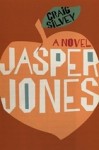
Jasper Jones at the Book Group

Craig Silvey, Jasper Jones (Allen & Unwin 2009)

The fourth paragraph of Jasper Jones begins:

This is the hottest summer I can remember and the thick heat seems to seep in and keep in my sleepout.

‘Keep in’? That’s awkward, I thought, and it chimes oddly with ‘seep in’ and ‘sleepout’. The paragraph continues:

It’s like the earth’s core in here. The only relief comes from the cooler air that creeps in between the slim slats of my single window. It’s near impossible to sleep …

Seep in, keep in, sleepout, creeps in and sleep, all in five lines: this is definitely odd, but – along with the heat, the relief and those slats, which are slim for no reason other than alliteration – it’s clearly deliberate.

Over the next pages, while the story had my attention from the word go – thirteen year old Charlie Bucktin, the narrator, is woken in the night by the town’s bad boy Jasper Jones and led to a secret place in the bush where he’s faced with a terrible spectacle and an equally terrible dilemma – I had a weather eye out to see if anything would come of this stylistic oddity. Nothing did, in the sense that if you didn’t notice it you weren’t missing a vital clue to the book’s meaning. But Charlie is in love with language, and bursts of assonance and alliteration for their own sake amount to something of a stylistic signature. I did a quick scan before returning the book to the library, and noted, from many examples, ‘a bundle of lonely bones tied to a stone’ (page 123), ‘Pored over it, taking little portions’ (page 128), and this, in one of Charlie’s reflective moments:

Sorry means you feel the pulse of other people’s pain, as well as your own, and saying it means you take a share of it. And so it binds us together, makes us as trodden and sodden as one another. Sorry is a lot of things. It’s a hole refilled. A debt repaid. Sorry is the wake of misdeed. It’s the crippling ripple of consequence. Sorry is sadness, just as knowing is sadness. Sorry is sometimes self-pity. But sorry, really, is not about you. It’s theirs to take or leave.

Like the frequent references to Charlie’s reading – To Kill a Mockingbird, Batman, Breakfast at Tiffany’s (which he hasn’t read, but Eiza, the love interest, has, and seen the film), Huckleberry Finn, The Wizard of Oz – this fascination with words is important in establishing Charlie’s character and the tone of the book. It’s been described as an Australian To Kill a Mocking Bird, but I doubt if Harper Lee’s book was anything like as intertextual as this. The description is OK as a sales pitch but I’m surprised that reviewers have echoed it.

Anyhow, it’s a terrific, fast moving, undemanding read: a coming-of-age romance cum mystery cum homage to Mark Twain cum historical drama (the Vietnam War is on, and the Beaumont children are mentioned towards the end) cum tale of pre-adolescent friendship (with a substantial nod towards the movie Stand By Me). There’s a beautiful description of a cricket match in which Charlie’s best friend, a very short Vietnamese boy (‘Jeffrey Lu on debut’) makes a splash, in a way that reminded me of Ruth Starke’s brilliant book for younger readers, Nips XI.

One thing I don’t understand is what makes the book ‘mainstream’ rather than ‘young adult’. There’s some pretty intense swearing, I guess, but sex is treated with great tact; even when sexual abuse is described explicitly in a letter that’s crucial to the plot, we don’t get to read the letter. The story is told from a thirteen-year-old’s point of view, and there’s no hint that he’s in any way an unreliable narrator: we don’t know any more than he does and we’re not invited to make judgments that differ from his – we learn about the world with him. In fact, Charlie’s angry mother is treated with less adult-sympathy than similar mothers in many a YA title. I’ve heard that the classification was a policy decision on the part of the publishers – that they were invited to submit the book for the Children’s Book Council Awards, but declined. The mainstream classification seems to have paid off in adult readership and award nominations – always assuming that a Miles Franklin shortlisting is more prestigious than one from the Children’s Book Council, and that being on the New South Wales Premier’s Literary Awards shortlist alongside David Malouf’s Ransom and Coetzee’s Summertime is more dignified than being named in the same breath as Justine Larbalestier’s Liar (not a view I share: I’m looking forward to Justine’s book as keenly as I am to David’s, and who in their right mind would want to compete for a prize against Malouf and Coetzee?). I hope this taxonomical decision hasn’t discouraged the young people who are the book’s natural readership. [Since writing that I’ve seen an online  trailer that is clearly aimed at teenagers, so it looks as if the pubisher is having two bob each way, and a good thing too.]

I wrote that much a number of weeks ago. The Book Group met last night.

With one exception, we were lukewarm. No one actively hated the book, but different people saw different things as gaping flaws. One man said he found Charlie’s decision at the very start to help conceal a crime highly implausible, and intolerably hackneyed – from then on he read with very little pleasure. Another was irritated by the banter between Charlie and Geoffrey (though one man said he thought that was the best thing in the book). Others found the narrative voice, and the characters’, wildly inconsistent – perhaps especially in beautifully written passages such as the aria on ‘sorry’ I quoted from above. I think we were unanimous in finding the characters’ emotional responses to crises (a grisly death, the acrimonious departure of a parent, the discovery of a grandparent) lamentably one-dimensional. I’m sorry to say that as we talked the book’s charms diminished. I proposed a reading that transcended these concerns for consistency, verisimilitude and psychological realism. Perhaps we ought to see the book as akin to the startlingly discontinuous novelitas of César Aira that I’ve just been reading about in the current Heat. But that didn’t wash. Its one defender said it reminded him vividly of things he had felt when he was an adolescent, and he wasn’t howled down.

Sorry, Craig.

Sunset Oasis

Bahaa Taher, Sunset Oasis (2007. Translation by Humphrey Davies, McClelland and Stewart  2009)

This won the inaugural International Prize for Arabic Fiction in 2008. If successive winners are as good as this, then it’s a prize to watch. Set in the late nineteenth century, mostly in the Egyptian oasis of Siwa, the narrative centres on Mahmoud Abd el Zahir, who is sent to the oasis as government representative, and his Irish wife, Catherine, who accompanies him on this dangerous assignment (previous government representatives have been murdered by the oasis-dwellers) because of Siwa’s historical connection with Alexander the Great – she dreams of discovering his tomb there. There’s a vivid sense of the time and place, of the complex politics of an Egypt recently occupied by the British, now in effect passing on the mistreatment to the ethnic minority in the oasis, of the challenges of intercultural relationships, of Egypt’s multi-layered past. Catherine and others are fascinated by antiquity, Mahmoud struggles to come to terms with his own experience in recent upheavals, the people of the oasis have their own internecine history. In the oasis, Easterners and Westerners have a long history of self-perpetuating warfare, and various ones of their leaders are convinced that peace can come only when one side of the struggle or the other is completely wiped out. It’s hard not to read this as a sly reference to our current global clash between Easterners and Westerners.

The book is beautifully written, and constantly fresh and surprising. It’s narrative switches effortlessly between Mahmoud, Catherine and a number of other characters including, brilliantly, Alexander the Great. I was initially disappointed by the ending (it’s all right, no spoilers), but on reflection I realised that it opened the narrative out to great depths of meaning.

After all my recent whingeing about reading works in translation, I’m glad to report that Sunset Oasis reads beautifully in English. So much so, I needed to remind myself regularly that it was originally written in Arabic. I found a wonderful interview with Humphrey Davies, the translator, at The Quarterly Conversation, which ends:

The first draft of a book is very heavy lifting. It hurts my eyes in particular; it’s a real strain on my eyes. At the end of the day, I’m pretty gobsmacked. The most pleasurable part is when the first draft comes back from the editor with questions, and then you can see the shape of it. You can start fine tuning and tweaking and coming up with nice little things.

So there you go. This translator gets to have an editor go over his first draft in detail, and is then paid good money to refine the work. This reader considers that extra money well spent – and, take note publishers, that opinion may well translate into sales. Both Bahaa Taher and Humphrey Davies are on my list of people to trust.

I’m posting in a bit of a rush, because this book was a Book Club borrow, and the meeting where I’m to return it is due to happen in about  15 minutes. So here you are, just ahead of the deadline. [I’m returning three books. The other two I couldn’t get past 100 pages. So it’s not only a joy but a relief to have enjoyed this so much.]

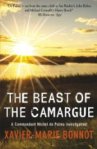
Bête/beast du/of the marais/Camargue

Xavier-Marie Bonnot, The Beast of the Camargue (translation Ian Monk, Maclehose Press 2009)

Maybe I’m turning into a horrible person, because here’s yet another book I’ve laid aside, this time just before page 100. It was a big hit in France, so it might be that I’ve lost all sense of what makes a good read. But it’s a murder mystery, and very little had happened by the time I parted company from it – the body of an extremely rich man who has been missing for a fortnight or so has finally been found in a swamp, so it feels as if the story might be about to start. An unnamed man who is probably a psychopathic serial killer has made a couple of lacklustre appearances. There’s a cop with enough idiosyncrasies to make him interesting, a romance that will probably stay unconsummated, and a beautiful, rich widow with something she’s not telling. There are English-speaking tourists, wandering with their cameras through places where evil lurks. Oh, and there are hints that the evil might be in some way occult. In other words, it’s familiar territory, and there evidently wasn’t enough in it to engage this reader.

Two things kept me reading even this long: the setting and the translation. The action takes place in parts of France I visited last year (as one of those gormless tourists), and I was hoping there would be pleasure in revisiting them – but the sense of place, it turns out, isn’t very strong. I was fascinated by the translation. When Gregory Rabassa was working on his translation of A Hundred Years of Solitude, an interviewer asked him if he knew enough Spanish for the task. He answered, ‘The question isn’t whether I know enough Spanish, the question is do I know enough English.’ I have no doubt that Ian Monk’s French was well up to the challenge of translating this book, much much better than mine I expect, but his English is disconcertingly uncomfortable in its own skin. A quick google just now turned up this sentence from the original:

‘Sortez du problème, les gars. Allez fourrer votre nez là où personne n’irait jamais le fourrer.’

As luck would have it, I knew where to find the English version (on page 83):

‘Move outside the problem, lads. Go and stick your nose where no one else would stick it.’

The French, advice that a wise old cop once gave our hero, looks to be casual speech, but the English is oddly stilted. Sortir is ordinary language for leaving or going out (of something), but who says, Move outside (something)? And how could anyone else stick the lads’ nose anywhere? How about:

Step outside of the problem, lads. Stick your nose in places where no one else would think of sticking theirs.

That’s just nit-picking, of course. My eye glided over that sentence when I read it in context. I noticed its awkwardness now because it’s the only sentence from the book I’ve seen the French for, so it’s the one I was stuck with to consider here. But the cumulative effect of such small misfires is both fascinating (as in, I’d love to study this closely because it shows a lot about language) and unpleasant (as in, I keep being jolted ever so slightly out of the world of the story).

Actually, I think Ian Monk is probably a very good translator. I spent maybe ten minutes playing around with that one sentence. He had to earn a living. Translators aren’t exactly paid at merchant banker rates, and you do what you can in the time you’ve got.

Anyhow, Commandant Michel de Palma may be the French reading public’s equivalent of John Rebus, but he couldn’t keep me reading past page 98.

The Alphabet of Light and Dark

Danielle Wood, The Alphabet of Light and Dark (Allen & Unwin 2006)

I’m sorry, this book and I just didn’t hit it off, though we both tried. At page 50, the thing that had most engaged my mind was worry over whether the verb ‘propelled’ can be used as a synonym of ‘towed’, or whether the thing propelling has to be pushing from behind. There’s also a use of ‘eke’ that stirred me emotionally. I did read on, but stopped at page 152, just short of half way. Perhaps I’ll come back to it when I’m in a different mood – a mood where I’m not wanting story. I’m not saying there’s anything wrong with the book, just that I wasn’t drawn to it. I’m not even close to the irritation inspired by the last Tasmanian novel I failed to finish.

For the record, here’s the last paragraph I read, not a straw that broke the camel’s back, just the innocent paragraph that happened to be there when the light rail pulled in to Rozelle Bay station:

But now the night is clear, and quiet again, and the only sound is the faint zinging of the fluorescent tube of light uncovered on the ceiling. Essie’s hands are hot and red in the suds of the dishwashing water, and she can feel the two glasses of red wine in her blood. The light inside the room makes the kitchen windowpane a black mirror. Essie’s face swims over the surface of it. But it is only a version of her face. There is no colour, no texture – it is simplified down to bone structure and smooth, unmarked planes of skin. It’s like a photographic negative. Not truly her face, just a blueprint for it. Invisible beyond the window is the cape, and beyond that, the ocean breathing out and in, out and in.

This really was the last paragraph I read, so in effect I’m quoting at random rather than because it’s a good example of something. Its inelegances are by no means typical, but it does happen to exemplify the way reflection (in this case literal) and beautiful but slightly dubious description constantly take precedence over story-telling. (Too often it’s too much like having a story teller interrupt herself to say, “Ohh look at that pretty thing!’ The thing may be pretty, but we want the story.) There’s no forward impetus. I’d enjoyed a lot of the book – Bruny Island is now permanently in my mind as a beautiful place –  but I felt no wrench when I closed it.