Tag Archives: poetry

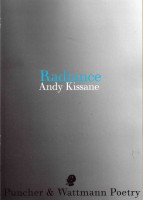
Andy Kissane’s Radiance

Andy Kissane, Radiance (Puncher & Wattmann 2014)
1radiance

Andy Kissane’s poetry is rooted in white, middle-class, heterosexual, inner-west Sydney. Among other things, it features memories of a Catholic childhood and celebrates non-dysfunctional domestic family life. And it’s terrific.

Maybe I think it’s terrific because all those descriptors apply to me as well. But the thing is, it’s a poetry that’s modest, witty, at times quietly ecstatic, and capable of looking well beyond the inner-city horizon.

As in Kissane’s earlier books, there are a number of dramatic monologues and other poems dealing with people suffering at the pointy end of capitalism – in Victorian London, on a Mexican street, at an airforce hangar, on a Cambodian garbage dump. Also as in earlier books, there are witty and poignant engagements with other writers – Keats, Shelley, Virginia Woolf (who criticises Kissane’s ‘infernal overwriting’), Dylan Thomas, Miklós Lorsi, Buddy Holly, Nick Hornby.

For me, it’s the more personal poems – poems of domesticity, if you like – that are the richest. I’ll try to articulate why by using the book’s title.

Forms of the word radiance occur in three poems. The first is ‘Trip to the Ice Rink’. The poem’s speaker performs ‘a role / crucial for adolescent wellbeing: efficient driving.’ In the opening lines his daughter gets into the car in a black mood, but:

By the time I pull up outside the Canterbury ice rink,
the thunder has blown away and the sky
is now a radiant, cloudless blue. ‘Thanks, Dad,’
she says, as she goes off to practise her Lutz.

The speaker’s focus shifts from wry acceptance of his utilitarian role:

I can see her as she concentrates on the long backward
glide, digs her toe pick down hard into the ice, lifts
and spins into the air, striving with her whole body
to land this difficult jump for the first time.

It’s a commonplace moment. But there’s a suggestion of the numinous in that father’s mental image of his daughter doing what is after all something fairly ordinary. The daughter’s smile is not the only radiance.

The second ‘radiance’ is in ‘Schooling the Heart’, whose three pages invoke scenes from Anna Karenina, kindergarten experiences with plasticine and cuisenaire rods, the self-immolation of Buddhist monk Thích Quảng Đức in Saigon in 1963, and Catholic iconography remembered from childhood: ‘the immaculate heart / of Mary radiating light, exploding like a penny bunger / wedged into a pine cone’. Despite the comical simile, that radiance is not to be discounted: the poem is suffused with a yearning – and the potential – to let one’s heart shine forth in spite of the rebuffs that have schooled it into caution.

Then there’s ‘Sea of Tranquillity’, the suite of nine poems that make up the fourth and final section of the book. The first, ‘Total Eclipse’, begins:

The Moon drinks tea from her favourite china cup,
decorated with the flowering tassels and green leaves
of a yellow gum.

The Moon turns out to do many things that a middle class woman in the inner west suburbs would do: she grows vegetables, argues violently about movies, serves up pizza, works with teenage drug abusers, goes to a poetry reading where she

________longs to read the book hidden
in her overcoat pocket, only she doesn’t want to appear
rude.

She’s clearly an ordinary woman, the speaker’s long term partner. ‘The Moon’ is not quite a metaphor, but it’s more than a nickname. Her pain – physical and emotional – is described as craters, and the poems are shot through with light imagery: at their first meeting (in ‘Total Eclipse’) she opens a door and he sees her lit from behind with ‘a fluttering corona pulsing around her outline’; elsewhere she sashays across the sky

with that long stride of hers, poised and frisky,
her radiant beauty set to shine all night long.

In another poem she is explicitly not ‘the celestial moon’. It’s playful, whimsical, and – though an epigraph from A Midsummer Night’s Dream warns against solemnity – lyrical. I read the sequence as a brilliant rebuttal of the truism that long term relationships by their nature become matters of habit, companionable maybe but pallid in comparison to the first flush of passion. This is completely convincing love poetry, and if I had to tie down the meaning of ‘radiance’ here I’d say it was the way the loved one (or the loved universe) appears to the lover.

One other thing: at a poetry reading in ‘Moon Rocks’, the speaker has an experience that would be familiar to many people who have attended such an event. The first reader’s words

______ collapse in on themselves
and I’m being sucked into the core of a black hole.

Not that there’s anything wrong with black-hole poetry, but Kissane doesn’t write it.

As I’ve mentioned before on this blog, I have co-written a short film script based on one of Andy Kissane’s poems. I received a complimentary copy of this book from the publisher.

Jenny Blackford’s Duties of a Cat

Jenny Blackford, The Duties of a Cat (Pitt Street Poetry 2014)

1dcThis tiny book of 12 poems about cats, with seven charming ink drawings, would make an excellent gift for a cat-lover. But, dear reader, before you start thinking about cute internet kittehs, think of Christopher Smart considering his cat Jeoffry:

For he camels his back to bear the first notion of business.
For he is good to think on, if a man would express himself neatly.
For he made a great figure in Egypt for his signal services.

or, much more recently, David Malouf’s ‘Eternal Moment at Poggio Madonna’:

Miss Mischa in her cool
reclusion curls on the mat.
Has a feel for
creaturely comforts and has sniffed out
this spot, though nothing
in nature or that the eye
can see marks it as special.

Cats and fine poetry are by no means incompatible.

Pitt Street Poetry – publishers of, among others, Lesley Lebkowicz, Geoff Page, Eileen Chong, Luke Davies and Mark Tredinnick – have not lost their judgment. Jenny Blackford turns a loving, amused, admiring and sometimes unsettled eye on the creature from another species that shares her home.

It’s not irrelevant that some of these poems have been previously published in The School Magazine (though not yet in my long-ago time as editor) and in science fiction/fantasy magazines as well as literary journals for adults. The cats of these poems have eerie science-fictional qualities, as in this from ‘Their quantum toy’ (the whole poem is online here):

I’ve seen him levitate, I’ve seen him
lift, weightless,
impossible, from lawn to fence,
or rug to bed,
up from the ground without a hair
or muscle moved.

They can have great child appeal, as in ‘Soft silk sack’, which begins:

Cat puddles
against the floor
his body flat as milk

But there are poems that start cutely like that and end, for example, with the cat’s  eyes as ‘ chips of blue-grey glacial ice’. Like cats themselves, the poems can be charming and dangerous in the same breath.

So yes, this would make a great present for someone who loves cats and isn’t allergic to poetry, but also for someone who loves poetry and isn’t allergic to cats.

awwbadge_2014The Duties of a Cat is the seventh book I’ve read as part of the 2014 Australian Women Writers Challenge. Added later: I should have mentioned that we did publish two of Jenny’s ghost stories when I was editor of The School Magazine, that she and I are Facebook friends, and that she gave me a copy of The Duties of a Cat  as a gift.

Hong Ying, Zhai Yongming & Yang Lian edited by Mabel Lee

Mabel Lee (editor), Poems of Hong Ying, Zhai Yongming & Yang Lian (Vagabond Press 2014) – translated by Mabel Lee, Naikan Tao and Tony Prince

1ml This is the second book I’ve read in Vagabond Press’s admirable Asia-Pacific Writing series, and like the first – Poems of Yi Sha, Shu Cai and Yang Xie, edited and translated by Ouyang Yu – it features work by three poets translated from Chinese.
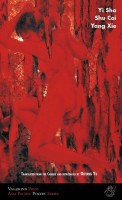
Strikingly, neither Mabel Lee nor Ouyang Yu mentions any of the poets who appear in the other’s book. The only overlap between their respective histories is a mention of Bei Dao, whom Ouyang Yu says is now regarded as ‘uncool, pretentious, even boring’ and whom Mabel Lee honours as a key figure in the post-Mao era. Clearly the story of recent Chinese poetry can contain multitudes.

Mabel Lee’s poets are a generation older than Ouyang Yu’s. Where his introduction discusses the way his poets turned away from the revolutionary zeal and protective obscurity of their Mao-era predecessors, she takes us further back, to the surge of translation of European literature into Chinese at time of the May Fourth movement (1915–1921), then forward through the turbulent decades that followed, the repression of the Cultural Revolution, then the process that began in the late 1970s, of Chinese writing ‘extricating itself from decades of stringent political censorship’.

These three poets were part of that process. They all came of age during the Cultural Revolution and were publishing poetry by the early 1980s. Hong Ying (born in 1962) and Yang Lian (born in 1955) left China soon after the brutal crackdown in Tienanmen Square on 4 June 1989, now live in London and are translated into many Western languages. Zhai Yongming (also born in 1955) lives in Chengdu (where the pandas are) and is something of a celebrity there as an artist and owner of White Nights, a wine bar ‘that functions as a literary and arts salon’.

Hong Ying, Mabel Lee tells us, writes as a form of self-treatment for trauma, and much of her poetry has a dreamlike, painfully introspective feel, like this from ‘Whose Mother?’:

She is linked with all words of grief
In endless gloomy rain
She delivers good fortune to my hands
I see clearly
Black ants crawling all over the road
Dragging along a crowd of silent monks

In the early 1980s Zhai Yongming was thrust ‘into a role model position for other aspiring women poets’. Her poetry is much more outward looking than Hong Ying’s, dealing with social issues, including but not at all limited to issues concerning women. The book’s sole endnote explains that her poem ‘Lament for Scholars’ relates to an incident she witnessed during the Cultural Revolution, in which the renowned actor Feng Zhe was publicly humiliated, later to be ‘tormented to death’. This factual background enriches the poem hugely for the ignorant reader (that is, me) and makes me wish for more. For example, I’d love to know the story behind a sequence of poems about a six-month stay in a village, with lines like this in ‘The Second Month’:

Shouts are heard on Cold Food Day
And to comfort the dead the villagers practise self-restraint
As I search I always wear a faltering smile
My inner wound linked to their eyes in a straight line
How can I enter Jang’an Village?
Though every day there are corpses of drowned infants and of brides who have swallowed poison

Is this telling us about the brutal conditions of village life, or is the speaker projecting something of her own inner suffering onto the villagers? I know I could look it up somewhere, but a note would help with the immediacy of first reading.

Mabel Lee describes Yang Lian’s poetry as possessing an exuberant male sexuality. There’s no sex as such in these poems, but there is a wonderful swaggering energy that carries all before it. here are some lines, picked almost at random, from ‘Dance: Swimming Naked with Li Bai’:

A cup of wine moulds the shape of a throat
A deeply private action _exposed to the public eye
Shakes the body’s _ defects become blindingly beautiful
Once you’ve jumped into the sweet stench of that river you’re drenched
From being submerged in it for a thousand years

I struggled with this book, partly because of my lack of familiarity with cultural/historical contexts, partly because I was constantly aware of the translators’ struggle to do more than paraphrase (though none of it has the English-as-a-second-language feel,of Ouyang Yu’s translation). On the way to writing this post I did some haphazard research (ie, a quick trawl of my bookshelves): I read T S Eliot’s comments on Ezra Pound’s translations from Chinese, in which he writes of the need for a great poet to communicate the poetry of another culture; I reread J P Seaton’s introduction to The Shambhala Anthology of Chinese Poetry, which explains some of the complexity of translating from Chinese to English, and tells the history almost to the point where Mabel Lee’s introduction begins. I decided that my ignorance is profound, and that for me to really grasp the work of these poets would take serious commitment to study on my part, or a translator-poet of genius to hand me something on a platter. For now, I can be grateful for the glimpses I have gained from this little book, and hope to be able to build on them in time.

awwbadge_2014 I’m probably pushing the boundaries to count this as part of my Australian Women Writers Challenge. But Mabel Lee is an Australian woman, and translation is a form of writing (the book doesn’t say it in so many words, but I think she translated Hong Ying and Yang Lian’s poems, while Naikan Tao and Tony Prince translated Zhai Yongming’s), not to mention her lucid introduction. Maybe I should count it as half a title, which means I’m up to 6.5 books. I don’t remember how many books I signed up for. Assuming it was 10 – the ‘Franklin’ level – I’m on track to have completed the challenge by the end of the year.

Yi Sha, Shu Cai, Yang Xie translated by Ouyang Yu

Ouyang Yu (translator), Poems of Shu Cai, Yi Sha & Yang Xie (Vagabond Press 2013)

Vagabond_Press_Asia_Pacific_Poetry_3This is the third title in Vagabond Press’s Asia Pacific Writing Series, but it’s the first I’ve read. The series, according to the Press’s website,

aims to create an open space for the sharing of cultural knowledge, understanding and enjoyment across national, political and language boundaries.

Working ‘in close collaboration with a growing community of writers, translators, editors and artists’, Michael Brennan, Elizabeth Allen and the rest of the small Vagabond crew have produced a dozen or so elegant volumes in the series, including work from China, Japan, the Philippines and Burma. At the Vagabond event at the recent Sydney Writers’ Festival, the ‘open space’ that the series aims to create was tangible in the diversity of writers and translators who were there in the flesh.

Ouyang Yu, who wasn’t at the Festival (I believe he’s a Melburnian), is a tireless writer, translator, scholar, editor and activist for Chinese literature in Australia and vice versa. His first translations of Yi Sha appeared in the second issue of Heat in 1996, twelve years before Bloodaxe Books published Yi Sha’s Starve the Poets!, describing it as his first English publication outside China. If you want a background to this book, and an overview of Chinese poetry in recent decades, you could do a lot worse than listen to ‘Neither Red Flags Nor Peach Blossom’, Parts One and Two, Poetica programs from 2013 in which Ouyang Yu speaks at greater length than his short introduction to this book allows.

The three poets in this book represent three historical stages in Chinese poetry. After the revolutionary zeal of the 1950s and 60s and the deeply coded elusiveness of the ‘misty poets’ in the next two decades, Yi Sha aimed to have poetry ‘enter into an era in which it speaks like a human being’. The poetry scene was split between the intellectual camp and the camp to which Yi Sha belonged, which emphasised oral poetry, story telling and (to judge from these poems) a degree of scurrilousness. At the end of the 1990s, Shu Cai introduced the ‘Third Road’, that belonged to neither camp, and was open to influence from the rest of the world. Yang Xie, born in 1972, belongs to a younger generation, and writes, as Ouyang Yu says, ‘a poetry that taps into the violence of daily life in small cities, with an inquisitive eye for detail’.

There’s a lot to enjoy here: the gutsy vulgarity of Yi Cha, the contemplative lyricism of Shu Cai, and the Yang Xie’s graphic narratives.

I found it a hard book to read, though, probably because of Ouyang Yu’s response to the translator’s inescapable dilemma: faced with the choice of making his translation read naturally or beautifully in the new language, or keeping readers aware that they are venturing out of the confines of their own language and culture, he has gone the latter path. Very little here reads as smooth English. In fact, it’s sometimes as if the poems have been translated from Chinese into English-as-a-second-language: prepositions feel slightly off, commas and definite articles appear in strange places, and the vocabulary is occasionally stilted. For example, the opening lines from Yi Sha’s ‘The File’:

at grade 3 junior high
when i first came into contact with chemistry
i was passionate about the experiment
and devoted myself to the research
i wanted to develop an air
that stank worse than carbon monoxide
i wanted them to be taken back
that day I was successful
the whole class withdrew from the lab
in panic

I think I chose this because I relate to the story, having once emptied a chemistry lab in ten seconds flat by exposing some potassium to air. Here, leaving aside the fact that carbon monoxide is odourless, maybe the original is just as flat as the translation, but it feels as if what we’re getting is a kind of report on the poem, which we then have to reconstruct as well as we can, each reader for him or herself. I’m no poet, but I can’t see that anything is lost if it is taken all the way into easy, spoken English, something like this:

in grade 3 at junior high
when i first did chemistry
i loved the experiments
and threw myself into research
i wanted to make a gas
that stank worse than carbon monoxide
i wanted to make them all sit up and notice
the day i succeeded
the whole class stampeded from the lab

I have an uneasy feeling that I’m out of my depth in commenting in this way on the work of such an eminent translator, but my experience in reading these three poets was all too often that the translation was simultaneously giving and taking away: showing me these interesting and exciting poems, then making it hard work to grasp them. Maybe, of course, that’s exactly how it ought to be.

Eileen Chong’s Peony

Eileen Chong, Peony (Pitt Street Poetry 2014)

1peonyThis is Eileen Chong’s second book of poetry. It’s bigger and more varied than her first, Burning Rice, but is just as lucid, friendly, and resonant.

Between reading it and writing this blog post, I made the mistake of reading comments by other poets on Eileen Chong’s page at Pitt Street Poetry. It was a mistake because, well, what can I say here beyond ‘Go and read what they said’ and then ‘Go and read the poems’?

This is from Rhyll McMaster (the phrases in quotes are, obviously, from the poems):

Displacement, attachment, sweat, warmth and food, communion, aloneness, disquiet and longing – these poems coax shadows out of dark recesses, ‘layered like memory, like grief.’ Their strength lies not in their settings but in their familiarity with the human spirit, ‘at our true selves, so far, yet so close to home’.

Then I read Kim Cheng Boey’s review in Mascara of Chong’s first book, Burning Rice:

The poems here are informed by what James Clifford calls ‘the empowering paradox of diaspora’, which is ‘that dwelling here assumes solidarity and connection there.’ They ride the creative tension between countries, cultures and languages. …

At the heart of Burning Rice are delicately and meticulously crafted meditations on the complex web of attachments, loss and longing, so rich with imagery and narrative that they transcend the poet’s own ethnic, cultural and regional background.

So yes, what they said, it’s still true of this book – diaspora, familiarity, meticulousness, complex web of attachments – though they don’t mention the pleasure these poems bring to the reader.

Eileen Chong came to Australia from her native Singapore in 2007, and her poems are shot through with the experience of migration, with a sense of displacement. To use Kim Cheng Boey/James Clifford’s terms, some look back to there; some burrow into the intimacy of here; others go elsewhere (it’s interesting, the way traveller’s tales, traveller’s poems, have a different weight when written by someone with a history of migration).

The book is divided into four untitled sections. The first deals largely with grandparents, parents and childhood memories. The second, which includes most of the travel poems, is largely addressed to a spouse – and who could resist the comic vision of terror and intimacy in ‘Mid-Air Disaster’? The third section turns to other friends and family, celebrating births and birthdays, reminiscing, cooking together. (Food and cooking loom large all through the book.)

The fourth section is a miscellany – ekphrasis (a word my iPad’s autocorrect doesn’t like, and nor do I much, a hi-falutin way of saying poetry about artworks), history, dreams, Sydney scenes and more. This section sent me off to read Adrienne Rich’s fabulous ‘Love Poems’ and to rediscover Robert Wiles’s famous photograph of Evelyn McHale taken just after she suicided by jumping off the Empire State Building. The book ends with the title poem, whose last lines may be the only place where the notion of diasporic identity is raised in the abstract, only to be challenged, with characteristic equanimity:

——————One lady nods and smiles:
China’s national flower. Is it? Am I? I’ve forgotten.

Here’s a video of Eileen (pronounced Ee-leen, by the way) reading three of her poems.

awwbadge_2014Peony is the fifth book I’ve read as part of the 2014 Australian Women Writers Challenge. Pitt Street Poetry sent me a complimentary copy with a personal – and accurate – note saying it was for my reading pleasure.

Stephen Whiteside’s Billy that Died with its Boots On

Stephen Whiteside, The Billy that Died with its Boots On and other Australian verse, illustrated by Lauren Merrick (Walker Books 2014)

coverDiane Bates, children’s writer and tireless children’s literature activist, recently set up the Australian Children’s Poetry web site. Its aim, she said,

is to, for the first time, give a national and international ‘face’ to Australian children’s poetry.

The website, which is well worth a look, may change things, but until now poetry written for children in Australia has struggled to have a public face. The School Magazine, published by the NSW Department of Education, has been a dependable outlet just short of 100 years, but its index fairly bristles with lovely poems that appeared there and then were seen no more (except in readers’ memories: in my time at the magazine we received regular phone calls from people trying to track down a poem they had read in the magazine 70 or so years earlier).

It’s always heartening, then, when a children’s publisher like Walker Books brings out a new book of poetry, especially one by a single author.* It would quickly become disheartening, of course, if the poetry wasn’t any good, but The Billy That Died with its Boots On delivers the goods.

The poet’s Introduction proclaims his life-long love of rhyme, and encourages readers to ‘find a brother or sister, or mother or father, or cousin, or aunt or uncle, or grandfather or grandmother, or simply a friend, and read a poem to them’. So be warned, if you give this to a young person as a gift, be prepared to sit still and be read to.

Not that you will suffer if that happens. The book is bursting with gleeful love of rhyme and bush-ballad rhythms. There’s nonsense, fantasy, word play, jokes (some laugh-aloud, some groan-worthy), historical narrative; the beach, the bush, the snow, the sports field; dogs and cats, cormorants and spotted quolls; dinosaurs and flying whales. It’s not hard to imagine a young reader becoming permanently addicted to rhyme if exposed to this book.

If I have a favourite poem, it’s probably ‘We Headed for the Beach Today’. I’d love to give you the whole poem, but it’s long and I don’t want to breach anyone’s copyright: suffice to say it lists all the things that could have gone wrong on a day at the beach but didn’t, mixing the all too common with the extremely unlikely, all in impeccably scanned, rhyming couplets, as for example:

No one grizzled. No one snarled. No one yelled or jeered.
We didn’t see a baby grab his daddy by the beard.
A change did not arrive to make the water dark and wild.
A shiny flying saucer did not steal a little child.

It’s perfect for learning off by heart and performing for your brother or sister, etc.

By way of full disclosure: Roughly half of these poems were first published in The School Magazine, many of them when I was editor. Stephen graciously mentions me in the acknowledgements, and also in his account of the book’s long gestation on the Australian Children’s Poetry site. I received a complimentary copy from Walker Books.
—–
* I wouldn’t want to give the impression that this is the only such book Walker have published. Far from it. The last page advertises Guinea Pig Town and Note on the Door, both books by Lorraine Marwood, another fine poet who has graced the pages of The School Magazine.

Alice Oswald’s Memorial

Alice Oswald, Memorial: An excavation of the Iliad (Faber & Faber 2011)

0571274161

Introducing his translation of The Divine Comedy, Clive James reminded us that it wasn’t just a story, but a poem. In creating her ‘excavation’ of the Iliad, Alice Oswald leaves the story out altogether. In a way, that makes the book a perfect companion to the Marvel comics Iliad (though I may be unfair in assuming that Marvel just tells the story: comics have come a long way since I was an avid reader of Classics Illustrated comics).

So what is left of Homer’s epic of the Trojan War if you take out the narrative? The short answer is: a powerful lament / memorial for the slain, interspersed with lyrical evocations of the natural world, Homer’s similes cut loose from the things they refer to. The whole poem is presented here, the author tells us in her introduction, as ‘a kind of oral cemetery’: where you would expect to find a table of contents there are eight pages of single names, in capital letters, one name to a page, so by the time you reach the first poem, which begins

The first to die was PROTESILAUS
A focused man who hurried to darkness
With forty black ships leaving the land behind
Men sailed with him from those flower-lit cliffs
Where the grass gives growth to everything
Pyrasus __Iton __Peteleus __Antron
He died in mid-air jumping to be first ashore
There was his house half-built
His wife rushing out clawing her face

it’s as if you’ve already been strolling among the tombs. What follows, page after page, is heartbreaking and beautiful, like the AIDS quilt. Every war should have its narrative stripped away like this.

Actually, that’s all I want to say.

Alice Oswald won the 2013 Popescu Prize for Memorial. She read from the book at the award presentation. You can see her reading below or at this link. You don’t have to worry about spoilers: everyone named in capital letters dies.

Clive’s Dante’s Heaven

Dante Alighieri, The Divine Comedy, Book Three: Heaven, translated by Clive James (Picador 2013)

1447244214I was about 12 when I first met the notion that heaven might be boring. I sneaked the Collected Plays of  George Bernard Shaw from the good china cabinet1 to read Pygmalion, and progressed by way of Saint Joan (including its wonderful Preface) to Man and Superman before it occurred to my parents that Shaw might not be terribly age-appropriate. When a character in that last play (Don Juan, maybe?) argued that hell was preferable to heaven, my orthodox Catholic faith was robust enough to dismiss him as silly, but the fact that I remember it indicates that the idea struck a chord.

I mention this early adventure in transgressive reading because I suspect that if I’d read Dante’s Heaven at that age I wouldn’t have dismissed the idea so easily: Dante’s heaven, at least in Clive James’s translation, is boring. It’s like a prison where the lights are never turned off, except the inhabitants won’t shut up about how happy they are.

In an exhilarating passage at the end of Canto 22, Dante looks down from his vantage point near Gemini in the zodiac and sees the earth:

______ And this paltry world we prize,
This little threshing floor where we have been
Always so fierce, was made plain from its hills
To river mouths, while I was wheeling there
With those eternal Twins. They turn like mills,
And I with them, the universe laid bare.

The thing is, quite a bit of Heaven is preoccupied with just the kind of paltry fierceness that is put in perspective here, and I confess to not finding the subjects of that fierceness all that interesting. I can appreciate Dante’s magisterial erudition and his brilliant poetic skill (as filtered through Clive James’s translation). I have some grasp of the magnitude of his task – creating a literary Italian language, combining classical and Christian frames of reference, wrestling mediaeval scholastic philosophy and theology into elegant verse, exploring the relationship of earthly and divine love, inveighing against corruption in his contemporary church, giving lessons in church and secular history (some of which, impressive though it is, I wouldn’t want unleashed on the young without health warnings), writing fierce political polemic (and putting it in the mouths of blissful souls in heaven), combining elaborate doctrine with ecstatic visionary experience (though it looks to me as if the visionary experience is a laborious, almost geometric construct rather than the report of an actual vision, as in mystics like Julian of Norwich), all while spinning a yarn with enough fantastical invention to keep the less committed punters happy. The book would obviously reward extended study, but reading it as I did with minimal recourse to commentary was all too often like visiting a museum.

Beatrice has replaced Virgil as Dante’s guide. She’s a lot prettier (her eyes become more ineffably beautiful with each new level of heaven, culminating in Canto 30 in a breathtakingly wonderful declaration of the inadequacy of Dante’s words to describe them) but she’s also much more long-winded, and claims God’s authority for everything she says, not exactly a recipe for lively conversation. I imagine her lectures – and those of other garrulous blissful souls – were serious fun for Dante’s contemporaries, as poetic renderings of cool philosophy or science are these days; off the top of my head I think of Kathryn Lomer on sunflowers or Jennifer Maiden on the uses of liquid nitrogen. But 700 years later, these lectures are mostly to be endured rather than enjoyed, and where they are not politically barbed they are almost unbearably abstract.

Clive James’s introduction anticipates this response: ‘What kind of story,’ he asks, ‘has all the action in the first third [that is, in Hell], and then settles back to stage a discussion of obscure spiritual matters?’ He answers his own question:

But the Divine Comedy isn’t just a story, it’s a poem: one of the biggest, most varied and most accomplished poems in all the world. Appreciated at the level of its verse, the thing never stops getting steadily more beautiful as it goes on.

If that’s so, this translation is – perhaps inevitably – an honourable failure. I’m grateful to James for opting for readability, I love his mastery of the quatrain form, and I read whole passages aloud to my dog as we walked around Marrickville, just for the pleasure of hearing them, but suspect his awareness of his own mortality may have led him to rush things at times. I’m probably not the first to note that at 10:188-189 he has Christ adoring the Church, an error that wouldn’t have survived a Beta reader process.2

I did attempt to deal with my general discontent by paying close attention to a couple of the annoying passages. Here’s one (James 13:69–84; Dante 13:52–66):

———————————Of all truths, this is chief:
That which dies not and that which dies are there
As nothing but the splendour of our Sire’s
Idea, which, loving, he begets. Because
That living light – which, streaming from the fires
Of its bright source, is never, as it pours,
Detached from its first well, nor from the love
Which, with those two, makes three – collects its beams
Through its own goodness, mirrored there above
In nine angelic orders, without seams
Stitched into one forever, it descends
To earthly potencies from act to act,
Becoming such that all things have their ends
In brief contingency, the fleeting fact –
Things generated with, or without, seed –
Produced by movements of the heavens.

If that takes some untangling, it’s partly because Clive James has twisted the language a little to make it rhyme and scan. I looked up the original, and found that the phrase ‘Of all truths, this is chief’ isn’t in Dante, and seems to be there to rhyme with ‘belief’ a few lines earlier; where James has one long, convoluted sentence, ‘Because … heavens’, Dante has two; the confusing stitching metaphor is James’s. But the difficulty is mainly because (I think) the passage deals in mediaeval theology about the Holy Trinity and the nature of Creation. It may have been demanding on Dante’s contemporaries but for us (and I include people like me who have actually studied a bit of Scholastic philosophy), without serious study it will remain incomprehensible, and frankly I don’t care enough to find out. Whatever pizzazz it once had is pretty dead, at least to me. And that’s true of too much of the book as a whole.

The next book I plan to read is Alice Oswald’s Memorial, a translation of The Iliad that leaves out most of the original. Maybe someone should do something of the kind with Dante.
—–
1 We didn’t have a lot of books in my childhood home, and only one or two were kept in the china cabinet – whether because they were particularly precious or to keep them away from young eyes I don’t know.

2 Clive James: ‘the Church, the Bride of Christ, will sing / Matins to its dear bridegroom, that he may /Adore her’. Dante: ‘la sposa di Dio surge / a mattinar lo sposo perché l’ami’. With my limited Italian, I read that literally as ‘the bride of God rises to sing matins to the groom because she loves him’. James seems to have been momentarily distracted from the meaning by the need to make his lines scan.

David Malouf’s Earth Hour

DavidMalouf. Earth Hour (UQP 2014)

0702250139 As I was reading Clive James’s translation of Dante’s Purgatorio recently, one of my unexpected small pleasures was the occasional recognition of a place name. ‘Fiesole – that’s Anny’s town!’ I would exclaim under my breath, or ‘Campagnatico – isn’t that where David Malouf used to live?’ My pleasure comes from my North Queensland provenance: if you live in New York, Paris or even Sydney, you’re forever walking down streets that have appeared in poems, novels, movies; if you’re from Innisfail, North Queensland, not so much. My Purgatorio moments weren’t completely without wider usefulness, of course, as they gave me a whiff of how Dante’s contemporaries would have read the poem: they knew all the places he mentions, and had a wealth of personal associations with them. Any personal connection a modern reader has is a pale shadow, but a shadow all the same.

The shoe was on the other foot as I read the poems in Earth Hour. The poetry may address what they used to call universal themes (do they still call them that?), but it often addresses them as they arise in places I know, and nowhere more dramatically than in ‘At Laterina’. For a start, the poem is dedicated ‘For Jeffrey Smart (1921–2013)’: I know who Jeffrey Smart is, I know his portrait of David Malouf as petrol pump attendant, and what’s more I have fond memories of him as Phidias, the artist on the ABC Children’s Hour of my childhood, all of which may not add to an understanding of the poem, but it does add to my sense of connection with it. The poem meditates on the passage of time in an Italian village (‘Centuries pass / unnoticed here; it’s days that are tedious’), and moves on to the ‘sweet loaded breath’ of the tiglio in bloom. I’m engaged enough to find out that tiglio is lime tree. Then:

__________________Was it always
like this? Did native sons high on a scaffold
in Piedmont, streaked with smuts in a smoky canefield
near Innisfail, North Queensland, feel the planet
shrink in their memory of it, the streets, the decades
one as each June makes them when we catch
on a gust of heated air, as at a key-change,
its green, original fragrance?

I certainly feel the planet shrink, and in a good way.

There’s so much to love in this book: renderings of Horace, Heine and Baudelaire that range from elegant close translation to wildly divergent variations on the originals’ theme [Added later – not as divergent as I thought once I had the right Baudelaire poem – see Brendan Doyle’s comment below]; meditations on deep time, on what it means to be human, on our effect on the planet; profound pieces on ageing and mortality. I’m not able to do much more than name some of the poems that I am deeply grateful for: ‘Whistling in the Dark’ (‘Seeking a mind in the machine, and in constellations’), ‘A Green Miscellany’ (‘No, not nature but a green / miscellany, our years-in-the-making masterpiece’), ‘Touching the Earth’ (about worms), ‘Long Story Short’ (reminiscent of Blake’s ‘A Poison Tree’), ‘Persimmons: Campagnatico’ (about trees bearing fruit at the end of winter), ‘Nightsong, Nightlong’ (about a bird, and a heart), ‘Eternal Moment at Poggio Madonna’ (about a sleeping cat). That will have to do.

David Malouf turned 80 recently, and was celebrated on the show that has replaced Ramona Koval’s Book Show on the ABC. You can hear an excellent interview with Michael Cathcart here, and a discussion of his work here, by a panel comprising Ivor Indyk, academic Yvonne Smith, and poet Jaya Savige.

Finally, as a service to any drop-in readers looking for information about the translations in Earth Hour, here are links to the originals and literal translations: Horace Odes II, ii, Horace Odes I, xxvii, Baudelaire’s Spleen (link corrected thanks to Brendan Doyle], Heine’s Der Scheidende and Morphine.

Maree Dawes brb

Maree Dawes, brb: be right back (Spineless Wonders 2014)

brb A friend of mine once suspected her husband of having an online affair. He was spending an awful lot of time on the computer and she was fairly sure some of it was in chat rooms. Oh dear, I thought, I spend an awful lot of time online myself – just look at my blog output. What suspicions have I been arousing? While it’s true I’ve made some good friends thanks to the internet, I’m glad to report that chat rooms, multi-user fantasy games, bitcoin, and perhaps especially cybersex have never had the remotest appeal. So brb, a verse novella about raunchy chat room experiences, was a long way from presenting a temptation, though it was a bit of a titillation, and something of an education.

Maree Dawes’s protagonist is known only by her online ‘handles’, of which Boadicea (shortened to ‘cea’ in chats) is the main one. Her spouse, known to us only as ‘he’, is often away from home, and has given her a number of hours online as a gift. (How time flies, that such a gift marks the story as belonging to an earlier epoch! You can almost hear the dial-up tone.) Boadicea ventures into a chat room. After a rocky start she finds a warmly affectionate community, where people exchange an awful lot of ‘huggles’. We learn that it’s nominally a room devoted to books and literature, but from the beginning Boadicea is looking for adventure. She falls in love and has at least one torrid erotic encounter with a disembodied lover. There are hints of cyber-bonks with other, less emotionally significant chatsters, and there’s one piece of serious nastiness.

The narrative never really forgets that it’s all a bit silly, and the tone is generally comic. At the same time real emotions are involved, and the poetry explores a strange twilight state where relationships forged using only keyboard and screen can sometimes seem more substantial than those in the physical world, lacking as it does the delete key and the logout option. [If you’re worried about spoilers skip the next sentence.] For me the most powerful moments come when Boadicea is giving up her online life, tearing herself away from its addictive pull – in what feels like a cross between giving up cigarettes and losing faith in God. [End of spoilerish bit.] The poetry develops a deeper resonance, too, in moments that explore the relationship of words and sensuality, as in this non-computer moment from ‘me: 4 am’, rendered in online conventions:

me: ease under sheet

he rolls over grabs my breast, kisses my mouth smoothes my waist

me: stop
me: wait
me: back off
me: you have to tell me what you are doing
me: I need to know
me:  first the words
me: then the touch

me: these unplanned caresses
me: are too much

After eight lines in which she demonstrates the kind of words she means, there’s this:

oh forget it he says, I want to make love not lyric poems, it’s 4 am go back to sleep

And one is left wondering if ‘me’ was so wrong to want words. Do poetry and sex have to belong to different realms?

Appropriately enough, brb is published as an ebook, available from the pubisher as a PDF direct from Spineless Wonders or in Kindle-compatible or DRM-free ePub formats from tomely.com. I downloaded my complimentary copy to my tablet in the Kindle and ePub versions. The Kindle version was much friendlier. The ePub version made me yearn for the stability of words on paper. [Added later: The publisher asked me to enlarge on these comments, and I then did an experiment which I should have done before making these comments. Part of the difference was that the ePub version’s font size was very large, which played merry havoc with line breaks and even page breaks, whereas the Kindle’s font was of  a size that allowed the poems to sit comfortably within the page. This was not a fault of the file formats, but resulted from the different default settings on the apps I was using. What I said about the stability of words on paper still applies.]

awwbadge_2014brb is the fourth book I’ve read and reviewed as part of the 2014 Australian Women Writers Challenge.