Tag Archives: poetry

Clive’s Dante’s Purgatory

Dante Alighieri, The Divine Comedy, Book Two: Purgatory, translated by Clive James (Picador 2013)
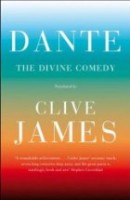
1447244214The devil gets all the best lines in Paradise Lost, and the Inferno gets the best press in The Divine Comedy. I don’t know that I’ve ever read anything at all about Purgatorio, so as I began reading it, I was wondering if an obscure sense of duty was a good enough reason to keep going. Was I hoping for any reward beyond being able to say I’d read it?

It turns out I enjoyed it a lot. Partly I think that was because of a weird sense of privilege. Thanks to my pre–Vatican Two Catholic childhood and a young adulthood in a religious order just as things were changing, much of the theology that underpins the Purgatory is as familiar to me as gum trees. I didn’t need footnotes to explain the idea of the living praying for the dead ‘that they may be loosed from their sins’: we offered up our family Rosary each evening ‘for the Pope the poor, the sick, the dying, the suffering souls in Purgatory, for Aunty Hilda and Uncle Jack’s souls’. I recognised most of the Latin hymns that are sung in Purgatory, and can still hum a few bars of some of them. I have a passing acquaintance with the Thomistic philosophy that Virgil explains to Dante, most notably in Canto 17, where the contention that all virtue and all sin come from love might otherwise sound like intellectual play for its own sake. Even some fragments of the pervasive Church history/gossip rings a bell. What’s more, thanks to my parents giving me Kingsley’s Heroes and my membership of the Argonauts Club (I was Lebedos 5), not to mention 5 years studying Latin at school and university, not all of the classical allusions pass me by (though, for example, I hadn’t heard the rumours that Julius Caesar was gay until I read Canto 26).

I feel like a privileged dinosaur.

All the same, I confess to reading pages at a time enjoying the verse, the surface level of the narrative, and the imagery, but not having a clue what it all meant. In particular there’s an elaborate procession in the Garden of Eden in the last couple of Cantos, in which various maidens, mythological beasts, birds, trees and vehicles are clearly intended to carry allegorical meanings. Even Clive James’s kind practice of incorporating an occasional explanatory phrase into the text, and Dante himself explicating some of it left me bewildered. At base, for all my familiarity with elements of it, I found this a deeply alien text. To read it properly – to understand it – would take a lot of study, and I guess I’m lazy enough to be content with what I’ve got.

Plot summary (don’t read if you’re worried about spoilers): Guided by the great Roman poet, Virgil, Dante continues his exploration of the afterlife . He climbs the seven circles of Purgatory, each circle inhabited by the souls of dead people expiating one of the seven deadly sins – pride, anger, envy, sloth, lust, gluttony, avarice. At the start Dante has seven Ps branded on his forehead by the touch of an angel’s wing, one of which disappears with each level passed. Virgil and Dante are joined by the poet Statius, whose time in Purgatory is up, but who elects to spend time talking shop with Virgil rather than rushing off to heaven. Finally, they reach a version of the Garden of Eden where the aforementioned allegorical procession happens, Virgil says he can go no further, and Dante’s great love, Beatrice, gives him a piece of her mind. Led by maiden named Matilda, Dante and Statius head for the mountain of heaven under a sky full of stars.

A nice bit of the translation: At the end of Canto 22, in the circle where souls of gluttons are suffering, Clive James has:

As beautiful as gold was the First Age:
Hunger made acorns tasty, thirst made sweet
Nectar of every brook, so you can gauge
How satisfied the Baptist was to eat
The locust and sip honey. Every page
About this in the Gospel shows, therefore,
His greatness and his glory. Less is more.

That sent me hunting the original of those last four lines, which I found at Canto 22, lines 151–154:

Mele e locuste furon le vivande
che nodriro il Batista nel diserto;
per ch’elli è glorioso e tanto grande
quanto per lo Vangelio v’è aperto.

(Honey and locusts were the aliments
That fed the Baptist in the wilderness;
Whence he is glorious, and so magnified
As by the Evangel is revealed to you.)

So James isn’t the most subservient of translators, and isn’t above inserting little anachronisms like ‘Less is more’. Purists would probably object, but it keeps his readers on our toes, and deters us from thinking we’ve actually read the original.

The best bit: I knew that Beatrice replaces Virgil as Dante’s guide in Heaven, because Virgil, having died before Christ, is stuck in Limbo. But I was quite unprepared for the intensity of the scene where Dante and Beatrice meet in Canto 30. She is the great love of his life, and he knows that it is thanks to her that he is being taken on this grand tour of the afterlife. She turns up at a moment when I was feeling that Clive James and I were doing our best to get through some impenetrable mediaeval allegorising with the least possible pain – and everything changes. Dante is thrilled to see her. But instead of embracing him warmly and joyously, she goes for him:

Yet royally, like one with the design
Of holding back the heat her words might mean
While speaking, said this: ‘Look. Look at me well,
For I am Beatrice indeed. How do
You dare approach this mountain. Can you tell?
For man is happy here, yet here are you.’

He responds incoherently, provoking her to increasingly vehement reproach for having fallen away from the paths of virtue after her death. It’s electrifying, and it feels as if all the preceding theology and inventiveness and sheer genius creation exist as scaffolding for this moment when Dante (and Clive James?) writes with authentic passion about the experience of being found deeply wanting by the woman he loves.

There are lots of other good bits, but that’s the one that takes the cake for me.

PS: I’ve just seen that this is my 777th post on this blog – very appropriate, I thought, as I’m about to head off to Heaven.
Maurice Sendak’s Pierre

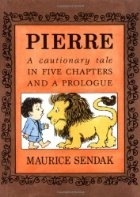
Maurice Sendak, Pierre (HarperCollins 1962)

20140309-072501.jpg I don’t generally blog about books I’ve re-read, but my blogging has been light-on recently as I’ve been reading mostly film scripts, which are exempt from my self-imposed task of writing about everything I read, so here’s a quick note on Maurice Sendak’s Pierre, which I re-read recently before wrapping it as a present.

Pierre: A cautionary tale in five chapters and a prologue was first published as a tiny book, cased with three others as The Nutshell Library. Our copies of those tiny books have long since disappeared after a huge amount of use and abuse. Besides Pierre, there are an alphabet book, Alligators All Around, a counting book, One Was Johnny, a book of the months, Chicken Soup with Rice. In case there’s anyone who doesn’t already know, Sendak was one of the 20th century’s greatest writers and illustrators for children, and though these books are in some ways very modest, absolutely obedient to the rules of their genres, each of them is a masterpiece. I have read them all aloud many many times to small co-readers and still love hem.

But Pierre has a special place. I think I first heard of it when my older brother took his eleven year old son on his knee and said,

Good morning, darling boy,
You are my only joy.

And when his son said, shockingly, ‘I don’t care,’ they both laughed.

And that’s the set-up: Pierre’s refrain is ‘I don’t care!’ Because it’s billed as a cautionary tale, the punitive saying ‘Don’t care was made to care’ can’t be far from an adult reader’s mind, as in the cautionary tales of Hilaire Belloc. For those who have so far been spared the delicious horrors of Belloc, let me mention ‘Jim, who ran away from his nurse and was eaten by a lion’. The title tells the whole story really – and then there’s this (punctuated as in the original):

His Mother, as She dried her eyes,
Said, ‘Well – it gives me no surprise,
He would not do as he was told!’
His Father, who was self-controlled,
Bade all the children round attend
To James’s miserable end,
And always keep a-hold of Nurse
For fear of finding something worse.

As a child I enjoyed Belloc’s tales of appalling retribution, confident that my own parents could never be that callous. And I enjoyed Roald Dahl’s even more gruesome variants when I read them to my children. But Sendak pushes the form beyond lip-smacking crime and punishment. Like Jim, Pierre is eaten by a lion as a direct consequence of his naughtiness. But whereas the father imagined by Catholic Belloc goes on to moralise, the Jewish Sendak’s parents, realising that their son is inside the lion, spring into action:

They rushed the lion into town.
The doctor shook him up and down
and when the lion gave a roar
Pierre fell out upon the floor.
He rubbed his eyes and scratched his head
and laughed because he wasn’t dead.

I may be idiotic, but that last couplet never fails to fill me with joy.

There’s a nice discussion of the whole Nutshell Library on the We Read It Like This blog, where there’s also an excellent reading.

Clive’s Dante’s Hell

Dante Alighieri, The Divine Comedy, Book One: Hell, translated by Clive James (Picador 2013)

1447244214My rudimentary Italian isn’t up to reading the Divine Comedy in the original. I have started out on a couple of translations, Dorothy Sayers’ being the one I remember, but each time after a couple of pages it started to feel pointless: I mean, he’s in a wood, when a leopard blocks his path, or maybe it’s a wolf, a lion and a leopard, and the evening star rises, then Virgil appears – as they say on the Internet, WTF! Apart from my ignorance of 13th Century Italian terms of reference, it was clear the prose translations were missing something crucial. I haven’t had any more joy with verse translations, in spite of having been fascinated by terza rima, the Divine Comedy‘s verse form, since I read John Manifold’s ‘The Tomb of Lt John Learmonth, AIF’ as a teenager. So it’s no small thing when I say that Clive James’s version, in rhyming quatrains, is readable. The narrative hums along, the action is mostly clear, and even some of the references are glossed (that leopard, for example, seems much less arbitrary thanks to a little parenthesis: ‘was this the leopard, Lechery?’).

One other thing helped me approach the book as something other than an exhibit in the Travelling Museum of Great Literature. I’d heard the late Peter Porter in one of his turbo-charged radio conversations with Clive James describe Dante’s Inferno as repellent because of its mean-spirited punitiveness. ‘Oh,’ I thought, ‘so I don’t have to read it on bended knee.’ That and the romantic circumstances of the translation: Clive James’s wife is a leading Dante scholar; he has terminal cancer and they are estranged; it’s hard not to see this huge labour as a deathbed love offering.

So, the book itself? Dante is having a midlife crisis when the Roman poet Virgil appears and takes him on a tour of the mediaeval Christian afterlife (for reasons that remain obscure to me, but that’s just quibbling). The tour takes 100 cantos, of which the set-up takes one and Hell, Purgatory and Heaven in that order take 33 each. I intend to read the whole work, but I expect I’ll have different responses to each of the books, so Hell has its own blog entry.

As I said, the narrative hums along, with so much ingenious, graphically-described hideous suffering it’s surprising a video game hasn’t been made of it. There are lots of allusions, to Classical mythology, to the politics of Dante’s time and place, to Italian history, to Arthurian legend, to scandals in the Papacy. No doubt if you knew your Guelphs from your Ghibellines and your Boniface from your Celestine you’d get more out of the poem than I did, and I can see how someone could devote their professional life to studying it. But for instance, I’ve read Virgil’s epic, the Aeneid, and know that Dante’s journey into hell refers to the section where Aeneas, like Odysseus in the Odyssey, visits the Underworld and has the shades of the dead speak to him. But knowing this doesn’t make all that much difference to how the story works.

Deeper levels of meaning resonate, of course. I dare to disagree with Peter Porter. Rather than being mean-spirited and punitive, I read Dante as challenging the orthodox doctrine of eternal damnation: over and again, his character feels pity for the suffering souls he encounters, which creates an undertow of implication that God is less compassionate than humans. I have no idea of course if such a challenge was in Dante’s mind, but there’s definitely a tension between an emerging humanist sensibility and a mediaeval doctrinal view. The mixture of classical and Christian references is another marker of that tension.

Less portentously, there’s a strong element of crowd-pleasing satire. Public figures who lied or murdered or allowed evil to triumph by standing by and doing nothing are all punished in gruesomely appropriate ways (and forget what I just said about compassion). Splitters are split; muckrakers drown permanently in muck; and so on. The idea of eternal damnation may be abhorrent to a modern sensibility – I remember fondly the Marist Brother who said to us in 1969, ‘I believe in hell because it is a dogma of the church, but I don’t have to believe that any human has ever been sent there by a merciful God’. Even in my traditional Catholic childhood we were told that none of us could know if any individual had been damned: even Judas may have repented as the rope tightened around his neck. But as I read Dante via James, atavistic vengeful impulses surfaced: I wondered what punishment should be meted out to those Labor Party MPs who undermined Julia Gillard’s Prime Ministership and so gave the government of Australia to the current ruthless gang, and I wondered about the immortal souls of ostentatiously Christian political leaders who equivocate and plunder and gloss over deaths that happen on their watch. Satirists these days can do little more than mock and reproach: Dante could threaten the objects of his rage with eternal suffering.

Now, having passed through the knot at the centre of the earth and climbed back up to see the stars again, it’s time to move on. I’ll write again after Purgatory

Dorothy Porter’s Bee Hut

Dorothy Porter, The Bee Hut (Black Inc 2009)

1863954465

I found it hard when reading this book to separate the poetry out from the circumstances in which it was written, but I don’t think that’s necessarily a bad thing. The doctrine that the author’s biography is irrelevant to an understanding of her work may be useful in the classroom but not so much anywhere else.

Most of the poems collected here were written when Dorothy Porter was dealing with cancer – diagnosis, surgery, chemotherapy, remission, recurrence and the expectation of imminent death. The poetry is permeated by a sense of mortality and – as with the last poems of Dorothy Hewett and any number of other poets – the knowledge of the real-life situation adds tremendous poignancy for the reader.

Some of the poems address the cancer story directly – as in ‘The Ninth Hour’ (‘it’s your shriveling / flesh / that has the whip hand’), or ‘Not the Same’ (‘When you climb / out a black well / you are not the same’), or ‘View from 437’, written days before her death (‘Something in me / despite everything / can’t believe my luck’). Others, possibly most of the poems in the book, might otherwise seem elegant meditations or slender lyrics, but in this context read as heroic moments of facing reality. I particularly like ‘Numbers’, otherwise a slight, self-derogatory reflection, for the way it is transformed by knowledge of the circumstances of its creation:

I get magic
 sometimes I get more
 than I bargain for

but I don't get
 numbers.

Numbers do worse
 than humiliate
 or elude me

they don't add up.

I am no algebra tart
 ravished
 by the meretricious music
 of the spheres.

My eyes and nose
 never streamed
 with incontinent ecstasy
 through geometry classes
 as my disastrous triangles
 collapsed in a cacophony
 around me.

Perhaps it's a failing
 to grasp
 or even want
 the utterly perfect number
 burning through my retina
 like the utterly perfect morning.

Instead I peer
 with nauseating vertigo
 into the deep dark pitch
 of numbers
 like an exhausted mammoth
 dangerously tottering
 on the edge
 of a bottomless mystery.

I may be playing a version of that game where you add ‘in bed’ to the quotes on a desk calendar, and almost without exception the quotes still make sense, usually quite a different sense from the original. But is it too far-fetched to read ‘Numbers’ as responding obliquely to all the calculation of percentages and probabilities that accompanies cancer diagnosis and treatment? Or is it just that, as I’m sure someone has said, all true art deals with mortality?

This isn’t a gloomy or single-minded book. There are traveller’s tales, some of them recalling moments from the poet’s variously brash, optimistic and judgmental youth; love poems; lyrics commissioned for performance; responses to other poets, including Byron, Blake, Bruce Beaver, Baudelaire, some that don’t start with B, and a possibly ironic lament for not having read enough Rimbaud (or more accurately not having read Rimbaud enough); and more.

My previous acquaintance with Dorothy Porter’s work has been through the forgettable movie made from her verse novel The Monkey’s Paw, and her verse novel What a Piece of Work, which I hated for its vilely misogynistic Francis Webb figure. I’m glad I decided to have another go at reading her work.

awwbadge_2014

The Bee Hut is the second book I’ve read as part of the 2014 Australian Women Writers Challenge. (Evidently I was one of the two most prolific reviewers of poetry for last year’s challenge. I confess to feeling like a fraud, since a number of the poetry books I reviewed had fewer than 20 pages.)

Blogging from New Caledonia

I’m writing this in a house in Portes de Fer, a suburb of Nouméa whose name translates as ‘iron gates’. We’re here for 10 days, on a holiday that was handed to us rather than planned for. A couple of months ago we received an email via homeexchange.com asking if we’d like to swap homes with a New Caledonian family. The dates fitted both our schedules, the cost of travel wasn’t prohibitive, and we knew almost nothin about New Caledonia. So we wrote back accepting, and here we are.

That’s my excuse for not being among the first to report that Jennifer Maiden’s Liquid Nitrogen won the Victorian Premier’s Literary Award, which the press release evidently described as the richest literary prize in Australia. JM commented that in the absence of superannuation it was a very welcome contribution to her finances. Just in case there’s anyone out there relying on my fannish notes to find out such news, I’m telling you now, a couple of days late. John Kinsella has a nice piece on the award in Crikey. Other Australian news, including Tony Abbott’s continuing war with the real world, does reach us, but I’m confident no one depends on this blog for that.

Inspired by the streets around here, which like those in Byron Bay are named after poets, I’m indulging my sonnet fixation:

First Impressions of Noumea, January 2014
With no rough strife at Portes de Fer
we’re lazing in rue Mallarmé,
a stroll uphill from Baudelaire
or down to bus stop du Bellay.
In town we hear no hostile gun
on Austerlitz, la Marne, Verdun.
These tricouleurs the only flags
though tri means sorting garbage bags
and colours won’t be kept to three:
dark skin, bright clothes and humble stance,
the Kanaks say, ‘We’re not in France!’
Some took up arms for Kanaky,
and died, but now if art’s a word
these words of colour will be heard.

Les Murray’s Boys who Stole the Funeral

Les Murray, The Boys Who Stole the Funeral: A novel sequence (Angus & Robertson 1980, Minerva 1993)

Here’s Laurie Duggan’s ‘translation’ of Martial’s epigram VIII lxxv, written less than a decade after The Boys Who Stole the Funeral was published:

After reading at the Lions Club
the Bard slipped and sprawled
on Taree shopping plaza's
_____crazy paving. His weedy acolytes
couldn't shift the bugger an inch.

Luckily for him, a hearse stopped
and two burly undertakers
winched and crammed the great man
______into the back,
splintering the neighbour coffin.

Was he taken home to Bunyah, you ask?
Or was he stolen by the funeral?

I like the way this capitalises on the serendipitous resonance between Martial’s scenario of the ingens dominus (huge master) who is heaved onto a funeral bier and the fact that bulky Les Murray wrote a ‘novel sequence’ about a funeral. I also like the way Martial is transposed into an Australian vernacular  But there’s something else: if there’s malice in Duggan’s image of the ‘Bard’s double humiliation, it’s a pallid thing compared to this book’s savage caricaturing of intellectuals, city people, socialists, feminists and their multitudinous ilk. When I read Duggan’s poem a fortnight ago, before I’d read The Boys Who Stole the Funeral, I thought it was a bit of mischievous fun; I now read it as a tiny piece of retaliation against a massive attack.

1bsf

A story outline would lead you to expect a great yarn with a thread of dark humour running through it. Two young men, university drop-outs, steal the corpse of an old soldier friend and take him to the country town where he has said he wanted to be buried, but where none of his family could afford to take his body. His funeral is the occasion for a great coming together of country folk, but the consequences for the boys are greater than they could have imagined – one dies a violent death and the other finds spiritual wholeness in a new, profound connection with country.

It should have been a great yarn, but alas, for all Les Murray’s greatness as a poet, he is a lousy story teller. None of the characters emerges as more than a type. A number of the barely distinguishable country folk seem to represent different aspects of salt-of-the-earth people that Murray approves of, and at the other extreme a rabid feminist–pacifist character is spectacularly implausible. Implausibility is a strong feature (reaching a peak in the boy’s killing). There’s quite a lot of dialogue, but it’s often all but impossible to tell who is supposed to be speaking. The narrative, such as it is, progresses with little regard for pacing, or motivation, or sense of place. The latter is particularly odd, given that Murray’s poetry elsewhere can evoke place with powerful specificity. Everything seems to be in the service of a weird anti-modernism. Perhaps the intention was to put forward a spiritual vision of some sort, but the vision is lost in the welter of negativity that accompanies it, so that the effect is of a mean-spirited nastiness about human beings.

I found this book deeply horrible, and also not much good. Some reviews I’ve read seem to think its wonderful – one US reviewer said that Murray’s skill made Vikram Seth’s The Golden Gate look amateurish. We live on different planets. Maybe the book really is up there with the great and I’m an idiot.

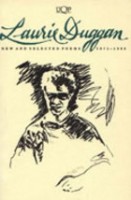
Laurie Duggan’s Old New and Selected

Laurie Duggan, New and selected poems, 1971-1993 (UQP 1996)

1ld

One result of reading poetry as it turns up in the secondhand bookshops is that I meet things out of sequence. As a retrospective of Laurie Duggan’s work, this book was superseded by 2005’s Compared to What: Selected Poems 1971–2003, and Duggan has published a number of books since then, not to mention his mainly photographic blog, Graveney Marsh. Still, this is the book I’ve got. It’s a fabulously mixed bag.

Laurie Duggan strikes me as a poet’s poet: not necessarily in the sense that he writes primarily for an audience of poets (though that could also be true), but in the sense that much of his work is concerned with the poet identity. You know how there are gay poets, and feminist poets, and nationalist poets? Well, there are also poet poets. Other poets turn up in his poems with extraordinary frequency, in two ways.

First, there are references to their work: there are poems imitating Rimbaud, Alan Wearne, John Forbes, John Tranter, and taking satiric digs at Les Murray, Robert Gray, A D Hope – ‘the last / Augustan poet claimed alive’ – and a number of translations from poets ancient and modern. I probably miss most of the allusions, but I spotted lines from Kenneth Slessor, James McAuley, Martin Johnston, and a number of 20th century US  poets.

And then there are poets as enemies, or more frequently as members of the community he belongs to:

Anna & Ken's blue V.W. crawls up the opposite hill
off for milk___cottage pie ingredients

That’s Anna Couani and Ken Bolton. I was reminded of a moment in Ken Bolton’s essay ‘Some Memories of John Forbes’ in Homage to John Forbes (2003):

I remember driving, with Anna Couani at the wheel and Laurie in the passenger front seat. The blue Vee-dub, … the car loaded up. As we got to the Broadway end of Glebe Point Road … we spotted John’s familiar figure steaming along ahead away from us down the footpath. … Laurie leaned out the window and called Heeeeyyy, POET!

And a host of poets, mostly of the so-called ‘Generation of 68’, turn up by first name as the book progresses. The sense of a community of poets persists to the final poem ‘Ornithology’ which starts out as an elegy for poets Bob Harris, Martin Johnston and Jas Duke (misspelling the title of Martin’s ‘In Memoriam’, incidentally), becomes an extended soul-searching, and could now be read as a foreshadowing elegy for John Forbes.

I don’t want to give the impression that these are coterie poems or an exercise in navel-gazing. In general, there’s a seductive, self-deprecatory wit and, especially in the continuing Blue Hills sequence (recently gathered into a single book by Puncher & Wattman) and The Ash Range from the mid 1980s, a deep engagement with place.

In a 2010 interview with Fiona Scotney published in The Long Paddock, the online component of Southerly 71/3, Duggan said this about his poetic approach:

I like the idea of plonking something here and something there next to it and the result is something else.

‘Plonking’ is a way of describing bricolage – a kind of verbal scrapbooking, of which Duggan is a superb practitioner. ‘Clayton West 1’, the first poem in the book, includes this:

____________________my Grandmother's cup
clinks in its saucer, table ordered with
teapot, grapefruit, marmalade
STH VIET TROOPS FLEE LAOS

It’s just a newspaper headline at the breakfast table, but the result here is something else – what that something is, the poem leaves up to the reader to decide. I could give a hundred examples.

‘Plonking’ also happens in Duggan’s translations, especially of the epigrams of Martial, of which there are 50 here. If you compare them to a literal translation, again and again you see something from ancient Rome plonked down next to something from 20th Century Australia, to delightful effect. Take Epigram VII xx,

Cum facias versus nulla non luce ducenos,
Vare, nihil recitas. non sapis, atque sapis.

literally:

Though you write two hundred verses every day, Varus, you recite nothing in public. You are unwise, and yet you are wise.

And in Duggan’s ‘translation’:

Dransfield, who wrote
__200 poems each day,
was wiser than his editor
__who printed them.

This was my introduction to Martial, and I find it hard to imagine a better one.

As a reintroduction to Laurie Duggan, the book is pretty good too. Oh, inspired by a page of anagrams of contemporary Australian poets  (to stick with Michael Dransfield: ‘Dead man chills fire’), I offer one of my own: I laud a grunge.

Lesley Lebkowicz’s Petrov Poems

Lesley Lebkowicz, The Petrov Poems (2013)

1pp

I was seven years old in 1954, and have dim memories of what Wikipedia bills as the Petrov Affair. Vladimir Petrov, third secretary of the Russian Embassy in Canberra, defected, and some days later his wife Evdokia followed suit, generating a dramatic front page photograph showing two burly Russians manhandling a distraught woman across the tarmac of Sydney aerodrome – tellingly, the woman has lost one of her shoes.

It’s not clear that the Petrovs had anything substantial to reveal about Russian espionage, but their defection was a boon to the Menzies government’s anti-Communist machinations and has fired the national imagination, or sections of it, for decades.

The affair was the subject of Ralph Peterson’s 1959 play The Third Secretary, which was part of The Currency Press’s first Playtexts Series in 1971, in the august company of Dorothy Hewett’s The Chapel Perilous and Louis Esson’s The Time is Not Yet Ripe. Robert Manne’s exhaustive account, The Petrov Affair, was published in 1980, and again in a revised edition in 2004. The Petrovs feature offstage in Ursula Dubosarsky’s magnificent 2006 children’s book The Red Shoe. So far I was keeping up. Then Noelle Janaczewska’s Mrs Petrov’s Shoe won a Queensland Premier’s Literary Award in 2006 (back in the days when the Queensland government gave money to the arts), and Andrew Croome’s Document Z got a gong in the NSW equivalent in 2010. How many books could one minor incident sustain?

I tried to read Andrew Croome’s book. It’s probably very good. But I couldn’t get past the first line of the first page, so strong was my reluctance to read one more word about the Petrovs. They may be our only spy scandal, I thought, but they’re just not that interesting. Yet when someone at our book club (the one where we swap books, not the one where we discuss them) offered Lesley Lebkowicz’ book of poems, I surprised myself by taking it home.

I don’t think any book could have completely dispelled my pre-emptive ennui, but this book came pretty close. It’s pretty much a verse novel, keeping a fairly tight focus on the two main characters, known mostly by their pet names Volodya and Dusya. It begins as they arrive in Sydney, seen from Dusya’s point of view:

Volodya is solid – more than a husband – an ally.
She touches his arm, feels its warmth, the play
of slack flesh over bone. Softness had long fled
his mind. He had seen hundreds shovelled
into their graves, thousands destroyed like ants
swept away by hot water.

The narrative takes us through the process of disaffection to their defections, their interrogations and then their dislocated new life. It ends, after Volodya’s death, with Dusya living with her sister Tamara in suburban Melbourne:

Dusya and her sister walk along the flat paths of Bentleigh

like any two women from Europe.
They're on their way to drink coffee in the suburb's first café.
They talk about whether to buy veal
for dinner and watch The Bill on TV. Whatever

Tamara says makes Dusya happy – it's hearing
her voice. Occasionally Dusya mentions Volodya

and Tamara looks at her
but says nothing. His name falls out of their lives.

So it’s as much the story of a relationship that plays out in extraordinary circumstances, a migrant story with high stakes and the glare of publicity. The part of the story that struck home most forcefully for me is in the last two sections, ‘The Petrovs at Palm Beach’ and ‘The Petrovs in Melbourne’, where they continue with their lives after the drama, neither celebrated nor left alone. From ‘Sentences’:

'I am Petrov,' he tells a fellow in Manly,
expecting some sign.
'Congratulations,' the man says and walks off.

His photograph regards him every day from The Herald.
What he's done must mean something –

From ‘They know we are Petrovs’:

The whole street knows they are Petrovs –
too many photos, too much publicity.
One journalist never leaves them alone.
He lurks in his car outside their house.

A kind neighbour builds a gate in their fence
so when the journalist comes, they slip out
through his garden.
In Russia it would have been different –

no one would have known who they were.

The verse is always clear and sharp as this. A lot of it is in unrhymed sonnets, but there’s much variety in form. If you haven’t read much about the Petrov Affair, and OK even if you have, this is a good story well told. If you want to read more about it, I recommend the excellent review by Sue at Whispering Gums.

awwbadge_2013

This is the last title in my Australian Women Writers Challenge for 2013. I seem to have read 15, and it’s been fun. I’ve signed up for the 2014 challenge.

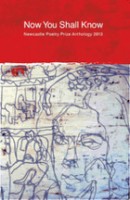
Now You Shall Know the Newcastle Poetry Prize Anthology

Dennis Haskell and Jean Kent (editors), Now You Shall Know: Newcastle Poetry Prize Anthology 2013 (Hunter Writers Centre, October 2013)

1nysk The Newcastle Poetry Prize is described on its website as ‘the richest and most prestigious stand-alone poetry competition’ in Australia. It has existed for more than three decades under one name or another, and for some years now the Hunter Writers Centre has published an anthology comprising the winner and a selection of other entries. This year’s anthology, named for Jennifer Compton’s winning poem, contains 27 poems and runs to 140 pages, so it’s distinguished from other annual anthologies by including mainly longer poems.

The book is a feast, and even though it owes its existence to a poetry competition it’s a beautiful demonstration of the silliness of pitting poems and poets against each other so that one must emerge as The Best. Not that I challenge the judges’ decisions: all the prize winners and commended poems deserve to win. But so do almost all the others.

Among many pleasures, there’s a strong element of place in the collection. Jennifer Compton’s ‘Now You Shall Know’ kicks things off with a brilliant evocation of the non-place of a passenger plane in mid-flight. Of the two other prize winners, Karina Quinn’s ‘Always Going Home (a domestic cycle)’ has a section named ‘A nowhere place’, which refers to a very specific not-quite-room in the family home, and among other things the poem is about the power exerted on the speaker by the place that is home; and Mark Tredinnick is in full Blue-Mountains-bardic flight in ‘Two or Three Days with Claude Debussy in Late October’. In Kathryn Lomer’s ‘Vapour Trails over Sassafras’ the speaker visits the Tasmanian landscape of her childhood. The dialogue in Ron Pretty’s ‘Picnicking on the Safety Ramp’ creates a gloriously recognisable rural masculinity; Christopher Kelen’s ‘The Shed’ is a location where a similar masculinity finds solitude; the title of Rachael Mead’s ‘Lake Eyre Cycle’ doesn’t mislead.

Two pieces resonated strongly for me as a north Queenslander.  B R Dionysius’ ‘Unicorns Cross Here’  is a sonnet sequence that tours the north, beginning with the giant statue of James Cook in Cairns and visiting the Daintree and the Atherton Tableland. Here are the opening lines of the third sonnet, describing the environment of my childhood:

Through the silk thin mist, sugarcane fields stand as Roman armies
At the end of empire. Forlorn, thirsty, they occupy the flat ground,
Blades held stiff as they form up, row upon green row in perfect
Drilled unison. A thousand years of domesticating iron has tamed
the wilderness. Axes bite deeper than words, saw teeth whisper in
Death’s white noise. On the hills behind them, the rainforest seethes
In undisciplined chaos; disordered ranks thrown back in confusion.

Where Dionysius is a visitor to cane country, the speaker in Victoria McGrath’s ‘Cane Smoking’  comes from there:

I was cradled deep within the blackened root of something
rank and rich in déjà vu, and my curves and crannies,
like so many cinerary urns, claimed without question
the confetti-ash that drifted inevitably to earth.

Carmel Macdonald Grahame’s ‘Wishful Thinking’ isn’t particularly a place poem, unless you count a certain kind of Catholic childhood as a place. From its first lines

You grew up learning not to say
things you were told you should not think

you know exactly where you are. The poem does what I would have thought impossible – it deals with child sexual abuse and keeps its head, even managing moments of playful wit:

it was never the cat that got your tongue,
it was the catechism.

There’s much more, as they say in the ads. Andy Jackson’s ‘Marfan Lives’, Ian Crittenden’s ‘The Red Soil Elegies’, … Really, it’s a wonderful collection.

Jordie Albiston’s Book of Ethel

Jordie Albiston, The Book of Ethel (Puncher & Wattmann Poetry 2013)

1boI bought my secondhand copy of this small miracle of a book in Sappho’s, lovingly inscribed by the author to a couple of evidently ungrateful friends. Well, Jordie, it’s my copy now and I’m definitely keeping it.

The Ethel of the title was the poet’s great-grandmother. Born in Cornwall in the 1870s, she emigrated to Australia as a child, married a minister, raised six children, and died in the 1940s. That broad outline of her life emerges from these poems, though the story is not told in a straightforward narrative. This isn’t a verse novel. It’s a series of 60 short poems, each capturing a moment of the life, with little if any narrative flow from one to the next. A note up the back tells us who Ethel was, and leaves us to surmise that Albiston has drawn on archival sources – letters and diaries, perhaps, and a small book mentioned in passing, Parsonage Peeps. Google confirms that the book really existed, published in the 1930s, and I’d be astonished to learn that other writings by Ethel aren’t used, sometimes verbatim.

This found material is integrated into extraordinarily lively poetry, all in Ethel’s voice and held in a tight form. I didn’t pay a lot of attention to the form to start with. I just went along for the ride with Ethel, aware that the text isn’t generally structured according to ordinary prose conventions, and is peppered with eccentric exclamation marks, italics and spaces. I don’t mean that the poems are obscure or annoyingly mannered; on the contrary, while the precise meaning of a phrase may not always be obvious, the sense of a living, complex mind in action is strong and very attractive. But perhaps inevitably somewhere along the line I paused to figure out what’s going on.

Anyhow, here’s the first poem (the word in bold here is in italics in the original – I can’t make WordPress give me non-italics in a quote):

so Life!__we meet once more__you
& I__in concert__concord
happy agreement to do
until done__my act__your stage
make__lie in it__this! my bit-
part__play__World__with me aboard
a Speck!__then__gigantic

It’s a great opening that sets the reader’s mind racing in a number of directions at once. Who is speaking? What is the theatrical imagery doing? Is there an echo of ‘You’ve made your bed, now lie in it’ in line 5, and if so what does it mean? And how about that fabulous change of perspective in the last line?

But what is going on in the poem’s form? Are the line breaks arbitrary? Are those rhymes incidental? Is the punctuation just eccentric, or hip in some poetic way that’s obscure to unsavvy readers? Such questions multiply, and intensify, as you get further into the book.

(A word of warning: sensible readers of this blog might want to skip the next bit as it’s all poetry-geeky without being all that poetry-educated. It may be that the form here is quite common, not invented by Jordie Albiston as I imagine.)

It turns out that every poem in the book uses the same stanza form as the one quoted above, though the number of stanzas varies – most poems have just one, but there’s one with four and a number with two or three. Each stanza has 7 lines, of which the first and third lines rhyme, and the second and sixth – if you allow ‘rhyme’ to include such pairings as kindly/Queenie or Lizzie/tiny. More significantly, though, each line has 7 syllables, with none of the regular patterning based on emphasis that is usual in English verse. It’s what Wikipedia calls syllabic verse. There may be other rules – certainly there’s always a lot of internal rhyme, alliteration and so on. But the point is that every word in the book is held in a tight, mathematically dictated structure.

The form, the structuring principle, doesn’t give any indication of how the poem is to be spoken – yet from that opening exclamation this is verse that cries out to be heard as well as seen. So the whole book is animated by a tension between Ethel who is speaking to us and the tight restrictions of the form in which she is allowed to speak. It may be stretching it a bit, but it feels to me as an enactment of the way Ethel could flourish as a human being within the extraordinary limitations placed on her by the society of her time.

The result is just wonderful, and I am in total awe of Jordie Albiston’s ability to pull it off.

(End of nerdy bit.)

If you’re interested in reading a response to the book from someone much less ignorant than I am, I recommend the review by A J Carruthers in Rabbit No 10.

awwbadge_2013This is another title in my Australian Women Writers Challenge for 2013.