Tag Archives: Richard Flanagan

Sydney Writers’ Festival 2024: My day two

After just one session on Tuesday and nothing on Wednesday or Thursday, Friday was all systems go for me at the SWF, with five sessions, starting at noon and ending just after 7 in the evening. Please excuse the length of this post.


12 pm: The Gift of Greek Myth

I first heard Kate Forsyth talk back in the day when she mainly wrote for children (starting with Dragonclaw in 1997). More recently she has appeared on radio and podcasts as a writer of historical fiction. She has always been good value on fairytales and myth. In this session she chatted with playwright Tom Wright about her most recent book, Psykhe.

If Psykhe is as interesting as this talk, then it’s a brilliant novel. Here are some scraps I gleaned.

Kate Forsyth describes herself as playing in the borderland between myth and history. She is concerned to reclaim ancient stories from their patriarchal interpretations. Fairytales, she says, are myths drained of their sacred meanings, because they are mostly concerned with women’s issues.

In this book, the dividing line between gods and humans is porous. It tells the story of Psyche/Anima and Cupid/Eros/Amor as a historical fiction – Psyche becomes Psykhe and Amor becomes Ambrose.

I’m not sure how much of this is from the original myth and how much from the novel, but here’s a broad plot outline: Venus’ son Ambrose falls in love with Psykhe, a human woman; he keeps her in luxury in his palace, but as a prisoner; he comes to her bed every night, where she is not permitted to see his face. One night as he is sleeping, she looks at him by the light of a candle, and spills wax on him. For the first time he feels pain, and flees. Having broken free of her imprisoned state, she now can love him, and goes searching for him.

Forsyth says this is the only ancient myth that is gynocentric – woman-centred. Whereas in androcentric myths the hero breaks, kills, and conquers (and, I’d add, rescues), in gynocentric myths the female protagonist sets about healing, repair and recovery. This story is about the importance of consent, the transformative potential of pain, the need for love to be more than physical (the reductiveness of that is mine, not Kate Forsyth’s or Tom Wright’s).

Kate Forsyth has a lovely phrase for her creative process. She says she spends a lot of time ‘daydreaming a story to life’. In this talk, she allowed us to witness part of that daydreaming.  


2 pm: Abdulrazak Gurnah: Afterlives

I’ve read and loved two of Abdulrazak Gurnah’s ten novels, Gravel Heart and Afterlives.

This urbane and amiable session focused on Afterlives. Gurnah kicked it off with a reading. Though he read beautifully, it was a strange passage for the occasion as very little happens in it: there is a boat and a harbour town, the sun sets, the main character has trouble sleeping because of unspecified pain. This from a book where there is so much wonderfully dramatic or tender writing he could have picked (see my blog post for an example).

Sisonke Msimang, his interlocutor, asked the pertinent question: why this passage? He said it was the first part of the book that he actually wrote. He knew that Hamza had been wounded and was returning to his childhood home after fighting for the Germans in World War One: what came before and after that was yet to be imagined.

After that insight into the book’s origins, we learned that Gurnah had wanted to write about the German schutztruppe for a long time. (Not quite right to call them ‘the German schutztruppe‘, he said, as only the officers were German, the troops were African.) He had known from his childhood about the ferocity of these soldiers, who fought for the colonisers – his grandfather (or more precisely his mother’s uncle) had been one of them. But when he got to the UK and had access to books, he found that there was nothing written about the way Africans were drawn into the wars between the colonising European nations. He had intended his fourth novel, Paradise (1994), to be on the subject, but he realised then that he didn’t know enough to write about it. It was nearly two decades before the time was right.

A question animating the book is: Why did people join a force that was going to end up dominating them/Why fight in a war that will determining who will be your coloniser? ‘That’s how we put the question now,’ he said. The book offers no simple answer, but a lot of what the two speakers had to say echoed what I have heard and read about the Queensland Native Police: apart from the attraction of being part of a new, powerful force, or various kinds of of coercion, it’s important to remember that people didn’t think of themselves as African, any more than the Germans and French identified each other primarily as fellow-Europeans: many of the African nations had been at war with one another for centuries.

The conversation roamed over the more personal elements of the book. These are the things that Gurnah says he likes writing about most – the everyday, the interior, the domestic, the intimate – and it’s them that gives the book its power as it tackles broader issues. All of this brought the pleasures of the book back to me – I hope it inspires people who haven’t read it to pick it up.

One final question from Sisonke Msimang: Was he expecting the Nobel Prize? Writers don’t work with the hope of winning the Nobel Prize, he said. They’re in for a hard time it they do. And he did a quick impersonation of someone responding to the phone from the Nobel Committee by exclaiming, ‘Well, at last!’


3 pm: Nam Le: 36 Ways of Writing a Vietnamese Poem

This wasn’t a session for the faint-hearted. Felicity Plunkett, herself a poet, set the ball rolling with an opaque quote from ‘On the line’, an essay by Kasim Ali, and things only got more erudite, recondite, convoluted and polysyllabic from there.

When someone at a session later in the day half apologised for the comparatively straightforward terms ‘methodological’ and ‘epistemological’ by adding ‘as we’d say in the academy’, I realised retrospectively that this conversation was being conducted as if in a specialist academic context.

For instance: ‘The line can put things into differences of ordinality … You can have a chiasm … ‘ I managed to note down terms like ‘autofictive’, ‘metafictive’, ‘preambular’, ‘the trauma plot’ (which is ‘too easy’). All of this has meaning, but I found it impossible to keep up.

What emerged is that Nam Le’s poems are ‘destabilising, elliptical, constantly questioning’. ‘How is it possible to say anything at all,’ he asked at one stage,’without being undermined by your own self-consciousness?’

There was a lot of talk of violence, which may or may not have a technical meaning. I think Nam Le was joking when he asked, ‘What is more violent than meiosis?’ (Meiosis is the process by which cells split.)

As a counterbalance, Le read four poems to us – or more accurately he read four parts of what Plunkett said is the long poem that constitutes the book 30 Ways of Writing a Vietnamese Poem. It was wonderful to hear his performances. The one with which he wound up the session, a lullaby with the title ‘Matri-Immigral’, was all anyone could have hoped for.

That broke through my exasperation with the session’s obscurity and recursiveness and convinced me to buy a copy of the book.


4 pm: Feminist Firebrands

Each of the day’s earlier sessions featured one author talking to one other person about one book. This session was a panel of three plus a facilitator.

A panel is a hard gig: you run the risk of only half-hearing each of the participants, and hearing no one’s thinking in depth. If the subject is books, you can get some idea of whose writing you might want to follow up, but this panel barely mentioned the participants’ books. All the same, it worked.

Hannah Ferguson, who is in her late 20s, abandoned her law career soon after graduating and is now a podcaster and person in charge of something on the internet called Cheek. Sisonke Msimang, among other things, writes a regular column in the Guardian offering wisdom about racism and related issues. Jennifer Robinson has offered legal advice in high profile cases of alleged sexual abuse. Jo Dyer, among other things former CEO of the SWF, facilitated.

The conversation revolved around issues raised by the Brittany Higgins and Bruce Lehrmann court cases, the allegations of historic rape against Christian Porter, Grace Tame’s advocacy, a little of Amber Heard’s case against Johnny Depp, and a sulphurous whiff of Donald Trump. That is, the way the criminal justice system here, but also in the USA and Britain, treats women, specifically when they allege sexual abuse or rape. And not just the criminal justice system, but the media and the culture generally.

The first thing that struck me was the stark contrast with Nam Le’s approach. Here there was no uncertainty, no self-undermining, no painful self-consciousness. Everyone spoke forcefully, definitely, and – alas for my note-taking – fast. I couldn’t possibly give a decent summary, but here are some gems:

Jo Dyer on recent news about the Queensland police force: ‘How many bad apples do you have to have before you cut down the f*ing orchard?’

Hannah Ferguson (I think): ‘Men are 230 times more likely to be raped than to be falsely accused of rape.’

Hanna again, on the ‘If you don’t know, say no’ slogan: ‘Everything I do is to fight the notion that you should back off if something is hard.’

Jennifer Robinson: Only 2% of rape cases arrive at a guilty verdict, but the current defamation laws in Australia mean that only those 2% of survivors can talk about their experience without being sued. A not guilty verdict in a rape case does not mean that the woman lied.

All the panellists agreed that it is important to have conversation about these issues. I think it’s right to say they all felt that it was a mistake to pile on Scott Morrison for framing his empathy for sexual assault victims as resulting from his wife asking how he would feel if it was his daughter. The conversation is important, and it doesn’t move things forward to attack imperfect contributions that are still in a good direction.

I learned about the ‘Man or Bear’ meme on Tik-Tok. Women are asked if they would rather be alone in a cave with a man or a bear. A typical witty answer is: ‘The bear, because at least I know what it would do.’ There was some dark humour about how some men have responded – one teenage boy asked (the question I’m embarrassed to say came immediately to my mind), ‘What kind of bear?’


An hour’s break to attend to bodily needs and get from Newtown to the City, and then off to:

6pm: Richard Flanagan and Anna Funder on Writing

Given that Richard Flanagan was scathing about writers’ festivals in Question 7 (a book I didn’t warm to), it’s interesting that he still agrees to appear at them. I came to this session mainly for Anna Funder. The Emerging Artist read quite a lot of Wifedom to me last year.

Clare Wright was in the chair. As a historian, she was interested in the way both books move around in genres, part history, part novel, part memoir, part autofiction. Both writers resisted any attempt to classify, saying they had followed where the books took them. Funder, for example, said she wasn’t writing autofiction in the parts of Wifedom when she wrote about her own life: it was a device to bring the questions about how women were seen in her subject’s time into focus.

Richard Flanagan was entertaining. My impression is that he came armed with a number of set pieces. He told us, for instance, that the history of publishing in Australia differs from the history in Britain and the USA in that key roles have been played by strong, intelligent women. He didn’t mention the fabled Bea Davis, but he named others, including the woman who had edited both books featured in the session: he asked her to stand up to take a round of applause, and though I couldn’t see her from my seat up in the gods she apparently complied, I can only imagine how reluctantly. Later he told his version of the story of being mistaken for a different writer in a signing queue – he duly signed the proffered book as Bryce Courtney.

In the long and interesting conversation, Clare Wright asked Flanagan two questions about Question 7 that touched directly on my issues with the book. Did he introduce Rebecca West as a way of countering the all-male patriarchal narrative of the origins of the atom bomb? Nothing so programmatic, he said, and went on to talk about how remarkable Rebecca West was. Then he reminded us that for the last 20 years or so women’s writing has been front and centre in western literature, so our collective sense of history has changed – so not programmatic, but responding to the zeitgeist. Wright framed the other question by asking him to read a short passage (sadly, this was the only reading in the session) describing the bomb being dropped on Hiroshima. As a historian, she was not interested, as he first thought, in whether he had got the number of people killed right, but the origins of his image of survivors walking the streets calling for their mothers, juxtaposed poignantly with the fact that plane that dropped the bomb, Enola Gay, had been named after a crew member’s mother. He was able to say that both those images came from historical records.

Wifedom has 400 endnotes: ‘If you want to destroy patriarchy you have to have endnotes.’

The patriarchal manifestation she attacks in the book is the erasure from history of George Orwell’s wife, Eileen O’Shaughnessy by Orwell’s many biographers. She had a number of Eileen’s letters and some few other sources, so she had to resort to ‘making shit up’, to use the words Clare Wright put in her mouth. The made-up bits are clearly indicated in the book, being set to a narrower width. Before she made this controversial decision, the writing was flat and dead on the page. Her writing about her own status as wife played a similar role.


And so out into the crowds in George Street, possibly there for the Vivid Festival, to dinner and eventually home.

The Book Group & Richard Flanagan’s Question 7, page 77

Richard Flanagan, Question 7 (Knopf 2023)

Before the meeting: Richard Flanagan is a giant of Australian literature. His non-fiction work has been transformative. He has won the Booker Prize and many other awards.

Before this year, I had read one and a half of his novels and had no desire to read any more. My blog posts on The Unknown Terrorist and Wanting speak for themselves.

So, bidden by the Book Group, I came to Question 7 bristling with prejudice.

I was not encouraged by this passage on the second page:

Sometimes I wonder why we keep returning to beginnings – why we seek the single thread we might pull to unravel the tapestry we call our life in the hope that behind it we will find the truth of why.
But there is no truth. There is only why. And when we look closer we see that behind that why is just another tapestry.
And behind it another, and another, until we arrive at oblivion.

Oh really? Other opinions are available, but this struck me as the kind of thing Les Murray meant when he described another of Richard Flanagan’s books as ‘superficial, showy and pretentious’ (link here)?

But what the Book Group wants, the Book Group gets … I read on.

I found a lot to dislike. The whole Question 7 schtick struck me as ‘superficial, showy and pretentious’ (more about that later). There are a couple of pages that could have been written by a self-righteous teenager, denouncing Oxford holus bolus as misogynist, racist and imperialist; a sneer often hovers at the edge of Flanagan’s descriptions of other writers; there’s a muddled insistence that all time is now – a kind of mix-up of Kurt Vonnegut in The Sirens of Titan and co-opted Indigenous notions. Regularly, out of the blue, there will be a bit of ‘philosophising’ about the uselessness of words, or a portentous one-line paragraph: Chekhov’s non-sequitur, ‘Who loves longest?’ or the sub-Vonnegut refrain, ‘That’s life.’

It could have been an engrossing book. There are powerful portraits of his grandmother, his mother and his father, and a gruelling, operatic account of near-death as a young adult. Above all, there’s the way Flanagan sets out to explore his own origins in the context of world history.

His father was a prisoner of the Japanese in 1945 and would have died in the camp if not for the nuclear bombs dropped on Hiroshima and Nagasaki – Flanagan owes his existence to that massively destructive act.

The book comes at that painful paradox from a number of angles: his father’s reminiscences of the camp; his own visit to its site, including an encounter with a former guard; stories about H. G. Wells, who coined the phrase ‘atom bomb’; the life of Leo Szilard, the scientist who first conceived of a chain reaction and after 1945 became a tireless campaigner for nuclear disarmament. It’s a fascinating tapestry of interlacing lives, thoughts and actions.

Flanagan is a Tasmanian, so he also owes his existence to the genocidal dispossession of the First Nations of luwitja. (In one of the recurrences that the book delights in, H. G. Wells’s novel The War of the Worlds was inspired that history.) There are powerful passages about colonisation, which (to my mind) he undermines by describing the term settler colonial society as lazy thinking because it hides the inequalities on which what he calls ‘the new Martian world’ was built. His point is that many of the first non-Indigenous arrivals were convicts, suffering terribly under the British system – and among them he counts his forebears. IMHO, settler colonial society is a fine term: patriarchy doesn’t hide inequalities among men; capitalist society doesn’t hide inequalities in our current world. The fact that you suffer doesn’t change the fact that you play an oppressive role. Not that Flanagan denies that, but he want to make it clear that his people were primarily victims rather than perpetrators.

But I’m getting irritated again.

Page 77* does not show the book in its best light. It falls in the midst of an excursion into historical fiction involving H. G. Wells.

The much younger Rebecca West has come into Wells’s life, and they are mutually entranced. After a first passionate kiss, he withdraws – not so much because he already has a wife and a mistress as because, according to Flanagan, she is too much his equal.

All that is evidently true to the known facts. West and Wells’s relationship was to endure. She had a son with him and they remained friends until his death. But at page 77 that’s all in the future, and she is struggling with his rejection of her:

Rebecca West, though, was not for defeat. For her, love and victory were synonyms. And she was not one for losing. She coupled audacity and ambition with an idea of stability she would forever after mistake older men as offering. She held herself to a high standard. She had written only a few months earlier how unrequited love was pathetic and undignified, adding as proof her contention that Christianity lacked dignity – and by implication was pathetic – not because Christ was crucified, but because his love for the world was unrequited. ‘A passion that fails to inspire passion,’ she wrote, ‘is defeated in the main object of its being.’

Having dispensed with God, she wrote to Wells that she was going to kill herself after being rejected by him, that all she could do was love. She had tried to hack the overwhelming love she felt for him back to the little thing he seemed to want. But even that, she realised, was too much for him.

Does that feel to you like a real person? Is it respectful of the historical Rebecca West? Does it use its sources fairly or even accurately? On the latter point, I looked up the essay it quotes (in The Freewoman, July 2012). It’s a brilliantly witty takedown of a book of literary history, in which the reference to Christ is cheeky, but not dismissive and not meant to prove anything. Flanagan is being snide, and not pretending otherwise. His Rebecca West is basically a comic character.

But what is she doing in this book at all? Maybe she’s there to establish that Wells was a truly complex, flawed human being (‘flawed’, to be specific, means physically ugly and using high-sounding ideals of free love to justify his promiscuity). It also serves the purpose of having a strong female presence in the historical part of the novel, which is otherwise full of men. This particular passage may owe something to her reference to Jesus echoing a repeated line in Flanagan’s The Unknown Terrorist: ‘the innocent heart of Jesus could never have enough of human love.’

The West–Wells story also, confusingly I think, seems to relate to the book’s title. That title is a riff on an early Chekhov short story, ‘Questions Posed by a Mad Mathematician’, an absurd parody of a mathematics quiz. The seventh quiz item starts with trains leaving stations at various times and ends with the non-sequitur question, ‘Who loves longer, a man or a woman?’ Because it’s posed as a question about gender, the Wells–West story (the only romance in the book) seems to hark back to it, but I think now probably not, as the version of the question that pops like a refrain, is simply, ‘Who loves longer?’ (Incidentally, the only version of Chekhov’s story I could find online, at this link, translates the question as, ‘Who is capable of loving?’ I’d be interested to know if the gendered version of the question is more a product of the gendered nature of the Russian language than of Chekhov’s intention.)

In the rest of the page, we follow the West-resistant Wells to Switzerland:

Wells arrived at his mistress’s magnificent Swiss retreat with his two sons and half a suitcase of scientific reprints concerning the recent discoveries about radium – discoveries that, he told Little e, as he called the diminutive Elizabeth, pleasantly took his mind as far away as laudanum once had Samuel Taylor Coleridge’s and which would form the basis of the novel he would write – the story of man summoning a power equivalent to the sun.

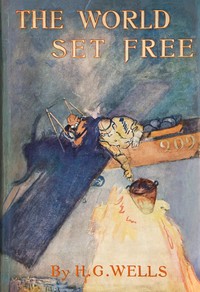
Wells runs from West to write the novel that is his reason for being in this book. It’s The World Set Free, in which he will coin the term ‘atom bomb’ and imagine with amazing accuracy the devastation such a bomb was to create. (I’m depending on Flanagan’s description. The novel is available at Project Gutenberg for the truly dedicated.)

Presumably the real-life Wells is being cited here, but what sense does it make to say that his lifelong interest in science was like a drug? In the immediate context, the implication seems to be that his interest in radioactivity is a distraction from the emotional turmoil associated with with Rebecca West. Am I wrong to read this as a sneer?

So, I look forward to having the virtues of the book made clear to me by people who have not been blinded by their own grumpiness.

After the meeting: After a wonderfully eclectic dinner over which we had exchanged important information about dumplings and life in general, we had one of the most interesting and spirited Book Group discussions ever.

Evidently it’s a love-it-or-hate-it book, and we were fairly evenly divided.

One man had hated the Wells-West thread so much that he re-read the book leaving it out, only to discover that he still hated the book, and spent days trying to figure out why. As I understand it, he realised that he regularly came up against a closing off of possibilities – just as Flanagan proclaimed he was opening up to complexity he would shut things down with a piece of certainty.

Another, on the contrary, read the book as an anti-narrative. Those shutting-down moments were a way of frustrating our quest for simple answers in an impossibly complex world. It’s important that Question 7 is about love, because all through the book there’s a dreadful intertwining of love and brutality.

Where some felt Flanagan was arrogant and withheld, others read him as exposing his own vulnerability. One loved the Rebecca West story; another loathed it. One read out a passage he particularly loved eliciting sympathetic nods from some and groans from others. Some felt that the book spoke directly to their own experience as colonial settlers, others not so much. I had to admit that I had got fixated on the things that annoyed me, and disregarded things that otherwise would have fed my soul.

None of us had previously heard of Leo Szilard. One of us said he now has Family Matters, by Flanagan’s brother Martin, on his to-be-read list, as a supplement to Richard’s account of his parents.

It was amazing! I don’t think anyone left feeling bruised. For myself, I intend to reread the book. But not for a while.


* My blogging practice for some time has been to focus arbitrarily on the page of a book that coincides with my age. Surprisingly, this page often reveals interesting things about the book as a whole.

SWF 2023: My fifth day

12–1 pm: Crime and Justice

This session demonstrated the strengths of a two-person panel. It was progressing quite nicely, as Sarah Krasnostein (my blog post about her Quarterly Essay Not Waving, Drowning here) introduced the talent, Helen Garner (my relevant blog post here) and Hedley Thomas (creator of the podcast Teacher’s Pet), and asked about their writing process.

When Helen Garner is embarking on a long project, she buys a spiral bound A4 notebook and keeps a kind of diary of everything related to the project: not transcripts of interviews, but odd details, what she did, and thought, and felt. When it came time to marshal the material she had accumulated for Joe Cinque’s Consolations she was at a loss where to start, looked to the notebooks for inspiration and discovered that they contained the skeleton of the book.

Hedley Thomas was in the middle of answering a similar procedural question, when Garner was visibly excited by something he said. With a quick look at Sarah Krasnostein, half asking permission and half apologising, she interrupted to take the conversation off in a whole new direction: the way footballers tend to have a degree of immunity from police investigation because of their almost hallowed status in Australian society. From then on we were treated to a lively conversation between two people who had deep appreciation for each other’s work and were swapping stories and genuine compliments.

Sarah Krasnosteiin made a couple of attempts to restore order, but I think she could tell things were going swimmingly. This session is sure to appear on the SWF podcast during the year.


5–6 pm Alexis Wright: Praiseworthy

Alexis Wright’s third massive novel, Praiseworthy, was published just a couple of months ago. Ivor Indyk, director of Giramondo Publishing, stepped in at short notice to discuss it with her, replacing Sisonke Msimang, who had been called home to Western Australia unexpectedly. So, in this session, an author discussed her novel with her publisher and editor – that is to say, with a reader who had some influence on how the book turned out.

I was one of the few people in the room to have read the book. I was keen to lap up any guidance from either Ivor or Alexis on how to make sense of the experience. I’m glad to report that I got plenty.

For a start, it was reassuring that Alexis mentioned some of the more bizarre plot developments with a wicked smile, and the audience laughed quite a lot as the two of them named odd characters and moments. Ivor said towards the end of the conversation that the comedy of her work was often overshadowed by its epic qualities. For me, the issue was more how seriously to take the epic qualities when, as summarised by their author in this conversation, they had such absurd qualities.

Asked about the original idea for the book, Alexis Wright said she didn’t remember – she’d have to look up her notebooks. Perhaps it had to do asking what Aboriginal people are to in the new era of global warming and climate change. She started writing it when she was working on her multivocal biography of Tracker Tilmouth in 2017 (my blog post here), and the visionary at the heart of the novel ‘Cause Man Steel, Widespread or Planet, whatever you want to call him’) is in part based on Tracker. Widespread’s plan for a global transport conglomerate using Australia’s five million feral donkeys, though, is all hers: it’s absurd to the point of surrealism, but there’s something true in the way it leads to a cycle of vision and disappointment.

The book is in part a celebration of Aboriginal people’s will to survive, manifested in many ways, tainted by 240 years of living in the coloniser’s world. The enemy in this book is the project of assimilation.

Perhaps most interesting to me was the exchange about music. Referring to the Ice Queens – grotesque, larger-than-life women who appear toward the end of the book – Ivor wondered about the influence of opera. Alexis agreed that she loved opera, but seemed nonplussed at Ivor’s suggestion that these characters are operatic. The music she listens to most while writing is classical Indian music and yidaki (didgeridoo). She tries to capture the tone and rhythm of that music – the pulse, the heartbeat: ‘We say that we’re of one heartbeat with the country.’

‘You hear what you’re writing,’ Wright said. ‘Then it gets recorded and you want it to be the voice you heard, but it can’t be that voice.’

There was a lot more. Ivor touched on the way Wright defies conventions, at times inventing words that look like mistakes, but which are anything but.

I’ll be attempting my own blog post about Praiseworthy in the next couple of days. Wish me luck!


We made a quick dash to a smaller venue for 6–7 pm State of the Art

Kate Evans of ABC’s The Bookshelf presided over another panel. This time it was Eleanor Catton, Richard Flanagan, Tracey Lien and Colson Whitehead invited to discuss the state of the novel and the future of fiction.

I haven’t read anything books by any of these authors, apart from one novel that I hated, which I’m told is completely unrepresentative of their work. I enjoyed the ebb and flow of conversation, but didn’t have anything to ground myself in.

Kate Evans asked if ChatGPT and other AI content producers spelled the end of novelists. Tracey Lien, the youngest on the panel and the only one without a string of awards to her name (and not at all intimidated by that, she said smiling bravely), said she used ChatGPT as a research assistant, but it couldn’t do the writing. On the one hand, it doesn’t have a brain, but produces word after word by complex algorithms, and the act of reading is a back-and-forth between minds. On the other hand, ChatGPT lies.

Richard Flanagan, whose scowl occasionally gave to an appreciative grimace at another panellist’s point well made, said he didn’t care about AI. He’d just keep writing.

The subject of decent recompense for the work of writing, and of all creative work generally, provoked more interest. Digital publishing changes the landscape significantly. They all agreed they weren’t in it for the money, but money would be nice. Eleanor Catton said that working as a scriptwriter was hugely more remunerative. Responding to a question at the end about how to become a writer and also earn a living, Flanagan said he had decided to be a writer when he was very young and in order to achieve it he lived in poverty for years. There was no other way. Colson Whitehead said something similar: after a significant number of successful novels he was at least temporarily able to live on his earnings as a writer. He implied that this is precarious.

Whitehead, Flanagan and Catton spoke interestingly about not repeating themselves, each new novel being a whole new challenge.


Wanting

Richard Flanagan, Wanting (Knopf 2008)

Even though I’m addicted to print, or perhaps because I am, I approach most books with a kind of resentful suspicion. It’s as if I’m projecting onto the book an anxious feeling that Schopenhauer might have been right when he said, in the essay ‘Thinking for Oneself’:

Reading is thinking with some one else’s head instead of one’s own. … Nothing is more harmful than, by dint of continual reading, to strengthen the current of other people’s thoughts. These thoughts, springing from different minds, belonging to different systems, bearing different colours, never flow together of themselves into a unity of thought, knowledge, insight, or conviction, but rather cram the head with a Babylonian confusion of tongues; consequently the mind becomes overcharged with them and is deprived of all clear insight and almost disorganised.

I came to Wanting with my normal ambivalence, plus an extra burden of suspicion, because the only other novel by Richard Flanagan to have entered the cram in my head was the abysmal Unknown Terrorist. I was willing to give this one a go because he writes compelling non-fiction, and the earlier, terrible novel was set a long way from his native Tasmania, in a place he clearly loathed and equally clearly didn’t know at all well, whereas this one is largely back in Van Diemen’s Land. Book Clubbers recommended it (that’s the Book Club, where we swap, not the Book Group, where we discuss). I took it home and eventually opened it up.

I wish I could say my suspicion evaporated within a couple of pages, but I can’t. A Protector of Aborigines, Charles Dickens, Lady Jane Franklin (widow of Sir John Franklin, Governor of Van Diemens Land and explorer) are introduced to us in a series of clunkily expository scenes. That would be all right, but the clunkiness comes with lashings of heavy irony – the narrative voice is unpleasantly insistent that it knows better than the Presbyterian Protector, and really really wants us to know it doesn’t share the genocidal racism of all the white characters. Maybe things would improve once the story got under way, I thought. But there were other discouraging signs. On page 14, to pick the most striking example, the Presbyterian Protector, in 1851, sings some lines from ‘Lead Kindly Light’. That’s unlikely, I thought, given that the hymn was written by high Anglican John Henry Newman, no friend of Presbyterians. Fifteen seconds with Google revealed that though Newman wrote the words of the hymn in 1833, it wasn’t until 1857 that someone put them to music. So it’s not only unlikely, it’s a straightforward anachronism. And I don’t think that’s just nitpicking. If the novel, having already repeatedly pronounced judgment on this character, doesn’t care enough about him to know what hymns he would or even could have sung, why should I trust anything it says about any of its characters?

I did read on. But by page 55 I realised I was motivated entirely by some weird sense of obligation. There was no pleasure. I didn’t believe a word. I put the book back on the shelf. It may be very good. It may fully deserve the awards and critical praise it has attracted. It may successfully mirror the terrible anguish that accompanied the belief that Tasmanian Aboriginal people were about to die out, as an author’s note says it aims to do. It probably is a moving meditation on the conflict between reason and desire or some other Significant Dichotomy. I’ll never know. And I probably won’t bore you ever again with blog entries on Richard Flanagan’s work.