Tag Archives: Robert Adamson

SWF 2023: My sixth day

Another early start with 10–11 am: Barrie Cassidy & Friends: State of the Nation

Veteran journalist Barrie Cassidy has been a regular at the Sydney Writers’ Festival, but this is the first time I’ve been to one of his sessions. He was on stage with what the festival program calls ‘his hand-picked squad of the country’s sharpest pundits’: Amy Remeikis, Niki Savva and Laura Tingle. They’re all regulars on current affairs TV, but I don’t think I’d seen any of them in person before.

The subject was politics, that is to say mainly electoral politics and the state of the major parties. The most telling comment was towards the end when Barrie Cassidy said, ‘When there’s consensus between the major parties, the media doesn’t chase it up.’ This means that the press doesn’t do a lot of interrogating of the AUKUS deal – is it actually in Australia’s interest or is it a matter of us serving the interests of the UK and the US? Similarly, coverage of climate issues through a party-political lens can often miss the point.

Nikki Savva’s subject seems to be the Liberal party. She sees the current dominance of Labor in Federal parliament and in all mainland states is largely due to the decline of the Liberals as a fighting machine and also as representative of a population. They are ceasing to be an effective opposition, or even an opposition at all. Peter Dutton’s survival strategy depends on three things: the failure of teh referendum on the Voice; an economic crash; and the rise of intolerance. Hard to cheer for him, then, and she says many dyed in the wool Liberals can no longer bring themselves to vote for what the party has become since Howard.

Amy Remeikis, introduced by Barrie Cassidy as political correspondent for The Australian much to the amusement of the Guardian readers in the audience, thought Labor’s ascendancy had something to do with changing demographics. Millennials now outnumber boomers, and in addition to the tendency of people to be more progressive when young, there’s the fact that life is particularly tough for the young these days.

Laura Tingle added that politics tends to go in cycles. This is Labor’s time for dominance, it was at rock bottom in 2014.

All agreed that there is a growing disconnect between the political class – politicians, political journalists, people who turn up for panels like this one – and the rest of the community. People are doing it hard, inequality is bigger than it’s ever been, our sense of common life is being eroded (not as badly in the USA, yet). Things are better than they were before last year’s election. The people in charge now are there with good motives, but business as usual could lead to disaster. We need grown-up conversations about tax and climate policy, and we’ve got a way to go for that.

A non-party-political subject that got some airplay was the recent resignation of Stan Grant after he was subjected to vicious and sometimes racist attack for giving a Wiradjuri perspective on the British Crown. Laura Tingle, as recently elected member of the ABC’s Board, said she had been out of action for a couple of weeks because of a bereavement, but deeply regretted Stan’s lack of support from management and the Board.

I haven’t ever watched Insiders, which used to be Barrie Cassidy’s Sunday morning show on the ABC. I imagine this was a slightly generalised version of that. One of the questions at the end referred to the fact that over a number of years not one non-white panellist had appeared on that show (the questioner didn’t need to point out that all the panellists today were white). Barrie did the only thing he could do and said it had been a mistake.


11 am: Osman Faruqi on Australia’s War Against Hip Hop

I listened to this Curiosity Lecture almost by accident. I know almost nothing about hip hop, and I guess I skip over headlines saying that it has been banned in venues including Sydney’s Royal Easter Show.

Osman Faruqi’s exasperated plea could have been meant specifically for me: ‘For once, listen to some art that doesn’t come from Bondi or Balmain.’ (Though, to be honest, I don’t know when I last listened to music from either Bondi or Balmain.)

He told us that NSW Police have taken steps to ban particular hip hop performers saying, nonsensically, that their music is used to ‘procure’ members for criminal bikie gangs etc. This censorship, he said, is ‘the greatest example of artistic suppression in Australia’s history’. If Nick Cave, who is white and part of the music establishment, sings about murdering every woman he sees, no one bans his song as inciting murder. When Bill Henson’s photographs are taken down, there’s an outcry. But if a brown rapper uses violent imagery they are banned from performing and police have their videos removed from YouTube, and there is resounding silence from the art world, including from successful white rappers.

Showing my age: in the 1970s the campaign against censorship focused on erotic material, because the banning of material deemed pornographic (the famous example if Lady Chatterley’s Lover, but Norman Mailer’s Why Are We in Vietnam was also banned). You don’t have to love pornography or be a fan of drill-rap to be uneasy about what’s happening now


12–12.30 pm: Beginnings: Remembering Robert Adamson and Frank Moorhouse

There were a number of ‘Beginnings’ sessions. It’s a nice idea: people read the beginnings of their favourite books, or perhaps their own books, on the assumption that writers put a lot of attention to their opening paragraphs.

This short session used the format to honour Frank Moorhouse and Robert Adamson, who both died in the last 12 months. I wonder if it would be an idea to plan a couple of elegiac sessions along these lines for every Writers’ Festival. Spaces could be left blank for people who die too late to be included in advance publicity. John Tranter, who died on 21 April this year, might then have been honoured.

As it was, Annabel Crabb and Mark Mordue read to us.

Annabel read the opening pages of the first two ‘Edith’ books, the first line of the third, and then the final pages, Edith’s death scene, from Cold Light, the third book. It was shockingly good.

Mark Mordue opened with a letter found in Adamson’s papers in which Frank Moorhouse responded warmly to one of Adamson’s poems. He spoke briefly about Adamson’s life, including his time in prison, his drug addiction and the role of his wife Juno Gemes. He finished with a poem that Adamson wrote for her, ‘The Kingfisher’s Soul’, which Adamson himself read at at least one previous Sydney Writers’ Festival. It ends:

_________________________ the future awaits you.
I stepped into the day, by following your gaze.

I want to make a final small observation about acknowledgements of country.

My initial prompt for this was an acknowledgement that was gobsmackingly perfunctory: the presenter didn’t look at us, but read hurriedly from a clipboard, stumbling slightly over the words. Disrespect may not have been intended, but it was certainly there.

I started to notice how other presenters made their acknowledgements personal. For example:

  • Michael Williams spoke briefly of how the land was unceded and so the issue of sovereignty was unresolved
  • Omar Sakr noted that some people object to the acknowledgements and responded that words – words like ‘genocide’ and ‘sovereignty’ – matter, that words give rise to actions
  • Sisonke Msimang made acknowledgement first in her own mother tongue and then in English
  • Felicity Plunkett quoted two lines about the power of country from First Nations poet Ellen van Neerven
  • Barrie Cassidy drew our attention to the coming referendum on a First Nations Voice to Parliament.

I was born on Mamu land in what is now North Queensland, and my father remembered as a child hearing ceremony down at the river behind our place. I’m writing this on Gadigal-Wangal land. Both places make my heart sing.

And the Festival is over, bar the podcasting.
Books I read in July [2007]

[I originally posted this in my old blog on 31 July 2007, but didn’t retrieve it when I moved to the WordPress platform. I’m republishing it now because I’m about to blog about Alexis Wright’s Praiseworthy, and what I wrote about Carpentaria here is true of Praiseworthy as well. Retrieving the post is also a tiny way of having the blog mark Robert Adamson’s death on 16 December last year.]

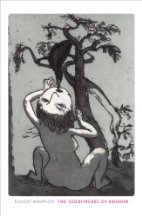
Robert Adamson, The Goldfinches of Baghdad (Flood Editions 2006)
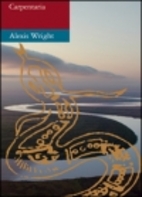
Alexis Wright, Carpentaria (Giramondo 2006)
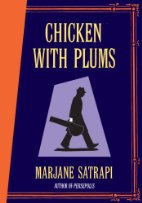
Marjane Satrapi, Chicken with Plums (Jonathan Cape 2006)
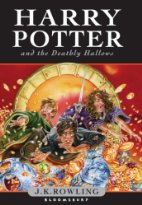
J K Rowling, Harry Potter and the Deathly Hallows (Bloomsbury 2007) (begun)
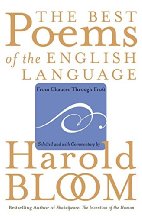
Harold Bloom’s Best Poems (continuing)

goldfinches

The Goldfinches of Baghdad includes an elegy for Arkie Whitely, thereby providing a smooth segue from the last book I read in June, Another Country, which is dedicated to her. Bob Adamson’s book is published by a US company. Couldn’t he find an Australian publisher? Or does this give him a crack at a larger readership? Or is it just an an example of globalisation with no subtext at all?

The book is in three sections, of which I expect to reread the first two many times. Maybe it was just a trick of the light, or the music that happened to be playing as I read, but these poems, almost all of them featuring birds, the Hawkesbury River and/or fishing by night, just picked me up and took me with them: the word that comes to my mind for the interplay of real birds, the real river and what the poet’s mind makes of them is ‘charming’, as in having magical force. Without a hint of appropriation of Aboriginal stories or images, it seems to me, Adamson manages to create a sense of sacred involvement with his country.

After been immersed, as it were, in whitefella Robert Adamson’s Hawkesbury, it felt quite natural to move on to Carpentaria, which starts with a river. This is from page 2:

Imagine the serpent’s breathing rhythms as the tide flows inland, edging towards the spring waters nestled deep in the gorges of an ancient limestone plateau covered with rattling grasses dried yellow from the prevailing winds. Then with the outward breath, the tide turns and the serpent flows back to its own circulating mass of shallow waters in the giant water basin in the crook of the mainland whose sides separate it from the open sea. To catch this breath in the river you need the patience of one who can spend days doing nothing.

The book is like nothing else I’ve ever read. I suspect that my decades of working as an editor, mainly of things written for children, have set me up for a quite distinctive relationship to it. It matters to me that words are used with their correct meanings (I hate ‘discomfit’ being used to mean ‘make uncomfortable’, for instance), that punctuation and spelling are correct (though I yearn for spelling reform and love George Bernard Shaw’s spelling of ‘fish’ as ‘ghoti’ and, truly, am not a rule-bound comma-curmudgeon), and that writing makes syntactical sense (I cringe when ‘none’ is used with a plural verb, but I acknowledge that no meaning is lost and don’t see it as absolutely incorrect). Mixed metaphors, stock phrases, tautologies, inconsistencies, all are guaranteed to turn me off or – if I’m so empowered – to make me reach for the blue pencil. I think of these attitudes as constituting a passion for the language, and of myself in my small way as a defender of its integrity. Well, Carpentaria is like a grenade lobbed into the middle of that way of reading.

It’s a wonderful book, richly poetic (I defy anyone to read it quickly), passionate, and funny. There are extraordinary, surreal set pieces, a stunningly original cast of characters and a plot full of surprising turns. But the most striking thing about it is the language. Alexis Wright has said that she based the narrator’s voice on a conversation she overheard between two old Aboriginal men in the street in Alice Springs. I don’t doubt it. But this isn’t Aboriginal English, or a literary equivalent of it, as the language of Beasts of No Nation suggests an African English. It’s pretty standard English, but as used by someone coming at it from outside: it contains every one of the things that make my editor’s heart shrink and fingers twitch, with the possible exception of the greengrocer’s comma: a dog lies with its belly belly-up; something has ‘flown the coup’. I had been shocked to read Ivor Indyk, redoubtable editor-in-chief of Giramondo, quoted in the newspaper as saying that the manuscript when he first saw it was ‘woolly’. But I now think he was misquoted, or at least misunderstood. He was most likely referring to the peculiar challenge this book must have posed to any copy editor: what in almost any other manuscript would have been errors to be corrected, in this one are integral elements. Here’s a passage, chosen at random:

Initially, on that eventual morning, on the eleventh hour of the eleventh day of the month of November, when Gordie did not play the remembrance bugle, everyone thought: Alright! Something is astray. Something smells mightily funny to me. Although, at first, everyone had thought very little about it. Perhaps Gordie was sick with the summer flu. Nothing to be done about that. Life went on as usual. Desperance was a normal town where even the bugle player had as much right as everyone else to get sick with influenza and stay home in bed. Normal people knew how to tell the time without depending on a clock, or a signal, and had enough decency, unlike the rest of the country, to stand for a minute’s silence in respect of the fallen on the eleventh hour, even without the bugle of the returned, to remind them.

There are some changes that a competent copy editor would make almost automatically to this: change ‘mightily’ to ‘mighty’, delete the comma between ‘returned’ and ‘to remind them’ (this kind of mis-comma-ing is rampant in the book, often rendering the sense very difficult to determine), change ‘on the eleventh hour’ to ‘at the eleventh hour’. One who had slavishly subjected his or her will to the style manual would ruthlessly make other changes: fix the fragments ‘Although … about it’ and ‘Nothing to be done about that’, amend ‘Alright’ to ‘All right’. Someone with an eye for redundancy and consistency would suggest fixes for the contradiction between what ‘everyone thought’ initially and what ‘everyone had thought’ at first; would query the assertion that ‘normal people’ were ‘unlike the rest of the country’; would circle ‘flu’ and ‘influenza’ and the repeated ‘on the eleventh hour’. This tidying up would make the passage read more smoothly, and make its meaning easier to access, but what it would lose is exactly the thing that is so distinctive about the prose: its outsider quality. The narrator loves language. The words come tumbling out, alliterative, onomatopoeic, idiosyncratic … and in some sense out of control.

In one of her many appearances at the Sydney Writers Festival this year, Inga Clendinnen said that whereas essayists invite the reader to come on a companionable walk with them, writers of fiction are always playing Catch Me If You Can. That may be true of some, even most, novelists: they build worlds which they invite us to enter. Reading Carpentaria, one feels that the author is running as hard as anyone else trying to catch up with her own creation. I mean no disrespect when I say that the book is less a raid on, than a prolonged campaign by, the inarticulate. The language is out of control and refuses to be tied down to the rules of ordinary discourse. It might seem that I’m talking about a trivial aspect of the book, and perhaps I am. But I found it profoundly challenging; it invaded my dreams. And the constantly unnerving play with language is a key part of that challenge.

[Added 7 August 2005:
Ivor Indyk was quoted in Thorpe’s Weekly Book Newsletter as saying of Carpentaria:

It was quite an intellectual challenge for me as an editor: there are ungrammatical moments that you wouldn’t want to cut out, even though your training tells you to ‘fix’ them.

Which says elegantly a lot of what I was trying to say.]

0224080458

Marjane Satrapi’s stark black and white comic strips provided a brief holiday from Alexis Wright’s tumultuous ride. The plot of Chicken with Plums has been unkindly summarised on LibraryThing: ‘a man without his musical instrument is depressed.’ Which is like ‘old man gets dementia’ as a summary for King Lear. It’s a fine romantic tale about true love lost twice over. I’m glad to see that Satrapi can move on from her powerful autobiographical Persepolis, and tell this touching, complex tale so elegantly. (All the same, I’m eager for the English version of Persepolis, tome trois, in which Marjane goes to Austria.)

bloom

I continue to make my meditative way through the Harold Bloom anthology, and I’m mostly enjoying it and getting an education. For someone who has a reputation as being a great upholder of the canon of great writers, he’s remarkably idiosyncratic in his selection of ‘the best poems in the English language’, and in his annotations on the selection. I think I already mentioned that he disparages Edgar Alan Poe, but includes a poem or two because he’s so popular. Well, when he gets on to Ezra Pound, our Harold makes no bones about despising the Fascist anti-Semitic montageur, and he takes eight pages ripping into him, followed by one poem, a translation from mediaeval French, included because Pound is an excellent translator. At least that’s why Harold says he included it; it’s pretty darned obvious that the poem’s there because without it he wouldn’t have been able to include his extended anti-Pound bile. Of course the publisher probably came up with the book’s title: Shorter English and United States Poems I Feel Like Anthologising, with Some Notes on Poets I Hate would have been more accurate, but isn’t as catchy.

0747591059

Given Professor Bloom’s feet of clay, I don’t feel any need at all to defend myself against his judgement on the Harry Potter books: ‘Can more than 35 million book buyers, and their offspring, be wrong? Yes, they have been, and will continue to be for as long as they persevere with Potter.’ I did, however, have to overcome other sources of reluctance – I’ve not been totally grabbed by what I’ve read of the saga previously; I had an unpleasant exchange of emails with JKR’s agent nearly a decade ago; and I’m moderately disgusted by the way the press piles onto the Potter bandwagon, heaping lazy and ignorant generalised scorn on the extraordinary wealth of other works written for children. But I joined the 35+ million, and bought the children’s edition at the recommended retail price, of which Gleebooks assures me a certain amount will go to the Fred Hollows Indigenous Literacy Program. I wanted to read for myself HOW IT ENDS. I’m half way through it as I upload this, and so far, I have to say, it’s also like no other book I’ve read – in this case because of the constant sense that I’m not just reading a book but taking part in a major cultural event, being just one of millions of people absorbing these very words at roughly this very time. Having found out ten minutes ago what the Deathly Hallows are, I still want to know what happens next.

The 2019 Francis Webb Poetry Reading

For nine years now, Toby Davidson has been organising an annual celebration of Francis Webb’s poetry. Toby edited Webb’s Collected Poems (1911) – my blog post here. Though I’ve been enamoured of Webb’s poetry for 50 years now, this is the first time I’ve managed to attend the event (or the second, if the reading at the 2011 Sydney Writers’ Festival counts – my blog post here).

We met in a large room – the ‘Creator Room’ – at Chatswood Library, in the region where Webb spent his childhood. The library has inherited Webb’s collection of paintings – all or most of them bought with funds Webb received as a government grant, funds spent of art rather than, say, food – and his library of books. The paintings and some of his books were on display, along with other fascinating realia, including a photocopy of the handwritten draft of his final poem.

Toby Davidson was an unabashedly enthusiastic MC for an audience that was an interesting mixture of ancient fans (like me), current students (including some from Davidson’s classes) and satisfyingly motley others. The readers:

  • Robert Adamson, poet (blogged about by me here and here among other places): told us of his awe-struck meeting with Webb in Callan Park Psychiatric Hospital, and read three poems – ‘End of the Picnic’ (an imagining of the arrival of Cook’s ship in 1770 as a spiritual disaster), ‘Morgan’s Country’ and ‘Wild Honey’ (probably my favourite Webb poem, read in a way that had tears on my cheeks). A hard act to follow, but followed it was.
  • Michael Griffith (author of God’s Fool, his 1991 biography of Webb): quoted Shakespeare’s Sonnet 65 ‘How with this rage shall beauty hold a plea / Whose action is no stronger than a flower?’ as emblematic of key themes in Webb (and his own life), and read us two poems with props – the first part of ‘In Memoriam Antony Sandys, 1806–1883’ with the painting that the poem describes on an easel beside him; and ‘On first Hearing a Cuckoo’ preceded by part of Delius’ ‘On Hearing the First Cuckoo in Spring’.
  • Judith Crispin, poet and photographer, whose work, according to her web site, ‘includes themes of displacement and identity loss, a reflection of [her] own lost Aboriginal ancestry’: read the dingo’s second speech from ‘The Ghost of the Cock’, and commentred on the extraordinary way it embodied what webb could not have known, the polarity of moon and dingo in an Arnhem Land foundation story; and two other poems, ‘Episode’ and ‘Toward the Land of the Composer’.
  • Gareth Jenkins, poet, spoke among other things of the sonic, rhythmic quality of Webb’s work, his mastery of long lines, and read, beautifully, ‘The Yellowhammer’.
  • Richard Miller, self-described as a long-time Webb fan and former musician in, I think, the Sydney Symphony Orchestra, in a complete change of mood, delivered a brilliantly theatrical, over the top rendition of ‘Introduction in a Waxworks’ from ‘Leichhardt Pantomime’.
  • Two school students whose names I didn’t catch, one from each of the nearby schools that Webb attended: one read the eminently accessible ‘Australian Night’, which Toby Davidson told us Webb wrote between ages of 7 and 10; the other read ‘Compliments of the Audience’, a sardonic take on a poetry reading, thereby concluding the reading part os the afternoon.

Before we broke for an afternoon snack, we were treated to Oliver Miller’s short film Electric, based on Webb’s radio play of the same name about the first use of ECG on a human subject.

I had a great time. Some of the poems I could just about mouth the words as they were read. Others came from the bits of the work that I have pretty much skimmed. Every reader showed some new aspect of the poetry – and of themselves. Michael Griffiths told us that he had been discouraged from writing his PhD thesis on Webb because, the then Professor of Australian Literature at Sydney University said, ‘He’s mad’. And he’s been dismissed by more than one cultural arbiter. But it was a joy to be in a room full of people who are touched, challenged and invigorated by his poetry.

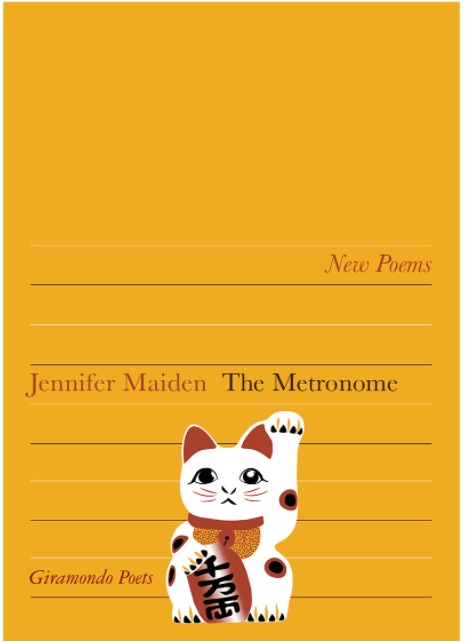
Jennifer Maiden’s Metronome (paper)

Jennifer Maiden, The Metronome (Giramondo 2017)

metronomepaper.jpegI don’t have anything new to say about The Metronome since I posted about the ebook version in January, and sadly I missed the launch at Gleebooks on the weekend. But for the sake of completeness, this is a short post to tell my readers the book is now out in the world, launched by Robert Adamson at Gleebooks on 26 March 2017. There are photos of the event on the Quemar Press website, and here’s a video of Jennifer Maiden reading ‘Mary Rose’ from the book:
One of the many things I love
about Gen Y is that they’re ready to accept
transgender in anything, as if Caitlyn Jenner
was the best fan fiction ever.

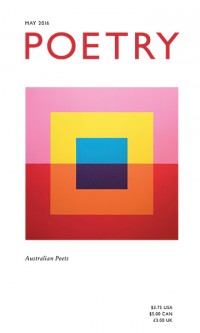
Poetry May 2016

Robert Adamson (guest editor), Poetry, May 2016 (Poetry Foundation, Chicago)

This special Australian Poets edition of Poetry magazine was launched at the Sydney Writers’ Festival this year by the regular editor Don Share. Guest editor Robert Adamson spoke and a number of the featured poets, including several who were coopted from the audience, read to us. Who could resist buying a copy?

The magazine contains 28 poems by 20 poets, along with 18 beautiful photo portraits by Juno Gemes and two survey essays by Jaya Savige and Bronwyn Lea, plus a charming note on Robert Adamson by US poet Devan Johnston.

Where the articles, particularly Bronwyn Lea’s ‘Australian Poetry Now‘, struggle with the impossible task of giving the readership, presumably mainly from the US, an overview of the state of Australian poetry, the selection does something different: it’s personal, making no claims to be representative or definitive. It includes a wonderful variety in forms and concerns: narrative, lyric, prose poems, formal experimentation. The landscape and geography are well represented. There are cultural references – both to settler and Aboriginal motifs – that will set non-Australians frantically googling, but at least as much Biblical and classical reference.

It’s hard to generalise about a collection like this, and equally hard to single out individual poems. But here goes with a few:

  • Ali Cobby Eckermann has two strong, plain-speaking poems, ‘Black Deaths in Custody‘ and ‘Thunder raining poison‘, the latter an incantatory response to a work of art about the effects of atomic tests on traditional lands at Maralinga.
  • Samuel Wagan Watson’s prose poems ‘Booranga Wire Songs‘ and ‘A one ended boomerang‘ really sing.
  • The first poem in magazine, Bonny Cassidy’s ‘Axe Derby‘, which plays tantalisingly on the image of a woodchopping competition
  • Anthony Lawrence’s ‘My darling turns to poetry at night‘ is a richly complex villanelle, whose title doesn’t mean what you expect.
  • Jaya Savige has fun with mangoes and anagrams in ‘Magnifera‘.

(The whole magazine has been up on the Poetry Foundation’s website, and you may still be able to read it all on screen. All the links are to that website.)

SWF: My Day 3

Circumstances made me miss Friday morning at the Sydney Writers’ Festival. The Emerging Artist, however, got two sessions under her belt.

10:00–11:00 am: Sri Lanka: This Divided Island. She said this was marvellous. Samanth Subramanian, an Indian Tamil journalist, spoke with Michael Williams from Melbourne’s Wheeler Centre. Quite apart from its main thrust, an account of the recent three-decade war and its aftermath, the conversation helped her think about the ethics of her own current art project, which involves many people making small terracottta hearts.

11:30 am – 12:30 pm: Jonathan Franzen: My Reading Life. The main things she reported was that he enjoyed the famous German sense of humour, and was influenced by a number of women writers.

At 3 o’clock the Emerging Artist went to Migration: A World Without Borders? and pretty much fell in love with Aleksandar Hemon. She bought two of his books, even overcoming her vehement dislike of zombie stories to buy his novel, The Making of Zombie Wars.

At 4:30 she went to hear Starlee Kine: From This American Life to Mystery Show and discovered a new podcast to subscribe to, dealing in ‘mysteries that can’t be solved by Google’.

Meanwhile, apart from sitting and chatting over lunch, my Festival day began at 3 with The New Australian Poetry. Unlike previously, this year’s poetry events are in largish rooms and mostly aren’t free. This one was a book launch – of an issue of the US journal Poetry devoted to Australian poets.

As we queued in the scorching afternoon sun (yes, scorching in mid- May), we were regaled by the booming opinions of a youngish man who had evidently been all over the world (perhaps his time in the US accounted for his LOUDNESS) and wanted the world to know that poetry is held in lower esteem in Australia than anywhere else.

The room was filled to capacity. After brief remarks from Don Share, soft-spoken editor of Poetry, and Robert Adamson, guest editor of this issue, we were read to by Ali Cobby Eckermann, Lionel Fogarty, Lisa Gorton, Michael Farrell and Robbie Coburn. In response to an audience request, some of them read poems by other people that appear in the anthology. Then two poets – Susan Fealy and Petra White – were drafted from the audience. Taking a cue from David Malouf the previous day, I asked if any of them would read the same poem a second time – I named Lionel Fogarty and he obliged.

There were two questions, both from the same person, one for each of the Indigenous poets. Don Share made that’s-a-wrap noises, and we were gathering up our stuff when Lionel Fogarty stepped up to his mic again and called on us to break out of our individualism and think in terms of community.

Ali Cobby Eckermann took a turn at the mic and told us, shockingly, that when she was at an international gathering of poets recently some Syrians had asked her how come she writes war poetry. They recognised in her poetry about Aboriginal Australia striking similarities to their own war-torn lives, and she realised that, however deep and strong the denial, the Australian war of dispossession is still going on.

Don Share rose beautifully to the occasion: ‘The difficulty we have in understanding a poem,’ he said, ‘is the same as the difficulty in hearing another person.’

I went home to deal with various animals, then rejoined the EA in the evening for Magda Szubanski and George Megalogenis: Rated PG (Polish and Greek), an entertaining conversation between two children of immigrants.

Malouf Adamson Aitken Harrison: Rare Objects

Adam Aitken, November Already (Vagabond Press Rare Objects Series No 86, 2013)
Martin Harrison, Living Things: Five Poems (Vagabond Press Rare Objects Series No 87, 2013)
David Malouf, Sky News (Vagabond Press Rare Objects Series No 88, 2013)
Robert Adamson, Empty Your Eyes (Vagabond Press Rare Objects Series No 89, 2013)

I bought this quartet of chapbooks at the Sydney Writers’ Festival, where all four poets read brilliantly. At $15 each, this is poetry at just over a dollar a page, which isn’t a lot of bang for your buck if you measure it by the yard, but – speaking as someone who has ploughed through a number of Collected volumes in the hope of getting a feel for their authors’ work – I’d say these tiny, beautifully presented books are great value for money. The poems have room to breathe. [The list above is in order of publication, my random comments below are in order of my reading.]

1sn

It’s common wisdom that learning poetry by heart is a good thing, because – besides being able to surprise and delight your friends – it’s a way of making the poetry your own, inscribing it on yourself (as Dan Beachy-Quick said memorably, here). Reading David Malouf’s Sky News, I realised that, memorised or not, I haven’t really read a poem until I’ve heard it in my own voice, at least internally. I’ve loved hearing David read his poetry ever since he made sunlight glint off milk churns and today blaze from a lapel in his 70s imitations of Horace. But there’s a different pleasure in taking the poems into oneself.

The poems in Sky News are like piano pieces: there’s a right hand with lots of trills and arpeggios, images and alliterative wordplay, and a slower, deeper, meditative left hand. As I got to know each poem, I found myself looking for my own balance between the two, between being charmed by the right hand, as in this evocation of a quiet night in ‘At Clerici’:

Crickets strike up
a riff on the razzle-dazzle
of starlight, then stop.

and being moved by the left hand, which doesn’t lend itself to quotation because it’s often there by implication or comes into the foreground only in the final moments of a poem.

In ‘A Parting Word’, a rendering of Heinrich Heine’s ‘Der Scheidende’, Malouf the translator engages in a similar balancing act. I can’t read German, but compared to what looks like a close translation of the original, it’s evident that Malouf’s poem is a lot livelier: ‘Estorben ist in meiner Brust /
Jedwede weltlich eitle Lust’ (‘It has died in me, as it must, / Every idle, earthly lust’) becomes the playfully alliterative ‘All’s dashed in me, all’s dished and done’, and this playfulness keeps up all the way to the final lines, where ‘Der Schattenfürst in der Unterwelt’ (‘The shadow prince in the Underworld’) becomes

__________________First
in rank of the resident zombies. Top
dog in this dog-house, Hades.

In Heine’s poem, the speaker moves from a cheerless contemplation of his approaching death to a grim acknowledgement that the most vulgar of the living are better off than the noblest dead, so in the end by implication what does art matter? In Malouf’s, the mood is less gloomy – it’s still a poem about age and mortality, but the scales tip towards a celebration of life – it’s not that art is futile, but life is the thing.

1eye

The current submission guidelines for Going Down Swinging warn prospective contributors not to send ‘poems involving birds, wings, feathers or flight’. Luckily for Robert Adamson and his readers this prohibition doesn’t prevail everywhere. Henry Thoreau said an abode without birds was like meat without seasoning – Adamson without birds is unimaginable. From traffic casualties in the prose poem / flash fiction ‘A Proper Burial’ to birds that ‘call and call the light’ in ‘Michael Dransfield in Tasmania’, there are plenty of birds in Empty Your Eyes. Poets are here in plenty too: Adamson’s compadres like Dransfield and Charles Buckmaster, but also an assortment of Catholic convert poets – James McAuley, Pierre Reverdy and Francis Thompson (the only poet my mother ever quoted – ‘I fled him down the labyrinthine ways / Of my own mind; … and under running laughter’). Adamson’s poetry is steeped in the Hawkesbury River, in the world of poetry and poets, and increasingly in a kind of questing mysticism:

------------------I read
'The Hound of Heaven'
by a river in new South Wales:

There was a black chuckle
before the 'running laughter' –
Attention shifts, revelation grips.
1na

Perhaps even more than Adamson’s, Adam Aitken’s cool, postmodern, intercultural poems abound in allusions – not in an arrogant bugger-off-if-you-haven’t-read-Rimbaud way, but more in a let’s-have-some-dislocating-and-provocative-fun way. I went googling quite a bit as I read November Already: John Clare (hardly an esoteric reference, but I hadn’t read anything by him), Rimbaud (I couldn’t find the arachnid referred to in ‘Rimbaud’s Spider’, so I don’t know what I’m missing, but enjoyed the poem anyhow), Ezra Pound (who wrote a travel diary, A Walking Tour in Southern France), Raymond Roussel (I found a note on Adam’s blog that helped hugely in reading the poem ‘Rousselesque’).

There’s a lot of France in these poems: Paris and the tiny village of Mareuil, the Resistance and the Revolution, Roman relics and Australian expats. From what I’ve read of Aitken’s work, I have a sense that he generally writes as if he’s not quite at home, always with a dislocated, interrogative feel. So when a poem about a deserted railway line is entitled ‘On the Chemin du Fer’, it doesn’t read as a mistyping of chemin de fer, but as a marker of the speaker’s outsider status. In the poem, this outsider is on a disused length of railway surrounded by blossoming almond trees, ‘tougher, more industrial’ than cherry blossom, and in these beautifully evoked surroundings, before evoking the Terror by a mention of Saint-Just, asks:

Was that old man "Europe"
so often so hard, so cruel
a one-stop shop
for the soul?

Likewise, I think of Aitken as an urban poet, so when he misspells ‘chicken coop’, it doesn’t read as a mistake, deliberate or otherwise, but as the equivalent of a visitor from the city wearing shiny shoes in a cow paddock, adding to the edgy feel of the poem.

1lt

Martin Harrison’s poems, by contrast, feel completely at home in their mostly Australian landscapes. This may be especially true of the first poem in Living Things: Five Poems, ‘Wallabies’, a long, breathless (and sparsely punctuated) celebration of western New South Wales landscapes:

nothing is dead here the spaces between them are
inhabited leaves twigs debris fallen white-anted trunks

slopes rocks grass parrots galahs floating down
in pink streamers again the grey lack of edge

around sprays cream waterfalls of turpentines flowering
in high irrigated air-blue reaches she-oaks aspirant

with their million fingers and amber seed-flowers
spotted gums mottled as grandmothers but with contrasts

of grey brown white and silver as if dressed for a ball

He does more than describe natural phenomena, of course. A recurring theme here is ‘how events change time’s flow beneath perception’: a ‘small thump from somewhere’ (‘White-Tailed Deer’), thrips that are ‘quite possibly meaningless, quite possibly / microbes of non-significance’ (‘Cloud’), a frog you can hear ‘miles away, / long before you thought you could’ (‘The Frog’). Even the eponymous wallabies would be easy to miss if you didn’t read carefully. Some lines from ‘Blue Wren Poem’ suggest something of what’s going on:

____-_____________________Such

detail can be lost – bobbins, birds, refuge, storm –
when innocence starts holding out against the tide,
when radiance blurs the future.

Michael Brennan of Vagabond Press says this series will come to an end at 100 titles. That means there are 11 to go, and the distinctive design, with pasted-on cover art by Kay Orchison, will sadly be no more.

Sydney Writers’ Festival: My Day 1

The Sydney Writers’ Festival has been going for days now, but my festival started yesterday, on a bleak, wet, grey Thursday.

I began with a 10 o’clock launch of four chapbooks in Vagabond Press’s Rare Objects series. Chapbooks are books of poetry so small they don’t even rate an ISBN. But where some chapbooks have a cheap and cheerful feel, the Rare Objects are beautifully crafted, a hundred numbered and signed copies of each title. The books being launched were by the stellar line-up of David Malouf, Robert Adamson, Martin Harrison and Adam Aitken.

Luke Davies gave one of the best launch speeches I’ve heard. He paid tribute to Michael Brennan of Vagabond Press and to the four poets in warmly personal terms, as people and as creators. The mutual respect and affection among the five people on the dais was something wonderful: completely the opposite of the internecine strife for which poets are supposedly famous. Each of the four launchees read: Adam Aitken from November Already, Robert Adamson from Empty your Eyes, Martin Harrison from Living Things)and David Malouf from Sky News (which my deafness heard Luke Davies announce, improbably, as Sky Nudist, but that would be a different chapbook). We the audience were very restrained, applauding politely after each reader – my guess is that we were too busy processing the complex pleasures we were being given to be too demonstrative. It really was a brilliant reading: a stunning prose poem from Adamson, crisp imagery from Malouf, Aitken taking the New York School to a tiny French village (not really, but that’s a mangled form of his own joke), Harrison in fine rhapsodic form. I loved Martin Harrison’s account of the genesis of his ‘Wallabies’: witnessing two young Australians in full xenophobic flight in a Parisian Internet cafe (and he described them to us with great relish), he took notes intending to write a satirical poem, but realised when he sat to write that what he really wanted to do was to celebrate the part is Australia they came from.

I couldn’t have asked for a better start. I bought all four of the Rare Objects, found a spot out of the rain and sat and read, did email things on my iPad, and chatted. (One of the striking things about the SWF is how easy it is to strike up a conversation with complete strangers.) Then it was time for the 1 o’clock session:Harbour City Poets: Some People You May Know, my first event in the Bangarra Mezzanine, which I think of as the poets’ space at the Festival. Again it was a pleasure to be read to, this time by a quintet of poets – Margaret Bradstock, John Carey, David Musgrave, Louise Wakeling and Les Wicks. The poems were about people, real, and imagined. Margaret Bradstock’s pieces about colonial characters made me want more. And there was some witty and elegant light satire. It may be because someone had told me just before the session about the man being hacked to death in London, but I found myself thinking that light satire, especially when performed giving broad Austealian accents to its objects, is a dangerous mode in which the satirist can all too easily come off as smug, class-bound, narrow-minded, bien-pensant and otherwise unappealing.

I rushed home (bus–train–bus), walked and fed the dog and was back, just a few minutes late for Robert Green: On Creativity at 4 oclock. This session wasn’t on my schedule, but a friend had a ticket she couldn’t use, and the Festival program promised ‘exercises to help rid [me] of blocks and unleash thinking that is more fluid and creative’. Given that I’m feeling out of my depth with a writing project just now, it was a case of what the hell archie, and I’d taken the tickets off her hands. It was turned out to be pretty much a motivational talk. The ‘exercises’ were three broadbrush strategies: embrace the blank page; think like an outsider; subvert your patterns of thinking. I enjoyed the talk, not least for the wealth of anecdote and Robert Green’s manifest passion for his message that every human brain is capable of brilliance, that mastery is possible. I especially liked the first question and response at the end. In summary, a white-bearded man suggested that next time a journalist asks him if he can seriously believe the stuff he says, he should try thinking like a mushroom; this was evidently meant as a witticism, but Green was completely nonplussed; after a bit of back and forth in which the point of excuse tin remained obscure, he agreed that he would give it a try.

More bus, more train, dinner at a pub in Chippendale then to the Carriageworks for Stories Then & Now. I’m a big fan of William Yang’s slide-show story telling, especially his exploration of his Chinese and north Queensland heritages over the years. For this show, along with Annette Shum Wah, he has mentored six mainly younger Asian-heritage people to tell the stories of their families (‘then’) and their personal stories (‘now’). Each story-teller had two turns alone on stage with a microphone in front of hem and two screens showing a series of photographs behind them. Ien Ang, Jenevieve Chang, Michael C. S. Park, Sheila Pham, Paul van Reyk and Willa Zheng were each completely engaging, and the combined effect of heir six presentations was extraordinarily rich. The Cultural Revolution, the Korean War, the American War in Vietnam, Indonesian independence, the White Australia Policy; a hilariously failed attempt at an arranged marriage, a weirdly romantic tale of serial fatherhood by sperm donation, a successful Internet match, intergenerational tension and conflict fled, faced and reconciled. We came out into the night exhilarated.

Robert Creeley 1950–1965 (and Sonnet #12)

Robert Creeley, Poems 1950–1965 (Marion Boyars 1967)

First things first: If you’re a student looking for help with an essay or if you love Robert Creeley’s poetry and are looking for a like-minded spirit, stop, turn back, you are going the wrong way. I don’t pretend to have anything sensible to say. This is largely a blog post about my ignorance.

Robert Creeley is held in very high esteem by them that know about these things. I think he might be a poet’s poet. A quick google produces a number of learned and instructive articles, in which I learned much, including that this UK publication seems to be Creeley’s first US trade book, For Love, plus an extra five years worth of poems. Creeley makes a commanding appearance in Ron Mann’s 1982 movie Poetry in Motion. Robert Adamson lectured about him recently, and evidently he was a major influence on a generation of Australian poets. I know all this, because as I made my way through this book I felt at a loss, and was casting around for guidance. Sadly, asking for guidance on how to read a poet is like asking to have a joke explained. I could kind of see what people were saying but I was like the person who sort of understands the explanation but still doesn’t laugh at the joke.

I found a lot of mentions of Charles Olson (another gap in my general education), and when I looked Olson up on Wikipedia I found:

Olson called for a poetic meter [Wikipedia uses US spelling] based on the poet’s breathing and an open construction based on sound and the linking of perceptions rather than syntax and logic.

Ah, I was doing it wrong. I had to stop needing conventional syntax and use my ears more. In an excellent article in the London Review of Books, Stephen Burt says:

Creeley’s quiet poems demand that we read them slowly, even when they appear brief and simple. Taken too fast, or too many at a time, his poems … can sound cramped, monotonous and repetitive. Read at leisure, the best poems are subtle, musically gifted, memorably terse.

I had been finding the poems cramped, monotonous and repetitive, so clearly I was doing it wrong, again. I slowed right down, and read just a couple of poems at a time. That’s not to say I slavishly submitted my faculties to Burt. He describes ‘The Crisis’ as horrifying, and quotes its opening lines:

Let me say (in anger) that since the day we were married
we have never had a towel
where anyone could find it,
the fact.

Now this was one of the few poems that had actually spoken to me at the time I read Burt’s article, and I wasn’t horrified. Maybe it was possible to write those lines without self-mockery in the 1950s, but I read them as obviously ironic, an oblique apology from the poet for losing his temper.

Then there’s a Paris Review interview published in 1968, just a couple of years after this book:

INTERVIEWER: How long does the writing of a poem take for you?
CREELEY: For me, it’s literally the time it takes to type or otherwise write it – because I do work in this fashion of simply sitting down and writing, usually without any process of revision. So that if it goes – or, rather, comes – in an opening way, it continues until it closes, and that’s usually when I stop. […] I’ll come into the room and sit and begin working simply because I feel like it. I’ll start writing and fooling around, like they say, and something will start to cohere; I’ll begin following it as it occurs. It may lead to its own conclusion, complete its own entity.[…] Of course, I have no idea how much time it takes to write a poem in the sense of how much time it takes to accumulate the possibilities of which the poem is the articulation.

Another way I’d been doing it wrong! No wonder I was floundering. I tend to read poems as if they’re carefully wrought, deeply considered utterances, but according to the man himself his are something quite different, something much more risky and of the moment. I took this with a grain of salt, but I did take it.

I can’t say I’d come to love Creeley’s poetry in general by the end of the book. But it kept me reading to the end. Round about 1960, either he or I had a turning point, and I was enjoying a lot. Look at ‘Love Comes Quietly’:

Love comes quietly,
finally, drops
about me, on me,
in the old ways.

What did I know
thinking myself
able to go
alone all the way.

With this poem, I no longer felt that I was reading this collection because it was good for me. Creeley here seems to have a moment’s respite from the intense, punishing self-consciousness that characterises the poetry generally. But if something was different in the poetry, something had changed in me too. Suddenly I could hear the music: ‘quietly’ ‘finally’ ‘about me’ ‘on me’ / ‘know’ ‘go’ ‘alone’ / ‘old ways’ ‘alone all the way’. Such short lines and so much happening in the sound of them – as well as in the sense. Any number of other poems were singing to me from then on.

A handful of longer poems towards the end of the collection are just marvellous: ‘The World’, about a lover’s grief; ‘The Women’, an amazing attempt to articulate feelings about sex and the object of sexual desire; ‘Anger’, about anger;  ‘Something’, which starts – unpromisingly you might think – with a lover’s embarrassment at having a pee in his presence.

My warning at the start of this blog entry still stands, and I especially don’t get what’s going on in some of the poems with very short lines. But I’m glad to have made this poet’s acquaintance.

And now, because it’s November, a sonnet of sorts. This is not a parody of Creeley – in my wildest dreams I couldn’t bring off  his way with rhyme, so I’ve stuck to my usual rhyme scheme. But there are some quotations, and because his lines are characteristically very short, I’ve cut mine down:

Sonnet 12: Evening
I speak, I
think I think
it asks my-
self to drink.
Position is where you
put it. I care too
little, I smoke
no joke,
therefore I am not
in attitude perplexing
a man so vexing
to flex or rot.
Woman so addressed
is easily depressed.

Robert Adamson on Francis Webb

Someone emailed me a link announcing that Robert Adamson, UTS Chair of Poetry, was giving a public lecture on Francis Webb on Thursday night. How could I not go? As far as I know, UTS – University of Technology Sydney, whose main tower is Sydney’s monument to stark practicality – doesn’t offer any poetry courses, and the prospect of Adamson, anything but stark or practical in his poetry or his person, lecturing on Webb, ditto with bells on, was irresistible.

It turned out to be a fairly intimate affair in a shiny new building across the street from the anti-poetic tower. I recognised a smattering of poets and other writers, scholars, editors and UTS lecturers. I sat at the front, and my neighbours turned out to include Juno Gemes, Adamson’s photographer wife who discreetly plied her trade, Toby Davidson, editor of the new, excellent Francis Webb: Collected Poems, and Michael Griffith, who wrote God’s Fool, the best and only booklength introduction to Webb’s life and work. I’m not suggesting it was a family affair. The room was full, but I don’t think many of us were there without a prior connection to Webb, Adamson or UTS’s Centre for New Writing.

Adamson, whose CAL-sponsored professorship is for three years, began with a disarming list of thankyous – including to poet Martin Harrison for explaining to him what a lecture was. I hope the lecture is somehow made available, as it was a very clear account of Webb’s life and work, informed by a deep engagement with the poetry and a brief but significant personal relationship with the man. He read a number of poems. I’d say he read them brilliantly but that would give the wrong impression: he read them slowly, almost stumblingly, as if he was discovering them as he read them, or even encountering the language itself for the first time, mispronouncing an occasional word (couch in couch grass to rhyme with crouch, impotent with the emphasis on the second syllable), so that the listener was drawn in as a collaborator rather than being cast as a recipient. I find it hard to imagine a better way of reading this poetry.

In the excellent Q&A, freed from his written text, Adamson loosened up and spoke more personally: of how Webb was crucial to his own development as a poet, of how James McCauley looked him in the eye and said, ‘You’re on the right track with Webb – follow him instead of these Americans, of how he and his friends turned up like rockstar fans at Angus & Robertson’s bookshop the day the first Collected Poems was published, only to be told, ‘We publish it, but that doesn’t mean we have to have in here for sale.’ He gave a very funny, and accurate, account of A. D. Hope’s article on Webb: ‘Hope was a vitalist, and suspicious of Webb’s religious dimension, but he discusses the poem Canobolas, saying, “Look, he sees the mountain as a naked woman, so he must be all right, he’s one of us.”‘