I don’t know what these figures mean. The Mick Herron book is almost not a book.
Here’s WordPress’s list of my all-time top ten posts. This list stays pretty stable. The long-time place-holders don’t need to get many views to stay, and only one of them was in this year’s top ten:
The post at the top of the list is there because someone lifted an image from it and put it up on Pinterest.
That’s it. Thanks to everyone who has contributed to those statistics. Some of you I know IRL, some I’ve met through email etc, some in the comments section, some I know only as anonymous clickers. I’m happy that you’ve visited the blog. Come again.
In case you’ve had just about enough of my end of year lists, be reassured: This is the last one, and I don’t expect you to read it – it’s mainly so I’ll have a record.
Here are the posts that attracted most clicks on my blog in 2024:
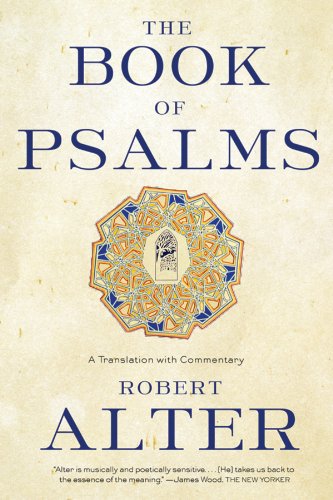
Ocean Vuong’s book was at the top of the list for most of the year, and then news of the movie of Small Thiings Like These sent a lot of clicks to that post. Shirley Hazzard’s The Transit of Venus dominated the list for years, but has now dropped off altogether. Mary Oliver, Ellen van Neerven and Robert Alter are the stayers.
One more bit of nerdiness. Here’s WordPress’s list of my all-time top ten posts. Apart from changing positions, the main change from last year is that Philip Larkin got bumped by Claire Keegan:
That’s it. Thanks to everyone who has contributed to those statistics. Some of you I know IRL, some I’ve met through email etc, some only in the comments section, some I know only as anonymous clickers. I’m happy that you’ve visited the blog. Come again.
Thanks to kind help from Sue at Whispering Gums, I can now find out which of my blog posts have received most hits in the last year. It’s hard to know what these figures mean. Maybe a lot of people visited the post for a second or so, long enough to realise that there was nothing useful there about the subject of their interest. Maybe the post is on a school reading list somewhere, and has been semi-plagiarised by hundreds of students over the year. Maybe this is an indication of which of my posts is most brilliant. Maybe none of those. Anyhow here’s the list for 2023:
It looks as if my posts on poetry generate most traffic, though the one on The Transit of Venus, mysteriously to me, is way out ahead of the rest. The book group makes three appearances, which is probably an indication that we choose books that have a lot of social capital. I suspect the post on Robert Alter’s translation of the psalms is visited so often because it includes an embedded video of Boney M singing ‘Rivers of Babylon’.
Having learned how to find these statistics, I’ll try your patience a little by giving you the all-time top 10 posts:
Someone lifted a close-up photo of a painting by Brian Rutenberg from ‘Travelling with the Art Student’ and put it up on Pinterest, and hordes of people came looking for more – sadly it was the only photo in the post. Shirley Hazzard has otherwise been consistently in the lead, and Book Group books and poetry have pulled in the crowds. I think my post on Kevin Gilbert’s poetry was on a school reading list somewhere for a time – it gives a brief account of what can go wrong when a well-meaning whitefella edits a First Nations book.
I don’t know what to make of the absence of any posts I’ve written since 2020.
That’s it for my 2023 round-ups. Thank you all for swelling my statistics, for your likes and comments, and your silent, lurking presences.
I hadn’t read the Psalms, or any book from the Bible, since my seven years in a Catholic religious order in the 60s and early 70s. I used to love belting them out in the chapel several times a day, especially the complaining bits, the bloodthirsty bits and the bits that celebrate the natural world. They were choral spoken-word poetry of my late teenage years, a place where I could put words to feelings I hardly knew I had.
When this book turned up on offer at our Book-swapping Club, I liked the idea of revisiting that experience.
Alas, Robert Alter didn’t do his translating with me in mind. His version is concerned with precision of meaning, and not at all interested in rendering the poetry, the music of the language. These Psalms were barely recognisable.
A recent YouTube experience illustrates what I mean about Alter’s translation. Sister Nicole Trahan, talking on camera about racism in the US Catholic Church (link here), starts brilliantly with Psalm 55 verses 13–15:
If an enemy had reviled me,
    that I could bear.
If my foe had viewed me with contempt,
    from that I could hide.
But it was you, my other self,
    my comrade and friend,
you whose company I enjoyed
    at whose side I walked in the house of God.
Here’s how Robert Alter translates those verses:
No enemy insults me, that I might bear it,
            no foe boasts against me, that I might hide from him.
But you, a man to my measure,
            my companion and my familiar,
with whom together we shared good counsel
            in the house of our God in elation we walked.
They both are clearly translating the same text, yet the meaning of Sister Nicole’s version is clear, it has a musical flow and it packs an emotional punch, while Alter’s version is dry and needs a footnote to clarify its meaning:*
Were it a known enemy showing hostility, the speaker would have found a way to bear the insult, but it is his intimate friend who has turned against him.
I eventually realised that Alter is not even trying to render the Psalms into memorable (or prayable) English. This is a book for the scholars and exegetes, not for poetry readers or, I imagine, the devout. Neither a scholar nor an exegete, I gave up on it.
But my appetite for revisiting the Psalms had been whetted. I dug out my tattered, dusty copy of the Jerusalem Bible (1966), which employed a ‘team of collaborators in translation and literary revision’ that included J R R Tolkien, James McAuley and Robert Speight. From here on my quotes are from that version unless I say otherwise.
The first thing I want to say is that pundits who cherry-pick the Holy Qur’an for quotes advocating violence should read the Psalms and chill.
Again and again, especially in the early Psalms, the speaker calls on God to destroy his enemies, as if his God is not much more than a secret super-weapon. I guess that’s where a bit of historical imagination comes in handy: you can read this book as a record of the developing notion of what ‘God’ is. Early on, it’s as if every tribe has its own god or gods, and Yahweh is the one belonging to the Hebrews. Gradually, the emphasis changes from, ‘God, smite my enemies,’ to ‘God defend me,’ and ‘God, let my enemies come to see your greatness.’ Morality comes into it: “God, I will obey your law,’ ‘I beg your forgiveness for my wrongdoing.’ They never give up bathing a just person’s feet in the blood of the unjust (58:11), or celebrating the way God heaps up corpses (110:5) but there’s an increasingly clear assertion of an incllusive monotheism: other gods are just lumps of wood or metal, but Yahweh is the creator of the universe. There’s history, wisdom, complaint, repentance, celebration: it’s a rich collection.
The Psalms are full of quotations: ‘The Lord is my shepherd,’ ‘Out of the depths I cry to you O Lord,’ ‘A mighty fortress is my God.’ So there’s a lot that’s reassuringly familiar in them. But reading all 150 from start to finish, whether in Alter’s dryness version, the Jerusalem Bible’s lyricism, or the King James sonority, confronted me not only with their violent us-and-them-ism, but also with the absence of any sense of God in my own mind.
I’ve got a lot of sympathy for people of faith, and when I participate in religious observances I usually find a pragmatic way of paying more than lip service. I can be grateful for my blessings, repent my failings, commit to the things that matter, wonder at the splendours of the universe, acknowledge precarity and interdependence, make acts of faith, hope and love. I can rejoice in the story of the escape from Egypt, love the story of heroic, imperfect, pious King David and lament the destruction of the temple. I can do all that without a need for a supreme being. I can take part in a Mass or a Seder or a sundown prayer without feeling any need to assert my non-belief. But reading the Psalms, I find it hard to get past my outsider status.
My custom with books of poetry is to talk about one poem in some detail. I’m picking number 137, because Boney M:
The song, which I can listen to on hard rotation, was written by T. McNaughton, George Reyam, Frank Farian and Brent Dowe, and draws on Psalm 137 verses 1–4 and Psalm 19 verse 14. It absolutely captures the power of the first four verses of this Psalm. Spoiler alert: the Psalm has 9 verses and takes some dark turns after verse 4.
PSALM 137 **
Ballad of the exiles

Beside the streams of Babylon
we sat and wept
at the memory of Zion,
leaving our harps
hanging on the poplars there.

For we had been asked
to sing to our captors,
to entertain those who had carried us off:
‘Sing,’ they said,
‘some hymns of Zion.’

How could we sing
one of Yahweh’s hymns
in a pagan country?
The heading, ‘Ballad of the exiles’ is a little gloss by the translators. In the first half of the 6th century BCE a large number of people were taken captive from Judaea and taken to Babylon, for an exile that lasted half a century. This was a key event in the history of the Jewish people, and played an important part in the development of Judaism. This Psalm is framed as a song from that time. Its pining for home has struck a chord in the hearts of exiled people for millennia. It makes one think of African-heritage people enslaved in the USA being expected to entertain their oppressors. Or, since I’ve recently read Grace Karsken’s The Colony, ceremony and payback conducted by Eora people in what is now Sydney’s Hyde Park being treated as entertainment by the early colonisers. And it’s open to rich metaphorical reading about commodification of culture: how can I make authentic art for a marketplace?
Jerusalem, if I forget you,
may my right hand wither!

May I never speak again,
if I forget you!
If I do not count Jerusalem
the greatest of my joys!
Moving beyond the verses used in the Rastafarian song, these lines are framed as a kind of self-curse, but behind the curse there’s a feeling that if the speaker were to lose all connection to their home, their spiritual and cultural base, they would lose their ability to function in some crucial way. This is something like what many First Nations people say about the importance of country: on country you can feel a wholeness, a peace, a strength that you can’t feel anywhere else. So far, this is a powerfully resonant song/poem about the pain of exile
Yahweh, remember
what the Sons of Edom did
on the day of Jerusalem,
how they said,
‘Down with her!
Raze her to the ground!’
Then, a sudden change of tone. The captors have asked for an entertaining bit of exotica. Here is the song of Zion that the singer can actually sing. As I write this it occurs to me that to imagine it being sung in response to the captors’ command, but in a language the captors don’t understand, so there’s an element of subversive joy in this as well as heartfelt cry to Yahweh. The singer recalls the harm that has been done to their people, and then ups the ante:
Destructive Daughter of Babel,
a blessing on the man who treats you
as you have treated us,
a blessing on him who takes and dashes
your babies against the rock!
This is directly addressed to the captors. This may once have been meant literally, and if so it’s just monstrous: other people’s violence is wicked, but baby-murder is fine if I or my allies do it. And when I started writing about this Psalm that’s how I read it. But you know, now I think it’s funny: ‘You want me to sing you one of my cute songs. OK, here’s one about the temple and a little baby.’ Then a cheerful tune is struck up. Maybe the Babylonians recognise the word for blessing that occurs twice towards the end. At the last line the performers and Hebrew listeners smile broadly, and their Babylonian listeners follow their cue and also smile broadly.
There’s no way the end of this poem can be read as a pious, morally improving text. Alter’s note says it’s morally unjustifiable, but we should take the terrible circumstances into account. Maybe, though, if you assume that the Psalmist had a sense of humour, the moral unjustifiability is the whole point: this is deliberately outrageous, wicked humour. In the unlikely, er, inconceivable, event that I had to give a sermon based on it, I’d talk about how when we say we want to hear the voices of oppressed people, we need to be prepared to hear things we really don’t like.
I’m not saying that all the psalms can be read as edgy comedy. Sadly, far from it. But I happen to have lit on one that makes me, and possibly you, remember that these songs/poems/hymn were written by people with complex minds – some for liturgical purposes, some to teach history and morality, some to allow the expression of emotion, some as theatre.
* Not to flog a dead horse, but here are a couple of other translations of those same verses from the Bibles on my bookshelves, each with its own clarity, grace and power. First the King James Version: For it was not an enemy that reproached me; then I could have borne it: neither was it he that hated me that did magnify himself against me; then I would have hid myself from him: But it was thou, a man mine equal, and mine acquaintance. We took sweet counsel together, and walked unto the house of God in company.
The Jerusalem Bible: Were it an enemy who insulted me, I could put up with that; had a rival got the better of me, I could hide from him. But you, a man of my own rank, a colleague and a friend, to whom sweet conversation bound me in the house of God!
** If you’re really interested in comparative translations, here are two other translations. First the King James Version: By the rivers of Babylon, there we sat down, yea, we wept, when we remembered Zion. We hanged our harps upon the willows in the midst thereof. For there they that carried us away captive required of us a song; and they that wasted us required of us mirth, saying, Sing us one of the songs of Zion. How shall we sing the LORD’S song in a strange land? If I forget thee, O Jerusalem, let my right hand forget her cunning. If I do not remember thee, let my tongue cleave to the roof of my mouth; if I prefer not Jerusalem above my chief joy. Remember, O LORD, the children of Edom in the day of Jerusalem; who said, Rase it, rase it, even to the foundation thereof. O daughter of Babylon, who art to be destroyed; happy shall he be, that rewardeth thee as thou hast served us Happy shall he be, that taketh and dasheth thy little ones against the stones.
Robert Alter: By Babylon’s streams there we sat, oh we wept, when we recalled Zion. On the poplars there we hung up our lyres. For there our captors had asked of us words of song, and our plunderers – rejoicing: ‘Sing us from Zion’s songs.’ How can we sing a song of the LORD on foreign soil? Should I forget you, O Jerusalem, may my right hand wither. May my tongue cleave to my palate if I do not recall you, if I do not set Jerusalem above my chief joy. Recall, O LORD, the Edomites, on the day of Jerusalem, saying: ‘Raze it, raze it, to its foundation!’ Daughter of Babylon the Despoiler happy who pays you back in kind, for what you did to us. Happy who seizes and smashes your infants against the rock.



 Me fail? I fly!