Tag Archives: Sara Mansour

This is Happiness, Niall Williams and the Book Group

Niall Williams, This Is Happiness (Bloomsbury 2019)
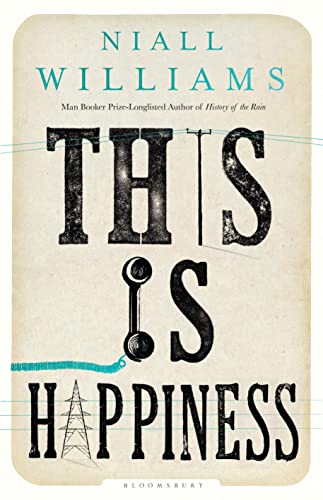
Before the meeting: When we discussed Niall Williams’s History of the Rain in October, a number of people had also read his next book, This Is Happiness. December’s chooser, impressed by their enthusiasm, decided we should all read it.

The book’s first sentence, ‘It had stopped raining’, which sits on a page by itself, is pretty much identical with the final sentence of the earlier book, and the tiny, backward village of Faha in West Ireland is again the setting, but the bulk of the narrative takes place in an earlier period, and there is no obvious reference to the characters or events of History of the Rain. It’s the story of the coming of electricity to the village; a coming of age story of young Noe, who has taken leave of the seminary and is telling the story as an old man in the USA; and a big romantic story of love lost and found by Christy, an older man who befriend Noe.

Page 75* must be one of the book’s few pages that doesn’t mention the absence of rain. It happens in the thick of one of the book’s comic set pieces. It’s not the set piece when the lights go down and the cinema comes alive with amorous grapplings, or the one where Noe goes to the communion rail at Sunday Mass in order to get a good look at the woman Christy left at the altar, or the spectacular one where he is knocked unconscious by a falling electricity pole. On page 75 Noe and Christy are on the first of a number of epic pub crawls.

These pub crawls are as much about music as about alcohol, music performed by men who are shy and nondescript until they start playing, and then are brilliant conduits of a great folk tradition. On this first adventure, when the evening is well under way, Christy startles Noe and everyone else in Craven’s pub by starting to sing:

Not only was Christy singing, he was singing with screwed-up eyes and fists by his side a ballad about love. He was singing it full-throated and full-hearted and before he had reached the second verse it was clear even to Roo the dog that a passionate truth was present in that place. It wasn’t only that this didn’t happen in Craven’s, it was that there was something raw in it, something deeply felt, that was, even to those who had descended blinking into the umbrae and penumbrae of numberless bottles of stout, immediately apparent and made those who first looked now look away.

(page 73)

Christy has come to Faha as a worker in the great electricity project. This episode is our first inkling of his profoundly romantic reason for signing up for the work. Not so obviously, it prepares us for the major role music is to play in Noe’s story. Page 75 itself is a beautiful piece of misdirection. After Christy has sung, Noe writes:

I did the only thing I could do. I went to the counter and got two bottles of stout.

Those bottles are followed by another two, and then another. Greavy the guard arrives and declares that it’s Closing Time (as Noe says, this is one more way in which Faha lags behind the times), but the two of them are incapable of moving. Alcohol-based humour usually leaves me cold, but Niall Williams’s version made me laugh out loud. I suppose the whole book could be read as an extended Irish joke: the villagers have an almost superstitious awe of the one telephone in town, and the coming of electricity has almost cosmic significance for them. If you read the whole book like that, the stereotypical Irish drunkenness in this passage is representative (including the sly invocation of Waiting for Godot):

Getting up proved aspirational. There was the idea of it, quite clear. Unmistakably clear now. There were hands placed on knees for push-off. There was a Right now. There was another when that failed to produce action. A Right so following. And still nothing. Between thought and verb a vacancy, not intended, but not grievous, just gently perplexed, and in that perplex the realisation that Craven’s was not in fact such a bad place at all, was downright comfortable in fact, in fact there were few places on this earth as agreeable. True? Too true. A person could stay here, could stay right here and be quite happy now, quite, for a very long time. What’s your rush? There’s no rush. All the problems of the world could be settled right here.
Right.
Will we go so?

I don’t want to minimise the book’s humour. Far from it. But there’s a seriousness to it that page 75 gives no clue of. Christy’s romance is genuinely touching. The villagers’ resistance to the coming of electricity is more than comic: and these villagers are described as custodians of their land, defending an ancient culture under siege by capitalism – without being at all heavy handed, the narrative reminds us that the Irish were the first people to be colonised by the English. The dramatic decline in the Catholic Church’s power since the 1950s is deftly evoked both in Noe’s commentary and in his own story: his turning away from his priestly vocation is a tiny reflection of the ending of Church-domination in Ireland at large.

After the meeting: There were seven of us. Covid–19 and other coronaviruses kept some away, while one or two had better things to do – and one sent video of spectacular drone art over Sydney Harbour.

This was our end-of-year meeting so we had other business besides the book, but it generated quite a bit of discussion. The discussion was unusual in that quite a few of us read out favourite passages. Indeed, two of the absentees sent lists of quotes – it’s that kind of book. One interesting insight was that the narrative as we receive it is created by an old man looking back on a key moment in his youth, making a story out of it, and casting a benevolent glow over the community in which that moment happened.

Other business, besides of course the plentiful food including a splendid pavlova, included a Kris–Kringle book exchange with the usual mixture of cautious delight and polite almost-hidden dismay, and a poetry reading. We were each supposed to bring a poem, and most did, even one of the absentees.

Poems were a nonsense poem by CJ Dennis (‘Triantiwontigongolope’), a poem about climate change (that was me – Kit Kelen’s ‘Parable’), a Thomas Hardy (‘Heredity’), a Robert Frost (‘A Time to Talk’), a poem from Claudia Rankine’s Just Us (‘sound and fury’), and two poems of Australian patriotism that couldn’t have been more different (Sara Mansour’s ‘My Australia‘ – link to her performing it on YouTube – and a poem whose name and creator I don’t remember celebrating the lump in the throat brought on by, for example, Anzac Day). This little reading, including by two people who said they felt awkward reading poetry aloud, left us reeling.

And that was a wrap for the Book Group for 2022.

* Currently when blogging about books I take a closer look, arbitrarily, at page 75 – moving on to page 76 at my next birthday if the idea works well enough.
The Bankstown Poetry Slam (mainly reposted)

I’ve been embarrassed in the last week to realise that my blog has continued on its way as if nothing out of the ordinary has happened. Hundreds of thousands of young people around the world went on strike to call on governments to take climate change seriously. George Pell was found guilty of child sex abuse and sentenced to a prison term longer than the lawyers expected. Fifty people were murdered while at prayer in Christchurch mosques. And I’ve blogged about books for small children.

It’s not because I’m not aware of the world. It’s more like I’m struck mute. So many eloquent people have spoken on all three subjects.

Maybe it’s timely for me to repost something that I wrote about the Bankstown Poetry Slam all of five years ago. Since I wrote the post (the full post, from 6 October 2014, is here), the BPS has been attacked by a once and probably future politician as a breeding ground of anti-white hate speech. I don’t want to be rude, but that attacker is illiterate. My experience is limited, but I can think of no better place to get a sense of how vibrant and benign a culturally diverse society can be, and especially one where Muslims are a strong presence.

Here’s the post:

The Bankstown Poetry Slam, which happens on the last Tuesday of every month, is one of the most exciting events on Sydney’s cultural calendar.

Last month nearly 400 people gathered in the Bankstown Arts Centre to hear more than 20 poets with varying degrees of virtuosity perform their own work – to hear, applaud and at least pretend to judge them as they at least pretended to compete with each other. There was also cake, strawberries and watermelon, all for a gold coin donation at the door.

My own experience of spoken word and poetry slams is extremely limited, but Wikipedia and YouTube inform me that many features of the BPS are standard to slam culture. There are procedural elements such as a loosely enforced time limit (two minutes this time because there were so many poets), judges chosen at random from the audience, a ‘sacrificial poet’ to kick things off without being part of the competition. And the range of subject matter is described well in Wikipedia’s entry on spoken word:

The spoken word and its most popular offshoot, slam poetry, evolved into the present-day soap-box for people, especially younger ones, to express their views, emotions, life experiences or information to audiences. The views of spoken-word artists encompass frank commentary on religion, politics, sex and gender, often taboo subjects in society.

Likewise the preponderance of non-white performers and the notion that spoken word and slam performance styles are generally influenced by hip hop.

Yes, poet after poet declaimed passionately, like prophets calling us to reject consumerism, psalmists crying out from the midst of suffering or yearning, orators decrying oppression in many forms. One man’s poem was short enough to allow him time for a brief introduction; he said he was honoured to follow those who came before and to precede those who came after, because ‘we are giving you our hearts’. He was right: there was plenty of witty wordplay, social observation, and even some elegant story telling, but again and again a shy young person would approach the microphone and be transformed into an eloquent, spellbinding exposed heart.

[Added later: Click here for a YouTube of Yasmine Lewis, who won the slam]

The air was thick with generosity. When anyone dried up and had to search for their next line – in memory or on a scrap of paper – the crowd applauded. When a judge gave anyone less than 9 out of a possible 10, she was booed. There was no party line: one person urged us to turn to God, another described religion as a stain on humanity, a woman in a hijab was followed by a man advocating for marriage equality, and all were equally met with finger-clicks (the convention for expressing approval of a good line) and cheers. The emcees, co-founders of the event Ahmad Al Rady and Sara Mansour, were unfailingly appreciative and kept the mood buoyant.

The slam happens under the auspices of Bankstown Youth Development Service, whose Director, Tim Carroll, was dragooned into speaking. Since this slam started nearly two years ago, he reminded us, there has been some terrible stuff in the media about Islam and Muslims. What a different picture was created by this event, he said, in which the Muslim presence was so pronounced. And what a shame some of those columnists weren’t there to see it.

Bankstown Poetry Slam presents The Last Conversation

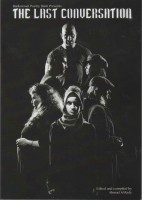
Ahmad Al Rady (editor), The Last Conversation (BYDS 2013)

1lcThe Bankstown Poetry Slam, which happens on the last Tuesday of every month, is one of the most exciting events on Sydney’s cultural calendar.

Last month nearly 400 people gathered in the Bankstown Arts Centre to hear more than 20 poets with varying degrees of virtuosity perform their own work – to hear, applaud and at least pretend to judge them as they at least pretended to compete with each other. There was also cake, strawberries and watermelon, all for a gold coin donation at the door.

My own experience of spoken word and poetry slams is extremely limited, but Wikipedia and YouTube inform me that many features of the BPS are standard to slam culture. There are procedural elements such as a loosely enforced time limit (two minutes this time because there were so many poets), judges chosen at random from the audience, a ‘sacrificial poet’ to kick things off without being part of the competition. And the range of subject matter is described well in Wikipedia’s entry on spoken word:

The spoken word and its most popular offshoot, slam poetry, evolved into the present-day soap-box for people, especially younger ones, to express their views, emotions, life experiences or information to audiences. The views of spoken-word artists encompass frank commentary on religion, politics, sex and gender, often taboo subjects in society.

Likewise the preponderance of non-white performers and the notion that spoken word and slam performance styles are generally influenced by hip hop. (I have listened to Muriel Rukeyser on a podcast since the slam, and it seemed to me that her powerful words would benefit immensely from a slam-style rather than in the measured manner available to her.)

Yes, poet after poet declaimed passionately, like prophets calling us to reject consumerism, psalmists crying out from the midst of suffering or yearning, orators decrying oppression in many forms. One man’s poem was short enough to allow him time for a brief introduction; he said he was honoured to follow those who came before and to precede those who came after, because ‘we are giving you our hearts’. He was right: there was plenty of witty wordplay, social observation, and even some elegant story telling, but again and again a shy young person would approach the microphone and be transformed into an eloquent, spellbinding exposed heart.

[Added later: Click here for a YouTube of Yasmine Lewis, who won the slam]

The air was thick with generosity. When anyone dried up and had to search for their next line – in memory or on a scrap of paper – the crowd applauded. When a judge gave anyone less than 9 out of a possible 10, she was booed. There was no party line: one person urged us to turn to God, another described religion as a stain on humanity, a woman in a hijab was followed by a man advocating for marriage equality, and all were equally met with finger-clicks (the convention for expressing approval of a good line) and cheers. The emcees, co-founders of the event Ahmad Al Rady and Sara Mansour, were unfailingly appreciative and kept the mood buoyant.

The slam happens under the auspices of Bankstown Youth Development Service, whose Director, Tim Carroll, was dragooned into speaking. Since this slam started nearly two years ago, he reminded us, there has been some terrible stuff in the media about Islam and Muslims. What a different picture was created by this event, he said, in which the Muslim presence was so pronounced. And what a shame some of those columnists weren’t there to see it.

The Last Conversation was published last December as a way of capturing something of the slam’s first exhilarating year. I blogged about its launch. As I’ve just read it cover to cover for the first time, I find myself thinking of it as a record of poetry – a book that hasn’t really been read until it’s been read aloud, with full attention to rhyme and assonance, and a hip-hop-like exaggeration of rhythmic effects. And maybe that’s true of any book of poetry.

Two Launches (with pic added later)

I’ve been sick with a cold since last Monday, and going stir crazy. Perhaps unwisely, I’ve struggled out of the house two nights this week to go to book launches.

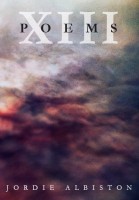
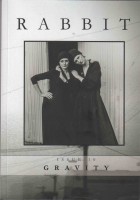
rabbit10The first, on Monday night, 1XIII-Poemswas a double launch at Gleebooks – of the tenth issue of Rabbit, a Melbourne-based ‘quarterly journal of non-fiction poetry’, and XIII Poems by Jordie Albiston, the first in a series of booklets to be published by the journal. Both books are beautiful to look at and to hold, and I’m looking forward to reading the copies I bought on the night. Among other tempting morsels, the Rabbit offers poems by Julie Chevalier, Jordie Albiston, B R Dionysus, Lachlan Brown (to name the poets whose work I know), photographs, an essay, an interview and reviews, including one by A J Carruthers of two books I’ve loved, Jordie Albiston’s Book of Ethel (blog post coming soon) and Pam Brown’s Home by Dark (blog post here). And I’m fast becoming a Jordie Albiston fan, so I’m looking forward to reading what she calls orphan poems.

There were 17 people in the upstairs room at Gleebooks for the launch, of whom 8 spoke or read, all interestingly, and one or two others were part of the team who had flown up from Melbourne for the occasion. Jessica Wilkinson, Rabbit‘s founding Editor-in-Chief, graciously described it as an intimate affair, and urged us to take some grapes or cheese home in our pockets since the modest catering was clearly far in excess to requirements.

Whatever the cause for the poor turn-out, the launch was convivial, with plenty of humour about poets becoming members of the Warren, etc, and much joy in language used with precision and passion. I was glad I’d struggled up from my sickbed to put a bum on a seat and at least half a mind into the room.

As a segue, I’ll mention that at least one of the speakers mentioned their students, and one poet explained that she wasn’t reading her poem from the Rabbit because it was too much a ‘page poem’.

1lcThe next night’s launch was a completely different affair. The Last Conversation is an anthology of poems that have been read at the Bankstown Poetry Slam – that is, a collection of spoken word pieces attempting the transition to page poems under the guidance of slam co-founder and anthology editor Ahmad Al Rady.

The monthly Bankstown Poetry Slam has grown in the year of its existence into the biggest slam in Australia. I’ve never managed to get there, and if last night’s event is any indication of the nature of the experience, I’m missing out on something excellent. Ahmad Al Rady and his co-founder Sara Mansour were fabulous MCs – charming, witty, self deprecating and lavish in their appreciation of others. As many as 10 poets performed: a militant hymn to Gandhi and Mandela (timely, though obviously the poem was first performed when Mandela was still alive); cries from the heart from young men against violence against women; a disturbing piece about cutting into flesh after which the poet reassured us that she was not a serial killer or self-harmer but a surgeon; a passionate piece about the detention of asylum seekers; two sisters mining the rich field of sibling rivalry and sibling support.

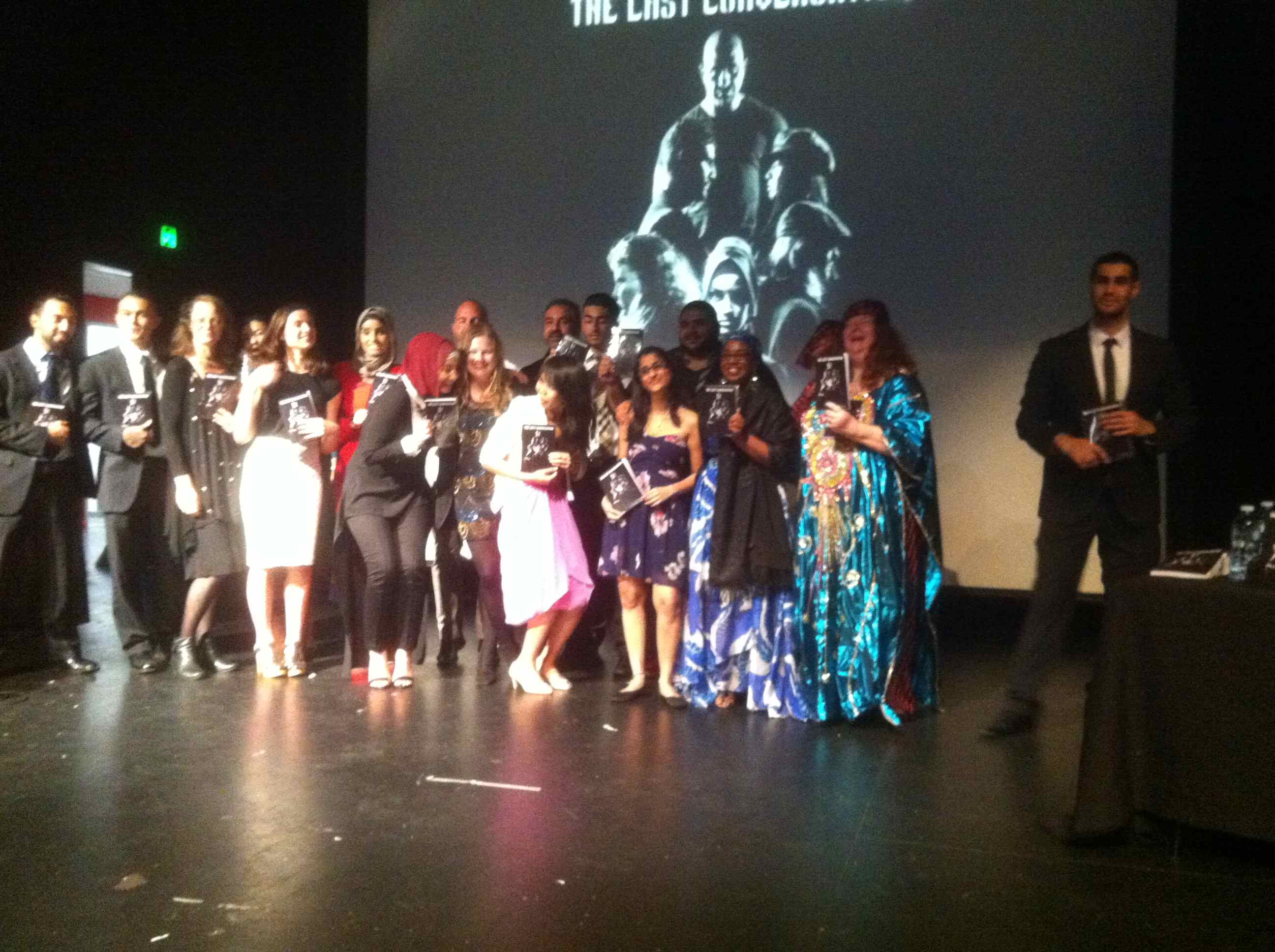
The theatre at Bankstown Arts Centre was full to capacity,mainly with young people dressed in their best, as if for graduation. The audience whooped, cheered and (during the readings) clicked. It was a huge, enthusiastic celebration not just of the slam and each other, it seemed to me, but of what can happen when language is unleashed. At the start of the evening, Sara Mansour described how the Bankstown slam had started. It was laziness. She and Ahmad were tired of driving all the way into the city for poetry slams. Bankstown needs its own slam, they thought, and hunted around until Tim Carroll, the generous and welcoming CEO of BYDS (Bankstown Youth Development Services) gave them a home. At the end of their first year, she said, she realises they were wrong on two fronts: running a slam in Bankstown was a lot more work than driving into the city once a month; and Bankstown didn’t need a poetry slam – poetry needed Bankstown.

(By way of full disclosure: I played a small consultative role in the editing of the anthology.)

Added later: This snap I took with my phone at the end of the evening shows something of the mood. These are the poets who read plus some others who are in the book.

last conversation