Tag Archives: translation

Hong Ying, Zhai Yongming & Yang Lian edited by Mabel Lee

Mabel Lee (editor), Poems of Hong Ying, Zhai Yongming & Yang Lian (Vagabond Press 2014) – translated by Mabel Lee, Naikan Tao and Tony Prince

1ml This is the second book I’ve read in Vagabond Press’s admirable Asia-Pacific Writing series, and like the first – Poems of Yi Sha, Shu Cai and Yang Xie, edited and translated by Ouyang Yu – it features work by three poets translated from Chinese.

Strikingly, neither Mabel Lee nor Ouyang Yu mentions any of the poets who appear in the other’s book. The only overlap between their respective histories is a mention of Bei Dao, whom Ouyang Yu says is now regarded as ‘uncool, pretentious, even boring’ and whom Mabel Lee honours as a key figure in the post-Mao era. Clearly the story of recent Chinese poetry can contain multitudes.

Mabel Lee’s poets are a generation older than Ouyang Yu’s. Where his introduction discusses the way his poets turned away from the revolutionary zeal and protective obscurity of their Mao-era predecessors, she takes us further back, to the surge of translation of European literature into Chinese at time of the May Fourth movement (1915–1921), then forward through the turbulent decades that followed, the repression of the Cultural Revolution, then the process that began in the late 1970s, of Chinese writing ‘extricating itself from decades of stringent political censorship’.

These three poets were part of that process. They all came of age during the Cultural Revolution and were publishing poetry by the early 1980s. Hong Ying (born in 1962) and Yang Lian (born in 1955) left China soon after the brutal crackdown in Tienanmen Square on 4 June 1989, now live in London and are translated into many Western languages. Zhai Yongming (also born in 1955) lives in Chengdu (where the pandas are) and is something of a celebrity there as an artist and owner of White Nights, a wine bar ‘that functions as a literary and arts salon’.

Hong Ying, Mabel Lee tells us, writes as a form of self-treatment for trauma, and much of her poetry has a dreamlike, painfully introspective feel, like this from ‘Whose Mother?’:

She is linked with all words of grief
In endless gloomy rain
She delivers good fortune to my hands
I see clearly
Black ants crawling all over the road
Dragging along a crowd of silent monks

In the early 1980s Zhai Yongming was thrust ‘into a role model position for other aspiring women poets’. Her poetry is much more outward looking than Hong Ying’s, dealing with social issues, including but not at all limited to issues concerning women. The book’s sole endnote explains that her poem ‘Lament for Scholars’ relates to an incident she witnessed during the Cultural Revolution, in which the renowned actor Feng Zhe was publicly humiliated, later to be ‘tormented to death’. This factual background enriches the poem hugely for the ignorant reader (that is, me) and makes me wish for more. For example, I’d love to know the story behind a sequence of poems about a six-month stay in a village, with lines like this in ‘The Second Month’:

Shouts are heard on Cold Food Day
And to comfort the dead the villagers practise self-restraint
As I search I always wear a faltering smile
My inner wound linked to their eyes in a straight line
How can I enter Jang’an Village?
Though every day there are corpses of drowned infants and of brides who have swallowed poison

Is this telling us about the brutal conditions of village life, or is the speaker projecting something of her own inner suffering onto the villagers? I know I could look it up somewhere, but a note would help with the immediacy of first reading.

Mabel Lee describes Yang Lian’s poetry as possessing an exuberant male sexuality. There’s no sex as such in these poems, but there is a wonderful swaggering energy that carries all before it. here are some lines, picked almost at random, from ‘Dance: Swimming Naked with Li Bai’:

A cup of wine moulds the shape of a throat
A deeply private action _exposed to the public eye
Shakes the body’s _ defects become blindingly beautiful
Once you’ve jumped into the sweet stench of that river you’re drenched
From being submerged in it for a thousand years

I struggled with this book, partly because of my lack of familiarity with cultural/historical contexts, partly because I was constantly aware of the translators’ struggle to do more than paraphrase (though none of it has the English-as-a-second-language feel,of Ouyang Yu’s translation). On the way to writing this post I did some haphazard research (ie, a quick trawl of my bookshelves): I read T S Eliot’s comments on Ezra Pound’s translations from Chinese, in which he writes of the need for a great poet to communicate the poetry of another culture; I reread J P Seaton’s introduction to The Shambhala Anthology of Chinese Poetry, which explains some of the complexity of translating from Chinese to English, and tells the history almost to the point where Mabel Lee’s introduction begins. I decided that my ignorance is profound, and that for me to really grasp the work of these poets would take serious commitment to study on my part, or a translator-poet of genius to hand me something on a platter. For now, I can be grateful for the glimpses I have gained from this little book, and hope to be able to build on them in time.

awwbadge_2014 I’m probably pushing the boundaries to count this as part of my Australian Women Writers Challenge. But Mabel Lee is an Australian woman, and translation is a form of writing (the book doesn’t say it in so many words, but I think she translated Hong Ying and Yang Lian’s poems, while Naikan Tao and Tony Prince translated Zhai Yongming’s), not to mention her lucid introduction. Maybe I should count it as half a title, which means I’m up to 6.5 books. I don’t remember how many books I signed up for. Assuming it was 10 – the ‘Franklin’ level – I’m on track to have completed the challenge by the end of the year.

Yi Sha, Shu Cai, Yang Xie translated by Ouyang Yu

Ouyang Yu (translator), Poems of Shu Cai, Yi Sha & Yang Xie (Vagabond Press 2013)

Vagabond_Press_Asia_Pacific_Poetry_3This is the third title in Vagabond Press’s Asia Pacific Writing Series, but it’s the first I’ve read. The series, according to the Press’s website,

aims to create an open space for the sharing of cultural knowledge, understanding and enjoyment across national, political and language boundaries.

Working ‘in close collaboration with a growing community of writers, translators, editors and artists’, Michael Brennan, Elizabeth Allen and the rest of the small Vagabond crew have produced a dozen or so elegant volumes in the series, including work from China, Japan, the Philippines and Burma. At the Vagabond event at the recent Sydney Writers’ Festival, the ‘open space’ that the series aims to create was tangible in the diversity of writers and translators who were there in the flesh.

Ouyang Yu, who wasn’t at the Festival (I believe he’s a Melburnian), is a tireless writer, translator, scholar, editor and activist for Chinese literature in Australia and vice versa. His first translations of Yi Sha appeared in the second issue of Heat in 1996, twelve years before Bloodaxe Books published Yi Sha’s Starve the Poets!, describing it as his first English publication outside China. If you want a background to this book, and an overview of Chinese poetry in recent decades, you could do a lot worse than listen to ‘Neither Red Flags Nor Peach Blossom’, Parts One and Two, Poetica programs from 2013 in which Ouyang Yu speaks at greater length than his short introduction to this book allows.

The three poets in this book represent three historical stages in Chinese poetry. After the revolutionary zeal of the 1950s and 60s and the deeply coded elusiveness of the ‘misty poets’ in the next two decades, Yi Sha aimed to have poetry ‘enter into an era in which it speaks like a human being’. The poetry scene was split between the intellectual camp and the camp to which Yi Sha belonged, which emphasised oral poetry, story telling and (to judge from these poems) a degree of scurrilousness. At the end of the 1990s, Shu Cai introduced the ‘Third Road’, that belonged to neither camp, and was open to influence from the rest of the world. Yang Xie, born in 1972, belongs to a younger generation, and writes, as Ouyang Yu says, ‘a poetry that taps into the violence of daily life in small cities, with an inquisitive eye for detail’.

There’s a lot to enjoy here: the gutsy vulgarity of Yi Cha, the contemplative lyricism of Shu Cai, and the Yang Xie’s graphic narratives.

I found it a hard book to read, though, probably because of Ouyang Yu’s response to the translator’s inescapable dilemma: faced with the choice of making his translation read naturally or beautifully in the new language, or keeping readers aware that they are venturing out of the confines of their own language and culture, he has gone the latter path. Very little here reads as smooth English. In fact, it’s sometimes as if the poems have been translated from Chinese into English-as-a-second-language: prepositions feel slightly off, commas and definite articles appear in strange places, and the vocabulary is occasionally stilted. For example, the opening lines from Yi Sha’s ‘The File’:

at grade 3 junior high
when i first came into contact with chemistry
i was passionate about the experiment
and devoted myself to the research
i wanted to develop an air
that stank worse than carbon monoxide
i wanted them to be taken back
that day I was successful
the whole class withdrew from the lab
in panic

I think I chose this because I relate to the story, having once emptied a chemistry lab in ten seconds flat by exposing some potassium to air. Here, leaving aside the fact that carbon monoxide is odourless, maybe the original is just as flat as the translation, but it feels as if what we’re getting is a kind of report on the poem, which we then have to reconstruct as well as we can, each reader for him or herself. I’m no poet, but I can’t see that anything is lost if it is taken all the way into easy, spoken English, something like this:

in grade 3 at junior high
when i first did chemistry
i loved the experiments
and threw myself into research
i wanted to make a gas
that stank worse than carbon monoxide
i wanted to make them all sit up and notice
the day i succeeded
the whole class stampeded from the lab

I have an uneasy feeling that I’m out of my depth in commenting in this way on the work of such an eminent translator, but my experience in reading these three poets was all too often that the translation was simultaneously giving and taking away: showing me these interesting and exciting poems, then making it hard work to grasp them. Maybe, of course, that’s exactly how it ought to be.

Alice Oswald’s Memorial

Alice Oswald, Memorial: An excavation of the Iliad (Faber & Faber 2011)

0571274161

Introducing his translation of The Divine Comedy, Clive James reminded us that it wasn’t just a story, but a poem. In creating her ‘excavation’ of the Iliad, Alice Oswald leaves the story out altogether. In a way, that makes the book a perfect companion to the Marvel comics Iliad (though I may be unfair in assuming that Marvel just tells the story: comics have come a long way since I was an avid reader of Classics Illustrated comics).

So what is left of Homer’s epic of the Trojan War if you take out the narrative? The short answer is: a powerful lament / memorial for the slain, interspersed with lyrical evocations of the natural world, Homer’s similes cut loose from the things they refer to. The whole poem is presented here, the author tells us in her introduction, as ‘a kind of oral cemetery’: where you would expect to find a table of contents there are eight pages of single names, in capital letters, one name to a page, so by the time you reach the first poem, which begins

The first to die was PROTESILAUS
A focused man who hurried to darkness
With forty black ships leaving the land behind
Men sailed with him from those flower-lit cliffs
Where the grass gives growth to everything
Pyrasus __Iton __Peteleus __Antron
He died in mid-air jumping to be first ashore
There was his house half-built
His wife rushing out clawing her face

it’s as if you’ve already been strolling among the tombs. What follows, page after page, is heartbreaking and beautiful, like the AIDS quilt. Every war should have its narrative stripped away like this.

Actually, that’s all I want to say.

Alice Oswald won the 2013 Popescu Prize for Memorial. She read from the book at the award presentation. You can see her reading below or at this link. You don’t have to worry about spoilers: everyone named in capital letters dies.

Clive’s Dante’s Heaven

Dante Alighieri, The Divine Comedy, Book Three: Heaven, translated by Clive James (Picador 2013)

1447244214I was about 12 when I first met the notion that heaven might be boring. I sneaked the Collected Plays of  George Bernard Shaw from the good china cabinet1 to read Pygmalion, and progressed by way of Saint Joan (including its wonderful Preface) to Man and Superman before it occurred to my parents that Shaw might not be terribly age-appropriate. When a character in that last play (Don Juan, maybe?) argued that hell was preferable to heaven, my orthodox Catholic faith was robust enough to dismiss him as silly, but the fact that I remember it indicates that the idea struck a chord.

I mention this early adventure in transgressive reading because I suspect that if I’d read Dante’s Heaven at that age I wouldn’t have dismissed the idea so easily: Dante’s heaven, at least in Clive James’s translation, is boring. It’s like a prison where the lights are never turned off, except the inhabitants won’t shut up about how happy they are.

In an exhilarating passage at the end of Canto 22, Dante looks down from his vantage point near Gemini in the zodiac and sees the earth:

______ And this paltry world we prize,
This little threshing floor where we have been
Always so fierce, was made plain from its hills
To river mouths, while I was wheeling there
With those eternal Twins. They turn like mills,
And I with them, the universe laid bare.

The thing is, quite a bit of Heaven is preoccupied with just the kind of paltry fierceness that is put in perspective here, and I confess to not finding the subjects of that fierceness all that interesting. I can appreciate Dante’s magisterial erudition and his brilliant poetic skill (as filtered through Clive James’s translation). I have some grasp of the magnitude of his task – creating a literary Italian language, combining classical and Christian frames of reference, wrestling mediaeval scholastic philosophy and theology into elegant verse, exploring the relationship of earthly and divine love, inveighing against corruption in his contemporary church, giving lessons in church and secular history (some of which, impressive though it is, I wouldn’t want unleashed on the young without health warnings), writing fierce political polemic (and putting it in the mouths of blissful souls in heaven), combining elaborate doctrine with ecstatic visionary experience (though it looks to me as if the visionary experience is a laborious, almost geometric construct rather than the report of an actual vision, as in mystics like Julian of Norwich), all while spinning a yarn with enough fantastical invention to keep the less committed punters happy. The book would obviously reward extended study, but reading it as I did with minimal recourse to commentary was all too often like visiting a museum.

Beatrice has replaced Virgil as Dante’s guide. She’s a lot prettier (her eyes become more ineffably beautiful with each new level of heaven, culminating in Canto 30 in a breathtakingly wonderful declaration of the inadequacy of Dante’s words to describe them) but she’s also much more long-winded, and claims God’s authority for everything she says, not exactly a recipe for lively conversation. I imagine her lectures – and those of other garrulous blissful souls – were serious fun for Dante’s contemporaries, as poetic renderings of cool philosophy or science are these days; off the top of my head I think of Kathryn Lomer on sunflowers or Jennifer Maiden on the uses of liquid nitrogen. But 700 years later, these lectures are mostly to be endured rather than enjoyed, and where they are not politically barbed they are almost unbearably abstract.

Clive James’s introduction anticipates this response: ‘What kind of story,’ he asks, ‘has all the action in the first third [that is, in Hell], and then settles back to stage a discussion of obscure spiritual matters?’ He answers his own question:

But the Divine Comedy isn’t just a story, it’s a poem: one of the biggest, most varied and most accomplished poems in all the world. Appreciated at the level of its verse, the thing never stops getting steadily more beautiful as it goes on.

If that’s so, this translation is – perhaps inevitably – an honourable failure. I’m grateful to James for opting for readability, I love his mastery of the quatrain form, and I read whole passages aloud to my dog as we walked around Marrickville, just for the pleasure of hearing them, but suspect his awareness of his own mortality may have led him to rush things at times. I’m probably not the first to note that at 10:188-189 he has Christ adoring the Church, an error that wouldn’t have survived a Beta reader process.2

I did attempt to deal with my general discontent by paying close attention to a couple of the annoying passages. Here’s one (James 13:69–84; Dante 13:52–66):

———————————Of all truths, this is chief:
That which dies not and that which dies are there
As nothing but the splendour of our Sire’s
Idea, which, loving, he begets. Because
That living light – which, streaming from the fires
Of its bright source, is never, as it pours,
Detached from its first well, nor from the love
Which, with those two, makes three – collects its beams
Through its own goodness, mirrored there above
In nine angelic orders, without seams
Stitched into one forever, it descends
To earthly potencies from act to act,
Becoming such that all things have their ends
In brief contingency, the fleeting fact –
Things generated with, or without, seed –
Produced by movements of the heavens.

If that takes some untangling, it’s partly because Clive James has twisted the language a little to make it rhyme and scan. I looked up the original, and found that the phrase ‘Of all truths, this is chief’ isn’t in Dante, and seems to be there to rhyme with ‘belief’ a few lines earlier; where James has one long, convoluted sentence, ‘Because … heavens’, Dante has two; the confusing stitching metaphor is James’s. But the difficulty is mainly because (I think) the passage deals in mediaeval theology about the Holy Trinity and the nature of Creation. It may have been demanding on Dante’s contemporaries but for us (and I include people like me who have actually studied a bit of Scholastic philosophy), without serious study it will remain incomprehensible, and frankly I don’t care enough to find out. Whatever pizzazz it once had is pretty dead, at least to me. And that’s true of too much of the book as a whole.

The next book I plan to read is Alice Oswald’s Memorial, a translation of The Iliad that leaves out most of the original. Maybe someone should do something of the kind with Dante.
—–
1 We didn’t have a lot of books in my childhood home, and only one or two were kept in the china cabinet – whether because they were particularly precious or to keep them away from young eyes I don’t know.

2 Clive James: ‘the Church, the Bride of Christ, will sing / Matins to its dear bridegroom, that he may /Adore her’. Dante: ‘la sposa di Dio surge / a mattinar lo sposo perché l’ami’. With my limited Italian, I read that literally as ‘the bride of God rises to sing matins to the groom because she loves him’. James seems to have been momentarily distracted from the meaning by the need to make his lines scan.

Clive’s Dante’s Purgatory

Dante Alighieri, The Divine Comedy, Book Two: Purgatory, translated by Clive James (Picador 2013)

1447244214The devil gets all the best lines in Paradise Lost, and the Inferno gets the best press in The Divine Comedy. I don’t know that I’ve ever read anything at all about Purgatorio, so as I began reading it, I was wondering if an obscure sense of duty was a good enough reason to keep going. Was I hoping for any reward beyond being able to say I’d read it?

It turns out I enjoyed it a lot. Partly I think that was because of a weird sense of privilege. Thanks to my pre–Vatican Two Catholic childhood and a young adulthood in a religious order just as things were changing, much of the theology that underpins the Purgatory is as familiar to me as gum trees. I didn’t need footnotes to explain the idea of the living praying for the dead ‘that they may be loosed from their sins’: we offered up our family Rosary each evening ‘for the Pope the poor, the sick, the dying, the suffering souls in Purgatory, for Aunty Hilda and Uncle Jack’s souls’. I recognised most of the Latin hymns that are sung in Purgatory, and can still hum a few bars of some of them. I have a passing acquaintance with the Thomistic philosophy that Virgil explains to Dante, most notably in Canto 17, where the contention that all virtue and all sin come from love might otherwise sound like intellectual play for its own sake. Even some fragments of the pervasive Church history/gossip rings a bell. What’s more, thanks to my parents giving me Kingsley’s Heroes and my membership of the Argonauts Club (I was Lebedos 5), not to mention 5 years studying Latin at school and university, not all of the classical allusions pass me by (though, for example, I hadn’t heard the rumours that Julius Caesar was gay until I read Canto 26).

I feel like a privileged dinosaur.

All the same, I confess to reading pages at a time enjoying the verse, the surface level of the narrative, and the imagery, but not having a clue what it all meant. In particular there’s an elaborate procession in the Garden of Eden in the last couple of Cantos, in which various maidens, mythological beasts, birds, trees and vehicles are clearly intended to carry allegorical meanings. Even Clive James’s kind practice of incorporating an occasional explanatory phrase into the text, and Dante himself explicating some of it left me bewildered. At base, for all my familiarity with elements of it, I found this a deeply alien text. To read it properly – to understand it – would take a lot of study, and I guess I’m lazy enough to be content with what I’ve got.

Plot summary (don’t read if you’re worried about spoilers): Guided by the great Roman poet, Virgil, Dante continues his exploration of the afterlife . He climbs the seven circles of Purgatory, each circle inhabited by the souls of dead people expiating one of the seven deadly sins – pride, anger, envy, sloth, lust, gluttony, avarice. At the start Dante has seven Ps branded on his forehead by the touch of an angel’s wing, one of which disappears with each level passed. Virgil and Dante are joined by the poet Statius, whose time in Purgatory is up, but who elects to spend time talking shop with Virgil rather than rushing off to heaven. Finally, they reach a version of the Garden of Eden where the aforementioned allegorical procession happens, Virgil says he can go no further, and Dante’s great love, Beatrice, gives him a piece of her mind. Led by maiden named Matilda, Dante and Statius head for the mountain of heaven under a sky full of stars.

A nice bit of the translation: At the end of Canto 22, in the circle where souls of gluttons are suffering, Clive James has:

As beautiful as gold was the First Age:
Hunger made acorns tasty, thirst made sweet
Nectar of every brook, so you can gauge
How satisfied the Baptist was to eat
The locust and sip honey. Every page
About this in the Gospel shows, therefore,
His greatness and his glory. Less is more.

That sent me hunting the original of those last four lines, which I found at Canto 22, lines 151–154:

Mele e locuste furon le vivande
che nodriro il Batista nel diserto;
per ch’elli è glorioso e tanto grande
quanto per lo Vangelio v’è aperto.

(Honey and locusts were the aliments
That fed the Baptist in the wilderness;
Whence he is glorious, and so magnified
As by the Evangel is revealed to you.)

So James isn’t the most subservient of translators, and isn’t above inserting little anachronisms like ‘Less is more’. Purists would probably object, but it keeps his readers on our toes, and deters us from thinking we’ve actually read the original.

The best bit: I knew that Beatrice replaces Virgil as Dante’s guide in Heaven, because Virgil, having died before Christ, is stuck in Limbo. But I was quite unprepared for the intensity of the scene where Dante and Beatrice meet in Canto 30. She is the great love of his life, and he knows that it is thanks to her that he is being taken on this grand tour of the afterlife. She turns up at a moment when I was feeling that Clive James and I were doing our best to get through some impenetrable mediaeval allegorising with the least possible pain – and everything changes. Dante is thrilled to see her. But instead of embracing him warmly and joyously, she goes for him:

Yet royally, like one with the design
Of holding back the heat her words might mean
While speaking, said this: ‘Look. Look at me well,
For I am Beatrice indeed. How do
You dare approach this mountain. Can you tell?
For man is happy here, yet here are you.’

He responds incoherently, provoking her to increasingly vehement reproach for having fallen away from the paths of virtue after her death. It’s electrifying, and it feels as if all the preceding theology and inventiveness and sheer genius creation exist as scaffolding for this moment when Dante (and Clive James?) writes with authentic passion about the experience of being found deeply wanting by the woman he loves.

There are lots of other good bits, but that’s the one that takes the cake for me.

PS: I’ve just seen that this is my 777th post on this blog – very appropriate, I thought, as I’m about to head off to Heaven.

Clive’s Dante’s Hell

Dante Alighieri, The Divine Comedy, Book One: Hell, translated by Clive James (Picador 2013)

1447244214My rudimentary Italian isn’t up to reading the Divine Comedy in the original. I have started out on a couple of translations, Dorothy Sayers’ being the one I remember, but each time after a couple of pages it started to feel pointless: I mean, he’s in a wood, when a leopard blocks his path, or maybe it’s a wolf, a lion and a leopard, and the evening star rises, then Virgil appears – as they say on the Internet, WTF! Apart from my ignorance of 13th Century Italian terms of reference, it was clear the prose translations were missing something crucial. I haven’t had any more joy with verse translations, in spite of having been fascinated by terza rima, the Divine Comedy‘s verse form, since I read John Manifold’s ‘The Tomb of Lt John Learmonth, AIF’ as a teenager. So it’s no small thing when I say that Clive James’s version, in rhyming quatrains, is readable. The narrative hums along, the action is mostly clear, and even some of the references are glossed (that leopard, for example, seems much less arbitrary thanks to a little parenthesis: ‘was this the leopard, Lechery?’).

One other thing helped me approach the book as something other than an exhibit in the Travelling Museum of Great Literature. I’d heard the late Peter Porter in one of his turbo-charged radio conversations with Clive James describe Dante’s Inferno as repellent because of its mean-spirited punitiveness. ‘Oh,’ I thought, ‘so I don’t have to read it on bended knee.’ That and the romantic circumstances of the translation: Clive James’s wife is a leading Dante scholar; he has terminal cancer and they are estranged; it’s hard not to see this huge labour as a deathbed love offering.

So, the book itself? Dante is having a midlife crisis when the Roman poet Virgil appears and takes him on a tour of the mediaeval Christian afterlife (for reasons that remain obscure to me, but that’s just quibbling). The tour takes 100 cantos, of which the set-up takes one and Hell, Purgatory and Heaven in that order take 33 each. I intend to read the whole work, but I expect I’ll have different responses to each of the books, so Hell has its own blog entry.

As I said, the narrative hums along, with so much ingenious, graphically-described hideous suffering it’s surprising a video game hasn’t been made of it. There are lots of allusions, to Classical mythology, to the politics of Dante’s time and place, to Italian history, to Arthurian legend, to scandals in the Papacy. No doubt if you knew your Guelphs from your Ghibellines and your Boniface from your Celestine you’d get more out of the poem than I did, and I can see how someone could devote their professional life to studying it. But for instance, I’ve read Virgil’s epic, the Aeneid, and know that Dante’s journey into hell refers to the section where Aeneas, like Odysseus in the Odyssey, visits the Underworld and has the shades of the dead speak to him. But knowing this doesn’t make all that much difference to how the story works.

Deeper levels of meaning resonate, of course. I dare to disagree with Peter Porter. Rather than being mean-spirited and punitive, I read Dante as challenging the orthodox doctrine of eternal damnation: over and again, his character feels pity for the suffering souls he encounters, which creates an undertow of implication that God is less compassionate than humans. I have no idea of course if such a challenge was in Dante’s mind, but there’s definitely a tension between an emerging humanist sensibility and a mediaeval doctrinal view. The mixture of classical and Christian references is another marker of that tension.

Less portentously, there’s a strong element of crowd-pleasing satire. Public figures who lied or murdered or allowed evil to triumph by standing by and doing nothing are all punished in gruesomely appropriate ways (and forget what I just said about compassion). Splitters are split; muckrakers drown permanently in muck; and so on. The idea of eternal damnation may be abhorrent to a modern sensibility – I remember fondly the Marist Brother who said to us in 1969, ‘I believe in hell because it is a dogma of the church, but I don’t have to believe that any human has ever been sent there by a merciful God’. Even in my traditional Catholic childhood we were told that none of us could know if any individual had been damned: even Judas may have repented as the rope tightened around his neck. But as I read Dante via James, atavistic vengeful impulses surfaced: I wondered what punishment should be meted out to those Labor Party MPs who undermined Julia Gillard’s Prime Ministership and so gave the government of Australia to the current ruthless gang, and I wondered about the immortal souls of ostentatiously Christian political leaders who equivocate and plunder and gloss over deaths that happen on their watch. Satirists these days can do little more than mock and reproach: Dante could threaten the objects of his rage with eternal suffering.

Now, having passed through the knot at the centre of the earth and climbed back up to see the stars again, it’s time to move on. I’ll write again after Purgatory

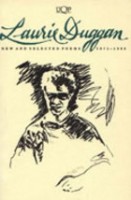
Laurie Duggan’s Old New and Selected

Laurie Duggan, New and selected poems, 1971-1993 (UQP 1996)

1ld

One result of reading poetry as it turns up in the secondhand bookshops is that I meet things out of sequence. As a retrospective of Laurie Duggan’s work, this book was superseded by 2005’s Compared to What: Selected Poems 1971–2003, and Duggan has published a number of books since then, not to mention his mainly photographic blog, Graveney Marsh. Still, this is the book I’ve got. It’s a fabulously mixed bag.

Laurie Duggan strikes me as a poet’s poet: not necessarily in the sense that he writes primarily for an audience of poets (though that could also be true), but in the sense that much of his work is concerned with the poet identity. You know how there are gay poets, and feminist poets, and nationalist poets? Well, there are also poet poets. Other poets turn up in his poems with extraordinary frequency, in two ways.

First, there are references to their work: there are poems imitating Rimbaud, Alan Wearne, John Forbes, John Tranter, and taking satiric digs at Les Murray, Robert Gray, A D Hope – ‘the last / Augustan poet claimed alive’ – and a number of translations from poets ancient and modern. I probably miss most of the allusions, but I spotted lines from Kenneth Slessor, James McAuley, Martin Johnston, and a number of 20th century US  poets.

And then there are poets as enemies, or more frequently as members of the community he belongs to:

Anna & Ken's blue V.W. crawls up the opposite hill
off for milk___cottage pie ingredients

That’s Anna Couani and Ken Bolton. I was reminded of a moment in Ken Bolton’s essay ‘Some Memories of John Forbes’ in Homage to John Forbes (2003):

I remember driving, with Anna Couani at the wheel and Laurie in the passenger front seat. The blue Vee-dub, … the car loaded up. As we got to the Broadway end of Glebe Point Road … we spotted John’s familiar figure steaming along ahead away from us down the footpath. … Laurie leaned out the window and called Heeeeyyy, POET!

And a host of poets, mostly of the so-called ‘Generation of 68’, turn up by first name as the book progresses. The sense of a community of poets persists to the final poem ‘Ornithology’ which starts out as an elegy for poets Bob Harris, Martin Johnston and Jas Duke (misspelling the title of Martin’s ‘In Memoriam’, incidentally), becomes an extended soul-searching, and could now be read as a foreshadowing elegy for John Forbes.

I don’t want to give the impression that these are coterie poems or an exercise in navel-gazing. In general, there’s a seductive, self-deprecatory wit and, especially in the continuing Blue Hills sequence (recently gathered into a single book by Puncher & Wattman) and The Ash Range from the mid 1980s, a deep engagement with place.

In a 2010 interview with Fiona Scotney published in The Long Paddock, the online component of Southerly 71/3, Duggan said this about his poetic approach:

I like the idea of plonking something here and something there next to it and the result is something else.

‘Plonking’ is a way of describing bricolage – a kind of verbal scrapbooking, of which Duggan is a superb practitioner. ‘Clayton West 1’, the first poem in the book, includes this:

____________________my Grandmother's cup
clinks in its saucer, table ordered with
teapot, grapefruit, marmalade
STH VIET TROOPS FLEE LAOS

It’s just a newspaper headline at the breakfast table, but the result here is something else – what that something is, the poem leaves up to the reader to decide. I could give a hundred examples.

‘Plonking’ also happens in Duggan’s translations, especially of the epigrams of Martial, of which there are 50 here. If you compare them to a literal translation, again and again you see something from ancient Rome plonked down next to something from 20th Century Australia, to delightful effect. Take Epigram VII xx,

Cum facias versus nulla non luce ducenos,
Vare, nihil recitas. non sapis, atque sapis.

literally:

Though you write two hundred verses every day, Varus, you recite nothing in public. You are unwise, and yet you are wise.

And in Duggan’s ‘translation’:

Dransfield, who wrote
__200 poems each day,
was wiser than his editor
__who printed them.

This was my introduction to Martial, and I find it hard to imagine a better one.

As a reintroduction to Laurie Duggan, the book is pretty good too. Oh, inspired by a page of anagrams of contemporary Australian poets  (to stick with Michael Dransfield: ‘Dead man chills fire’), I offer one of my own: I laud a grunge.

Ramayana for children (and westerners) in English

Upendrakishore Ray Chowdhury, Ramayana for Young Readers (translated by Swapna Dutta, The Book Mine, Hachette India 2013)

1rtl;dr: If you’re as ignorant of Indian culture as I am, this book will go a long way to filling gaps. You can buy an ebook from Hachette UK for less than $20 Australian.

The Ramayana, one of the two great epics of Hinduism, dates from well before the common era and its images and characters permeate Indian and related art. Most moderately literate westerners are at least vaguely aware of it, and have surely encountered art derived from it: monkeys battling demons in the Balinese Kecak dance; images or reliefs of Rama and Sita, possibly with a golden deer; paintings and statues of Hanuman the monkey god carrying a mountain; Javanese shadow puppets; chants of ‘Hare Rama’ in western city streets. But few of us have read even a fraction of its 24 thousand verses. This little book, just 165 small pages plus some child-friendly notes, is of course no substitute for reading the original Valmiki Ramayan, but it does tell pretty much the whole story, and enables us to put those fragments in context.

The Chheleder Ramayan, the Bengali book of which this is a translation, has its own distinctive history. Its author, Upendrakishore Ray Chowdhury (1863–1915), was a famous Bengali polymath, friend of the even more famous Rabindranath Tagore and grandfather of filmmaker Satyajit Ray. He had a personal mission to make literary works available for young people, and retold not only the Ramayana but also the other great epic, the Mahabharata. He’s not the only one to have retold these works. Indeed, the translator Swapna Dutta lists several Ramayanas that she has read. But his retelling holds a special place as a project to make the story available to early 20th century Bengali-reading children. This translation makes his Ramayana available in English for the first time.

Like all epics, it contains an awful lot of fighting, so much so that at times it reads like the script for a computer game. In the great climactic battle between the monkey army and the demons, you can almost see the game move up a level, as the lower ranking warriors are all killed or worn out and the next rank come to the fore with increasingly powerful weapons, until at the end it is the two mighty figures of Rama and Ravana facing off with nuclear-level arsenals. I have no idea how this plays out in the original, or how gripping it would be for a young western reader with no prior knowledge of the characters or the different supernatural beings, but even though I was never in doubt who would prevail, I stayed engaged.

This Rama is not a god, but an extraordinary man. His great prowess as a warrior is overshadowed by his superhuman sweetness. The story is set in motion when one of his father’s wives, incited to jealousy by an Iago-like maid, tricks King Dashratha into denying Rama his birthright as heir to the throne and sending him into exile. While Rama’s mother, the people of the kingdom, and Rama’s brothers, including the brother who is to be king instead of him, urge him to resist this manifestly unjust treatment, he refuses and accepts his father’s decrees with extraordinary persistence. He is a model of kindness, forgiveness, trusting openness.

The story stands by itself, but it’s all the richer for the many echoes (or are they foreshadowings?) of episodes from other great tales like The Iliad, tales of Greek, Roman and Norse gods, or the biblical the story of David.

My copy came free from Hachette India, and Swapna Dutta is a friend of mine from my days as editor of a children’s magazine. Swapna and her publisher have given me a great gift. There’s a preview on Google Books, and you can buy an ebook or a hard copy from Hachette UK.

2013 in review (lazily)

Many good things happened in my life this year. Possibly the biggest was that Ngurrumbang, the short film whose screenplay I co-wrote with my elder son, was screened at three festivals in Australia and one in Europe, with Flickerfest still to come. But here are three relatively lazy looks at the year that’s just finishing.

One: The first sentence (or sometimes the first two sentences) of the first blog post for each month:

January: Whatever the ghost of Rembrandt might think about the state of Dutch art in the early 21st century the arrival of Florentijn Hofman’s magnum opus in Darling Harbour today was a hit, even after the seeming endless and mostly lame concert and tumbling act that preceded it.

February: I heard Paul Ham speak about this book [Hiroshima Nagasaki] at Gleebooks early last year.

March: Geoff Lemon, co-editor, was surely tempting fate and the critics when, as soon as the 32nd issue of Going Down Swinging was complete, he nicknamed the impending Nº 33 the Jesus Issue.

April: I recently heard a distinguished novelist claim that she grew up believing New South Wales was mostly settled peacefully and that damage to the original inhabitants was largely unintended, caused by infectious diseases and the like.

May: The launch of this book [Pam Brown’s Home by Dark] last weekend was a convivial affair in an Erskineville pub.

June: Sydney has Vivid. Wellington has Lux.

July: I was extremely lucky in the timing of my university studies. I started at Sydney Uni in 1967 when, because of an overhaul of the New South Wales school system, only a very small cohort had graduated from high school the year before.

August: After Karl Ove Knausgaard’s mountains of mundane detail, we wanted our next book to be one that spins a great yarn.

September: It’s about two and a half years since we moved home. About a year ago, the grass tree (Xanthorrhoea) that had stood outside our kitchen window in the old house was ailing in its new location – most of its fronds were brown or browning.

October: This book [Contemporary Asian Australian Poets edited by Adam Aitken, Kim Cheng Boey & Michelle Cahill] seems to be part of a current efflorescence of attention to Asian Australian writing, and of Australian attention to Asian writing.

November: It’s November, and once again, while all over the world people with stamina take on NaNoWriMo, I’m setting myself the modest goal of 14 sonnets in the month – LoSoRhyMo (Local Sonnet Rhyming Month).

December: As Vagabond Press’s beautifully crafted Rare Objects series of chapbooks approaches its hundredth and final title, Jennifer Maiden makes her debut at Nº 95.

Two: Top Ten Movies (in no particular order)

Me The Art Student
Philomena (Stephen Frears) 1p
In Bob We Trust (Lynn-Maree Milburn)
130_ibwt
Blue Jasmine (Woody Allen)
140_bj
Stories We Tell (Sarah Polley)
140_swt
The Rocket (Kim Mordaunt)
1r
A Gun in Each Hand (Cesc Gay)
1geh
Twenty Feet from Stardom (Morgan Neville)
140_20f
The Past (Asghar Farhadi)
136_past
What Maisie Knew (Scott McGehee and David Siegel)140_wmk
The Attack (Ziad Doueiri)
140_a
No (Pablo Larrain)
140_no
Barbara (Christian Petzold)1barbara A Late Quartet (Yaron Zilberman)
140_p

Three: Notes on the year’s reading

Rather than single out some books as the best, let’s see how I went in reading diversely.

I’ve listed 63 books in my ‘Reading and Watching’ column. I didn’t finish at least five of them and quite a few were journals, not books at all. It looks as if I read 53 books as such.

  • 31 were by men, 22 by women
  • 6 were translations – two from Norwegian, one each from Bengali, Russian, German and Catalan
  • 32 were Australian
  • 24 were poetry books, including substantial anthologies as well as tiny chapbooks
  • 7 were Book Group books
  • not necessarily the best, but 3 books that enriched my sense of what Australia is were Heather Goodall’s Invasion to Embassy, Noel Beddoe’s The Yalda Crossing and Contemporary Asian Australian Poets, the anthology edited by Adam Aitken, Kim Cheng Boey & Michelle Cahill
  • the Art Student’s pick from her year’s reading were Michael Chabon’s Telegraph Avenue, Eleanor Caton’s The Luminaries and her crime fiction discovery, Martin Walker’s Bruno xx series.

That’s it. Happy New Year, all!

The Book Group and Book One of Karl Ove Knausgaard’s Struggle

Karl Ove Knausgaard, A Death in the Family (My Struggle: 1) (2009, translation by Don Bartlett 2012, Vintage 2013)

0099555166When we googled “My Struggle” at the Book Group last month, the top result was Hitler’s Mein Kampf. We were mildly amused by what we took to be a google oddity. But the Norwegian title of Karl Ove Knausgaard’s six-volume novel is Min Kamp – a similarity that could hardly be accidental. At the Sydney Writers’ Festival, the man himself told us that the sixth and final volume is a 400 page essay about Adolf Hitler. One has to wonder: if A Death in the Family is point A, how does he get from point A to point Way Off the Chart?

But since only two of the books are available in English so far, that’s a question for later.

Before the meeting: I finished reading A Death in the Family a couple of weeks ago, just after hearing Karl Ove speak at the SWF. I would have moved straight on to the second volume, A Man in Love, if I hadn’t had other more pressing demands on my imaginative faculties. The appeal, for me, is to do with shoe leather.

In the movie business shoe leather is the term for precious screen time wasted on actors walking from place to place. Knausgaard has elevated its written equivalent to a high art. It seems no one ever just gets in a car and drives somewhere: they always turn on the indicator, check the rear-vision mirror and pull out into the traffic, then follow a series of carefully named streets until they arrive at their destination. When a character cleans a book case, it goes like this:

I sprayed the glass door of the bookcase, crumpled up the newspaper and rubbed it over the runny liquid a few times until the glass was dry and shiny. Looked around for more to do while I had the spray in my hand, but saw nothing apart from the windows, which I had determined to save until later. Instead, I went on with the bookcase, tidied everything, starting with its contents.

That man be unremarkable, but so much of the book is taken up with similar attention to detail that how a reader responds to it will have a huge influence on their response to the book as a whole. Early on, there’s a passage about growing up that helps explain what’s happening, as I understand it:

As your perspective of the world increases not only is the pain it inflicts on you less but also its meaning. Understanding the world requires you to keep a certain distance from it. Things that are too small to see with the naked eye, such as molecules and atoms, we magnify. Things that are too large, such as cloud formations, river deltas, constellations, we reduce. At length we bring it within the scope of our senses and we stabilise it with fixer. When it has been fixed we call it knowledge. Throughout our childhood and teenage years we strive to attain the correct distance from objects and phenomena. We read, we learn, we experience, we make adjustments. Then one day we reach the point where all the necessary distances have been set, all the necessary systems have been put in place. That is when time begins to pick up speed. It no longer meets any obstacles, everything is set, time races through our lives, the days pass by in a flash and before we know what is happening we are forty, fifty, sixty.

I read the narrative’s wealth of undifferentiated detail as an attempt to reverse that process: to give priority to specific observations and experiences over any abstraction, to go for immediately apprehended ‘meaning’ over calm, generalisable ‘knowledge’, to avoid our habitual exclusion of some things from consideration. As well as the tiny acts, the brand names, the hyper-specifics, we are given the narrator’s play of mind, apparently unfiltered – memories and meditations that are jogged by the brand names on cleaning products, say, his adolescent worries about the shape of his penis when erect, or  the strange feeling he had as a boy about the gravel on the floor of the family garage. And, because nothing is being left out, he tells us things that are just not talked about: how he shakes his little girl when she irritates him, the extraordinarily squalid circumstances of his father’s death, his grandmother’s incontinence. These last things don’t feel deliberately shocking – more like the inevitable result of a  decision made at the beginning to put everything in.

Karl Ove has said that the overwhelming emotion he had while writing the novel was shame. He couldn’t believe anyone would read it, and now he is embarrassed to realise that roughly half a million people know all about his failures as a parent and his sexual inadequacies (those are yet to come, perhaps in the second book).

After the meeting:  This book provoked as much sustained conversation as any we’ve discussed in the group. One man who spent his childhood in Britain was most deeply struck by the way the weather was evoked: the grimness of the winter and the way spring came as a great relief. This struck a chord with others who had lived in northern Europe for any length of time. Another man, following his daughter’s lead, had been watching a lot of Simon Amstell‘s recent melancholy stand-up and found a striking resonance with this book. Another man was struck by the book’s failure to make him empathise with the narrator – at one stage he thought it might all be total fiction, that Knausgaard the author might be no more Karl Ove the character than Mark Haddon is Christopher in The Curious Incident of the Dog in the Night-time – and in that case it’s a brilliant creation. I don’t know that anyone liked it as much as I did.

As always, the conversation ranged widely, from the sexist bile being showered on Julia Gillard to details of our lives, all to the tune of excellent pasta, grilled zucchini and fennel and tomato salad.