Monthly Archives: May 2025

Sydney Writers’ Festival 2025: My day three, part two

My Saturday morning was topped off with a session at noon, then one in the late afternoon.

12 pm: The Wood and the Trees (I’ll add a link to the podcast when/if it is released.)

This was a chat among three non-fiction writers who are passionate about the environment, and especially trees: Sophie Cunningham (This Devastating FeverCity of Trees), Inga Simpson (Where the Trees Were and Understory) and Ashley Hay (Gum). Aashley Hay was there as facilitator and said very little about her own work, though Inga Simpson at one stage acnowledged her as an important influence on her own writing.

The conversation ranged widely over the science and poetry of trees, trees as intimate companions and as culturally significant beings, trees under threat from climate change and capitalist rapacity. Forest bathing was mentioned, but not explained.

Ashley Hay kicked the session off by asking each of the others for her first memory of trees. Their answers were terrific, but I confess that the main effect of the question was to send me ricocheting off to memories of my own: there are at least a dozen individual trees that were important to me as a child, ranging from the solitary pawpaw tree that grew right next to our verandah to the guava tree in the far cow paddock that I felt was my own personal discovery. I did pay attention to what the writers were saying, but what I took from the session was this powerful blast of nostalgia.

There is currently a hunger for information and thinking about trees, we were told, and for trees themselves, perhaps because the climate crisis is threatening them. A list of recent books emerged. I guess I share that hunger as I’ve read at least some of the books. Honourable mention went to Peter Wohlleben’s The Hidden Life of Trees (link to my blog post), Suzanne Zimard’s Finding the Mother Tree (on my TBR shelf), and Richard Powers’ The Overstory (my blog post again). And there’s Sophie Cunningham’s instagram account Sophie’s Tree of the Day, which I would definitely be following if I used Instagram. And the same goes for US poet Ada Limón’s ‘You Are Here‘ project.

The Nutmeg’s Curse by the superb writer Amitav Ghosh was quoted. Leonard Woolf was a tree enthusiast, and one of Virginia’s last diary entries was about his trees. We were told about the miraculous survivor trees of Hiroshima and Nagasaki.

The session ended with someone – I think it was Ashley Hay – reading us the Adrienne Rich poem ‘What Kind of Times are These?’ You can read the whole poem at this link. Here’s the last stanza, rich with implication about why this was an important session to have at a writers’ festival in 2025:

And I won't tell you where it is, so why do I tell you
anything? Because you still listen, because in times like these
to have you listen at all, it's necessary
to talk about trees.

I was reluctant to go out again after a couple of hours in the comfort of home. But duty called, and I dragged myself up the hill to attend possibly the only solo poetry reading of the festival, the only African heritage person to top a bill. It turned out to be THE BEST EVENT OF THE FESTIVAL:

4.30 pm Lemn Sissay: Let the Light Pour In

After a disembodied voice acknowledged that we were on Gadigal land, Lemn Sissay burst onto the stage in a mustard yellow suit to a huge burst of applause – evidently the room was filled with fans, some of whom may have attended workshops he had led earlier. He made a physically huge show of lapping up the applause, and his energy didn’t sag for the whole hour.

What to say about what followed? He began with a comment that any event is open to a number of interpretations – and told us of a moment when another festival guest had assumed he was a taxi driver. Now you might take some meaning out of that, he said (Sissay is Black), but maybe he was just waiting for a taxi. Then, moving on, having raised and disowned the racism interpretation, he muttered cheerfully, ‘I hate him anyway.’

The first poem he performed is a long narrative, ‘Mourning Breaks’, which was accompanied by projections of dramatic stylised drawings. Disarmingly, he stopped after a couple of stanzas – ‘I’m not happy with doing it like that’ – and started over. It’s a gruelling poem in which a man hangs from a branch on the face of a cliff, refusing to let go. Sissay has uploaded a performance, without the images, at this link – if you watch it, stay to the end because it’s got a killer last line.

As we were recovering, he did some fabulous comedy about poetry readings: If you came here with a friend, and were thinking, ‘How much more of this do I have to sit through?’, if you were thinking, ‘I know a bit about poetry readings, and he should have started with something light to warm us up,’ if you came with a friend and were thinking, ‘This relationship is doomed,’ …. all I can say is, ‘I’m sorry.’

The rest of the session focused on his most recent book, Let the Light Pour In (Canongate Books 2023). He has written about trauma, he told us, including a play adaptation of Benjamin Zephaniah’s novel Refugee Boy, and work about his own difficult childhood growing up in care. But this is not a book about trauma. For 13 years, he wrote a poem every morning – they had to have four lines, and the second and fourth had to rhyme. Many of them were crap. This book contains the best of them, and he read us some wonderful ones, interspersed with chat that was a brilliant illustration of the line from Terry Pratchett quoted in an earlier session: ‘The opposite of funny isn’t serious, the opposite of funny is not-funny.’ Lemn Sissay was very funny, and also very serious.

He showed us a photo of one of his short poems taking up the whole of a man’s arm. He showed us the website of a marriage celebrant who featured one of his poems (‘Invisible kisses’, a kind of response to Kipling’s ‘If’). He asked if anyone in the audience had used that poem at their wedding. One person had. He then said he was suing all those people. (In response to a question at the end of the reading, he reassured us that of course he wasn’t suing anyone, and spoke interestingly about the way the internet and AI are changing the nature of copyright and intellectual property.)

Some poems he tossed off. Some, especially one that went right over our heads, he carefully explained (it was a joke poem that hinged on spelling of ‘yacht’). Some he lingered over, performed a number of times to allow them to settle in. One of those, he said, he wrote for young mothers who gave their babies up for adoption (not, he said, ‘abandoned’ but heroically gave the babies a chance of a better life):

Remember you were loved 
I felt your spirit grow
I held on for the love of you
And then for love let go

Then, he told us, a friend of his asked him to read this poem at her wife’s funeral – the poem took on a whole other meaning, still profoundly moving. ‘All poetry,’ he said more than once, ‘is an emotional witness statement.’ He also said, ‘There is no one way to do a poetry reading.’ He could have added, ‘There’s no one way to be a survivor of care, a University Chancellor, a literary prize judge, an OBE.’


The Sydney Writers’ Festival is happening on Gadigal land. I have written this blog post on Gadigal and Wangal land. I acknowledge their Elders past present and emerging. It’s still raining.
Sydney Writers’ Festival 2024: My day three, part one

Saturday 24 May, the weather relented a little. The Emerging Artist and I usually do the Sydney Morning Herald quiz in bed in the morning. Today we went to Carriageworks to do it as a communal affair.


10 am: The Good Weekend quiz

Quizmaster Brian Yatman was interviewed by Benjamin Law about how he goes about creating a quiz. The only tidbit I remember is that any question involving Dolly Parton comes from Yatman’s wife. Then we got down to it, a special literary quiz written especially for this audience, with prizes.

The EA and I resisted instructions to form a team with up to three others, and scored 18 out of 25, a decent score. But the two top scoring teams were at 23 or so – we left during the tie-breaker because we didn’t want to add to a ragged start of our next session. If it had been a more intimate affair I might have queried our score. In response to a question about what four books had in common – the only one I remember is Jane Austen’s Persuasion – we said that each of them was the last one written by its author. The ‘correct’ answer was that they were all published posthumously. The EA insists that our answer was also correct, and I’d be prepared to argue that case. So maybe we scored 19.

But without pause to draw breath:


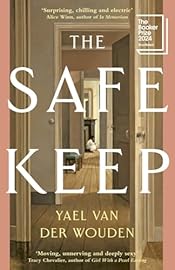
11 am: Yael van der Wouden: The Safekeep

This is another book I’ve read and blogged about (link here). Yael van der Wouden was in conversation with Claire Nichols, presenter of The Book Show on the ABC.

The first thing I have to report is that, if Claire Nichols is to be relied on, the pronunciation of the author’s family name is very close to Fun de Vow-dun. The second thing is that van der Wouden is as much a debut novelist as last night’s panellists. She’s experiencing the first of everything: she’s never been this far from home, she doesn’t know anyone here, she hasn’t talked about herself to rooms full of people before. She’s relieved that she didn’t win the Booker because that would have meant far too much time away from her loved ones.

Apart from that the conversation, or at least my scribbled notes from it, covered four main topics.

First, language. It’s an obvious subject to raise in relation to a book written in English by a Dutch writer. It turns out that English is van der Wouden’s first language. Her mother spoke Hebrew, her father spoke Dutch, and they used English to communicate with each other. She was born in Israel and moved to the Netherlands when she was ten years old. As a result she is ‘proficient in a chaos of three languages’. English is for writing, Dutch is for doing tax returns, etc.

Second, the narrative about World War Two in the Netherlands. In the mainstream version, the Resistance looms large. Only resistance fighters were celebrated on Remembrance Day – it wasn’t until the 1960s that Jews, Roma and other groups were included. The narrative has been changing thanks to the work of many scholars. It’s now generally recognised that the resistance to the Nazis wasn’t as significant as in, say, France, and that seventy-five percent of the Netherlands’ Jews were ‘despatched’, very few returned after the war, and of those many didn’t stay. The novel sits squarely among attempts to retrieve the real story.

Third, sex. In my blog post about the book, I said, ‘At times I felt like averting my eyes, as if I was intruding on intensely intimate moments.’ van der Wouden would have been pleased to read that, as she said that in writing the now famous sex scenes, mainly in Chapter 10, she wanted to make the reader aware that they were a voyeur. When Claire Nichols asked how she did that, she said some interesting things. First, erotic writing only works as a continuation of what has gone before it: in this case the long build up of repressed desire in her main character, Isabelle, at first experienced by her as disgust. The emotional content matters. In writing the sex scenes, she swings between the haptic (things to do with touch), something more abstract, something emotional, then back to the haptic.

Asked about the difference between good and bad sex scenes, she said it’s all about intention. Putting on her hat as creative writing lecturer, she told us that unless the aim is to be funny, the writer needs to commit fully, not lean into comedy or grossness. Surprisingly, she went on to say that it doesn’t work to borrow from your own sexual experience. I think her point was that if you do that you skip the work that needs to happen to take the reader with you. As I don’t have any immediate plans to write erotic scenes, I may not have paid close enough attention to these instructions.

The conversation ended with some reflections about being shortlisted for the Booker Prize, incuding a lovely anecdote about meeting one of her literary heroes at the Booker ceremony and not recognising her. The conversation went like this: ‘Good luck.’ ‘Thank you.’ ‘I’m Sarah.’ ‘Nice to meet you.’ ‘Waters.’ Yael cries.


I went to two more sessions on Saturday. I’ll write about them in my next post.


The Sydney Writers’ Festival is happening on Gadigal land. I have written this blog post on Gadigal and Wangal land, 45 minutes walk away, where the memory of ancient wetlands is currently very strong and the dark is coming earlier every night. I acknowledge their Elders past present and emerging, and welcome any First Nations readers of this blog.

Sydney Writers’ Festival 2025: My day two, part two

By the end of the festival I was suffering from information overload. I plan to blog about every session, but it may take a little longer than I’d like. I’m writing this on Tuesday – about last Friday.


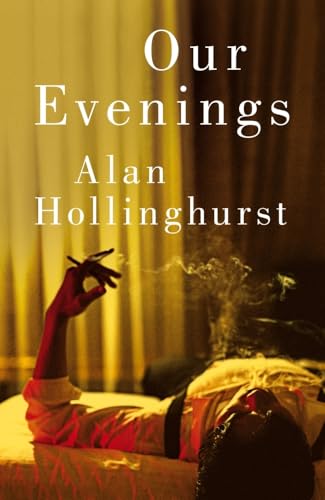
2 pm: Alan Hollinghurst: Our Evenings

Hollinghurst appeared on stage, the very picture of an urbane British novelist, in discussion with British journalist Georgina Godwin. (Georgina’s brother Peter is also a guest at the Festival – I didn’t book for any of his sessions but was enthralled by his conversation with Sarah Kanowski on ABC Radio, which – serendipitously – I listened to while walking home from the festival.)

The conversation focused on Hollinghurst’s novel Our Evenings, which I’ve read and blogged about (at this link). The conversation flowed and Hollinghurst had a lot of interesting things to say. I’ll just mention a couple of them.

GG’s opening question was about first-person narration. After talking about its advantages and limitations as he had found them in his first novels, Hollinghurst said that though he will never write a memoir, he realised that he wanted this book to read like one. He won’t write an actual memoir because he doesn’t really know who he is – and when the audience laughed at that he thanked us for our kindness but said it was true. (I just reread my blog post about Our Evenings and see that our book group felt that one of the main things about its protagonist David Win is that he doesn’t really know who he is. It looks as if we were onto something.)

Hollinghurst wanted a character who was like him but with at least one undisguisable difference. His main character / narrator, David Win, is mixed race Burmese and British. Hollinghurst wouldn’t have dreamt of giving David, say, Caribbean parents, which would have entailed a massive feat of the imagination. As it is, David (or Dave, as I’m pretty sure Hollinghurst called him throughout the conversation) never knew his Burmese father – he is brought up in a completely white environment with just mementoes – a photograph, some items of clothing. He never visits Burma/Myanmar, and knows no more about it than a white English novelist who does some online research. But the difference is real, and perhaps just as much as class and sexuality it’s a driver of the plot.

The other thing I want to mention came up in response to a question. There were no questions from the floor, but Georgina Godwin harvested them from an online platform. Someone asked what it was like to have progressed from being a queer novelist to being a British novelist. Hollinghurst said that probably happened with the Booker Prize for The Line of Beauty. It’s not that he stopped writing on queer themes – there’s plenty of same-sex desire and deed in Our Evenings – but he never wanted to write for a niche audience. He wanted to be part of the general conversation. This interested my partly because of how it chimed with what First Nations poet Jazz Money had said in an earlier session: that as an Indigenous queer woman it was only after her first book was well received that she realised she had the gift of responsibility – in effect, the responsibility to be part of a general conversation.

Oh, he read to us, and it was great to be reminded of how beautifully he puts words and sentences together.


7 pm: Raja Shehadeh: Chronicling Palestine

While we were waiting for this session to begin, with Australian Abbas El-Zein (whose Leave to Remain I blogged about a while back, at this link) sat in darkness on the stage. Curious about the two athletic looking young men sitting next to me, I asked what had attracted them to the session. ‘That’s our dad up there,’ one of them said. ‘And we love Raja Shehadeh,’ the other added, and recommended especially his book, We Could Have Been Friends, My Father and I.

Then the giant screen came alive and Raja Shehadeh was beamed in from his home in Ramallah in the West Bank. He is a lawyer and the founder of the Palestinian human rights organisation Al-Haq. He’s also a prolific writer. In this conversation, Abbas el-Zein asked him about three recent books:

  • We Could Have Been Friends, My Father and I (2023). After his lawyer activist father was murdered, his mother wanted him to deal with the boxes of papers he left behind; when he eventually looked in the boxes he learned a lot. He said, ‘I did what I never did in his lifetime. I came to terms with his suffering.’
  • What Does Israel Fear from Palestine? (2024) This began as a lecture on the Naqba delivered in Japan
  • Forgotten: Searching for Palestine’s Hidden Places and Lost Memorials, due for publication later this year, written with his wife Penny Johnson. Its seed was when they came across a plaque in the west Bank commemorating the death of a group of Egyptian soldiers in the 1967 war. Who knew Egyptian soldiers had been there? he wondered. What other forgotten pieces of the Israel-Palestine story were told in such neglected monuments?

His writing, he said, has been an effort to show what really happened in the past as opposed to the romantic versions accepted by younger generations. Yet, as the settlements are eating up land on the West Bank, there is urgency in the present that he also must address.

The central question in his work is, How can these two nations live together after this? What he means by ‘this’ has grown ever more momentous. But there is no other way. What is happening now is destroying the state of Israel just as surely as it is destroying the lives of so many Palestinians in Gaza.

As at many moments during this Festival, I thought about Kathy Shand , who retired as Chairman of the Festival board just before this year’s program was announced, probably because of concerns over the way Israel-Palestine issues were being platformed. If she got to hear this session, she might have regretted her departure.


8 pm: Big Beginnings (I’ll add a link to the podcast if/when it is released.)

This was a fun session. A dour irishman, an urbane mixed-race Englishwoman and a flamboyant Melbourne man who lives in Athens, each dealing with and perhaps reeling a little from the success of a first novel.

Madeleine Gray (whose own first novel, Green Dot, made a splash last year) chaired the panel with cheerful authority, leading them down a clear path of well-constructed questions: What were the circumstances in which you wrote the novel? What was your path to publication? Where did the idea start? What role does humour play? Who were your big influences, including those you only realised after the book was finished? What’s your research process? What’s the weirdest thing that’s happened since publication?

We learned:

Dominic Amerena (I Want Everything) was earning money while he wrote the book by doing medical trials – the book is partly a revenge for those precarious times. It was a struggle to write but once he submitted it, it was a dream run. The book is an inside-publishing mystery-scandal, and began with Dominic being fascinated by the number of Australian literary hoaxes – he rattled off a list of five from Ern Malley to The Hand that Signed the Paper. What is so Australian about them, he wondered. The Whitlam era features in the novel, and in his research he discovered stories about ‘men’s rights terrorism’ of the time – which he found a way of squeezing in.

Kaliane Bradley (The Ministry of Time) had lost a job in publishing because of Covid and though she got a new one she was working from home, knew no one in the new office and felt very precarious. She submitted the manuscript under a pseudonym because she is known by agents and editors. Once it was accepted, she had to do six rewrites over a year. The seed of the book was a photograph of ‘a sexy dead guy’ – a member of a lost polar expedition of 1845. She wanted to bring him back to life, to amuse herself and her friends. In the rewrites she had to think about literary genre tropes – elements of romcom, sci-fi, spy thriller. The word mash-up came to mind. She won me when she proclaimed her love of Terry Pratchett, and quoted him: ‘The opposite of funny isn’t serious. The opposite of funny is … not funny.’

Ferdia Lennon’s (Glorious Exploits) was teaching at a university near Disneyland in London when Covid gave him time to write the book. He’d long been obsessed with Ancient Greece, and had read a line in an ancient historian saying that Athenian prisoners-of-war kept in appalling conditions in Syracuse would be given extra food if they could produce a quote from Euripides. (I’ve just read the novel, and can tell you that’s pretty much how it starts.) In his research, he tried to suss out what it would have felt like to be there: he visited the quarries where prisoners were held.

We were well entertained for an hour.


The Sydney Writers’ Festival is happening on Gadigal land. I have written this blog post on Gadigal and Wangal land, 45 minutes walk away, where the memory of ancient wetlands is currently very strong and the dark is coming earlier every night. I acknowledge their Elders past present and emerging, and welcome any First Nations readers of this blog.

Sydney Writers’ Festival 2025: My day two, part one

Friday, and there’s a pile of umbrellas just inside the main entry to the Carriageworks.


23 May, 11 am: Songstress Poetica (Link to be added when/if podcast is released)

This was a charming hour with four First Nations women from this continent and a distinguished Emirati poet and scholar. It was in part a master class in relationality as the Indigenous women found many points of warm connection – shared Irish heritage, similar experience with singing, sharing of language, appreciation of each other’s work.

In the chair was Dr Alethea Beetson, a Kabi Kabi/Gubbi Gubbi + Wiradjuri artist who has, she said, many slashes in her work résumé, but works mainly in music.

Aunty Kerry Bulloojeeno Archibald Moran, ‘matriarch and medicine woman of Silver City Aboriginal Reserve – the Mission or Mish – on Anaiwan gooten country, Armidale’, sat in the middle, in splendidly colourful clothes and white ochre face paint. In striking physical contrast next to her was Dr Afra Atiq, an Emirati spoken word poet and scholar, dressed in magisterially flowing black. On the other side were two young writers (note that from my perspective anyone under about 50 is young) – Wiradjuri poet Jazz Money (most recent book mark the dawn) and Gunai woman ‘who rarely stays in her lane’ Kirli Saunders (most recent book Eclipse).

Each of the panellists spoke about her relationship to music. None of them owned up to playing a musical instrument, or even singing well, though Auntie Kerry said she always sang in response to the music of the bush that is always here if you listen. Kirli Saunders quoted her mother , ‘Birds in the bush, Babe, birds in the bush,’ meaning that when one bird needs to pause to draw breath the others will carry the song: it’s not all about individual effort in a choir, or in life.

Speaking about her own work, Aunty Kerry said she was inspired by what she reads in books – she produced two from her tote bag, one of which was Granny Duval by Sue Pickrell. She walks in the shadows of other people, she said, and when she reads when becomes the characters, just as in the bush she becomes the kookaburra, magpie, echidna. She performed a poem based on the story in Granny Duval.

Jazz Money spoke of the tension between the impulse to speak and the need to be heard. When she wrote her first book, she had no thoughts of publication. With her second book, she felt th gift of responsibility. As a queer Aboriginal woman, it was something new to expect her voice to be heard. Before she read her poem, ‘ember‘ (you need to scroll down at the link), she said that it was iportant inwith that responsibility not to focus on struggle: ‘The horrors of colonisation are such a tiny part of our story.’ She aims to be part of legacies of joy.

Kirli Saunders took up that theme, saying that though she writes about the stormy places, it’s often in the moment when the storm has passed and the smell of petrichor is everywhere. She performed ‘In the before time’, a poem/dance from the performance piece she is currently developing.

Afra Atiq reminded us that in her work is not reclaiming anything that has been lost, but is part of a continuing tradition, to which she has responsibilities. She performed a poem from her book, Of Palm Trees and Skies. The poem, whose title as best I could scribble it down was ”Six minutes that may be erased today’, was inspired by an art installation in which a mechanical device drew images and then erased them after six minutes. It’s a breathless poem that ends (the line breaks are my guess):

We write because we must
we erase because we think we should.

After the session, these extraordinary women stayed on the stage and generously posed to have group photos taken by a number of intrepid audience members.


12.30: Q & A with Jeanette Winterson in the Patrons Lounge

Thanks to a generous friend, I was a guest at this bonus event. Jeanette Winterson stood on a tiny stage in the Patrons Lounge and answered questions for a little over half an hour. Though some questions came from the munching and sipping patrons, Radio National’s Kate Evans served as excellent stooge, asking questions that elicited a lively story about the origins of Winterson’s first book, Oranges are Not the Only Fruit, including the role played by Australian Dale Spender; reflections on the influence of the Manchester of her childhood on her prose (evidently in Manchester, people talk to strangers in the street in staccato, irreverent humour); and about the importance of reading to enable people to broaden their horizons past the confines of their one short life, and to learn how to express themselves in ways without which the main alternative would be violence

I had a break for lunch, and am now having a break from blogging. The afternoon will be another post


The Sydney Writers’ Festival is happening on Gadigal land, where on this day the ground was doing its best to soak up a lot of water. I have written this blog post on Gadigal and Wangal land. I acknowledge their Elders past present and emerging, and welcome any First Nations readers of this blog.

Sydney Writers’ Festival 2025: My day one, part two

While I went home after two sessions on Thursday and wrote my first post about the Festival, the Emerging Artist stayed on at Carriageworks for Anne Summers: 50 Years of Damned Whores and God’s Police.

We debriefed over dinner, then were back into the fray for:

22 May 8 pm: Ittay Flescher: The Holy and the Broken

Michael Visontay sat alone on the stage and interviewed a huge image of Ittay Flescher on a screen behind him.

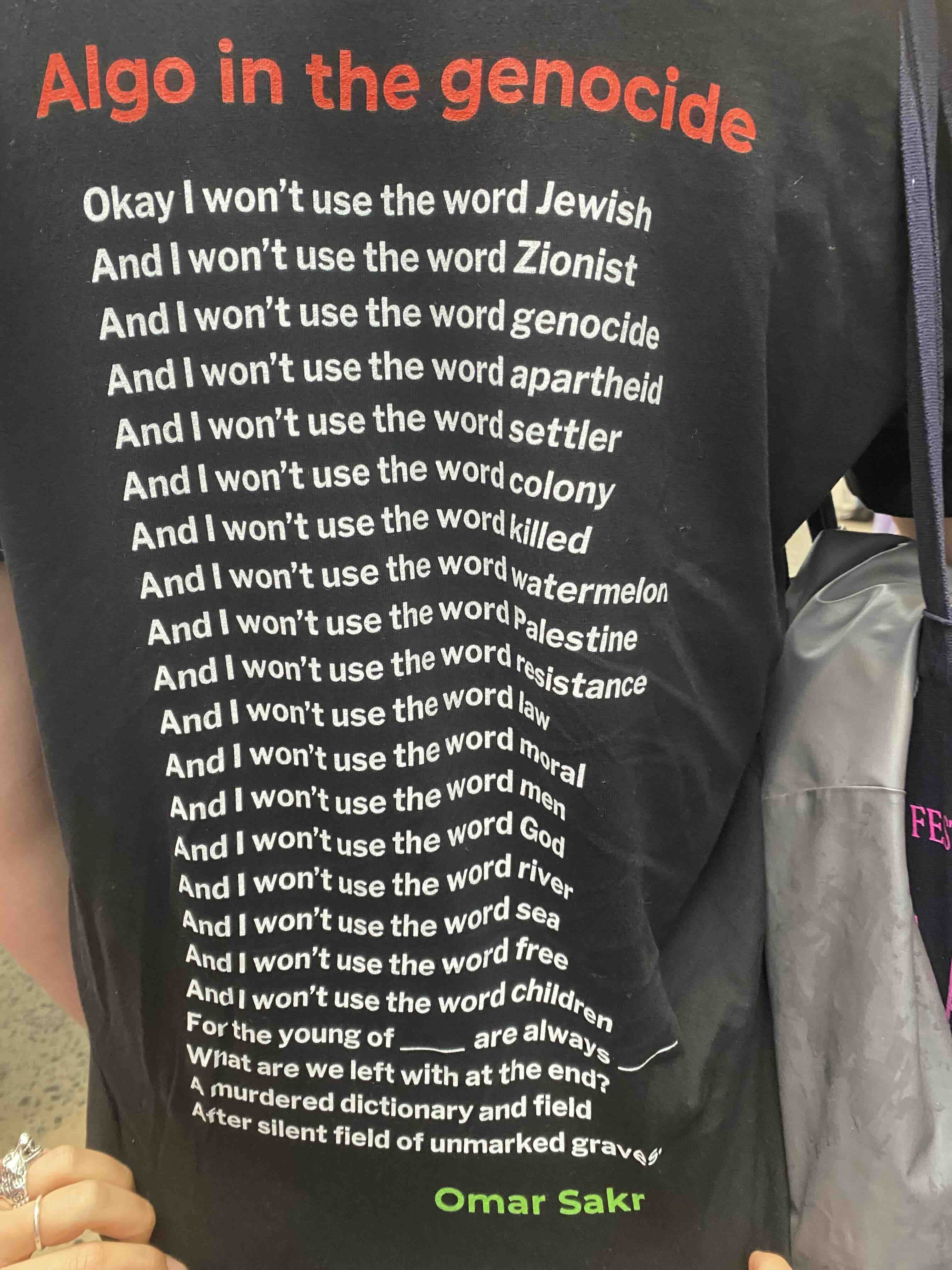
Ittay Flescher is the Education Director at Kids4Peace Jerusalem, described on the Festival website as an interfaith movement that ‘works to build trust and friendship between Israeli and Palestinian teens’. His response to Visontay’s opening question said a lot about his work. The question included the word ‘conflict’. He said that like many words, that one is itself ‘conflicted’: some hear it as implying two more or less equal sides and so denying the reality of genocide. He listed a number of terms that have radically different meanings depending on your point of view: Holocaust, naqba, Zionism, Muslim, Jew, Christian, Palestinian.

Serendipitously, today (Friday) I saw a T-shirt bearing a poem by Sakr Omar that speaks directly to his point from a Palestinian point of view, it’s one of a series of shirts produced by Readers and Writers against Genocide:

Back to Ittay Flescher. ‘I’m not a politician,’ he said. ‘I wrote the book as an educator.’ And he spent his brief hour educating us. Both Jews and Palestinians have a deep sense of having been oppressed, both with good reason. He sees it as absolutely necessary that the ancient terrors and hatreds born of those brutal histories not to be passed on to the next generation. His work is all about countering the dehumanisation of the Other, and helping people to learn to have open-hearted conversations among people from opposite sides of great divides. He asks: ‘What happened in your life to lead you to believe what you believe, to hold the positions you hold?’ Then he shares his own beliefs and the experience that underlie them. A conversation of this sort doesn’t aim to reach agreement but to recognise the humanity of each other.

He has been called pathetic, naive and delusional by a staunch Zionist journalist, and seen as unbelievably one-sided by some Palestinian activists. But he has many emails from people approaching him as a therapist: ‘I am torn. What should I do?’

If you look at the news, not just from Israel–Palestine but from many places in the world, an understandable response is to despair. In his view, despair leads to more violence. It’s necessary to have a sense of possibility, to have some vision for a resolution where both peoples can live in a secure, just peace. (He didn’t mention Rebecca Solnit, but I was reminded of her argument – I’m paraphrasing from memory – that you can never know what your smallest action in a good direction will lead to, there is never a reason not to have a go.) There’s actually an Egyptian peace proposal on the table that he thinks should be taken up.

That’s a crude condensation of what he had to say. Responding to questions, he made it clear that his work, and his organisation, are part of a peace-building community in Israel and Palestine that includes hundred of organisations and thousands of people.

I bought a copy of his book, The Holy and the Broken: A cry for peace from a land that must be shared. I expect I’ll be writing more about it in time.


The Sydney Writers’ Festival is happening on Gadigal land. I have written this blog post on Gadigal and Wangal land. I acknowledge their Elders past present and emerging. Looking ahead a little, a poet from the United Arab emirates said today (Friday) that she was enjoying the rain. This is glorious, wet country.

Sydney Writers’ Festival 2025: My day one, part one

It’s raining in Sydney, but the Writers’ Festival shines on, apostrophe intact.

This year’s theme is ‘In This Together’. The Emerging Artist and I plan to take in about 17 sessions between us, mostly in it together. Given recent attacks elsewhere on speech about the genocide in Gaza, I will be disappointed but not surprised if some of our booked sessions are cancelled, but here’s hoping. 

22 May 1.00: Beyond the Self (link to come when podcast is released)

The Festival website description of this session begins:

Anchored in our human body, our experience of being in the world extends outwards from our sense of self.

Oh well, I thought, the program descriptions don’t usually determine the conversation.

The four panellists have written very different books, and come from very different contexts. What they have in common is that they are all First Nations people. The chair was Bardi Jawi man Bebe Oliver, who first came to prominence as WA Young Australian of the Year for his work as a classical pianist and composer has had several books of poetry published. Other panellists were Bundjalung and Kullilli man Daniel Browning who has worked as a journallist and broadcaster for many years, and has recently published Close to the Subject, a collection of personal essays; Kaurareg Aboriginal and Kalkalgal, Erubamle Torres Strait Islander man Thomas Mayo, who played a huge role in the Voice referendum and whose books, especially Always Was, Always Will Be: The Campaign for Justice and Recognition Continues, reflect his activism; and Yuwaalaraay woman Nardi Simpson, originally half of the singing duo Stiff Gins, and now author of Song of the Crocodile and The Belburd.

Nardi Simpson made a valiant attempt to tie the conversation back to the idea of bodies – go out from my body to yours when I sing for you, and when I write a book, these funny little squiggles on an oblong thing can make other people tingle. But mostly the yarning (as Bebe called it a number of times) ranged freely. All four panellists had interesting things to say, and they connected with each other, but I’m at a loss to summarise.

One theme that emerged for me was to do with aurality. Paradoxically, Daniel Browning said that for years he had sat in climate-controlled studios in the ABC talking to a microphone with little or no sense (and I may have added the ‘little or’ there) that there was anyone listening, whereas when he wrote an essay, he had an immediate sense that he was talking to someone. Spoken words are transient; written-down words have power. Nardi Simpson reported more or less the opposite: when you sing to an audience you’re right there with each other, but who knows what happens with a book? Thomas Mayo, likewise, said that he has come to love speaking to people (he did a lot of that, brilliantly, during the Voice Referendum campaign) – looking them in the eye, and if there’s a disagreement you can see it there. Nardi Simpson made explicit the underlying notion, that First Nations people come from an oral culture, and she and Daniel Browning told moving stories about audio versions of their books reaching people who wouldn’t otherwise have read them.

What all panellists agreed was that we are living in a time in this country when First Nations stories need to be told, and there is an audience for them. ‘If I/we don’t tell the stories, someone will say it didn’t happen.’

There was a brief conversation about the experience about being misunderstood, including very different feelings about the editing process. Nardi Simpson spoke directly to one of my current concerns when she said (and this is not an exact quote): ‘The book is there. Yuwaalaraay will find this in it.Aboriginal people will find this. Allies will find this. People who nothing about me or us will find this.’

2.00: Bringing the Past to Life (link to come when podcast is released)

The incomparable Kate Evans, co-presenter of The Bookshelf on ABC Radio National, did a lovely job managing this conversation about historical fiction with Emily Maguire whose latest book, on my To Be Read Soon list, is the novel Rapture, and Jock Serong, whose urban fairytale Cherrywood sounds terrific – I have seen a narration of its plot hold a seven-year-old spellbound.

Somehow a novel based on the 9th century CE legend of Pope Joan (or is it only a legend?) and one about a hotel in Fitzroy that lifts its skirts and wanders around the city made an excellent pairing. They both, it turns out, deal with institutions that have forgotten what they are here for. The Catholic Church in Maguire’s book is so concerned with its rituals and procedures that it has lost sight of its central mission. The corporate law firm in Cherrywood is hell bent on tracking down the wandering pub, but only one old man whom everyone ignores remembers why.

It was fun.


The Festival is happening on Gadigal land, I have written this on Gadigal and Wangal land. I acknowledge their Elders past present and emerging. As Bebe Oliver said in acknowledging country this afternoon, Always was, always will be Blak land.

Dombóvár, the anthology

Hunter Writers’Centre, Dombóvár: Newcastle Poetry Prize Anthology 2024 (Hunter Writers’ Centre 2024)

On its web page, the Newcastle Poetry Prize describes itself as the most prestigious poetry competition in Australia. Few people would disagree.

The Hunter Writers’ Centre has coordinated the prize since 2002, and it publishes an anthology every year that includes the prize winning poem, the runners up, a number of subsidiary prize winners and a selection of other submissions.

As the 2024 judges Caitlin Maling and Peter Boyle, each with their own impressive list of prizes, point out, a distinctive feature of the prize is that poems up to 200 lines are accepted. And most of the poems in this anthology are of substantial length – the shortest is 27 lines. The anthology is a rare opportunity to read a selection of longer poems from a wide range of Australian poets.

As my regular readers know, I read quite a lot of poetry, if not enough to call myself a critic. I was happy to read poems here by people whose work I respond to:

  • Mark Tredinnick, whose ‘A Godwit Sonnet Cycle’ won the Hunter Writers’ Centre Member Award
  • B. R. Dionysius, whose three-line stanzas in ‘Fishbone Ferns’ give us scenes from life on the Darling Downs – ‘it can be quite WW1 out on the downs, bodies / hung up on barbed wire, left to rot as a sign to / others – don’t try it, don’t cross into no man’s.’
  • Brendan Ryan, with another of his wonderful cow poems, ‘The snaking accuracy of cow trails’
  • Kathryn Lomer, with ‘Hyaenia song’, a narrative poem set in Ethiopia.

And there’s the immediate reason that I bought a copy, Christopher (Kit) Kelen’s ‘Dombóvár’, which won the prize and gave its name to the anthology. I don’t envy the judges their task, but they’ve chosen well with ‘Dombóvár’, which evokes the small Hungarian town that Kit Kelen’s family come from (at least that’s how I read the poem).

I can’t do better than quote the judges (a PDF of their report is available at this link, and is worth reading in full):

‘Dombóvár’ skilfully integrates thoughtful reflection on important issues, humour, inventiveness and an engaging partly colloquial tone. This evocation of small town rural Hungary carries echoes of the moral ambiguities and violence of settler societies like Australia. Throughout the poem there is the suggestion of a larger, potentially national, narrative, but the reader is left to work through the weave themselves … With great skill the poem breaks standard idioms and expected word choices to produce a clipped, very tight effect that intensifies the reader’s experience. ‘Dombóvár’ uses the form of a poem sequence to powerful effect, shaping a masterful poem that can be read on multiple levels.

this is the land of forgive ourselves
for all we've done, will do

There’s lots more in the anthology. To be true to my page 78* practice, I’ll mention ‘The Keeper of the Field’ by Mal McKimmie (pages 74–80). It’s one of several sonnet sequences in the anthology, and a quick web search informs me that it’s far from being the only one written by Mal McKimmie.

The sequence is prefaced by a quote from the Bhagavad Gita, and I’m guessing that the ideas it explores are related to Hinduism: the field is (crudely speaking) the mind, and it is populated by sheep (ideas? poems?). The sonnets circle around the notion of an empty field – mind empty of thought, perhaps. In the two sonnets on page 78, the sequence moves forward to the notion that all fields (all minds?) are connected – we are not the isolated individuals that we think we are in the West. That might sound abstract and difficult, but the poems are remarkably lucid. Here, ripped from its context, is one of the two on page 78 to give you a taste:

Did I say this field has a fence? Well, it 
doesn't anymore. It seems the fence came
down, was taken down, or disappeared
with the sheep, as if they were interdependent
(I faintly recall a lyric passing
through here, singing something along these lines).
Given the absence of a fence, where is
the distinction between this field and another?
Do I tend a disappearing border?

Leaves of grass, field to field, lean in sympathy,
mirror each other; flowers too; even
weeds copy their kin; creepers creep towards
each other; and roots, well, roots have always known:
nothing is alone, nothing under the sun.

if the poem is exploring ideas from Hinduism, it manages to remind us that the quintessential North American poet Walt Whitman was in similar territory – his poem ‘Song of Myself’ includes lines like ‘For every atom belonging to me as good belongs to you.’ And recent science about tree roots supplies the poem with a beautiful metaphor for interconnectedness.

2025 NSW [Premier’s] Literary Awards night

I almost missed the NSW Premier’s Literary Awards this year. I missed the announcement of the short lists altogether, and only realised that the awards were last night because the Sydney Writers’ Festival is about to start and I think of the NSWPLAs as the first cab off the festival rank.

Here I am making up for the omission. Sadly I’ve read only one of the books, and seen a production of only one script, none of the winners.

Last night, the awards ceremony was live streamed. As always on a Monday, I was busy being grandfather, so I tuned in late. It’s all on YouTube and you can even watch it by clicking the image below. The ceremony begins with didjeridoo and Welcome to Country by Uncle Brendan Kerin, who spoke eloquently about the meaning of the word ‘Country’ in this context. After introductory speeches from librarians and politicians, the presentation of awards by Senior Judge Bernadette Brennan and Library Chair Bob Debus begins at about 29 minutes.

Here are the shortlists in the order of announcements, with links to the judges’ comments. The winners are first in each list, in bold:

UTS Glenda Adam’s Award for New Writing ($10,000)

Dr Tracy Westerman appeared on video, speaking from Perth: ‘As someone who doesn’t consider themselves to be a real writer, as a kid from the Pilbara who had a pretty unorthodox education through distance education, being awarded for my writing feels, frankly, a little bit surreal.’ She went on to talk about mental wellbeing: it ‘should never be just for the privileged, and Jilya sheds light on the reality that it continues to be … because of a one-size-fits-all, monocultural approach to mental health.’

Multicultural NSW Award ($30,000)

Nam Le, also on video, spoke against a background of a bookshelf piled high with books. He thanked many people and dedicated the award to his father, who ‘has been an engine of multiculturalism in this country’.

Indigenous Writers’ Prize ($30,000)

Lorraine Coppin, CEO of Juluwarlu Group, also spoke on video. She and her husband have spent years documenting Yindjibarndi stories – the graphic novel format is a way of making the history accessible to young people.

Nick Enright Prize for Playwriting ($30,000)

Glenn Shea appeared in person! He is a member of the Stolen Generations. The play’s story comes from community. The question it asks is how do we plant seeds for our young people to shift and shape their decision-making about work lives and community. He shouted out La Mama theatre among many others.

Betty Roland Prize for Scriptwriting ($30,000)

Charles Williams was also in the room. He started out with a remark that must have struck a chord with many people in the movie industry: ‘I usually identify as a director more than as a writer, but I spend a lot of my life writing and not much directing.’ He quoted Charlie Kaufman: ‘A writer is someone for whom writing is harder than it is for other people,’ and noted in passing that Kaufman stole the line from Thomas Mann.

Patricia Wrightson Prize for Children’s Literature ($30,000)

Katrina Nannestad thanked all the right people, but in particular her mother, whose story is in the book.

Ethel Turner Prize for Young People’s Literature ($30,000)

Emma Lord said among other things that everything she writes is for her daughter, even though she is too young for the books. She acknowledged the courage of her publishers who accepted a book with a pandemic in it during a pandemic. Following a developing theme of the evening, she said her mother shared the award.

Translation Prize ($30,000)

Elizabeth Bryer accepted by video. She said she had decided to wind back her translation practice because she couldn’t see a way to make it viable. This award changes that, and means she can take on a project she had been thinking about – to set up a mentorship wth an emerging translator who is a person of colour or a heritage speaker.

Kenneth Slessor Prize for Poetry ($30,000)

Hasib Hourani described rock flight as intended to explore both historical and speculative acts of liberation in Palestine. ‘Throwing a rock is one kind of protest. A book is another.’

Douglas Stewart Prize for Non-fiction ($40, 000)

James Bradley revealed that winners had been instructed to speak for less than a minute. Among the many thankyous, he thanked Ashley Hay who read every draft. With a nod to W. H. Auden, he said that though it seems like books don’t make anything happen, his experience with this book has shown that this isn’t actually the case: ‘Books change minds, and by changing minds they can change the world, and at the moment that matters more than it has ever mattered before.’

Christina Stead Prize for Fiction ($40,000)

Fiona McFarlane is on the road, so Alex Craig from her publishers Allen & Unwin read a speech on her behalf.

The University of Sydney People’s Choice Award ($10,000)

The Lasting Harm, Lucia Osborne-Crowley (Allen & Unwin)

Lucia Osborne-Crowley was another video appearance. Before she made the necessary thankyous she noted the importance of writers speaking up for Palestinians who are being subjected to genocide and war crimes. She thanked the survivor community who voted for her – the book is for and about and by survivors of sexual violence and child sexual violence.

Special Award

This award went to Liminal. The award was accepted by founding editor Leah Jing McIntosh. Evidently aware than many people watching the awards or reading about them might not have herd of Liminal, she began by explaining that it is ‘a project driven by the desire to make visible the unacknowledged structures of racism that so dehumanise all of us.’ She went on, ‘We work towards new ways of thinking, of seeing, of being in the world. That is to say, we work together towards a better future. We know we cannot do it alone.’

Book of the Year ($10,000)

36 Ways of Writing a Vietnamese Poem, Nam Le (Scribner Australia). Ben Ball from Scribner Australia read a speech written by Nam Le. He expanded on his earlier dedication to his father, and spoke interestingly and powerfully about multiculturalism. I won’t try to summarise his speech here out of respect for his intellectual property. I hope it’s published somewhere. At heart it was a warning against complacency.

The twin shadows of Gaza and Trump were never far from the stage, and repudiations of all they stood for were frequent. And what a reading list has emerged from the evening, even if only of the winners.

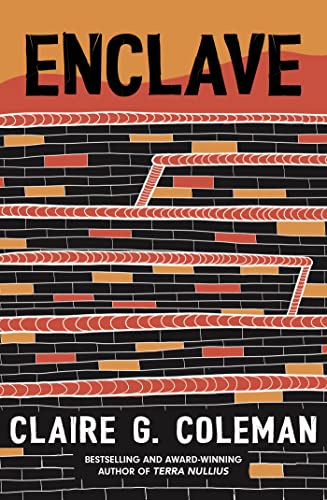
Claire G. Coleman’s Enclave

Claire G. Coleman, Enclave (Hachette Australia 2023)

This is the first book I’ve read by Noongar writer Claire G. Coleman. Her first novel, Terra Nullius, won prestigious prizes and her poetry and essays appear regularly in journals I read. (If you want to plough through my earlier posts to see what I’ve managed to say about those earlier encounters, here’s a link.) So I was happy when I got hold of a copy of Enclave, her third novel. I enjoy science fiction, so the fact that it’s a dystopian genre novel was an extra cause for joyful anticipation.

The book delivered on both fronts – filling the spot in my heart reserved for intelligent speculative fiction, and expanding my acquaintance with Claire G. Coleman’s writing. If you want to read a proper review, I recommend Magdalena Ball at Compulsive Reader (here’s a link), Maggie Nolan on The Conversation (link), Bill Holloway at The Australian Legend (link)or all three.I’ll stick to my resolve of focusing on page 78*. As often happens, this arbitrarily chosen page reveals a lot about the book, and hints at a lot more.

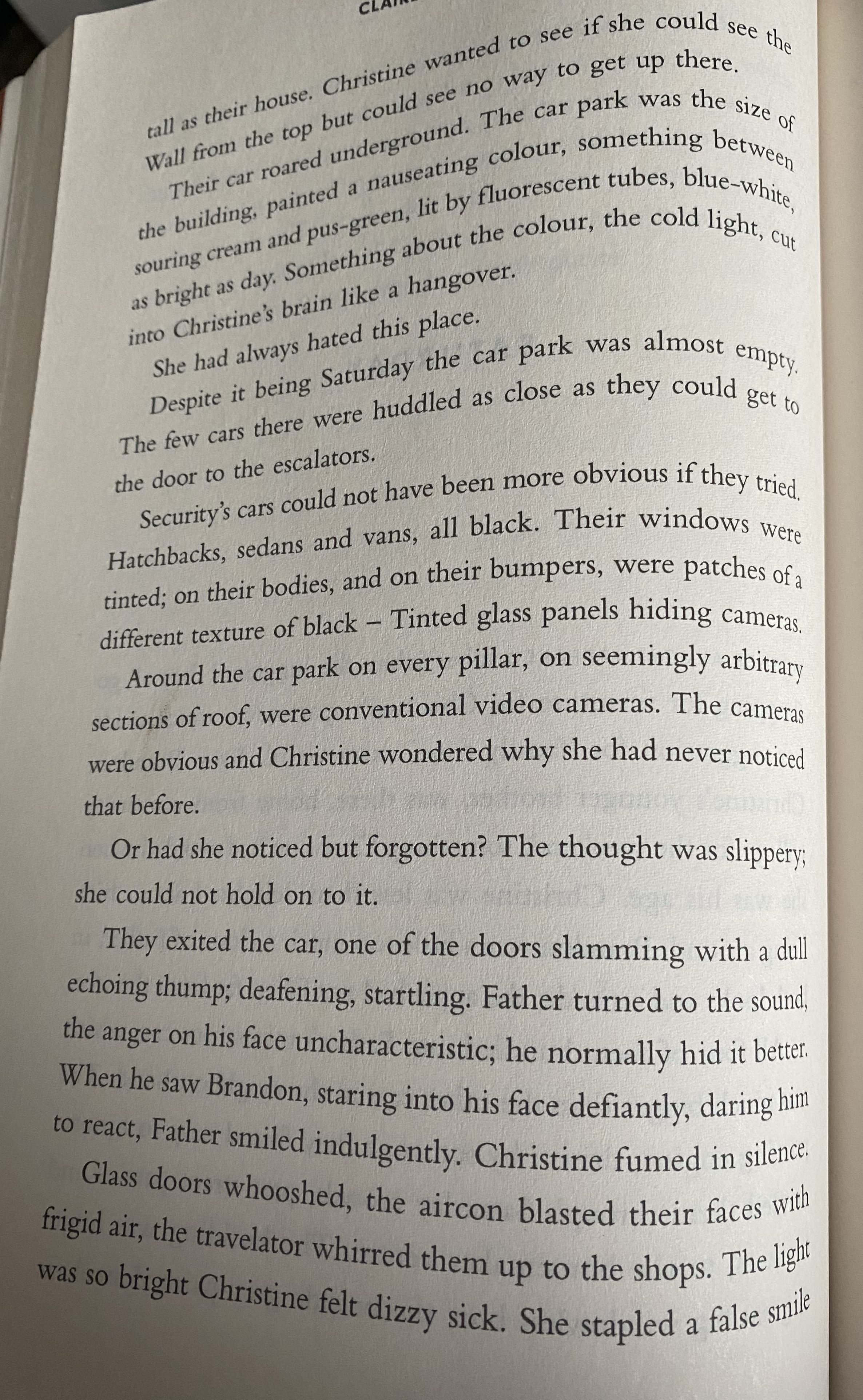
We are at about the one-quarter point of the narrative. Christine is the protagonist, a young white woman from an affluent family living in the walled city of Safetytown. Her father has bought her a new apartment as a reward for her success at university, and on this page her parents are taking her to ‘the homemaker centre’ to buy furniture, along with her younger brother, Brandon.

The building was huge. A great big windowless box, the outside grey-painted steel, as tall as their house. Christine wanted to see if she could see the Wall from the top but could see no way to get up there.
Their car roared underground. The car park was the size of the building, painted a nauseating colour, something between souring cream and pus-green, lit by fluorescent tubes, blue-white, as bright as day. Something about the colour, the cold light, cut into Christine’s brain like a hangover.
She had always hated this place.

The citizens of Safetytown are constantly being told how fortunate they are, how safe. Yet the adjectives here tell a different story: ‘windowless’, ‘grey-painted’, ‘nauseating’, souring’, ‘pus-green’. Even more significant is the ever-present Wall. It’s a powerful image, inevitably reminding us of Trump, Berlin and Israel–Palestine. Christine has always been told that beyond it is nothing but predatory violence, misery and chaos. In the otherwise sharply visual elements of this page, it is present to Christine as an object of curiosity even though it’s out of sight. She is beginning to suspect that she has been lied to: she is clear that she has always hated the homemaker centre, but a deeper discontent is brewing.

The next paragraph goes further into the reasons for her discontent:

Security’s cars could not have been more obvious if they tried. Hatchbacks, sedans and vans, all black. Their windows were tinted; on their bodies, and on their bumpers, were patches of a different texture of black – tinted glass panels hiding cameras.
Around the car park on every pillar, on seemingly arbitrary sections of roof, were conventional video cameras. The cameras were obvious and Christine wondered why she had never noticed that before.
Or had she noticed but forgotten? The thought was slippery; she could not hold on to it.

This first part of the novel is about Christine’s awakening. Here she’s noticing things she has never noticed before, in particular the ominously ubiquitous surveillance and enforcement. Not on this page, but part of the same process, she has noticed that one of the anonymous brown ‘servants’ is extraordinarily beautiful. These uniformed servants, all people of colour, are bussed in each day from beyond the wall and then out again in the evening. They ensure that the citizens don’t have to lift a finger to tend to the necessities of life. No one asks how they live on the other side, and in the early chapters they might as well be invisible, but like the women in the movie Conclave they are very present to the reader. Christine’s attraction to the woman servant is so outside the realm of what is considered possible that, like her ‘slippery’ thought about the cameras, it only fitfully enters her consciousness.

They exited the car, one of the doors slamming with a dull echoing thump; deafening, startling. Father turned to the sound, the anger on his face uncharacteristic; he normally hid it better. When he saw Brandon, staring into his face defiantly, daring him to react, Father smiled indulgently. Christine fumed in silence.

So much of what is to unfold is hinted at here. The benevolent father bestowing a brand new flat and furnishings on his daughter is suddenly enraged: not that he’s usually calm, but that he normally hides his rage. When he sees that it’s his son who has made the noise, he is pacified. It will come as no surprise, a few pages later, when the rage is unleashed against his daughter, while the son remains firmly in favour.

So Safetytown is authoritarian, sexist and – we know from earlier and will soon learn – intensely racist and homophobic. Christine is noticing at least some of it, and fuming.

The overall shape of the narrative is strongly implied on this page. Christine will incur her father’s wrath. Somehow she will find herself on the other side of the wall. Will she finally discover she has been lied to all her life? (Anyone who’s read any dystopian fiction would be astonished if the answer to that was no.) Will she escape or be exiled to the other side of the Wall? (See previous parenthesis.) Will she find a better world out there? (Likewise, you’d be pretty astonished at a no answer.) Will she find happiness with the beautiful brown servant woman, and will that woman have a name? (See previous parenthesis.) Will she play a role in bring Safetytown down? (One would certainly hope so, but that would mean she’d have to make giant strides out of her complacent self-absorption.) Perhaps most importantly for the success of the novel: are there any surprises? (No spoiler alert, but yes.) Does it get preposterous? (Yes – in many ways, but mainly in a delightful sequence that could only have been imagined by someone who lives in Naarm/Melbourne and loves it with a passion.)

Bill Holloway at The Australian Legend enjoyed this book less than Claire G. Coleman’s two previous novels, Terra Nullius (Hachette Australia 2017) and The Old Lie (Hachette Australia 2019). I take that as encouragement to go looking for them.


I wrote this blog post on land of Gadigal and Wangal of the Eora Nation. I acknowledge the Elders past and present of this country, never ceded.


It’s my current age.

Annie Ernaux’s Man’s Place at the Book Group

Annie Ernaux, A Man’s Place (La Place ©1983, translation © Tanya Leslie 1992)

Alphonse Duchesne, who ran a small cafe/grocery in Normandy with his wife, died in 1967, two months after his daughter Annie Ernaux qualified as a school teacher, marking a transition in the family’s class status. On the train journey home from the funeral, Ernaux writes:

I tried to keep my son entertained so that he would behave himself. People travelling first-class have no time for noise and restless children. I suddenly realised with astonishment, ‘Now I really am bourgeois,’ and ‘It’s too late.’ (Page 18)

Later that summer, she thought to herself, ‘One day I shall have to explain all this,’ meaning she needed to write about her father and the distance that had come between them during her adolescence: ‘Although it had something to do with class, it was different, indefinable. Like fractured love.’

This short book – just 64 pages – is a rigorous, spare and unsparing, attempt to rise to that need. In 1982, having already written three novels, Ernaux set out to write a fourth one, about her father. But, she writes:

I realise now that a novel is out of the question. In order to tell the story of a life governed by necessity, I have no right to adopt an artistic approach, or attempt to produce something ‘moving’ or ‘gripping’. I shall collate my father’s words, tastes and mannerisms, the main events of his life, all the external evidence of his existence, an existence which I too shared.

The book tells two stories: the life story of Ernaux’s father and – always in the present tense as if allowing us to look over her shoulder as she types – the self-reflexive story of the writing of the book.

The father was from a peasant background. His own father was illiterate, and he worked first as a farm hand, then as a factory worker and finally, along with his wife, ran the small grocery shop and café. He bickered with his wife, spoke a rustic version of French, never set foot in a museum, voted for reactionary politicians ‘for a lark, but without conviction’, was intensely proud of his daughter’s success in moving into the middle class but didn’t make any part of the transition with her.

Every now and then, Ernaux steps directly into the frame to say how long she has now been writing, explain that it is a slow process because she is avoiding her own emotional memories in order to focus on her father’s story. It’s not that she doesn’t draw on memory – as for example when she describes a photo of her father taken at her wedding reception, and recalls her sense of him at the moment it was taken, ‘certain that he wasn’t enjoying himself’. And through it all, told in flat unemotive language, the terrible undertow of the daughter moving away into a different world:

One day he said, ‘Books and music are all right for you. I don’t need them to live.’

This was the first of Annie Ernaux’s ‘autobiosociological’ books. It’s the fourth I’ve read, and with each one I become more grateful to the Nobel committee for drawing her to my attention. The others (with links to my blog posts) are:

After the meeting: I was a little apprehensive about this meeting, as I had picked the book. The job was sprung on me at the last meeting, it had to be a short book, and this was on my TBR list, so I named it on the spot without due consideration.

It turned out that, quite apart from the big plus of brevity, the book was generally much liked, and we had a discussion that made me glad all over again to be in the book group. At times the discussion was personal: one man honed in on the early part of the narrative when the family’s life was disrupted terribly by the bombing of Normandy in World War Two (a part of the narrative that had passed me by); a number of us drew parallels with the trajectories of our own lives – as the first generation in our families to go to university; and the conversation wandered, seemingly off-topic, to our relationships to our parents, and various ways in which the stories of different parents had been discovered and even published.

We had a wonderful difference of opinion. One man, call him K–, himself a recently retired small businessman, said that Annie Ernaux had completely failed to get that her father, as a small businessman, had made a life for himself that he was completely happy with: when Ernaux portrays him as ashamed of his lack of ‘culture’, that is complete projection. I must be just a little bit in love with Annie Ernaux because my defensive hackles went up, and I disagreed that the father was portrayed as anything other than happy with his life!

The back cover blurb of the Ftzcarraldo edition says that ‘Ernaux reveals the shame that haunted him throughout his life’. So K– isn’t alone in reading the book that way. I still disagree. But I’ve been reflecting for days, and while I still think K– was wrong, I believe he put his finger on something at the heart of the book.

There’s no doubt that Annie the character believed that she had a better life than her parents, that they were proud she had made the transition, that a gulf of mutual incomprehension developed between the generations. The father certainly feels shame in some social situations – not understanding what a school teacher means by ‘town clothes’, not being able to spell when filling out a form. It’s explicit that the people of the daughter’s world look on people like her father with scorn. But I don’t read Ernaux or her father as sharing their judgement. She lays out the detail of his world, and is pretty clear about her own ‘bourgeois’ perspective. When she mentions in passing that he votes for a reactionary politician ‘for a lark’, it’s clear that she disapproves, but her disapproval isn’t the point.

K– went hunting for passages to support his reading. His case doesn’t stand or fall by one tiny sample, but what he came up with was this, from when the 20-something Annie is visiting her parents:

As soon as I plugged in the bedside lamp, the wire blackened, sparks flew and the bulb went out. The lamp was in the shape of a ball resting on a marble base, with a brass rabbit standing upright, its front paws sicking out at its sides. I had once thought it very beautiful. It must have been broken for ages. Indifferent to things, they never got anything mended at home.

K– read the tone of that last sentence as something close to contempt: ‘These people are barely human, they care so little for their environment.’ I read it as more two-edged: ‘As the kind of person who travels first-class, I expect my things to function well and to meet certain aesthetic standards. My parents have different priorities, a much greater tolerance for imperfection.’

I’m going to reread the book.


The Book Group met on the land of Gadigal of the Eora nation. I wrote this blog post on Wangal and Gadigal land. I gratefully acknowledge the many generations of Elders past and present who have cared for this beautiful country.