
Michael Winkler, Griefdogg (Text Publishing 2026)
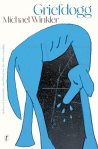
Before the meeting: Many smart, thoughtful people with excellent taste love this book, so don’t take too much notice of me when I say I found it irritating, chaotic, self-indulgent, contrived, box-ticking and maybe just a little bit culturally appropriating. Also the back cover blurb gives away the two shoe drops that I didn’t know I was waiting for.
I kept reading after the first couple of pages out of devotion to the Book Group, and resolved to hold my tongue at the meeting so as to glean what other people love about the book.
My usual practice of looking at page 79 (my age) would just lead to a lot of grumpy exclamations, which would add nothing to the sum total of human knowledge, so I’ll refrain.
I did have an unexpected stab of pleasure on page 141. The narrator is indulging in one of many digressions on environmental issues, and moves on from fracking and mining to ‘the mindless introduction of pests and weeds’:
Who decided to introduce buffel grass in the 1950s? Names should be named. It is on the public record that government entomologist Reginald Mungomery was the first to bring in cane toads. Thomas Austin, the wealthy buffoon, is credited with setting loose thirteen rabbits imported from England at Winchelsea in 1859. I know a man who knows the names of the brothers who released the Boolarra strain of European carp in pondage near Merbein in 1964, after which they swam into the Murray River and wrecked the ecology forever. Induct them all into a hall of shame for ecological and waterway degradation. Let us piff rotten fruit at them.
Reg Mungomery was a relative of mine, a cousin several times removed. He visited us once when I was a child. He wasn’t proud of the cane toads. I’m thrilled enough when the town I come from is mentioned in Literature. But this is actually a Family Member! I almost decided to like the book. But only almost.
I expect I’ll look like an idiot when it’s shortlisted for every pretigious award.
The meeting; I didn’t manage to hold my tongue, partly because I’d said something blunt on the pre-meeting WhatsApp chat. Once we’d sat down to our usual excellent bring-something dinner and canvassed the state of architecture in Sydney (are developers running the show or are they weeping with frustration?), theatre (David Wenham is brilliant in An Iliad), they made me vent my spleen. Reluctantly at first but increasingly enjoying myself I complied. I happened to be sitting at one end of the table. Then, brilliantly, the man sitting at the other end spoke eloquently and at length about why he loved the book. I don’t think I’ve ever enjoyed a conversation more.
I’m a firm believer that the perspective of someone who loves a book will be more interesting than that of a hater, so I’ll try to summarise what the lover said – and refrain from verbalising my different take.
In the previous week, he had started on a number of books that adhere to contemporary norms (a number of points of view presented turn by turn, etc.), and couldn’t finish any of them. He picked up Griefdogg and was delighted from the start that he didn’t know what was happening or where it was going. It felt like a brave book. It’s messy, throws a lot of stuff into the mix and sometimes it doesn’t work, but how much better to have something that tries and occasionally fails than something that plays safe the whole time.
Specifically, he loved the masculinity theme. There’s a sex scene near the start that makes comedy from a focus on performance, and the main plot line asks what happens if you radically reject the expectation that men will be over-responsible and over-worked.
The treatment of place is brilliant: Mildura as a small rural community where everyone knows everyone’s business, but everyone has secret griefs. At one point the main character’s adult child comes home from a time in Melbourne and names the way the city is ignorant and uncaring about rural realities – the book as a whole addresses that ignorance.
There’s a lot of hydrology, much of it highly technical, which provides a metaphorical underpinning.
Towards the end the main character creates a piece of public art, which my Book Group friend described in wonderful lyrical language.
The respectful treatment of Aboriginal issues in a book with only one peripheral Aboriginal character is impressive. In particular there’s a dig at urban pieties that turn out to be lethally uncaring when push comes to shove
As I was typing this, I received a text that began ‘A last ditch attempt to influence your blog.’ I’d love to quote the whole text, but I want to avoid spoilers (and if you want to avoid them, don’t read the back cover blurb). I’ll just quote this:
We have a new male hero created from a vey different story arc. A sometimes clumsy and overwritten one, but one that places the man’s newfound awareness squarely and beneficially in his community.
There were six of us, and we were pretty evenly divided. Of the two non-finishers, one had tried a number of times and failed to get enough traction to take him past the 7 percent mark. The other was still partway through the first of the three sections and quite enjoying it. Of the other two, one liked the book, and particularly found the ending wonderful (I can’t hold back completely – I loathed the ending, even more after he said why he loved it). The other was pretty much in my camp. He compared it to the work of theatre directors like Barry Kotsky – always drawing attention to themselves rather than to the work: it needed a couple more revisions, he said.
There were some points of agreement. We all enjoyed the high-quality dad jokes that are scattered through the text. A favourite was: ‘Why did the chicken cross the Möbius strip?’ You can find the answer on the interwebs.
A final thought: I’ve recently listened to Zac Seidler talking to Richard Fidler on ABC’s Conversations (you can hear it at this link). He talks about the limited opportunities in our society for men to talk about meaningful things. It made me realise all over again what a terrific thing this Book Group is.
The Book Group members are all men of settler heritage. We met on Gadigal land. I wrote this blog post on the land of Gadigal and Wangal of the Eora Nation. I acknowledge Elders past and present and welcome any First Nations readers of the blog.


