Category Archives: Page 7x/47/7

Hilde Hinton’s Solitary Walk on the Moon

Last November I decided to experiment with blogging about books by taking a single page and writing whatever comes to mind about it. I picked page 75, my age at the time. Sadly, though I did focus on page 75 (or 47 or even 7 in shorter books), I didn’t really keep to the plan but felt obliged to go on about the books in general as well. Now that I’m 76, I’m renewing the experiment.

Hilde Hinton, A Solitary Walk on the Moon (Hachette Australia 2022)
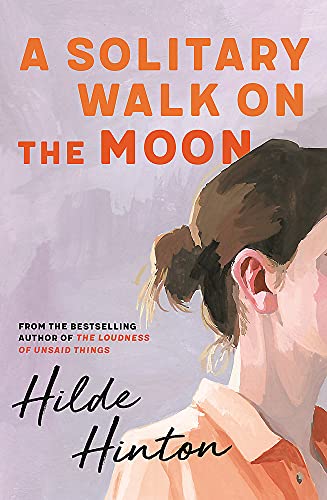
You could describe A Solitary Walk on the Moon as a quirky comedy, but that suggests a particular kind of US movie – and Evelyn, the book’s laundromat-manager protagonist, is more John Wayne than Miranda July, or perhaps Miranda July in a John Wayne role. Like the hero of a classical Western movie, she’s a loner who brings her peculiar set of skills to the aid of the community who come to love her, but among whom she feels she has no abiding place.

Page 76, a little past the one-quarter mark, is relatively uneventful, but in it the characters develop, the plot moves forward and key images recur, all without breaking a sweat.

Evelyn is in the process of building what will turn out to be a patchwork family. Having overheard two young women, laundromat customers, talking about a friend who has disappeared, she has insinuated herself into their confidence, and enlisted the help of a befuddled old man, also a customer, who she has learned is a retired policeman. At the start of this page, she introduces the man to the young women with characteristic awkwardness and a touch of bravado that doesn’t quite work:

‘This is,’ Evelyn said, suddenly realising that she didn’t know his name, ‘our retired policeman.’ Her ta-da finish went unacknowledged.

We understand the lack of acknowledgement to be partly because the young women don’t quite trust Evelyn, and partly because the retired policeman is grubby and vague-looking. By this stage readers have come to understand that though Evelyn is deeply strange – perhaps non-neurotypical, perhaps from a non-mainstream culture, or perhaps dealing with childhood trauma – she is smart and well-intentioned. But we also understand other people’s hesitance around her.

The ex-policeman introduces himself as Phillip, and they head off to the police station. In a characteristic narrative move, they stop on the way for Phillip to play the love-me, love-me-not ritual with a daisy. He presents Evelyn with the stem, ‘topped by a clearly embarrassed pistil and a sad, solitary petal which flapped about in the evening breeze’. This moment reminds us that Phillip is probably in early stages of dementia, but it’s also a feature of the novel’s style: at any moment there’s likely to be a mild departure from a straightforward narrative. All the characters, it seems, are at least slightly odd, or at least wonderfully naive.

They arrive at the police station:

‘Don’t ring the bell,’ he said authoritatively when Evelyn went to ding the bell.
‘How will they know we’re here?’ she asked. The old man pointed at the mirror behind the counter and sat down on one of the plastic moulded chairs. They were all bolted together, and Evelyn wondered why. No one in their right mind would steal one. Phillip crossed his legs and clasped his hands behind his head. The two girls sat either side of him. Evelyn was not in the mood for sitting and wandered around the waiting room looking at the faded posters that looked like they’d been there for years. There was a chart of missing persons, and Evelyn vaguely remembered the tall cross-eyed man who had gone missing while bushwalking a few years back. They had never found him, as far as she knew.

This isn’t one of Evelyn’s most eccentric moments, but you can see her restless mind at work, wondering about the chairs, noticing the details of a missing man. We half expect her to go in search of him (she doesn’t). Hilde Hinton draws us into Evelyn’s world, so that we too come to notice the odd things that stand out for her, and find ourselves seeing the world with fresh eyes – not those of a child, but fresh all the same.

You can see the author’s mind playfully at work here too: is Phillip’s counter-intuitive advice about ringing the bell sensible, or are we being played with? Either way, it’s characteristic of this book that a man who when we first saw him was unable to find his own way home has practical wisdom to offer when he’s on his own turf.

There’s a faint hint here of Evelyn’s past. It’s the missing persons chart that she notices. The novel is full of such people: the young women’s missing friend, the mother of a little boy who calls on Evelyn as the only friendly adult in his life, potentially Evelyn herself. We gradually discover that she has had a number of previous lives. We learn almost no specifics, just enough of her childhood to know she was ill treated. We learn that she has walked out of her life a number of times and started over each time, so an undertow of suspense builds: this time, as she almost inadvertently builds a patchwork family around her, will she stay or will she go?

The search for this missing friend turns out to be a minor episode (they don’t actually find her, but the search is resolved). In terms of the longer arc, what is happening here is that Phillip is being drawn back into meaningful participation in society. He will go on to help solve the mystery and become part of Evelyn’s knocked-together community.

There are other great characters: Don, the man from the paint shop who is delighted by Evelyn; and the little boy and his drug-addicted mother. As the back-cover blurb says, Evelyn is going to make a difference in their lives, whether they like it or not. She’s a terrific character and this is an immensely enjoyable book. I’m grateful to the Struggling Artist, who picked it up more or less at random from the Marrickville Library shelves.
Ocean Vuong’s Time is a Mother

Ocean Vuong, Time Is a Mother (Cape Poetry 2022)

This book is dedicated ‘for Peter’ (who I’m guessing is the poet’s partner) and ‘for my mother, Lê Kim Hồng, called forward’. The inside front flap confirms what the dedication implies:

In this deeply intimate second poetry collection, Ocean Vuong searches for life among the aftershocks of his mother’s death, embodying the paradox of sitting within grief while being determined to survive beyond it. … Vuong contends with personal loss, the meaning of family and the value of joy in a perennially fractured American spirit.

In a 2020 interview with Seth Meyers (on YouTube here) promoting his novel On Earth We’re Briefly Gorgeous, Vuong spoke beautifully of his relationship with his mother. She must have died soon after the interview.

This is not a single-focus collection. It opens with ‘The Bull’, a dream-like encounter between a bull and the narrator as a boy (you can hear Vuong read it at this link). Like a dream, the poem invites a range of interpretations: could it be about vague adolescent guilt (‘I was a boy – which meant I was a murderer / of my childhood’), or religion (‘my god / was stillness. My god, he was still there’), or ambivalence about sex (‘I didn’t / want him. I didn’t want him to / be beautiful’), or a psychotic episode? It’s a suitably uncanny introduction to the book as a whole, which is – if nothing else – hard to pin down.

The next couple of poems likewise don’t insist on a single theme: if anything, mental illness seems to be taking centre stage. The first long poem, ‘Dear Peter’, is a verse letter apparently written in a psych hospital (it begins ‘they treat me well / here’).

But given the context of the poet’s mother’s death, these poems can be read as ’embodying’ the profoundly unsettling effects of grief. The last lines of ‘The Bull’, foe example, reveal that behind the image of the bull lies a sense of oneself as a grieving animal:

enough to hold. I
reached for him. I reached - not the bull - 
but the depths. Not an answer but 
an entrance the shape of 
an animal. Like me.

As in Vuong’s novel On Earth We’re Briefly Gorgeous (my blog post here), there’s a complex interplay between the author’s identity as a young gay man who migrated to the USA from Vietnam as a child, and his relationship to his mother and her experiences both before and after migration. For example, ‘Not Even’ (page 35) starts out with a witty take on the changing social status of gay men:

Hey

I used to be a fag now I'm a checkbox.

The pen tip jabbed in my back, I feel the mark of progress. 

Further on, a young woman at a party says to the poet: ‘You’re so lucky. You’re gay plus you get to write about war and stuff. I’m just white.’ The next lines are:

Because everyone knows yellow pain, pressed into American letters, turns to gold.

Our sorrow Midas touched. Napalm with a rainbow afterglow.

But the poem doesn’t stay at that satirical level. It goes to deeply felt issues of ‘war and stuff’, including the kindness of a stranger and, inevitably, his mother’s death, until it arrives at a stunning metaphor for emergence from grief – which I won’t quote here because you really do need to read the whole four pages to get its full effect. A slightly different version has been published by the Poetry Foundation website at this link.

Even a poem such as ‘Old Glory’, a non-rhyming sonnet that lists common US turns of phrase, doesn’t depart far from the theme of death and loss. It begins, ‘Knock ′em dead, big guy’, and ends, ‘I’m dead.’

As usual, I want to look at some of the poetry in close-up. I’ve picked page 75 arbitrarily (it’s my age – at least it was when I started this blog post), but it happens to fall part way through ‘Dear Rose’, the most powerful and interesting poem in the collection. You can read the whole poem at this link, with an elegant introduction by Ben Lerner.

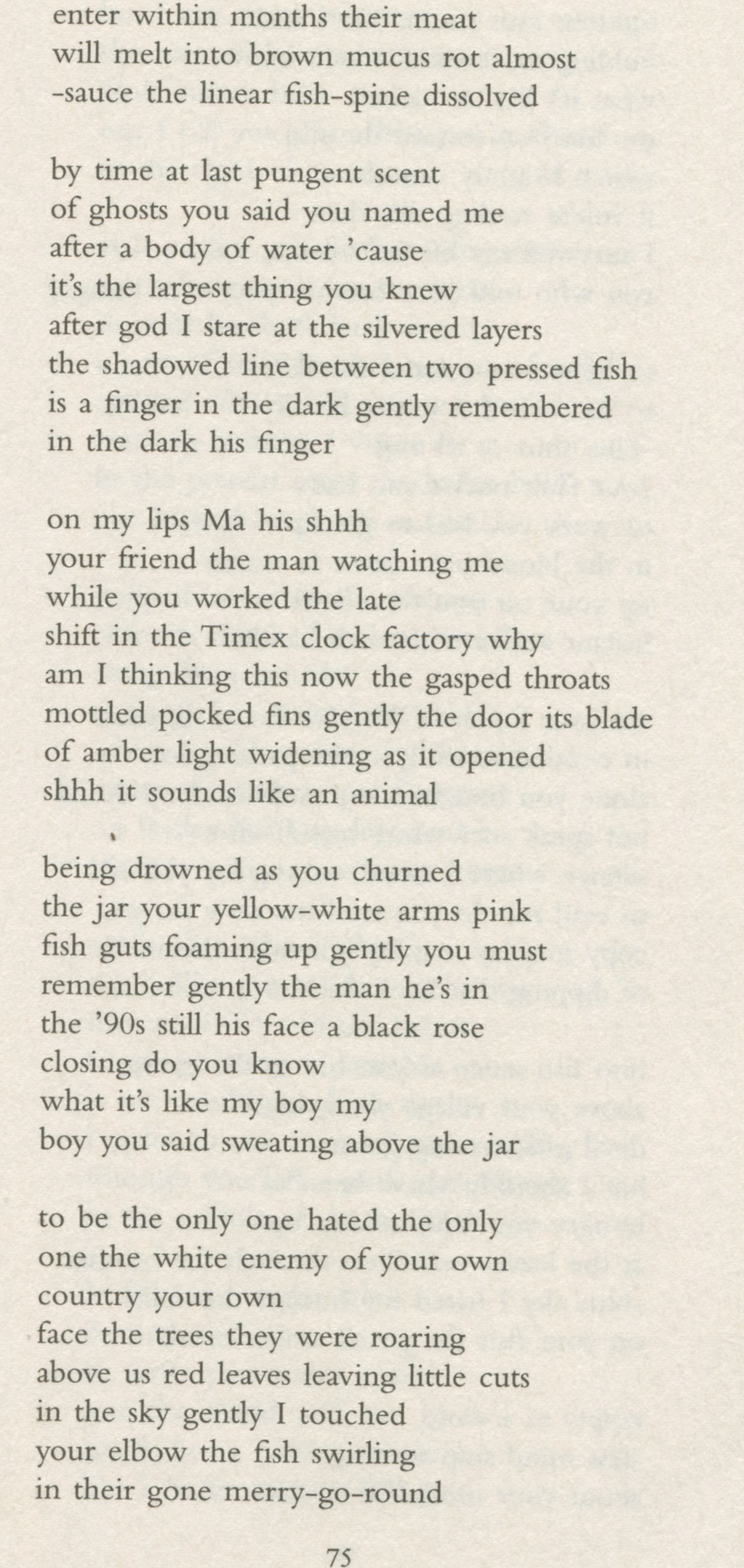
For context, it’s a long poem, 33 eight-line stanzas, framed (like On Earth We’re Briefly Gorgeous) as an address to the poet’s mother. It recalls key moments from her life: a schoolhouse destroyed by napalm when she was six years old; her ostracism in Vietnam as the son of a white US soldier; her brother shot dead for stealing a chicken to feed her. Intermingled with these historical moments are some apparently random elements: the sight of an ant carrying its dead brother; memories of his mother making fish sauce from the salted corpses of ‘a garbage bag of anchovies’. Page 75 goes from mid-stanza 17 to stanza 21. In the image below, disregard the first word, a carry over from the previous line. It may help to know that ‘their’ in the first line refers to the fermenting anchovies:

First, a word about punctuation. There isn’t any. Even line-break and stanza-breaks don’t function as punctuation. One effect of this is to slow the reader down. Several times, even in this short passage, you have to stop and realise you’ve moved on to a new thought. The transition point isn’t always clear. In what follows you may well have a different notion of where the sense breaks fall. It’s worth noticing how meaning is often carried over the line-breaks and stanza-breaks (technical term: enjambment). The effect varies, but there’s usually a moment of suspense that’s resolved at the start of the next line (‘almost /-sauce’, ‘dissolved / by time’), or a slight surprise as the meaning changes or enlarges (‘like an animal / being drowned’, ‘the largest thing you knew / after god’).

enter within months their meat
will melt into brown mucus rot almost
-sauce the linear fish-spine dissolved 

by time at last pungent scent 
of ghosts

The fermenting anchovies are not a pretty sight, or smell. They entered the poem as a memory in their own right, but by this stage they’ve come to represent the process of memory, or perhaps of grief: there’s a promise that they will dissolve and develop into something useful, even delicious, but first there’s a lot of painful emotion (‘brown mucus rot’) to be endured. Not yet sauce, they are all that remains of those who have died, ghosts.

of ghosts you said you named me
after a body of water ′cause 
it's the largest thing you knew 
after god I stare at the silvered layers 

This abrupt shift of subject is one of many in this poem and elsewhere in Vuong’s poetry. The poem’s attention comes up out of the murk to a clear, simple memory, a many-times told tale, that speaks loud and clear how much his mother treasured him. But then:

after god  I stare at the silvered layers 
the shadowed line between two pressed fish 
is a finger in the dark gently remembered

There’s a difference between the familiar stories of the past, and the way some memories come unbidden and partial, ‘gently’, sometimes without context, like a shadowed line in the fermenting jar. In this case, it’s ‘a finger in the dark’ that’s remembered.

in the dark his finger 

on my lips Ma his shhh 
your friend the man watching me 
while you worked the late
shift in the Timex clock factory why 
am I thinking this now the gasped throats 
mottled pocked fins gently the door its blade 
of amber light widening as it opened 
shhh it sounds like an animal

being drowned as you churned 
the jar your yellow-white arms pink 
fish guts foaming up gently you must 
remember gently the man he's in 
the '90s still his face a black rose 
closing do you know 

This feels like a memory of sexual abuse. As I read it, the question, ‘Why amI thinking this now?’, is answered in the following words: ‘the gasped throats /mottled pocked fins’. Something about the image of the anchovies brings this memory up from the depths. The stanza break here is brilliant: the man’s ‘shhh’ sounds like an animal, and then the first words of the next stanza, ‘being drowned’, tie the memory back to the image of the anchovies as well as leaving no doubt about the nastiness of the remembered incident. I’m fascinated by the repetition of ‘gently’: usually with implications of tenderness, here it suggests stealth – both on the man’s part and on the way the memory steals into consciousness.

Colour is important in this poem. Pink, red, blue, amber, brown, white and black recur, each with a range of connotations, as if the disparate elements of the poem are tied together with coloured threads. The ominous blade of light here is the same colour as the New England light beneath which his mother started the fish sauce, as her hair, and as the anchovies themselves. The description of the man’s face as a black rose contrasts to Vuong’s mother, Hồng – meaning ‘rose’ – who is sometimes describes as pink, sometimes white.

The last phrase ‘do you know’ is the classic question of the abused child to the parent who might have been expected to protect them. Such a question demands to be included in this letter to the poet’s dead mother. But it goes no further, as the mother now speaks, beginning with the same phrase:

closing do you know 
what it's like my boy my 
boy you said sweating above the jar

to be the only one hated the only 
one the white enemy of your own 
country your own
face

You could read this as the mother being incapable of hearing the son’s story. And you’re probably right. But it’s like the extraordinarily powerful moment in On Earth We’re Briefly Gorgeous when Little Dog comes out to his mother, and just as he thinks his big dramatic moment is over she says, ‘Now I have something to tell you.’ It might not be ideal parenting for a mother to burden her little son with a story like this, but this is not a poem of reproach. Far from it. The poet is acutely aware of what his mother has endured – and by implication he has been aware of it since he was very young (‘My boy my / boy’), and it’s her life struggles and triumphs that

face the trees they were roaring 
above us red leaves leaving little cuts 
in the sky gently I touched 
your elbow the fish swirling 
in their gone merry-go-round

The final lines on this page bring us back to the moment when the mother is stirring the anchovies with her attentive son beside her. The ‘red leaves leaving little cuts / in the sky’ suggests that the exchange has left both of them still wounded, but this time ‘gently’ surely does suggest tenderness, and the merry-go-round is ‘gone’ – the issue can be left behind.

Over the page, as you’d expect, there is further complexity. As with fish sauce, the poem’s disparate elements, many of them horrible in themselves, are mixed together and allowed to work on each other to become an unexpectedly beautiful new thing. If you have a chance, do read the whole thing.

I read Time Is a Mother in honour of World Pride, which has recently dominated my part of the world. The book turns out to be a salutary counterweight to the relentlessly manic imagery with which commercial culture signifies its openness to the LGBTQIA+ community: self-questioning, generous and deeply serious.

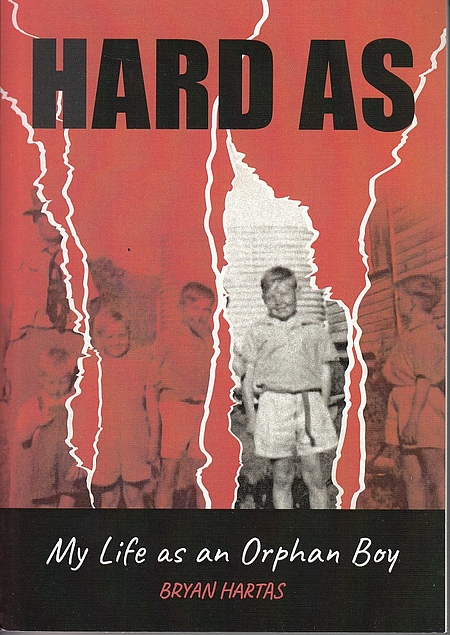
Bryan Hartas, Hard As

Bryan Hartas, Hard As: My Life as an Orphan Boy (AndAlso Press 2021)

Full disclosure: This book was edited by my niece, Edwina Shaw. ‘Edited’ is an understatement for the process that she and the author undertook together. She describes it in an Editor’s Note:

I first met Bryan several years ago as a participant in the creative writing classes I run at Lotus Place, a resource and support centre for Forgotten Australians. Bryan often spoke about wanting to record his whole life story, despite having difficulty with literacy like many Forgotten Australians.
Over a period of years, Bryan and I have sat together and I have written down his words as he spoke them, later shaping these notes into a chronological narrative …
Over the past couple of years, I have read the story aloud to Bryan and he has added and changed details.

The book tells the story of just one of more than half a million children who were failed by Australian society and its institutions in the 20th century, under the appallingly ironic heading of ‘care’. They are the ‘Forgotten Australians’ – the term used by the 2003–04 Senate Inquiry into Children in Institutional Care:

Children were for many reasons hidden in institutions and forgotten by society when they were placed in care and again when they were released into the ‘outside’ world. … These people who spent part or all of their childhood in an institution, children’s home or out-of-home care background have been the forgotten Australians.

(‘Introduction: Conduct of Senate Inquiry – Submissions:1.16‘, Forgotten Australians Report, 2004, from Wikipedia)

In the first dozen pages of Bryan Hartas’s story, he is relatively safe in his mother’s care. He very rarely sees his father, but hears him attack his mother when he comes home drunk at night. There are two photos, one of Bryan as a chubby baby and the other, a classic of its kind, showing him aged seven with his three siblings grinning awkwardly at the camera. A man whose head has been torn from the photograph, possibly the children’s father, stands behind them. Bryan’s mother was taken away in an ambulance soon after that photo was taken, and he never saw her again. Then the true horror began.

Completely neglected by their father, the children were taken into care, where they were separated. Years of mistreatment followed, including terrible hunger and vulnerability to sexual assault by older boys. In Bryan’s account, he was singled out for special mistreatment because he was ‘ugly’. The treatment meted out by the nuns and others was terrible. As he grew older, he was sent to work with the men around the place, but still given the paltry food allotted to the children. At times he had no bed, but had to find a spot in a shed where he slept under a pile of hessian bags. He was sent out to work on farms. In one of them he was treated well, given decent meals, and received some affection, which he soaked up. But mostly he was treated worse than the farm animals. It may be that he fell through the cracks in the system, but the system itself was hideous. He was sent to a correctional institution after some failed attempts at escape, and while still a teenager he landed in Boggo Road Gaol in Brisbane. Possibly the most horrific moment in his narrative is when he talks bout the relief he felt in gaol: he was safe and well-fed, with a bed of his own. On his release he committed a crime so as to find a way back to safety.

He manages to have relationships with a number of women. The narrative glides over the details, but none of the relationships endure. He does have a number of children. He gives up alcohol, does volunteer work, and at the time of telling the story he has a good connection with his children. It’s a story of survival.

The subject matter is gruelling, but it’s a gripping read.

To give you a taste, here’s a story of what happened on the Willises’ dairy farm near Fangool, out past Biloela, when Hartas was fourteen years old. (I can’t find a town called Fangool – maybe it’s a name made up to protect the guilty, and maybe it’s only accidental that it sounds like an Englishing of a common Italian swear word, which could be Bryan’s joke, or possibly Edwina’s.) Another boy from the home, James, was also working on the farm, and for some reason he was treated much better than Bryan. The farm was rundown, and a lot of the equipment – the truck, the milking machines, the windmill, the riding gear – was in disrepair. Inevitably, there was an accident. When Bryan was bringing cows in to milk one afternoon, the girth on his horse’s saddle broke. He fell on some jagged rocks and was knocked unconscious:

When I came to, I had blood on my head and terrible pain on the right side of my back and in my shoulder. I came to in a panic, knowing I’d been badly hurt, that I needed help. So I started back to the house as fast as I could. Staggered and ran and staggered and ran all the long way to the farm. I didn’t know where the horse was.
When I got back, James told me to go over to the house. Mrs Willis gave me a pain killer and told me to sit on the back veranda for a few minutes then go back to work. It was my left shoulder, my dominant hand, and my arm was hanging useless beside me, yet she forced me back to work. After a while, I got up and went to the dairy, but I couldn’t do anything properly because I was in so much pain. I could barely lift my arm. I should have gone to hospital. It was a serious injury.
I got no sleep that night or for many nights for months after that because of the pain. I didn’t even get another pain killer from the Willises. For months I couldn’t use that arm at all and had to fumble around with my right hand trying to put cups on teats and do the other jobs. Many decades later, I still can’t throw a ball with that arm. Only recently, the break and damage was revealed. X-rays showed my shoulder blade had been cracked and the ball joint of my shoulder was chipped. I told the Willises I was in agony, but they still didn’t take me to a doctor.

(Page 75)

This is characteristic of Hartas’s vivid manner of telling. It reflects the confidence he felt in his editor/scribe – confidence that she would record his story with integrity, but also that she is listening with respect and empathy. There’s an insistence on how terrible things were (and elsewhere on how much his mother’s love meant to him) that reflect his wanting her – and us – to understand. I know I’m probably prejudiced because the editor/scribe is my lovely niece, but it seems to me that what shines through in this book is her ability to listen well, and her ability to render the chaos of the spoken word (which anyone who’s ever transcribed their own or anyone else’s speech knows is close to universal) into smooth prose that still sounds like a speaking voice.

I’m glad I read this so soon after reading Ruby Langford Ginibi’s Haunted by the Past. The books are similar in many ways. Together they bear powerful witness to the lived experience of suffering and resilience that lies behind labels like Aboriginal Deaths in Custody and Forgotten Australians.

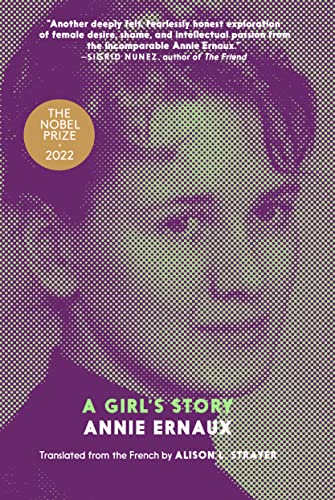
Annie Ernaux’s girl’s story

Annie Ernaux, A Girl’s Story, translated by Alison L Straya (Seven Stories Press 2020, from Mémoire de fille, Gallimard 2016)

There’s an AI app that‘a in the news just now. I asked it to write a review of Annie Ernaux’s A Girl’s Story/Mémoire de fille. Here are some excerpts from what the app came up with:

“A Girl’s Story” by Annie Ernaux is a highly acclaimed and celebrated memoir that tells the story of the author’s childhood and youth. …

The book is written in a simple, straightforward style that is both raw and emotionally charged. …

She vividly describes the sights, sounds, and smells of her childhood, and her descriptions are so vivid that the reader feels as though they are right there alongside her. At the same time, the author’s reflections on her life and experiences are both deeply personal and universally relatable, making the book accessible to a wide range of readers.

Lazy students be warned: almost every word in those paragraphs is misleading. The AI clearly hasn’t read the book.

The book does NOT tell the story of the author’s childhood and youth.

It scrutinises barely two years of the author’s life, when as an 18-year old in 1958 she left her parents’ custodianship for the first time, had her first sexual experiences, developed an eating disorder, read a lot (including Simone de Beauvoir’s The Second Sex), attended a prestigious college, decided against entering the teaching profession, worked as an au pair in London, and began her career as a writer.

The book is NOT written in a simple, straightforward style.

Take the opening sentences:

There are beings who are overwhelmed by the reality of others, their way of speaking, of crossing their legs, of lighting a cigarette. They become mired in the presence of others. One day, or rather one night, they are swept away inside the desire and the will of a single Other.

The science-fictional feel of ‘There are beings’ probably isn’t there in the original French, where it’s not unusual for elevated prose to refer to people as êtres (literally ‘beings’). But even without that bit of translationese, you’d hardly call these sentences simple or straightforward. In fact, they almost stand as a warning: if you want a simple, straightforward story, go somewhere else. The hint (‘or rather one night’) that the story is going to involve sex is neither simple nor straightforward, but at least it promises spiciness.

The style is NOT raw and emotionally charged.

The style is intensely intellectual, as is only right for a text that is concerned with the process of remembering. Memories are often there as single images, without a clear sense of how they connect with each other. Where memory fails, the narrator quotes from ancient letters and diary entries, or simply speculates about what ‘the girl of S’ (as she is called from the start) must have been feeling. From the older person’s perspective, the sexual experiences are terrible, but as far as the narrator can tell (remember?) ‘the girl’ didn’t see them that way. See the opening lines quoted above: it’s a story of a young woman who loses and regains her sense of herself. One strand of the book is a troubling inquiry into the nature of consent.

The reader does NOT feel as though they are right there alongside her.

Annie Ernaux considers that she is no longer the person who had those experiences as an eighteen-year-old. It took me several pages to be sure that ‘the girl of S’ is not someone other than the author. If we are ‘right there alongside’ anyone it’s the 70-something writer who sets out to ‘explore the gulf between the stupefying reality of things that happen, at the moment they happen, and, years later, the strange unreality in which the things that happened are enveloped’. At least that’s how she describes her initial intention. The book is more complex, recursive and elusive than that.

She vividly describes the sights, sounds, and smells of her childhood

No. Just no!

The author’s reflections on her life and experiences MAY BE deeply personal and universally relatable, but not in the way the AI implies.

This calls for discussion of an actual piece of writing. I’ll pick the moment (on pages 74–75) when the girl, still in the last year of high school and working as a counsellor at a children’s camp, has had two sexual encounters with H (the ‘single Other’ of the book’s first paragraph, which I quoted earlier). After the second time, of which the narrator says she remembers very little but which certainly wasn’t pleasurable for the girl, H promises to come to her room and say goodbye the next morning, the last day of camp. The girl knows that he is engaged to someone else, but nevertheless spends a sleepless night imagining that ‘H is her lover, truly and for all eternity’. When he doesn’t come at dawn, she goes to knock on his door. Though he can see his back through the keyhole, he ignores her. This is definitely a ‘deeply personal’ moment, but the narrator isn’t interested in capturing its emotional intensity. She writes:

Even if it had crossed her mind (and I think it probably did) that by promising to come and say goodbye, he was simply trying to shake her off, no objective sign of reality – the fiancée, the unkept promise, the lack of a meeting arranged for later in Rouen – can possibly compete with the novel that wrote itself in a single night, in the spirit of Lamartine’s The Lake, or Musset’s Nights, or the happy ending of the film The Proud and the Beautiful, with Gérard Philipe and Michèle Morgan running toward each other, or the songs (that Esperanto of love) I can list without a second thought.

She goes on to list five songs, all of which are as unknown to me as the novels and movie. I googled one, Dalida’s ‘Histoire d’un amour’, and it’s as romantic as you’d expect – on YouTube here. You don’t need to be familiar with the references to see that the narrator is considering the girl from an ironic distance. She isn’t mocking. Her project is more intellectually rigorous than that, and much more interesting: she wants to understand how ‘the girl’ really experienced the moment, at the same time as knowing that complete understanding is impossible.

After listing the songs, Ernaux does two things. First, she asserts that this kind of self story-telling is common:

At this very moment, out in the streets, the open spaces, on the metro, in lecture halls, and inside millions of heads, millions of novels are being written chapter by chapter, erased and revised, and all of them die as a result of becoming, or not becoming, reality.

This reminds me of the way Proust’s narrator in In Search of Lost Time writes at length about how he imagined what places were like based on their names, only to be almost always disappointed by the reality. Annie Ernaux explicitly suggests that this is a universal thing. So maybe it’s ‘relatable’ after all.

(By describing this fantasising as novel-writing, Ernaux seems to be suggesting that her writing life began that night, a whole other dimension of the memoir.)

The second thing she does is to leap forward in time:

When, in the subway or the RER, I hear the first notes of Dalida’s ‘Histoire d’un amour’, sometimes sung in Spanish, within a second I am emptied of myself, hollowed out. I used to believe (Proust had a comparable experience) that for three minutes, I truly became the girl of S. But it is not she who suddenly revives but the reality of her dream, the powerful reality of her dream, spread throughout the universe by the words sung by Dalida and Darío Moreno, and covered up again, buried by the shame of having had that dream.

(The RER is the rapid transit system serving Paris and its suburbs.)

This paragraph could be seen as encapsulating the book as a whole. Annie Ernaux the narrator grapples throughout with the nature of memory. Here, she realises that in the intervening years, in non-rigorous mode, she has believed herself to be reliving that moment, becoming once again her eighteen-year-old self and losing all sense of who she is in the present. But with her rigorous mind at work, she realises that what is being revived is the dream, the pattern of thinking and feeling that came into play at that moment. Any mockery that may have been implied in the ironic distance of the previous paragraphs is identified as coming from shame.

It’s no accident that Proust is mentioned here. His ghost hovers over the whole enterprise. At one level, his huge novel tells his alter ego’s life story, while A Girl’s Story tells the much smaller story of a teenage girl’s first more or less traumatic sexual experience. (Proust’s narrator’s first sexual experience is of the don’t-blink-or-you’ll-miss-it variety.) At another level, they are both philosophical inquiries into the nature of memory and desire. Ernaux’s book doesn’t have the queerness or the comedy of Proust’s, but it is just as serious, just as challenging, and has the added passion of feminist horror.

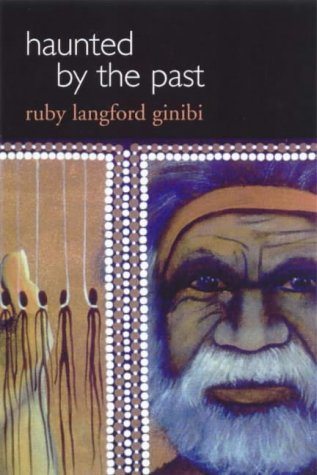
Ruby Langford Ginibi’s Haunted by the Past

Ruby Langford Ginibi, Haunted by the Past (Allen & Unwin 1999)

Ruby Langford Ginibi (1934–2011) was a Bundjalung woman who among many other things wrote five autobiographical books. The first, which lifted its title from a song made popular by Kenny Rogers, became a bestseller when it appeared in 1988. Tara June Winch has written about it:

What Langford Ginibi produced in penning Don’t Take Your Love to Town was a broad-scoping segment missing from the body of Aboriginal literature, published in 1988 amid the fanfare and patriotic celebrations of Australia’s bicentenary. Decades later it retains its relevance and importance, still sounding a clarion call to the future for understanding and a breaking of the cycle of social and racial disadvantage for Aboriginal Australians, at long last.

Tara June Winch, ‘On “Don’t Take Your Love to Town” by Ruby Langford Ginibi‘, Griffith Review 80, May 2023.

Haunted by the Past, published a decade and three books after Don’t Take Your Love to Town, continues and amplifies that call to the future. In a writing style that feels unstudied and conversational, it tells the story of Nobby, one of Langford Ginibi’s nine children. This is a mother’s story of seeing her son sent to boys’ homes as a child and then incarcerated more than once as an adult for something he didn’t do; the terror that he would die in custody as so many Indigenous Australians have done; the joy, hers and his, of taking him to his traditional country on his release after eight years in prison; his development as a painter (his artwork is on the cover of this first edition); and in the final pages, his marriage with the prospect of a stable future. Even if you suspect that motherly bias influences the account of Nobby’s ‘crimes’ and punishment, the picture of legal system’s treatment of young Aboriginal men is damning.

It’s a deceptively simple book, just seeming to tell it as it was, one thing after another. There are straightforward quotes from court documents, including psychiatric assessments of Nobby’s suicidal state of mind at one point. Nobby gets to speak for himself in sections written for the book at his mother’s behest. There are detailed accounts of organising prison visits, and hiring cars, and visiting relatives. There are Mum jokes, as when the band strikes up ‘Ruby, Don’t Take Your Love to Town’ at a wedding, and her family start singing it to her:

I called out to them, ‘If I didn’t take my love to town, you mob wouldn’t be here!’

(Page 178)

But the cumulative effect is far from simple. From the opening words – ‘Where does Nobby’s story begin? With his birth in 1955? Or further back …’ – Langford Ginibi is clear that she is telling her son’s story in the context of the long story of colonisation. Without using terms like intergenerational trauma, her story-telling challenges versions of Aboriginal experiences that ignore this country’s continuing history of racist and genocidal policies. She shows us the human, everyday faces of people who might other tend to be reduced to statistics in the mainstream media. Everything seems intensely ordinary, but long history is there at every moment. It’s a history of resilience and achievement as well as oppression.We are told a number of times about the Aboriginal cricketer who bowled Don Bradman for a duck. You get a strong sense of the warmth of family life – the extended family of people who haven’t seen each other for years as well as the immediate family. The opening pages that tell of her family’s background and, especially, her time in a bush camp with an uncle, are filled with rich experience of community, culture and the natural world.

The darker context becomes explicit in Chapter 6. Chapter 5 has given us pictures of Nobby’s despairing state when he was sentenced to jail again, including one suicide attempt. Chapter 6 begins:

While Nobby was doing this long stretch in jail, the Royal Commission into Black Deaths in Custody was going on. Even before the official inquiry I was always worried about Nobby when he was in jail. I received a letter from him that stated: ‘Mum, if I ever go back to jail again, they’ll bring me out feet first because bein locked up like an animal and bein told by screws, do this do that, it’s nearly drivin me mad! I can’t take it anymore.’ The pressure was so bad. And Nobby was very depressed from time to time. It really got me down. I was always worried that he would have survived the police, the wardens and the other inmates, but then take his own life.

(Page 75)

Characteristically, Langford Ginibi doesn’t linger over her fears. Nor does she milk the situation for suspense:

But he has survived.

And then, the perspective widens:

Not everyone has been so lucky.

The next 15 pages tell the stories of eight Aboriginal men who died in custody or, in one case, were killed by police during a raid on the man’s home. This book is the story of a survivor, but we can never forget the ones who didn’t survive. On the very last page, when Nobby’s story seems to have reached a happy landing, the ghosts of those men appear:

They were callin out to Nobby, sayin, ‘On ya brother. You survived the brutal jails. We didn’t make it. Long life and much happiness to you and your lady. Go in peace, and live for all of us!’

(Page 179)

I picked this book down from my TBR shelf after reading Gregory Day’s Words Are Eagles. The opening essay of that book invokes an Indigenous perspective that written words are dangerous because they can be divorced from particular places and from direct interpersonal communication. It does this without quoting from Indigenous people. In the spirit of counterpoint as recommended by Edward Said in Culture and Imperialism, I needed to read something by a First Nations writer, and this book was right there. It doesn’t address Day’s point directly, but it does achieve the thing he advocates. Reading it feels like sitting down for a long chat, a yarn, with a remarkably assured, relaxed matriarch. When you put it down, you see the world differently.

Ruby Langford Ginibi received the Special Award at the NSW Premier’s Literary Awards in 2005, where I had the good fortune to be sitting on the table with her at the awards ceremony. Her other books are:

  • Ruby, Don’t Take Your Love to Town (Penguin Australia 1988)
  • Real Deadly (Angus & Robertson 1992)
  • My Bundjalung People (UQP 1994)
  • All My Mob (UQP 2007)

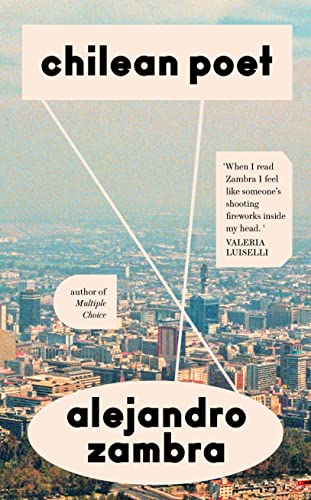
Alejandro Zambra’s Chilean Poet and the book group

Aalejandro Zandro, Chilean Poet: A novel, translated by Megan McDowell (Granta 2022)

Before the meeting: I enjoyed this novel enormously. I expect people who know Chile, and especially the Chilean poetry scene, would enjoy it even more.

In the freezing Chilean winter of 1991, teenagers Carla and Gonzalo curl up night after night under a magnificent red poncho watching television in her mother’s house and manage to do ‘everything except for the famous, the sacred, the much feared and longed-for penetration’. Just as the nights are beginning to warm up and remove the excuse for the poncho, they get an opportunity, but the famous etc event turns out to be less than absolutely pleasurable, at least for Carla.

The story goes on from there. In my innocence, I was surprised by the turns of events, so I won’t go into detail, except to say that Gonzalo as a teenager is an aspiring poet, and we get to read one of the atrocious sonnets he writes for Carla; and some years later Gonzalo becomes stepfather to Carla’s son Vicente.

The second half of the book begins with an echo of the opening of the first half. Vicente, now a teenage aspiring poet (probably more promising than Gonzalo), is in explicit sexual action with Pru, an older woman visiting Chile from the USA, using alarmingly explicit English he has picked up from porn.

It may be a spoiler, but I’ll risk it: the relationship between the two poets Gonzalo and Vicente is the heart of the book and its narrative spring. Carla and Pru, and Vicente’s natural father León, are vivid secondary characters. Chile, in particular Santiago, and most specifically the Chilean poetry community, provide the charming, engrossing, at times hilarious, always lively milieu.

Pru is visiting Santiago on her first major journalistic assignment. Her editor wants a ‘human interest’ story about stray dogs, but she persuades him to let her explore the poetry scene, and Alejandro Zambra has a lot of fun describing her interviews with poets.

I have no idea if poets and poetry have the prominent role in Chilean life that these poets claim. One of them says that for Chileans the Nobel Prize in Literature is as significant as the World Cup, and it’s a matter of huge pride that Chilean poets have won it twice: Gabriela Mistral (1945) and Pablo Neruda (1971). Not that any of the living poets care too much for Neruda or Mistral – the living are much more interesting and important, and their mutual competition, championing and denigration make Australia’s so-called poetry wars look … well, I was going to say tame, but really it makes them look normal.

I’ve read two other novels with poet protagonists recently: Edwina Preston’s Bad Art Mother and Niall Williams’s A History of the Rain. Unlike the former, we believe that the characters in Chilean Poet actually write poetry of varying quality; unlike the latter, these poets are part of a thriving scene rather than slightly deranged, isolated mystics. One of the joys of the book is the way their alertness to language features strongly in all their relationships. The account of Vicente’s wooing of Pru, for example, is full of the joys and perils of communicating across a language barrier.

There’s a terrific scene in the first part, when Gonzalo is a hands-on father to Vicente. He breaks one of Clara’s rules by allowing Vicente to sit in the front seat of the car – and accidentally reveals his crime to her. She explodes, using the word betrayal, which sets him off:

‘I’m so sorry for taking care of Vicente every single day,’ said Gonzalo.
‘It’s times like these it’s clear you’re not his father,’ retorted Carla.
Gonzalo looked at her with astonishment and contempt. He grabbed his hair with his left hand, and with his right he tore up an abundant clump of grass.
‘I’m a much better father than that lame-ass, ugly, mediocre motherfucking pusillanimous sack of balls who stuck his dick in you.’

(Page 75)

Rather than continue with the fight, the narrative stops there, and the poet-mind kicks in. Gonzalo spends two pages mentally critiquing his own sentence. It ‘felt a bit ungrammatical and was a pretty stupid outburst, but …’ He ponders the accuracy of ‘ugly’, acknowledges that pusillanimous doesn’t apply, and wonders if he used that word ‘for the mere pleasure of saying a word that León would have to look up in a dictionary’. He quite likes sack of balls because it’s not only hurtful but original. And before pouring himself a double whisky and stomping off to his writing-room he indulges in this final piece of poetic analysis:

The truly damning part was definitely that grand finale, who stuck his dick in you, which brought jealousy to the forefront and insinuated that Carla was some kind of whore. Still, the accusation held a trace of childishness, as if Gonzalo had only just found out how babies are made.

(Page 76)

Megan McDowell’s translation is terrific. At many moments, the narrative turns on the use of language, as in the passage I’ve just discussed. At a key moment, when Vicente is quite young, he and Gonzalo discuss the Spanish word for ‘stepfather’ – padrastro. Gonzalo is reluctant to take it on because astro at the end of a word has negative connotations. McDowell does a brilliant job of putting this into English as a completely plausible conversation for a poet to have with a young boy, and manages not to feel as if she is winking at English readers over the characters’ heads.

The meeting: After an hour of convivial catch-up and organising of food, we settled down to the book. Unusually, the Chooser explained how he had made his choice: he started out thinking of something by Annie Ernaux, in deference to the Nobel Prize committee, but as none of her books were easily available he sought advice at from his local bookseller, who suggested this – which turned out, he said, to be a perfect summer read. One chap who usually doesn’t say much, and usually speaks softly, immediately grabbed the floor and disagreed vehemently: not an ideal summer read at all; for that he’d recommend Richard Osman’s Thursday Murder Club series; this author was too intent on displaying his knowledge of poetry and poets to keep his narrative alive and engaging.

And it was on!

No one, it turned out, had done the work of checking which poets in the book are real and which imagined. A number of us, including a late-comer who had missed the opening salvo, just loved the bit where Pru interviews a range of poets and leaves the main narrative on hold. There’s a disorderly poet’s party that got a lot of love.

The bits that might have been irritating, where the author breaks the fourth wall to comment on his decisions, were pretty universally enjoyed. We were sorry to see the end of Pru, the gringa journalist over whose shoulder we get to know the poetry scene. One chap felt that Carla, Vicente’s mother, was a bit two-dimensional. No one contradicted him, but no one seemed to mind terribly. One man said he’d read the book very soon after last meeting and could barely remember it, which he took to mean it is pretty forgettable – though he did remember that it lacked any strong sense of place. Not everyone agreed – perhaps not the physical place, but we felt that there was a strong feel for the cultural milieu, and the food.

One man brought a bottle of pisco and made pisco sours (of which many are drunk in the book), plus a sour-without-pisco for the non-drinker. He also brought a selection of holiday photos from Santiago and Valparaiso, including one of Pablo Neruda’s home, now a museum.

Favourite passages about poetry were read and enjoyed all over again, including one in which a poet says he doesn’t know whether what he writes is any good, but he writes because of what it achieves for his own mind. (That definitely rang a bell for me and my own adventures in rhyme).

As usual, the conversation dissipated, though this time it stayed roughly on topic: there were anecdotes about meeting famous poets and other famous people (including two stories about David Malouf that cemented his status in my mind as a spectacularly kind person), ruminations on the comparative respect in which poets are held in Chile and Australia, an invitation for personal reflections about step-parent experiences that went unaccepted because none of us had been there, stories of young men getting excited when they realised they were talking to an older man who reads books, some excellent ribaldry. Unrelated: George Pell’s faulty theology, Lydia Thorpe’s stand in relation to the Voice, the complexity of some post-Holocaust Jewish family histories.

Towards the end of the evening, the man who had set the ball rolling with vehement negativity announced with equal vehemence that he realised he had actually enjoyed the book. We took this as vindication of the group as a way of taking the solitary act of reading into a shared experience.

After the meeting: Someone mentioned having seen a YouTube conversation with Alejandro Zambra and Megan McDowell. I dutifully watched it during my grandson’s afternoon sleep the next day. It’s full of good things about the translator–novelist relationship – if you watch it and are strapped for time, you could start at the 10 minute mark and skip all the charming introductory stuff. I particularly love their discussion (from 13’00” to 19’05”) of the Spanish word for ‘stepfather’, padrastro, including Zambra’s comment that as a poet Gonzalo is fighting with that word. Poets are always fighting with words, intensely, he says, ‘which is beautiful’.

Gregory Day’s Words Are Eagles

Gregory Day, Words Are Eagles (Upswell 2022)

Decolonising is a very personal business. It cuts in close to our sense of self. … It will take new emotional skills our parents, and their parents, were unable to teach us.

(‘Serving up colonisation instead of care‘, Overland 247, page 24)

That’s Caitlin Prince, an occupational therapist who has spent most of her adult life living and working in remote Aboriginal communities. She argues that non-Indigenous individuals have intimately personal work to do; we must face and acknowledge intense emotional discomfort, and create safety for each other to do that, so as to make headway against our received and ingrained racism and colonialism.

The processes of personal decolonisation her article describes may seem worlds apart from anything in this collection of highly literary essays, but Gregory Day is engaged in a similar project.

In a brief foreword, ‘Where the Songs Are Made’, Day explains the collection’s title. In British writer Alan Garner’s novel Strandloper, an 18th century English castaway demonstrates writing to an Aboriginal elder, Nullamboin. The fictional Nullamboin recoils in horror: ‘”Then all will see without knowledge,” he cries, “without teaching, without dying into life! Weak men will sing! Boys will have eagles! All shall be mad!”‘ Day glosses this as referring to ‘the violent chaos that ensues from a carelessness caused by the lack of connection to the memorial contours and emotional topographies of place’. Written words ripped from their rightful places are eagles and must be treated warily.

So as the book opens it comes close to questioning whether it ought even to exist. (It comes even closer if you understand Garner/ Nullamboin to mean that the ‘violent chaos’ has a more radical cause: it comes from language being divorced from direct, embodied human contact: the written word is in itself dangerous.)

Approaching this dilemma from a number of angles in these essays is Day’s version of Prince’s personal decolonising.

Day has a deep, insistent commitment to place, specifically the part of south-west Victoria where he has lived all his life. He is best known for his Mangowak trilogy; ‘Mangowak’ is the Wadawurrung name for Airey’s Inlet on the Great Ocean Road, into which the Painkalac Creek flows. Two thirds of this collection of essays relate to that place in some way, many of them to its Wadawurrung heritage. In extremely productive tension with that commitment, the essays also evince a profound commitment to the English language, the written word, the literary traditions of his ancestral countries – England, Sicily and Ireland. (‘Evince’, incidentally, is a word he spends some time pondering. He uses it differently from me.) In what follows, I’ve included links to articles where I can find them online, sometimes as PDFs – sorry!

The collection proper kicks off with ‘The Watergaw‘. Winner of the 2021 Nature Conservancy Australia Nature Writing Prize, it’s a virtuoso piece. Starting from the sighting of a broken rainbow in rural Victoria, it goes to Scottish poet’s Hugh Macdiarmid’s ‘The watergaw‘ which relates to the same phenomenon. The broken rainbow takes on complex metaphorical meanings, and there follows meditation on place, colonisation, Celtic and Sicilian ancestry, the deaths of fathers, Day’s study of Wadawurrung language parallelling Macdiarmid’s writing in a version of Scots. Starting the collection with this essay throws the reader in at the deep end – it may strike you (as it did me on first reading) as convoluted and self-consciously, even self-indulgently, ‘literary’, but it’s a beautifully compressed weave of the themes that are developed more expansively in the essays that follow.

There’s a leisurely swim with a friend around the river bends at Airey’s Inlet / Mangowak, an exultant respite from the world dominated by smart phones (‘Summer on the Painkalac‘); a piece on the difficulty of naming the colour of soil turned up by roadworks near Anglesea (‘The Colours of the Ground’); a lyrical account of how Day’s ancestors came to the area (‘The Ocean Last Night‘); a reflection on what it means that colonial and more recent writings record 133 different spellings of ‘Wadawurrung’ (‘One True Note?‘); an engrossing account of the elements that went into the making of his novels (‘Otway Taenarum‘); reflections prompted by his experience teaching Wadawurrung language to schoolchildren, with the approval of local Elders (‘Being Here‘).

Though there are occasional mentions of a named Elder who has been Day’s mentor, the only First Nations person to be quoted directly in these essays is the fictional Nullamboin, the invention of a British writer. Even in the reprinted review articles that make up the final third of the book, no First Nations poets or novelists are addressed. This might seem to undermine, or at least make paradoxical, my reading of the essays as embodying a personal decolonising project. Maybe. But I’m sticking to my guns. As I read them, they take on the challenge without appropriating First Nations voices or forms, and without leaning on the writer’s relationships with First Nations people, but find their own way forward as part of what’s sometimes called place writing within the western tradition. As they used to say on Twitter, he’s doing his own research, not expecting First Nations people to do his emotional and intellectual labour for him.

For instance, the essay ‘Mere Scenery and Poles of Light’ (pp 69–94) enters imaginatively into the minds of four people who walked a lot: Paul Cézanne, J S Bach, William Buckley and David Unaipon. Of Cézanne:

The painter’s walks were not artist’s escapes or spiritual retreats but confrontations … It was while walking, while looking at giant cubes of stone spilt on cypressed ledges and the green moisture of gullies in the sea’s brisk shadow, that he best understood how to overcome our now dangerously attenuated sense of time and sylvan space.

Of Bach, who as a young man walked 250 mile to hear his hero Buxtehude play the organ:

With only the orchestra of bird, rain and tree in his ear, surely those walks, conducted for the twin catharses of music and freedom, were intrinsic to the sound that was slowly building within him, even at such a young and truant age.

Of Buckley, the Englishman who lived for decades with the Wadawurrung people:

Here was a European man honoured as a native, a man of fact not fiction, but fated through an almost sci-fi style misunderstanding to survive in sympathy with nature; a man who’d been taught, as we say now, to walk in both action and reflection, to both hunt and to sacralise the hunt, to live sustainably within the behests and laws of his adopted habitat. And how did it end for him? Where did walking take him to? Just to despair? Or also to that secret place where the author of all the songs resides?

Of David Unaipon:

Unaipon moved through the land as a divining rod, and he came with a forked message, one contained within the yarns of the bound and official Bible he held in his hand and the other a message in danger of being cauterised to silence by the white invasion: the knowledge of the spirit realm, where the song still dwelt, the pity and sympathy, the knowledge and laughter still flowing through the land.

And of himself:

I can see myself, the walker, as assemblage, with Buckley’s tattoo on my tongue, with the score of Bach’s English Suites written onto my skin, with a vision of the sea at Cézanne’s l’Estaque lifting me to the top of the climb. My whole body is transformed by the journey into a condition resembling the circular breathing of the didgeridoo player, or David Unaipon’s perpetual motion machine.

It’s a world away from the kind of cultural confrontations that meet a whitefella occupational therapist working in a remote Yolngu community. Maybe it’s more fanciful, more vulnerable to self-deception but maybe, also, it’s important work that makes a valuable contribution to our moment in history.


A note on Upswell, publisher of Words Are Eagles. It’s a not-for-profit publishing house established in 2021 by Terri-Ann White who previously was responsible for a brilliant line-up of books at UWA Publishing. As she says on the Upswell website:

I’ll publish a small number of distinctive books each year in, broadly, the areas of narrative nonfiction, fiction and poetry. I am interested in books that elude easy categorising and work somewhat against the grain of current trends. They are books that may have trouble finding a home in the contemporary Australian publishing sector.

This is the first Upswell title I’ve read, a gift from a friend who lives on the edge of Painkalac Creek. Long may Terri-Ann White prosper, and the Painkalac flow.

Rick Remender’s Fear Agent 1 & 2

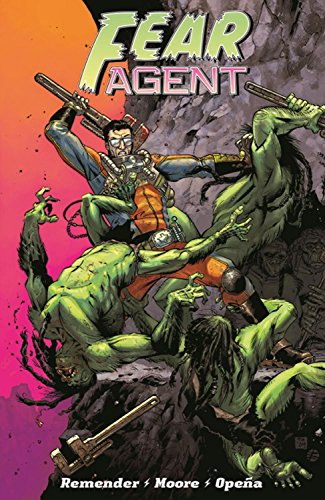
Rick Remender, Tony Moore, Jerome Opeña and others, Fear Agent, Final Edition Volume 1 (Image Comics 2018)
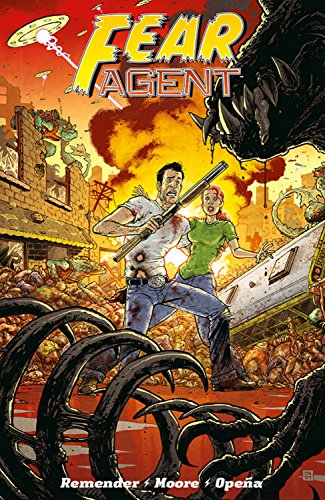
––––––––––– Volume 2 (Image Comics 2018)

Heath Hudson is an old-fashioned, hard-drinking, hard-fighting, constantly beaten-up hero. His adventures as told in the Fear Agent comics amount to one spectacular action scene after another, as at least three, no four, alien species battle each other with Earth’s inhabitants as appalling collateral damage. Heath’s ultra-masculinity – some would say ultra-toxic masculinity – comes up against the acerbic insights of the women he loves, and who almost plausibly love him. It’s a rip-roaring roller-coasting, swashbuckling space story (and yes, there are actual pirates). There’s romance, betrayal, monstrous revenge, guilt, heroism, sacrifice … and a lot of splatter.

The artwork, if you’re into this sort of thing, is brilliant. I often couldn’t tell what was happening, but usually on closer inspection it all made sense, though I wish I hadn’t looked so closely at some of the dismemberments.

Regular quotes from Samuel Clemens (never named as Mark Twain) hint at depths to Heath’s character that we otherwise don’t see because he is too busy saving everyone and being beat up. They also hint that Rick Rememder, Heath’s creator, may be more widely read than you first suspect.

The adventures in these two volumes first appeared in a series of monthly comics. Volume 1 comprises the contents of issues 1 to 10, which were published in 2005 and 2006. Volume 2 comprises issues 12 to 15, and 17 to 21 (Issues 11 and 16 evidently weren’t part of the longer story arcs.) Final Edition volumes 3 and 4 are out there somewhere waiting to play their part in our father–son gift-exchange system.

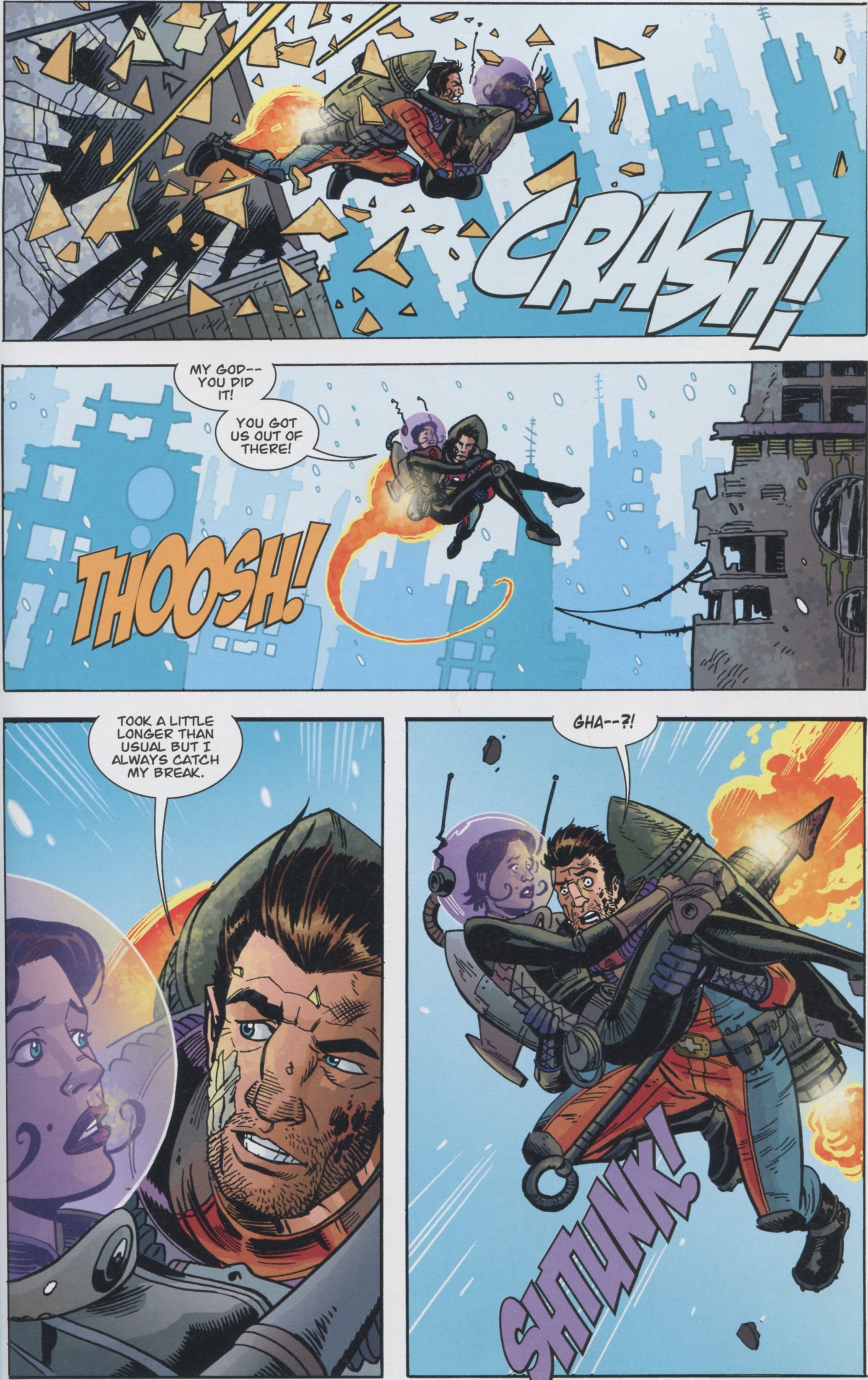
As with most comic collections, these pages are unnumbered, but here’s a scan of page 75 by my count. Sadly, it doesn’t include any of the grotesque alien life forms, but if you look closely you’ll see that no sooner has Heath pulled off an impossible rescue (of Mara, who is no slouch herself when it come to a fight) and allows himself a moment to gloat, than a terrible thing happens. (Spoiler: the harpoon thing that pierces him actually kills him, but luckily someone makes a clone from his dead body and he can continue almost as good as new. Equally extreme things may be happening to him at the end of the second volume. – only the third volume will tell.)

Pencils Tony Moore; Inks Sean Parsons & Mike Manley; Colors Lee Loughbridge

A film or TV show may be on the way. I’ll give it a miss, but I’m enjoying the comics, especially as I’ve got a particularly nasty non-Covid cold, and my immune system is being just as heroic and taking just as many hits as poor old Heath.

Summer reads 7: Gabriel Zaid’s So Many Books

Gabriel Zaid, So Many Books, translated by Natasha Wimmer (Sort Of Books, 2004)

I took a number of physically small books away on our summer break, and have blogged about them as ‘Summer reads’. I was only dimly aware that they were all gifts – either from friends who thought I’d enjoy them or from publishers who hoped I’d blog about enjoying them.

So Many Books was the former kind of gift, and has its own opinion on books as gifts. An early chapter says that they ‘threaten the recipient with the task of responding to the questions “Have you read it yet? What did you think of it?”‘ and goes on:

In fact, the most uncommercial slogan in the world might be: ‘Give a book! It’s like giving an obligation.’

(‘An Embarrassment of Books’, page 13)

The obligation in this case was entirely enjoyable.

Gabriel Zaid is a Mexican poet and essayist. His Wikipedia entry lists a formidable number of essays on a broad range of topics. This little hardback, of the kind that sits on the front counter of a bookshop, is a series of short essays that revolve around the vast number of books published each year: the impossibility of any one person reading more than a tiny fraction of them; the way books, compared to movies or TV shows, are inexpensive to produce in small numbers so don’t have to be best-sellers to be viable; the relationship between ‘culture’ and ‘commerce’; the nature of reading; the way many people, especially academics and aspiring poets, want their writing to be published but tend not to read other people’s; why economies of scale apply to motor vehicles but not to books; and more.

So Many Books (which my fingers keep wanting to call Too Many Books, not necessarily what Zaid means) was published in Spanish as Los demasiados libros in 1996, and in Natasha Wimmer’s gorgeously smooth translation in 2003, before Amazon had completely dominated the book market, and before e-books and self-publishing really took off, so some of it is well out of date. But an update would require some tinkering at the edges of Zaid’s arguments rather than wholesale rethinking.

Regular readers of this blog will be able to tell that the book touches subjects close to my heart. Here’s Zaid on careful rewriting and copy-editing:

[A writer who] is a doctor, a lawyer, or an executive … can’t devote himself to rewriting a paragraph over and over, although the additional work might save his readers time. It is absurd for the writer to devote two hours to saving his reader a minute if the text is a note to his secretary. But if it is a book with twelve thousand readers, each minute represents a social benefit of two hundred hours in exchange for two, and the reward is one hundred times the cost. …

Of course, the cost of reading would be much reduced if authors and publishers respected readers’ time more, and if texts that had little to say, or were badly written or poorly edited, were never published.

(‘The Cost of Reading’, p 88–89)

Here he is being completely wrong about reading very slowly (see my series of blog posts on A la recherche du temps perdu, The Prelude, the Iliad, and now Middlemarch):

Is anything more certain to make a book completely unintelligible than reading it slowly enough? It’s like examining a mural from two centimetres away and scanning it at a rate of ten square centimetres every third day for a year, like a short-sighted slug. This doesn’t allow for the integration of the whole, for taking in the mural at a glance.

(‘Some Questions About the Circulation of Books’, p 72)

On bookshops:

To be angry because a book isn’t where you want it to be is to be angry at the randomness of fate.

(‘Constellations of Books’, p 110)

Early in my blogging life I wrestled with the word fortuitous in a number of posts. I’m pleased to report that Gabriel Zaid uses it in a way I find completely unproblematic:

In a good bookshop, supply and demand are fortuitous, but not chaotic: they have a physiognomy, a recognisable identity, like constellations. The probability of finding a particular book increases in relation to the clarity of the shop’s focus, the diligence and shrewdness of the bookseller, and the size of the business.

And from page 75, the opening of ‘The End of the Book’:

No experts in technological forecasting are predicting the end of fire or the wheel or the alphabet, inventions that are thousands of years old but have never been surpassed, despite being the products of underdeveloped peoples. And yet there are prophets who proclaim the death of the book. This prophecy is understood as an apocalyptic judgment: the overabundance of books oppresses humanity and in the end will provoke divine wrath. But as a technological judgment, it doesn’t withstand the slightest scrutiny.

The essays are witty, instructive, thought-provoking, satirical and totally readable. If you stumble on them, possibly in someone else’s to-be-read pile or a street library, I encourage you to dip in.

And that’s a wrap for my Summer Reads.

Summer reads 6: Jane Gibian’s Beneath the Tree Line

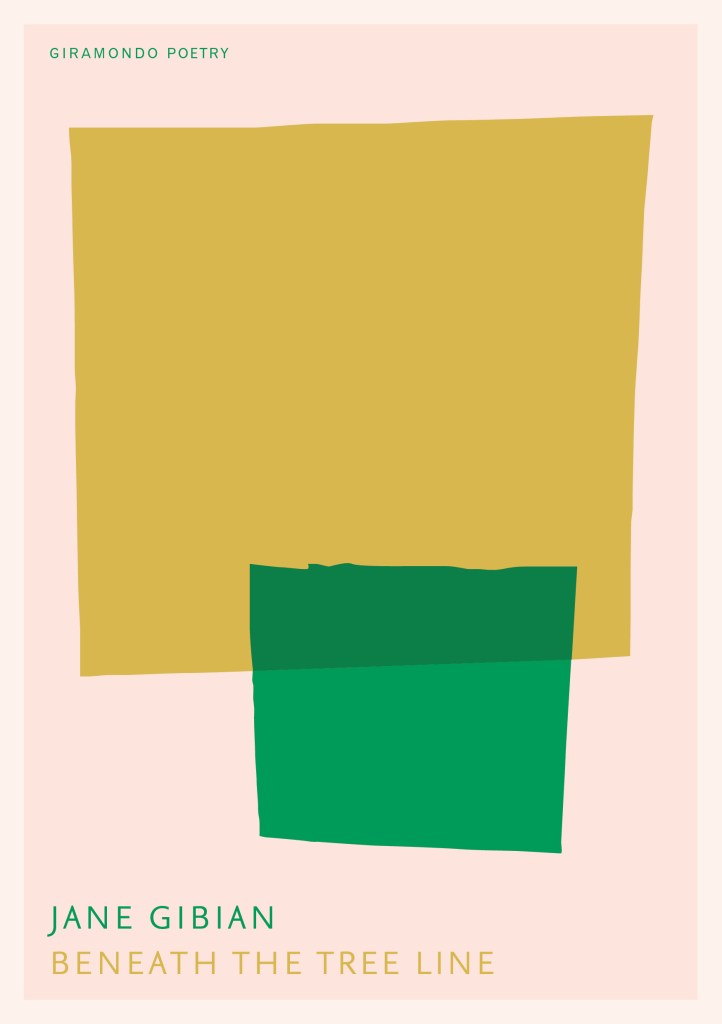
Jane Gibian, Beneath the Tree Line: New Poems (Giramondo 2021)

When Jane Gibian read her poem ‘Leftovers from a Pirate Party’ at a Sydney Writers’ Festival event in 2017, she told us that it was made up of subject lines from freecycle emails. I was a frequent freecycler at the time and was delighted that she had found poetry there – the title of the poem being just one of the poem’s evocative lines.

‘Leftovers from a Pirate Party’ turns up in this book without a note on its sources, and it still works, evoking a wonderful variety of life, and detritus. You can read a version with some extraneous scanner-generated characters at this link. It’s in a section of the book devoted mainly to similar found poems – including ‘Seventeen titles on the New Books shelf: June–July 2019’ whose title a) tells the reader what to expect and b) reminds us that Jane Gibian works as a librarian. At first glance you’d think this playful section, mucking around with lists of found language, was in a different world from the rest of the book, which, as an Author’s Note (online at the Giramondo website, here) puts it elegantly, is ‘preoccupied with the natural world and our place in its increasingly precarious situation’. The note continues:

My thoughts and writing practice seem to be most active in places of wildness, preferably wilderness. Many of these poems engage directly with the natural environment through a range of approaches: human engagement – both fascination and despair – and the natural world itself, disinterested and unforgiving of us, one animal in a complex living web.

That’s far cry from, say, this from ‘Leftovers’:

RE-OFFER: Disposable diapers
for small cat/dog

Yet among the many things I love and respond to in this collection, there are a lot of lists: from signs of the changing seasons in ‘Each turn’, to observations while travelling and learning the language in Vietnam, to vestigial organs in the human body in ‘Vestigial’. One of the most powerful poems in the book, ‘Waiting’ (which you can read on the Cordite Poetry Review website), does the crucial work of helping the reader grasp the reality of the climate emergency largely by means of a list: parked cars, ‘a mizzle of rain’, newscasts, coral, a factoid about Mars, St Andrew’s Cross spiders, an approaching train. Of course, it’s much more than that, and when I came to the final lines (if that’s the right word for a prose poem) I had to go for a little walk:

in the five previous known extinctions of all life / coral was the first to die / your eyes meet again in the rear-vision mirror

The US poet William Carlos Williams had a famous slogan summarising the principles underlying Imagism: ‘No ideas but in things.’ Jane Gibian isn’t an imagist, and her poetry doesn’t avoid explicit statement of ideas. Maybe it’s more like: sometimes (often?), rather than spelling out your ideas you can give readers an image and let them have their own ideas.

‘Arid zone’ on page 74–75 is a terrific example of this kind of thing:

This isn’t a poem that demands close reading to be appreciated, but it’s worth pausing over.

It’s as much a list as ‘Leftovers from a Pirate Party’ – leftovers from a sustained drought, maybe.

My Latin teacher in secondary school might have called it a congeries, a heaping up, of sights seen from a car travelling across drought-stricken country. Strictly speaking, they’re not haiku or senryu, but they owe a lot to those forms (which are similar in number of syllables etc, but the senryu is more likely to include something about human foibles). The words in capitals at the start of each group of lines look as if they are subtitles, but they’re not. They are road signs, seen from the car just as the other images are, and listed with them more or less arbitrarily.

It’s worth noticing the way the poem sits on the page. The plentiful white space reinforces the sense that the poet is covering great distances, most of it in silence.

arid zone


CREST
desiccated leather sacks 
punctuating the desert highway 
once were cattle, 
whitened bones worn through 
the taut hides

Not just one corpse, and not the corpses of natural desert dwellers. This is country that usually sustains grazing cattle. We are witnessing the aridity of drought.

Notice how the line breaks work: twice in these five lines, you think you’ve come to end of a sentence, but it continues over the line – the leather sacks … once were cattle, and the bones have worn through … the taut hides. This slight syntactical ambiguity slows you down, as if your gaze has to linger on the passing sight a moment longer.

DIP
Careful Driving Techniques Are Advisable 
informs a buckled sign 
on the unsealed road;
we skipped the National Road Transport
Hall of Fame

This is the senryu-ish section. That is, it deals with human foibles rather than, like the haiku, with observations of nature and the seasons. Officialdom is helpless to deal with this natural disaster: it offers inane advice, allows signs and roads to deteriorate, and promotes a self-congratulatory view of the past.

FLOODWAY
whistling kites float above us 
and beside 130 km/hour traffic, 
a motionless eagle stands stern-eyed 
with a roadkill meal

This is the only road sign that relates to what follows it – and it does it with extreme irony.

You notice the counterpoints in these lines: movement in the first two lines vs motionlessness in the next two; floating kites vs speeding traffic; the whistling of the kites vs the implied roar of the traffic; our implied eyes seeing the kites vs the stern eyes of the eagle (watching us?); the traffic vs the roadkill; the eagle vs the unknown species of roadkill. I love the finality of the word ‘meal’. I’d be astonished if Jane Gibian had George Herbert in mind when she wrote this, but to my ear it has the same satisfying note of completion as the last line of his marvellous poem Love (III): ‘So I did sit and eat.’

GRID
an incongruous cow
lolls hotly in the scarce shade 
of a spindly leaved shrub

Why ‘incongruous’? It stands out as the only adjective in the poem that implies a judgement. It certainly slows the reader down because its meaning isn’t clear. I suppose a cow lolling in the shade of a tree is a normal sight in a green pasture, and even more normal if it’s part of a herd. A solitary cow in country that is scattered with corpses of cattle is incongruous because alive even more than because it’s alone.

The adjectives and adverbs – ‘incongruous’, ‘hotly’, ‘scarce’, ‘spindly leaved’ – are doing a lot of work in these three lines. Remove any one of them and the image changes substantially. That is also so if the shrub is ‘spindly’ rather than ‘spindly leaved’.

ROAD NARROWS
butterfly wing-dust
stuck to the windscreen

We’ve arrived, with the familiar image of a dirty windscreen after a long road trip. After all the looking (and in the case of the museum, not-looking) of the previous sections, our attention is drawn much closer to home. The car travellers aren’t uninvolved observers: we have been doing our share of damage, and our vision is partly obscured by the damage we’ve done. It’s not flies or beetles or cabbage moths (of which we saw a lot on our recent road trip), but butterflies. It would be pushing things to see butterflies here in their mediaeval status as symbols of the soul – it’s not that kind of poem. But butterflies are beautiful, fragile creatures, reduced to wing-dust that we must look through to see in front of us. At least, that’s where my mind goes: an idea that – for me – is in these things, is that there’s no such thing as an innocent observer.

I need to say that I’ve barely touched on one aspect of this book. You can see Jane Gibian’s poems on line at PoemHunter, Jacket2 and Cordite Poetry Review, among other places.


I am grateful to Giramondo Publishing for my copy of Beneath the Tree Line.