Category Archives: Books

The book group go to Bleak House

Charles Dickens, Bleak House (1852, Project Gutenberg version, prepared by Donald Lainsman with revision and corrections by Thomas Berger and Joseph E Loewenstein)
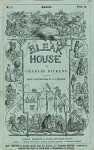
Unless you count comics or movie and TV adaptations, just about anything by Dickens is likely to win me a game of Humiliation (rules at the link). When someone suggested him for our next Book Group title I was happy, and even happier when we settled on Bleak House: Neil Gaiman has been going on about it on his blog recently, and my friend Cassandra Golds says it is a huge presence in two of her recent novels.

Before the meeting:
This is the first book I’ve read on iPhone and iPad, and it was a good experience. The iPad is more satisfyingly book sized, but I was surprised at how much I enjoyed the sense of continual progress that comes with the iPhone. One of the book’s 8041 screens had to be ‘turned’ every couple of seconds – so many words, but in such tiny portions!

I was probably out of harmony with the spirit of the book, not so much because of the electronic devices as because I read it in just a few weeks. It was originally published as a serial over 20 months: if you read one of its 67 chapters a week you would have kept pace. I doubt if anyone much reads at such a leisurely pace any more, and we’re probably the poorer for it. Anyhow, it’s a truly wonderful book which I recommend for when you’re in the mood for sustained, leisurely reading.

I’m confident I have nothing at all original to say about the book itself, so I’ll presume on a little of your time by ruminating on translation issues. Every now and then someone writes an article saying that each generation needs its own translation of [insert name of classic work here]. The idea is that we need to have ancient Latin or Renaissance Spanish served up in contemporary language. By this logic, Italian or Spanish readers need a fresh translation of Dickens every 50 years or so. If so, doesn’t it follow that we need an updating in English just as regularly? After all, the language has changed in the last 150 years, and early 21st century English speakers have a very different, and more diverse, take on the world than their mid-19th century equivalents. Where Dickens could assume that literate English speakers shared a vast set of references – the Hebrew and Christian Bibles, Shakespeare and classical mythology come to mind, and there’s plenty of each in Bleak House – we can no longer do that. Just for the heck of it, I thought I’d see how a hypothetical translator might tackle the opening:

London. Michaelmas term lately over, and the Lord Chancellor sitting in Lincoln’s Inn Hall. Implacable November weather. As much mud in the streets as if the waters had but newly retired from the face of the earth, and it would not be wonderful to meet a Megalosaurus, forty feet long or so, waddling like an elephantine lizard up Holborn Hill.

I thought ‘translating’ this would be a straightforward bit of fun, but by the second word I was in trouble. When I was at university we had three terms, Lent, Trinity and Michaelmas, but surely Dickens isn’t talking about university here? Did the English courts have terms? (Do they still?) What is Lincoln’s Inn Hall, and who is the Lord Chancellor again? And so on. None of this worried me at all when I read the book, but a translator might feel obliged to do something like:

London. The year coming to an end, and the nation’s most eminent judge, the Lord Chancellor, hearing cases in Lincoln’s Inn Hall. Implacable November weather. As much mud in the streets as if the Flood had just withdrawn from the face of the earth, and it would not be surprising to meet a Megalosaurus, forty feet long or so, waddling up Holborn Hill.

There, now that’s more accessible, isn’t it? (No need to gloss the Megalosaurus for 21st century readers, I thought, but the edgy play on biblical and palaeontological versions of prehistory does need clarifying.) It’s not quite Dickens, but then what translation is? Interestingly enough, even being facetious I couldn’t bear to touch what comes next:

Smoke lowering down from chimney-pots, making a soft black drizzle, with flakes of soot in it as big as full-grown snowflakes – gone into mourning, one might imagine, for the death of the sun. Dogs, undistinguishable in mire. Horses, scarcely better; splashed to their very blinkers. Foot passengers, jostling one another’s umbrellas in a general infection of ill temper, and losing their foot-hold at street-corners, where tens of thousands of other foot passengers have been slipping and sliding since the day broke (if this day ever broke), adding new deposits to the crust upon crust of mud, sticking at those points tenaciously to the pavement, and accumulating at compound interest.

In short, I found the novel irresistible, especially for the way it wallows in language. And Cassandra is right – it’s full of echoes of Clair de Lune and The Museum of Mary Child.

After the meeting:
It’s winter in Sydney, and half of us were away, either home sick or visiting warmer climes. Of the five who showed, three had read the whole book, one was a hundred or so pages from the end, and the last confessed up front that he’d picked up a copy in a bookshop, and then thought, ‘Nah!’, though it turned out he had read it 20 or so years ago.

It was a good book to discuss. We talked about Mr Guppy’s withdrawal of his proposal, the death of Little Jo, the use of catchphrases (‘Discipline must be maintained!’), the pleasure of reading bits aloud. Someone knew that the appalling Mrs Jellyby was based on Caroline Chisolm, and the execrable Skimpole on an actual person. We wondered about the politics, the anti-Jewish nastiness (‘Smallweed is a Jew’), the depiction of industrialisation. Someone had thought about this book in comparison to the other Great Works we’ve read, Anna Karenina and The Tree of Man, and found it suffered from the comparison. I don’t know what I think of that. I know I enjoyed it at least as much as the Tolstoy and quite a lot more than the White, but I suppose enjoyment isn’t everything.

I haven’t been deliberately secretive about this blog and its reports on the group, but nor have I deliberately drawn people’s attention to it. If anyone from the group does drop in, welcome! Please add a comment.

Antony Beevor’s Stalingrad

Antony Beevor, Stalingrad (2004, Penguin 2008)

Antony Beevor visited Sydney for the Writers’ Festival in 2007. His talk was interesting, and it evoked high-quality audience questions that came from a whole world of War History geekiness previously unknown to me. Although he’d recently published a book about the Spanish Civil War, it was Stalingrad that generated the serious senior fanboy passion. We bought the book not much later, but didn’t start reading it until July 2008. Now here we are, in mid 2011 and it’s done!

Notice I said ‘we’. The reason I took longer to read the book than Anthony Beevor took to write it is that I read it exclusively on long car rides, aloud to my regular driver, usually known on this blog as The Art Student. Apart from the reading being disrupted by our lamentable failure to do much travelling by car in the last three years (two return trips to Canberra, perhaps one southward, and just now north to Red Rock and surrounds), it was an excellent way to read this book.

As with Jared Diamond’s Guns, Germs and Steel, another car-journey book, the flow would be interrupted frequently by one or other of us exclaiming, querying, drawing parallels or pronouncing judgements. Once or twice, we had to stop the car so the driver–listener could peruse a map. After a certain point I stopped reading out the full name of every military unit, and occasionally I would give up the struggle to pronounce a German or Russian name in full. But such bumpy moments in no way detracted from the book’s holding power. It manages to move, apparently without effort, from close-up accounts of human cruelty, brutality and suffering to a broader strategic narrative; from the obsessions and denials of Hitler and Stalin, to the petty rivalries, quirks and duck-shovings of the officers on both sides, to the German troops’ sentimental yearning for family or the Russians’ pursuit of alcohol.

The wonderful Barbara Ehrenreich said on her blog recently, ‘War has been, and we still expect it to be, the most massive collective project human beings undertake.’ Having just read about the sheer logistics of attack and counter-attack, siege and counter-siege at Stalingrad, I can only say, ‘True, that!’ ‘But,’ Barbara Ehrenreich continued, ‘it has been evolving quickly in a very different direction, one in which human beings have a much smaller role to play.’ If that’s so, we can only be glad of it. The human participants in Stalingrad endured almost unbelievable extremes of cold and hunger: men literally dropped dead from hunger, wounded soldiers froze to death by the cartload. They performed acts of understandable but almost unimaginable cruelty and callousness: Russian prisoners-of war starved in scenes that foreshadowed the images of Jewish prisoners at the end of the war; German prisoners were shot at random by their Soviet guards. There was plenty of heroism as well, of course, and an extraordinary episode of contact between individuals from both sides.

I turned down two page corners. The first was to mark the account of Hitler’s speech on 30 January 1943, the 10th anniversary of his accession to power, when the German army at Stalingrad was surrounded, starving, under-equipped, low on ammunition and facing almost certain defeat (Hitler expected them to fight on and the generals to commit suicide). The speech, delivered for some reason by Goebbels, made just one mention of Stalingrad:

The heroic struggle of our soldiers on the Volga should be an exhortation to everyone to do his maximum in the struggle for Germany’s freedom and our nation’s future, and in a wider sense for the preservation of the whole of Europe.

Of course there’s no comparison with the circumstances of Australian troops in Afghanistan, but doesn’t that rhetoric sound awfully familiar, and isn’t it equally hollow?

My other turned-down corner marks that contact between individuals I mentioned. In early January, when things were already obviously hopeless for the Germans, the Russians sent envoys under a white flag to offer a truce. The whole episode, drawing on an unpublished manuscript by Nikolay Dmitrevich Dyatlenko, one of the envoys, is marvellously told, full of poignant detail, but one moment grabbed my imagination.The envoys approach the German lines. They call out that they have a message for the German commander-in-chief.

‘Come here then,’ [a warrant officer] said. Several more heads popped up and guns were levelled at them. Dyatlenko refused to advance until officers were called. Both sides became nervous during the long wait. Eventually, the warrant officer set off towards the rear to fetch his company commander. As soon as he had left, German soldiers stood up and started to banter. ‘Rus! Komm, komm!’ they called. One soldier, a short man, bundled in many rags, clambered up on to the parapet of the trench and began to play the fool. He pointed to himself in an operatic parody. ‘Ich bin Offizier,’ he sang.
_____‘I can see what sort of an officer you are,’ Dyatlenko retorted, and the German soldiers laughed. The joker’s companions grabbed his ankles and dragged him back into the trench. Smyslov and Siderov [the other envoys] were laughing too.

And then back to the serious business of war, of the truce being offered and refused as per Hitler’s orders, and thousands more deaths being decided by the event. But in the middle of all that, with the stakes so high and the conditions already so desperate, that short man, bundled against the terrible cold, could stand tall and mock the whole catastrophe.

Overland 203

Jeff Sparrow (editor), Overland 203, Winter 2011

This is another excellent issue of Overland. Rodney Croome puts the current debate over who’s allowed to marry whom into an Australian historical context where restriction of marriage rights has been significant for convicts and until shockingly recently for Aboriginal people. Benjamin Law tells how Twitter kept him connected with his home city, Brisbane, when he was in India during the floods. Phillip Deery gives three alarming case histories from the bad old days (we hope) of ASIO. There’s a swag of poems, of which the ones that spoke most to me are by Ali Alizadeh (a poem dedicated to the Bard of the Hawkesbury Bob Adamson that begins cheekily, ‘Rivers are all the same. Dirty water / if you’re lucky, smelly mud and silt / increasingly the case.’) and Thomas Denton (an energetic vernacular narrative that shared with Judy Durrant the 2010 Overland Judith Wright Poetry Prize).

Fiona Wright has an excellent, optimistic piece on the Death and Rebirth of Heat. This is the first in the Meanland series of essays about the changing world of publishing that I’ve been able to engage with, and anyone who misses Heat as it was ought to read it. The essay took an unexpectedly personal turn for me. After noting the paucity of metropolitan newspaper reviews of Heat and other Giramondo publications, it goes on:

We’ve had much more support from bloggers, many of whom have given the magazine – and the books – consistent coverage and space. They’ve often written about HEAT with a level of thought and understanding that we should have expected, but didn’t. (One blogger in particular has always taken great pains to point out any typos we missed. But you can’t expect in-depth without a few ripples.)

Oh my god, she’s talking about me! Though perhaps not, because I didn’t so much point out typos as complain bitterly, some would say churlishly, about errors that either confused or, probably more often if I’m honest, amused me: ‘gauge’ instead of ‘gage’ really did stop me in my tracks, whereas ‘vesper’ for ‘Vespa’ was to smile. It would be nice to think I have been ‘instrumental in generating and spreading word of mouth’ for Giramondo’s publications, as she says bloggers often are, because of course I love their work.

A final word, because now I have a reputation to maintain: Thomas Nelson’s poem ‘The Pirouette’, set in a ‘beach joint’ in New Zealand, includes the line, ‘New Zealanders call this kind of house a Batch’. Well, not really. That’s not a typo, it’s a spelling mistake. What New Zealanders call that kind of house sounds like ‘batch’, but it’s generally spelled ‘bach’ (as in bachelor, I think). The mistake in this case may be attributed to the poem’s narrator, of course, but this is a piece of New Zealand English, like ‘pottle’ (what yoghurt comes in) and ‘section’ (allotment) and ‘dairy’ (milk bar) that can trip up unwary Australian editors.

Ah, the fourth estate

I recently saw Jon Stewart in conversation with someone on the US Fox network. His interlocutor claimed to see an equivalence between Fox’s reactionary agenda and the liberal agenda of, for example, the New York Times. Stewart conceded that the Times had a liberal bent, but, he said, it wasn’t an agenda like Fox’s. The problem he saw in the mainstream press was not ideological blinkeredness, but laziness and sensationalism. I thought of that exchange when I saw this little trio of posters outside the newsagents in Woolgoolga.

20110705-073800.jpg

But I suppose ‘We don’t know how serious the hendra outbreak is’, ‘Solar industry spokesperson overstates case’ and ‘Muslim community generally approves legislation on burqa’ just don’t get the adrenaline running or serve anyone’s interests apart from the public’s.

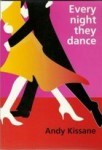
Andy Kissane’s Every night they dance

Andy Kissane, Every Night They Dance (Five Islands Press 2000)

Someone I’ve never met emailed me to say they’d stumbled upon my blog post about Andy Kissane’s recent book, Out to Lunch, and told me among other things that the one remaining copy of his previous book was on the shelves at Gleebooks in Dulwich Hill. Well, what is one to do in response to such individualised marketing? I caught the 428 to Dulwich Hill that afternoon.

I probably would have bought this book if I’d picked it up by pure chance and opened it at the table of contents. It’s got ‘The Ghosts of Marrickville Metro’ – the ‘Tro is now my local shopping centre. It’s got ‘Jean Devanny Writes’ – Jean Devanny wrote Sugar Heaven, the socialist realist novel set in my town of origin. And it’s got ‘The Separation Sonnets’, a title that could have been designed as bait for me, sucker for the sonnet that I am.

The book is in two parts. The contents of the first could be described as public poems in one way or another. There are historical pieces, some of them monologues, like the Marrickville Metro poems or ‘The Station Owner’s Daughter, Narrandera’ (an elliptical account of a massacre). Other monologues are vehicles for meditation on art and artists: Arthur Streeton, John Brack, Jean Devanny (though that one is a letter – to ‘Miles’ – rather than strictly a monologue). And there’s a longish narrative, ‘Tristan and Isolde’, that has genuine emotional force, but somehow feels public, like a reflection on modern relationships rather than a cry from the thick of it.

The second part gets personal. Narrative is still the dominant mode, but mostly it feels as if the voice of the poems is close to being Andy Kissane’s. Even an obvious exception, ‘Fanny Burney’s Mastectomy, 1811’, takes on a very intimate feel from being part of ‘Breast Triptych’, in the other two poems of which the poet tells of his mother’s breast cancer. There are poems about the vicissitudes of renting, the joys of sex (‘Beyond Metaphor’), the awkwardness of a father-son relationship. The 12 unrhymed ‘Separation Sonnets’ tell a story that may be just as much a fiction as ‘Tristan and Isolde’, but it’s much more rooted in a sense of real life and cuts much closer to the bone.

And then there are the poems about reproduction – ‘Miscarriages’, ‘Nineteen Weeks’, ‘Christmas Tree’ and ‘Birth’. All of these are wonderful, wonderful. I don’t remember reading anything by a man on these subjects, certainly nothing as unaffectedly heartfelt. The middle two in particular, dealing with a late-stage abortion, are finely poised, tender, undefensive, generous, heartbreaking.

Thanks, Andy.

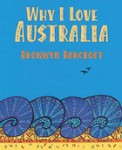
Why Bronwyn Bancroft Loves Australia

Bronwyn Bancroft, Why I Love Australia (Little Hare 2010)

I was given an iTunes voucher for my birthday on the understanding that I would use it to buy book. It’s taken a couple of months and a system upgrade, but I’ve bought this one. And of course now I want a dead-trees copy. It’s on the short list for the Prime Minister’s Literary Awards, and a good thing too. If like me you feel ever so slightly squeamish when you watch those Qantas ads, ‘I still call Australia home’, this is a marvellous antidote – a brilliant, bold, spectacularly beautiful acknowledgement of country.


Quarterly Essay on the country and the city

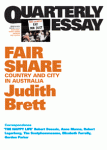
Judith Brett, Fair Share: Country and city in Australia (Quarterly Essay 42)

Judith Brett has an admirable capacity for seeing beyond the surface of ugly or bizarre utterances to the valid concerns or at least genuine pain that has given rise to them. In this essay, for example, she resists (or perhaps doesn’t even feel) the pull to mock or repudiate Bob Katter’s extreme language when he’s arguing for his constituency. And she doesn’t indulge in the city dweller’s revulsion from book-burning when she discusses the farmers who burned copies of the Murray–Darling Basin Authority’s draft plan last year – no snide comment about people who condemn and burn documents they haven’t had time to read.  That is to say, she side-steps the kind of point-scoring that tends to pass for debate in the press these days. Instead, she addresses her subject seriously and respectfully. Even as she argues that ‘economic rationalism’ brought havoc to rural Australia, charts the rise and fall of the Country/National Party, or notes the impact of Pauline Hanson, she avoids cheap shots.

It’s an excellent, thoughtful essay. This paragraph comes close to encapsulating its argument :

City and country in Australia share a history, a long history both of interdependence and of watchful suspicion. The understanding of that interdependence was strong in the first two centuries of Australia’s European settlement, and the attempt to build a vibrant and self-sustaining countryside was a major political preoccupation. The country made claims on the city for support, and by and large the city attempted to meet them as part of a compact in which Australians shared the cost of living in a big country. This understanding has waned rapidly since the neoliberal 1980s. Since then the country has seemed to be in a perpetual state of crisis: dying towns, depressed and ageing farmers, unproductive farms carrying too much debt, environmentally unsustainable irrigation schemes, droughts and flooding rains, crisis-ridden marketing schemes like the wool stockpile and the Australian Wheat Board, and so on. The picture is of irreversible decline. Yet, as Tony Windsor reminds us, over 30 per cent of Australians live outside the big cities. What is their role in the nation? And what are we to do with all that land beyond the ranges and the thinly settled coastal strip?

My two cents worth: read it – you’ll see the world a little better!

As usual, this Quarterly Essay includes correspondence about the previous issue. The contributors here are all but unanimous in their appreciation of David Malouf’s The Happy Life, calling it variously ‘beguiling’, ‘characteristically delicate’, ‘elegant and humane’, ‘thoughtful and courteous’. They are also all but unanimous in finding that he didn’t say anything definitive about happiness. A Russian scholar argues that his reading of A Day in the Life of Ivan Denisovich is simplistic an uninformed. A psychiatrist invokes the academic literature about happiness. Several others push their respective barrows with varying degrees of elegance and insight.

David Malouf does not rejoin the conversation. I read his silence as signifying that he’s perfectly happy for other people to have their say, to correct him where needed, to have their own crack at the subject. After all his piece differed from most Quarterly Essays by being in the tradition of the essay as a crack at a subject rather than a tightly argued thesis. Sometimes the appropriate response to an essay is not to argue with it. Maybe Marieke Hardy got it right on the First Tuesday Book Club last night. She said she felt as she was reading The Happy Life that she was sitting on David Malouf’s lap resting her cheeks on his bald head and letting him read to her.

Jim Shepard’s Like You’d Understand, Anyway

Jim Shepard, Like You’d Understand, Anyway ( 2007)

A friend told me about this in an email, describing it as short stories soaked in historical research, and mentioning that one of the stories is a set of fictitious journals kept by Charles Sturt. I trekked to the library the same day.

Most of the book’s eleven short stories evoke historical moments: Chernobyl in April 1986, Hadrian’s Wall in ancient times, a Nazi-sponsored quest for evidence of the yeti, Sturt’s exploration of the south Australian desert, a Russian space launch, the Battle of Marathon, and the French Revolution’s Reign of Terror. These historical events aren’t there as background to the stories, they are the stories, reimagined from the point of view of key participants. For instance, the Reign of Terror story, ‘Sans Farine‘, is narrated by Charles-Henri Sanson, the royal executioner before the revolution who was kept on in the job to become the man in charge of the guillotine. The real Sanson has a Wikipedia entry, which confirms that Shepard’s story stays close to the known facts. But Shepard doesn’t give us some kind of pedagogical re-enactment – this story in particular takes us to a poignant human reality. The horrors of capital punishment before and after the revolution are graphically presented, and Shepard avoids what might seem another obvious temptation, to editorialise on the evils of state murder. His concern is with the experience of the man, and with coming to imaginative grips with historical events.

Eons ago, on the way to an MA thesis that never eventuated, I read Sturt’s published journals, as well as those of Leichhardt, Eyre, Mitchell, George Grey and Ernest Giles. My thesis would have argued, of Eyre’s Journals in particular, that these books were literary compositions and should be much more widely read. Novelists and poets including Patrick White and Francis Webb, have drawn on the various Journals, and there is at least one anthology of excerpts. Shepard’s ‘The First South Central Australian Expedition’ captures the feel of the original. It does something else as well, as the fictional diarist Sturt is much more forthcoming about his emotional life than the real one was, at least in published form, but Sturt is much more a presence in the story than a jumping off point.

The book is dedicated to the author’s brother, and it includes plenty of brothers and brotherly relationships. Probably the single thing that stops the historical pieces from feeling didactic or info-dump-ish is the overarching preoccupation with relationships between men. Even the one story with a female narrator is set in the predominantly male milieu of the Russian space program, and the relationship between the two main female characters has the kind of competition traditionally found between men. The nerdy scribe overwhelmed by barbarians in ‘Hadrian’s Wall’ has a lot in common with the skinny twelve-year-old who manages to survive the bullying at summer camp in ‘Courtesy for Beginners’. The team sport in ‘Trample the Dead, Hurdle the Weak’ (surely a science fictional take on American Football rather than a realistic account!) is as brutalising in its way as the work of the executioner in ‘Sans Farine’. Fathers ache for their sons, sons for their fathers. Sons die. Fathers die. Brothers die. Occasionally there’s a woman, but she’s not let in easily. Like she’d understand, anyway.

Adam Aitken’s Tonto’s Revenge

Adam Aitken, Tonto’s Revenge (Tinfish Press 2011)

Tinfish Press is a small Hawai’ian publishing house run by Susan M Schultz, the poet who wrote Dementia Blog. It publishes poetry in the Tinfish journal, in books and in chapbooks. Even if Adam Aitken hadn’t been Distinguished Visiting Writer at the University of Hawai’i–Mānoa in 2010,  would have been a natural fit for Tinfish. He wrote recently on his blog:

I have spent my whole career as a writer trying to critique and understand a cross-cultural poetics and [my] multicultural cultural capital.

Almost like call and response, the Tinfish website says:

We publish work from the Pacific region, concentrating on language issues, colonialism, Buddhism, place, and poetic form. Above all, we seek to create alliances between writers whose work crosses national and aesthetic borders.

Tonto’s Revenge is the second title in the Tinfish Retro Series, which will comprise 12 chapbooks, $3 USD each or $36 for the set, available from http://tinfisheditor.blogspot.com. (You can read Susan Schultz’s blog entry on this book here.)

I enjoyed the book’s twelve poems very much. Most of them are responses to Hawai’i: conversations on TheBus (not a typo), an encounter with a homeless woman, an elegy for the actor who played Danno in Hawai’i Five-O, a meditation on a major shopping precinct. Five monologues by ‘The Sheriff’ are less Hawai’i specific, but they too relate to encounters with the US more broadly. For example, ‘The Sheriff as Recidivist’ which gives the book its title, plays with a particularly US flavour of political correctness, in which certain words have been declared ‘bad’:

I know I can't call him that, my dusky Injun,
but I does.
[...]
Tonto.
Now that Tumbleweed U's banned the term
now that it's banned
it's even sexier.

Here, as elsewhere, the play turns serious in a surprising way, but you’ll have to read the poem to find out how.  There’s a lot of playfulness in the book as a whole – playful puns, play with syntax, play with paradox – and a lot of affection.

Since this is a blog entry and not a review, here begin a couple of paragraphs on a very minor matter:

As is pretty inevitable these days, when we can never assume a common set of references between a poet and any given reader, there are plenty of obscurities. For example, in ‘Ala Moana’, the piece on the shopping precinct, which to my mind is the most interesting poem in the book, the narrator has been meditating on nostalgia:

So I want to write 747 poems
and not worry. Whose home is it?
Whose nostalgia?

Presumably he doesn’t mean he want to write seven hundred and forty-seven poems. Is he looking forward to the time when we will be nostalgic for 747s?  Perhaps he is stating an ambition to write big poems that will carry many people to new places. This morning, re-reading the poem while walking the dog, I stumbled on this line, and moved on – as you do. Just now, checking to see if Adam had uploaded the poem to his blog as he has some of the others, I read this: ‘I feel deeply complicit in a kind of poetic tourism, where I am always unmoored, or detached from a deep sense of belonging to a place. Susan Schultz calls this the “747” poem, a poem of shallow impressions, a sketch.’

Ahh! (And since I wrote that last sentence, I’ve googled ‘747 poems’ and found lots of references: it’s not a deliberate obscurity.)

Added later: Susan Schultz has added a clarification in the comments.

Beyond White Guilt at Gleebooks

Last night we cashed in a couple of our Gleeclub vouchers to hear Sarah Maddison in conversation with Jeff McMullen about the former’s new book, Beyond White Guilt. A couple of years ago, Sarah’s Black Politics drew on interviews with 30 Aboriginal leaders to give a kind of map of Aboriginal politics (the link is to my blog entry, which outlines some of salient points on the map). This book could be seen as a sequel, looking at non-Indigenous Australians.

A quick look at Wikipedia’s entry on Jeff McMullen shows him to be an eminently qualified whitefella to converse on this subject. He kicked off the conversation with two lists: on the one hand, invasion, dispossession, genocide, stealing children, and on the other denial, loss of memory and guilt. ‘We struggle in Australia,’ he said at one stage, ‘to have an honest and direct conversation [about the relationship between Indigenous and non-Indigenous Australians].’ This conversation was refreshingly free of indirection or quibble. I won’t try to summarise, but can offer a couple of notes.

Asked why she chose to focus on guilt, which is after all often a useless, self-punishing emotion, Sarah Maddison cited Bernhard Schlink’s Guilt About the Past which argues in the German context that every generation that doesn’t make a substantive break with the atrocities of its forebears is standing in solidarity with them. Her book doesn’t advocate that non-Indigenous Australians should wallow in guilt forevermore, but that we should ‘sit with’ our guilt for a time, not run from it either by taking action or by denial. Facing that discomfort is a necessary step to understanding and making thoughtful progress. [I liked this. I know a Native American woman who urges non-Indigenous people to put our minds to answering the question, ‘How have I personally benefited from genocide?’]

She talked about ‘high-identifiers’ – people for whom it is extremely difficult to acknowledge any negative dimensions to their national identity. Such people tend to think that the continuing disadvantage of Aboriginal people must be their fault, specifically must be because there’s something wrong with Aboriginal culture. She talked about the need for adaptive change, the kind of change that requires a change of perspective rather than a technological fix.

The questions were all excellent. Perhaps for the first time in my life I heard a very long question that was neither primarily self-promoting nor bizarrely tangential to the topic in hand. The questioner spoke of the problematic nature of the phrase ‘white guilt’ both because non-Indigenous Australia is very diverse, and ‘white’ covers only part of it, because the ‘we’ who actually experience guilt, as opposed to, say, denial, is very hard to define (is it only liberals?), and because guilt is a pretty dead-end notion anyway. These were interesting issues to raise, and, as Sarah Maddison acknowledged, weren’t going to be resolved in an hour before dinner on a Friday night.

No doubt I’ll blog about this again when I read the book.