Category Archives: Books

Coetzee’s Youth

J M Coetzee, Youth ( 2002)

This is the second of three (so far) novels in Coetzee’s Scenes from Provincial Life series, which are fiction, but also by strong implication unsparing autobiography. It takes up our hero as an 18 year old student and aspiring poet living in a one-room flat in Capetown and drops him again as a 24 year old computer programmer living in an upstairs room in a house in the depths of the Berkshire countryside, convinced that he is a total failure.

It’s the 1960s. The young Coetzee is committed to escape being defined by his family, trapped in the dullness of colonial life, and torn apart in what he sees as the impending revolution in South Africa. He aspires to the status of poet, and theorises endlessly to himself about how he should live (as opposed to write) to achieve that aim. He agonises over his incompetence in relationships with women, over which writers and artists he should emulate (Ezra Pound presides over his pantheon, and Beckett the novelist is a late apparition), over how to shake off his colonial identity. He rationalises his moments of appalling behaviour and then berates himself for his rationalising, and for his general coldness. He aspires to Angst, but realises his sole talent is for ‘misery, dull, honest misery’.

I loved this book. There are two possibilities: either Coetzee’s interior life as an adolescent/young adult was uncannily like mine, or he has turned a searing light onto his experience of that time of his life and laid bare something essential about the collision of adolescent romanticism with the demands of reality. Given that the externals of his life weren’t noticeably similar to mine, and I never had his overarching sense of destiny, I’m guessing it’s the latter. Young Coetzee’s misery, confusion about sex, self castigation, romantic theorising and bitter disillusion are all presented without commentary, but with a gentle irony – which may derive partly from the reader’s knowledge that this pathetic youth went on to win the Nobel Prize (and possibly that an idea that comes and goes on page 138 was the seed of his first novel), but which also simmers in the prose, bubbling to the surface as humour often enough to suggest, without invalidating the character’s intensely felt experience, that an older, wiser head is constantly there, shaping the story. My favourite bubble pops up when young Coetzee, who lives alone and feeds himself with classic adolescent male incompetence, is ruminating on Ford Madox Ford:

Ford says that the civilization of Provence owes its lightness and grace to a diet of fish and olive oil and garlic. In his new lodgings in Highgate, out of deference to Ford, he buys fish fingers instead of sausages, fries them in olive oil instead of butter, sprinkles garlic salt over them.

We do wonder if he misses the point about so much else by quite so wide a mark.

Young Coetzee was writing an academic thesis on Ford. The paragraph after the one I just quoted describes the thesis as involving ‘the task of reducing his hundreds of pages of notes in tiny handwriting to a web of connected prose’. My sense is that this book has achieved something very like that: whether Coetzee has drawn on actual diaries from the period or on the virtual pages of his recollection, he has created from the material a shiny, elegant narrative web.

Early in his stay in London, young Coetzee hears a BBC talk about the Russian poet Joseph Brodsky and is enraptured by his poetry. He reflects on what Brodsky and a handful of other poets mean to him:

they release their words into the air, and along the airwaves the words speed to his room, the words of the poets of his time, telling him again of what poetry can be and therefore what he can be, filling him with joy that he inhabits the same earth as they. ‘Signal heard in London – please continue to transmit’: that is the message he would send them if he could.

If in my early 20s I could have received this book as a signal, I would have responded, I’m sure, with a very similar joy. As it is, confident though I am that J M Coetzee won’t be reading my blog, I’m sending him a belated message on behalf of my younger self:  ‘Signal heard in Sydney 40 years later – please continue to transmit.’
—-
I read Youth in a library copy. A previous reader had ‘corrected’ the text:
  • on page 53 s/he fixed a simple typo, inserting be in ‘It would nice to write’ (‘Thank you,’ I thought)
  • on page 72 s/he altered pay to pays in ‘But none of the girls on the trains pay him any attention’ (‘Hmm, you are an old-fashioned pedant, but at least you left that But alone’)
  • on page 85 s/he changed oneself to one’s self in the sentence ‘Only love and art are, in his opinion, worthy of giving oneself to without reserve” (‘Someone please take the pen away from that person’)
  • on page 95 s/he changed the phrase to eat packet soup, possibly because one doesn’t eat soup, then – sensibly – scratched  out the alteration
  • thereafter, s/he presumably resigned themselves to the probability that Coetzee and his editors were competent after all.
  • A Raffish Experiment launch

    In my mid 20s I worked for The Currency Press. It was my first real job, and it spoiled me forever. Our offices were frequently visited by luminaries from Australia and beyond. David Williamson ducked to get under the lintel; Jim McNeil and Peter Kenna duelled with anecdotes over afternoon tea; Alex Buzo described one of his leading ladies as having a face like the back of a bus; Richard Eyre (whose Stage Beauty I watched on TV last night) dropped by on a visit from the UK; Aileen Corpus chatted about developments in Aboriginal theatre; Dorothy Hewett and Merv Lilley moved in just up the road. I don’t remember if I actually met Rex Cramphorn, but his Performance Syndicate was one of the most exciting things happening in Sydney theatre at that time. I remember editing a short piece he wrote for a little newsletter that Currency used to produce, in which he imagined a production of Don’s Party in which the actors wore masks and high platform soles. More to the point, his productions made a deep impression on me – I still find myself humming snatches of song from Muriel, a play he directed about a young woman with developmental delay.

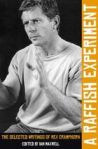
    Tonight at Gleebooks Louis Nowra, another occasional visitor to our office back then, launched A Raffish Experiment, a collection of Cramphorn’s writings, edited by Ian Maxwell and published by Currency Press. I got there early, bought a copy and sat in a corner browsing it, sipping on a glass of water (the only non-alcoholic drink on offer) while the crowd gathered. I didn’t see anyone I knew to talk to, though there were a number  faces familiar from stage, screen and the photographs in the book. I spent a lovely 20 minutes reading reviews of plays I saw more than 30 years ago. In 1970 Cramphorne (as he then spelled his name) described Hair as ‘the only doggedly good value in theatre here’, and ‘enjoyed the texts of Rosencrantz and Guildenstern Are Dead and Little Murders – though not the productions’. He describes the overture of a production of Reedy River as ‘a blackout in which the sonic hum of the air-conditioner contested for precedence with a medley of tunes hummed offstage’. Oh how one yearns for such a fearlessly opinionated reviewer these days.

    As the speeches were about to begin, a tall silver-haired man sat next to me. we exchanged pleasantries, and then I recognised him and said, ‘Oh hello Arthur!’ It was the great Arthur Dignam who of course doesn’t know me from Adam. By the time we’d established that, the lights had dimmed and the launch was on.

    Louis Nowra told charming tales of his collaborations with Cramphorn. Unlike almost everyone else in the theatre he didn’t pay much attention to opening nights – the show would come good eventually, and it didn’t really matter if that eventuality was three weeks into the season. (I must have been one lucky punter, as I have nothing but good memories of his shows, and looking at the list up the back of the book I can see that I did see quite a few.) Ian Maxwell read some excerpts from the second part of the book, which deals with Cramphorn’s own practice in the theatre and said he hopes it’s a book that will prove useful to anyone starting out on a career in the theatre – he wished he had been given a book like this when he was starting out to be a director: we can learn from Brecht and Artaud, and also from Rex Cramphorn.

    Speaking as one whose role in the theatre is to put a bum on a seat, I do hope a lot of them on the supply side read the book, and are infected with its disdain for the dull. The launch was a muted celebration of exactly that infection.

    Girl 3

    Stieg Larsson, The Girl Who Kicked the Hornets’ Nest (2007; tr Reg Keeland, Maclehose Press 2009)

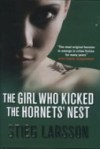
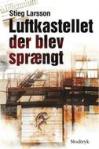
    Also known as: The queen in the palace of currents of air – A Rainha no Palácio das Correntes de Ar (Portuguese), La reina en el palacio de las corrientes de aire (Spanish), La Reina al palau dels corrents d’aire (Catalan), La reine dans le palais des courants d’air (French); The queen of the houses of cards – La regina dei castelli di carta (Italian); Justice – Gerechtigheid (Dutch); Forgiveness – Vergebung (German); Exploding  castles in the air The Castle in the Air That Was Blown Up (thanks to Reg Keeland in the comments for the correction) – Luftslottet som sprängdes (Swedish, original), Luftkastellet der blev sprængt (Danish), Pilvilinna joka romahti (Finnish), Luftslottet som sprengtes (Norwegian). Dear commenters, please correct my translations of these titles if you think they need it.

    Plenty of material there for a prediction exercise in a literacy class, and then there are the covers:

    In fact, as you would expect, neither the titles nor the covers actually tell you much about the book at all. It’s very long, hard to put down, and could have done with more stringent editing. All of its twists and turns are signalled well in advance, and there’s a prolonged anticlimax. but I liked it more than the other two. The Pippi-Longstocking-esque Lisbeth Salander is confined to a hospital bed and then a prison cell for almost the whole book, so the author’s irritating fascination with her didn’t have a lot of room to play. Perhaps perversely, I enjoy the regular pauses in the action in which characters explain to each other the specifics of the Swedish legal–political system and constitution. I even came to savour the meticulous plotting of police procedures and tracking of journalistic protocols that regularly slow the action to a crawl.

    Drawing the Global Colour Line

    Marilyn Lake & Henry Reynolds, Drawing the Global Colour Line: White Men’s Countries and the International Challenge of Racial Equality (Cambridge University Press 2008)

    1colour

    This book shared the 2009 Prime Minister’s Literary Award (non-fiction category). Otherwise, it hasn’t made much of a splash. I didn’t have to wait in line to get my copy from the local library.

    The book starts brilliantly, quoting W E B DuBois’s 1910 essay, ‘The Souls of White Folk’:

    the discovery of personal whiteness among the world’s peoples is a very modern thing – a nineteenth and twentieth century matter indeed. … What is whiteness that one should so desire it? … Whiteness is the ownership of the earth forever and ever, Amen.

    (The whole article was reprinted in the Monthly Review in 2003. He’s a formidable writer, one I’m ashamed to say I haven’t read until now.)

    The historical narrative starts with the arrival of an entrepreneurial Chinese man in Melbourne in 1855, two years after the discovery of gold, and then ranges around Australia, New Zealand, South Africa, California, British Columbia, tracing the progress of the ideal of ‘white men’s countries’, and along with it the betrayal of promises made by the British Empire and US to their non-Anglo-Saxon subjects and citizens.

    It’s a hard read, especially in the first two sections – ‘Discursive frameworks’ and ‘Transnational solidarities’ – where public intellectuals of more than a hundred years ago solemnly put forward blatantly racist propositions that are still awfully familiar, but with very little of the dog-whistling, denial and misdirection we’re used to these days, and then democracy-loving politicians proceed to build on each other’s successes in excluding and disenfranchising anyone who is classified as not white. We have our noses rubbed in the arrogant and repulsive racist atmosphere in which the Australian Commonwealth and the Union of South Africa were founded and first California and then the rest of the US chose ‘racial solidarity’ even with recent bitter enemies and legislated to keep Asian, particularly Japanese, immigrants away from their shores.

    In some ways it’s like a horror story, a sort of I know what you did last century. The scientific consensus reached in the 1940s, that ‘race’ was ‘not so much a biological phenomenon as a social myth, which had “created an enormous amount of damage, taking a heavy toll in human lives causing intolerable suffering”,’* followed by the UN’s Universal Declaration of Human Rights in 1948, amounts to the moment where we wake up and discover it was all a terrible dream … or was it? That moment is followed by a long tail, in which the ‘white men’s countries’ one by one open their doors and legislate against racial discrimination, until ‘Nelson Mandela and the African National Congress sweep into power and dismantle the last bastion of white supremacy.’

    Sadly, the book lacks the visceral appeal of (I imagine) even very bad horror writing. It marshalls a vast amount of material, and it has hugely enriched my understanding of the White Australia Policy, among other things, but the prose is heavy going, and the authors are often absent except as competent and passionate compilers of evidence. This may well be necessary when there is such a complex field to cover, but it makes me wonder how the arguments went in the judging panel for the Prime Minister’s Literary Awards. I know literature is a slippery term, but oughtn’t the quality of the prose (or verse), the way the author’s (or authors’) mind makes itself felt in the work play at least as large a part as the importance of its contents?

    The chapter on the Paris Peace Conference of 1919 is a rich exception to the prevailing drabness. The Australian Prime Minister, W M Hughes, emerges there as a lively fall-guy cum villain: he vociferous opposes  the Japanese delegation’s diplomatic, courteous and eminently rational push to include a paragraph on racial equality in the covenant of the League of Nations. The other white leaders, who generally despise the uncouth Australian, say that if it was up to them they’d include the paragraph, but you know, the Australians (who didn’t actually have a seat at the table) won’t stand for it … Hughes went to the grave thinking of this as a great victory. Someone ought to make a movie of that chapter.

    Let me finish with two shiny factoids. First, when the Australian and New Zealand armies steamed to the Middle East in the First World War, their troopships were protected by the Japanese fleet. (Suck on that, Billy Hughes!) Second, tangential to the book’s main narrative (and incidentally an excellent example of the book’s prose style):

    Australia remained constitutionally dependent on Britain and sovereignty remained formally with the monarch, but with effective sovereignty in matters of race, the quest for political independence lost its urgency. Not until 1926, with the Balfour Declaration, did Australia gain full power over foreign relations and the implementation of treaties. In 1931, the Statute of Westminster acknowledged the full statutory independence of the Dominions, but Australia didn’t sign until 1942.

    Yet another thing we weren’t told at school!

    What does fortuitous mean?

    Me and the dictionaries I have to hand all agree on the answer to that question, though the Macquarie Dictionary, Third Edition, does take a moment to editorialise. Having defined the word as an adjective meaning ‘happening or produced by chance; accidental’, it goes on:

    Usage: Strictly speaking, fortuitous means `happening by chance’, whether to one’s advantage or not. But the similarity with fortunate leads many writers to use the word only when referring to good luck.

    That is to say the word has a clear meaning but it’s often used – carelessly or in an uninformed way – to mean something else.

    I suppose that’s the way the language changes, and this is a word, like disinterested, that’s keeping its particular meaning only among people who care, but generally being treated as if it’s a slightly pompous variation of a more common word.

    But what are we to make of this, which prompted this post? It’s from a respectable academic publisher, in a literary-award winning book that generally uses recognisable English.

    EPSON001

    In case you can’t read it, the first paragraph begins, ‘Whoever had created Australia, white men were certain that “this land of promise” belonged to them. It seemed fortuitous that the original inhabitants appeared destined to fade away before the superior forces of civilisation and progress.’

    I can’t make any sense out of that second sentence, even if fortuitous is being used in its careless sense. Can something both seem to be caused by chance and seem to be destined? If the original inhabitants are – or are to ‘appear’ – to be wiped out by superior forces, surely chance doesn’t come into it.

    Honestly, I’m not just being snarky here. I really did stumble over this, worrying that the writer (and the co-author, and the book’s editors and the proofreader*, and the award judges) knew something about the word that I didn’t. Having looked up a number of dictionaries and style guides, I’m now pretty much persuaded that the word has simply been misused, as a rough equivalent of good.

    [Maybe I should have read on to the start of the next paragraph – ‘In fact, the Aboriginal population had already been decimated by the rapidity of dispossession in Victoria’ – before going to so much trouble. But the battle to keep the original meaning of decimate is by now long lost.]
    —–
    * Or, as I saw in the credits of a magazine in an osteopath’s waiting room today, proffreader.

    The Brain that Changes Itself

    Norman Doidge, The Brain that Changes Itself (2007, Scribe 2009)

    1DoidgeThis has been beside my bed since the Sydney Writers Festival in May, and had been vaguely circling my TBR list well before that. It was James Tiptree Jr’s stories that finally got me to the point of opening it up. Alice Sheldon was a research psychologist and her stories reflect a deeply pessimistic sense, presumably based on her professional knowledge, that brains are hardwired. In ‘Houston, Houston, Do You Read’, for instance, the all-female Utopia, faced with three men delivered to them by a freak of time travel, have to choose between allowing the innately violent, hierarchical creatures to ruin their society and killing them humanely. In an alternative reading, of course, it’s a mostly Australian-heritage Utopia faced with three US military types. Either way, plasticity – that is to say, the capacity for change – doesn’t enter into it. My own experience contradicts this pessimism: with enough thoughtful work, and enough taking of two steps forward for each step back, I believe we can achieve all sorts of things that look impossible. The Norman Doidge book promised good news from the hard sciences and I turned to it for evidence-based optimism.

    As well as some unexpected echoes of my recent Tiptree reading (for example, Doidge’s account of the PETA’s 1981 intervention to ‘save’ monkeys from alleged experimental cruelty reads like a real-world equivalent of the fantasy exodus from the labs in Tiptree’s 1974 story ‘The Psychologist Who Wouldn’t Do Awful Things to Rats’), I got what I was looking for.

    The book is immensely satisfying science for lay readers, that is to say for people who know Sweet Fanny Adams about neuroscience but are interested in the workings of human brains. The subtitle – Stories of Personal Triumph from the Frontiers of Brain Science – is a fair summary of the book’s approach to its subject: each of eleven chapters matches the work of a scientist or clinician with the story of a person who has benefited directly from that work. At the start of the twentieth century, mainstream brain scientists were localisationists, working with a model of the brain in which every function was performed by a particular section of the brain, and if that part was damaged, the function was permanently lost. With increasingly reliable and accurate techniques for mapping brain activities, brain scientists have been discovering that the brain is much more complex than that model allows, and much more adaptable. What’s done cannot be undone, sure enough, because the brain isn’t elastic, but nor is it made of stone. Neurons that fire together wire together – if you can figure out a way to make them fire separately, it takes a surprisingly short time to make them unwire from each other. A Spanish scientist named Alvaro Pascual-Leon demonstrated in the 1990s that ‘our thoughts can change the material structure of our brains,’ and that’s only a part of it.

    Seen from one point of view, the book is full of wonders. A woman born with only half a brain nevertheless reads, relates intelligently to other people, performs astonishing feats of memory, and dreams of a heaven tailor-made for her needs. People paralysed by stroke years earlier recover speech or movement through an intensive exercise regime. Persistent pain in phantom limbs is relieved using a mirror in a box. People move objects using only their imaginations (helped by electrodes attached to their brains and linked to computers).

    From another point of view, it charts the progress of hard science catching up with common wisdom. Contrary to the dogmas of the ‘mental health’ industry, observable changes in the brain don’t incontrovertibly indicate physical conditions that can only be remedied by drugs, surgery or electric shock. The aggressive assertions of evolutionary psychologists look even more ideologically based than they did without this evidence. Addictions, including to internet pornography, look a lot less like life sentences. Doidge is a Freudian, and the progress of one man’s analysis as an exercise in neuroplastic therapy. In an appendix, ‘The Culturally Modified Brain’ he writes:

    Neuroplastic research has shown us that every sustained activity ever mapped – including physical activities, sensory activities, learning, thinking and imagining – changes the brain as well as the mind.

    I’m glad my primary schooldays included endless amounts of memorising. It looks as if the years that lie ahead will need to include even more.

    If Tiptree/Sheldon were writing now, perhaps her time-lost astronauts would be welcomed to the new Earth, and the story would have to become a novel to chart their progress. Perhaps, too, she would have found an intense, repetitive practice to overcome the depression that debilitated her.

    Star Songs of an Old Primate

    James Tiptree Jr, Star Songs of an Old Primate (Del Rey Books 1978)

    0345254171Somewhere in the course of reading this book I realised it was a first edition, indeed an only edition, and that it’s been out of print for close to 30 years. You can’t even buy a copy on e-Bay. There is one collection of Tiptree’s stories still in print, Her Smoke Rose Up Forever, from Tachyon Publications in 2004, which contains eighteen stories compared to this volume’s eight, so perhaps there’s no big deal. Still it’s a shame that the fabulously self-promoting title of this collection has gone from the bookshop shelves. James Tiptree Jr/Alice Sheldon is the old primate in question, and a depressive old primate s/he is – I wouldn’t recommend these stories to anyone prone to letting grim prognoses for the planet take them on a nose dive. For all her feminism, her stories here feature an unhappy biological determinism, and even way back in 1978 she was terribly aware tht if nuclear war didn’t get us, then global warming or some terrible pandemic would.

    I was glad to have Meet Me at Infinity still to hand, because Tiptree’s own comments on these stories, especially ‘Her Smoke Rose Up Forever’ and ‘Houston, Houston, Do You Read?’, greatly enriched the reading experience for me. Those comments make it clear that part of her project was to introduce what she calls software into hardware science fiction – she was au fait with cutting edge and out-on-the-edge psychological research of her time, and found in it the stuff of poetry.

    Speaking of Meet Me at Infinity, I don’t care if F R Leavis said the artist’s biography was irrelevant to the work of art, ‘The Man Who Wouldn’t Do Awful Things to Rats’ gains tremendous resonance from its relationship to Alice Sheldon’s own history. Like her, Tilly Lipsitz is a researcher in psychology whose interests are at odds with the dominant mode of his place of employment. Like her, he is exhilarated by biological research; and their fields of enquiry are similar. Here’s a paragraph from the story (first published 1976):

    He will never outgrow the thrill of it. The excitement of actually asking, after all the careful work of framing terms that can be answered. The act of putting a real question to Life. And watching, reverently, excited out of his skin as Life condescends to tell him yes or no. My animals, my living works of art (of which you are one) do thus and so. Yes, in this small aspect, you have understood Me

    and one from an interview published in Contemporary Authors in 1983:

    It takes time and work to learn how to ask a meaningful, unambiguous question of nature. For instance, you have to learn everything that has already been asked in your field, and what the answers were and the statistical techniques. And after you are qualified, there is still a period where you stand, as it were, in the great Presence, dejectedly hearing it grumble, ‘No … no … garble in …’ But you try and try, until one great day the needed cunning comes. And Everything-That-Is responds majestically, ‘Yes. You have truly grasped one of the hidden dimensions on which My creatures live and move.’ Time will never blur the wonder of that moment for me.

    In the story, but hopefully not in the life, this thrill is overshadowed by the grim academic environment, strapped for cash even then and engaged in hideously cruel practices. That overshadowing grimness is characteristic of the stories, so even though there’s much that is rich in this book, I don’t see it becoming a favourite.

    —–

    And a niggle from a Down Under editor: It’s nice that Tiptree made Australian women the main surviving humans in ‘Houston Houston Do You Read?’, and gave the humanity of the future an Australian accent (‘date’ is pronounced ‘dyte’), but I wish she or her editors had checked the spelling of ‘Woomera’. I just checked in Google Books, and see that it wasn’t corrected for the 2004 edition either. Hooston, do you read?

    The Alcoholic, comic

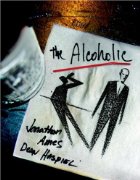
    Jonathan Ames & Dean Haspiel, The Alcoholic (Vertigo 2008)

    Disclaimer: I was not given this book by a publisher, nor is this blog entry a viral effusion in the hope that Vertigo will send me lots of freebies, though I wouldn’t be offended to be told that this review os not a review.*

    1401210562I don’t imagine that many people would feel compelled to compare this comic with J M Coetzee’s Summertime. But here goes.

    J M Coetzee’s hero is called John Coetzee; Jonathan Ames’s is Jonathan A. Both books, then, are presented as some kind of autobiography. In both, wiggle room is created, and the narrative saved from indulgent self-loathing, by the interposition of point(s) of view other than the author’s. In place of Coetzee’s multiple unreliable narrators, interviewees as well as fictional biographer, Ames has the graphic art of Dean Haspiel. It’s possible to imagine Ames’s story of his alcoholism being told for laughs, or with that creepy kind of apologeticness that leaves out the taking of responsibility, or in a way that invites hypocritical prurience, or as a hollow redemptive tale. Jonathan A is a writer, and at one stage he has an audience convulsed with laughter by an essay about his own fecal incontinence. But the pared down narration here, accompanied by Haspiel’s ruthlessly austere black and white art, gives us nothing to laugh at. There are sex scenes, and plenty of naked breasts, but there’s none of the adolescent eroticism of, say, Frank Miller, or for that matter Woody Allen. The hero makes excuses (he’s ‘allergic’ to alcohol, his well-meaning parents were too trusting and then died in a terrible car crash, etc), but on the page they remain just that – excuses. The final moment of decision is as unresolved as that of Summertime. Again and again, the visual severity of the images holds us to a moral (not moralistic) way of seeing. They’re very different books, of course, but they do share this uncompromising self-scrutiny. I don’t think I could have borne the story of  The Alcoholic presented as straight autobiography. As an uncomical comic (or graphic novel, if you need your sequential art to sound dignified), it’s a quick but powerful read.

    *Given the frequency of my typos, I should note that that ‘os’ comes from the headline of Rosemary Sorenson’s article as it is online just now. By the time you go there it may have been corrected.

    Summertime, Boyhood and the book group

    J M Koetzee, Summertime (Knopf 2009)
    —-, Boyhood (Secker & Warburg 1997)

    I wasn’t there when Summertime was chosen for the Book Group1846553180, and might well have argued against it. I’d read some bemused discussion about its mixing of truth and fiction and multiple perspectives that made it sound like the kind of clever writing that disappears up its own whatsit – you know, technically challenging but otherwise as gripping as batshit.

    It turned out I loved it, and put in orders at the library for the two previous volumes in Coetzee’s Scenes from Provincial Life series, Boyhood and Youth. It’s autobiographical writing, covering the years when Coetzee was teaching at school and university in Cape Town and writing his first novels. It’s not straightforward autobiography, though. The John Coetzee character is dead, so who knows in what other respects the narrative here differs from the factual record? The book consists mainly of transcripts of recorded conversations between an (almost certainly invented) academic biographer and a handful of people. I have no idea what relationship any of the interviewees have to actual people, but I am persuaded that there’s a genuine project here on Coetzee’s part of imagining how he was seen by a number of key people in his life at that time. ‘Coetzee’ doesn’t exactly emerge covered in glory. In fact, if this had been told in straightforward narrative, even in third person, some of it would have been cringingly embarrassing; and some of it, removed from the realm of hints and suspicions, might have laid the author open to criminal investigation. Coming mainly from women who had, or in one case (if she is to be believed) didn’t have, sexual liaisons with him, it’s funny, and for me at least very engaging. I’m in awe of Coetzee’s feat of creating self-portrait from the point of view of people he’d had unsatisfactory intimate relationships with, most of them much more interested in themselves than in him. It’s an act of great imagination and unsparing self scrutiny.

    BoyhoodAt the risk of appearing excessively diligent, I managed to read Boyhood before the Group met. At least on the surface, it’s a much more conventional piece of work, a possibly fictionalised memoir of the author’s childhood told in the third person. (We don’t learn that the boy’s name is John until about the halfway point.) Unlike the unreliable interviewees of Summertime, the narrator appears to be omniscient, though he reports the young John’s understanding of things without signalling to the reader when the boy has got it wrong. This sometimes results in a straightforward irony, as in matters of reproductive physiology. Elsewhere, as the boy struggles to make sense of his relationships to his parents, of the English, the Afrikaans, the Coloureds and the Africans, of South African history, of religion and his own preadolescent stirrings, the narrator leaves us alone with the boy’s painful sense of his own peculiarity. The effect, for me at least, rang very true to what childhood is like, stripped of the gloss of nostalgia and self-preserving sentiment. An unexpected bonus from having read the book out of order was the poignant discovery that the father for whom ‘John’ cares in Summertime was an object of his contempt and intense dislike in Boyhood.

    Tonight we discussed Summertime in the book group. There were ten of us, fairly evenly divided between those who loved the book and those for whom it did nothing except perhaps induce sleep. A couple of guys turned up with their books bristling with sticky yellow papers, and argued for particular ways of reading the book. Over melon and prosciutto and then strawberries, the conversation tended to take the form of them what enjoyed the book telling them what didn’t about what had given them pleasure or illumination. One man talked about the theme of embodiment – that the struggle of the character was to find a way of being in the body, of having a voice, and the structure with its multiple filters and distancing devices fitted the theme brilliantly. Another read it as an extended build-up to the passage towards the end where a woman says of the John Coetzee character that people may be interested in him because he’s won the Nobel Prize and is seen as a brilliant writer, but to her he is just a man, and not a very interesting one (though others saw that passage as a bit of almost mechanical rounding out of things). Yet another was interested in it as a portrait of a man whose masculinity was under attack. And so on. It was a terrific evening; the book is perfect for that kind of free-ranging discussion.

    Children’s literature is not a genre

    There’s a way of talking about children’s literature as if it’s a genre, like detective stories or police procedurals or thrillers or vampire stories or fantasy novels. I think this is quite wrong. A genre has acknowledged conventions, that can be followed flexibly or even violated in any particular specimen of the genre. The conventions change and grow with time. But they still rule. It’s not a vampire movie if no one sucks blood. It’s not a detective story if there’s no major crime in the first quarter of the book. Children’s literature isn’t like that. It’s defined entirely by the imagined readership. I like Margaret Mahy’s definition, which I remember as: Children’s literature is literature that you can start enjoying while a child.

    The two books I’ve just read illustrate my point.

    David Greenberg & Victoria Chess, Slugs (Pepper Press 1983)

    0316326593

    I read Slugs for the first time in years the other night. My five year old great-niece was staying with her father. At bedtime, having scoured our bookshelves, she emerged with this unpleasant little book and asked me in her sweet, shy way to read it to her. Evidently she’d fallen in love with the book earlier in the year when they stayed here in our absence. I complied with as much gusto as I could muster. I find the book profoundly unattractive. It has rudimentary rhymes, describing a huge variety of slugs, many being subjected to would-be comic indignities, tortured and murdered in hideous ways, all with images showing the brown creatures impassively accepting their fates, until in the last pages they come and wreak a horrible revenge on a child (known in the book as ‘you’), ending:

    And after how you’ve treated Slugs
    It surely serves you right!

    My great-niece seemed to enjoy having this horror read to her, and when I’d finished she sat for maybe half an hour studying the pages intently.

    Clearly she is the reader the creators had in mind – as well as my sons twenty or so years ago. I am not that reader.

    Guus Kuijer, The Book of Everything (2004; Translation by John Nieuwenhuizen, Allen & Unwin 2006)

    1kuijer

    The Book of Everything is definitely a children’s book, but it couldn’t be more different. It has more in common with J M Coetzee’s Boyhood (which I’ll blog about during the week), in subject matter, point of view, even tone, than it does with Slugs. A lonely boy, helped by apparitions of Jesus and an old woman who is almost certainly a witch, finds a way to free himself and his family from the dominion of his harsh, violent, religiously extreme father.

    The book speaks in particular to literate children. The hero,Thomas, finds inspiration in Emil and the Detectives, Joanna Spyri’s All Alone in the World and the Book of Genesis. The narrative assumes familiarity with literary conventions (OK, there are some conventions!), particularly those about witches in children’s literature. I found my adult-reader self wanting explanations of Thomas’s visions: ‘Please be clear about this. Is the poor child hallucinating from terror, or is this a world where such things really happen?’ Such questions are just plain irrelevant to the book’s imagined reader, and once I moved over to occupy that position the book opened up to me – or I opened up to it.


    It occurred to me that some animated movies tend to wink knowingly over the heads of the children in their audience, both these books are winking at the children – ‘Don’t tell the adults.’ If we have to talk genre, the first is something like Perversely Cautionary Verse (which may be a genre found only in children’s literature), the second Domestic Magic Realism (and I doubt if that is limited to any age readers).

    I read The Book of Everything on Richard Tulloch‘s recommendation. His dramatisation of it will be playing at Belvoir Street at the end of the year. It seems to me that one of his challenges is to take the story away from the children and give it to the adults who will presumably make up the bulk of the Belvoir audience.