Category Archives: Books

Dinner in the Strangers’ Dining Room

[I originally put up this post in my old blog on 23 May 2005, but didn’t retrieve it when I moved to the WordPress platform. I’m republishing it now mainly because I’m about to write something about Ruby Langford Ginibi’s Haunted by the Past. The post also has a sadly ironic note from John Hughes, and a reminder that the late George Pell was on the nose in some quarters well before the child sexual abuse revelations. It’s also a reminder that the NSW Premier’s Literary Awards used to be presented at a slap-up dinner.]

Tonight the NSW Premier’s Literary Awards were announced at the traditional dinner in the Strangers’ Dining Room in Parliament House. I had been planning to go with my friend Moira, but she was ill, so after some phoning around I found a most satisfactory replacement in my young neighbour and budding writer Jack.

It was a fabulous evening, full of talk – speeches, conversation, argument – and celebrity spotting. Premier Bob Carr sang the praises of his Premier’s Reading Challenge, then undercut this necessary self-promotion by remarking that it was nice to be able to impose one’s values ‘in the nicest Stalinist way’ and going on to riff on the idea of flying banners all over Sydney’s bearing the Stalinist slogan: ‘Life has become better, comrades. Life has become merrier.’

The address for the evening was to be given by Amanda Lohrey, but she had been incapacitated by a fall, and her speech was read to us (with passion) by Susan Ryan. It was an apologia for secular liberal democracy, framed as a response to some remarks by Sydney’s Catholic cardinal George Pell. Where he had said that secular liberal democracy was empty of values, she argued that on the contrary it thrives on diversity and so is full. The speech did have the feel of an essay looking for a place to be aired rather than an address tailor-made for the occasion. But it was excellent to be reminded that the frisson of irritation that remarks like the Cardinal’s inspire in me can be the occasion for careful thought. (The phrase ‘to we liberal democrats’ did occur in the speech as given. I didn’t get hold of a written copy, so I won’t hold that syntactical atrocity against Ms Lohrey: it may have been Ms Ryan hyper-correcting her. I’m sorry to report, though, that I did not detect a shocked collective intake of breath from the audience.)

I was sitting at an awe-inspiring table. Apart from Jack and me and two other ancillary men, there were Nette Hilton, Wendy Michaels, Julie Janson and Ruby Langford Ginibi. Nette, Wendy and Julie were judges. Ruby, it turned out, received the special award, given each year as a kind of lifetime achievement award. I was sitting next to Ruby, and can report that she stays on message: she takes very seriously her calling to educate whitefellas about Aboriginal history, and she was full of information (about the two Aboriginal bowlers who dismissed Don Bradman for a duck; about the rolling back of Aboriginal education under the Howard government; about John Howard’s motives for refusing to apologise for the stolen generations; about the devastating and ongoing consequences of Aboriginal dispossession). She was also very funny, and I got to feel a little special because it fell to me to help her get various things – the envelope containing her speech, her glasses, a little photo album – out of the bag on the back of her wheelchair.

And as for the prizes, I was struck by the humility of most of the recipients. By that I mean that they gave the impression that their subject was more important than they were.

Gillian Cowlishaw, wispy grey-haired author of Blackfellas White fellas and the hidden injuries of race told of a conversation with two Aboriginal women in Burke:

Gillian’s friend: She wants to tape us for her book.
Sister of Gillian’s friend: If she want to tape me she’ll have to f***in’ pay me.
Gillian: If you want me to tape you, you’ll have to f***in’ pay me.
Gillian’s friend: Well, at least she’s learned the language.

Tony Kevin, awarded for A Certain Maritime Incident: the sinking of SIEV X, referred us to the web site on the subject and predicted that one day someone from Australia’s security institutions would break ranks and tell the truth about what happened: and only then would we know if what he has written is true or false. How’s that for humble?

Katherine Thomson, given a prize for her play Harbour, spoke about the waterfront skulduggery of not so long ago, and reminded us, as we hardly need reminding, that our industrial relations troubles are far from over. (I’m remembering the last moments of Bertolt Brecht’s play, The Resistible Rise of Arturo Ui: ‘Although the world stood up and stopped the bastard, the bitch that bore him is in heat again.’) She told a funny story: when she first approached the Maritime Union of Australia to research the play, she went with an open mind and told them so. She was introduced to one group of wharfies like this:

This is Katherine. She’s writing a play about Patrick’s. It’s not necessarily going to be on our side, but that’s OK, because if it isn’t we know where she lives.

John Hughes, gonged for The Idea of Home: autobiographical essays, placed his book in relation to the Demidenko fake, and the way it did the dirty on, among other things, real stories of migration. He attributed his ability to complete it (at the rate of 20 pages a year) to the persistent encouragement he received from other people, especially Ivor Indyk.

Sherryl Clark, recognised for her verse novel for young readers, Farm Kid, used her moment at the mike to remind us of the tragedy unwinding in the country as the current drought continues.

Samuel Wagan Watson, who won the poetry award and the Book of the Year award for  Smoke Encrypted Whispers, was modest in a different way. He said among other things that knowing he’s won the award but not being able to tell anyone made him look constipated to his friends; that writing poetry is a tough game – ‘Before I got published, you know, I used to be white.’

Steven Herrick (please note the spelling – we got it wrong in the magazine recently), receiving his second award, this time for By the River, showed us the medal and said that when he shows his other one to school students, there’s always someone who points out that it’s silver. In trying to convince them that he’s not a loser, he tells them that the premier gave him $15 000 as well as the medal. So, he said, when he leaves, his audience is probably left with the impression that he is a loser and Bob Carr is very rich.

Tim Winton, whose excellent The Turning was the only prize-winning book I’ve read, was brief, said with obviously genuine discomfort that he felt he had robbed the other writers on the shortlist of something, and then thanked many people, including, with a nod towards Amanda Lohrey’s speech, ‘the loyal, dogged, civilian reader’.

And on top of all that, I caught up ever so briefly with a number of friends, and did a little professional fence-mending, possibly some bridge-building. It was a terrific night. Jack said he had a good time too.

Posted: Mon – May 23, 2005 at 05:57 PM
Middlemarch: Progress report 4

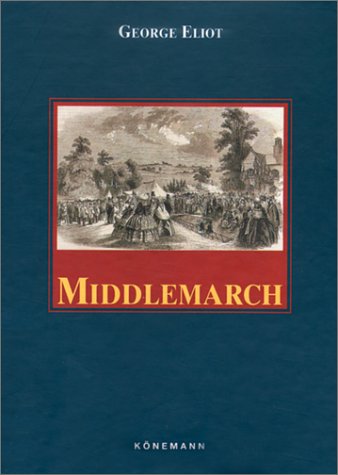
George Eliot, Middlemarch: A study of provincial life (George Eliot, 1871–1872; Könemann 1997), end chapter 35 to end chapter 46.

Five pages of Middlemarch each morning has been my dependable daily joy for four months now.

This month, as usual, it turned up in other reading. Natasha May wrote in the Guardian that when she was young she found George Eliot’s sympathy for Dr Casaubon life-changing. She quoted this from Dorothea’s ‘honeymoon’ in Rome:

She was as blind to his inward troubles as he to hers: she had not yet learned those hidden conflicts in her husband which claim our pity. She had not yet listened patiently to his heartbeats, but only felt that her own was beating violently.

In my 20s, as far as I remember, I thought George Eliot’s sympathy for Casaubon was largely sarcastic. My current reading is closer to Natasha May’s. This month in particular, as he faces his mortality, I can tell that Eliot genuinely feels for him, and she paints his inner turmoil so vividly that when he offers Dorothea a word of attenuated kindness, we feel it as his moral victory, as well as recognising that Dorothea is no longer in his thrall:

‘Come, my dear, come. You are young, and must not to extend your life by watching.’
When the kind quiet melancholy of that speech fell on Dorothea’s ears, she felt something like the thankfulness that might well up in us if we had narrowly escaped hurting a lamed creature. She put her hand into her husband’s, and they went along the broad corridor together.

(Page 488)

That’s the end of Book Four, and of the first volume in the edition I’m reading, so pretty much the central hinge of the novel.

Since then, in the first pages of Volume 2, the narrative has been concerned with the politics of Middlemarch. Fifty years ago I read this as variously background and counterpoint to the main story of Dorothea’s romantic life. It’s not that I misread it then, but this time around I’m much more interested in Eliot’s satirical account of how an uneducated public responds to medical innovation, how professionals’ vested interests oppose that innovation, how media (in this case newspapers) function as tools of political agents, how political elites look after their own, and so on. It’s hard not to think of current conversations about the First Nations Voice to Parliament when I read a sentence like this one:

Oppositions have the illimitable range of objections at command, which need never stop short at the boundary of knowledge, but can draw for ever on the vasts of ignorance.

(Page 503)

This morning, I read a scene involving the two young men: Lydgate the reforming doctor (I can’t bear to call him Tertius), and Will (it seems unfriendly to call him Ladislaw) the reformed artistic gadabout who now edits a newspaper. Lydgate has married the beautiful Rosamond, which we know won’t end well; Will adores Dorothea, which we fear likewise. Lydgate has thrown his lot in with the religious ideologue Bulstrode because he supports Bulstrode’s hospital project. Will is allied with the scatter-brained Mr Brooke’s potential run for parliament because he sees it as a way of supporting the movement for political reform*. The young men – one of them lying on the rug in the other’s living room, while the latter’s wife, Rosamond, waits impatiently for the disagreeable conversation to finish – discuss the evergreen subject of how to form alliances with others who are less than perfect. Lydgate:

If one did not work with such men as are at hand, things must come to a dead-lock. Suppose the worst opinion in the town about Bulstrode were a true one, that would not make it less true that he has the sense and the resolution to do what I think ought to be done in the matters I know and care most about; but that is the only ground on which I go with him.

(Page 531)

Rosamond calls a halt to the conversation. When Will has gone she and Lydgate have a brief conversation and we find out in the last three lines of the chapter, almost as a throwaway that a) Lydgate’s household debts, unknown to Rosamond, are becoming more pressing and, b) Rosamond is pregnant. I thought of this novel as proceeding at a leisurely pace, but no five pages pass without significant plot developments.


* Mostly I can live with not understanding the specific political and cultural references in Middlemarch. I did look up Lord Grey’s Reform Act of 1832. Mr Brooke is a Tory, who in his typical muddled way thinks Grey (a Whig) has a lot going for him. Will hopes to help Brooke get elected, and to influence him to support Grey’s bill.

Alejandro Zambra’s Chilean Poet and the book group

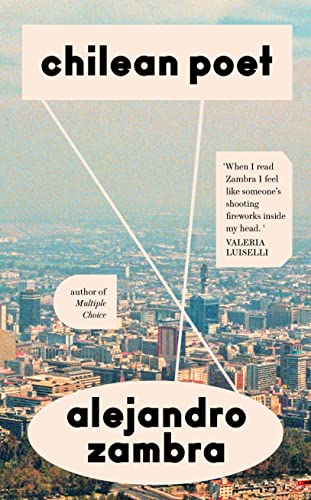
Aalejandro Zandro, Chilean Poet: A novel, translated by Megan McDowell (Granta 2022)

Before the meeting: I enjoyed this novel enormously. I expect people who know Chile, and especially the Chilean poetry scene, would enjoy it even more.

In the freezing Chilean winter of 1991, teenagers Carla and Gonzalo curl up night after night under a magnificent red poncho watching television in her mother’s house and manage to do ‘everything except for the famous, the sacred, the much feared and longed-for penetration’. Just as the nights are beginning to warm up and remove the excuse for the poncho, they get an opportunity, but the famous etc event turns out to be less than absolutely pleasurable, at least for Carla.

The story goes on from there. In my innocence, I was surprised by the turns of events, so I won’t go into detail, except to say that Gonzalo as a teenager is an aspiring poet, and we get to read one of the atrocious sonnets he writes for Carla; and some years later Gonzalo becomes stepfather to Carla’s son Vicente.

The second half of the book begins with an echo of the opening of the first half. Vicente, now a teenage aspiring poet (probably more promising than Gonzalo), is in explicit sexual action with Pru, an older woman visiting Chile from the USA, using alarmingly explicit English he has picked up from porn.

It may be a spoiler, but I’ll risk it: the relationship between the two poets Gonzalo and Vicente is the heart of the book and its narrative spring. Carla and Pru, and Vicente’s natural father León, are vivid secondary characters. Chile, in particular Santiago, and most specifically the Chilean poetry community, provide the charming, engrossing, at times hilarious, always lively milieu.

Pru is visiting Santiago on her first major journalistic assignment. Her editor wants a ‘human interest’ story about stray dogs, but she persuades him to let her explore the poetry scene, and Alejandro Zambra has a lot of fun describing her interviews with poets.

I have no idea if poets and poetry have the prominent role in Chilean life that these poets claim. One of them says that for Chileans the Nobel Prize in Literature is as significant as the World Cup, and it’s a matter of huge pride that Chilean poets have won it twice: Gabriela Mistral (1945) and Pablo Neruda (1971). Not that any of the living poets care too much for Neruda or Mistral – the living are much more interesting and important, and their mutual competition, championing and denigration make Australia’s so-called poetry wars look … well, I was going to say tame, but really it makes them look normal.

I’ve read two other novels with poet protagonists recently: Edwina Preston’s Bad Art Mother and Niall Williams’s A History of the Rain. Unlike the former, we believe that the characters in Chilean Poet actually write poetry of varying quality; unlike the latter, these poets are part of a thriving scene rather than slightly deranged, isolated mystics. One of the joys of the book is the way their alertness to language features strongly in all their relationships. The account of Vicente’s wooing of Pru, for example, is full of the joys and perils of communicating across a language barrier.

There’s a terrific scene in the first part, when Gonzalo is a hands-on father to Vicente. He breaks one of Clara’s rules by allowing Vicente to sit in the front seat of the car – and accidentally reveals his crime to her. She explodes, using the word betrayal, which sets him off:

‘I’m so sorry for taking care of Vicente every single day,’ said Gonzalo.
‘It’s times like these it’s clear you’re not his father,’ retorted Carla.
Gonzalo looked at her with astonishment and contempt. He grabbed his hair with his left hand, and with his right he tore up an abundant clump of grass.
‘I’m a much better father than that lame-ass, ugly, mediocre motherfucking pusillanimous sack of balls who stuck his dick in you.’

(Page 75)

Rather than continue with the fight, the narrative stops there, and the poet-mind kicks in. Gonzalo spends two pages mentally critiquing his own sentence. It ‘felt a bit ungrammatical and was a pretty stupid outburst, but …’ He ponders the accuracy of ‘ugly’, acknowledges that pusillanimous doesn’t apply, and wonders if he used that word ‘for the mere pleasure of saying a word that León would have to look up in a dictionary’. He quite likes sack of balls because it’s not only hurtful but original. And before pouring himself a double whisky and stomping off to his writing-room he indulges in this final piece of poetic analysis:

The truly damning part was definitely that grand finale, who stuck his dick in you, which brought jealousy to the forefront and insinuated that Carla was some kind of whore. Still, the accusation held a trace of childishness, as if Gonzalo had only just found out how babies are made.

(Page 76)

Megan McDowell’s translation is terrific. At many moments, the narrative turns on the use of language, as in the passage I’ve just discussed. At a key moment, when Vicente is quite young, he and Gonzalo discuss the Spanish word for ‘stepfather’ – padrastro. Gonzalo is reluctant to take it on because astro at the end of a word has negative connotations. McDowell does a brilliant job of putting this into English as a completely plausible conversation for a poet to have with a young boy, and manages not to feel as if she is winking at English readers over the characters’ heads.

The meeting: After an hour of convivial catch-up and organising of food, we settled down to the book. Unusually, the Chooser explained how he had made his choice: he started out thinking of something by Annie Ernaux, in deference to the Nobel Prize committee, but as none of her books were easily available he sought advice at from his local bookseller, who suggested this – which turned out, he said, to be a perfect summer read. One chap who usually doesn’t say much, and usually speaks softly, immediately grabbed the floor and disagreed vehemently: not an ideal summer read at all; for that he’d recommend Richard Osman’s Thursday Murder Club series; this author was too intent on displaying his knowledge of poetry and poets to keep his narrative alive and engaging.

And it was on!

No one, it turned out, had done the work of checking which poets in the book are real and which imagined. A number of us, including a late-comer who had missed the opening salvo, just loved the bit where Pru interviews a range of poets and leaves the main narrative on hold. There’s a disorderly poet’s party that got a lot of love.

The bits that might have been irritating, where the author breaks the fourth wall to comment on his decisions, were pretty universally enjoyed. We were sorry to see the end of Pru, the gringa journalist over whose shoulder we get to know the poetry scene. One chap felt that Carla, Vicente’s mother, was a bit two-dimensional. No one contradicted him, but no one seemed to mind terribly. One man said he’d read the book very soon after last meeting and could barely remember it, which he took to mean it is pretty forgettable – though he did remember that it lacked any strong sense of place. Not everyone agreed – perhaps not the physical place, but we felt that there was a strong feel for the cultural milieu, and the food.

One man brought a bottle of pisco and made pisco sours (of which many are drunk in the book), plus a sour-without-pisco for the non-drinker. He also brought a selection of holiday photos from Santiago and Valparaiso, including one of Pablo Neruda’s home, now a museum.

Favourite passages about poetry were read and enjoyed all over again, including one in which a poet says he doesn’t know whether what he writes is any good, but he writes because of what it achieves for his own mind. (That definitely rang a bell for me and my own adventures in rhyme).

As usual, the conversation dissipated, though this time it stayed roughly on topic: there were anecdotes about meeting famous poets and other famous people (including two stories about David Malouf that cemented his status in my mind as a spectacularly kind person), ruminations on the comparative respect in which poets are held in Chile and Australia, an invitation for personal reflections about step-parent experiences that went unaccepted because none of us had been there, stories of young men getting excited when they realised they were talking to an older man who reads books, some excellent ribaldry. Unrelated: George Pell’s faulty theology, Lydia Thorpe’s stand in relation to the Voice, the complexity of some post-Holocaust Jewish family histories.

Towards the end of the evening, the man who had set the ball rolling with vehement negativity announced with equal vehemence that he realised he had actually enjoyed the book. We took this as vindication of the group as a way of taking the solitary act of reading into a shared experience.

After the meeting: Someone mentioned having seen a YouTube conversation with Alejandro Zambra and Megan McDowell. I dutifully watched it during my grandson’s afternoon sleep the next day. It’s full of good things about the translator–novelist relationship – if you watch it and are strapped for time, you could start at the 10 minute mark and skip all the charming introductory stuff. I particularly love their discussion (from 13’00” to 19’05”) of the Spanish word for ‘stepfather’, padrastro, including Zambra’s comment that as a poet Gonzalo is fighting with that word. Poets are always fighting with words, intensely, he says, ‘which is beautiful’.

Gregory Day’s Words Are Eagles

Gregory Day, Words Are Eagles (Upswell 2022)

Decolonising is a very personal business. It cuts in close to our sense of self. … It will take new emotional skills our parents, and their parents, were unable to teach us.

(‘Serving up colonisation instead of care‘, Overland 247, page 24)

That’s Caitlin Prince, an occupational therapist who has spent most of her adult life living and working in remote Aboriginal communities. She argues that non-Indigenous individuals have intimately personal work to do; we must face and acknowledge intense emotional discomfort, and create safety for each other to do that, so as to make headway against our received and ingrained racism and colonialism.

The processes of personal decolonisation her article describes may seem worlds apart from anything in this collection of highly literary essays, but Gregory Day is engaged in a similar project.

In a brief foreword, ‘Where the Songs Are Made’, Day explains the collection’s title. In British writer Alan Garner’s novel Strandloper, an 18th century English castaway demonstrates writing to an Aboriginal elder, Nullamboin. The fictional Nullamboin recoils in horror: ‘”Then all will see without knowledge,” he cries, “without teaching, without dying into life! Weak men will sing! Boys will have eagles! All shall be mad!”‘ Day glosses this as referring to ‘the violent chaos that ensues from a carelessness caused by the lack of connection to the memorial contours and emotional topographies of place’. Written words ripped from their rightful places are eagles and must be treated warily.

So as the book opens it comes close to questioning whether it ought even to exist. (It comes even closer if you understand Garner/ Nullamboin to mean that the ‘violent chaos’ has a more radical cause: it comes from language being divorced from direct, embodied human contact: the written word is in itself dangerous.)

Approaching this dilemma from a number of angles in these essays is Day’s version of Prince’s personal decolonising.

Day has a deep, insistent commitment to place, specifically the part of south-west Victoria where he has lived all his life. He is best known for his Mangowak trilogy; ‘Mangowak’ is the Wadawurrung name for Airey’s Inlet on the Great Ocean Road, into which the Painkalac Creek flows. Two thirds of this collection of essays relate to that place in some way, many of them to its Wadawurrung heritage. In extremely productive tension with that commitment, the essays also evince a profound commitment to the English language, the written word, the literary traditions of his ancestral countries – England, Sicily and Ireland. (‘Evince’, incidentally, is a word he spends some time pondering. He uses it differently from me.) In what follows, I’ve included links to articles where I can find them online, sometimes as PDFs – sorry!

The collection proper kicks off with ‘The Watergaw‘. Winner of the 2021 Nature Conservancy Australia Nature Writing Prize, it’s a virtuoso piece. Starting from the sighting of a broken rainbow in rural Victoria, it goes to Scottish poet’s Hugh Macdiarmid’s ‘The watergaw‘ which relates to the same phenomenon. The broken rainbow takes on complex metaphorical meanings, and there follows meditation on place, colonisation, Celtic and Sicilian ancestry, the deaths of fathers, Day’s study of Wadawurrung language parallelling Macdiarmid’s writing in a version of Scots. Starting the collection with this essay throws the reader in at the deep end – it may strike you (as it did me on first reading) as convoluted and self-consciously, even self-indulgently, ‘literary’, but it’s a beautifully compressed weave of the themes that are developed more expansively in the essays that follow.

There’s a leisurely swim with a friend around the river bends at Airey’s Inlet / Mangowak, an exultant respite from the world dominated by smart phones (‘Summer on the Painkalac‘); a piece on the difficulty of naming the colour of soil turned up by roadworks near Anglesea (‘The Colours of the Ground’); a lyrical account of how Day’s ancestors came to the area (‘The Ocean Last Night‘); a reflection on what it means that colonial and more recent writings record 133 different spellings of ‘Wadawurrung’ (‘One True Note?‘); an engrossing account of the elements that went into the making of his novels (‘Otway Taenarum‘); reflections prompted by his experience teaching Wadawurrung language to schoolchildren, with the approval of local Elders (‘Being Here‘).

Though there are occasional mentions of a named Elder who has been Day’s mentor, the only First Nations person to be quoted directly in these essays is the fictional Nullamboin, the invention of a British writer. Even in the reprinted review articles that make up the final third of the book, no First Nations poets or novelists are addressed. This might seem to undermine, or at least make paradoxical, my reading of the essays as embodying a personal decolonising project. Maybe. But I’m sticking to my guns. As I read them, they take on the challenge without appropriating First Nations voices or forms, and without leaning on the writer’s relationships with First Nations people, but find their own way forward as part of what’s sometimes called place writing within the western tradition. As they used to say on Twitter, he’s doing his own research, not expecting First Nations people to do his emotional and intellectual labour for him.

For instance, the essay ‘Mere Scenery and Poles of Light’ (pp 69–94) enters imaginatively into the minds of four people who walked a lot: Paul Cézanne, J S Bach, William Buckley and David Unaipon. Of Cézanne:

The painter’s walks were not artist’s escapes or spiritual retreats but confrontations … It was while walking, while looking at giant cubes of stone spilt on cypressed ledges and the green moisture of gullies in the sea’s brisk shadow, that he best understood how to overcome our now dangerously attenuated sense of time and sylvan space.

Of Bach, who as a young man walked 250 mile to hear his hero Buxtehude play the organ:

With only the orchestra of bird, rain and tree in his ear, surely those walks, conducted for the twin catharses of music and freedom, were intrinsic to the sound that was slowly building within him, even at such a young and truant age.

Of Buckley, the Englishman who lived for decades with the Wadawurrung people:

Here was a European man honoured as a native, a man of fact not fiction, but fated through an almost sci-fi style misunderstanding to survive in sympathy with nature; a man who’d been taught, as we say now, to walk in both action and reflection, to both hunt and to sacralise the hunt, to live sustainably within the behests and laws of his adopted habitat. And how did it end for him? Where did walking take him to? Just to despair? Or also to that secret place where the author of all the songs resides?

Of David Unaipon:

Unaipon moved through the land as a divining rod, and he came with a forked message, one contained within the yarns of the bound and official Bible he held in his hand and the other a message in danger of being cauterised to silence by the white invasion: the knowledge of the spirit realm, where the song still dwelt, the pity and sympathy, the knowledge and laughter still flowing through the land.

And of himself:

I can see myself, the walker, as assemblage, with Buckley’s tattoo on my tongue, with the score of Bach’s English Suites written onto my skin, with a vision of the sea at Cézanne’s l’Estaque lifting me to the top of the climb. My whole body is transformed by the journey into a condition resembling the circular breathing of the didgeridoo player, or David Unaipon’s perpetual motion machine.

It’s a world away from the kind of cultural confrontations that meet a whitefella occupational therapist working in a remote Yolngu community. Maybe it’s more fanciful, more vulnerable to self-deception but maybe, also, it’s important work that makes a valuable contribution to our moment in history.


A note on Upswell, publisher of Words Are Eagles. It’s a not-for-profit publishing house established in 2021 by Terri-Ann White who previously was responsible for a brilliant line-up of books at UWA Publishing. As she says on the Upswell website:

I’ll publish a small number of distinctive books each year in, broadly, the areas of narrative nonfiction, fiction and poetry. I am interested in books that elude easy categorising and work somewhat against the grain of current trends. They are books that may have trouble finding a home in the contemporary Australian publishing sector.

This is the first Upswell title I’ve read, a gift from a friend who lives on the edge of Painkalac Creek. Long may Terri-Ann White prosper, and the Painkalac flow.

Rick Remender’s Fear Agent 1 & 2

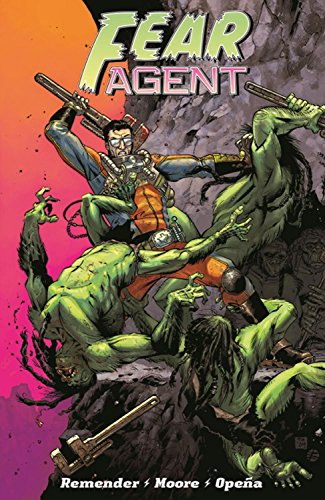
Rick Remender, Tony Moore, Jerome Opeña and others, Fear Agent, Final Edition Volume 1 (Image Comics 2018)
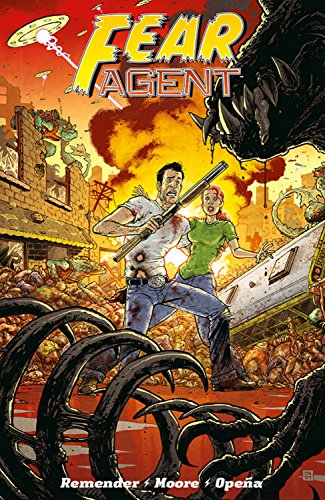
––––––––––– Volume 2 (Image Comics 2018)

Heath Hudson is an old-fashioned, hard-drinking, hard-fighting, constantly beaten-up hero. His adventures as told in the Fear Agent comics amount to one spectacular action scene after another, as at least three, no four, alien species battle each other with Earth’s inhabitants as appalling collateral damage. Heath’s ultra-masculinity – some would say ultra-toxic masculinity – comes up against the acerbic insights of the women he loves, and who almost plausibly love him. It’s a rip-roaring roller-coasting, swashbuckling space story (and yes, there are actual pirates). There’s romance, betrayal, monstrous revenge, guilt, heroism, sacrifice … and a lot of splatter.

The artwork, if you’re into this sort of thing, is brilliant. I often couldn’t tell what was happening, but usually on closer inspection it all made sense, though I wish I hadn’t looked so closely at some of the dismemberments.

Regular quotes from Samuel Clemens (never named as Mark Twain) hint at depths to Heath’s character that we otherwise don’t see because he is too busy saving everyone and being beat up. They also hint that Rick Rememder, Heath’s creator, may be more widely read than you first suspect.

The adventures in these two volumes first appeared in a series of monthly comics. Volume 1 comprises the contents of issues 1 to 10, which were published in 2005 and 2006. Volume 2 comprises issues 12 to 15, and 17 to 21 (Issues 11 and 16 evidently weren’t part of the longer story arcs.) Final Edition volumes 3 and 4 are out there somewhere waiting to play their part in our father–son gift-exchange system.

As with most comic collections, these pages are unnumbered, but here’s a scan of page 75 by my count. Sadly, it doesn’t include any of the grotesque alien life forms, but if you look closely you’ll see that no sooner has Heath pulled off an impossible rescue (of Mara, who is no slouch herself when it come to a fight) and allows himself a moment to gloat, than a terrible thing happens. (Spoiler: the harpoon thing that pierces him actually kills him, but luckily someone makes a clone from his dead body and he can continue almost as good as new. Equally extreme things may be happening to him at the end of the second volume. – only the third volume will tell.)

Pencils Tony Moore; Inks Sean Parsons & Mike Manley; Colors Lee Loughbridge

A film or TV show may be on the way. I’ll give it a miss, but I’m enjoying the comics, especially as I’ve got a particularly nasty non-Covid cold, and my immune system is being just as heroic and taking just as many hits as poor old Heath.

Summer reads 7: Gabriel Zaid’s So Many Books

Gabriel Zaid, So Many Books, translated by Natasha Wimmer (Sort Of Books, 2004)

I took a number of physically small books away on our summer break, and have blogged about them as ‘Summer reads’. I was only dimly aware that they were all gifts – either from friends who thought I’d enjoy them or from publishers who hoped I’d blog about enjoying them.

So Many Books was the former kind of gift, and has its own opinion on books as gifts. An early chapter says that they ‘threaten the recipient with the task of responding to the questions “Have you read it yet? What did you think of it?”‘ and goes on:

In fact, the most uncommercial slogan in the world might be: ‘Give a book! It’s like giving an obligation.’

(‘An Embarrassment of Books’, page 13)

The obligation in this case was entirely enjoyable.

Gabriel Zaid is a Mexican poet and essayist. His Wikipedia entry lists a formidable number of essays on a broad range of topics. This little hardback, of the kind that sits on the front counter of a bookshop, is a series of short essays that revolve around the vast number of books published each year: the impossibility of any one person reading more than a tiny fraction of them; the way books, compared to movies or TV shows, are inexpensive to produce in small numbers so don’t have to be best-sellers to be viable; the relationship between ‘culture’ and ‘commerce’; the nature of reading; the way many people, especially academics and aspiring poets, want their writing to be published but tend not to read other people’s; why economies of scale apply to motor vehicles but not to books; and more.

So Many Books (which my fingers keep wanting to call Too Many Books, not necessarily what Zaid means) was published in Spanish as Los demasiados libros in 1996, and in Natasha Wimmer’s gorgeously smooth translation in 2003, before Amazon had completely dominated the book market, and before e-books and self-publishing really took off, so some of it is well out of date. But an update would require some tinkering at the edges of Zaid’s arguments rather than wholesale rethinking.

Regular readers of this blog will be able to tell that the book touches subjects close to my heart. Here’s Zaid on careful rewriting and copy-editing:

[A writer who] is a doctor, a lawyer, or an executive … can’t devote himself to rewriting a paragraph over and over, although the additional work might save his readers time. It is absurd for the writer to devote two hours to saving his reader a minute if the text is a note to his secretary. But if it is a book with twelve thousand readers, each minute represents a social benefit of two hundred hours in exchange for two, and the reward is one hundred times the cost. …

Of course, the cost of reading would be much reduced if authors and publishers respected readers’ time more, and if texts that had little to say, or were badly written or poorly edited, were never published.

(‘The Cost of Reading’, p 88–89)

Here he is being completely wrong about reading very slowly (see my series of blog posts on A la recherche du temps perdu, The Prelude, the Iliad, and now Middlemarch):

Is anything more certain to make a book completely unintelligible than reading it slowly enough? It’s like examining a mural from two centimetres away and scanning it at a rate of ten square centimetres every third day for a year, like a short-sighted slug. This doesn’t allow for the integration of the whole, for taking in the mural at a glance.

(‘Some Questions About the Circulation of Books’, p 72)

On bookshops:

To be angry because a book isn’t where you want it to be is to be angry at the randomness of fate.

(‘Constellations of Books’, p 110)

Early in my blogging life I wrestled with the word fortuitous in a number of posts. I’m pleased to report that Gabriel Zaid uses it in a way I find completely unproblematic:

In a good bookshop, supply and demand are fortuitous, but not chaotic: they have a physiognomy, a recognisable identity, like constellations. The probability of finding a particular book increases in relation to the clarity of the shop’s focus, the diligence and shrewdness of the bookseller, and the size of the business.

And from page 75, the opening of ‘The End of the Book’:

No experts in technological forecasting are predicting the end of fire or the wheel or the alphabet, inventions that are thousands of years old but have never been surpassed, despite being the products of underdeveloped peoples. And yet there are prophets who proclaim the death of the book. This prophecy is understood as an apocalyptic judgment: the overabundance of books oppresses humanity and in the end will provoke divine wrath. But as a technological judgment, it doesn’t withstand the slightest scrutiny.

The essays are witty, instructive, thought-provoking, satirical and totally readable. If you stumble on them, possibly in someone else’s to-be-read pile or a street library, I encourage you to dip in.

And that’s a wrap for my Summer Reads.

Summer reads 6: Jane Gibian’s Beneath the Tree Line

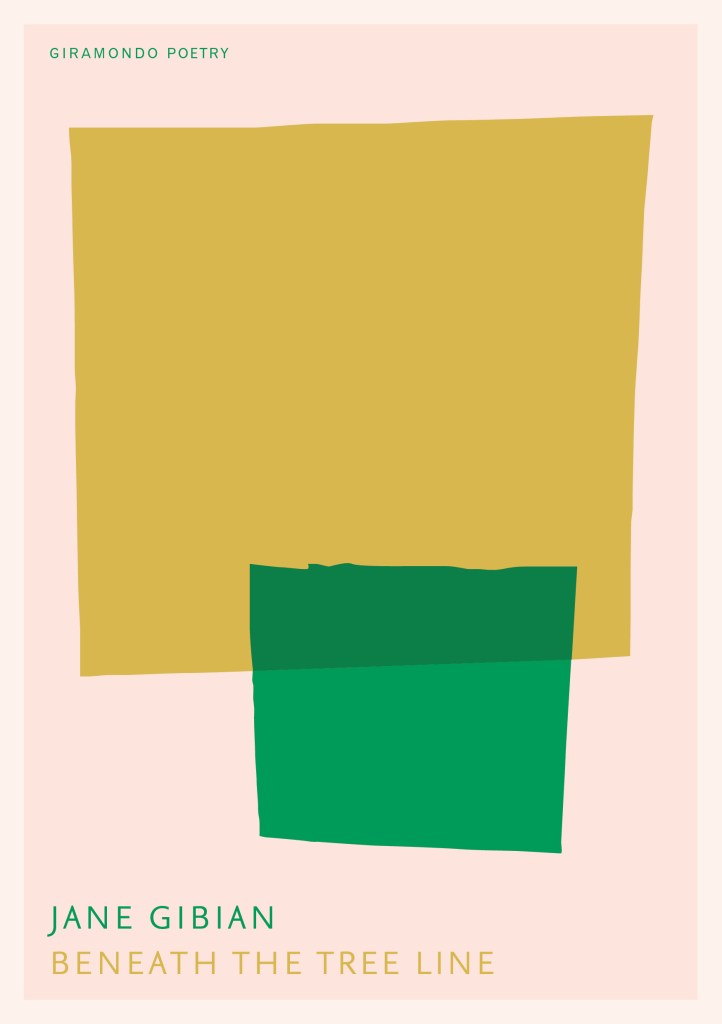
Jane Gibian, Beneath the Tree Line: New Poems (Giramondo 2021)

When Jane Gibian read her poem ‘Leftovers from a Pirate Party’ at a Sydney Writers’ Festival event in 2017, she told us that it was made up of subject lines from freecycle emails. I was a frequent freecycler at the time and was delighted that she had found poetry there – the title of the poem being just one of the poem’s evocative lines.

‘Leftovers from a Pirate Party’ turns up in this book without a note on its sources, and it still works, evoking a wonderful variety of life, and detritus. You can read a version with some extraneous scanner-generated characters at this link. It’s in a section of the book devoted mainly to similar found poems – including ‘Seventeen titles on the New Books shelf: June–July 2019’ whose title a) tells the reader what to expect and b) reminds us that Jane Gibian works as a librarian. At first glance you’d think this playful section, mucking around with lists of found language, was in a different world from the rest of the book, which, as an Author’s Note (online at the Giramondo website, here) puts it elegantly, is ‘preoccupied with the natural world and our place in its increasingly precarious situation’. The note continues:

My thoughts and writing practice seem to be most active in places of wildness, preferably wilderness. Many of these poems engage directly with the natural environment through a range of approaches: human engagement – both fascination and despair – and the natural world itself, disinterested and unforgiving of us, one animal in a complex living web.

That’s far cry from, say, this from ‘Leftovers’:

RE-OFFER: Disposable diapers
for small cat/dog

Yet among the many things I love and respond to in this collection, there are a lot of lists: from signs of the changing seasons in ‘Each turn’, to observations while travelling and learning the language in Vietnam, to vestigial organs in the human body in ‘Vestigial’. One of the most powerful poems in the book, ‘Waiting’ (which you can read on the Cordite Poetry Review website), does the crucial work of helping the reader grasp the reality of the climate emergency largely by means of a list: parked cars, ‘a mizzle of rain’, newscasts, coral, a factoid about Mars, St Andrew’s Cross spiders, an approaching train. Of course, it’s much more than that, and when I came to the final lines (if that’s the right word for a prose poem) I had to go for a little walk:

in the five previous known extinctions of all life / coral was the first to die / your eyes meet again in the rear-vision mirror

The US poet William Carlos Williams had a famous slogan summarising the principles underlying Imagism: ‘No ideas but in things.’ Jane Gibian isn’t an imagist, and her poetry doesn’t avoid explicit statement of ideas. Maybe it’s more like: sometimes (often?), rather than spelling out your ideas you can give readers an image and let them have their own ideas.

‘Arid zone’ on page 74–75 is a terrific example of this kind of thing:

This isn’t a poem that demands close reading to be appreciated, but it’s worth pausing over.

It’s as much a list as ‘Leftovers from a Pirate Party’ – leftovers from a sustained drought, maybe.

My Latin teacher in secondary school might have called it a congeries, a heaping up, of sights seen from a car travelling across drought-stricken country. Strictly speaking, they’re not haiku or senryu, but they owe a lot to those forms (which are similar in number of syllables etc, but the senryu is more likely to include something about human foibles). The words in capitals at the start of each group of lines look as if they are subtitles, but they’re not. They are road signs, seen from the car just as the other images are, and listed with them more or less arbitrarily.

It’s worth noticing the way the poem sits on the page. The plentiful white space reinforces the sense that the poet is covering great distances, most of it in silence.

arid zone


CREST
desiccated leather sacks 
punctuating the desert highway 
once were cattle, 
whitened bones worn through 
the taut hides

Not just one corpse, and not the corpses of natural desert dwellers. This is country that usually sustains grazing cattle. We are witnessing the aridity of drought.

Notice how the line breaks work: twice in these five lines, you think you’ve come to end of a sentence, but it continues over the line – the leather sacks … once were cattle, and the bones have worn through … the taut hides. This slight syntactical ambiguity slows you down, as if your gaze has to linger on the passing sight a moment longer.

DIP
Careful Driving Techniques Are Advisable 
informs a buckled sign 
on the unsealed road;
we skipped the National Road Transport
Hall of Fame

This is the senryu-ish section. That is, it deals with human foibles rather than, like the haiku, with observations of nature and the seasons. Officialdom is helpless to deal with this natural disaster: it offers inane advice, allows signs and roads to deteriorate, and promotes a self-congratulatory view of the past.

FLOODWAY
whistling kites float above us 
and beside 130 km/hour traffic, 
a motionless eagle stands stern-eyed 
with a roadkill meal

This is the only road sign that relates to what follows it – and it does it with extreme irony.

You notice the counterpoints in these lines: movement in the first two lines vs motionlessness in the next two; floating kites vs speeding traffic; the whistling of the kites vs the implied roar of the traffic; our implied eyes seeing the kites vs the stern eyes of the eagle (watching us?); the traffic vs the roadkill; the eagle vs the unknown species of roadkill. I love the finality of the word ‘meal’. I’d be astonished if Jane Gibian had George Herbert in mind when she wrote this, but to my ear it has the same satisfying note of completion as the last line of his marvellous poem Love (III): ‘So I did sit and eat.’

GRID
an incongruous cow
lolls hotly in the scarce shade 
of a spindly leaved shrub

Why ‘incongruous’? It stands out as the only adjective in the poem that implies a judgement. It certainly slows the reader down because its meaning isn’t clear. I suppose a cow lolling in the shade of a tree is a normal sight in a green pasture, and even more normal if it’s part of a herd. A solitary cow in country that is scattered with corpses of cattle is incongruous because alive even more than because it’s alone.

The adjectives and adverbs – ‘incongruous’, ‘hotly’, ‘scarce’, ‘spindly leaved’ – are doing a lot of work in these three lines. Remove any one of them and the image changes substantially. That is also so if the shrub is ‘spindly’ rather than ‘spindly leaved’.

ROAD NARROWS
butterfly wing-dust
stuck to the windscreen

We’ve arrived, with the familiar image of a dirty windscreen after a long road trip. After all the looking (and in the case of the museum, not-looking) of the previous sections, our attention is drawn much closer to home. The car travellers aren’t uninvolved observers: we have been doing our share of damage, and our vision is partly obscured by the damage we’ve done. It’s not flies or beetles or cabbage moths (of which we saw a lot on our recent road trip), but butterflies. It would be pushing things to see butterflies here in their mediaeval status as symbols of the soul – it’s not that kind of poem. But butterflies are beautiful, fragile creatures, reduced to wing-dust that we must look through to see in front of us. At least, that’s where my mind goes: an idea that – for me – is in these things, is that there’s no such thing as an innocent observer.

I need to say that I’ve barely touched on one aspect of this book. You can see Jane Gibian’s poems on line at PoemHunter, Jacket2 and Cordite Poetry Review, among other places.


I am grateful to Giramondo Publishing for my copy of Beneath the Tree Line.

Summer reads 5: Claire Potter’s Acanthus

Claire Potter, Acanthus: New Poems (Giramondo 2022)

Anyone looking for a clear, accessible introduction to contemporary Australian poetry would have trouble finding better than Martin Duwell’s website Australian Poetry Review. Every month, he publishes an informed, thoughtful and helpful review of a recent poetry collection.

I went to his review Claire Potter’s Acanthus because I was despairing of my ability to write coherently about this book, even though I enjoyed it immensely. Reassuringly, his post begins by describing these poems as ‘simultaneously fascinating and challenging’. He quotes from the Author’s Note that accompanied his review copy (and which undoubtedly accompanied mine, but was lost when I packed for my summer away from home):

Many of the poems traverse the clarity of a dream-like state: diverting from an imaginary centre and meandering across strange ground. As with all poetry, fragments matter; figures and objects – as if on the level of the bee – are significant; unintelligible feelings turn into a blueprint language that errs and wanders in order to find a resting place. Nothing in the collection was fixed beforehand, you could say the writing took place in order to think a way through, think about certain things or events that at the time didn’t have any formal presence in my mind . . .

Duwell describes this as ‘a fascinating attempt to make sense of – or to make a whole out of – very disparate poems some of which are extremely strong’. He then goes on to his own fascinating discussion of the poems, with plenty of examples. For a general introduction to the riches of this collection, I recommend his essay.

Having talked about the poetry as challenging, which could be code for ‘unreadable’ but isn’t, it’s even more desirable than usual that I talk about one poem in detail. One that that grabbed and held my attention is ‘The Hidden Side to Love’ (page 25). It was published in the Summer 2016 issue of Meanjin, and you can read it without my commentary at this link. Here goes:

The Hidden Side to Love

All summer, the bees worked 
between bells of laburnum

sockets of foxglove, blades of lavender
-– they saw a task and rose to it

There’s nothing problematic or ‘challenging’ in this economical evocation of a garden scene. There’s a strong sense of place in many of the poems in this book. Claire Potter is from Western Australia and currently lives in London, and though this garden could be in Australia, the setting feels very English. I’m pretty ignorant about plants, and had to search images of laburnum and foxglove. ‘Bells’ and ‘sockets’ capture their appearance nicely. But why ‘blades’ of lavender, which I think of as puffy rather than sharp or straight-edged like a blade, even a blade of grass? It’s an unsettling note: I don’t think it leads anywhere, but it keeps the reader slightly on the alert.

I busy myself with the washing 
untwisting funnels of sock, boughs of jumper

rosettes of flannel

After the brief description of the bees in the garden, comes this sweet, straightforward metaphor. Bees rise to their task with the flowers; the poet/mother rises to hers in the house. ‘Bells’, ‘sockets’ and ‘blades’ had enough of a suggestion of domesticity to lay groundwork for this leap; now ‘funnels’ suggests a similarity of shape to the sockets of foxglove, and ‘the ‘boughs’ and ‘rosettes’ bring garden images into the house. This comparison of animal and human labour has a long tradition – I think of the famous poem found in the margin of a medieval manuscript (‘I and Pangur Ban, my cat – / ‘Tis a like task we are at’).

In spare moments I put words in the freezer 
reheat coffee, fill inkwells

I stir out hot dinners

Ah, it’s not just the housework. The bee-like work also includes words, ink, quiet time with a second cup of coffee. The transition isn’t clearcut, but almost dreamlike: one minute you’re putting, say, leftovers in the freezer, then you look down and they’ve turned into words. Putting words in the freezer could be a metaphor for taking the volatile medium of speech and freezing it into words on the page. Writing poetry is part of the work being compared to bees’ labour.

But the housework reasserts itself – dinners have to be cooked, and stirred, and by implication put on the table for someone to eat.

Passing along the hall sheaved in light
I imagine a nectarous meadow

I think of waxen wings brought thudding 
to the ground

I look down at my dress and see spikes of burdock 
thistles in plaits hanging to the ground

In the context of the quote from the Author’s Note above, you could say that the simple metaphor of the first six lines is an ‘imaginary centre’. Now the poem moves to a ‘dream-like state’: first ‘I imagine’, and ‘I think of’, then ‘I see’. In the course of these next six lines the poet has come to experience herself as a bee – a giant bee wearing a dress, but still in some dreamy way a bee. All isn’t rosy: bees can be ‘brought thudding / to the ground’. The poet-bee has burdock thistles clinging to her (I had to look them up: they’re spiky). If you had to imagine what the pollen that sticks to a bee’s legs would look like if magnified a thousand times, you could do worse than picturing a head of thistle. As far as I know, however, burdock thistles aren’t a danger to actual bees, but the poem is meandering (as per the Author’s Note), and this giant bee is encumbered by them. Or – if we tie this image back to what we know about actual bees – the stuff sticking to the poet-bee’s dress is somehow part of a greater purpose.

The import of the image of woman with thistles trailing from her dress as she walks down a brightly lit hallway is resolved in the next lines, but before it’s resolved the image has stood in surreal splendour..

Crayons, soldiers, ropes of daisy 
the couch, the doorknob, the stairs –

They all gather to me

So yes, these objects that demand the poet’s attention – children’s toys and other detritus, fixtures and places that need cleaning – cling to her, like pollen perhaps, or like something that will send her thudding to the ground. They are he real-world equivalents of the burdock thistles.

Until I stand and rub my hind legs emphatically 
until I disengage everything

to its proper place 

She’s a bee. She rubs her legs together, disengages the pollen and deposits it in the hive where it belongs. ‘A place for everything and everything in its place’

and emerge like a queen

This isn’t a biology lesson. A worker bees can’t become a queen. But a poet-bee can. There’s a sweet mock-heroic tone here: once you’ve got all the cleaning done and everything is in its place, you can have a moment of regal satisfaction. Roseanne Barr used to refer to her sitcom character as a domestic goddess. My first boss, the managing editor of a small publishing company, used to describe herself as managing a household as well as a company. These are achievements not to be dismissed or belittled. What in my younger days we used to call shit-work can actually be a source of great satisfaction, the achievement of beauty and order in one’s environment.

made anew from decades of trying

To hark back again to the Author’s Note, the poem has erred and wandered until it came to a resting place – and then it wobbles. The last line doesn’t negate the triumphant transformation into queenship, but it does apply the brakes a little. This cheerful point of view didn’t come automatically: it took years to arrive at.

But what’s love got to do with it? I think of Kahlil Gibran’s phrase, ‘Work is love made visible.’ (Link to his poem ‘On Work’ here.) The tone of this poem is long way from Gibran’s. For a start, this work is visible only to the person doing it. Other people are implied: someone wore the clothes she sorts, eats the food she prepares, plays with the toys she puts away. These others – presumably a partner and children – aren’t visible to the reader when the work is being done, and by implication the work is invisible to them, hidden. The old feminist slogan, ‘A woman’s work is never done, or honoured or paid for,’ comes to mind. The poem manages to hold Gibran’s epigram and the feminist slogan in place at the same time, neither negating the other.

There’s so much more in this book. But that’s what I’ve got capacity for today.


I am grateful to Giramondo Publishing for my copy of Acanthus

Middlemarch: Progress report 3

George Eliot, Middlemarch: A study of provincial life (George Eliot, 1871–1872; Könemann 1997), chapter 28 to partway through chapter 35

Reading five pages of Middlemarch each morning, which I’ve now been doing it for two months, is a joy.

This month, as usual, it turned up in other reading. In Claire Potter’s book Acanthus there’s a short poem ‘Middlemarch in the Kitchen’. I don’t think the poem says anything about Middlemarch specifically – it just happens to be the book the poet is reading in the lighted kitchen: ‘instead of the grass and the trees, the objects I turn my back on are before me in the window’. But it’s a little sign that Middlemarch is everywhere. [Added on 16 March, just a little more than 2 months later: This morning, a passage in Chapter 61 of Middlemarch leapt out at me. The pious Mr Bulstrode’s past is catching up with him, so that ‘he felt the scenes of his earlier life coming between him and everything else, as obstinately as when we look through the window from a lighted room, the objects we turn our backs on are still before us, instead of the grass and the trees’.]

I have been away from home since the last week of December, and I didn’t bring my borrowed copy of Middlemarch away with me, as it would have risked damage to this beautiful object.

The parts I did read since my last progress report told mainly of the death of Peter Featherstone and the general disappointment generated by his will. In the younger generation, Lydgate has proposed to Rosamond, not without a degree of manipulation on her part; Fred has not benefited from his uncle’s death and so all hope of marriage to Mary seems lost; Dorothea is unhappily resigned to a life of misery with Mr Casaubon, but Will is back in town. Intrigue and hypocrisy continue to be the order of the day among their elders. George Eliot’s pleasure in her creations continues to shine in every sentence.

Here’s something from the last page I read before packing for Victoria. Mrs Bulstrode has raised the subject of her niece Rosamond’s betrothal to Lydgate – having a vague sense that this inappropriate match is partly due to her ostentatiously pious husband having given Lydgate a boost in the town’s social life:

‘I am sure we are bound to pray for that thoughtless girl – brought up as she has been,’ said Mrs Bulstrode, wishing to rouse her husband’s feelings.
‘Truly, my dear,’ said Mr Bulstrode, assentingly. ‘Those who are not of this world can do little else to arrest the errors of the obstinately worldly. That is what we must accustom ourselves to recognise with regard to your brother’s family. I could have wished that Mr Lydgate had not entered into such a union; but my relations with him are limited to that use of his gifts for God’s purposes which is taught us by the divine government under each dispensation.’
Mrs Bulstrode said no more, attributing some dissatisfaction which she felt to her own want of spirituality. She believed that her husband was one of those men whose memoirs should be written when they died.

(page 397)

‘Those who are not of this world,’ he says, meaning himself, who is of course one of the wealthiest men in town and much given to power games. And we know that ‘the use of his gifts for God’s purposes’ refers to Bulstrode’s having installed Lydgate as the only chaplain in the new hospital, thereby excluding any clergyman who might be critical of Bulstrode, The reader wants to give him a good shaking.

Maybe George Eliot’s irony is a little heavy, but I just love that ‘assentingly’: Bulstrode doesn’t have to disagree with his wife in order to reject outright her implied request for an intervention. Mrs Bulstrode’s backing off is one of GE’s myriad examples what we now call internalised sexism – but in case you’re inclined to think her belief, all evidence to the contrary, in her husband’s spiritual superiority is a mere comic invention, I remind you that just this morning former Australian Prime Minister was quoted as describing the recently deceased George Pell as ‘a saint of our time’.

Summer reads 4: Javier Zamora’s Unaccompanied

Javier Zamora, Unaccompanied (Copper Canyon Press 2017)

In the 1990s when Javier Zamora was nine years old, he made his way unaccompanied from El Salvador, evading US border protection, to meet up with his parents who had fled to the US to escape political persecution. He is co-founder of Undocupoets, a group that lobbied to increase opportunity for undocumented writers in the US.

This is his first published book. It’s a collection of poems that revolve around his harrowing solo journey, including its before and after, not as a linear narrative but mostly in the way memories arise piecemeal: a moment of terror in the desert; recollections of his beloved abuela (grandmother), who he’s unlikely ever to see again; fragments first person narratives from his mother, his father and others; an address to the then newly elected President Trump; moments of longing for his home in El Salvador … I’m not trying to be a smart-arse, but the book is a poetic documentation of the process of becoming what is known in the USA as an undocumented person. In the present time of the poems, he still lives with the possibility of la Migra bursting into his life.

That little boy was unaccompanied when he made his way to the US, but the poetry is alive with relationships. That is, he never lost the sense that there were people who cared about him deeply – the terror was that he might never see them again.

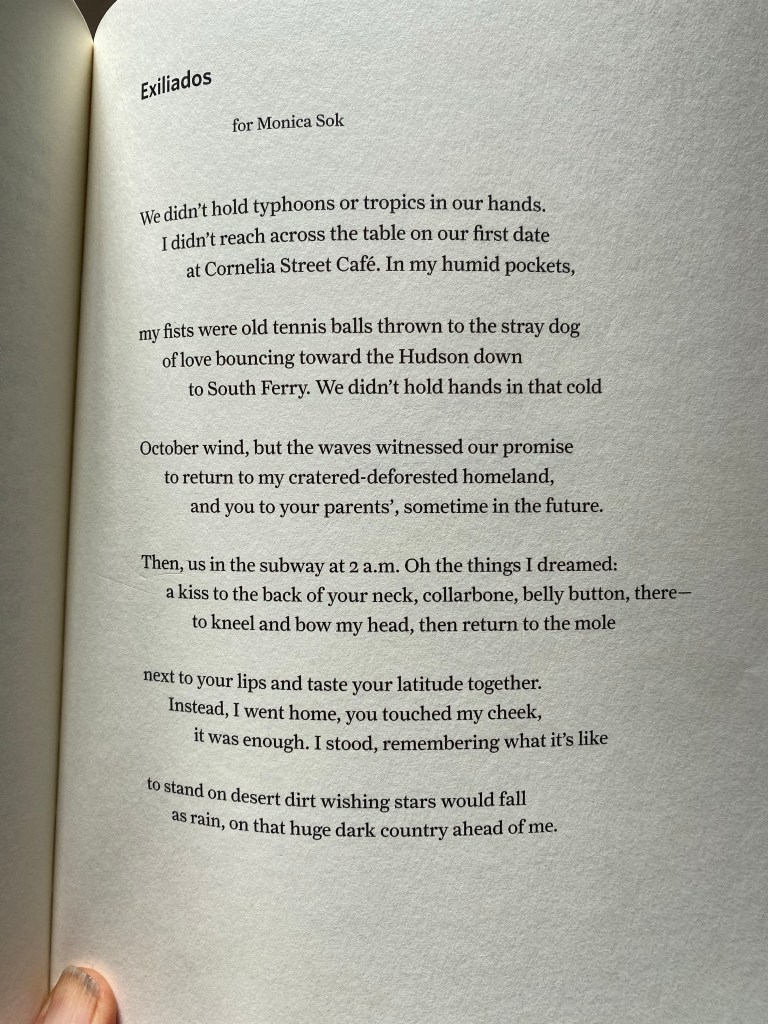
The author photo on the back cover shows a smiling young man, apparently relaxed and confident: Look, he could be saying, I have come through. One poem in the collection, ‘Exiliados’, has that feeling. It appears toward the end of the book, and gathers tremendous emotional force from all that has gone before:

Exiliados
for Monica Sok

The title and dedication do a lot of work. Like most of the Spanish words that pepper the poems, ‘Exiliados’ is easily understood by the non-Spanish speaker. Zamora does us the courtesy of not providing a glossary, leaving us to deal with it if we don’t know his mother language – his own linguistic upheaval is central to the story, and any difficulty we have can only help grasp it. The dedication is to a person whose name comes from a non-English speaking culture. You don’t need to know any more about Monica Sok to get the poem completely, but as it happens she is a Cambodian-American poet whose book A Nail the Evening Hangs On was published in 2020 by the same company that published Unaccompanied. Before we reach the first line, we know that the poem is addressed from one exile to another – exiles at least in the sense that they come from elsewhere and don’t belong to the mainstream white culture.

We didn't hold typhoons or tropics in our hands.
xxxI didn't reach across the table on our first date
xxxxxxat Cornelia Street Café.

Neither the tropics of El Salvador nor the typhoons of Cambodia are present at this meeting. Both people have left their homes behind. Other poems in the book name places in El Salvador, and when one of those places is unfamiliar to me I feel that that is no surprise to the poet. Here by contrast, when he names the Cornelia Street Cafe, it feels like a name-drop. And sure enough, the cafe has its own Wikipedia entry informing us that it has been voted one of the best places to listen to jazz music. Sadly, and perhaps fittingly in the context of so much pecariousness, the cafe closed down in 2018, after this book was published. But the point here is to establish that the meeting is happening in hip Manhattan.

It’s a date, but the speaker is tentative. His hands, like the hands of the other person, can’t bring his past life to the table. Nor can they reach out to make contact.

xxxxxat Cornelia Street Café. In my humid pockets,

my fists were old tennis balls thrown to the stray dog
xxxof love bouncing toward the Hudson down
xxxxxxto South Ferry.

More New York place names, references to humdrum Manhattan life where people throw dogs to balls and no one lives in fear of armed men in white vans. It’s romcom territory. His fists are sweating in his pockets at the prospect of love, but he’s too much the stray dog to be sure of his welcome.

xxxxxxto South Ferry. We didn't hold hands in that cold

October wind, but the waves witnessed our promise 
xxxto return to my cratered-deforested homeland,
xxxxxxand you to your parents', sometime in the future.

Two exiles, two New York poets, they speak of their homelands and the promise to return.

Then, us in the subway at 2 a.m. Oh the things I dreamed:
xxxa kiss to the back of your neck, collarbone, belly button, there
xxxxxxto kneel and bow my head, then return to the mole

next to your lips and taste your latitude together.
xxxInstead, I went home, you touched my cheek, 
xxxxxxit was enough.

What was a meeting of minds is now embodied, a moment of desire. (I don’t understand ‘latitude’, but I don’t care!) We don’t know if this was the first date that led to an intimate relationship, or if this touch on the cheek is as far as the romantic possibilities of the relationship have gone. Unlike a romcom, the poem isn’t concerned about that. Like many other poems in this collection, it focuses tightly on the moment.

In the first lines, hands were busy doing nothing – not holding places or origin, not reaching out, staying in pockets like old tennis balls that love might find, definitely not holding each other as their owners walked in the cold October wind. Now at last, the woman’s hand has made contact, and ‘it was enough’.

xxxxxxit was enough. I stood, remembering what it's like

to stand on desert dirt wishing stars would fall 
xxxas rain, on that huge dark country ahead of me.

‘The Future is dark,’ Virginia Woolf wrote in her diary in 1915 after a bout of depression, ‘which is the best way the future can be, I think.’ That’s how I read the ‘huge dark country’ here. When the nine-year-old arrived in the USA, and the future could have held anything. Now a young woman touches a young man’s cheek at 2 o’clock in the morning after they’ve talked for hours, and he feels the same sense of a vast unknown ahead, full of promise and possible danger.

This is a book that puts flesh on the bones of the continuing US headlines about the Mexican border, and especially the stories of unaccompanied children caged under President Trump. I don’t know if there has been anything quite like it about asylum seekers in Australia.