
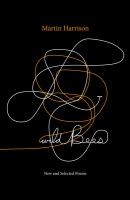
Martin Harrison, Wild Bees (UWAP 2008)
 When 11 year old Luke Shambrook had been missing for four days over the Easter weekend, Acting Sergeant Brad Pascoe spotted him from his helicopter. ‘Out of the corner of my eye,’ he said, ‘I just caught a little flash of something. It wasn’t much but it was enough to make me get the guys to turn the aircraft around and go back and have a look.’
It’s not so obviously a matter of life and death, but compare that to the silvereye in Martin Harrison’s ‘A Word’:
caught on the edge of vision,
forgotten in a glance
where nothing is anchored
The pages of this book are full of attention to tiny things and brief moments that are nevertheless enough to make the poet get us to turn around and go back and have a look. Something happens ‘out there, in dwindling light, / upon the edge, half-seen, a mere detail’ (from ‘Red Marine’). Something ‘catches my eye, half catches it, (tricking it, blinding it)’ (from ‘Winter Solstice’). In ‘Lizards’:
_____________ This
moment, they’re not here,
or are merely playing
at being silhouettes, quite still.
In ‘Tasmanian Tiger’:
ungraspable fineness of dark she-oak needles, ungraspable, I think, because so fine,
a thing merely visual, only meant in passing
to an observer perplexed by see-through shadowiness
Examples multiply.
The poetry does many different things with these ephemera and minutiae, usually at some length. Sometimes it’s like reading a gloriously fleshed-out haiku: ‘Watching Pelicans, Mallacoota’ spends the first 24 lines on a she-oak needle, and the remaining 19 on the pelicans of the title. More often, the poems are like essays, not always easy to follow, as the poet articulates thoughts or feelings that are as easy to miss as the objects or living things that give rise to them. One thing you don’t get is easy generalisations.
I saw Martin Harrison read a number of times. He was a witty, warm, impressive figure. He died in September 2014. The November issue of Cordite Poetry Review published a piece by Adam Aitken, which included an interview, in which Harrison says, among many other interesting things:
I am trying to write poetry that lives in the same world as watching TV, listening to radio and watching movies. … I’m interested in the kind of detail that the camera can provide that the writer can be intimate with. If you take a room or a scene or a person there is something about the way those images cover the object, and something about the lingering attention you can give to what’s produced there. It defines a contemporary sensibility. I like that kind of attentiveness.
Wild Bees was published by the University of Western Australia Press. I received a review copy from Giramondo Press.
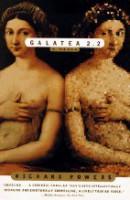 The narrator of Galatea 2.2 is a 35 year old ‘humanist in residence’ at a massive, cutting-edge scientific research centre somewhere in the USA. Recently returned from years in The Netherlands, he is still hurting from the end of his first great love relationship. When an odd, misanthropic scientist invites him to collaborate in a project to develop an artificial entity capable of producing literary commentary that will pass for human, he accepts the challenge. They are doing it for a bet, and start out thinking of it as an elaborate scam. The novel’s reference to the story of Pygmalion, the sculptor who fell in love with his statue Galatea, which then came to life, sets up clear enough expectations.
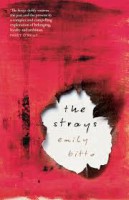 This is a novel about a fictional artist’s colony in Victoria in the 1930s. Though the colony bears some resemblance to the Heide group, and a couple of historical figures, notably Bert Evatt, are mentioned or make brief appearances, it would be a mistake to read it as a roman à clef. At least, I hope so – if not, Heide was quite a bit nastier than I’ve heard.
 This is the seventh book I’ve read for the 2015
 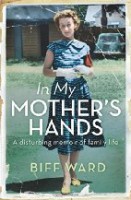 When my Book Group were picking our next book, someone asked about In My Mother’s Hands, which was on my teetering to-be-read pile. ‘It’s a misery memoir,’ I said, and we moved on to other possibilities

 Before the Meeting: That Eye, the Sky isn’t an obvious choice to discuss at a book club close to 30 years after it was published. It’s even less obvious, given that one or two of our members have disparaged Winton’s work (apart from Cloudstreet) fairly comprehensively. But we were looking for a film–book pairing and a couple of us – at least, I hope it wasn’t only me – remembered being moved by John Ruane’s movie based on this book. And it’s short.


 Me fail? I fly!