
Omar Musa, Parang (©2013, Penguin 2014)
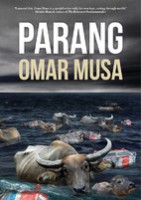
Omar Musa is a bit of a phenomenon: rapper, poetry slam champ (see below), TEDxSydney talker, he has produced a number of CDs and featured in a number of YouTube videos. Parang, first published by Blast! Publishing, an entity so small I couldn’t find it on the www, includes some poems that here make the transition from the stage to the page, and others that are definitely starting life as page poems.
The range of subject matter is wide. Asylum seekers, violence against women, alienated suburban life, the possibility of humanity’s disappearance, street lie, all rendered with exuberant rhetorical flourish of a public performance. In ‘My Generation’, there’s even a homage to Allen Ginsberg:
My generation
was populated by boozehounds and pillheads
crude clowns and bedspreads
stained with the neon dreams of cocaine fiends.
I mean,
the diamond-flooded visions of sex kittens
who sweat bullets, glitter and Chanel.
The most interesting poems are in the first section, ‘Parang’. Mostly shorter and more contained, perhaps more carefully shaped, these engage with Musa’s Malaysian heritage. Where Seamus Heaney famously compared his pen to a gun and a spade, and chose the tool over the weapon, Omar Musa takes the parang, the distinctive Malay machete, which can be either, as an emblem of what he is attempting in his poetry:
Parang,
______guardian angel of gangsters and pirates,
______headhunters and thieves.
Parang,
______patron saint of mob rule and blood bath,
______of the man who runs amok through the village.
Parang,
______guiding spirit of the housebuilder, the tool carver,
______the opener of paths.
In ‘The Parang and the Keris’, he contrasts the parang to the keris, the wavy-bladed, highly wrought dagger of heroic tales:
This parang is not heaven forged,
______blade five-waved,
smelted from meteoric iron, divine.But it is mine.
The poetry has the spirit of humble making that this image claims for it: a hard poem about his father, a celebration of his grandmother, a piece on the inevitable disappointment and also joy of discovering the real place behind family stories of heritage (‘A Homeland’). The poetry also has the edge of danger implied in the parang image, particularly in ‘FELDA’ and ‘sunyi’, both of which demonstrate that Musa’s rage for social justice and environmental is not limited to a western context.
Musa is an electrifying performer. You can see him here in top form with a fabulous audience at Bankstown Poetry Slam. It’s nine minutes or so, and well worth the time. In case you need some of the noise explained, at slam poetry the audience is encouraged to express enthusiasm by clicking fingers and stamping feet.
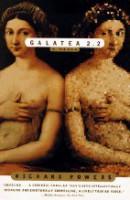 The narrator of Galatea 2.2 is a 35 year old ‘humanist in residence’ at a massive, cutting-edge scientific research centre somewhere in the USA. Recently returned from years in The Netherlands, he is still hurting from the end of his first great love relationship. When an odd, misanthropic scientist invites him to collaborate in a project to develop an artificial entity capable of producing literary commentary that will pass for human, he accepts the challenge. They are doing it for a bet, and start out thinking of it as an elaborate scam. The novel’s reference to the story of Pygmalion, the sculptor who fell in love with his statue Galatea, which then came to life, sets up clear enough expectations.
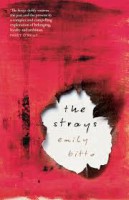 This is a novel about a fictional artist’s colony in Victoria in the 1930s. Though the colony bears some resemblance to the Heide group, and a couple of historical figures, notably Bert Evatt, are mentioned or make brief appearances, it would be a mistake to read it as a roman à clef. At least, I hope so – if not, Heide was quite a bit nastier than I’ve heard.
 This is the seventh book I’ve read for the 2015
 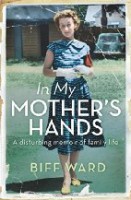 When my Book Group were picking our next book, someone asked about In My Mother’s Hands, which was on my teetering to-be-read pile. ‘It’s a misery memoir,’ I said, and we moved on to other possibilities

 Before the Meeting: That Eye, the Sky isn’t an obvious choice to discuss at a book club close to 30 years after it was published. It’s even less obvious, given that one or two of our members have disparaged Winton’s work (apart from Cloudstreet) fairly comprehensively. But we were looking for a film–book pairing and a couple of us – at least, I hope it wasn’t only me – remembered being moved by John Ruane’s movie based on this book. And it’s short.


 Me fail? I fly!