Category Archives: LoSoRhyMo

Sonnet #6: Done in ten minutes

I’m supposed to get a sonnet up every second day in November. So here’s teh 6th one as a matter of urgency:

Sonnet 6:
A sonnet’s due, but there’s no time
to think about it. Here it is.
I’ll do my best to give it rhyme
but as for reason, let it fizz.
There’s so much else to do this week,
my versifying’s up the creek
and so this one gets just ten mins
from go to whoa, wastepaper bins
are free of first drafts. Go, wee verse,
fulfil my pressing sonnet quota.
Don’t linger, loiter, trail your coat or
ask to be revised, or worse.
I see the last line coming there,
and now it’s done, ten secs to spare.

And it’s back to work for me!

Sonnet #5: St John the Evangelist in Missenden Road

When I was an undergraduate at Sydney University, even though I was a practising Catholic, I thought of the students who lived at St John’s College as almost another species: somehow insulated from the broader university community, with their own strange rituals and vaguely noxious world view. If that was true then, how much more now!

Sonnet 5: St John the Evangelist in Missenden Road
(Apologies to JM)
St John, whom Jesus loved, woke up
in Camperdown, as mad as thunder,
beside a burnt couch. He spoke up
(he’d seen the videos of chunder,
toxic brews and stained glass smashed
by men with his name, unabashed
children of the moneyed classes,
tinkling cymbals, sounding brasses):
‘In the beginning was the Word,
dwelt amongst us, crucified
by turds like you. You’ve mocked and lied,
near killed, you unrepentant herd.
God may forgive. His love is great.
But take my name off your front gate.’

The Book Group climbs Venero Armanno’s Black Mountain, plus sonnet #4

Venero Armanno, Black Mountain (UQP 2012)

Before the Book Group meeting:
A hasty read of this book’s cover blurb led me to expect a kind of fictionalised misery memoir cum migration tale, a book where a second or third generation Australian explores his European heritage:

Beginning in the sulphur mines of Sicily over a century ago … Based on factual events … Italy … rural fringes of coastal Australia … a haunting exploration of what it means to be human.

There are elements of misery memoir: in the most powerful and memorable part of the book the main character, Cesare Montenero, is sold as a child into virtual slavery to work in Sicily’s sulphur mines in the early 20th century. But Cesare’s story is told in the literary equivalent of found footage, and the sulphur mines account for only 40 of the 200 or so pages of the found manuscript. A 30-page prologue has already set some creepy, horror-genre expectations, so that one’s antennae are out for hints of the darker, weirder underlying story. It’s hard to say much more without giving stuff away, but there are plenty of pleasing twists and turns. I’m glad I didn’t read any reviews beforehand, as one of the book’s pleasures is in the way appearances turn out to be deceptive, the ground shifts constantly under your feet, you can’t really be sure what kind of book you’re reading.

I enjoyed it, but can’t say I found it satisfactory. Too often I became aware of the plot mechanics, that someone was making it all up. A gauge of my lack of engagement is that I kept wanting to have a conversation with the copy editor: ‘If we’re going to opt for the US practicing,’ I wanted to ask her/him, ‘why not consistently use US spelling, like sulfur?’ Or, ‘Are sure you shouldn’t have queried whether resiled to should have been resigned to?’ There are more such moments, and the fact that I noticed them may say more about me than the book, but it does indicate I was less than fully engrossed.

After the meeting:
This was an unusual meeting. The group had been going for exactly 10 years last night, so there was much taking stock and reminiscing, and passing on of lore to those of us, like me, who weren’t there at the start. But our in-house facilitator made sure we each had a moment to give our personal take on this book, and uncharacteristically a consensus emerged: the book was OK, no one hated it, but all but one of us found it fairly ho-hum. The sulphur mine section got a general thumbs up – one chap had read the book a while ago and had trouble remembering anything else about it. And, as someone said, we enjoyed the brothels of Paris. But, while I think we all read to the end, the overarching plot failed to impress. Most of us didn’t feel the sulphur mines and the brothels to be integrated, so when those parts came to an end, the wheels of the plot had to start from a virtual standstill. The one person who had a different reading argued for a deep thematic coherence, but I won’t say more because it really is a book that can be spoiled by too much being given away.

And the obligatory sonnet:

Sonnet 4:
Ten years and more than 60 books
discussed by us (and mostly read) –
by builders, architects, home cooks
and sundry ageing chaps, well fed
each time in mind and body. Park,
Malouf, McEwan, Stead, Houellebecq,
Coetzee (twice), White, Ghosh (a naval
title), Falconer, Miéville:
We all loved Tolstoy. Tsiolkas split us.
Tonight: Armanno, reminiscence,
but mostly – here’s the Book Group’s essence –
not so much a tute on lit as
time for sharing – hip, hooray-able –
lives and minds around a table.

Sonnet #3: Not By Ron

I’m making my way through Byron’s ‘Don Juan’ (pronounced Joo-ahn, as everyone except me probably knew) on the iPad. This sonnet’s first six words and other scattered phrases are from Canto the First. Because it’s Melbourne Cup day, I thought I’d work in a little gambling reference.

Sonnet 3: Not By Ron
‘My days of love are over,’ By-
ron wrote when he was thirty. How
the times have changed for lovers. I
met you when twenty-nine, and now
it’s thirty-six years later. ‘Tis
still sweet (long since the first-born’s birth,
the first and passionate love) to kiss
the lips you say have thinned. The earth
will have us soon enough – and then –
what then? – I do not know, or care.
We’ll die somehow, some time, somewhere,
but when that comes I’ll bet you ten
to millions that our loving days
aren’t over. All may change. This stays.

Sonnet #3: Not By Ron

I’m making my way through Byron’s ‘Don Juan’ (pronounced Joo-ahn, as everyone except me probably knew) on the iPad. This sonnet’s first six words and other scattered phrases are  from Canto the First. Because it’s Melbourne Cup day, I thought I’d work in a little gambling reference.

Sonnet 3: Not By Ron
‘My days of love are over,’ By-
ron wrote when he was thirty. How
the times have changed for lovers. I
met you when twenty-nine, and now
it’s thirty-six years later. ‘Tis
still sweet (long since the first-born’s birth,
the first and passionate love) to kiss
the lips you say have thinned. The earth
will have us soon enough – and then –
what then? – I do not know, or care.
We’ll die somehow, some time, somewhere,
but when that comes I’ll bet you ten
to millions that our loving days
aren’t over. All may change. This stays.

Sonnet #2: The dogs outside Orange Grove Markets

There are so many more important things to be thinking about, from Woolworths’ continuing to make money out of problem gamblers to an Onion article about Sandy that rings too true for comfort, with the NSW government’s plans to destroy the employment prospects of thousands of aspiring artists somewhere in between. But the muse has handed me half a dozen dogs tied to a fence:

Sonnet 2: The Dogs outside Orange Grove Markets
The dogs line up at Orange Grove.
A Whippet whimpers, Shih Tzus yip
and won’t take comfort, Collies move
their twitchy eyebrows, Labs – so hip –
refuse to look abandoned, while
undaunted Staffies wag and smile.
It’s farmers’ market day. They’re tied
here while their owners go inside
for reasons past dogs’ understanding.
There is affection between species.
We house them, feed them, bag their faeces.
But now, resigned, sad or demanding,
dogs wait until, they know not when,
the rapture when we come again.

Sonnet month is here again

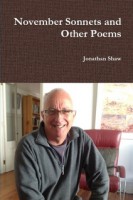
It’s November! My self-imposed month of blogging in verse has arrived. To see previous years’ mixed bag of efforts, click here, or you can buy the vanity publication of all 28 sonnets, plus my versification of Alan Jones’s epic ‘apology’ press conference, ‘The Apology, or Manning Up’, by clicking on this image:

Nsop

I may not stick to sonnets this year, but for tradition’s sake, I’m still calling it Local Sonnet Rhyming Month – LoSoRhyMo (as distinct from the much more demanding NaNoWriMo.)

Because it’s the start November, it’s also the last days of Sculpture by the Sea at Bondi. First some snaps:

Sonnet 1: Sculpture by the Sea again
We hear of artists living hand
to mouth, yet paying vast commissions
if they exhibit on the sand
or rocks near Bondi. Yet their visions –
moulded, cast, carved, planted, hung –
transcend commerce. They give tongue
to joys and sorrow, shape to fear
and hope and meaning year by year.
Cord and bamboo help us grieve.
Plastic cutlery cries, ‘Think!’
Glass, stone and steel forms bid us drink
their beauty, help us to perceive
what lies around us, and within.
To rip them off must be a sin.

The handful of sculptures specifically alluded to are:

  • Cave Urban (NSW), Mengenang (Memory), an installation of 222 Balinese-style bird scarers, whose sound hung over the park midway along the exhibition walk
  • Roh Singh (Victoria), Spatial Memorial, a white cord strung at the height of the 11 March tsunami
  • Jane Gillings, Midden (photo above)
  • Too many pieces of stone, steel and glass to mention.

One last note: my companion pointed out to me that where it was indicated in the catalogue that an artist was trained at TAFE, the skill level was manifestly superior. Despite whatever the government’s advisers have been saying, there is a need for the skills taught in fine arts at TAFE.

LoSoRhyMo #14

It’s the end of November, and with this post I’m filling my quota of 14 sonnets. I know that’s trivial compared with the 50 000 words that NaNoWriMoers manage, but I’m pleased with myself anyhow.

This one takes off from a comment the Art Student made as we were walking in beautiful autumn sunshine. The ‘she’ in what follows bears only incidental resemblance to any persons living or dead.

Sonnet 14: On gloom and doom
She sees blue sky and dreads the rain
it bodes. She hardly draws a breath
of pleasure without fearing pain
and nothing rhymes with ‘breath’ but ‘death’
or crystal meth which, failing guns
or cars or flame, will kill her sons.
And if she takes the wider view
there’s war and global warming, eu-
ro in trouble, AIDS, blind greed.
She knew that Rudd would disappoint,
thinks Abbott soon will run the joint
and make the very cosmos bleed.
But then, although she’s mostly right,
she won’t give up without a fight.

This was heading for some kind of variation on ‘seize the day’, but when I had 11 lines done, I read them to the Art Student, and she suggested the final couplet pretty much as it is here. How could I resist?

It may be no coincidence that as I type this the rain is bucketing down, and we’re sitting in a warm room watching the gum trees’ branches outside wave and bow in response.

Next year I might see if I can persuade some hardy souls to join me in this venture …

LoSoRhyMo #13

I read some lines from Les Murray’s poem ‘Poetry and Religion‘ somewhere recently, and they became an ear worm. It’s a wonderful poem, and very challenging to readers like me who have no sense of the religious.

Sonnet #13: Not exactly Ars Poetica
Every poem’s a small religion
said Les Murray. P’raps that’s true
of his. Mine’s more a kerbside pigeon
[I’ve found a rhyme – now from the slew
of possibilities find reason]:
puffed up in the mating season
it coos alliteration, rakes
the ground with fanned iambics, makes
a strut around its object. Full
religion, Les says, is the large
poem. Buddha, Jesus, Thor,
the Prophet, Moses: metaphor.
Oh Dawkins! If no god’s in charge
poems like pigeons when they fly
in large flocks can blot out the sky.

Added later: Close readers will notice that this one has 15 lines. All I can say by way of explanation is ‘Oops!’

And later again: perhaps the last six lines should have gone:

Full
religion, Les says, is the large
poem. If no god’s in charge
can poetry be meaningful?
Shall poems like pigeons when they fly
in large flocks obfuscate the sky?

Michael Dransfield revisited & LoSoRhyMo #12

Michael Dransfield, Streets of the Long Voyage (UQP, Paperback Poets 1970) and The Inspector of Tides (UQP Paperback Poets 1972)

Around 1970, when Sydney poetry readings drew relatively large audiences, a young Michael Dansfield, roughly my own age as it happens, created something of a stir. With unruly shoulder length curls, he looked every inch the romantic. He was evidently much loved by the community of poets and his death of an overdose inspired a number of moving elegies. I bought his books and applauded his readings, but it was my guilty secret that I found his persona and his poetry vaguely irritating.

Recently a friend who was culling her bookshelves gave these two books to me rather than tossing them or lugging them to a secondhand shop (where the Internet suggests they might have been worth a bob or two, if not for a small child’s large writing in the margins of ‘Still Life with Syringe’ and elsewhere). I’d long since disposed of my own copies, and was glad of a chance to revisit the poetry after some 40 years.

Half way into Streets of the Long Voyage I realised I was looking for irritants, and finding them: the self pitying romanticisation of drug addiction (‘a needle spelling XANADU / in pinprick visions down your arm / what of nostalgia when/ the era that you grew in dies’), the hi-falutin’ name-dropping (no John Forbesian Ramones for this lad, just Chopin, Scriabin, Taktakishvili all the way), the crude social commentary, the weird nostalgia for a fictional(?) decaying family home; and a pervasive self-absorption. The self-absorption came into focus for me in these lines from ‘goliard’:

The driver wonders what I’m writing
but with the superb manners of an Australian
merely asks, ‘Got enough light there, mate?’

Anyone who understood the idiom would realise, as the speaker evidently doesn’t, that ‘the driver’ was indirectly – and yes, politely – asking what his passenger was writing. One imagines that the driver’s account of that moment would not include the phrase ‘superb manners’; nor for that matter would it include the essentialising ‘Australian’.

The Inspector of Tides was more of the same: more ‘this world is going to the dogs so I’m leaving it on a needle’; more ‘ah, my ancestral home now in ruins’; more social commentary that seems quite untouched by the upsurge of optimistic activism that was happening at the time. There’s even a unicorn. ‘Endsight’ got up my nose with its reference to

00000000000000000000000the Official Poets, whose genteel
iambics chide industrialists
for making life extinct.

Since the poem is dedicated to A D Hope among others, this is a reasonably transparent jibe at Hope. I couldn’t lay hands on anything by Hope about environmental issues, but perhaps Dransfield was thinking of something like ‘Inscription for Any War’:

Linger not, stranger, shed no tear;
Go back to those who sent us here.
We are the young they drafted out
To wars their follies brought about.
Go tell those old men, safe in bed,
We took their orders and are dead.

Iambics, yes, but genteel chiding? I don’t think so. It would still take guts to read that at a military funeral, or even a parliamentary debate on Afghanistan.

There are plenty of things to enjoy in both these books – especially when the poetry relaxes, as in ‘Ryokan’:

at the window
rain

the sparrow
feathers puffed out

sings brightly but alone

my hand makes
black marks on white

the sparrow
pink marks on grey

But this is a blog entry not a review. Dransfield is a much better poet than, for example, I will ever be. He just brings out the irrits in me.

And since it’s November and I’m behind on my quota of sonnets, a quick question in rhyme:

Sonnet 12: Re-reading
Oh you who love to read again
the books you loved, who tell us how
the love you had for Austen when
you were fourteen is burning now
with brighter and more subtle fire,
how Dostoevsky, then so dire
a challenge to your questing brain
now sparks your neural paths again,
you haven’t said, do you re-read
the books that stirred you not at all,
or those, perhaps, that made you fall
asleep mid sentence, ‘Meh!’ indeed?
If it annoyed in sixty-seven
what hope for it in twenty eleven?