Chris Ware’s Building Stories

Chris Ware, Building Stories (Jonathan Cape 2012)

0224078127.jpg

This is a book that comes as 17 or so separate pieces in a box: little books, bigger books, concertina-folded strips, a board …  It might seem just plain gimmicky at first blush. But no. It turns out to be completely captivating.

The title is a pun: to read this book you have to build its stories, and a good deal of it is tales from a three-story building. Because of the nature of the beast, every reader will encounter the stories in a different sequence. Either I was very lucky, or the sizes and heft of the components tend to guide the reader’s choices, but I felt that I was reading a discontinuous but coherent narrative.

The book I read has five narrative threads, each with a central character: the lonely woman with a partially amputated leg who lives on the top level of an old building in inner Chicago; the unhappily married couple on the floor below her; the old woman who owns the building, and who lives on the ground floor where she has lived her whole life; a bee who is briefly trapped in the house; and the house itself. These stories connect and separate the way the lives of people who live in an apartment building do. Eventually, one of the stories emerges as the central one and the others slip away.  (I imagine that if you read in a different sequence, the life after the building – which to me was a long aftermath – will seem like the main story, with the life in the building as flashback.)

It’s not exactly a cheery read: most of the characters spend most of their time sad, lonely, bored, and generally dissatisfied. Youthful ambitions fail to materialise, youthful mistakes come back to haunt. But the telling is miraculous. Really. Once I got over my initial reluctance to engage with this box of stuff, I was completely gripped. The ending, or rather my ending, is devastating but not as nihilistic as I had feared. Chris Ware’s art is precise and spare to the point of primness, yet communicates meaning through the slightest variation – a flower stem bends slightly from one frame to the next, a facial expression changes subtly. Here’s a sample page, though I don’t know how much you can tell from it. It’s part of a day at work for the woman from the top floor, an aspiring writer and artist who works in a florist’s shop:

bs.jpg

A note on terminology: Generally I dislike the term ‘graphic novel’ because it seems to me to be little more than a way not to call comics ‘comics’. But it’s hard to call Building Stories a comic, because it’s not a comedy by a long shot. I don’t know, call this a grown-up picture book in a box (‘grown-up’ rather than ‘adult’, because although there’s nudity and some sexual activity, including among the bees, there’s nothing particularly erotic about it).


SWF: My Day 1

The Sydney Writers’ Festival is off and running. I’m having a soft entry: just one event yesterday and none today, and  I don’t expect to see Walsh Bay until tomorrow morning.

Yesterday’s talk, Craig Munro: Under Cover, was at the State Library, just next door to the Mitchell Library, scene of last night’s awards ceremony. Craig Munro was in conversation with Rachel Franks from the library, talking about Under Cover, his memoir of three decades working as an editor at University of Queensland Press.

I’m lucky enough to have earned my living as an editor, and I have never found the work less than interesting, whether in the book trade, on a children’s magazine (that was the best!), or in the publications section of a government department. But it’s not glamorous, and I struggle to see why anyone not an editor would be interested to hear one of us talk about it. However, a respectable crowd turned out for this talk, and seemed to like what they got.

What we got was some tips about self editing (‘the most important thing is to create distance from the initial writing’), advice on how to write a pitch for a publisher or agent (spend at least a week honing it), information and opinions about the changing face of publishing (paper books are here to stay; a poetry book is best-seller in Australia if it sells 400 copies), and glimpses of famous authors (David Malouf and the underrated Barbara Hanrahan are the only two writers Munro has dealt with whose manuscripts arrive at the publisher pretty well word perfect).

The best thing about the session was the readings that topped and tailed it. The first told of the author’s first meeting with David Malouf, in which they worked out the name for Malouf’s first novel. The second, with brilliant timing, told the story of the infamous NSW Premier’s Literary Awards Dinner of 1985, at which the book people gathered in the Intercontinental Hotel grew unruly during Morris West’s sermonical Address (the poet Martin Johnston shouting ‘Bullshit!’ at one point), Nadia Wheatley criticised Premier Neville Wran’s housing policy when accepting her award from him, and Wran himself reverted to Parliamentary behaviour and called on someone to put a bun in the mouth of one rowdy interjector. The passage should be read aloud at the start of each Awards evening, to remind us all that slide shows, civility and smiling decorum may not always be preferable to honest ill temper and rowdiness. Craig Munro’s manifest pleasure in reading it to us cast a different light on his own quietly courteous, considered manner.

NSW Premier’s Literary Awards Night

I’d love to go to the NSW Premier’s Literary Awards again one of these years, but $60 for a cocktail event is a stretch even for people who drink alcohol, and it’s way out of my range for hors d’oeuvres, sparkling water and speeches. Maybe I’ll get a freebie one of these years as a designated blogger, but for this year, as for the last couple, here’s how the evening went as gleaned from Twitter (Noting by the way that Twitter account @NSW_PLA has been silent for five years, and the facebook page ‘NSW Premier’s Literary Awards‘ for nearly three, I put my faith, mainly, in #PremiersLitAwards).

In the lead-up, there was a flurry of good-luck messages from publishers, seven tweets from one publisher lobbying for votes in the People’s Choice Award, and at least one person wondering if the recent Australia Council cuts to literary magazines would lead to an ‘interesting’ evening.

The first tweeter of the evening, a book editor from Text Publishing, turned up about 10 to 6, and a little later the State Library account posted a moody photo of the crowd gathering upstairs at the Mitchell Library, and we were away.

CikEFsYUoAA2Ki3.jpg

Twitter was fairly tightlipped during the night – nothing about what anyone was wearing, no jokes, and little from acceptance speeches. Maybe that’s what happens when it’s a cocktail event rather than a dinner. However, here’s what I’ve got. Links are to either my blog posts about books or the State Library’s listings of the awards.

Just before 7 the State Librarian officially welcomed everyone. The Welcome to Country included didgeridoo, but no one tweeted the name of the welcomer(s). Ross Grayson Bell, senior judge (I guess that’s what used to be call Chair of the Judging Panel), spoke briefly, saying that the Awards reflected the diversity of Australian writing (and so foreshadowing a major theme of the evening). Wesley Enoch delivered what Twitter said was an inspiring Address: among other things he said that when you are feeling your lowest is when you should make more art, and spoke of ‘storytelling for a nation that is in want of a memory’ (Wesley Enoch is a Murri man).

In a welcome departure from recent practice the Premier Mike Baird himself presented the awards. He spoke of J D Salinger, and said that ‘stories remind us why we’re here, what we’ve forgotten, and help us to inhabit other worlds’, echoing Wesley Enoch’s words. Jennifer Byrne took over as MC and the announcements (what she called a ‘rollcall of excellence’) began.

Multicultural NSW Award ($20,000) went to Good Muslim Boy by Osamah Sami (Hardie Grant Books). He gave a ‘very funny and memorable’ acceptance speech. No details.

Indigenous Writer’s Prize (a new biennial award worth $30,000). Of the shortlisted books I’d read only Inside My Mother by Ali Cobby Eckermann (Giramondo). The prize was shared between Dark Emu  by Bruce Pascoe (Magabala Books) and Heat and Light by Ellen van Neerven (University of Queensland Press), which must be wonderful books.

Nick Enright Prize for Playwriting ($30,000).  The Bleeding Tree, Angus Cerini (Currency Press in association with Griffin Theatre Company). I knew I should have subscribed to the Griffin.

Betty Roland Prize for Scriptwriting ($30,000). Of the shortlist, I’ve seen only Last Cab to Darwin, and though it had many good things about it, it would have surprised me if it won. The winner was the fourth episode of Deadline Gallipoli, ‘The Letter’, written by Cate Shortland (Matchbox Pictures) and screened on Foxtel, so bad luck for us non-subscribers.

The Patricia Wrightson Prize for Children’s Literature ($30,000) went to Teacup, written by Rebecca Young & illustrated by Matt Ottley (Scholastic Australia). The Ethel Turner Prize for Young People’s Literature ($30,000) was won by Alice Pung’s Laurinda (Black Inc.).

Kenneth Slessor Prize for Poetry ($30,000). Again, I’d only read one book, Joanne Burns’s brush (Giramondo). It won!

Of the shortlist for the Douglas Stewart Prize for Non-Fiction ($40,000) I had once again just one book under my belt, Magda Szubanski’s wonderful Reckoning: A Memoir (Text Publishing). Once again, it won. I was doing well. Mike Baird held Magda’s phone for her so her mother and brother could hear her acceptance speech. Someone tweeted at this point that a number of award winners spoke of their family histories and ‘complex journeys to Australia as displaced persons’.

UTS Glenda Adams Award for New Writing (a mere $5000) went to An Astronaut’s Life by Sonja Dechian (Text Publishing). Christina Stead Prize for Fiction ($40,000)went to Locust Girl, A Lovesong by Merlinda Bobis (Spinifex Press), a post-apocalyptic novel. One tweeter congratulated her for helping us ‘care across borders’. The People’s Choice Prize, which is restricted to the grown-up novels, went to The Life of Houses, Lisa Gorton (Giramondo).

The Special Award (for which, if money is involved, the amount is not easily discoverable) was given to Rosie Scott, described by Susan Wyndham on Twitter as ‘admired author, supporter of young writers, asylum seekers, refugees, many social causes’.

The book of the year (again, monetary value not easily discovered) went to Dark Emu by Bruce Pascoe. Accepting his award, he said to the people in the room, ‘I want to hear your story, because I would be spellbound.’

Then the State Library account tweeted the hashtag #BestSpeechesEver. So those of us pressing our noses against the glass wall of Twitter know what we missed out on. It was all over bar the reading – oh, and the many pictures of underdressed young women that began appearing with the Awards hashtag during the night.


Adam Aitken’s One Hundred Letters Home

Adam Aitken, One Hundred Letters Home (Vagabond Books 2016)

100letters.jpg

Just a short post on this book: no disparagement intended, it’s just that the Sydney Writers’ Festival is here and if I don’t get this post done now there will be too much time between the reading and the blogging.

One Hundred Letters Home is Adam Aitken’s memoir of his parents and his own youth. It has been a long time in the making – earlier versions of two of its chapters were published in the late lamented Heat in 2004 and 2009. In it, Aitken goes in search of his parents. Not the actual parents,with both of whom he is still in contact in the course of the book, but the young people they once were. He explores letters and photographs from more than 50 years ago to gain some understanding of how these two people met, married, and separated. His father was a white Australian advertising man posted to Bangkok, who after enjoying the nightlife for some time fell in love with a university graduate from southern Thailand, and after some vicissitudes married her.

Their son knows more about these events than most of us do about our parents because the young advertising man wrote detailed letters home to his mother, including notes on his alcoholic excesses, the taxi dancers and other women he was drawn to, and then – all others falling by the wayside – his great love. Aitken makes wonderful use of this resource. There are also photos, which he squeezes for their narrative potential, and on his mother’s side some wonderful sketches of Thai culture.

The story continues: the couple leave Thailand to live in England, then come to live in Australia – first in Perth and then in Sydney. The source material tends to be sparser, especially for the English period, until the writer’s own memory comes into play. Along with his father’s time in Thailand, the most gripping part of the book is Aitken’s account of his own visit there in his early 20s, in search of his Thai identity – where he finds that questions of identity are a lot more subtle than that.

Launching this book at Gleebooks recently, Beth Yahp commented that whereas mostly these days we want to rush through things we read, this book forces us to slow down, dwell on moments, go back and reread or have another look. She’s right. My impression is that it was written as a group of more or less stand-alone essays, and the joining of those essays isn’t seamless. The occasional rough edges, however, mean that the reader is made aware of the work involved in making the book. It’s not an entertainment in the manner of Clive James’s Unreliable Memoirs (not that there’s anything wrong with that!): you can feel the wrestling involved in getting these stories told.

I found myself itching to interrogate the received versions and silences about my own heritage. Thanks, Adam

Lumberjanes

Noelle Stevenson, Grace Ellis, Shannon Watters, Brooke Allen and others Lumberjanes: To the Max edition Volume 1 (BOOM! Box 2015)

1608868095This was a generous birthday gift from a son. It’s a hefty and handsome hardback which collects eight original monthly comics, presented as the tenth edition (February 1984) of the field manual for the Lumberjanes advanced program, the Lumberjanes being a fictional version of the Girl Scouts (which I think is the US version of the Guides). The graphic adventures of five girls disrupt the manual’s practical instructions and moral exhortations. They don’t undermine its ethos, but go off on bizarre, anarchic adventures to earn their badges and save the day.

I’m definitely not part of the target audience for this one, being neither USian, nor female nor tween. I do like the central idea, as foreshadowed on the false title page where the ‘Girls’ in the phrase ‘Camp for Girls’ has been blacked out and replaced with a hand-printed ‘HARDCORE LADY-TYPES’. But the graphic style (mostly by Brooke Allen, with garish colours by Maarta Laiho) is too anarchic for my taste and the stories (mostly written by Noelle Stevenson and Grace Ellis) of spells, anagram clues, underground animated statues, zombie boys, dinosaurs and so on left me pretty unengaged, even when I could decipher what exactly was happening. I did enjoy the way any number of feminist icons (‘Holy bell hooks!’, for example, or ‘Oh my Bessie Coleman!’) are invoked in moments of high emotion.

Horses for courses. There aren’t too many 12 year old girls who would enjoy the books I do. So I’m not knocking this.

Gail Jones’s Guide to Berlin

Gail Jones, A Guide to Berlin (Random House 2015)

berlin.jpgAfter ten or so pages of A Guide to Berlin I was weighing my options. Did I really want to read another 240 pages about a small group of Nabokov enthusiasts in Berlin who meet to tell each other stories from their lives? Especially when those pages promised to include overcooked writing like this:

Shivering, cold, suffering pathetically in a minor key of frozen hands and feet, she aimed her phone through the watery light at the disappointing building across the street, and a man appeared, standing silently beside her.

The main thing that kept me reading was the desire to have one more shortlisted book under my belt before the NSW Premier’s Awards are announced in a week or so. Plus: some fabulous literature has been built around the conceit of a group of travellers telling each other stories to pass the time; I would love to revisit Berlin; the first page foreshadows a death and therefore, perhaps, interesting developments; and I hoped that the self-conscious literariness of the narrating voice might turn out to be a function of character rather than the author’s natural (I use the word loosely) style.

I did read on. The group of six people tell their stories, and are much more moved by them than I was. Berlin is present mainly in the naming of streets, landmarks and train lines. The main character, Cass, visits the Pergamon and the aquarium, and the tale-tellers do tell each other their favourite spots. Death happens at about the three-quarter mark, but it feels like a plot device, or at best a pretext for more introspection. And the self-conscious literariness keeps up all the way, with some beautifully quotable paragraphs but an over-riding sense that the writing is more interested in itself than anything else.

I’ve never read any Nabokov. Given that the characters frequently quote him to each other, maybe a reader familiar with his work would in effect be reading a different, infinitely more enjoyable book than I read. I hope many people love this book. I’m not one of them.
—–
That much was written when I had about 50 pages to go. I was hoping I’d have to ditch my draft and start all over again, this time singing the novel’s brilliance. After all, a lot can happen in 50 pages. Alas, the concluding pages are pretty much taken up by the narrator’s fairly callow reflections on the limitations of story, and the characters’ callous, self-preoccupied responses to some terrible deaths. Maybe the novel is subtly and elegantly holding both these things up for scrutiny, but if so the subtlety passed right by me. I was left with a feeling of deep disgust. Sorry!

AWW2016A Guide to Berlin is the fourth book I’ve read as part of the 2016 Australian Women Writers Challenge.

Goodbye art student …

… Hello Emerging Artist.

National Art School degrees were conferred today. The Emerging Artist whipped her cap and gown off before I could take a photo, but consented to be snapped before leaving the school.

She says that when the head of the institution handed her the testamur, he said, ‘You look terrific.’ And she does.

Pam Brown’s Missing Up

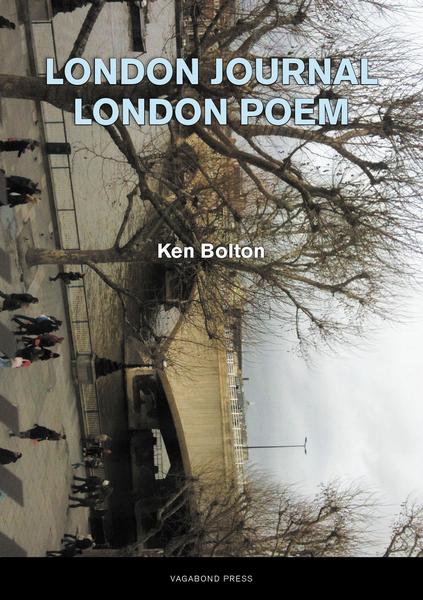
Pam Brown, Missing Up (Vagabond Press 2016)

Francis Webb once said that a poem was a meeting place of silences, or words to that effect. I don’t know if Webb would have taken to Pam Brown’s work (or vice versa), but the poems in Missing Up reminded me of his observation. It’s not that she writes things that ‘oft were thought but ne’er so well expressed’ (to invoke another unlikely poet), but I find in her poetry a kind of mental activity, the kind that generally precedes speech or even coherent thought, that is distractible, non-linear, associative, interspersed with snatches of other people’s words. I don’t know about you, but that’s the kind of activity that fills a lot of my silences. Pam Brown wrangles it into words.

Rather than try to say more about the book as a whole, let me have a go at a single poem. Here’s ‘Flat white’, which is far from being typical of the longer, non-linear, obliquely and sometimes grimly personal poems in this book, but which I’ve chosen partly because it’s the shortest in the book, and because I wanted to figure out what its title pun is doing:

Flat white
how to hold a genre
__who likes
______
genres
& how to
___handle filth___und drang
or
_(ring the bells here)
______
devise
__
a few innocent new myths
to resacralize
______the apostasy
of the bourgeoisie
_________________
the who?
they’re the ones
____
with unhappy consciousness
who are seeking
_
a brains & sex harmony motor
to spruce up
___
the non-lived
__________
flat white life
in
__
natural surroundings

First off, you can’t read this poem as you would a passage of prose, and that’s not just because of the line breaks. Like Pam Brown’s poetry in general, it asks for a different kind of attention: not requiring that it yield its meaning at a glance, but settling in, tolerating ambiguity and ok that some meanings and references may take a while to become clear, may even remain permanently inaccessible. I think I’m right in saying that if you feel like an outsider as you read this poem for the first time, then that’s not a bug but a feature: we’re not being addressed, lectured at or wooed; we’re eavesdropping – eavesdropping by invitation, if that’s a thing.

**** The next few paragraphs show me struggling to explicate the poem. I had fun and learned from the process, but you may find it a bit boring. ****

In the absence of conventional punctuation, some parsing is called for. Here’s how I read it – your mileage may vary.

The poem is in two parts, of 12 and 10 lines respectively. The first part ruminates on a project. ‘How to’ doesn’t introduce a set of instructions, but poses a question or challenge: how is one ‘to hold a genre & … handle filth … or … invent a few innocent new myths’. The reason for wanting to do these things is ‘to resacralize [sic the US spelling] the apostasy of the bourgeoisie’. The second part then offers a definition of the ‘bourgeoisie’, and in doing so indicates why the activities contemplated in the first half are called for.

So far, so straightforward. To complicate things, it’s as if a second voice heckles the first: when Voice A mentions genres, Voice B mutters in the reader’s ear, ‘Who likes genres?’; when Voice A mentions filth, Voice B adds a sarcastic, or perhaps clarifying, ‘und drang’; Voice B is surely mocking when she says, ‘Ring the bells!’; and then her question ‘The who?’ is the poem’s turning point. And I guess you could read the rest of the poem as integrating the two voices – the one who names the project and the one who derides it.

But grasping the structure doesn’t make the poem transparent. ‘How to hold a genre’ for a start: Harvard University’s Poetry Classroom lists 35 genres, from allegory to verse epistle – what does it mean to hold one of them? It’s probably not ‘hold’ as in ‘hold the mayo’ (though on first reading one may stay open to that possibility), but as in ‘grasp’. I provisionally take the phrase to mean to write a poem that follows clear conventions. As Brown’s work rarely fits into any established genre, perhaps here the poem’s speaker is wondering how she would go about doing this thing that she has no actual desire to do (hence Voice B’s interjection), or maybe she’s contemplating establishing a genre of her own, of holding her own poetry to some established form (in which case Voice B is questioning the worth of the project).

Then ‘hold a genre’ is paraphrased as ‘handle filth’: the meaning of ‘filth’ isn’t clear, and the interjected ‘und drang’ is funny, but hard to pin to a meaning. (I know I miss a lot of Brown’s poetic references, but I do know that Sturm und Drang was a highly charged German artistic movement, in which Beethoven was a major figure.) The line expresses emotional recoil from the idea of working in genres – the speaker likens it to handling poo. A quick internet search refined my understanding of Sturm und Drang: it translates literally as storm and yearning, which gives the joke an interesting twist: yes, to attempt that kind of poetry may be like handling filth, but that doesn’t stop the poet from yearning for it to achieve some higher end. (Alternatively, ‘handle filth’ may not be meant to paraphrase ‘hold a genre’ at all, but add to it, so the challenge is to hold to conventions while handling messy (filthy) and emotionally charged realities. Both readings can work, possibly at the same time.)

In the next lines the project becomes more ambitious. Voice B’s sarcastic injunction to ring bells and the deprecating irony of ‘few’ and ‘innocent’ (can myths ever be innocent) modify but don’t erase the ambition of ‘to devise … myths’. And ‘to resacralize / the apostasy / of the bourgeoisie’ sounds like a big deal. I’m inclined to take this phrase seriously, either as an aspiration or as a sorrowful recognition that something is needed, even though impossible. ‘The apostasy of the bourgeoisie’ is probably a reference that I don’t recognise – Google didn’t help me with it. The bourgeoisie have lost their sense of the sacred, perhaps of meaning, or not so much lost it as turned away from it: their sustaining myths are either dead or toxic/desacralised. It’s worth noticing, though, that the speaker isn’t contemplating reviving those myths, but devising new ones, not to reverse the apostasy of the bourgeoisie, but to (re)sacralise it. Whatever that means.

But bourgeoisie is such a nineteenth-century, Marxy term. Fair enough that the voice from the peanut gallery challenges it: ‘the who?’

The remaining nine lines answer the question in a single, only slightly obscure sentence: ‘they’re the ones / with unhappy consciousness / who are seeking / a brains & sex harmony motor / to spruce up / the non-lived / flat white life in natural surroundings.’

There is probably someone on the planet who doesn’t know that a flat white is a kind of coffee (cappuccino senza schiuma is how you order an approximation in Rome), that the cool people drink in some parts of the world. The phrase ‘the non-lived / flat white life’ is what drew me to the poem in the first place. Barry Oakley described marijuana as the new sacrament of rebellious middle class youth in the 1970s. This poem suggests that the flat white is currently the desacralised sacrament of certain alienated or spiritually lost middle class people. (When one of my sons was a teenager, he quipped that when God was giving out senses of humour, a certain adult thought he meant coffee and asked for a flat white. There’s a similar play of ideas here.) These are not the bourgeois who were shocked by Baudelaire; these are, more or less, Pam Brown’s people. (I don’t drink coffee, but the poem is pointing at me.) There’s discord between what they are seeking – ‘a brains & sex harmony motor’ – and what this poem has been contemplating – ‘to resacralize / the apostasy’. They want a mechanical solution; the poem is groping towards something more demanding. Their ‘surroundings’ are ‘natural’ only ironically, like Patrick White’s carefully natural gum trees in Barrenugli. No room for poetry to play a central role there: the poem ventures to consider the possibility, but recognises that the odds are against it.

The poem does all this while managing to feel tossed off (the technical term for which I believe is sprezzatura).

**** End of potentially boring explication *****

The Vagabond Press website has a very nice blurb on this book which describes the poems as ‘offbeat, fragmentary yet often discursive’, and includes this:

For Pam writing poetry is a habit, a disorganised ritual. Her poetic inventories begin in everyday bricolage. Real things interrupt the poems the same way thoughts and phrases do. You know – the fridge over there, the bus stop, surf music on a radio, a raisin squashed against a floor tile – always backgrounding a connection to the ‘social’ as the poems make political and personal associative links.

AWW2016Missing Up is the third book I’ve read as part of the 2016 Australian Women Writers Challenge.

Dimity Figner

Dimity Figner, feminist, artist and generally lovely person died on Thursday in a nursing home in Nowra. She had been sick for some time, and some of her many friends were with her at the end.

There was a retrospective exhibition of Dimity’s art in Nowra earlier this year, and she was active in the Older Women’s Network until recently (at that link is a photo of Dimity and 13 other rambunctious older women celebrating the publication of a history of Nowra OWN). In the 1970s she designed a beautiful Women’s Liberation symbol that has been widely used on badges and publications in Australia. She briefly illustrated for The School Magazine in the early 1980s. Back when I used to run into her regularly I could count on her to say she liked my hair just about a day before my official grooming consultant told me it was time to visit the barber.

One of our most cherished art acquisitions is this wonderful little bust, her creation:


Many people will miss Dimity. I’m one of them.

Added on 6 May: I don’t think many people will be aware of Dimity’s work with The School Magazine. Here’s a scan we managed to get of a 1981 cover by her (difficult if not impossible to get a perfect scan, as the bound volumes don’t flatten out without damage):

Martin Harrison’s Happiness

Martin Harrison, Happiness (UWA Publishing 2015)

1742586864.jpgI’d pretty much finished writing this blog post when I discovered the special issue of Plumwood Mountain, an ‘Australian journal of ecopoetry and ecopoetics’, dedicated to the memory of Martin Harrison who died in 2014 while Happiness was being prepared for the press. I won’t be offended if you click over to that and don’t bother with the rest of my post. But here it is anyhow:

An email is doing the rounds with the subject line ‘Poetry Experiment’. It asks you to do two things: 1) send a poem – any poem – to the first on a list of two people; and 2) alter the email by moving the second person on that list to the top and adding yourself in second place, then Bcc the altered email to 20 friends. If everyone follows instructions, 400 poems will soon arrive in your inbox.

I did as instructed, and received 4 poems: four famous lines from William Blake, a prose quote from Mahatma Gandhi, Emily Dickinson’s ‘He ate and drank the precious words‘, and a Leunig verse. The person at the top of my list sent me copies of the poems she received. There were five from my friends: some lines from Auden, Shakespeare, and Rumi, and whole poems by Judith Wright and (again) Emily Dickinson.

Tentative conclusions: the vast majority of people don’t take to poetry, or at least to a combination of chain letters and poetry; people are generally more willing to share poetry than to ask other people to do so; and we’re more likely to share favourite lines than whole poems.

Which brings me to Happiness. There are any number of excerpts that would do perfectly for the poetry experiment. For example, this lovely evocation of a landscape in ‘Summer Rain Front, North Coast’:

the mountain mirrored in the instant’s stillness
of the calm sea flooding into the bay
the mountain photoing its image on the waters
over the grounds where dolphins track    and then its scarves
hanging high in the air like drifted parachutes
white against blue

But probably none of its poems is chain-letter material in its entirety – they’re too long, and mostly proceed like conversation rather than performance. That is, the pleasure of reading them doesn’t come so much from brilliant turns of phrase or striking metaphors as from the sense that one is being invited to join the poet in his experience of the world, his loving embrace of it, including that part of it he addresses as ‘you’, which at least sometimes is his lover Nizat Bouheni, to whom the book is dedicated, and who died in 2010. There are love poems, poems filled with meticulous, immersive observations of nature, forty-five pages of elegies. There are a couple of awkward but trenchant poems on the politics of climate change, and an ‘experimental’ poem that an author’s note (kindly) informs us is ‘made up of responses to a randomly sorted set of instructions repeated four times’. And there’s one satirical description of some US Americans abroad.

One of my favourite moments in the book, which is in some ways representative, is in ‘Wallabies’. After three pages of  two-line stanzas evoking the sights and sounds of a particular Australian landscape with something approaching ecstatic fervour (the absence of punctuation may make this hard to decipher at first, but patience pays off):

nothing is dead here the spaces between them are
inhabited leaves twigs debris fallen white-anted trunks

slopes rocks grass parrots galahs floating down
in pink streamers again the grey lack of edge

around sprays cream waterfalls of turpentines flowering
in high irrigated air-blue reaches

and much more, there’s this:

that twenty mile shadow across the claypan’s a fence

which as dusk comes is a lightning-quick snake
momentarily distracting the way they appear

as if from nowhere like sentinels weathered stone
camping in that stubble sunset-toned no like mushrooms

wallabies two of them and then three over there then more
pale half-red underfur letting them melt into late light

alert as the slanting hour’s alert to earth cool as wine
then the shriek as they scatter

I love how the poem enacts the way you often become aware of the presence of wallabies in a landscape rather than see them arrive: they’ve been in the poem for three lines before they are named. They may be the subject of the poem, but they are part of a much bigger field. Harrison’s poetry often seeks out and celebrates the tiny or the evanescent – a blue wren nesting under the eaves on a sweltering day, a moment in a changing skyscape, a half-heard sound in the upstate New York woods. These lines from ‘A Music’, which is the second part of ‘Two for You’, an elegy for Nizar Bouhemi, could be describing much of Harrison’s poetry:

________The singleness
of each event in

its own swerve and
sharpness, drawing

attention and attentiveness
making it seem as if anyone

could just see it, grasp it,
wait to understand

what no one understands

Martin Harrison’s death of a heart attack in 2014 makes this book’s attention to the fleeting and its grappling with the realities of death incredibly poignant