First an embarrassing memory, and then a slightly less embarrassing piece of verse.
The memory: in 1970 I was an English Honours student at Sydney University and had no idea how ignorant I was. James McAuley, then one of the Grand Old Men of Australian poetry, had a new book out, Surprises of the Sun. One of its poems, ‘In the Twentieth Century’, begins: ‘Christ, you walked on the sea, / But cannot walk in a poem, /Not in our century.’
To my mind he was clearly mistaken, so I wrote him a letter, in which I pointed out his error and as proof transcribed the second stanza of Leonard Cohen’s ‘Suzanne’, which begins, ‘Jesus was a sailor and he walked upon the water’.
McAuley didn’t reply, and presumably the letter itself has long since ceased to exist, but my brain has refused to eliminate the memory.
And the verse:
Verse 5: … about it all again
No drunken midnight choir sang me to
sleep. I heard no secret chord.
The room filled up with one mosquito,
and no sweetness was restored.
Adam’s long since left the garden.
Home he’s gone without a hard-on.
Break the bugle, skin the drum –
democracy is yet to come.
He’s danced us to the end of living,
leans no longer for Suzanne
or sea-and-shoreline Marianne.
Say goodbye to Leonard leaving.
So much light came through his cracks
and gave our griefs their music tracks.
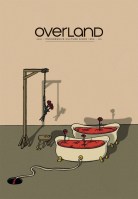
Overland is always a stimulating read. Among this issue’s offerings I am particularly grateful for:
Jeremy and the jeremiads by Richard Seymour, which discusses the ruthless and blatantly dishonest treatment of Jeremy Corbyn, the first radical socialist leader in the Labour Party’s history, by the British press – and not just its reactionary bits. As Seymour says, ‘the Corbyn moment has shown us … just how openly interventionist the majority of the media becomes when official opposition threatens to become a force for more radical change.’ Not just the Murdoch press, then.
The limits of compassion by Gerhard Hoffstaedter, which explores Malaysia’s response to the flood of people seeking asylum. It’s not that Malaysia is a beacon of light in this matter, but the scale of the problem there makes the panic and harshness here look even more shameful.
‘Just violations’ by Alex Griffin (not online yet), which offers a historical context for Australia’s offshore detention centres. Japanese prisoners were held on Manus until 1953, and an Australian war crimes courts sat there, implementing the dubious War Crimes Act, in 1950 and 1951: ‘Australia could satisfy domestic interest, escape serious censure from its allies and strengthen its position in the Pacific, all while using the bodies of foreign nationals as bargaining chips in a oerverted and heavily weighted judicial situation.’
There’s also Alison Croggon’s column on her personal experience of depression, Ben Eltham spelling out how out of touch Australia’s political class is with the realities of most people’s lives, Giovanni Tiso on the pitfalls of using social media and the Web in general for political organising, with some interesting history for those who don’t remember Usenet.
No issue of Overland would be complete without the finalists of at least one prize. This one gives us the Victoria University Short Story Prize. The winner, Broad Hatchet by Julia Tulloh Harper, is a convincing bush tale with a neat gender twist.
There’s a poetry section. A new overall design means that the poetry is no longer printed in a light colour on a light background, and as a result can be enjoyed without eye strain. Zoë Barnard’s chilling ‘Impulse’ and Michael Farrell’s weird ‘Solve a problem and it grows two heads’ are the two poems that grabbed me the most.
And because it’s November, a verse. It may not be great but it rhymes:
November Verse 4: To Overland and their ilk on Eight-eleven
Unhappy land that needs a hero.
Duterte, Hitler, Donald Trump,
elected (unlike Stalin, Nero)
masters of the campaign stump
who feed on people’s desperation,
fan the myths of race and nation,
harness hate, despair and fear.
A heedless will for change is here.
We do need change. The seas are rising.
The profit motive hurts us all
and holds our governments in thrall.
I’m grateful for the organising,
analysing work you do.
It gives me hope we’ll make it through.
I’ve recently been surprised to hear a number of people refer to Helen Garner as ‘one of our great writers’. My surprise doesn’t come from disagreement. It’s just that hers isn’t writing that invites one to bow down in the presence of greatness. She’s less a Great Dane (or Grande Dame) making magisterial pronouncements than a terrier who keeps on at her subject until it yields some truth, her truth. She passes judgement often enough, and definitely enough, but not dogmatically, and not looking for a stoush either, but ready in case one comes along. A striking feature of Sotiris Dounoukos’ movie of Joe Cinque’s Consolation is the absence of the book’s persistent questioning – so when the end titles announce that, against the strongly implied judgement of the previous 90 minutes, one of the real-world characters was exonerated by a real-world jury, one tends to simply distrust the movie. When the book calls that verdict into question, you can disagree, but you can’t honestly dismiss it out of hand: the judgement has been honestly, and I would say humbly, worked for. (Perhaps its relevant that some of the harshest critics of Garner’s The First Stone refused to read it, or so I’ve been told.)
One of the pieces in this collection is titled ‘While Not Writing a Book’. That could have been a working title for the collection as a whole. It and a couple of others, including ‘Before Whatever Else Happens’, are presented as excerpts from the writer’s diaries/notebooks: overheard snippets, chance encounters, family moments, brief reflections. Another writer might have called them flash fictions or prose poems. Other pieces are more sustained: the product of a week locked away with CDs of Russell Crowe movies; reviews; sketches from the courts; wonderful pieces on her friendships with Jacob Rosenberg, Tim Winton and Elizabeth Jolly; glimpses of family life with grandchildren and, once, a dog; a revisit to her relationship with her mother; reflections on the ukulele, the ballet, suburban life; and more, enough to keep her readers interested between This House of Grief and whatever big thing may happen next.
Everywhere she looks and listens, from conversations about farting with small children to a teenager who has bashed her newborn baby to death, Garner finds stuff for her mind to grapple with, and she knows how to communicate the grappling with grace and vigour.
And now, because it’s November, a versification of one of the diary entries (see page 85 for the original):
Verse 3: At a conference
Supreme Court Judge and Helen Garner
chatted over tea and dip.
‘My home,’ the judge said to the yarner,
‘was once the scene of Monkey Grip,
your novel, and we’re renovating.’
‘My novel, and some devastating
and elating life. But how
do those old rooms look to you now.’
He listed them: ‘… and one so dinky
my daughter’s desk was there before.
It’s soon a bathroom, nothing more.’
‘The one with wooden shutters?’ Inky
flash from hippie days divine:
‘That tiny room was [humbly] mine.’
Verse 2: At a poetry reading
Tonight’s star reads with great sonority
poems of country, beasts, trees, birds,
with great if pained superiority
over those who use not words
but guns on feral, sick or wounded
animals, whose lands are bounded,
cut by fences which (truth!) he
declares offensive. Glory be!
His passion shames my mammal-eating,
planet-warming life. It shakes
my donsie tricks, my black mistakes,
my use of coal-fired power for heating.
And yet I wish that he could tell
that other humans are not hell.
There’s a line in there that’s stolen from the great Robert Burns. You can read the poem it’s from here.
It’s November and once again, in solidarity with NaNoWriMo participants, I’m taking on a quantity-is-what-matters-and-hang-the-quality project: 14 Onegin stanzas in the month.
I was in Canberra on Halloween night. There wasn’t a lot of trick-or-treating going on in Civic, but as our small group emerged from a pleasant Sri Lankan meal we witnessed what may have been a Halloween-inspired moment.
Verse 1: Spirit of place
It’s nine. We’ve eaten. Frost tomorrow.
The street is still except for these
ebullient young. I’d like to borrow
half their cheer. It’s twelve degrees,
which doesn’t damp down their endorphins:
two young men as sleek as dolphins,
to win a dare or act the fool,
surf naked in the square’s staid pool.
Emerging, one is towelled and shaking.
The other, threatened with a phone,
sprints laughing round the square alone
and wet, all modesty forsaking.
It’s Halloween. No ghosts. No fright.
The body owns this town tonight.
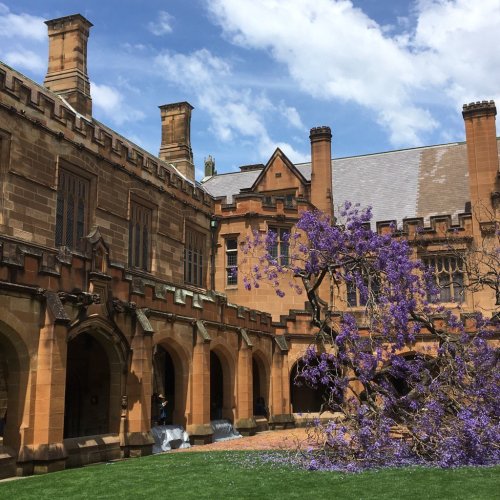
In honour of possibly the most loved tree in Sydney and scholars everywhere who worked for their higher degrees and never besmirched whole academic disciplines:
The old jacaranda has died.
It witnessed the senate decide
to give Howard, John
a PhD (Hon)
and died from the wound to its pride.
Brian K Vaughan & Pia Guerra, Y: The Last Man, Book 2 (2003, 2004, this Deluxe Edition 2009)
In Book 1, all mammals with a Y chromosome except two died in a mysterious plague. We were introduced to the two survivors, Yorick Brown and his companion monkey Ampersand; their nemesis, Yorick’s younger sister Hero; their protector, a secret organisation operative named 355; and Dr Mann (get it?) who seems to be the world’s best chance of understanding the plague and securing a future for humanity.
At the end of Book 1, our main characters had set off from New York to San Francisco, to Dr Mann’s backed up research, her main lab having been torched by Israeli soldiers. And on its last page we had glimpsed a trio of astronauts, two male and one female, who are about to return to earth.
Book 2 is the equivalent of a road movie. As in all good road movies, we learn a lot more about our three main characters: 355’s organisation comes slightly more clearly into view; Dr Mann may not be the great scientist she’s cracked up to be; and young Yorick reveals depths and vulnerabilities, that is to say he becomes more interesting. The astronauts land, with predictable and unpredictable results. The Israeli soldiers become a serious problem. There’s a paranoid states-rights militia, a group of travelling players, a shadowy ninja-like character who seems to be working for the government, pistol-toting cowgirls, a kick-ass Russian agent, a tragic dominatrix (or is she?), and a host of interesting single-page characters. There’s plenty of violence and PG sex, though (possible spoiler) Yorick manages to remain faithful to his girlfriend who is still in Australia.
The story zings along. Yorick’s major in English Literature allows literary references to be pulled off: a bizarre form of therapy, we are told, was developed in a secret meeting between Benjamin Franklin and the Marquis de Sade (Brian K Vaughan’s invention, I think); Mary Shelley wrote a novel called The Last Man set in the 21st century (true); there’s explicit homage to Nathanael West’s The Day of the Locust. Pia Guerra does most of the pencilling but is joined in this issue by Goran Parlov for three of the original 13 issues and Paul Chadwick for two – for a non-expert reader like me the transitions are seamless.
I read this on an evening when I had intended to go to the movies. Nothing I wanted to see was on at a convenient time, so I hopped on a bus, got to Kinokuniya just as it was closing, and read this pretty much in the time a movie would have taken and with at least as much enjoyment.
Just as I was about to hit Publish I read on the jacket-flap what purports to be a summary of Y‘s set-up but is in fact a statement of just how male-dominated the world is at the start of the 21st century. As a result of the mysterious plague, ‘495 of the Fortune 500 CEOs are now dead, as are 99% of the world’s landowners … Worldwide, 85% of all government representatives are now dead … as are 100% of Catholic priests, Muslim imams, and Orthodox Jewish rabbis’. The book is fun, but it’s having its fun in a seriously fraught place.
Brian K Vaughan & Pia Guerra, Y: The Last Man Book 1 (2002, 2003, this Deluxe Edition 2008)
My younger son and I are enjoying Brian K Vaughan and Fiona Staples’ space opera romance comic, Saga, as it appears book by book. So Y: The Last Man, written by Vaughan in an earlier collaboration with artist Pia Guerra, was an excellent gift from him to me on a recent birthday.
All the men on earth, indeed all mammals with a Y chromosome, die suddenly, cause unknown. In the grief-stricken chaos that ensues, the highways of the USA are choked with crashed vehicles and the great majority of society’s institutions screech to a halt. Suddenly it’s a post-apocalyptic landscape. But wait, there is an unexplained exception to the equally unexplained die-off: Yorick, a 22 year old amateur escape artist and his pet monkey are still alive. Yorick has two goals: to get to Australia to rejoin the woman he hopes is his fiancee (the proposal phone call was inconclusive); and to do what his mother wants and help restore humanity – no, not by going on a reproductive marathon, but by finding a woman known to be an expert in cloning and working with her.
It’s slightly silly, but mostly played with a straight face as Yorick confronts gun-toting widows of Republican congressmen who believe they are entitled to their dead husbands’ seats, a fanatical Amazonian sect who are determined to finish what Mother Earth has started and exterminate Yorick, the escaped inmates of a women’s prison who have established a self-sufficient village, and sundry other outlaws, scroungers, allies and protectors.
This book is the first of five – I expect to be reporting on the remaining four in the fulness of time.
Whatever else it may be, a desert is a historical document preserving a complex record of the interaction of past climates, geomorphic processes and cultural systems. I like to think of these landscapes as a palimpsest of different deserts. Stratified in time, stacked one above another, each has its own climate, physical landscapes and environment; each its own social landscapes and people, places of association and belonging, territories, resources and itineraries. Some features of earlier deserts project through these layers to become part of the fabric and cultural geography of later deserts. Structural features and processes are held in common: wind and water shape landforms; the basin and range topography provides the formwork of the landscape. No one desert is erased entirely by succeeding deserts – a fact that makes archaeology possible. This monograph – the first book-length archaeological study of Australia’s deserts – is an attempt to map out these histories.
That’s the opening paragraph of Mike Smith’s preface to The Archaeology of Australia’s Deserts, and it’s a fair account of his project. The book is written with archaeological scholars and students in mind, and general readers are likely to find it hard going. At least I did. But, with judicious skipping and a willingness to read on even while suspecting I might sometimes be missing the point, I found it fascinating.
Tom Griffiths wrote in The Art of Time Travel, ‘Historians always have at least two stories to tell: what we think happened and how we know what we think happened.’ In this book, both stories are wonderful, and neither can be honestly told without the other.
As this is a survey of a vast field of exploration, the story of ‘how we know what we think happened’ really is about ‘we’ the profession rather than ‘I’ the author. Again and again, someone is cited as proposing a version of what happened 20, 30 or 50 thousand years ago, only to have that explanation deemed unconvincing in the light of more recent evidence and replaced by a new theory, which is discarded in its turn. There are many sentence like this:
The prevailing view that higher rainfall, and active rivers and lakes, had marked the late glacial climate [that is, the last stages of the last ice age, a little more than 13 000 years ago] changed so abruptly in the mid-1960s that by 1975, little trace of it remained.
One imagines whole lifetimes of study and theorising falling in ruins in less than a decade, and at the same time one is warned that the chapters that follow may some day meet a similar fate.
This constant, apparently dispassionate scepticism, and the implied scholarly humility, stands in heartening contrast to the common discourse of politicians and opinionators who reject inconvenient science and call themselves sceptics.
A second aspect of the ‘how’, as important as the first but here less captivating, is technological advance, particularly in dating techniques. Some of the new technologies are explained in a glossary, but I mostly skipped the discussions of the different dates arrived at using different processes – I’ll just trust the scientists to know their ABOX 14C from their TIM U/Th. In this case I’m interested in the findings rather than the nano nuts and bolts.
Then there’s the other story, the provisional narrative created from the archaeological evidence. There were people in the Australian deserts (and Smith does say ‘people’, which reads as if ‘like us’ is implied) more than 50 000 years ago, when they shared the place with diprotodons and giant emu-like birds. Those people’s descendants found ways to survive the most intense period of the last ice age 19 to 26 and a half thousand years ago (the ‘Last Glacial Maximum’ or LGM, ‘26.5–19 ka’ in scientific language). As the bitter aridity of that age passed, there is evidence that the population in the deserts increased, and different kinds of trade flourished over great distances. There were changes in technology, culture (Smith’s discussion of cave art is fascinating) and language (who knew that palaeolinguistics was a thing?). The detail is hard for the inexpert reader to follow at times, but what emerges is a rich, complex narrative that challenges widely held assumptions on many levels.
Let me give two examples that came up while I was still reading the book.
First, in the splendid exhibition The history of the world in 100 objects currently showing at the National Museum of Australia, one of the wall notes reads in part:
At the end of the last Ice Age, as the climate warmed up across the world, humans gradually shifted from hunting and gathering to a settled way of life based on farming – and in the process, our relationship to the natural world was transformed. From living as a minor part of a balanced ecosystem, we start trying to overcome nature – to take control.
Well, not all humans. People in Australia did it differently. Even the term ‘ice age’ doesn’t describe what was happening in this part of the world: rather than great sheets of ice, people here had to cope with great dust bowls. Smith discusses at some length the probable different strategies adopted. And as the climate warmed up and the human population grew, even in the desert areas, people in Australia continued to live as part of the ecosystem. Once, this would have been seen as a failure to progress, but now it begins to look much more like something the rest of the world can learn from.
The second example is something Bruce Pascoe, a Bunurong man, said at Jonathan Jones’s profound installation, barrangal dyara (skin and bones) in Sydney’s Botanic Gardens. Pascoe reminded us that long before settlement (he said that in Victoria he’s not allowed to say ‘invasion’) the old people had worked out something rare if not unique in the history of the planet: how to live without wars over land.
Before reading Mike Smith’s book, I would probably have heard this as somehow meaning that the Aboriginal culture and politics had been been unchanging since an imagined meeting of elders that happened millennia ago. But not now. The archaeological record is very limited in what it can tell us about what happened tens of thousands of years ago, but it does indicate that as circumstances changed (as sea levels fell and rose by more than a hundred metres, for example) so did people’s behaviour. Cultures developed and changed, as did social organisation and people’s relationship to country (archaeologists talk of ‘territoriality’ and ‘land tenure’). Bruce Pascoe’s observation is a powerful counter to the colonialist notion that there is a single template for progress in human affairs, and that Europeans are much ‘further along’ than Aboriginal peoples. No, he says, Aboriginal people chose a different path, a different kind of complexity. Listening to him with Mike Smith’s book fresh in my mind, I’m struck by the startlingly obvious idea that those ‘old people’ were not some imaginary super-beings, but historical humans who grappled with the problems of existence at least as creatively as anyone else on the planet, and in some respect made wiser decisions.
I read this book because of Tom Griffiths’s chapter on Mike Smith in The Art of Time Travel. It was every bit as daunting as I expected, but worth it: like the difference between a reproduction of a painting and the painting itself.
Tohby Riddle, Milo: A moving story (Allen & Unwin 2016)
Milo is a dog who lives in a pleasant part of a city resembling an idealised Manhattan. He has a quiet life, and a contented circle of friends, though he sometimes gets irritated by the friend who insists on reciting his very bad poetry. One day, with terrible timing, a storm picks up his kennel soon after he has lost his temper with his poetical friend, and he is stranded high up on a roof. Along comes a migrating bird who likes to walk some of the way because you see more of the country that way. And then it’s just a question of if, when and how Milo will find his way back home, and if we will have to read more of the friend’s verse.
If Tohby Riddle’s fans aren’t legion, they ought to be. This book has his characteristic whimsical seriousness in the telling, and his characteristic artwork to die for, complete with the letterpress speech bubbles that have become something of a trademark. It would make a terrific Christmas/New Year / birthday present for a young person who like dogs, or has complex friendships, or is alive. Older people like me will also enjoy it a lot.




 My younger son and I are enjoying Brian K Vaughan and Fiona Staples’ space opera romance comic, Saga, as it appears book by book. So Y: The Last Man, written by Vaughan in an earlier collaboration with artist Pia Guerra, was an excellent gift from him to me on a recent birthday.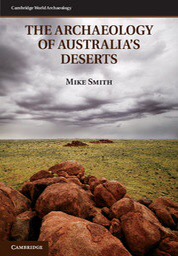
 Milo is a dog who lives in a pleasant part of a city resembling an idealised Manhattan. He has a quiet life, and a contented circle of friends, though he sometimes gets irritated by the friend who insists on reciting his very bad poetry. One day, with terrible timing, a storm picks up his kennel soon after he has lost his temper with his poetical friend, and he is stranded high up on a roof. Along comes a migrating bird who likes to walk some of the way because you see more of the country that way. And then it’s just a question of if, when and how Milo will find his way back home, and if we will have to read more of the friend’s verse.


