Last October I wrote a little blog post about Nicolas José’s address at the NSW Premier’s History Awards, in which he spoke of the Macquarie PEN Anthology of Australian Literature, due for publication in August this year. José talked about Taam Sze Pui’s bilingual memoir, My Life and Work, published in Innisfail in 1925, taking it as an exemplar of the process by which:
As a piece of writing becomes literature, it is read and re-read by different people, discussed, digested, dismembered, recovered, until it enters a continuum of creative experience and expression that joins with where we are now. It speaks and we listen; relationships with other texts are revealed; it is valued for itself and contributes to something larger.
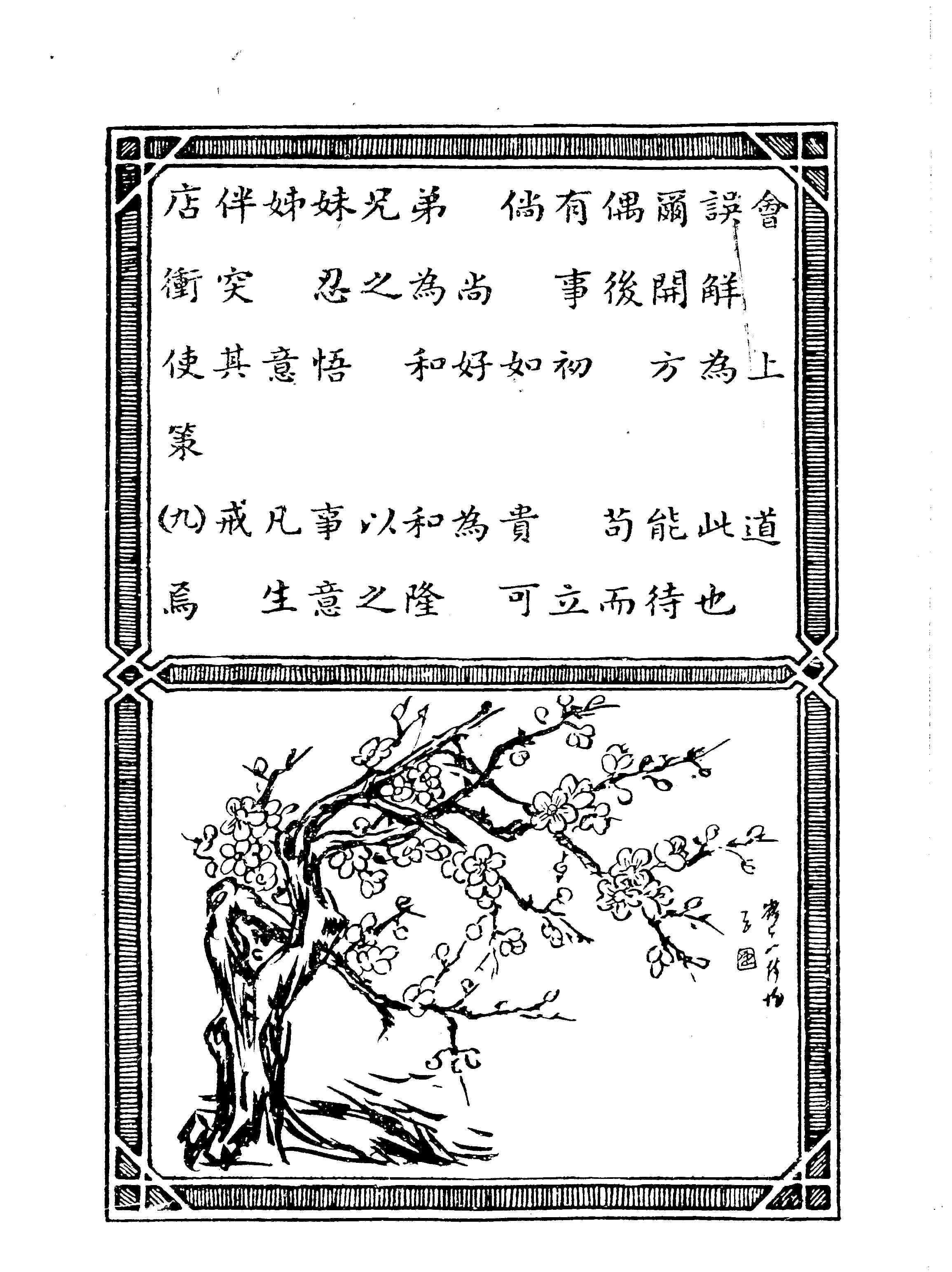
On my recent visit to Cairns I laid hands on a photocopy of Taam Sze Pui’s book in the rooms of the Cairns Historical Society (the helpful woman at Cairns Library had tracked down a solitary copy on the Australian Libraries Network, at the Australian National Library, not much good to me), and read the English in less than half an hour. It’s a modest work, elegant and spare, a kind of combination of Bert Facey good fortune, exhortations to Confucian virtue and sound business sense. There are a number of pages towards the end that are not translated into English, each containing a delicate pen drawing, probably from the author’s own hand, and what I take to be a poem. I photocopied one of them, as well as another untranslated page from the front of the book. I wonder if anyone who comes across this might be able to translate.
Added 3 July 2020: Many thanks to Wang Shu-dong, friend of Jim Kable, regular commenter here, for the following translation of the script in that image. Shu-dong comments that something seems to be missing at the beginning of the final sentence, but offers this translation:
店伴姊妹兄弟, 倘有偶尔误会冲突, 忍之为上。 All people in the store are brothers and sisters. If occasionally misunderstandings and conflicts occur, the best response is tolerance
事后开解,使其意悟,和好如初,方为上策。 After the incident, we had better let them self-examine and then they will be able to reconcile to each other.
(九)戒凡事以和为贵,苟能此道焉, 生意之隆, 可立而待也 Abandon the perception that harmony is the most important thing. If such a principle is followed, blooming business can be expected.
This blog post is retrieved from my earlier blog, Family Life, first posted 31 March 2009. Judith Brett’s Quarterly Essay Nº 78 is in part an update of Guy Pearse’s Nº 33.
This essay made me think of Marshal McLuhan’s famous piece about Edgar Allan Poe’s ‘Descent into the Maelstrom’. In the Poe story, when a mariner’s boat is wrecked in a giant whirlpool, he manages to survive because he stops to observe the way the vortex works. The water spirals slowly swallow all objects, but some of them return to the surface. The mariner clings to one of these recurring objects and survives. McLuhan offers this as a model for how to meet the challenges of a rapidly changing and potentially destructive environment. In Quarry Vision, Guy Pearce doesn’t single out any obvious floaters, but he certainly takes a clear-eyed look into a maelstrom and, to muddle my metaphor beyond salvage, cuts through a world of spin to argue that clinging to coal is not going to save anyone.
I approached the essay expecting that my virtue in reading such a worthy piece would have to be its own sole reward – but in fact it’s a completely engaging essay, full of pleasures, if it’s possible to speak of something as frivolous as pleasure in such a dire context. The essay argues that we have been lied to, or at least deliberately misled, assiduously and at great expense, by representatives of the big carbon emitters and particularly the coal-miners and exporters.
Not one credible piece of economic research suggests that making deep cuts in emissions by 2050 would cause even a temporary recession, let alone ‘crash’ the economy, or ‘cut GDP’, or send energy prices spiralling, or cause whole industries to shut down or flee our shores. Every serious study of the costs finds that deep cuts would delay the trebling of the economy and doubling of real wages by a few years at most later this century. The same analysis finds that acting sooner generates about a quarter of a million jobs more than would delaying, and many of the steps that reduce our exposure to carbon prices save rather than cost money.
However, you’d know none of this from the apocalyptic language that dominates the political debate.
‘Policy,’ he says, and presents evidence, ‘is contaminated by patronage at every turn.’ The Garnaut Report was full of potential loopholes, carve-outs and escape clauses. The Green paper didn’t stop them up and the White Paper, which is what we’re up to now, continued in the same vein:
It was a surrender to the same forces in whose interest John Howard had governed, but with one important difference. The question of whether emission cuts would occur was now gone, because, unlike Howard, Rudd was agreeing to take on obligations commensurate with a 60 per cent reduction by mid-century. The policy agenda had shifted markedly. How deeply and quickly Australia should cut emissions was still contentious, but quantity and timing were no longer the central issues. The big questions now were to do with the quality and morality of Australia’s emission cuts: where the emissions were cut, who made the cuts, how the cost of the cuts was apportioned, and whether the answers to these questions would be made with the short- or long-term interest of the nation in mind.
The answers that Pearse comes up with are dispiriting. He argues in the end for the ‘unthinkable’ proposition that Australia should phase out coal exports over the next couple of decades. If we were to do that, we would be playing an authentic leading role in the ‘Climate Change War’, on the side of humanity, rather than being a significant player on the other side as we now are and will continue to be under current policies.
It’s hard to believe that an essay that cuts through the bull and obfuscation as clearly as this will not have a powerful effect on the course of events. I’ve written to my local member and to the Prime Minister. I think we can expect a huge increase in the vote for the Greens at the next Federal election.
A footnote: Quarterly Essays are edited by Chris Feik, who does a brilliant job. Like many if not most good editors he renders himself almost invisible. I consider him (I’ve just gone Internet hunting and seen that he’s male, and was or still is ‘a young academic’) one of the unsung heroes of our time.
Here’s a clutch of books I have more than a casual interest in.
I’ve told you about Paula’s Seven Seasons more than once, and may well do so again. Now I’ve actually read it. While it’s missing some of the juicier and possibly libellous moments of the early draft I read, it still offers plenty to chew on, and is also – Richard Aedy was right – a bit of a girl’s own adventure. More than 30 years ago I spent six weeks in a remote Aboriginal community with the Fred Hollows Trachoma Prevention Program. Just those few weeks were enough to unsettle my sense of what it means to be Australian. One of the other Trachoma-ites put it well, if slightly hyperbolically: I used to think Australia was a European country, he said, but now I realise it’s an Aboriginal country with a huge number of Europeans living around the edges. Paula spent a lot more than six weeks in Aurukun, and engaged in a way that shows up my stay at Willowra for the tourism it was. What’s more, she took on the challenge of wrangling the experience into words. I hope the book provokes a productive conversation. I expect it will give pleasure to most readers. But don’t take my word for it.
Early in the month, the publication of these books by former editorial staff members on The School Magazine was celebrated – nothing so grand as a launch – by a small lunch in town. I had the best gnocchi ever, the authors paid, and we enjoyed each other and the occasion in a way that might have been described as riotous if there had been more than a handful of us. But the pleasures of the lunch were pallid compared to those of the books. I hadn’t seen The Terrible Plop before, but I hope to see much more of it as a result of giving it to very young acquaintances: it’s a rhyming story of ridiculous terror in the forest that begs to be read repeatedly until it’s known by heart. The Museum of Mary Child is another book I read in earlier incarnations, as a beta reader. As a rule I’m not drawn to horror as a genre, and this is at least marginally a horror book – marginal because there are no vampires, ghouls or zombies. But I just loved it. I haven’t read the published version yet, but it’s been highly praised in the Aust Child Lit Crit journal Magpies as a ‘disturbing and quite terrifying’ book that ‘demands a special reader’.
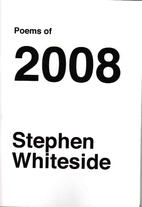
This book slipped quietly into my mail box with a friendly note from the author. It turned out he’d used a quote from this blog as a back cover blurb, and I wasn’t embarrassed to see myself quoted. Stephen evidently plans to produce two very slim vols a year to sell at his performances, and his brief introduction to this one implies that he produced a number of poems in 2008 that didn’t make the cut. He’s a member or ARVOs (Australian Rhyming Verse Orators), a group who meet of a Sunday to celebrate their shared passion for bush poetry. Poems of 2008 begins with ‘Triangular Cantaloupe’ a smooth parody of/tribute to C J Denis’s ‘Triantiwontigongolope‘ and proceeds on its cheerful way for 40 pages. There’s a touch of controversy in ‘A Puzzle’, which raises questions about euthanasia in a poem that an introductory note suggests might be for children. There’s political comment, in ‘Australia Spurns a Hero’, about Peter Norman, the white Australian athlete who stood on the podium with the two African Americans who gave the Black Power salute at the 1968 Olympics:
Norman is a hero, now, throughout the USA.
October 9 has peen proclaimed as Peter Norman Day,
And in Australia's hist'ry a most sorry day is burned,
For Norman is the hero that his native country spurned.
You can get copies from the BookPod online bookstore or, while stocks last, wherever Stephen Whiteside is performing.
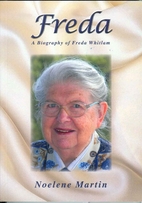
Freda is a self published book of a very different stripe, a biography of Freda Whitlam, launched this morning appropriately enough at the Whitlam Institute in the University of Western Sydney. Noelene Martin, the author, is a friend and neighbour of her subject, and I suspect she chose the self-publishing route to improve her chances of getting the book into print while Freda, now nearing 90, and her elder brother Gough are still around to enjoy it. Noelene is a veteran writer of non-fiction for children (much of it published in The School Magazine during my editorship, hence my interest in the project), and it shows here: while the meat of the story is in Freda’s career as Principal of the prestigious Croydon Presbyterian Ladies College in Sydney, Moderator of the Uniting Church, force behind the establishment of the University of the Third Age in Sydney, and so on, it’s the first hundred pages that really shine.
You can tell that, as well as sifting through piles of youthful correspondence, the author spent hours with her subject, listening to reminiscences. As she said today at the launch, the down side of seeing the book finally published is that all the secrets about Freda that she has held close to her heart are now general property. The little girl who knew the Greek alphabet, but not the English, before she started school; the teenager who walked seven miles from her tutor’s place back to school and couldn’t understand why the Principal made a fuss; the young woman at Yale on a Fulbright Scholarship who slept through a sermon by Eric Fromm; the beginning teacher on an excursion to Alice Springs who couldn’t stand to see a tourist haggling with Albert Namatjira and interrupted to buy a painting at exactly the price the artist was asking: the book recounts these and a myriad other minutely recorded incidents that are steps on a journey to a significant contribution to public life. (As a bonus, we get to see Gough as a shadowy but brilliant big brother.)
The launch was an imposing affair. A handful of distinguished Whitlams, including Gough in a wheelchair, and a hundred or so other people, mostly a good bit older than me, gathered in a spacious hall with modern stained glass windows and were addresses by the Vice Chancellor, Barry Jones (the launcher, who proclaimed with reasonable confidence that he and Freda were the only two people in the room who had corresponded with Ezra Pound, and conceded that she won the competition by having actually met him in the asylum in Washington DC), Noelene and finally Freda herself. Much had been said about Freda’s modesty (her entry in Who’s Who is apparently terse to an extreme and she doesn’t have a Wikipedia page at this moment). Her speech exemplified the trait: she hardly mentioned herself at all, but urged us to be glad at the publication of a book by someone from Western Sydney, about someone in western Sydney, when so many people think that ‘out here we don’t read’. Everyone has a story worth telling, she said, and it was good that one person’s story was being told in this book. In other words, she found any number of ways of praising the book while directing attention away from herself.
You would probably have trouble finding this book, but if you’re interested in Whitlamiana, in the history of the Uniting Church in New South Wales, the University of the Third Age, or the past as a fascinating other country, I recommend you contact the author-publisher at mrsmarty(at)aapt(dot)net(dot)au.
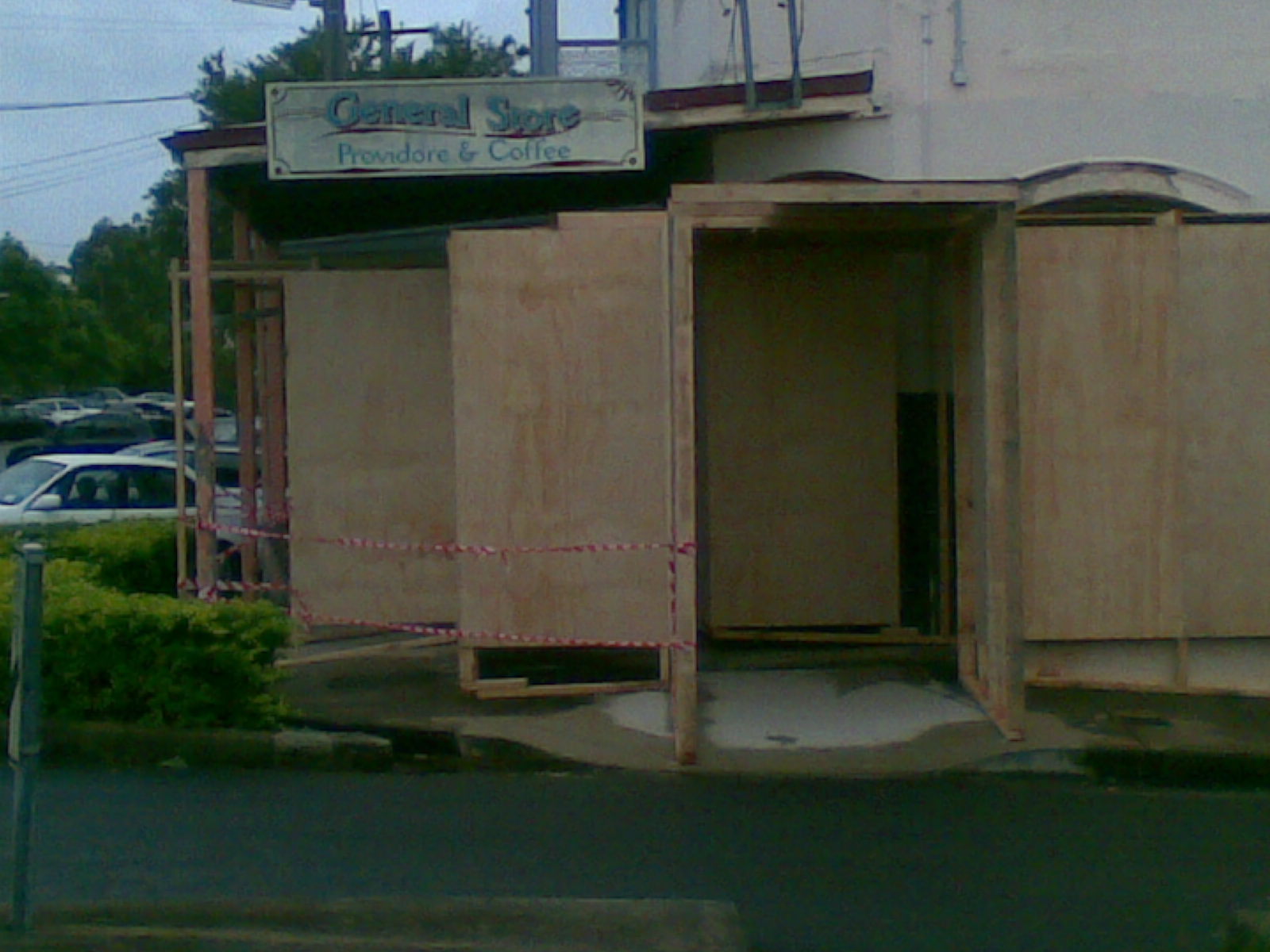
Plywood structures have appeared at the corner. For a little while we saw them, and then again a little while, as it turns out, and we’re not seeing them: a guy with a hammer was taking them down again today. The reason for this seems to be partly bureaucratic hostility on the part of Leichhardt Council (who originally refused to grant permission for a balcony unless the shop owners paid to have the appallingly broken footpath repaired, but lost their case at the Land and Environment Court). But the bureaucracy can claim to be responding to a local outcry: it seems that a mysterious neighbour, hellbent on placing obstacles in the way of the approaching cafe, complained to the Council about having unpainted plywood adorning our corner. So the ply will be painted and put up again, and will stay there for a week or so as the balcony/awning is built.
I can’t give you photos of the transforming interior, but there have been sneak previews, and I can tell you our new corner shop / cafe will have style. Revolver is to be its name.
This, plus the appearance of a tall besser brick wall out the back, behind which extensions to ‘the residence’ have arisen, is the only sign of an approaching opening. Christmas, like September, has come and gone. Easter is now proclaimed as a firm date. In case you can’t read the phone photo, the sign says:
LAST UPDATE
Firstly I really want to thank all the locals who have given me such amazing encouragement & support thru this (two year) ordeal … There were so many delays & problems to overcome I had to go and get a fulltime job to pay bills. THIS IS WHY IT HAS TAKEN US THIS LONG … But now I can happily say the shop is near finished & we will open some time around easter!!! We will be a 40 seat cafe with some general store items for all us locals. Good food, good coffee, good music & good vibes. I see this as more YOUR! place that I will be running. Just a cool local lounge to create a neighbourhood vibe, unpretentious & honest. Everyone asks about the mermaid!! Don’t worry … she stays … And again thanks & love to Annandale for such kind words thru this hard time… it really kept me going. I can’t wait to show & share with you the passion I have created here. I love it so much. Also the group of you that was talking about the ‘billycart race’ … don’t stop … It’s a great idea & we should make it an annual.
much love
Revolver
I don’t know anything about the billycart race, and I guess Revolver is a good nom de guerre for someone called Rod.
[Because the older version of this blog has become unreachable, I am retrieving at least occasional posts from it that I see people trying to click on. This is one from January 2009.]
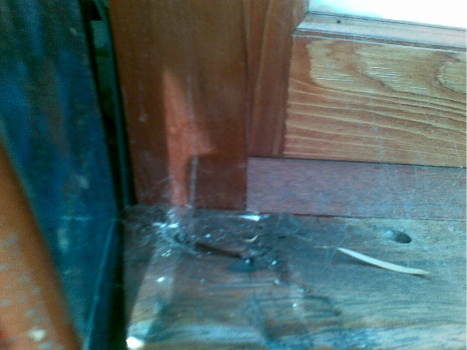
As you may recall, a cheerfully apologetic sign in the window promised wistfully that our corner shop would be opened for Christmas. The sign is still there, and though there has been much progress on ‘the residence’ out the back, there has been no grand opening, indeed no sign of progress in the shop itself. The same sign is there, and cobwebs, dead leaves and dust have accumulated on the window sill.
(Published 7 January 2009, retrieved 30 July 2021.)
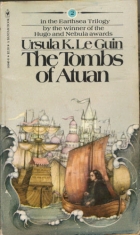
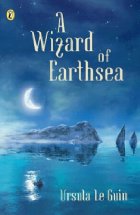
When I was an impressionable undergraduate at Sydney University in the 1960s, the student newspaper Honi Soit published an article by an academic philosopher – it may have been George Molnar — explaining that science fiction was worth reading because in it writers imagined alternative ways of organising society. I wasn’t by any means a hard core science fiction fan, but I had read some. Far from being grateful for a magisterial endorsement of my occasional pleasures, I remember feeling a sneaking contempt for the philosopher who (I thought) had missed the point completely: to argue for the usefulness of science fiction seemed to deny the sheer enjoyment of imagined worlds. I mention the article now because, if I remember correctly, it focused on The Left Hand of Darkness and other Ursula Le Guin books, and may have been responsible for my not having read anything by her until the 1990s when the magical Catwings series came my way professionally and I discovered that she was a lot of fun. (I had read one of the later books in the Earthsea cycle before that, but for a value of ‘read’ that amounts to ascertaining that it expected the reader to know what had happened previously, and further ascertaining that references to menstruation made it unsuitable for most 10 or 11 year olds.) So here I am at last, thanks to my discovery of BookMooch, engaging with her most famous children’s books.
I don’t have much to say about them, beyond that I found the story completely engrossing, and her manner of telling it magisterial. It’s fascinating to see elements of so many more recent books here. This story is a little like Hamlet – full of quotes. I have resolved never to see the recent TV version, which notoriously made all the characters white (the producers announced proudly that they were colo[u]r blind). It’s not that there’s any kind of profound statement about racism in the book, but the play with skin colour is nonetheless a lovely feature of the characterisation and world building. And one other thing: where did that middle-initial K come from between the first book and the second?
I was going to make this an entry about the whole trilogy, but Penny’s old copy of the third volume of the trilogy managed to go wandering after sitting prominently on the shelf in the spare room for decades, so this is just a note about the first two books, and a promise that I will read and write something about the third. The long wait for the final book of a trilogy, painful though it may be, is after all intrinsic to the experience of reading it. I think of the interminable gaps between The Subtle Knife and The Golden Compass, The Golem’s Eye and Ptolemy’s Gate, Inkheart and Inkdeath (now published but I haven’t seen it), Deep Water and Full Circle (for which the wait has barely begun – Pamela Freeman’s website informs us that the first draft is now with the editor). So I’ll wait until the mage-winds of BookMooch bring me to The Farthest Shore.
[Because the older version of this blog has become unreachable, I am retrieving at least occasional posts from it that I see people trying to click on. This is one from November 2008.]
Many besa bricks are being assembled into walls in the back yard of the coming corner shop, to be part of the residence. Meanwhile, the shop itself remains opaque to the passerby. This morning an A4 sheet of paper had been wedged into the frame of the boarded-up window:
Today’s Sydney Morning Herald published Nicolas José’s address at the NSW Premier’s History Awards. It’s an interesting address, worth reading in its entirety. My reason for blogging is that José begins with this:
When the landmark Macquarie PEN Anthology of Australian Literature appears next year, it will include, among many other things, an extract from an early Chinese Australian memoir, My Life and Work by Taam Sze Pui, first published in a bilingual edition in Innisfail in 1925.
Taam tells how he journeyed from southern China to North Queensland in the 1870s to search for gold. When he failed as a prospector, he opened a store to meet the daily needs of those in the far-flung district. Later a wife came from China to join him and their family grew with a business that was still flourishing in family hands a century later.
He goes on to describe the influence of Taam Sze Pui’s book on later artists, such as William Yang and Tony Ayres.
The work has been revalued retrospectively, given new meaning and life in a way that subtly reconfigures our understanding of Australian literary history. It forms a connective tissue between past and present that also points forward.
Innisfail exerts its powerful influence on the world of letters once again.
Taam Sze Pui’s name was not forgotten when I was a child in Innisfail, and his shop was still a significant landmark. As I remember it, he was known as Tom See Poy (which is how he’s named in the Australian Dictionary of Biography Online Version), and the shop was See Poy’s, the Grace Brothers of our town. The Macquarie PEN anthology is definitely on my list of books to be acquired.








 Me fail? I fly!