Jennifer Maiden’s Selected Poems

Jennifer Maiden, Selected Poems 1967–2018 (Quemar Press 2018)

__________________________I plough my furrow
heavily and fruitfully and my seldom rage
is that of the earth like an earthquake, sudden
and efficiently gutting.
('The Year of the Ox', page 205)
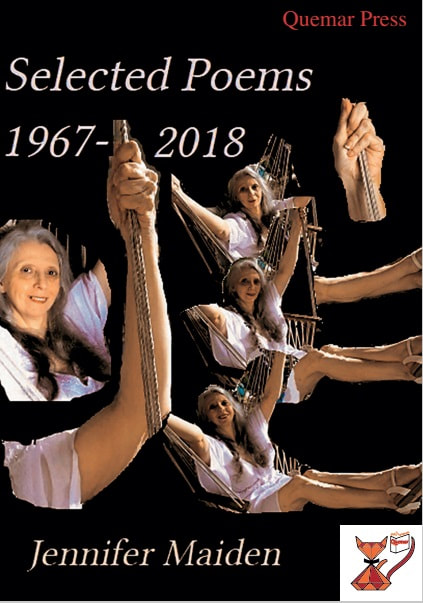
maidenselected.jpg

That’s one of Jennifer Maiden’s many self-descriptions in this book. It leaves out a lot, of course – the wit, the polemic eccentricity, the sensuousness, the drama, the scarily eclectic erudition and much more – but it does capture her commitment to the work of poetry and her occasional bursts of rage at, well, anything from genocidal war to ‘ethical security’ in her fellow left-wingers or sister feminists.

This is Maiden’s third Selected Poems. The 1990 Penguin Selected drew on just four books. Bloodaxe’s Intimate Geography was a kind of introduction to British readers covering 1990 to 2010. This selection covers Maiden’s whole poetic career, and is appropriately hefty.

I’ve read the book a little at a time over several months. As the poems are printed in approximate order of publication, you get to see Maiden’s subjects and poetic forms develop over the years, a little like a stop-motion movie. Her daughter, Katharine, for example, first appears in ‘The Winter Baby’ on page 61:

She feeds as firmly
as the heart mills blood,
her needs as fair as Milton's God
and her eyes like night on water.

The ‘whimsical huge pleasure’ of Maiden’s maternal love gives rise from the beginning to complex, wide-ranging poetry. Incidentally, one of the pleasures of this book is that when a poem refers to one that Maiden wrote decades earlier, it’s often possible to flip back to the earlier poem: ‘Night on Water’, more than a hundred pages and nearly a decade later, refers to the ‘The Winter Baby’. The appearance of the Winter Baby ushers in Maiden’s characteristic use of dialogue. In ‘Chakola’ (page 71) Maiden and her now three-year-old daughter visit an old school in the Monaro (emphasis from the original publication, not reproduced in this book):

She says 'You used to teach here.' I say 'No:
your great grandfather did, and your father
played here.' But you say 'You mean
grandfather.' And yes, that's where the sense
of self slips up of course – in history.
Maybe we're all an 'I' as we confront
the past, the broken ford, the Numeralla
gleaming with sunlit absence.

(I initially read the third line as the little girl correcting the speaker, but on typing it out realised that it’s actually the person the poem is addressed to who corrects her, a more interesting progression, of a kind that isn’t unusual in Maiden’s work.)

Maiden’s engagement with politics and especially violence is there from the start: among the very early poems are ‘Princip in the City’, about the assassination of Archduke Ferdinand in 1914, and ‘The Problem of Evil’ a long narrative set in an unnamed war that reads as the US-Vietnam war. Her acute observaations of political figures as seen on TV, from George W Bush’s mouth (‘George Jeffreys 4: George Jeffreys Woke Up in Berlin’) to Julia Gillard’s eyes (‘Poor Petal’), begin on page 73 (about 1990) with ‘Mandela in New York’:

_____the first loss is not time or health,
so much as forever the freedom
to escape to the purposeless self,
He walks slowly, precisely, and smiles.

And it’s fun to see Maiden’s signature ‘So-and-so woke up’ poems coming into being. In a long prose passage (on pages 153 to 159) ‘George Jeffreys: Introduction’, first published in Friendly Fire, 2005):

The part of my brain that provides new things was often inaccessible about September 11. Then driving along the Monaro and watching the tumbling circus of clouds one day, I thought: what are George and Clare thinking? George and Clare are characters from my second novel, Play with Knives, and my later notoriously unpublished novel Complicity, or The Blood Judge. George Jeffreys is a Probation Officer turned Human Rights investigator … Clare is his former Probation client and sometime lover … who as a nine-year-old child murdered her three younger siblings. The two could clearly do New York and in the process, with the freedom of fiction, the horror-inhibited portions of my mind might speak.

And so George Jeffreys and Clare Collins wake up from wherever fictional characters go when their novels are finished, and the George and Clare poems, thirty of them so far, come into being. George and Clare visit horrors, from Manus Island to the pirate coast of Somalia, talking non-stop to each other and personages as disparate as Donald Trump and Confucius.

There’s much more. The book is full of joys, even as it confronts many of the terrible elements of our world.

I don’t usually comment on book design and production, but it’s probably important to do so here. My impression is that Quemar Press operates on a shoestring. But I wish they had employed a professional book designer, and a professional proofreader. The margins of this books are painfully narrow – top, bottom, left and right. And there are no blank pages. It feels as if as the poems have crammed into the available space, an impression that is reinforced when occasionally the final line of a poem drifts to the top of the next page, where it sits a lonely widow above the title of the following poem. This isn’t just an aesthetic matter: I found it physically hard to read more than a couple of pages at a time. If you’re new to Jennifer Maiden’s poetry, you might find one of the smaller volumes more reader friendly.

But the mild pain was worth it for the intense pleasure to be found on almost every page.

Selected Poems 1967–2018 is the eleventh book I’ve read for the 2018 Australian Women Writers Challenge.
Mohammad Ali Maleki’s Truth in the Cage

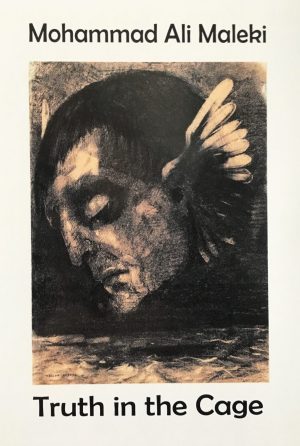
Mohammad Ali Maleki (translator Mansour Shoshtari), Truth in the Cage (Verity La Press 2018)

truth.jpg

It can’t be right that my birthday hurts me;
I feel such regret for having been born.
(‘An Unforeseen Life’)

In 2001, when the Norwegian ship Tampa was turned away from Australian mainland with its burden of desperate people seeking asylum, Prime Minister John Winston Howard made sure that nothing reached the Australian population that would foreground their humanity: no photographs of their faces, no TV, radio or newspaper articles telling their personal stories, or quoting their own words.

Seventeen years later, Peter Dutton and Malcolm Turnbull maintain the same depersonalising policy regarding the men, women and children refugees and seekers of asylum now detained on Manus Island and Nauru, some of them for just over five years. The cost of a visa to Nauru is prohibitive; doctors and others speak about what they witness there under threat of imprisonment; Peter Dutton recently said that ‘the hard-won success of the last few years could be undone overnight by a single act of compassion’, and he seems to insist that no such act be allowed within his department, even to people who have died.

The detainees are not voiceless or faceless, but they are systematically denied a platform from which their faces can be seen and their voices heard. Word has managed to get out. Notably, Behrouz Boochani co-directed the documentary Chauka, Please Tell Us the Time with Dutch film director Arash Kamali Sarvestani, and his book No Friend but the Mountains is to be launched next month. There have been other newspaper articles by him and other detainees, and there are a number of detainee  Twitter accounts. Penny Ryan’s Connecting Hearts project garnered a collection of short messages from people on both islands, published in the Guardian in late 2016.

Now Verity La, a tiny, no-way-for-profit online literary magazine, has added to the voices we can hear with this chapbook containing eight poems by Mohammad Ali Maleki, translated from Farsi by another detainee, Mansour Shoshtari. All profits from sales of the book go to the poet.

As you would expect, the poems are grim: ‘The Migrant Child’ is for Aylan Kurdi, the child whose body was photographed washed up on a Turkish beach; ‘Brother’ is for Hamed Shamshiripour, one of the men who has died on Manus Island on Peter Dutton’s watch; and generally the poems reflect the desolation and despair of the experience of indefinite detention.

So, OK, this isn’t a cheerful read. But it seems to me that as well as going on protest marches, lobbying our MPs, and voting in elections, it’s important to take every opportunity that arises to listen to the voices of people with the lived experience. From ‘Where Is My Name’:

All people are known by name;
I’ve never met a human without one
Yet they stole mine and gave me
a meaningless nickname instead.
I’m fed up wth repeating this false name!
Take it away and return my identity.
That is the only thing I have left in this land.
That is my parents’ only mark here.

The book can be bought direct from Verity La. It costs $10 plus nominal postage.

Two quick reads

Ian McPhedran, The Smack Track: Inside the Navy’s war : chasing down drug smugglers, pirates and terrorists (HarperCollinsAustralia 2017)
Dervla McTiernan, The Rúin (HarperCollinsAustralia 2018)

rúinsmackThis blog post is an exercise in completism. I read The Rúin and The Smack Track last year but didn’t blog about them at the time for reasons I won’t go into. I want to make up for that omission, if briefly.

The Rúin is an excellent thriller/detective yarn set in Ireland, the debut novel of Dervla McTiernan, an Ireland-born writer who lives in Perth. An author’s note explains that the book’s title can be read in English, or can be given it’s Irish meaning: ‘In Irish, Rúin means something hidden, a mystery, or a secret, but the word also has a long history as a term of endearment.’  And that pretty much sums up the feel of the book: there’s a mystery to be solved – two murders decades apart – and a story of family love and commitment to be uncovered along with much darker secrets. It’s fast moving, and satisfyingly complex. The Galway setting is vividly real. I’m surprised it hasn’t been snapped up for a television series.

A second book featuring McTiernan’s garda Cormac Reilly is promised for March next year. I expect it will have me breaking once again my general resolution not to read crime novels.

The Smack Track makes me think of Trotsky’s warning: ‘You may not be interested in war, but war is interested in you.’ I was the boy in my primary school class who wasn’t interested in war comics. I was never into model war planes. I was a conscientious objector to the draft at the time of Australia’s military involvement in Vietnam. Ian McPhedran, by contrast, worked as a defence writer for The Australian for nearly twenty years. He has written six books, including this one, about aspects of the Australian armed forces, and has had extensive experience of being embedded with the military. Just the writer to help me out of my comfort zone.

This book isn’t about combat, but about the RAN’s extraordinary work disrupting the drug trade off the east coast of Africa. It includes first hand accounts of intercepts, including dramatic accounts of the dangers faced by the sailors on these missions. McPhedran, writing as an embedded writer, doesn’t swagger. If anything, he mocks his ‘landlubber’ status. His respect and appreciation for the men and women whose work he observes up close is contagious.

As I read The Rúin in 2017 I’m not including it as part of the 2018 Australian Women Writers Challenge. But it’s an excellent addition to the list of books written by Australian women, so I’ll mention it on the AWWC site anyhow.

I’m grateful to HarperCollinsAustralia for my copies of both books.

Stephen Hart’s Lighthouse at Pelican Rock

Stephen Hart, The Lighthouse at Pelican Rock (Eagle Books 2018)

lighthouse.jpgPublished by Eagle Books, an imprint of tiny, Armidale -based Christmas Press, this is Stephen Hart’s debut novel for young readers. May he live long and give us many more.

It’s a time-slip adventure novel. Twelve-year-old Megan is recuperating from serious illness, and is sent to stay with her Aunt Rachel in Pelican Rock, not far from Eden on the south coast of New South Wales. While she’s there, a strangely aggressive pelican visits her in the night and somehow transports her back to a time when Pelican Rock’s ruined lighthouse was in one piece and functioning. In a number of what we at first think may be just dreams, she becomes friendly with the ancient lighthouse keeper.

If you’ve read a lot of children’s adventure books, you know that the first thing to do is get rid of the parents, and that’s how it is here, but it turns out that although Megan’s parents are still in Sydney, hundreds of miles away, they are very much on her mind: Aunt Rachel’s interest in her, and obvious caring for her, make her realise that she has come to expect to be treated as uninteresting and unimportant compared to her younger brother, Alex. At Pelican Rock she begins to recover her health and fitness, and also her sense of herself as deserving to be loved and cherished. The trips back in time are at first just icing on the cake.

I enjoyed this book a lot, not just for the well-paced, less than predictable story. One thing I especially like is the way it speaks to the young reader’s curiosity – and the old reader’s for that matter. Aunt Rachel tells Megan why the nosy little Jack Tussell terrier is called Cyrano, the lighthouse keeper explains interesting bits of how lighthouses work, the doctor and the vet both make sure Megan understands what they are doing. And Megan’s understanding of relationships between adults deepens and grows: with her we gradually come to understand that Aunt Rachel and Rhys Evans, whom Megan meets on the train, have been in love and still have feelings for each other (as the Americans would say); she grasps from the beginning that cranky old Aunt Rachel is critical of her parents and over the course of the book’s action comes to see this is as a very good thing;  she takes careful note of the way the doctor and the vet relate to children differently from anything she has previously experienced.

The illustrations by Kathy Creamer are perfect for the story.

So if you’re looking for a book for someone on the cusp of teenagehood, or if like me you enjoy an occasional children’s book for your own pleasure, here’s one I recommend.

Eunice Andrada’s Flood Damages

Eunice Andrada, Flood Damages (Giramondo 2018)

damages.jpg

There’s a lot of pain in these poems: the pain of migration and living in diaspora, of miscarriage and sickness, of  domestic violence, racism and internalised racism, and – shockingly topical just now – of family separation at the hands of officaldom. There are also poems that celebrate the body and family relationships, especially of a young woman with her grandmother.

There’s a wonderful variety in the forms of the poems. There are ‘novenas’, which echo the cadences of the Catholicism of Andrada’s native Philippines. There are prose poems – such as the one that would be a straightforward account of an allergy test except that the doctor is Ferdinand Marcos. There’s ‘photo album’, made up of captions to photographs, some of which probably actually exist. There’s a narrative element: no dates, times and places, but a cast of characters that we come to recognise, and when in ‘alibi’ the speaker refers to ‘the muscle memory of dancing / to the gospel / of my father’s temper’ the reader knows what she is talking about.  There are elusive epigrams, of which the best example is ‘forms’:

It is no sacrifice
when he collapses over his own altar
then asks for your body.

Eunice Andrada is also a Spoken Word practitioner – a poet of the stage as well as the page. She recently appeared at the fabulous Bankstown Poetry Slam. Here, for my readers who might hesitate to read an actual book of poetry, is a video of her performing her climate change poem ‘Pacific Salt’ at Sydney’s 2015 Youth Eco Summit, preceded by a short and charmingly awkward interview:

Flood Damages is the tenth book I’ve read for the 2018 Australian Women Writers Challenge. I am grateful to Giramondo for my copy.

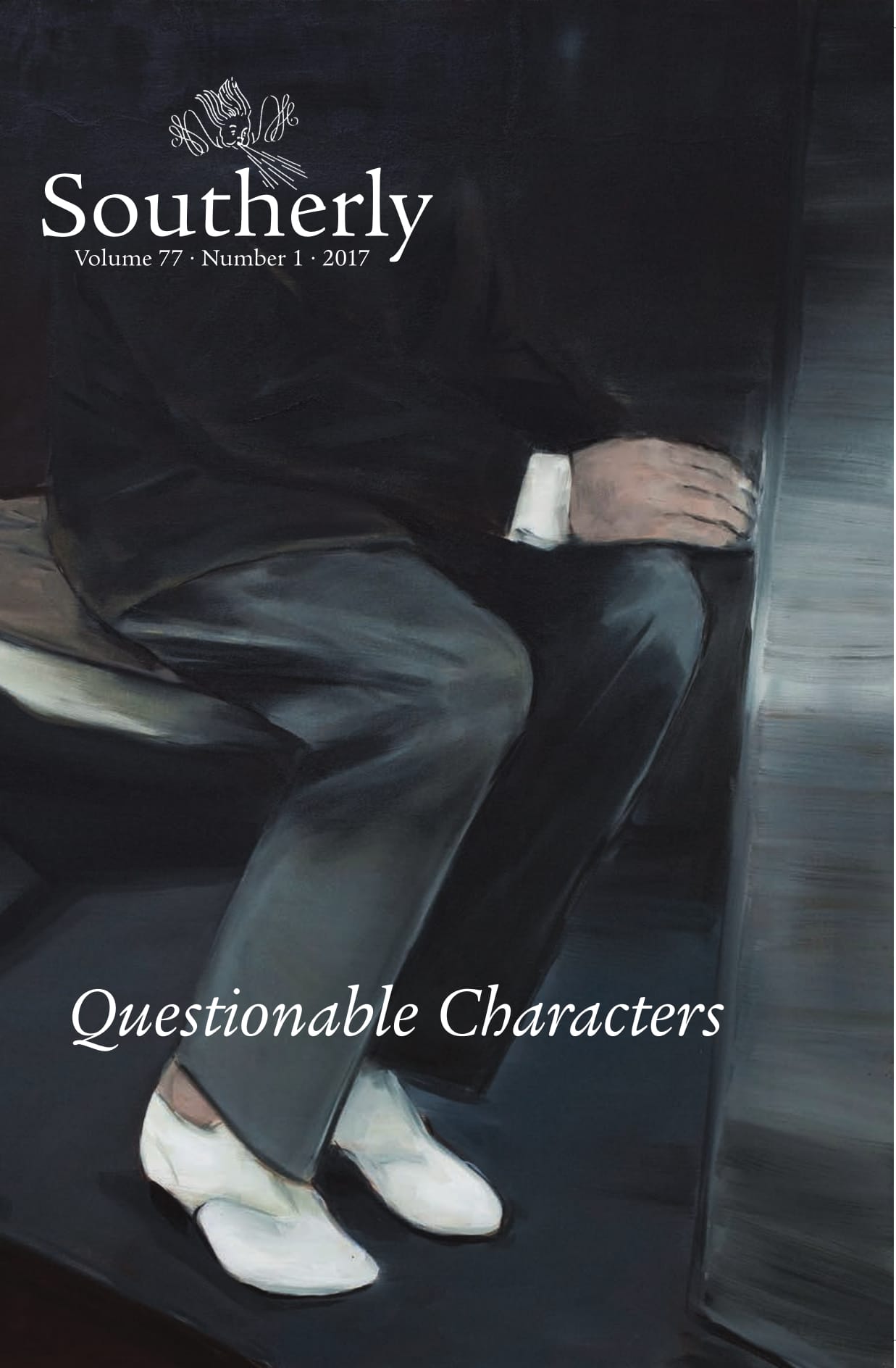
Southerly 77/1

David Brooks and Elizabeth McMahon (editors), Southerly Vol 77 No 1 2017: Questionable Characters

southerly177.jpg

Cate Blanchett picks up a Southerly in Michael Farrell’s ‘Cate Blanchett And The Difficult Poem’ (see previous blog post)  and I am reminded that all three 2017 Southerlys are on my To Be Read pile. That’s not as bad as it sounds, because the third of these just arrived last week. Still, it’s a backlog.

Nº 1 of 2017 has a terrific piece by Debra Adelaide, ‘Re-reading Thea Astley’s Drylands‘. Originally delivered as a lecture in the Sydney Ideas: Reading Australian Literature series, it has all the liveliness of the spoken voice as it celebrates Adelaide’s readerly relationship with Astley and in particular her final novel:

From its beautiful original cover to its unpunctuated ending, I have been in love with this novel since it first appeared. And as in a love relationship I am aware of its flaws, and I forgive them.

I hope one day I’ll be able to communicate as eloquently as Debra Adelaide when I passionately love a writer, flaws and all. Thea Astley emerges from this essay as no less ill-tempered and unfair, with a writing style no less over-complex than as other critics’ have described her, but here they are cause for celebration rather than reproach (and for the record this tone chimes well with my own sense of her from the one occasion I met her and the two books I’ve read, including A Kindness Cup).

Poet Sarah Day’s prose essay ‘A Significant Backwater’ is a welcome contribution to the growing body of non-Indigenous writing that explores connections that familiar places have to previously hidden-in-plain-sight history of the dispossession of Aboriginal people. (Mark McKenna’s Looking for Blackfellas’ Point is a brilliant book-length example of the genre.) Day’s subject is the area just out of Hobart known in her childhood as Old Beach Road, and now, having been handed back to Aboriginal people in 1995, called piyura kitina. The essay juxtaposes affectionate childhood memories with the narration of a dark history, and as a bonus describes two watercolours from the early years of settlement, one by little-known artist Margaret Sarah Cleburne, the other thought to be by T G Gregson.

Southerly generally has at least one item that stimulates my argumentative juices. In this one it’s Jonathan Bollen’s ‘Revisiting and Re-imagining The One Day of the Year‘. Bollen quotes the late great Raymond Williams, ‘there is no constant relation between text and performance in drama’, and discusses the way Alan Seymour tinkered over the decades with his 1960 play about intergenerational conflict over Anzac Day. He mines photos from the first production and a video of Seymour directing it for what they can tell us. This is all fascinating.

Then, as the essay moves into the re-imagining promised in its title, its focus narrows to the character of Jan, the girlfriend of Hughie, the young man who challenges the older generation’s celebration of the One Day. Jan has been pretty well universally disliked by reviewers: ‘crudely drawn’, ‘a little snob who goes intellectually slumming’, ‘insufferable’, ‘a pseudo-sophisticate’ are some of the terms Bollen quotes. Evidence is building that there’s a problem with sexism – not deliberate and explicit, but the ingrained kind that led to Seymour’s inability to write a rounded, interesting female character. Surely this is where some re-imagining is needed. But, true to our times, Bollen sees the issue as one of gender rather than sexism. What if the problems could be solved, he asks, ‘by cross-casting a male actor to play Jan and queering his relationship with Hughie?’

Would Jan, the character, remain female within the world of the play? Could she become a male character so that Hughie becomes gay? Or a male character transitioning in gender to become Jan?

I guess it’s an intriguing proposition, and it might well ‘provide the motivation for a company in Australia to stage a fresh production’ as Bollen hopes. But if you see sexism as the issue, then Bollen comes close to proposing that sexism can be fixed by getting rid of the woman, or at least of those who were born female. I don’t know what to say to that beyond Yikes!

Of the other prose pieces, Honni van Rijswijk’s ‘The Pointy Finger of God’ and Craig Billingham’s ‘Breathless’ are stories made me want more from their authors, though I was left uncomprehending by both their endings.

More than 20 poets get a guernsey. ‘Quiet Times’ by S K Kelen offers a grim summary of our species:

The human mission
kill all life on earth no one
nothing to stop them.

Others that speak to me are New Zealand poet Elizabeth Smither’s ‘Miss Bowerman and the hot water bottles’ (a tribute to the poet’s mother, employed as a maid in Government House), Christopher Kelen’s ‘Tang Gals’, Joel Deane’s ‘A wasp is in the ward’ and Brenda Saunders’ ‘Sclerophyll’ (a succinct bushfire poem).

There are scholarly essays on P L Travers, George Johnston writing as Shane Martin, Gwen Harwood and Peter Carey, plus a ‘creative non-fiction’ piece about H G Wells.

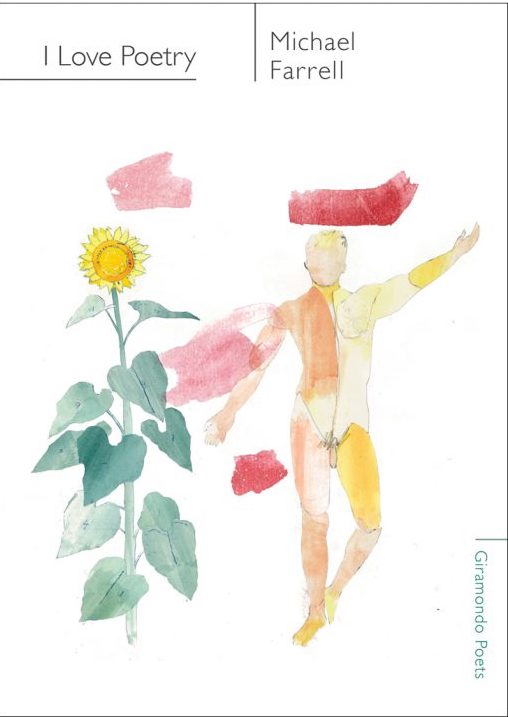
Michael Farrell Loves Poetry

Michael Farrell, I Love Poetry (Giramondo 2017)

ilovepoetry.jpgSomeone said (on Twitter) that if a reviewer doesn’t get the thing they are reviewing, then no matter how long the review is, it will just be a whole lot of different ways of saying ‘I don’t get it.’ So, though I think of myself as a reader with a keyboard rather than a reviewer, I’ll make this brief.

I don’t get a lot of Michael Farrell’s poetry. That is to say, in some of his poems I really can’t tell what’s happening, apart from random phrases appearing on the page. It’s not like it’s a foreign language – I can’t tell if it’s a language at all. For instance, here’s the start of one poem (punctuated as in the book):

K In The Castle

I

Like a food documentary from 2013
Know something of your life
———and character. giraffes cry

Australian giraffes – third generation. everyone has
coconut in their tears, saliva and blood

Apart from recognising the reference to Kafka’s The Castle in the title, I draw a blank. I’m not even puzzled. My guess is that this is doing something that’s discernible to readers who are versed in contemporary poetics, but certainly not to me, and a fair amount of this book is as inaccessible (to me) as that.

Then there are poems that work for me in a tantalising way that makes me think of the fan dancers who performed in sideshow tents at the Innisfail Annual Show in my 1950s childhood. As a nine or ten year old I wasn’t oblivious to the performances’ salacious dimension, but I was mainly enthralled by the dancers’ amazing skill at waving ostrich feathers around while keep their presumably naked rude bits hidden. I don’t mean (obviously) that the poems are salacious, but that the frequent brilliant phrase and the pervasive, if sometimes annoying, playfulness are what keep me going, along with a feeling that often just out of sight there’s something coherent and beautiful.

There are some enticing opening lines:

Blue Poles and INXS shuffle into a bar. ‘What’ll you have?’
(‘Into A Bar’)


In Newcastle a businessman half-disappeared into another life.
(‘Death Of A Poet’)


The boxer has great hair, a great beard, great ink
jobs down both arms. He likes to pull up his
shirt when he’s with his friends: just above the nipples
(‘The Boxer’)


Bending over in shorts forever, Australianything
can remind us more of a country and western
song than a rap
(‘When Arse Is Class, Or Australianything’)

The poems then reliably take off in reliably unpredictable directions.

Sometimes I think I catch a glimpse of what lies behind the fan-dancing. ‘Cate Blanchett And The Difficult Poem’, perhaps the most straightforward of the book’s narrative poems, is a case. In it Cate Blanchett chats ‘laconically, fragmentedly’ with Waleed Aly while preparing to go on stage to read a difficult poem. Partly I feel relatively confident with it because I get most of its references.I know who Cate Blanchett and Waleed Aly are, and also Judith Wright and Patrick White who are both mentioned. The reference to ‘Jackie Weaver’s eye manoeuvres in Animal Sconedom / as they scorched their moving targets’ would be lost on anyone who hadn’t seen David Michôd’s Animal Kingdom, but it a great description of that performance in that film. I’ve even seen Julian Rosefeldt’s multi-screen video work Manifesto, in which a protean Blanchett performs a multitude of artistic manifestoes, and which may lurk in the background of the poem.

But those are all part of the ostrich feathers. The thing that I have glimpsed is possibly an account of a poetic method. After Cate has read the text silently then aloud, trying out different tones and accents, an actor preparing, the ground shifts beneath our feet and she starts inserting lines from Judith wright’s ‘Woman to Man‘:

Blanchett’s jaw connects to a signal tower in her brain
that produces a pas de deux between the difficult
poem – but does it exist? – and the Wright poem, which
she gradually replaces with – not exactly quotations from
she’s not a complete freak – paraphrases of scenes from
Patrick White novels

A couple of lines later, Cate says to Waleed:

You have to fake it with a difficult poem: be like
I ain’t easy either, me. Treat it like a camera or
call it to the stage for an award and trapdoor it.

I like to think that’s a description of Farrell’s method: there’s a text (in the sense that everything we experience is text of one sort or another) that he has some difficulty with (for values of difficulty that include interest in a complexity), or maybe there’s nothing there at all (‘but does it exist?’); you make a poem from it by faking it, being like ‘I ain’t easy either, me’, that is tosay, by assuming you’re on equal terms with it – perhaps inserting bits of other texts (childhood memories, bits of pop culture, literary allusions), improvising a performance around it. By this method, of course, the original text / idea/ emotion will be hard if not impossible for the reader to see: what we are reading is a pas de deux between it and the poet, or perhaps only the poet’s side of the pas de deux. And maybe it’s a danse des éventails  de deux.

There’s also an implicit invitation to readers to do their own pas de deux with Farrell’s poetry. This has been an attempt to do just that.

Once again, I’m happy to acknowledge that my copy of the book is a generous gift from Giramondo.

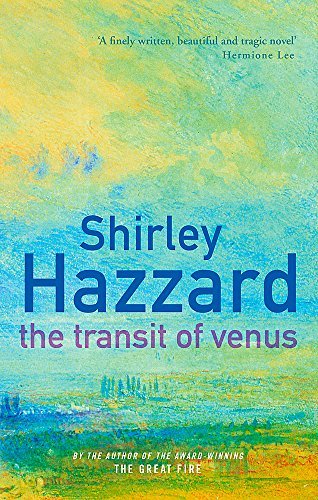
The Book Group and Shirley Hazzard’s Transit of Venus

Shirley Hazzard, The Transit of Venus (1980, Virago 2004 … 2014)

transit.jpg

Before the meeting: Serendipitously, I heard that this book had been chosen for the Book Group’s June meeting just after visiting the wonderful exhibition James Cook: The Voyages at the British Library, which features the actual transit of Venus across the face of the sun in 1769. I enjoyed the exhibition much more than the book.

Sadly, though I’m in awe of The Transit of Venus for its passion and complexity and astonishingly subtle prose, I just couldn’t like it. I feel mean saying so, because it feels like a very personal book – Shirley Hazzard and her protagonist Caroline Bell have a lot of history on common. At the same time, it’s the way the author injects herself constantly into the narrative that alienated me. Though she never actually addresses the reader, as in ‘Reader, I had an adulterous affair with him,’ she regularly winks at us over the characters’ heads – informing us of one’s eventual fate, giving us just the beginnings of sentences whose cliché endings she expects us to know, or commenting with Patrick White–like snobbishness on someone’s snobbery. The prose is studded with literary allusions, not all of them convincingly attributed to the characters, of which I recognised enough to know that I was mostly being cast as an outsider.

Two young Australian women whose parents died in a marine accident are in the care of their martyrish older half-sister, who brings them to England a little after World War Two. The younger sister, Grace, makes a boring marriage and the novel focuses on the complex relationships of Caro/Caroline, the older sister. Caro is loved by a young scientist of working class origins, Edmund Tice, but she falls for a sophisticated playwright, Paul Ivory, who is engaged and then married to a nasty piece of aristocratic work named Tertia. Caro eventually frees herself of Paul’s charms and finds happiness with a wealthy US social justice activist, Adam Vail. Vail’s death years later introduces the final act, in which both Grace and her husband are separately tempted to adultery (it would be a spoiler to tell if either or both succumb), and circumstances bring Caro back to her youthful love triangle, where there are as many revelations as you’d find at the end of an Agatha Christie novel, delivered pretty much in an extended monologue by one of the characters. Then there’s a final scene that, like the ending of The Sopranos, is illusorily inconclusive.

It’s not as soapy as that summary makes it sound, but that’s the bare bones. Here’s a sample of the writing, picked pretty much at random. Caro and Paul are visiting a megalithic site, and Caro is in awe. Then:

Some stones were rounded, some columnar. That was their natural state, unhewn, untooled. Paul Ivory said, ‘Male and female created He them. Even these rocks.’
The presence of Paul offered something like salvation, implying that the human propensity to love, which could never contradict Avebury Circle, might yet make it appear incomplete. Aware of this advantage, Paul awaited the moment when Caro’s silence would be transferred back, intensified, from the place to himself. He was calm, with controlled desire and with the curiosity that is itself an aspect of desire. As yet he and she had merely guessed at each other’s essence, and her show of self-sufficiency had given her some small degree of power over him – power that could only be reversed by an act of possession.
Preliminary uncertainty might be a stimulus, if the outcome was assured.
Caro had a wonderful danger to her, too, that derived not only from the circumstances, but also from her refusal to manipulate them. The danger and the attraction were the same. There was, in addition, her strong, resilient body, strong arms and throat, and her aversion to physical contact. Beyond the pleasure of defying his own circumstances, Paul pursued a further impulse to violate Caroline Bell’s pride or her integrity.

The quote from Genesis is the kind of thing most characters in the book come out with, except that the Bible crops up less than Yeats or eighteenth century London gossip. I’ve recently visited a megalithic site a little like the one in the book (mine was near Évora in Portugal), and while I completely get Caro’s awe, I simply don’t believe in her need for ‘salvation’ or her resulting vulnerability to Paul’s seductive intentions. And all that stuff about essence, power,  possession, uncertainty and violation … well, to me it’s very high-level hooptedoodle. If it’s to your taste or sheds light on the human condition for you, you’ll enjoy this novel a lot more than I did.

But don’t let my comments put you off. When I’d finished the book I read an excellent article about it circulated by a member of the Book Group, ‘Across the Face of the Sun’ by Charlotte Wood in the Sydney Review of Books. It’s an excellent article, though not something you should read before reading the book. She writes:

It has been fascinating to observe, in other writers’ responses, how often they remark on seeing its greatness only on a second visit – often decades after first buying or reading it. Michelle de Kretser, Geoff Dyer and Michael Gorra have all written of their early resistance to the book, only to have returned to it later and been shocked by its brilliance. Even Hazzard’s husband Francis Steegmuller remarked that nobody should ever have to read this book for the first time.

Well, there you have it. I’ve read it for the first time.

After the meeting: It was a small meeting, just five of us, of whom four had read the whole book – though one of the completers confessed to skipping slabs of it.

It turned out we’d all responded to the same elements in the writing, but our responses were vastly different. Two of us, neither of whom usually does this, had marked a number of short sentences that had delighted them, and when they read them aloud it turned out that some of them were exactly the kind of thing that had increasingly turned me off the book. Someone said he had laughed out loud at parts that I registered as annoying smart-arsery.

I had read the book as permeated with a kind of expatriate contempt for mid 20th century Australia. Others read it very differently, as challenging English assumptions of cultural inferiority. One chap spoke of visiting Britain as a young man and being surprised to discover that there were people there who had a mental hierarchy of cultural worth, in which he had been given a low place as an Australian. There are a number of moments in The Transit of Venus that challenge that ranking: snobbish Christian Thrale observes silently that the two young women don’t seem to realise that they are just a couple of Australian girls living in rented accommodation.

We made the non-completer leave the room at one stage so we could discuss the ending, something everyone who read the book for the first time needs to do.

Everyone had enjoyed the book more than I had, and though I don’t think anyone thought it was a truly great book, we were unanimous in our awe of it. I certainly had to rethink my own response. Maybe I’ll get to a revelatory second reading some time.

The Transit of Venus is the ninth book I’ve read for the 2018 Australian Women Writers Challenge.

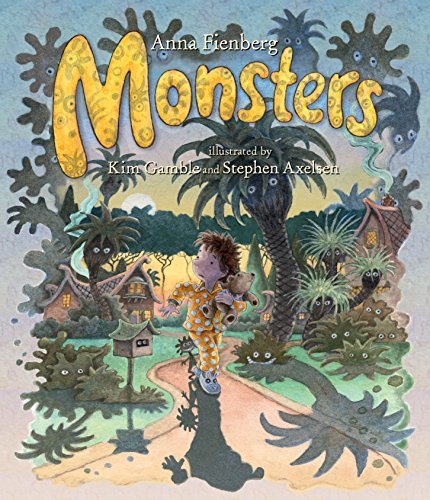
Anna, Kim and Stephen’s Monsters

Anna Fienberg (writer), Kim Gamble and Stephen Axelsen (illustrators), Monsters (Allen & Unwin 2018)

monsters.jpgThis is the final collaboration between Anna Fienberg and Kim Gamble, the creators of the wildly popular Tashi books. They began it when they both knew Kim didn’t have long to live. When Kim became too ill to continue he bequeathed the job of finishing the illustrations to his close friend Stephen Axelsen. In the  published book it’s all but impossible to tell where Kim’s work finishes and Stephen’s starts. So the book is a testament to love and friendship, a cairn of lyrical words and luminous images.

It’s also a funny, scary picture book about a little girl, Tildy, who is terrified of monsters in the night and finds a way to overcome her fear through her friendship with Hendrik. There’s plenty of room to play spot-the-monster (and an occasional thieving magpie), and plenty of the visual and verbal wit and warmth that has made Anna and Kim (and, until now separately, Stephen) such beloved giants of Australian children’s literature.

Monsters is the eighth book I’ve read for the 2018 Australian Women Writers Challenge.

Mark McKenna’s Moment of Truth

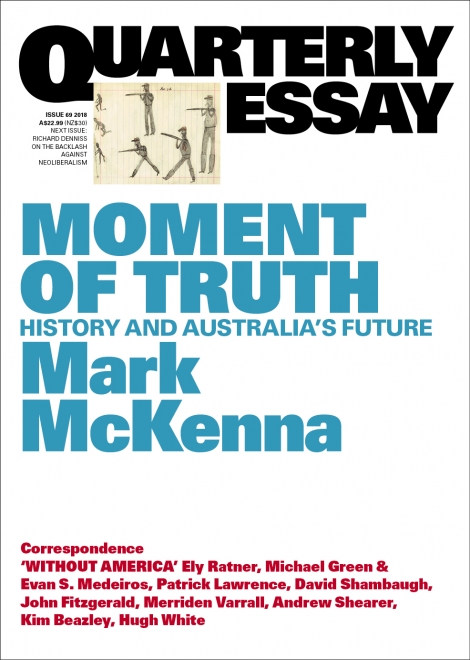
Mark McKenna, Moment of Truth: History and Australia’s future (Quarterly Essay 69, 2018)

verite.JPG

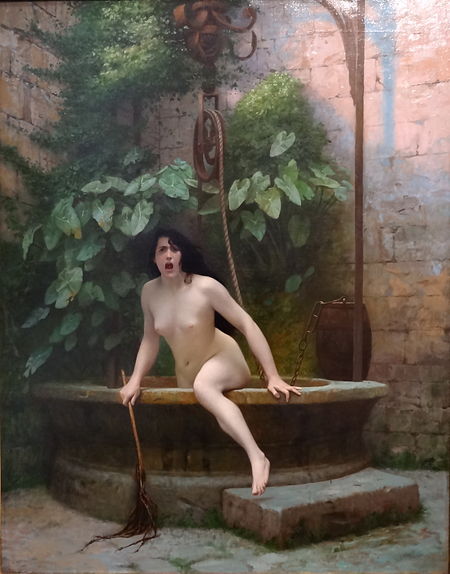
We’ve been talking a bit in my house about Jean-Léon Gerôme’s fabulous 1896 painting La Vérité sortant du puits armée de son martinet pour châtier l’humanité (Truth coming from the well armed with her whip to chastise humankind). I don’t know what Gerôme had in mind when he painted it, but if it had been painted this year one would be tempted to think it referred to either the #metoo movement or the subject of this Quarterly Essay. Mark McKenna’s essay argues strongly that now is the moment for Truth to rise from The Great Australian Silence about the history of First Nations of the Australian continent. There may be no whip in the essay, and McKenna doesn’t scream in rage – he’s a serious, evidence-based historian. But Gerôme’s passionately urgent Truth is surely more appropriate to the occasion than the serene Truths of other painters of his time.

qe69

McKenna begins his essay by quoting the Uluru Statement from the Heart (link is to a PDF). If you haven’t read the full statement, please do. I think it’s worth reading many times, in full, and I hope that enough of us will take it to heart that the Prime Minister’s apparently offhand and certainly duplicitous rejection of its recommendations – for a First Nations Voice to be enshrined in the Constitution, and for a Makarrata Commission to supervise a process of agreement-making between governments and First Nations and truth-telling about our history – will turn out to have been a bump in the road.

McKenna continues to quote Aboriginal and Torres Strait Islander individuals throughout the essay, but his own voice is clear, cogent and eloquent. Here he is, a historian, on the importance of listening to Aboriginal people’s stories of massacres and dispossession:

[Mainstream] Australians have yet to accept that they live in a country with two ways of knowing the past. Our hierarchies of storytelling dictate what we can and can’t see. Documentary sources are accorded more authority and power, Indigenous testimony is more likely to be questioned and interrogated, its findings cast in doubt. This is another reason to hold a truth-telling commission: to hear and understand another way of knowing how Australia was founded and created. For Indigenous Australians, these things are not ‘past’. Taken as one living body of story, they form a mosaic that binds the historical experience of all Aboriginal people from all parts of the continent. It is not the only tie, but it is the one they want other Australians to hear more than any other. And it binds us all. Not as a vehicle for blame or guilt or a means to recoil in moral disgust and denounce the past. In order to understand what happened we have to step outside our own moral universe. History is not a trial of earlier generations, or of the present. The past matters because  we give it life; because we seek to understand both its difference from the present and the traces of commonality that bind us to the lives of those who have gone before us. Until we listen to the voices of Indigenous Australians, we will continue to see the history of the country we share through European eyes.

There’s a lot in that paragraph, and the essay as a whole could be seen as unpacking it. Because, unlike in New Zealand or Canada, the British didn’t make a treaty with the people who were already in Australia when they arrived, and our history has no redemptive moment. So, bizarrely, we are offered as a sacred foundational narrative the story of a losing battle on the other side of the planet, and our leaders say it’s a fascist rewriting of history to want public monuments to acknowledge the undeniable genocidal implications of ‘discovery’.

McKenna gives a fascinating account of his own intellectual shifts, in particular through his 2002 book, Looking for Blackfellas’ Point, and responds to recent hoo-ha about colonial monuments with an account of a visit to Kurnell, the site of Cook’s first Australian landing.

The latter struck a chord with me because I recently went for a walk around Kurnell with a couple of friends. Mark McKenna went there in September, we went in November. You can read my blog entry here. Like McKenna, we were struck by the weather-beaten sign on an old metal post: ‘Welcome to Kurnell, the Birthplace of Modern Australia.’ He explores the history of that sign in a gently comic chronicle of bureaucrats trying to get it right. We were taken with the way Aboriginal perspectives are everywhere around the place of Cook’s actual landing.  As one of my friends put it:

Love the Kurnell monument: ‘Which bit of Piss Off don’t you whiteys get?’

McKenna – presumably because of word limits – doesn’t go into detail about the place, but he does tell the story of how at the local level the understanding of that event and its regular celebration have morphed to include significant input from the Gweagal people. Locally, it’s no longer a story of discovery or birthplaces, but of the meeting of two cultures. This whole discussion puts egg all over the faces of those politicians who insist that to alter monuments would be ‘stalinist interference’ (Malcolm Turnbull’s words):

For as long as we refuse to relinquish the triumphalist and monovocal view of our past, we seal ourselves off from understanding history as anything other than a crude choice between shame and pride.

When this Quarterly Essay was published, in March this year, I was in London. I was there again when the brilliantly multivocal exhibition James Cook: The Voyages opened at the British Library St Pancras. It’s heartening to see that in the British Library Indigenous voices are heard and more than one perspective is given respectful attention.

As I was about to publish this post, the June 2018 Quarterly Essay arrived in the mail, with 50 pages of correspondence about Moment of Truth. There’s the usual mix of interesting additions, observations from different perspectives, civil differences of opinion on some matters, a bit of mudslinging at a straw man, and an intelligent response from McKenna (‘I’ve learnt as much from speaking about my Quarterly Essay as I did from writing it’). There’s also a brilliant contribution from Megan Davis, one of the creators of the Statement from the Heart, which brings home both the huge significance of the Statement and the devastation brought about by its offhand dismissal. She tells us to do ourselves a favour:

Don’t just read McKenna’s fine essay, go and read the referendum Council’s report.

A PDF of the report is available for download here.