Tag Archives: Annie Ernaux

Annie Ernaux’s Man’s Place at the Book Group

Annie Ernaux, A Man’s Place (La Place ©1983, translation © Tanya Leslie 1992)

Alphonse Duchesne, who ran a small cafe/grocery in Normandy with his wife, died in 1967, two months after his daughter Annie Ernaux qualified as a school teacher, marking a transition in the family’s class status. On the train journey home from the funeral, Ernaux writes:

I tried to keep my son entertained so that he would behave himself. People travelling first-class have no time for noise and restless children. I suddenly realised with astonishment, ‘Now I really am bourgeois,’ and ‘It’s too late.’ (Page 18)

Later that summer, she thought to herself, ‘One day I shall have to explain all this,’ meaning she needed to write about her father and the distance that had come between them during her adolescence: ‘Although it had something to do with class, it was different, indefinable. Like fractured love.’

This short book – just 64 pages – is a rigorous, spare and unsparing, attempt to rise to that need. In 1982, having already written three novels, Ernaux set out to write a fourth one, about her father. But, she writes:

I realise now that a novel is out of the question. In order to tell the story of a life governed by necessity, I have no right to adopt an artistic approach, or attempt to produce something ‘moving’ or ‘gripping’. I shall collate my father’s words, tastes and mannerisms, the main events of his life, all the external evidence of his existence, an existence which I too shared.

The book tells two stories: the life story of Ernaux’s father and – always in the present tense as if allowing us to look over her shoulder as she types – the self-reflexive story of the writing of the book.

The father was from a peasant background. His own father was illiterate, and he worked first as a farm hand, then as a factory worker and finally, along with his wife, ran the small grocery shop and café. He bickered with his wife, spoke a rustic version of French, never set foot in a museum, voted for reactionary politicians ‘for a lark, but without conviction’, was intensely proud of his daughter’s success in moving into the middle class but didn’t make any part of the transition with her.

Every now and then, Ernaux steps directly into the frame to say how long she has now been writing, explain that it is a slow process because she is avoiding her own emotional memories in order to focus on her father’s story. It’s not that she doesn’t draw on memory – as for example when she describes a photo of her father taken at her wedding reception, and recalls her sense of him at the moment it was taken, ‘certain that he wasn’t enjoying himself’. And through it all, told in flat unemotive language, the terrible undertow of the daughter moving away into a different world:

One day he said, ‘Books and music are all right for you. I don’t need them to live.’

This was the first of Annie Ernaux’s ‘autobiosociological’ books. It’s the fourth I’ve read, and with each one I become more grateful to the Nobel committee for drawing her to my attention. The others (with links to my blog posts) are:

After the meeting: I was a little apprehensive about this meeting, as I had picked the book. The job was sprung on me at the last meeting, it had to be a short book, and this was on my TBR list, so I named it on the spot without due consideration.

It turned out that, quite apart from the big plus of brevity, the book was generally much liked, and we had a discussion that made me glad all over again to be in the book group. At times the discussion was personal: one man honed in on the early part of the narrative when the family’s life was disrupted terribly by the bombing of Normandy in World War Two (a part of the narrative that had passed me by); a number of us drew parallels with the trajectories of our own lives – as the first generation in our families to go to university; and the conversation wandered, seemingly off-topic, to our relationships to our parents, and various ways in which the stories of different parents had been discovered and even published.

We had a wonderful difference of opinion. One man, call him K–, himself a recently retired small businessman, said that Annie Ernaux had completely failed to get that her father, as a small businessman, had made a life for himself that he was completely happy with: when Ernaux portrays him as ashamed of his lack of ‘culture’, that is complete projection. I must be just a little bit in love with Annie Ernaux because my defensive hackles went up, and I disagreed that the father was portrayed as anything other than happy with his life!

The back cover blurb of the Ftzcarraldo edition says that ‘Ernaux reveals the shame that haunted him throughout his life’. So K– isn’t alone in reading the book that way. I still disagree. But I’ve been reflecting for days, and while I still think K– was wrong, I believe he put his finger on something at the heart of the book.

There’s no doubt that Annie the character believed that she had a better life than her parents, that they were proud she had made the transition, that a gulf of mutual incomprehension developed between the generations. The father certainly feels shame in some social situations – not understanding what a school teacher means by ‘town clothes’, not being able to spell when filling out a form. It’s explicit that the people of the daughter’s world look on people like her father with scorn. But I don’t read Ernaux or her father as sharing their judgement. She lays out the detail of his world, and is pretty clear about her own ‘bourgeois’ perspective. When she mentions in passing that he votes for a reactionary politician ‘for a lark’, it’s clear that she disapproves, but her disapproval isn’t the point.

K– went hunting for passages to support his reading. His case doesn’t stand or fall by one tiny sample, but what he came up with was this, from when the 20-something Annie is visiting her parents:

As soon as I plugged in the bedside lamp, the wire blackened, sparks flew and the bulb went out. The lamp was in the shape of a ball resting on a marble base, with a brass rabbit standing upright, its front paws sicking out at its sides. I had once thought it very beautiful. It must have been broken for ages. Indifferent to things, they never got anything mended at home.

K– read the tone of that last sentence as something close to contempt: ‘These people are barely human, they care so little for their environment.’ I read it as more two-edged: ‘As the kind of person who travels first-class, I expect my things to function well and to meet certain aesthetic standards. My parents have different priorities, a much greater tolerance for imperfection.’

I’m going to reread the book.


The Book Group met on the land of Gadigal of the Eora nation. I wrote this blog post on Wangal and Gadigal land. I gratefully acknowledge the many generations of Elders past and present who have cared for this beautiful country.
2024 End of Year List 4: Books

The Emerging Artist now keeps a record of the books she reads so she can easily whip up a list for me at this time of year. Here are her favourite reads from 2024 in her own words (links to LibraryThing pages or, at her request, to my blog post when there is one):

Fiction

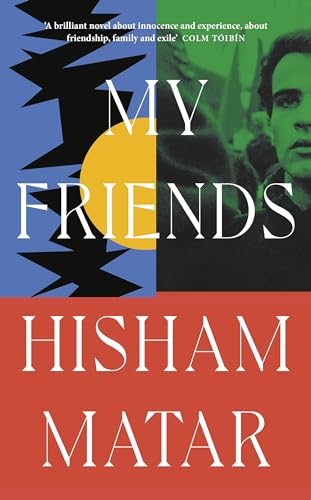
Hisham Matar, My Friends (Viking 2024)
I enjoyed Hisham Matar’s previous books, though I wasn’t enthusiastic about them as they often felt repetitive, and more like unreliable memoir than fiction. My Friends continues to draw on his life, but it feels more like a story that examines what it is to be an exile in a time of radical upheaval.

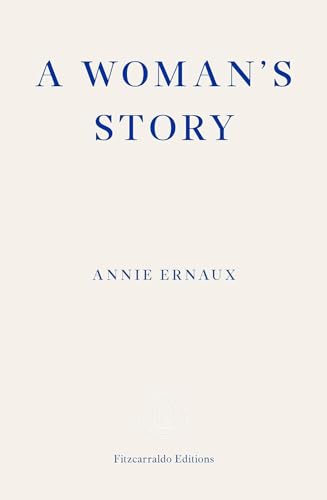
Annie Ernaux, A Woman’s Story (translated by Tanya Leslie 1991, Fitzcarraldo Editions 2024)
I read Annie Ernaux’s The Years before I got to this very slim volume, so I came to it with high expectations. I wasn’t disappointed. In such concise prose Ernaux describes the details of one woman’s life, and iin doing so conjures up a broader world.

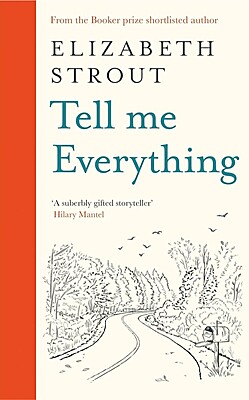
Elizabeth Strout, Tell Me Everything (Viking 2024)
This continues the stories of a number of Elizabeth Strout’s characters, bringing them together as they deal with death, ageing, love and lust. She writes with wit and kindness.

Niamh Mulvey, The Amendments (Picador 2024)
A new Irish writer for me. I hope she writes a lot more. This is a generational feminist tale about a family of women, dealing with the way issues of reproductive rights governed women’s lives before Ireland shifted from Catholic dominance – a shift made because of women demanding change.

Donal Ryan, Heart, Be at Peace (Doubleday 2024)
I had read two previous Donal Ryan novels, both of which I loved. In this one he continues to create the sense of Irish village community and disunity in the context of the Celtic Tiger and its collapse. Told from multiple perspectives, it builds a picture of complex relationships.

Non fiction

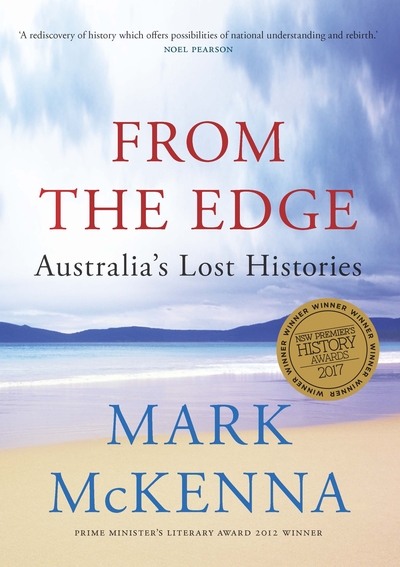
Mark McKenna, From the Edge: Australia’s Lost Histories (Melbourne University Publishing 2016)
Published in 2016, this is still a wonderful way to learn about First Nations and settler interactions. McKenna writes compelling history. These relatively short pieces include the pearl industry in Western Australia, the Barrup Peninsula petroglyphs and mining, early failed attempts to establish a colony in northern Australia, and the brutality of the Palmerston goldfields in north Queensland. They are written with a focus on First Nations agency, and they attempt to understand how colonisation played out in each specific time and place.

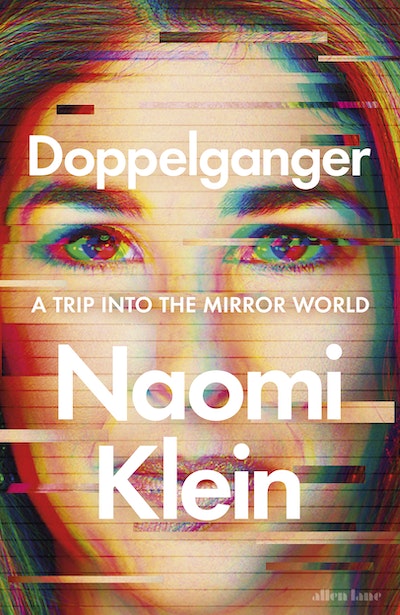
Naomi Klein, Doppelganger: A Trip into the Mirror World (Penguin 2023)
I’m still reading this, having put it down during the US elections as much of what Naomi Klein describes was playing out in the headlines. It’s a fascinating enquiry into the nature of truth, and the way fakery has become entrenched in political discourse.

From me

I can never pick a favourite or best book. My favourite is always the one I’m reading right now, unless the one I’m reading is the book I hate most in the world. Some highlights of 2024 were:

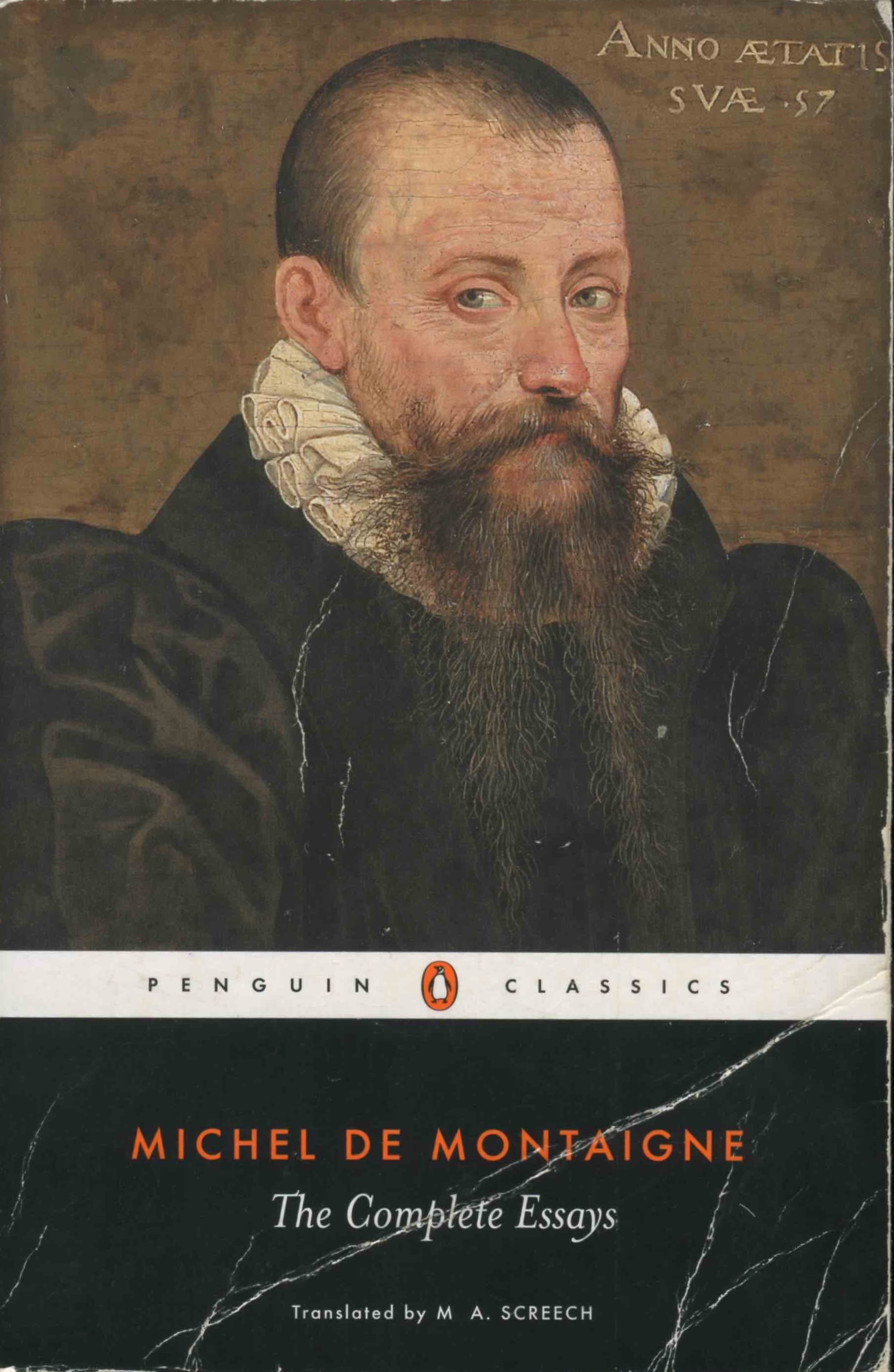
  • Montaigne’s Essays: I have read four or five pages most mornings since the beginning of March, and will have finished the book in a couple of weeks. He has been a great person to start the day with (apart from the Emerging Artist, of course)
  • Blue Mars, the final book in Kim Stanley Robinson’s Mars trilogy has finally made it from my TBR shelf, and it was a most satisfactory experience
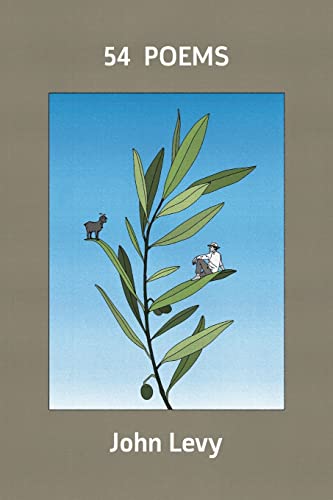
  • the poetry of John Levy, who showed up in my comments to share his enthusiasm for Ken Bolton’s poetry, and offered to send me a copy of his own book. I’m so glad I accepted the offer
  • I read more of Annie Ernaux: if ever I write a memoir, I hope I can manage to be at least slightly Ernauxian

To get all nerdy, I read:

  • roughly 83 books altogether (counting journals but only some children’s books)
  • 34 novels
  • 21 books of poetry
  • 5 comics
  • 6 books in translation – 3 from French (counting Montaigne’s Essays), 1 each from German, Japanese and Chinese
  • 7 books for the Book Group, whose members are all men
  • 12 books for the Book Club, where I’m the only man (two of them to be reviewed after tomorrow night’s meeting)
  • counting editors and comics artists, 45 books by women, 46 by men
  • 3 books by First Nations writers, and
  • 11 books by other writers who don’t belong to the White global minority.

And the TBR shelf is just as crowded as it was 12 months ago.


Happy New Year to all. May 2025 turn out to be a lot less dire than it’s looking at the moment, and (to repeat my wish from last year) may fossil fuels at last be left in the ground. May we all keep our hearts open, our minds engaged, and may we all talk to strangers.

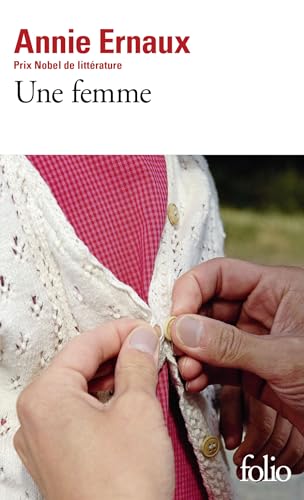
Annie Ernaux, une femme, a woman’s story and the book club

Annie Ernaux, Une femme (Editions Gallimard 1987)
—–, A Woman’s Story (translated by Tanya Leslie 1991, Fitzcarraldo Editions 2024)

Before the meeting: The press release announcing that Annie Ernaux had won the Nobel Prize in Literature spoke of:

the courage and clinical acuity with which she uncovers the roots, estrangements and collective restraints of personal memory.

Every word of that is well chosen. Ernaux revisits her own life story in every book, pitting her ‘personal memory’ against what she finds in old photographs and diary entries, constantly questioning and challenging herself. She makes most other autobiographies / memoirs seem at least a little glib and self-serving.

I read Une femme / A Woman’s Story in both French and English. I could do this because it’s a short book – 60 pages in English, 95 in French. Apart from an opportunity to flex my rusty French, I was motivated by the way the English title departs from the original. Une femme is literally ‘A woman’. Calling it A Woman’s Story is a tiny change, but it significantly shifts the meaning. I wondered if similar shifts happened in the body of the book. (I think they do, and I apologise in advance for the way this blog post gets bogged down in the details of translation – fascinating to me, but maybe not to you!)

A Woman’s Story / Une femme does tell the story of a woman: Ernaux’s mother. But actually there are three stories. There’s Ernaux’s reconstruction of her mother’s life: her youth, her time as a shopkeeper in an impoverished part of France, her marriage, her ageing, and at last her dementia and death. There’s the story of Ernaux’s relationship with her, including the times that she lived with her and her family, and at the very end a brilliantly concise statement of what, after the initial intense grief, her mother’s death meant for her. And there’s the story of writing the book, begun in April 1986, very soon after her mother’s death, and finished in February the following year. This is a book in which une femme writes about une femme, and either could lay claim to the book’s French title.

I love this book. It reaches tendrils into parts of my own life that could do with a bit of ‘courage and clinical acuity’. I find Ernaux’s sheer dogged determination to find truthful words completely engrossing. In one of several moments when she steps in to tell us about the process of writing, she says:

When I speak of her, my first impulse is to ‘freeze’ her in a series of images unrelated to time – ‘she had a violent temper’, ‘she was intense in everything she did’ – and to recall random scenes in which she was present. This brings back only the fantasy woman, the one who has recently appeared in my dreams, alive once more, drifting ageless through a tense world reminiscent of psychological thrillers. I would also like to capture the real woman, the one who existed independently from me, born on the outskirts of a small Normandy town, and who died in the geriatric ward of a hospital in the suburbs of Paris. The more objective aspect of my writing will probably involve a cross between family history and sociology, reality and fiction [la jointure du familial et du social, du mythe et de l’histoire] … I would like to remain a cut below literature.

(Page 17)

That is to say, don’t look for fine writing here. Look for a serious attempt to see the reality of this woman’s life and how it was interwoven with Ernaux’s own.

My practice of looking at page 77 is a good way of giving you a flavour of the book, and of some of the issues that must have faced Tanya Leslie, the translator.

On page 77 of the French edition, page 51 of the English, it’s the early 1970s. Ernaux’s mother, now a widow, has sold her business and abandoned her life as a shopkeeper. She has moved to Annecy at the other end of France to live with Ernaux and her young family. She isn’t thrilled with her new life: she is no longer a significant part of a community. Her life has shrunk. ‘Now she felt she was a nobody’ / ‘Elle ne se sentait plus rien.’ She was proud of the life Annie had made for herself, but felt uneasy with the middle-class life that now surrounded her.

I ought to say that after my partner’s father died, her widowed mother became a much bigger presence in our lives, after a time spending a couple of nights a week living with us and then moving in full time. We didn’t have the class difference that Ernaux describes, but this page resonates powerfully, and I am in awe of the way the writing reaches for a deeply respectful understanding of the mother’s point of view:

Living with us was like living in a world that welcomed her and rejected her at the same time. One day she said angrily, ‘I don’t think I belong here.’

The transition from the generalised to the particular in those two sentences is typical Ernaux. In the French, it’s slightly different:

C’était vivre à l’intérieur d’un monde qui l’accueillait d’un côté et l’excluait d’un autre. Un jour, avec colère: « Je ne fais pas bien dans le tableau. »

There are three departures from a literal, word for word translation. First, there is no ‘us’: it’s all about the mother. Second, the English has tidied up the second sentence and given it a verb – ‘she said’ – which is not there in the French. There’s a lot of that in the book. The French text sometimes reads like quick notes: no need to spell out who was speaking etc. The English tidies it up, with the effect that what in French feels rough and raw becomes in English a more polished, considered text. And third, what the mother says has been softened: the tentativeness of ‘I don’t think’ is an insertion, where the French just has an angry statement of fact: ‘I don’t belong here.’

The rest of the page, in English:

And so she wouldn’t answer the phone when it rang next to her. If her son-in-law was watching football on television, she would make a point of knocking on the door before entering the living room. She was always asking for work – ‘Well, if there’s nothing to do, I might as well leave then’ – adding with a touch of irony, ‘After all, I’ve got to earn my keep!’ The two of us would argue about her attitude and I blamed her for deliberately humiliating herself. It took me a long time to realise that the feeling of unease my mother experienced in my own house was no different from what I had felt as a teenager when I was introduced to people ‘a cut above us’. (As if only the ‘lower classes’ suffered from inequalities which others choose to ignore.) I also realised that the cultural supremacy my husband and I enjoyed – reading Le Monde, listening to Bach – was distorted by my mother into a form of economic supremacy, based on the exploitation of labour: putting herself in the position of an employee was her way of rebelling.

And in French:

Donc elle ne répondait pas au téléphone quand il sonnait près d’elle, frappait d’une manière ostensible avant de pénétrer dans le salon où son gendre regardait un match à la télé, réclamait sans cesse du travail, « si on ne me donne rien à faire, je n’ai plus qu’a m’en aller» et, en riant à moitié, « il faut bien que je paye ma place!». Nous avions des scènes toutes les deux à propos de cette attitude, je lui reprochais de s’humilier exprès. J’ai mis longtemps à comprendre que ma mère ressentait dans ma propre maison le malaise qui avait été le mien, adolescente, dans les « milieux mieux que nous » (comme s’il n’était donné qu’aux « inférieurs » de souffrir de différences que les autres estiment sans importance). Et qu’en feignant de se considérer comme une employée, elle transformait instinctivement la domination cultureIle, réelle, de ses enfants lisant Le Monde ou écoutant Bach, en une domination économique, imaginaire, de patron à ouvrier: une façon de révolter.

You can see what the translator had to wrestle with. She breaks two long sentences into shorter ones. I can’t tell if this is her way of making the text more elegant, or if it’s a difference in the way the languages work. And domination must have given her nightmares: ‘supremacy’ isn’t a dictionary equivalent, but it’s surely eccentric to describe reading Le Monde as an act of domination. Yet maybe that eccentricity is exactly what Ernaux intended – certainly ‘economic supremacy’ makes less sense than ‘economic domination’.

This is one place where I was happy I had read the French as well as the English. I didn’t understand the bit in brackets about the ‘lower classes’ until I read the French, where, rather than the ‘others’ choosing to ignore inequalities, they consider some différences to be unimportant (and yes, différences translates as ‘differences’, no inequality necessarily implied). Le Monde is just a newspaper to Ernaux and her husband, and Bach is pleasant to listen to. For the mother, they are markers of cultural superiority. A smaller oddity of the translation is that whereas the French insists that the ‘cultural supremacy’ / domination culturelle is real (réelle) and that the ‘economic supremacy’ / domination économique is imaginary (imaginaire), the English lets the word ‘distorted’ carry that distinction. On top of that, leaving out the word instinctivement, it seems to me, makes the mother seem much more calculating, and perhaps makes Ernaux less patronising. I don’t think Ernaux wants to blame her mother, or spare herself, in this way.

After I’d written that last sentence I noticed a moment in the previous paragraph that struck a chord with me. One of the things Ernaux’s mother has to do to conform to the household’s lifestyle is, in English:

‘observing personal hygiene’ (blowing the boys’ noses on a clean handkerchief).

That’s unremarkable, just one more detail in the list of things she has to adapt to. The original French is:

avoir de l’« hygiène » (ne pas moucher les enfants avec son propre mouchoir).

A literal translation of the phrase in brackets is, ‘not to blow the children’s noses with her own handkerchief’. They say a translation can never be complete, but still I allow myself to mourn the loss of this tiny, graphic image of grandparent–grandchild intimacy forgone in the name of upward mobility, and lost to the English text for who knows what reason: perhaps handkerchiefs themselves are so repugnant to modern Anglo sensibilities that sharing them is unspeakable.

After the meeting: In the Book Club, we traditionally discuss two books. This book was paired with Abdulrazak Gurnah’s Paradise (link to come added later). I think the reason for the pairing was that they’re both by Nobel laureates. At the start of our discussion, an astute person pointed out that they both feature shops (the mother’s shop in Ernaux’s book, and two different shops where Gurnah’s protagonist worked). That’s about where the similarities began and ended. Our evening – or at least that part of it not taken up with excellent food and even more excellent conversation about life, physical afflictions, travel plans and so on – was split neatly into two parts.

As you’d expect, my having read the book in both languages was met with eye rolls, but there was general recognition that the difference was substantial between blowing a child’s nose on a clean handkerchief and not blowing it on one’s own handkerchief.

We had a very interesting discussion of a passage where Ernaux describes her aim as to set aside her own emotional memories about her mother (how she felt when she was angry etc) and tell the story from her mother’s point of view, but says that she finds those emotions breaking through anyway. I think we agreed that this, far from being a failure, is one of the things that makes the book so rich.

One person out of the five of us didn’t care for the book. Reading it, she couldn’t see any reason why Annie Ernaux would have been given the Nobel. Those of us who had read a number of her books tried to articulate our reasons for holding her in high esteem, but maybe it’s a matter of taste. What I/we saw as minimalism, for example, she saw as sketchiness.

One person spoke of the way the book had inspired her to try to write about her own childhood, focusing on specifics rather than a broad narrative. The exercise had led to interesting insights into her early life. We had a brief but interesting conversation about how for ‘our generation’ in Australia (we range from a couple of weeks short of 70 to a couple of years beyond 80), as for Annie Ernaux, there was a shift in class – ‘upward mobility’ – that hadn’t been so widespread in previous generations. This shift was due in part to increased access to education – so we did the Australian equivalent of listening to Bach and reading Le Monde.

It might seem that that conversation was of the same order as travel plans and medical reports, but I think it’s a quality of Ernaux’s books – not just this one – that they prompt readers to reflect on their own lives.

Next: Paradise.

Two very slim volumes by Annie Ernaux

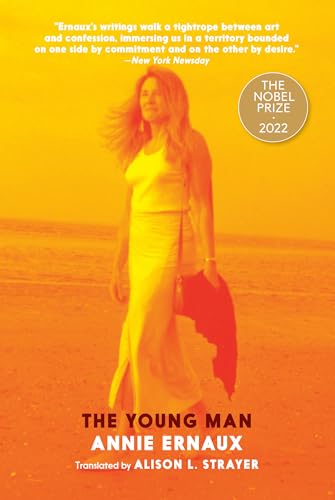
My family still give each other far too many presents at Christmas, but I’m not complaining. Among the many thoughtful gifts I received recently were these two tiny books by Annie Ernaux. The first is the story of a sexual relationship the writer had with a much younger man when she was in her mid 50s; the second is the text of her Nobel Lecture, delivered in Stockholm in December 2022. Each of them includes about 20 pages of supplementary material, with a lot of overlap between the books: photographs, a ten-page self-written biography, praise for Ernaux’s other books. They’re clearly designed to catch impulse buyers at the till, but they are written by the incomparable Annie Ernaux and I love them.

Neither book has a page 76, or even a page 47, so my usual arbitrary blogging practice is stymied.


The Young Man (Le jeune homme © 2022, translated by Alison L Strayer, Seven Stories Press 2023)

Page 7 of The Young Man is its epigraph:

If I don’t write things down, they
haven’t been carried through to completion,
they have only been lived.

Which captures perfectly the nature of this book. It serves to complete a strangely inconclusive episode in the writer’s life.

Dates at the end of the text indicate that it was written over a span of time, from 1998 to 2000, perhaps immediately after the relationship ended, and then prepared for publication – rewritten? – in 2022. It shows the signs of both dates. There’s the freshness of description of, say, sleeping together in his cold student flat, or of feeling the gaze of other people when they lie on the beach together, a gaze that neither of them would have attracted solo. And then there are reflections that have had time to mature:

In more than one domain – literature, theatre, bourgeois customs – I was his initiator, but the things I experienced because of him were also initiatory. My main reason for wanting our story to continue was that, in a sense, it was already over and I was a fictional character within it.

(page 28)

After that last comment, she continues: ‘I was aware that this entailed a kind of cruelty towards this younger man who was doing things for the first time.’

There are at least two high-profile fictional works around at the moment in which an older woman has a sexual ‘affair’ with a boy, Ian McEwan’s novel The Lessons and Todd Haynes’s movie May December. This is not that. This unnamed young man was in his twenties, and Annie Ernaux was not his teacher. There is no question of criminality, but some of the same ethical issues arise. She was an admired cultural figure to whom he could barely speak when they first met in person. She does not spare herself in the writing, but nor does she rush to judgement. As that tiny excerpt illustrates, class is always an issue, and there is a constant sense of the feedback loop between her life and her art.

The copious photos that the publishers have included to make up a decent number of pages attest to the fact that she was, and is, gorgeous. The young man didn’t love her just to learn bourgeois customs.


I will write to avenge my people (©2023, translated by Alison L Strayer, Fitzcarraldo Press 2023)

The title of Ernaux’s Nobel lecture comes from something she wrote in her diary in her early 20s: ‘J’écrirai pour venger ma race.‘ She expands on this sentence in the lecture:

I proudly and naively believed that writing books, becoming a writer, as the last in a line of landless labourers, factory workers and shopkeepers, people despised for their manners, their accent, their lack of education, would be enough to redress the social injustice linked to social class at birth.

(page 12)

The lecture traces the way she moved away from this goal, until she was brought back to it ‘through byroads that were unseen and proximate’. And it explains beautifully her central preoccupation with telling intimate stories from her own life (The Young Man among them):

This is how I conceived my commitment to writing, which does not consist of writing ‘for’ a category of readers, but in writing ‘from’ my experience as a woman and an immigrant of the interior; and from my longer and longer memory of the years I have lived, and from the present, an endless provider of the images and words of others. This commitment through which I pledge myself in writing is supported by the belief, which has become a certainty, that a book can contribute to change in private life, help to shatter the loneliness of experiences endured and repressed, and enable beings to reimagine themselves.
When the unspeakable is brought to light, it is political.

(pages 19-20)

(Alison L Strayer has rendered both this lecture and The Young Man into impeccable English. I do wonder, though, whether ‘internal migrant’ might have been better than ‘immigrant of the interior’. I haven’t read the original, but I believe Ernaux is referring to her ‘migration’ from rural working class to the lettered bourgeoisie as opposed to migration between countries.)

There’s a lot more. If you see this little book on the front counter as you’re leaving a bookshop, let yourself be tempted.

End of Year List 4: Books

From the Emerging Artist, in her own words (links to the LibraryThing pages or, at her request, to my blog post when there is one):

Non fiction

Claire O’Rourke, Together We Can (Allen & Unwin 2022)
I read this after hearing Claire talk on a Sydney Writers’ Festival panel on how to have hope in relation to climate change. It’s a good read, mixing specific examples of everyday Australians tackling what’s happening with broader theory on how to bring about change. It does fulfil its title, giving a real sense that “together we can”.

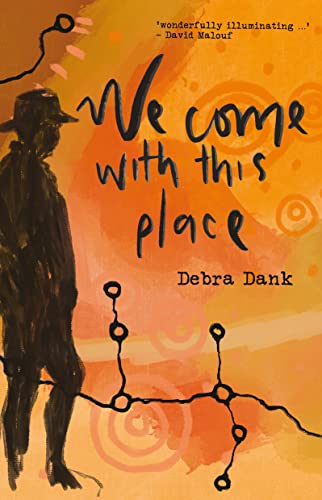
Debra Dank, We Come With This Place (Echo Publishing 2022)
We watched this book win four awards and heard Deborah Dank’s speech at NSW Premier’s Literary Awards 2023. We immediately went out to buy it. The writing is beautiful, a slow evocation of country and its connection to the author, while filled with story. I think it’s the must read of the year.

Fintan O’Toole, We Don’t Know Ourselves, a personal history of Ireland since 1958 (Head of Zeus 2021)
Hearing Fintan on the ABC’s Conversations, I immediately placed an order and waited patiently for four months for it to arrive. I’m glad I did. It’s written in short chapters in chronological order, but often picking up themes from chapter to chapter. It’s funny while documenting the appalling state of Ireland from 1958 through personal history, statistics and other sources. The incredible poverty (no running water in homes or sewage, no education for 80% of the population past primary school) made worse by the stranglehold of the Church and corruption in keeping poverty in place and the changes brought about by the impact of globalised capitalism all come alive in riveting storytelling.

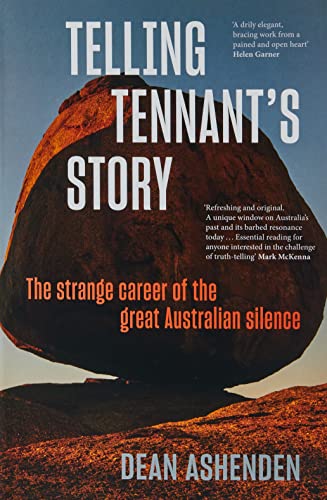
Dean Ashenden, Telling Tennant’s Story: The Strange Career of the Great Australian Silence (Scribe 2022)
A very readable history of post WWII Australian policies in relation to First Nations people where the impact of the policies on Aboriginal people in a specific area – Tennant Creek – are made clear. It tells how the policies of assimilation and later self determination came about and how far-reaching their effects have been. It would have been good for all those voting no to have been made to read this as a requirement for having a say.

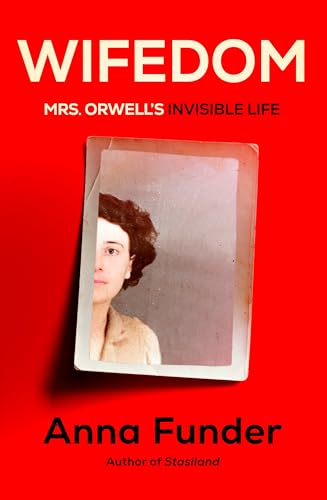
Anna Funder, Wifedom: Mrs Orwell’s Invisible Life (Penguin 2023)
So much has been written about this book already I don’t need to give a summary. I found it gripping. 

Fiction
I read 62 books this year, from quick comfort ‘junk’ reads to harder literary tomes. I take a photo of each book to prompt memory, and going through them all, it’s clear I have had an excellent selection to choose five favourites from. I’ve ended up deciding by level of enjoyment, not on some literary merit criteria.

Hilde Hinton, A Solitary Walk on the Moon (Hachette AUstralia 2022)
A totally enjoyable read while disquieting in its simplicity. This is a second novel by an Australian author who seems to slipped under the radar. I found it in my local library. 

Annie Ernaux, The Years (Fitzcarraldo Editions 2018)
This was also an entrancing read, covering a similar time period to my own life. It conjures up the similarities and immense differences between growing up in middle class France and Australia.

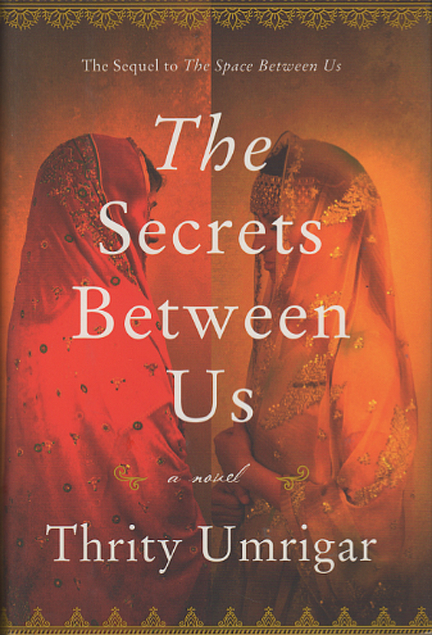
Thrity Umrigar, The Secrets Between Us (HarperCollins 2018)
Another library chance find. I loved the three strong old women protagonists, the exploration of caste and how this is/isn’t changing in modern India.

Melissa Lucashenko, Edenglassie (University of Queensland Press 2018)
This was gripping rather than straight out enjoyable, with a sense of what was to come on every page. I loved the imagined world of life at the point where the strangers are staying and growing in number, while keeping your own way of life intact.

Richard Russo, Somebody’s Fool (Allen & Unwin 2023)
Jonathan hasn’t yet been lured into the wonderful world that Richard Russo writes about, but I expect that to change soon. This is the latest in a series that includes Everybody’s Fool and Nobody’s Fool, all set in small town east coast USA. The books follow a number of interconnected characters over a few generations recording the process of change as late capitalism, racism and gender are played out in the town of Bath. He writes with affectionate humour about all of his characters. We see their frailties and appalling behaviour (between white and black, men and women, different generations) but in a number of cases we see how their connections with each other bring a shift in perspective. I love them. 


From me

I read 83 books (counting journals but not children’s books). I finished my slow read of Middlemarch and read St Augustine’s Confessions, a little each morning, but didn’t start another slow read in September because I was doing the Kelly Writers’ House course in Modern and Contemporary American Poetry (ModPo), which was great fun and probably taught me a lot.

I read:

  • 21 books of poetry
  • 26 novels
  • 4 comics
  • books in translation from Chinese (2), Spanish (3), French (2), Danish (1 or 3, depending on how you count), Russian (1) and Latin (1), and bilingual books containing Greek (1) and Maori (1)
  • counting editors and comics artists, 44 books by women, 39 by men
  • 12 books by First Nations writers, and
  • 15 books by other writers who don’t belong to the White global minority.

Biggest serendipity: Four books spoke powerfully to each other and to me in the wake of the referendum on the Voice: Debra Dank’s We Come with This Place, Melissa Lucashenko’s Edenglassie, Dean Ashenden’s Telling Tennant’s Story and David Marr’s Killing for Country (no blog post yet). Unlike Voice and Treaty, the third proposal from the Uluṟu Statement from the Heart – Truth – doesn’t have to wait for government action. These books, and so many others with them, are moving that project forward brilliantly and unsettlingly.

The most fun was probably two novels about poetry, which also spoke to each other: Chilean Poet by Alejandro Zambra and The Anthologist by Nicholson Baker.

Most interesting new discovery of someone who has been writing for decades: 2022 Nobel Prize laureate Annie Ernaux. I read Les années and Mémoire de fille, both of which mine her life story in ways that make most memoirs seem dull. Though I read them in translation, it seems right to name them in French.

Most imaginatively huge was Alexis Wright’s novel Praiseworthy, which incidentally is set in some of the same localities as Killing for Country.

Most memorable poetry: Sarah Holland-Batt’s Jaguar, with Ken Bolton’s Starting at Basheer’s (no blog post yet) a close second, the first for its precise, compassionate treatment of the poet’s father’s final illness, the latter because it filled me with joy about the everyday.


Happy New Year to all. May 2024 see the rejection of authoritarianism in elections and an end to mass killings everywhere. And may fossil fuels at last be left in the ground. Failing that, may we all keep our hearts open and our minds engaged.

Annie Ernaux’s Years

Annie Ernaux, The Years (Fitzcarraldo Editions 2022, from Les Années 2008, translated by Alison L Straya 2017)

Annie Ernaux won the Nobel Prize in Literature last year, which probably accounts for my long wait for this book at the library. It was worth the wait.

It’s a memoir, covering roughly the first 60 years of the author’s life, from listening to adults telling heroic stories of the Resistance in the late 1940s to presiding over family gatherings at the turn of the century full of lively exchanges in which ‘there was no patience for stories’.

It’s not like any other memoir I’ve read. Ernaux describes how she imagined it, referring to her past self as ‘she’:

This will not be a work of remembrance in the usual sense, aimed at putting a life into story, creating an explanation of self. She will go within herself only to retrieve the world, the memory and imagination of its bygone days, grasp the changes in ideas, beliefs and sensibility, the transformation of people and the subject that she has seen … To hunt down sensations that are already there, as yet unnamed, such as the one that is making her write.

(Pages 222–223)

Earlier (on page 162), she says she wants to assemble the multiple images of herself that she holds in memory, and thread them together with the story of her existence – ‘an existence that is singular but also merged with the movements of a generation’.

So it’s the story of the changing attitudes and sensibilities of a generation (the broader ‘they’ and the more specific ‘we’), and of an individual member of that generation (‘she’), embedded in an impressionistic account of France’s political, social and cultural history over half a century.

Algeria gains independence but anti-Algerian racism persists. 1968 happens, and leaves a deep mark on Ernaux’s generation, including those like her who weren’t actually throwing cobblestones. Catholicism vanishes ‘unceremoniously’ and consumer capitalism invades all aspects of life. There’s AIDS, wars and climate change.

The early sexual experiences of Ernaux’s later memoir A Girl’s Story (the link takes you to my blog post) take up a couple of paragraphs. ‘She’ marries, divorces, becomes a grandmother, teaches, retires, ruminates on the approach of death, and writes.

As I read this book, I often just let a series of specifically French references wash over me – resigned to never knowing everything. An Australian The Years might mention Gough Whitlam pouring sand into Vincent Lingiari’s hands, Jack Thompson’s nude centrefold for the first edition of Cleo, or Auntie Jack threatening to rip your bloody arms off: immediately recognisable to some readers, mystifying to others, and opening a whole new vista to the latter if they go exploring.

My practice of looking at a single page is a good fit for this book – the writing is so compressed that practically every page cries out for detailed explication.

Page 76 focuses on the general scene, talking about ‘we’ and ‘they’, as opposed to the passages that begin with a photograph of ‘a woman’ – always Ernaux – and talk about ‘she’. (It’s a book where you watch the pronouns.)

It’s 1962, near the end of the Algerian liberation struggle. Page 75 has described an incident in October 1961, when Algerian demonstrators were attacked by police, and a hundred of them thrown into the Seine, largely ignored by the press. Page 76 begins:

Try as we might, we would see no resemblance between October’s heinous attack on Algerians by Gaullist police and the attack on anti-OAS militants the following February. The nine dead crushed against the railings of the Charonne Métro station bore no comparison with the uncounted dead of the Seine.

As with many passages, I’m happy to guess at the general drift, but since I’m blogging about it, I’ll delve a little.

The OAS (Organisation Armée Secrète / Secret Armed Organisation) was a violent rightwing organisation opposed to Algerian independence. A demonstration against them was organised in February 1962 by leftist groups including the Communist party. The nine victims of police violence at the Charonne Métro station received a lot of publicity and the event came to be seen as a defining moment in the struggle. Ernaux reflects that ‘we’ – her generation, and I would add most people since – give value to the things the press highlights and have trouble giving full value to the sometimes much greater things it ignores. The narrative doesn’t pause to sermonise on the underlying racism.

Nobody asked whether the Évian Accords were a victory or a defeat. They brought relief and the beginning of forgetting. We did not concern ourselves with what would happen next for the Pieds-Noir and the Harkis in Algeria, or the Algerians in France. We hoped to go to Spain the following summer – a real bargain, according to everyone who’d been there.

You probably guess, correctly, that the Évian Accords were the treaties that brought an end to the Algerian war (Wikipedia entry here). The Pieds-Noir were the Algeria-born whites who opposed independence; the Harkis were Algerians who supported French forces (shades of the people abandoned when the USA and Australia quit Afghanistan). ‘We’ don’t include those people, and though our sympathies are with the freedom fighters we’re more interested in our next holiday abroad (again, a familiar syndrome).

The next paragraph shifts smoothly from ‘we’ to ‘people’ and then ‘they’. Though it’s not a hard border, Ernaux is no longer talking specifically about her own cohort, but about French people generally. It’s a characteristically brilliant summary of the mood of a time, beginning:

People were accustomed to violence and separation in the world. East/West. Krushchev the muzhik/ Kennedy the leading man, Peppone/ Don Camillo, JEC/UEC, L’Humanité/L’Aurore, Franco/Tito, Cathos/Commies.

Peppone and Don Camillo are a Communist mayor and a priest who clash in a series of popular books (Wikipedia entry here). JEC is Jeunesse étudiante chrétienne / Christian Student Youth); the UEC is Union des étudiants communistes / Union of Communist Students). L’Humanité was the Communist newspaper; L’Aurore was a centrist mainstream newspaper. All these dualities can be reduced to the almost affectionate diminutives ‘Cathos/Commies’.

The paragraph continues, now definitely in ‘they’ territory, a clear distance between Ernaux’s student grouping and the attitudes described:

Under cover from the Cold War, they felt calm. Outside of union speeches with their codified violence, they did not complain, having made up their minds to be kept by the state, listen to Jean Nochet moralise on the radio each night, and not see the strikes amount to anything. When they voted yes in the October referendum, it was less from a desire to elect the president of the Republic through universal suffrage than from a secret wish to keep de Gaulle president for life, if not until the end of time.

I suppose every French person would know that Jean Nochet was a vehemently anti-Communist broadcaster and that the referendum of 1962 meant that the French presidential election moved from a US style electoral college to direct popular vote. The motive attributed to the electorate reflects De Gaulle’s changing status in Ernaux’s mind over the years.

And then, a characteristic change of focal length, this time from national politics to Ernaux’s own group, with just a whiff of a suggestion that the students at that time didn’t pay much attention to politics (which was to change six years and a few pages later):

Meanwhile, we studied for our BAs while listening to the transistor. We went to see Cleo from 3 to 7, Last Year at Marienbad, Bergman, Buñuel and Italian films.

As I write this blog post, I recognise a way the book touched me personally. My oldest brother was pretty much the same age as Ernaux. Like her he moved from home in a small town to go to university in a large centre. This list of movies reminds me of the enthusiasms he brought home on uni holidays. He certainly talked about Last Year at Marienbad. I don’t remember if Agnès Varda featured. It was probably in 1962 when he took me on an excursion from boarding school to see my first subtitled movie, Bergman’s The Seventh Seal.

Though the book might not be for everyone, it’s a richly instructive evocation of an era, and at the same time I’m pretty sure most readers would find something in it that speaks directly to their own experience.

Annie Ernaux’s girl’s story

Annie Ernaux, A Girl’s Story, translated by Alison L Straya (Seven Stories Press 2020, from Mémoire de fille, Gallimard 2016)

There’s an AI app that‘a in the news just now. I asked it to write a review of Annie Ernaux’s A Girl’s Story/Mémoire de fille. Here are some excerpts from what the app came up with:

“A Girl’s Story” by Annie Ernaux is a highly acclaimed and celebrated memoir that tells the story of the author’s childhood and youth. …

The book is written in a simple, straightforward style that is both raw and emotionally charged. …

She vividly describes the sights, sounds, and smells of her childhood, and her descriptions are so vivid that the reader feels as though they are right there alongside her. At the same time, the author’s reflections on her life and experiences are both deeply personal and universally relatable, making the book accessible to a wide range of readers.

Lazy students be warned: almost every word in those paragraphs is misleading. The AI clearly hasn’t read the book.

The book does NOT tell the story of the author’s childhood and youth.

It scrutinises barely two years of the author’s life, when as an 18-year old in 1958 she left her parents’ custodianship for the first time, had her first sexual experiences, developed an eating disorder, read a lot (including Simone de Beauvoir’s The Second Sex), attended a prestigious college, decided against entering the teaching profession, worked as an au pair in London, and began her career as a writer.

The book is NOT written in a simple, straightforward style.

Take the opening sentences:

There are beings who are overwhelmed by the reality of others, their way of speaking, of crossing their legs, of lighting a cigarette. They become mired in the presence of others. One day, or rather one night, they are swept away inside the desire and the will of a single Other.

The science-fictional feel of ‘There are beings’ probably isn’t there in the original French, where it’s not unusual for elevated prose to refer to people as êtres (literally ‘beings’). But even without that bit of translationese, you’d hardly call these sentences simple or straightforward. In fact, they almost stand as a warning: if you want a simple, straightforward story, go somewhere else. The hint (‘or rather one night’) that the story is going to involve sex is neither simple nor straightforward, but at least it promises spiciness.

The style is NOT raw and emotionally charged.

The style is intensely intellectual, as is only right for a text that is concerned with the process of remembering. Memories are often there as single images, without a clear sense of how they connect with each other. Where memory fails, the narrator quotes from ancient letters and diary entries, or simply speculates about what ‘the girl of S’ (as she is called from the start) must have been feeling. From the older person’s perspective, the sexual experiences are terrible, but as far as the narrator can tell (remember?) ‘the girl’ didn’t see them that way. See the opening lines quoted above: it’s a story of a young woman who loses and regains her sense of herself. One strand of the book is a troubling inquiry into the nature of consent.

The reader does NOT feel as though they are right there alongside her.

Annie Ernaux considers that she is no longer the person who had those experiences as an eighteen-year-old. It took me several pages to be sure that ‘the girl of S’ is not someone other than the author. If we are ‘right there alongside’ anyone it’s the 70-something writer who sets out to ‘explore the gulf between the stupefying reality of things that happen, at the moment they happen, and, years later, the strange unreality in which the things that happened are enveloped’. At least that’s how she describes her initial intention. The book is more complex, recursive and elusive than that.

She vividly describes the sights, sounds, and smells of her childhood

No. Just no!

The author’s reflections on her life and experiences MAY BE deeply personal and universally relatable, but not in the way the AI implies.

This calls for discussion of an actual piece of writing. I’ll pick the moment (on pages 74–75) when the girl, still in the last year of high school and working as a counsellor at a children’s camp, has had two sexual encounters with H (the ‘single Other’ of the book’s first paragraph, which I quoted earlier). After the second time, of which the narrator says she remembers very little but which certainly wasn’t pleasurable for the girl, H promises to come to her room and say goodbye the next morning, the last day of camp. The girl knows that he is engaged to someone else, but nevertheless spends a sleepless night imagining that ‘H is her lover, truly and for all eternity’. When he doesn’t come at dawn, she goes to knock on his door. Though he can see his back through the keyhole, he ignores her. This is definitely a ‘deeply personal’ moment, but the narrator isn’t interested in capturing its emotional intensity. She writes:

Even if it had crossed her mind (and I think it probably did) that by promising to come and say goodbye, he was simply trying to shake her off, no objective sign of reality – the fiancée, the unkept promise, the lack of a meeting arranged for later in Rouen – can possibly compete with the novel that wrote itself in a single night, in the spirit of Lamartine’s The Lake, or Musset’s Nights, or the happy ending of the film The Proud and the Beautiful, with Gérard Philipe and Michèle Morgan running toward each other, or the songs (that Esperanto of love) I can list without a second thought.

She goes on to list five songs, all of which are as unknown to me as the novels and movie. I googled one, Dalida’s ‘Histoire d’un amour’, and it’s as romantic as you’d expect – on YouTube here. You don’t need to be familiar with the references to see that the narrator is considering the girl from an ironic distance. She isn’t mocking. Her project is more intellectually rigorous than that, and much more interesting: she wants to understand how ‘the girl’ really experienced the moment, at the same time as knowing that complete understanding is impossible.

After listing the songs, Ernaux does two things. First, she asserts that this kind of self story-telling is common:

At this very moment, out in the streets, the open spaces, on the metro, in lecture halls, and inside millions of heads, millions of novels are being written chapter by chapter, erased and revised, and all of them die as a result of becoming, or not becoming, reality.

This reminds me of the way Proust’s narrator in In Search of Lost Time writes at length about how he imagined what places were like based on their names, only to be almost always disappointed by the reality. Annie Ernaux explicitly suggests that this is a universal thing. So maybe it’s ‘relatable’ after all.

(By describing this fantasising as novel-writing, Ernaux seems to be suggesting that her writing life began that night, a whole other dimension of the memoir.)

The second thing she does is to leap forward in time:

When, in the subway or the RER, I hear the first notes of Dalida’s ‘Histoire d’un amour’, sometimes sung in Spanish, within a second I am emptied of myself, hollowed out. I used to believe (Proust had a comparable experience) that for three minutes, I truly became the girl of S. But it is not she who suddenly revives but the reality of her dream, the powerful reality of her dream, spread throughout the universe by the words sung by Dalida and Darío Moreno, and covered up again, buried by the shame of having had that dream.

(The RER is the rapid transit system serving Paris and its suburbs.)

This paragraph could be seen as encapsulating the book as a whole. Annie Ernaux the narrator grapples throughout with the nature of memory. Here, she realises that in the intervening years, in non-rigorous mode, she has believed herself to be reliving that moment, becoming once again her eighteen-year-old self and losing all sense of who she is in the present. But with her rigorous mind at work, she realises that what is being revived is the dream, the pattern of thinking and feeling that came into play at that moment. Any mockery that may have been implied in the ironic distance of the previous paragraphs is identified as coming from shame.

It’s no accident that Proust is mentioned here. His ghost hovers over the whole enterprise. At one level, his huge novel tells his alter ego’s life story, while A Girl’s Story tells the much smaller story of a teenage girl’s first more or less traumatic sexual experience. (Proust’s narrator’s first sexual experience is of the don’t-blink-or-you’ll-miss-it variety.) At another level, they are both philosophical inquiries into the nature of memory and desire. Ernaux’s book doesn’t have the queerness or the comedy of Proust’s, but it is just as serious, just as challenging, and has the added passion of feminist horror.